Problem 6-23A (60 minutes)
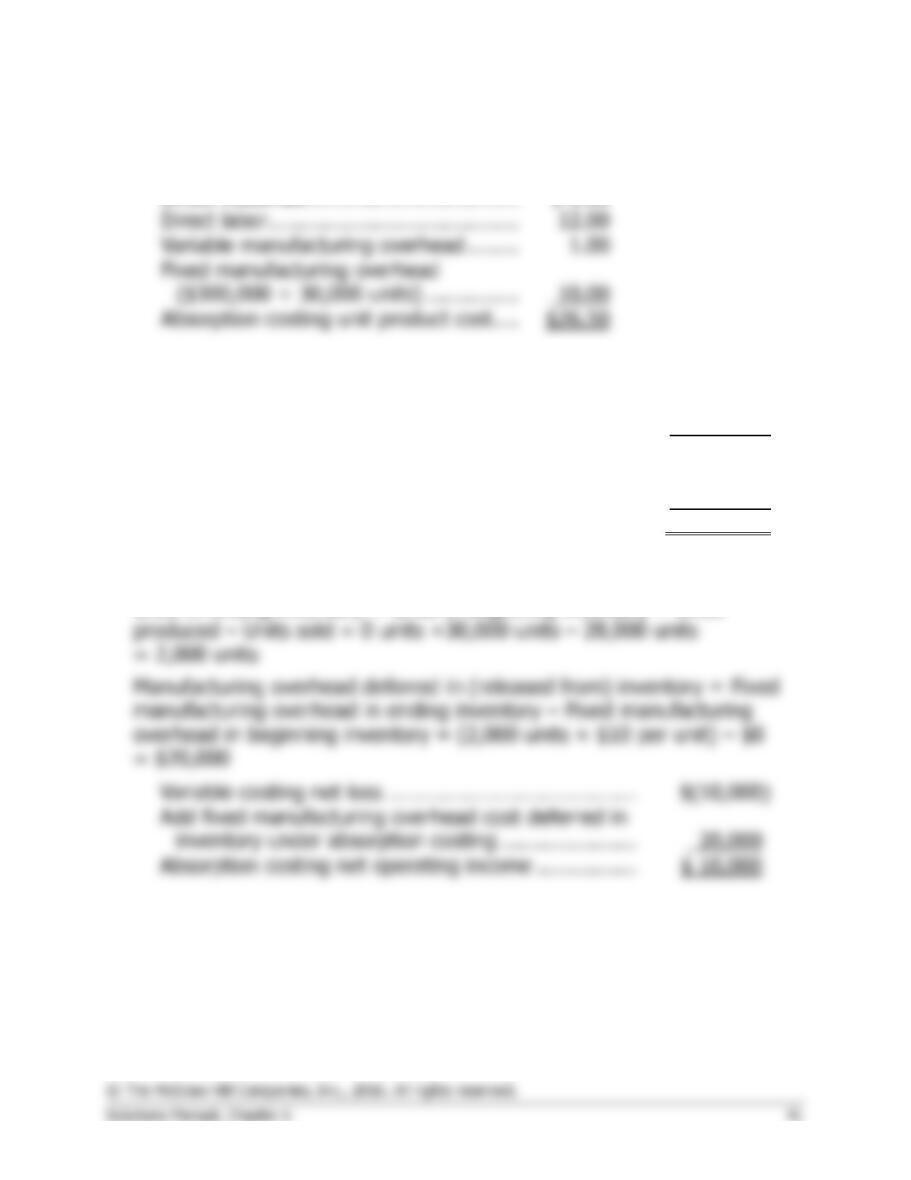
1. a. Absorption costing unit product cost is:
Direct materials …………………………….
$ 3.50
Direct labor ………………………………….
Variable manufacturing overhead ……..
Fixed manufacturing overhead
10.00
Absorption costing unit product cost ….
$26.50
b. The absorption costing income statement is:
Sales (28,000 units) ……………………………………….
$1,120,000
Cost of goods sold (28,000 units × $26.50 per unit)
742,000
Gross margin ………………………………………………..
378,000
Selling and administrative expenses
[$200,000 + (28,000 units × $6.00 per unit)] ……
368,000
Net operating income ……………………………………..
$ 10,000
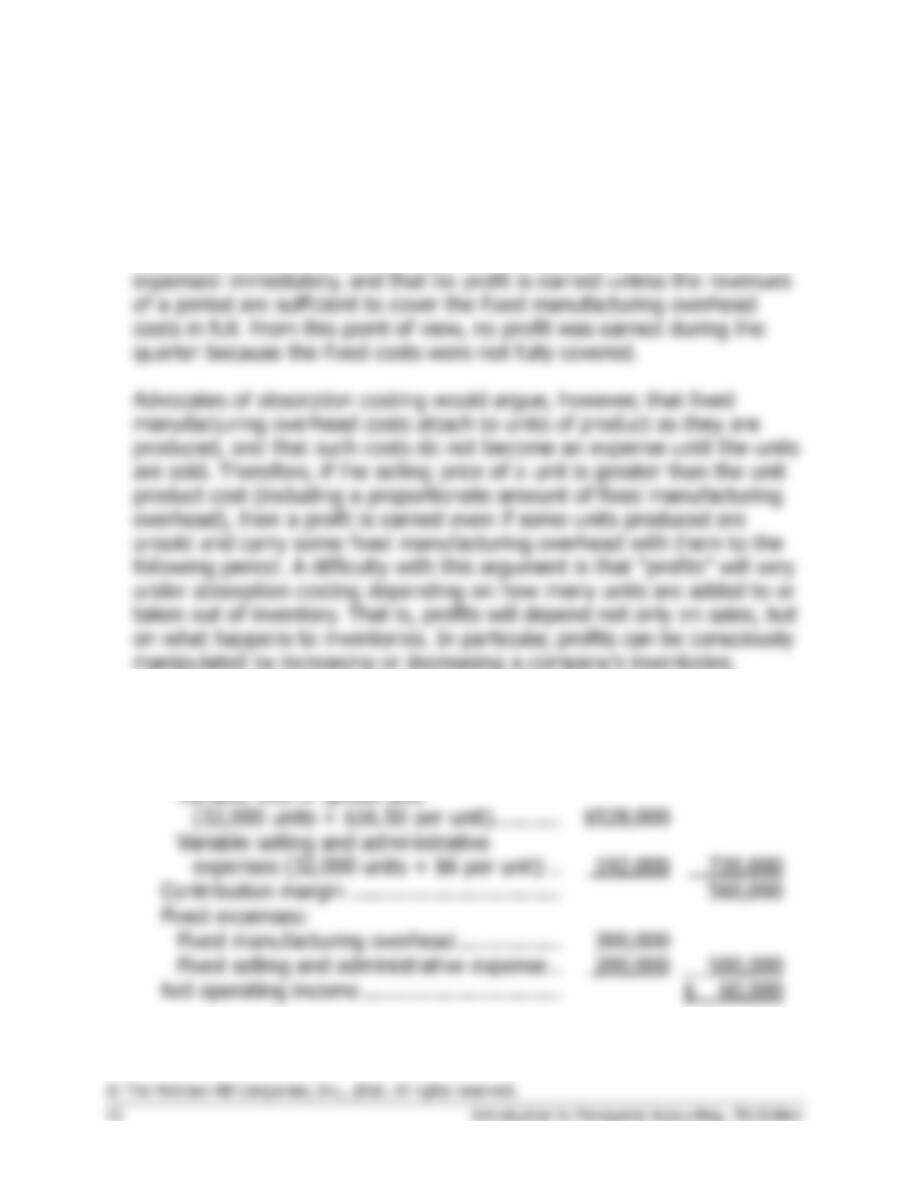
c. The reconciliation is as follows:
Units in ending inventory = Units in beginning inventory + Units
Variable costing net loss ………………………………….
Absorption costing net operating income …………….
Problem 6-23A (continued)
2. Under absorption costing, the company did earn a profit for the quarter.
However, before the question can really be answered, one must first
define what is meant by a “profit.” The central issue here relates to
timing
of release of fixed manufacturing overhead costs to expense.
Advocates of variable costing argue that all such costs should be
3. a. The variable costing income statement is:
Sales (32,000 units × $40 per unit) …………
$1,280,000
Variable expenses:
Contribution margin …………………………….
Fixed expenses:
Net operating income …………………………..
Problem 6-23A (continued)
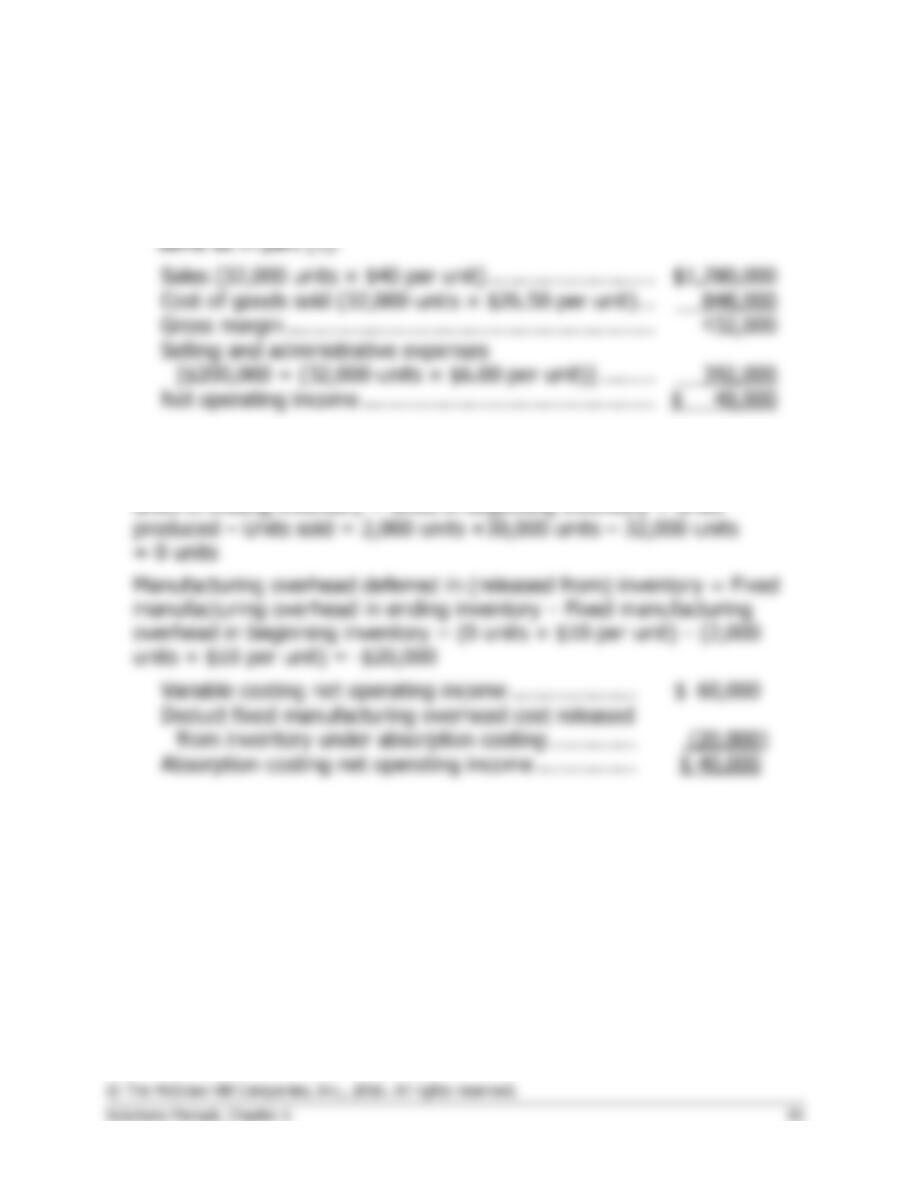
b. The absorption costing income statement would be constructed as
follows:
The absorption costing unit product cost will remain at $26.50, the
c. The reconciliation of variable costing and absorption costing income
is:
Problem 6-24A (45 minutes)
1. The intern’s decision to use the absorption format for her segmented
income statements is a bad idea because it does not focus on cost
2. To answer this question, students must understand that cost of goods
sold for a merchandiser is a variable cost. Thus, all of the company’s
fixed costs plus its sales commissions are reported as part of selling and
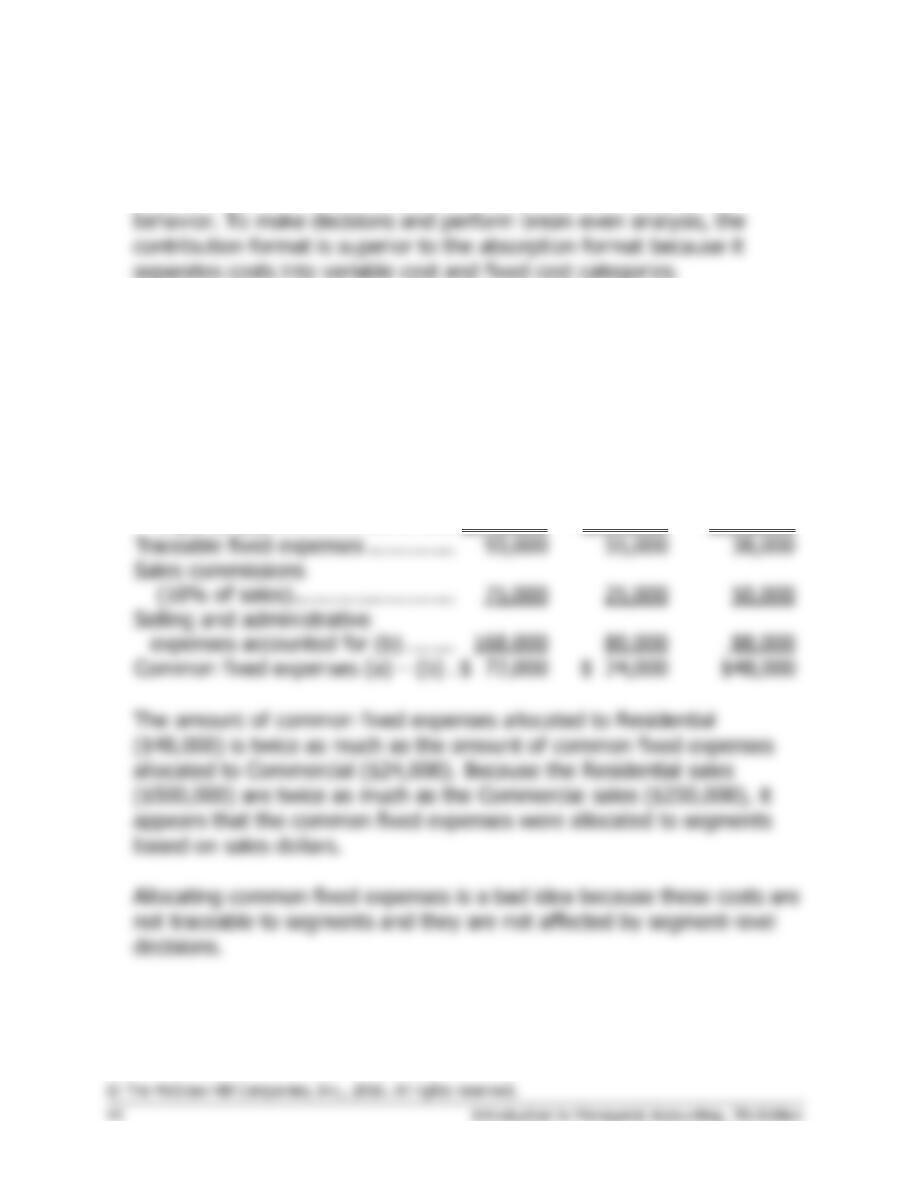
administrative expenses. The amount of common fixed expenses
allocated to each segment is computed as follows:
Total
Commercial
Residential
Total selling and administrative
expense (a) …………………………..
$240,000
$104,000
$136,000
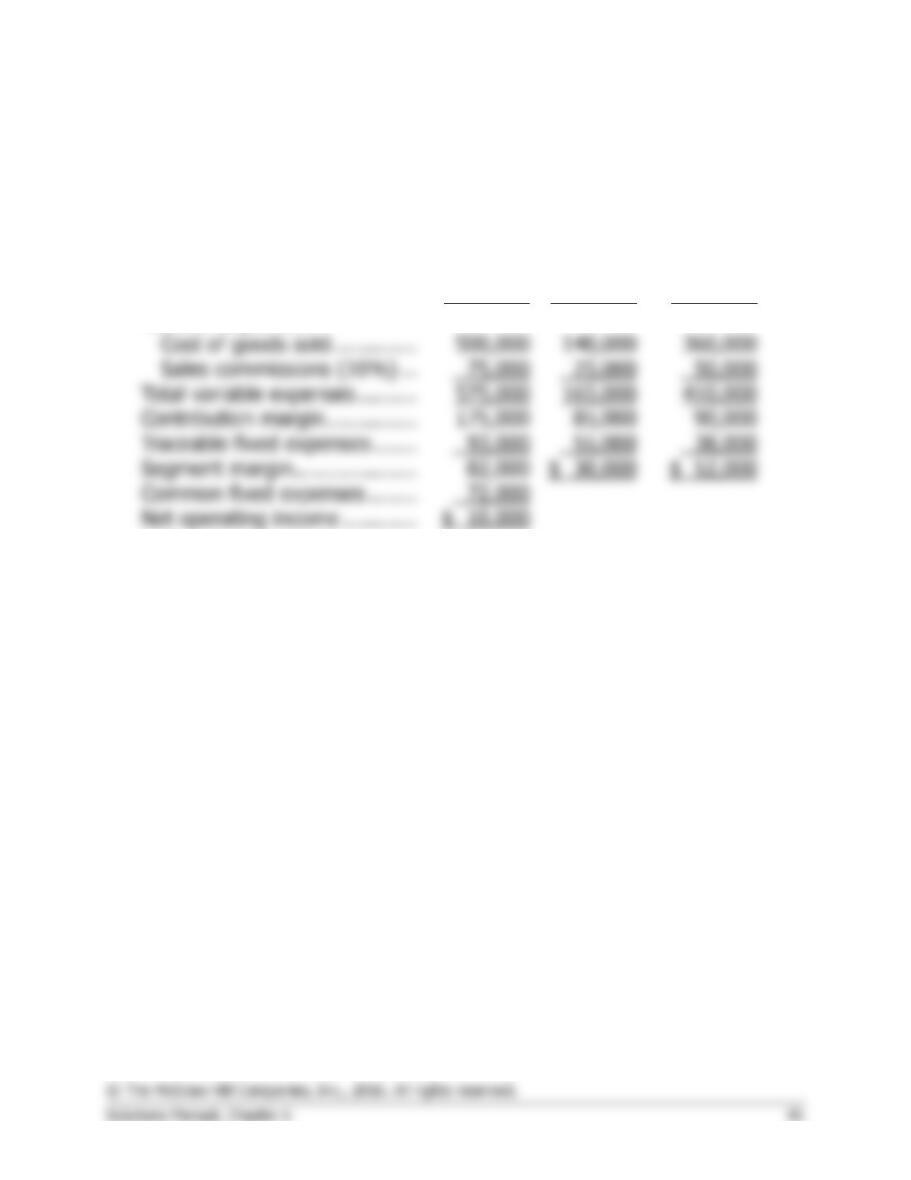
Sales commissions
Problem 6-24A (continued)
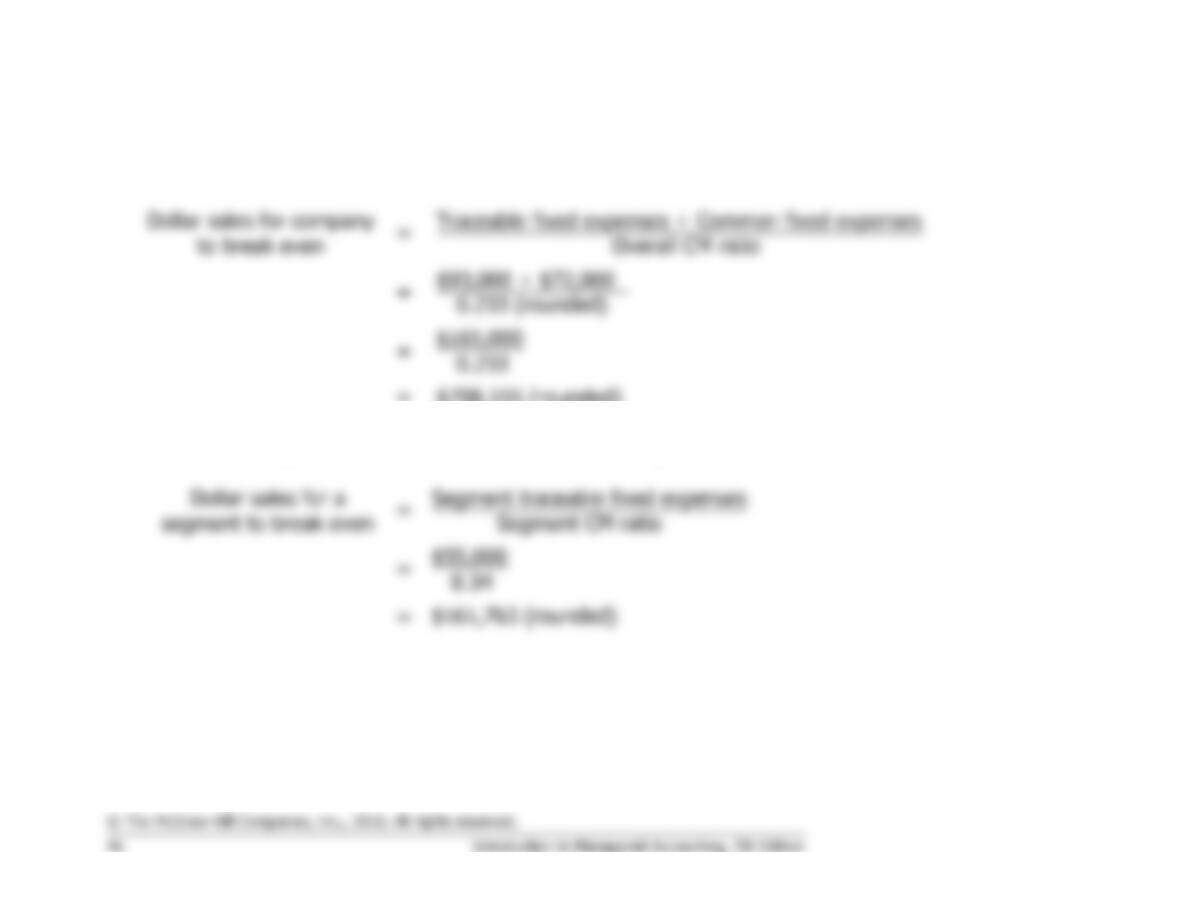
3. The contribution format segmented income statements would appear as
follows:
Total
Company
Commercial
Residential
Sales ………………………………
$750,000
$250,000
$500,000
Variable expenses:
Cost of goods sold …………..
Sales commissions (10%) …
Total variable expenses ……….
Contribution margin ……………
Traceable fixed expenses …….
Segment margin ………………..
Common fixed expenses ……..
Net operating income …………
Problem 6-24A (continued)
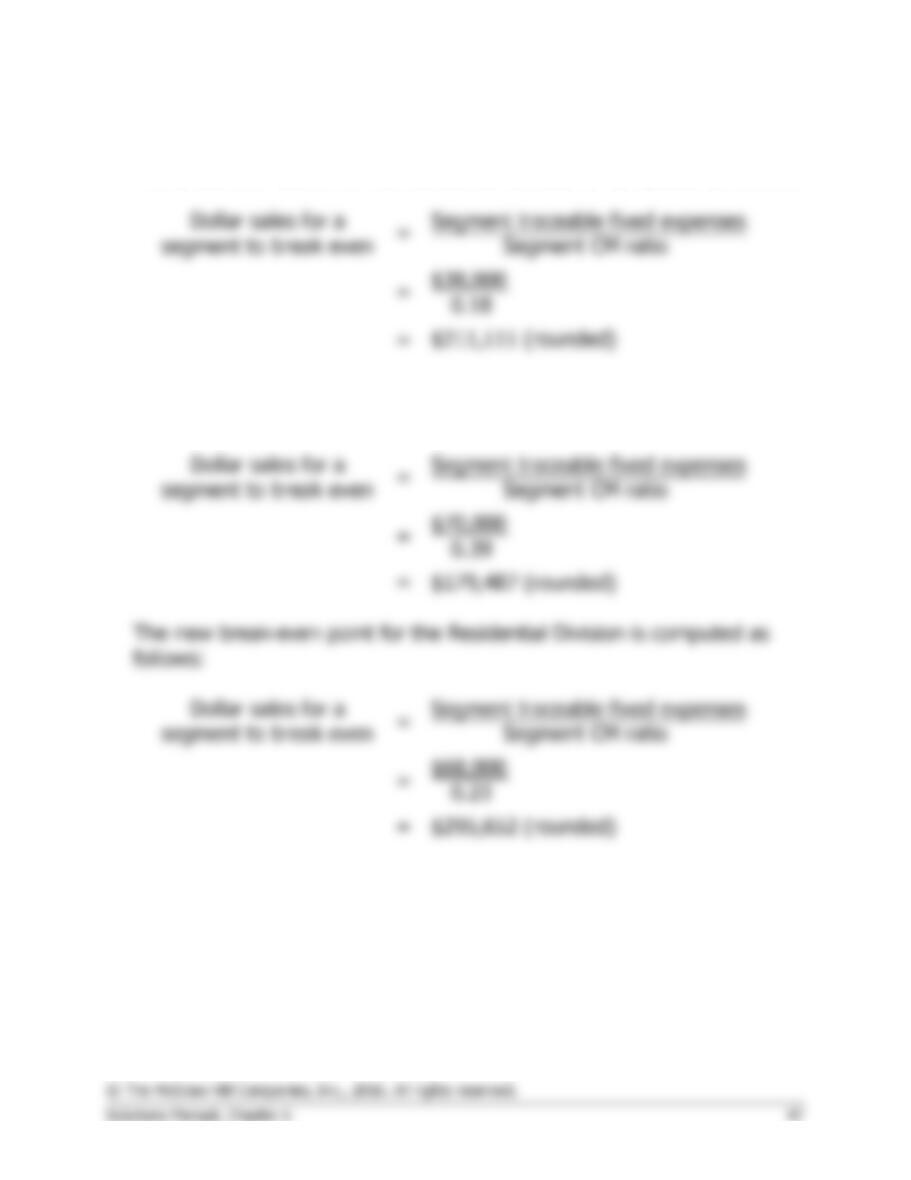
4. The companywide break-even point is computed as follows:
0.233 (rounded)
=
$708,155 (rounded)
5. The break-even point for the Commercial Division is computed as follows:
0.34
=
$161,765 (rounded)
Problem 6-24A (continued)
The break-even point for the Residential Division is computed as follows:
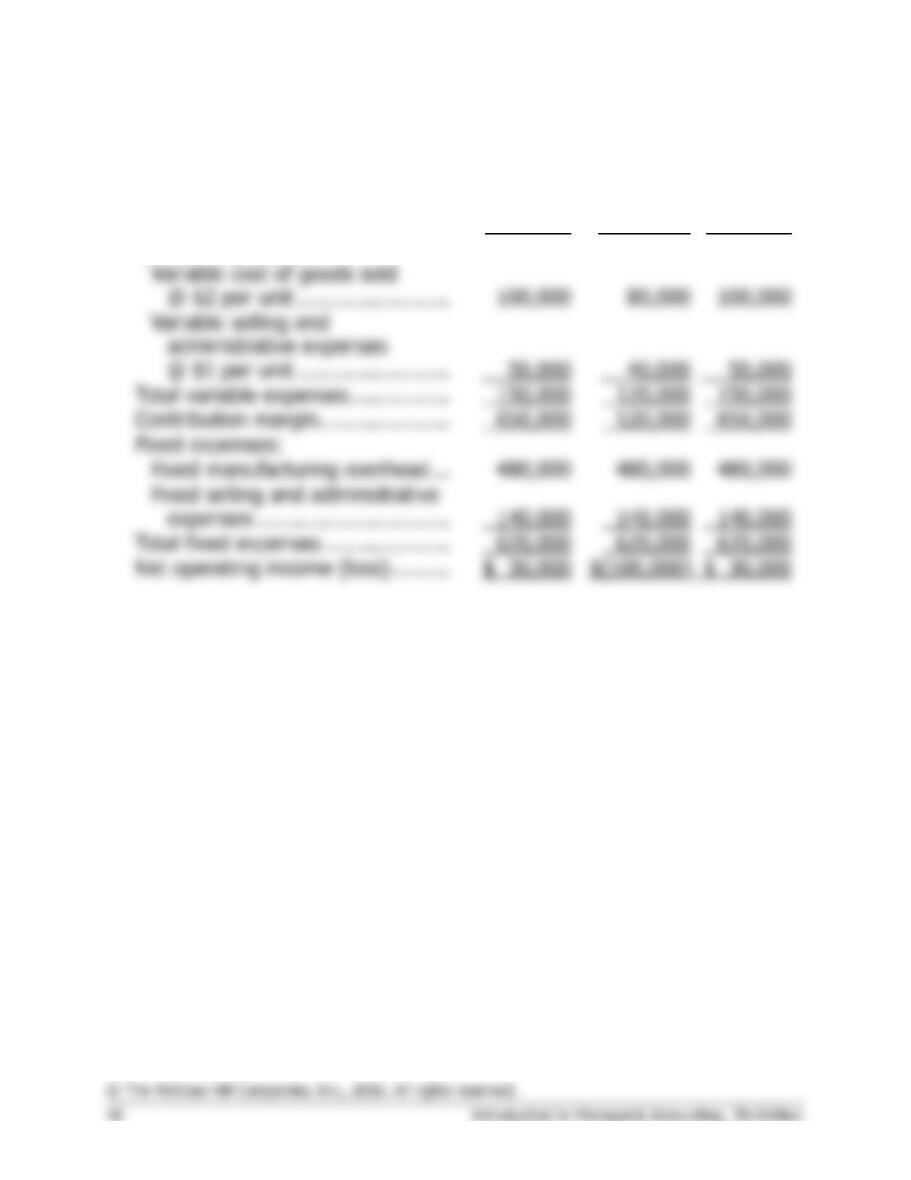
6. The new break-even point for the Commercial Division is computed as
follows:
Problem 6-25A (75 minutes)
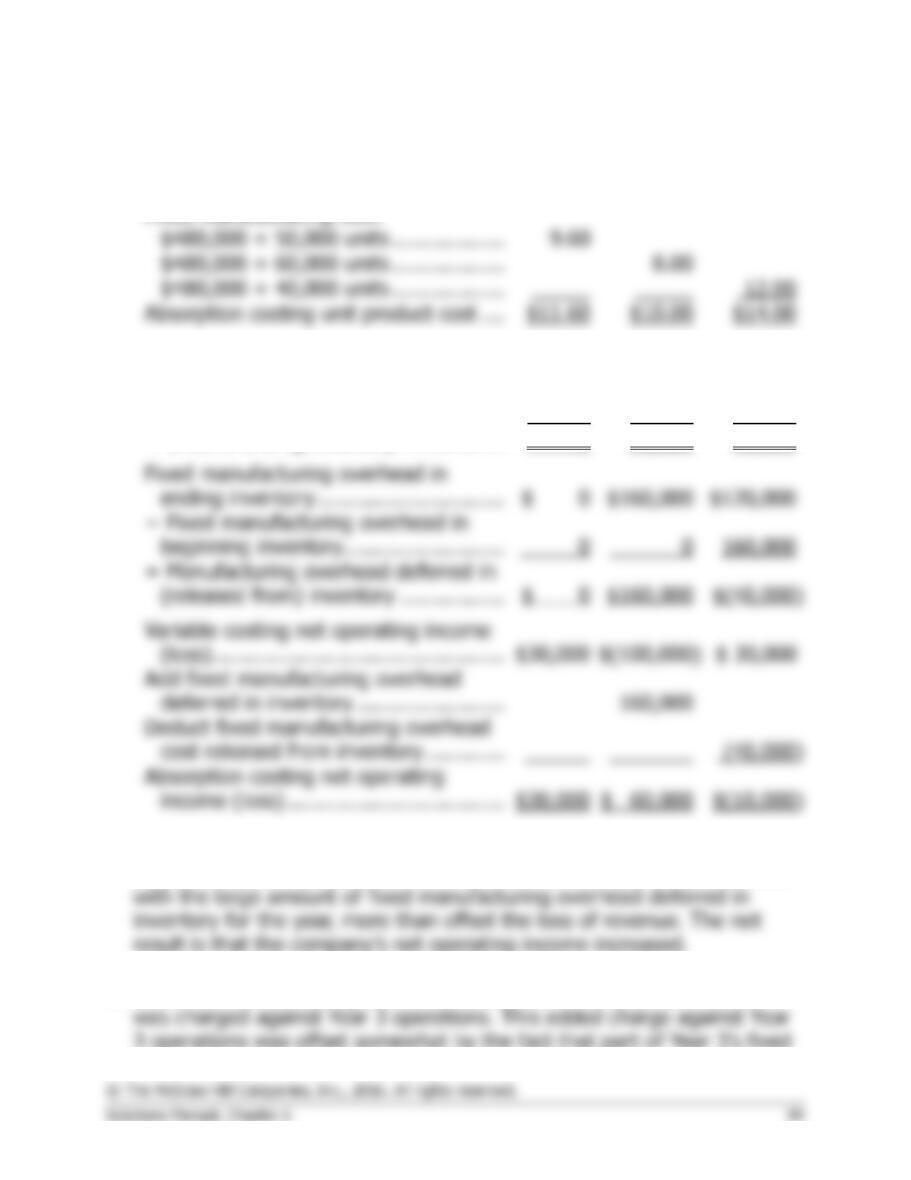
1.
Year 1
Year 2
Year 3
Unit sales ………………………………
50,000
40,000
50,000
Sales ……………………………………
$800,000
$ 640,000
$800,000
Variable expenses:
Total variable expenses …………….
Contribution margin …………………
Fixed expenses:
480,000
Total fixed expenses ………………..
Net operating income (loss) ………
Problem 6-25A (continued)
2.
a.
Year 1
Year 2
Year 3
Variable manufacturing cost …………….
$ 2.00
$ 2.00
$ 2.00
Fixed manufacturing cost:
Absorption costing unit product cost ….
$11.60
$10.00
$14.00
b.
Units in beginning inventory …………….
0
0
20,000
+ Units produced …………………………..
50,000
60,000
40,000
− Units sold …………………………………
50,000
40,000
50,000
= Units in ending inventory ……………..
0
20,000
10,000
0
$30,000
$(100,000)
$30,000
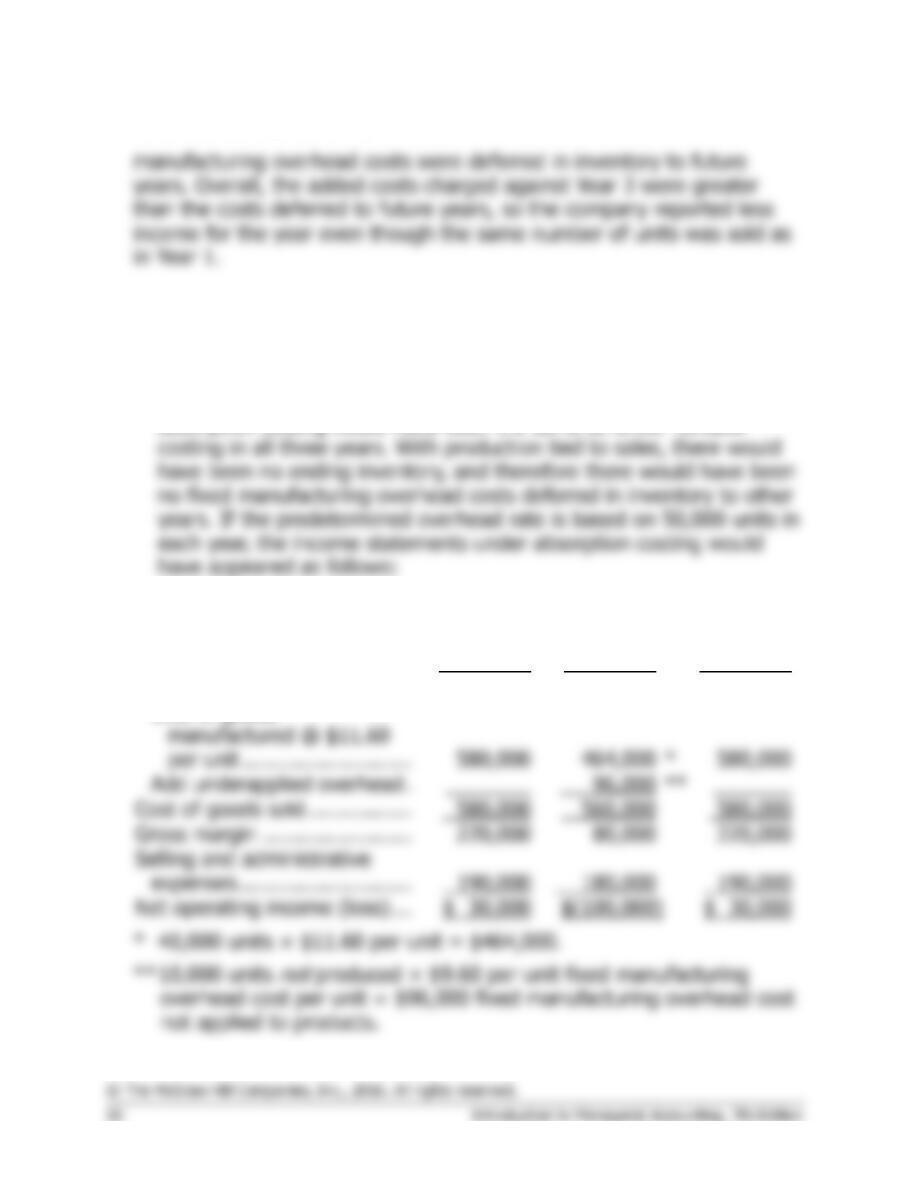
3. Production went up sharply in Year 2, thereby reducing the unit product
cost, as shown in (2a) above. This reduction in cost per unit, combined
4. The fixed manufacturing overhead deferred in inventory from Year 2
Problem 6-25A (continued)
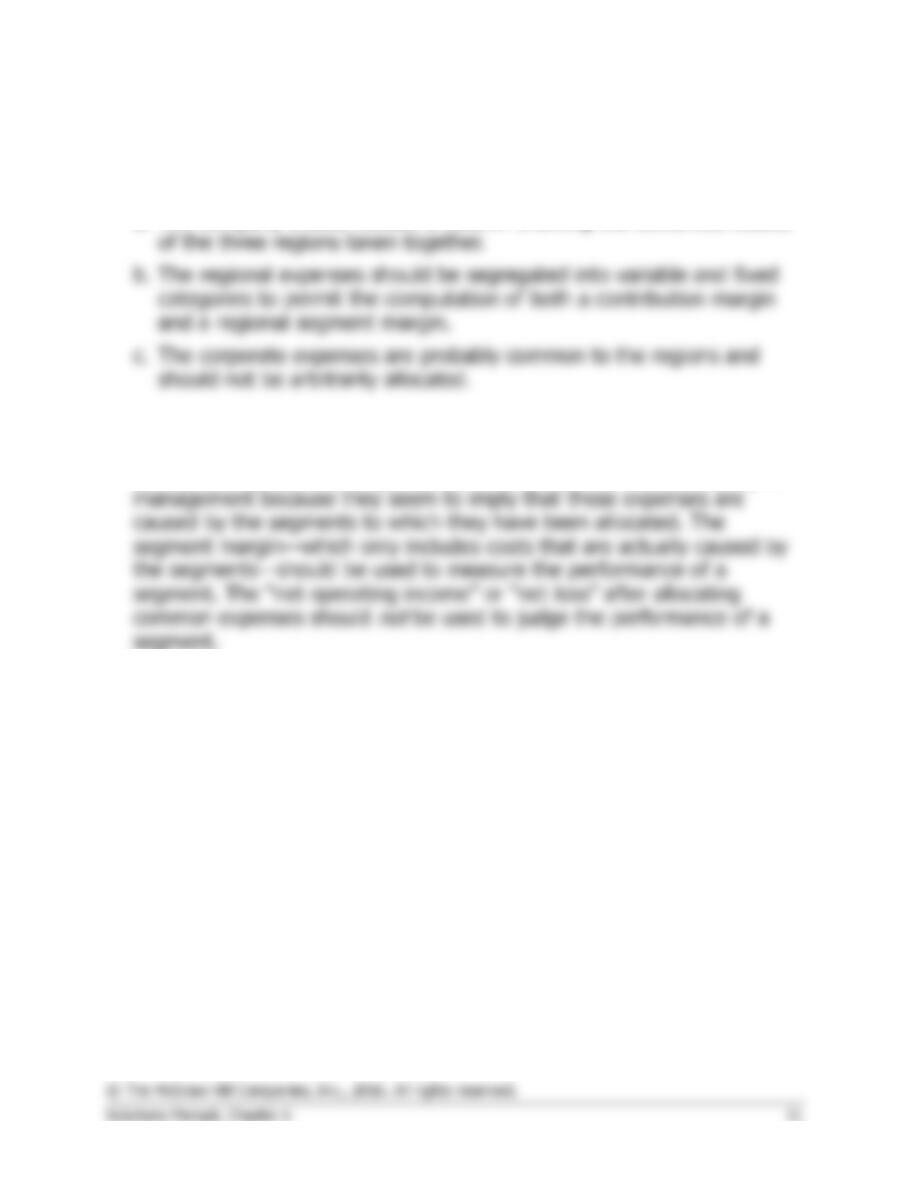
5. a. With lean production, production would have been tied to sales in
each year so that little or no inventory of finished goods would have
been built up in either Year 2 or Year 3.
b. If lean production had been in use, the net operating income under
absorption costing would have been the same as under variable
Year 1
Year 2
Year 3
Unit sales …………………………
50,000
40,000
50,000
Sales ………………………………
$ 800,000
$ 640,000
$ 800,000
Cost of goods sold:
*
Cost of goods sold ……………..
Gross margin ……………………
Net operating income (loss) …
Cost of goods
Problem 6-26A (60 minutes)
1. The disadvantages or weaknesses of the company’s version of a
segmented income statement are as follows:
a. The company should include a column showing the combined results
2. Corporate advertising expenses have been allocated on the basis of
sales dollars; the general administrative expenses have been allocated
evenly among the three regions. Such allocations can be misleading to
Problem 6-26A (continued)
3.
Total Company
West
Central
East
Sales ……………………………….
$2,000,000
100.0
$450,000
100
$800,000
100
$750,000
100
Variable expenses:
Cost of goods sold ……………
819,400
41.0
162,900
36
280,000
35
376,500
50
Shipping expense ……………..
77,600
3.9
17,100
4
32,000
4
28,500
4
Total variable expenses ………..
180,000
39
54
Contribution margin …………….
Traceable fixed expenses:
Salaries ………………………….
313,000
90,000
135,000
18
Utilities …………………………..
12,000
15,000
Advertising ……………………..
518,000
108,000
200,000
210,000
Depreciation ……………………
85,000
4.3
27,000
6
4
4
Total traceable fixed expenses .
Regional segment margin ……..
$ 31,500
Common fixed expenses:
Advertising (general) …………
General administration ………
Total common fixed expense …
Net operating loss ………………
Problem 6-26A (continued)
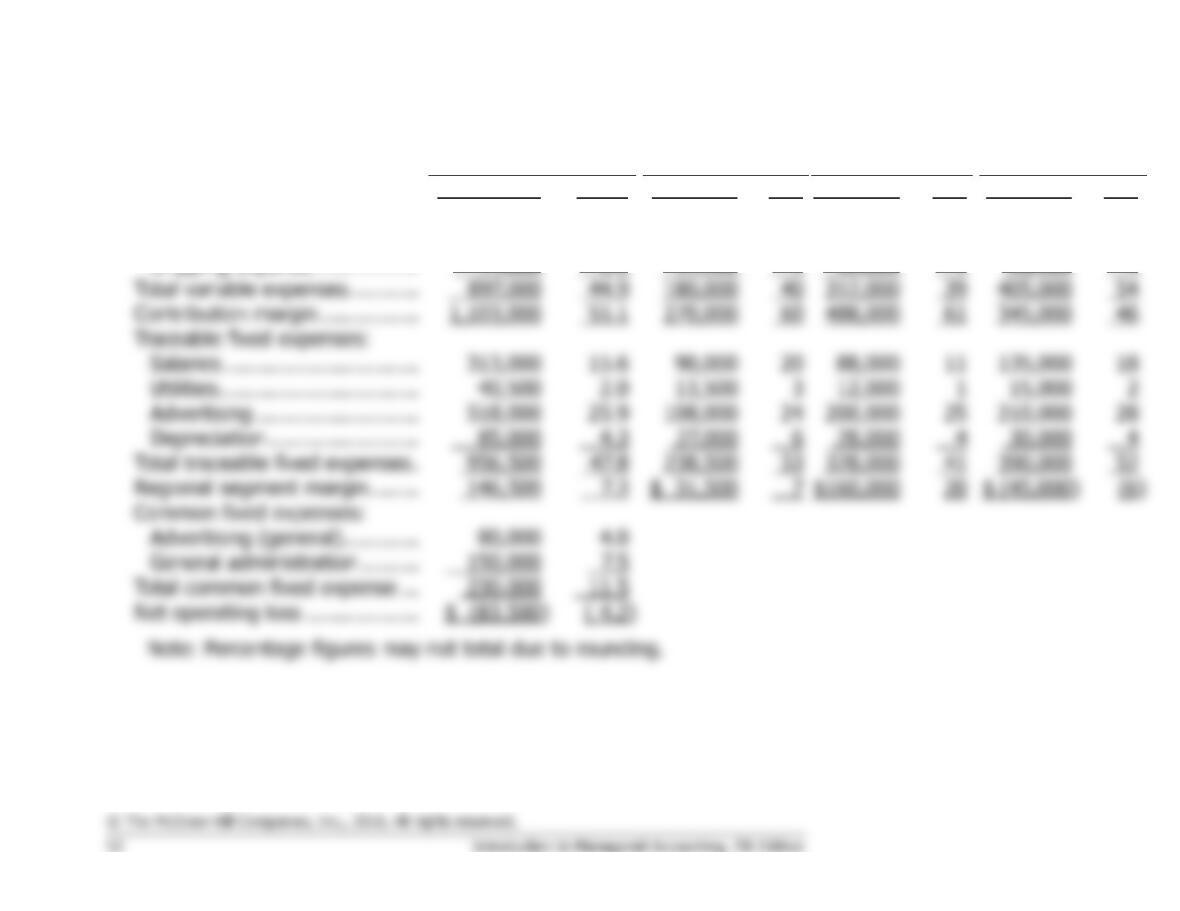
4. The following points should be brought to the attention of management:
a. Sales in the West are much lower than in the other two regions. This
is not due to lack of salespeople—salaries in the West are about the
same as in the Central Region, which has the highest sales of the
three regions.
Ethics Challenge (30 minutes)
1. Because of soft demand for the Brazilian Division’s product, the
inventory should be drawn down to the minimum level of 50 units.
Drawing inventory down to the minimum level would require production
as follows during the last quarter:
2. To maximize the Brazilian Division’s operating income, Mr. Cavalas could
produce as many units as storage facilities will allow. By building
inventory to the maximum level, Mr. Cavalas would be able to defer a
portion of the year’s fixed manufacturing overhead costs to future years
Ethics Challenge (continued)
Thus, by producing enough units to build inventory to the maximum
3. By setting a production schedule that will maximize his division’s net
operating income—and maximize his own bonus—Mr. Cavalas would be
acting against the best interests of the company as a whole. The extra
units aren’t needed and would be expensive to carry in inventory.
Analytical Thinking (45 minutes)
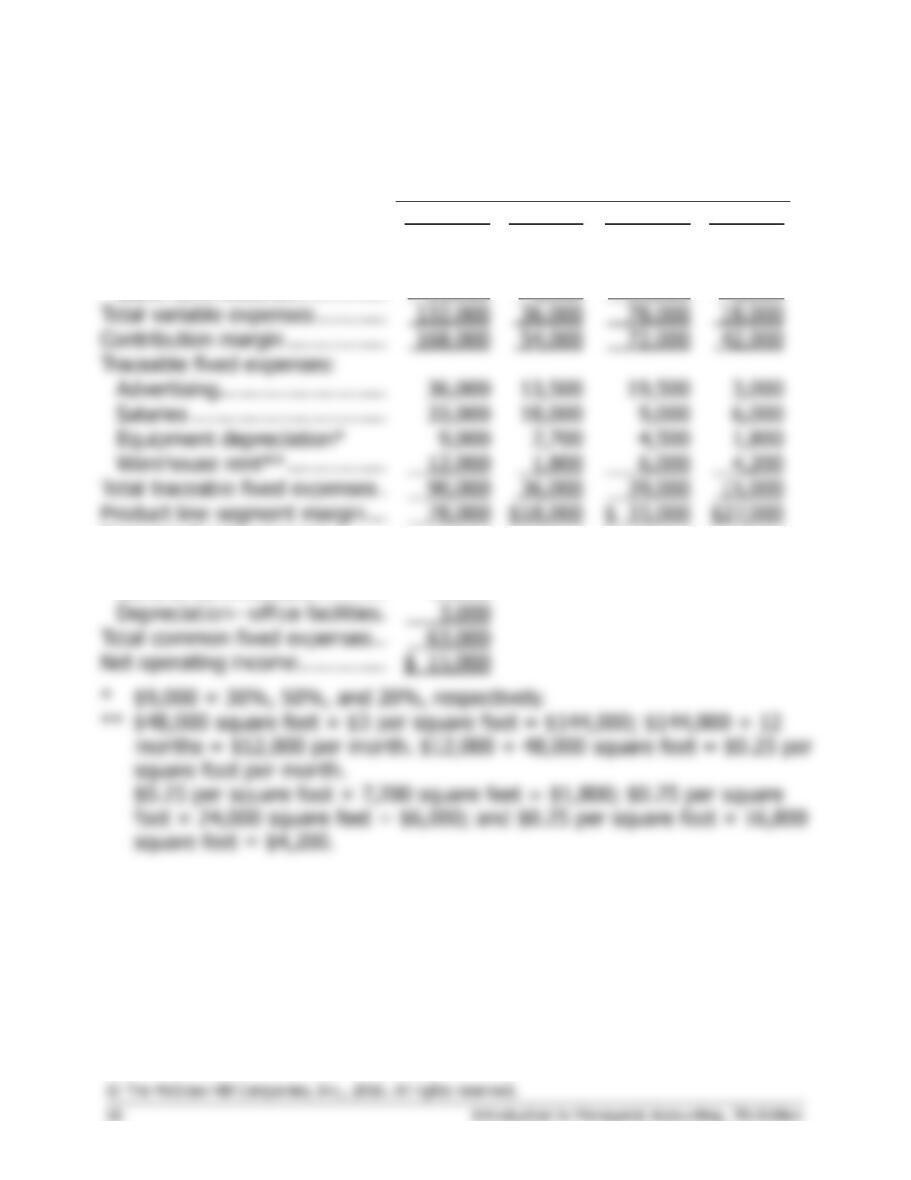
1.
Total
Company
Cook–
book
Travel
Guide
Handy
Speller
Sales …………………………..……
$300,000
$90,000
$150,000
$60,000
Variable expenses:
Printing cost …………………….
102,000
27,000
63,000
12,000
Sales commissions…………….
30,000
9,000
15,000
6,000
36,000
78,000
18,000
54,000
72,000
42,000
Traceable fixed expenses:
Salaries ………………………….
33,000
18,000
Equipment depreciation*
Warehouse rent** …………….
12,000
1,800
6,000
90,000
36,000
39,000
15,000
Product line segment margin …
78,000
$18,000
$ 33,000
Common fixed expenses:
General sales …………………..
18,000
General administration ……….
42,000
63,000
Net operating income …………..
$ 15,000
*
$9,000 × 30%, 50%, and 20%, respectively.