6-38
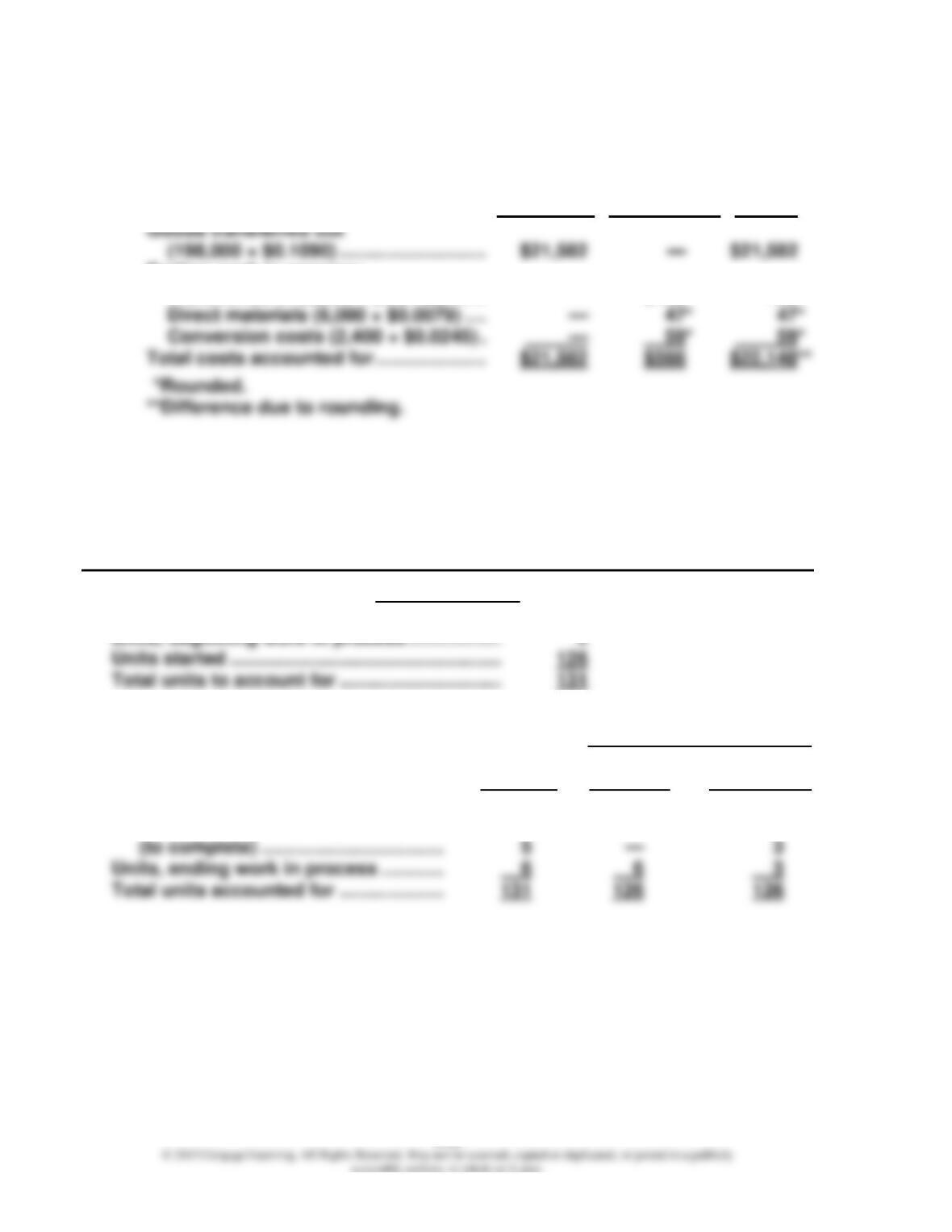
Problem 6.38 (Concluded)
Costs accounted for:
Transferred Ending Work
Out in Process Total
Ending work in process:
Transferred in (6,000 × $0.0766) ……. — $460* 460*
Problem 6.39
Healthway
Mixing Department
Production Report for July 20XX
Unit Information
Units to account for:
Units accounted for:
Equivalent Units
Physical Direct Conversion
Flow Materials Costs
Units started and completed …………… 120 120 120
Units, beginning work in process
6-39
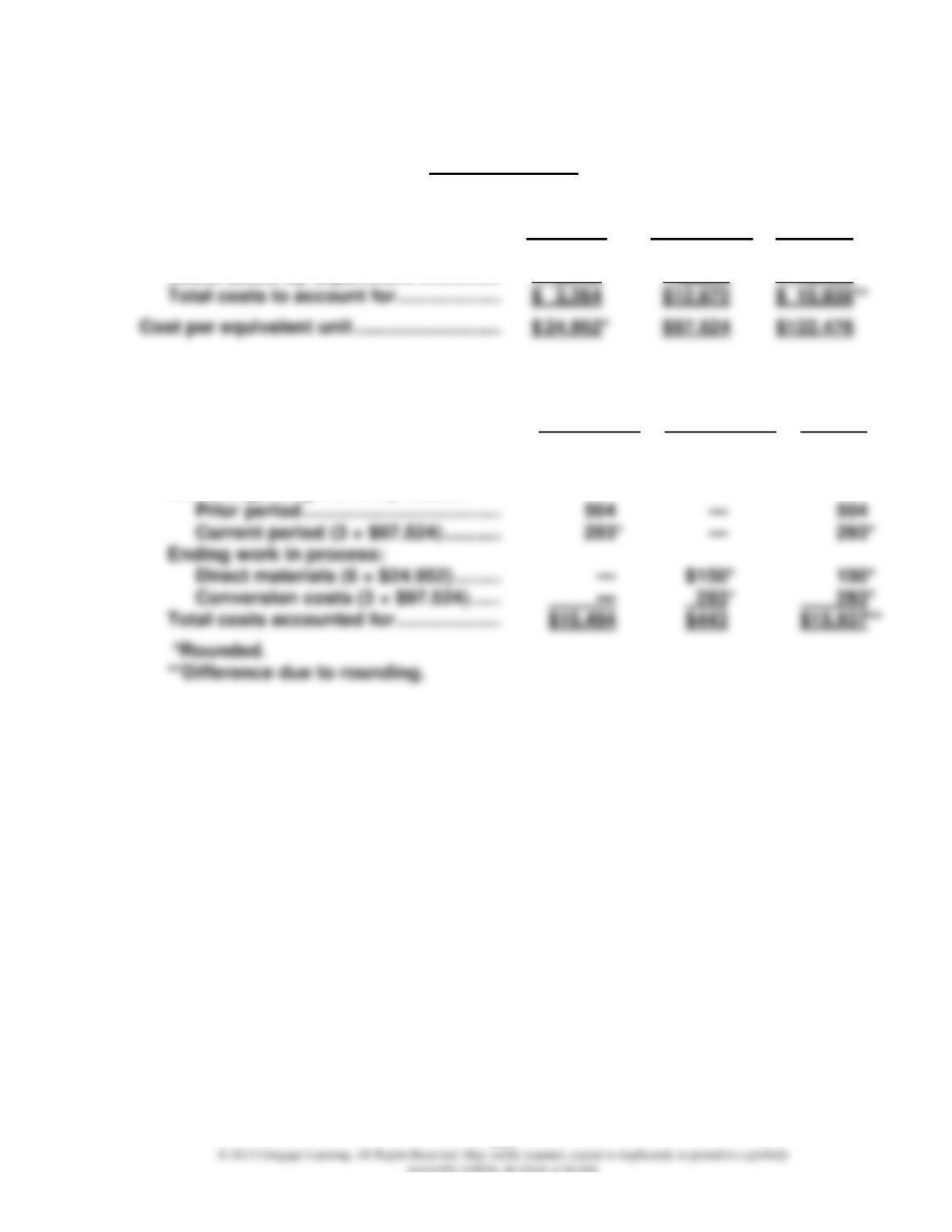
Problem 6.39 (Continued)
Cost Information
Costs to account for:
Direct Conversion
Materials Costs Total
Costs in beginning work in process … $ 120 $ 384 $ 504
Costs added by department ……………. 3,144 12,288 15,432
Costs accounted for:
Transferred Ending Work
Out in Process Total
Goods started and completed
(120 × $122.476) …………………………. $14,697* — $14,697*
Units, beginning work in process:
6-40
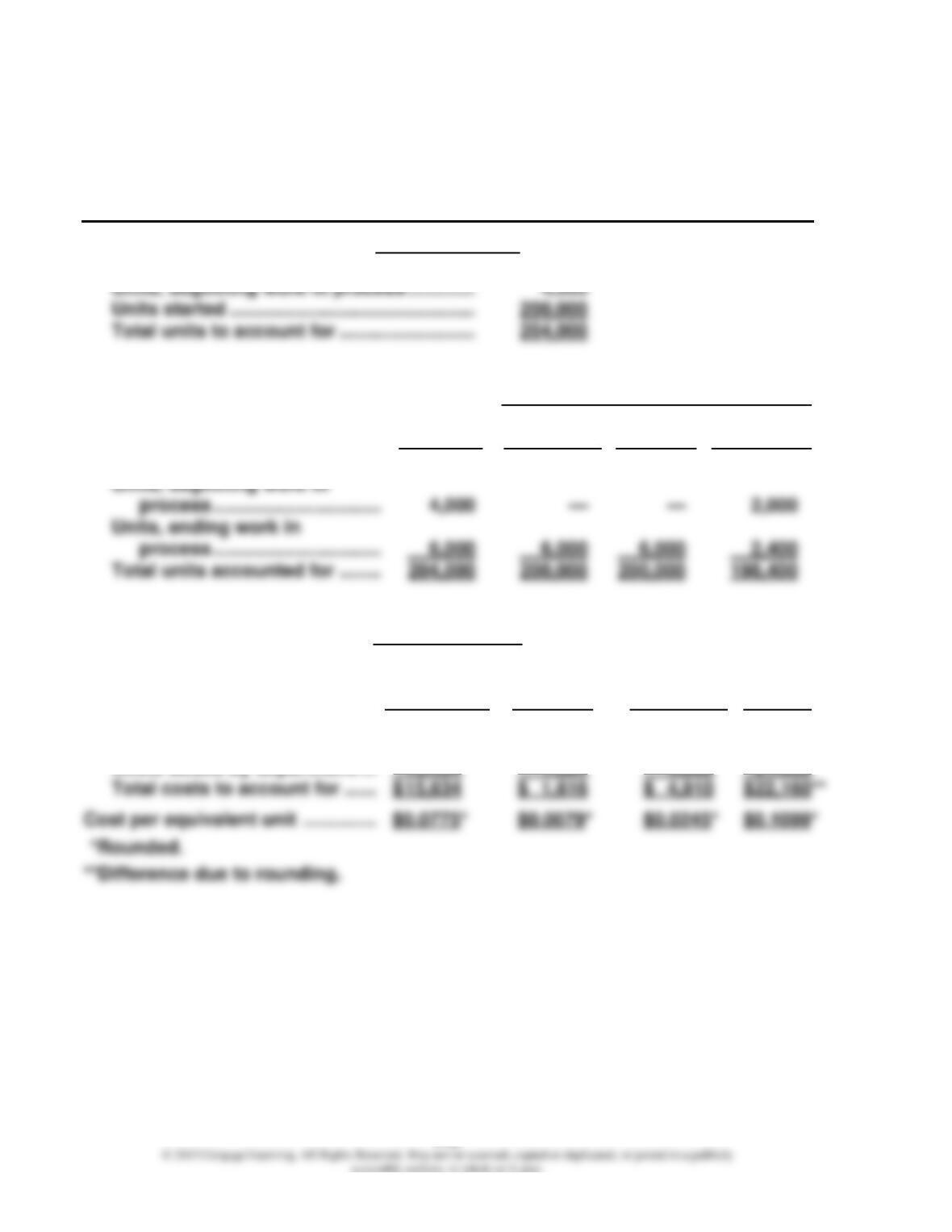
Problem 6.39 (Continued)
Healthway
Tableting Department
Production Report for July 20XX
Unit Information
Units to account for:
Units accounted for:
Equivalent Units
Physical Transferred Direct Conversion
Flow In Materials Costs
Units started and completed … 194,000 194,000 194,000 194,000
Cost Information
Costs to account for:
Transferred Direct Conversion
In Materials Costs Total
Costs in beginning work in
process …………………………. $ 140 $ 32 $ 50 $ 222
Costs added by department … 15,494 1,584 4,860 21,938
6-41
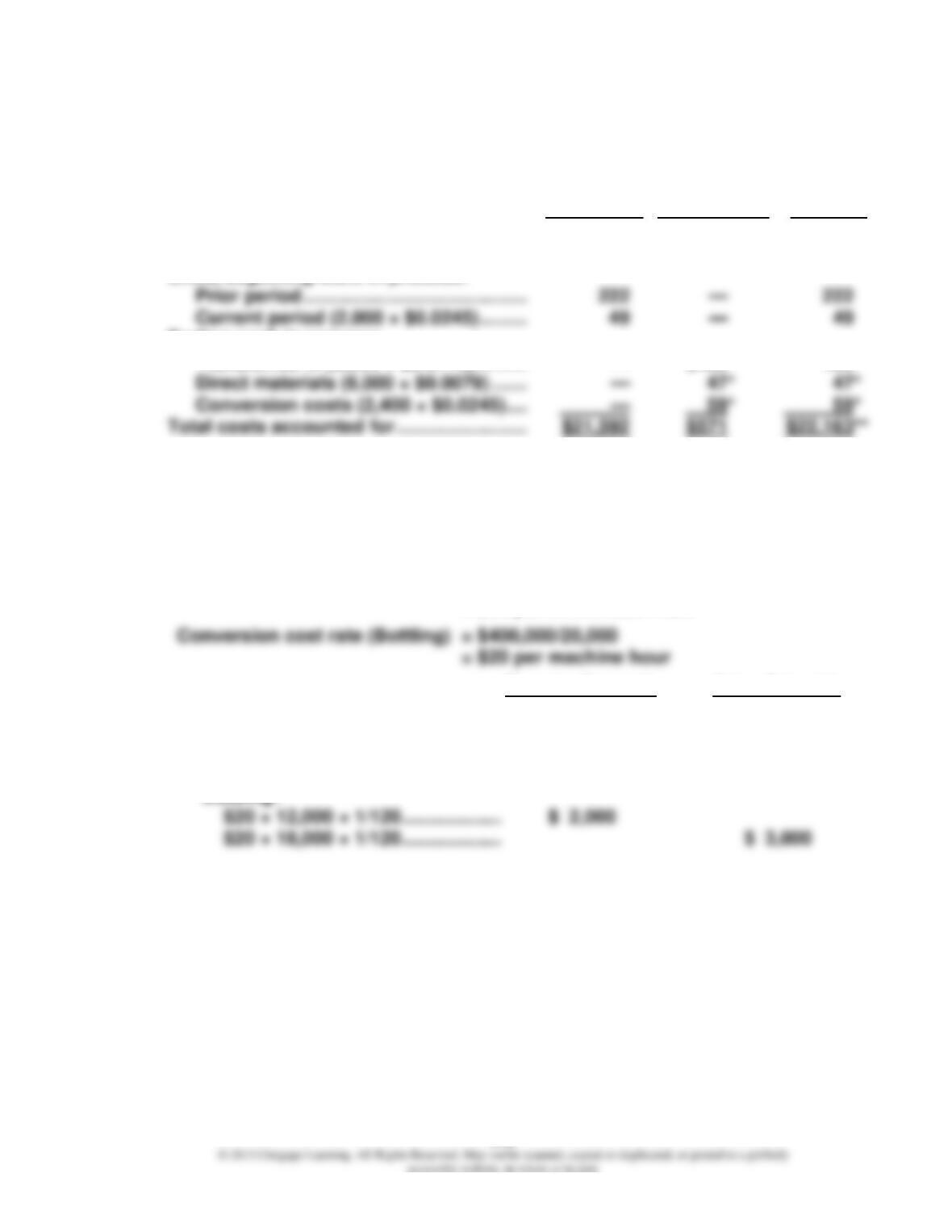
Problem 6.39 (Concluded)
Costs accounted for:
Transferred Ending Work
Out in Process Total
Goods transferred out
(194,000 × $0.1099) …………………………. $21,321* — $21,321*
Units, beginning work in process:
Ending work in process:
Transferred in (6,000 × $0.0775) ………. — $465* 465*
*Rounded.
**Difference due to rounding.
Problem 6.40
1. Conversion cost rate (Mixing) = $250,000/5,000
= $50 per direct labor hour
Regular Strength Extra Strength
Applied conversion costs:
Mixing:
$50 × 12,000 × 1/60 ………………… $10,000
$50 × 18,000 × 1/60 ………………… $15,000
Bottling:
6-42
Problem 6.40 (Continued)
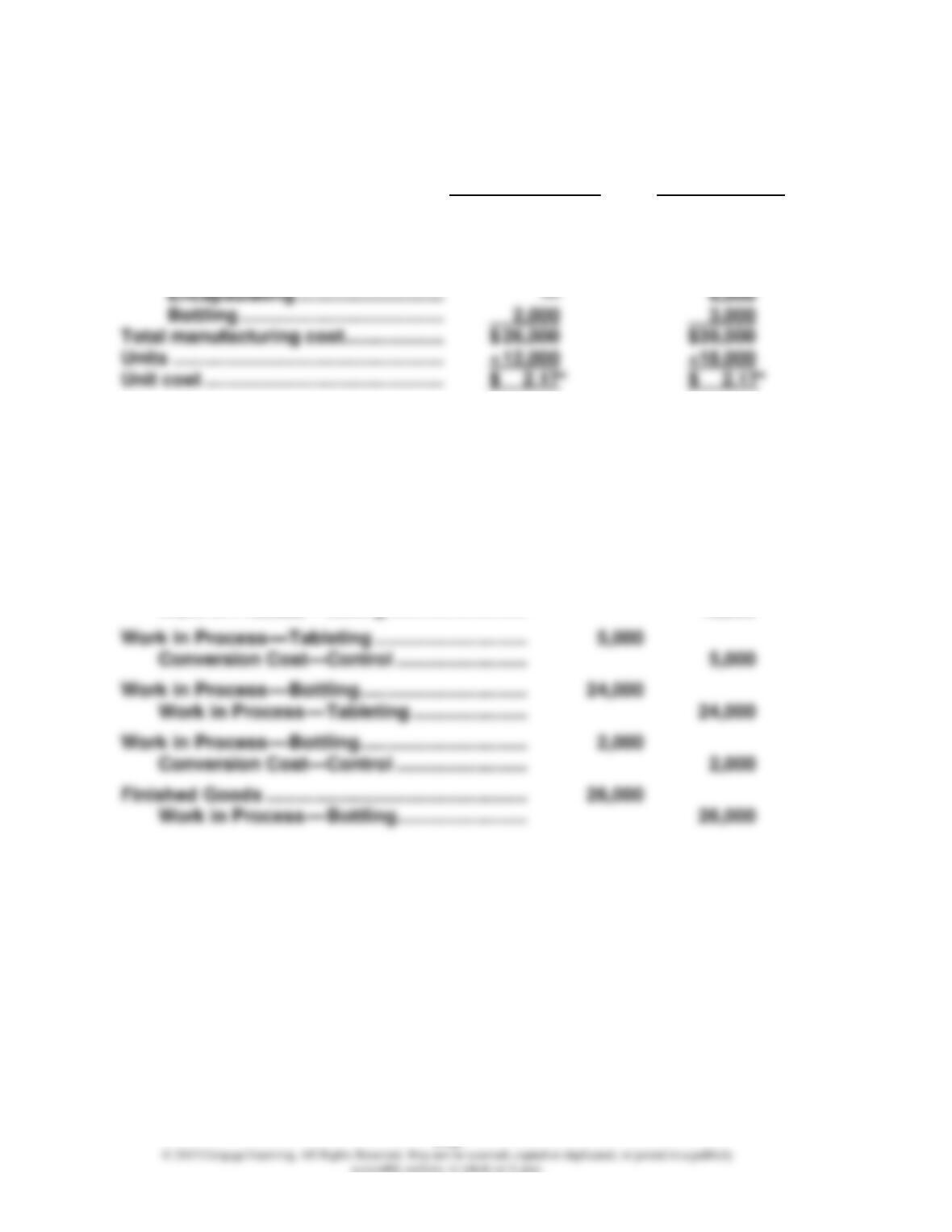
2. Unit cost computation:
Regular Strength Extra Strength
Direct materials…………………………….. $ 9,000 $15,000
Applied conversion costs:
Mixing ………………………………….. 10,000 15,000
Tableting………………………………. 5,000 —
*Rounded.
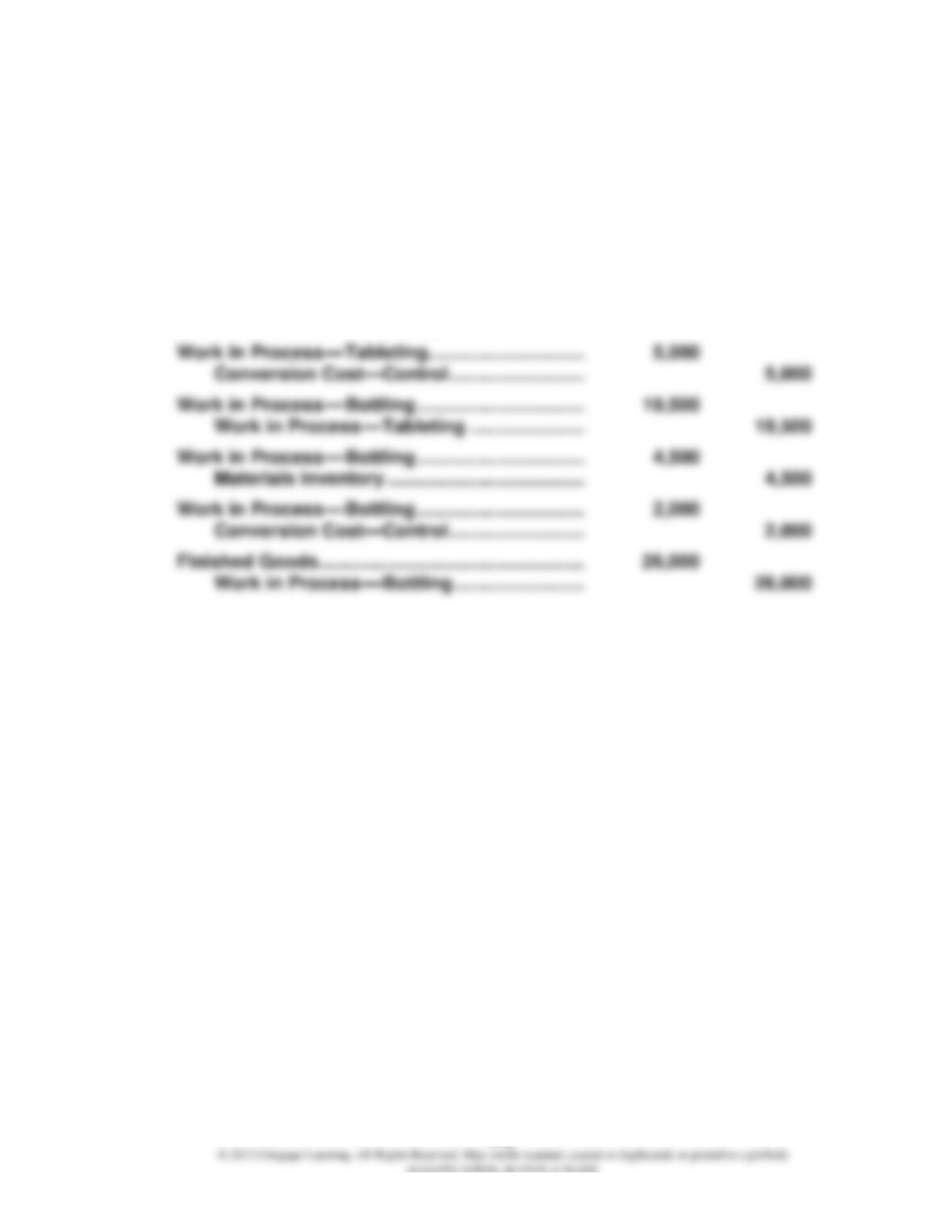
3. Journal entries:
Work in Process—Mixing ……………………………. 9,000
Materials Inventory ……………………………….. 9,000
Work in Process—Mixing ……………………………. 10,000
Conversion Cost—Control ……………………. 10,000
Work in Process—Tableting ……………………….. 19,000
Work in Process—Mixing ……………………… 19,000
6-43
Problem 6.40 (Concluded)
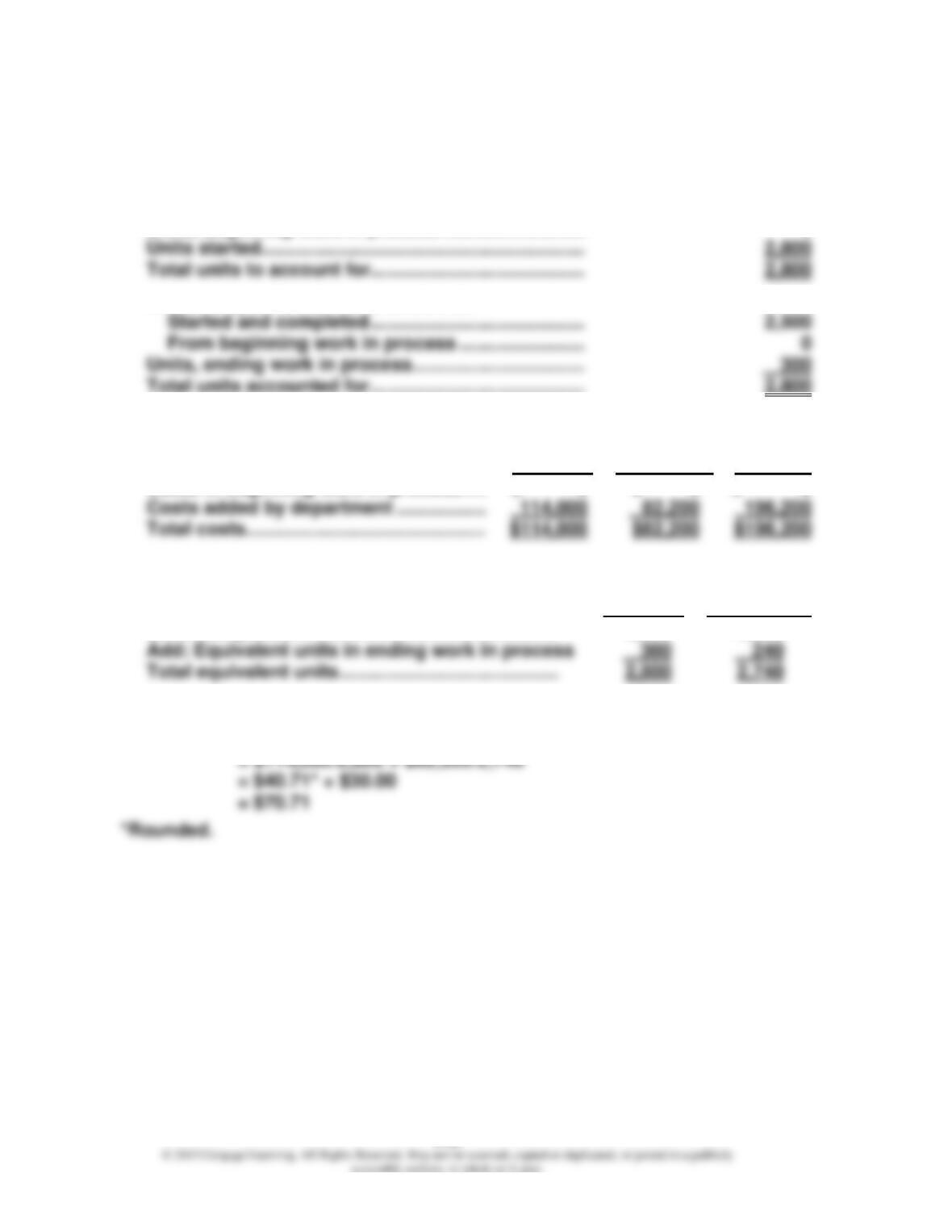
4. Revised journal entries:
Work in Process—Mixing ……………………………. 4,500
Materials Inventory ……………………………….. 4,500
Work in Process—Mixing ……………………………. 10,000
Conversion Cost—Control …………………….. 10,000
Work in Process—Tableting ………………………… 14,500
Work in Process—Mixing ……………………… 14,500
6-44
Problem 6.41
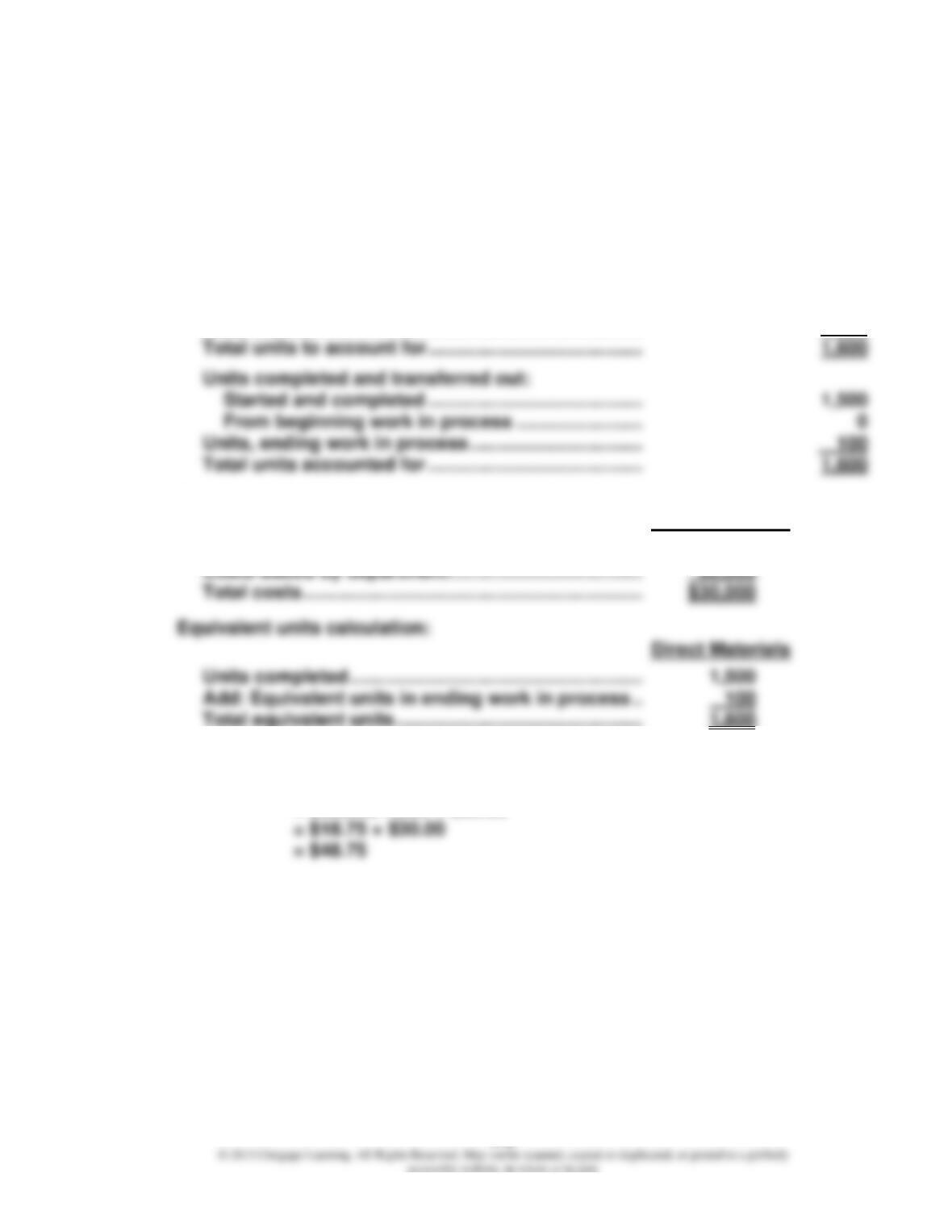
1. Unit cost computation:
Physical flow schedule:
Units, beginning work in process ……………………… 0
Units completed and transferred out:
Costs charged to the department:
Direct Conversion
Materials Costs Total
Costs in beginning work in process …. $ 0 $ 0 $ 0
Equivalent units calculation:
Direct Conversion
Materials Costs
Units completed …………………………..………………. 2,500 2,500
Unit cost calculation:
Unit cost = Unit direct materials cost + Unit conversion costs
6-45
Problem 6.41 (Continued)
2. Since conversion activity is the same for both bows, only the materials cost
will differ. Thus, the unit materials cost is computed and then added to the
unit conversion costs obtained in Requirement 1.
Econo Model
Physical flow schedule:
Units, beginning work in process ……………………… 0
Units started …………………………………………………….. 1,600
Direct materials cost charged to the department:
Direct Materials
Costs in beginning work in process ………………….. $ 0
Unit cost calculation:
Unit cost = Unit direct materials cost + Unit conversion costs
= $30,000/1,600 + $30.00
6-46
Problem 6.41 (Continued)
Deluxe Model
Physical flow schedule:
Units, beginning work in process ……………………… 0
Units started …………………………………………………….. 1,200
Total units to account for………………………………….. 1,200
Units completed and transferred out:
Direct materials cost charged to the department:
Direct Materials
Equivalent units calculation:
Direct Materials
Units completed …………………………..…………………… 1,000
6-47
Problem 6.41 (Concluded)
3. Unit cost for Econo model ……………………………….. $ 48.75
Unit cost for Deluxe model ………………………………. $100.00
Unit cost for both together……………………………….. $ 70.71
Using pure process costing understates the cost of the Deluxe model and
overstates the cost of the Econo model. The error is large, so Karen seems to
4. The profitability of the Econo line was being understated by nearly $22, while
that of the Deluxe line was overstated by over $29, producing an erroneous
6-48
Problem 6.42
1. Transferred Direct Conversion
In Materials Costs
Transferred out ………………………………….. 330,000 330,000 330,000
Normal spoilage…………………………………. 20,000 20,000 20,000
2. Transferred in = $2,000,000/400,000 = $5.00
3. Cost of units transferred out = ($8.50 × 330,000) + ($8.50 × 20,000)
= $2,805,000 + $170,000
Cost of ending work in process:
4. If all spoilage is abnormal, it would not be added to the cost of goods trans-
ferred out. It would be assigned to a loss account and treated as a loss of the
period. The following journal entry is required:
Loss from Abnormal Spoilage …………………….. 170,000
5. If there is 80% abnormal spoilage, then the cost of 16,000 units ($8.50 ×
6-49
Problem 6.43
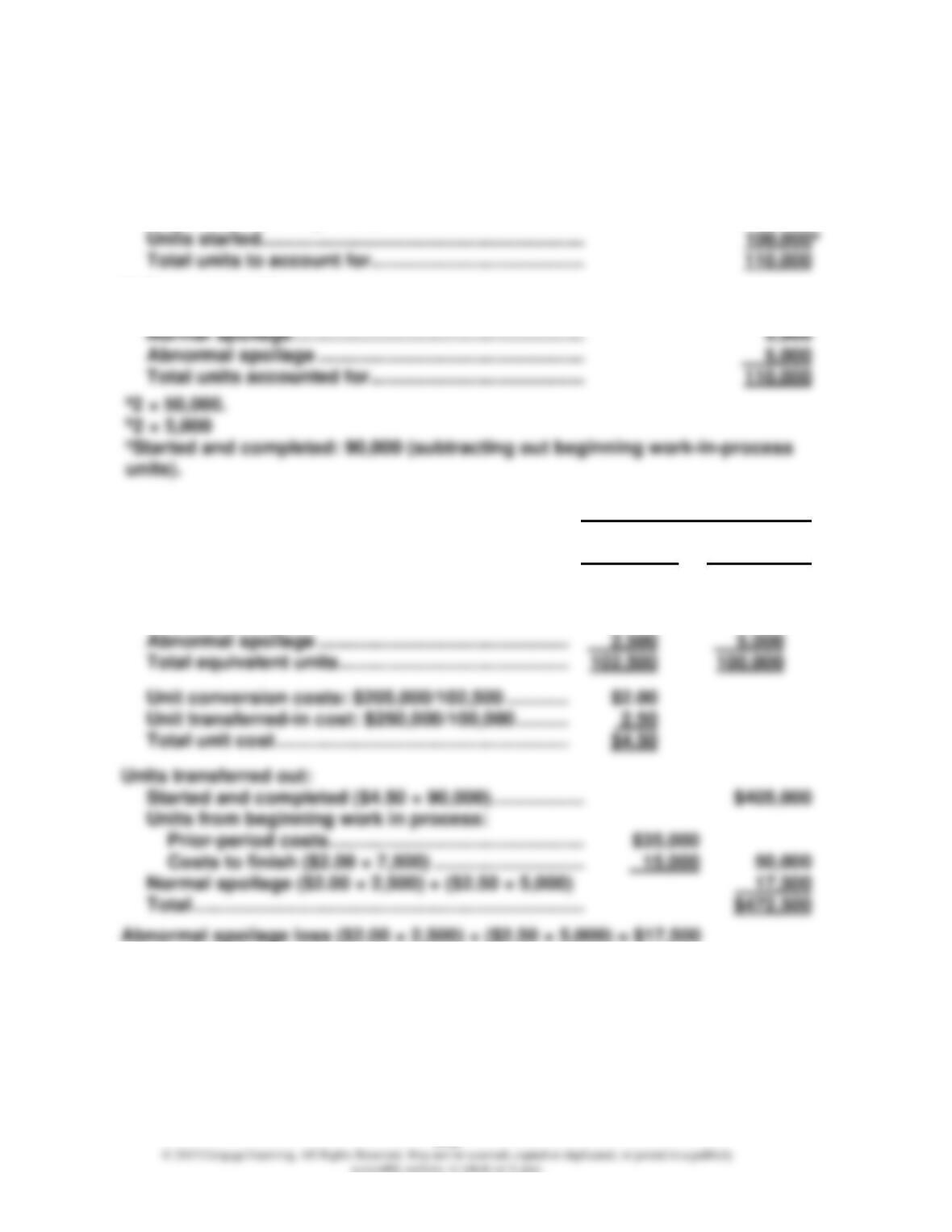
1. Physical flow schedule:
Units to account for:
Units, beginning work in process ……………………… 3,000
Units started …………………………………………………….. 7,000
2. Equivalent Units
Direct Conversion
Materials Costs
Transferred out ……………………………………………….. 8,000 8,000
Abnormal loss …………………………………………………. 1,000 1,000
3. Unit direct materials cost ($450 + $950)/10,000 ………………… $0.14
4. Cost transferred out: 8,000 × $0.39 = $3,120
6-50
Problem 6.44
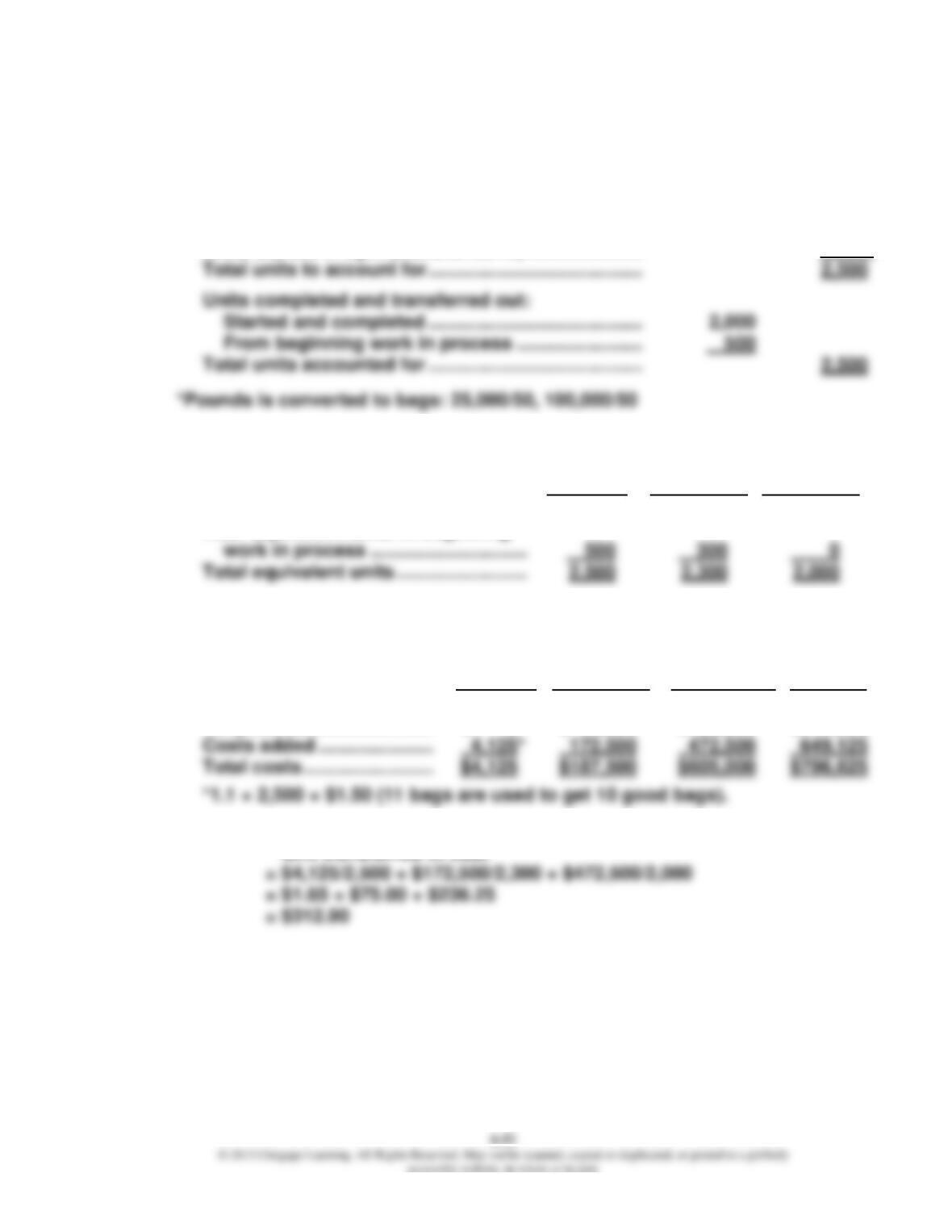
1. Baking Department (to obtain the cost of goods transferred out):
Units to account for:
Beginning work in process ……………………………….. 10,000b
Units accounted for:
Units transferred out ………………………………………… 100,000c
Equivalent Units
Conversion Transferred
Costs In
Units started and completed ………………………….. 90,000 90,000
Equivalent units in beginning work in process .. 7,500 0
Normal spoilage …………………………………………….. 2,500 5,000
Problem 6.44 (Continued)
Grinding Department:
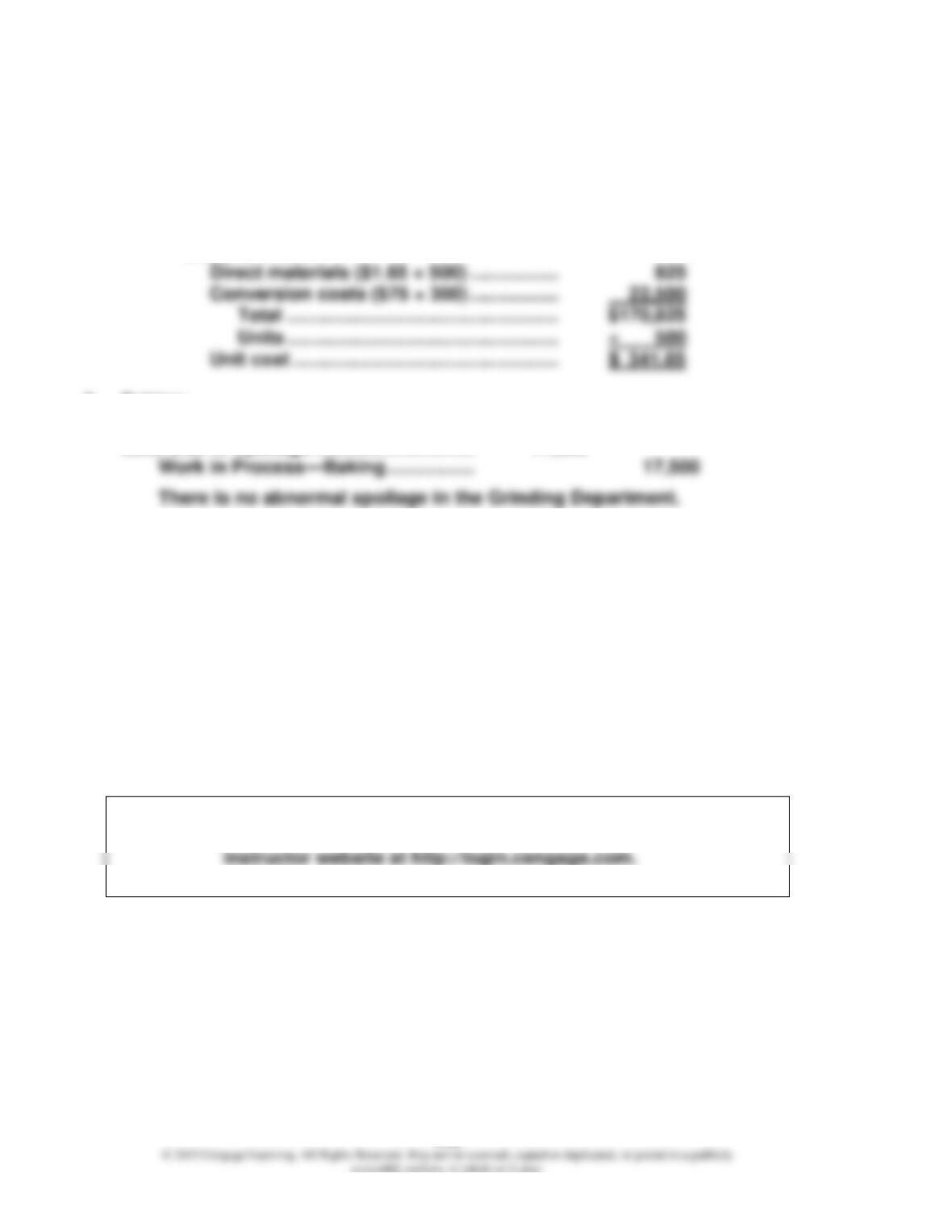
Physical flow schedule:
Units, beginning work in process ……………………… 500*
Units started in April (transferred in) …………………. 2,000*
Equivalent units calculation:
Direct Conversion Transferred
Materials Costs In
Units started and completed ………….. 2,000 2,000 2,000
Add: Equivalent units in beginning
Unit cost calculation:
Costs charged to the department:
Direct Conversion Transferred
Materials Costs In Total
Costs in beginning work
in process …………………… $ 0 $ 15,000 $132,500 $147,500
Unit cost = Unit direct materials cost + Unit conversion costs +
Unit transferred-in cost
6-52
Problem 6.44 (Concluded)
Units transferred out:
Unit cost of units started and completed (2,000 units): $312.90
Unit cost of units from beginning work in process:
Prior-period costs ………………………………….. $147,500
Costs to finish:
2. Baking:
Loss Due to Spoilage …………………………. 17,500
CYBER RESEARCH CASE
6.45
Answers will vary.
The Collaborative Learning Exercise Solutions can be found on the
6-53
The following problems can be assigned within CengageNOW and are auto-
graded. See the last page of each chapter for descriptions of these new assign-
ments.
• Analyzing Relationships—Calculating Equivalent Units and Unit Cost to deter-
mine Costs Transferred Out and Ending Work-In-Progress Inventories using the
Weighted Average Method.
• Analyzing Relationships—Calculating Equivalent Units and Unit Cost to deter-
mine Costs Transferred Out and Ending Work-In-Progress Inventories using the
First-In First-Out Method.