CHAPTER 20 (FIN MAN); CHAPTER 6 (MAN) Cost-Volume-Profit Analysis
Prob. 20–4B (FIN MAN); Prob. 6–4B (MAN) (Continued)
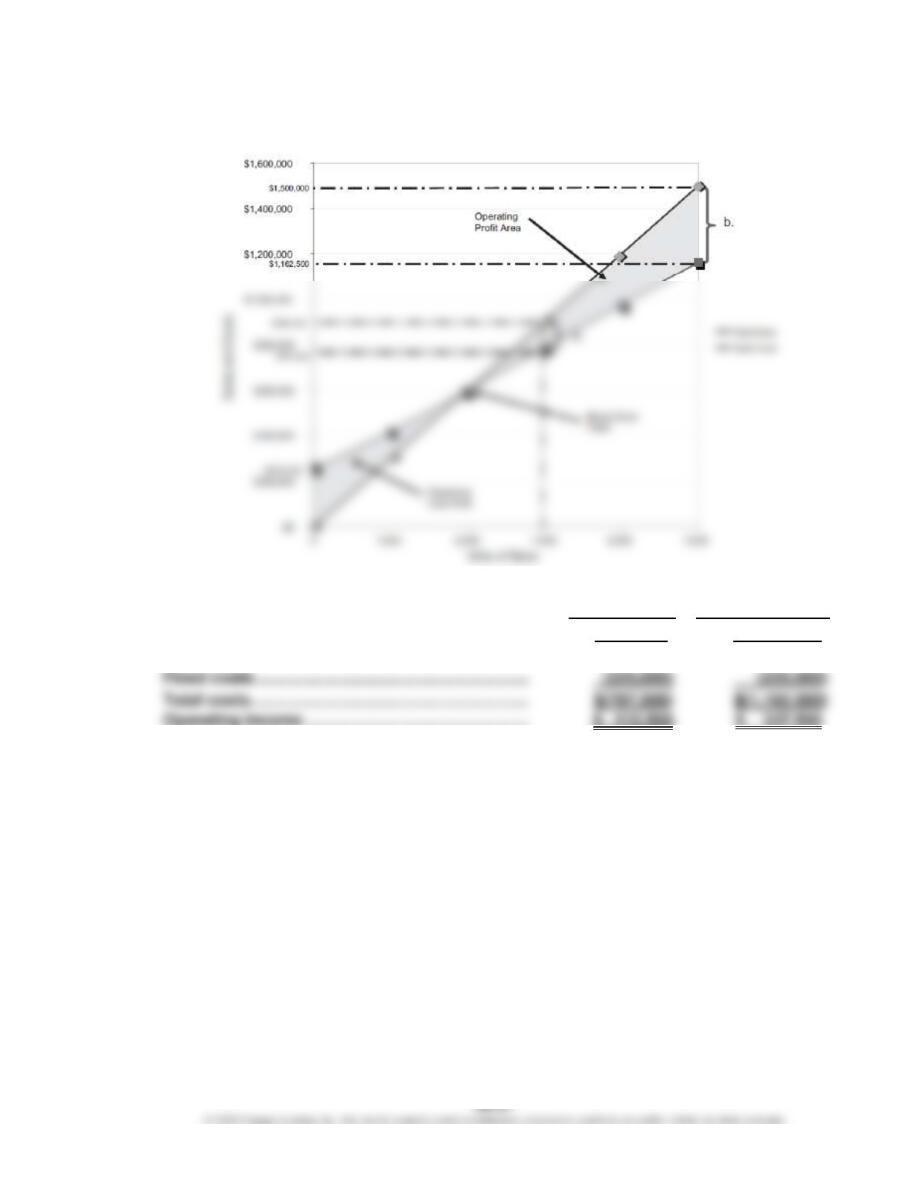
2.
(a)
4,500 units
(b)
7,500 units
Sales ……………………………………………………………
$ 900,000
$ 1,500,000
Variable costs ………………………………………………
$(562,500)
$ (937,500)
Total costs ……………………………………………………
Operating income …………………………………………
$ 112,500
$ 337,500
CHAPTER 20 (FIN MAN); CHAPTER 6 (MAN) Cost-Volume-Profit Analysis
Prob. 20–4B (FIN MAN); Prob. 6–4B (MAN) (Continued)
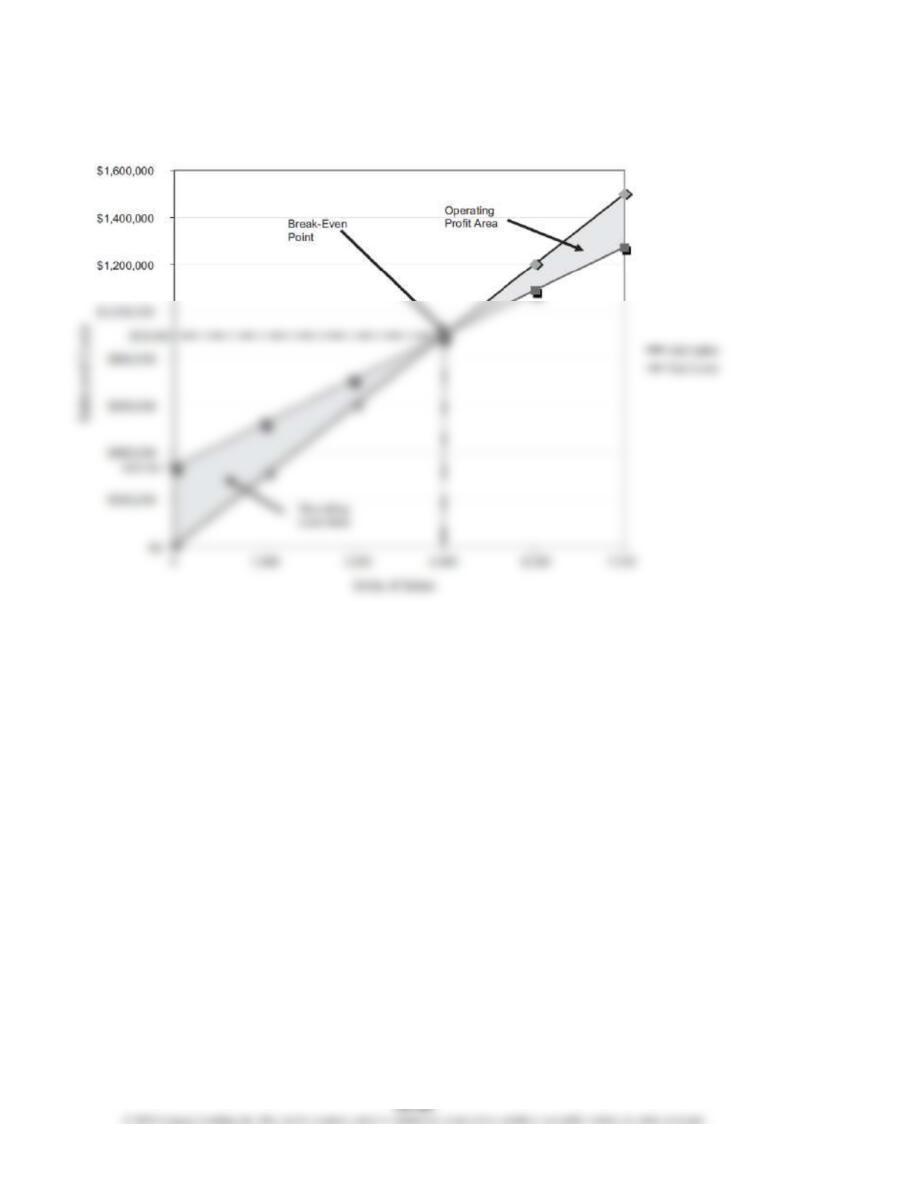
3.
CHAPTER 20 (FIN MAN); CHAPTER 6 (MAN) Cost-Volume-Profit Analysis
Prob. 20-4B (FIN MAN); Prob. 6-4B (MAN) (Continued)
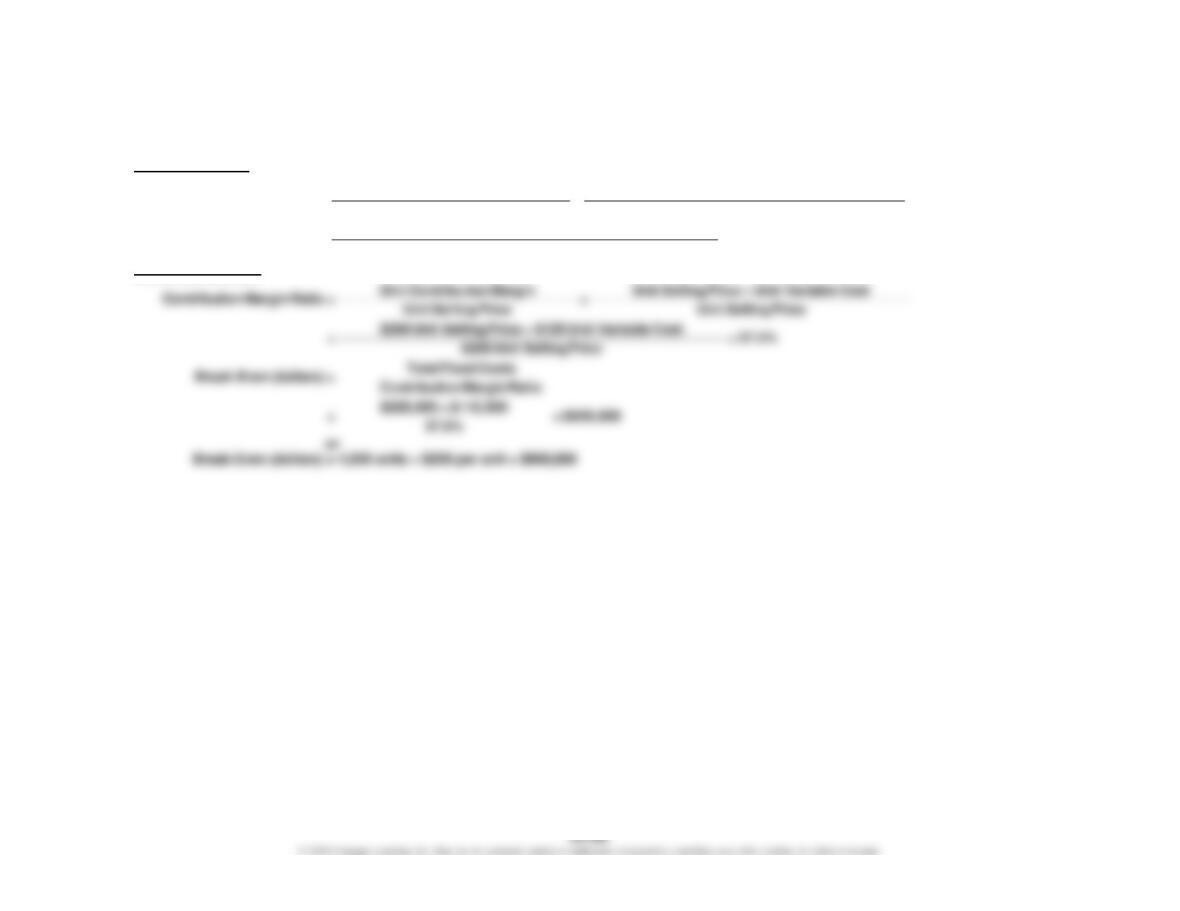
3. Break-Even Units:
–Total Fixed Costs Total Fixed Costs
Break Even Sales (units) = =
Unit Contribution Margin Unit Selling Price – Unit Variable Cost
$225,000 + $112,500
= $2 = 4,500units
00 Unit Selling Price – $125 Unit Variable Cost
Break-Even Dollars:
CHAPTER 20 (FIN MAN); CHAPTER 6 (MAN) Cost-Volume-Profit Analysis
Prob. 20–4B (FIN MAN); Prob. 6–4B (MAN) (Concluded)
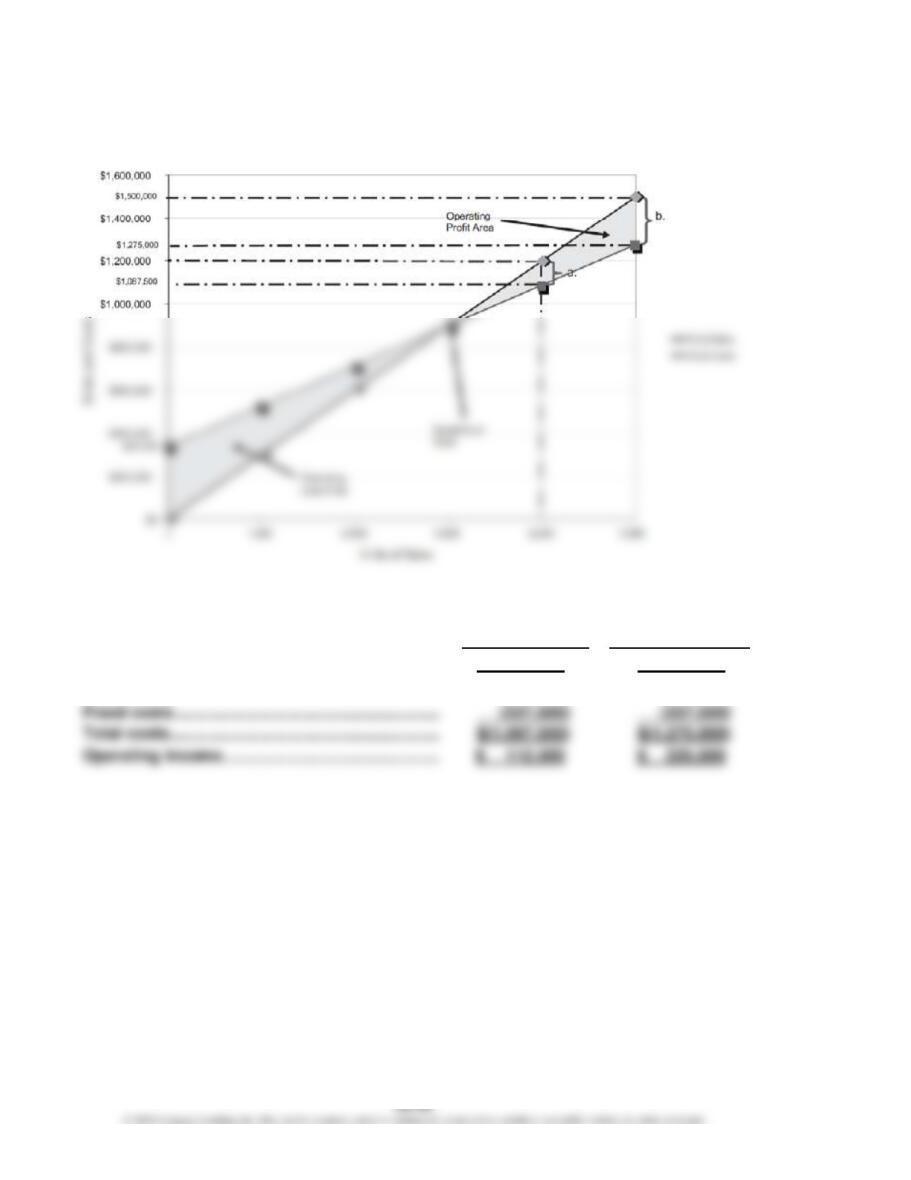
4.
(a)
6,000 units
(b)
7,500 units
Sales ………………………………………………………….
$ 1,200,000
$ 1,500,000
Variable costs ……………………………………………..
$ (750,000)
$ (937,500)
Operating income ………………………………………..
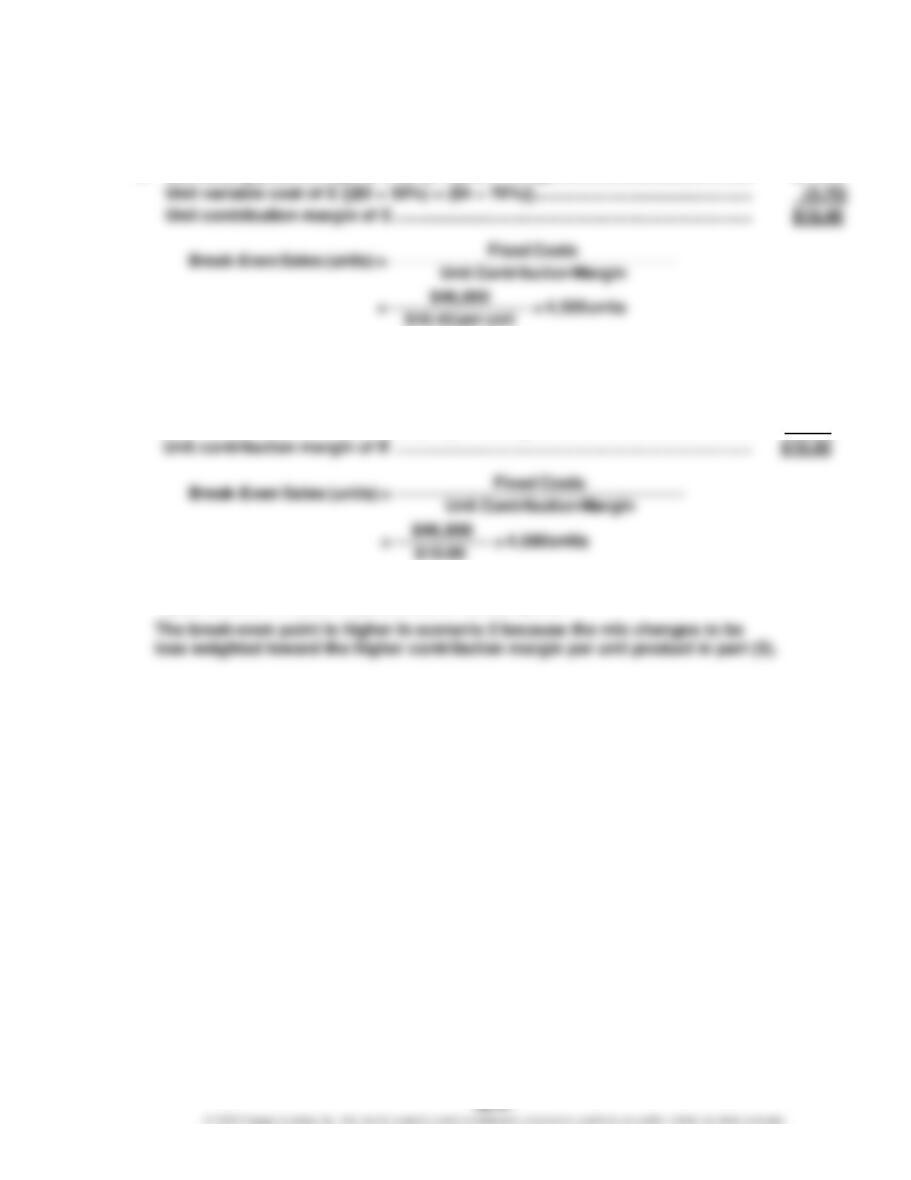
CHAPTER 20 (FIN MAN); CHAPTER 6 (MAN) Cost-Volume-Profit Analysis
Prob. 20–5B (FIN MAN); Prob. 6–5B (MAN)
(Overall enterprise product is labeled E.)
2. 4,500 units of E × 30% = 1,350 units of 12-inch pizza
4,500 units of E × 70% = 3,150 units of 16-inch pizza
3.
Unit selling price of E [($12 × 50%) + ($15 × 50%)] ……………………………………..
$13.50
Unit variable cost of E [($3 × 50%) + ($4 × 50%)] ………………………………………..
(3.50)
4,680 units of E × 50% = 2,340 units of 12-inch pizza
4,680 units of E × 50% = 2,340 units of 16-inch pizza
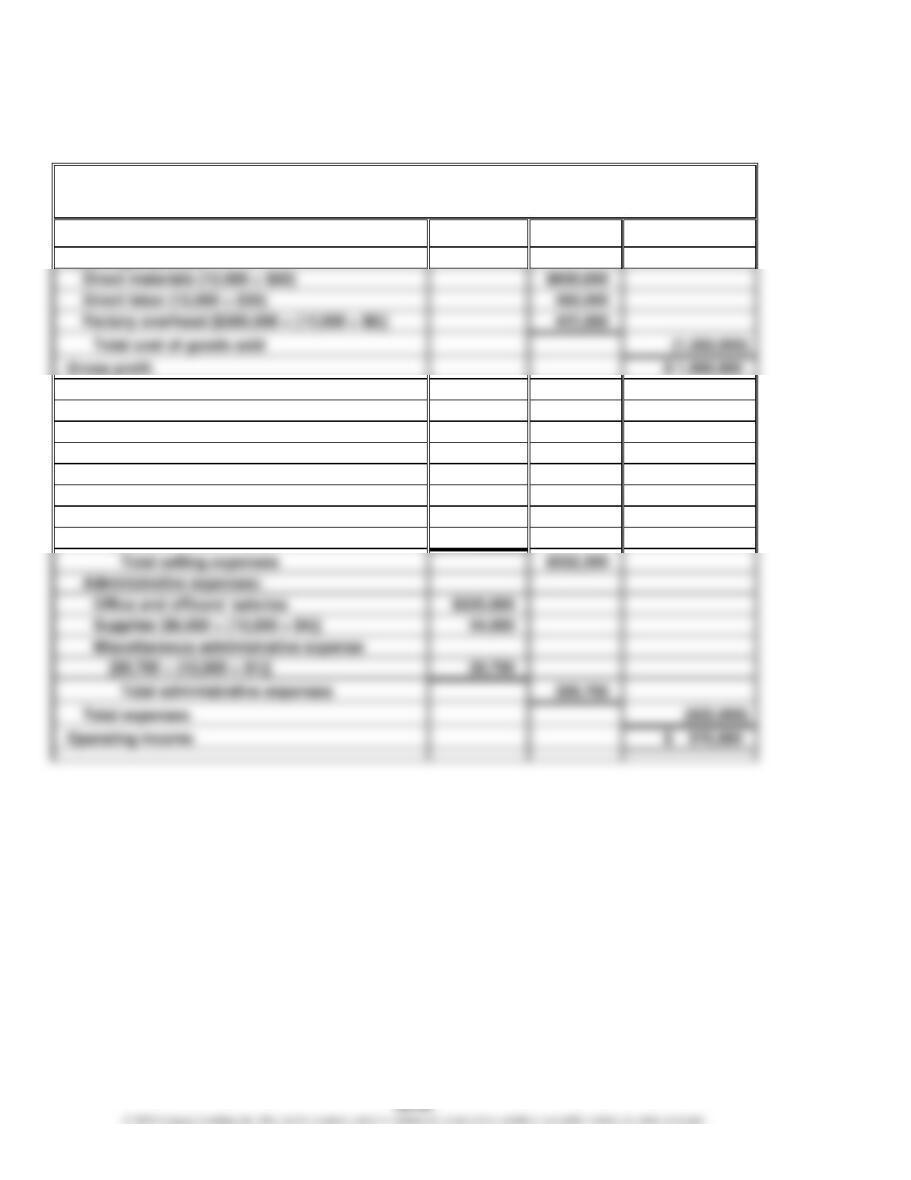
CHAPTER 20 (FIN MAN); CHAPTER 6 (MAN) Cost-Volume-Profit Analysis
Prob. 20–6B (FIN MAN); Prob. 6–6B (MAN)
1.
Belmain Co.
Estimated Income Statement
For the Year Ended December 31, 20Y7
Sales (12,000 × $240)
$ 2,880,000
Cost of goods sold:
Factory overhead [$350,000 + (12,000 × $6)]
Expenses:
Selling expenses:
Sales salaries and commissions
[$340,000 + (12,000 × $4)]
$388,000
Advertising
116,000
Travel
4,000
Miscellaneous selling expense
[$2,300 + (12,000 × $1)]
14,300
$325,000
Supplies [$6,000 + (12,000 × $4)]
Miscellaneous administrative expense
[$8,700 + (12,000 × $1)]
20,700
Total expenses
CHAPTER 20 (FIN MAN); CHAPTER 6 (MAN) Cost-Volume-Profit Analysis
Prob. 20–6B (FIN MAN); Prob. 6–6B (MAN) (Continued)
2.
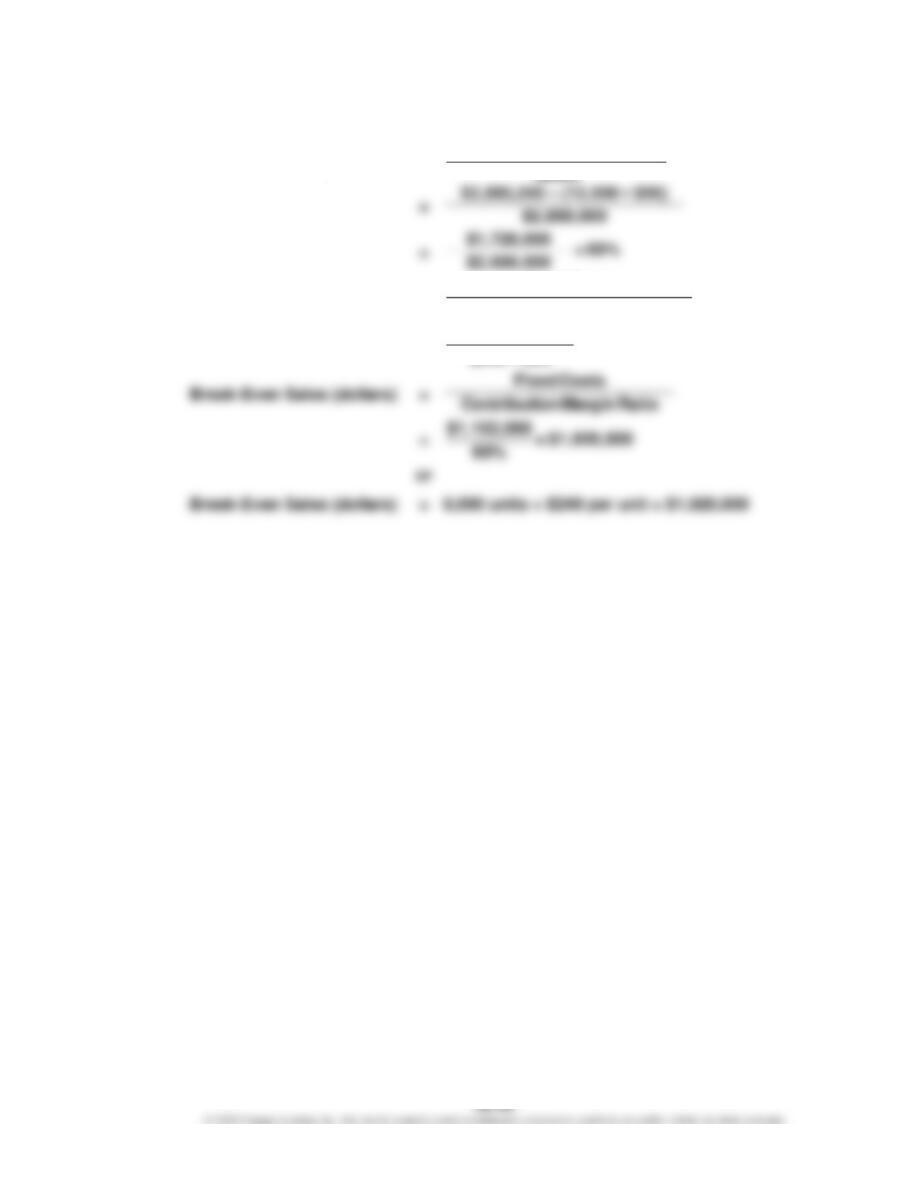
Contribution Margin Ratio
=
Sales – Variable Costs
3.
Break-Even Sales (units)
=
Fixed Costs
Unit Contribution Margin
=
$1,152,000 = 8,000units
=
CHAPTER 20 (FIN MAN); CHAPTER 6 (MAN) Cost-Volume-Profit Analysis
Prob. 20–6B (FIN MAN); Prob. 6–6B (MAN) (Concluded)
4.
5.
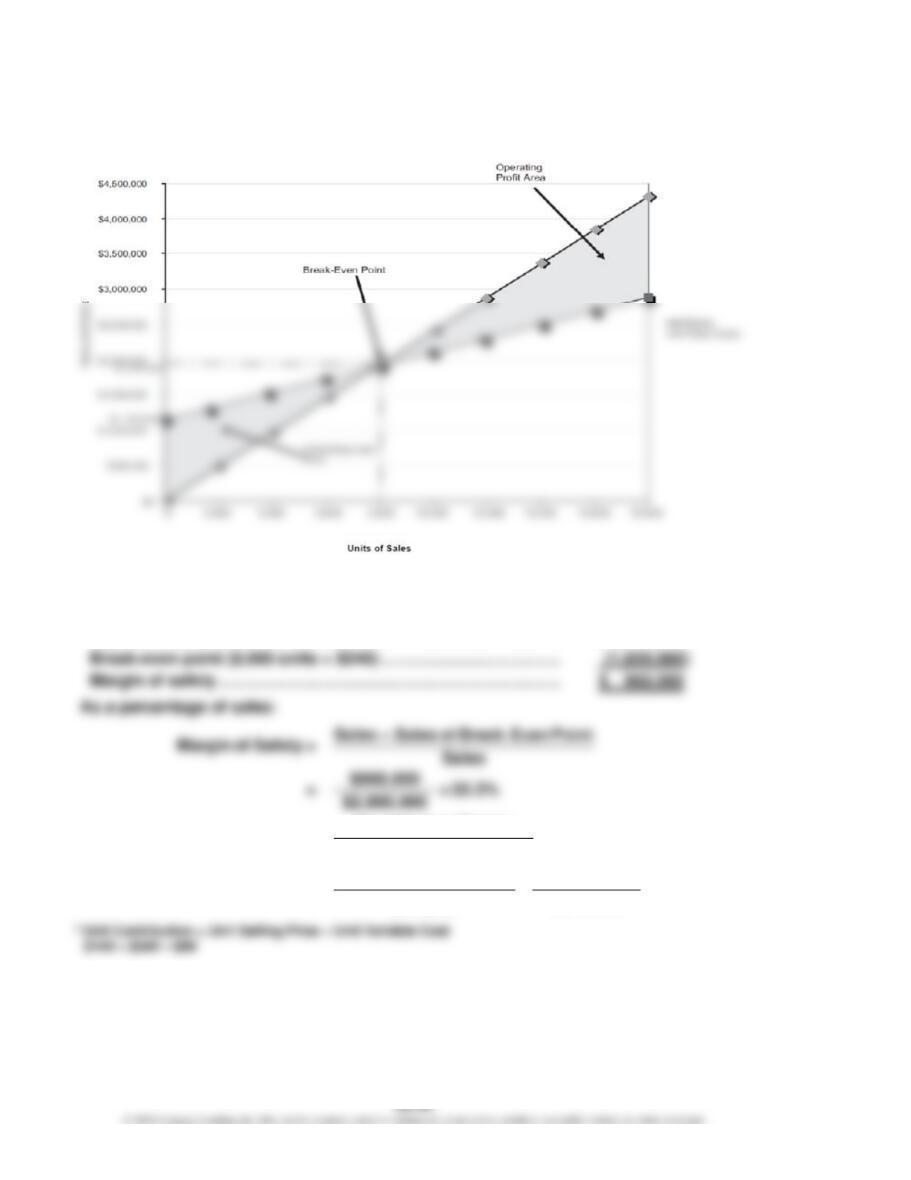
Margin of safety:
In dollars:
Expected sales (12,000 units × $240) ………………………………….
$ 2,880,000
*
Contribution Margin
6. Operating Leverage = Operating Income
12,000 units × $144 $1,728,000
= =
$576,000 $576,000 =3
CHAPTER 20 (FIN MAN); CHAPTER 6 (MAN) Cost-Volume-Profit Analysis
MAKE A DECISION
MAD 20–1 (FIN MAN); MAD 6–1 (MAN)
a.
–
–
Fixed Costs
Break Even Sales (units) = Unit Contribution Margin
$80,000
Break Even Sales (units) = = 125 passengers
$760 – $120
d. First, the airline should consider the impact of the new flight on other flights to Los
Angeles. That is, the airline should determine whether the seats sold on the new
flight are truly incremental seats for the airline, or whether passengers are shifting
MAD 20–2 (FIN MAN); MAD 6–2 (MAN)
a.
Total fixed costs per cruise:
Crew ……………………………………………………………………………………….
$ 240,000
Fuel ………………………………………………………………………………………..
60,000
Fixed operating costs ………………………………………………………………
800,000
Total fixed costs per cruise …………………………………………………
$ 1,100,000
MAD 20–2 (FIN MAN); MAD 6–2 (MAN) (Concluded)
b. The break-even point is 1,000 passengers [from (a)]. If 900 passengers book the
cruise, that will be 100 passengers under the break-even point. The loss can be
calculated as:
(900 passengers – 1,000 passengers) × ($2,400 – $1,300) = $(110,000)
d. If the cruise is operating under break-even, the cruise line can take a number
of actions to improve the financial performance of the cruise:
1. The cruise line could cancel the cruise. This is an extreme response and
would require finding an alternative use for the boat, which is a significant
investment that cannot remain idle.
MAD 20–3 (FIN MAN); MAD 6–3 (MAN)
–
–
Fixed Costs
a. Break Even Sales (units) = Unit Contribution Margin
$3,000,000,000
Break Even Sales (units) = = 37,500,000 subscribers
$120 – $40
Fixed costs: $100,000,000 + $2,000,000,000 + $900,000,000 = $3,000,000,000
CHAPTER 20 (FIN MAN); CHAPTER 6 (MAN) Cost-Volume-Profit Analysis
MAD 20–3 (FIN MAN); MAD 6–3 (MAN) (Concluded)
–$3,600,000,000
c. Break Even Sales (units) = = 37,500,000 subscribers
X – $40
MAD 20–4 (FIN MAN); MAD 6–4 (MAN)
–Fixed Costs
a. Break Even Sales (units) = Unit Contribution Margin
The unit contribution margin consists of both the per-guest contribution margin from
$50
b. The daily weekday profit can be determined by multiplying the number of units over
break-even by the contribution margin per guest per day, as follows:
(24,000 guests – 15,000 guests) × $50 per guest* = $450,000
* See the calculation in (a).
e. The average daily admissions are 24,000 for the average weekday. Thus, the park
still operates above break-even and is therefore profitable with the increased
fixed costs. The daily profit would be $200,000 (4,000 guests above break-even
per day × $50 contribution margin per guest per day).
CHAPTER 20 (FIN MAN); CHAPTER 6 (MAN) Cost-Volume-Profit Analysis
TAKE IT FURTHER
TIF 20–1 (FIN MAN); TIF 6–1 (MAN)
In an absolute sense, Edward’s actions are devious. He is clearly attempting to use the
first four years, which are favorable, as a way to market the partnerships. However, in
substance, these are longer-term investments. After the first four years, the risk
TIF 20–2 (FIN MAN); TIF 6–2 (MAN)
There are many possible applications of break-even analysis in a university environment.
Below are just a few possible ideas.
Break-Even Analysis
Revenues
Fixed Costs
Variable Costs
1.
Break-even number of
Student tuition for
Faculty salary,
Classroom supplies,
students in a class
a class
facilities (space,
classroom cleaning
classroom
costs
technology) costs
2.
Break-even number of
Room revenue
Facilities (space,
Operating supplies,
students in a dorm
room fixtures)
cleaning costs
revenues
salaries, facilities
(kitchen space,
4.
Break-even number of
Network user
Network fixed
Technical support,
network
(depreciation),
trunk line lease
costs
5.
Break-even number of
Ticket revenue
Athletics and
Cleanup costs,
tickets sold for a football
facilities staff
event staff wages,
or basketball game
salaries, facilities
concession costs
(stadium/arena
costs)
CHAPTER 20 (FIN MAN); CHAPTER 6 (MAN) Cost-Volume-Profit Analysis
TIF 20–3 (FIN MAN); TIF 6–3 (MAN)
Memo
To: Neil Armstrong, CEO Sun Airlines
From: Ima Student
Re: Increasing Ticket Prices
In recent months, Sun Airlines has struggled to stay above break-even sales volume,
which has led to a string of monthly losses. Sun’s break-even volume is 75% of
capacity, which is significantly higher than the industry average of 65% of capacity.
CHAPTER 20 (FIN MAN); CHAPTER 6 (MAN) Cost-Volume-Profit Analysis
TIF 20–4 (FIN MAN); TIF 6–4 (MAN)
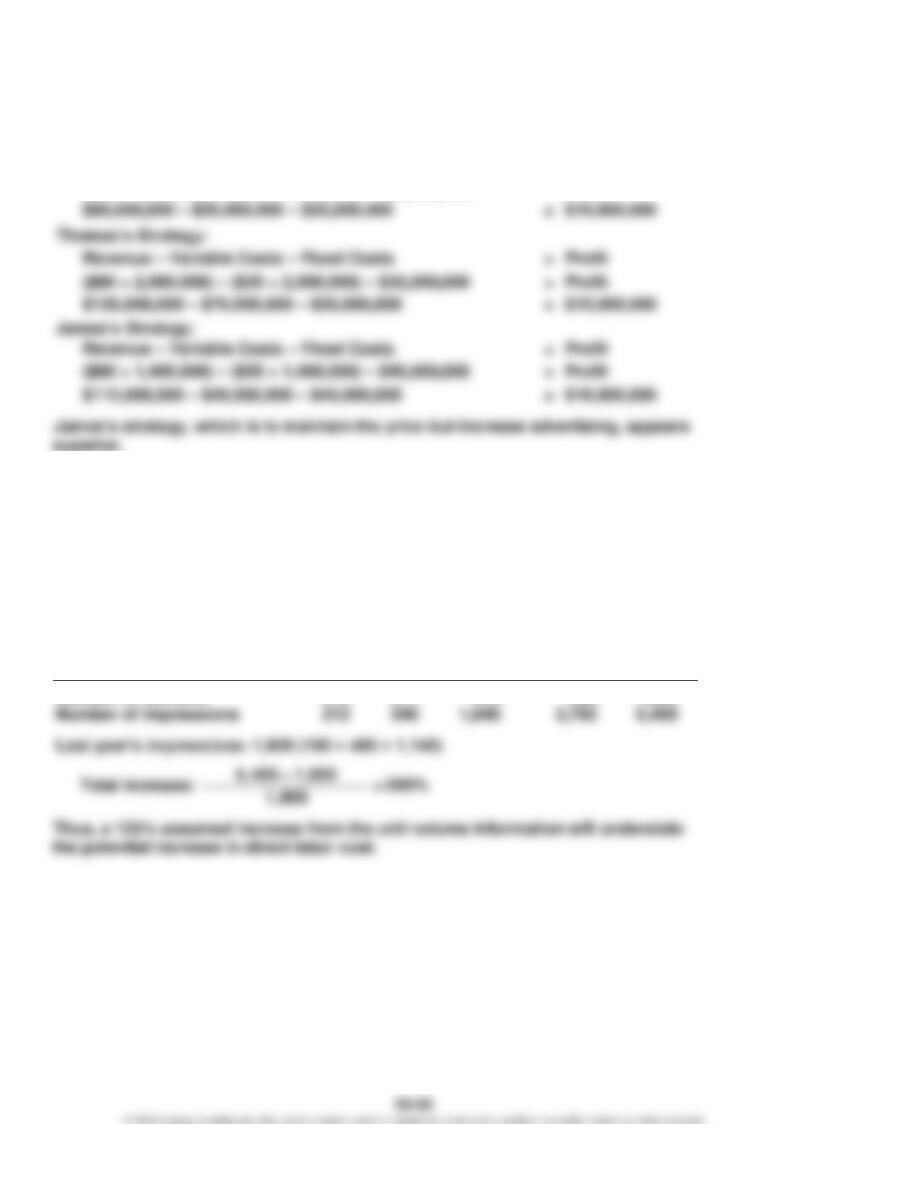
Do-Nothing Strategy:
Revenue – Variable Costs – Fixed Costs
=
Profit
($80 × 1,000,000) – ($35 × 1,000,000) – $35,000,000
=
Profit
$120,000,000 – $70,000,000 – $35,000,000
=
$15,000,000
TIF 20–5 (FIN MAN); TIF 6–5 (MAN)
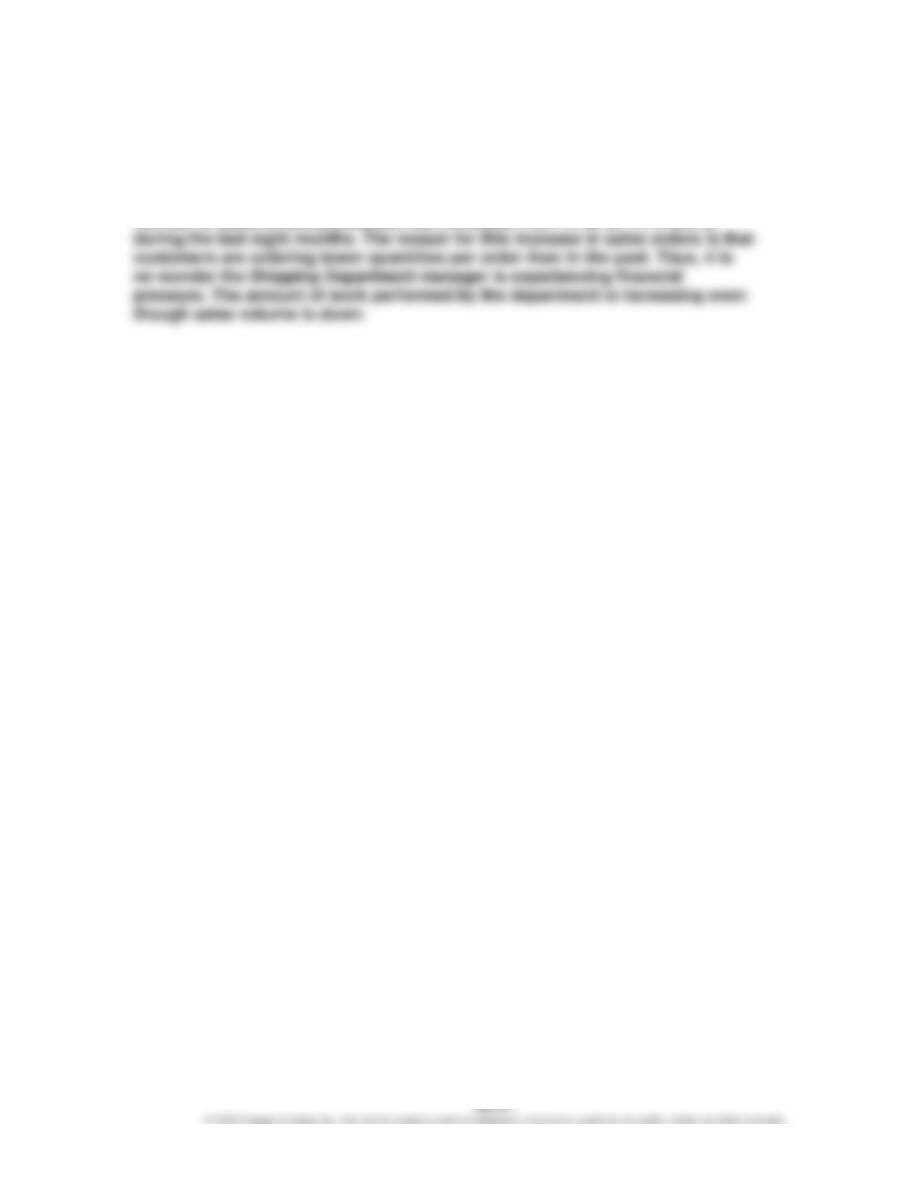
The direct labor costs are not variable to the increase in unit volume. The unit
volume is the wrong activity base for direct labor costs. The “number of
impressions” is a more accurate reflection of the direct labor cost. An impression
is a separate printing color application on the banners. Thus, the analysis should
be done as follows:
One
Two
Three
Four
Color
Color
Color
Color
Total
CHAPTER 20 (FIN MAN); CHAPTER 6 (MAN) Cost-Volume-Profit Analysis
TIF 20–6 (FIN MAN); TIF 6–6 (MAN)
The Shipping Department manager should respond by pointing out that the
activities performed by his department are not related to sales volume but to
sales orders. The orders require inventory pulling and sorting activities as well
as paperwork activities. Thus, even though the sales volume is decreasing, the
CHAPTER 20 (FIN MAN); CHAPTER 6 (MAN) Cost-Volume-Profit Analysis
CERTIFIED MANAGEMENT ACCOUNTANT (CMA®)
EXAMINATION QUESTIONS (ADAPTED)
1. a. A costs are semivariable or mixed, because they vary between quantities but do
2. c. Kimber’s total manufacturing cost is expected to be $615,000, computed as
follows:
3. c. Bolger’s break-even point would increase by 375 units, computed as follows:
Revised break-even point [$350,000 ÷ ($300 – $220)]
4,375
units
Current break-even point [$360,000 ÷ ($300 – $210)]
(4,000)
units
Increase in break-even point
375
units
4. b. To maximize contribution margin, Eagle Brand should produce 250 units of
Product X at $20 contribution margin per unit for a total of $5,000. The total
contribution margin for each of the alternatives is as follows:
Alternative A:
100 units × ($130 – $100) = $3,000