Chapter 06 – Inventory and Cost of Goods Sold
Chapter 6
Inventory and Cost of Goods Sold
EXERCISES
Exercise 6-1
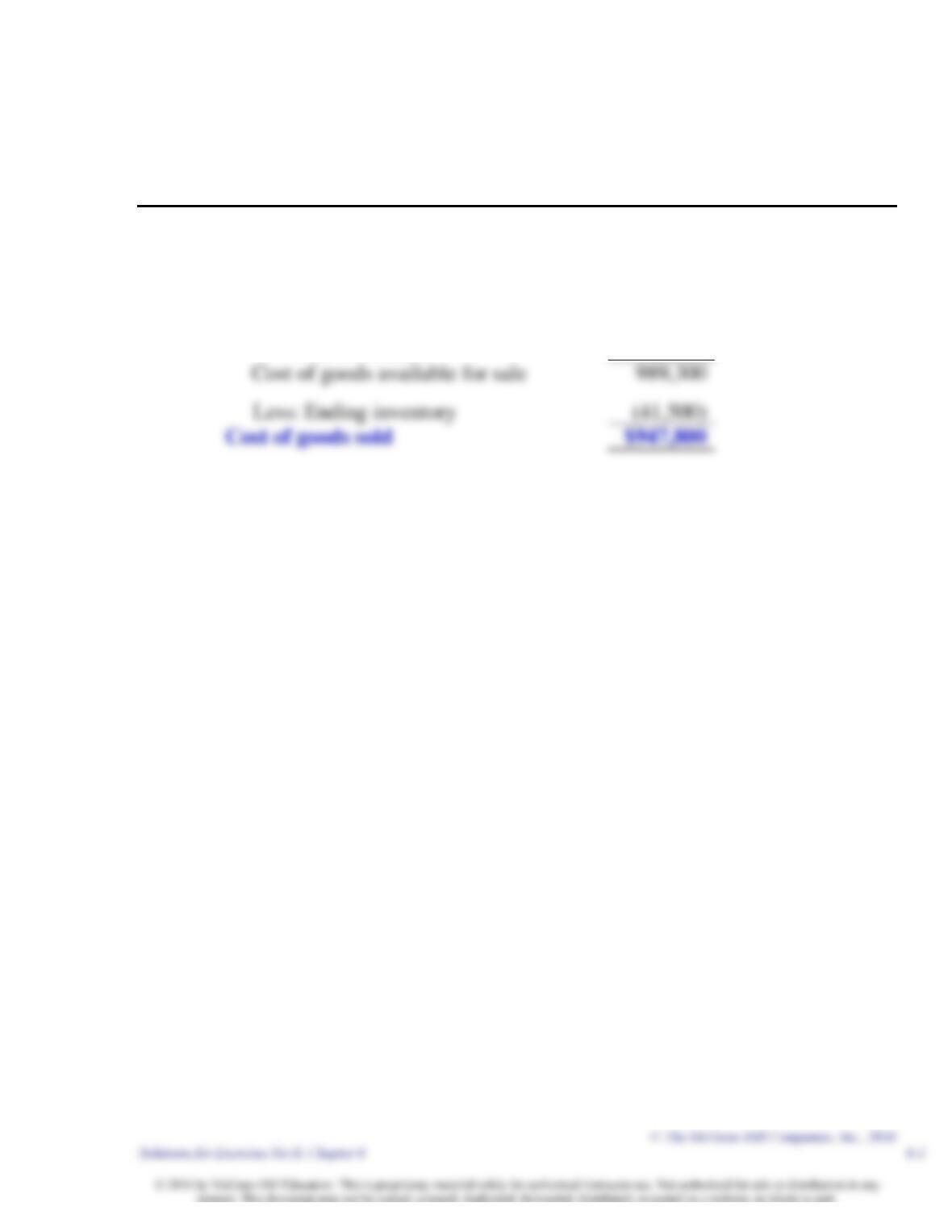
Beginning inventory
$ 63,800
Add: Purchases
925,500
Less: Ending inventory
Exercise 6-2
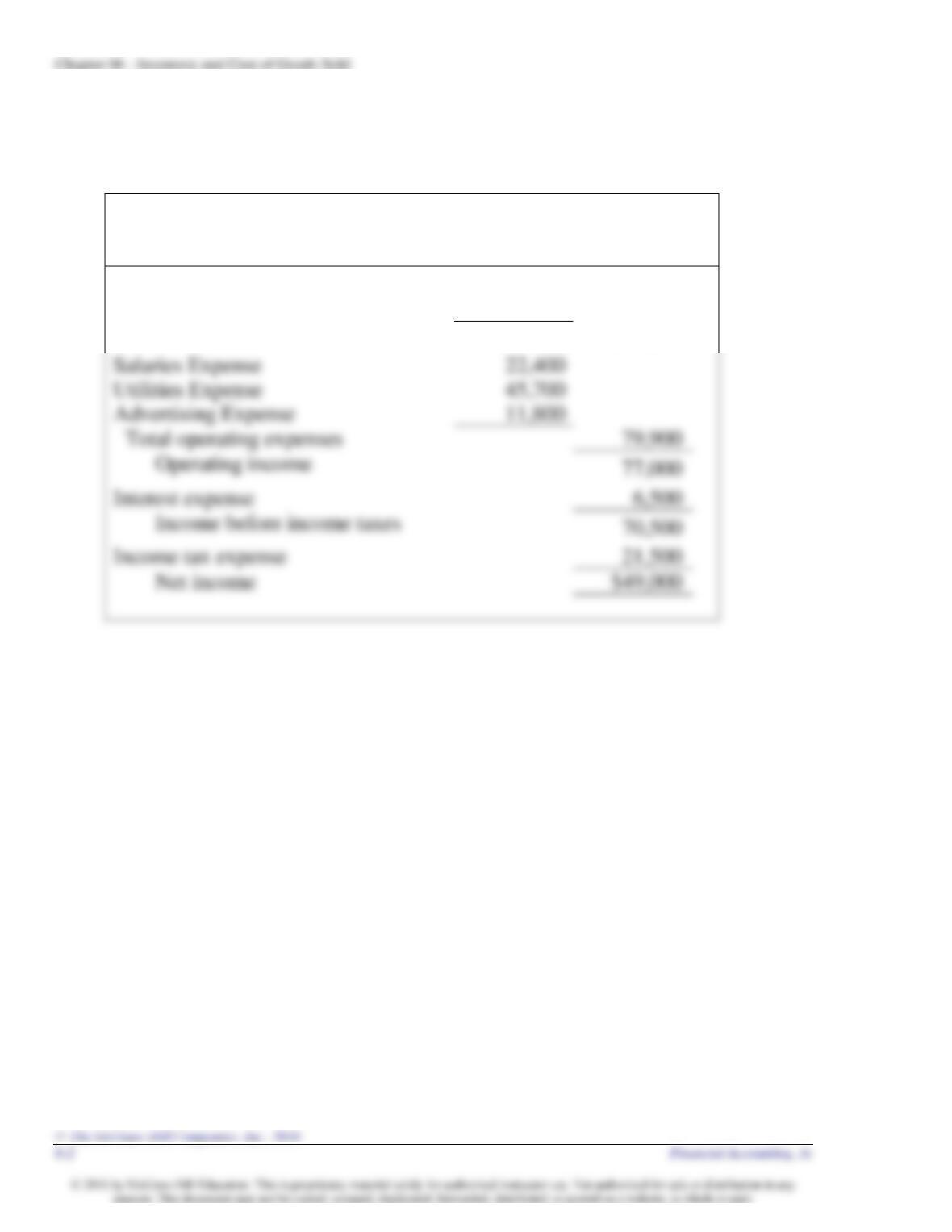
Wayman Corporation
Multiple-step Income Statement
For the year ended December 31, 2018
Net sales
$250,100
Cost of goods sold
93,200
Gross profit
$156,900
Salaries Expense
Advertising Expense
Interest expense
Income tax expense
Exercise 6-3
Requirement 1
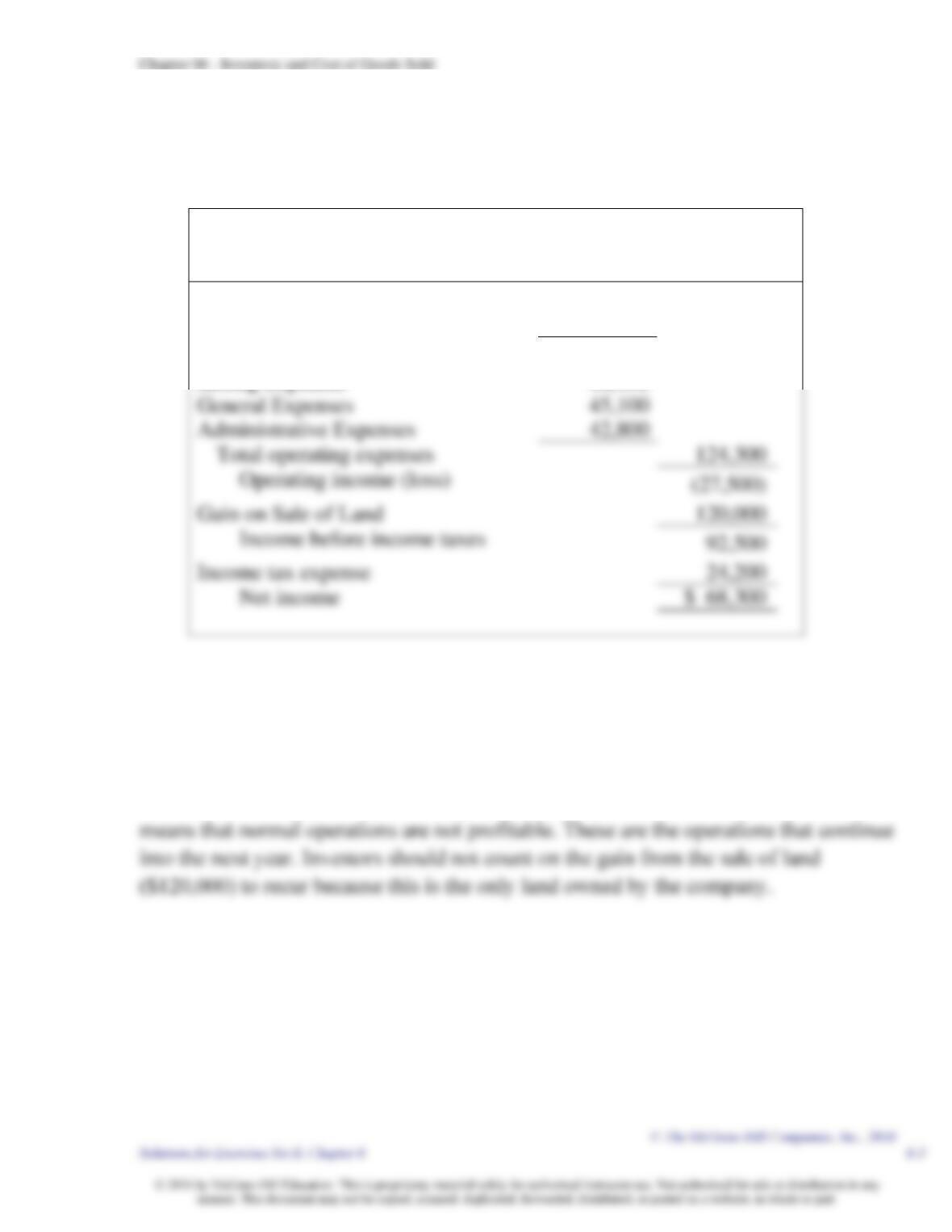
Tisdale Incorporated
Multiple-step Income Statement
For the year ended December 31, 2018
Net sales
$320,500
Cost of goods sold
223,700
Gross profit
$ 96,800
Selling Expenses
36,400
Administrative Expenses
Gain on Sale of Land
Income tax expense
Requirement 2
While Tisdale Incorporated is able to report positive net income ($68,300), the
company does not appear to have much profit-generating potential. For its core
operations, the company reports a negative operating income or loss (−$27,500). This
Exercise 6-4
Requirement 1
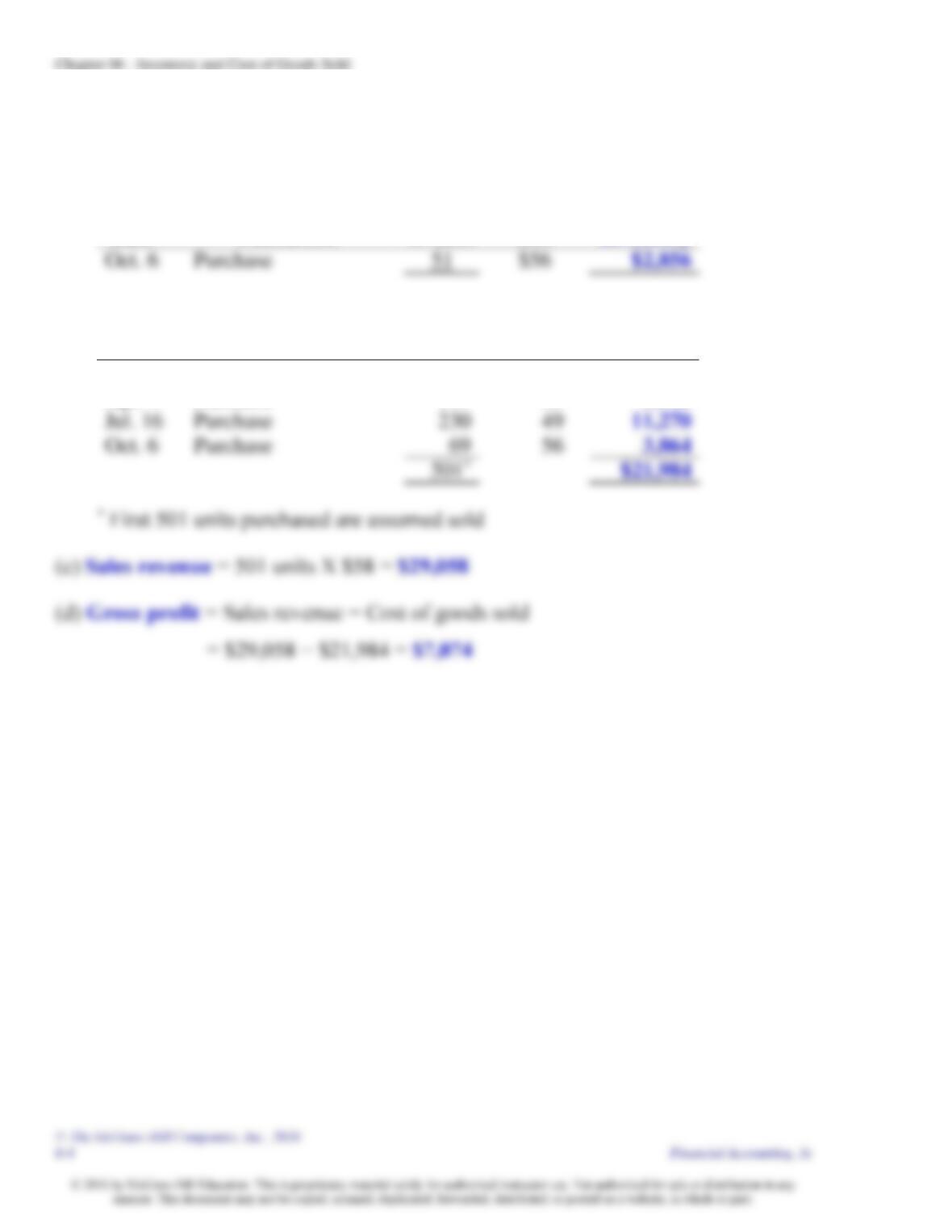
(a)
Date
Transaction
Number
of units
Unit
cost
Ending
Inventory
Oct. 6
Purchase
$56
(b)
Date
Transaction
Number
of units
Unit
cost
Cost of
Goods Sold
Jan. 1
Beginning inventory
55
$31
$ 1,705
Apr. 7
Purchase
147
35
5,145
Jul. 16
Purchase
Oct. 6
Purchase
69
56
3,864
Chapter 06 – Inventory and Cost of Goods Sold
Exercise 6-4 (continued)
Requirement 2
(a)
Date
Transaction
Number
of units
Unit
cost
Ending
Inventory
Jan. 1
Beginning Inventory
(b)
Date
Transaction
Number
of units
Unit
cost
Cost of
Goods Sold
Jan. 1
Beginning Inventory
4
$31
$ 124
Apr. 7
Purchase
147
35
5,145
Jul. 16
Purchase
Oct. 6
Purchase
120
56
6,720
Exercise 6-4 (concluded)
Requirement 3
Date
Transaction
Number
of units
Unit
Cost
Total
cost
Jan. 1
Beginning Inventory
55
$31
$ 1,705
Apr. 7
Purchase
147
35
Jul. 16
Purchase
230
49
Oct. 6
Purchase
Requirement 4
FIFO
LIFO
Weighted-
average
FIFO results in higher profitability when inventory costs are rising.
Exercise 6-5
Requirement 1
(a)
Date
Transaction
Number
of units
Unit
cost
Ending
Inventory
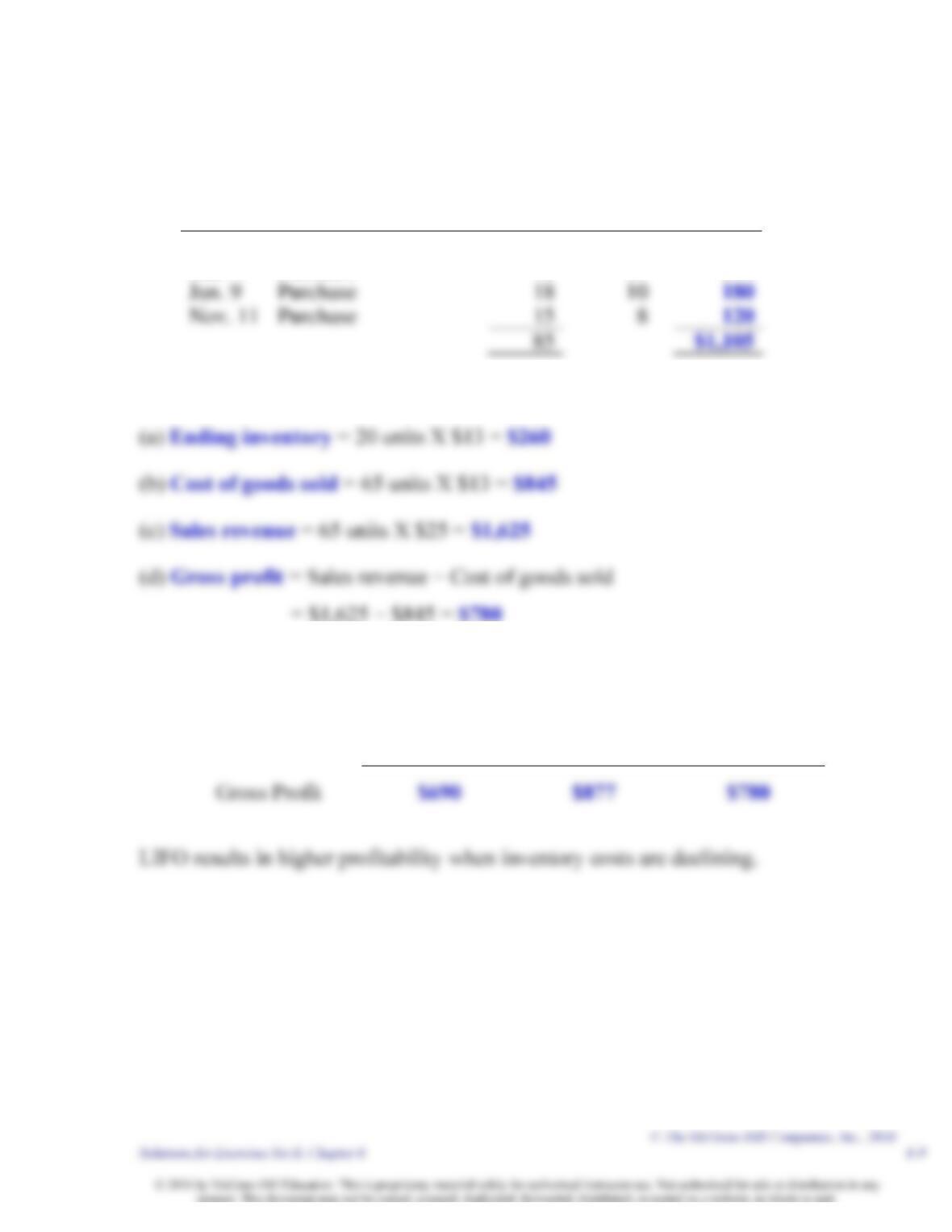
Jun. 9
Purchase
5
$10
50
Nov. 11
Purchase
15
8
$120
20
$170
(b)
Date
Transaction
Number
of units
Unit
cost
Cost of
Goods Sold
Jan. 1
Beginning inventory
11
$21
$231
Mar. 4
Purchase
41
14
Nov. 11
Purchase
13
$935
* First 65 units purchased are assumed sold
Exercise 6-5 (continued)
Requirement 2
(a)
Date
Transaction
Number
of units
Unit
cost
Ending
Inventory
Jan. 1
Beginning Inventory
11
$21
$231
Mar. 4
Purchase
14
(b)
Date
Transaction
Number
of units
Unit
cost
Cost of
Goods Sold
Mar. 4
Purchase
32
$14
$448
Jun. 9
Purchase
18
Nov. 11
Purchase
15
Chapter 06 – Inventory and Cost of Goods Sold
Exercise 6-5 (concluded)
Requirement 3
Date
Transaction
Number
of units
Unit
cost
Total
Cost
Jan. 1
Beginning Inventory
11
$21
$ 231
Mar. 4
Purchase
41
14
574
Jun. 9
Purchase
18
180
Nov. 11
Purchase
85
Weighted-average cost = $1,105 / 85 units = $13
Requirement 4
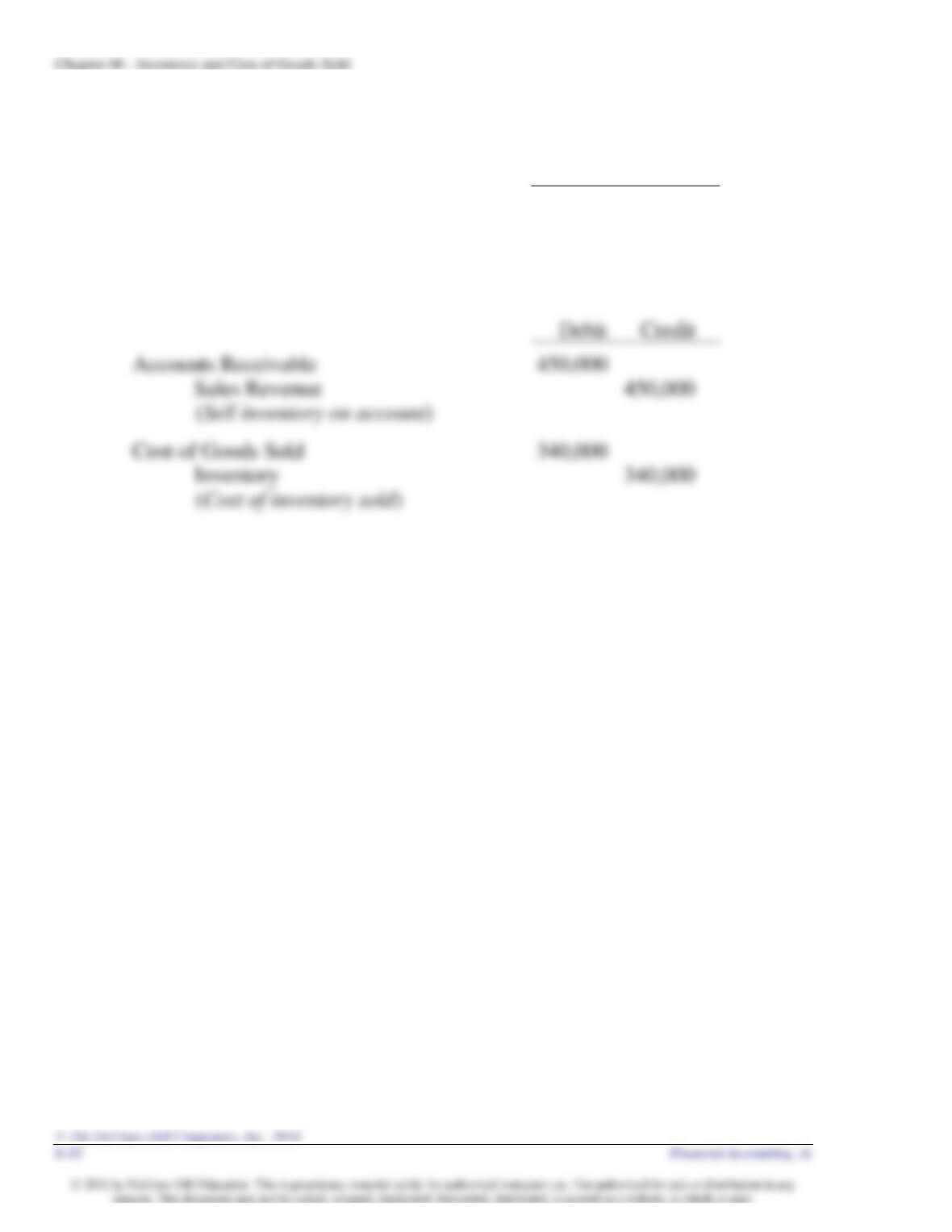
FIFO
LIFO
Weighted-
average
Exercise 6-6
Debit
Credit
Inventory
320,000
Accounts Payable
320,000
(Purchase inventory on account)
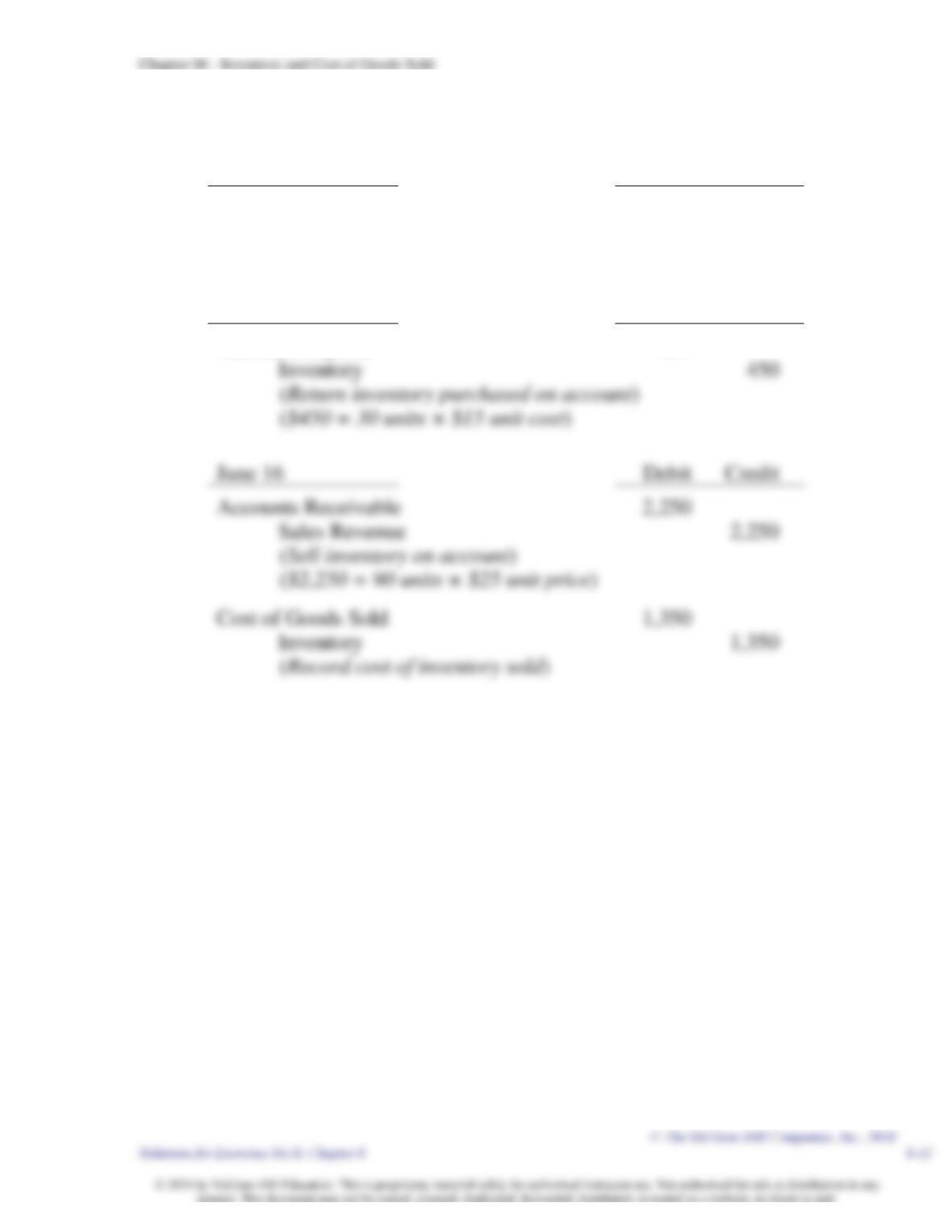
Debit
Credit
Accounts Receivable
Sales Revenue
450,000
(Sell inventory on account)
Cost of Goods Sold
(Cost of inventory sold)
Exercise 6-7
June 5
Debit
Credit
Inventory
1,800
Accounts Payable
1,800
(Purchase inventory on account)
June 9
Debit
Credit
Accounts Payable
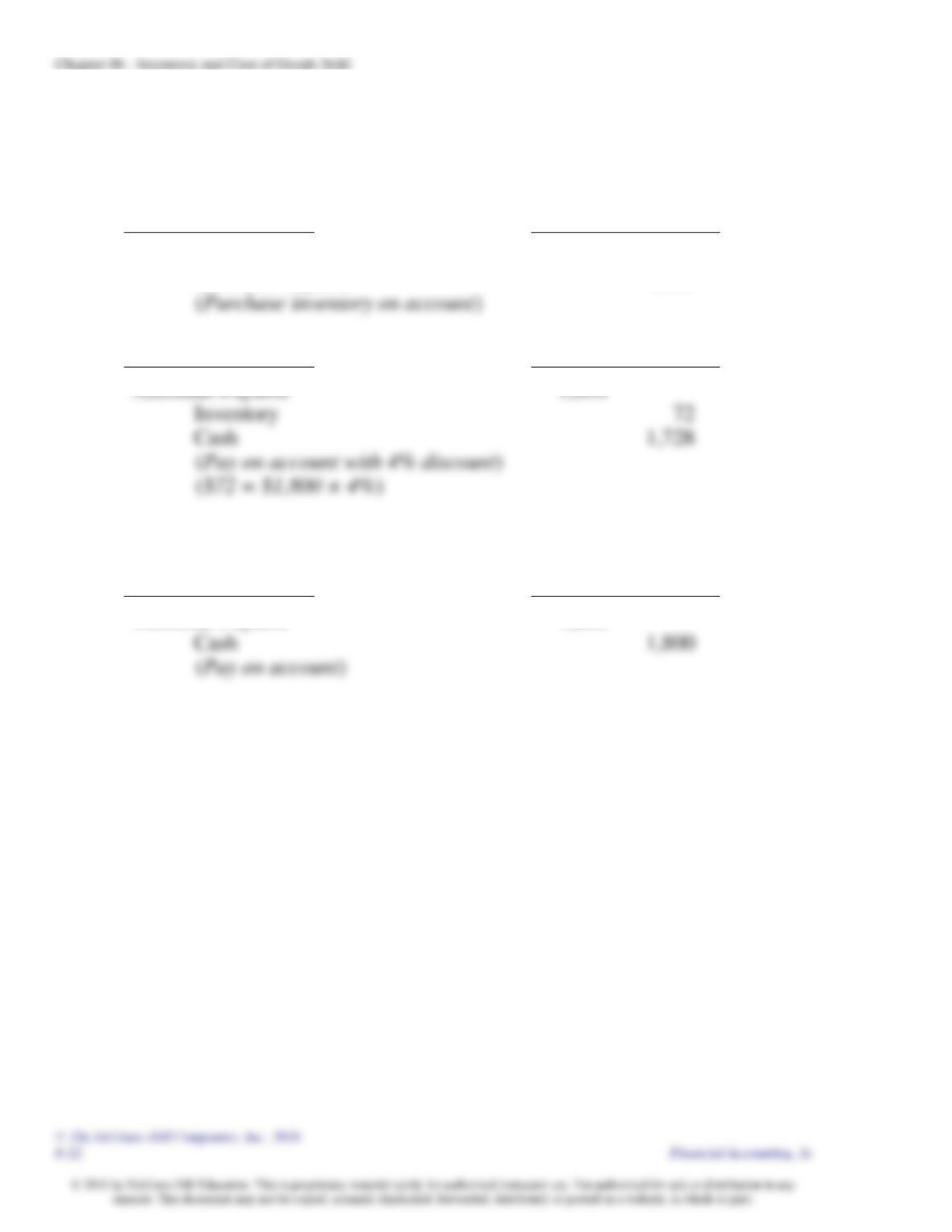
450
Inventory
($450 = 30 units × $15 unit cost)
June 16
Accounts Receivable
Sales Revenue
Cost of Goods Sold
(Record cost of inventory sold)
Exercise 6-8
Requirement 1
June 5
Debit
Credit
Inventory
1,800
Accounts Payable
1,800
June 12
Debit
Credit
Accounts Payable
1,800
Inventory
Cash
Requirement 2
June 22
Debit
Credit
Accounts Payable
1,800