FINANCIAL ACCOUNTING – Eleventh Edition Solutions Manual
E6-20A
(10 min.)
Solution:
Cost of goods sold:
How much in taxes would Cranwell Company save by using the LIFO method
versus FIFO?
Chapter 6: Inventory and Cost of Goods Sold Page 21 of 96
FINANCIAL ACCOUNTING – Eleventh Edition Solutions Manual
E6-21A
(10-15 min.)
Requirements
Solution:
Req. 1
(1) Average cost (19,100 × $11.50*) = $219,650 (900 × $11.50*) = $10,350
1. Using the average-cost method, compute the cost of goods sold and ending
inventory for the year.
2. Using the FIFO method, compute the cost of goods sold and ending inventory for
the year.
3. Using the LIFO method, compute the cost of goods sold and ending inventory for
the year.
Cost of Goods Sold
Ending Inventory
Chapter 6: Inventory and Cost of Goods Sold Page 22 of 96
(2) FIFO (5,000 @ $10) + = $219,200 (900 @ $12) = $10,800
(4,100 @ $10)
FINANCIAL ACCOUNTING – Eleventh Edition Solutions Manual
E6-22A
(15 min.)
Requirements
Solution:
Req. 1
a. FIFO
Cost of goods sold:
(10 @ $42) 420$
Req. 2
Sales revenue (6 @ $118 and 4 @ $111) $1,152
Cost of goods sold 420
Gross profit 732
Operating expenses 280
Income before income tax 452
Income tax expense (40%) 181
1. Determine the amounts that MusicPlace should report for cost of goods sold
and ending inventory two ways:
a. FIFO
b. LIFO
2. MusicPlace uses the FIFO method. Prepare MusicPlace’s income
statement for the month ended June 30, 2016, reporting gross profit.
Operating expenses totaled $280, and the income tax rate was 40%.
MusicPlace.net
Income Statement
Month Ended June 30, 2016
Chapter 6: Inventory and Cost of Goods Sold Page 23 of 96
(7 @ $73) + (5 @ $42) 721$
b. LIFO
Cost of goods sold:
(7 @ $73) + (3 @ $42) 637$
(12 @ $42) 504$
FINANCIAL ACCOUNTING – Eleventh Edition Solutions Manual
E6-23A
(15 min.)
Requirements
Solution:
Req. 1
FIFO LIFO
Gross profit:
Sales revenue $850,000 $850,000
Req. 2
1. At June 30, the store manager needs to know the store’s gross profit under both
FIFO and LIFO. Supply this information.
2. What caused the FIFO and LIFO gross profit figures to differ?
Chapter 6: Inventory and Cost of Goods Sold Page 24 of 96
FINANCIAL ACCOUNTING – Eleventh Edition Solutions Manual
E6-24A
(5-10 min.)
Requirement
Solution:
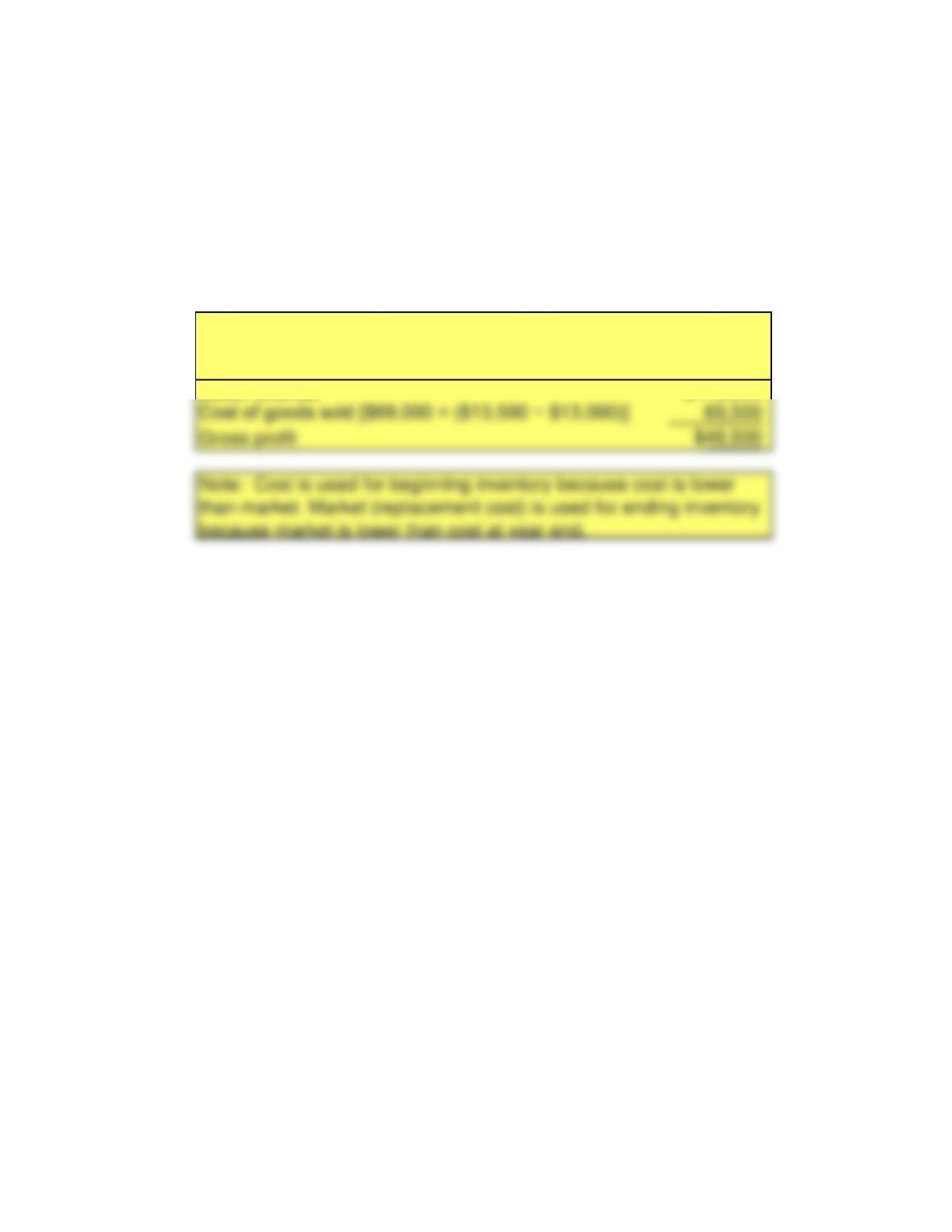
Sales revenue $118,000
1. Prepare Gordon Garden Supplies’ 2016 income statement through gross
profit to show how the company would apply the lower-of-cost-or-market rule
to its inventories.
Gordon Garden Supplies
Income Statement (partial)
Year Ended January 31, 2016
Chapter 6: Inventory and Cost of Goods Sold Page 25 of 96
FINANCIAL ACCOUNTING – Eleventh Edition Solutions Manual
E6-25A
(15-20 min.)
Requirement
Solution:
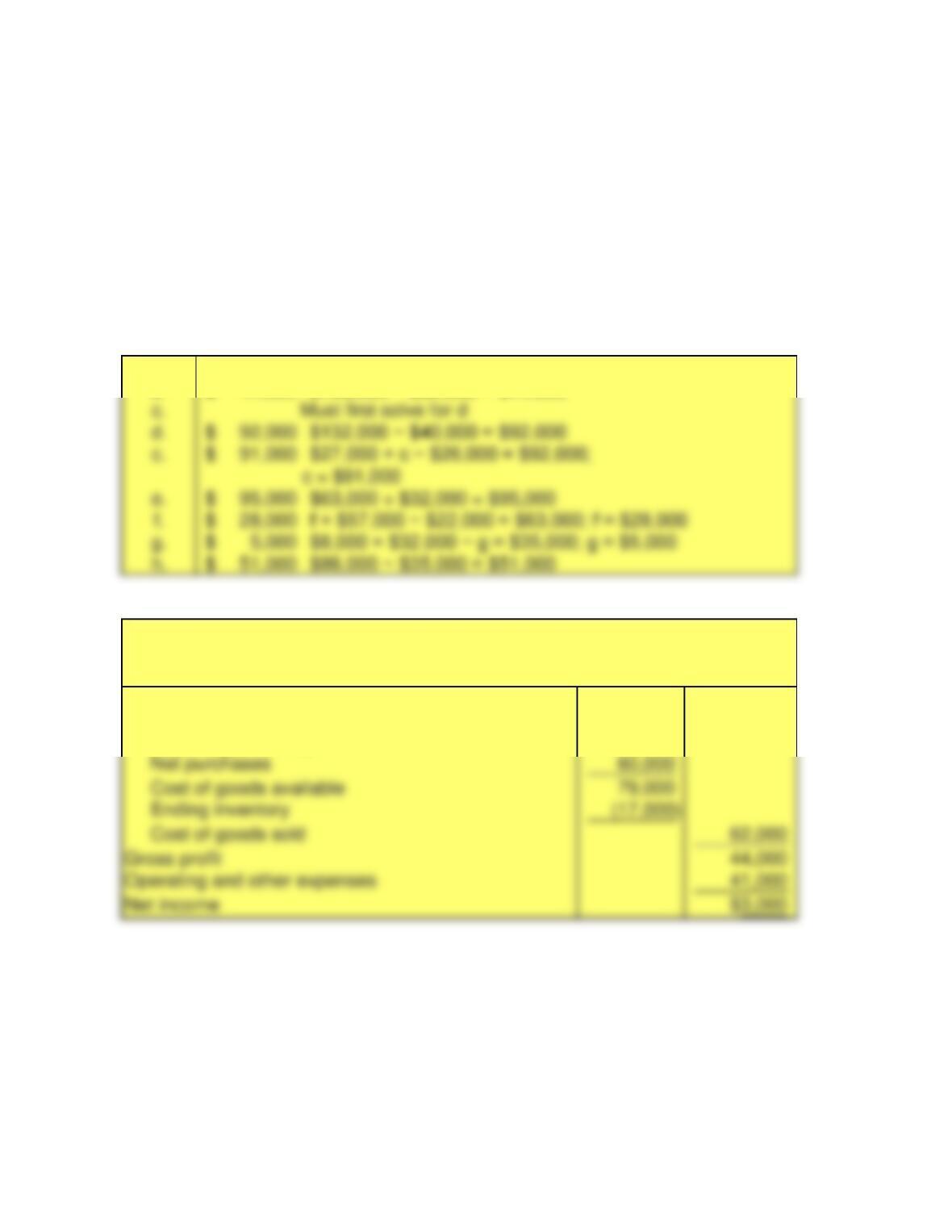
a. 62,000$ $19,000 + $60,000 − $17,000 = $62,000
b. 44,000$ $106,000 − $62,000 = $44,000
Req. 1
Net sales $106,000
Cost of goods sold
Beginning inventory $19,000
Cost of goods available 79,000
Gross profit 44,000
Armold Company
Income Statement
Year Ended December 31, 2016
1. Prepare the income statement for Arnold Company for the year ended
December 31, 2016. Use the cost-of-goods-sold model to compute cost of
goods sold. Arnold’s operating and other expenses for the year were $41,000.
Ignore income tax.
Chapter 6: Inventory and Cost of Goods Sold Page 26 of 96
d. 92,000$ $132,000 − $40,000 = $92,000
h. 51,000$ $86,000 − $35,000 = $51,000
FINANCIAL ACCOUNTING – Eleventh Edition Solutions Manual
E6-26A
(20-30 min.)
Solution:
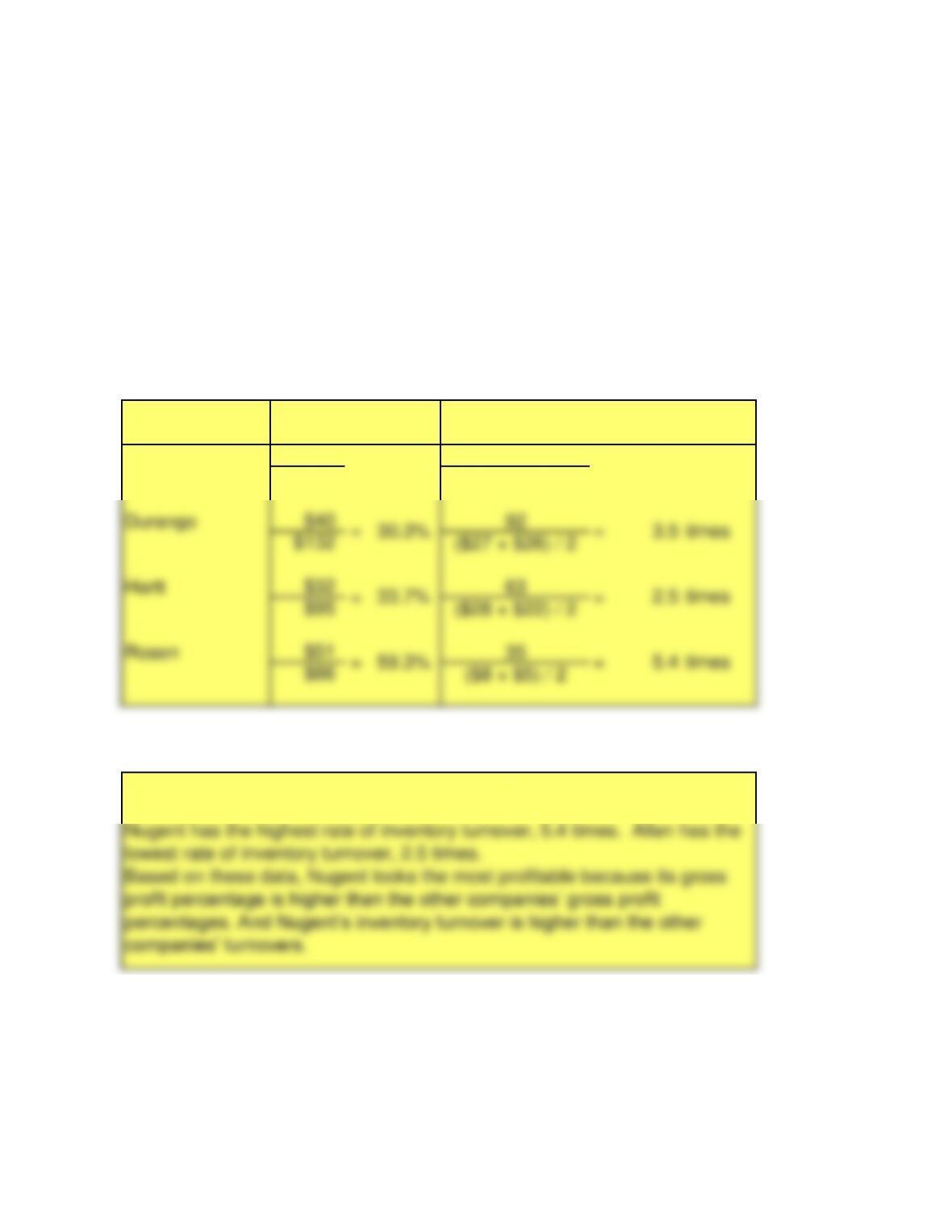
Req. 1
Cailley $44
$106
Req. 2
3.4
times
Company
Inventory Turnover
41.5%
Nugent has the highest gross profit percentage, 59.3%. Donahue has the
lowest gross profit percentage, 30.3%.
62
($19 + $17) / 2
Compute all ratio values to answer the following questions:
■ Which company has the highest, and which company has the lowest,
gross profit percentage?
■ Which company has the highest, and which has the lowest, rate of
inventory turnover? Based on your figures, which company appears to be
the most profitable?
Gross Profit
Percentage
=
=
Chapter 6: Inventory and Cost of Goods Sold Page 27 of 96
$132
3.5
times
2.5
times
30.3%
33.7%
59.3%
($28 + $22) / 2
5.4
times
($27 + $26) / 2
=
=
=
=
=
=
FINANCIAL ACCOUNTING – Eleventh Edition Solutions Manual
E6-27A
(15 min.)
Solution:
Req. 1 and 2
1
FIFO
$138,000 − $87,630
$138,000
Req. 3
Req. 4
$138,000 − $97,980
2
LIFO
$138,000
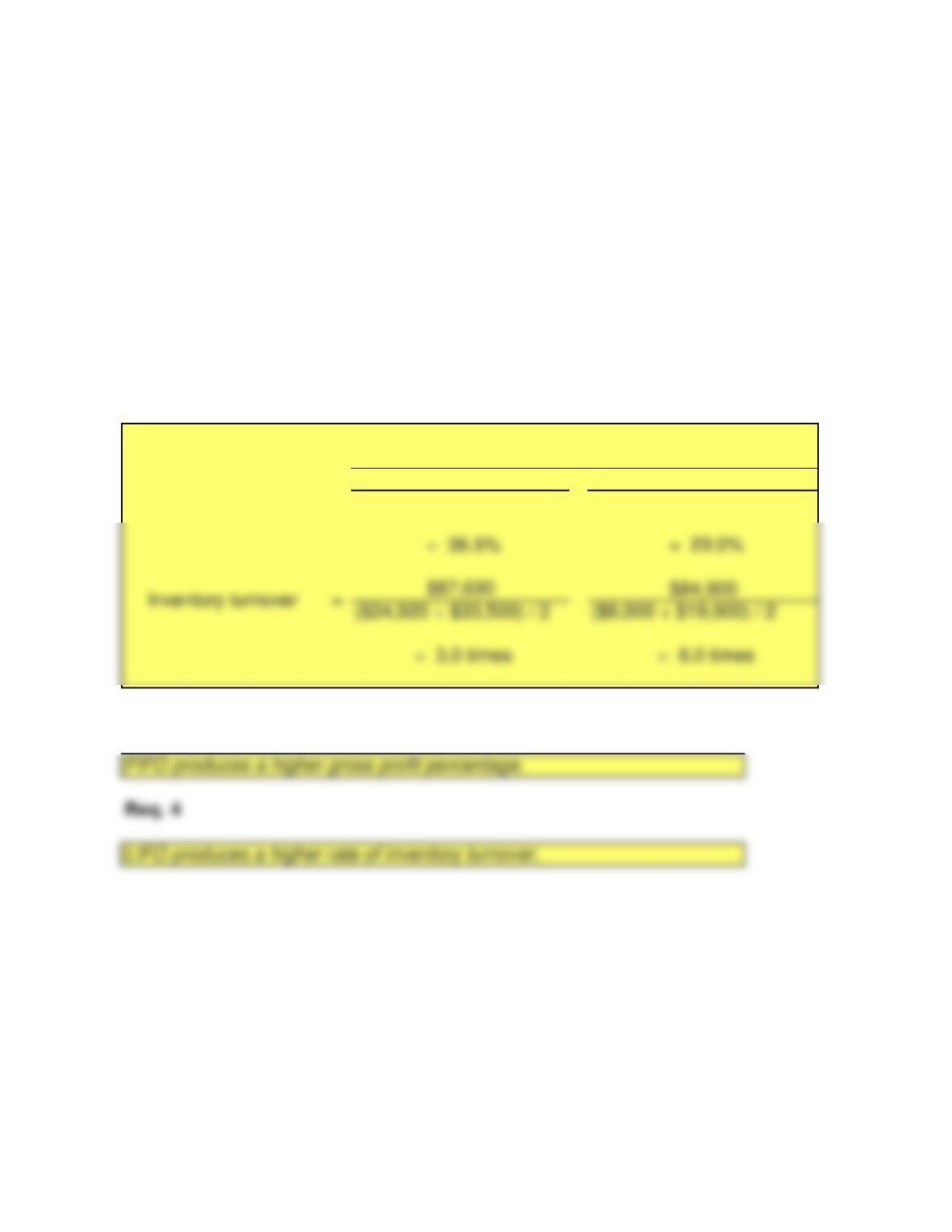
Burner & Brett need to know the company’s gross profit percentage and
rate of inventory turnover for 2016 under
1. FIFO.
2. LIFO.
Which method produces a higher gross profit percentage? Inventory
turnover?
Gross profit percentage
=
Chapter 6: Inventory and Cost of Goods Sold Page 28 of 96
FINANCIAL ACCOUNTING – Eleventh Edition Solutions Manual
E6-28A
(10-15 min.)
Requirement
Solution:
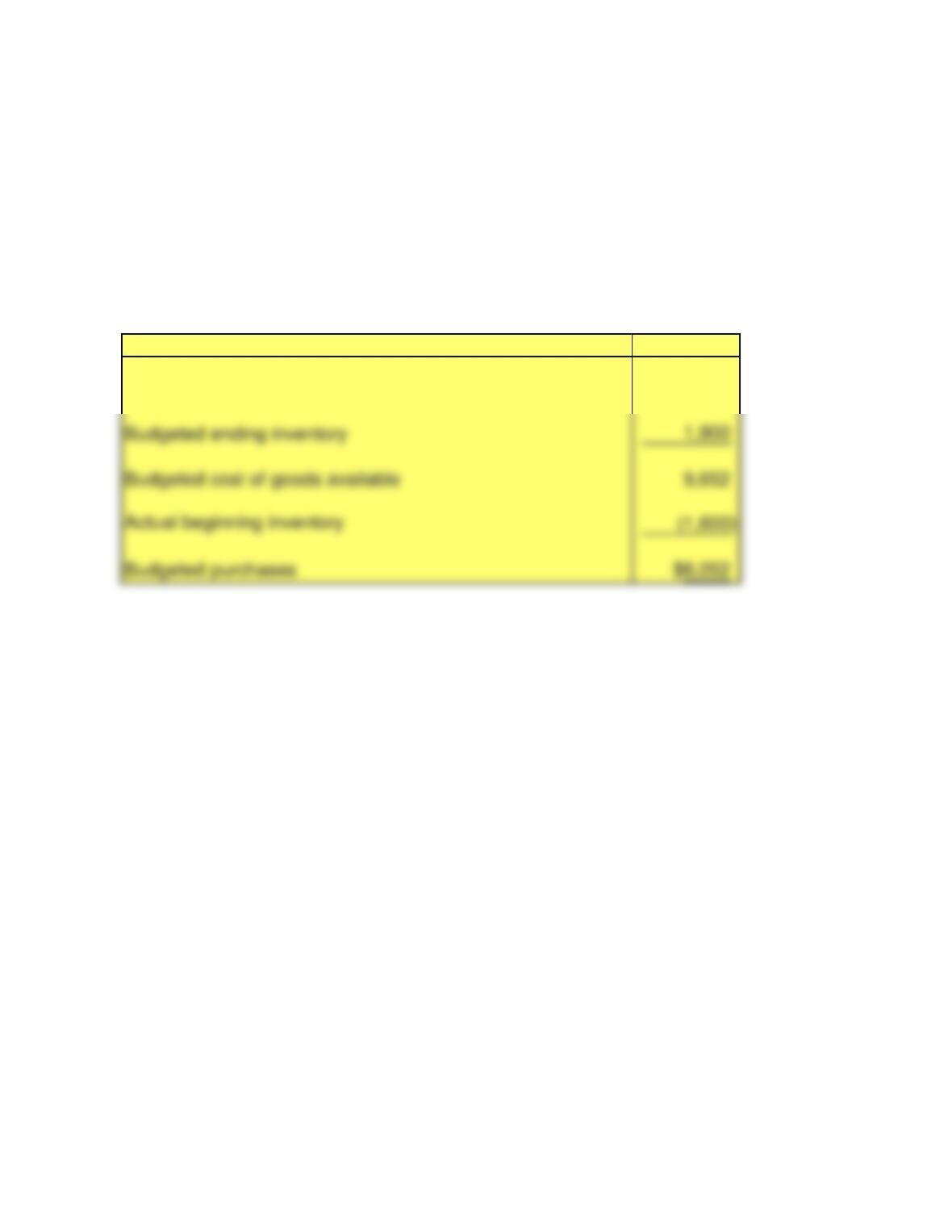
Millions
Budgeted cost of goods sold ($6,800 × 1.14) $7,752
Year ended January 31, 2016
1. One of the most important decisions a manager makes is how much
inventory to buy. How much inventory should Toyland purchase during
the upcoming year to reach its budget?
Chapter 6: Inventory and Cost of Goods Sold Page 29 of 96
Budgeted cost of goods available 9,652
FINANCIAL ACCOUNTING – Eleventh Edition Solutions Manual
E6-29A
(10-15 min.)
Solution:
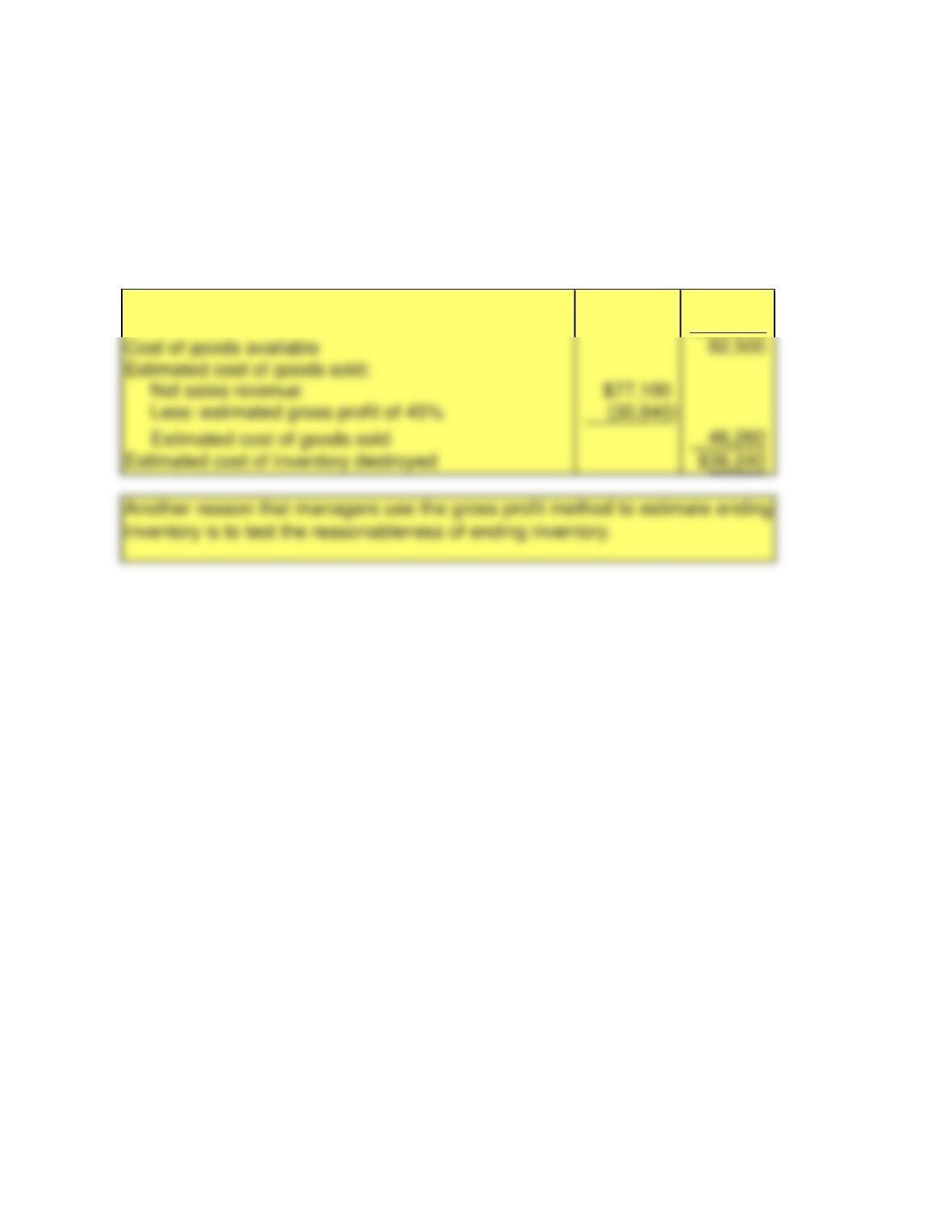
Beginning inventory $45,300
Net purchases 37,200
Estimate the cost of the inventory destroyed by the fire. Identify another reason that
owners and managers use the gross profit method to estimate inventory.
Chapter 6: Inventory and Cost of Goods Sold Page 30 of 96
FINANCIAL ACCOUNTING – Eleventh Edition Solutions Manual
E6-30A
(10-15 min.)
Solution:
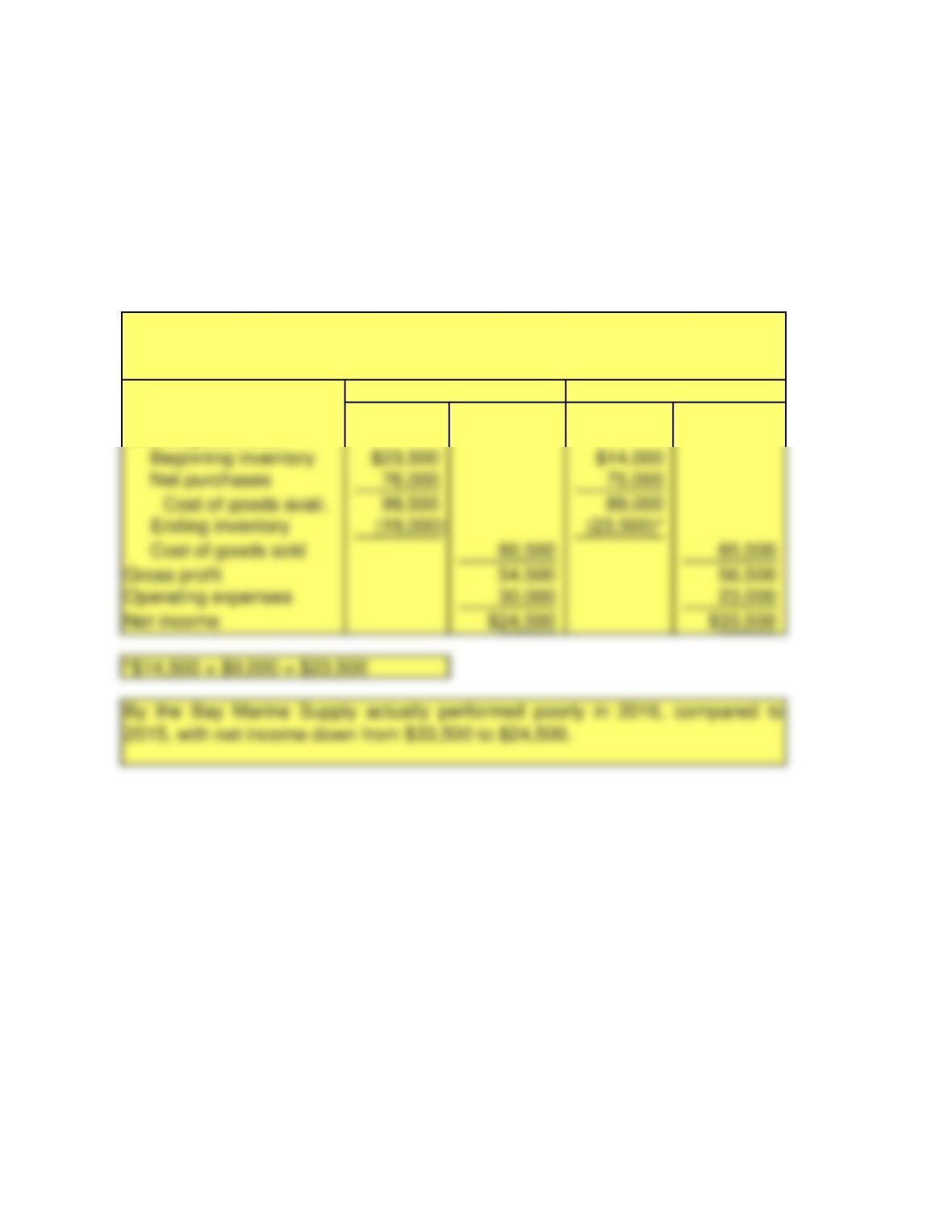
Sales revenue $135,000 $122,000
Cost of goods sold:
By the Bay Marine Supply
Income Statement (Corrected)
Years Ended November 30, 2016 and 2015
Prepare the corrected comparative income statements for the two-
year period, complete with a heading for the statements. How well did By the
Bay Marine Supply really perform in 2016 as compared with 2015?
2016
2015
Chapter 6: Inventory and Cost of Goods Sold Page 31 of 96
FINANCIAL ACCOUNTING – Eleventh Edition Solutions Manual
E6-31B
(15-20 min.)
Requirements
Solution:
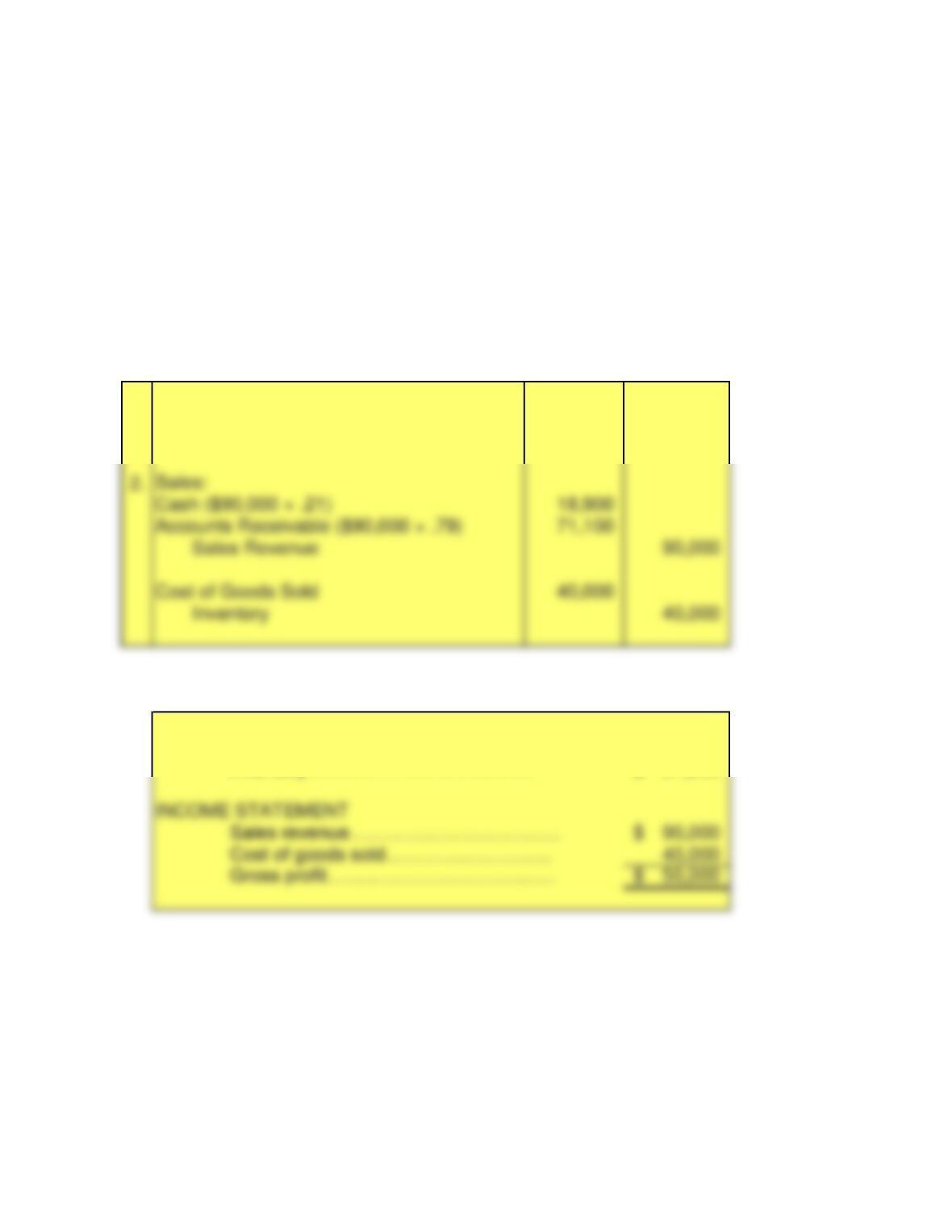
Req. 1 Perpetual System
1. Purchases:
Inventory 60,000
Accounts Payable 60,000
Req. 2
BALANCE SHEET
Current assets:
Inventory………………………………. 27,000$
INCOME STATEMENT
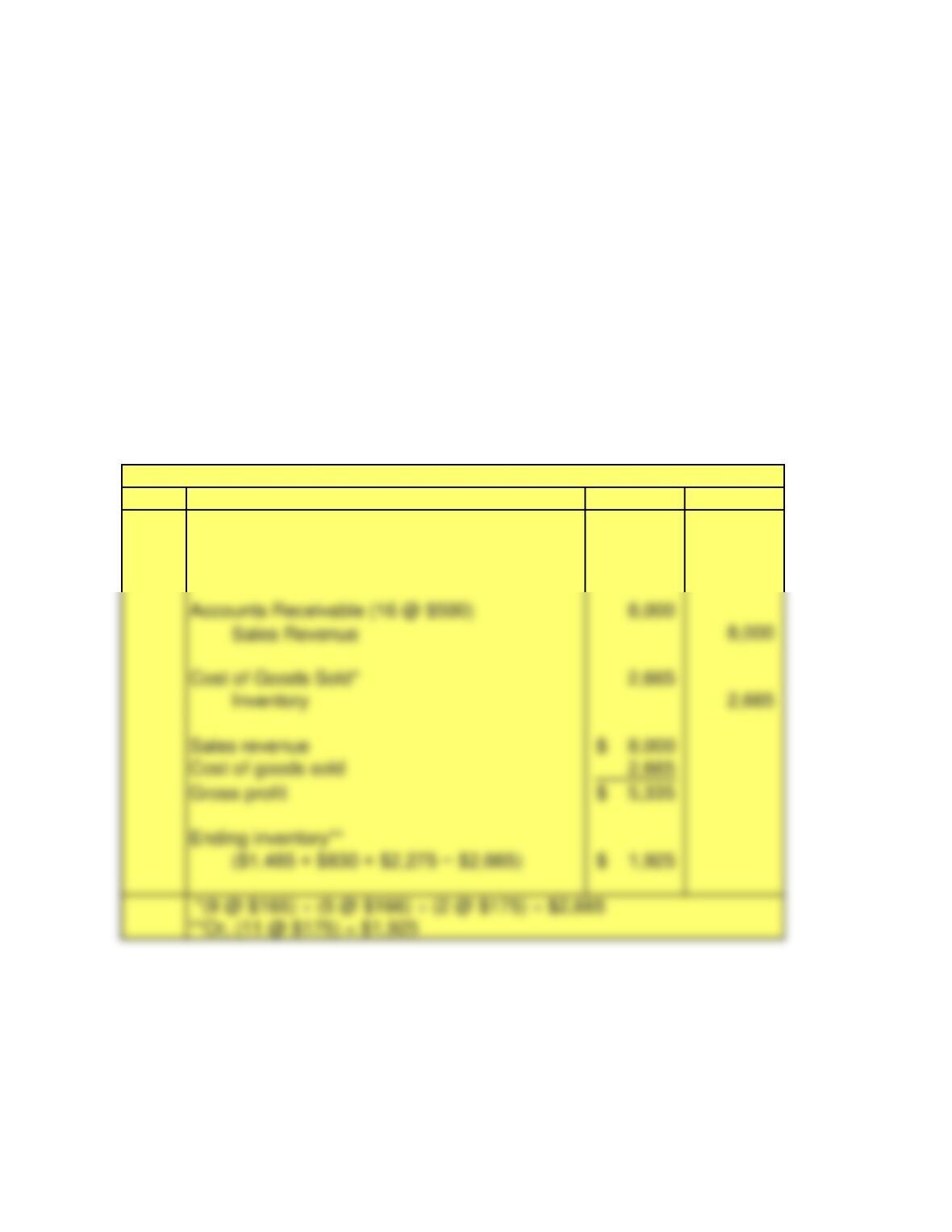
1. Journalize Dundas’s inventory transactions for the year under the
perpetual system.
2. Report ending inventory, sales, cost of goods sold, and gross profit on
the appropriate financial statement.
Chapter 6: Inventory and Cost of Goods Sold Page 32 of 96
Cash ($90,000 × .21) 18,900
Accounts Receivable ($90,000 × .79) 71,100
Cost of Goods Sold 40,000
FINANCIAL ACCOUNTING – Eleventh Edition Solutions Manual
E6-32B
(15-25 min.)
Solution:
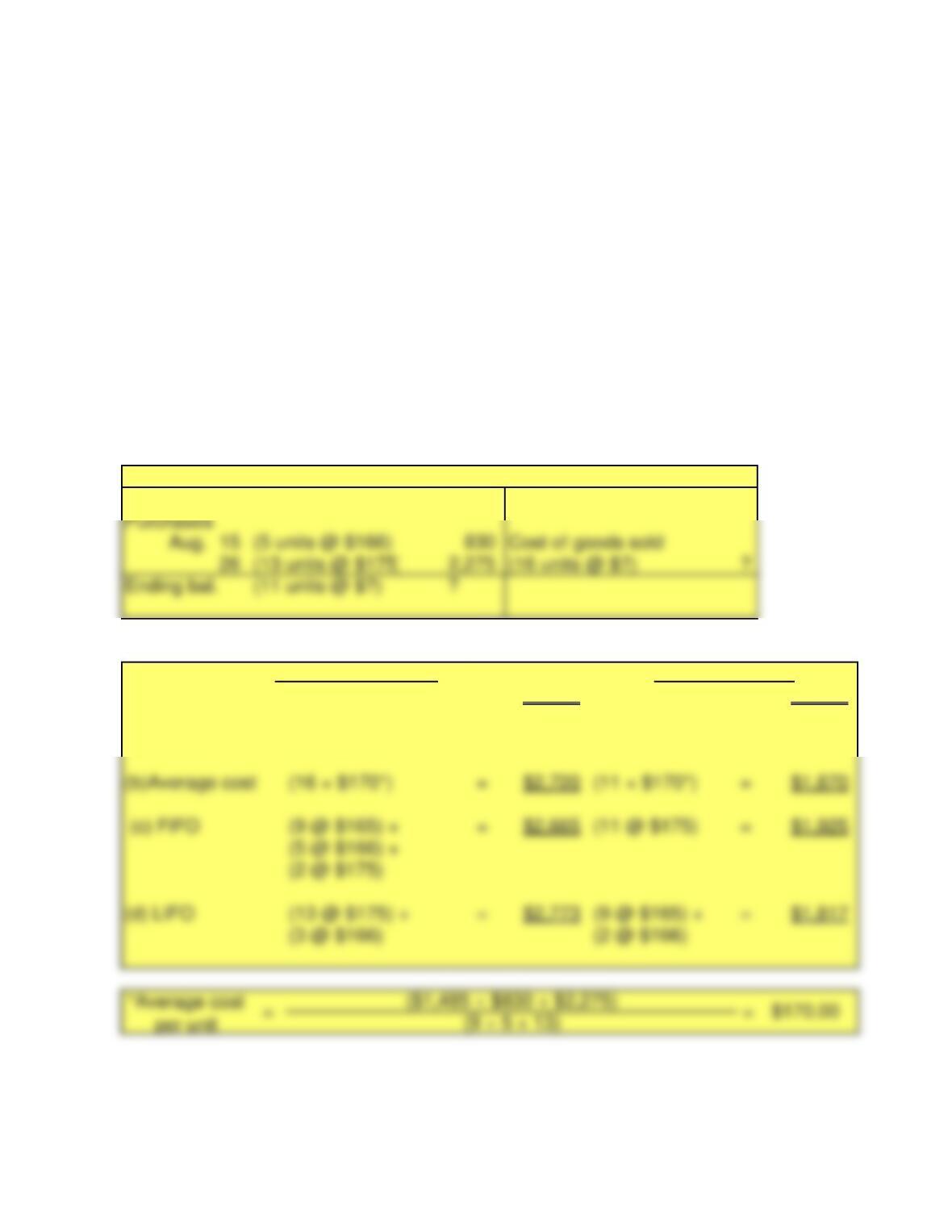
Req. 1, 2, and 3
DATE DEBIT CREDIT
Inventory ($830 + $2,275) 3,105
Accounts Payable 3,105
1. Total March purchases in one summary entry. All purchases were on credit.
2. Total March sales and cost of goods sold in two summary entries. The
selling price was $500 per unit, and all sales were on credit. Assume that
Arrow uses the FIFO inventory method.
3. Under FIFO, how much gross profit would Arrow earn on these
transactions? What is the FIFO cost of Arrow Corporation’s ending inventory?
Journal
ACCOUNT TITLES AND EXPLANATION
Chapter 6: Inventory and Cost of Goods Sold Page 33 of 96
*(9 @ $165) + (5 @ $166) + (2 @ $175) = $2,665
**Or, (11 @ $175) = $1,925
FINANCIAL ACCOUNTING – Eleventh Edition Solutions Manual
E6-33B
(10-15 min.)
Requirements
Solution:
Req. 1
Beg. bal.
(9 units @ $165)
(2 @ $165) + = $2,735 (7 @ $165) + = $1,855
(5 @ $166) + (4 @ $175)
(9 @ $175)
(5 @ $166) +
(2 @ $175)
(3 @ $166) (2 @ $166)
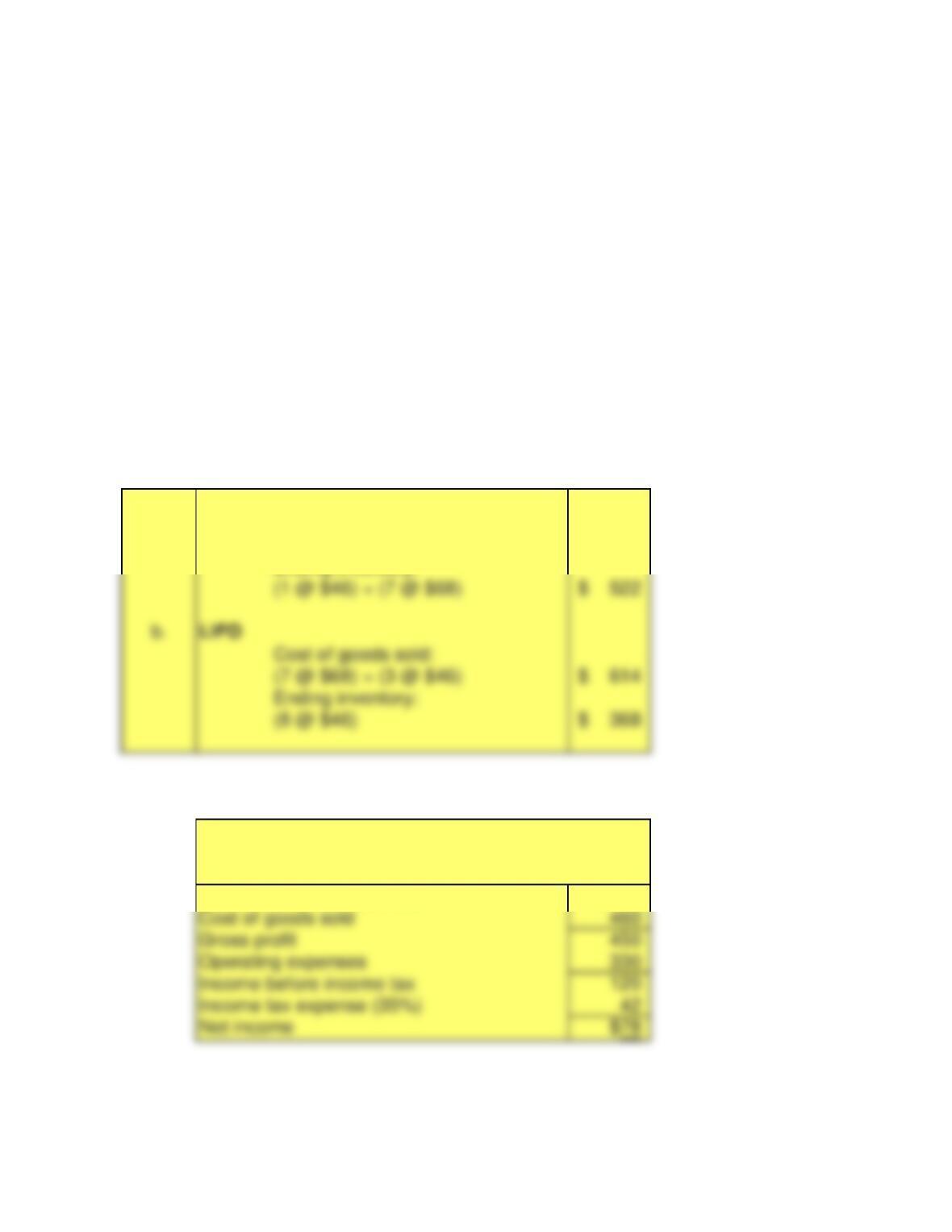
1. Compute cost of goods sold and ending inventory using each of the following
methods:
a. Specific unit cost, with seven $165 units and four $175 units still on hand at the end
b. Average cost
c. FIFO
d. LIFO
2. Which method produces the highest cost of goods sold? Which method produces the
lowest cost of goods sold? What causes the difference in cost of goods sold?
1,485
(a)Specific
unit cost
Inventory
Ending Inventory
Cost of Goods Sold
Chapter 6: Inventory and Cost of Goods Sold Page 34 of 96

FINANCIAL ACCOUNTING – Eleventh Edition Solutions Manual
Req. 2
LIFO produces the highest cost of goods sold, $2,773.
Chapter 6: Inventory and Cost of Goods Sold Page 35 of 96
FIFO produces the lowest cost of goods sold, $2,665.

FINANCIAL ACCOUNTING – Eleventh Edition Solutions Manual
E6-34B
(10 min.)
Solution:
LIFO ($2,773) − FIFO ($2,665) 108$
Cost of goods sold
How much in taxes would Bright Sales, Inc., save by using the LIFO
method versus FIFO?
Chapter 6: Inventory and Cost of Goods Sold Page 36 of 96

FINANCIAL ACCOUNTING – Eleventh Edition Solutions Manual
E6-35B
(10-15 min.)
Requirements
Solution:
Req. 1
(1) Average cost (38,000 × $14.25*) = $541,500 (2,000 × $14.25*) = $28,500
1. Using the average-cost method, compute the cost of goods sold and ending
inventory for the year.
2. Using the FIFO method, compute the cost of goods sold and ending inventory for
the year.
3. Using the LIFO method, compute the cost of goods sold and ending inventory for
the year.
Cost of Goods Sold
Ending Inventory
Chapter 6: Inventory and Cost of Goods Sold Page 37 of 96
(2) FIFO (10,000 @ $12) + = $540,000 (2,000 @ $15) = $30,000
(8,000 @ $12)
FINANCIAL ACCOUNTING – Eleventh Edition Solutions Manual
E6-36B
(15 min.)
Requirements
Solution:
Req. 1
a. FIFO
Cost of goods sold:
(10 @ $46) 460$
Ending inventory:
Req. 2
Sales revenue (10 @ $91)
$910
1. Determine the amounts that MusicMagic should report for cost of goods
sold and ending inventory two ways:
a. FIFO
b. LIFO
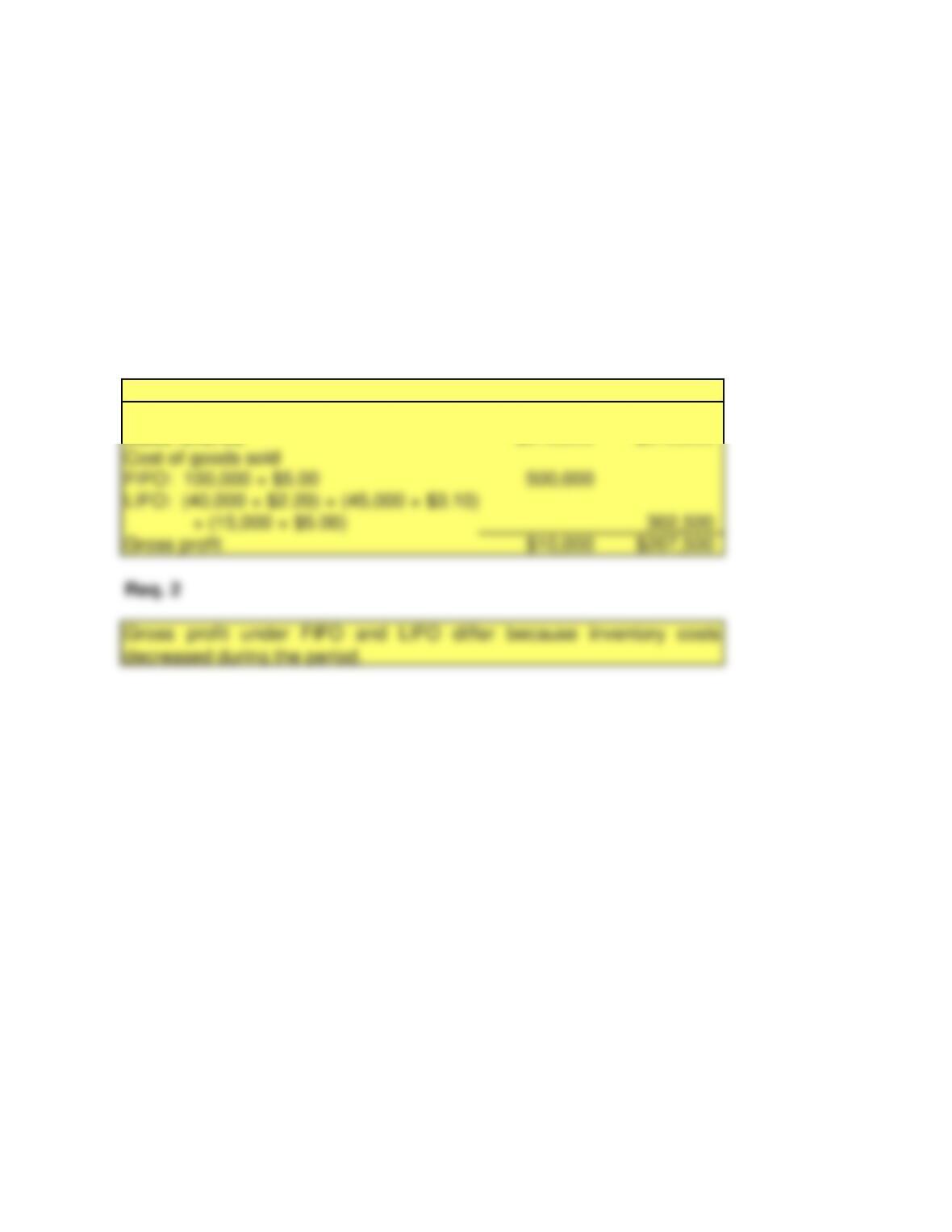
2. MusicMagic uses the FIFO method. Prepare MusicMagic’s income
statement for the month ended March 31, 2016, reporting gross profit.
Operating expenses totaled $330, and the income tax rate was 35%.
MusicMagic.net
Income Statement
Month Ended March 31, 2016
Chapter 6: Inventory and Cost of Goods Sold Page 38 of 96
(1 @ $46) + (7 @ $68) 522$
b. LIFO
Cost of goods sold:
(7 @ $68) + (3 @ $46) 614$
Ending inventory:
(8 @ $46) 368$
FINANCIAL ACCOUNTING – Eleventh Edition Solutions Manual
E6-37B
(15 min.)
Requirements
Solution:
Req. 1
FIFO LIFO
Gross profit:
Sales revenue $510,000 $510,000
1. Calculate the store’s gross profit under FIFO and LIFO at February 29.
2. What caused the FIFO and LIFO gross profit figures to differ?
Chapter 6: Inventory and Cost of Goods Sold Page 39 of 96
Req. 2
FINANCIAL ACCOUNTING – Eleventh Edition Solutions Manual
E6-38B
(5-10 min.)
Requirement
Solution:
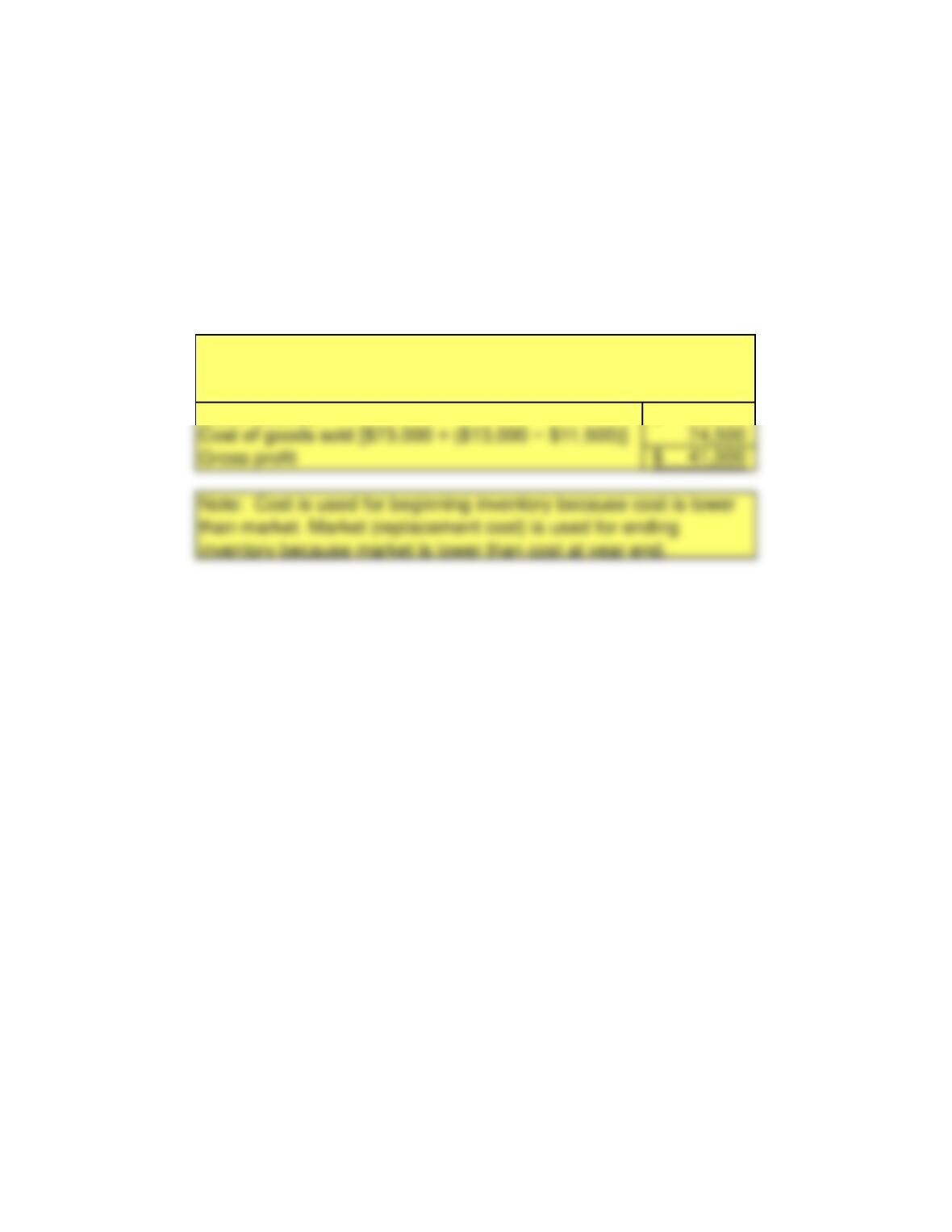
Sales revenue 116,000$
1. Prepare Erie Garden Supplies’ 2016 income statement through gross
profit to show how the company would apply the lower-of-cost-or-market
rule to its inventories.
Erie Garden Supplies
Income Statement (partial)
Year Ended August 31, 2016
Chapter 6: Inventory and Cost of Goods Sold Page 40 of 96
than market. Market (replacement cost) is used for ending
inventory because market is lower than cost at year end.