171
CHAPTER 6
RECEIVABLES AND INVENTORIES
CLASS DISCUSSION QUESTIONS
1. Receivables are normally classified as (1)
accounts receivable, (2) notes receivable, or
(3) other receivables.
2. Transactions in which merchandise is sold
or services are provided on credit generate
accounts receivable.
5. Carter’s should use the direct write-off
method because it is a small business that
has a relatively small number and volume of
accounts receivable.
6. The allowance method
7. Contra asset
8. The accounts receivable and allowance for
doubtful accounts may be reported at a net
9. (1) The percentage rate used is excessive
in relationship to the volume of accounts
written off as uncollectible; hence, the
balance in the allowance is excessive.
(2) A substantial volume of old uncollectible
accounts is still being carried in the ac-
counts receivable account.
10. Manufacturing firms must accumulate the
costs for making product. The costs for mak-
the work-in-process costs are transferred to
the finished goods inventory account. Upon
sale, the finished goods costs are trans-
ferred to cost of goods sold, to be matched
against the revenue from sale. Since
merchandisers only purchase goods for re-
counting for the sale of completed goods is
similar for both types of firms.
11. No, they are not techniques for determining
physical quantities. The terms refer to cost
flow assumptions, which affect the determi-
nation of the cost prices assigned to items in
the inventory.
12. No, the term refers to the flow of costs rather
16. The LIFO reserve is the difference between
the FIFO and LIFO inventory valuation. The
analyst will adjust earnings to what they
would have been under FIFO. This is be-
cause the liquidation of a LIFO reserve
abnormally inflates gross profit and net in-
come.
17. Current Assets
18. Net realizable value (estimated selling price
172
EXERCISES
E6–1
Accounts receivable from the U.S. government are significantly different from receiva-
bles from commercial aircraft carriers such as Delta and United. Thus, Boeing should
E6–2
Due Date Interest Due at Maturity
a. Feb. 20 $450 [$40,000 × 0.09 × (45/360)]
b. May 22 $150 [$9,000 × 0.10 × (60/360)]
E6–3
a. MGM: 17.1% ($101,207,000 ÷ $592,937,000)
b. IBM: 2.2% ($256,000,000 ÷ $11,435,000,000)
c. Casino operations experience greater bad debt risk, since it is difficult to
control the creditworthiness of customers entering the casino. In addition,
individuals who may have adequate creditworthiness could overextend them-
173
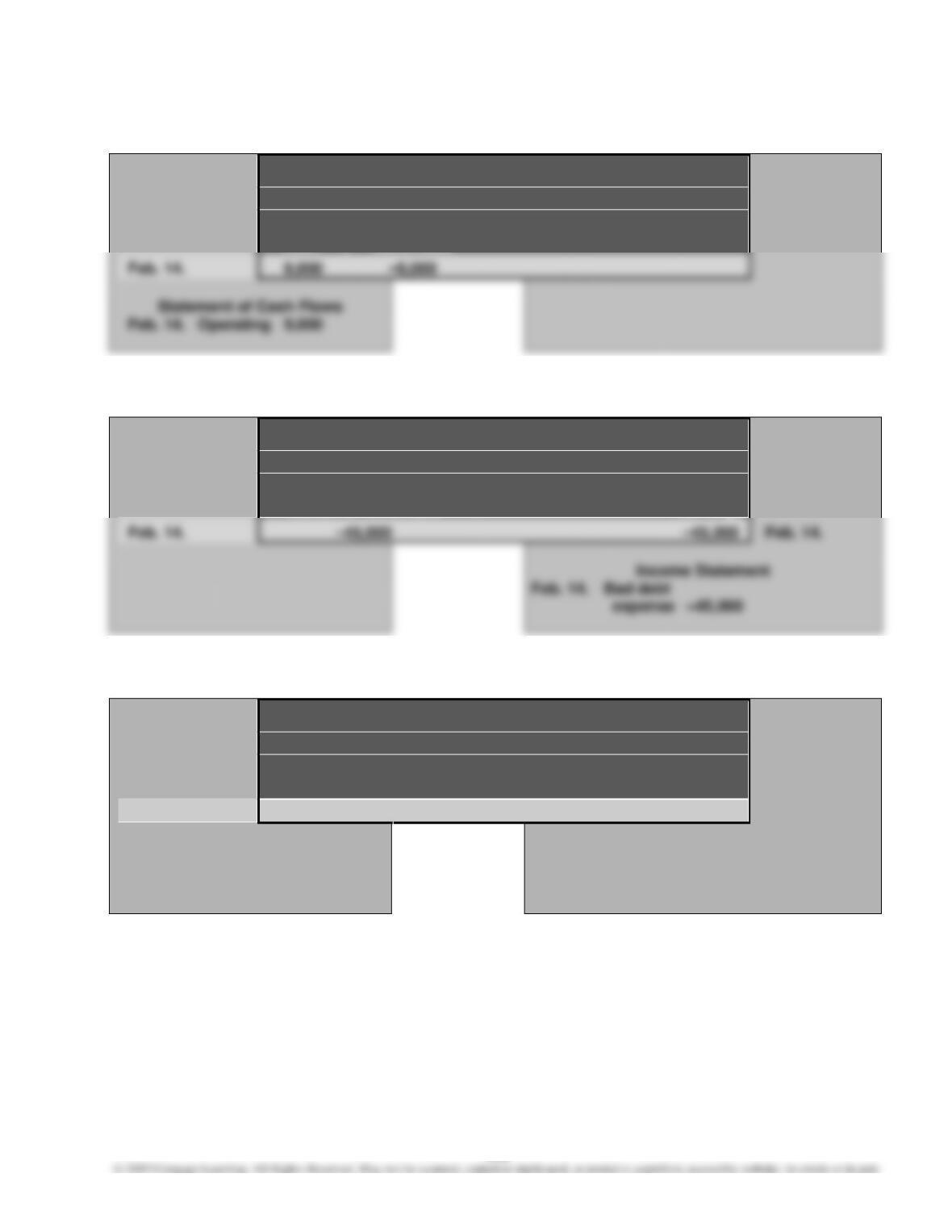
E6–4
Balance Sheet
Statement of
Assets
=
Liabilities
+
Stockholders’ Equity
Income
Cash Flows
Accounts
Statement
Cash
+
Receivable
Feb. 14.
Feb. 14.
Operating
Balance Sheet
Statement of
Assets
=
Liabilities
+
Stockholders’ Equity
Income
Cash Flows
Retained
Statement
Accounts Receivable
=
Earnings
Feb. 14.
Feb. 14.
Income Statement
expense
Balance Sheet
Statement of
Assets
=
Liabilities
+
Stockholders’ Equity
Income
Cash Flows
Retained
Statement
Accounts Receivable
=
Earnings
Dec. 23.
45,000
45,000
Dec. 23.
Income Statement
Dec. 23.
Bad debt
expense
45,000
174
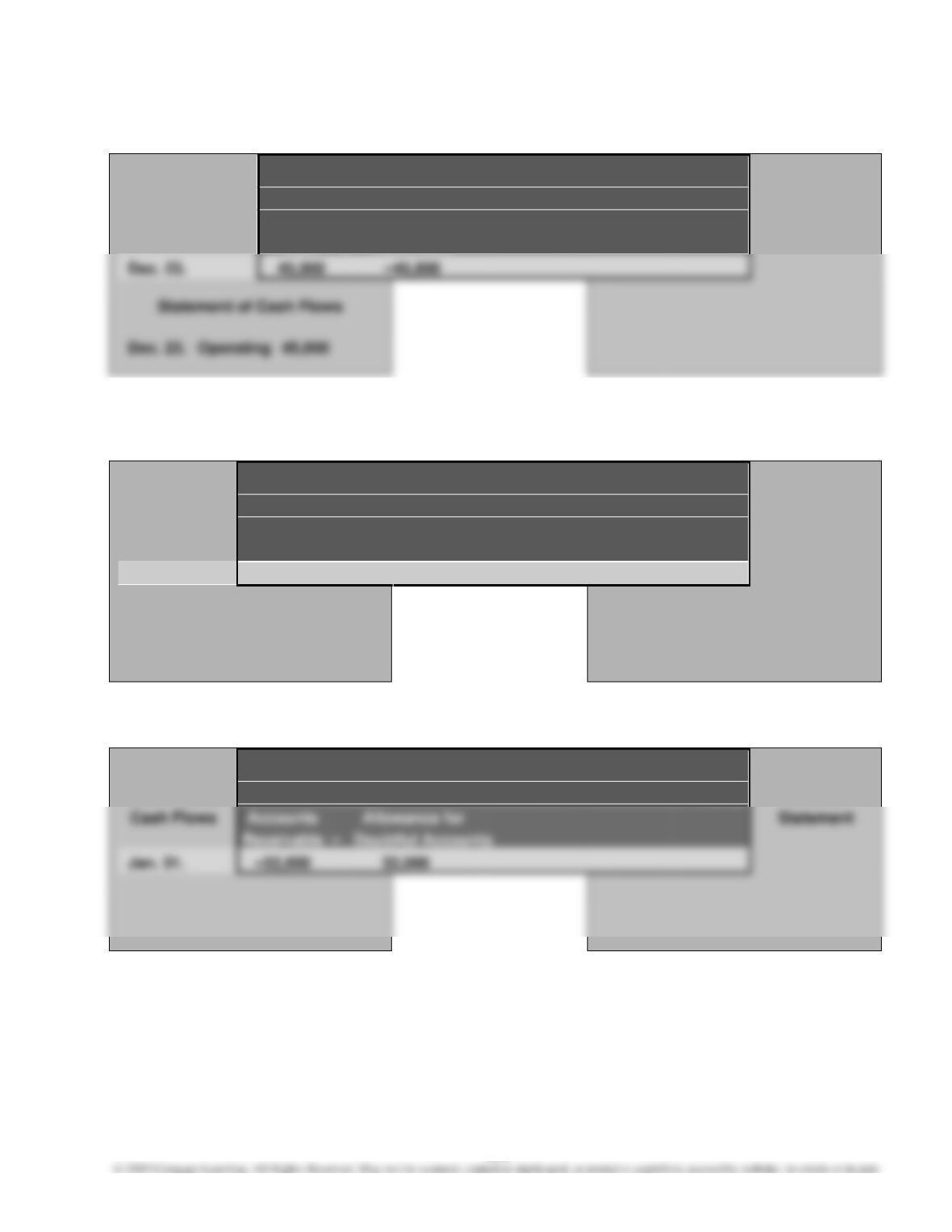
E6–4, Concluded
Balance Sheet
Statement of
Assets
=
Liabilities
+
Stockholders’ Equity
Income
Cash Flows
Accounts
Statement
Cash
+
Receivable
Operating
45,000
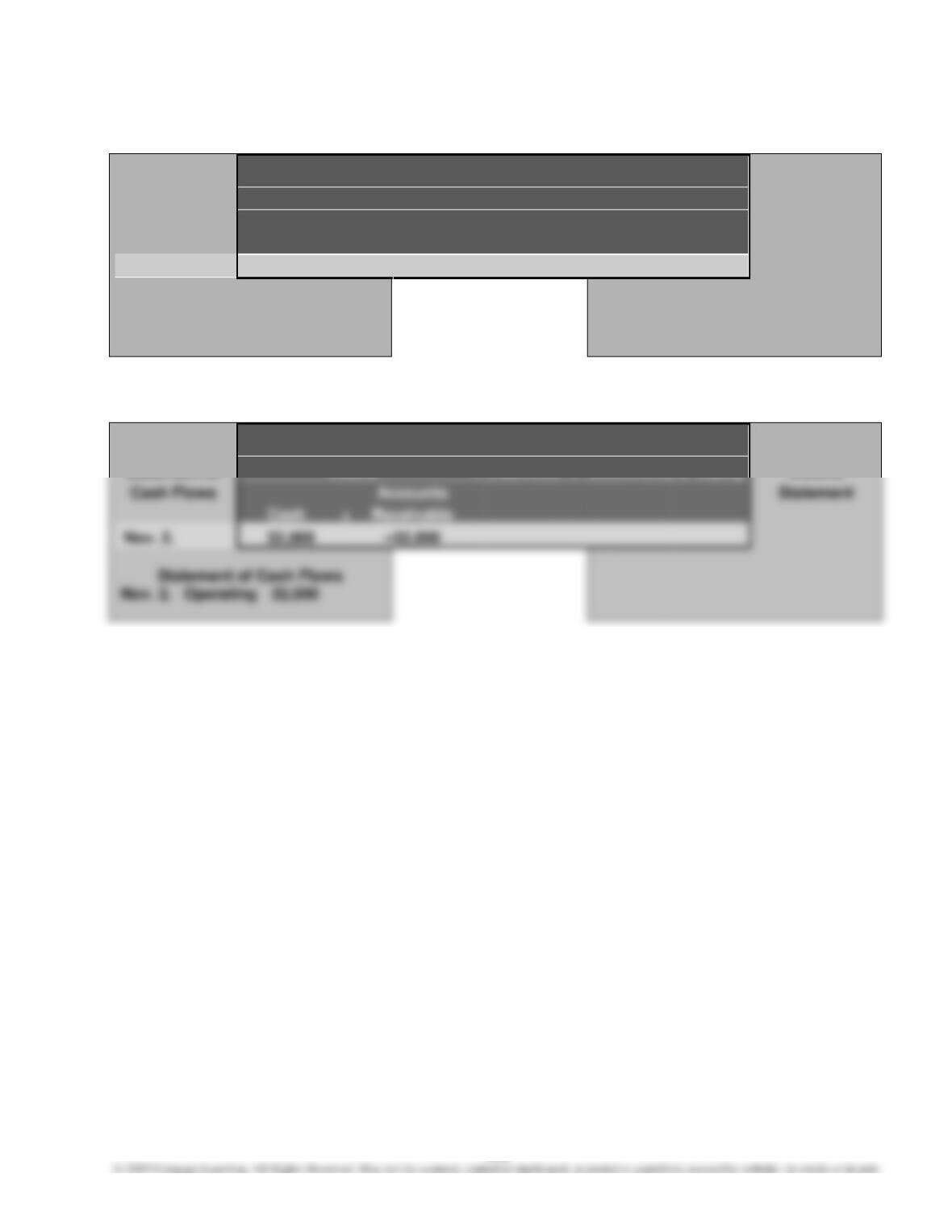
E6–5
Balance Sheet
Statement of
Assets
=
Liabilities
+
Stockholders’ Equity
Income
Cash Flows
Accounts
Statement
Cash
+
Receivable
Jan. 31.
8,000
–8,000
Statement of Cash Flows
Jan. 31.
Operating
8,000
Balance Sheet
Statement of
Assets
=
Liabilities
+
Stockholders’ Equity
Income
Cash Flows
Allowance for
Statement
Receivable
Jan. 31.
175
E6–5, Concluded
Balance Sheet
Statement of
Assets
=
Liabilities
+
Stockholders’ Equity
Income
Cash Flows
Accounts
Allowance for
Statement
Receivable
–
Doubtful Accounts
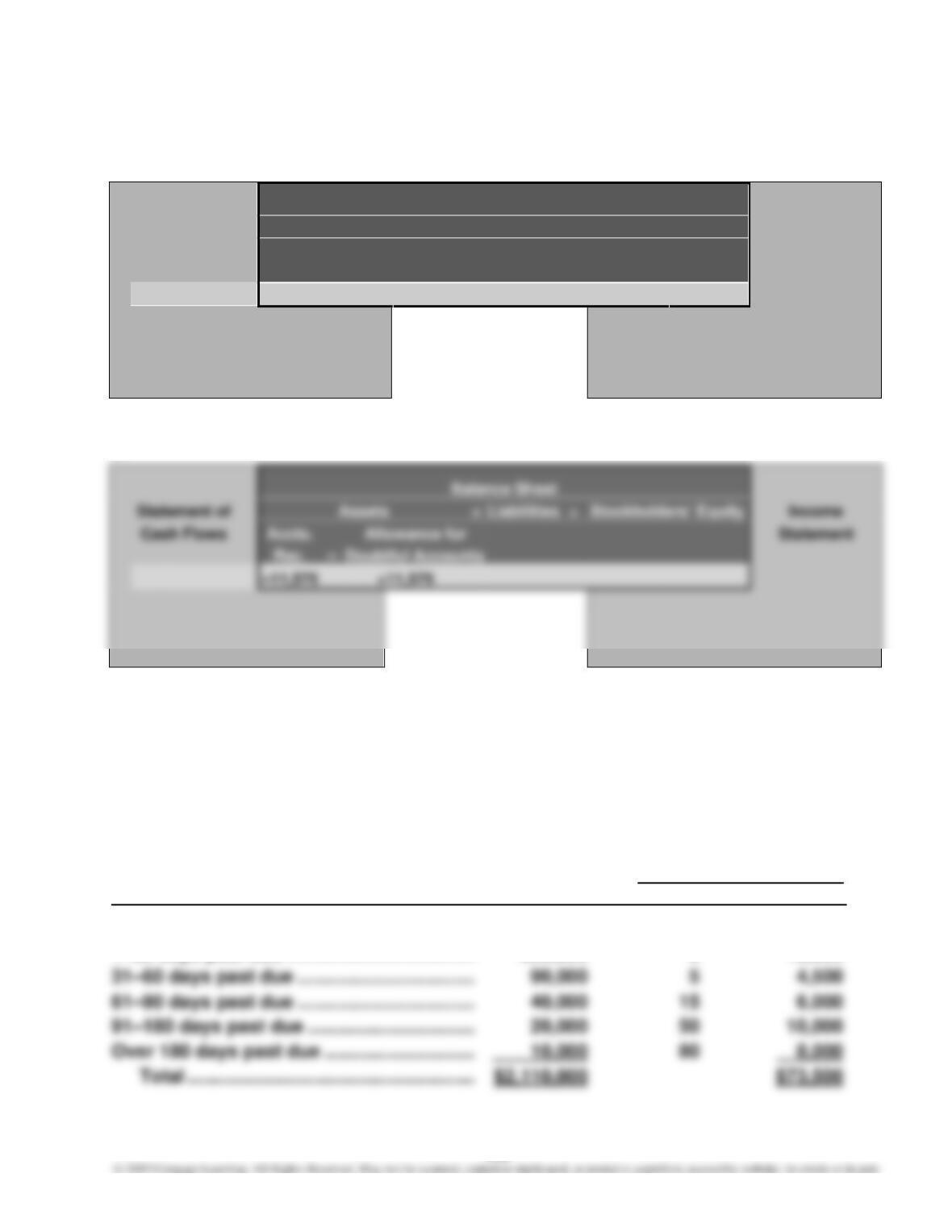
Nov. 2.
32,000
–32,000
Balance Sheet
Statement of
Assets
=
Liabilities
+
Stockholders’ Equity
Income
Cash Flows
Statement
Nov. 2.
Nov. 2.
Operating
32,000
176
E6–6
a.
Balance Sheet
Statement of
Assets
=
Liabilities
+
Stockholders’ Equity
Income
Cash Flows
Accounts
Retained
Statement
Receivable
=
Earnings
–11,575
–11,575
Income Statement
Bad debt
expense
–11,575
b.
Balance Sheet
Statement of
+
Stockholders’ Equity
Income
Cash Flows
Accts.
Statement
Doubtful Accounts
E6–7
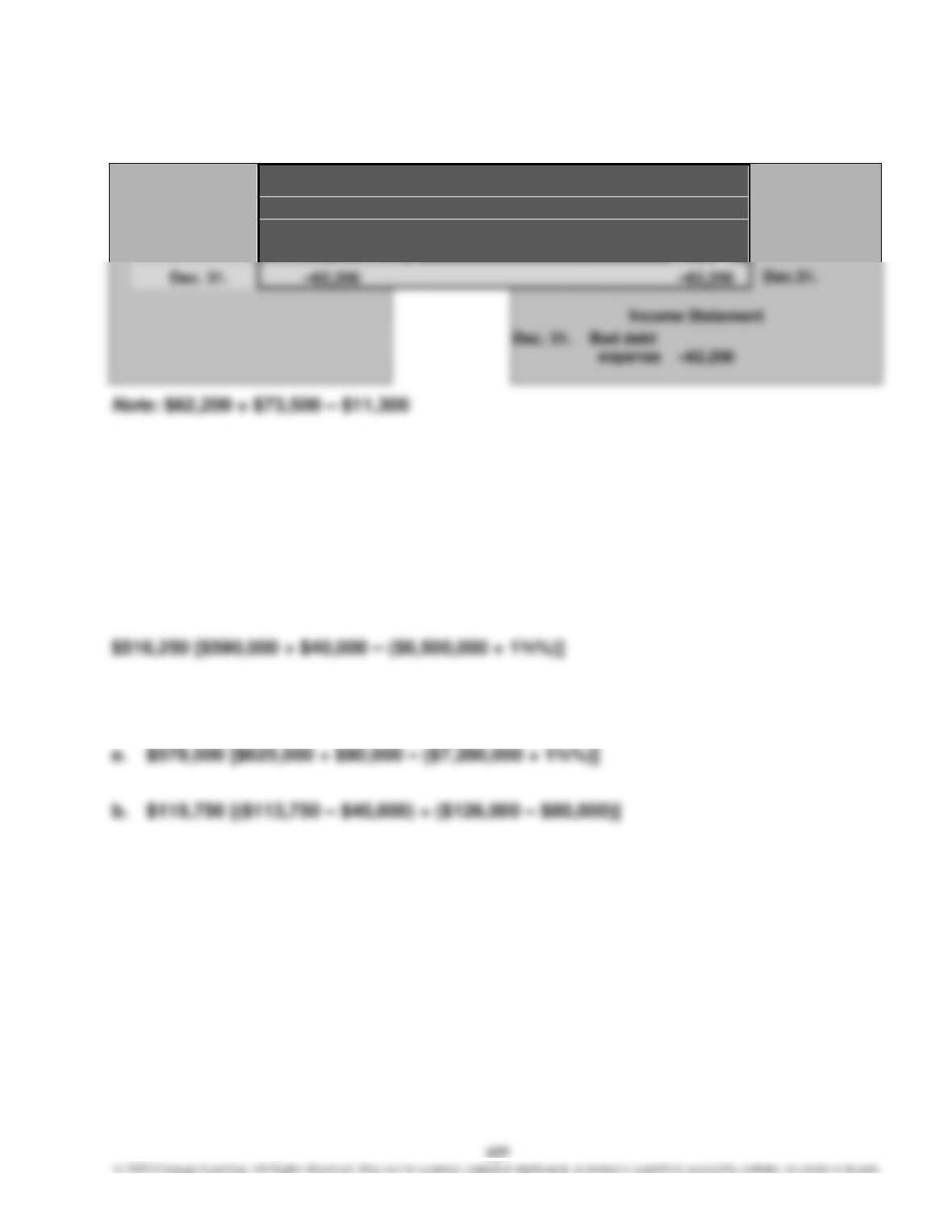
Estimated balance of Allowance for Doubtful Accounts: $73,500
Computed as shown below.
Estimated
Uncollectible Accounts
Age Interval Balance Percent Amount
Not past due ……………………………………….. $1,350,000 2% $27,000
1–30 days past due ……………………………… 600,000 3 18,000
E6–8
Balance Sheet
Statement of
Assets
=
Liabilities
+
Stockholders’ Equity
Income
Cash Flows
– Allowance for
Retained
Statement
Doubtful Accounts
=
Earnings
E6–9
a. $108,000 ($21,600,000 × 0.005) c. $162,000 ($21,600,000 × 0.0075)
b. $125,000 ($145,000 – $20,000) d. $148,000 ($130,000 + $18,000)
E6–10
E6–11
E6–12
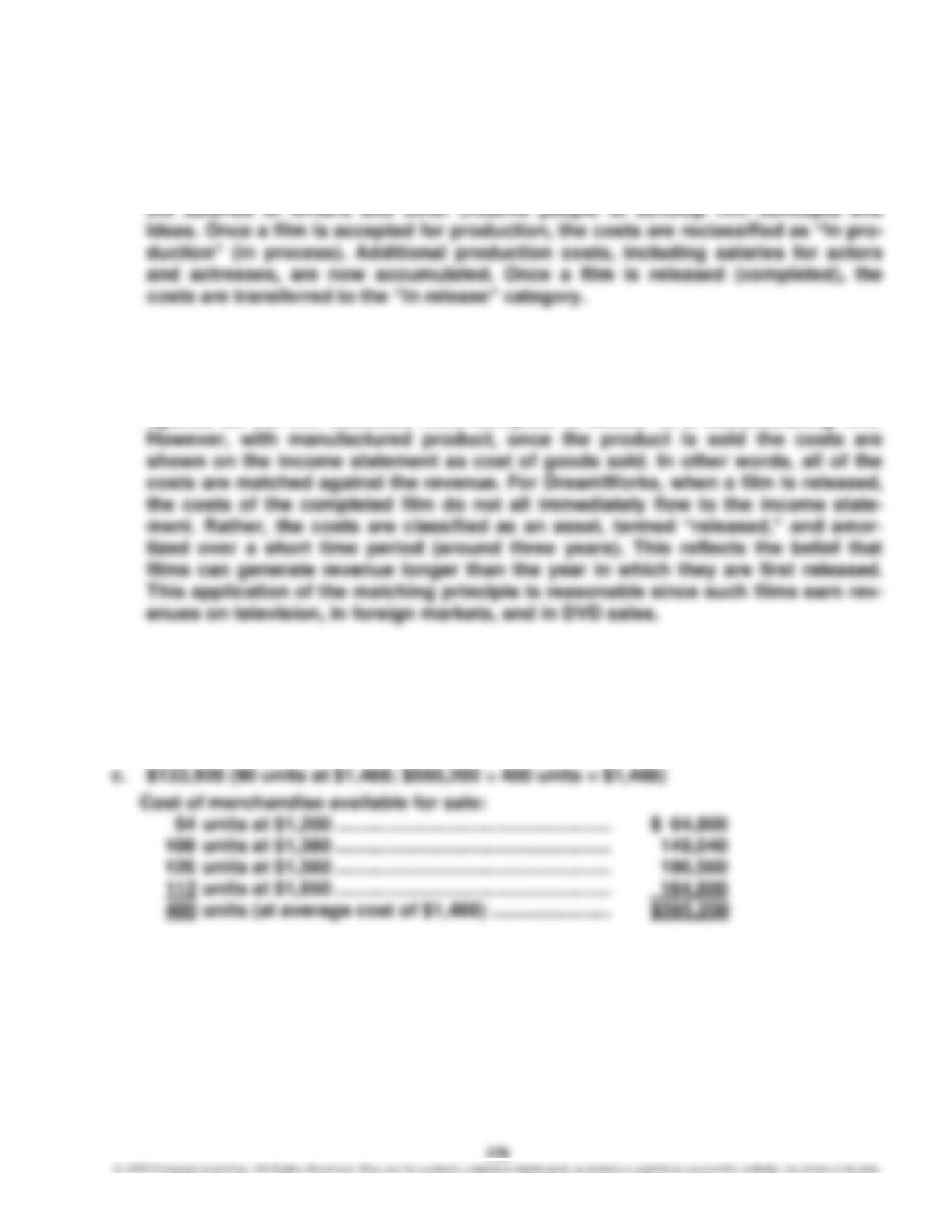
a. The three different inventories accumulate manufacturing costs as the product is
being produced. Costs flow through these accounts until the product is sold, and
the cost is matched on the income statement as cost of goods sold, shown as fol-
E6–13
a. The asset categories reflect the life cycle of a film. The initial “In development”
costs are associated with efforts to develop a new film. These costs would include
b. The description above sounds similar to a manufacturing firm. Raw materials (in
development) are transferred to work in process (in process), then to finished
goods (completed). Thus, the reclassification of costs through different asset cat-
egories as the film becomes more complete is similar to a manufacturing firm.
E6–14
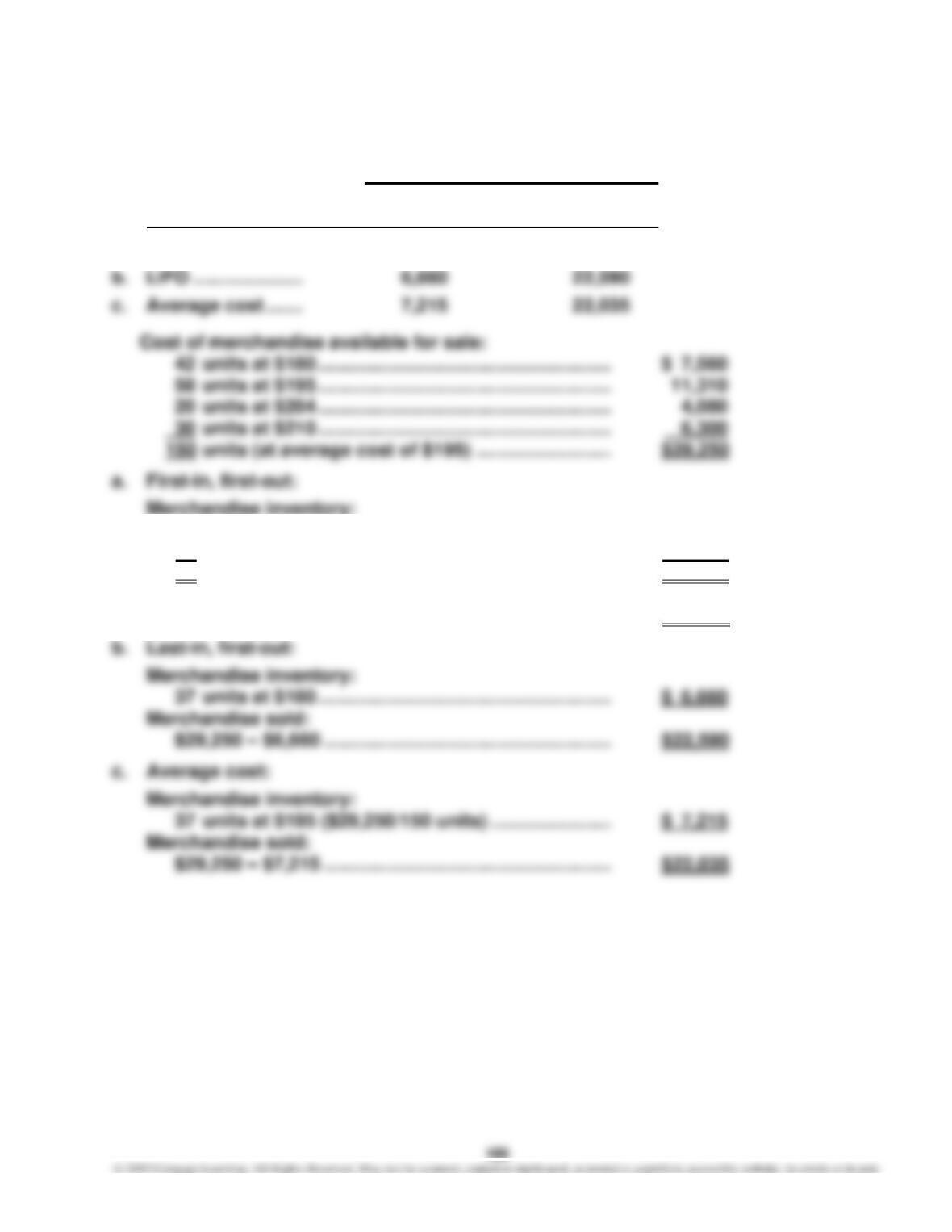
a. $148,500 (90 units at $1,650)
b. $114,480 [(54 units × $1,200) + (36 units × $1,380)] = $64,800 + $49,680
E6–15
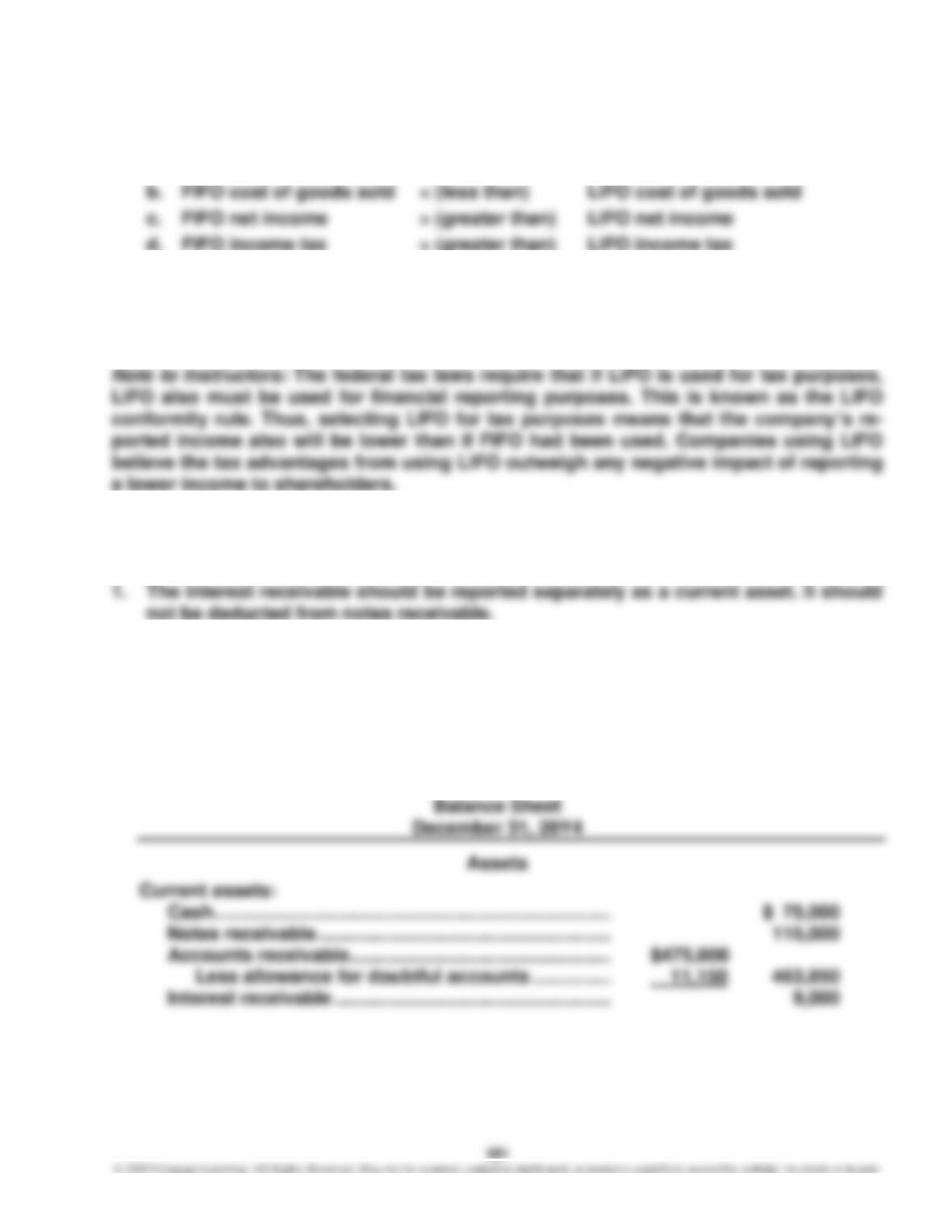
Cost
Merchandise Merchandise
Inventory Method Inventory Sold
a. FIFO ………………… $7,728 $21,522
30 units at $210 ……………………………………………….. $ 6,300
7 units at $204 ……………………………………………….. 1,428
37 units …………………………………………………………… $ 7,728
Merchandise sold:
$29,250 – $7,728 ………………………………………………. $21,522
E6–16
1. a. FIFO inventory > (greater than) LIFO inventory
2. In periods of rising prices, the income shown on the company’s tax return would
be lower than if FIFO were used; thus, there is a tax advantage of using LIFO.
E6–17
2. The allowance for doubtful accounts should be deducted from accounts receiva-
ble.
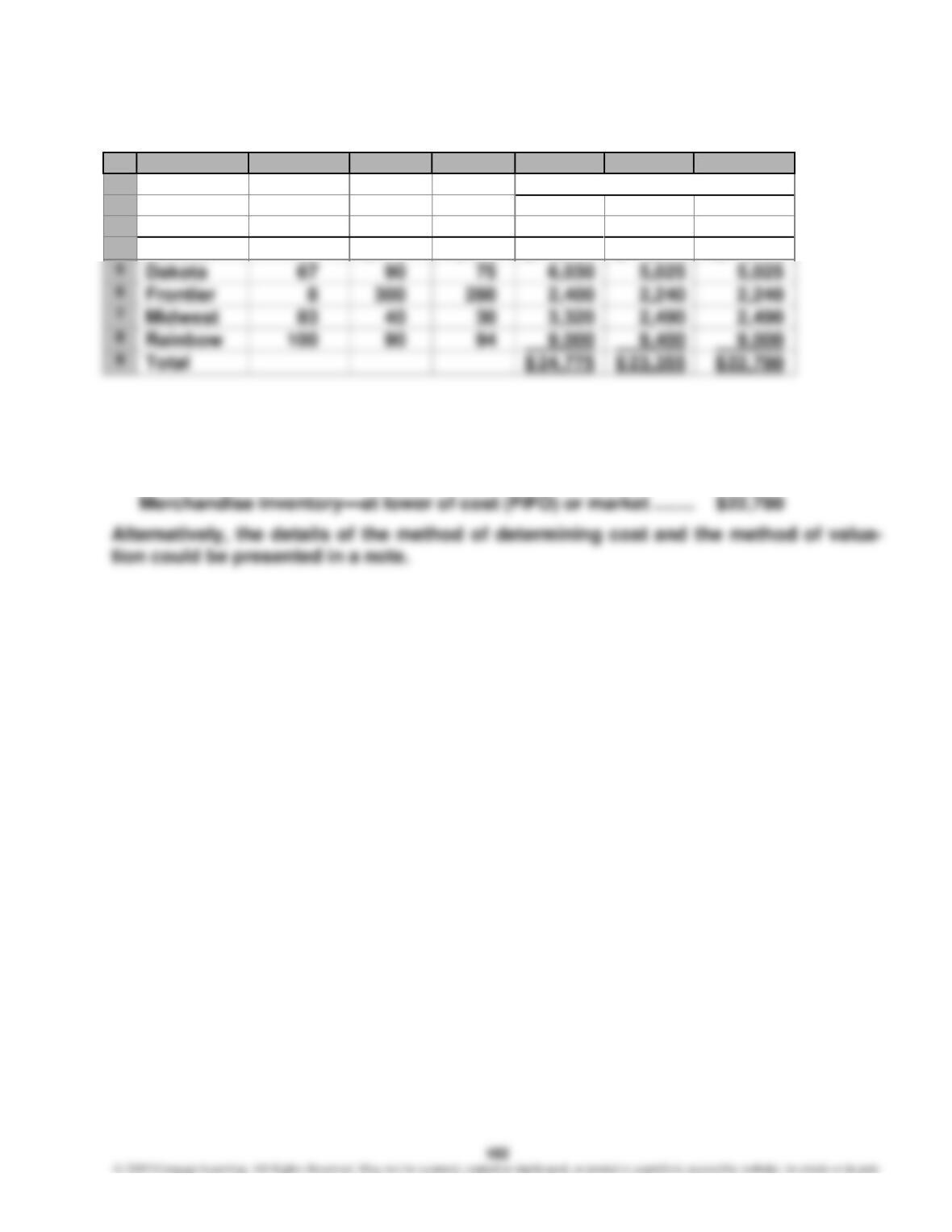
A corrected partial balance sheet would be as follows:
ZABEL COMPANY
E6–18
A
B
C
D
E
F
G
1
Unit
Unit
Total
2
Inventory
Cost
Market
3
Commodity
Quantity
Price
Price
Cost
Market
LCM
4
Buffalo
35
$115
$120
$ 4,025
$ 4,200
$ 4,025
5
Dakota
67
90
75
6,030
5,025
5,025
6
Frontier
8
2,400
2,240
2,240
7
Midwest
83
3,320
2,490
2,490
8
Rainbow
9,000
9,400
9,000
E6–19
The merchandise inventory would appear in the Current Assets section, as follows:
183
PROBLEMS
P6–1
1.
A
B
C
D
E
F
G
H
1
Aging-of-Receivables Schedule
2
December 31, 20Y7
3
4
Balance
6,616
2.
Balance Sheet
Statement of
Assets
=
Liabilities
+
Stockholders’ Equity
Income
Cash Flows
– Allowance for
Retained
Statement
Doubtful Accounts
=
Earnings
20Y7
20Y7
184
P6–1, Continued
3.
Balance Sheet
Statement of
Assets
=
Liabilities
+
Stockholders’ Equity
Income
Cash Flows
– Allowance for
Retained
Statement
Doubtful Accounts
=
Earnings
20Y7
Dec. 31.
–62,500*
–62,500
20Y7
Dec. 31.
Dec. 31.
4.
Balance Sheet
Statement of
Assets
=
Liabilities
+
Stockholders’ Equity
Income
Cash Flows
Accounts
Allowance for
Statement
Receivable
–
Doubtful Accounts