(15-20 min.) E 6-31B
Req. 1
Perpetual System
1.
Purchases:
Inventory ………………………………………………..
60,000
Accounts Payable ……………………………….
60,000
2.
Cash ($90,000 × .21) ………………………………..
Accounts Receivable ($90,000 × .79) ………..
Sales Revenue ……………………………………
Cost of Goods Sold …………………………………
Inventory ……………………………………………
Req. 2
BALANCE SHEET
Current assets:
Inventory …………………………………………..
$ 27,000
INCOME STATEMENT
Cost of goods sold ………………………………..
Gross profit …………………………………………..
Journal
DATE
ACCOUNT TITLES AND EXPLANATION
DEBIT
CREDIT
Req. 1
Inventory ($830 + $2,275) ………………………….
3,105
Accounts Payable ………………………………..
3,105
Req. 2
Accounts Receivable (16 @ $500) ……………..
8,000
Cost of Goods Sold ………………………………….
Inventory ……………………………………………..
Req. 3
Sales revenue …………………………..…………
$8,000
Cost of goods sold ……………………………..
2,665
Gross profit ………………………………………..
$5,335
Ending inventory
(10-15 min.) E 6-33B
Req. 1
Inventory
Beg. bal.
(9 units @ $165) 1,485
Purchases
Mar. 15
(5 units @ $166) 830
Cost of goods sold
26
(13 units @ $175) 2,275
(16 units @ $?)
?
Ending bal.
(11 units @ $?) ?
Cost of Goods Sold
Ending Inventory
(a) Specific
unit cost
(2 @ $165) +
(5 @ $166) +
(9 @ $175)
=
$2,735
(7 @ $165) +
(4 @ $175)
=
$1,855
(b)Average
cost
(16 × $170*)
=
$2,720
(11 × $170*)
=
$1,870
(2 @ $175)
(d) LIFO
(13 @ $175) +
=
$2,773
=
$1,817
Req. 2
LIFO produces the highest cost of goods sold, $2,773.
FIFO produces the lowest cost of goods sold, $2,665.
(10 min.) E 6-34B
Cost of goods sold:
LIFO ($2,773) − FIFO ($2,665) ……………………….
$ 108
× Income tax rate …………………………………………
Tax savings advantage of LIFO ………………………..
(10-15 min.) E 6-35B
Reqs. 1, 2, and 3
Cost of Goods Sold
Ending Inventory
(1)Average
cost
(38,000 × $14.25*)
=
$541,500
(2,000 × $14.25*)
=
$28,500
(2) FIFO
(10,000 @ $12) +
(28,000 @ $15)
=
$540,000
(2,000 @ $15)
=
$30,000
(15 min.) E 6-36B
Req. 1
a.
FIFO
Cost of goods sold:
(10 @ $46) ……………………………………..
$460
Ending inventory:
(1 @ $46) + (7 @ $68) ……………………..
$522
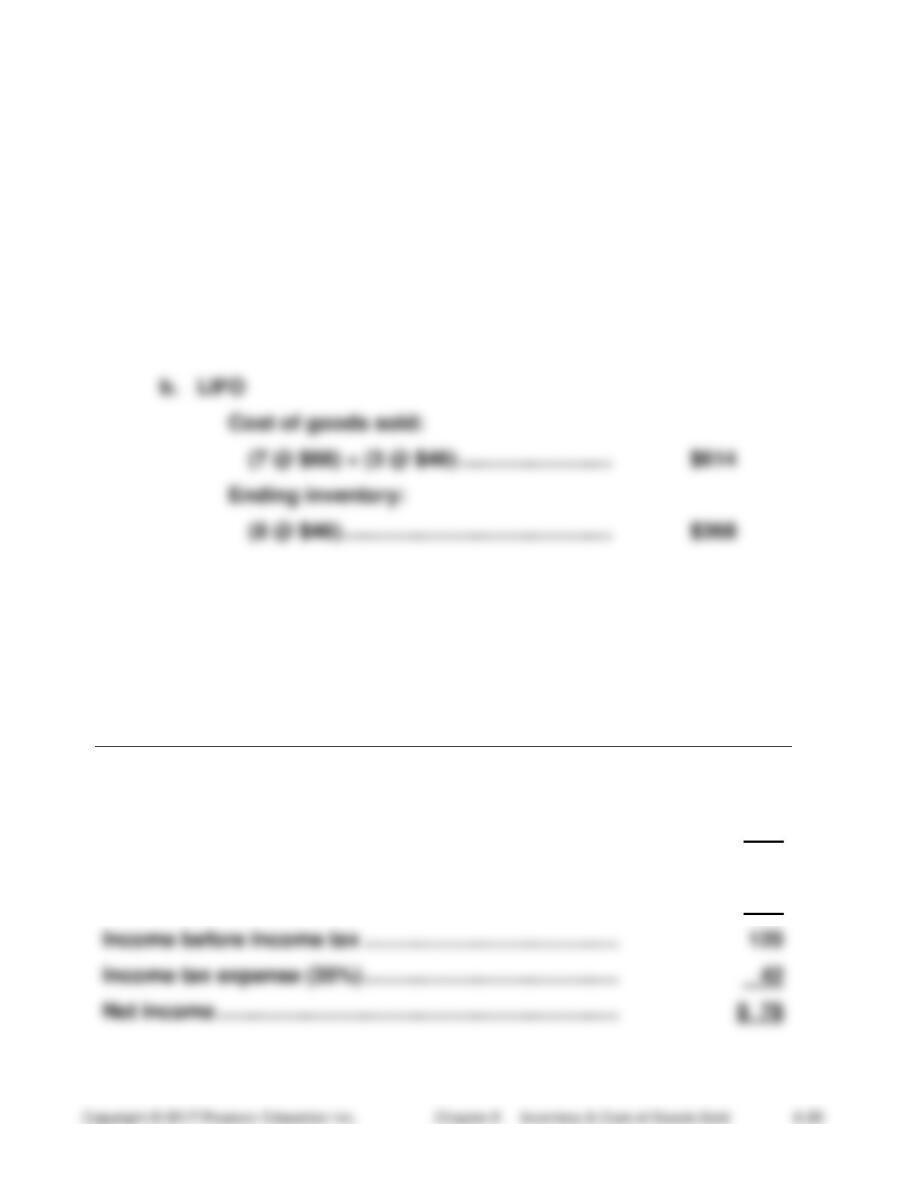
LIFO
Cost of goods sold:
(7 @ $68) + (3 @ $46) ……………………..
$614
Ending inventory:
(8 @ $46) ……………………………………….
$368
Req. 2
MusicMagic.net
Income Statement
Month Ended March 31, 2016
Sales revenue (10 @ $91) ………………………………………
$910
Cost of goods sold ……………………………………………….
460
Gross profit… ………………………………………………………
450
Operating expenses ……………………………………………..
330
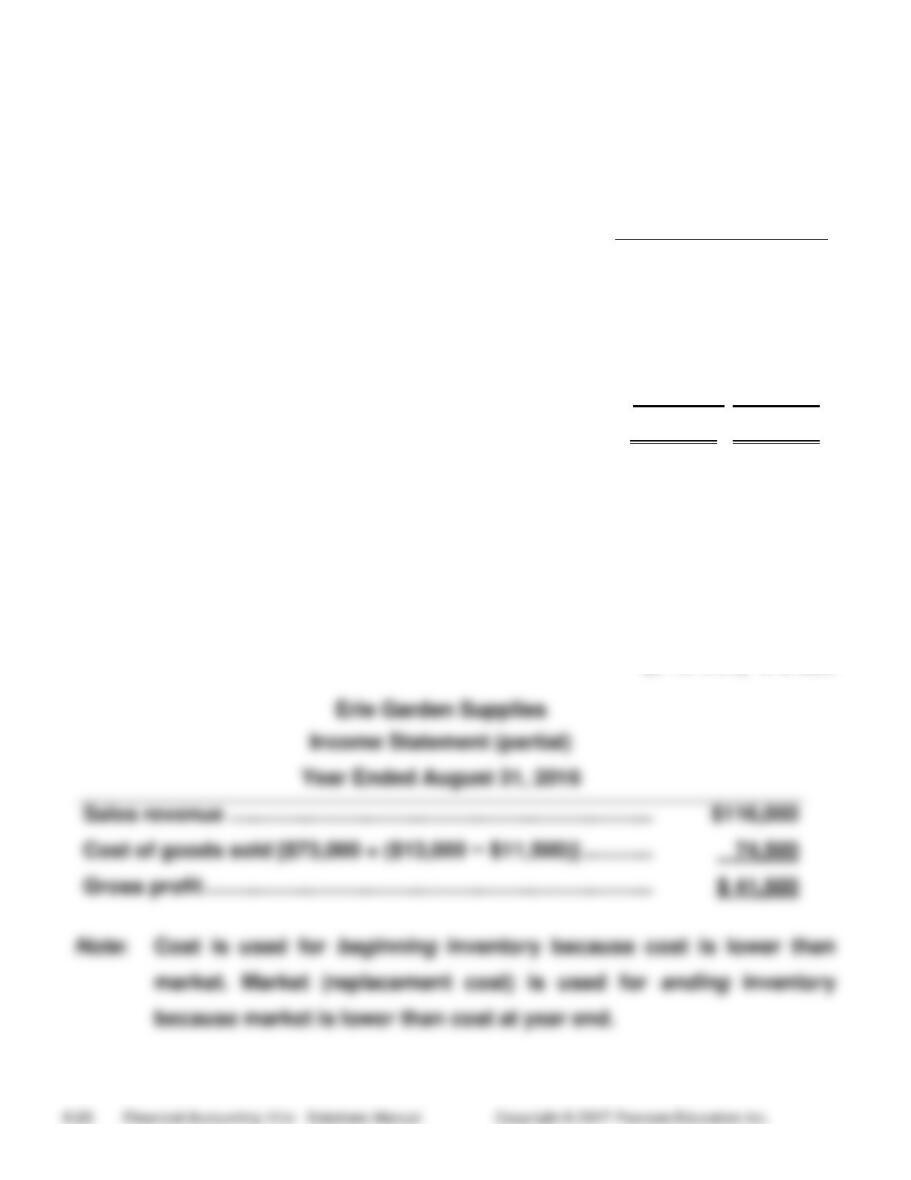
Income before income tax …………………………………….
Income tax expense (35%) …………………………………….
(15 min.) E 6-37B
Req. 1
Gross profit:
FIFO
LIFO
Sales revenue …………………………..……………….
$510,000
$510,000
Cost of goods sold
FIFO: 100,000 × $5.00 …………………………....
500,000
LIFO: (40,000 × $2.20) + (45,000 × $3.10)
+ (15,000 × $5.00) …………………………
302,500
Gross profit ……………………………………………….
$ 10,000
$207,500
Req. 2
Gross profit under FIFO and LIFO differ because inventory costs decreased
during the period.
(5-10 min.) E 6-38B
(15-20 min.) E 6-39B
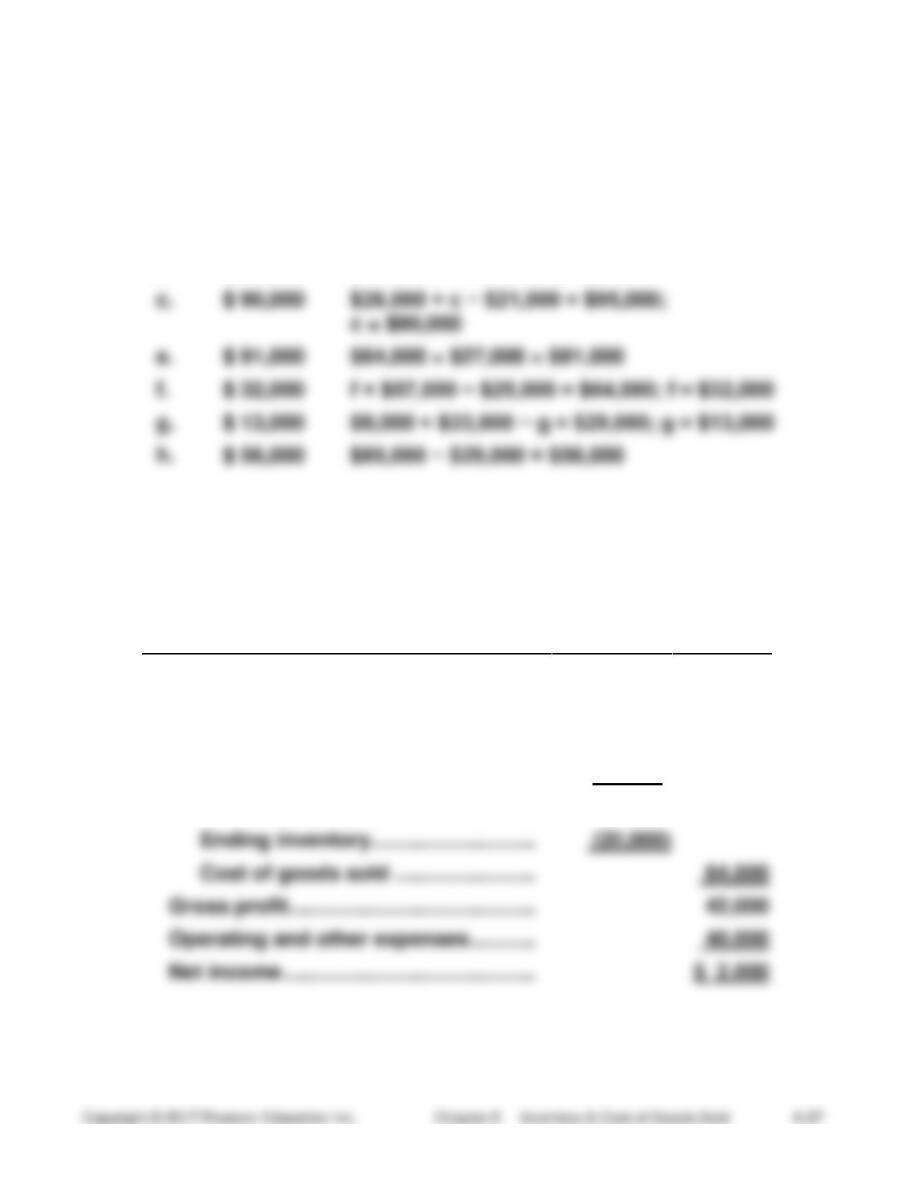
a.
$ 64,000
$22,000 + $62,000 − $20,000 = $64,000
b.
$ 42,000
$106,000 − $64,000 = $42,000
c.
Must first solve for d
d.
$ 95,000
$136,000 − $41,000= $95,000
e.
$ 91,000
$64,000 + $27,000 = $91,000
$ 32,000
f + $57,000 − $25,000 = $64,000; f = $32,000
g.
$ 13,000
h.
$ 56,000
$85,000 − $29,000 = $56,000
Req. 1
Baker Company
Income Statement
Year Ended December 31, 2016
Net sales …………………………..…………..
$106,000
Cost of goods sold …………………………
Beginning inventory ………………….
$22,000
Net purchases …………………………..
62,000
Cost of goods available ……………..
84,000
Cost of goods sold ……………………
Gross profit……………………………………
Operating and other expenses ………..
Net income …………………………………….
(20-30 min.) E 6-40B
Company
Gross Profit
Percentage
Inventory Turnover
Baker
$42
=
39.6%
$64
=
3 times
$106
($22 + $20) / 2
Johnson
$41
=
30.1%
$95
=
4 times
$136
($26 + $21) / 2
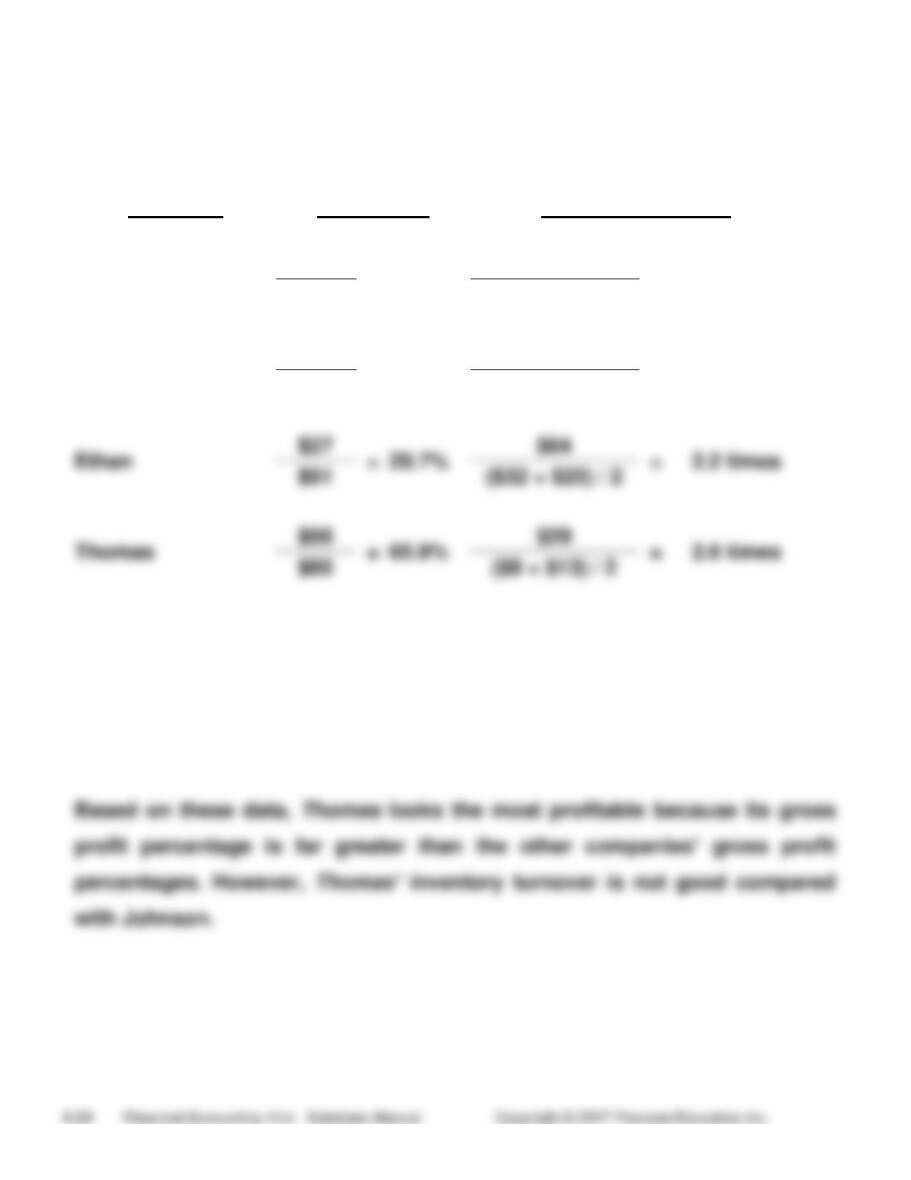
Ethan
=
29.7%
$64
=
$91
($32 + $25) / 2
Thomas
=
65.9%
=
$85
Thomas has the highest gross profit percentage, 65.9%. Ethan has the
lowest gross profit percentage, 29.7%.
Johnson has the highest rate of inventory turnover, 4 times. Ethan has the
lowest rate of inventory turnover, 2.2 times.
(15 min.) E 6-41B
Req. 1 and 2
1
2
FIFO
LIFO
Gross profit percentage
=
$136,000 − $82,960
$136,000 − $99,280
$136,000
$136,000
Inventory turnover
=
FIFO produces a higher gross profit percentage.
LIFO produces a higher rate of inventory turnover.
(10-15 min.) E 6-42B
Year ended January 31, 2016:
Millions
Budgeted cost of goods sold ($6,900 × 1.14) …………….
$7,866
Budgeted ending inventory ……………………………………..
2,100
Budgeted cost of goods available …………………………...
9,966
Actual beginning inventory ……………………………………..
(1,800)
Budgeted purchases ……………………………………………….
(10-15 min.) E 6-43B
Beginning inventory …………………………………..
$ 49,300
Net purchases …………………………………………..
61,000
Cost of goods available ……………………………..
110,300
Estimated cost of goods sold:
Net sales revenue …………………………………
$82,000
Estimated cost of goods sold ………………..
49,200
Estimated cost of inventory destroyed ……….
(10-15 min.) E 6-44B
Blue Sky Marine Supply
Income Statement (Corrected)
Years Ended April 30, 2016 and 2015
2016
2015
Sales revenue
$144,000
$115,000
Cost of goods sold:
Beginning inventory
$25,500
$ 9,000
Net purchases
77,000
73,000
Cost of goods avail.
102,500
82,000
Ending inventory
Cost of goods sold
Gross profit
Operating expenses
Net income
_____
*$16,000 + $9,500 = $25,500
Blue Sky Marine Supply actually performed poorly in 2016, compared to
2015, with net income down from $36,500 to $32,500.
Quiz
Q6–45
a
($3,700 + $6,600 − $5,200 = $5,100)
Q6–46
d
($7,300 − $5,200 = $2,100)
Q6–47
a
Q6-48
d
[(1,500 @ $18.30) + (600 @ $18.00) = $38,250]
Q6-49
b
[(1,500 @ $18.30) + (300 @ $18) = $32,850]
Q6–50
c
Q6–52
d
Q6–53
b
Q6–55
d
($20,000 + X − $13,000 = $93,000; X = $86,000)
Q6–56
d
Q6–57
a
[$320,000 ÷ {($28,000 + $38,000) ÷ 2}] = 9.7 times
= 49%
Q6-59
b
Q6–60
c
Q6–61
c
Problems
(20-30 min.) P 6-62A
Req. 1
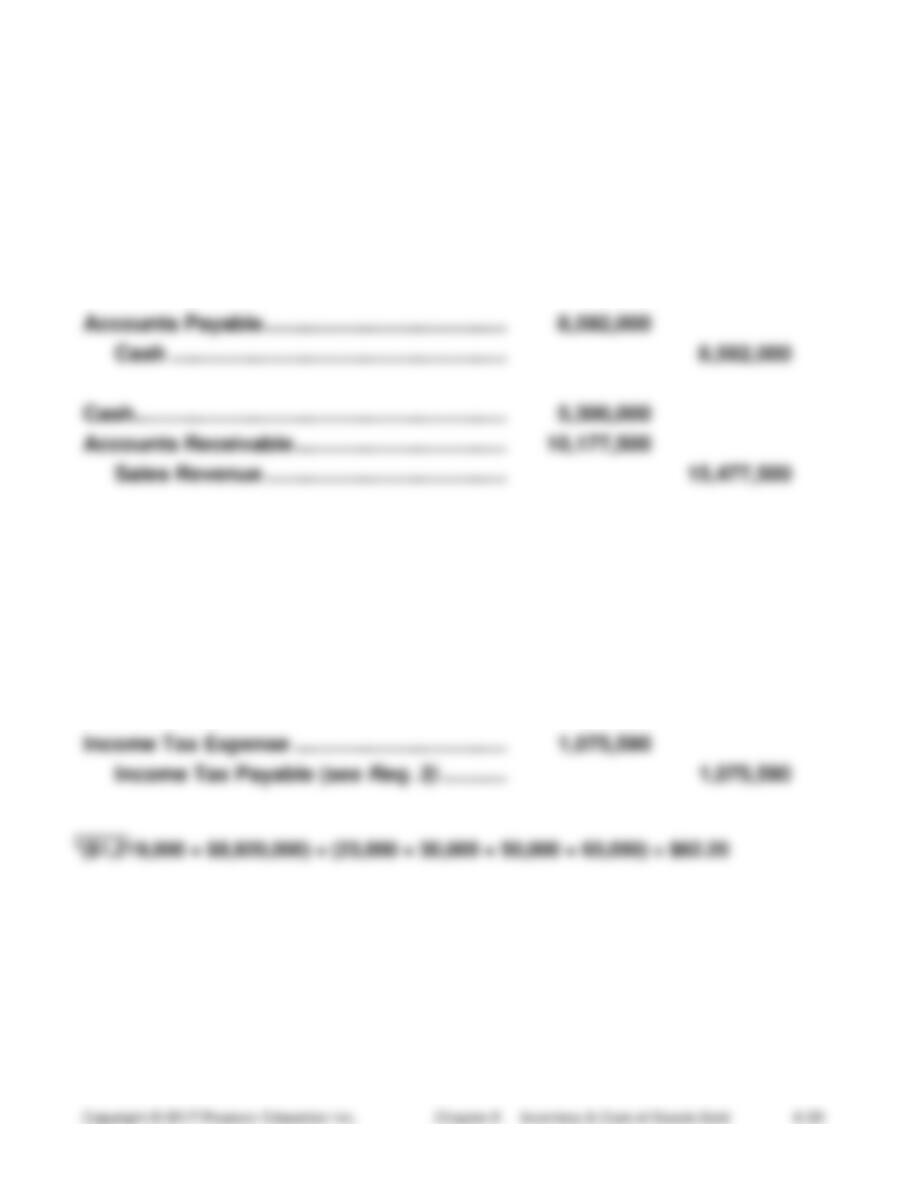
Inventory ……………………………………………….
8,920,000
Accounts Payable………………………………
8,920,000
Accounts Payable …………………………………..
8,592,000
Cash …………………………………………………
8,592,000
Cash ………………………………………………………
5,300,000
Accounts Receivable ………………………………
Sales Revenue …………………………………..
Cost of Goods Sold (151,000 × $62.20*) ……
9,392,200
Inventory …………………………………………..
9,392,200
Operating Expenses ……………………………….
2,500,000
Cash ($2,500,000 × .70) ………………………
1,750,000
Accrued Liabilities ($2,500,000 × .30) …..
750,000
Income Tax Expense ………………………………
1,075,590
Income Tax Payable (see Req. 3) ………..
(continued) P 6-62A
Req. 2
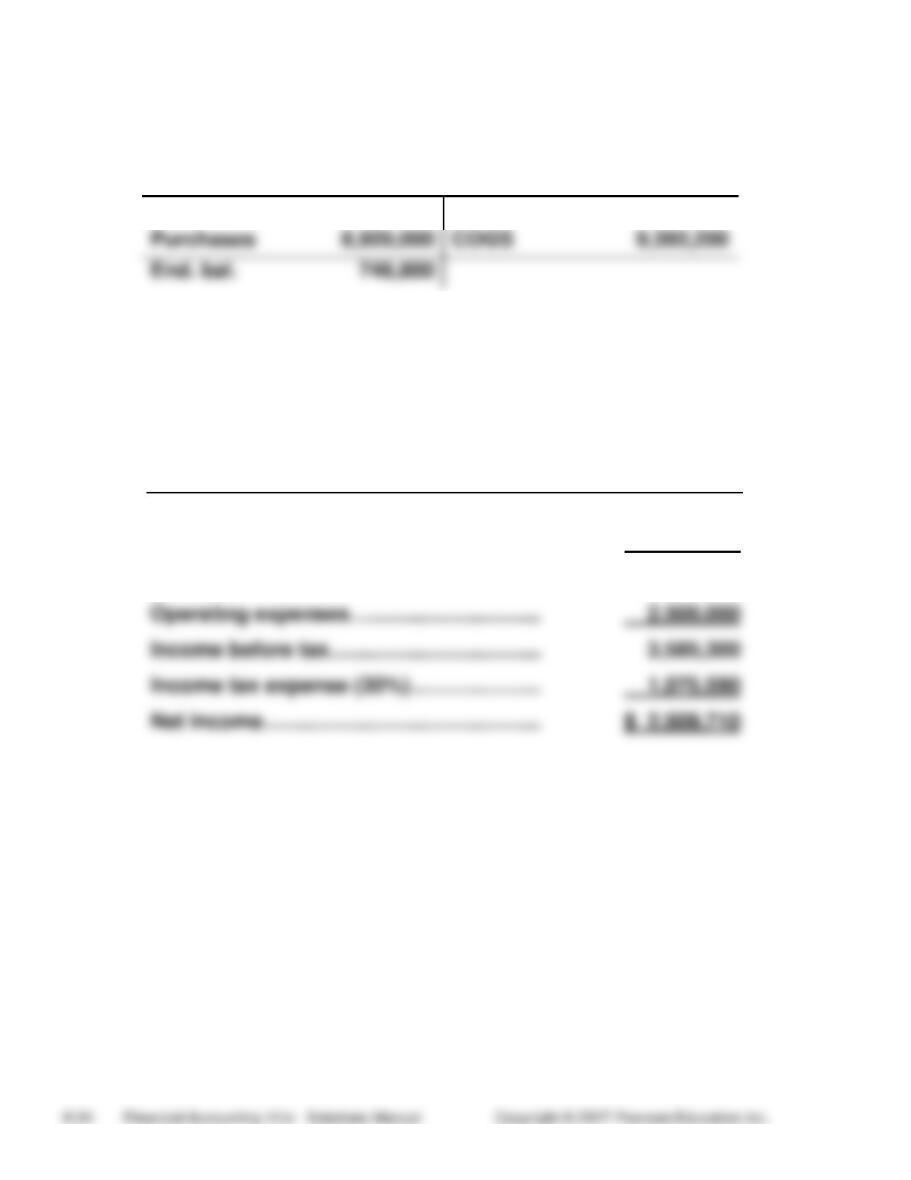
Inventory
Beg. bal.
1,219,000
Purchases
8,920,000
COGS
End. bal.
Req. 3
Big Box Store, Rosedale
Income Statement
Year Ended January 31, 2016
Sales revenue ……………………………………
$15,477,500
Cost of goods sold …………………………….
9,392,200
Gross profit ……………………………………….
6,085,300
Income before tax ………………………………
3,585,300
Income tax expense (30%) ………………….
Net income ………………………………………..
$ 2,509,710
(20-30 min.) P 6-63A
Req. 1
The store uses FIFO.
This is apparent from the flow of costs out of inventory. For example, the
October 13 sale shows unit cost of $38, which came from the beginning
inventory. This is how FIFO, and only FIFO, works.
Req. 2
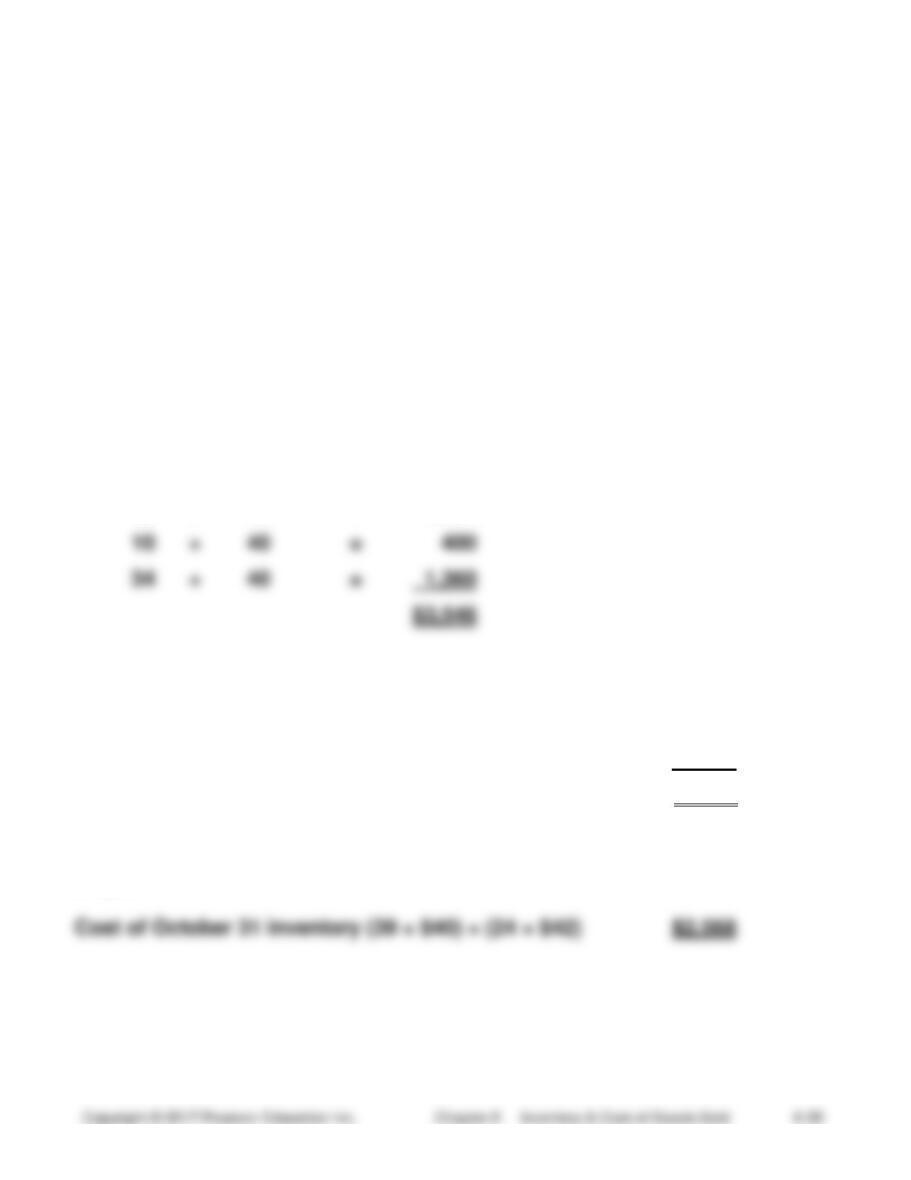
Cost of goods sold:
19
×
$38
=
$ 722
28
×
38
=
1,064
10
×
40
=
34
×
40
=
Sales [(47 units × $67) + (44 units x $68)] ………………………
$6,141
Cost of goods sold ………………………………………………………
(3,546)
Gross profit …………………………………………………………………
$2,595
Req. 3
(20-30 min.) P 6-64A
Req. 1
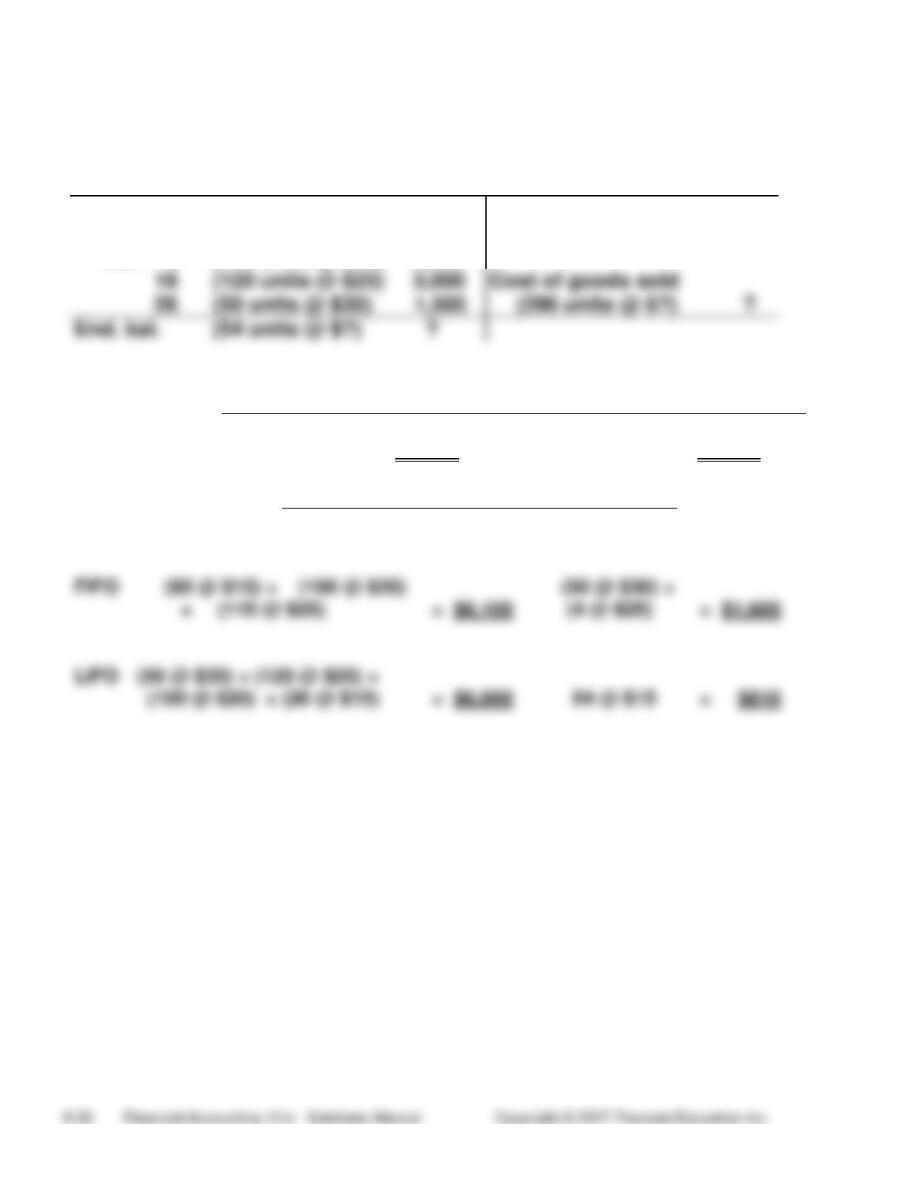
Inventory
Beg. bal.
(80 units @ $15) 1,200
Purchases:
Mar. 6
(100 units @ $20) 2,000
18
(120 units @ $25) 3,000
Cost of goods sold
26
(50 units @ $30) 1,500
(296 units @ $?)
End. bal.
(54 units @ $?) ?
Cost of Goods Sold
Ending Inventory
Average cost
296 × $22* = $6,512
54 × $22* = $1,188
____
*Average cost
=
($1,200 + $2,000 + $3,000 + $1,500)
= $22
per unit
(80 + 100 + 120 + 50)
(80 @ $15) + (100 @ $20)
(50 @ $30) +
+ (116 @ $25)
(4 @ $25)
(50 @ $30) + (120 @ $25) +
(continued) P 6-64A
Req. 2
LIFO cost of goods sold is highest because (a) prices are rising and (b) LIFO
Req. 3
Armed Forces Surplus
Income Statement
Month Ended March 31, 2016
Sales revenue (296 x $45) …………………………………….
$13,320
Cost of goods sold ………………………………………………
6,512
Gross profit ………………………………………………………..
6,808
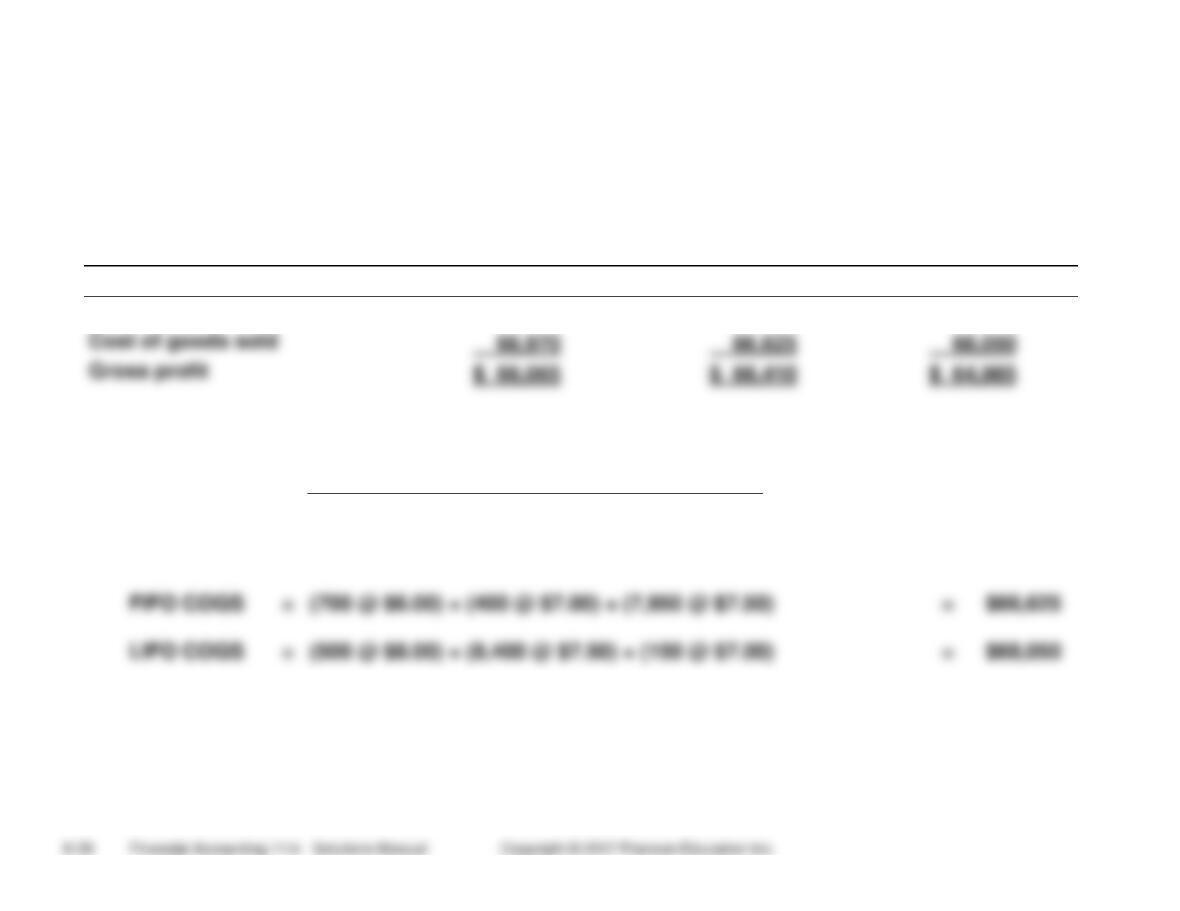
Operating expenses …………………………………………….
5,000
Income before income taxes ………………………………..
Income tax expense (35%) ……………………………………
Net income ………………………………………………………….
$ 1,175
(30-40 min.) P 6-65A
Req. 1 (partial income statements)
Aldrin Aviation
Partial Income Statement
Year Ended July 31, 2016
AVERAGE
FIFO
LIFO
Sales revenue
$133,035
$133,035
$133,035
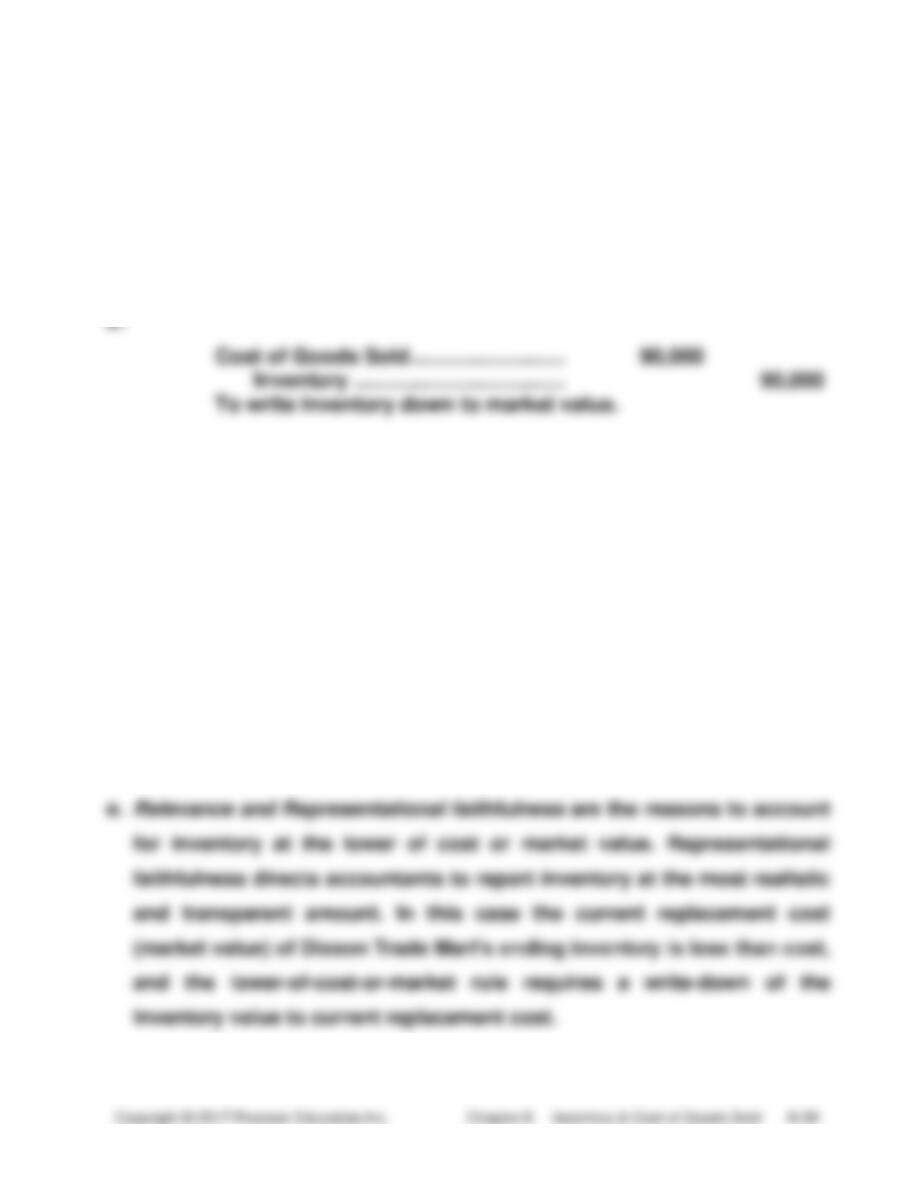
Cost of goods sold
66,970
66,625
68,050
Gross profit
$ 66,065
$ 66,410
$ 64,985
Computations of cost of goods sold:
Average cost
=
($4,200 + $2,800 + $63,000 + $4,000)
=
$7.40
per unit
(700 + 400 + 8,400 + 500)
Average cost COGS = 9,050 × $7.40
=
$66,970
FIFO COGS
(700 @ $6.00) + (400 @ $7.00) + (7,950 @ $7.50)
LIFO COGS
(500 @ $8.00) + (8,400 @ $7.50) + (150 @ $7.00)
Req. 2
Use the LIFO method to minimize income tax because cost of goods sold is highest (gross profit is
lowest) under LIFO when inventory costs are rising.
(15-30 min.) P 6-66A
a. Dixson Trade Mart should apply the lower-of-cost-or-market rule to
account for inventories. The current replacement cost of ending
inventory is less than Dixson’s actual cost, so Dixson must write the
inventory down to current replacement cost, with the following
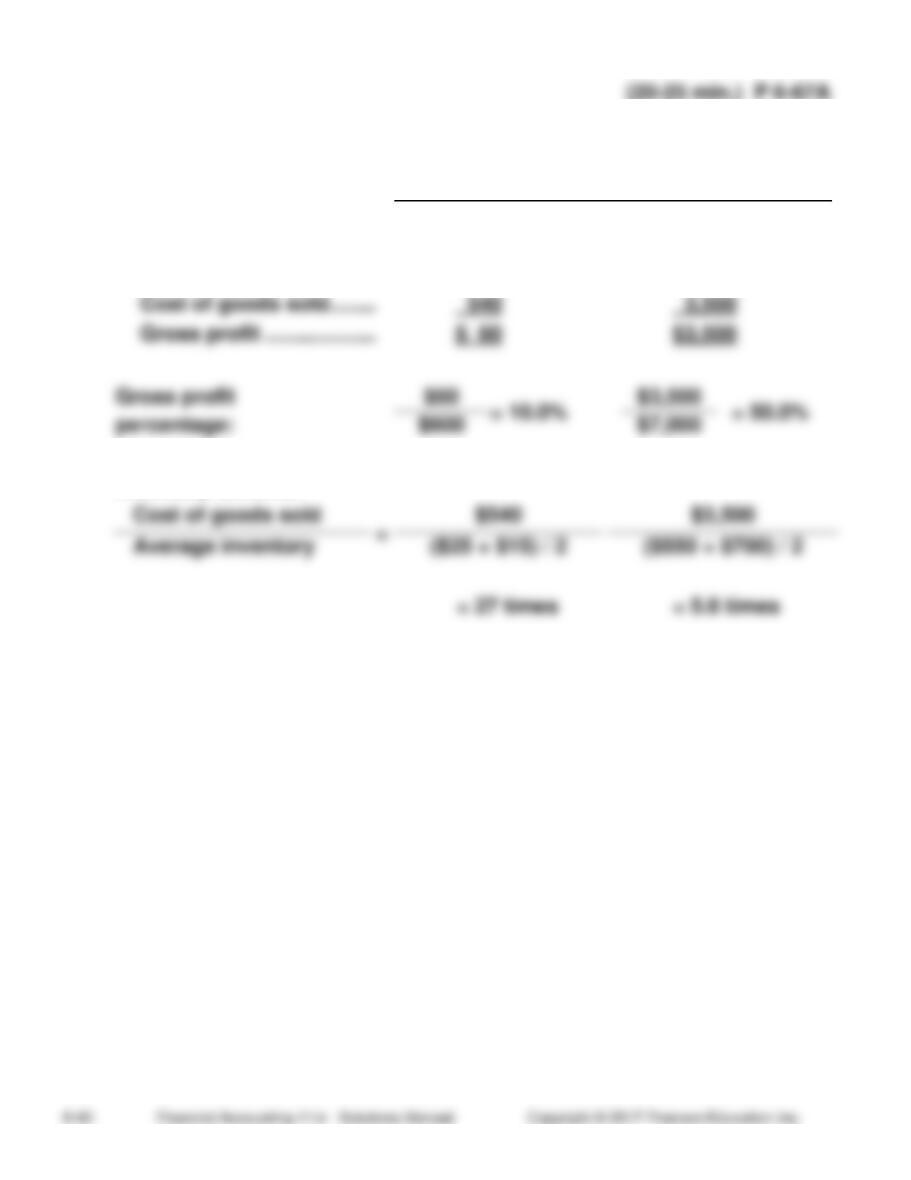
journal entry:
Cost of Goods Sold ……………………..
Inventory ………………………………
To write inventory down to market value.
Dixson Trade Mart should report the following amounts in its financial
statements:
c.
BALANCE SHEET
Inventory at market (which is lower than
cost of $260,000) ………………………………………………
$170,000*
d.
INCOME STATEMENT
Cost of goods sold ($770,000 + $90,000) ……………….
$860,000
_____
*$260,000 − $90,000 = $170,000
Student responses may vary.
Req. 1
Pastry People, Inc.
Captain Coffee Corp.
Dollars in Millions
Gross profit percentage:
Sales …………………………
$600
$7,000
Cost of goods sold ……..
Gross profit ……………….
percentage:
Inventory turnover:
Cost of goods sold
Average inventory
Req. 2
These statistics are unclear. The numbers suggest that Captain Coffee
Corp. should be more profitable because it has a higher gross profit
percentage. However, Pastry People, Inc., turns its inventory over more
rapidly. To evaluate profitability, we should also consider each
company’s selling, general, and administrative expenses.