CHAPTER 6 Inventories
Prob. 6–2B (Concluded)
2. Total sales………………………………………………………………………… $525,250
*
CHAPTER 6 Inventories
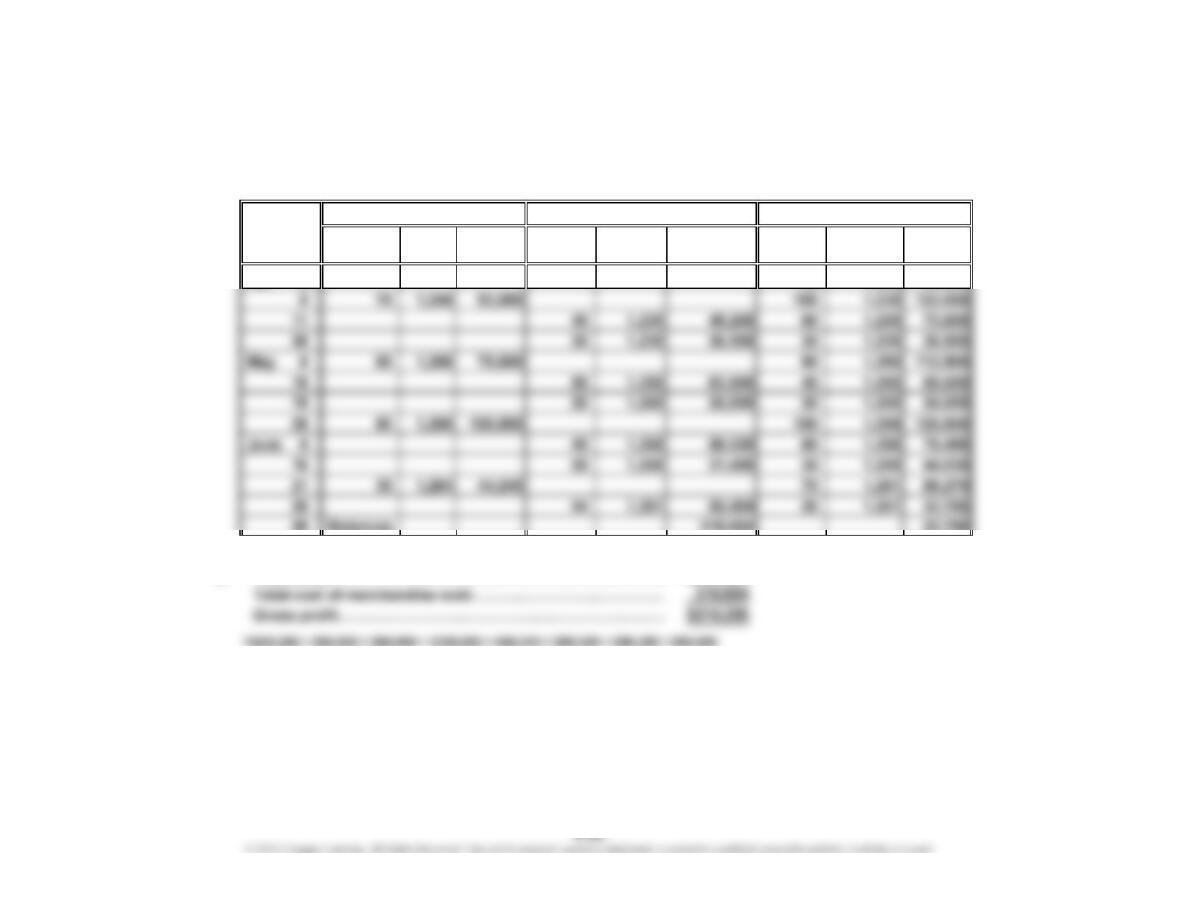
Prob. 6–3B
1.
Unit Total Total Total
Quantity Cost Cost Quantity Unit Cost Cost Quantity Unit Cost Cost
Apr. 3 25 1,200 30,000
2. Total sales…………………………………………………………
…
$525,250
3. $32,786 (26 units × $1,261)
Cost of Merchandise Sold Inventory
Date
2016
Purchases
*
CHAPTER 6 Inventories
Prob. 6–4B
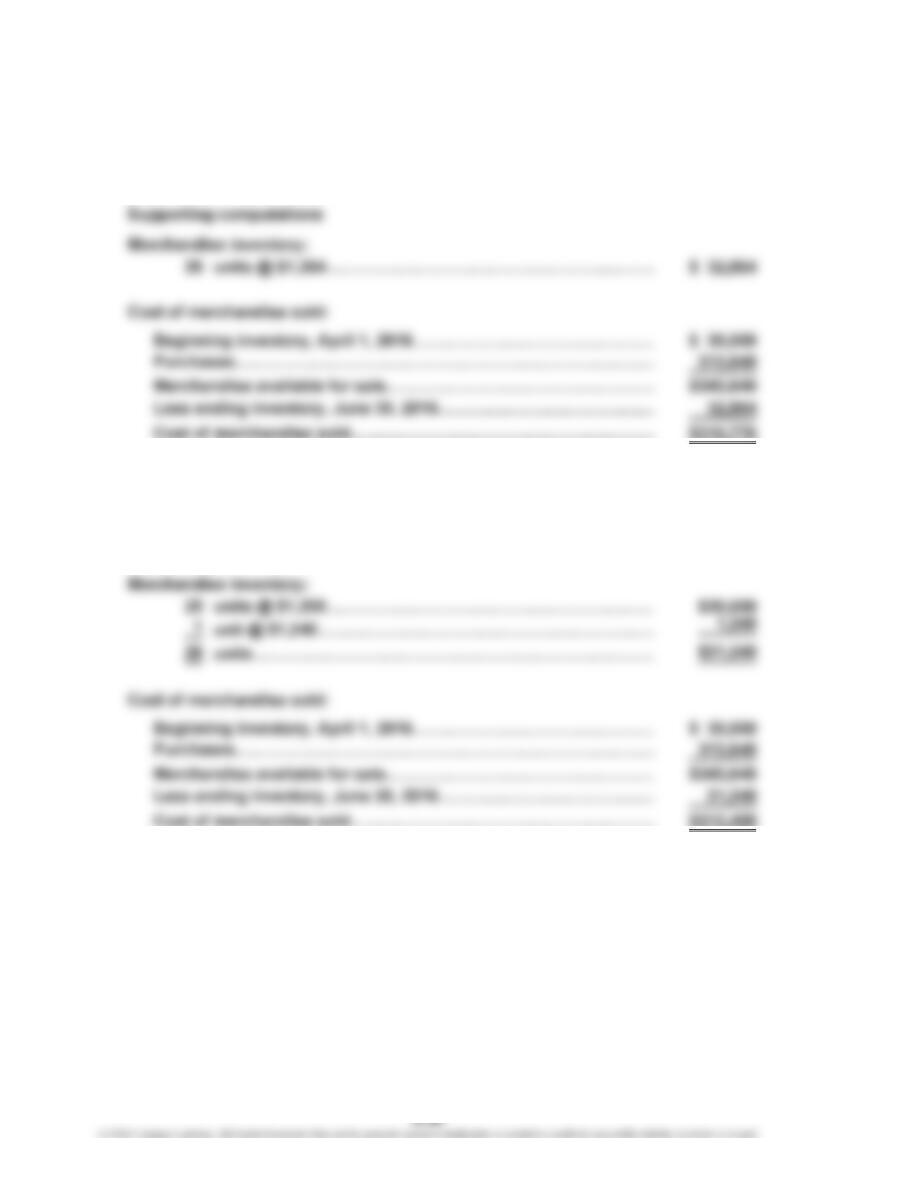
1. First-In, First-Out Method
Merchandise inventory, June 30, 2016…………………………………
…
$ 32,864
Cost of merchandise sold………………………………………..………
…
310,776
2. Last-In, First-Out Method
Merchandise inventory, June 30, 2016…………………………………
…
$ 31,240
Cost of merchandise sold…………………………………….…………
…
312,400
Supporting computations
…
…
…
CHAPTER 6 Inventories
Prob. 6–4B (Continued)
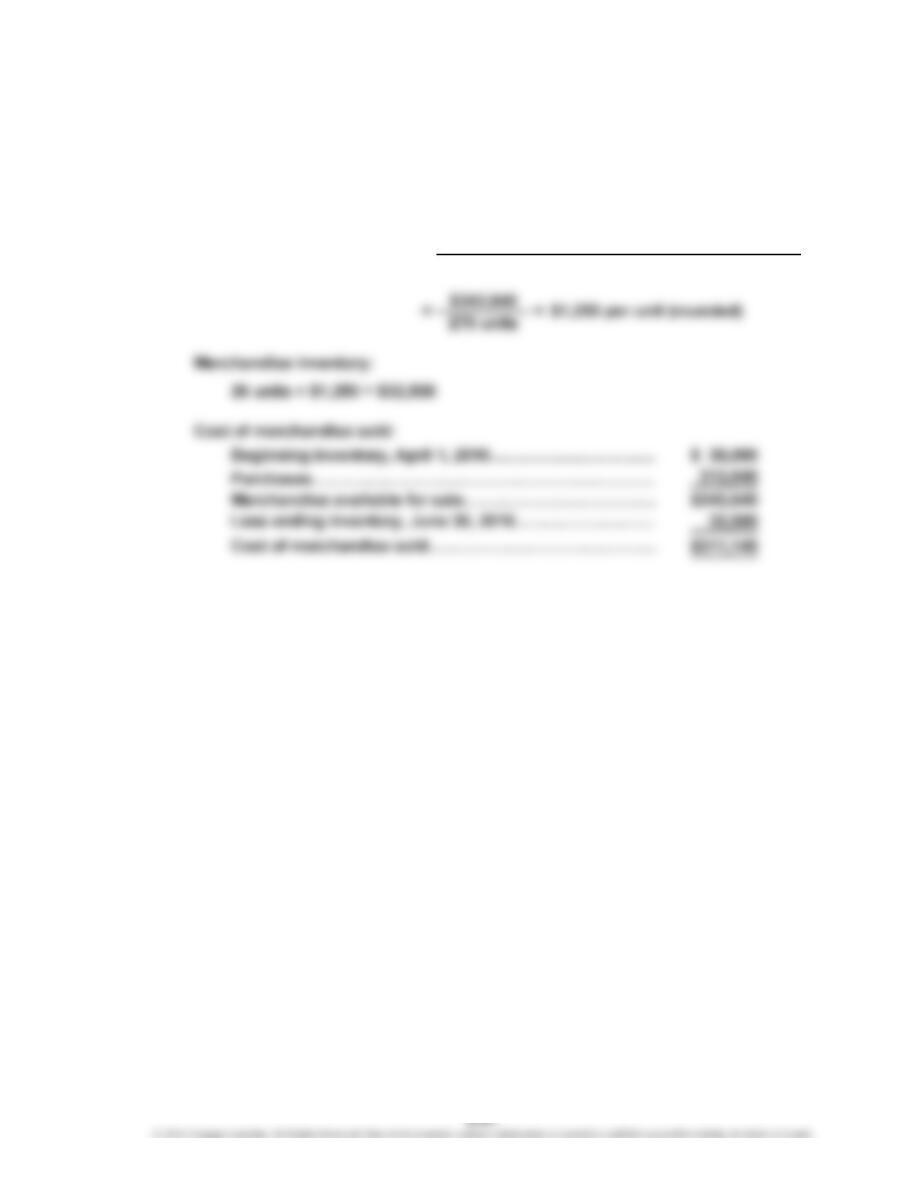
3. Weighted Average Cost Method
Merchandise inventory, June 30, 2016……………………
…
$ 32,500
Cost of merchandise sold……………………………………
…
311,140
Supporting computations
Weighted Average Unit Cost Units Available for Sale
Total Cost of Merchandise Available for Sale
=
…
CHAPTER 6 Inventories
Prob. 6–4B (Concluded)
4. Weighted
FIFO LIFO Average
CHAPTER 6 Inventories
Prob. 6–5B
1. First-In, First-Out Method
Model Quantity Unit Cost Total Cost
C55 3 $1,070 $ 3,210
1 1,060 1,060
D11 6 675 4,050
5 666 3,330
2. Last-In, First-Out Method
Model Quantity Unit Cost Total Cost
C55 3 $1,040 $ 3,120
1 1,054 1,054
D11 9 639 5,751
2 645 1,290
CHAPTER 6 Inventories
Prob. 6–5B (Concluded)
3. Weighted Average Cost Method
Quantity Unit Cost*Total Cost
4 $1,056 $ 4,224
11 654 7,194
2 252 504
4 311 1,244
*Computations of unit costs:
C55: $1,056 = [(3 × $1,040) + (3 × $1,054) + (3 × $1,060) + (3 × $1,070)] ÷ (3 + 3 + 3 + 3)
D11: $654 = [(9 × $639) + (7 × $645) + (6 × $666) + (6 × $675)] ÷ (9 + 7 + 6 + 6)
F32: $252 = [(5 × $240) + (3 × $260) + (1 × $260) + (1 × $280)] ÷ (5 + 3 + 1 + 1)
4. a. During periods of rising prices, the LIFO method will result in a lower cost
H29
Model
C55
D11
F32
CHAPTER 6 Inventories
Prob. 6–6B
Market
Value per
Cost Unit (Net
per Realizable
Commodity Unit Value) Cost Market LCM
A54 37 30 $ 60 $ 56 $ 1,800 $ 1,680
3,880 3,960 3,880
H83 21 6 547 545 3,282 3,270
15 540 545 8,100 8,175
11,382 11,445 11,382
Quantity
Inventory Sheet
December 31, 2016
Inventory
Total
CHAPTER 6 Inventories
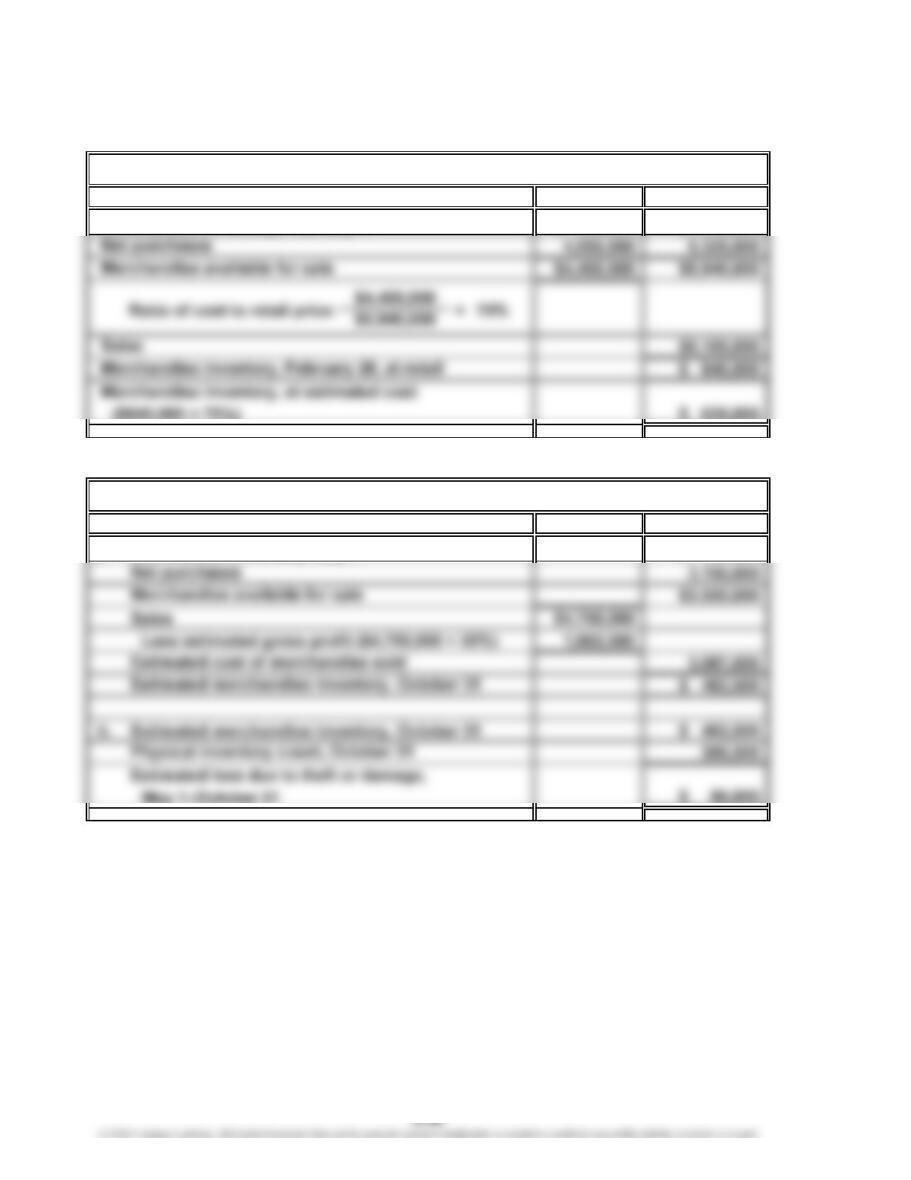
Prob. 6–7B
1.
Cost Retail
Merchandise inventory, February 1 $ 400,000 $ 615,000
2.
Cost
a. Merchandise inventory, May 1 $ 400,000
JAFFE CO.
CORONADO CO.
CHAPTER 6 Inventories
CP 6–1
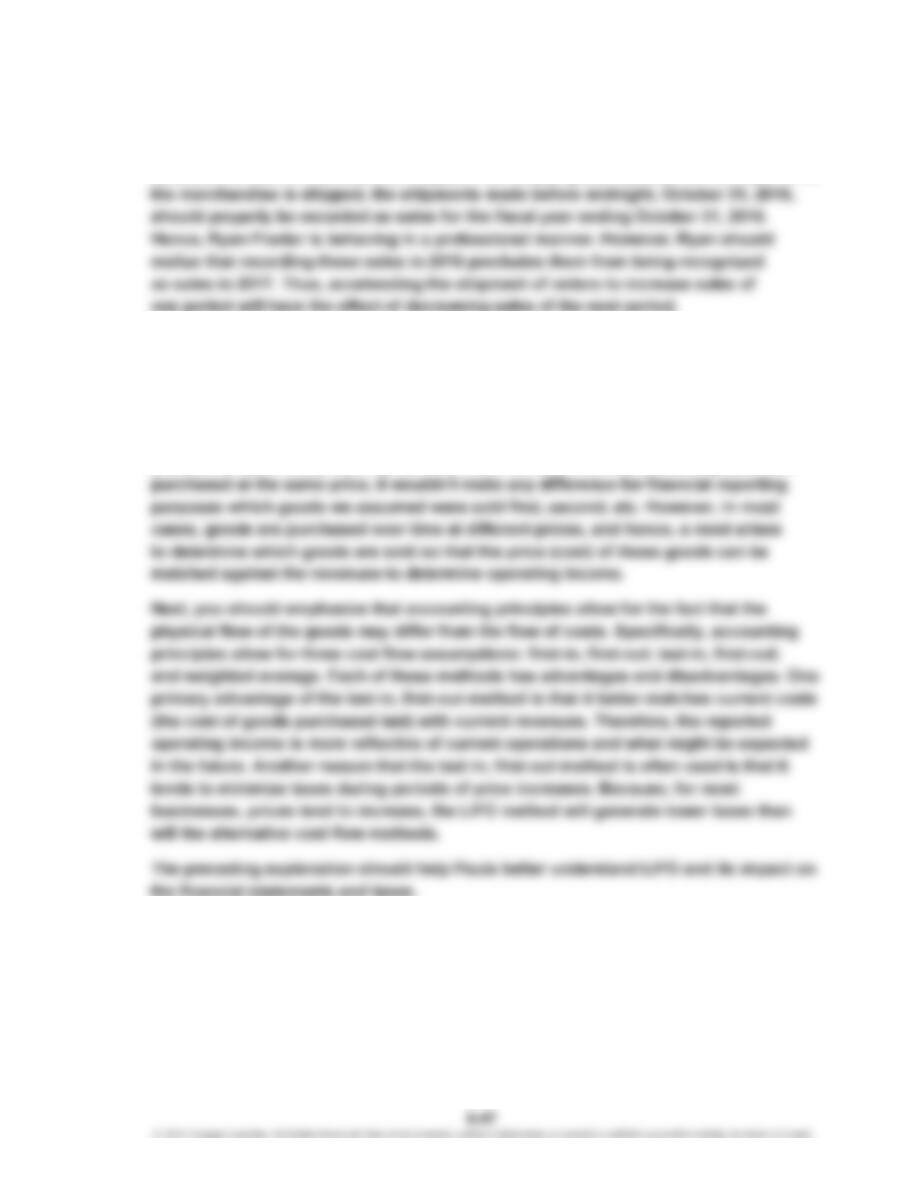
Because the title to merchandise shipped FOB shipping point passes to the buyer whe
n
CP 6–2
In developing a response to Paula’s concerns, you should probably first emphasize
the practical need for an assumption concerning the flow of cost of goods purchased
and sold. That is, when identical goods are frequently purchased, it may not be
practical to specifically identify each item of inventory. If all the identical goods were
CASES & PROJECTS
CHAPTER 6 Inventories
CP 6–3
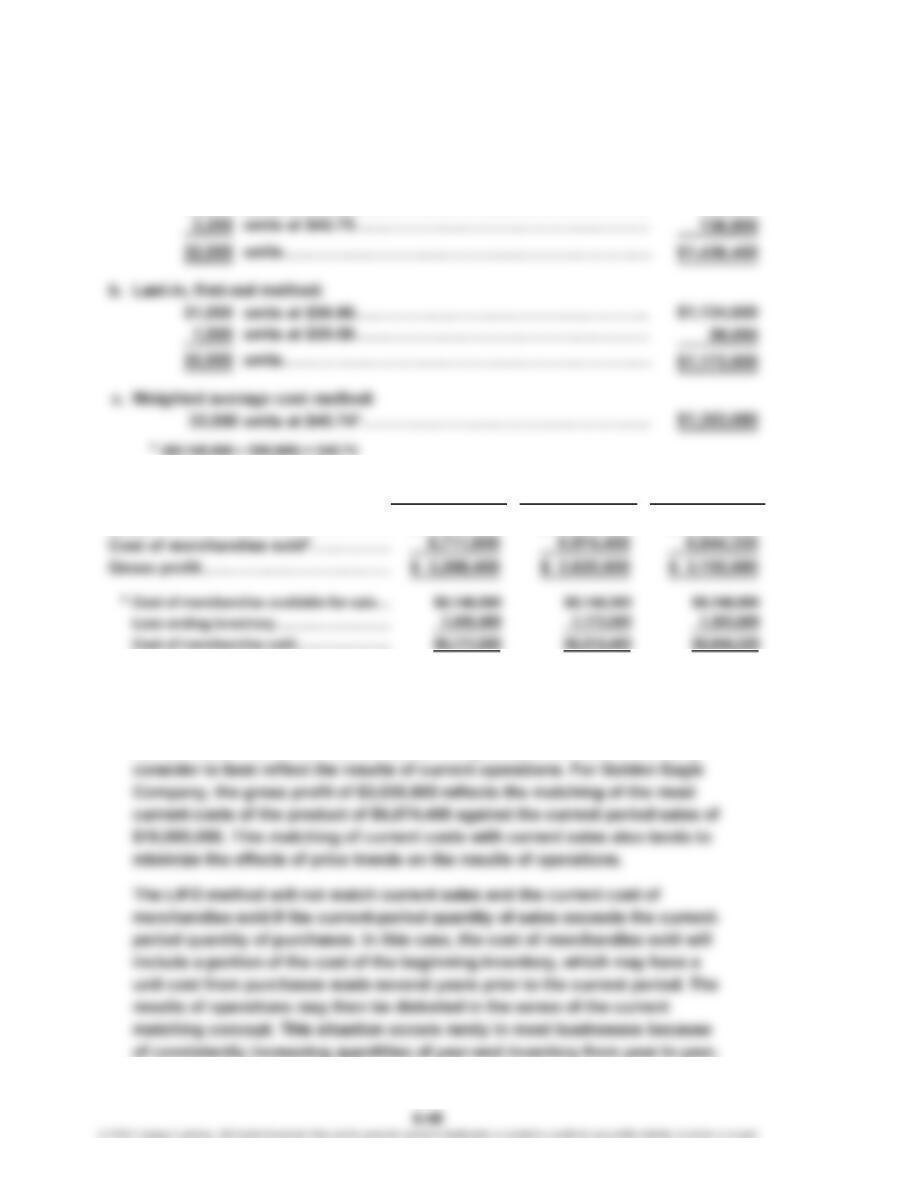
1. a. First-in, first-out method:
8,000 units at $48.00………………………………………………
…
$ 384,000
8,000 units at $44.85………………………………………………
…
358,800
12,800 units at $43.50………………………………………………
…
556,800
2. Weighted Average
FIFO LIFO Cost
Sales……………………………………… $10,000,000 $10,000,000 $10,000,000
3. a. The LIFO method is often viewed as the best basis for reflecting income
from operations. This is because the LIFO method matches the most current
cost of merchandise purchases against current sales. The matching of
current costs with current sales results in a gross profit amount that many
…
…
…
CHAPTER 6 Inventories
CP 6–3 (Continued)
While the LIFO method is often viewed as the best method for matching
revenues and expenses, the FIFO method is often consistent with the
physical movement of merchandise in a business because most businesses
tend to dispose of commodities in the order of their acquisition. To the extent
physical flow of goods concepts equally.
b. The FIFO method provides the best reflection of the replacement cost of the
ending inventory for the balance sheet. This is because the amount reported
on the balance sheet for merchandise inventory will be assigned costs from
the most recent purchases. For most businesses, these costs will reflect
CHAPTER 6 Inventories
CP 6–3 (Concluded)
d. The advantages of the perpetual inventory system include the following:
(1) A perpetual inventory system provides an effective means of control
(2) A perpetual inventory system provides an accurate method for
determining inventories used in the preparation of interim statements.
(3) A perpetual inventory system provides an aid for maintaining inventories
at optimum levels. Frequent review of the perpetual inventory records
helps management in the timely reordering of merchandise so that loss of
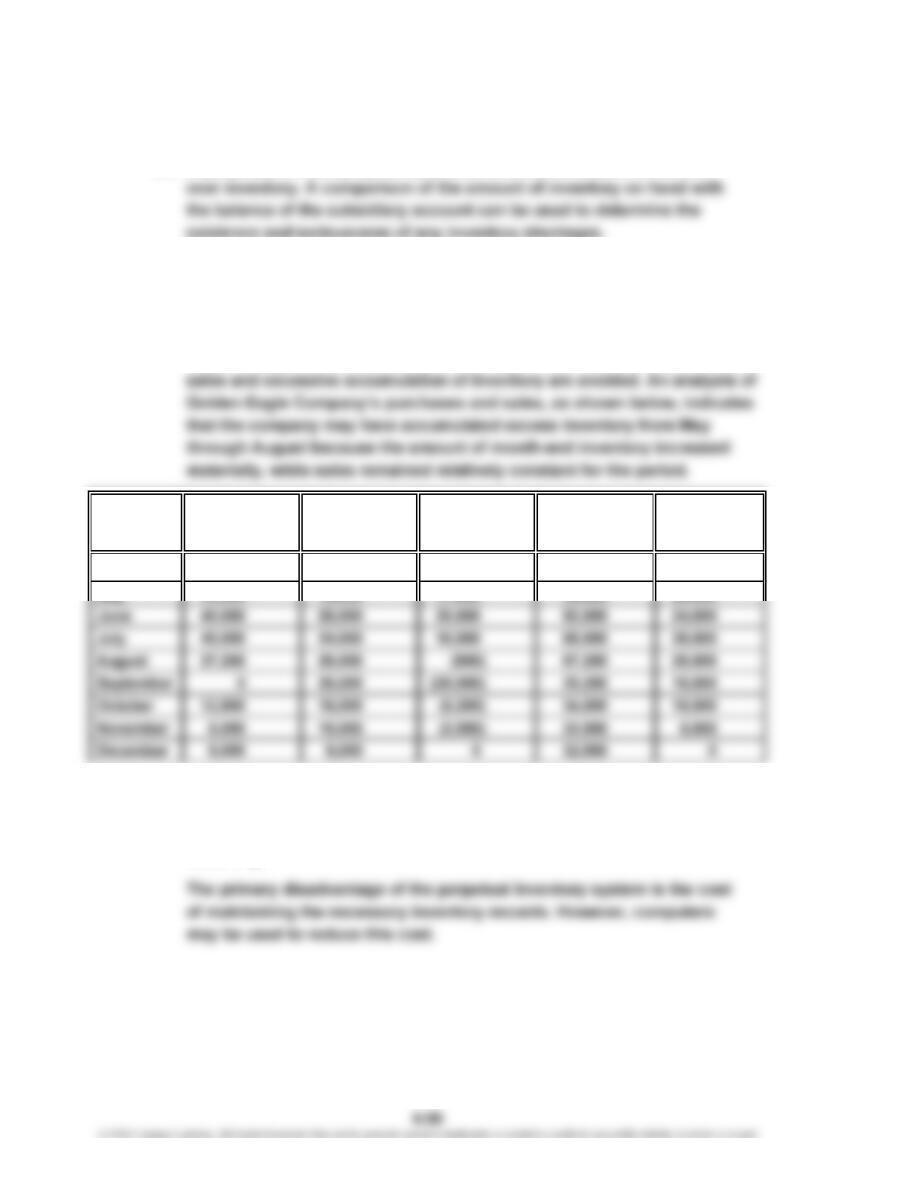
April 31,000 units 16,000 units 15,000 units 15,000 units 16,000 units
May 33,000 16,000 17,000 32,000 20,000
It appears that during April through July, the company ordered inventory
without regard to the accumulation of excess inventory. A perpetual
inventory system might have prevented this excess accumulation from
occurring.
Increase
Month Purchases
(Decrease) in
Sales Inventor
y
End of Month Sales
Inventory at Next Month’s
CHAPTER 6 Inventories
CP 6–4
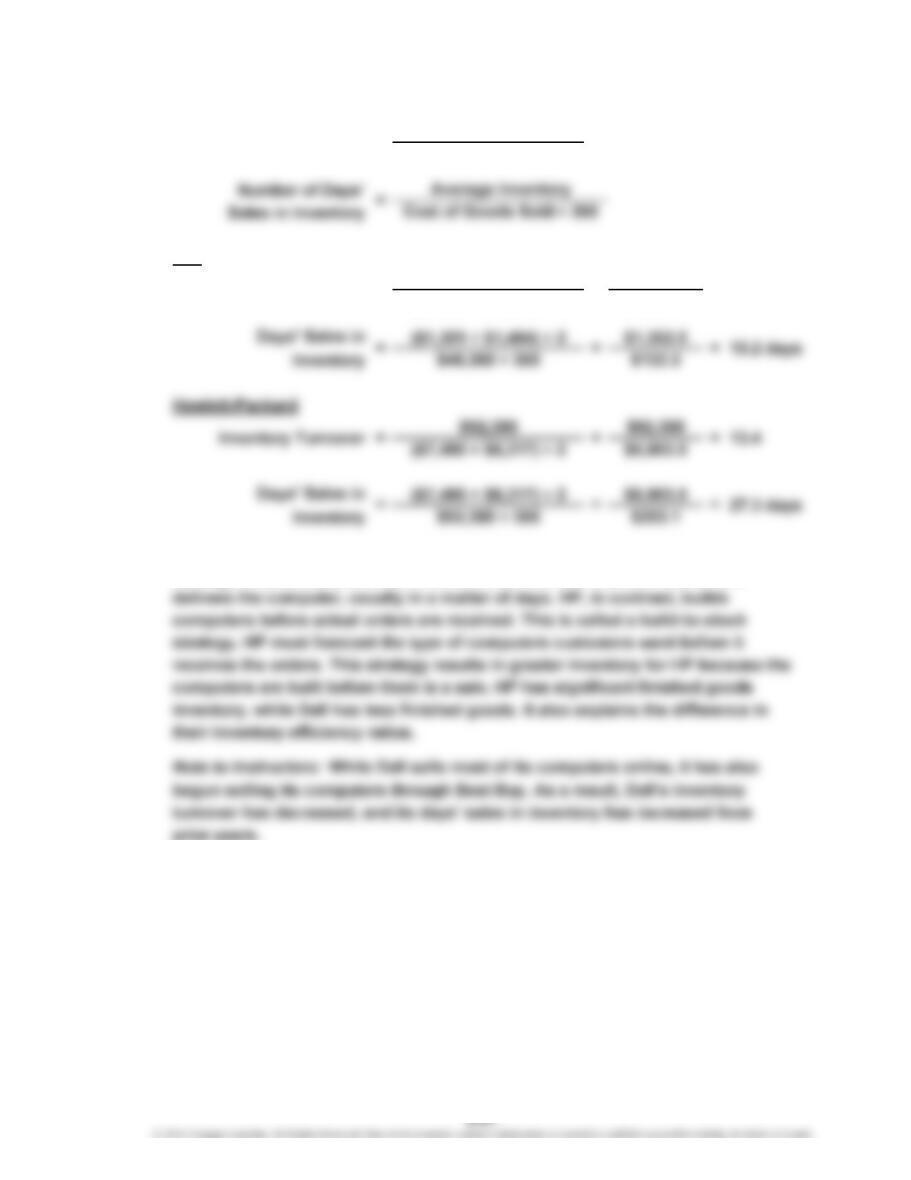
Cost of Goods Sold
Average Inventory
Dell
$48,260 $48,260
($1,301 + $1,404) ÷ 2 $1,352.5
b. Dell builds its computers primarily to a customer order, called a build-to-order
strategy. Customers place their orders on the Internet. Dell then builds and
a.
35.7Inventory Turnover = = =
=
Inventory Turnover
CHAPTER 6 Inventories
CP 6–5
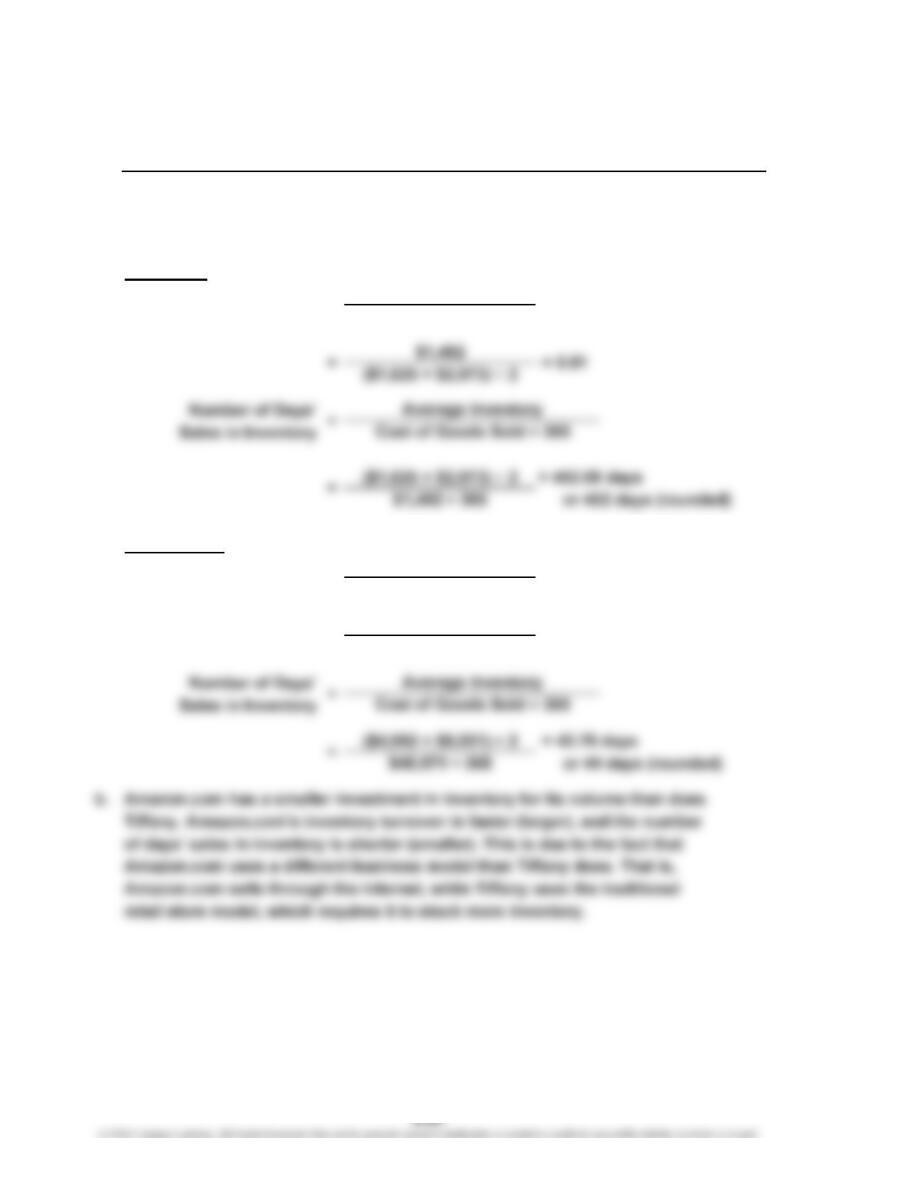
Inventory
Turnover
0.81
8.34
Computations:
Tiffany Co.
Cost of Goods Sold
Average Inventory
Amazon.com
Cost of Goods Sold
Average Inventory
$45,971
($4,992 + $6,031) ÷ 2
= = 8.34
Inventory Turnover
a. Number of Days’
Sales in Inventory
=Inventory Turnover
Tiffany Co. 452.34
43.76
Amazon.com
=
CHAPTER 6 Inventories
CP 6–6
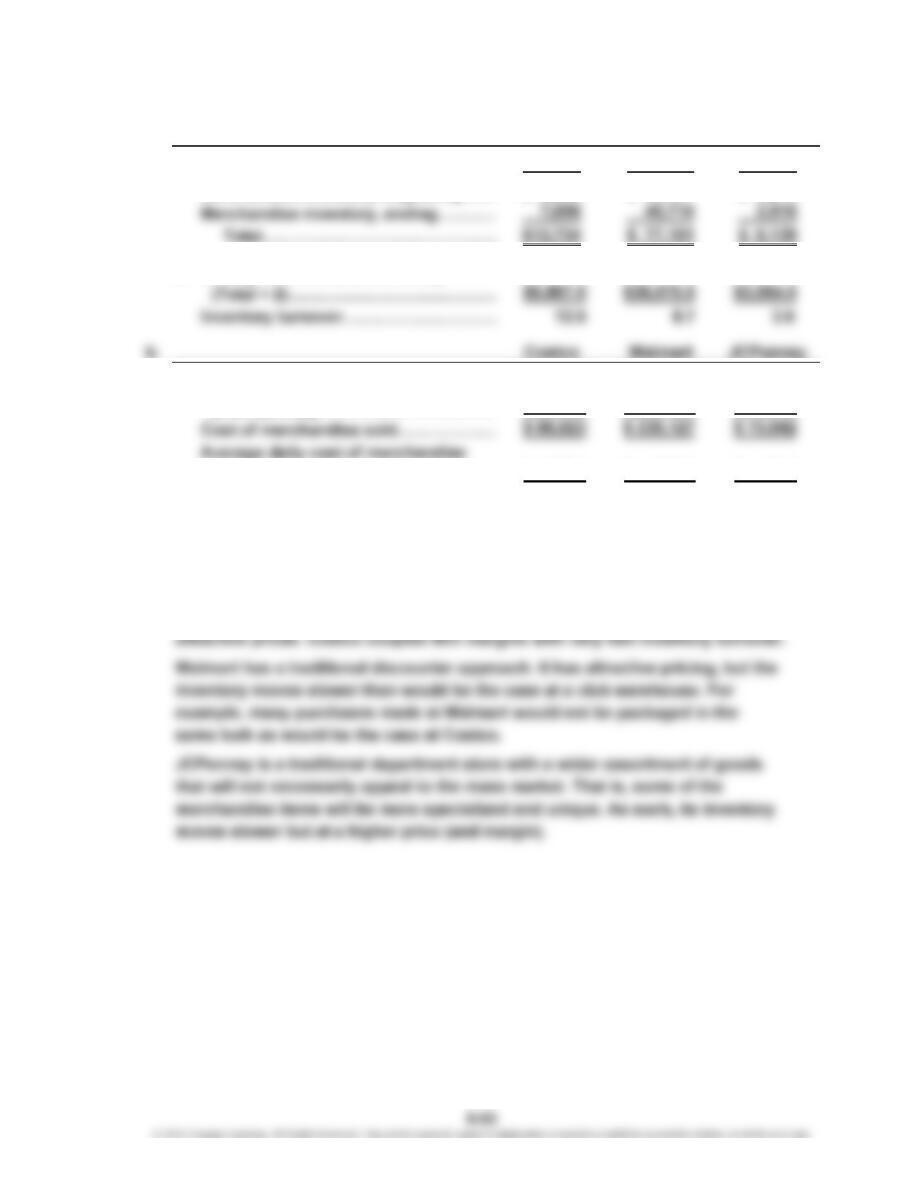
a. Costco Walmart JCPenney
1. Cost of merchandise sold………………
…
$86,823 $335,127 $11,042
Merchandise inventory, beginning……
…
$ 6,638 $ 36,437 $ 3,213
2. Average merchandise inventory
1. Average merchandise inventory
[from part (a)]…………………………… $6,867.0 $38,575.5 $3,064.5
…
sold (COMS ÷ 365)……………………
…
$ 237.9 $ 918.2 $ 30.3
Number of day’s sales in inventory…
…
28.9 42.0 101.3
c. Both the inventory turnover ratio and the number of day’s sales in inventory
reflect the merchandising approaches of the three companies.
Costco is a club warehouse. Its approach is to hold only mass appeal items that
are sold quickly off the shelf. Most items are sold in bulk quantities at very