Question 6–1
Question 6–2
Question 6–3
Question 6–4
Question 6–5
Question 6–6
Question 6–7
Chapter 6 Time Value of Money Concepts
QUESTIONS FOR REVIEW OF KEY TOPICS
6–2 Intermediate Accounting, 8/e
Answers to Questions (continued)
Question 6–8
Question 6–9
Question 6–10
Present
Value
?
Question 6–11
Present
Value
?
Answers to Questions (concluded)
Question 6–12
Question 6–13
The formula for computing present value of an ordinary annuity incorporating the
ordinary annuity factors from Table 4 is:
Question 6–14
Question 6–15
Companies frequently acquire the use of assets by leasing rather than purchasing
them. Leases usually require the payment of fixed amounts at regular intervals over
6–4 Intermediate Accounting, 8/e
Brief Exercise 6–1
Fran should choose the second investment opportunity. More rapid compounding
Brief Exercise 6–2
Bill will not have enough accumulated to take the trip. The future value of his
investment of $23,153 is $347 short of $23,500.
Brief Exercise 6–3
BRIEF EXERCISES
Brief Exercise 6–4
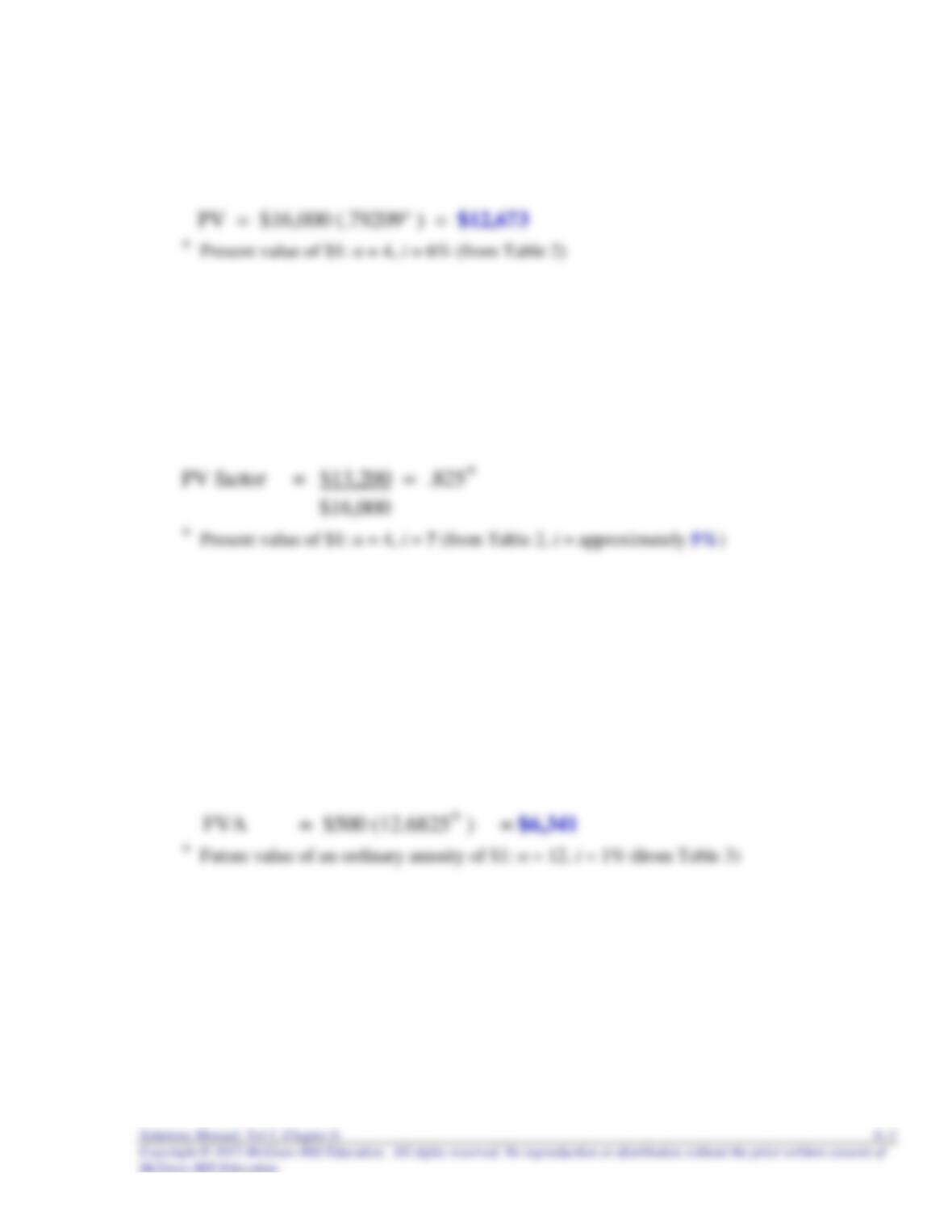
John would be willing to invest no more than $12,673 in this opportunity.
Brief Exercise 6–5
Brief Exercise 6–6
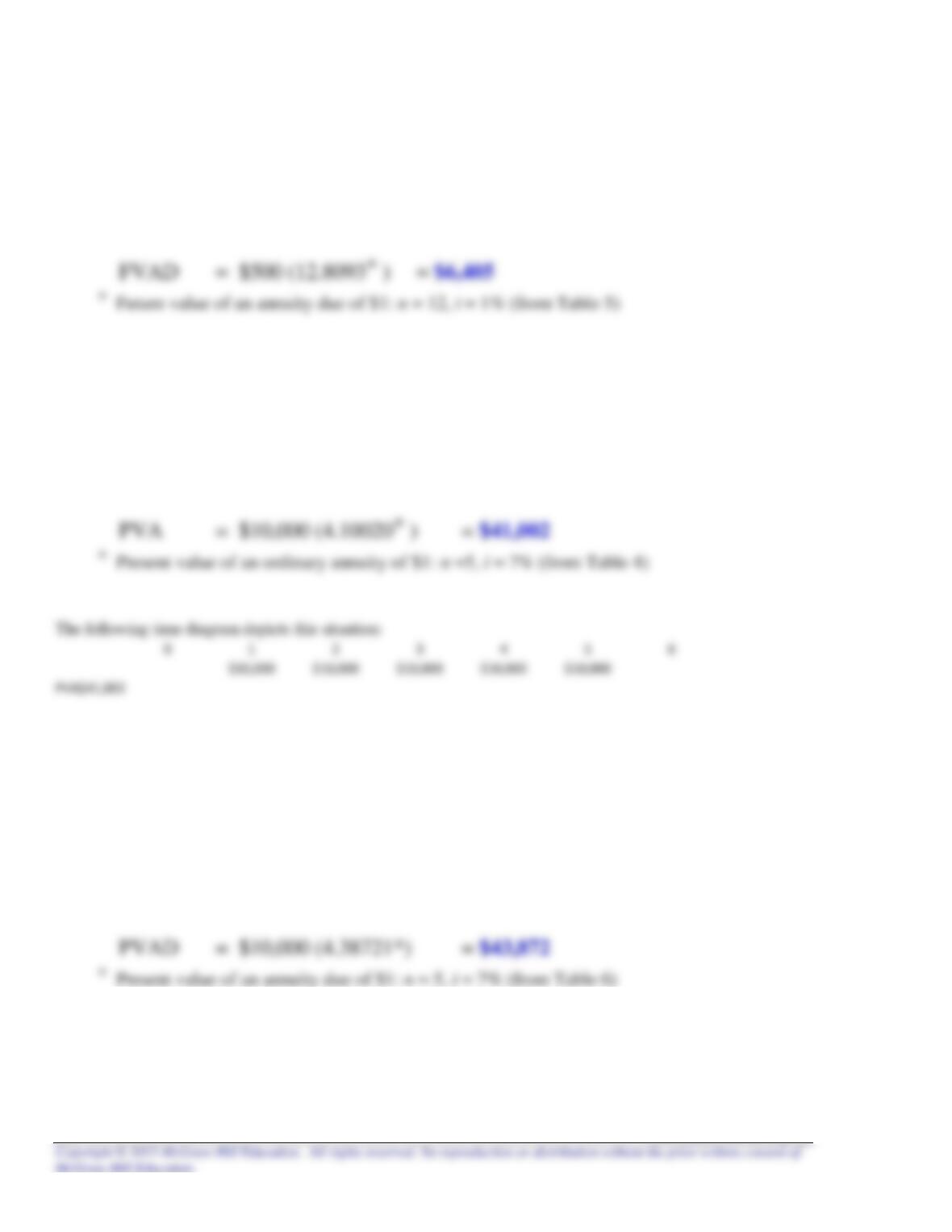
Interest is paid for 12 periods at 1% (one-quarter of the annual rate).
6–6 Intermediate Accounting, 8/e
Brief Exercise 6–7
Interest is paid for 12 periods at 1% (one-quarter of the annual rate).
Brief Exercise 6–8
Brief Exercise 6–9
Brief Exercise 6–10
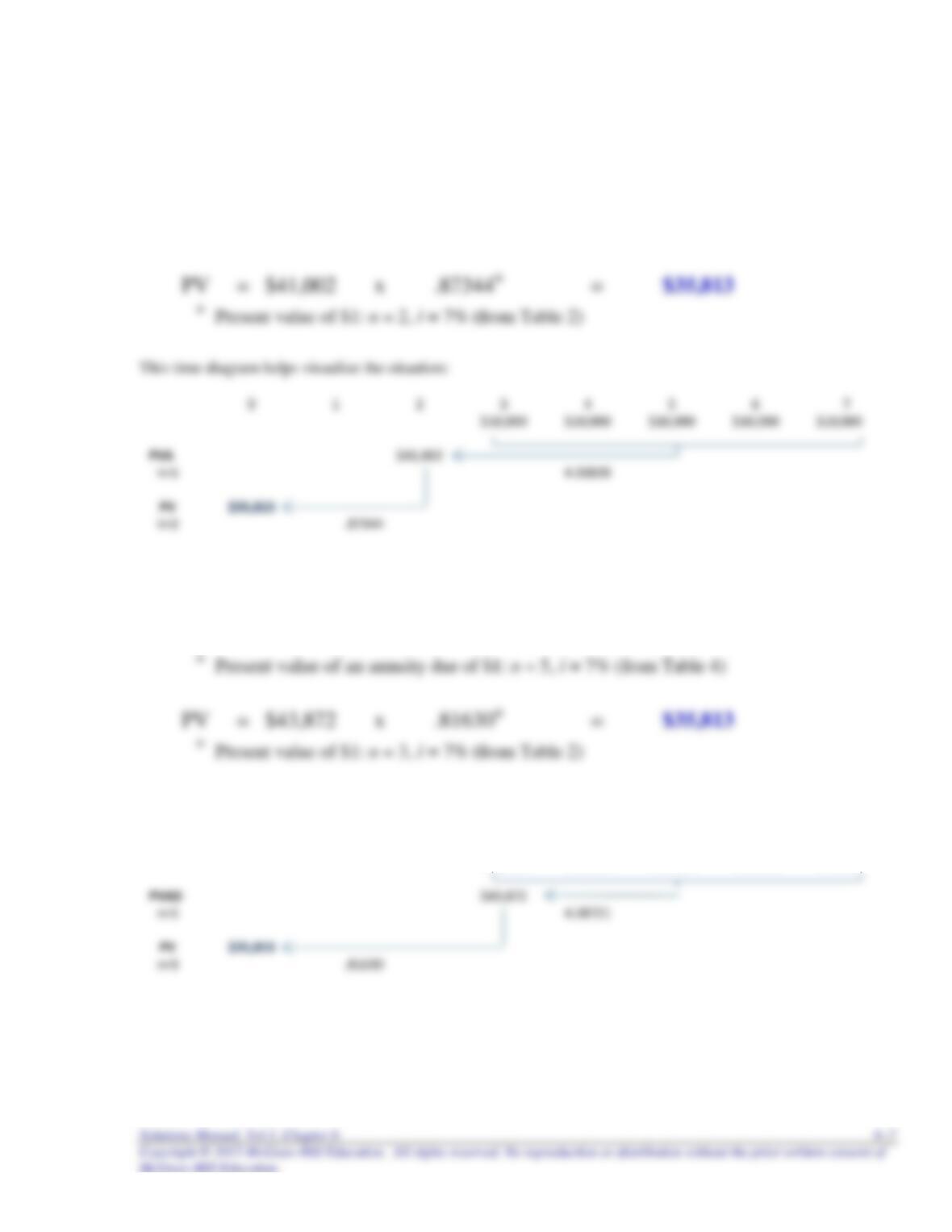
PVA = $10,000 x 4.10020* = $41,002
* Present value of an ordinary annuity of $1: n = 5, i = 7% (from Table 4)
Or alternatively:
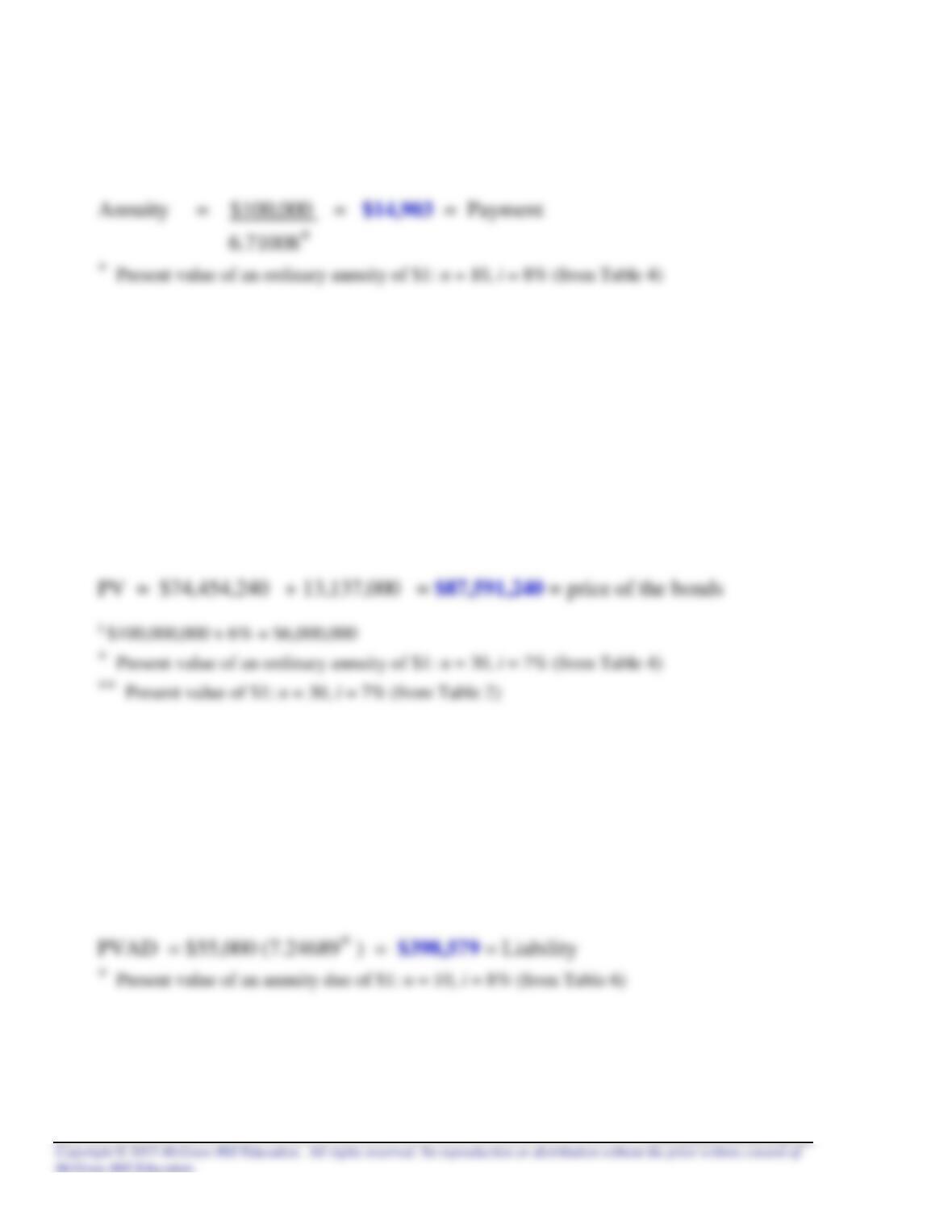
PVAD = $10,000 x 4.38721* = $43,872
This time diagram helps visualize the situation:
0 1 2 3 4 5 6 7
$10,000 $10,000 $10,000 $10,000 $10,000
6–8 Intermediate Accounting, 8/e
Brief Exercise 6–11
Brief Exercise 6–12
PV = $6,000,0001 (12.40904* ) + 100,000,000 (.13137** )
Brief Exercise 6–13
Exercise 6–1
1. FV = $15,000 (2.01220* ) = $30,183
Exercise 6–2
1. FV = $10,000 (2.65330* ) = $26,533
EXERCISES
6–10 Intermediate Accounting, 8/e
Exercise 6–3
1. PV = $20,000 (.50835* ) = $10,167
Exercise 6–4
PV of $1
Payment i=8% PV n
Exercise 6–5
PV = $85,000 (.82645* ) = $70,248 = Note/revenue
Exercise 6–6
1. PV = $40,000 (.62092* ) = $24,837
6–12 Intermediate Accounting, 8/e
Exercise 6–7
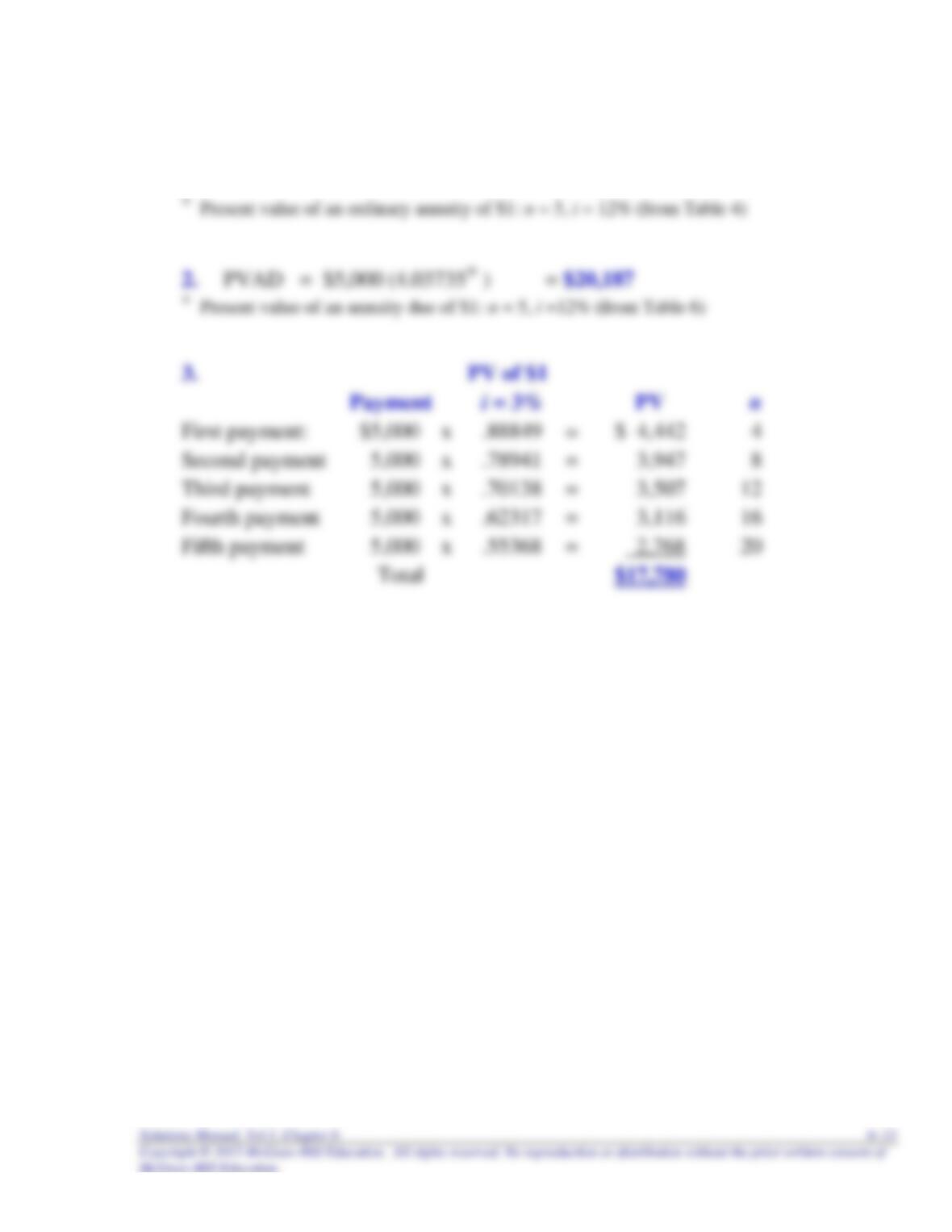
1. FVA = $2,000 (4.7793* ) = $9,559
Exercise 6–8
1. PVA = $5,000 (3.60478* ) = $18,024
6–14 Intermediate Accounting, 8/e
Exercise 6–9
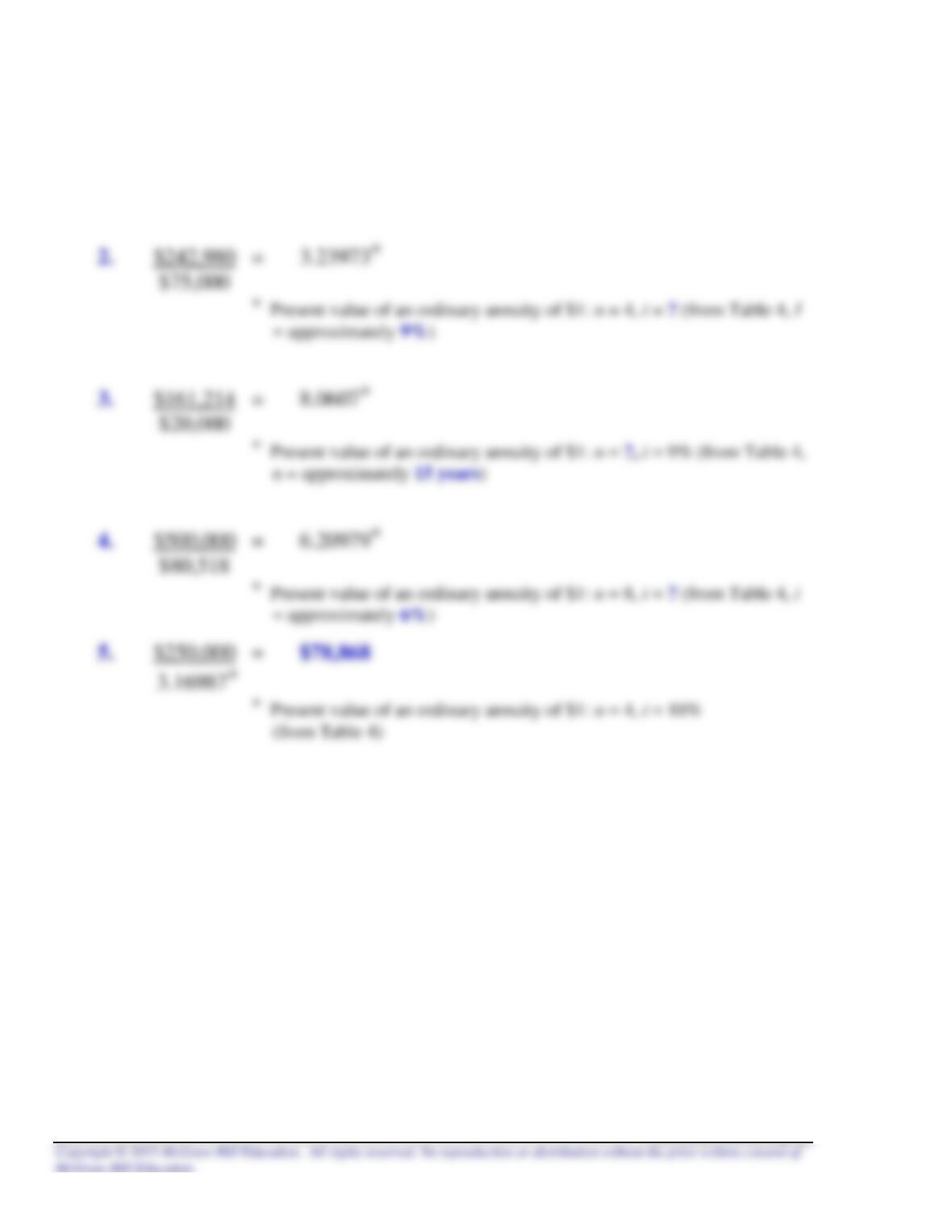
1. PVA = $3,000 (3.99271* ) = $11,978
* Present value of an ordinary annuity of $1: n = 5, i = 8% (from Table 4)
Exercise 6–10
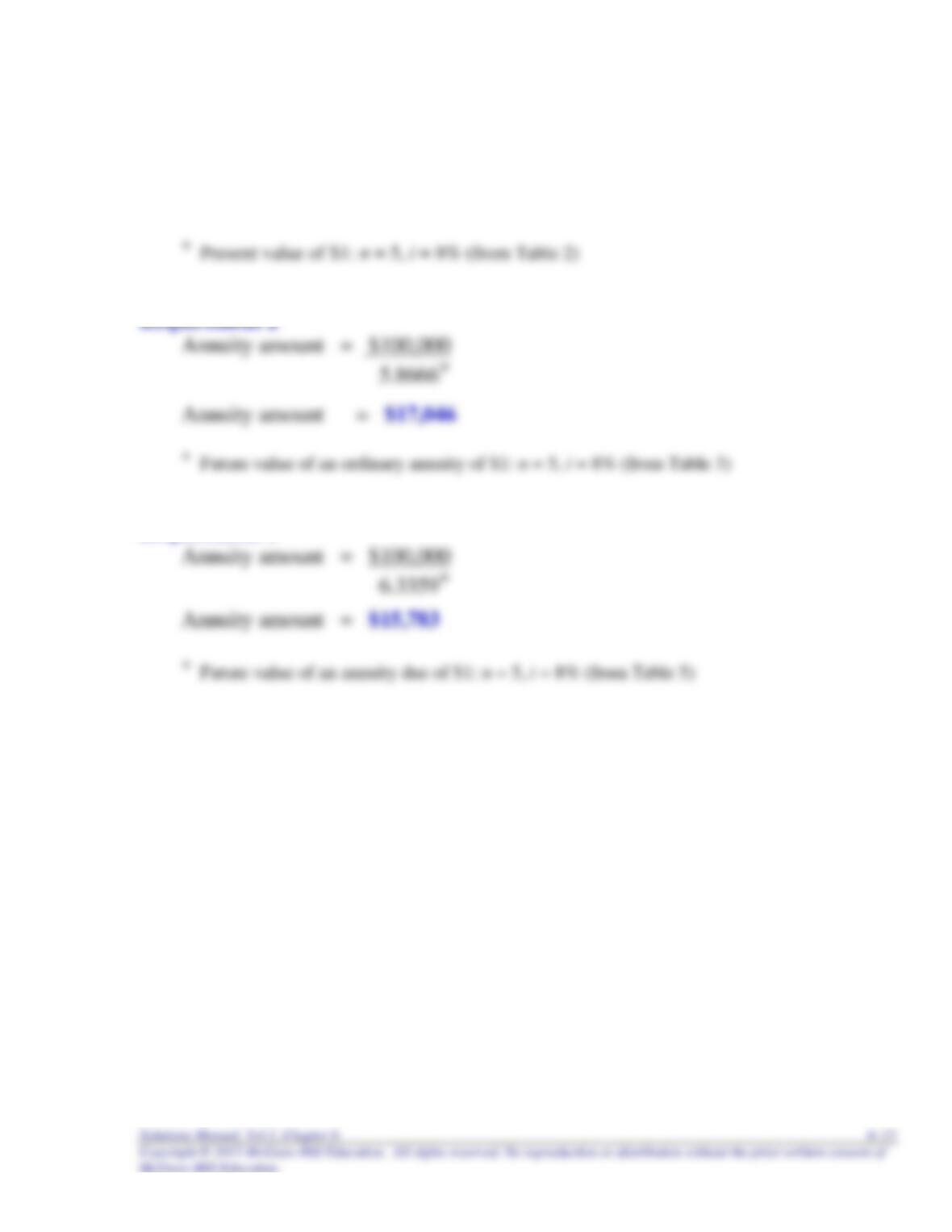
Requirement 1
PV = $100,000 (.68058* ) = $68,058
Requirement 3
6–16 Intermediate Accounting, 8/e
Exercise 6–11
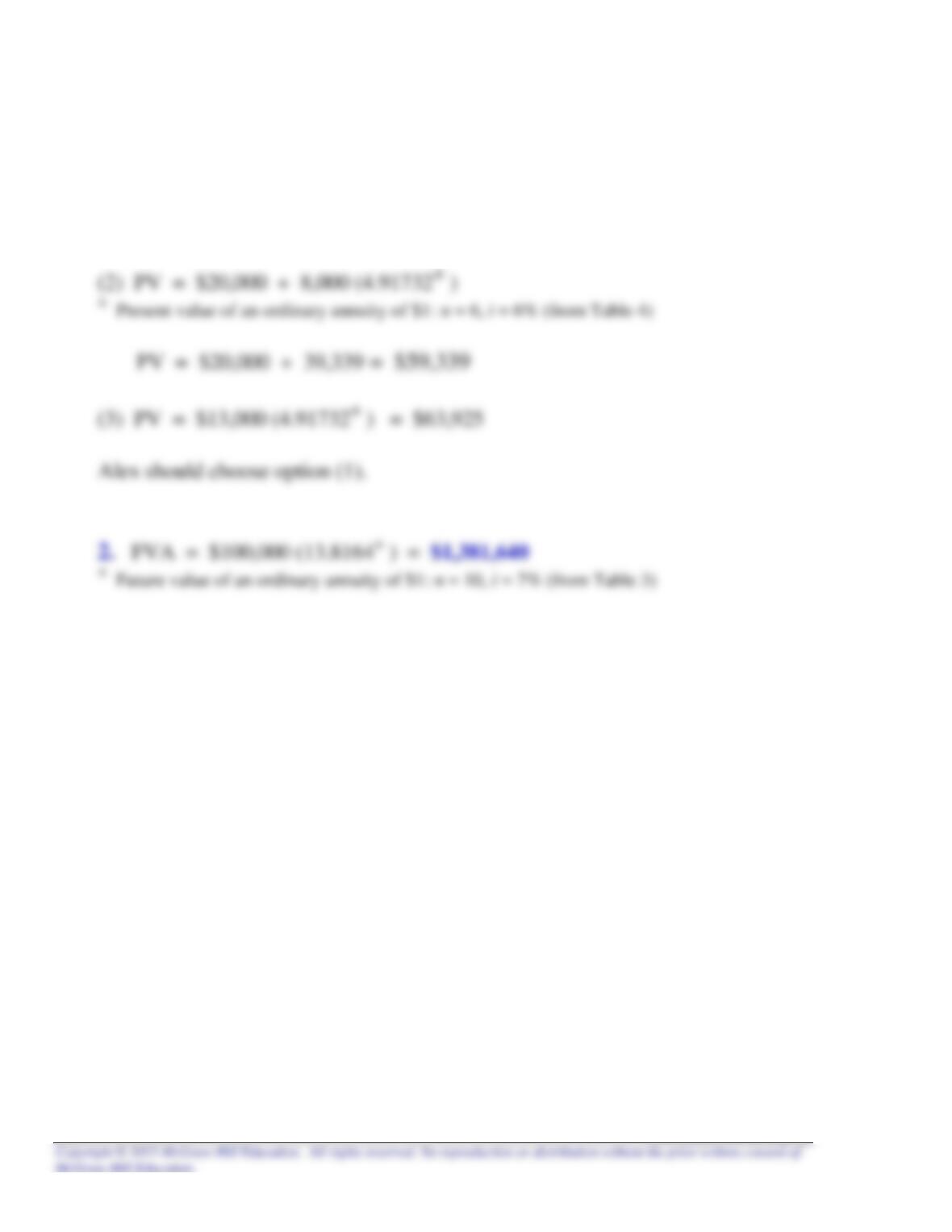
1. Choose the option with the highest present value.
(1) PV = $64,000
Exercise 6–12
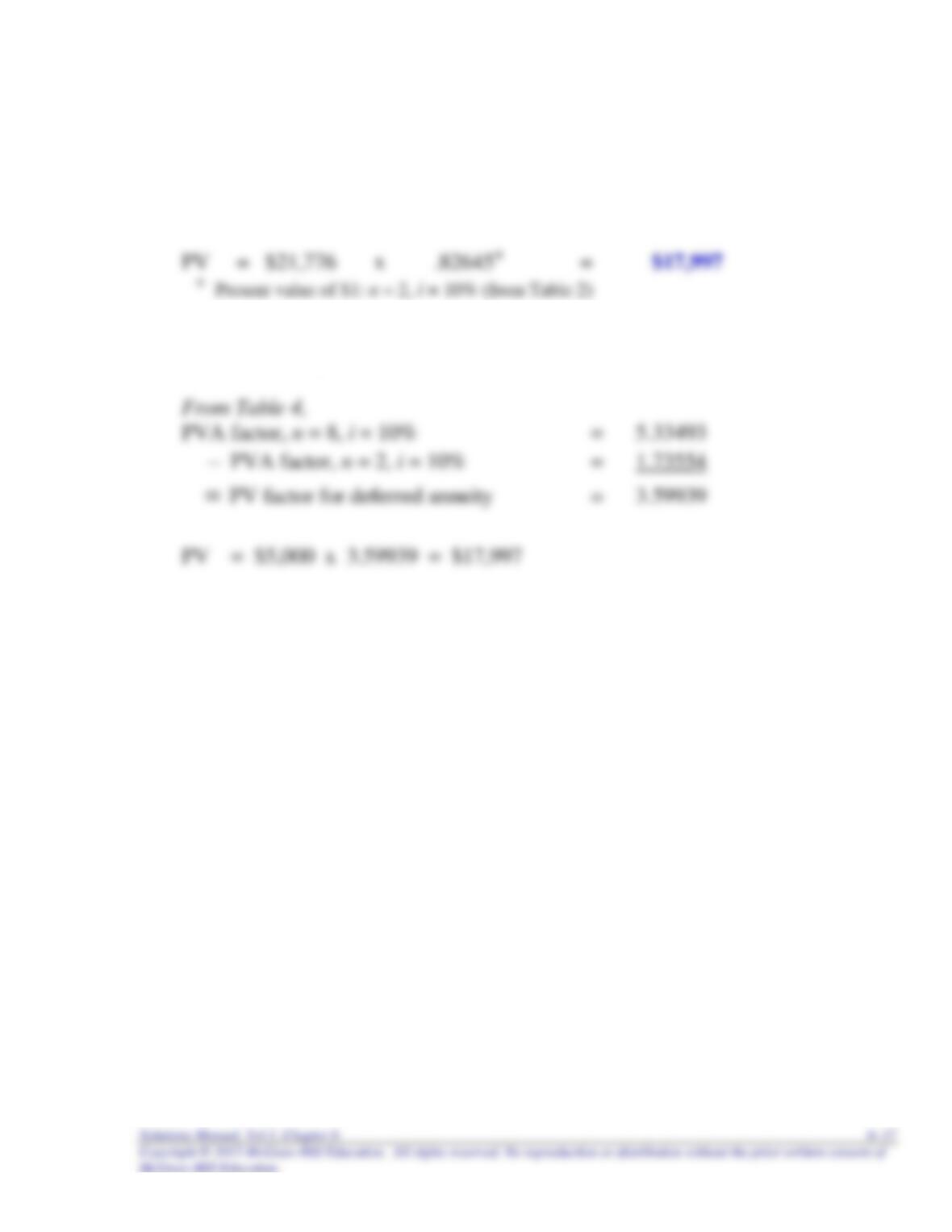
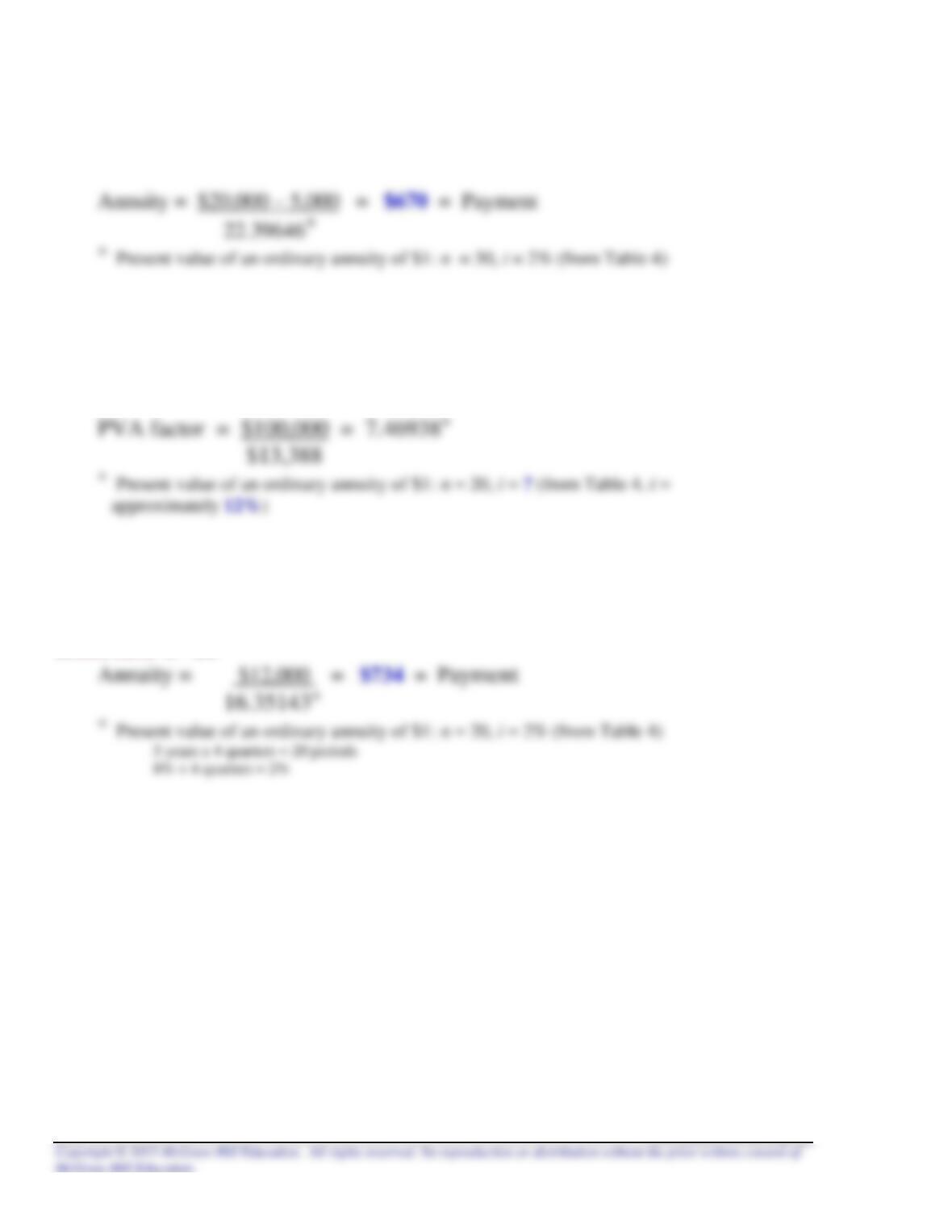
PVA = $5,000 x 4.35526* = $21,776
* Present value of an ordinary annuity of $1: n = 6, i = 10% (from Table 4)
Or alternatively:
6–18 Intermediate Accounting, 8/e
Exercise 6–13
Exercise 6–14
Exercise 6–15
Exercise 6–16
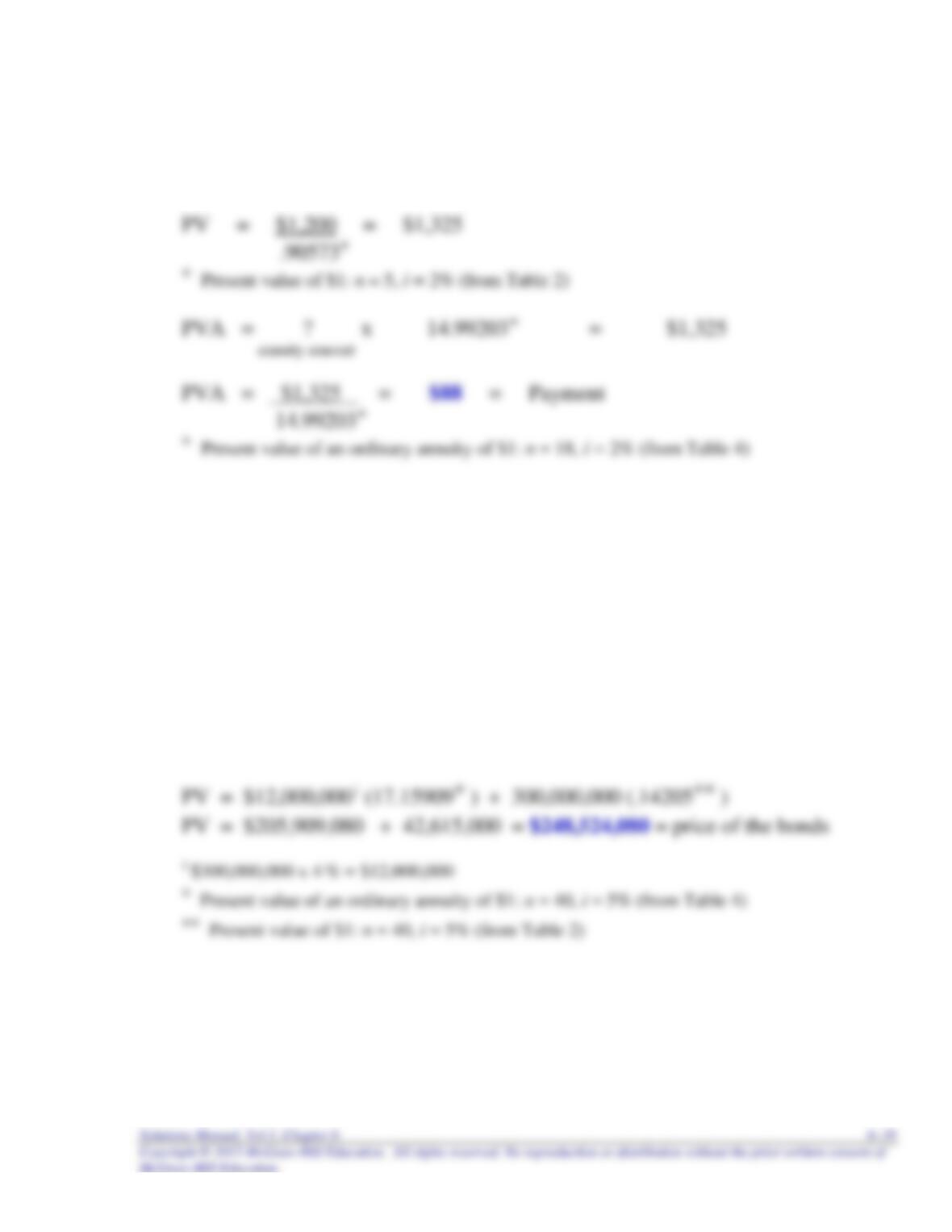
PV = ? x .90573* = 1,200
Exercise 6–17
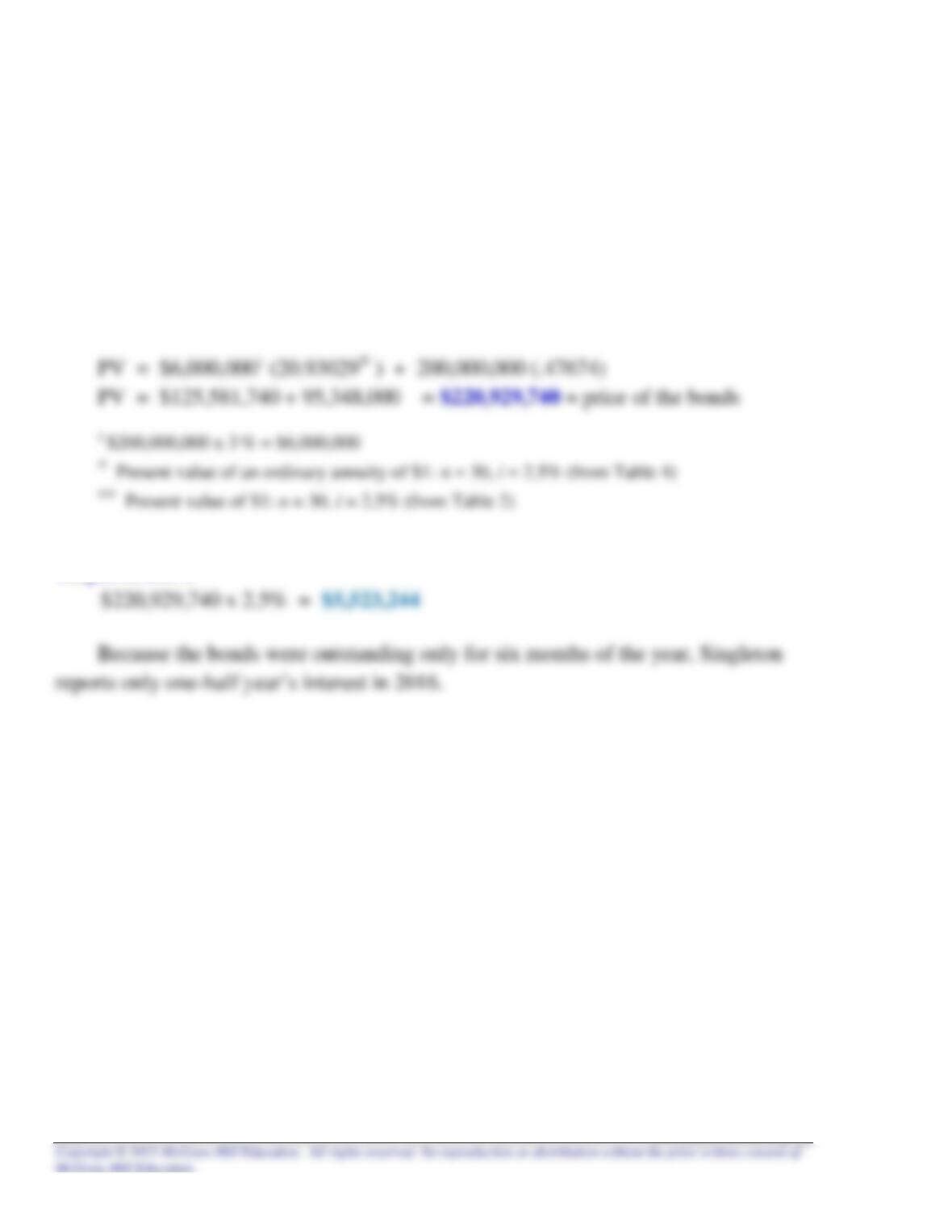
To determine the price of the bonds, we calculate the present value of the 40–
period annuity (40 semiannual interest payments of $12 million) and the lump-sum
payment of $300 million paid at maturity using the semiannual market rate of interest
of 5%. In equation form,
6–20 Intermediate Accounting, 8/e
Exercise 6–18
Requirement 1
To determine the price of the bonds, we calculate the present value of the 30–
period annuity (30 semiannual interest payments of $6 million) and the lump-sum
payment of $200 million paid at maturity using the semiannual market rate of interest
of 2.5%. In equation form,
Requirement 2