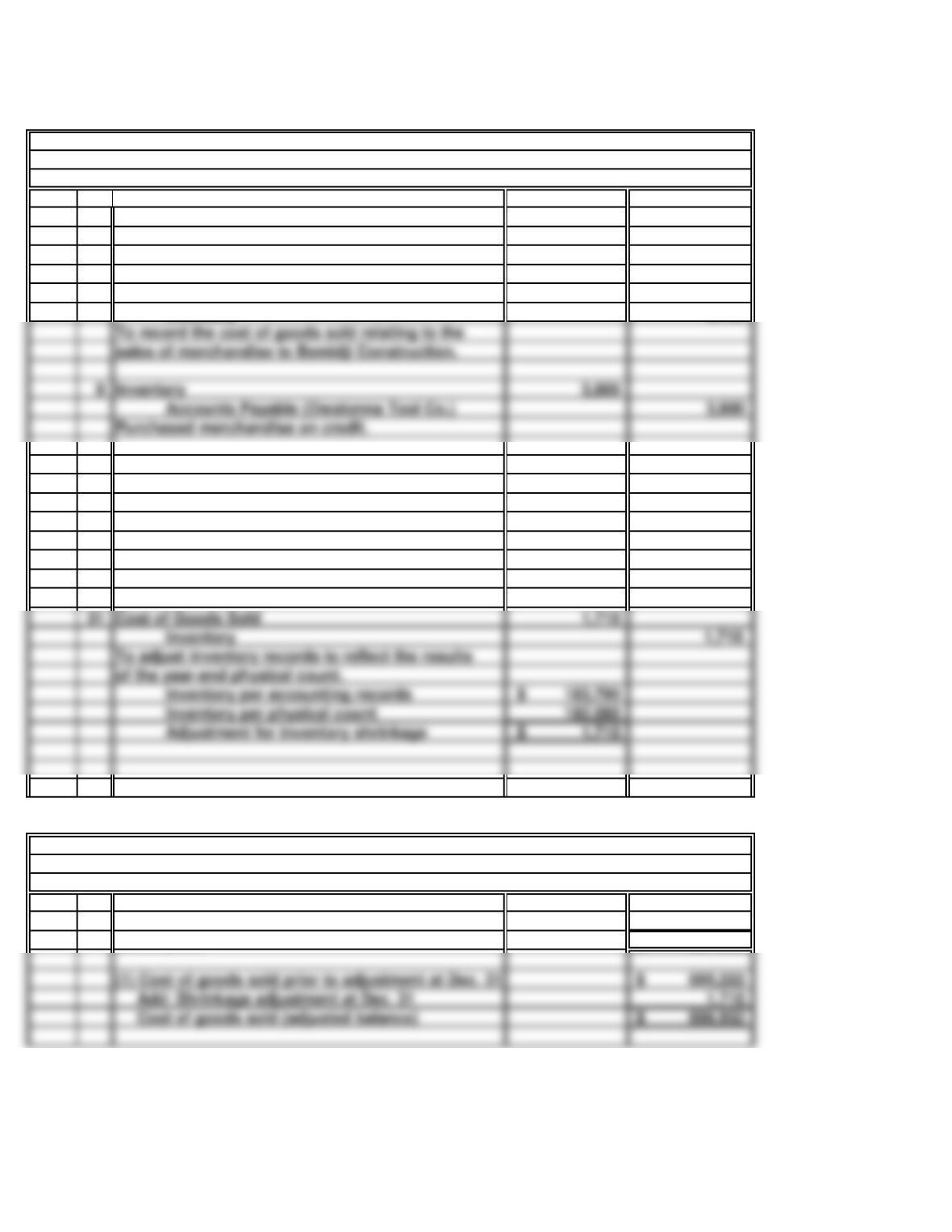
35 Minutes, Medium
Nov. 5 13,390
Sales 13,390
5 9,105
Inventory 9,105
Dec. 5 13,390
Accounts Receivable (Bemidji Construction) 13,390
9 3,800
Cash 3,800
Inventory per accounting records 183,790$
Inventory per physical count 182,080
Adjustment for inventory shrinkage 1,710$
Cost of Goods Sold
of the year-end physical count.
To adjust inventory records to reflect the results
b.
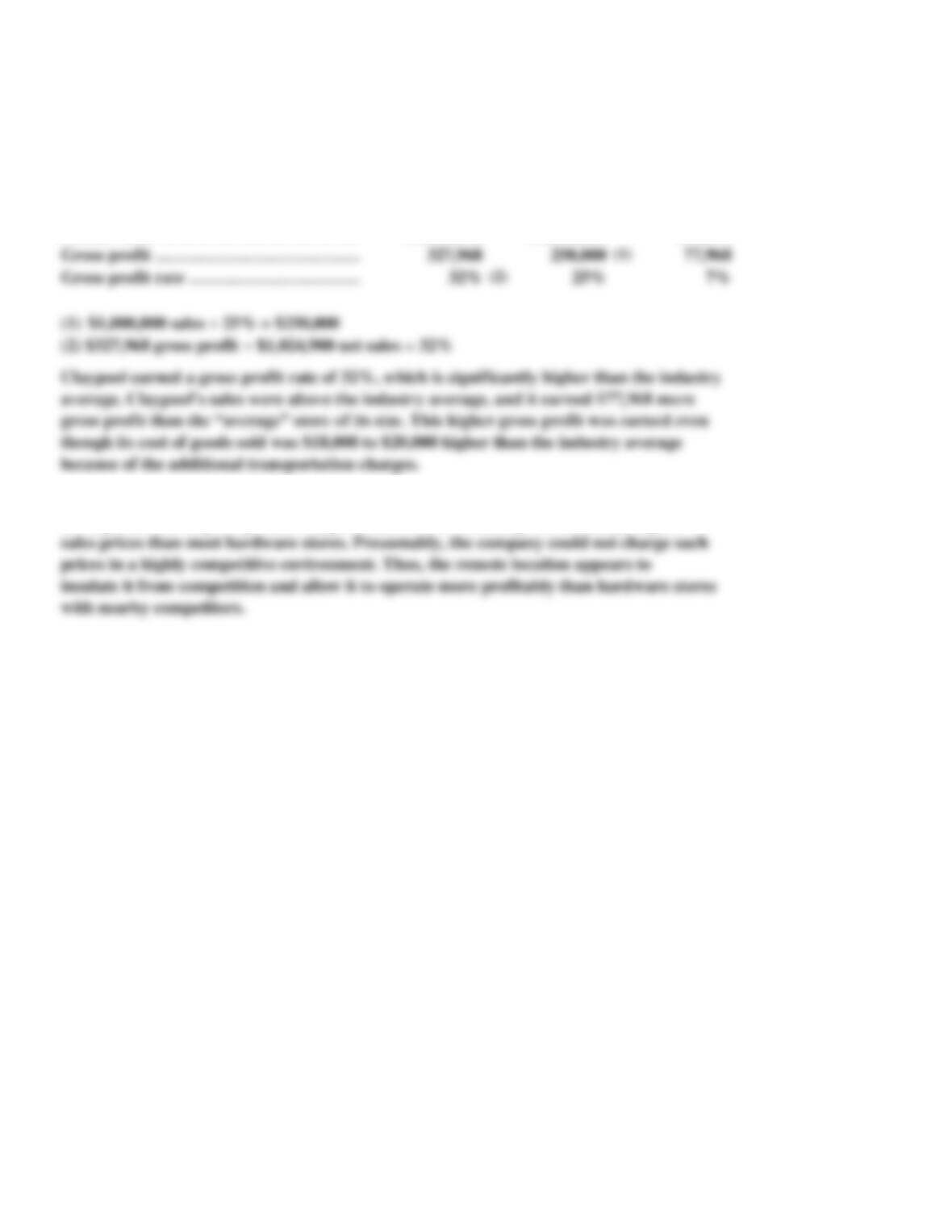
1,024,900$
696,932
327,968$
696,932$
Add: Shrinkage adjustment at Dec. 31
(1) Cost of goods sold prior to adjustment at Dec. 31
Cost of goods sold (adjusted balance)
SOLUTIONS TO PROBLEMS SET A
Gross profit
Partial Income Statement
For the Year Ended December 31, Current Year
Net sales
Collected accounts receivable.
Accounts Payable (Owatonna Tool. Co.)
PROBLEM 6.1A
a.
CLAYPOOL HARDWARE
(1)
General Journal
CLAYPOOL HARDWARE
Cost of goods sold (1)
Paid account payable to supplier.
Accounts receivable (Bemidji Construction)
Sold merchandise on account.
Cost of Good Sold
Cash
9 3,800
Accounts Payable (Owatonna Tool Co.) 3,800
Purchased merchandise on credit.
To record the cost of goods sold relating to the
sales of merchandise to Bemidji Construction.
c.
Claypool Industry
Hardware Average Difference
$1,024,900 $1,000,000 $24,900
To have a higher-than-average cost of goods sold and still earn a much larger-than-
average amount of gross profit, Claypool must be able to charge substantially higher
Annual sales ……………………………..
PROBLEM 6.1A
CLAYPOOL HARDWARE (concluded)
Claypool seems quite able to pass its extra transportation costs on to its customers and, in
fact, enjoys a significant financial benefit from its remote location. The following data
support these conclusions:
Gross profit ………………………………
Gross profit rate …………………………
a.
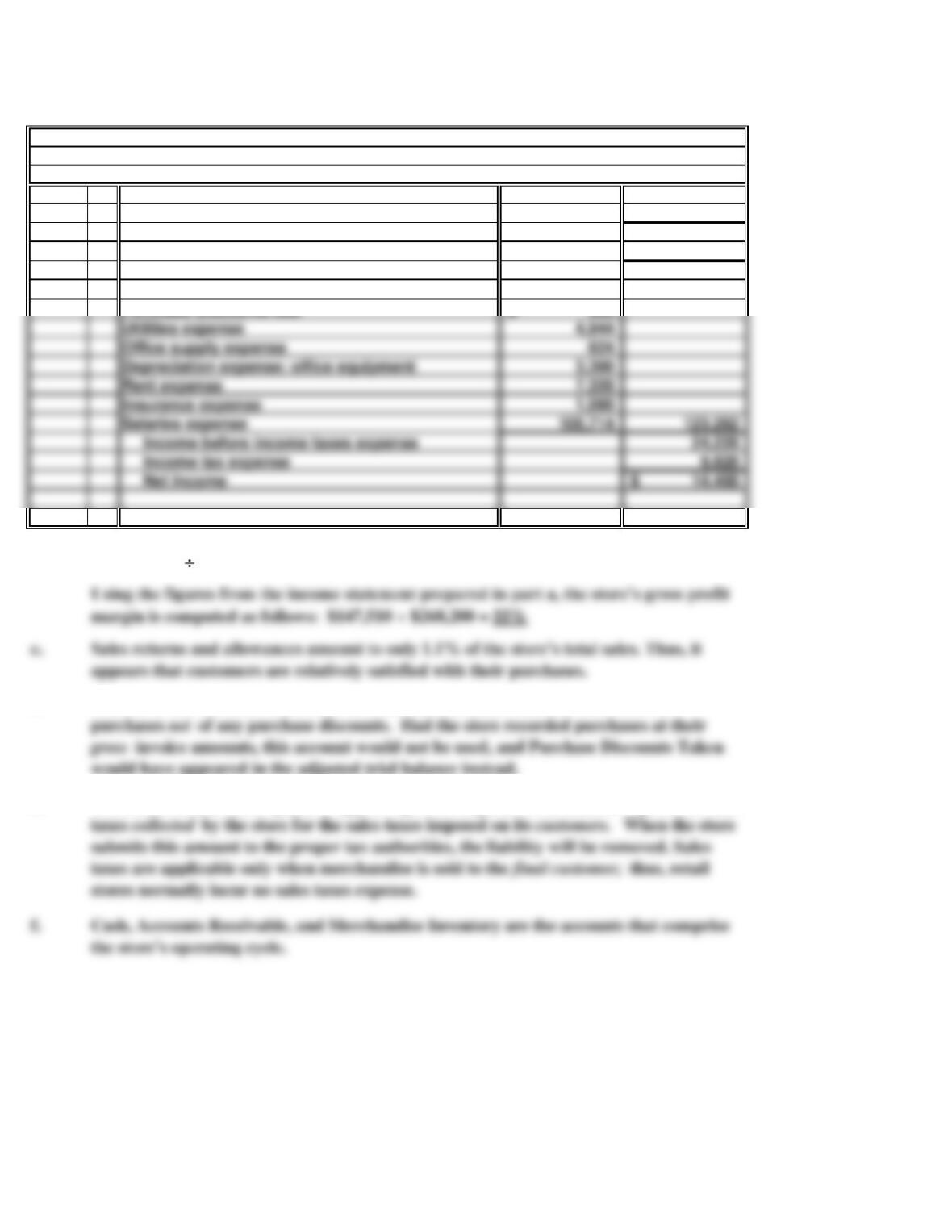
271,200$
3,000
268,200
120,690
147,510
300$
c.
d.
e.
PROBLEM 6.2A
HENDRY’S BOUTIQUE
Sales
HENDRY’S BOUTIQUE
For the Year Ended December 31, Current Year
Income Statement
15 Minutes, Easy
The use of the Purchase Discounts Lost account indicates that the store records
would have appeared in the adjusted trial balance instead.
The $3,840 of sales taxes payable appearing in the adjusted trial balance represents sales
Net sales
Cost of goods sold
Gross profit
Other expenses:
b.
Gross profit Net sales = gross profit margin
Less: Sales returns and allowances
Purchase discounts lost
9,828
Rent expense
Insurance expense
Salaries expense
Utilities expense
Office supply expense
Net income
Income tax expense
Depreciation expense: office equipment
Income before income taxes expense
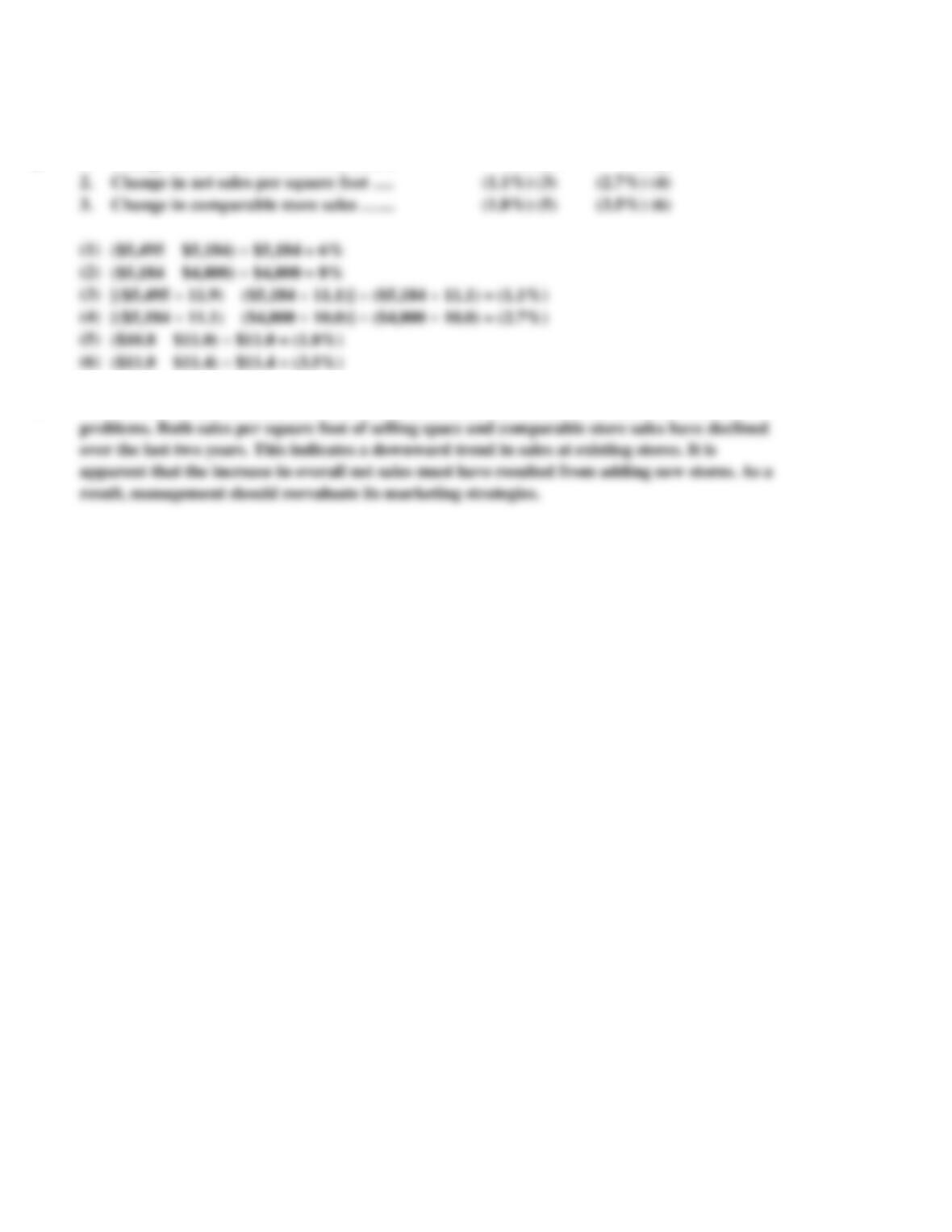
Year 2-Year 3 Year 1-Year 2
1. 6% (1) 8% (2)
b.
PROBLEM 6.3A
KNAUSS SUPERMARKETS
20 Minutes, Medium
While Knauss has increased its overall revenue from sales, several of the statistics indicate
a.
Change in net sales …………………….
2. (1.1%) (3) (2.7%) (4)
3. (1.8%) (5) (3.5%) (6)
Change in net sales per square foot ….
Change in comparable store sales ……
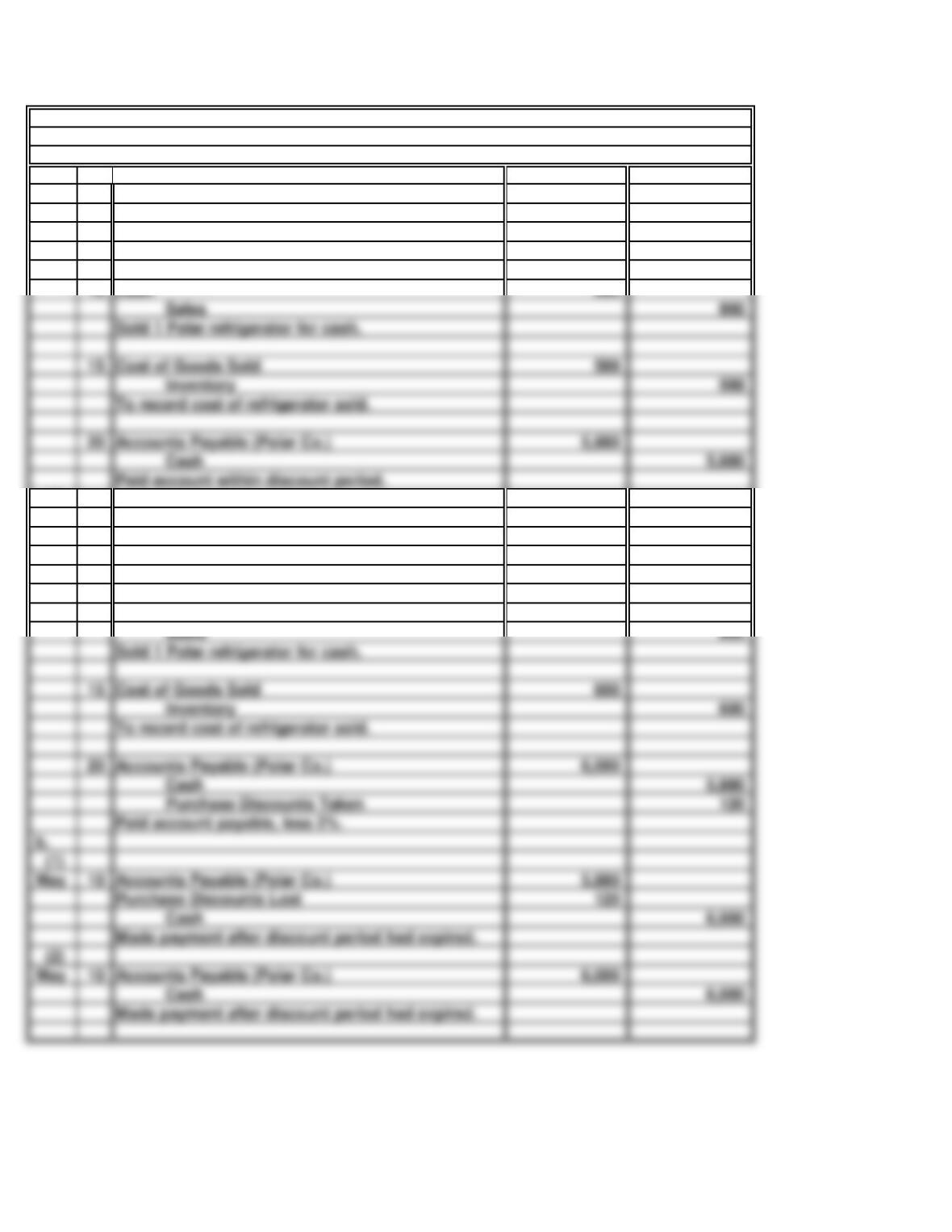
30 Minutes, Medium
Date
(1)
April 10 5,880
Accounts Payable (Polar Co.) 5,880
(2)
April 10 6,000
Accounts Payable (Polar Co.) 6,000
15 900
15 600
b.
(1)
May 10 5,880
(2)
May 10 6,000
Cost of Goods Sold
Accounts Payable (Polar Co.)
Made payment after discount period had expired.
Accounts Payable (Polar Co.)
Purchase Discounts Lost
Made payment after discount period had expired.
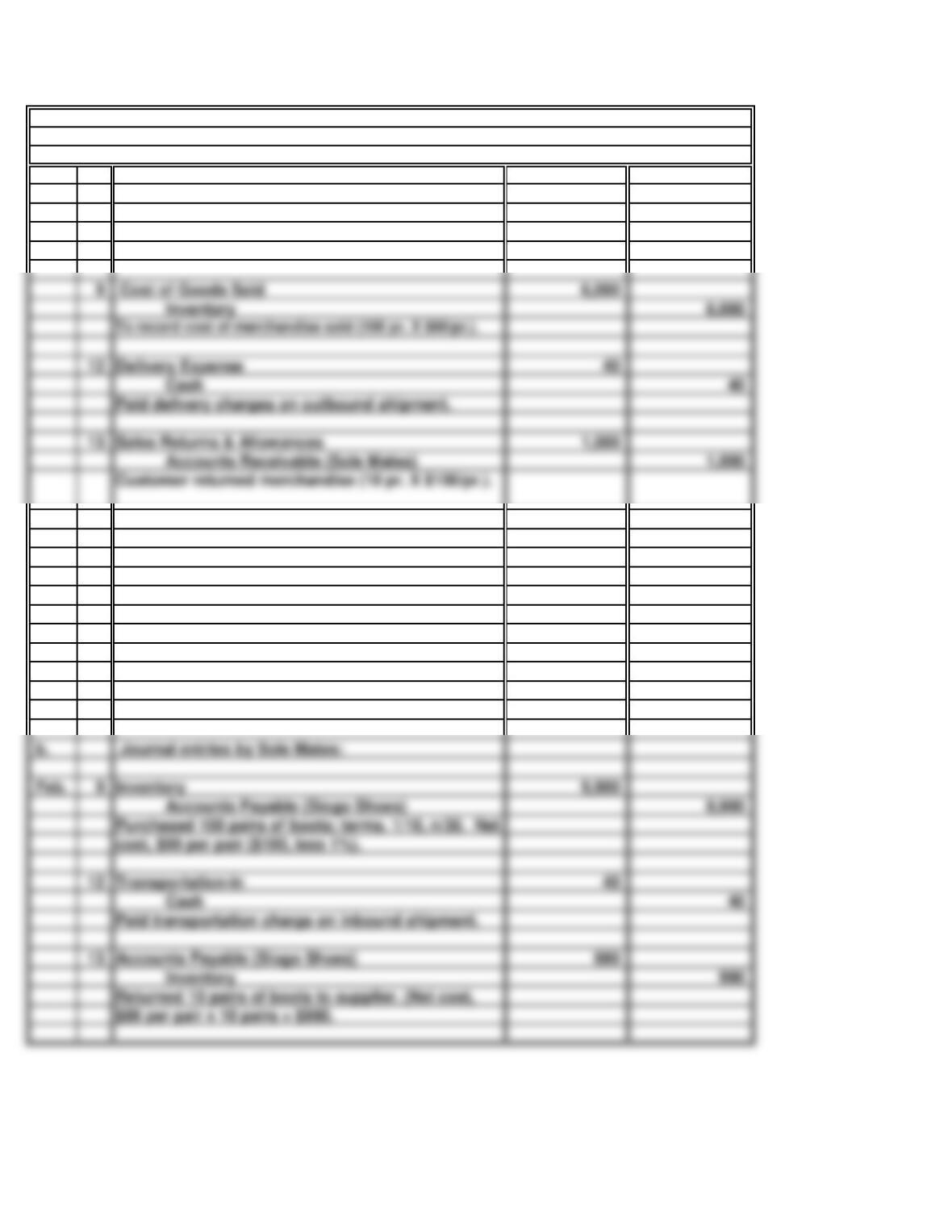
Paid account payable, less 2%.
Sold 1 Polar refrigerator for cash.
Accounts Payable (Polar Co.)
To record cost of refrigerator sold.
To record purchase of 10 refrigerators at gross
invoice price ($600 per unit).
Cash
Inventory
PROBLEM 6.4A
a.
General Journal
KITCHEN ELECTRICS
$588 per unit ($600, less 2%).
Inventory
To record purchase of 10 refrigerators at net cost of
15 900
15 588
Cash
Sold 1 Polar refrigerator for cash.
Cost of Goods Sold
To record cost of refrigerator sold.
Accounts Payable (Polar Co.)
Paid account within discount period.

c.
PROBLEM 6.4A
KITCHEN ELECTRICS (concluded)
The net cost method provides more useful information for evaluating the company’s
efficiency in paying its bills. This method clearly indicates the lowest price that the
30 Minutes, Strong
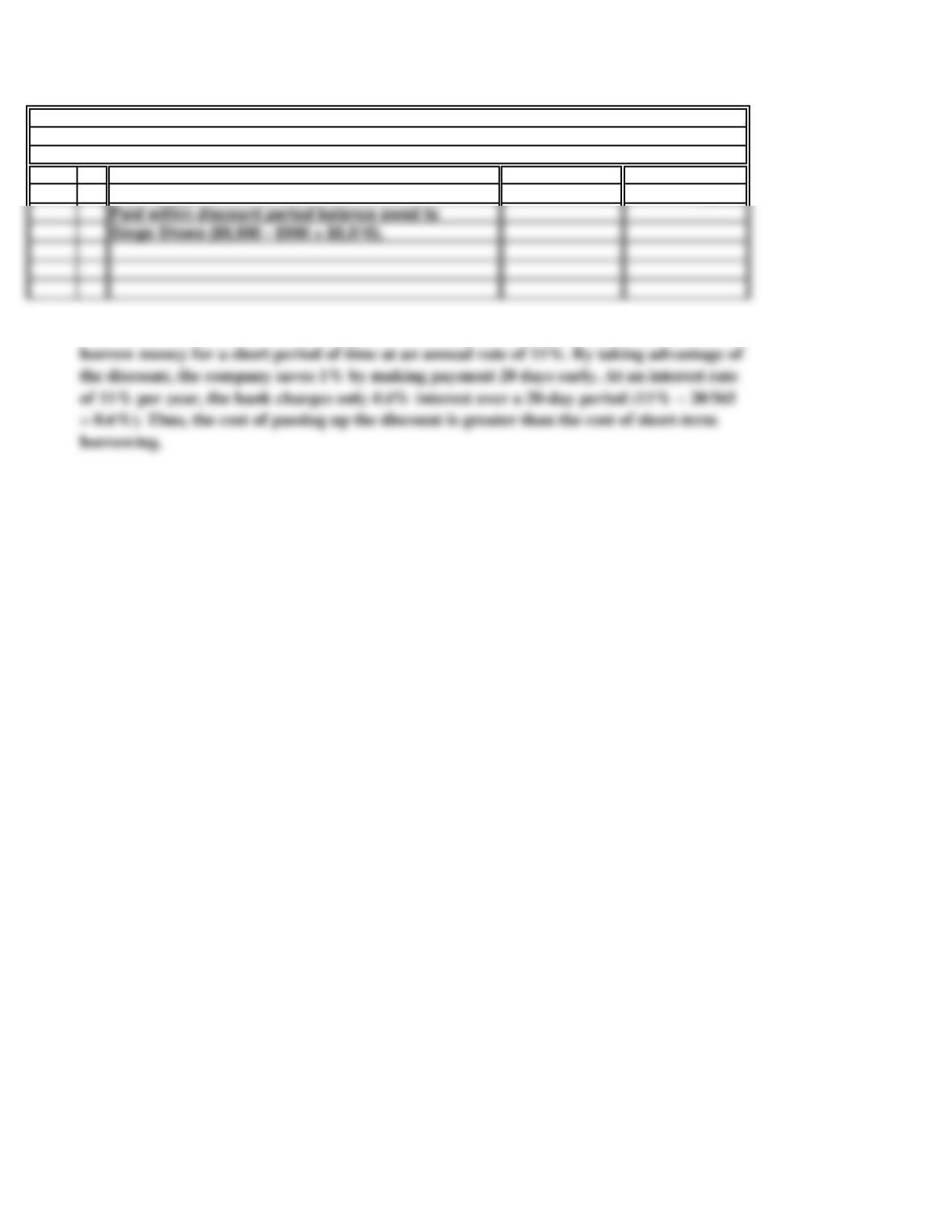
a. Journal entries by Siogo Shoes:
Feb . 9 10,000
Sales 10,000
13 600
Cost of Goods sold 600
19 8,910
90
Accounts Receivable (Sole Mates) 9,000
b.
Feb. 9 9,900
Accounts Payable (Siogo Shoes) 9,900
12 40
Cash 40
Inventory 990
Paid transportation charge on inbound shipment.
Inventory
cost, $99 per pair ($100, less 1%).
Journal entries by Sole Mates:
Returned 10 pairs of boots to supplier. (Net cost,
Purchased 100 pairs of boots; terms. 1/10, n/30. Net
Transportation-in
Accounts Payable (Siogo Shoes)
$99 per pair x 10 pairs = $990.
PROBLEM 6.5A
returned (10 pr. X $60/pr.).
Cash
Collected amount due, less $1,000 return and less
Reduce cost of goods sold for cost of merchandise
SIOGO SHOES AND SOLE MATES
Accounts Receivable (Sole Mates)
Sold merchandise on account; terms, 1/10, n/30.
1% cash discount on remaining $9,000 balance.
General Journal
Inventory
Sales Discount
13 1,000
Accounts Receivable (Sole Mates) 1,000
Cost of Goods Sold
Paid delivery charges on outbound shipment.
Sales Returns & Allowances
Delivery Expense
Feb .
19
8,910
Cash 8,910
c.
PROBLEM 6.5A
General Journal
SIOGO SHOES AND SOLE MATES (concluded)
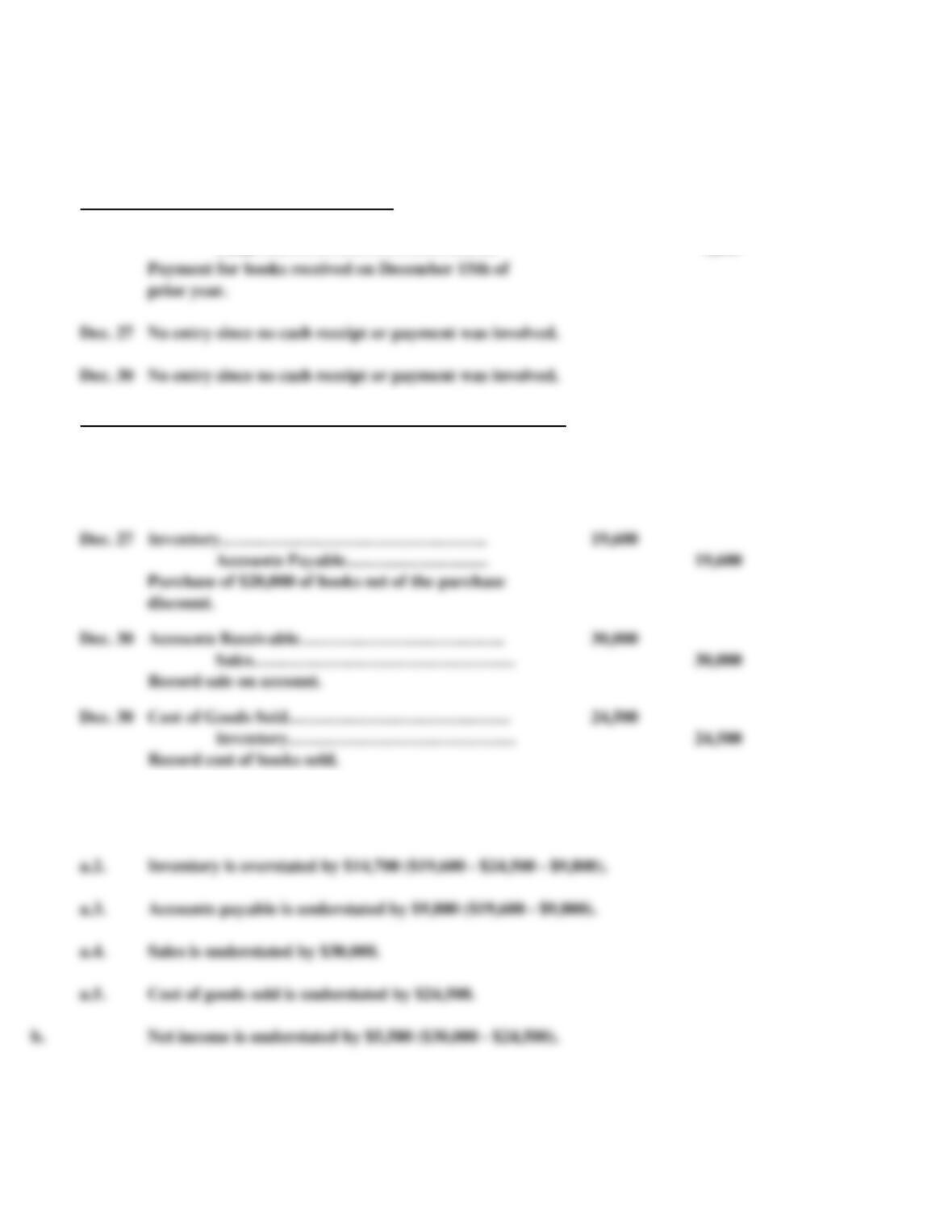
Yes. Sole Mates should take advantage of 1/10, n/30 purchase discounts, even if it must
Accounts Payable (Siogo Shoes)
Siogo Shoes ($9,900 – $990 = $8,910).
Paid within discount period balance owed to
60 Minutes, Strong
a.
Jan. 10 9,800
Cash……………………………………. 9,800
Purchase of $20,000 of books net of the purchase
Entries that Should Have Been Recorded by the Accounting Clerk
Jan. 10 Accounts Payable……………………………….. 9,800
Cash……………………………………. 9,800
a.1.
PROBLEM 6.6A
KING ENTERPRISES
The easiest way for a student to solve this problem is to record the journal entries that the
accounting clerk made and to compare them with the journal entries that should have
been made.
Entries Recorded by the Accounting Clerk
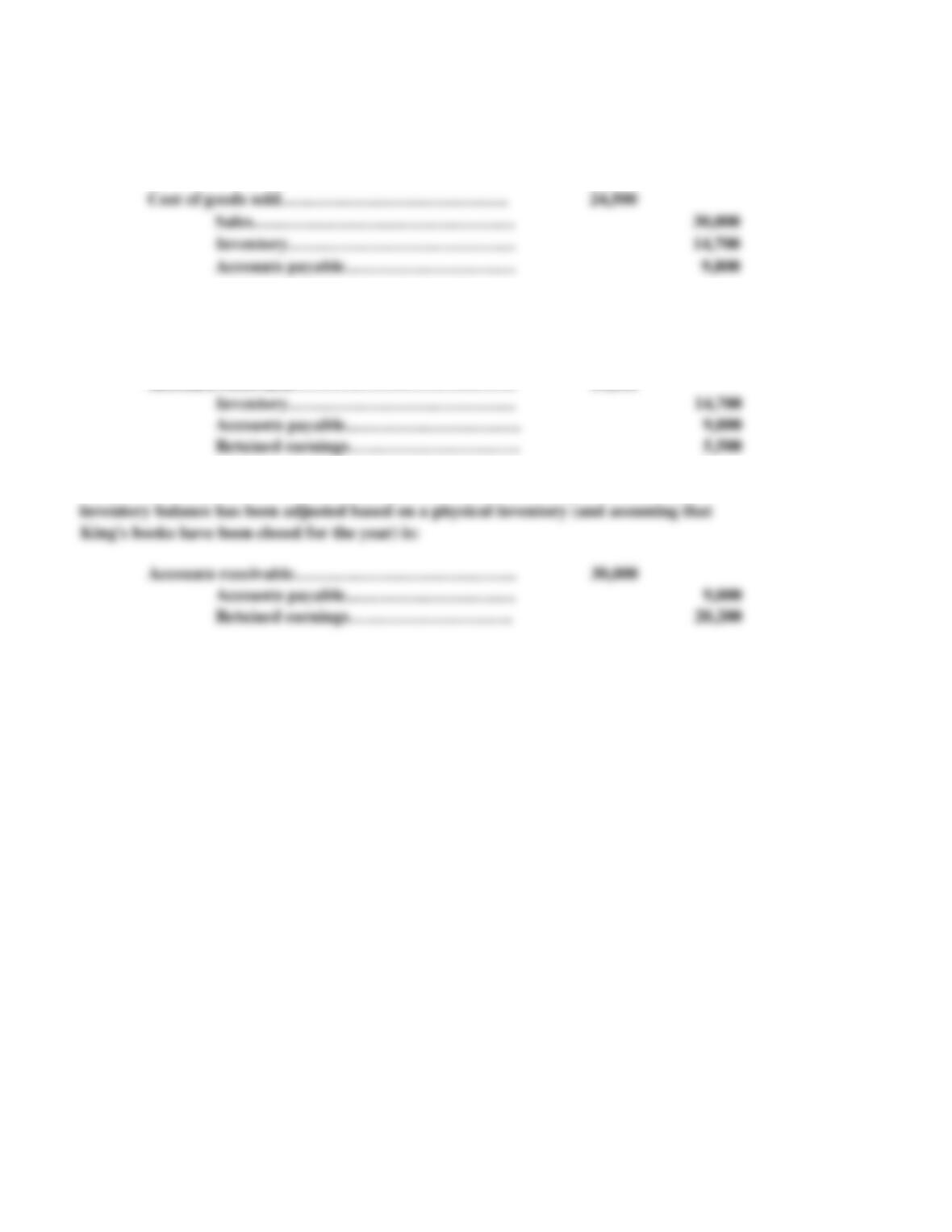
Based on a comparison of the above entries, accounts receivable is understated by
$30,000.
Payment for books received on December 15th of
prior year.
Inventory…………………………………………
Payment for books received on December 15th of
30,000
d.
Accounts receivable………………………………… 30,000
e.
PROBLEM 6.6A
KING ENTERPRISES (concluded)
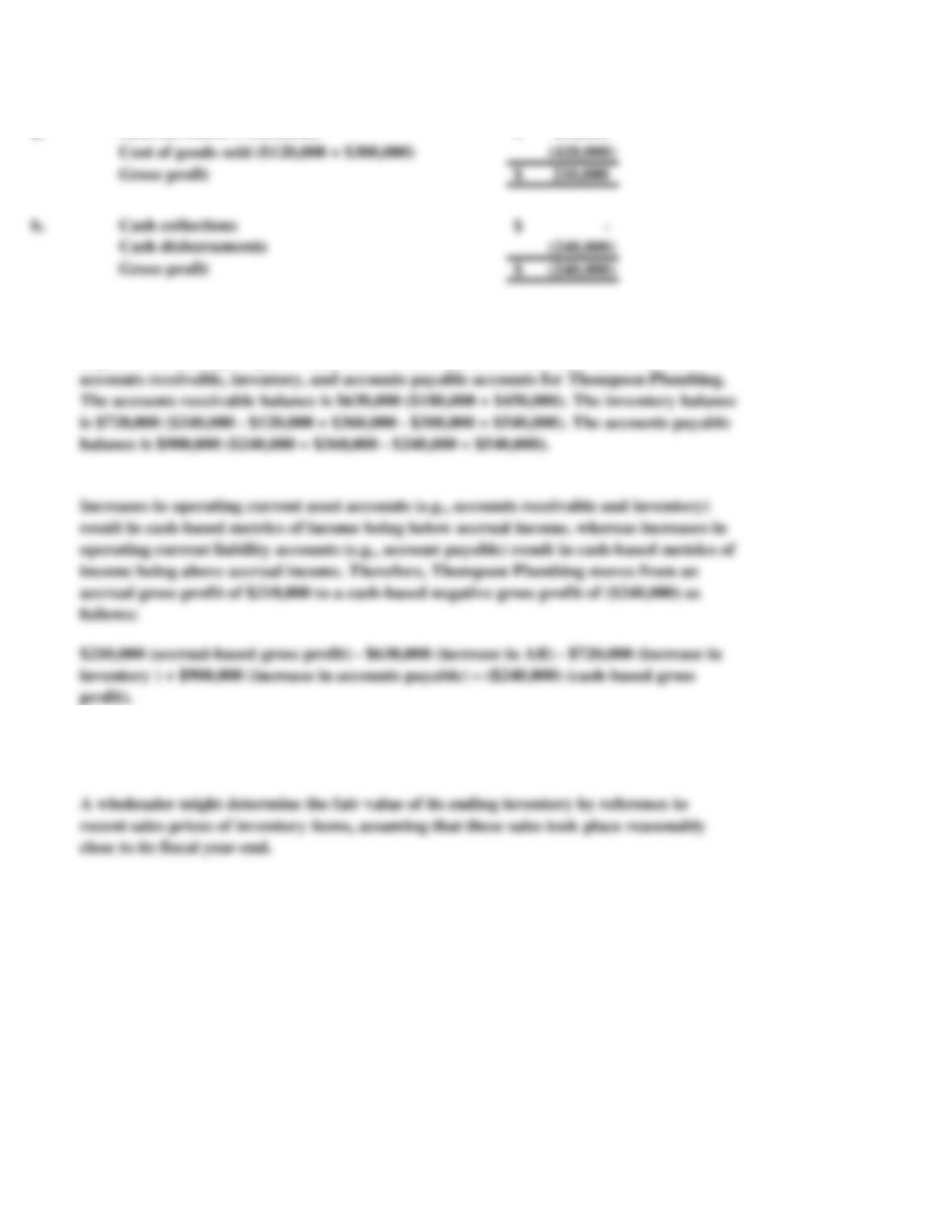
The journal entry to correct the accounting clerk’s errors is (assuming that King’s books
have yet to be closed for the year).
The journal entry to correct the accounting clerk’s errors assuming that the ending
Accounts receivable………………………………..
c.
The journal entry to correct the accounting clerk’s errors is (assuming that King’s books
have been closed for the year).
24,500
Cost of goods sold………………………………….
30 Minutes, Strong
a.
$ 630,000
c.
d.
Inventory…………………………………………………………..
180,000
Revaluation of Inventory to Market Value.. 180,000
PROBLEM 6.7A
THOMPSON PLUMBING
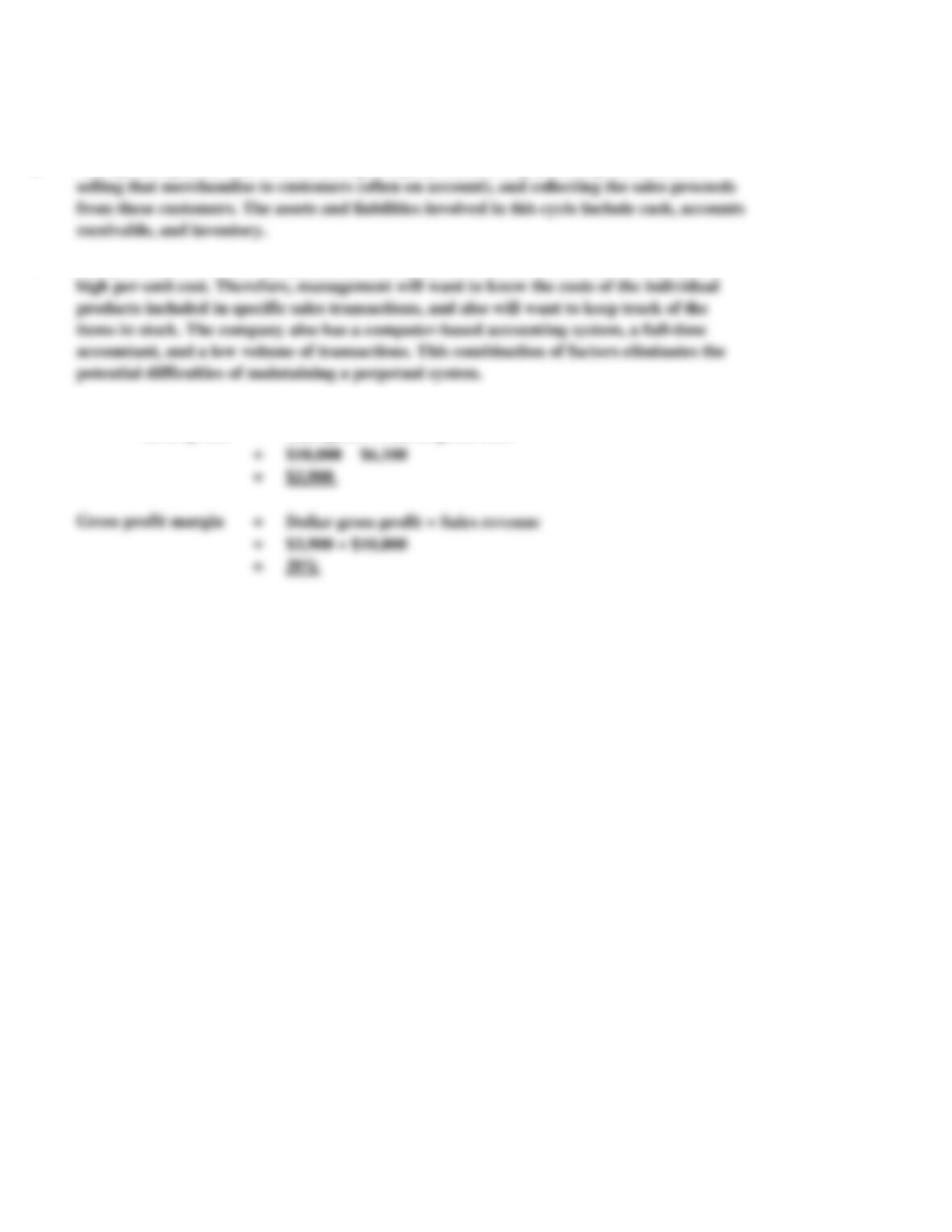
The difference between the $210,000 of gross profit under accrual accounting and the
negative $240,000 gross profit under a cash-basis system reflects the balances in the
Sales ($180,000 + $450,000)
(420,000)
$ 210,000
Gross profit
Cost of goods sold ($120,000 + $300,000)
a.
f.
g.
Gross profit = Sales price – Cost of goods sold
CPI probably would use a perpetual inventory system. The items in its inventory have a
Computation of profit margin on January 6 sales transaction:
40 Minutes, Strong
PROBLEM 6.8A
CPI
Parts a, f, and g follow; parts b, c, d, and e are on the next page.
The operating cycle of a merchandising company consists of purchasing merchandise,
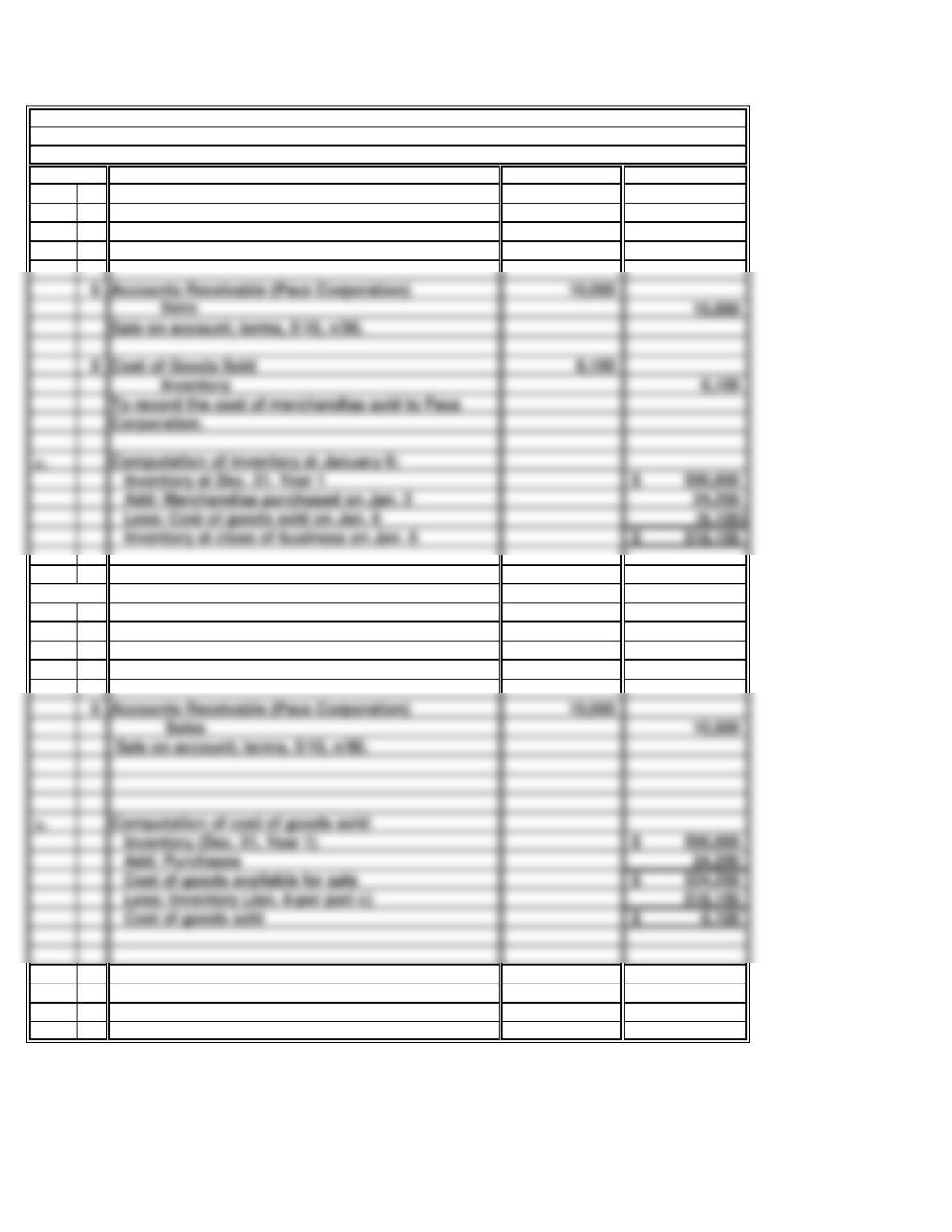
Jan 2 24,250
Accounts Payable (Sharp) 24,250
d.
Jan 2 24,250
Accounts Payable (Sharp) 24,250
Sales 10,000
500,000$
24,250
518,150
Add: Purchases
Less: Inventory (Jan. 6-per part c)
Cost of goods available for sale
Cost of goods sold
Inventory (Dec. 31, Year 1)
Computation of cost of goods sold:
Accounts Receivable (Pace Corporation)
Sale on account; terms, 5/10, n/90.
PROBLEM 6.8A
b.
Year 2
General Journal
CPI (concluded)
n/60. Net cost, $25,000, less 3%.
Inventory
Purchased merchandise on account; terms, 3/10,
Purchases
n/60. Net cost, $25,000, less 3%.
Purchased merchandise on account; terms, 3/10,
Journal entries assuming use of periodic system:
Year 2
500,000$
24,250
Sale on account; terms, 5/10, n/90.
Cost of Goods Sold
Accounts Receivable (Pace Corporation)
Inventory at close of business on Jan. 6
Less: Cost of goods sold on Jan. 6
To record the cost of merchandise sold to Pace
Add: Merchandise purchased on Jan. 2
Corporation.
Computation of inventory at January 6:
Inventory at Dec. 31. Year 1
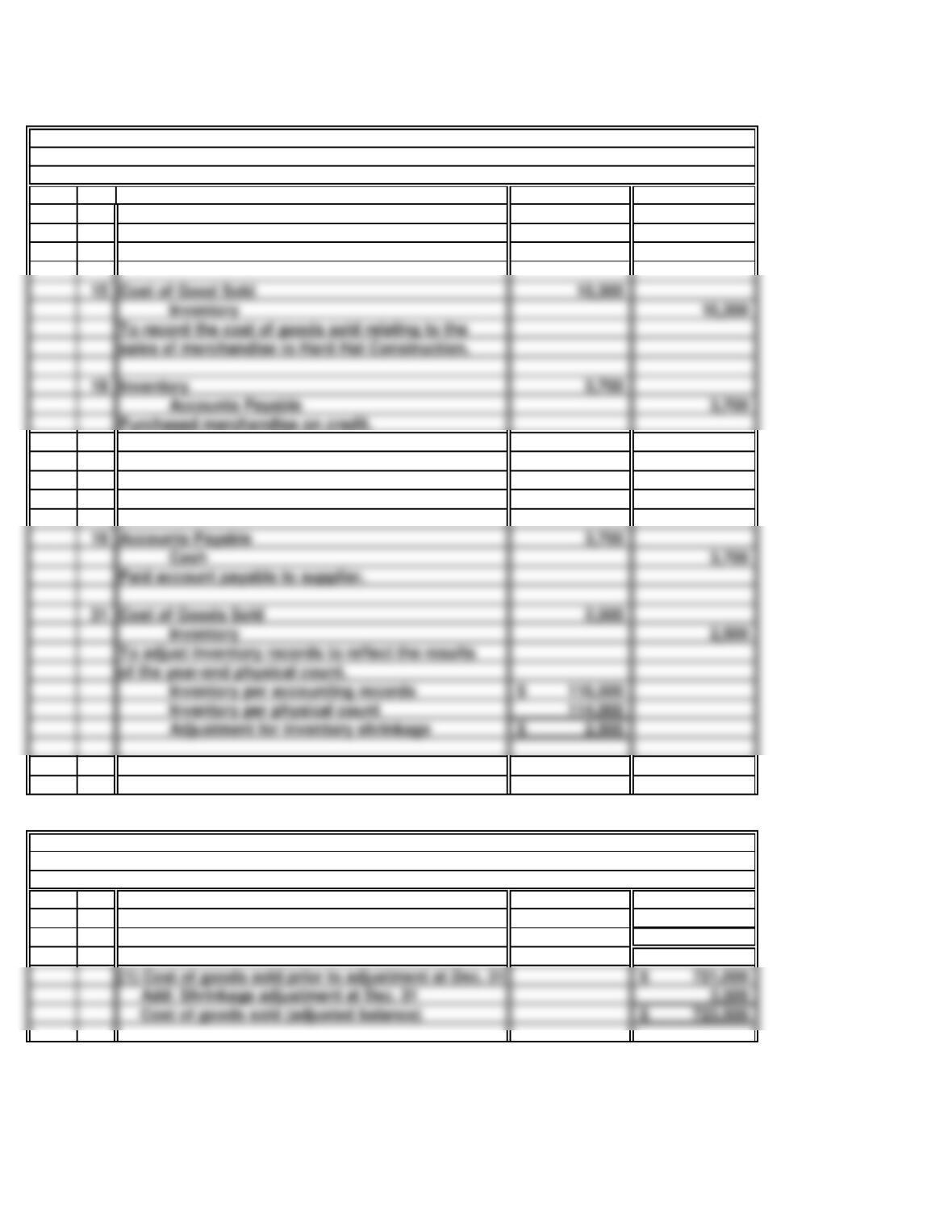
35 Minutes, Medium
Apr 15 19,700
Sales 19,700
May 10 19,700
Accounts Receivable 19,700
Inventory per accounting records 116,500$
Inventory per physical count 114,000
Adjustment for inventory shrinkage 2,500$
Cost of Goods Sold
To adjust inventory records to reflect the results
of the year-end physical count.
Accounts Payable
Paid account payable to supplier.
b.
1,422,000$
723,500
698,500$
723,500$
Add: Shrinkage adjustment at Dec. 31
(1) Cost of goods sold prior to adjustment at Dec. 31
Cost of goods sold (adjusted balance)
SOLUTIONS TO PROBLEMS SET B
Accounts Receivable
Sold merchandise on account.
For the Year Ended December 31, Current Year
Cash
PROBLEM 6.1B
a.
BIG OAK LUMBER
General Journal
Net sales
Cost of goods sold (1)
Gross profit
Partial Income Statement
Collected accounts receivable.
BIG OAK LUMBER
Accounts Payable 3,700
Cost of Good Sold
To record the cost of goods sold relating to the
sales of merchandise to Hard Hat Construction.
Purchased merchandise on credit.
c.
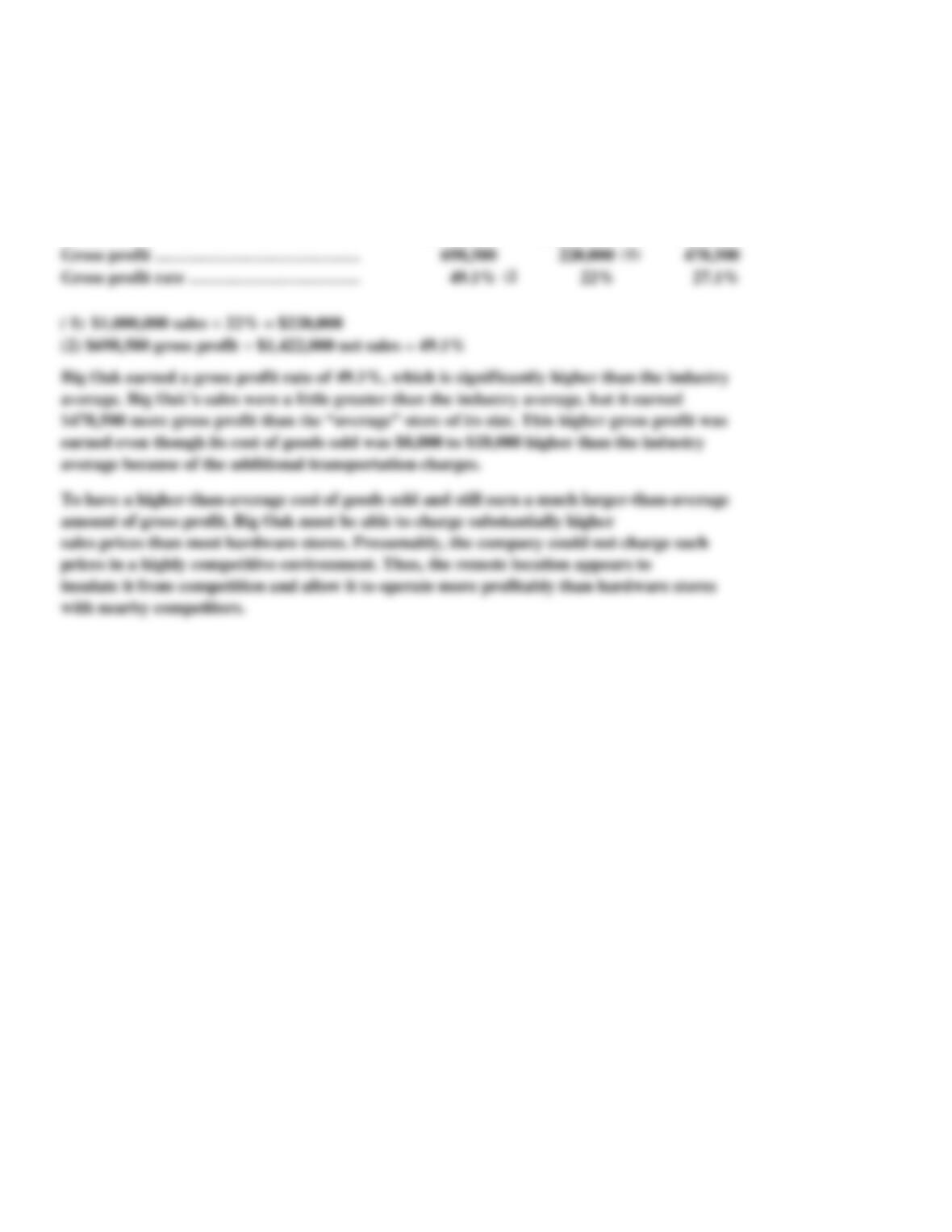
Big Oak Industry
Lumber Average Difference
$1,422,000 $1,000,000 $422,000
PROBLEM 6.1B
BIG OAK LUMBER (concluded)
Big Oak seems quite able to pass its extra transportation costs on to its customers and, in
fact, enjoys a significant financial benefit from its remote location. The following data
support these conclusions:
Annual sales ……………………………..
Gross profit ………………………………
Gross profit rate …………………………
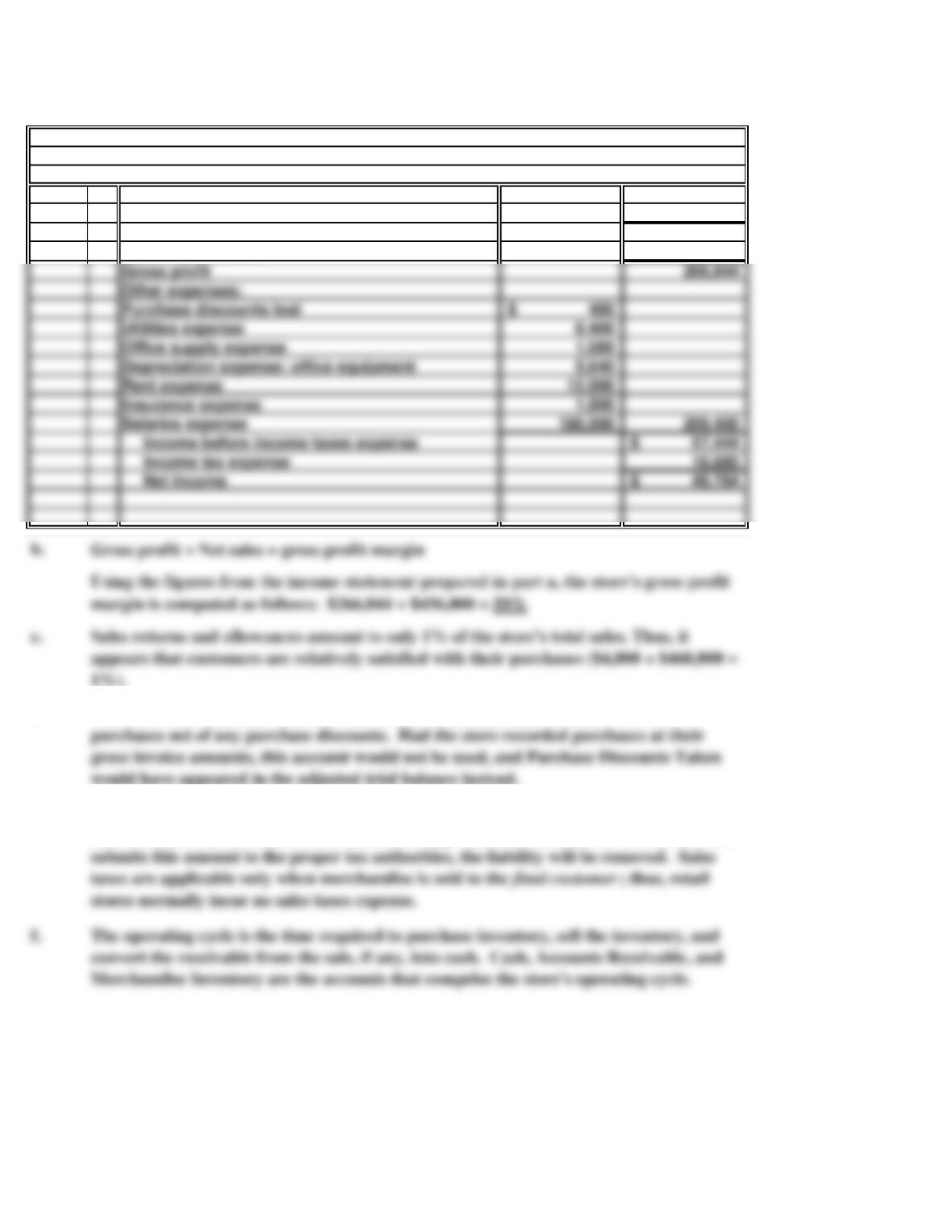
a.
460,800$
4,800
456,000
189,156
c.
d.
e.
The use of the Purchase Discounts Lost account indicates that the store records
would have appeared in the adjusted trial balance instead.
The $6,000 of sales taxes payable appearing in the adjusted trial balance represents sales
taxes collected by the store for the sales taxes imposed on its customers . When the store
1%).
Net sales
PROBLEM 6.2B
HARRY’S HABERDASHERY
Sales
HARRY’S HABERDASHERY
For the Year Ended December 31, Current Year
Income Statement
15 Minutes, Easy
Less: Sales returns and allowances
Cost of goods sold
Salaries expense
Rent expense
Insurance expense
Net income
Income tax expense
Depreciation expense: office equipment
Income before income taxes expense
Other expenses:
Purchase discounts lost
Utilities expense
Office supply expense
Gross profit