CONTINUING PROBLEMS
CON5-1.
a.
Retained earnings (−SE) ……………………………………………..
10,000
Cash (−A) ………………………………………………………………
10,000
b.
Cash (+A) ………………………………………………………………….
2,000
Deferred revenue (+L) ……………………………………………..
2,000
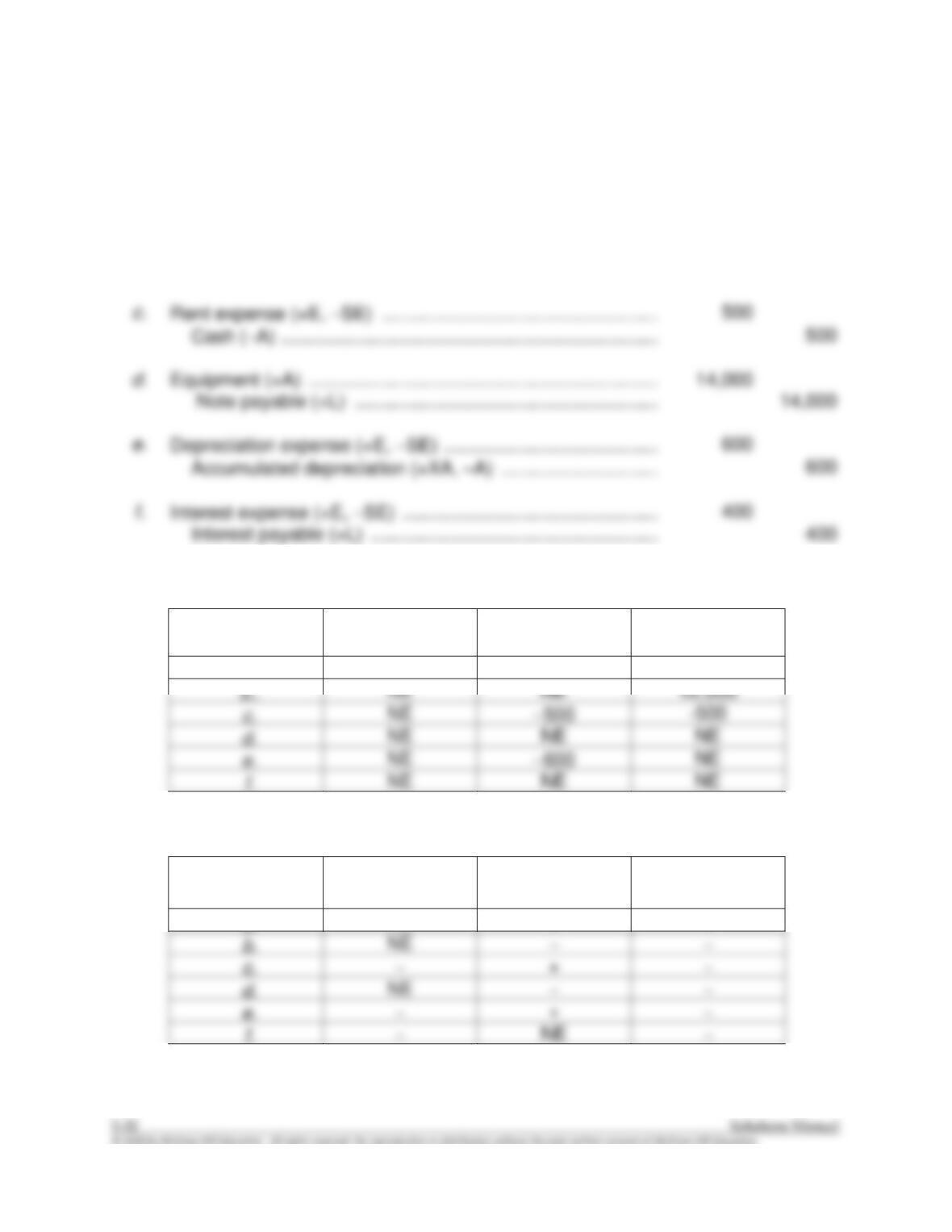
Rent expense (+E, −SE) ……………………………………………..
Cash (−A) ………………………………………………………………
d.
Equipment (+A) ………………………………………………………….
Note payable (+L) ………………………………………………….
e.
Depreciation expense (+E, −SE) …………………………………..
Accumulated depreciation (+XA, −A) …………………………
Interest expense (+E, −SE) ………………………………………….
Interest payable (+L) ……………………………………………….
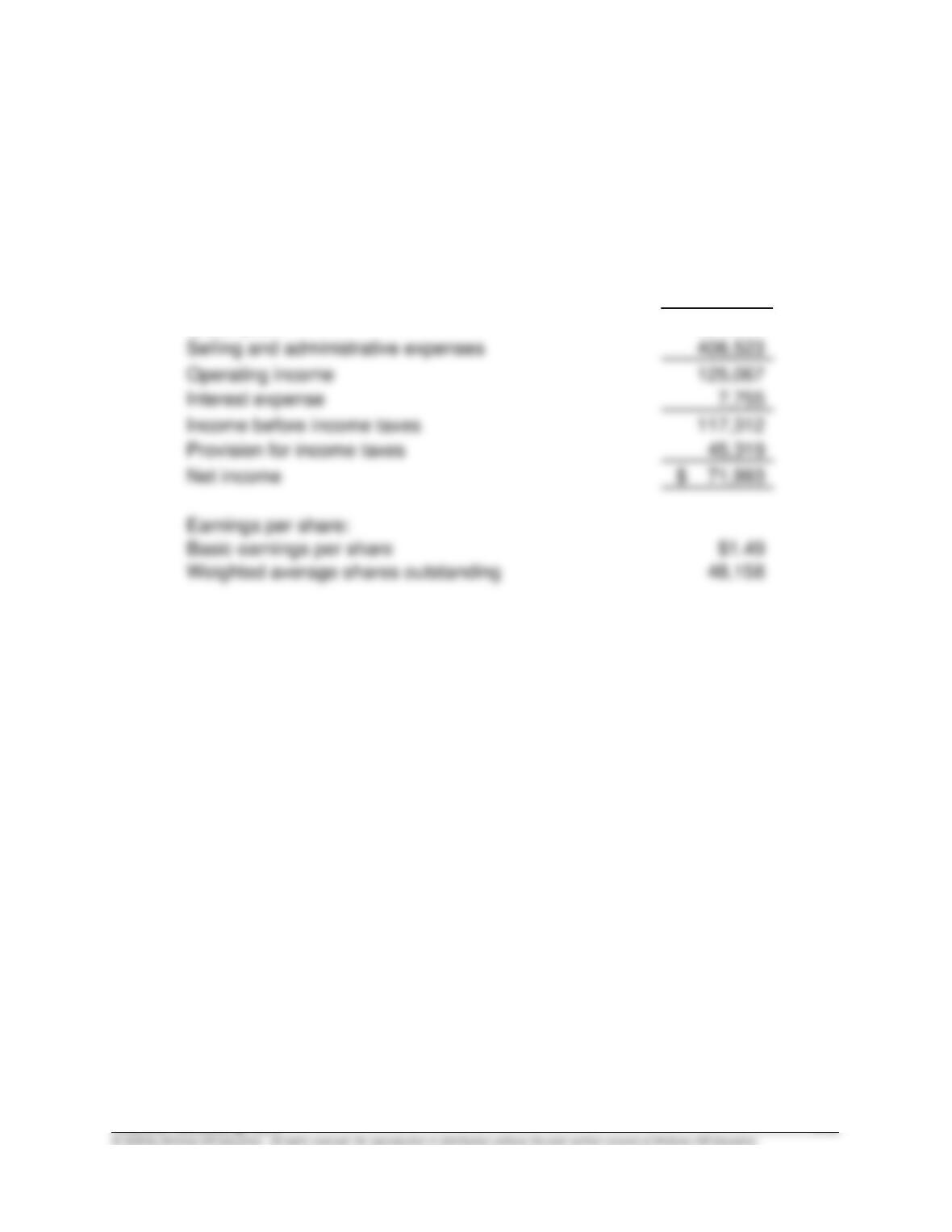
Req. 1
Transaction
Gross Profit
Operating
Income (Loss)
Current
Assets
a.
NE
NE
−10,000
d.
NE
NE
NE
NE
NE
NE
NE
NE
Req. 2
Transaction
Net Profit
Margin
Total Asset
Turnover
Return on
Assets
a.
NE
+
+
NE
+
NE
Financial Accounting, 10/e 5-33
CON5-2.
Req. 1
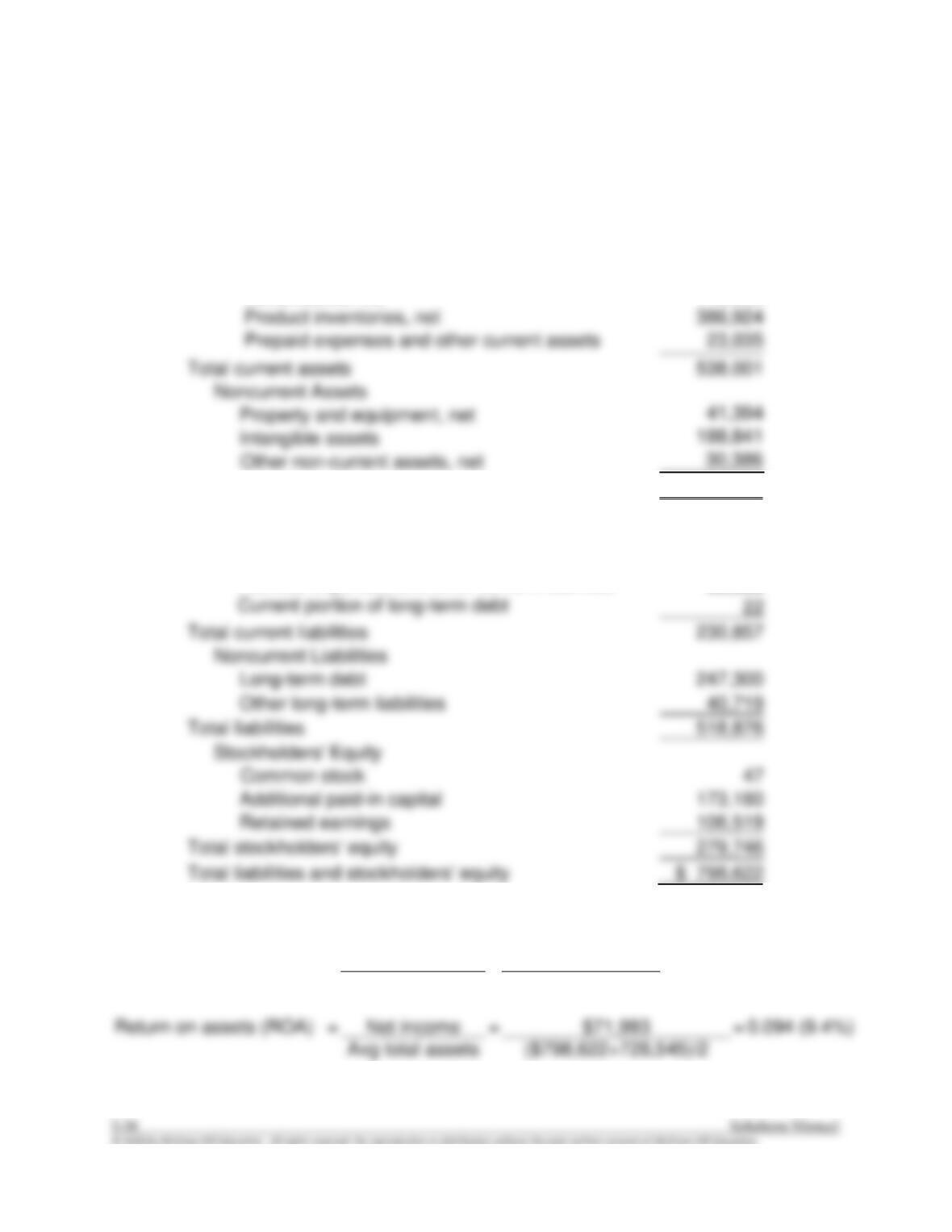
Pool Corporation, Inc.
Consolidated Statement of Income
For Year Ended December 31, Current Year
(In Thousands Except Per Share Amounts)
Net sales
$1,793,318
Cost of sales
1,261,728
Gross profit
531,590
Selling and administrative expenses
406,523
Interest expense
Income before income taxes
117,312
Provision for income taxes
Net income
Earnings per share:
Basic earnings per share
Weighted average shares outstanding
CC5-2. (continued)
Pool Corporation, Inc.
Consolidated Balance Sheet
December 31, Current Year
(In Thousands)
Assets
Current Assets
Cash and cash equivalents
$ 17,487
Receivables, net
110,555
Product inventories, net
386,924
Total current assets
Noncurrent Assets
Property and equipment, net
41,394
Intangible assets
188,841
Other non-current assets, net
Total assets
$ 798,622
Liabilities and Stockholders’ Equity
Current Liabilities
Accounts payable
$ 177,437
Accrued expenses and other current liabilities
53,398
Current portion of long-term debt
Noncurrent Liabilities
Long-term debt
Other long-term liabilities
40,719
Total liabilities
Stockholders’ Equity
Additional paid-in capital
Retained earnings
Total stockholders’ equity
Total liabilities and stockholders’ equity
$ 798,622
Req. 2
Gross profit percentage
=
Gross profit
=
531,590
=
0.296 (29.6%)
Net sales
1,793,318
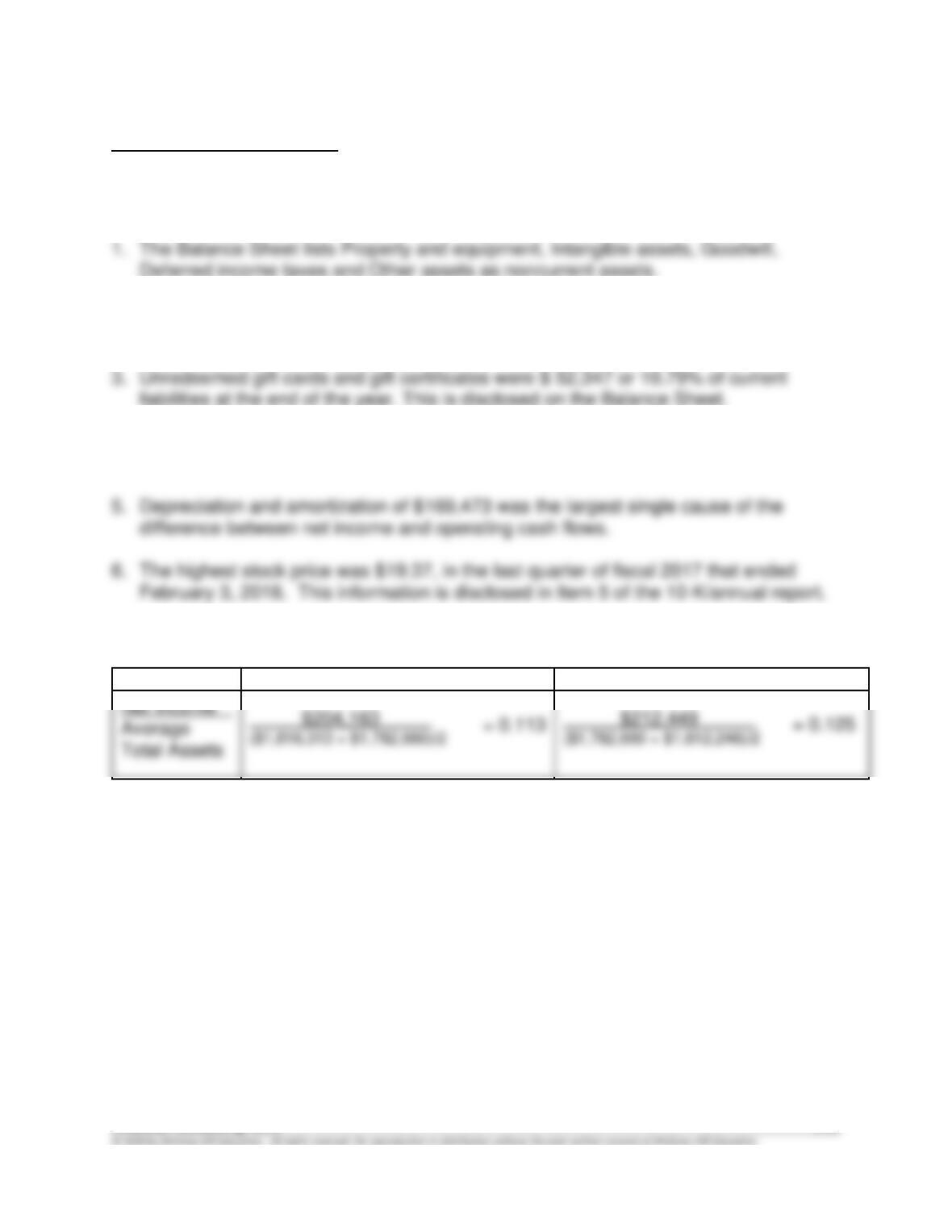
Return on assets (ROA)
=
Net income
=
=
0.094 (9.4%)
Avg total assets
Financial Accounting, 10/e 5-35
CASES AND PROJECTS
ANNUAL REPORT CASES
CP5-1.
(dollars in thousands)
2. The company owned $17,910 in land at the end of the most recent reporting year
(February 3, 2018). This is disclosed in Note 7, Property and Equipment.
4. Website (e-commerce) sales are recorded “upon the estimated customer receipt
date of the merchandise” (see Note 2 under Revenue Recognition).
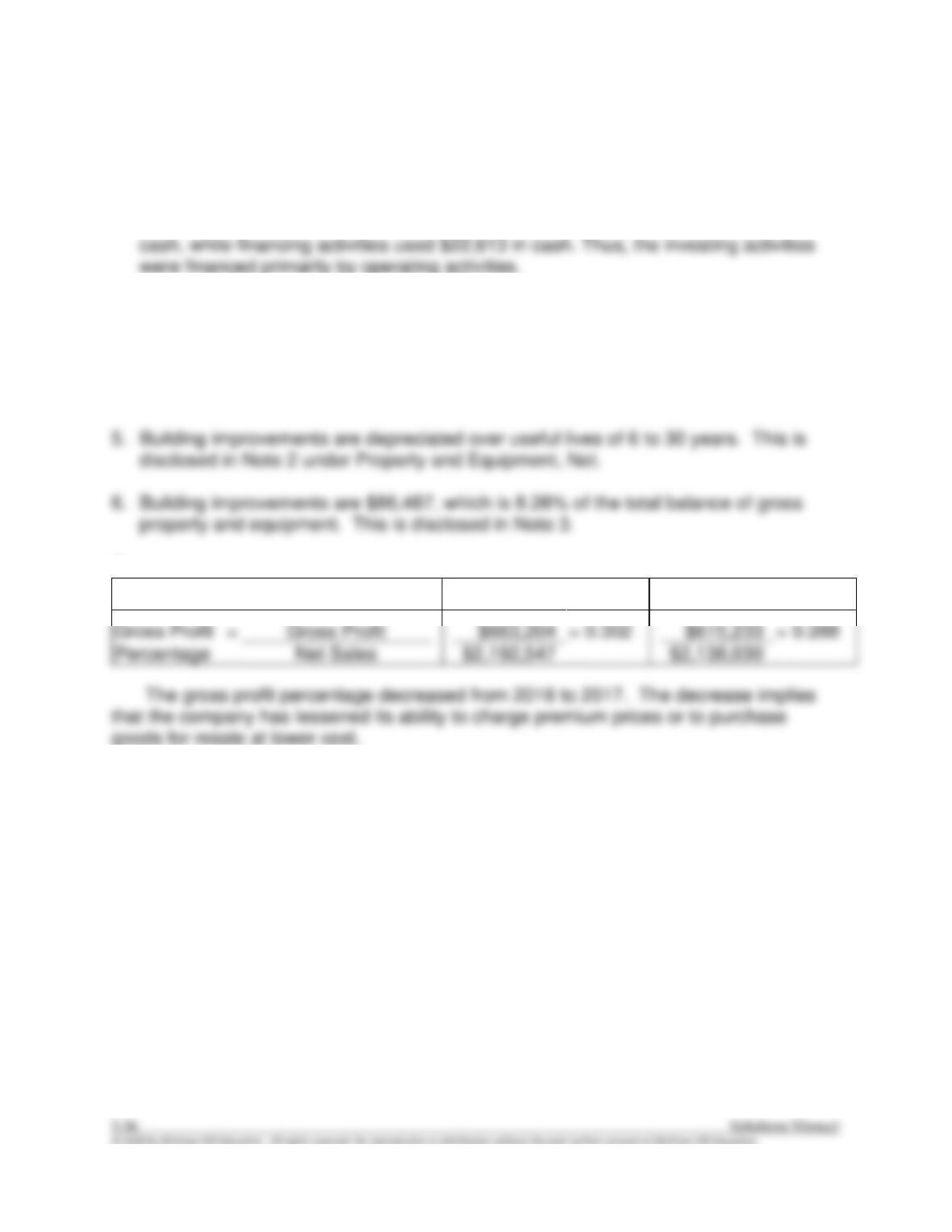
7. ROA decreased from fiscal 2016 to 2017.
Fiscal 2017
Fiscal 2016
CP5-2.
(dollars in thousands)
1. The company presents the subtotals Gross profit, Total operating expenses,
Operating income, and Income before income taxes.
2. The cash flow statement indicates that operating activities provided $118,567 in
3. The company’s largest asset (net) is Property and equipment, net of $405,013
reported on the balance sheet.
4. The company’s intangible assets consist primarily of the Express and related
tradenames and its Internet domain name. This is disclosed in Note 2 and Note 6.
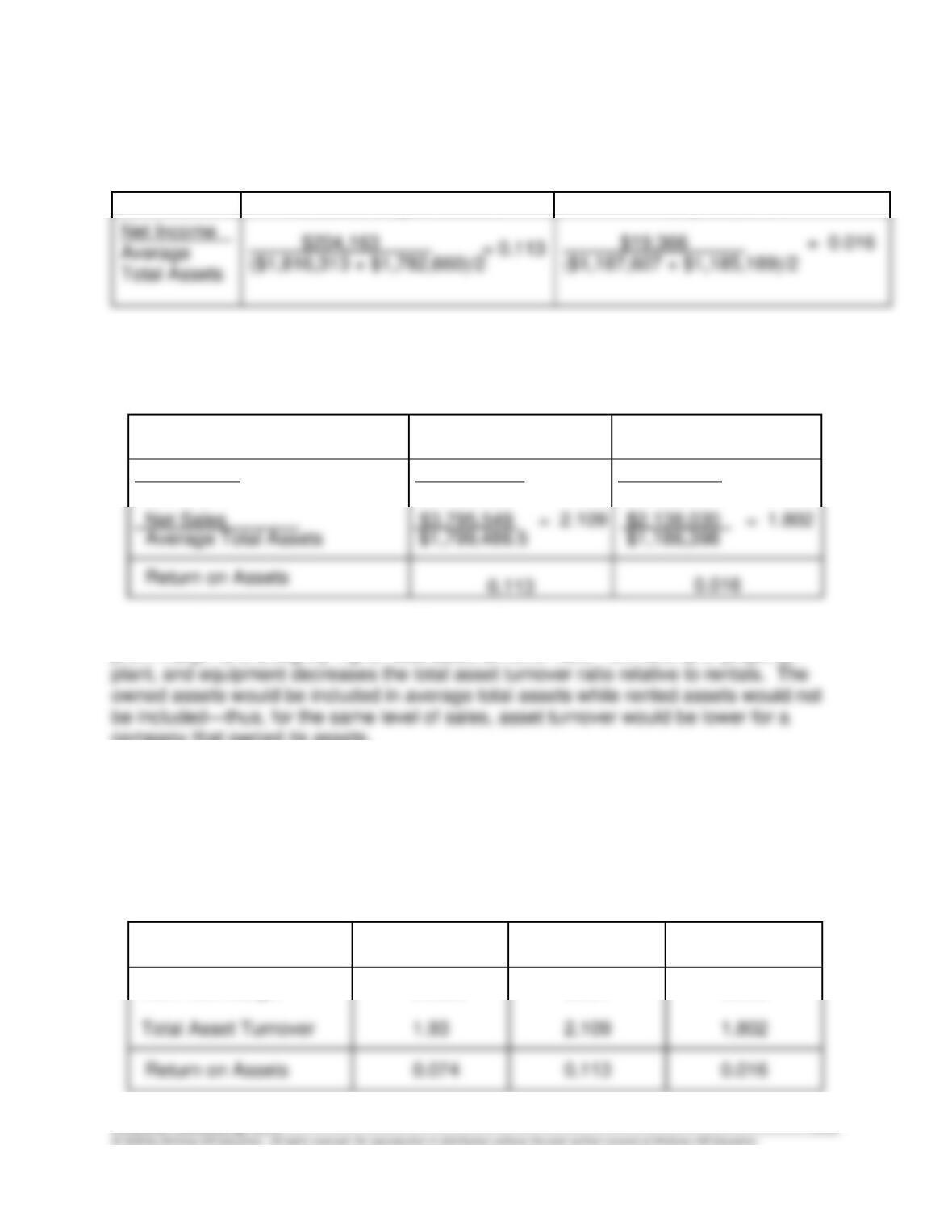
7.
2016
2017
Financial Accounting, 10/e 5-37
CP5-3.
(dollars in thousands)
Req. 1.
American Eagle Outfitters
Express, Inc.
American Eagle had a higher return on assets during the current year.
Req. 2.
ROA Analysis
American Eagle
Outfitters
Express, Inc.
Net Income
Net Sales
$204,163 = 0.054
$3,795,549
$19,366_ = 0.009
$2,138,030
Net Sales
Average Total Assets
$1,186,398
Return on Assets
American Eagle has a much higher ROA than Express because it has a much higher
profit margin and a slightly higher total asset turnover ratio. Ownership of property,
company that owned its assets.
CP5-3. (continued)
Req. 3.
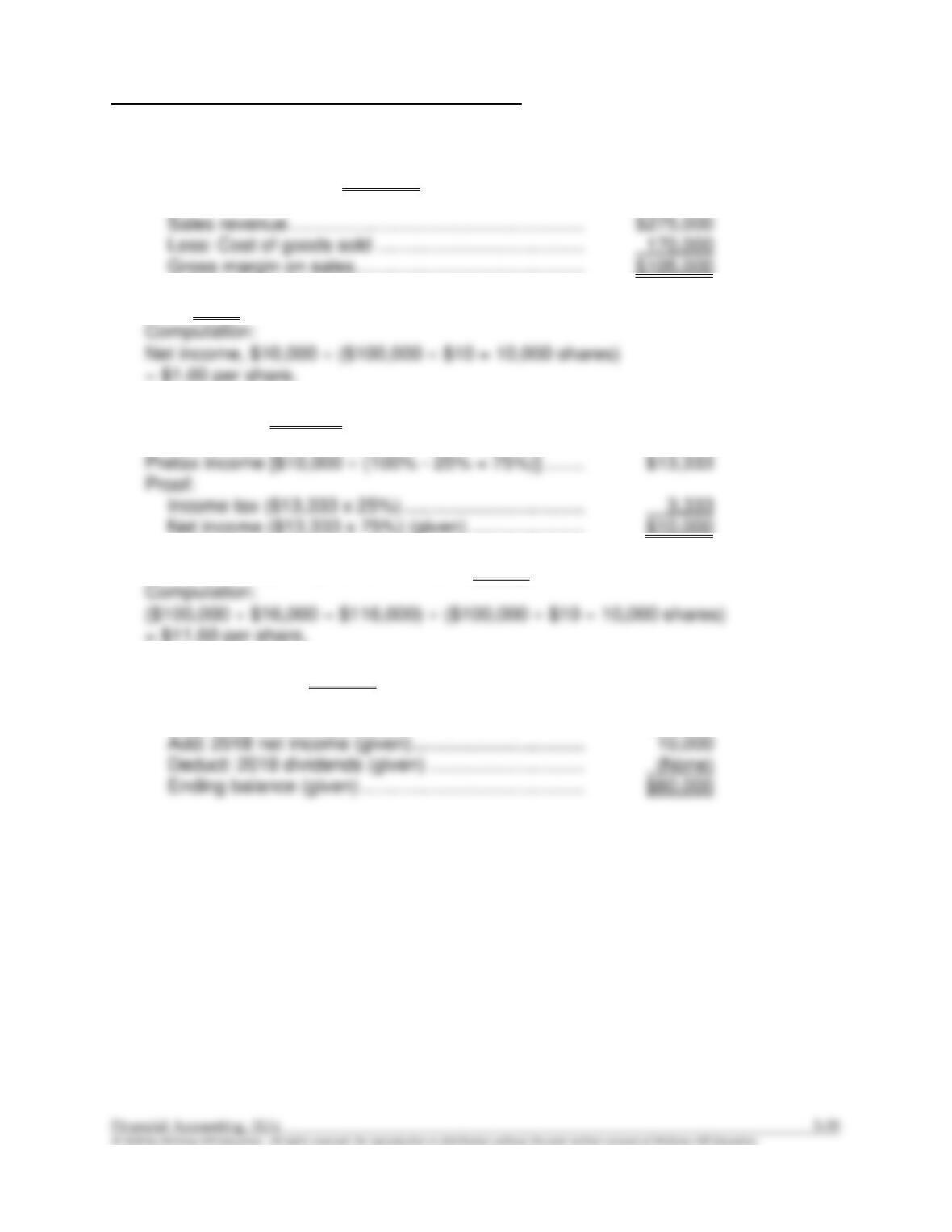
Industry Return on Assets (ROA) profit driver analysis:
ROA = Net Profit Margin Total Asset Turnover
ROA Analysis
Industry
Average
American Eagle
Outfitters
Express, Inc.
Net Profit Margin
0.0385
0.054
0.009
Total Asset Turnover

American Eagle has a higher ROA and Express, Inc., has a lower ROA than the
FINANCIAL REPORTING AND ANALYSIS CASE
CP5-4.
1. Gross margin on sales, $105,000.
Computation:
2. EPS, $1.00.
3. Pretax income, $13,333.
Computation (and proof):
4. Average sales price per share of stock, $11.60.
5. Beginning balance, $70,000.
Computation: (work backwards)
Beginning balance (?) ($80,000 – $10,000) ………… $70,000
CRITICAL THINKING CASES
CP5-5.
Strategy
Change
Current
Period
ROA
Future
Periods’
ROA
Explanation
a.
+
–
The decrease in R&D investments would lead to lower expense in
the current year, increasing current period’s income and ROA.
CP5-6.
Net Income
Assets
Liabilities
Error
2017
2018
2017
2018
2017
2018
(1)
O
NE
O
O
NE
NE
$950
$950
$950
(2)
O
U
NE
NE
U
NE
$500
$500
(3)
U
O
U
NE
NE
NE
(4)
U
O
U
NE
NE
NE
(5)
O
U
NE
NE
U
NE
(6)
U
NE
U
U
NE
NE
(7)
NE
NE
U
NE
U
NE
CP5-6. (continued)
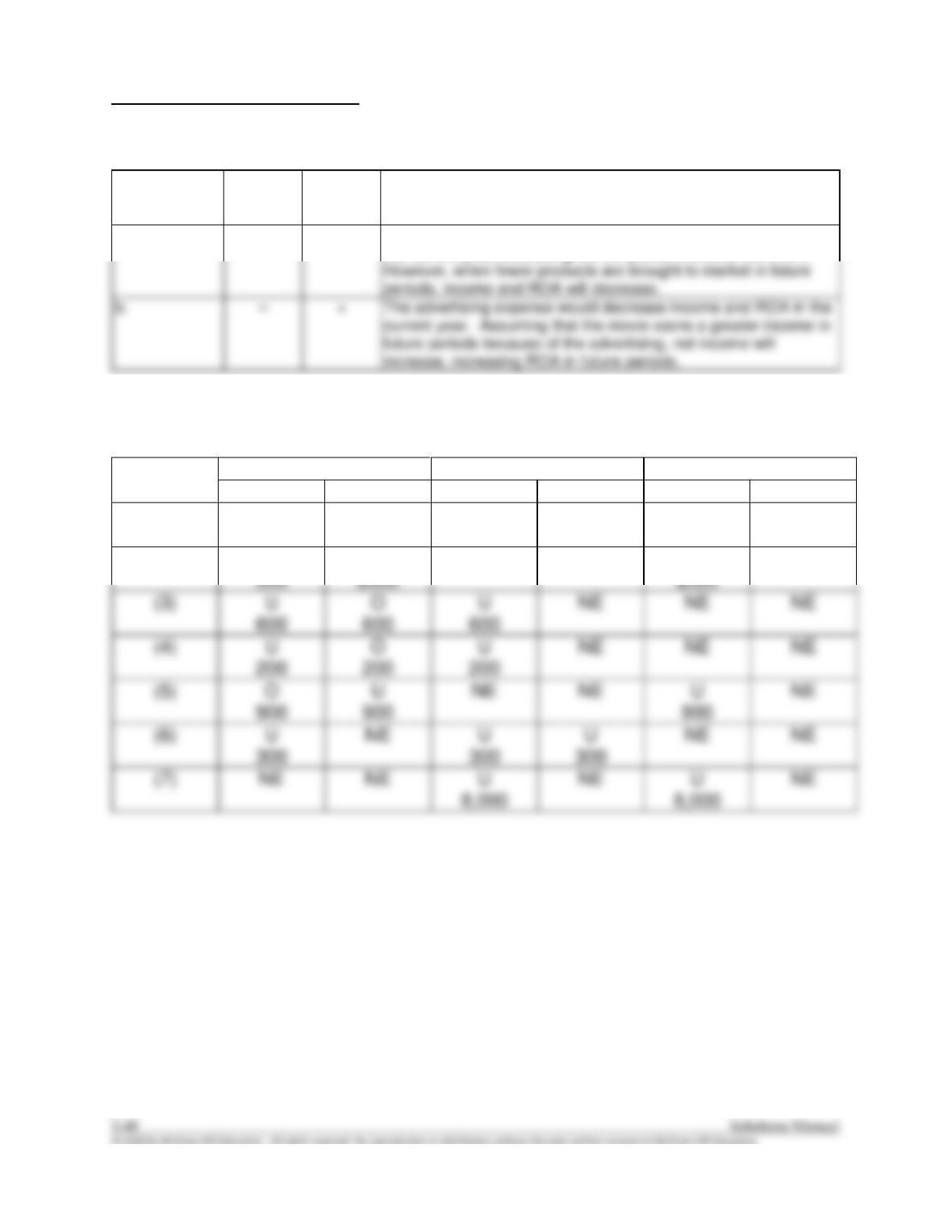
Explanation of analysis if not corrected:
(1) Given in problem (example).
(2) Wage expense should be increased (debited) by $500 in 2017 because the wages
were incurred in that year. This increase in expense was not recorded; therefore,
(3) Revenues were understated by $600 in 2017, which caused 2017 net income to be
understated by $600. Also accounts receivable was understated because the
(4) The $200 expense should be recorded as 2018 expense. It was recorded in 2017;
therefore, 2017 expense was overstated which would cause 2017 net income to be
(5) The $900 revenue should be recorded as revenue in 2018 because it was earned in
2018. Therefore, if not corrected, 2017 revenue and net income would be
overstated by $900. Also, 2018 revenue and net income would be understated by
(6) This transaction should have been recorded as a credit to revenue of $300 instead
of a credit to accounts receivable. Therefore, revenue, and hence net income, was
(7) This transaction should have been recorded in 2017 as a debit to Land (an asset)
CP5-7.
1. At the time this solution was prepared, three former top managers at U.S.
Foodservice had pleaded guilty to fraud charges and the chief marketing officer
pleaded not guilty and was found guilty at trial. He received an 84 month prison
sentence. This was subsequently overturned on appeal. However in 2011, this
2. In October 2004, the SEC chose not to impose a monetary fine on the company
because of its extensive cooperation with the investigation. The company promptly
3. Bonuses tied to performance measures such as accounting earnings tend to align
the managers’ interests with those of the shareholders. However, when companies
FINANCIAL REPORTING AND ANALYSIS TEAM PROJECT
CP5-8.
The solutions to this case will depend on the company and/or accounting period
selected for analysis.