FINANCIAL ACCOUNTING – Eleventh Edition Solutions Manual
P5-69
(15-20 min.)
Requirements
Solution:
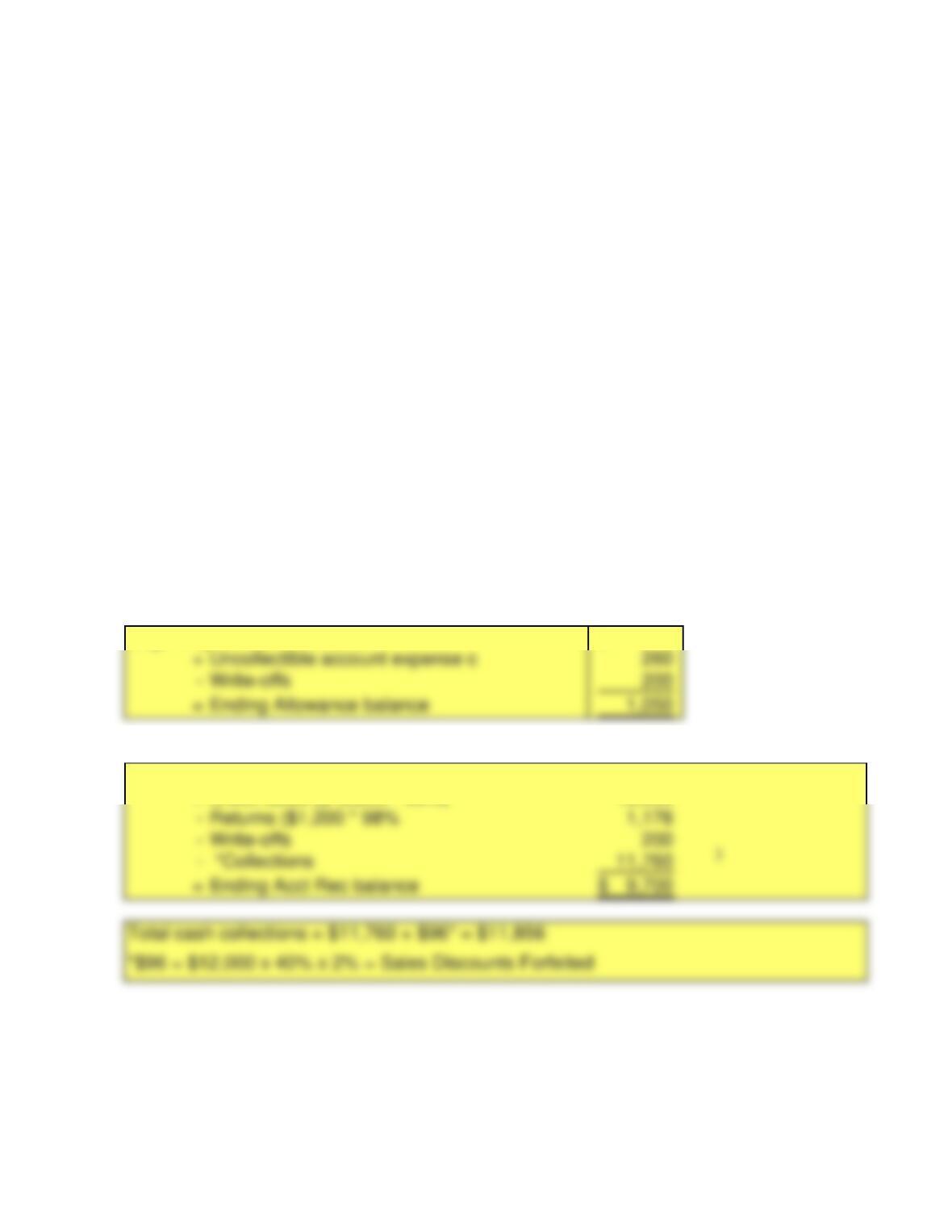
Req. 1
Beginning Allowance balance 990$
Req. 2
Beginning Acct Rec balance 9,900$
+ Credit sales ($12,200 * 98%) 12,936
1. Compute the amount of uncollectible accounts expense recorded by Libra in 2016.
2. Compute Libra’s cash collections from customers in 2016.
3. Open T-accounts for Accounts Receivable and Allowance for Uncollectible Accounts.
Enter the beginning balances into each of these accounts. Prepare summary journal
entries in the T-accounts to record the following for 2016:
a. Sales revenue
b. Cost of goods sold
c. Estimated refunds
d. Cost of estimated returns
e. Merchandise returned
f. Cost of merchandise returned
g. Collections including sales discounts forfeited
h. Write-offs of uncollectible accounts
i. Uncollectible-Accounts Expense
Chapter 5: Short-Term Investments and Receivables Page 75 of 87
FINANCIAL ACCOUNTING – Eleventh Edition Solutions Manual
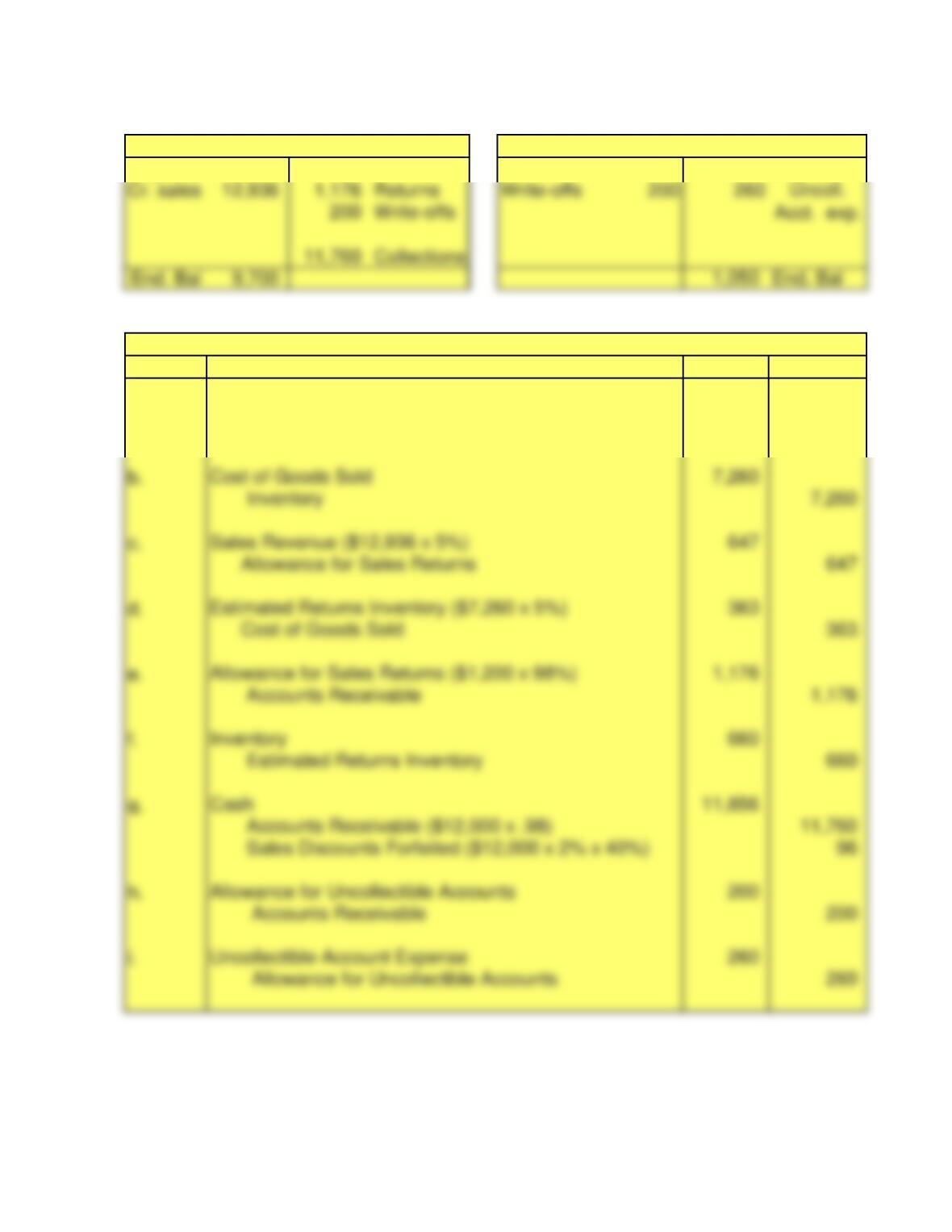
Req. 3
Beg. Bal 9,900 990 Beg. Bal
DATE Debit CREDIT
2016
a. Accounts Receivable ($13,200 x 98%) 12,936
Sales Revenue
12,936
e. Allowance for Sales Returns ($1,200 x 98%) 1,176
f. Inventory 660
g. Cash 11,856
h. Allowance for Uncollectible Accounts 200
Uncollectible-Account Expense
ACCOUNT TITLES AND EXPLANATION
Journal
Accounts Receivable
Allowance for Uncollectible accounts
Chapter 5: Short-Term Investments and Receivables Page 76 of 87
Cr. sales 12,936 1,176 Returns Write-offs 200 260
FINANCIAL ACCOUNTING – Eleventh Edition Solutions Manual
Decision Case 1
(20-25 min.)
Case 1
Solution:
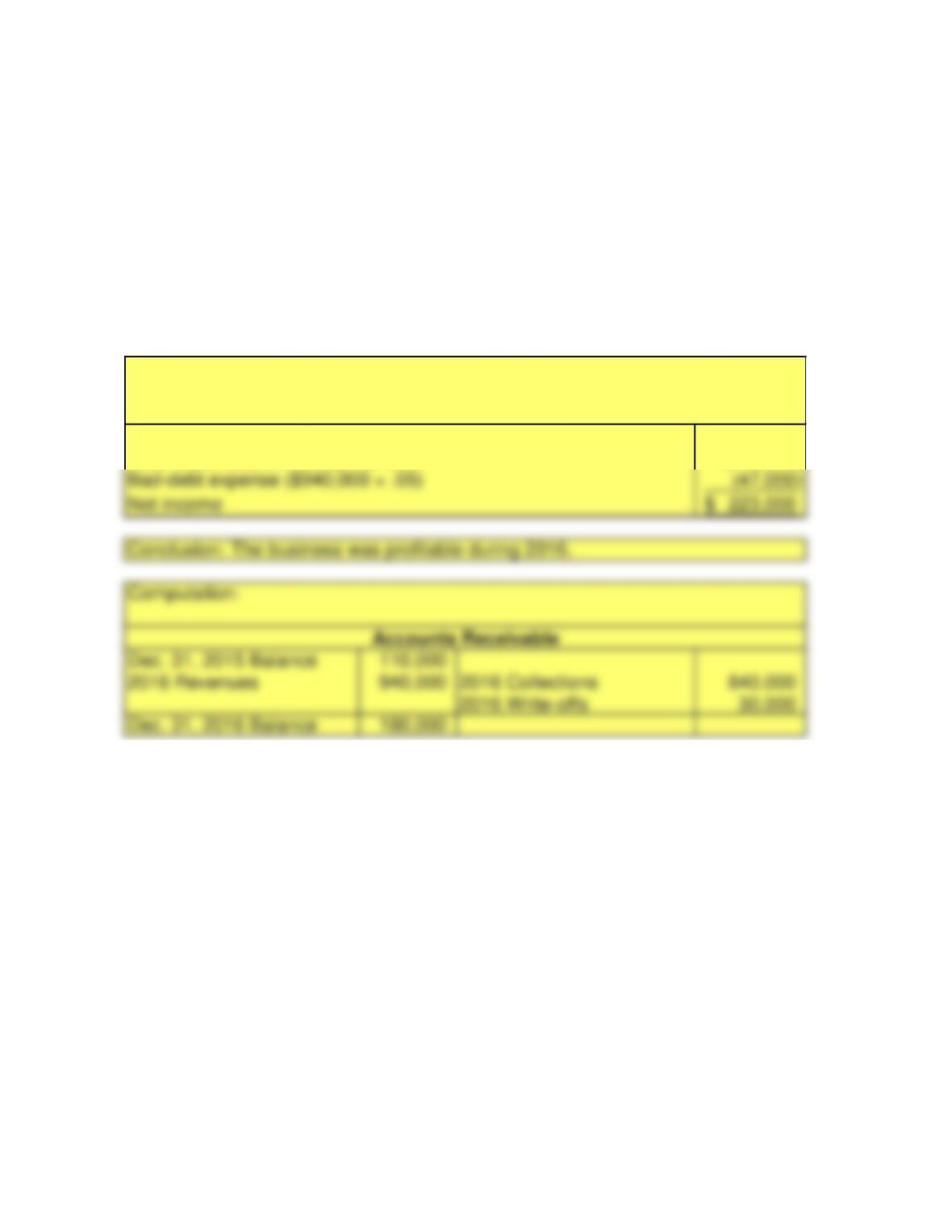
Service revenue 940,000$
Total expenses, excluding bad debt (670,000)
Prepare a summary income statement for Sinclair Entertainment, Inc., for the
year ended December 31, 2016. The stockholders want to know whether the
company was profitable in 2016. Use a T-account for Accounts Receivable to
compute service revenue. Assume that all revenues are on credit.
Sinclair Entertainment, Inc.
Summary Income Statement
Year Ended December 31, 2016
Chapter 5: Short-Term Investments and Receivables Page 77 of 87
Dec. 31, 2015 Balance 110,000
FINANCIAL ACCOUNTING – Eleventh Edition Solutions Manual
Decision Case 2
(15-20 min.)
Requirement
Solution:
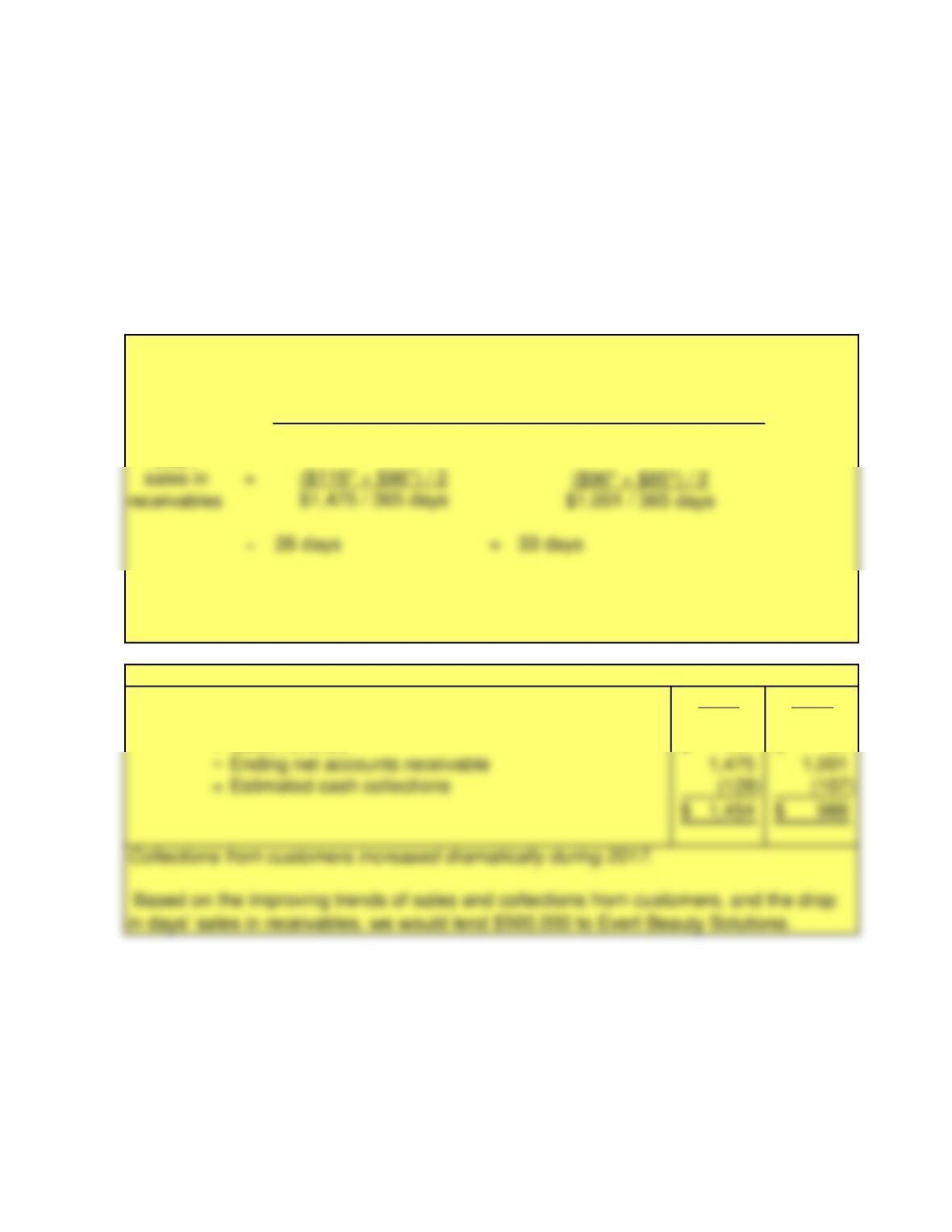
The trend of sales is increasing.
(Dollars in thousands)
2017 2016
Days’
*Net accounts receivable
Days’ sales in receivables decreased nicely during 2017.
Cash collections from customers for 2017 and 2016:
2017 2016
Beginning net accounts receivable
+ Sales revenue 107$ 94$
1. Analyze the trends of sales, days’ sales in receivables, and cash collections from
customers for 2017 and 2016. Would you make the loan to Evert? Support your
decision with facts and figures.
Chapter 5: Short-Term Investments and Receivables Page 78 of 87
FINANCIAL ACCOUNTING – Eleventh Edition Solutions Manual
Ethical Issues
(20-30 min.)
Requirement 1
Solution:
Requirements 2 and 3
Solution:
What is the ethical issue in this situation?
2. Who are the stakeholders? What are the possible consequences to each?
3. Analyze the alternatives from the following standpoints:
(a) economic, (b) legal, (c) ethical.
The ethical issue in this case is whether it is acceptable to “smooth” earnings by
way of judgmental positive or negative changes to uncollectible accounts expense
The stakeholders to this decision are Rockville Loan Company, its officers and
directors, its shareholders, its creditors, Rockville’s banker, securities analysts, and
the equity and credit markets.
Chapter 5: Short-Term Investments and Receivables Page 79 of 87
FINANCIAL ACCOUNTING – Eleventh Edition Solutions Manual
Requirement 4
Solution:
Legal analysis: As explained in chapter 4, material and intentional manipulations of
earnings are known as fraudulent financial reporting, and are illegal. Such dealings
will eventually result in adverse legal and regulatory consequences for the company,
as well as its officers and directors.
Uncollectible accounts expense and the allowance for uncollectible accounts should
be based on a truthful and accurate projection of how much a company truly
What would you do? How would you justify your decision?
Chapter 5: Short-Term Investments and Receivables Page 80 of 87
FINANCIAL ACCOUNTING – Eleventh Edition Solutions Manual
Apple, Inc.
(30-40 min.)
Solution:
Requirement 1
a. According to Note 1, the “Short-Term Marketable Securities” account includes
short-term debt or equity securities. Debt securities maturing in 12 months or less
1. Examine the account “Short-term marketable securities” in the consolidated
balance sheets, as well as related information in Note 2 to the Consolidated
Financial Statements for Apple Inc. (See the section for “Cash, Cash Equivalents
and Marketable Securities.”)
a. What does this account consist of?
b. Why do you think the company has made these investments?
c. What percentage change has occurred in Short-term marketable securities from
September 28, 2013, to September 27, 2014? What management business
strategy might this reveal?
d. Using the financial statement Note 1 for reference, explain how Apple Inc.,
accounts for marketable securities.
e. Has the company profited from holding its portfolio of marketable securities
during the year ended September 27, 2014? How do you know?
2. Using the Revenue Recognition section of Note 1 as a reference, describe how
Apple Inc., recognizes revenue. From what types of activities does Apple earn its
revenue?
3. The third account listed on Apple’s Consolidated Balance Sheet is called
“Accounts receivable, less allowances.” To what does the “allowances” refer?
4. Refer to the Accounts Receivable section of Note 2. What kinds of accounts
receivable are included in Apple Inc.’s receivables?
5. How much is the allowance for doubtful accounts in 2014 and 2013?
6. Calculate the current ratio, quick (acid-test) ratio, and net working capital for
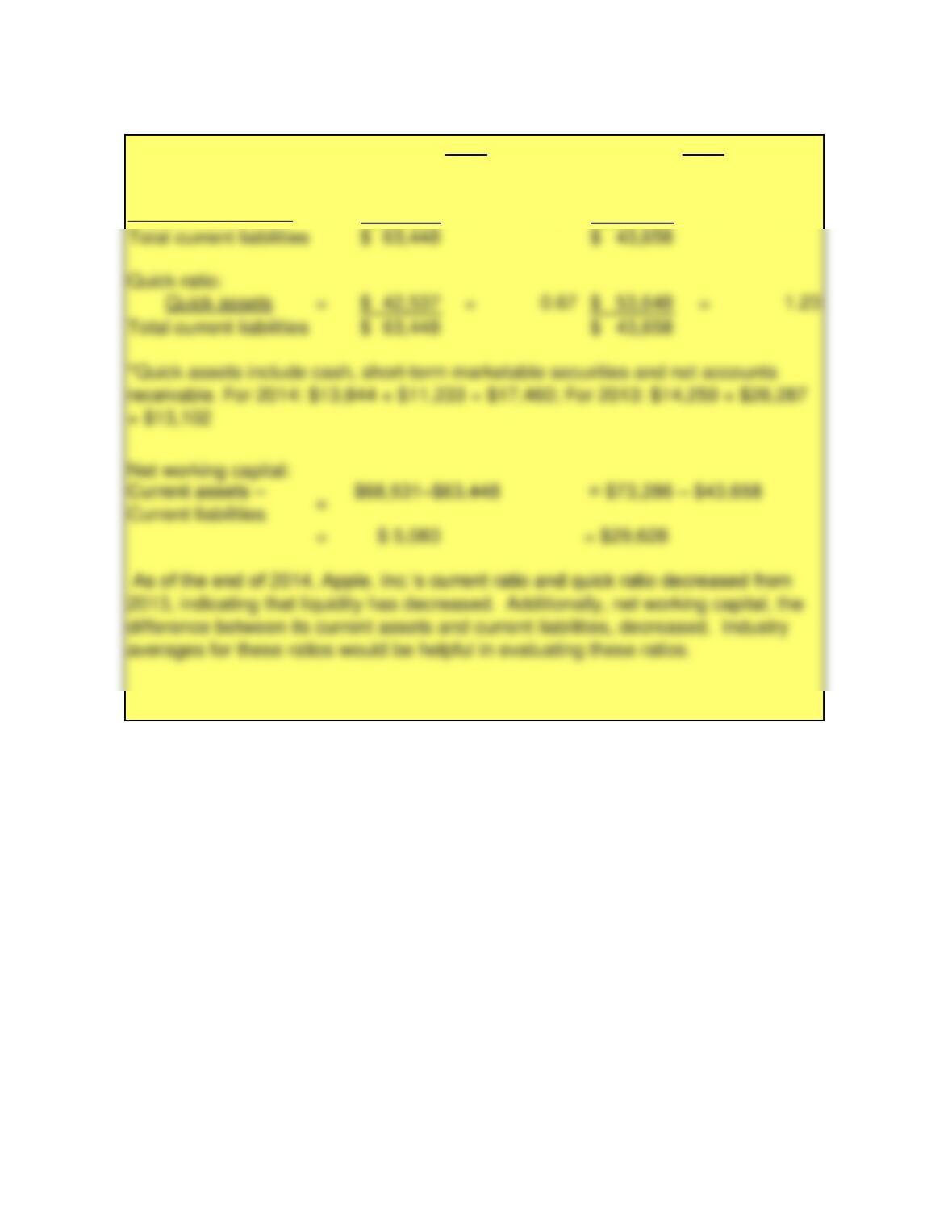
Apple Inc., for 2014 and 2013. Evaluate Apple Inc.’s liquidity trend over the two
years. What other information might be helpful in evaluating these statistics?
Chapter 5: Short-Term Investments and Receivables Page 81 of 87
FINANCIAL ACCOUNTING – Eleventh Edition Solutions Manual
Requirement 2
Requirement 3
Requirement 4
Requirement 5
Apple recognizes revenue from product sales or services rendered when the
following four criteria are met:
Chapter 5: Short-Term Investments and Receivables Page 82 of 87
FINANCIAL ACCOUNTING – Eleventh Edition Solutions Manual
Requirement 6
Current ratio:
Total current assets = 68,531$ = 1.08 73,286$ = 1.68
2013
(Dollar amounts in millions)
2014
Chapter 5: Short-Term Investments and Receivables Page 83 of 87
FINANCIAL ACCOUNTING – Eleventh Edition Solutions Manual
Under Armour, Inc.
(20 min.)
Requirement 1
Solution:
Requirement 2
Solution:
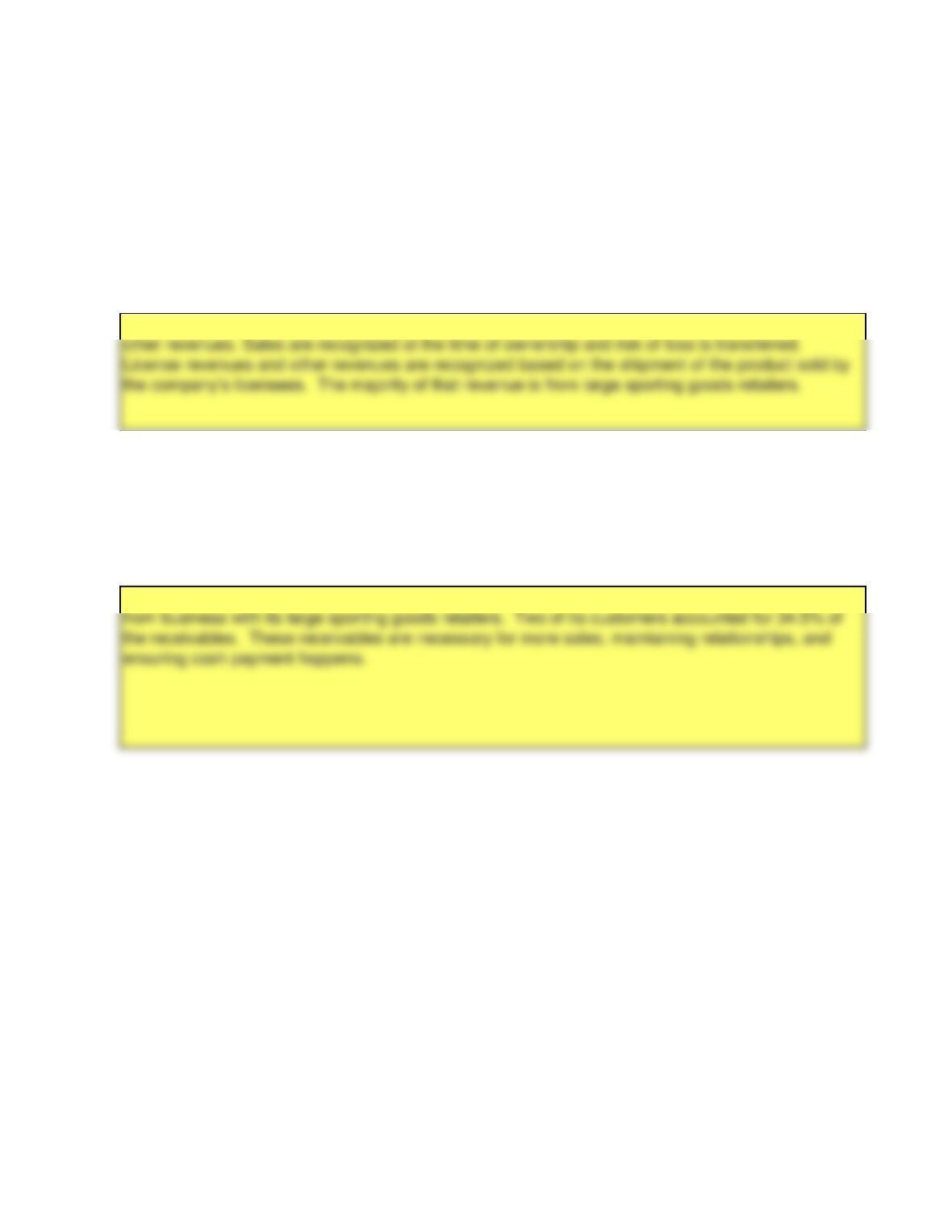
Describe Under Armour, Inc.’s, revenue recognition policy. According to the Concentration of Credit
Risk section of Note 2, from what sources does it earn most of its revenue?
Since Under Armour, Inc., is a consumer retail business, most of its retail sales are cash sales.
However, accounts receivable still comprise about 18% ($280/$1,549) of its current assets. What
type of customers do business with Under Armour, Inc., on account? Why is this necessary? Use
Note 2, Concentration of Credit Risk section.
According to Note 2, Under Armour, Inc.’s revenue primarily comes from net sales and license and
In Note 2 (Concentration of Credit Risk), the company indicates that the receivables primarily result
Chapter 5: Short-Term Investments and Receivables Page 84 of 87
FINANCIAL ACCOUNTING – Eleventh Edition Solutions Manual
Requirement 3
Solution:
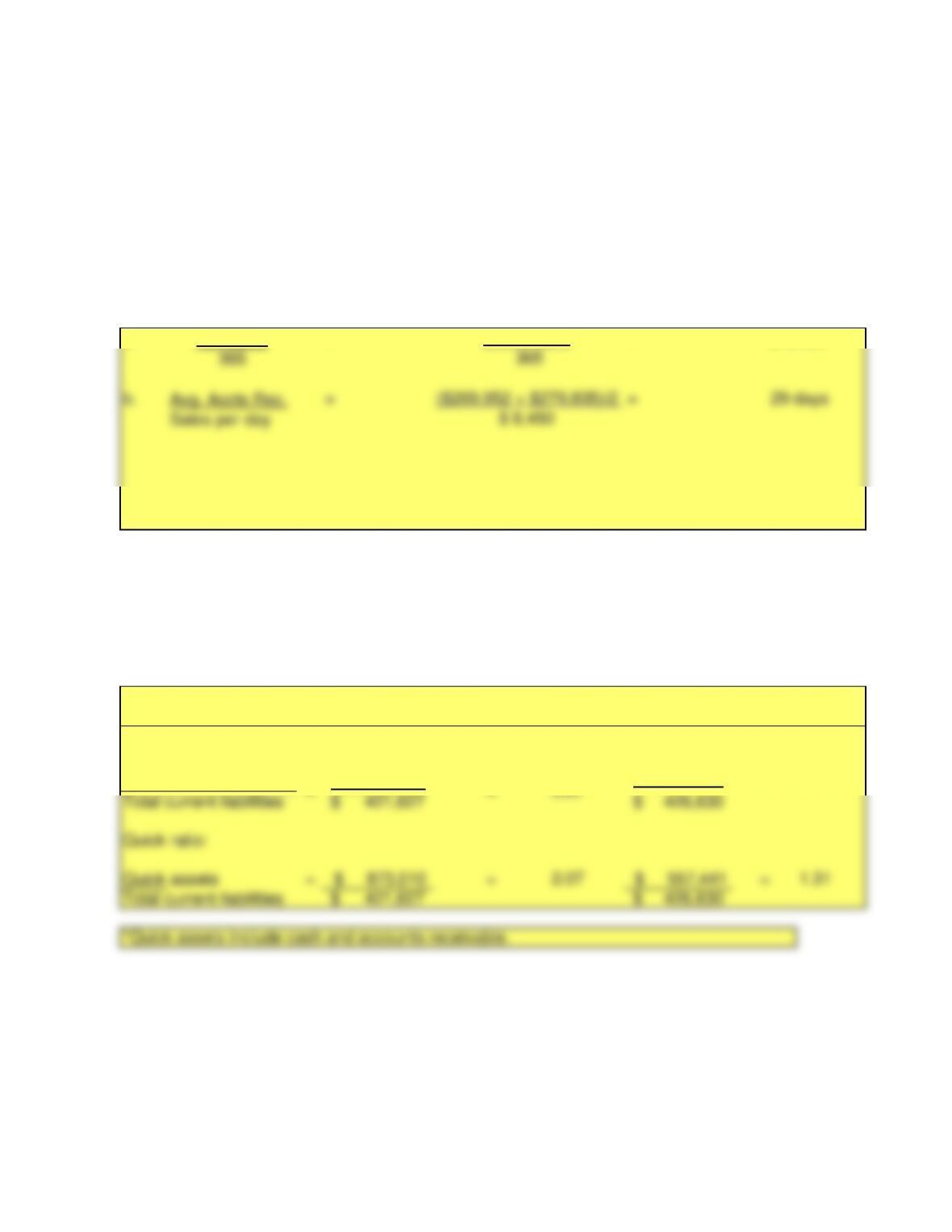
a. Net Sales = =
Requirement 4
Solution:
Current ratio:
Total current assets 1,549,399$ 1,128,811$ = 2.65
Total current liabilities 421,627$ 426,630$
Quick ratio:
Quick assets
Total current liabilities 421,627$ 426,630$
*Quick assets include cash and accounts receivable.
2014
2013
Compute the following for 2014:
a. Average daily sales, using total revenues.
b. Days’ sales outstanding. Assume all sales are on account.
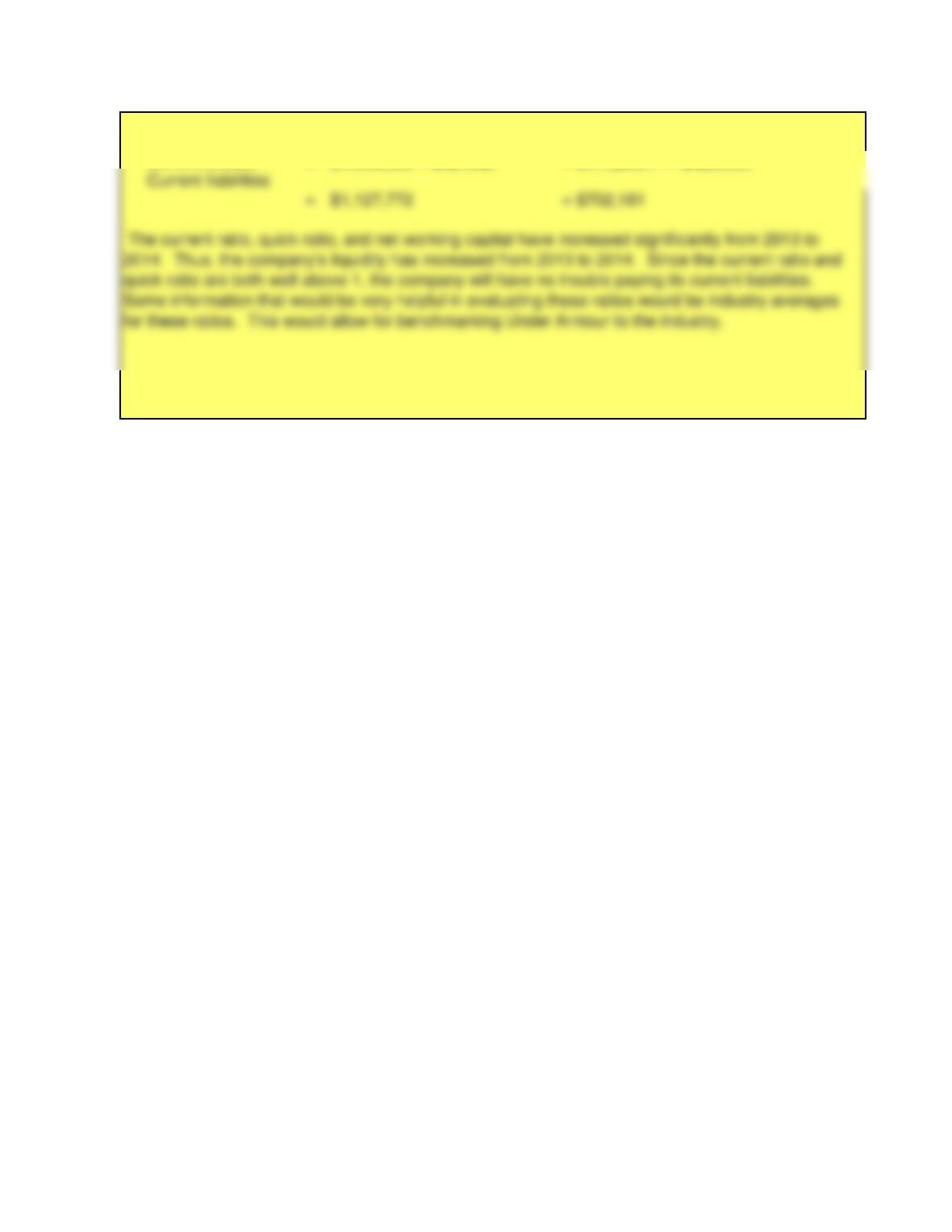
Calculate the current ratio, quick (acid-test) ratio, and net working capital for Under Armour, Inc., for
2014 and 2013. Evaluate the two-year trend in Under Armour, Inc.’s, liquidity. What other information
might be helpful in evaluating these statistics?
$ 3,084,370
$ 8,450
(Dollar amounts in millions)
Chapter 5: Short-Term Investments and Receivables Page 85 of 87
FINANCIAL ACCOUNTING – Eleventh Edition Solutions Manual
Net working capital:
$1,549,399 – $421,627 = $1,1,28,811 – $426,630
Current assets –
=
Chapter 5: Short-Term Investments and Receivables Page 86 of 87

FINANCIAL ACCOUNTING – Eleventh Edition Solutions Manual
Group Project
Requirements
Solution:
Student responses will vary.
Assume two roles: (1) Michaels and Childress, the partners who will own Navarro Copy
Center; and (2) loan officers at Synergy Bank.
1. As a group, visit a copy center to familiarize yourselves with its operations. If possible,
interview the manager or another employee. Then write a loan request that Michaels
and Childress will submit to Synergy Bank with the intent of borrowing $130,000 to be
paid back over three years. The loan will be a personal loan to the partnership of
Michaels and Childress, not to Navarro Copy Center. The request should specify all the
details of the plan that will motivate the bank to grant the loan. Include a budget for each
of the first six months of operation of the proposed copy center.
2. As a group, interview a loan officer in a bank. Write Synergy Bank’s reply to the loan
request. Specify all the details that the bank should require as conditions for making the
loan.
3. If necessary, modify the loan request or the bank’s reply in order to reach agreement
between the two parties.
Chapter 5: Short-Term Investments and Receivables Page 87 of 87