Intermediate Accounting, 8/e 5–81
Exercise 5–31
Requirement 1
Cost of goods sold ($1,000,000 – 600,000) $400,000
Requirement 2
Gross profit percentage = $600,000 ÷ $1,000,000 = 60%
Exercise 5–32
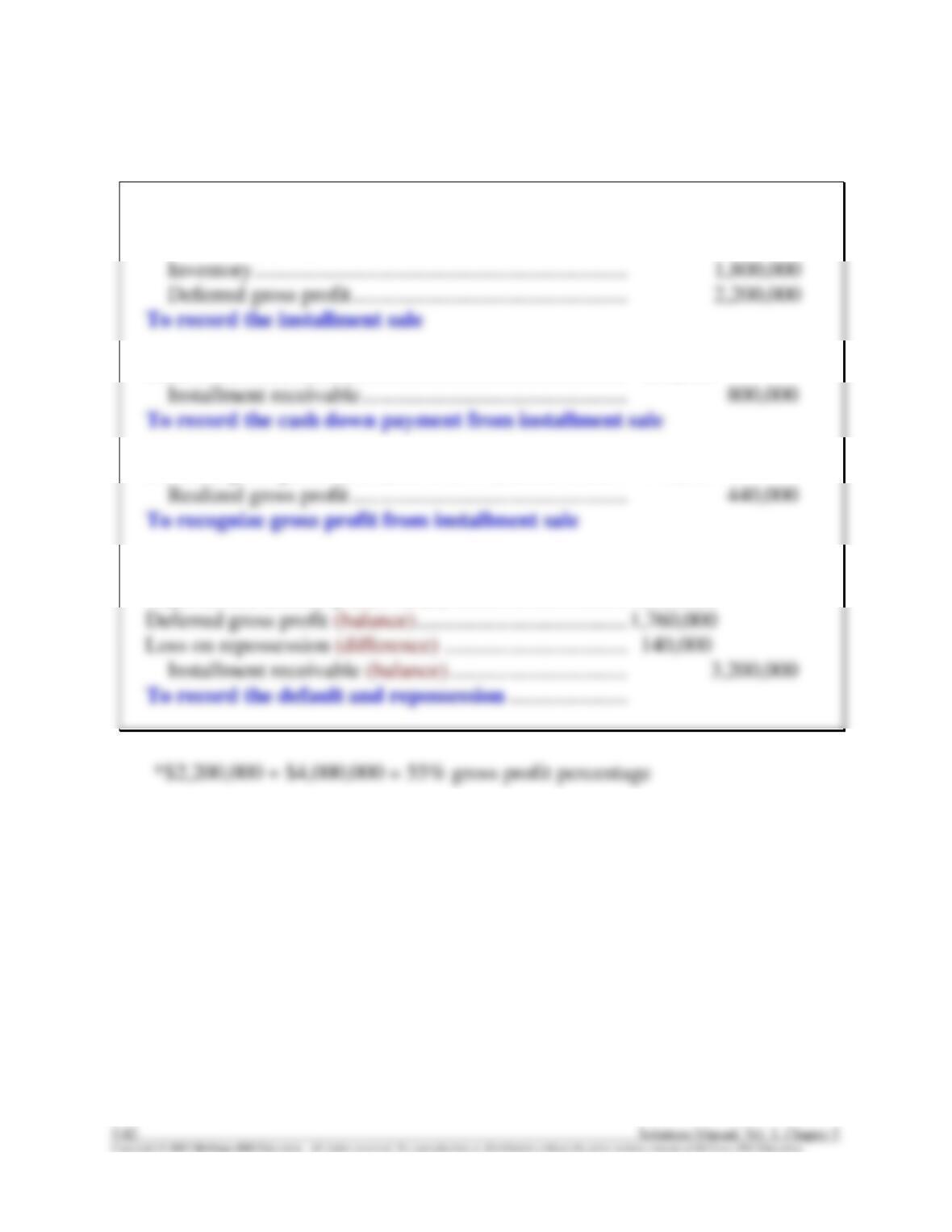
October 1, 2016
Installment receivable ……………………………………………… 4,000,000
Cash …………………………………………………………………….. 800,000
Deferred gross profit ($800,000 x 55%*) ………………….. 440,000
October 1, 2017
Repossessed inventory (fair value) ………………………….. 1,300,000
Intermediate Accounting, 8/e 5–83
Exercise 5–33
Requirement 1
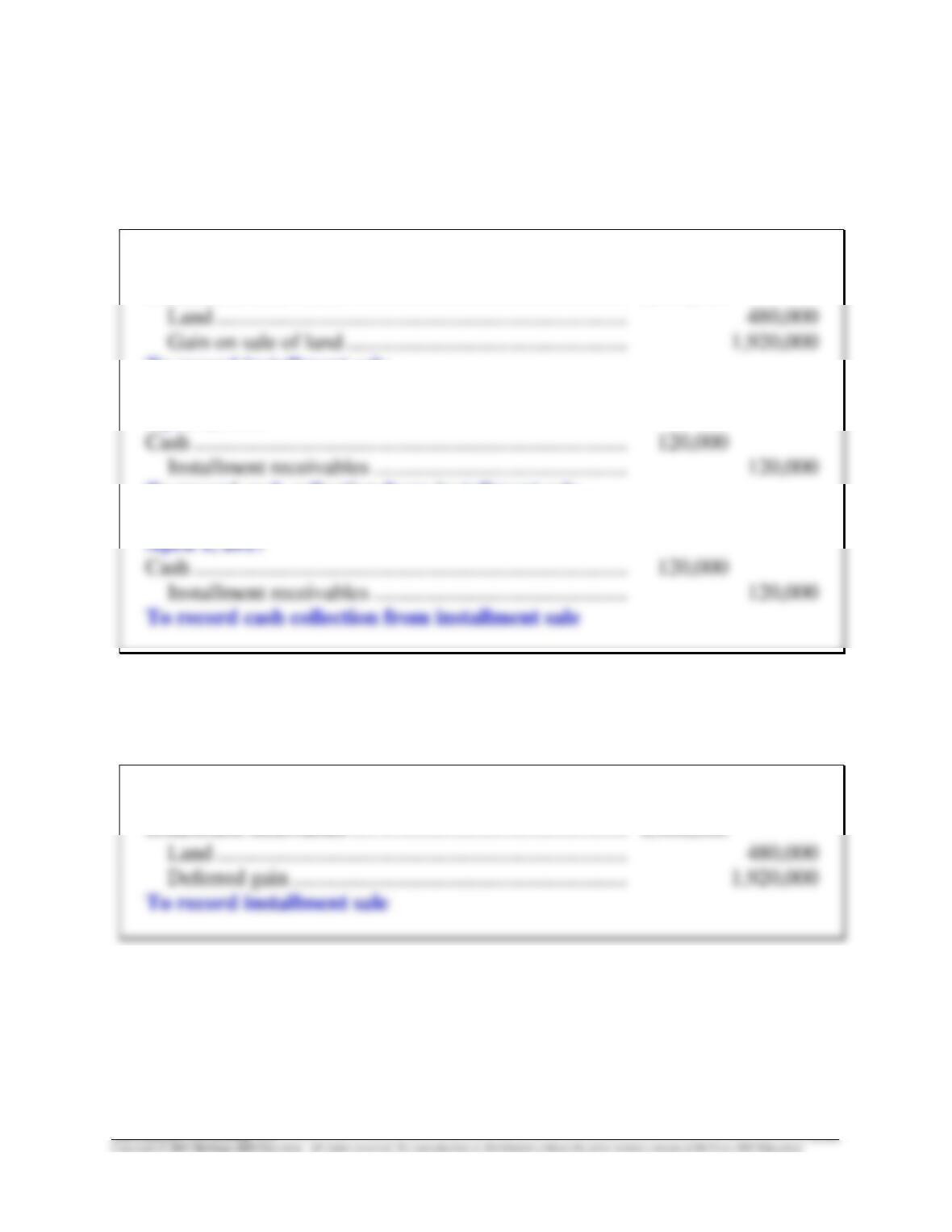
April 1, 2016
Installment receivables …………………………………………… 2,400,000
To record installment sale
April 1, 2016
To record cash collection from installment sale
Requirement 2
April 1, 2016
Exercise 5–33 (concluded)
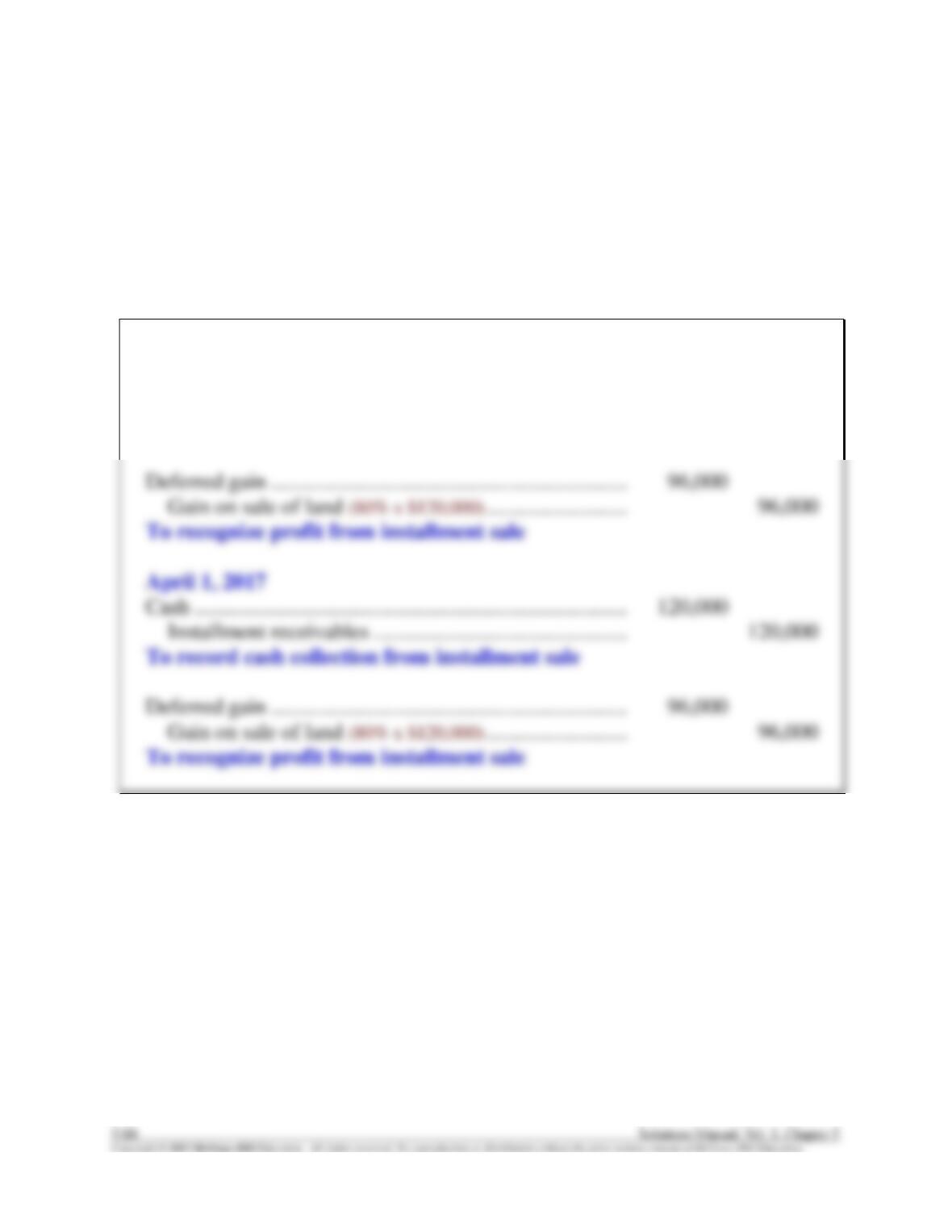
When payments are received, gain on sale of land is recognized, calculated by
applying the gross profit percentage ($1,920,000 ÷ $2,400,000 = 80%) to the cash
collected (80% x $120,000).
April 1, 2016
Cash …………………………………………………………………….. 120,000
Installment receivables ……………………………………….. 120,000
To record cash collection from installment sale
Intermediate Accounting, 8/e 5–85
Exercise 5–34
The FASB Accounting Standards Codification represents the single source of
authoritative U.S. generally accepted accounting principles. Regarding
circumstances indicating when the installment method or cost recovery method is
appropriate for revenue recognition, the appropriate citation is:
Exercise 5–35
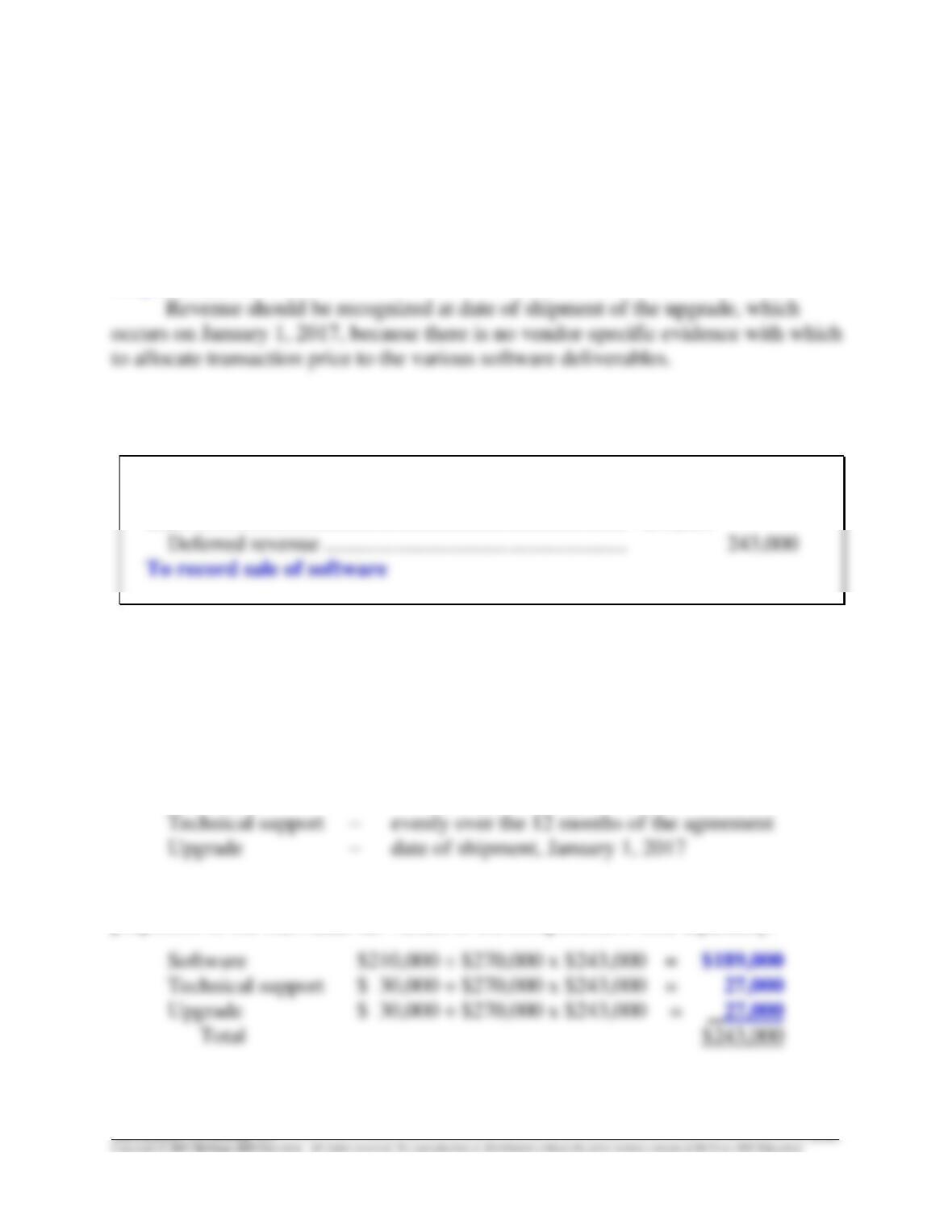
2016:
Revenue: $40
Cost: 40
Intermediate Accounting, 8/e 5–87
Exercise 5–36
As written, the question implies that there is no VSOE (vendor specific sales price
evidence), because the question refers to the prices as estimated. Under the
assumption that there is no VSOE, the correct answer to this problem is as follows:
Requirement 1
Requirement 2
July 1, 2016
Cash …………………………………………………………………….. 243,000
If instead the Exercise had said that Easywrite sold each of those components
separately for the amounts listed, Easywrite would have VSOE for each component,
and the correct answer would be:
Requirement 1
Revenue should be recognized as follows:
Software – date of shipment, July 1, 2016
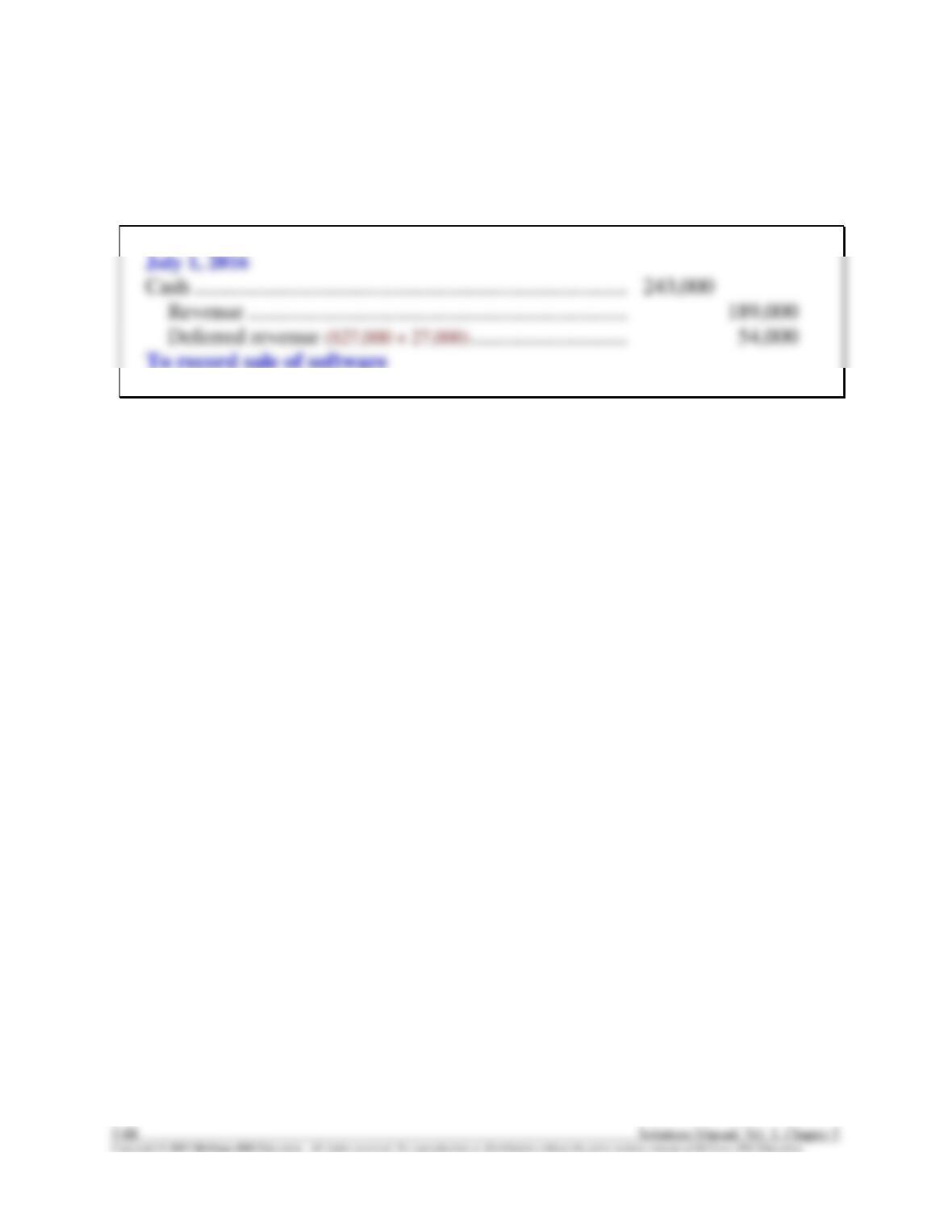
The amounts are determined by an allocation of total contract price in
proportion to the individual fair values of the components if sold separately:
Exercise 5–36 (concluded)
Requirement 2
Intermediate Accounting, 8/e 5–89
Exercise 5–37
Requirement 1
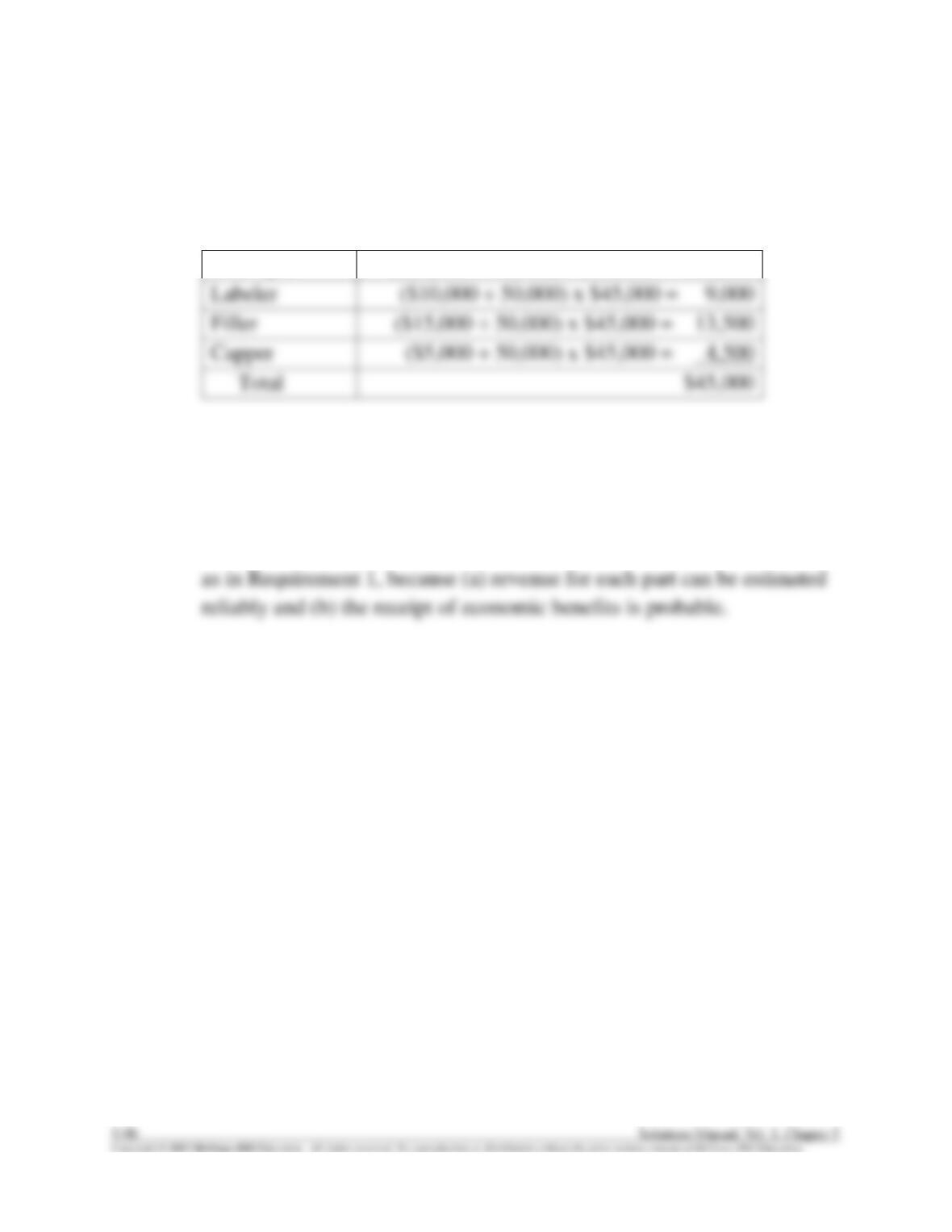
Conveyer
($20,000 ÷ 50,000) x $45,000 = $18,000
Filler
Requirement 2
All $45,000 of revenue is delayed until installation of the conveyer,
Exercise 5–38
Requirement 1
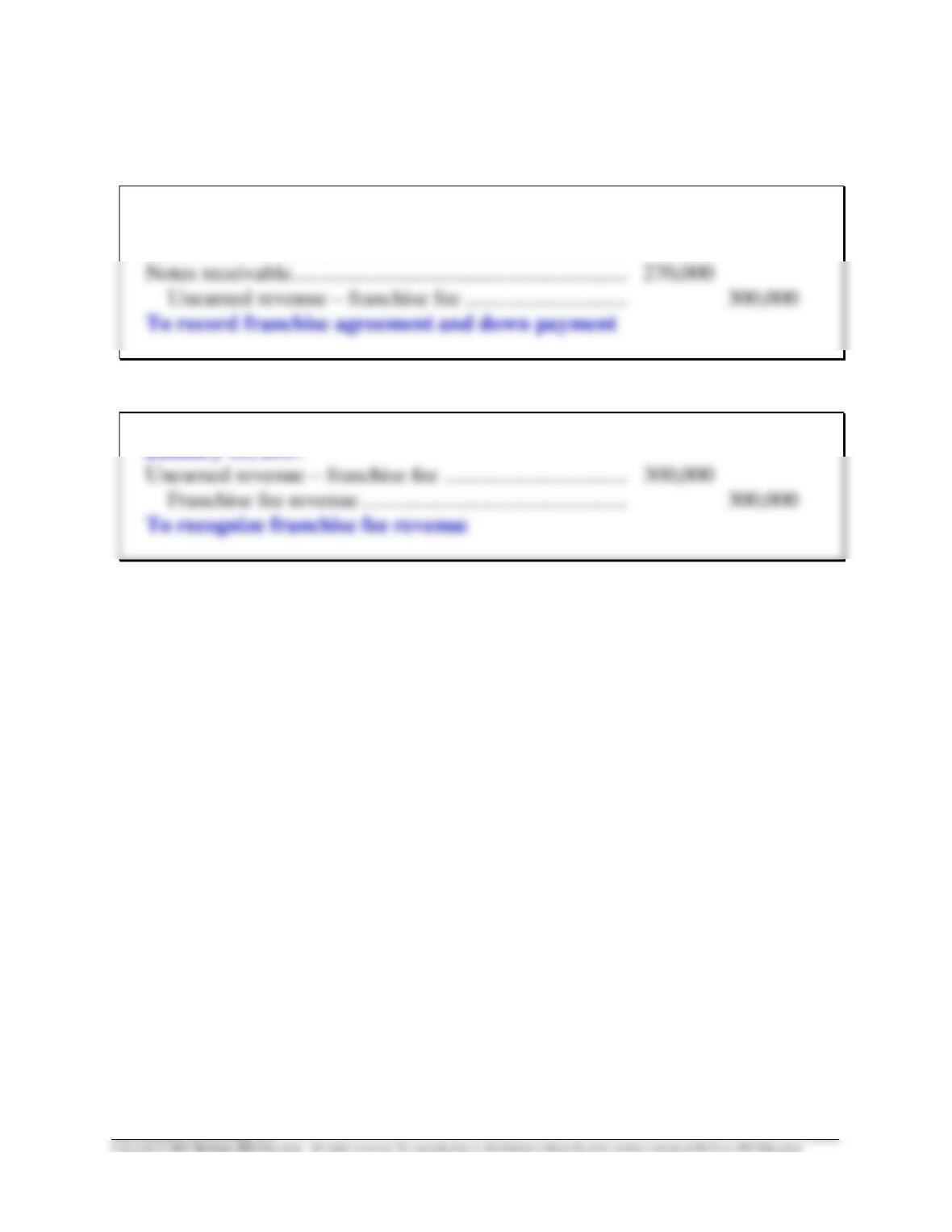
Conveyer
($20,000 ÷ 50,000) x $45,000 = $18,000
Filler
Requirement 2
Under IFRS, it’s likely that Richardson would recognize revenue the same
Intermediate Accounting, 8/e 5–91
Exercise 5–39
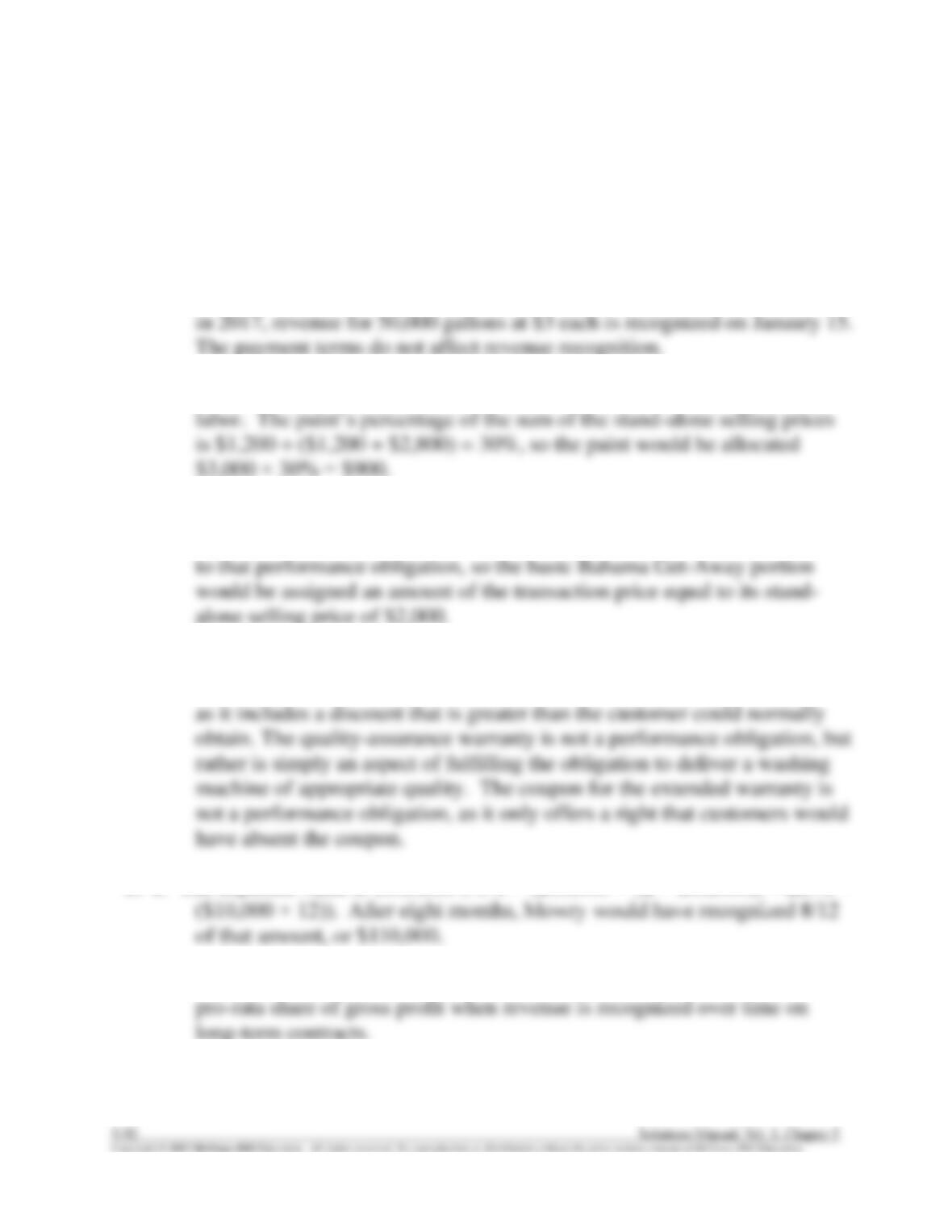
October 1, 2016
Cash (10% × $300,000) ……………………………………………… 30,000
CPA / CMA REVIEW
QUESTIONS
CPA Exam Questions
1. b. The earnings process is completed upon delivery of the product. Therefore,
2. b. The $3,000 transaction price would be divided between the paint and the
3. b. Because Triangle can’t estimate the stand-alone sales price of the additional
guided tours, it would use the residual method to allocate transaction price
4. c. The contract has two performance obligations. Delivery of the washing
machine is a performance obligation. So is the option to purchase a dryer,
5. c. The expected value is $165,000 (75% × ($10,000 × 12 + $60,000)) + (25% ×
6. d. Construction-in-progress represents the costs incurred plus the cumulative
Intermediate Accounting, 8/e 5–93
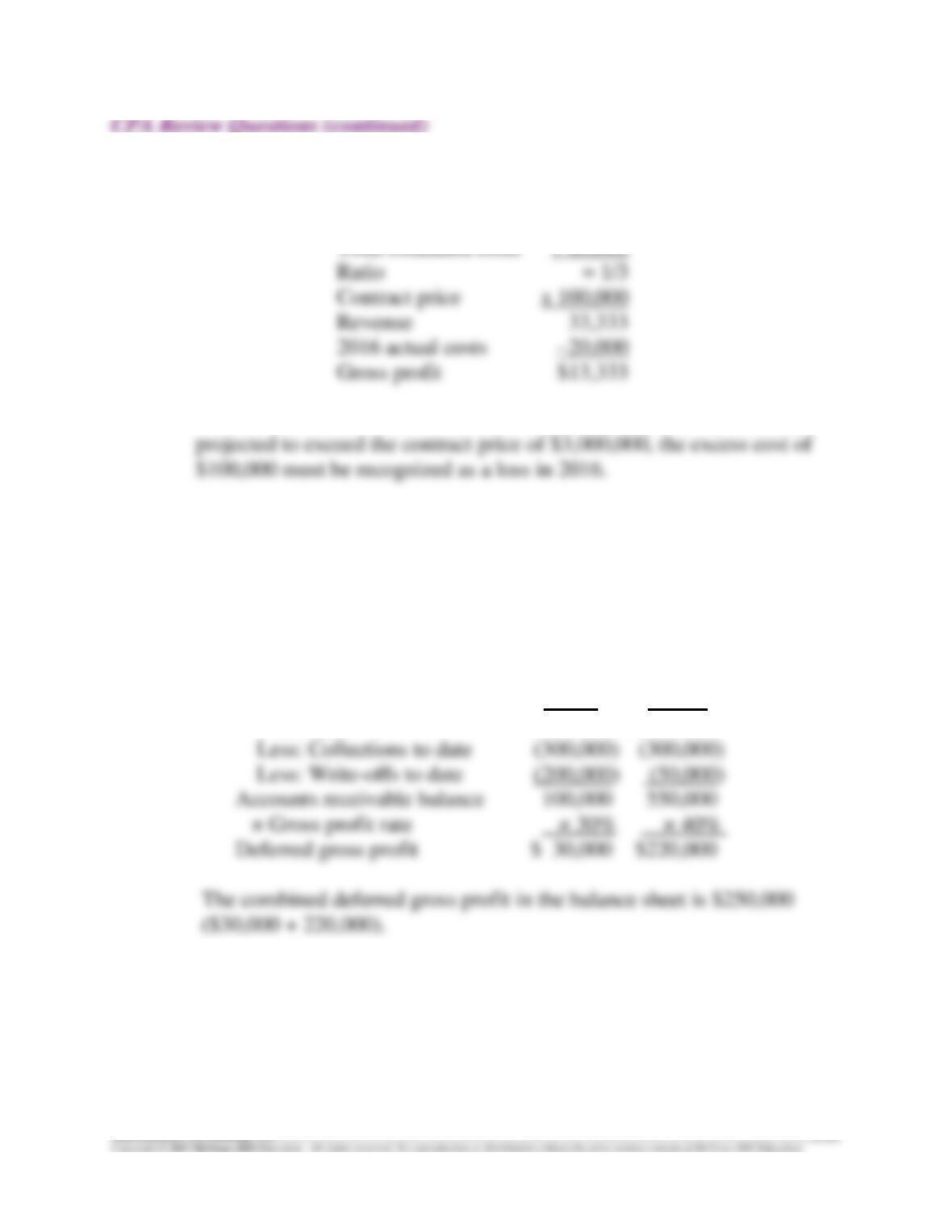
7. c.
2016 actual costs
$20,000
Total estimated costs
Contract price
2016 actual costs
Gross profit
8. d. Since the total cost of the contract, $3,100,000 ($930,000 + 2,170,000), is
Appendix CPA Exam Questions
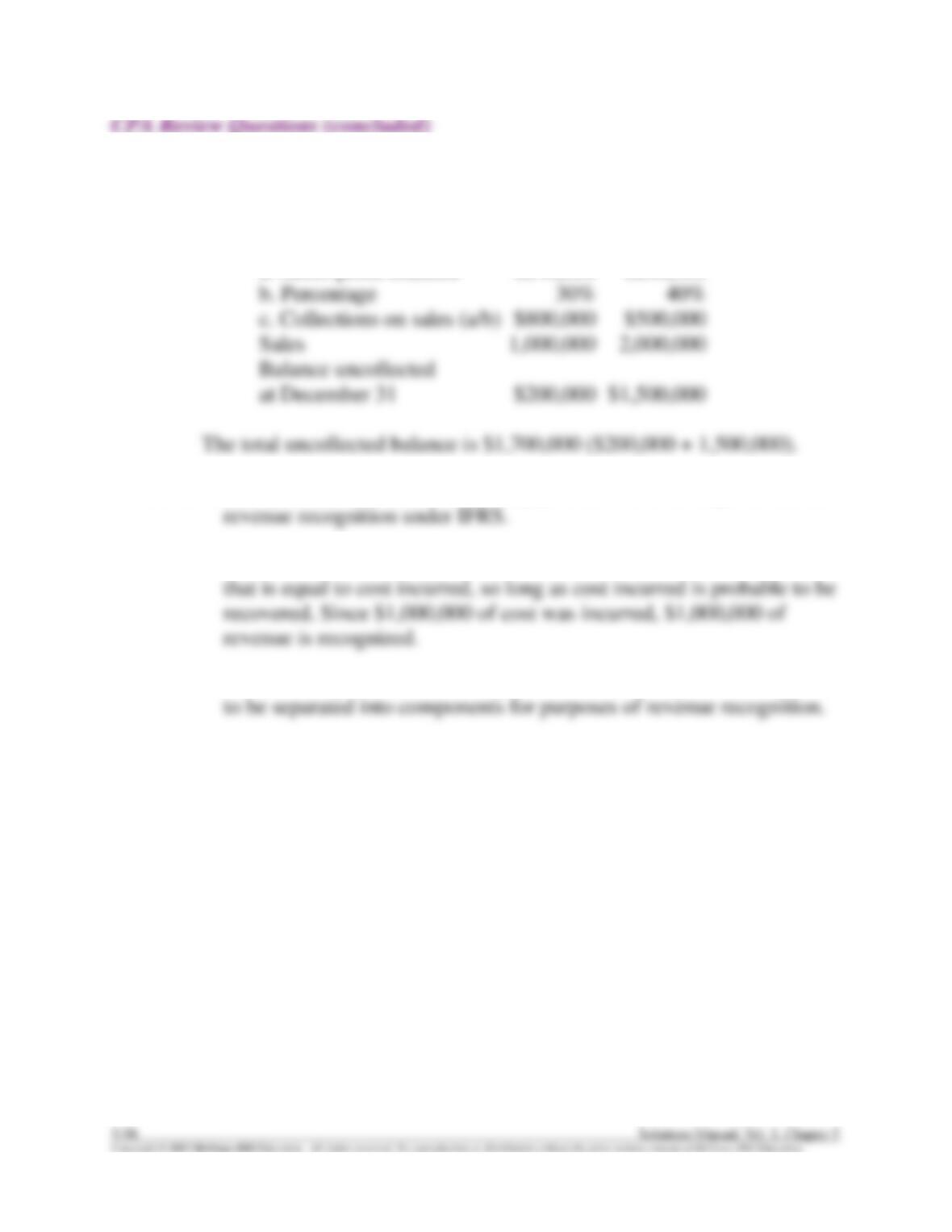
9. d. The deferred gross profit in the balance sheet at December 31, 2017, should
be the balances in the accounts receivable accounts on that date for 2016
and 2017 sales multiplied by the appropriate gross profit percentage:
Accounts receivable: sales in
2016
2017
Total sales
$ 600,000
$900,000
Less: Collections to date
Less: Write-offs to date
× Gross profit rate
Deferred gross profit
$220,000
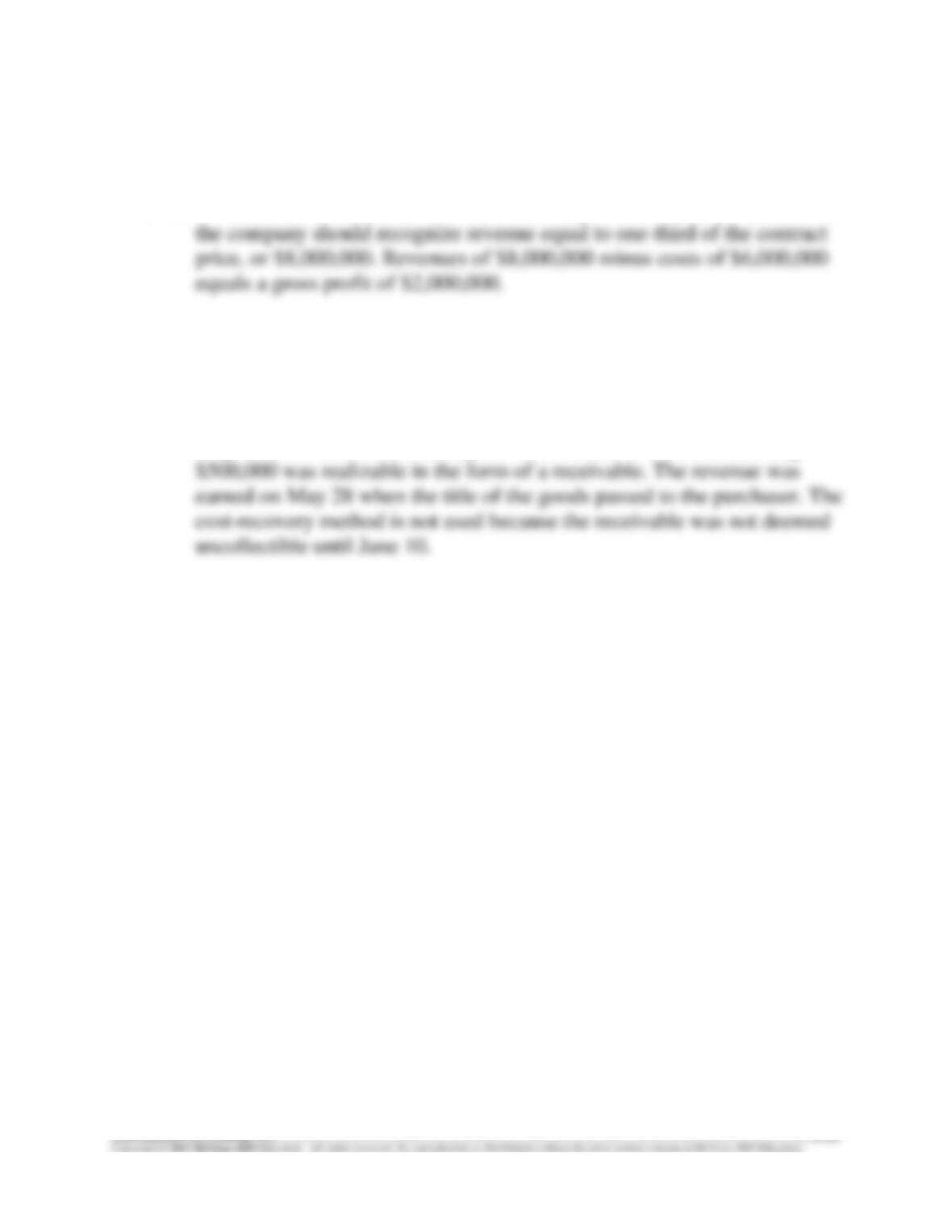
10. a.
Year of sale
2016
2017
a. Gross profit realized
$240,000
$200,000
b. Percentage
c. Collections on sales (a/b)
$800,000
$500,000
11. c. “Cash collection is at least reasonably possible” is not a requirement for
12. a. Under the cost recovery approach, an amount of revenue is recognized
13. a. IFRS does not provide extensive guidance determining how contracts are
Intermediate Accounting, 8/e 5–95
CMA Exam Question
1. b. Given that one-third of all costs have already been incurred ($6,000,000),
Appendix CMA Exam Question
2. c. Revenue is recognized when (1) realized or realizable and (2) earned. On
May 28, $500,000 of the sales price was realized while the remaining
PROBLEMS
Problem 5-1
Requirement 1
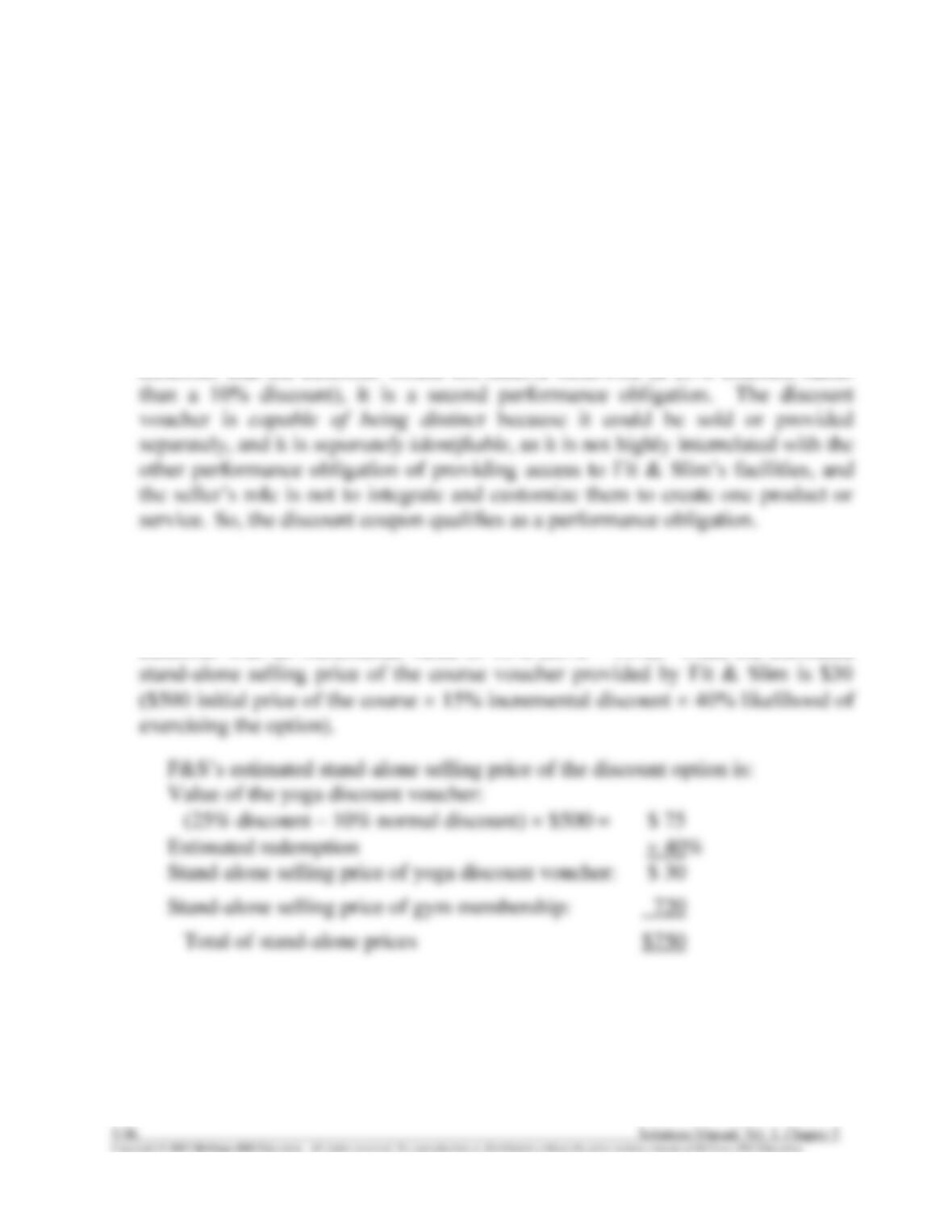
a. Number of performance obligations in the contract: 2.
The unlimited access to facilities and classes for one year is one performance
obligation. Because the discount voucher provides a material right to the
customer that the customer would not receive otherwise (a 25% discount rather
b. To allocate the contract price to the performance obligations, we should first
consider that Fit & Slim would offer a 10% discount on the yoga course to all
customers as part of its normal promotion strategy. So, a 25% discount provides a
customer with an incremental value of 15% (25% – 10%). Thus, the estimated
Intermediate Accounting, 8/e 5–97
Problem 5-1 (continued)
F&S must identify each performance obligation’s share of the sum of the stand–
alone selling prices of all deliverables:
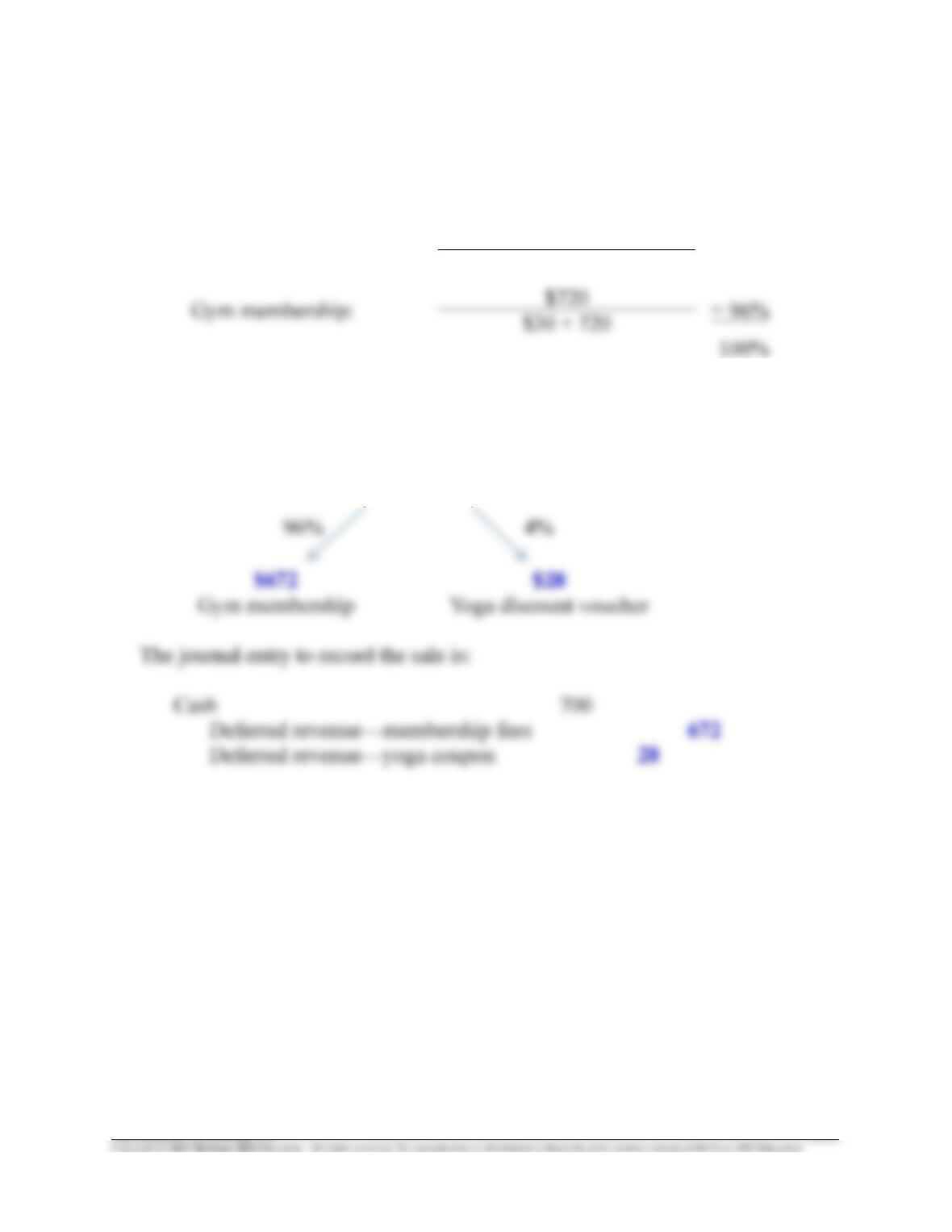
Yoga discount voucher:
$30
= 4%
$30 + 720
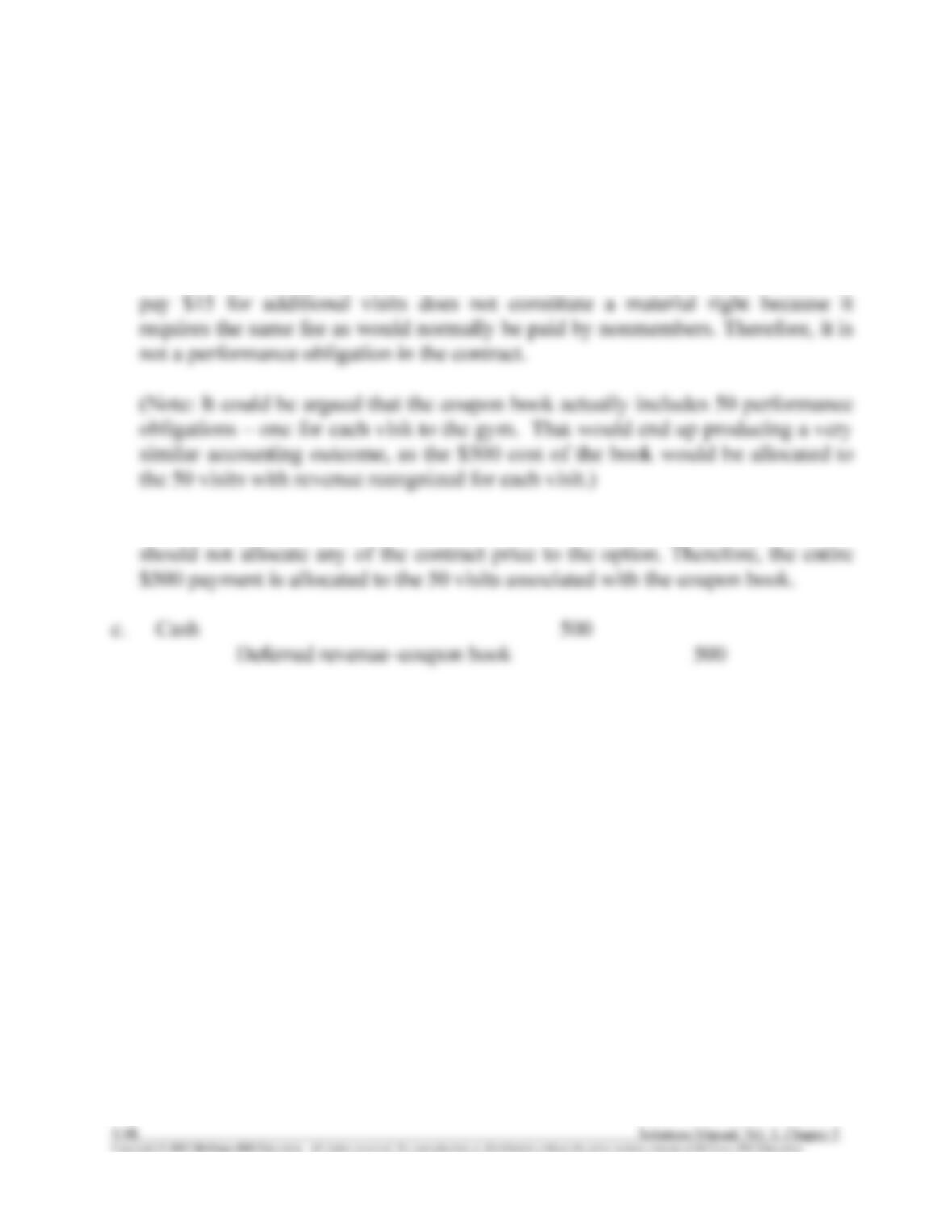
F&S then allocates the total selling price based on stand-alone selling prices, as
follows:
$700
Transaction Price
Problem 5-1 (concluded)
Requirement 2
a. Number of performance obligations in the contract: 1.
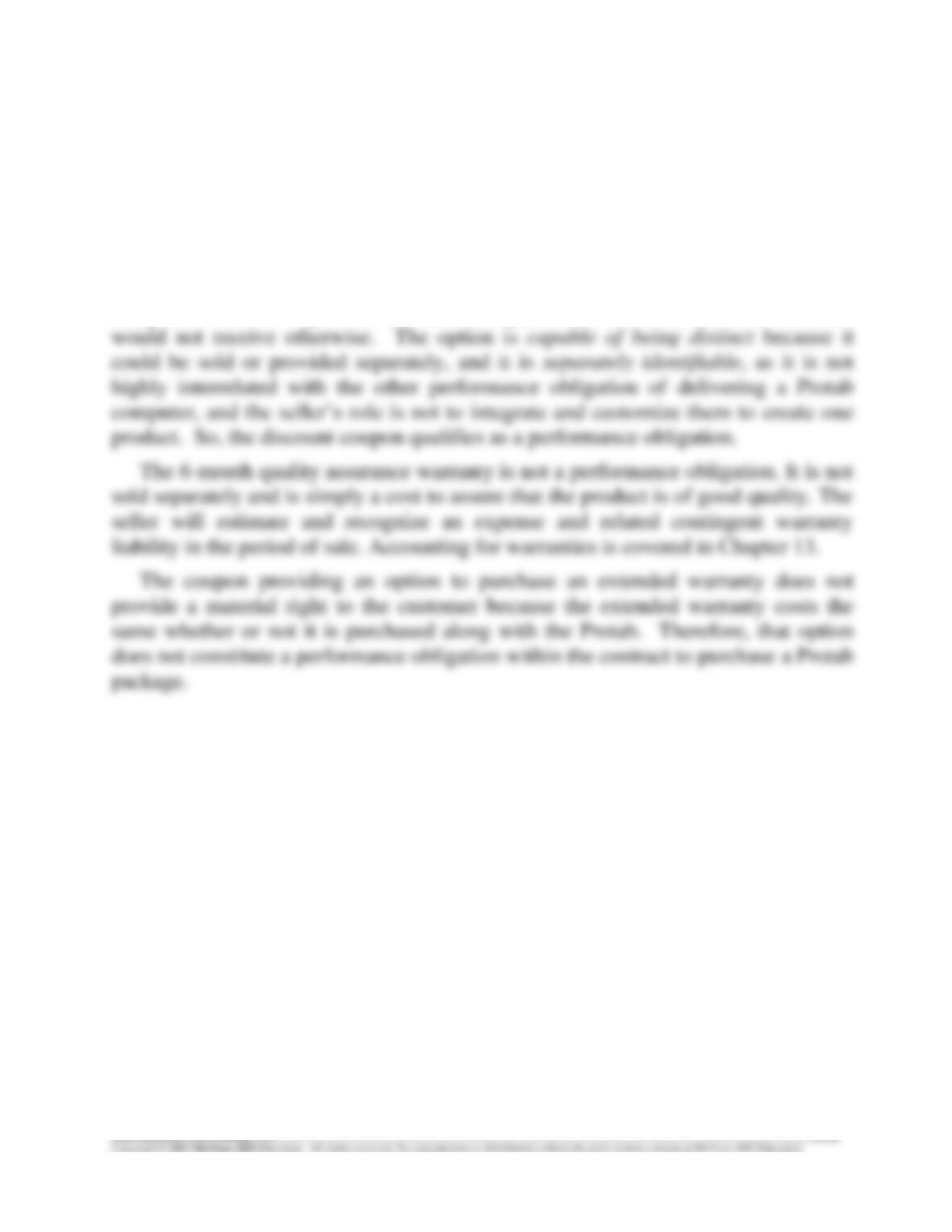
The access to the gym for 50 visits is one performance obligation. The option to
b. Since the option to visit on additional days is not a performance obligation, F&S
Intermediate Accounting, 8/e 5–99
Problem 5–2
Requirement 1
Number of performance obligations in the contract: 2.
Delivery of a Protab computer is one performance obligation.
The option to purchase a Probook at a 50% discount is a second performance
obligation because it provides a material right to the customer that the customer
Problem 5-2 (continued)
Requirement 2
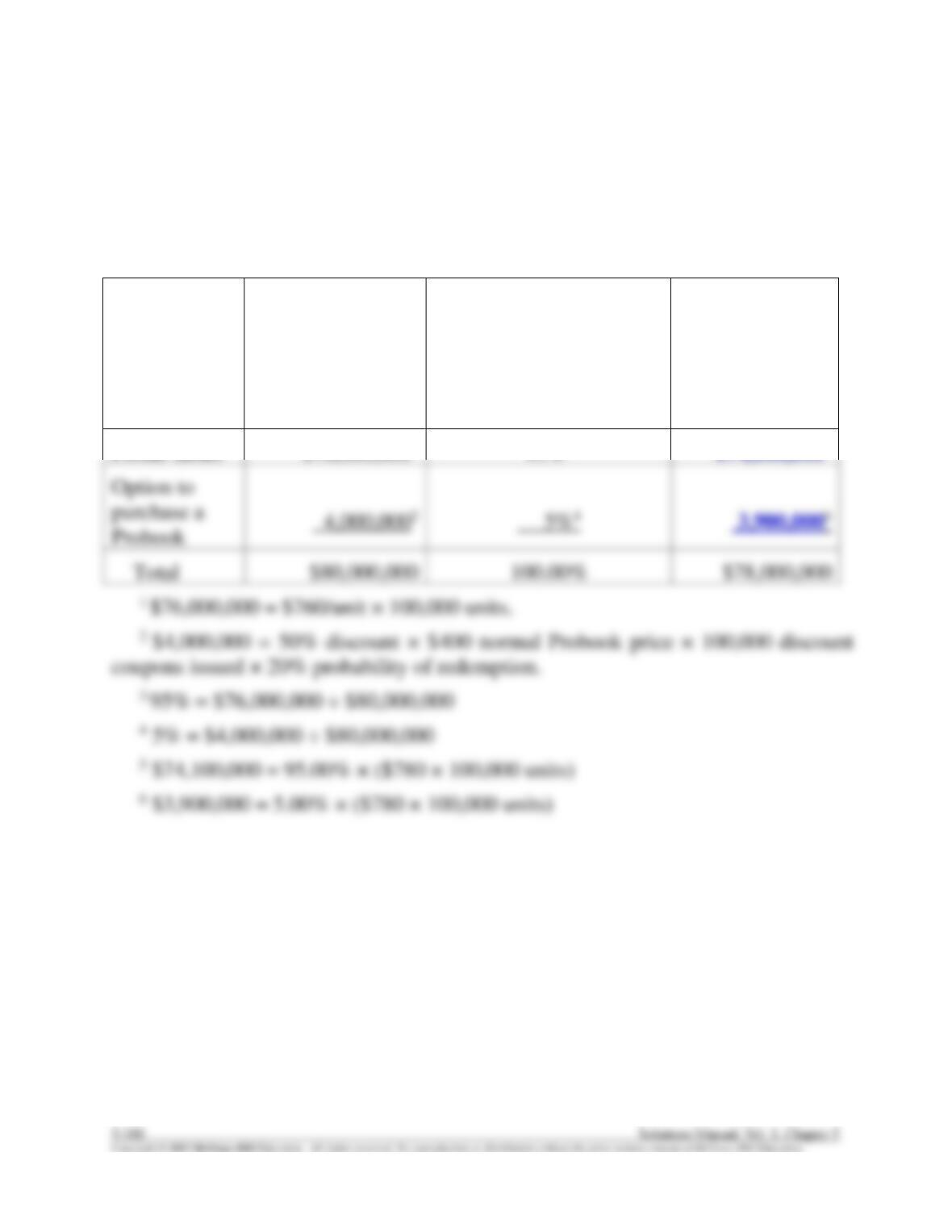
Allocation of purchase price to performance obligations:
Performance
obligation:
Stand-alone
selling price of
the performance
obligation:
Percentage of the sum
of the stand-alone
selling prices of the
performance
obligations:
Allocation of
total
transaction
price to each
performance
obligation:
Protab tablet
$76,000,0001
95%3
$74,100,0005