FINANCIAL ACCOUNTING – Eleventh Edition Solutions Manual
S5-1
(5 min.)
Solution:
Answer these questions about investments.
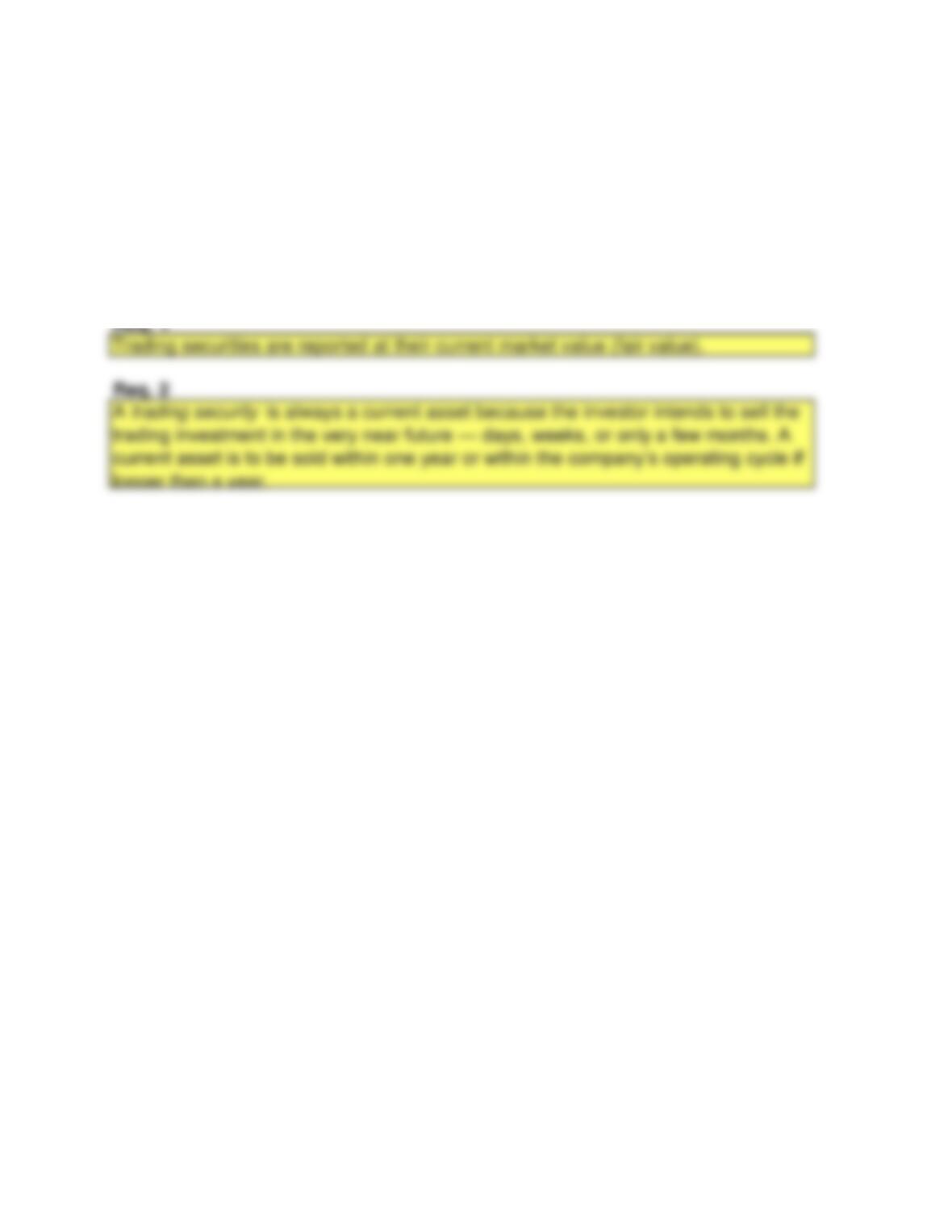
1. What is the amount to report on the balance sheet for a trading security?
2. Why is a trading security always a current asset? Explain.
Chapter 5: Short-Term Investments and Receivables Page 1 of 87
FINANCIAL ACCOUNTING – Eleventh Edition Solutions Manual
S5-2
(10 min.)
Solution:
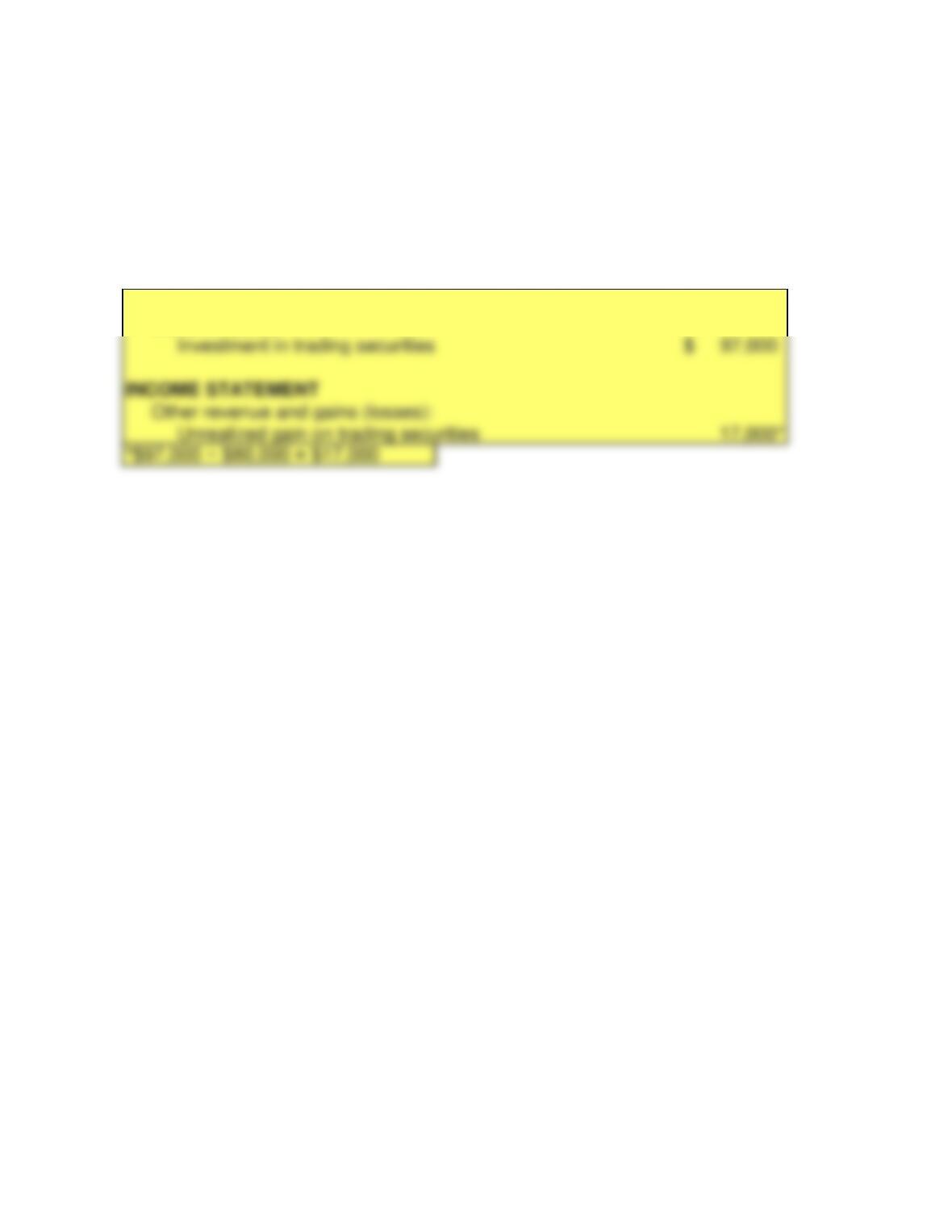
BALANCE SHEET
Current assets:
Show everything that Slocomb would report on its October 31 balance sheet
and on its income statement for the year ended October 31.
Chapter 5: Short-Term Investments and Receivables Page 2 of 87
INCOME STATEMENT
FINANCIAL ACCOUNTING – Eleventh Edition Solutions Manual
S5-3
(10 min.)
Solution:
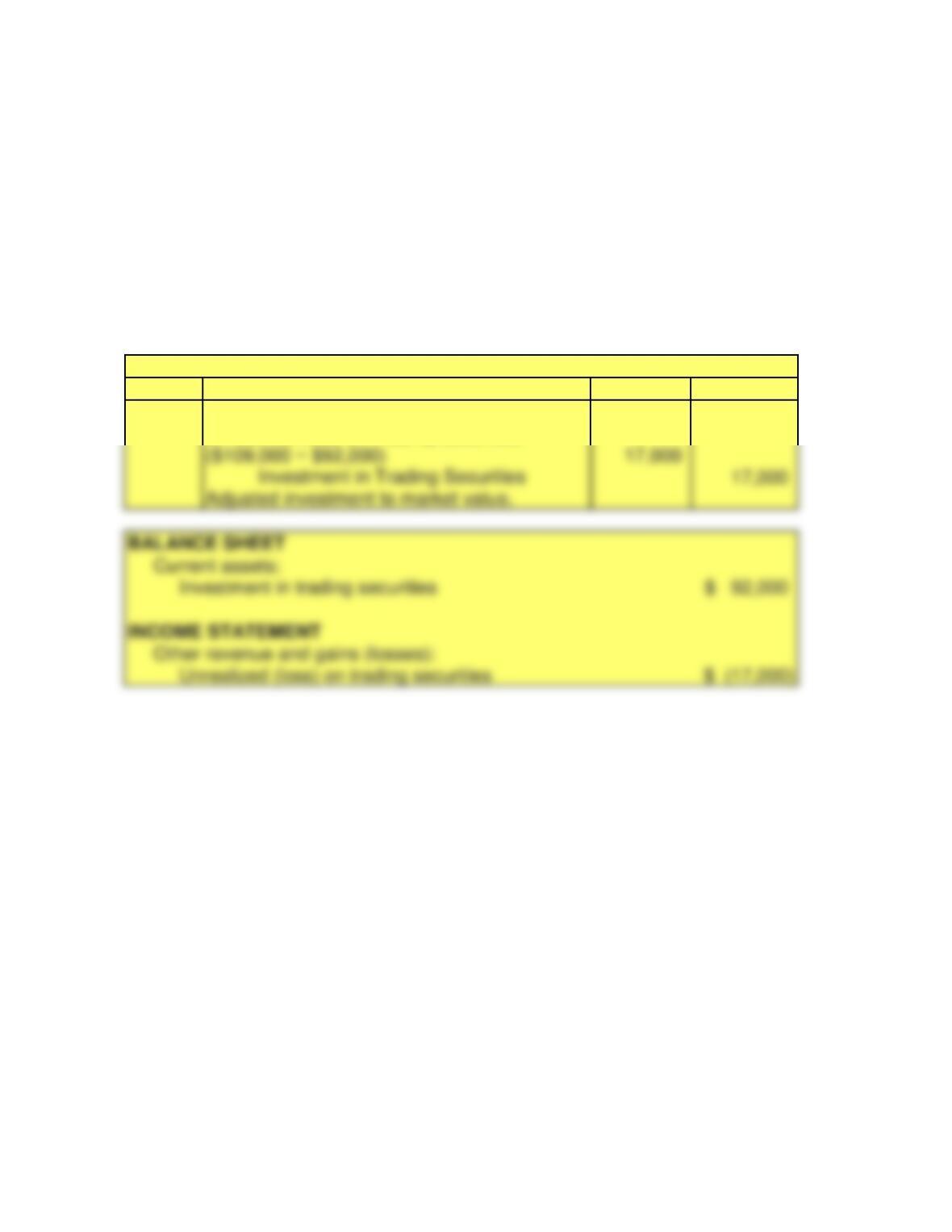
DATE DEBIT CREDIT
Unrealized Loss on Trading Securities
1. Suppose the Melnick Corp. shares decreased in value to $92,000 at
December 31. Make the Barfield journal entry to adjust the Investment in
Trading Securities account to market value.
2. Show how Barfield would report the Investment in Trading Securities on its
balance sheet and the unrealized gain or loss on its income statement.
Journal
ACCOUNT TITLES AND EXPLANATION
Chapter 5: Short-Term Investments and Receivables Page 3 of 87
FINANCIAL ACCOUNTING – Eleventh Edition Solutions Manual
S5-4
(5 min.)
Solution:
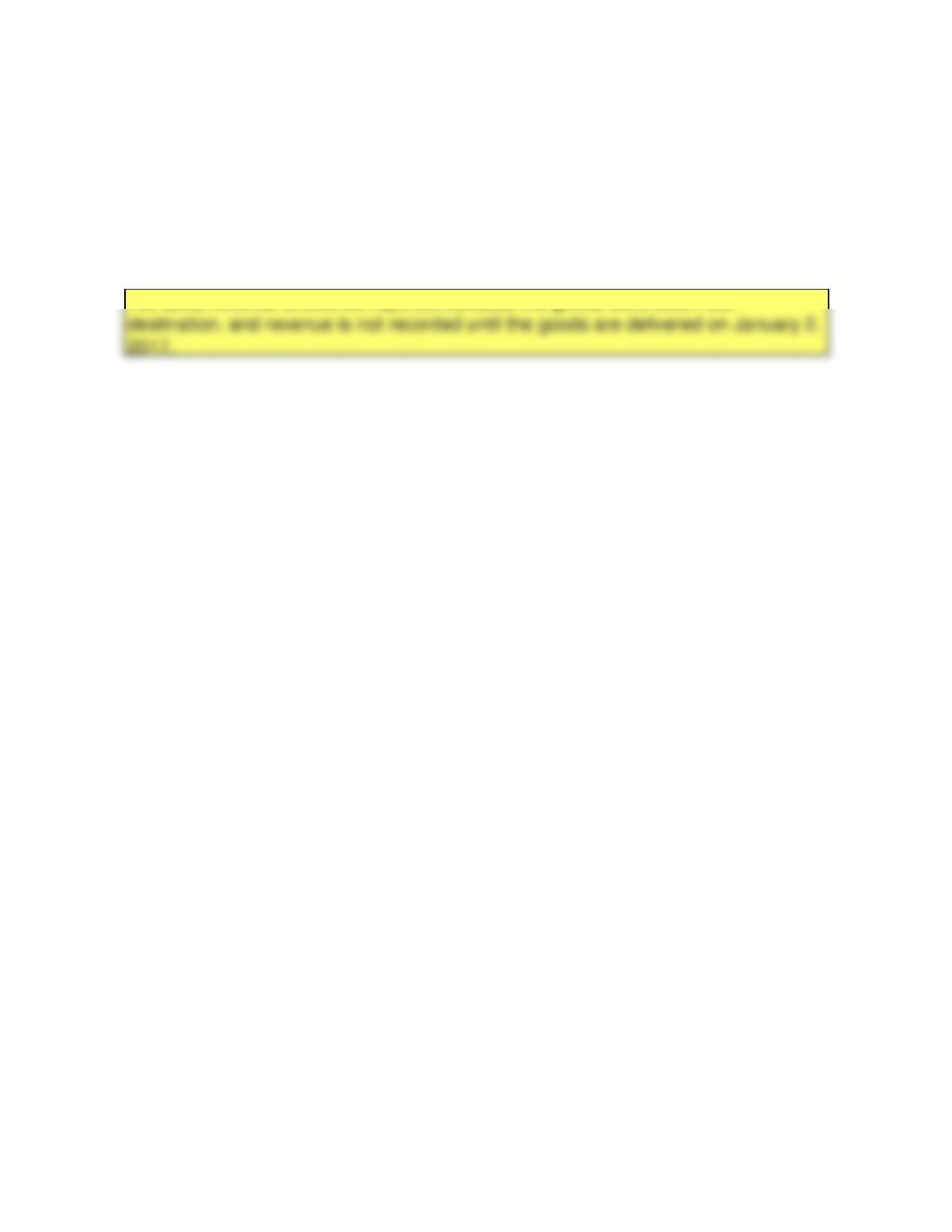
No sales revenue should be reported because the goods were sold FOB
What should Robertson Sports Manufacturing reflect in its 2016 income statement
for this sale?
Chapter 5: Short-Term Investments and Receivables Page 4 of 87
FINANCIAL ACCOUNTING – Eleventh Edition Solutions Manual
S5-5
(5 min.)
Solution:
Costello Company purchases inventory from Terry Pool Supplies on June 1. The
sales terms on the invoice from Terry Pool Supplies are 4∕20, net 30. What does
this mean? What is Costello’s potential savings, if any? How much time does the
company have to take advantage of these savings?
4/20, n/30 means that Costello Company will get a 4% discount if they pay the
Chapter 5: Short-Term Investments and Receivables Page 5 of 87
FINANCIAL ACCOUNTING – Eleventh Edition Solutions Manual
S5-6
(5 min.)
Solution:
DATE DEBIT CREDIT
Cash 500,000
Sales Revenue 500,000
To record sales.
Journal
ACCOUNT TITLES AND EXPLANATION
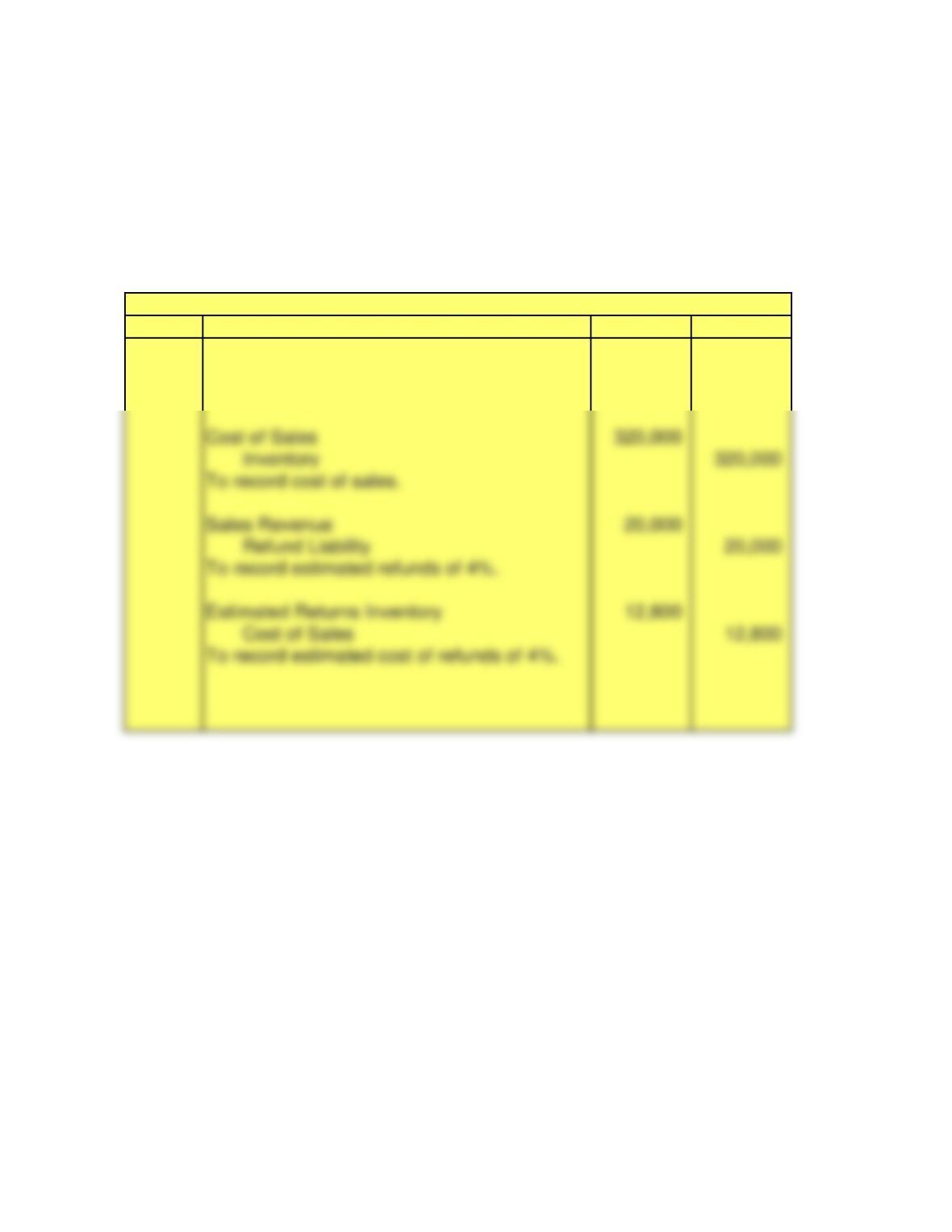
Record the journal entries for the monthly sales, cost of sales, estimated
refunds, and cost of estimated returns for August.
Chapter 5: Short-Term Investments and Receivables Page 6 of 87
Cost of Sales 320,000
Inventory 320,000
To record cost of sales.
Sales Revenue 20,000
Refund Liability 20,000
To record estimated refunds of 4%.
Estimated Returns Inventory 12,800
Cost of Sales 12,800
To record estimated cost of refunds of 4%.
FINANCIAL ACCOUNTING – Eleventh Edition Solutions Manual
S5-7
(10 min.)
Solution:
Req. 1
DATE DEBIT CREDIT
April 4 Accounts Receivable($5,000 x .98) 4,900
Sales Revenue 4,900
Req. 2
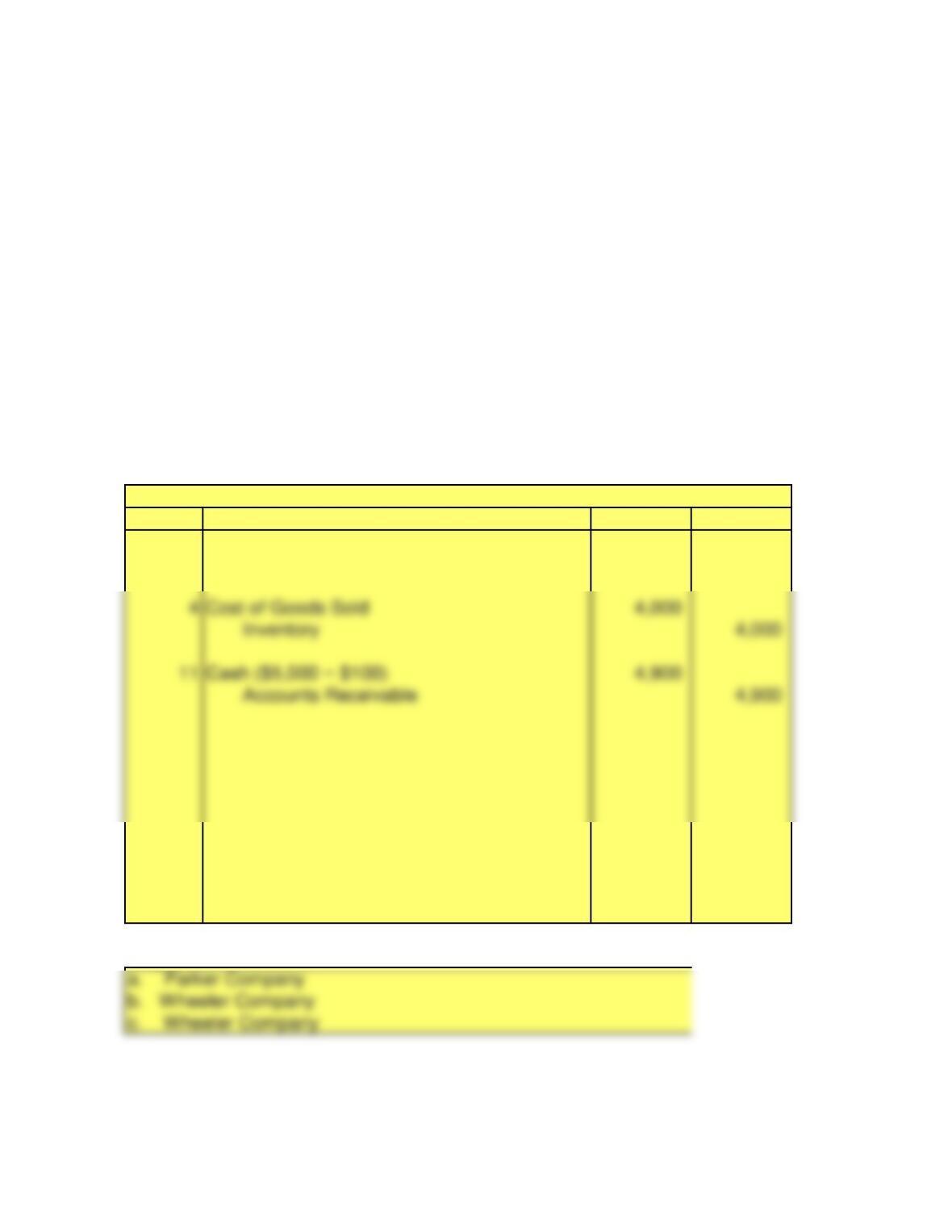
1. Prepare the journal entries for Parker Company for the sale of the
merchandise, the cost of the sale, and the related receipt of payment from
Wheeler Corporation. Assume that Wheeler Corporation takes the discount if
payment is within the discount period. (You do not need to record any
estimated returns/refunds for this exercise.)
2. Indicate which company (Parker Company or Wheeler Corporation) owns the
merchandise at the end of each of the following dates:
a. April 3
b. April 4
c. April 10
Journal
ACCOUNT TITLES AND EXPLANATION
Chapter 5: Short-Term Investments and Receivables Page 7 of 87
Inventory 4,000
Accounts Receivable 4,900
FINANCIAL ACCOUNTING – Eleventh Edition Solutions Manual
S5-8
(10 min.)
Requirements
Solution:
Req. 1 and 2
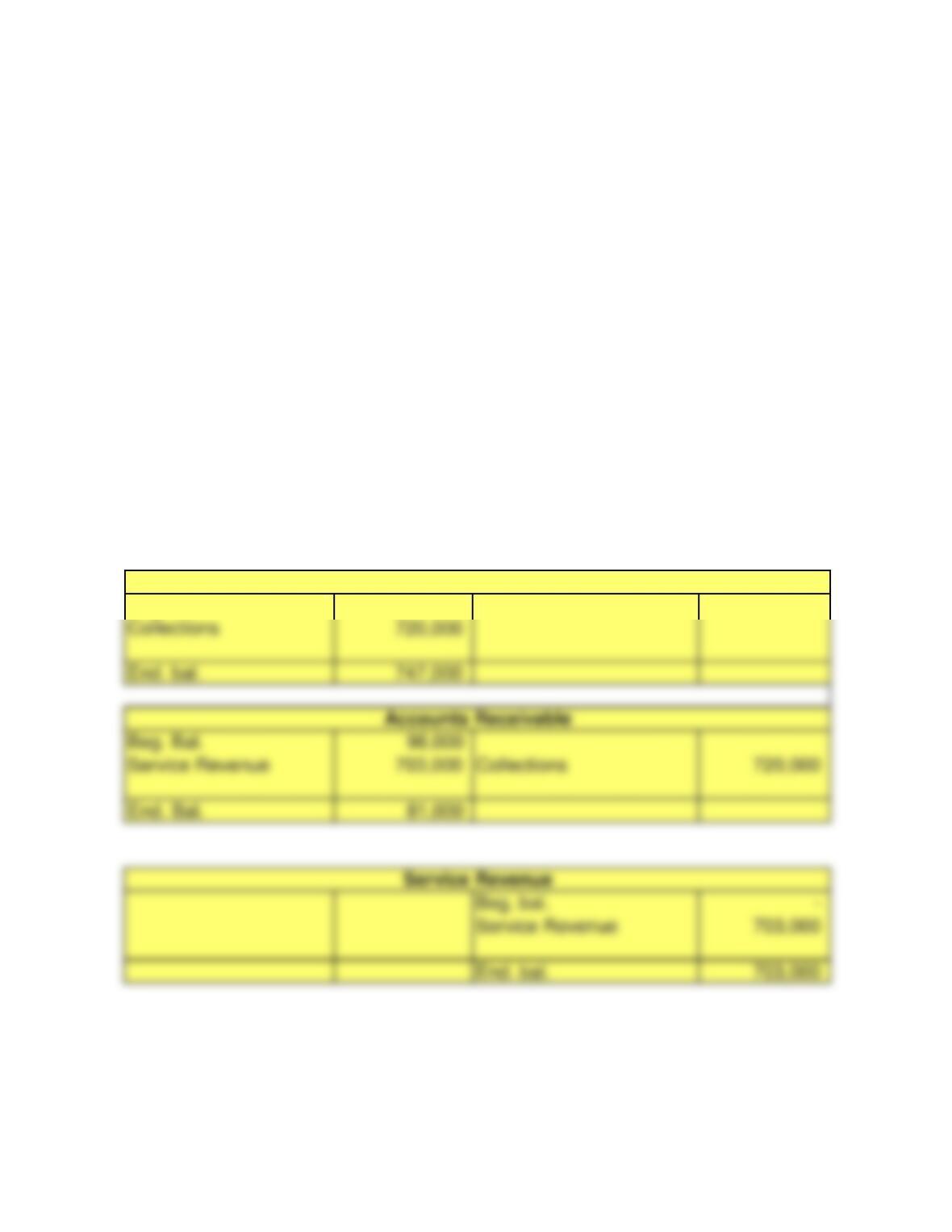
Beg. bal. 27,000
1. Set up T-accounts for Cash, Accounts Receivable, and Service Revenue. Start
with the beginning balances as follows: Cash $27,000; Accounts Receivable
$98,000; and Service Revenue $0. Post the following 2016 transactions to the T–
accounts:
a. Service revenue of $703,000, all on account
b. Collections on account, $720,000
2. What are the ending balances of Cash, Accounts Receivable, and Service
Revenue?
Cash
Chapter 5: Short-Term Investments and Receivables Page 8 of 87
FINANCIAL ACCOUNTING – Eleventh Edition Solutions Manual
S5-9
(5-10 min.)
Solution:
MEMORANDUM
DATE:
TO: Alicia Donovan
Draft a short memorandum to explain the essential element in your proposed plan;
explain why this element is important.
Chapter 5: Short-Term Investments and Receivables Page 9 of 87
FINANCIAL ACCOUNTING – Eleventh Edition Solutions Manual
S5-10
(5 min.)
Solution:
Req. 1
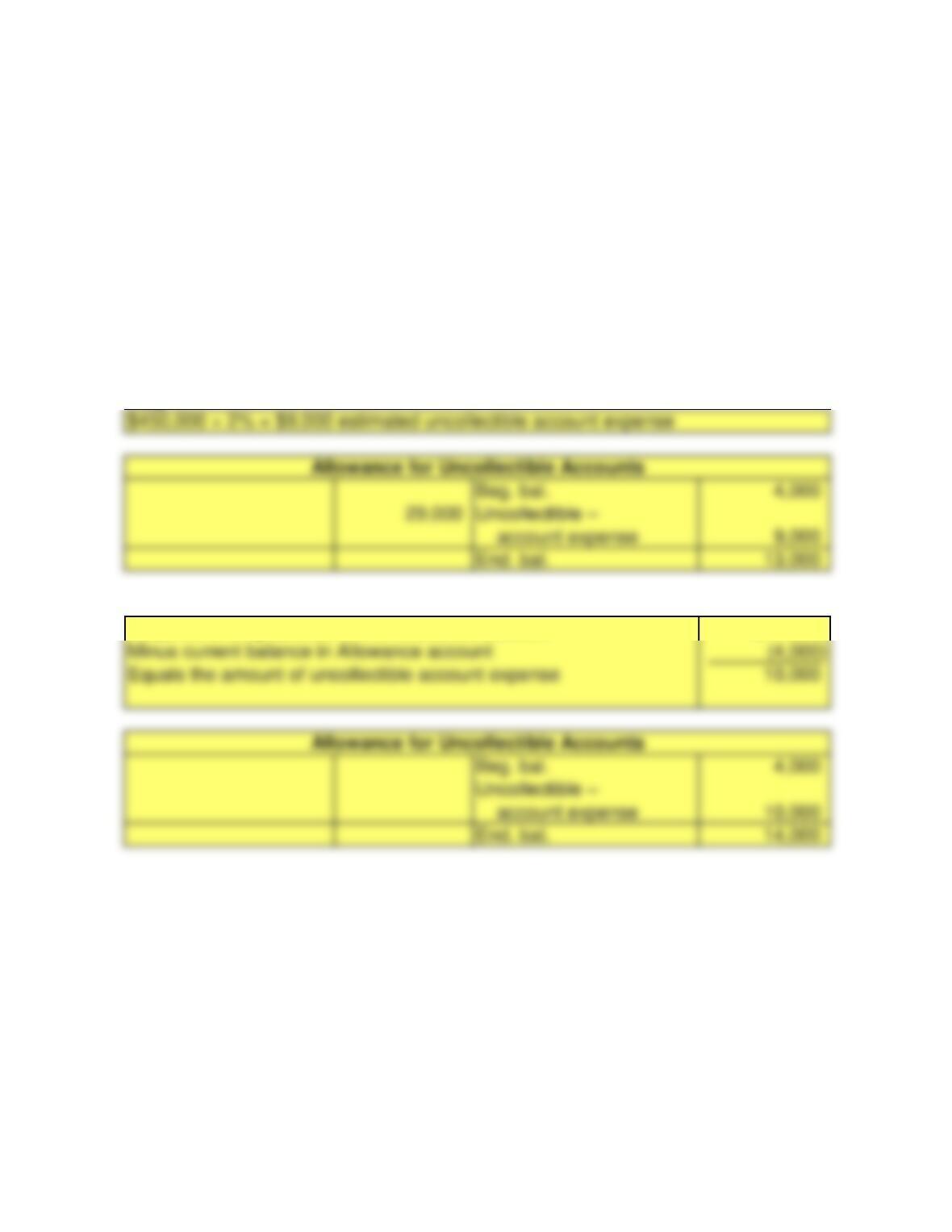
1. Make Old Tyme’s journal entry for uncollectible-account expense using the percent-
ofsales method.
2. Show how Old Tyme should report accounts receivable on its balance sheet at
December 31, 2016.
Chapter 5: Short-Term Investments and Receivables Page 10 of 87
Req. 2
FINANCIAL ACCOUNTING – Eleventh Edition Solutions Manual
S5-11
(10 min.)
Requirements
Solution:
Req. 1
Req. 2
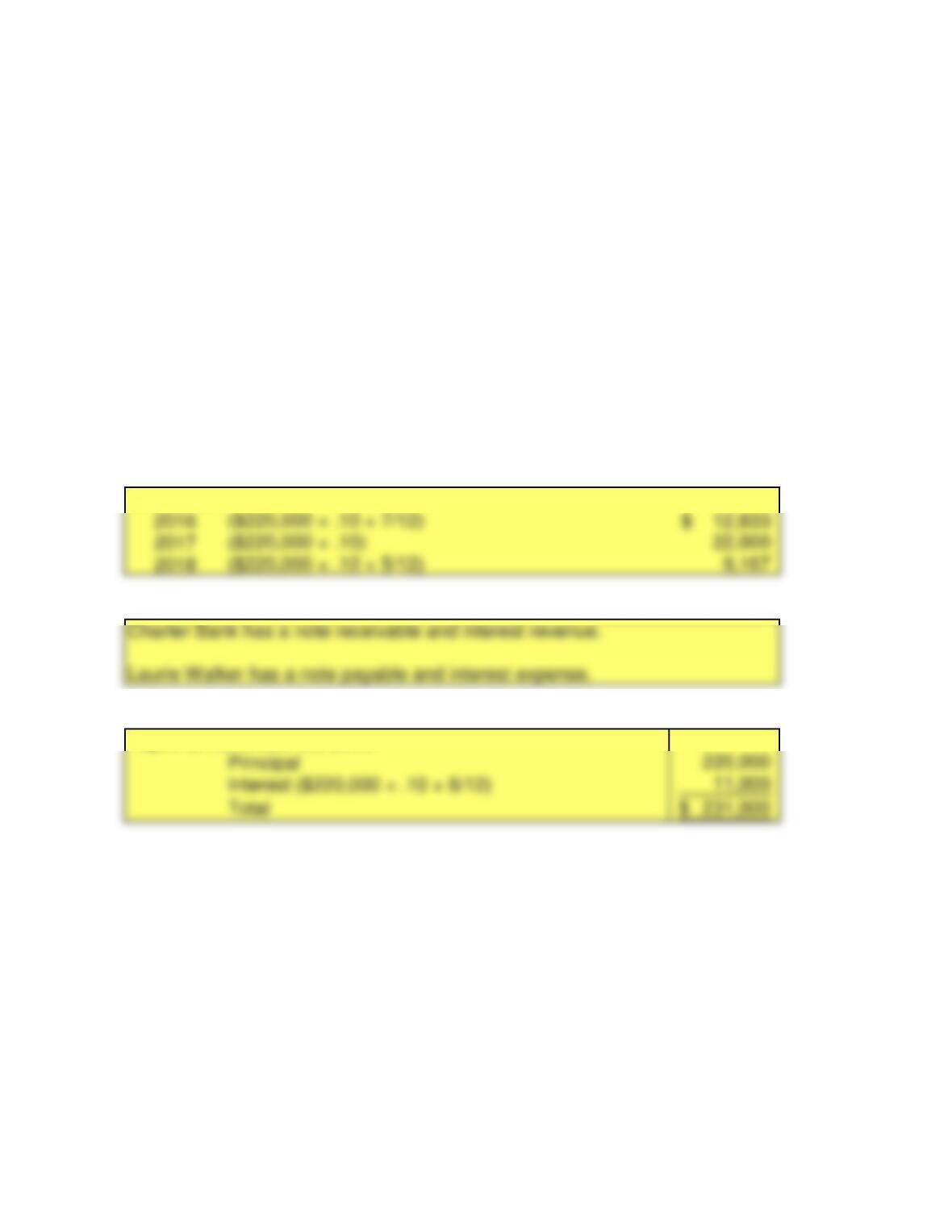
Required ending balance in the Allowance account $ 14,000
1. Make Old Tyme’s journal entry for uncollectible-account expense using the
percent-ofsales method.
2. Show how Old Tyme should report accounts receivable on its balance sheet at
December 31, 2016.
Chapter 5: Short-Term Investments and Receivables Page 11 of 87
FINANCIAL ACCOUNTING – Eleventh Edition Solutions Manual
S5-12
(10 min.)
Solution:
Req. 1
Interest for:
Req. 2
Charter Bank has a note receivable and interest revenue.
Req. 3
Payoff at November 30, 2016:
1. Compute the amount of interest during 2016, 2017, and 2018 for the following note
receivable: On May 31, 2016, Charter Bank lent $220,000 to Laurie Walker on a two-
year, 10% note.
2. Which party has a (an)
a. note receivable?
b. note payable?
c. interest revenue?
d. interest expense?
3. How much in total would Charter Bank collect if Laurie Walker paid off the note
early—say, on November 30, 2016?
Chapter 5: Short-Term Investments and Receivables Page 12 of 87
FINANCIAL ACCOUNTING – Eleventh Edition Solutions Manual
S5-13
(10 min.)
Solution:
DATE DEBIT CREDIT
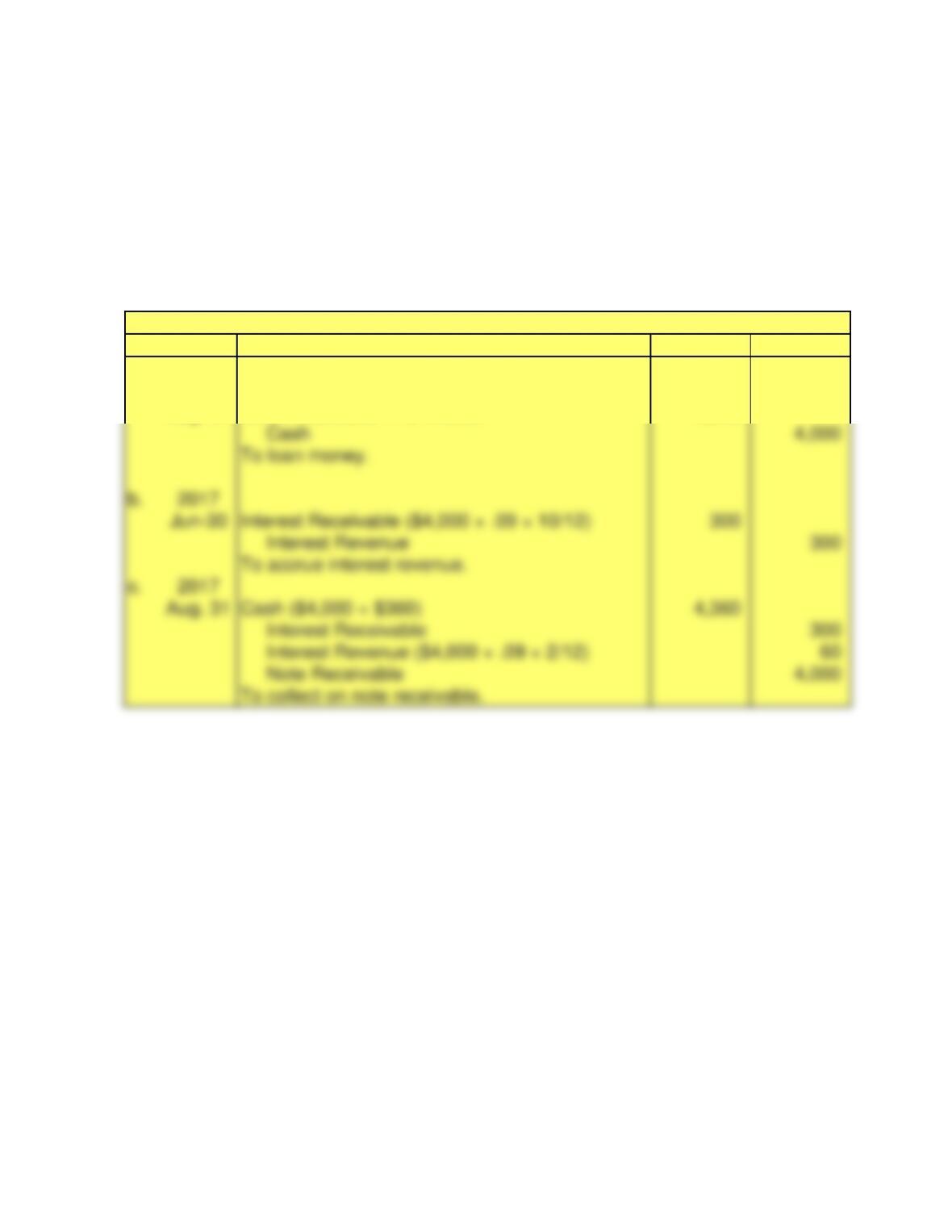
a. 2016
Aug. 31 Note Receivable — D. Fields 4,000
Journal
ACCOUNT TITLES AND EXPLANATION
Journalize Ferris State Bank’s (a) lending money on the note receivable at August 31,
2016, (b) accrual of interest at June 30, 2017, and (c) collection of principal and
interest at August 31, 2017, the maturity date of the note.
Chapter 5: Short-Term Investments and Receivables Page 13 of 87
FINANCIAL ACCOUNTING – Eleventh Edition Solutions Manual
S5-14
(5 min.)
Solution:
DATE DEBIT CREDIT
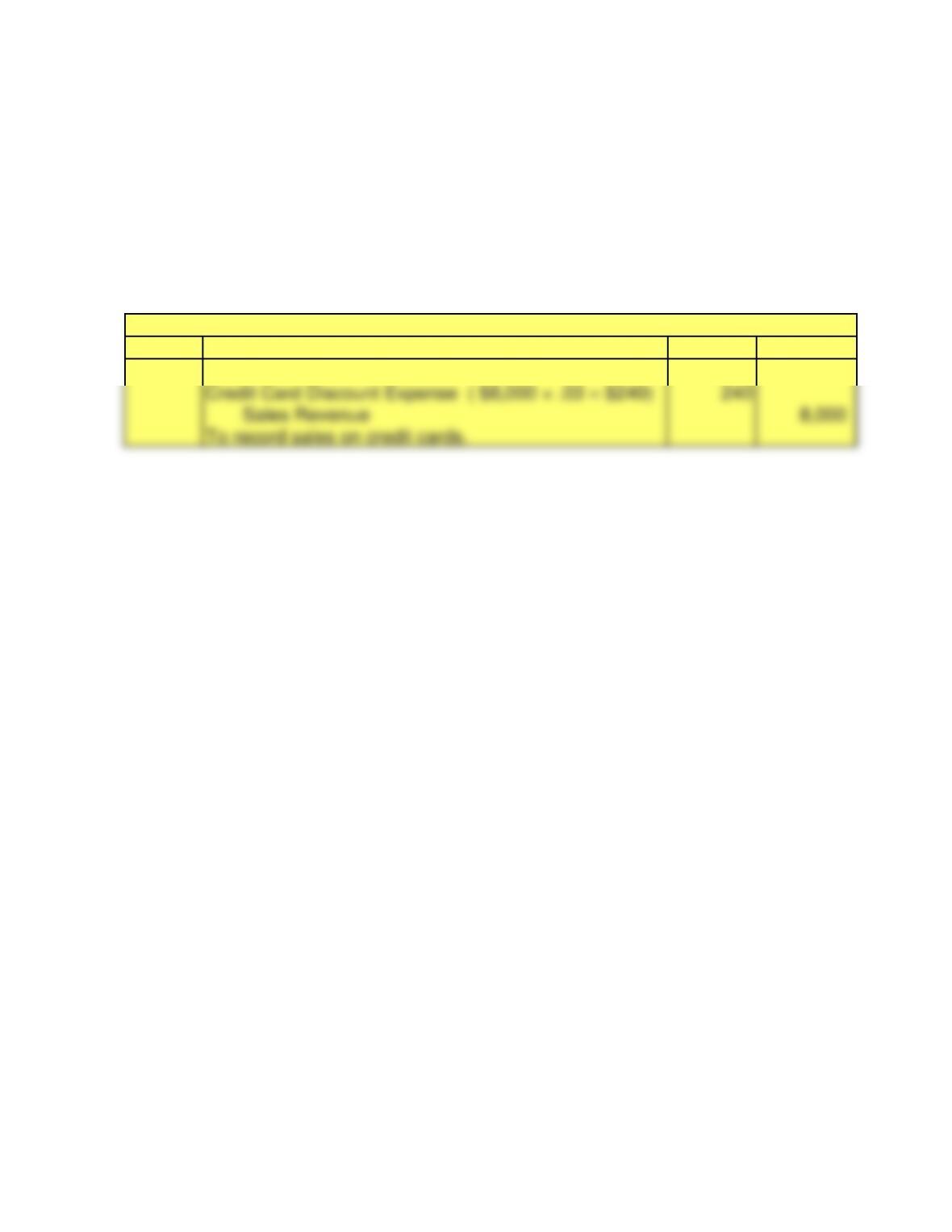
Cash 7760
Make the entry that Collins would make to record the sale to Knight. (You do
not need to make the cost of goods sold entry in this exercise. Also assume that since
this is a custom order, no refunds or returns are allowed.)
Journal
ACCOUNT TITLES AND EXPLANATION
Chapter 5: Short-Term Investments and Receivables Page 14 of 87
Credit Card Discount Expense ( $8,000 × .03 = $240) 240
To record sales on credit cards.
FINANCIAL ACCOUNTING – Eleventh Edition Solutions Manual
S5-15
(10 min.)
Requirements
Solution:
Req. 1
Req. 2
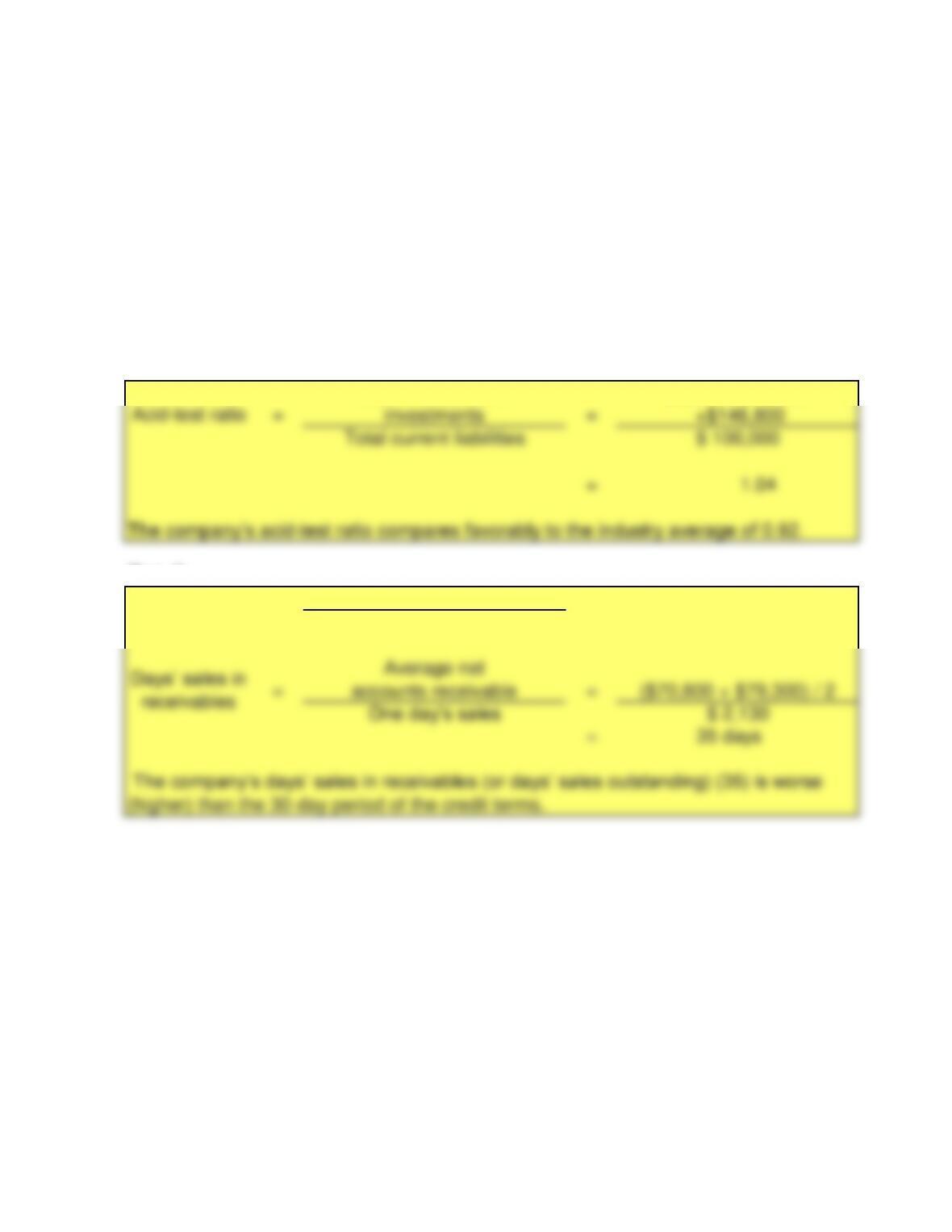
$ 2,130
365
$ 2,130
Cash + Short-term
$9,700 + $15,000
1. Compute Highland’s quick (acid-test) ratio at the end of 2017. Round to two decimal
places. How does the quick (acid-test) compare with the industry average of 0.92?
2. Compare days’ sales in receivables for 2017 with the company’s credit terms of net
30 days.
One day’s
sales
$ 777,450
=
=
Chapter 5: Short-Term Investments and Receivables Page 15 of 87
FINANCIAL ACCOUNTING – Eleventh Edition Solutions Manual
S5-16
(10 min.)
Solution:
1 TRUE
1. True or false? Credit sales increase receivables. Collections and write-offs
decrease receivables.
2. True or false? A proper way to express credit terms is “FOB shipping point.”
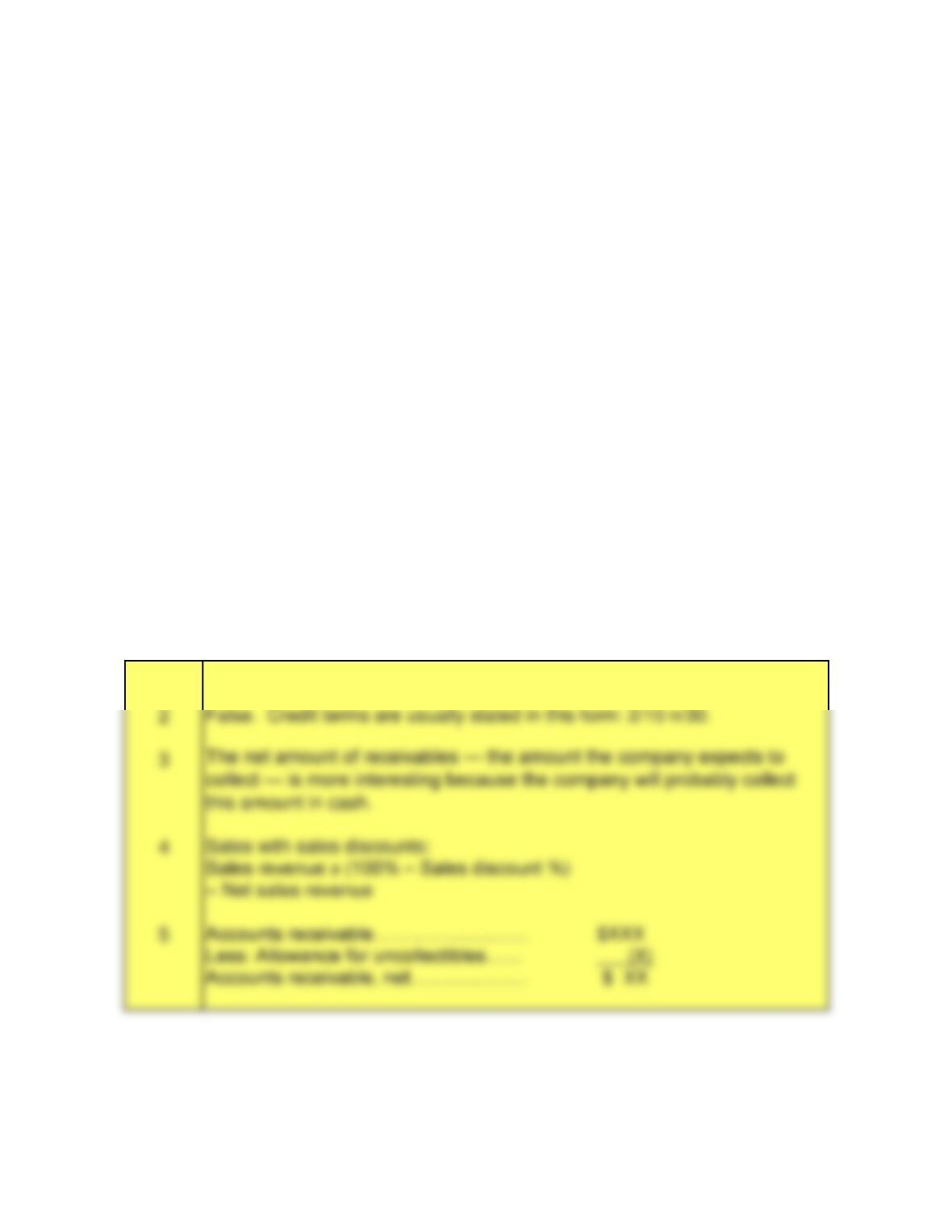
3. Which receivables figure—the total amount that customers owe the company, or
the net amount the company expects to collect—is more interesting to investors as
they consider buying the company’s stock? Give your reason.
4. Show how to calculate the amount of sales revenue when a sales discount is
offered to speed up payment.
5. Show how to determine net accounts receivable.
6. True or false? The direct write-off method of accounting for uncollectibles
understates assets.
7. Iowa Bank lent $150,000 to Mason Company on a six-month, 6% note. Which
party has interest receivable? Which party has interest payable? Interest expense?
Interest revenue? How much interest will these organizations record one month
after Mason Company signs the note?
8. When Iowa Bank accrues interest on the Mason Company note, show the
directional effects on the bank’s assets, liabilities, and equity (increase, decrease, or
no effect).
9. True or false? Credit card sales increase accounts receivable.
Chapter 5: Short-Term Investments and Receivables Page 16 of 87
3
FINANCIAL ACCOUNTING – Eleventh Edition Solutions Manual
6
False. The direct write-off method overstates assets because it fails to
show the amount of the receivables the company actually expects to
Chapter 5: Short-Term Investments and Receivables Page 17 of 87
9
FINANCIAL ACCOUNTING – Eleventh Edition Solutions Manual
E5-17A
(10-15 min.)
Requirements
Solution:
Req. 1
Req. 2
Dec. 15 Investment in Trading Securities
(1,000 × $48) 48,000
Cash 48,000
Req. 3
BALANCE SHEET (partial)
Current assets:
INCOME STATEMENT (partial)
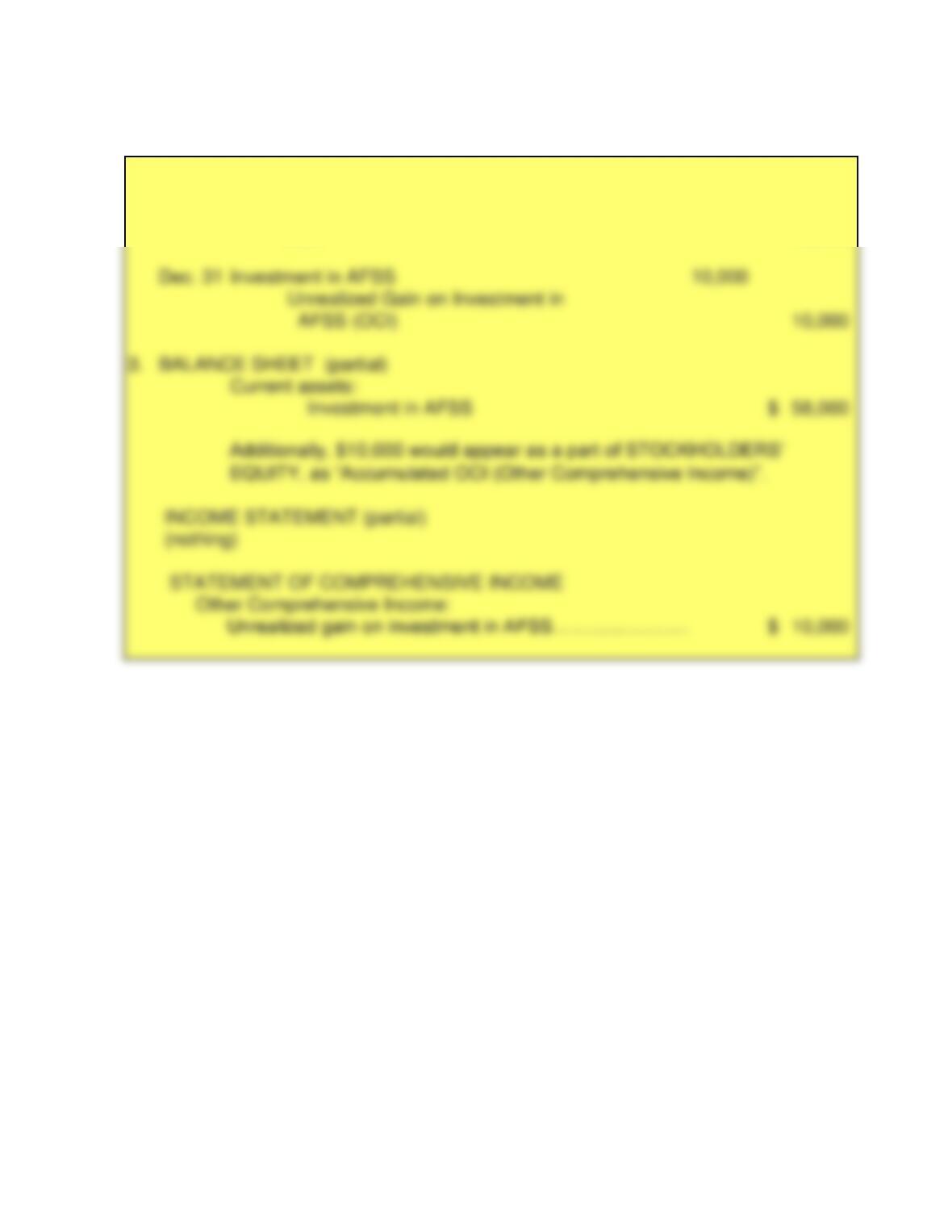
1. What type of investment is this to Riverton? Give the reason for your answer.
2. Record Riverton’s purchase of the Switzer stock on December 15 and the
adjustment to market value on December 31.
3. Show how Riverton would report this investment on its balance sheet at December
31 and any gain or loss on its income statement for the year ended December 31,
2016.
4. Suppose Riverton did not intend to treat the Switzer stock as a trading security, but
still
intended to treat it as a short-term investment. How do your answers for parts 1–3
Chapter 5: Short-Term Investments and Receivables Page 18 of 87
Purchased investment.
Dec. 31 Investment in Trading Securities
Unrealized Gain on Trading
Adjusted investment to market value.
FINANCIAL ACCOUNTING – Eleventh Edition Solutions Manual
Req. 4
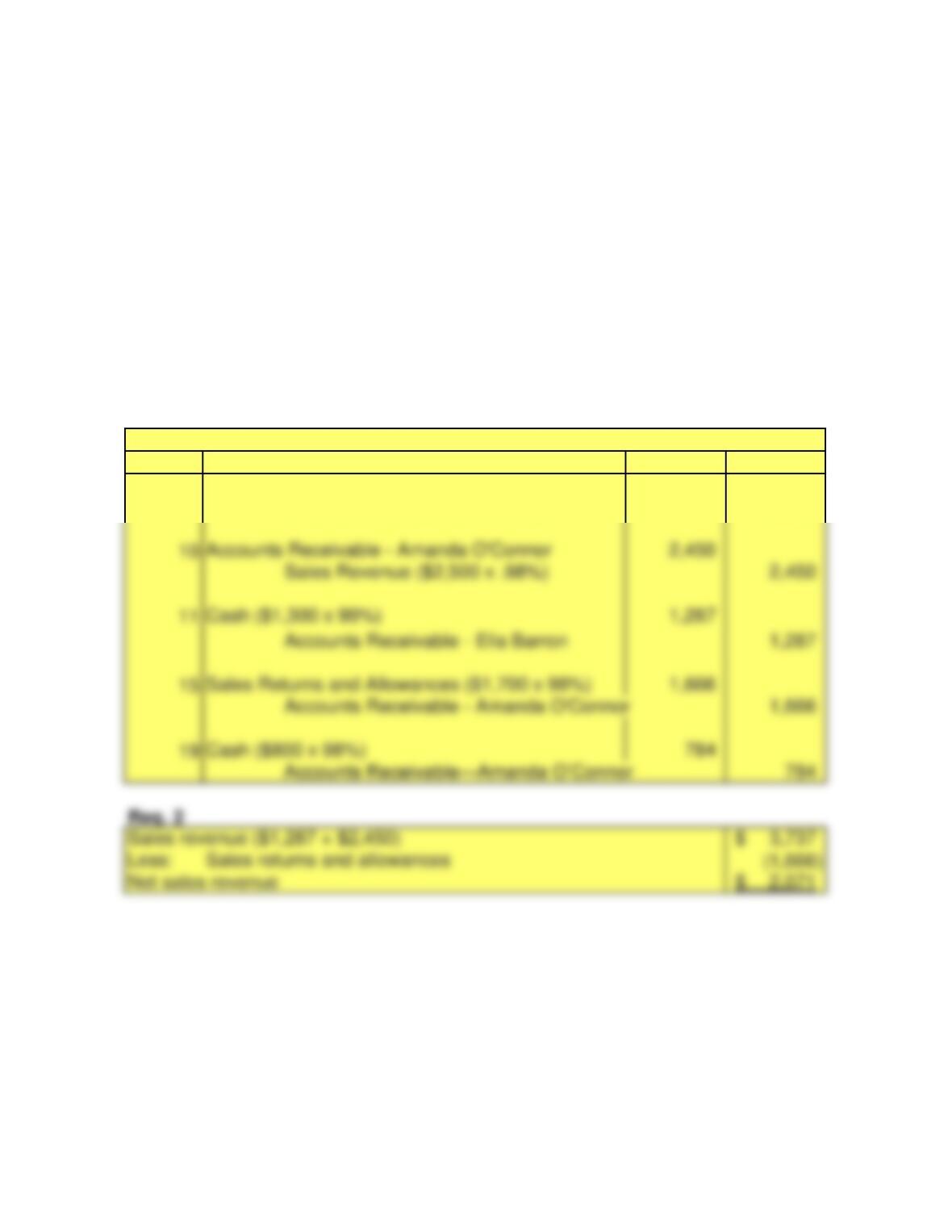
1. This is an available-for-sale security because it is not a trading security.
2. Dec. 15 Investment in AFSS 48,000
Cash 48,000
Chapter 5: Short-Term Investments and Receivables Page 19 of 87
Unrealized Gain on Investment in
AFSS (OCI) 10,000
3. BALANCE SHEET (partial)
FINANCIAL ACCOUNTING – Eleventh Edition Solutions Manual
E5-18A
(15-20 min.)
Requirements
Solution:
Req. 1
DATE DEBIT CREDIT
Nov. 2 Accounts Receivable – Ella Barron 1,287
Sales Revenue ($1,300 x 99%) 1,287
1. Record the foregoing transactions in the journal of Chic Interiors. (You do not
need to make the cost of sales, estimated refunds, or cost of estimated returns
journal entries; assume that these entries will be made by the company when it
makes its other adjusting entries at period end.)
2. Prepare a computation of net sales for the month of November.
Journal
ACCOUNT TITLES AND EXPLANATION
Chapter 5: Short-Term Investments and Receivables Page 20 of 87
Sales Revenue ($2,500 x .98%) 2,450
Accounts Receivable – Amanda O’Connor 1,666
Req. 2