5-57
5-38 (40 min.) ABC, health care.
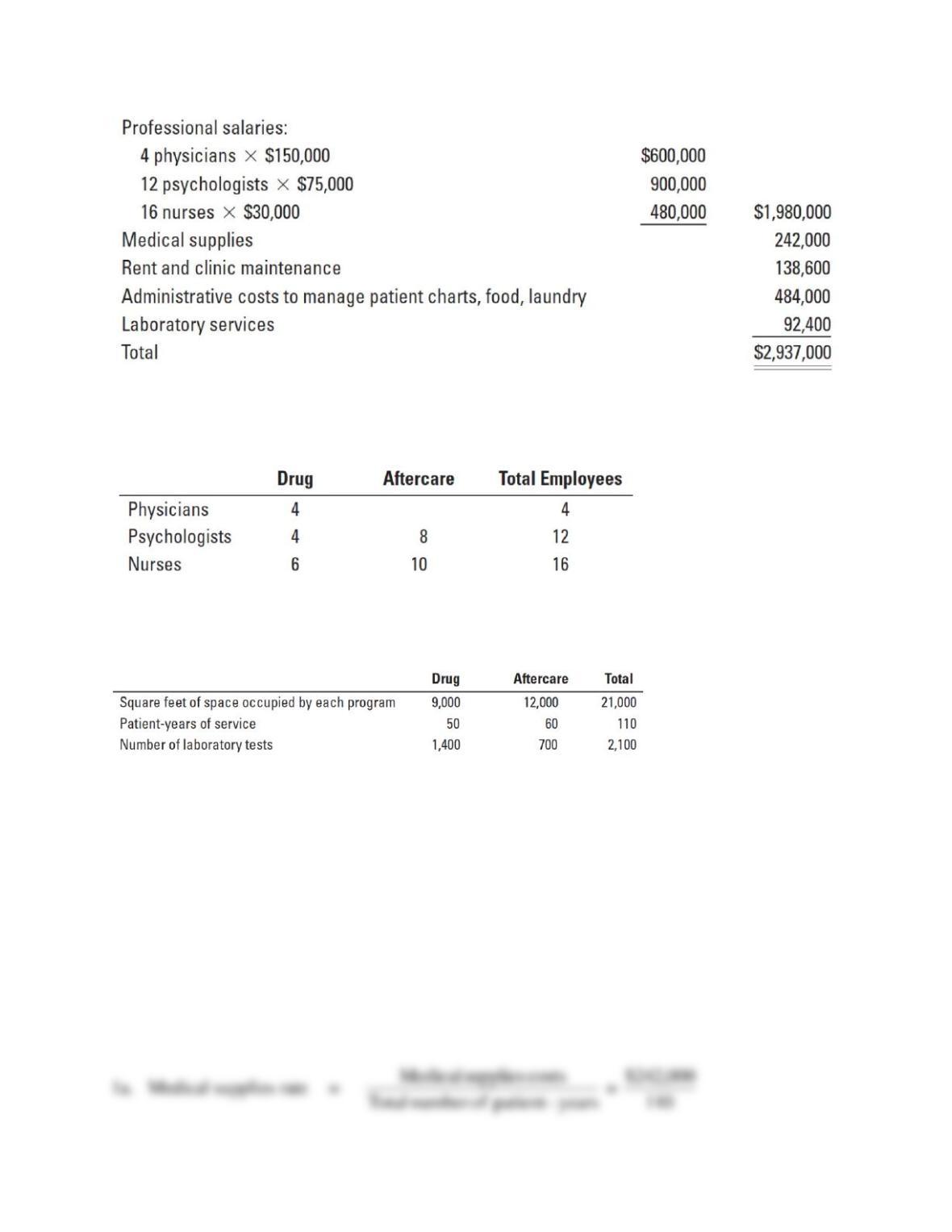
Crosstown Health Center runs two programs: drug addict rehabilitation and aftercare (counseling
and support of patients after release from a mental hospital). The center’s budget for 2014
follows.
5-58
Kim Yu, the director of the center, is keen on determining the cost of each program. Yu
compiled the following data describing employee allocations to individual programs:
Yu has recently become aware of activity-based costing as a method to refine costing systems.
She asks her accountant, Gus Gates, how she should apply this technique. Gates obtains the
following budgeted information for 2014:
Required:
1. a. Selecting cost-allocation bases that you believe are the most appropriate for allocating
indirect costs to programs, calculate the budgeted indirect cost rates for medical supplies;
rent and clinic maintenance; administrative costs for patient charts, food, and laundry; and
laboratory services.
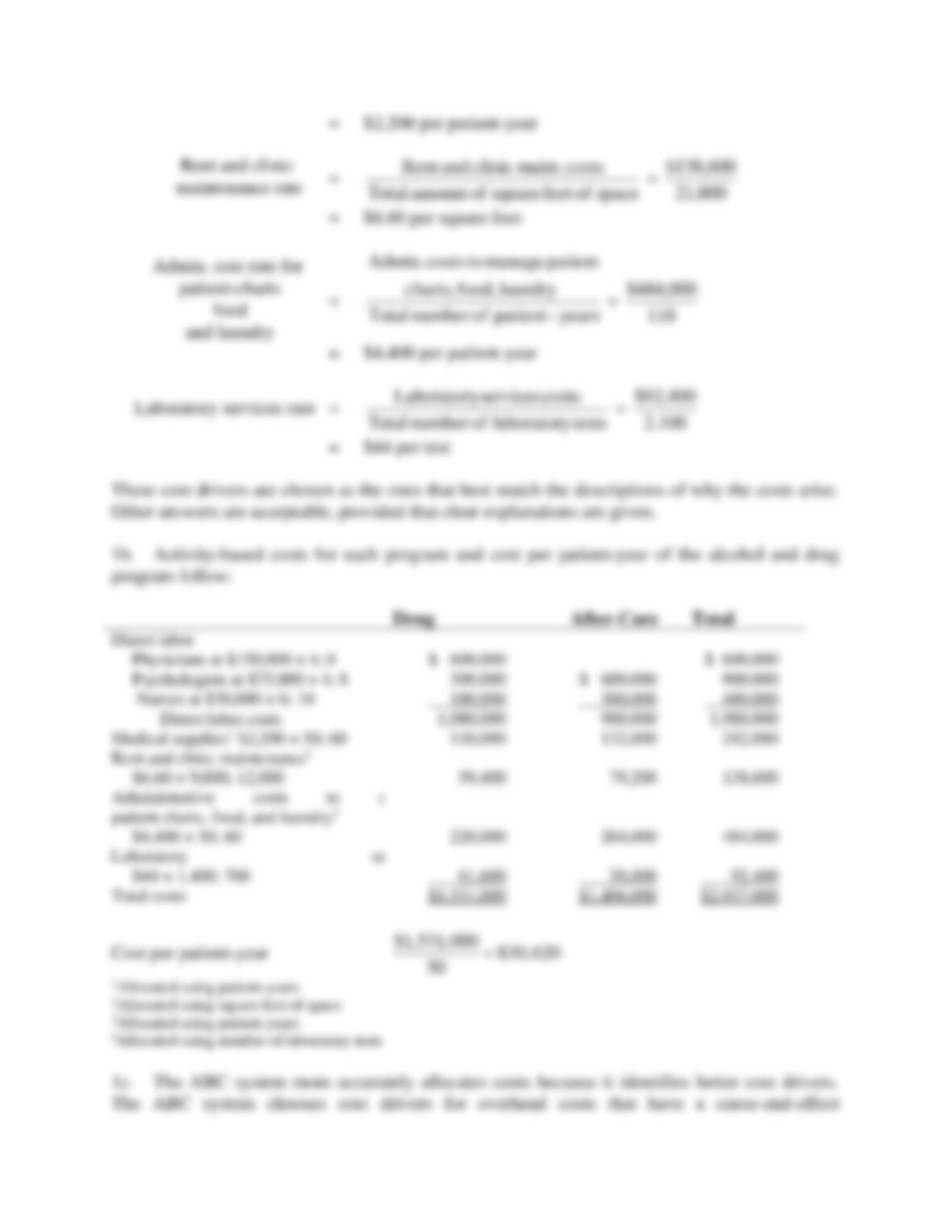
b. Using an activity-based costing approach to cost analysis, calculate the budgeted cost of
each program and the budgeted cost per patient-year of the drug program.
c. What benefits can Crosstown Health Center obtain by implementing the ABC system?
2. What factors, other than cost, do you think Crosstown Health Center should consider in
allocating resources to its programs?
SOLUTION
5-59
5-60
5-39 (25 min.) Unused capacity, activity-based costing, activity-based management.
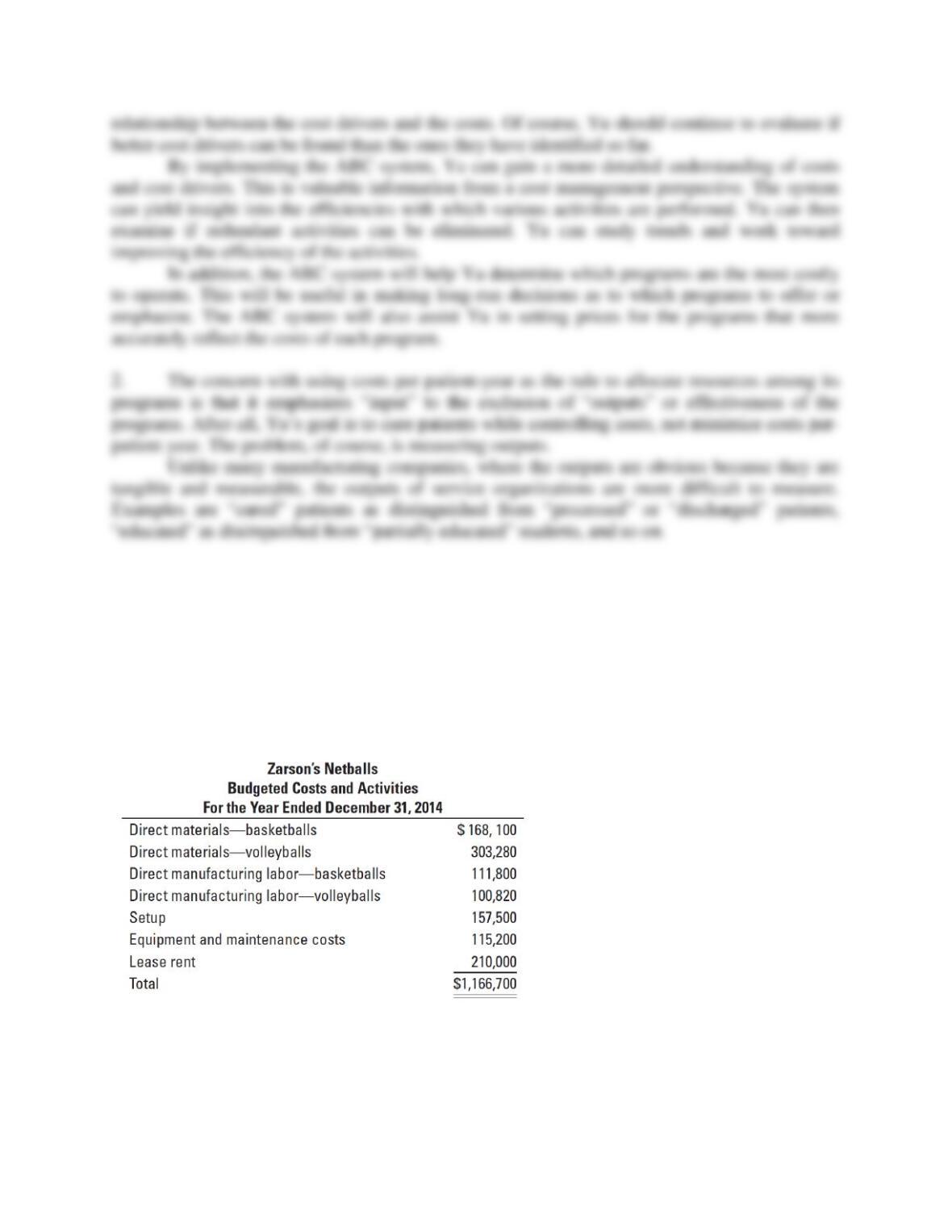
Zarson’s Netballs is a manufacturer of high-quality basketballs and volleyballs. Setup costs are
driven by the number of batches. Equipment and maintenance costs increase with the number of
machine-hours, and lease rent is paid per square foot. Capacity of the facility is 14,000 square
feet, and Zarson is using only 80% of this capacity. Zarson records the cost of unused capacity as
a separate line item and not as a product cost. The following is the budgeted information for
Zarson:
Other budget information follows:
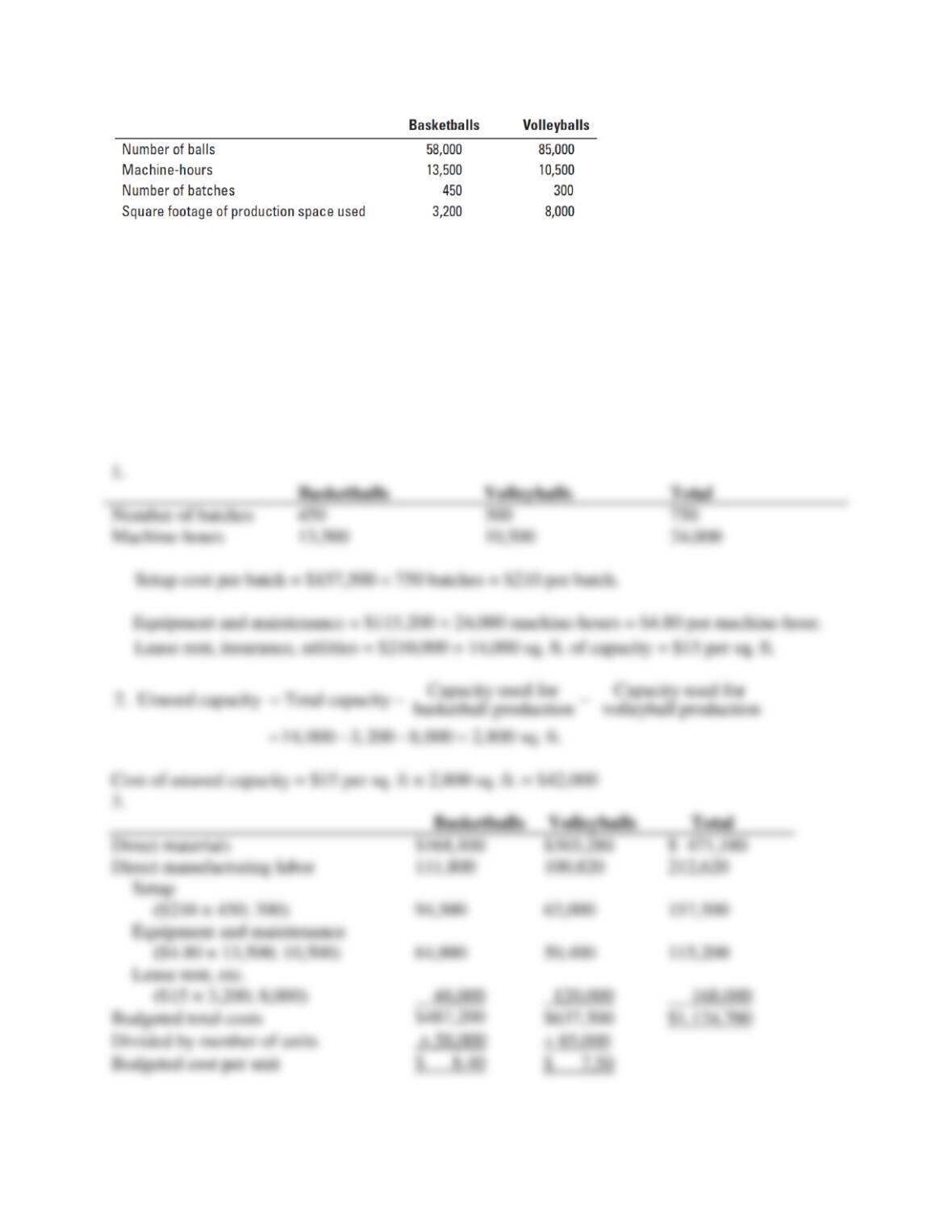
5-61
Required:
1. Calculate the budgeted cost per unit of cost driver for each indirect cost pool.
2. What is the budgeted cost of unused capacity?
3. What is the budgeted total cost and the cost per unit of resources used to produce (a)
basketballs and (b) volleyballs?
4. Why might excess capacity be beneficial for Zarson? What are some of the issues Zarson
should consider before increasing production to use the space?
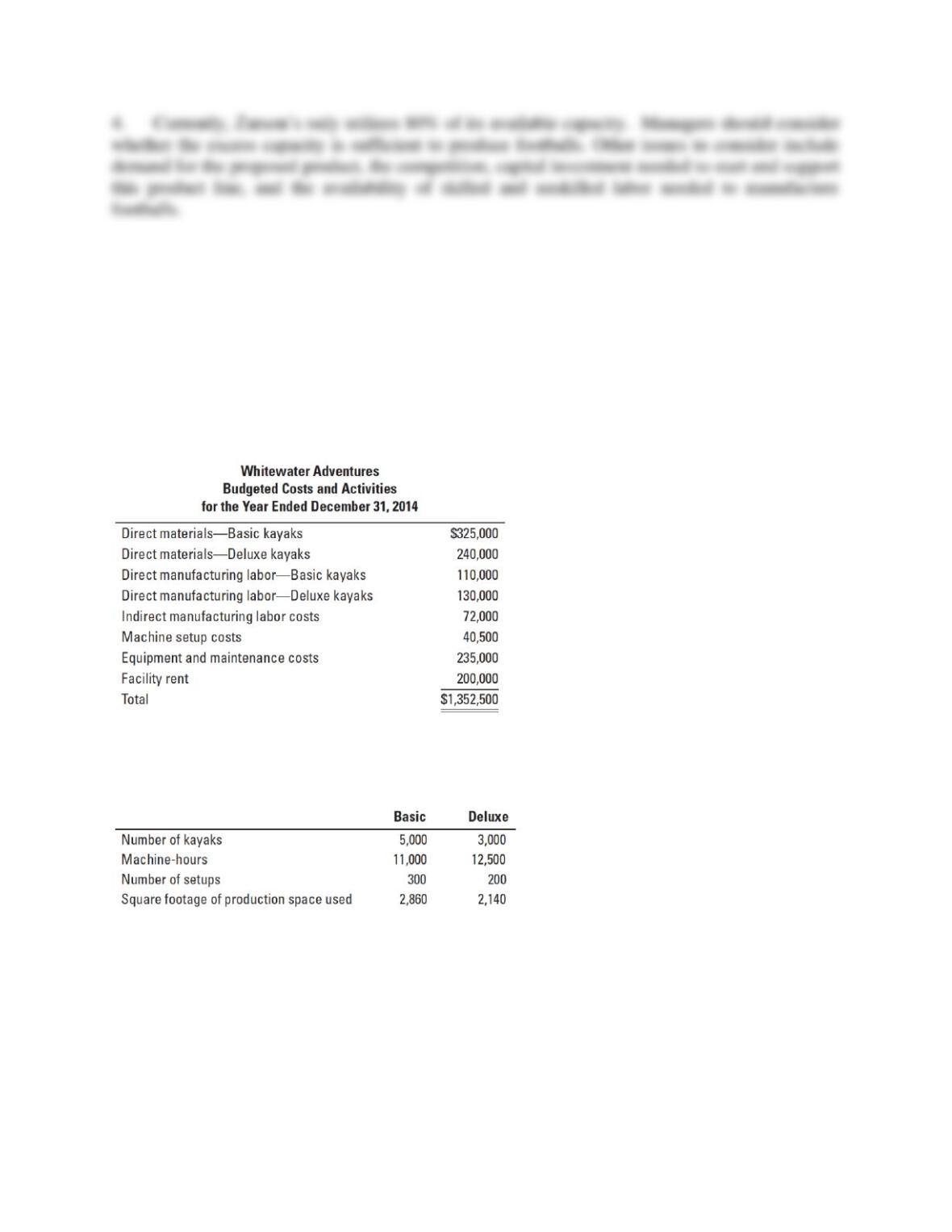
SOLUTION
5-62
5-40 (30 min.) Unused capacity, activity-based costing, activity-based management.
Whitewater Adventures manufactures two models of kayaks, Basic and Deluxe, using a
combination of machining and hand finishing. Machine setup costs are driven by the number of
setups. Indirect manufacturing labor costs increase with direct manufacturing labor costs.
Equipment and maintenance costs increase with the number of machine-hours, and facility rent is
paid per square foot. Capacity of the facility is 6,250 square feet, and Whitewater is using only
80% of this capacity. Whitewater records the cost of unused capacity as a separate line item and
not as a product cost. For the current year, Whitewater has budgeted the following:
Other budget information follows:
Required:
1. Calculate the cost per unit of each cost-allocation base.
2. What is the budgeted cost of unused capacity?
3. Calculate the budgeted total cost and the cost per unit for each model.
4. Why might excess capacity be beneficial for Whitewater? What are some of the issues
Whitewater should consider before increasing production to use the space?
5-63
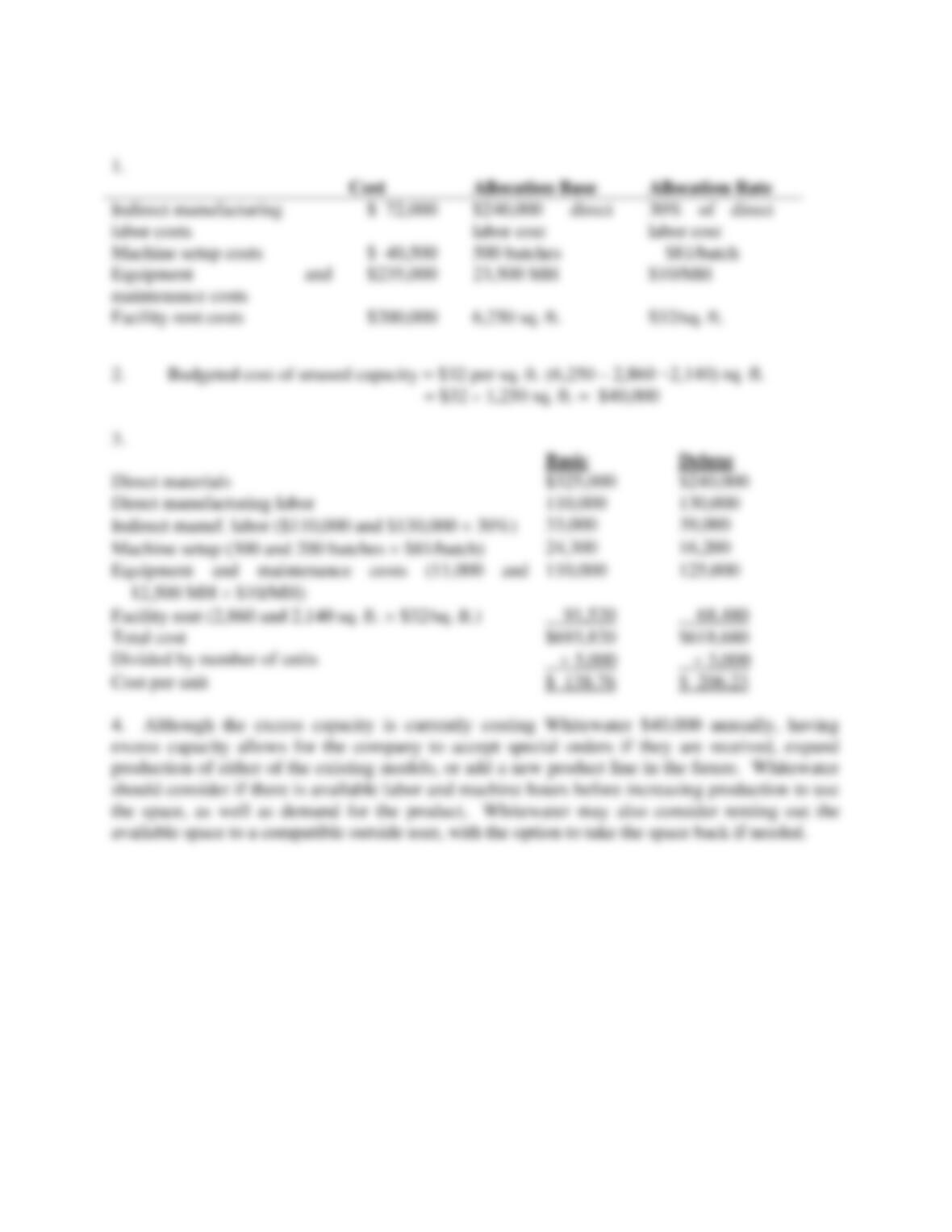
SOLUTION
5-41 (50 min.) ABC, implementation, ethics.
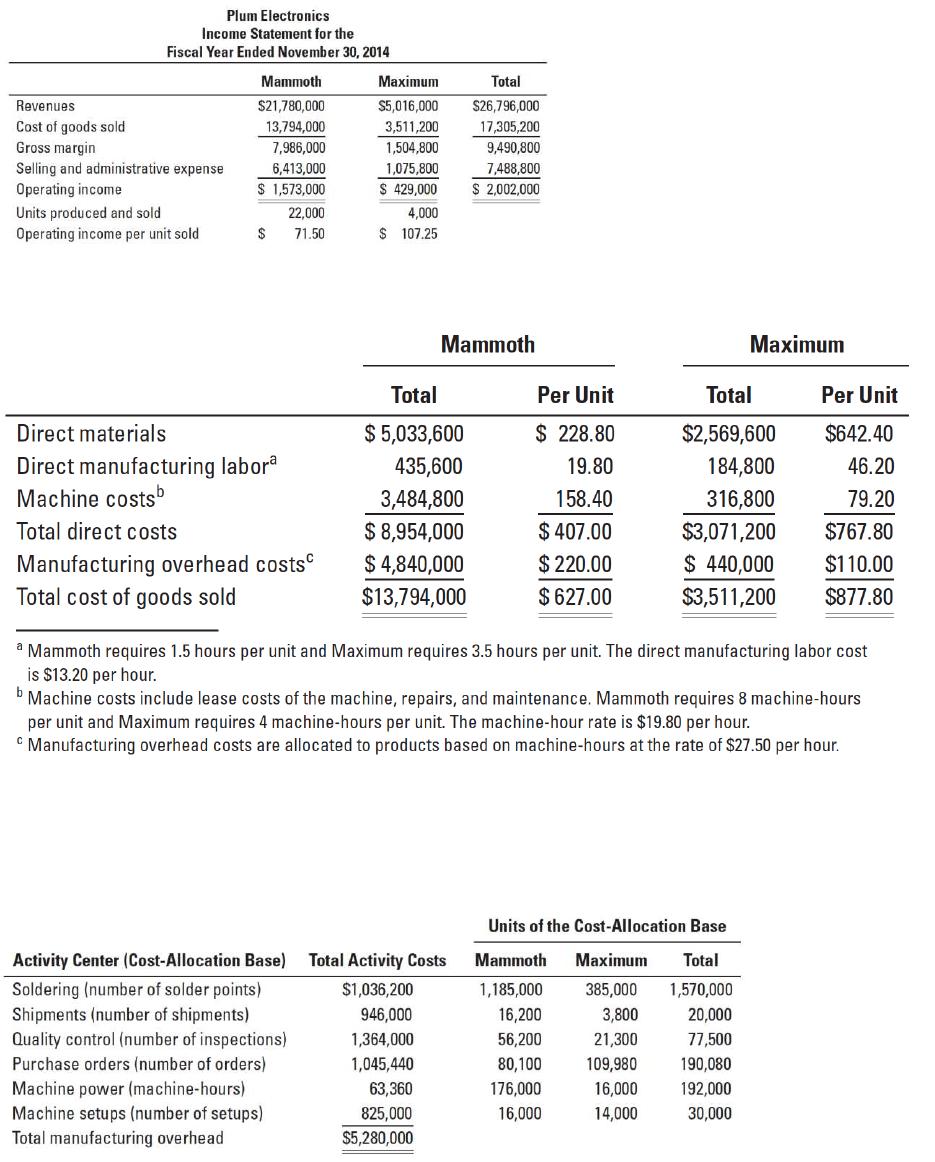
(CMA, adapted) Plum Electronics, a division of Berry Corporation, manufactures two large-
screen television models: the Mammoth, which has been produced since 2010 and sells for $990,
and the Maximum, a newer model introduced in early 2012 that sells for $1,254. Based on the
following income statement for the year ended November 30, 2014, senior management at Berry
have decided to concentrate Plum’s marketing resources on the Maximum model and to begin to
phase out the Mammoth model because Maximum generates a much bigger operating income
per unit.
5-64
Details for cost of goods sold for Mammoth and Maximum are as follows:
Plum’s controller, Steve Jacobs, is advocating the use of activity-based costing and activity-
based management and has gathered the following information about the company’s
manufacturing overhead costs for the year ended November 30, 2014.
After completing his analysis, Jacobs shows the results to Charles Clark, the Plum division
president. Clark does not like what he sees. “If you show headquarters this analysis, they are
going to ask us to phase out the Maximum line, which we have just introduced. This whole
5-65
costing stuff has been a major problem for us. First Mammoth was not profitable and now
Maximum.
“Looking at the ABC analysis, I see two problems. First, we do many more activities than the
ones you have listed. If you had included all activities, maybe your conclusions would be
different. Second, you used number of setups and number of inspections as allocation bases. The
numbers would be different had you used setup-hours and inspection-hours instead. I know that
measurement problems precluded you from using these other cost-allocation bases, but I believe
you ought to make some adjustments to our current numbers to compensate for these issues. I
know you can do better. We can’t afford to phase out either product.”
Jacobs knows that his numbers are fairly accurate. As a quick check, he calculates the
profitability of Maximum and Mammoth using more and different allocation bases. The set of
activities and activity rates he had used results in numbers that closely approximate those based
on more detailed analyses. He is confident that headquarters, knowing that Maximum was
introduced only recently, will not ask Plum to phase it out. He is also aware that a sizable portion
of Clark’s bonus is based on division revenues.
Phasing out either product would adversely affect his bonus. Still, he feels some pressure from
Clark to do something.
Required:
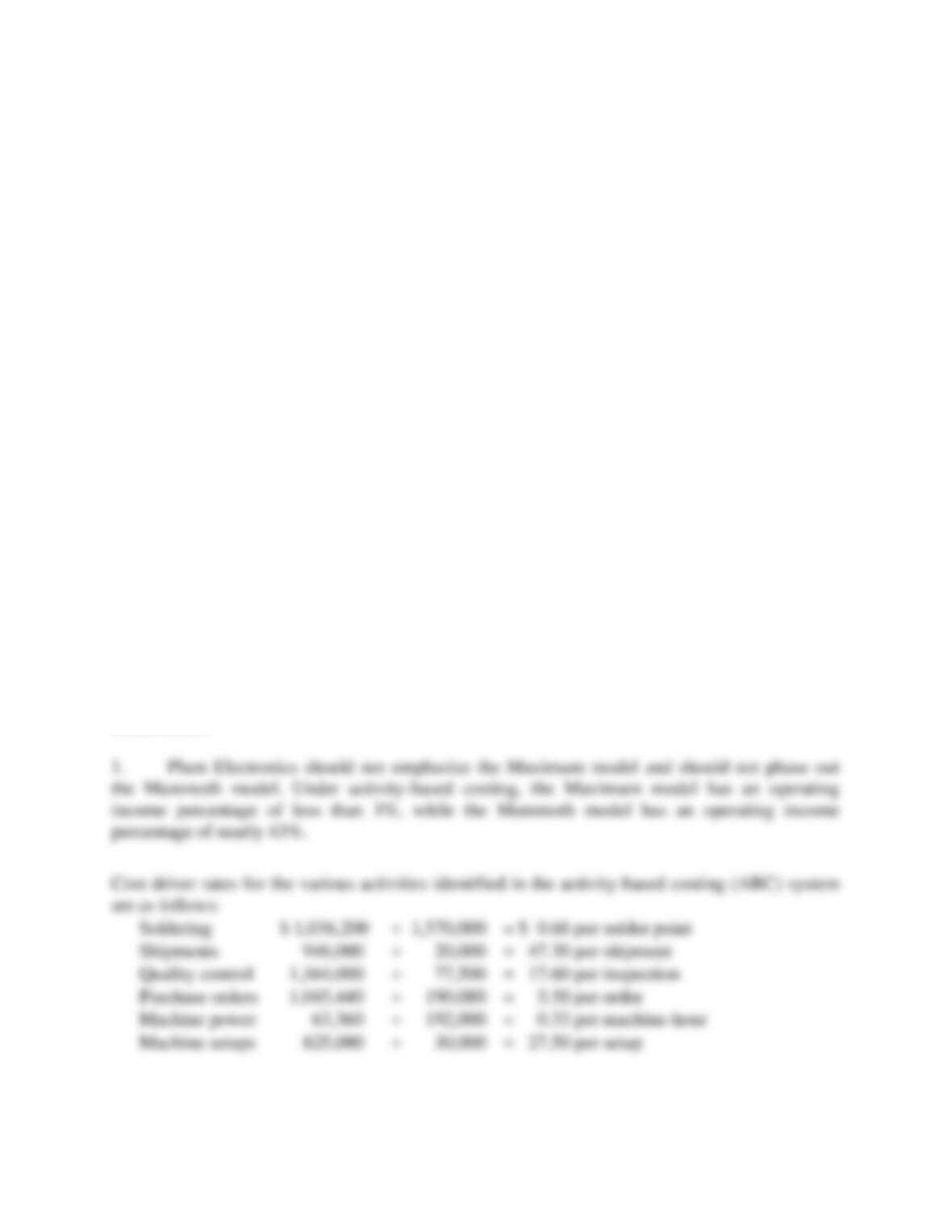
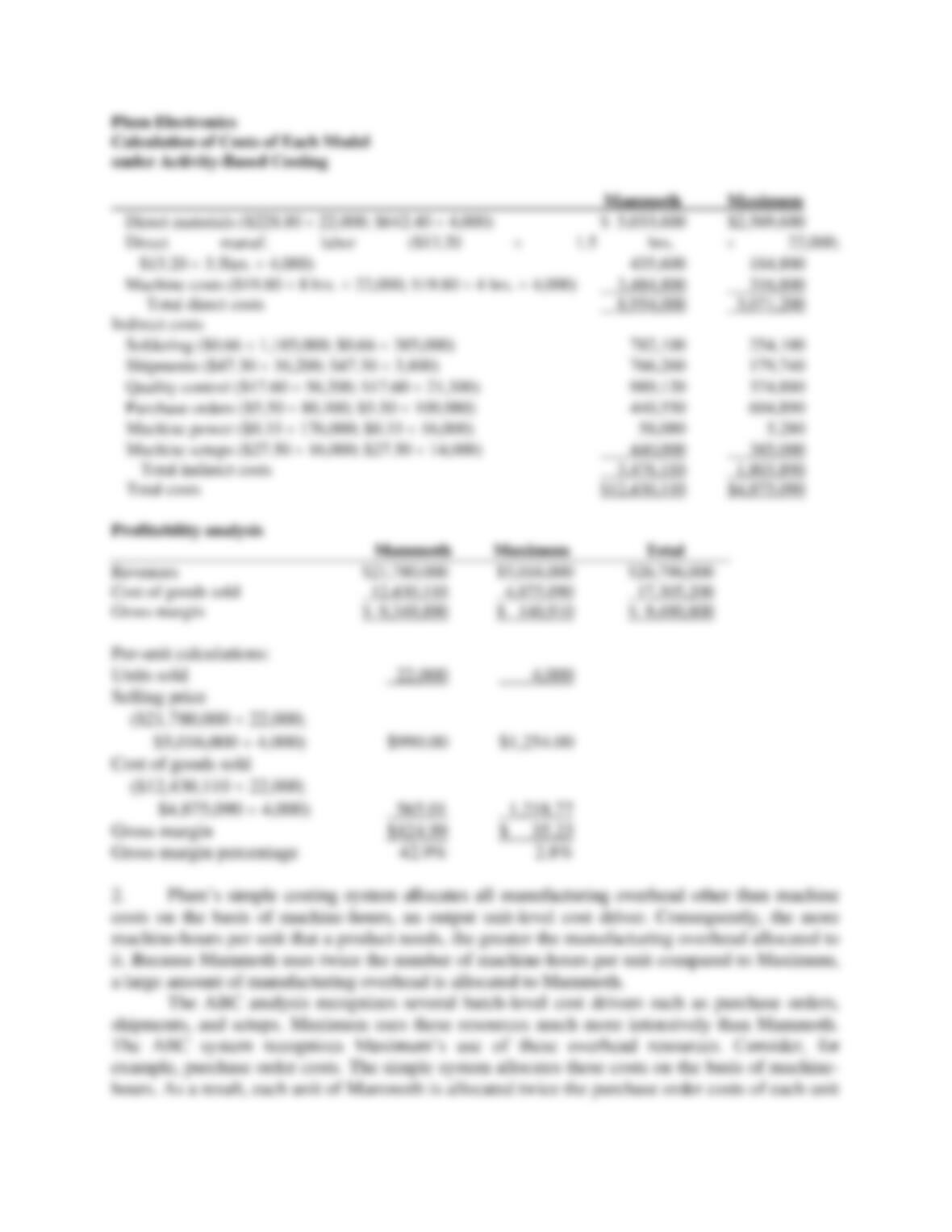
1. Using activity-based costing, calculate the gross margin per unit of the Maximum and
Mammoth models.
2. Explain briefly why these numbers differ from the gross margin per unit of the Maximum
and Mammoth models calculated using Plum’s existing simple costing system.
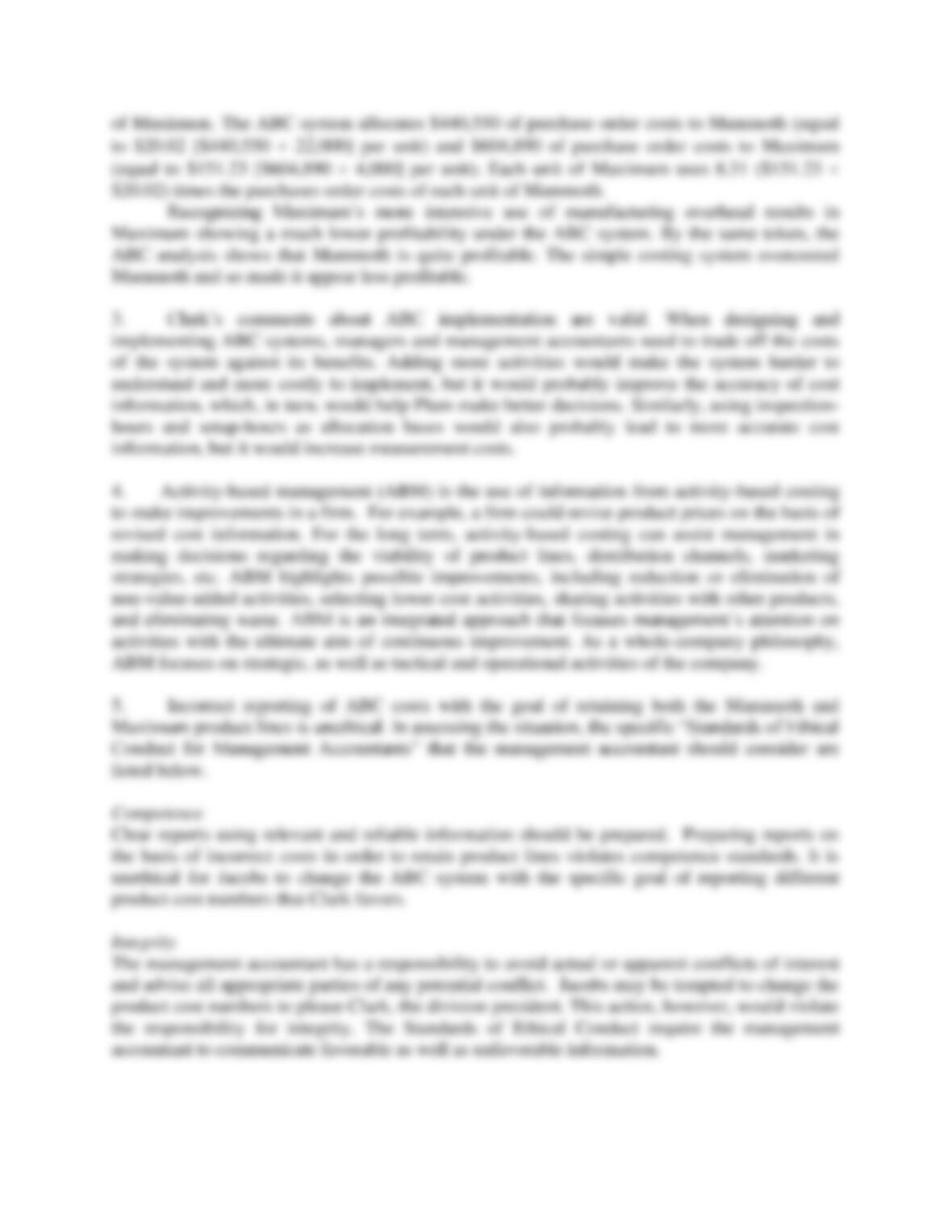
3. Comment on Clark’s concerns about the accuracy and limitations of ABC.
4. How might Plum find the ABC information helpful in managing its business?
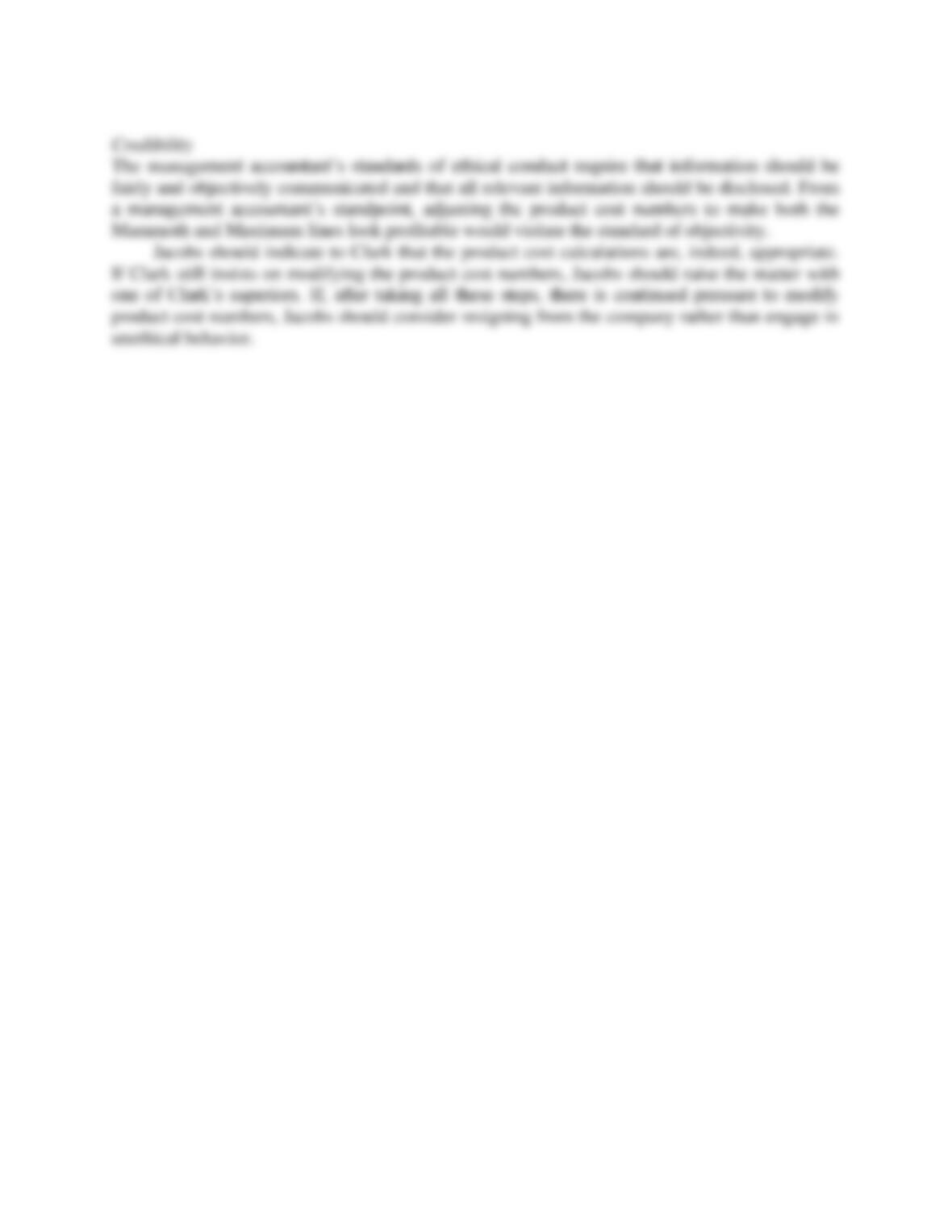
5. What should Steve Jacobs do in response to Clark’s comments?
SOLUTION
5-66
5-67
5-68
5-69
5-42 (30-40 mins.) Activity-based costing, cost hierarchy.
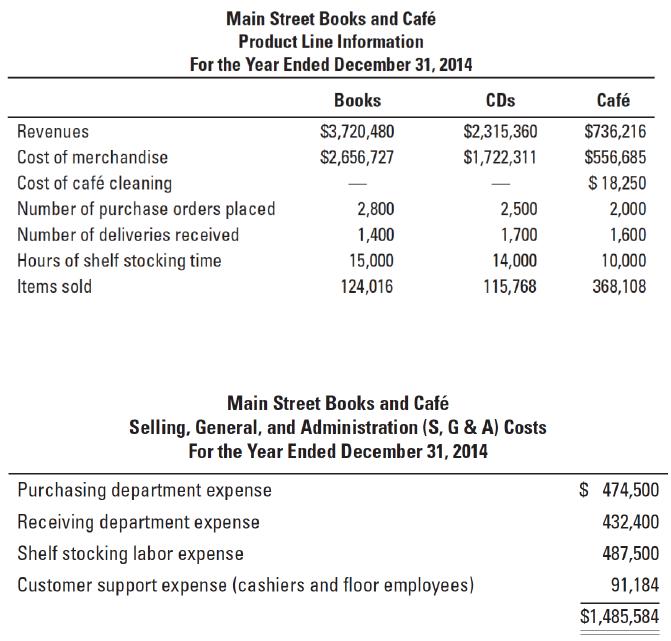
Main Street Books and Café (MSBC) is a large city bookstore that sells books and music CDs
and has a café. MSBC operates at capacity and allocates selling, general, and administration (S,
G & A) costs to each product line using the cost of merchandise of each product line. MSBC
wants to optimize the pricing and cost management of each product line. MSBC is wondering if
its accounting system is providing it with the best information for making such decisions.
Main Street Books and Café incurs the following selling, general, and administration costs:
Required:
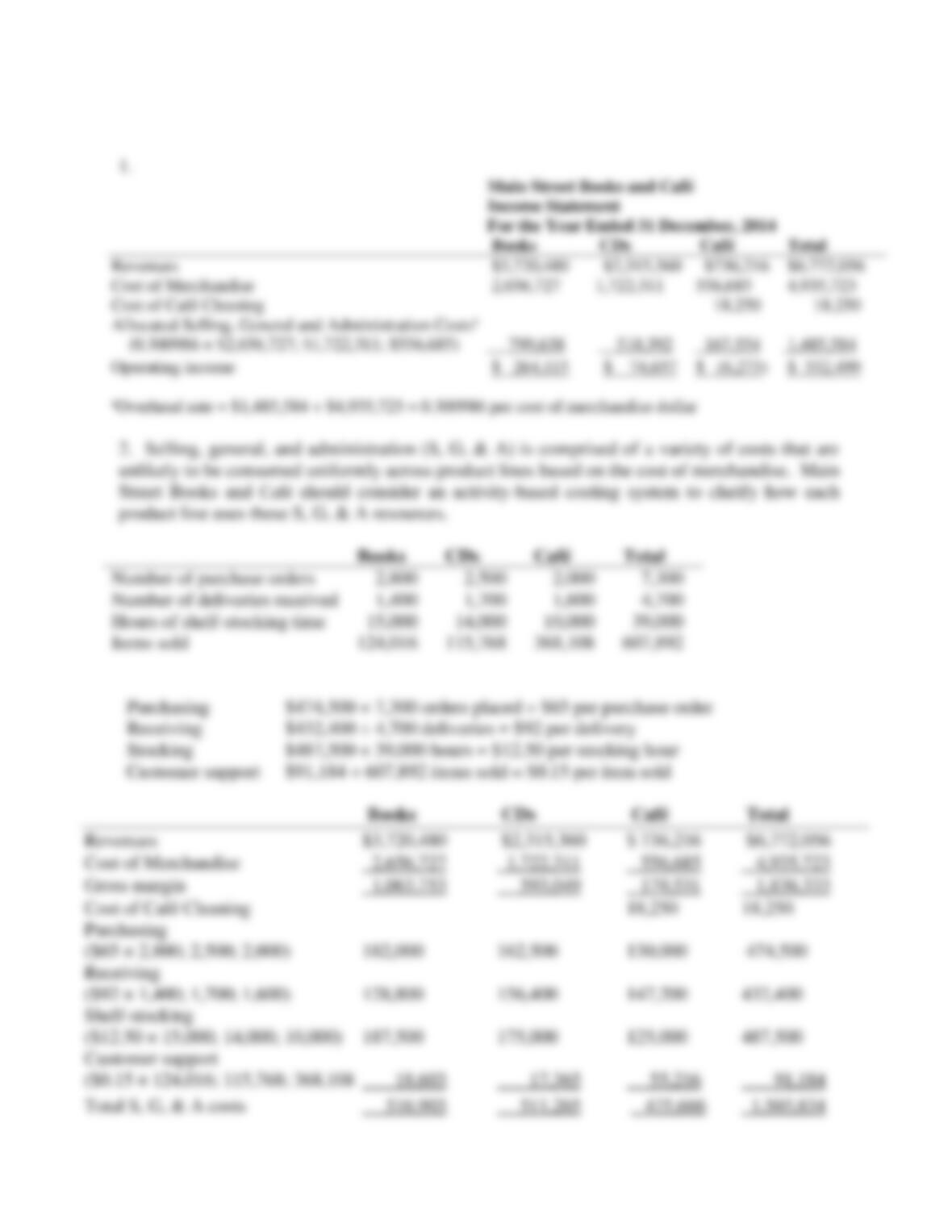
1. Suppose MSBC uses cost of merchandise to allocate all S, G & A costs. Prepare product line
and total company income statements.
2. Identify an improved method for allocating costs to the three product lines. Explain. Use the
method for allocating S, G & A costs that you propose to prepare new product line and total
company income statements. Compare your results to the results in requirement 1.
3. Write a memo to MSBC management describing how the improved system might be useful
for managing the store.
5-70
SOLUTION
5-71