FRANCHISE ARRANGEMENTS
• Assume that TrueTech starts selling TechStop franchises. TrueTech charges
franchisees an initial fee in exchange for (a) the exclusive right to operate the
only TechStop in a particular area for a five-year period, (b) the equipment
necessary to distribute and repair TrueTech products, and (c) training services
to be provided over a two-year period. Similar equipment and training can be
purchased elsewhere. What are the performance obligations in this
arrangement, and when would TrueTech recognize revenue for each of them?
Determining the performance obligations:
▪ The exclusive five-year right to operate the only TechStop in a particular
area is distinct because it can be used with other goods or services
• TrueTech would allocate the initial franchise fee to three separate performance
obligations based on their relative stand-alone prices: (1) the right to operate a
TechStop, (2) equipment, and (3) training. TrueTech would recognize revenue
• What if TrueTech also charges franchisees an additional fee for ongoing
services provided by TrueTech? In that case, TrueTech would recognize
T5-28
REVENUE DISCLOSURES
➢ Income Statement: Include
Revenue,
components.
➢ Balance Sheet: Include
Accounts Receivable: Unconditional right to receive payment, depending
➢ Disclosure: Lots of it.
Goal, help investors understand the nature, amount, timing and uncertainty
of revenues and cash flows.
Required disclosures include:
T5-29
T5-30
COMPANIES ENGAGED IN LONG-TERM CONTRACTS
Company Type of Industry or Product
Oracle Corp. Computer software, license and consulting fees
Lockheed Martin Corporation Aircraft, missiles and spacecraft
Hewlett-Packard Information technology
Northrop Grumman Newport News Shipbuilding
Nortel Networks Corp Networking solutions and services to support
Illustration 5-23
T5–31
RECOGNIZING REVENUE FOR LONG–TERM CONTRACTS
Applying the 5-step process to long-term contracts is complicated in two ways:
➢ Step 2, “Identify the performance obligation(s) in the contract,” is important
because long-term contracts typically include many products and services that
could be viewed as separate performance obligations.
These products and services are capable of being distinct, but
➢ Step 5, “Recognize revenue when (or as) each performance obligation is
satisfied,” is important because there can be a big difference for long-term
contracts between recognizing revenue over time and recognizing revenue only
when the contract has been completed. Most long-term contracts qualify for
revenue recognition over time, either because
the seller is creating an asset that the customer controls as it is completed, or
T5–32
RECOGNIZING REVENUE FOR LONG-TERM CONTRACTS
AT A POINT IN TIME VS. OVER TIME
At the beginning of 2016, the Harding Construction Company received a contract to
build an office building for $5 million. The project is estimated to take three years to
complete. According to the contract, Harding will bill the buyer in installments over
the construction period according to a prearranged schedule. Information related to
the contract is as follows:
2016 2017 2018
Construction costs incurred
during the year $1,500,000 $1,000,000 $1,600,000
Construction costs incurred
Illustration 5–24

T5–33
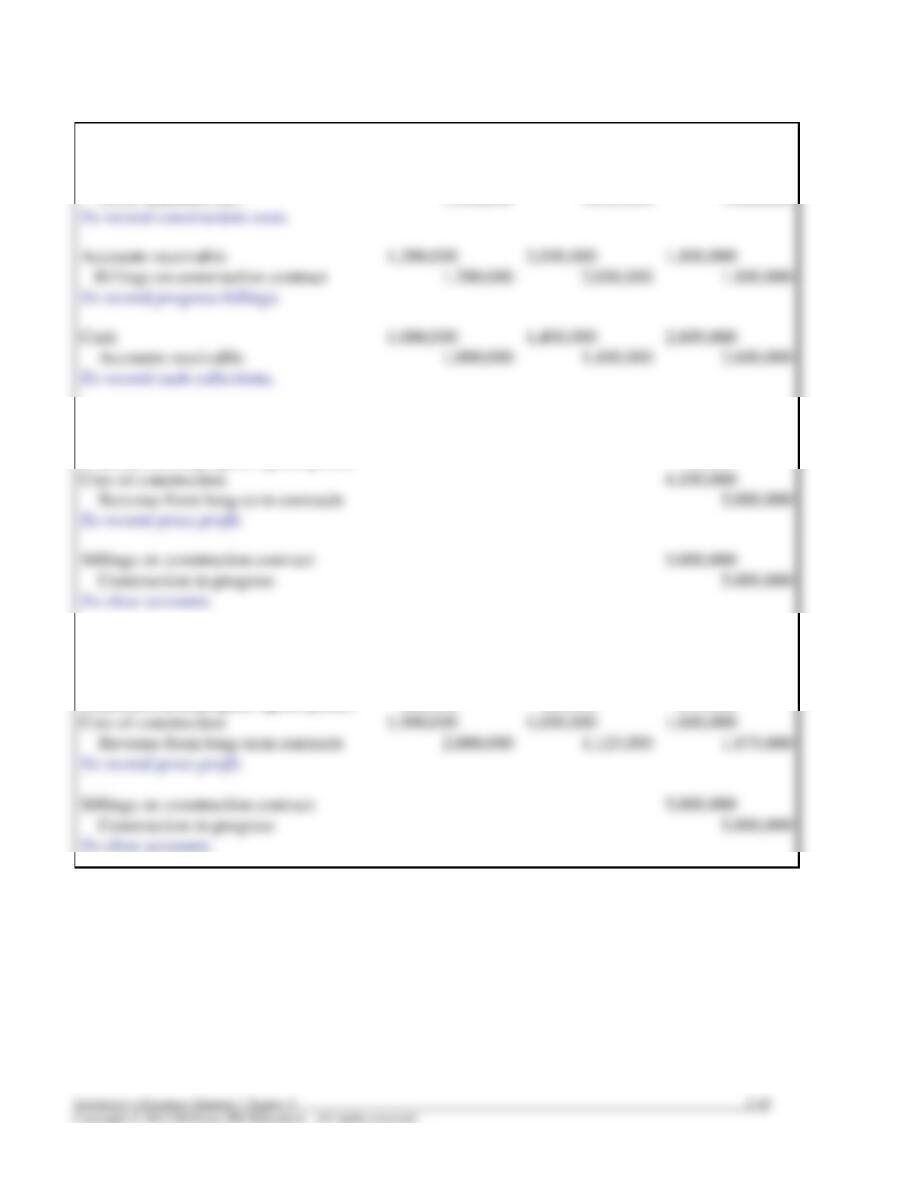
JOURNAL ENTRIES
2016
2017
2018
BOTH APPROACHES:
Construction in progress
1,500,000
1,000,000
1,600,000
Cash, materials, etc.
1,500,000
1,000,000
1,600,000
Accounts receivable
1,200,000
2,000,000
1,800,000
Billings on construction contract
1,200,000
2,000,000
1,800,000
Cash
1,000,000
1,400,000
2,600,000
Accounts receivable
1,000,000
1,400,000
2,600,000
REVENUE RECOGNIZED UPON
COMPLETION:
Construction in progress (gross profit)
900,000
Cost of construction
Revenue from long-term contracts
Billings on construction contract
Construction in progress
REVENUE RECOGNIZED OVER
TIME ACCORDING TO
PERCENTAGE-OF-COMPLETION:
Construction in progress (gross profit)
500,000
125,000
275,000
Cost of construction
1,500,000
1,000,000
1,600,000
Revenue from long-term contracts
2,000,000
1,125,000
1,875,000
Billings on construction contract
5,000,000
Construction in progress
5,000,000
Illustrations 5-24a,b,e
T5–34
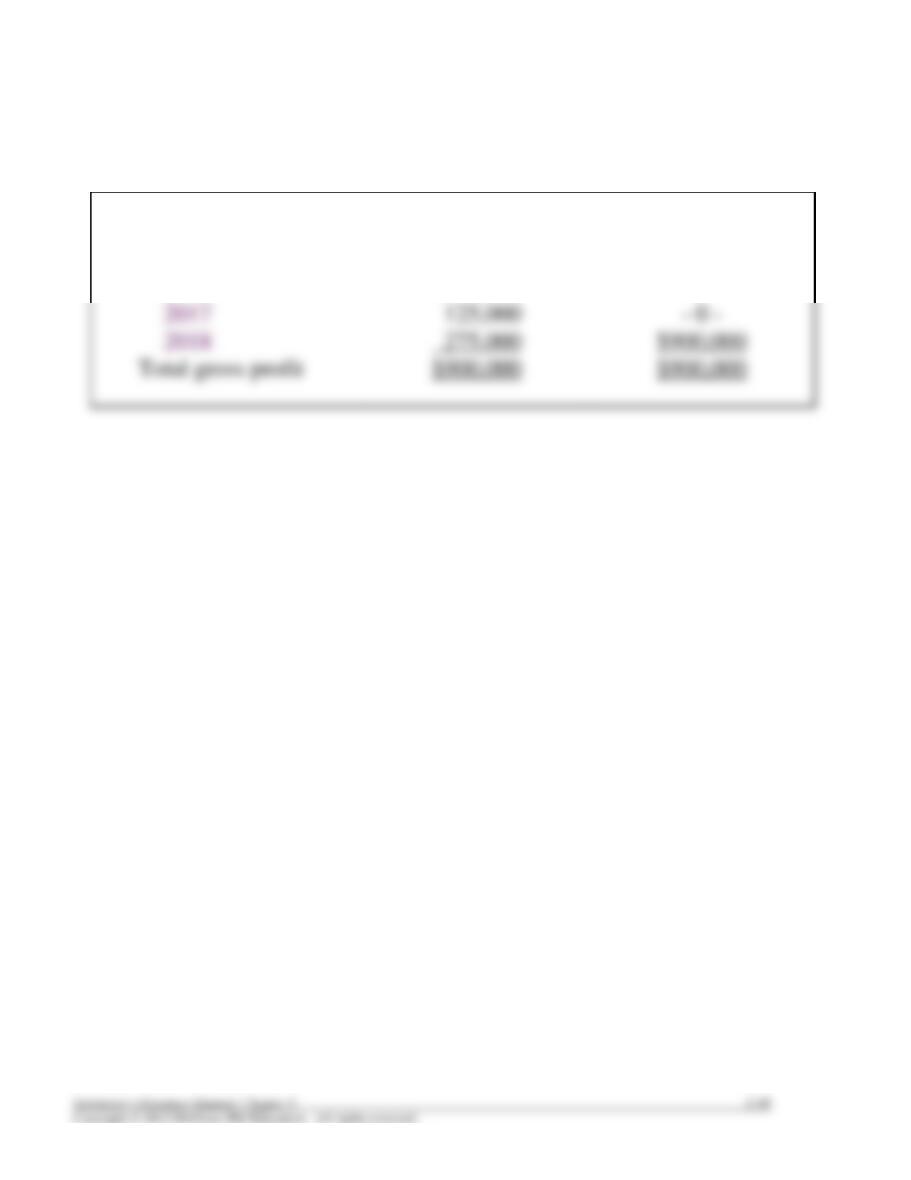
THE SAME TOTAL INCOME IS RECOGNIZED
REGARDLESS OF REVENUE TIMING
Over Time
Upon Completion
Gross profit recognized:
2016
$500,000
– 0 –
$900,000
T5–35
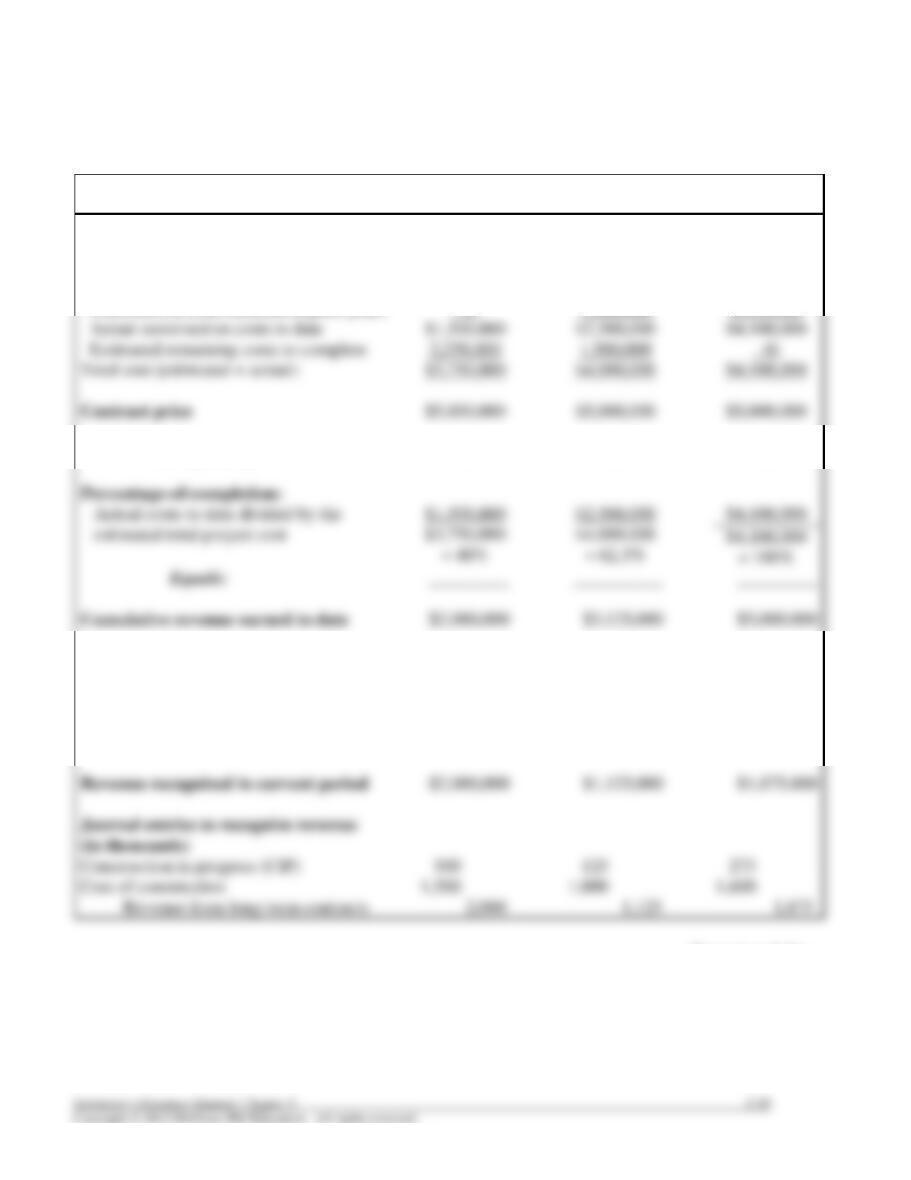
CALCULATING REVENUE
RECOGNIZED OVER TIME
2016
2017
2018
Construction costs:
Construction costs incurred during the year
$1,500,000
$1,000,000
$1,600,000
Construction costs incurred in prior years
-0-
1,500,000
2,500,000
Actual construction costs to date
$1,500,000
$2,500,000
$4,100,000
Estimated remaining costs to complete
1,500,000
Total cost (estimated + actual)
$3,750,000
$4,000,000
$4,100,000
Contract price
$5,000,000
$5,000,000
$5,000,000
Multiplied by:
X
X
X
Equals:
Cumulative revenue earned to date
$2,000,000
$3,125,000
Minus:
Revenue recognized in prior periods
– 0-
(2,000,000)
(3,125,000)
$1,125,000
(in thousands)
Cost of construction
1,500
1,000
1,600
Revenue from long-term contracts
2,000
1,125
1,875
Equals:
_________
__________
_________
Ilustration 5-24c

T5–36
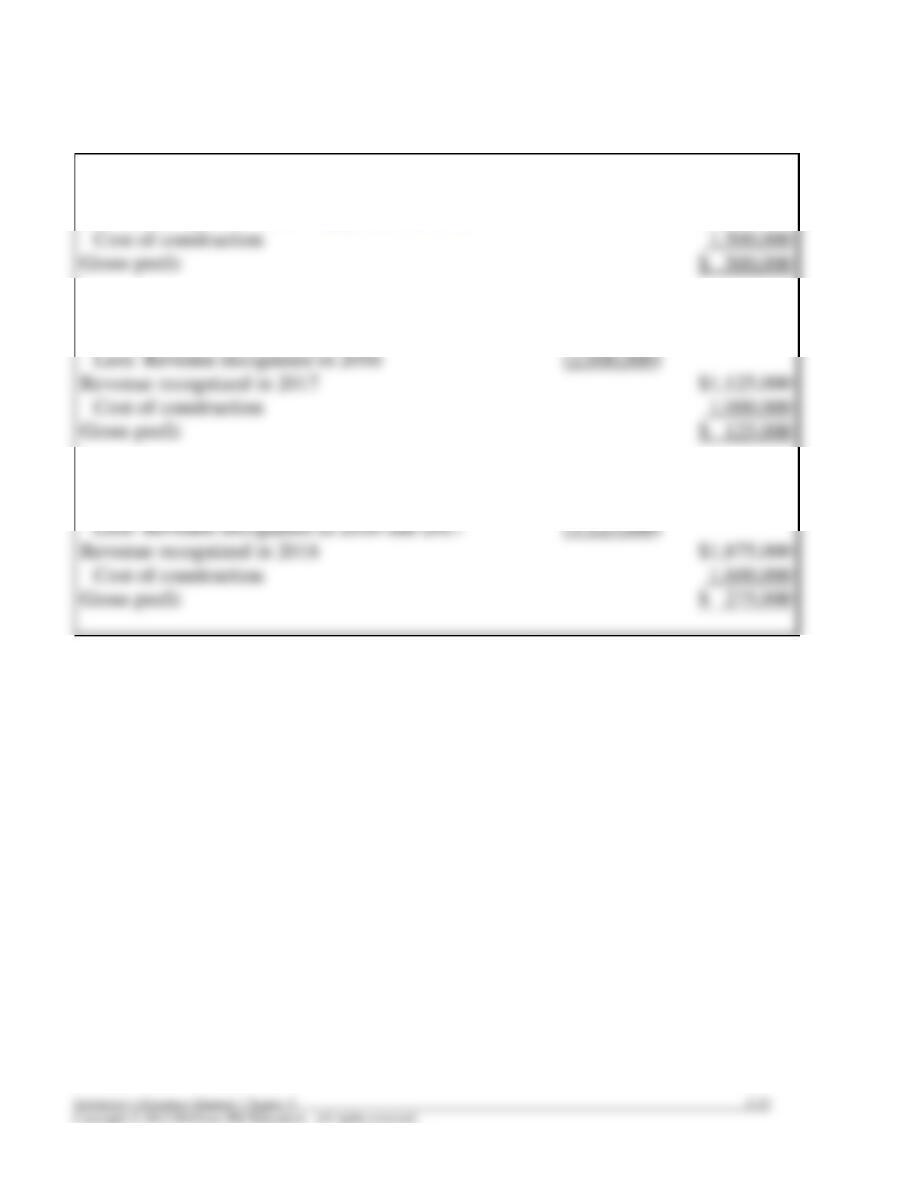
REVENUE AND COST OF CONSTRUCTION:
REVENUE RECOGNIZED OVER TIME
2016
Revenue recognized in 2016 ($5,000,000 x 40%)
$2,000,000
Cost of construction
Gross profit
$ 500,000
2017
Revenue recognized to date ($5,000,000 x 62.5%)
$3,125,000
Less: Revenue recognized in 2016
Revenue recognized in 2017
$1,125,000
Cost of construction
2018
Revenue recognized to date ($5,000,000 x 100%)
$5,000,000
Less: Revenue recognized in 2016 and 2017
Revenue recognized in 2018
$1,875,000
Cost of construction
Illustration 5-24d

T5–37
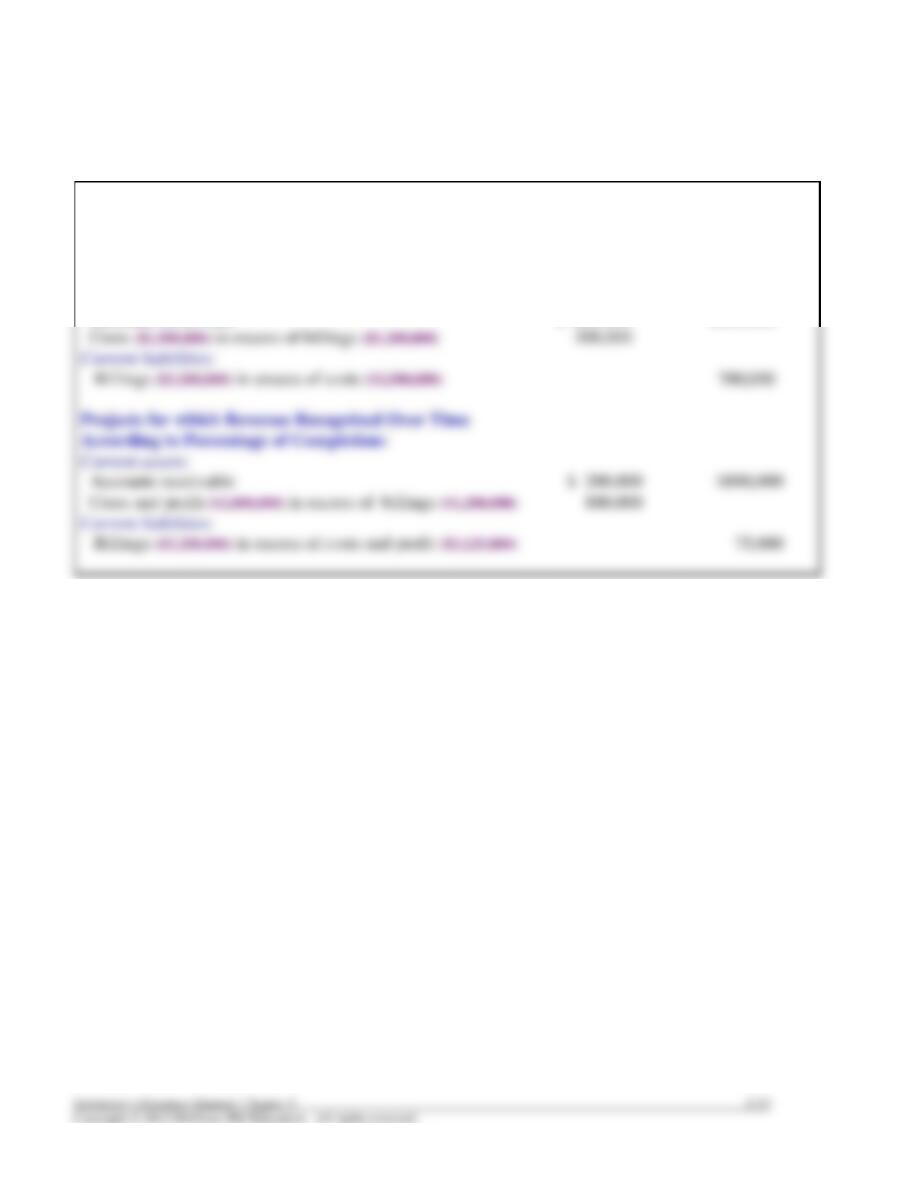
BALANCE SHEET PRESENTATION
Balance Sheet
(End of year)
2016
2017
Projects for which Revenue Recognized Upon Completion:
Current assets:
Accounts receivable
$ 200,000
$800,000
Costs ($1,500,000) in excess of billings ($1,200,000)
300,000
Current liabilities:
Billings ($3,200,000) in excess of costs ($2,500,000)
700,000
According to Percentage of Completion:
Accounts receivable
Costs and profit ($2,000,000) in excess of billings ($1,200,000)
Billings ($3,200,000) in excess of costs and profit ($3,125,000)
Illustration 5-24f

T5–38
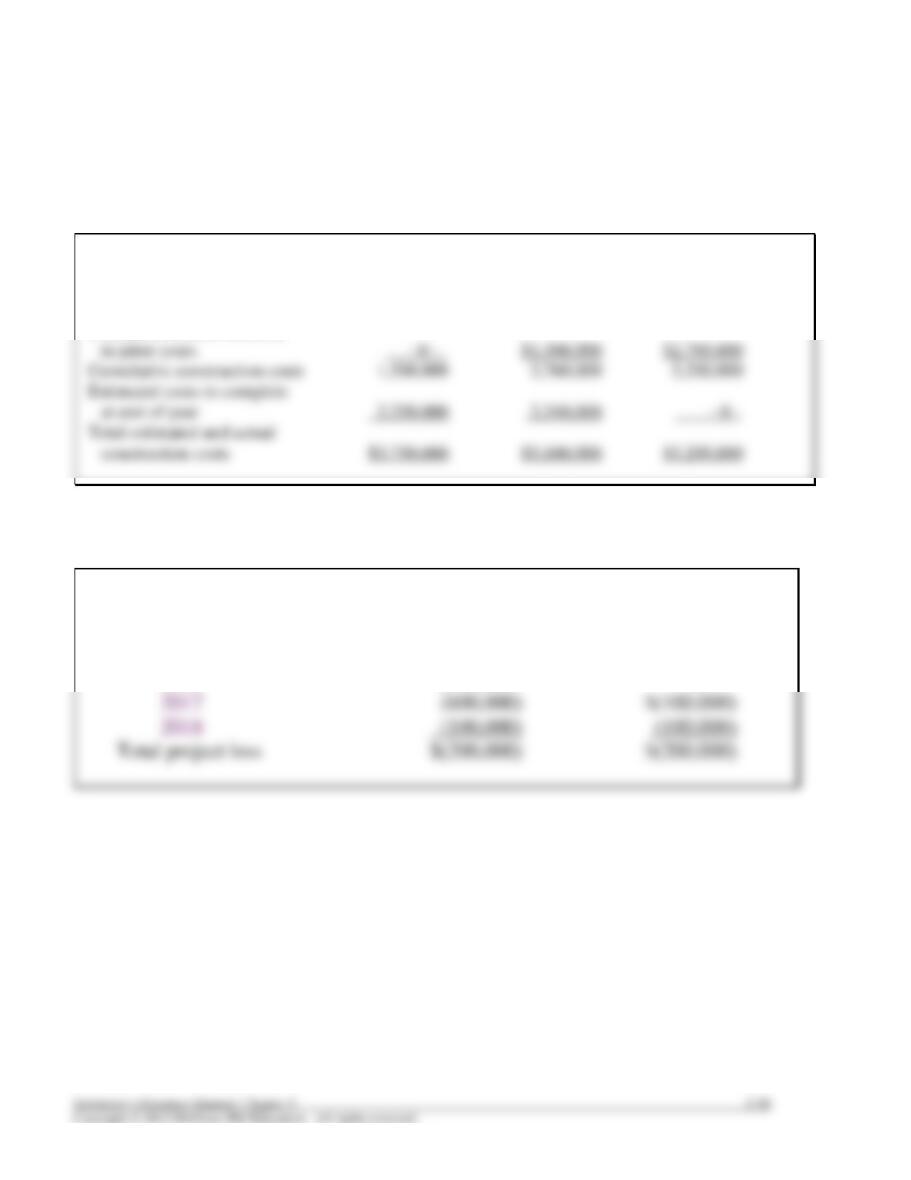
LONG-TERM CONTRACT LOSSES
➢ An estimated loss on a long-term contract is fully recognized in the first period that
the loss is anticipated, regardless of the revenue recognition method used.
2016 2017 2018
Construction costs incurred
during the year $1,500,000 $1,260,000 $2,440,000
Construction costs incurred
Comparison of Periodic Gross Profit (Loss)
Percentage-of–
completion
Completed Contract
Gross profit (loss) recognized:
2016
$500,000
– 0 –
2018

T5–39
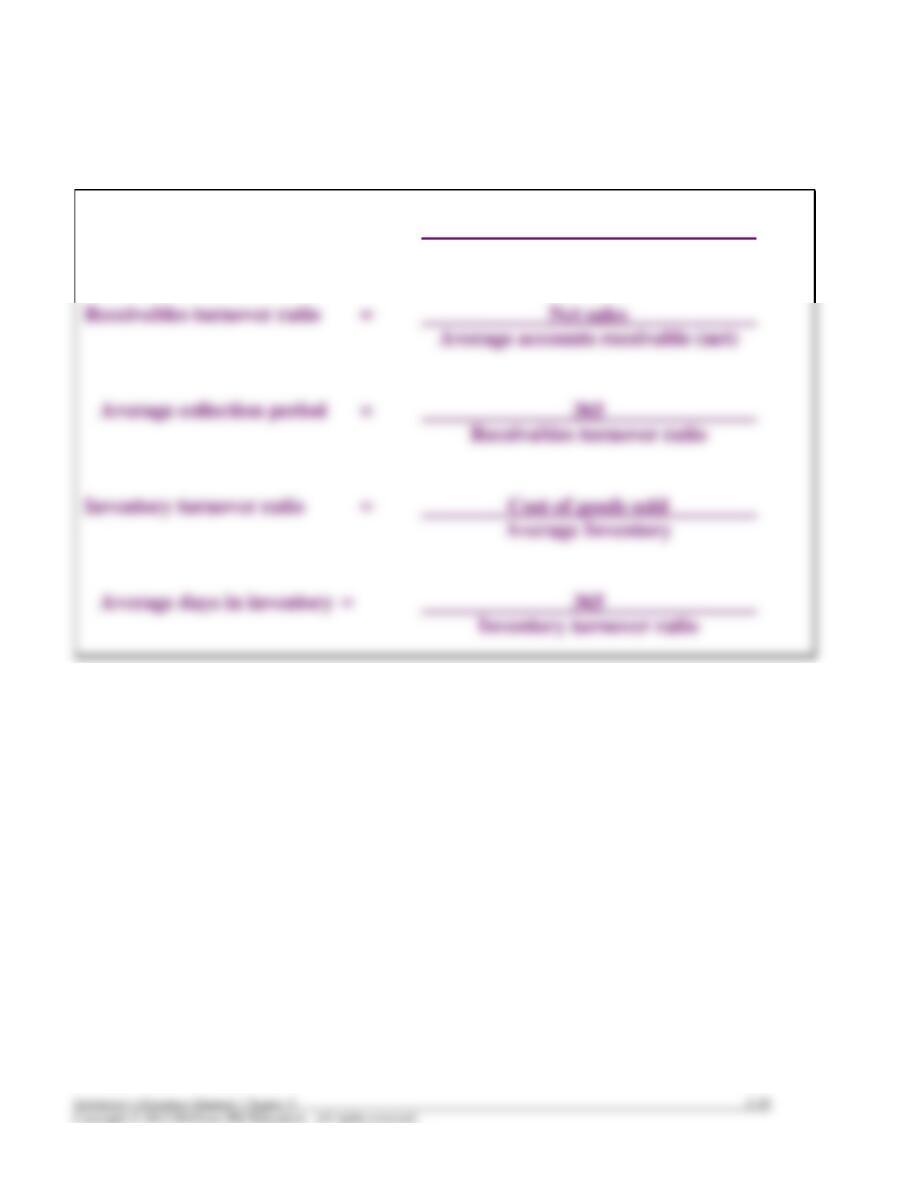
ACTIVITY RATIOS
➢ Activity ratios measure a company’s efficiency in managing its assets.
Asset turnover ratio = Net sales
Average total assets

T5–40

PROFITABILITY RATIOS
➢ Profitability ratios assist in evaluating various aspects of a company’s profit-making
activities.
Profit margin on sales = Net income
Net sales
Return on assets = Net income
Average total assets
Return on shareholders’ = Net income
equity Average total equity