COMPREHENSIVE PROBLEM 5
The Gilster
This problem covers various topics from Chapters 15 through 21. 60 minutes
The emphasis is on job costing, overhead allocation, target costing,
Strong
and incremental decision making.
60 Minutes, Strong COMPREHENSIVE PROBLEM 5
THE GILSTER COMPANY
a.
$ 25,000
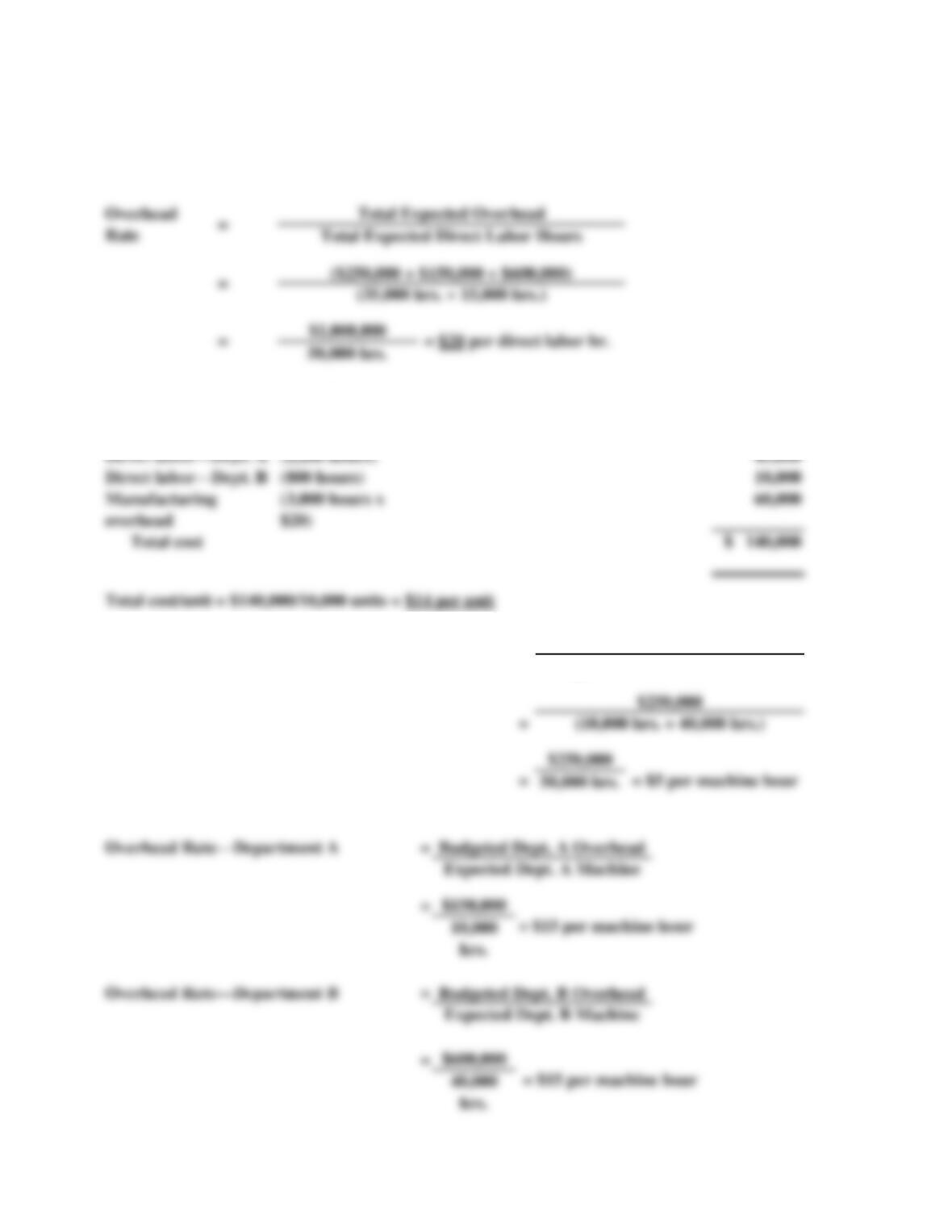
Total cost/unit = $140,000/10,000 units = $14 per unit
=
Plantwide overhead rate using direct labor hours:
Manufacturing costs for Job 110:
b.
=
Plantwide Overhead Rate Using Machine Hours
Direct materials
Budgeted Plantwide Overhead
Expected Total Machine Hours
=
COMPREHENSIVE PROBLEM 5
THE GILSTER COMPANY (continued)
Direct materials ………………………………………………………………………………….
$ 25,000
c.
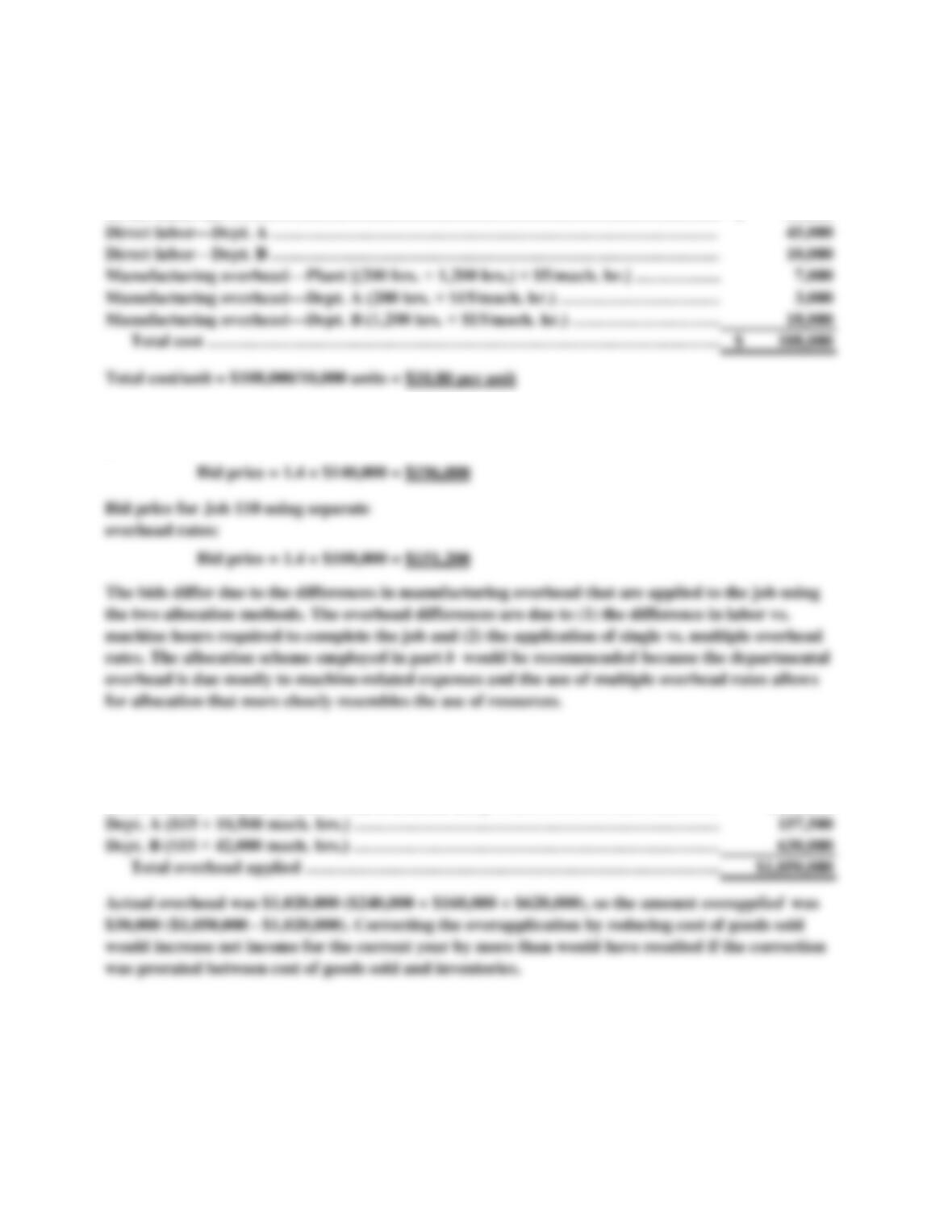
Bid price for Job 110 using only the
plantwide overhead rate:
Bid price for Job 110 using separate
overhead rates:
d.
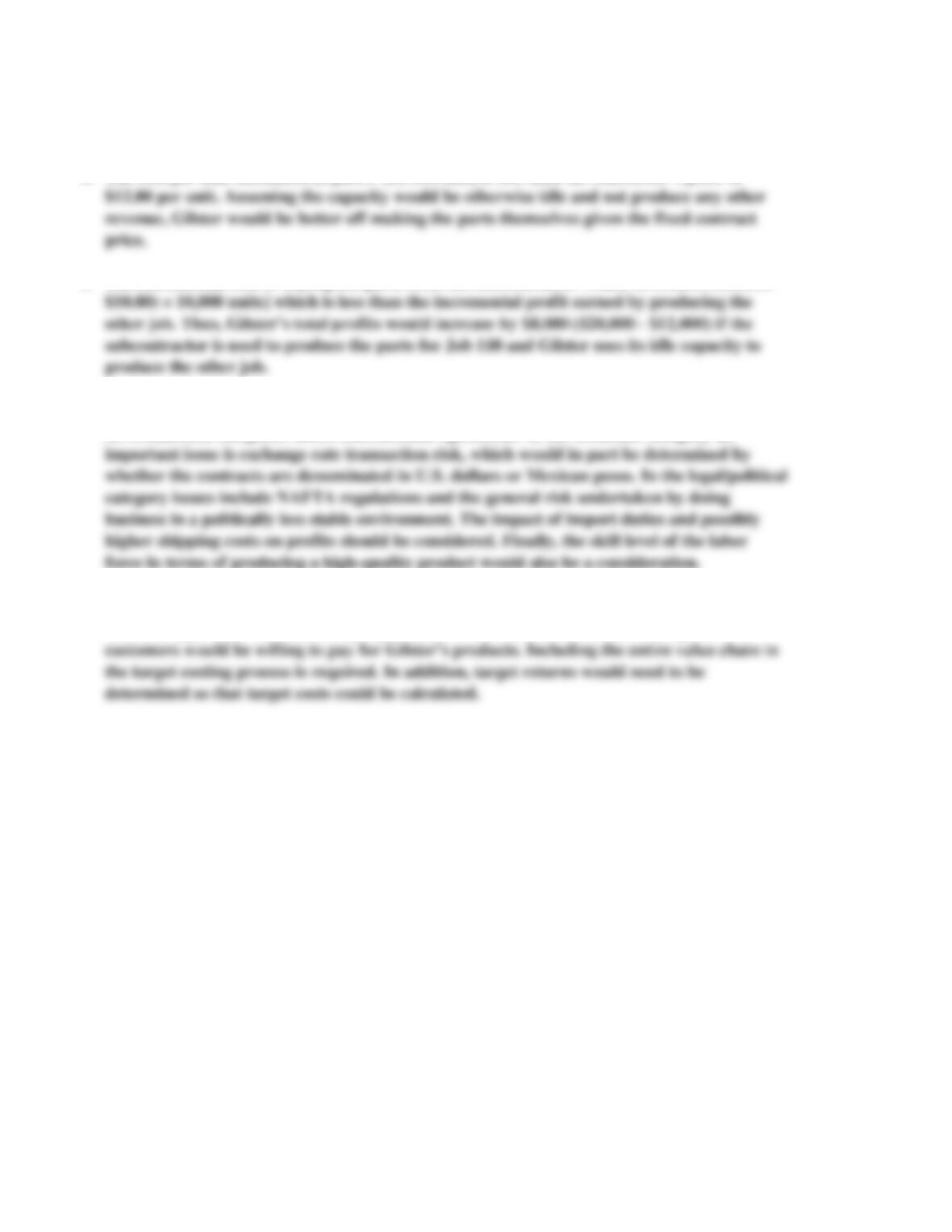
Plantwide [$5 × 52,500 (10,500 + 42,000) mach. hrs.] ………………………………………………
$262,500
Dept. A ($15 × 10,500 mach. hrs.) ……………………………………………………………………….
Dept. B ($15 × 42,000 mach. hrs.) ………………………………………………………………….
Manufacturing costs for Job 110:
Applied overhead using machine hours:
Direct labor—Dept. A ………………………………………………………………………………
Direct labor—Dept. B ………………………………………………………………………..
Manufacturing overhead—Dept. A (200 hrs. × $15/mach. hr.) ………………………………………..
Manufacturing overhead—Dept. B (1,200 hrs. × $15/mach. hr.) ……………………………………..
Total cost/unit = $108,000/10,000 units = $10.80 per unit
e.
f.
g.
h.
The incremental cost of buying the parts from the subcontractor would be $12,000 [($12.00 –
As discussed in Chapter 15, legal/political, economic, cultural, and technological
environmental categories affect international operations. In the economic category an
To successfully implement target costing, Gilster would need to adopt a more customer-
oriented approach. The marketing department would need to determine what prices
COMPREHENSIVE PROBLEM 5
THE GILSTER COMPANY (concluded)
The cost per unit calculated in part b ($10.80/unit) is less than the contractor’s price of