1. The end-of-period spreadsheet illustrates the flow of accounting information from the unadjusted
trial balance into the adjusted trial balance and into the financial statements. In doing so, the
spreadsheet illustrates the impact of the adjustments on the financial statements.
2. a. Current assets are composed of cash and other assets that may reasonably be expected
to be realized in cash or sold or used up, usually within one year or less, through the normal
3. Current liabilities are liabilities that will be due within a short time (usually one year or less) and
that are to be paid out of current assets. Liabilities that will not be due for a comparatively long
time (usually more than one year) are called long-term liabilities.
5. Closing entries are necessary at the end of an accounting period (1) to transfer the balances in
6. Adjusting entries bring the accounts up to date, while closing entries reduce the revenue, expense,
and dividends accounts to zero balances for use in recording transactions for the next accounting
p
eriod.
7. The purpose of the post-closing trial balance is to make sure that the ledger is in balance at the
b
eginning of the next period.
8. a. The financial statements are the most important output of the accounting cycle.
b. Yes, all companies have an accounting cycle that begins with analyzing and journalizing
transactions and ends with a post-closing trial balance. However, companies may differ in
how they implement the steps in the accounting cycle. For example, while most companies
9. The natural business year is the fiscal year that ends when business activities have reached the
lowest point in the annual operating cycle.
10. All the companies listed are general merchandisers whose busiest time of the year is during the
b
CHAPTER 4
COMPLETING THE ACCOUNTING CYCLE
DISCUSSION QUESTIONS
CHAPTER 4 Completing the Accounting Cycle
PE 4–1A
2. Income statement 6. Income statement
4. Balance sheet 8. Balance sheet
1. Balance sheet 5. Balance sheet
3. Income statement 7. Retained earnings statement
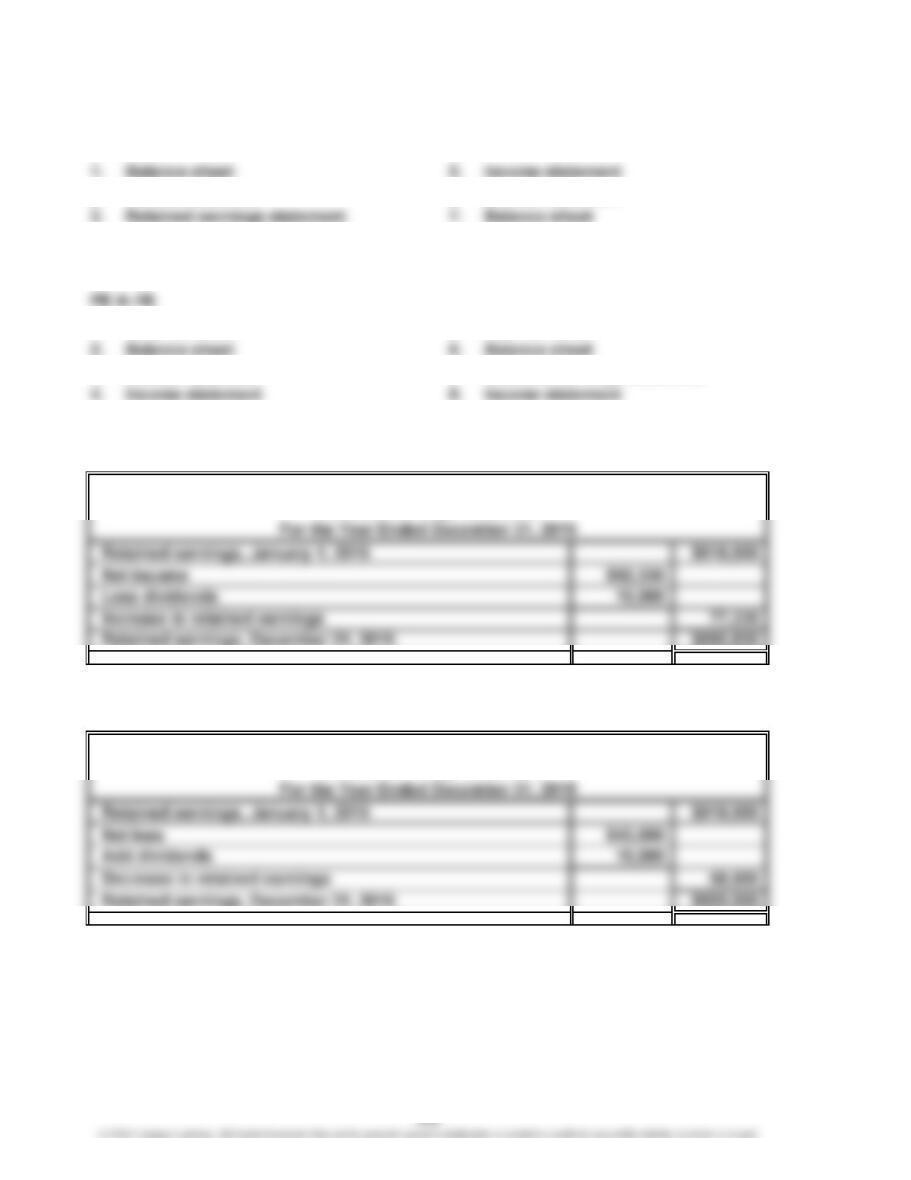
PE 4–2A
PE 4–2B
Grab Bag Delivery Services
Retained Earnings Statement
PRACTICE EXERCISES
Gemini Advertising Services
Retained Earnings Statement
CHAPTER 4 Completing the Accounting Cycle
1. Property, plant, and equipment 5. Current liability
3. Long-term liability 7. Current liability
PE 4–3B
2. Current asset 6. Long-term liability
4. Current asset 8. Current liability
PE 4–4A
Oct. 31 Fees Earned 1,145,000
Income Summary 1,145,000
Closing Entries
CHAPTER 4 Completing the Accounting Cycle
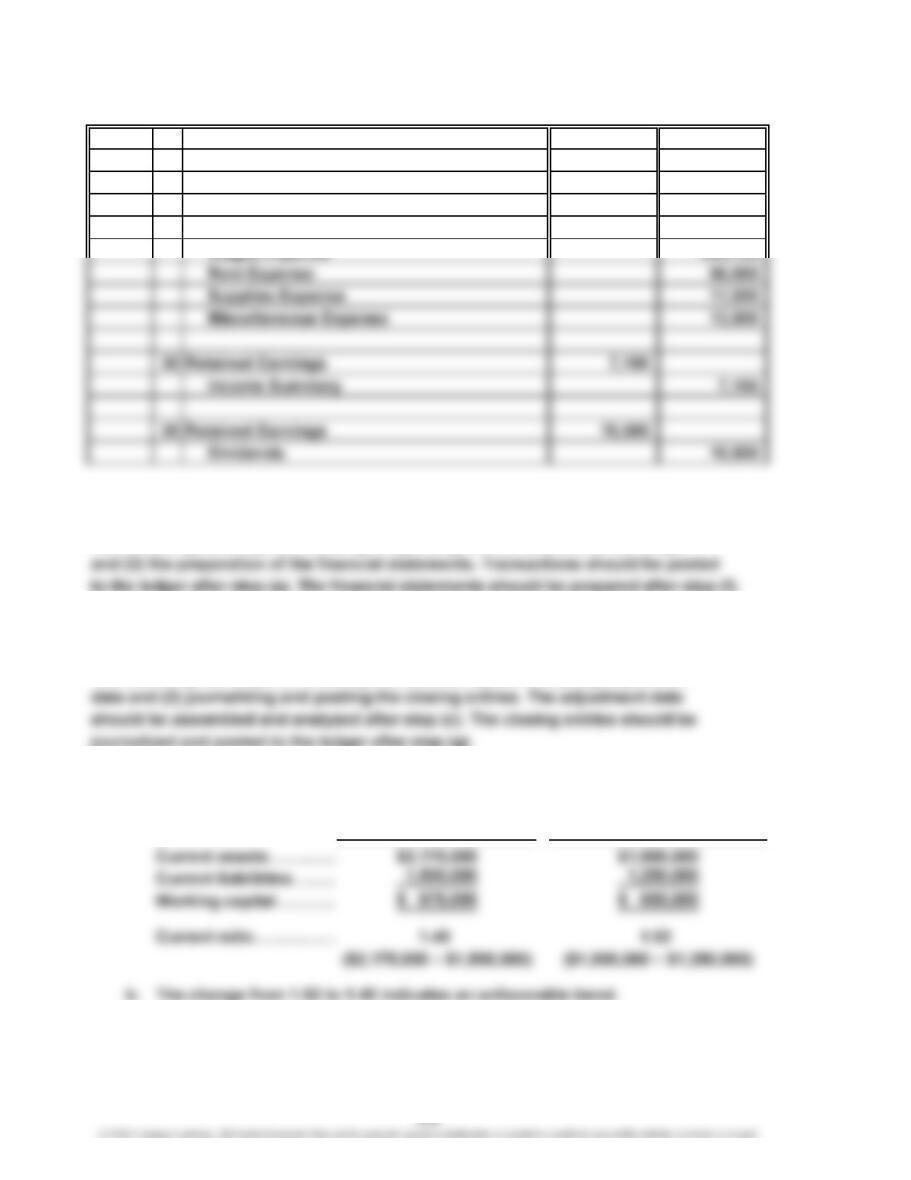
PE 4–4B
Apr. 30 Fees Earned 356,500
Income Summary 356,500
30 Income Summary 363,600
Wages Expense 283,100
PE 4–5A
The following two steps are missing: (1) posting the transactions to the ledger
PE 4–5B
The following two steps are missing: (1) assembling and analyzing adjustment
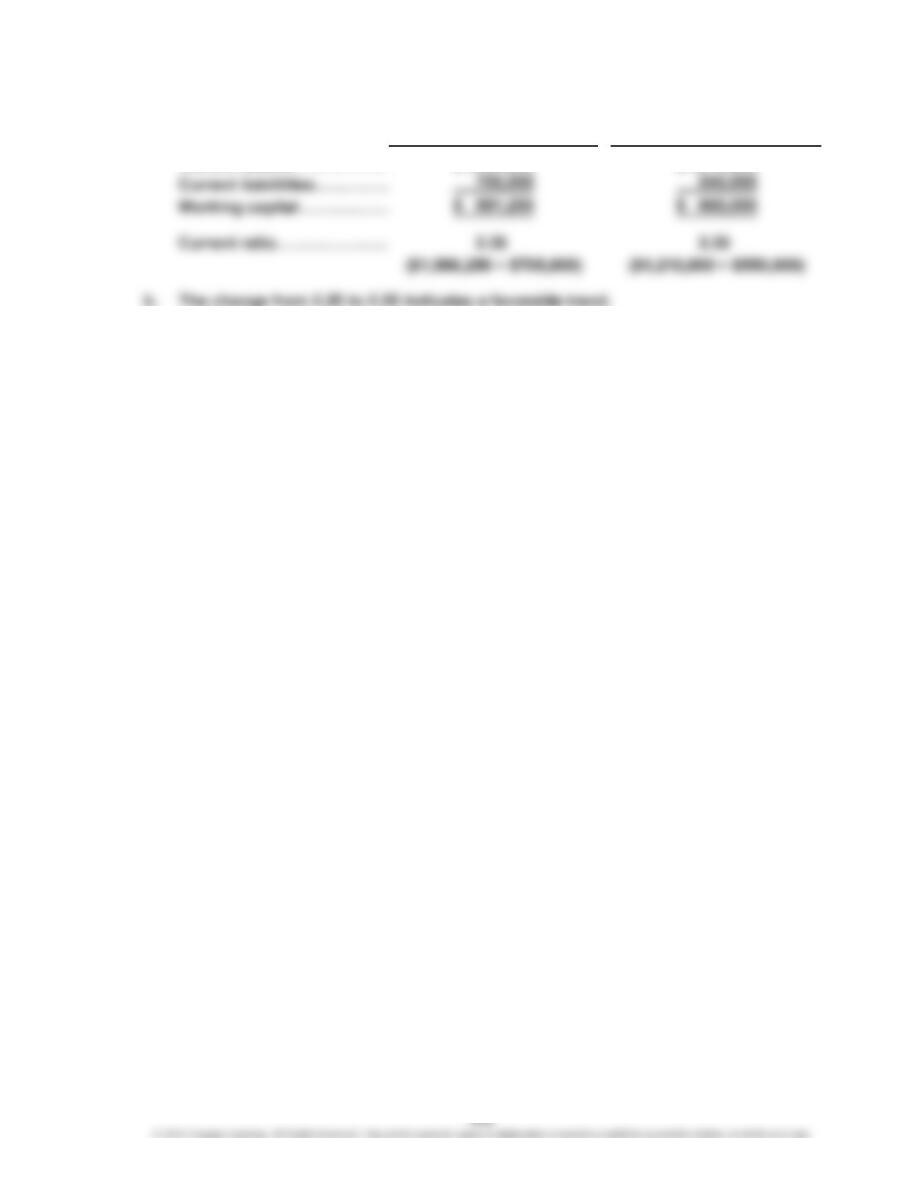
PE 4–6A
a.
Closing Entries
2016
2015
CHAPTER 4 Completing the Accounting Cycle
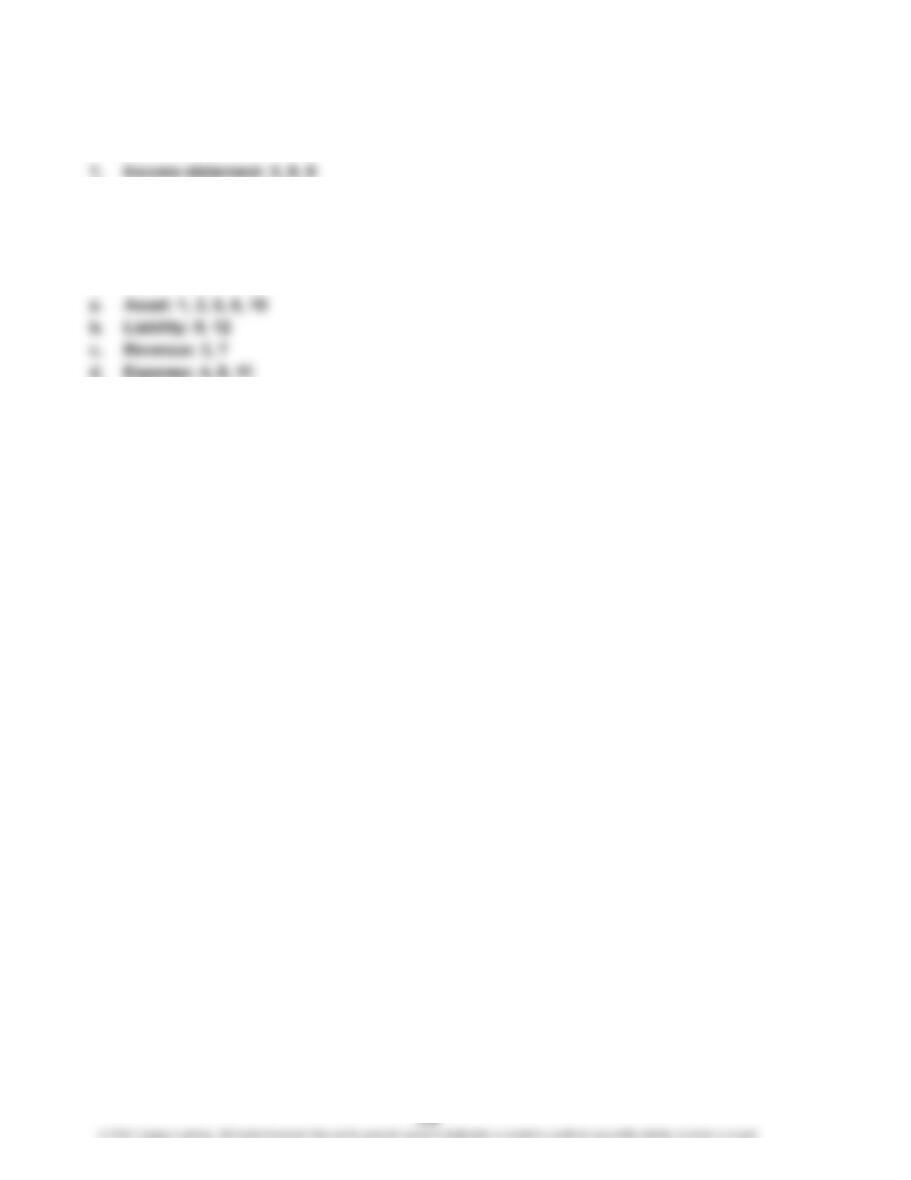
PE 4–6B
a.
Current assets………………
2016
$1,586,250
2015
$1,210,000
CHAPTER 4 Completing the Accounting Cycle
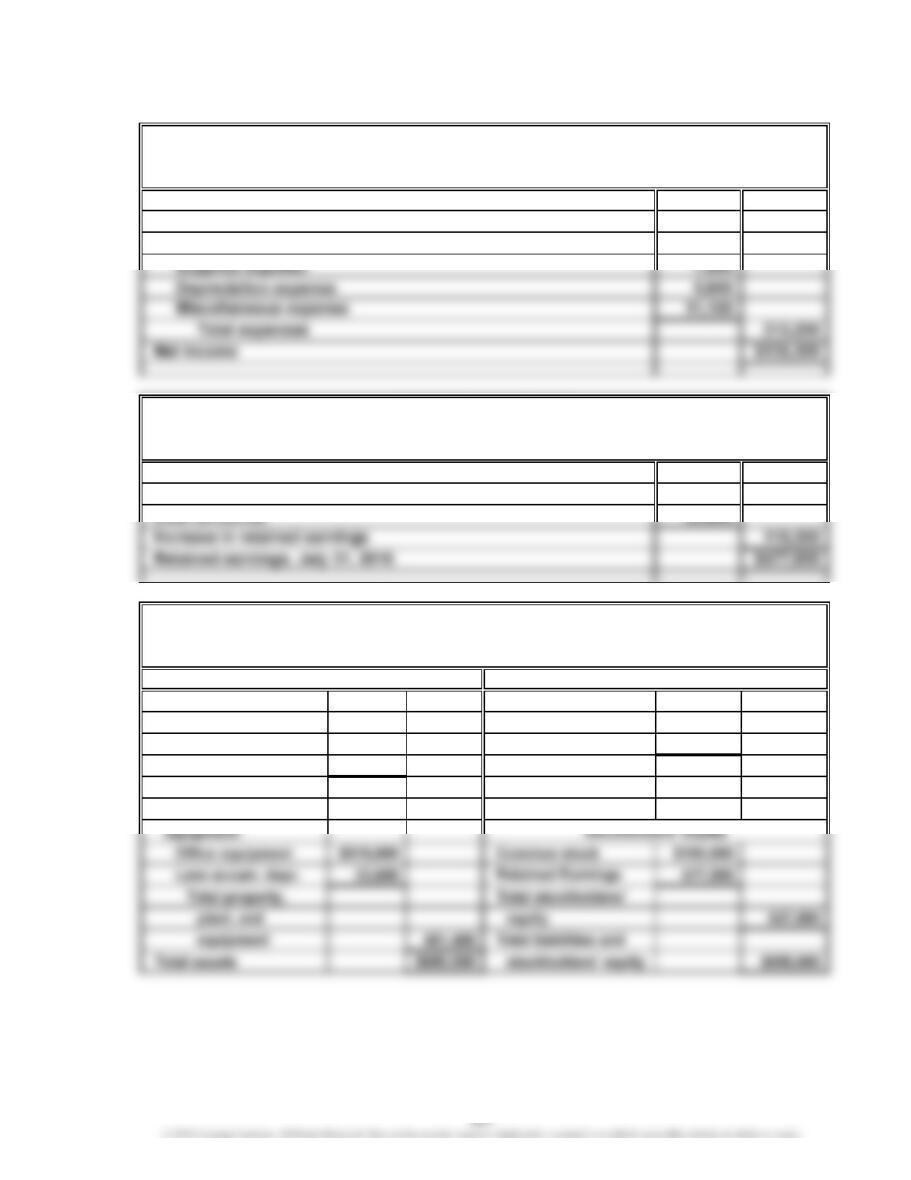
Ex. 4–1
2. Retained earnings statement: 4
3. Balance sheet: 1, 2, 3, 6, 7, 10
Ex. 4–2
EXERCISES
CHAPTER 4 Completing the Accounting Cycle
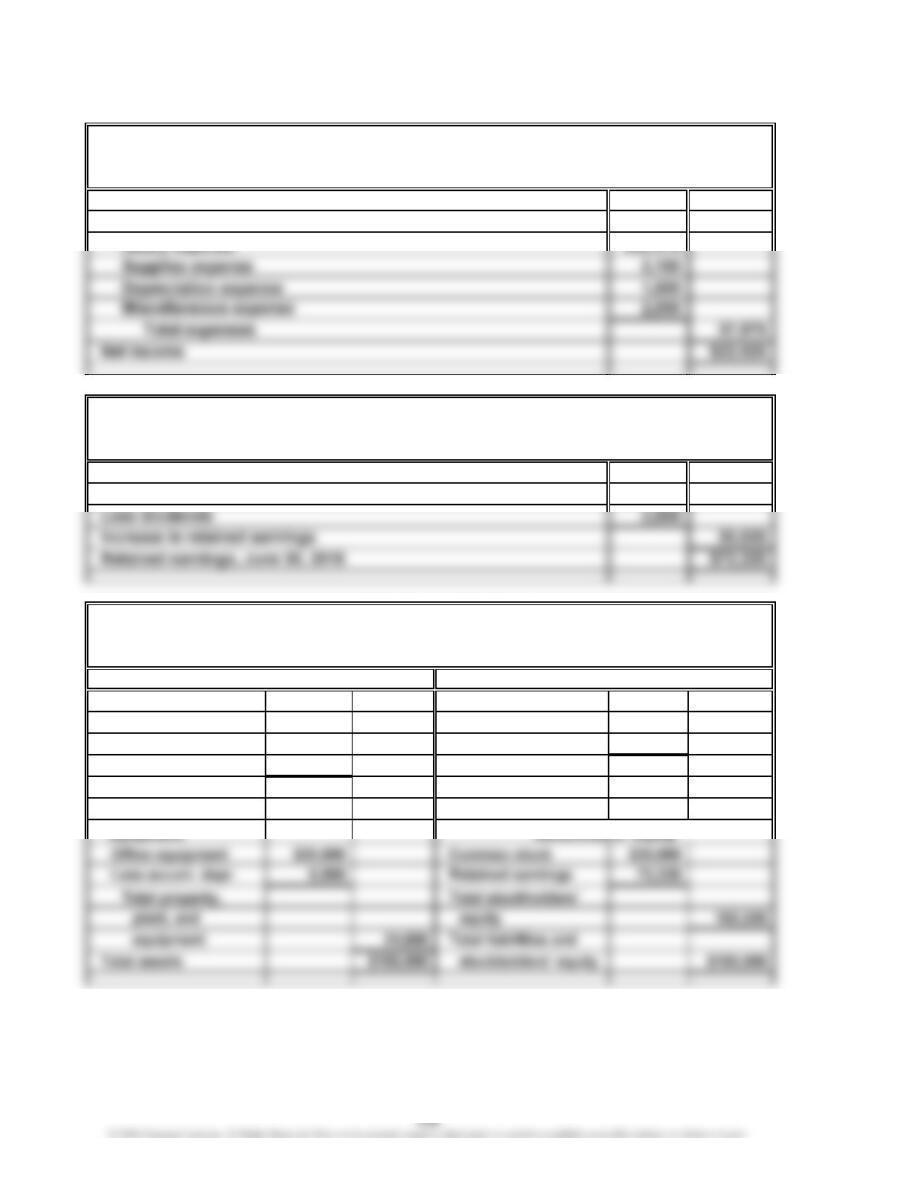
Ex. 4–3
Fees earned $348,500
Expenses:
Salary expense $189,000
Retained earnings, August 1, 2015 $366,700
Net income $135,300
Current assets: Current liabilities:
Cash $ 58,000 Accounts payable $20,500
Accounts receivable 106,200 Salaries payable 2,500
Supplies 4,400 Total liabilities $ 23,000
Total current assets $168,600
Property, plant, and
BAMBOO CONSULTING
Income Statement
For the Year Ended July 31, 2016
BAMBOO CONSULTING
Retained Earnings Statement
For the Year Ended July 31, 2016
BAMBOO CONSULTING
Balance Sheet
July 31, 2016
Assets Liabilities
CHAPTER 4 Completing the Accounting Cycle
Ex. 4–4
Fees earned $60,000
Expenses:
Retained earnings, July 1, 2015 $ 52,200
Net income $22,025
Current assets: Current liabilities:
Cash $27,000 Accounts payable $3,300
Accounts receivable 53,500 Salaries payable 375
Supplies 900 Total liabilities $ 3,675
Total current assets $ 81,400
Property, plant, and
equipment:
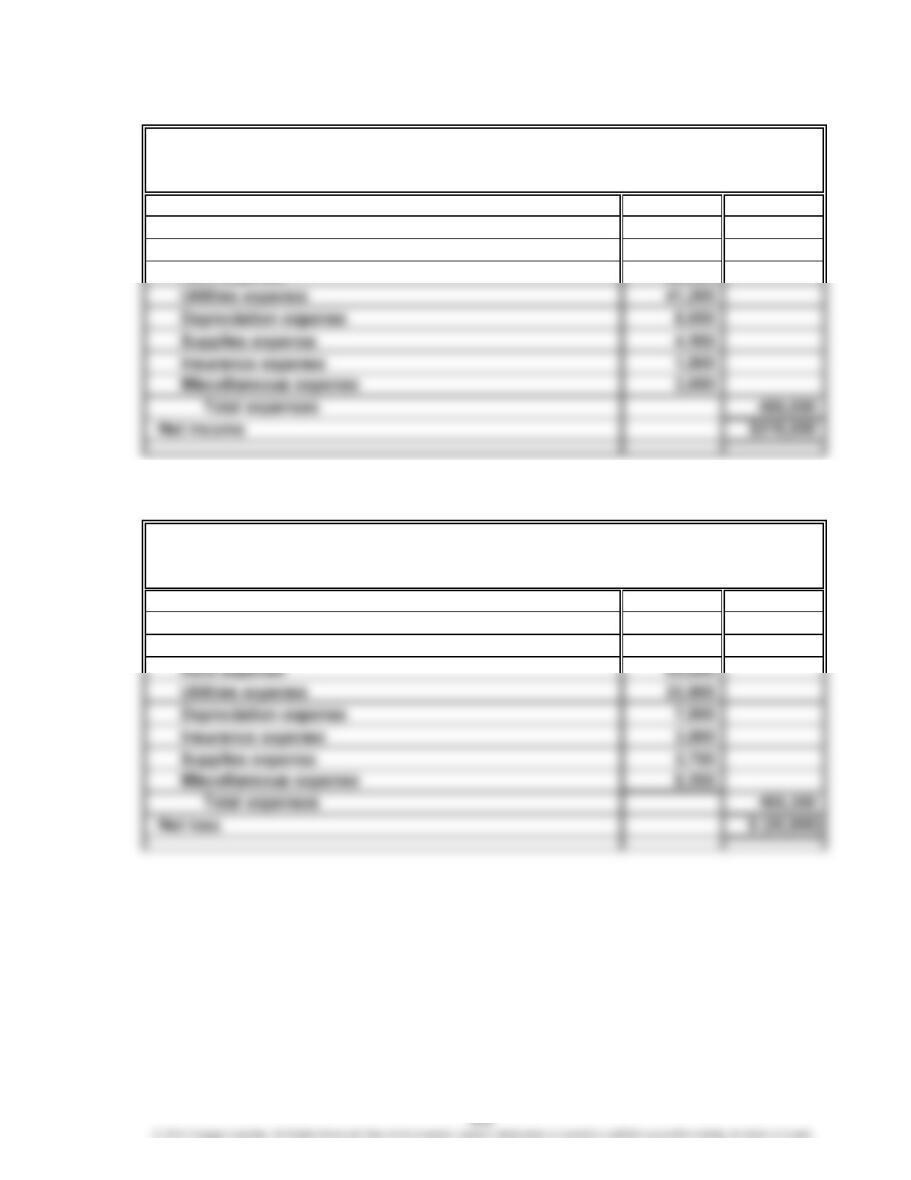
ELLIPTICAL CONSULTING
Income Statement
For the Year Ended June 30, 2016
Stockholders’ Equity
ELLIPTICAL CONSULTING
Retained Earnings Statement
For the Year Ended June 30, 2016
ELLIPTICAL CONSULTING
Balance Sheet
June 30, 2016
Assets Liabilities
CHAPTER 4 Completing the Accounting Cycle
Ex. 4–5
Fees earned $674,000
Expenses:
Salaries expense $336,900
Rent expense 60,000
Ex. 4–6
Service revenue $448,400
Expenses:
Wages expense $360,000
Income Statement
For the Year Ended February 29, 2016
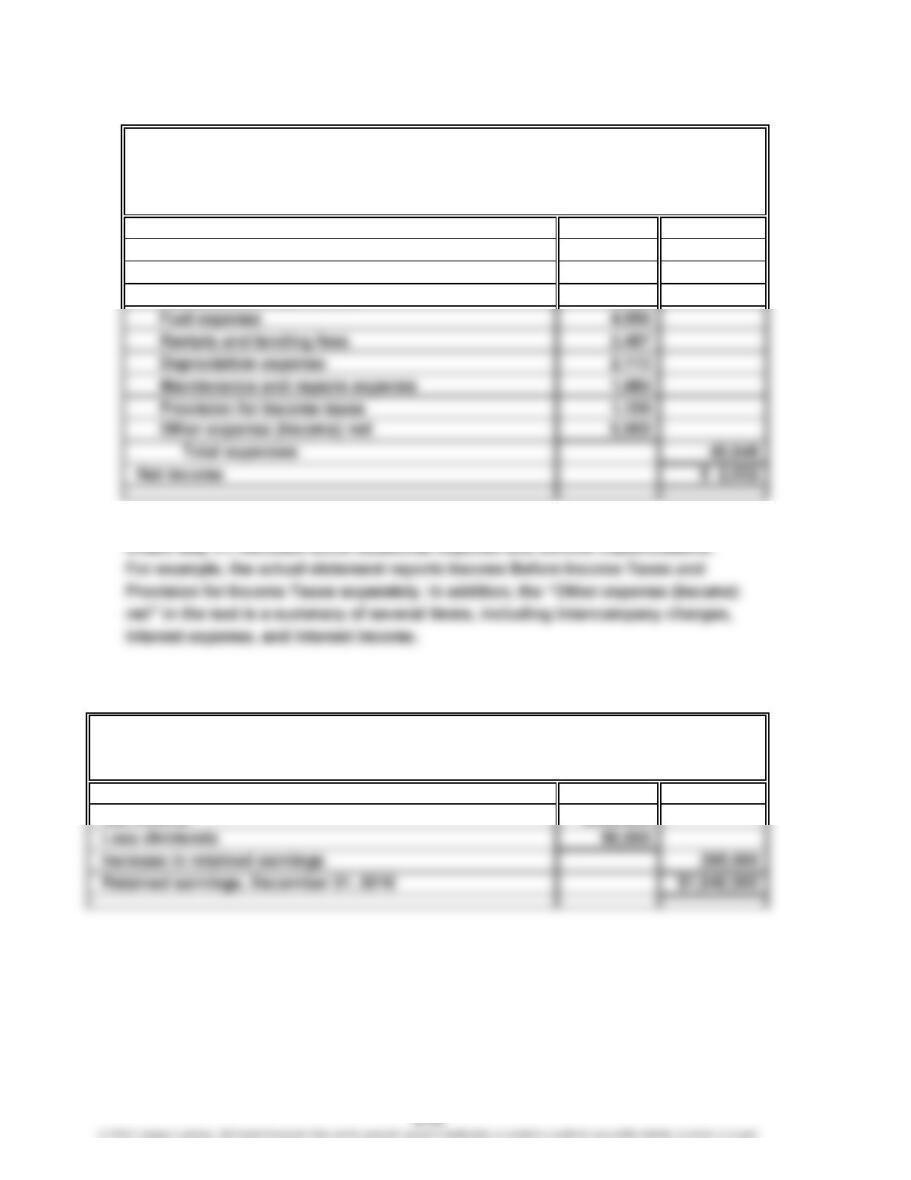
LASER MESSENGER SERVICE
Income Statement
For the Year Ended April 30, 2016
WHOLISTIC HEALTH SERVICES CO.
CHAPTER 4 Completing the Accounting Cycle
Ex. 4–7
a.
Revenues $42,680
Expenses:
Salaries and employee benefits $16,099
Purchased transportation 6,335
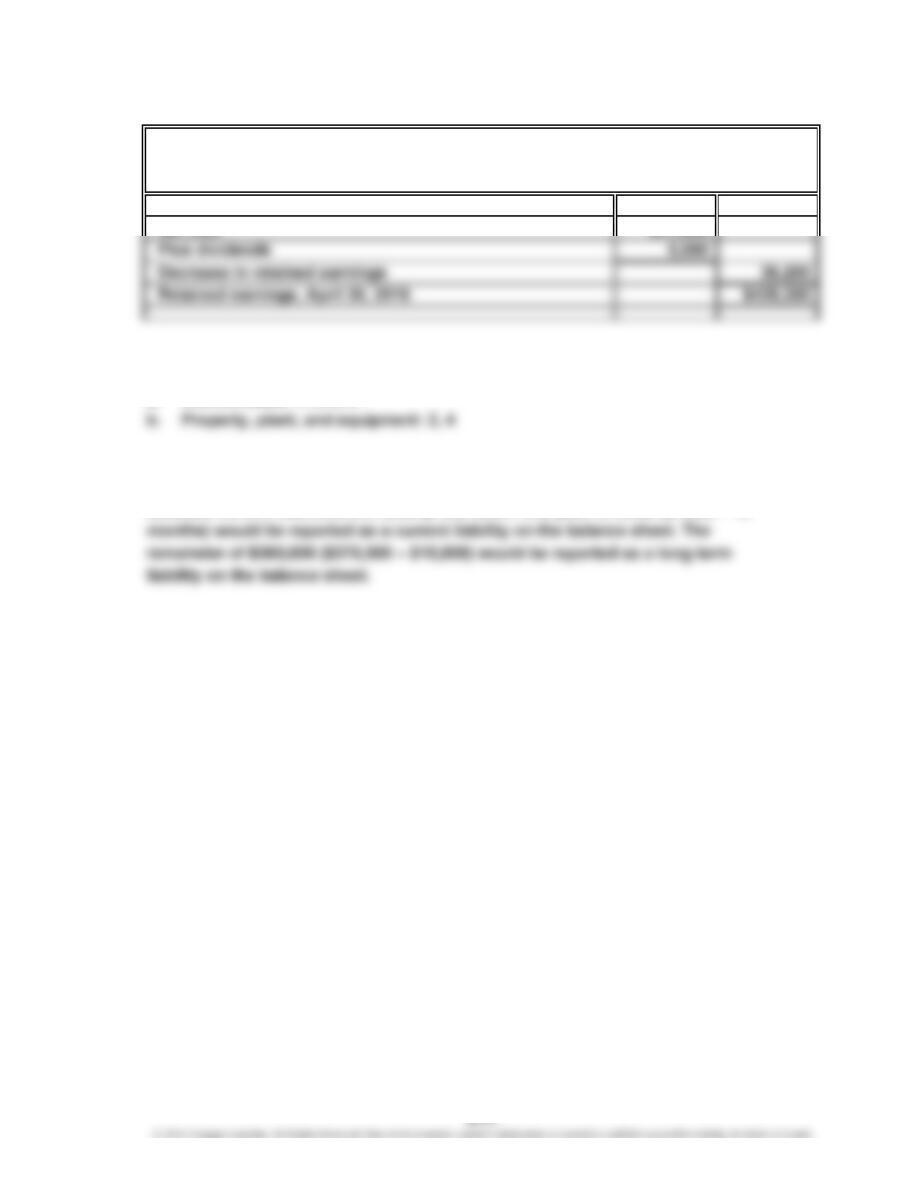
b. The income statements are very similar. The actual statement, which is for the year
Ex. 4–8
Retained earnings, January 1, 2016 $1,375,000
Net income $355,000
APEX SYSTEMS CO.
Retained Earnings Statement
For the Year Ended December 31, 2016
FEDEX CORPORATION
Income Statement
(in millions)
For the Year Ended May 31
CHAPTER 4 Completing the Accounting Cycle
Ex. 4–9
Retained earnings, May 1, 2015 $475,500
Net loss $31,200
Ex. 4–10
a. Current asset: 1, 3, 5, 6
Ex. 4–11
Because current liabilities are usually due within one year, $15,000 ($1,250 × 12
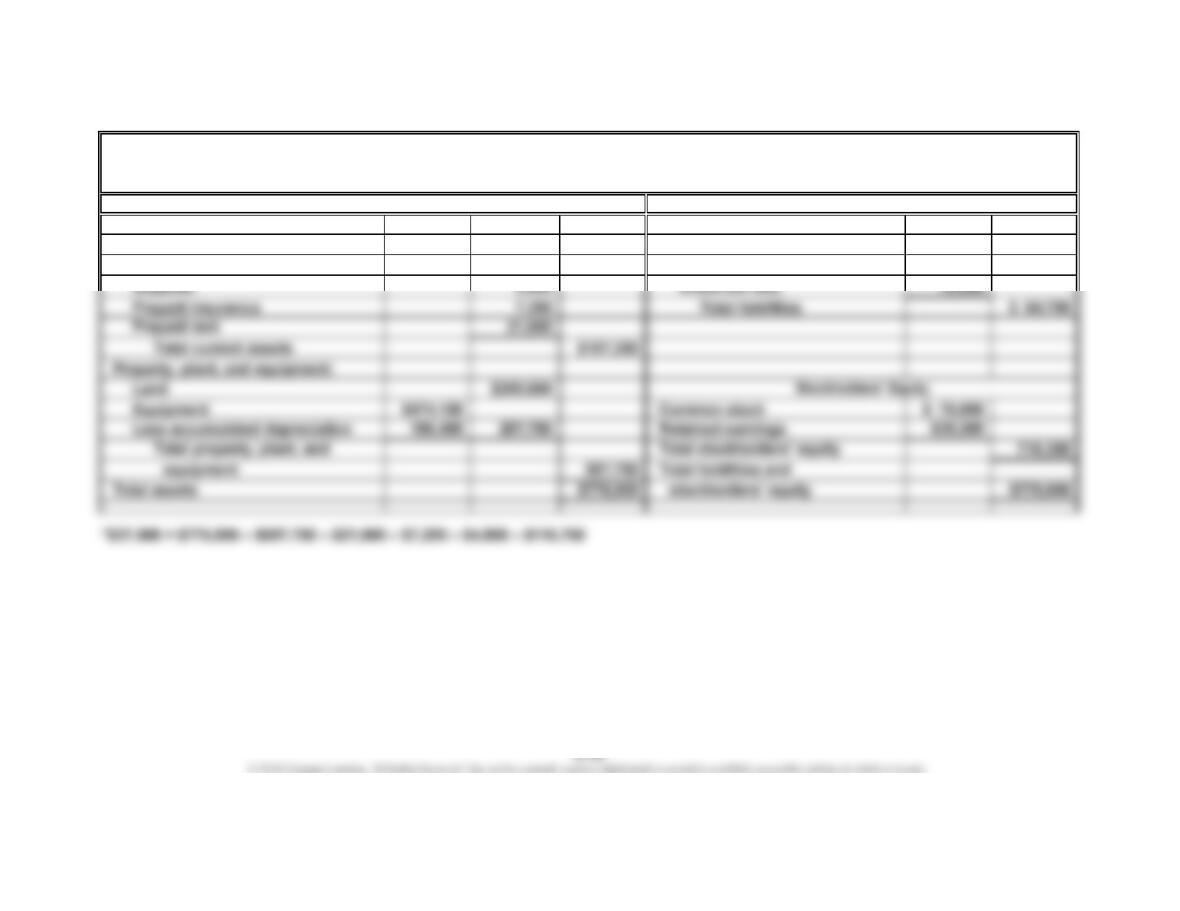
RESTORATION ARTS
Retained Earnings Statement
For the Year Ended April 30, 2016
CHAPTER 4 Completing the Accounting Cycle
Ex. 4–12
Current assets: Current liabilities:
Cash* $ 37,500 Accounts payable $37,700
Accounts receivable 116,750 Salaries payable 9,000
OPTIMUM WEIGHT LOSS CO.
Balance Sheet
November 30, 2016
Assets Liabilities
CHAPTER 4 Completing the Accounting Cycle
Ex. 4–13
2. Accounts payable should be a current liability.
4. “Accumulated depreciation” should be deducted from the related fixed asset.
6. Accounts receivable should be a current asset.
8. Wages payable should be a current liability.
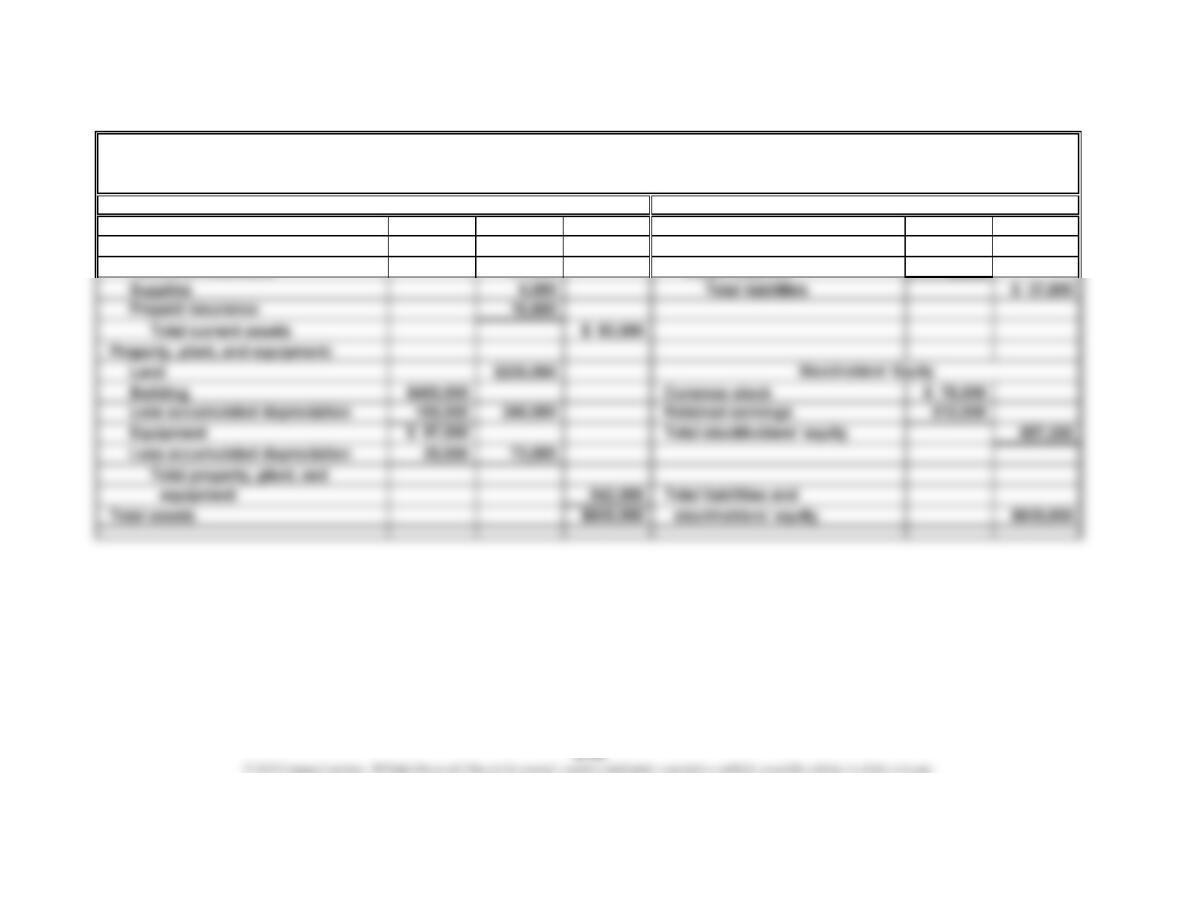
A corrected balance sheet would be as follows:
CHAPTER 4 Completing the Accounting Cycle
Ex. 4–13 (Concluded)
Current assets: Current liabilities:
Cash $ 18,500 Accounts payable $31,300
Accounts receivable 41,400 Wages payable 6,500
LABYRINTH SERVICES CO.
Balance Sheet
August 31, 2016
Assets Liabilities
CHAPTER 4 Completing the Accounting Cycle
Ex. 4–14
c. Depreciation Expense—Equipment
g. Fees Earned
j. Supplies Expense
Ex. 4–15
The income summary account is used to close the revenue and expense accounts,
and it aids in detecting and correcting errors. The $1,190,500 represents expense
Ex. 4–16
a. Income Summary 156,900
Retained Earnings 156,900
b. $1,559,900 ($1,439,000 + $156,900 – $36,000)
Ex. 4–17
Oct. 31 Fees Earned 519,300
Income Summary 519,300
31 Income Summary 586,150
Closing Entries
CHAPTER 4 Completing the Accounting Cycle
Ex. 4–18
a. Accounts Payable
b. Accumulated Depreciation
c. Cash
Ex. 4–19
Debit Credit
Balances Balances
Cash 46,540
Accounts Receivable 122,260
Ex. 4–20
2. j 7. d
4. b 9. g
LA CASA SERVICES CO.
Post-Closing Trial Balance
March 31, 2016
CHAPTER 4 Completing the Accounting Cycle
Ex. 4–21
a.
Current assets…………
…
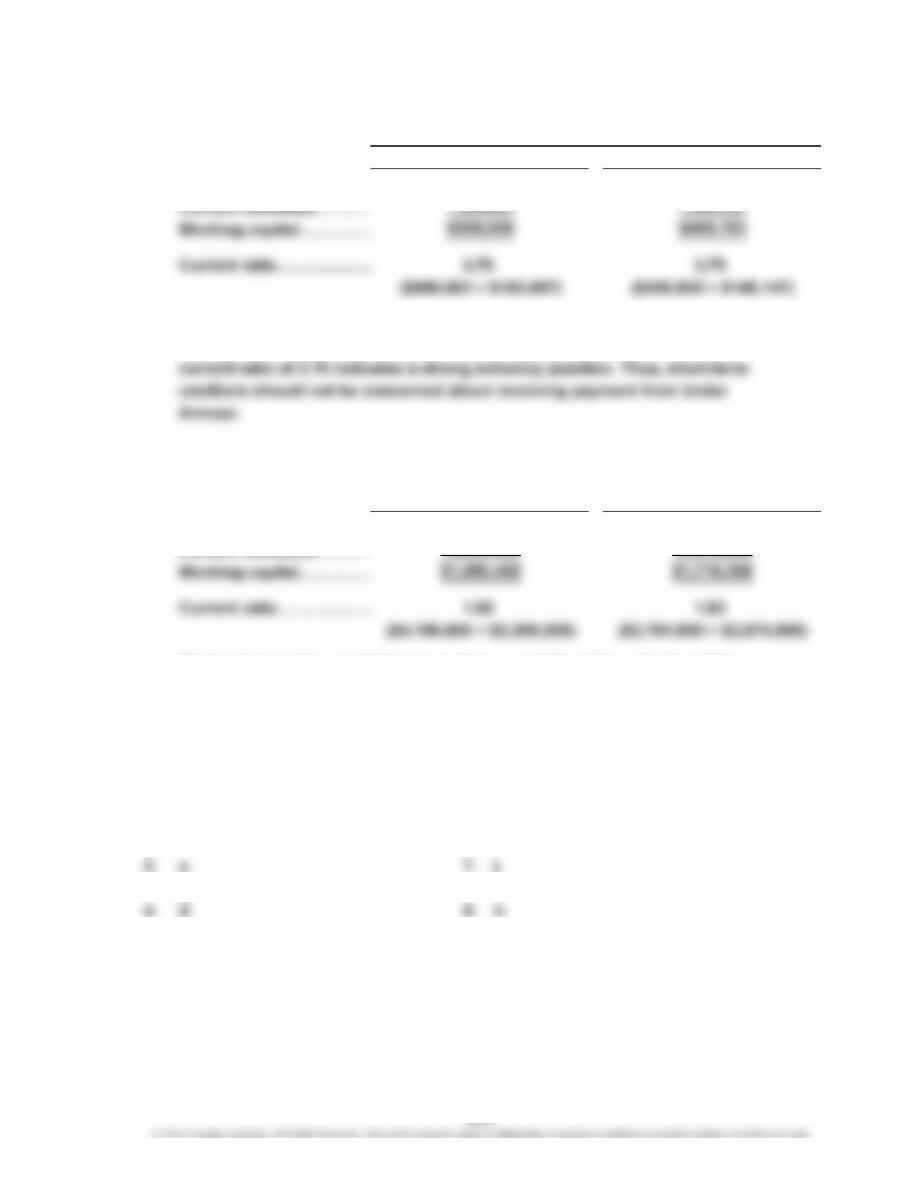
b. Under Armour’s working capital increased by $96,353 ($506,056 – $409,703)
during Year 2. The current ratio increased slightly to 3.76 in Year 2. A
Ex. 4–22
a.
Current assets…………
…
…
b. Starbucks’ working capital improved (increased) from Year 1 to Year 2 by
$271,300 ($1,990,400 – $1,719,100). Starbucks’ current ratio also improved
(increased) from 1.83 in Year 1 to 1.90 in Year 2. The improved working capital
and current ratio indicate that short-term creditors should not be concerned
about receiving payment from Starbucks.
Ex. 4–23
1. i 6. f
3. g 8. e
5. c 10. b
$558,850
149,147
December 31
Year 2 Year 1
Year 1Year 2
$689,663
183,607
2,209,200 2,075,800
$4,199,600 $3,794,900
…
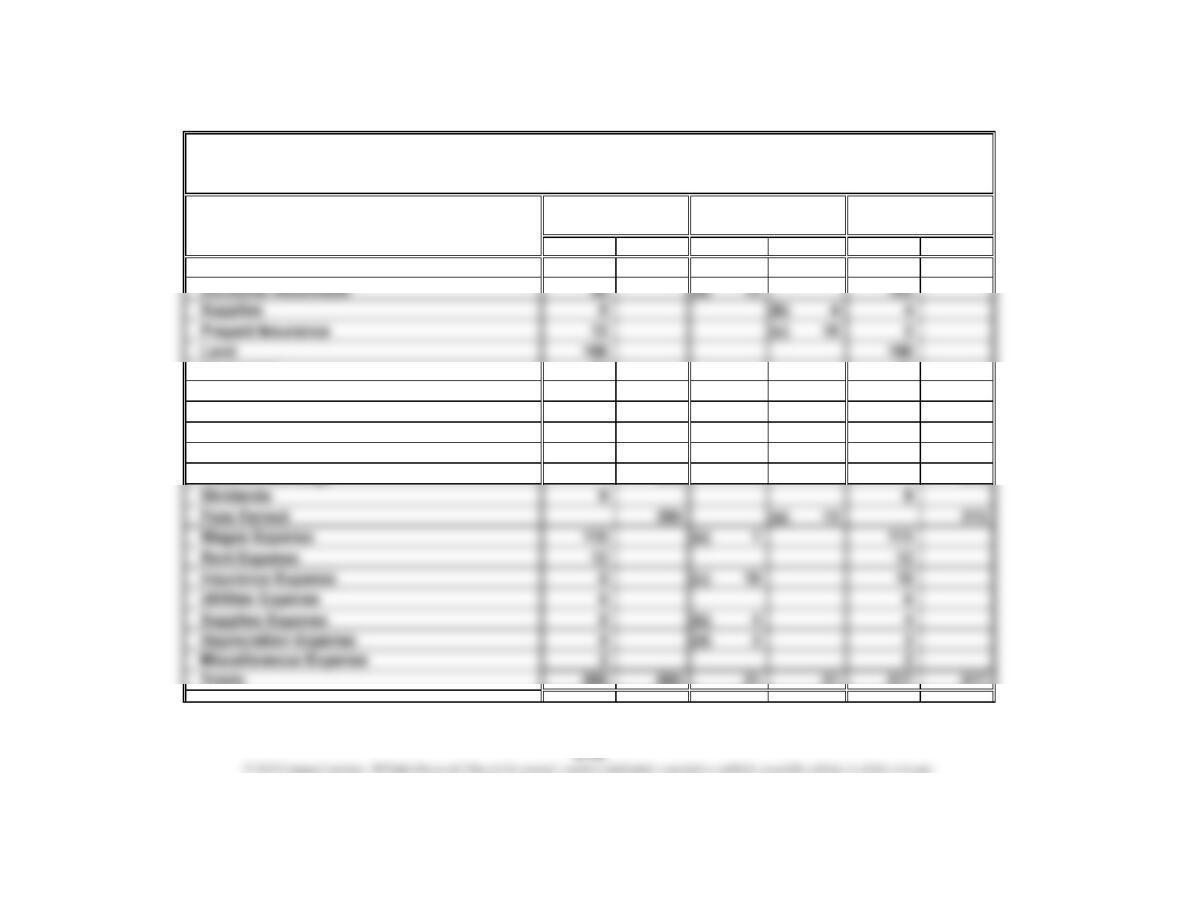
CHAPTER 4 Completing the Accounting Cycle
Ex. 4–24
Account Title Debit Credit Debit Credit
Cash 12 12
Equipment 50 50
Accum. Depr.—Equipment 4 (d) 3 7
Accounts Payable 36 36
Wages Payable 0 (e) 1 1
Common Stock 50 50
Retained Earnings 210 210
ALERT SECURITY SERVICES CO.
End-of-Period Spreadsheet (Work Sheet)
For the Year Ended October 31, 2016
Unadjusted Adjusted
Debit Credit
Trial Balance Adjustments Trial Balance
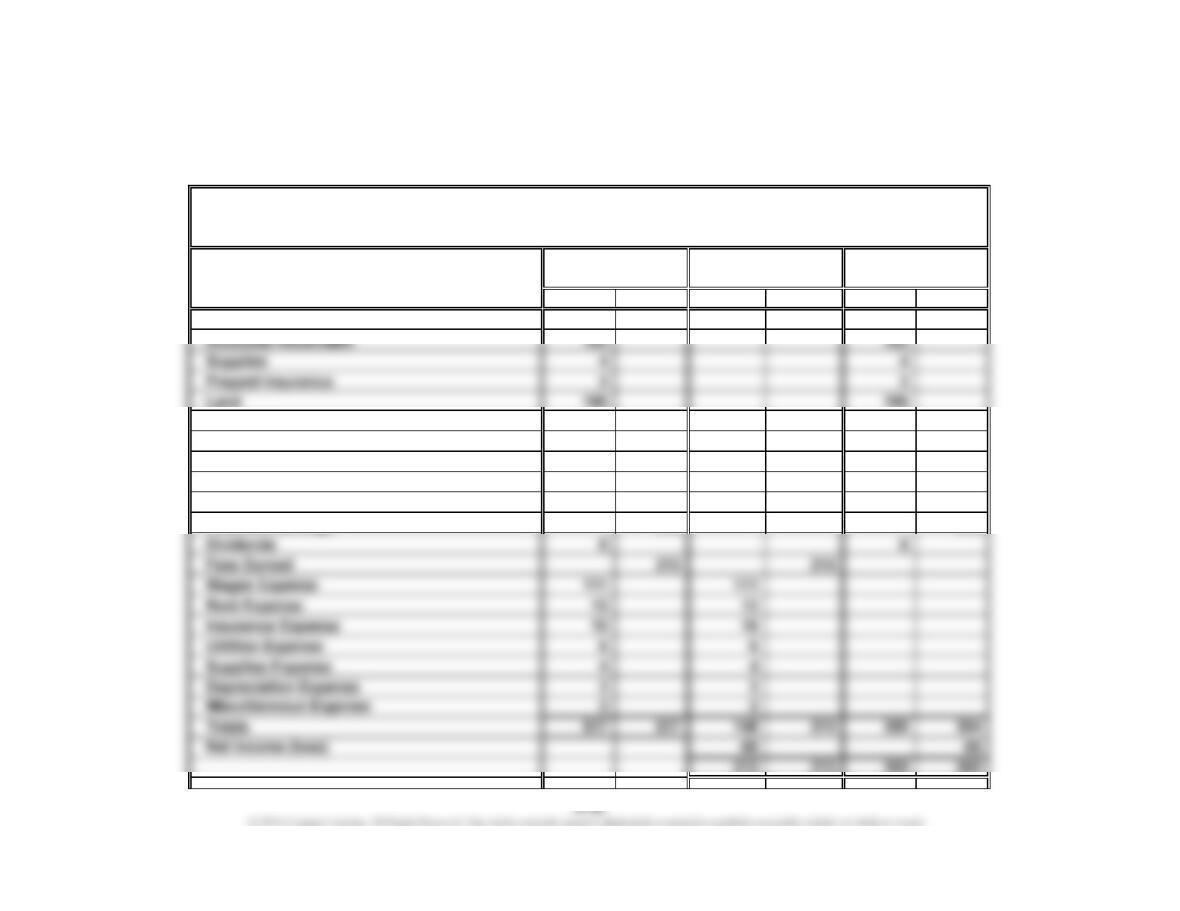
CHAPTER 4 Completing the Accounting Cycle
Ex. 4–25
Account Title Debit Credit Debit Credit
Cash 12 12
Equipment 50 50
Accum. Depr.—Equipment 7 7
Accounts Payable 36 36
Wages Payable 1 1
Common Stock 50 50
Retained Earnings 210 210
Debit Credit
Trial Balance Statement Sheet
ALERT SECURITY SERVICES CO.
End-of-Period Spreadsheet (Work Sheet)
For the Year Ended October 31, 2016
Adjusted BalanceIncome
CHAPTER 4 Completing the Accounting Cycle
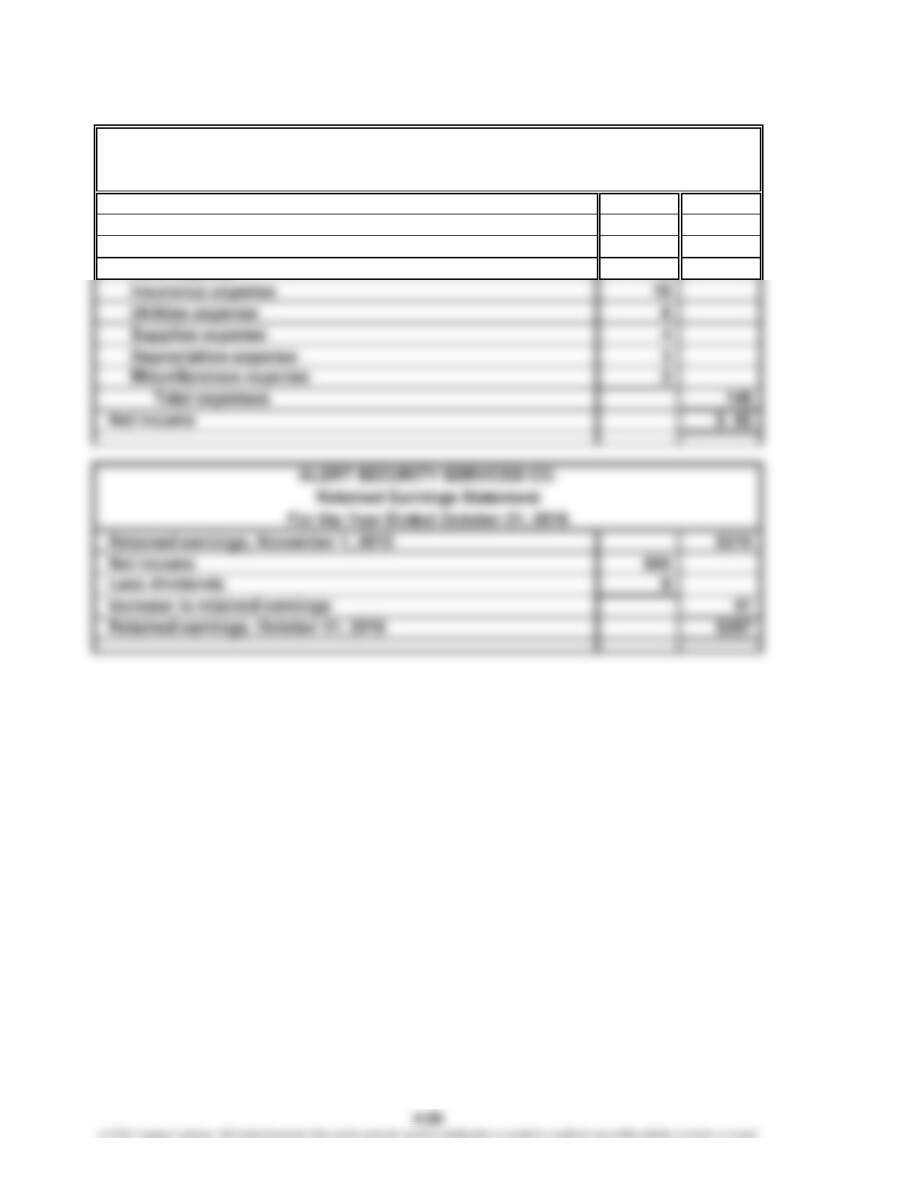
Ex. 4–26
Fees earned $213
Expenses:
Wages expense $111
Rent expense 12
ALERT SECURITY SERVICES CO.
Income Statement
For the Year Ended October 31, 2016