
MTC4-1
MAKING THE CONNECTION: INTEGRATIVE EXERCISE
PART 4: CHAPTERS 16–20
1. The following are the steps of the tactical decision-making model outlined in
Chapter 17.
Step 1. Recognize and define the problem. Sabrina defined the problem as a
need to expand the business to offer nursing home care.
Step 2. Identify alternatives as possible solutions to the problem, and
eliminate alternatives that are not feasible. Bernadette, Peter, and
Sabrina discussed alternatives by e-mail and found five options. All
but the fifth option were eliminated as not feasible. The fifth option
was further refined into two alternatives: Basic Care and Lifestyle
Care.
Step 3. Identify the predicted costs and benefits associated with each
feasible alternative. Eliminate the costs and benefits that are not
relevant to the decision. Bernadette presented costs of the Basic
Care and Lifestyle Care alternatives. Peter presented the expected
revenues for three types of patients.
Step 4. Compare the relevant costs and benefits for each alternative, and
relate each alternative to the overall strategic goals of the firm and
other important qualitative factors. This remains to be done.
Step 5. Assess qualitative factors. This remains to be done.
Step 6. Select the alternative with the greatest benefit which also supports
the organization’s strategic objectives. This remains to be done.
MTC4-2
Comp. Prob. 4 (Continued)
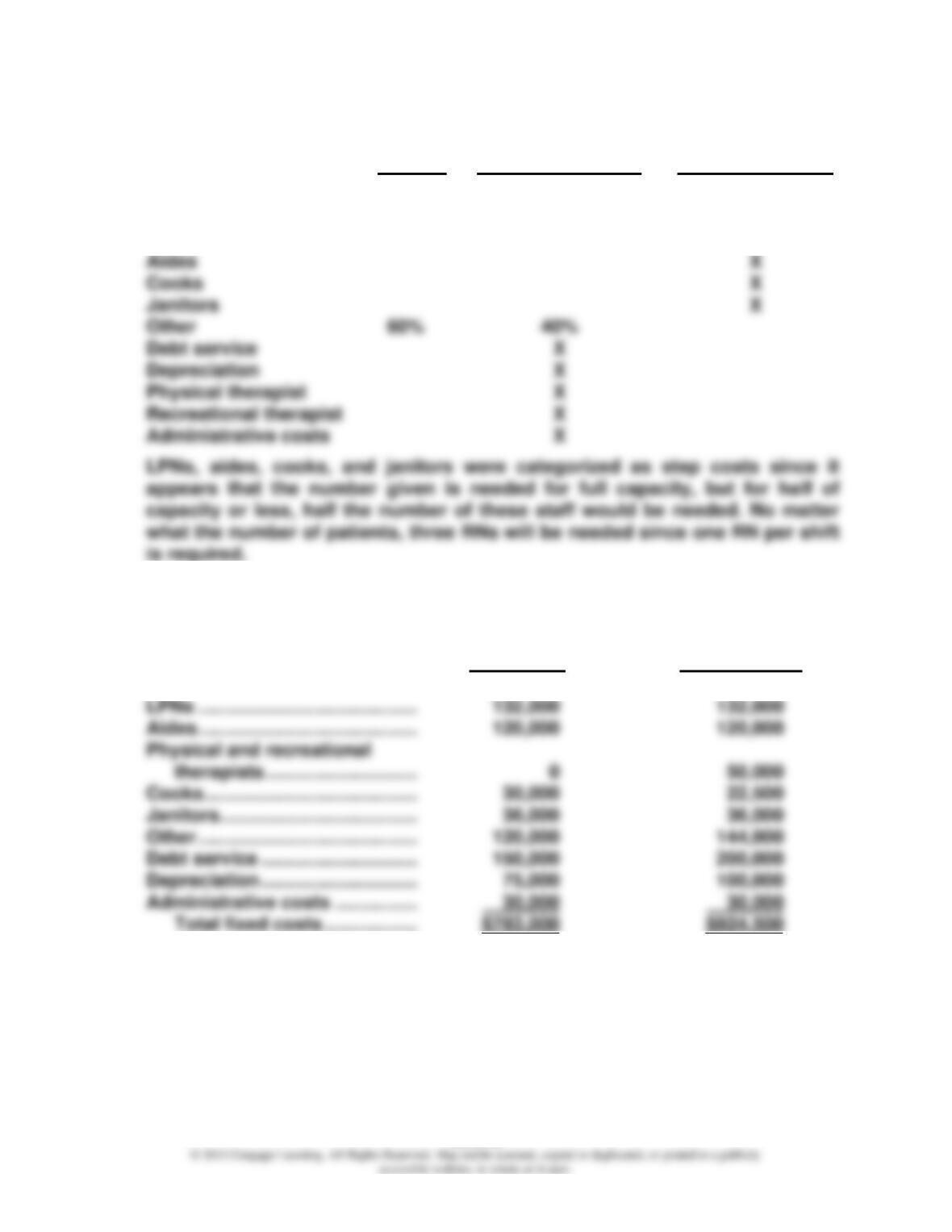
2. Flexible Committed—Fixed Committed—Step
Construction X
RNs X
LPNs X
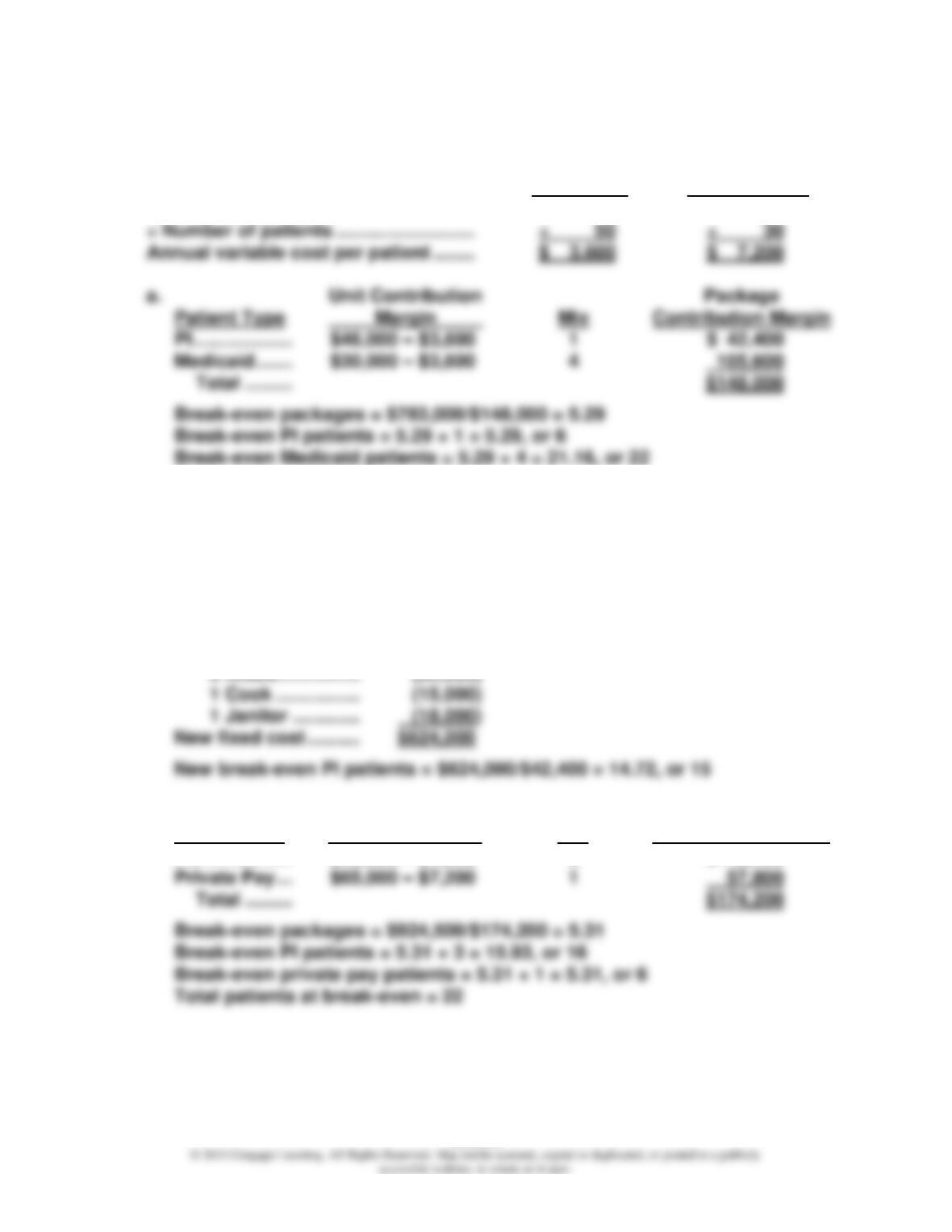
3. First, we must calculate the fixed and variable costs for each alternative.
Fixed costs:
Basic Care Lifestyle Care
RNs …………………………………….. $ 90,000 $ 90,000
MTC4-3
Comp. Prob. 4 (Continued)
Variable costs:
Basic Care Lifestyle Care
Other (at 60%) ……………………………….. $180,000 $216,000
Total patients at break-even = 28
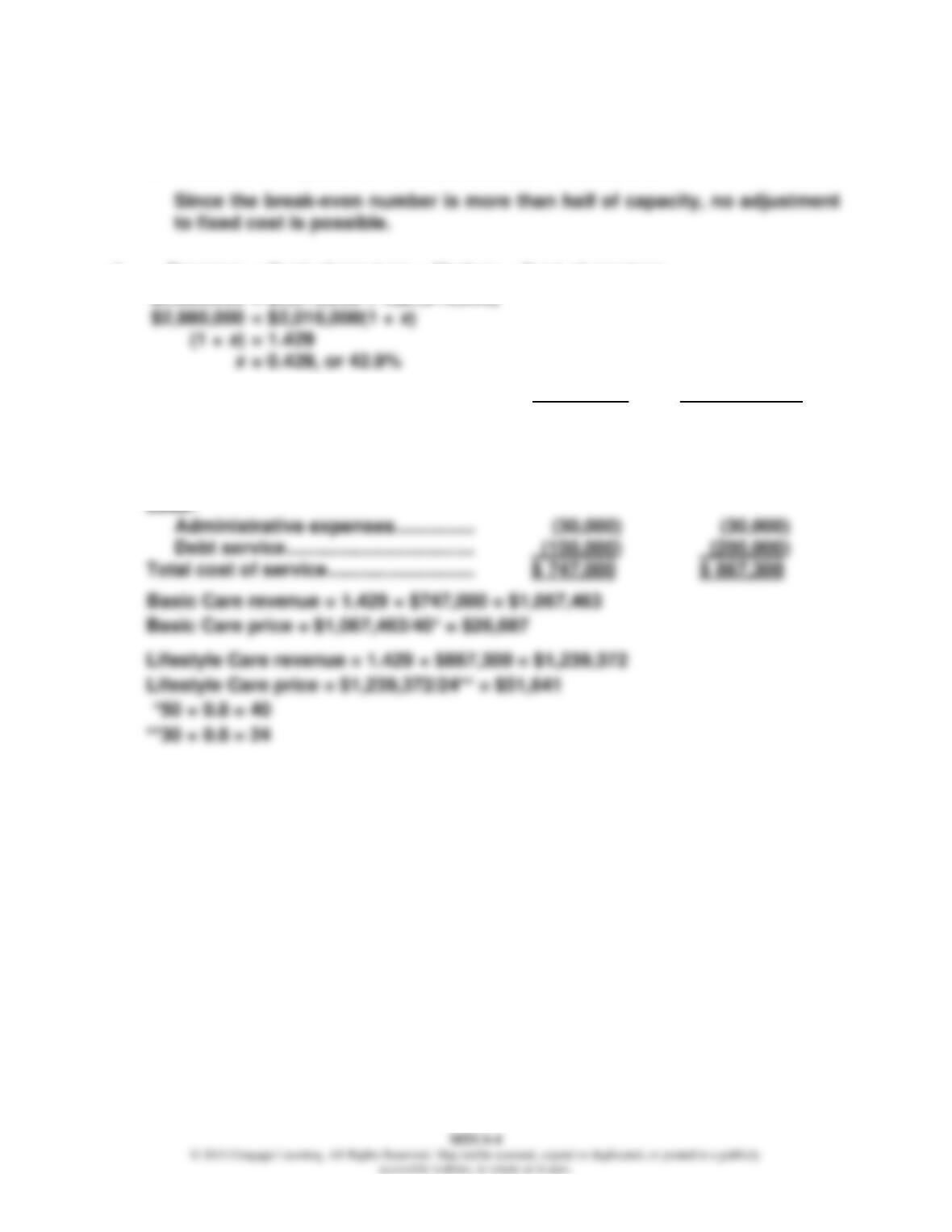
b. Break-even PI patients = $783,000/$42,400 = 18.47, or 19
Since the break-even number is less than half of capacity, it may be
possible to reduce fixed costs by one step.
Original fixed cost …. $783,000
Less:
3 LPNs ……………. (66,000)
3 Aides ……………. (60,000)
c. Unit Contribution Package
Patient Type Margin Mix Contribution Margin
PI ………………. $46,000 – $7,200 3 $116,400
Comp. Prob. 4 (Continued)
d. Break-even PI patients = $924,500/$38,800 = 23.83, or 24
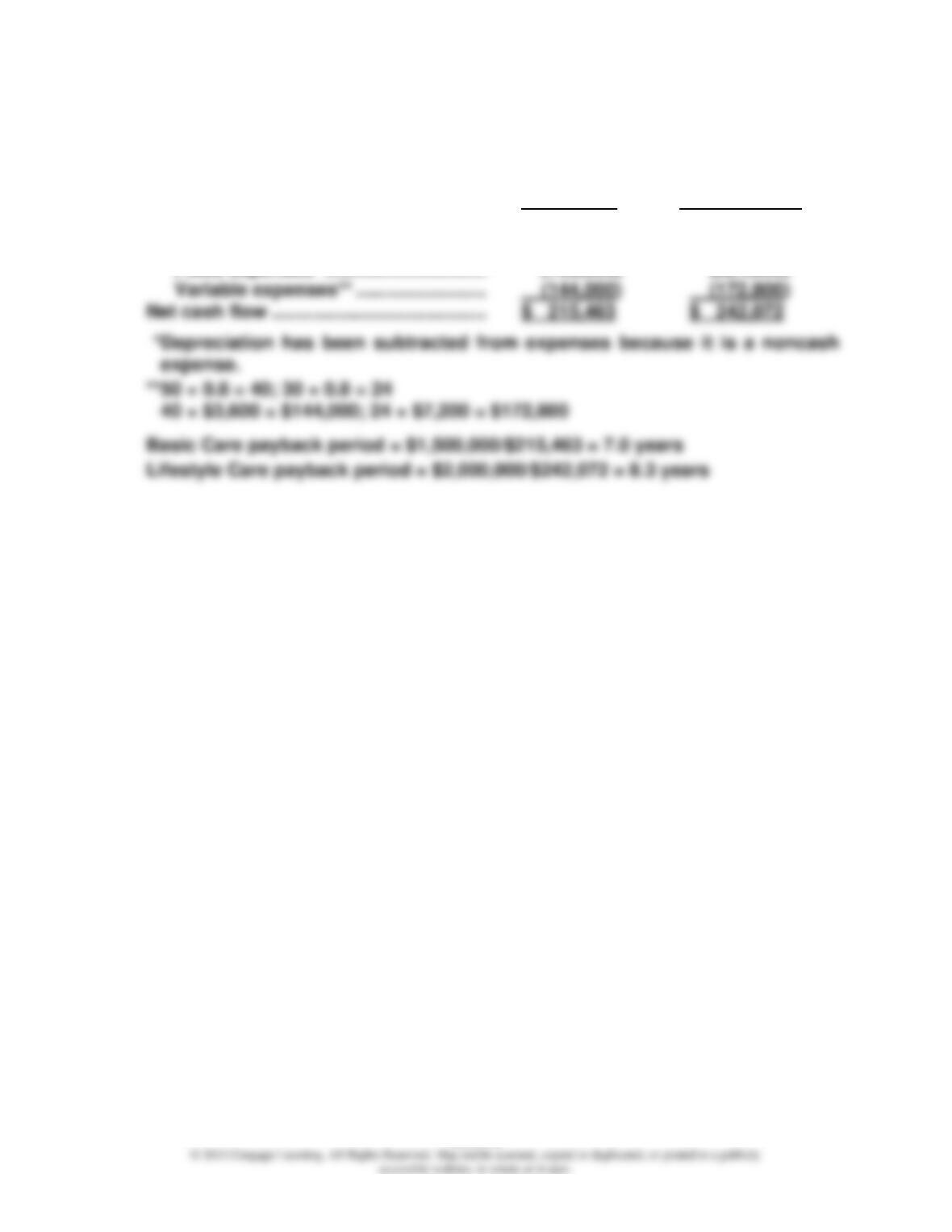
4. Revenue = Cost of services + Markup × Cost of services
$2,880,000 = $2,016,000 + x($2,016,000)
Basic Care Lifestyle Care
Total annual cost (Requirement 3):
Variable costs (40* × $3,600) ……… $ 144,000
Variable costs (24** × $7,200) …….. $ 172,800
Fixed costs ………………………………. 783,000 924,500
MTC4-5
Comp. Prob. 4 (Concluded)
5. Payback period = Initial investment/Annual cash flow
Basic Care Lifestyle Care
Cash revenue (from Requirement 4) …. $1,067,463 $1,239,372
Less cash expenses:
Fixed expenses* …………………………. (708,000) (824,500)
6. A brief Web search will turn up a number of articles discussing this topic.

MTC4-6