Exercise 4-8 (30 minutes)
Weighted-Average Method
1.
Materials
Conversion
Units transferred to the next production
department ………………………………………….
175,000
175,000
Equivalent units in ending work in process
inventory:
Materials: 10,000 units × 100% complete …..
10,000
Conversion: 10,000 units × 30% complete ….
3,000
Equivalent units of production …………………….
185,000
178,000
2.
Materials
Conversion
Cost of beginning work in process ………………
$ 1,500
$ 4,000
Cost added during the period …………………….
54,000
352,000
Total cost (a) …………………………………………
$55,500
$356,000
Equivalent units of production (b) ………………
185,000
178,000
Cost per equivalent unit (a) ÷ (b)……………….
$0.30
$2.00
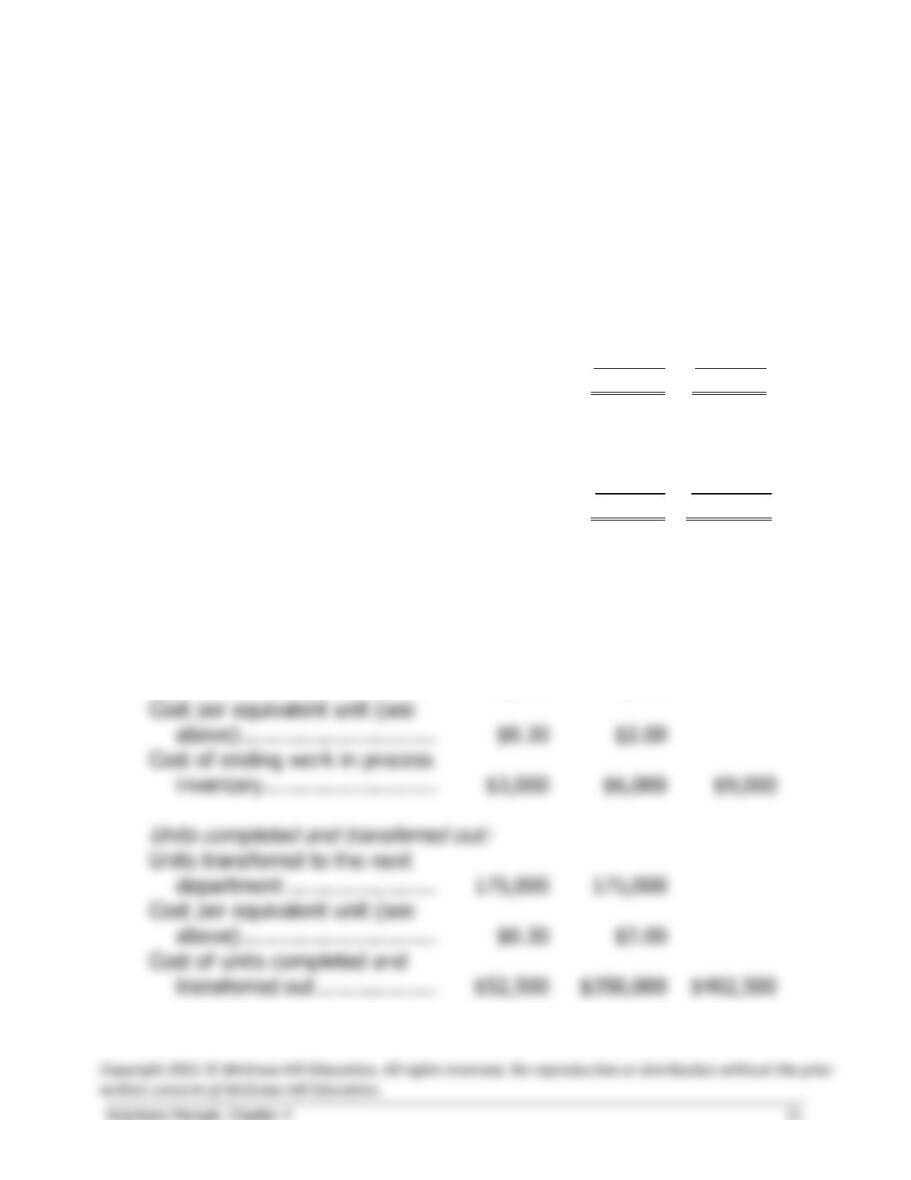
3. and 4.
Materials
Conversion
Total
Ending work in process inventory:
Equivalent units (see above) ….
10,000
3,000
$2.00
$3,000
Units completed and transferred out:
department ……………………
175,000
above) ………………………….
$2.00
Exercise 4-9 (15 minutes)
Weighted-Average Method
1.
Materials
Labor
Overhead
Units transferred to the next
department………………………………..
42,000
42,000
42,000
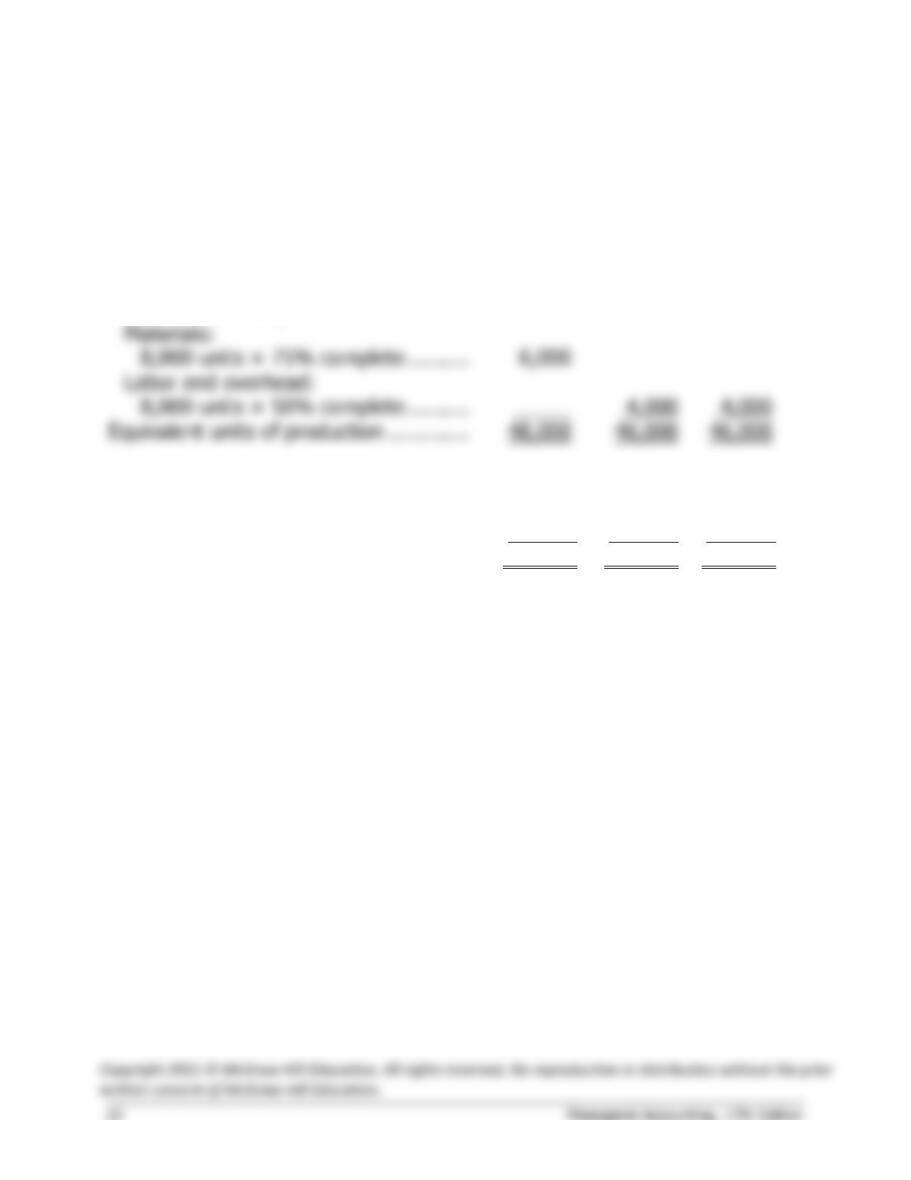
Equivalent units in ending work in
process inventory:
6,000
Equivalent units of production ………….
48,000
46,000
46,000
2.
Materials
Labor
Overhead
Cost of beginning work in process ….
$ 4,320
$ 1,040
$ 1,790
Cost added during the period ………..
52,800
21,500
32,250
Total cost (a) …………………………….
$57,120
$22,540
$34,040
Equivalent units of production (b) ….
48,000
46,000
46,000
Cost per equivalent unit (a) ÷ (b) ….
$1.19
$0.49
$0.74
Exercise 4-10 (10 minutes)
Weighted-Average Method
Materials
Labor &
Overhead
Pounds transferred to the Packing Department
during July* ………………………………………………
375,000
375,000
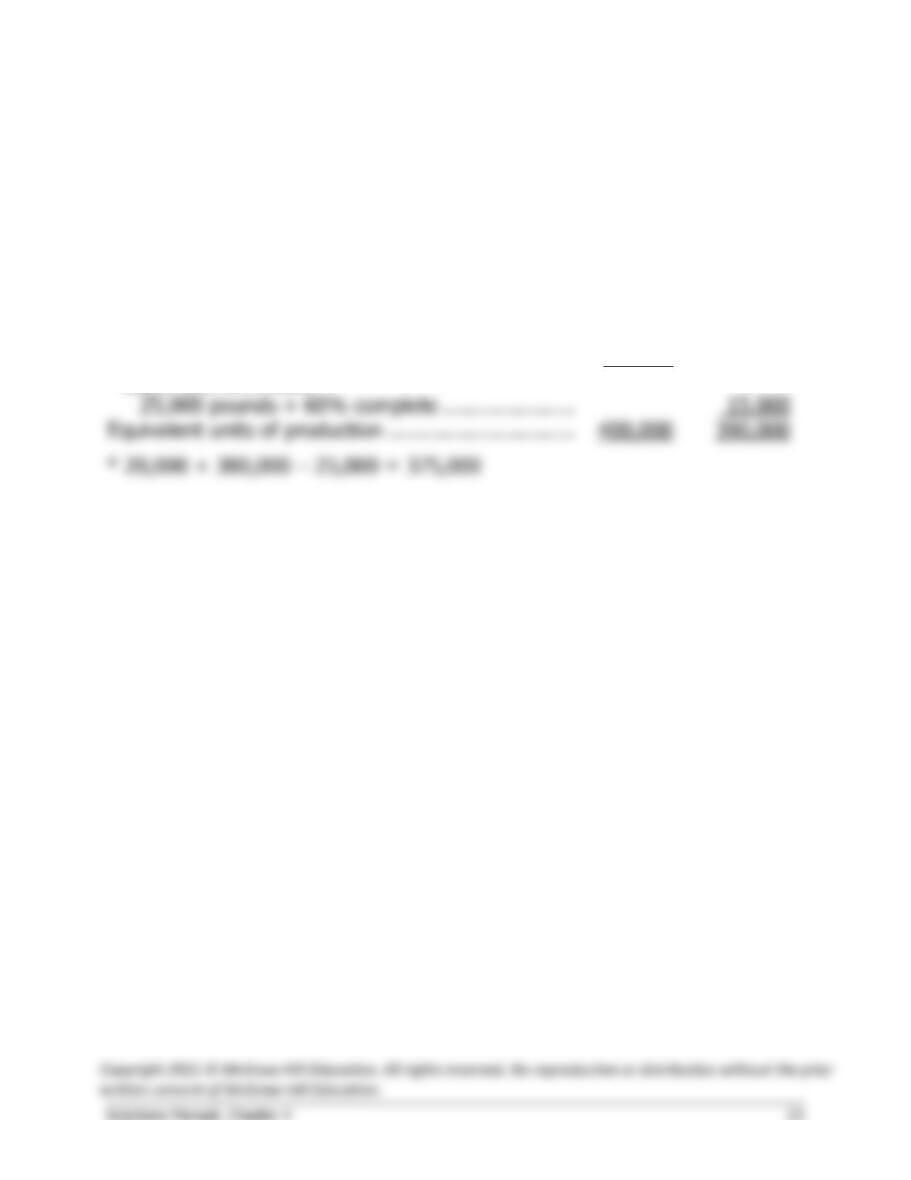
Equivalent units in ending work in process
inventory:
Materials: 25,000 pounds × 100% complete …….
25,000
Exercise 4-11 (30 minutes)
Weighted-Average Method
1.
Equivalent units of production
Pulping
Conversion
Transferred to next department …………………..
157,000
157,000
Equivalent units in ending work in process
inventory:
Pulping: 8,000 units x 100% complete ………..
8,000
Conversion: 8,000 units x 25% complete …….
2,000
Equivalent units of production……………………..
165,000
159,000
2.
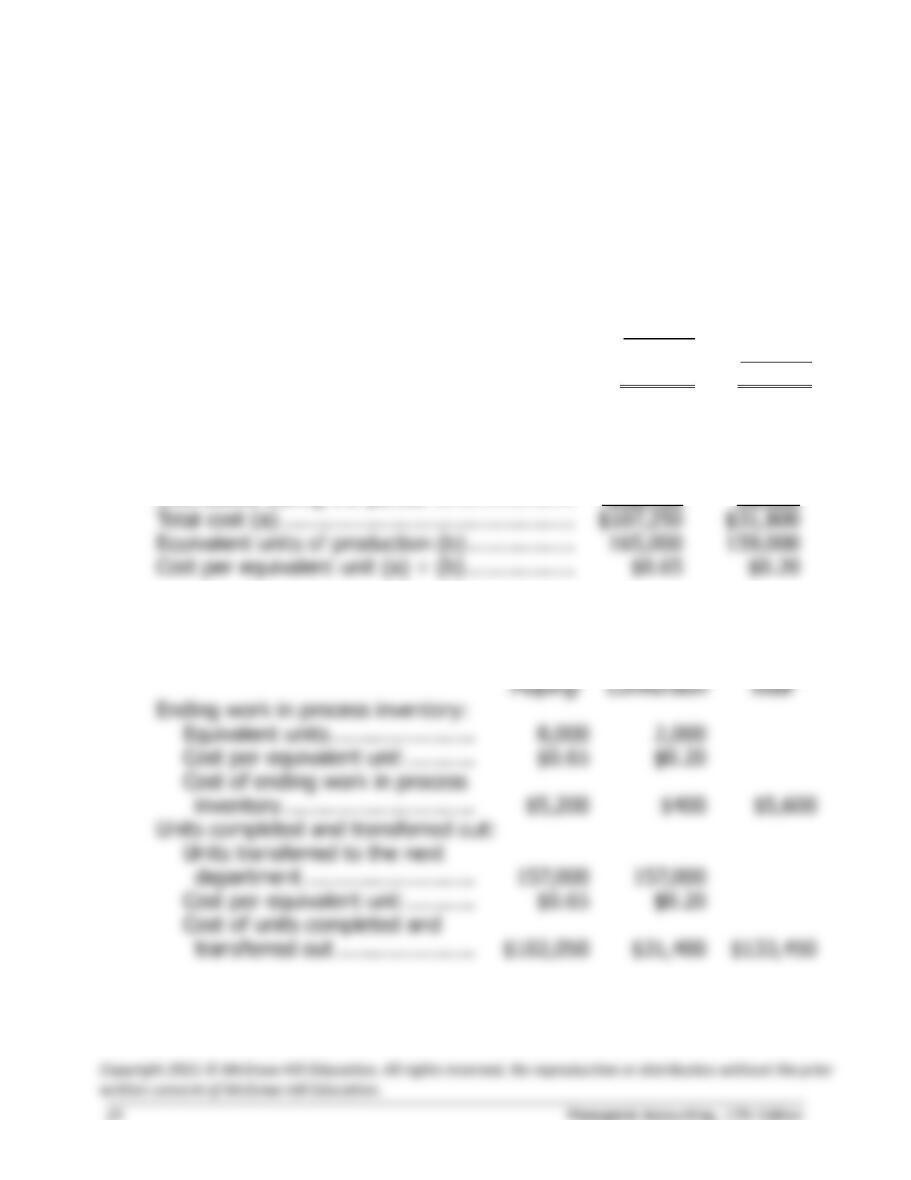
Cost per equivalent unit
Pulping
Conversion
Cost of beginning work in process ……………..
$ 4,800
$ 500
Cost added during the period …………………..
Total cost (a) ………………………………………..
$31,800
Equivalent units of production (b) ……………..
159,000
Cost per equivalent unit (a) ÷ (b) ……………..
3. and 4.
Cost of ending work in process inventory and units transferred out
Pulping
Conversion
Ending work in process inventory:
Equivalent units …………………..
Cost per equivalent unit ………..
$5,200
Units completed and transferred out:
157,000
Cost per equivalent unit ………..
$31,400
$133,450
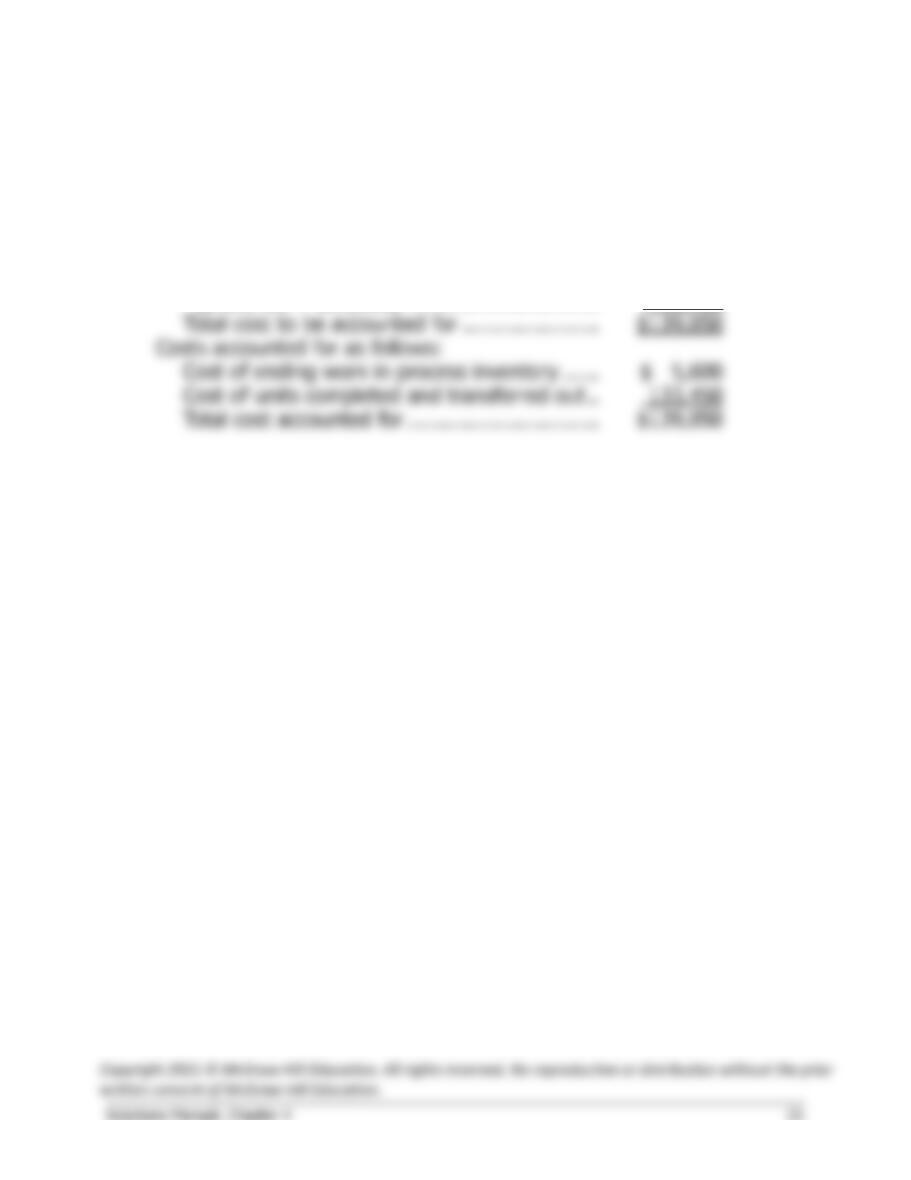
Exercise 4-11 (continued)
5. Cost reconciliation
Costs to be accounted for:
Cost of beginning work in process inventory
($4,800 + $500) ………………………………….
$ 5,300
Costs added to production during the period
($102,450 + $31,300) ………………………….
133,750
Costs accounted for as follows:
Exercise 4-12 (20 minutes)
Weighted-Average Method
1. Computation of equivalent units in ending inventory:
Materials
Labor
Overhead
Units in ending work in process
inventory …………………………
3,000
3,000
3,000
Percent completed ……………….
80%
60%
60%
Equivalent units …………………..
2,400
1,800
1,800
2. and 3.
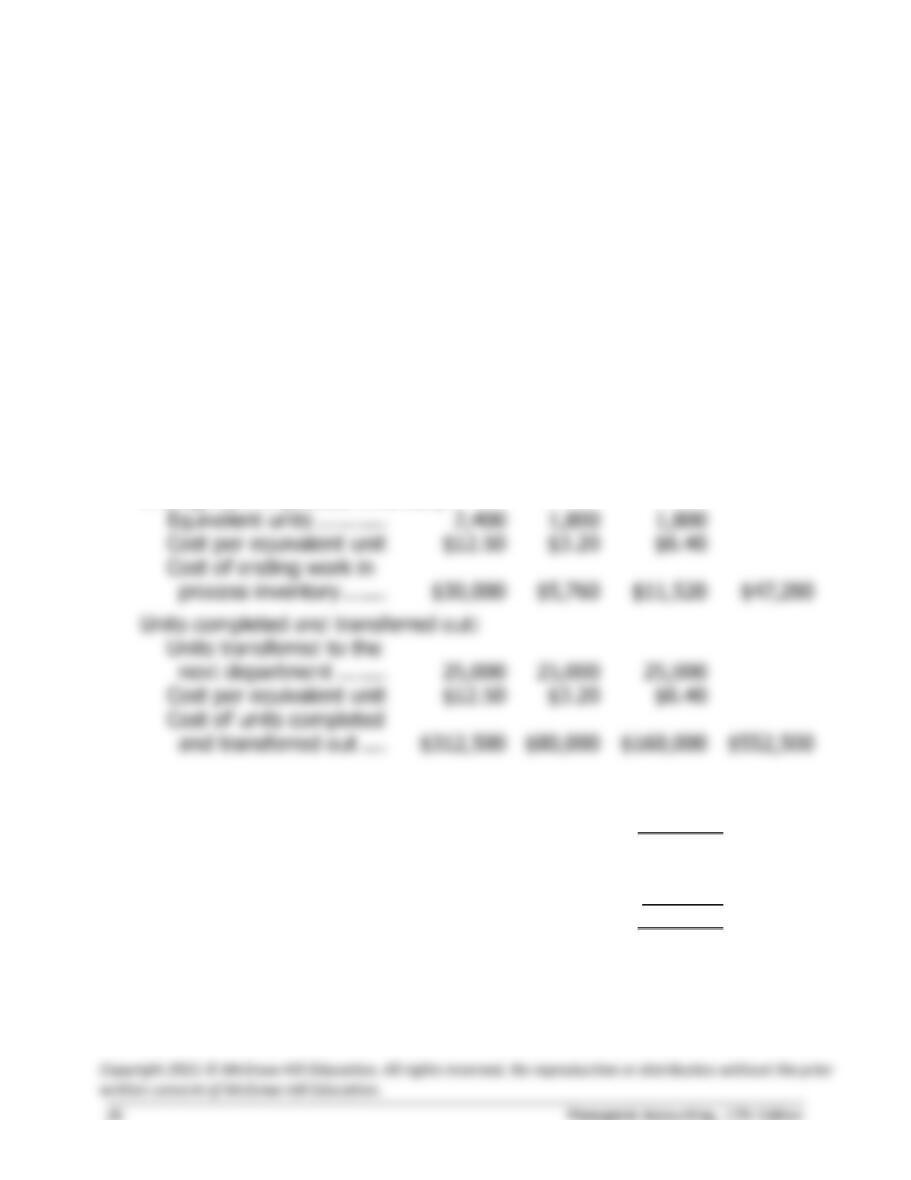
Cost of ending work in process inventory and units transferred out:
Materials
Labor
Overhead
Total
Ending work in process inventory:
Equivalent units ………..
Cost per equivalent unit
Units completed and transferred out:
25,000
25,000
Cost per equivalent unit
4. Cost reconciliation:
Total cost to be accounted for ………………………
$599,780
Costs accounted for as follows:
Cost of ending work in process inventory ……
$ 47,280
Cost of units completed and transferred out ..
552,500
Total cost accounted for ………………………….
$599,780
Problem 4-13 (60 minutes)
Weighted-Average Method
1. Computation of equivalent units of production:
Mixing
Materials
Conversion
Units transferred to the next department ……..
50.0
50.0
50.0
Equivalent units in ending work in process
inventory:
Mixing: 1 unit × 100% complete…………….
1.0
Materials: 1 unit × 80% complete …………..
0.8
Conversion: 1 unit × 70% complete ………..
0.7
Equivalent units of production ……………………
51.0
50.8
50.7
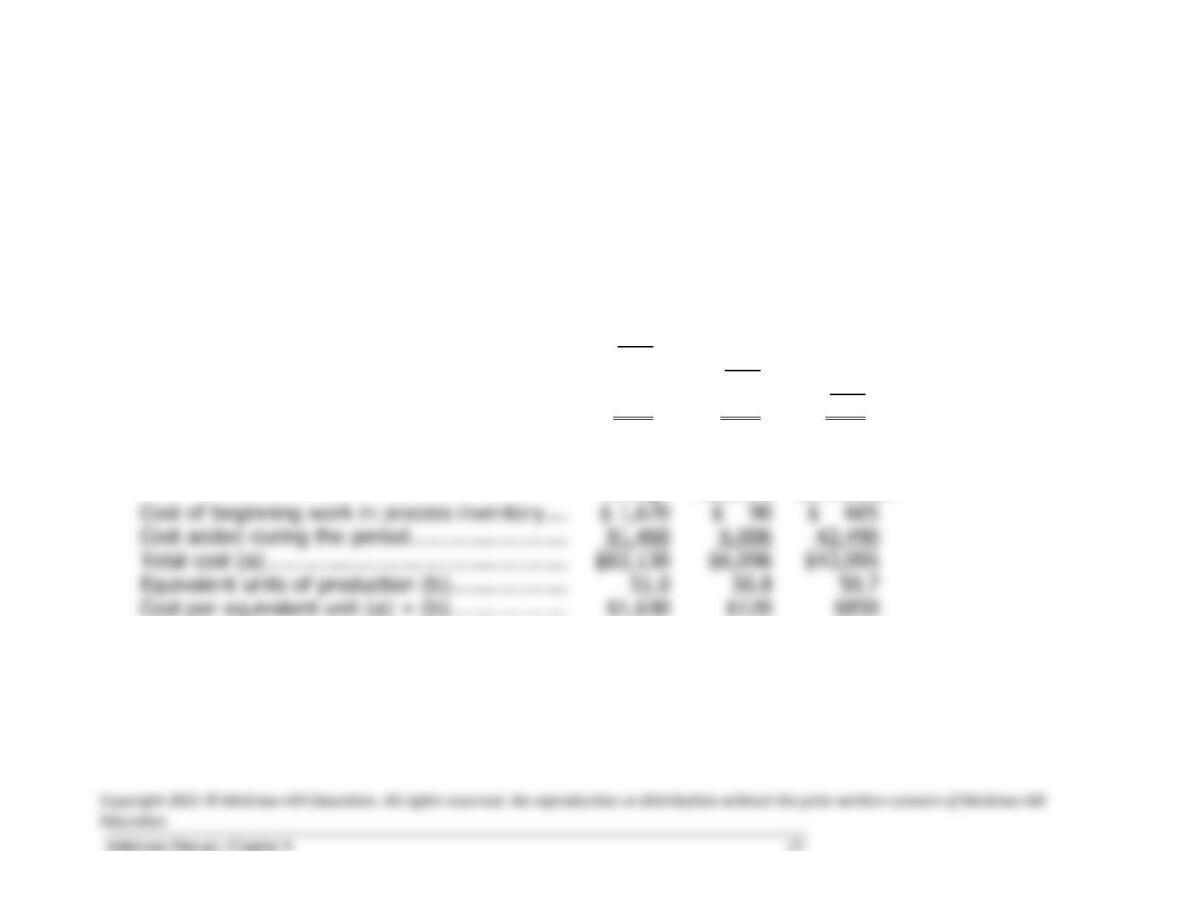
2. Costs per equivalent unit:
Mixing
Materials
Conversion
Cost of beginning work in process inventory….
Cost added during the period …………………….
Total cost (a) …………………………………………
Equivalent units of production (b) ……………….
Cost per equivalent unit (a) ÷ (b) ……………….
Problem 4-13 (continued)
3. and 4.
Costs of ending work in process inventory and units transferred out:
Mixing
Materials
Conversion
Total
Ending work in process inventory:
Equivalent units ………………………………….
1.0
0.8
0.7
Cost per equivalent unit ……………………….
$1,630
$120
$850
Cost of ending work in process inventory …
$1,630
$96
$595
$2,321
Units completed and transferred out:
Units transferred to the next department …
50.0
50.0
50.0
Cost per equivalent unit ……………………….
$1,630
$120
$850
Cost of units transferred out ………………….
$81,500
$6,000
$42,500
$130,000
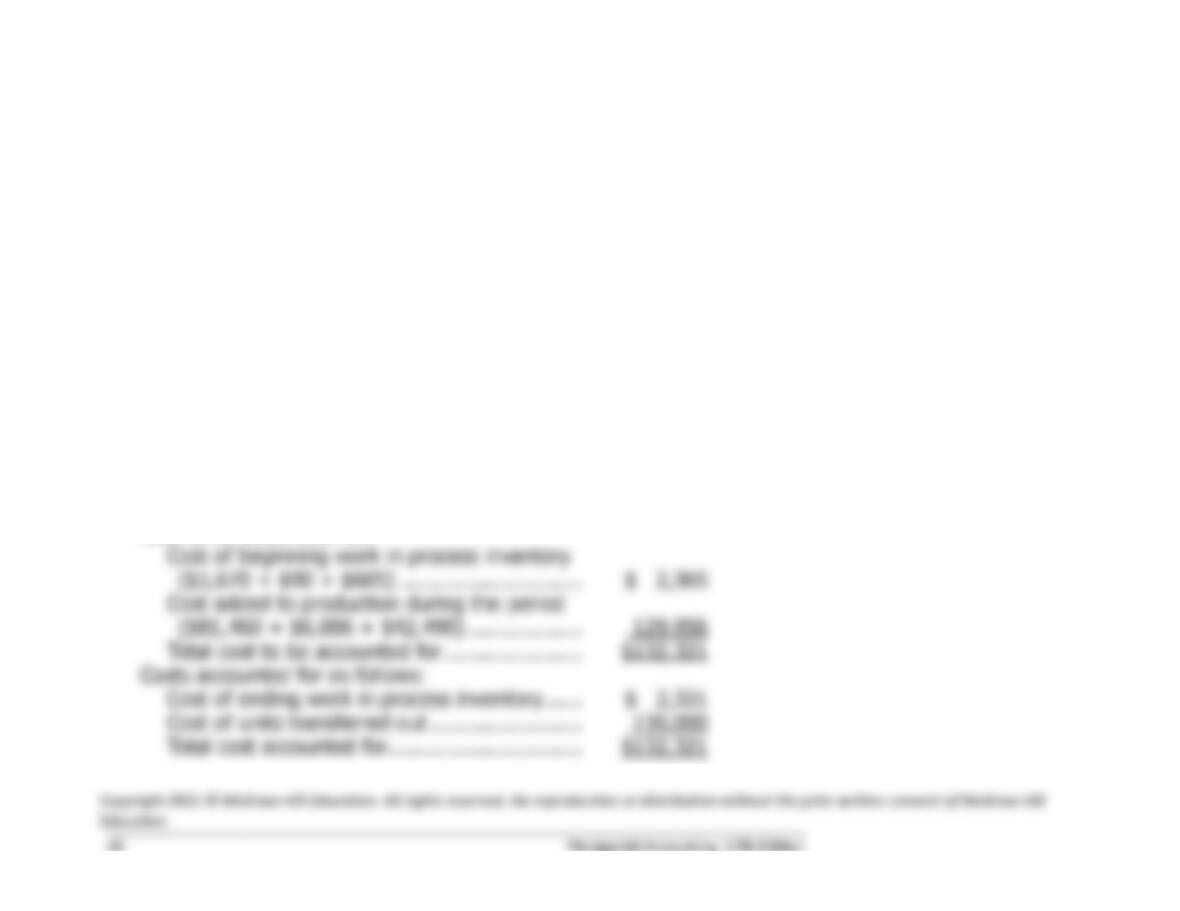
5. Cost reconciliation:
Cost to be accounted for:
Costs accounted for as follows:
Problem 4-14 (45 minutes)
Weighted-Average Method
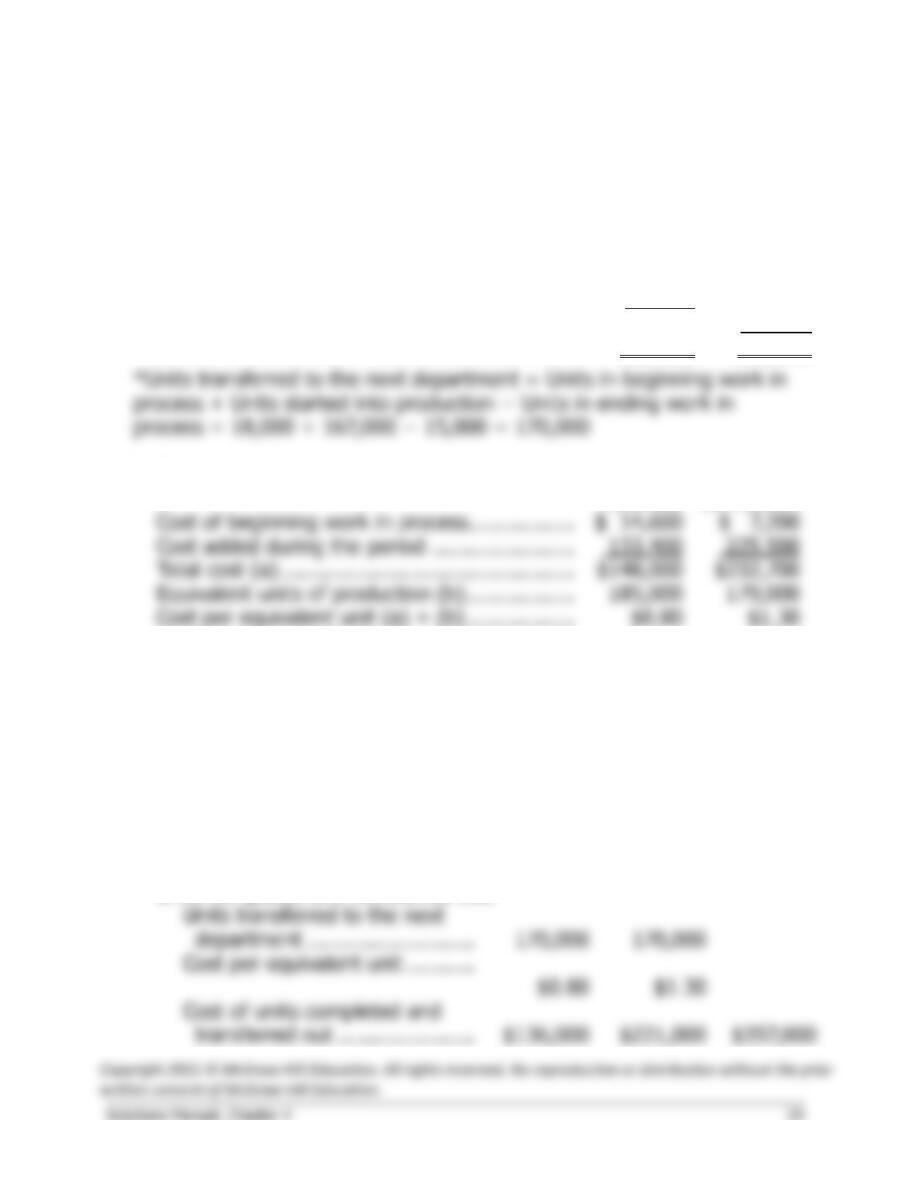
1.
Equivalent units of production
Materials
Conversion
Transferred to next department* …………………
170,000
170,000
Equivalent units in ending work in process:
Materials: 15,000 units x 100% complete …….
15,000
Conversion: 15,000 units x 60% complete ……
9,000
Equivalent units of production……………………..
185,000
179,000
2.
Cost per equivalent unit
Materials
Conversion
Cost of beginning work in process ……………..
Cost added during the period …………………..
225,500
Total cost (a) ………………………………………..
Equivalent units of production (b) ……………..
179,000
Cost per equivalent unit (a) ÷ (b) ……………..
3. and 4.
Cost of ending work in process inventory and units transferred out
Materials
Conversion
Total
Ending work in process inventory:
Equivalent units …………………..
15,000
9,000
Cost per equivalent unit ………..
$0.80
$1.30
Cost of ending work in process
inventory ………………………….
$12,000
$11,700
$23,700
Units completed and transferred out:
170,000
170,000
Problem 4-15 (45 minutes)
Weighted-Average Method
1.
Equivalent units of production:
Materials
Conversion
Transferred to next department …………………..
160,000
160,000
Equivalent units in ending work in process
inventory:
Materials: 40,000 units x 100% complete …….
40,000
Conversion: 40,000 units x 25% complete ……
10,000
Equivalent units of production……………………..
200,000
170,000
2.
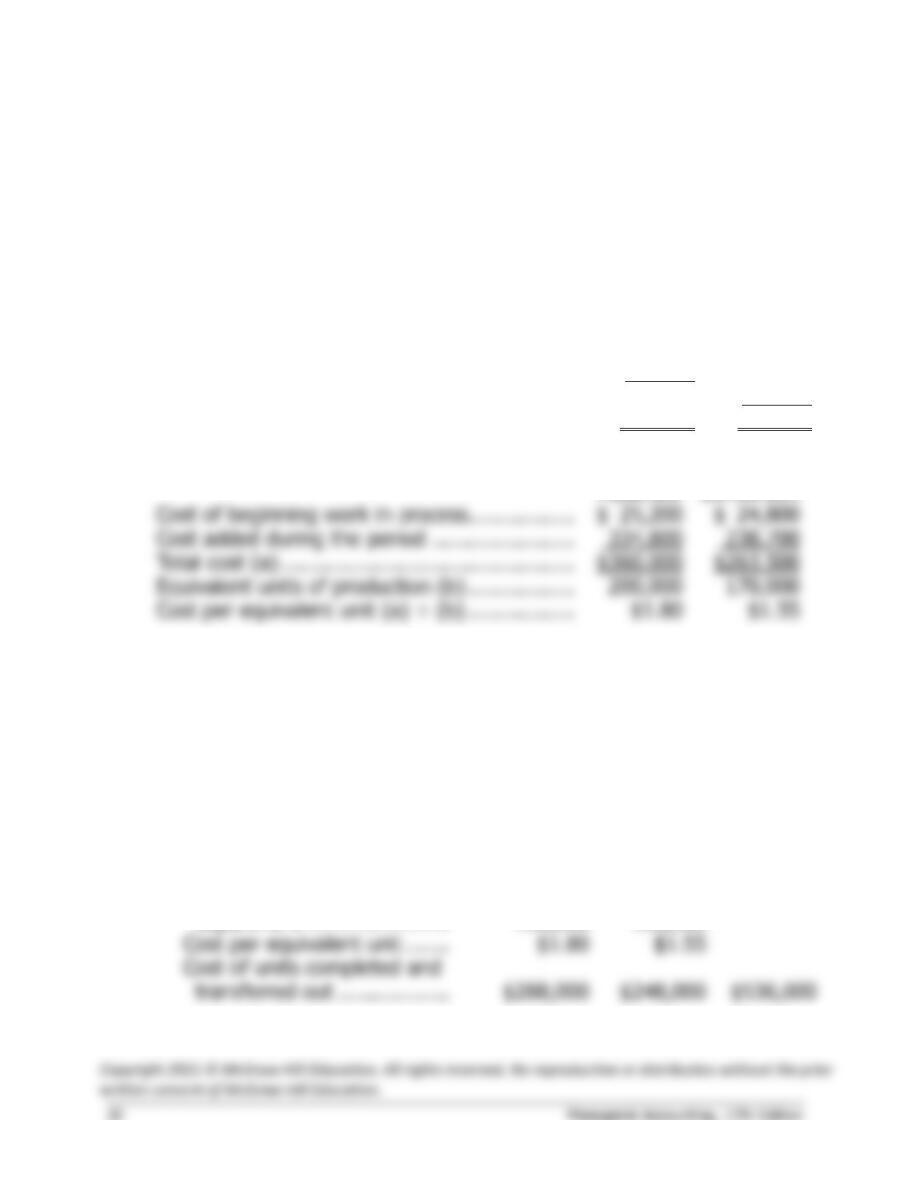
Cost per equivalent unit
Materials
Conversion
Cost of beginning work in process ……………..
Cost added during the period …………………..
Total cost (a) ………………………………………..
Equivalent units of production (b) ……………..
200,000
170,000
Cost per equivalent unit (a) ÷ (b) ……………..
3 and 4.
Assigning costs to units:
Materials
Conversion
Total
Ending work in process inventory:
Equivalent units ……………….
40,000
10,000
Cost per equivalent unit …….
$1.80
$1.55
Cost of ending work in process
inventory ………………………
$72,000
$15,500
$87,500
Units completed and transferred out:
Units transferred to the next
department …………………..
160,000
160,000
Cost per equivalent unit …….
$1.80
$1.55
Cost of units completed and
transferred out ………………
$536,000
Problem 4-15 (continued)
5.
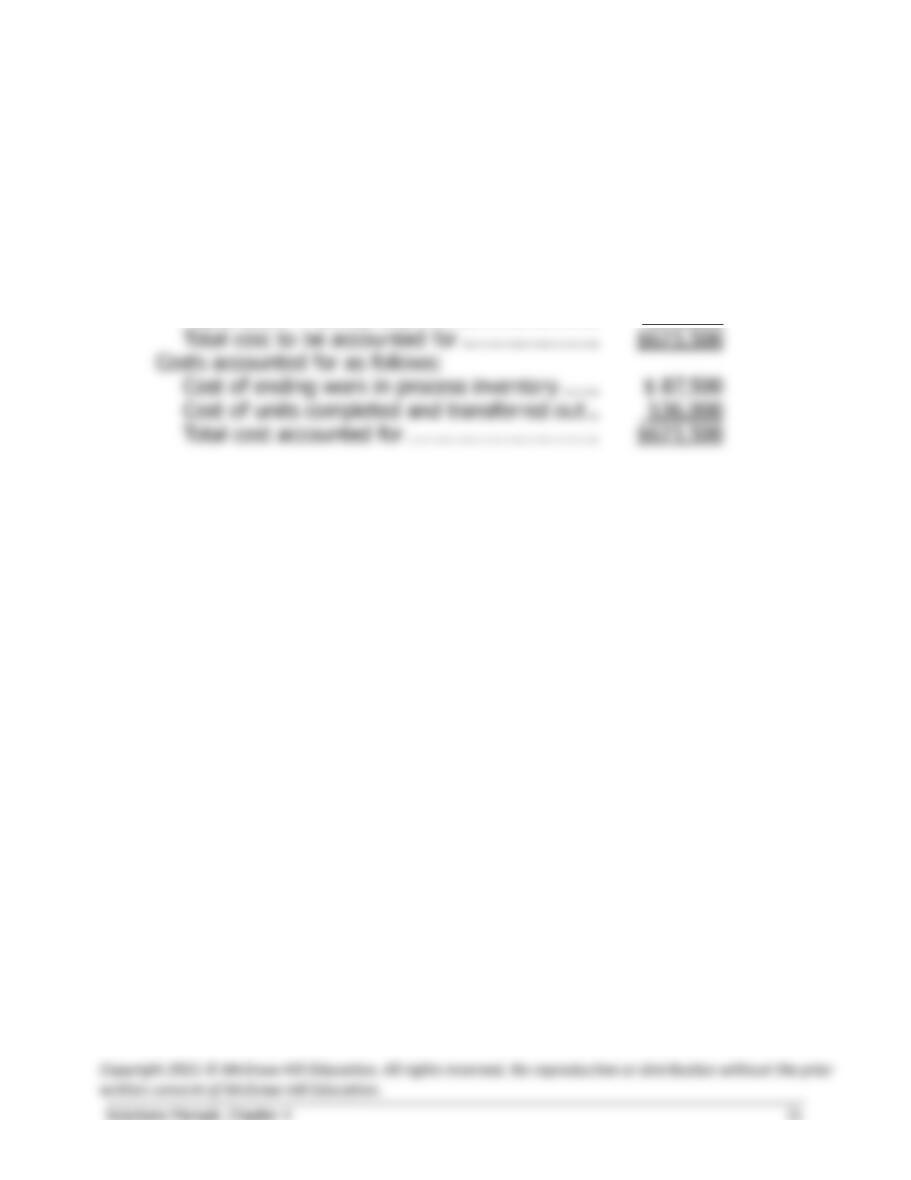
Cost reconciliation:
Costs to be accounted for:
Cost of beginning work in process inventory
($25,200 + $24,800) …………………………...
$ 50,000
Costs added to production during the period
($334,800 + $238,700) …………………………
573,500
536,000
Problem 4-16 (45 minutes)
Weighted-Average Method
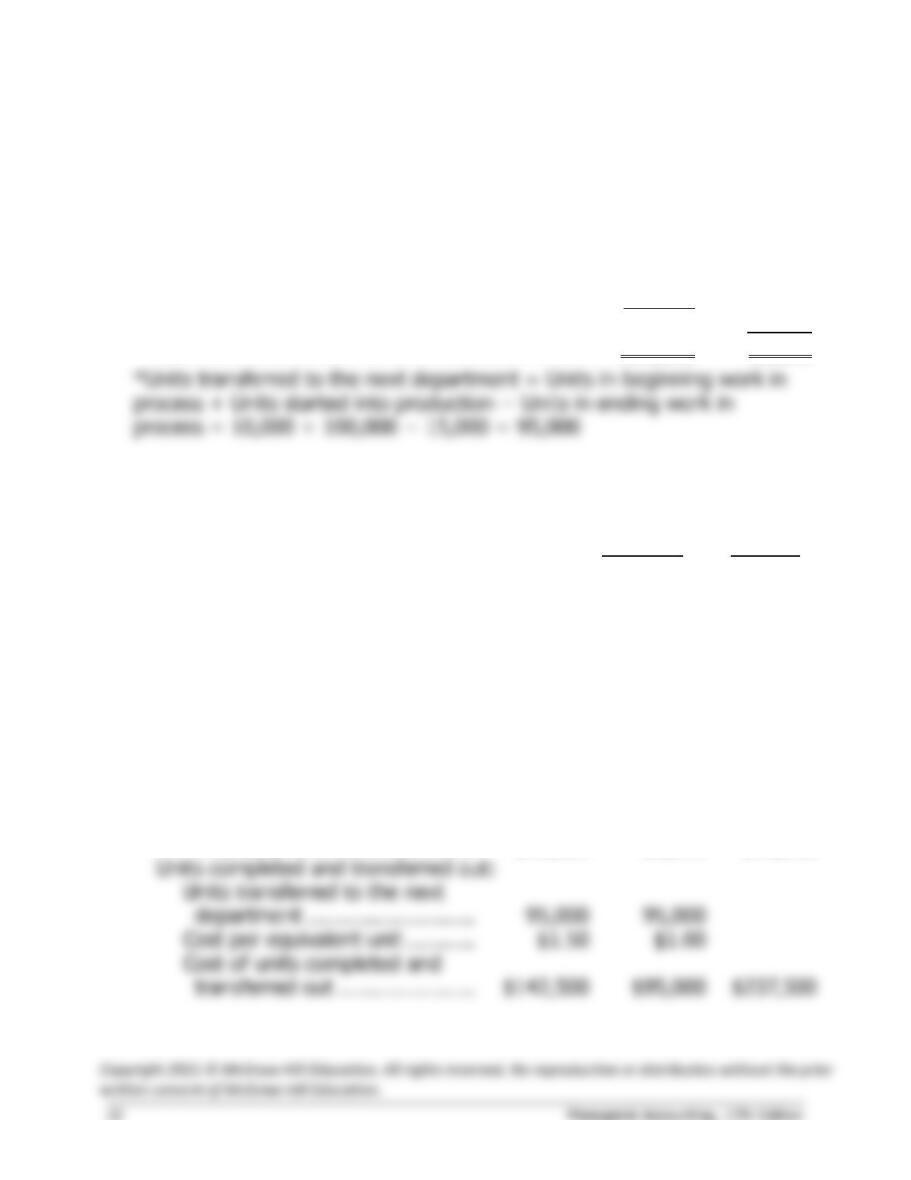
1.
Equivalent units of production
Materials
Conversion
Transferred to next department* …………………
95,000
95,000
Equivalent units in ending work in process:
Materials: 15,000 units x 60% complete ………
9,000
Conversion: 15,000 units x 20% complete ……
3,000
Equivalent units of production……………………..
104,000
98,000
2.
Cost per equivalent unit
Materials
Conversion
Cost of beginning work in process ……………..
$ 1,500
$ 7,200
Cost added during the period …………………..
154,500
90,800
Total cost (a) ………………………………………..
$156,000
$98,000
Equivalent units of production (b) ……………..
104,000
98,000
Cost per equivalent unit (a) ÷ (b) ……………..
$1.50
$1.00
3. and 4.
Cost of ending work in process inventory and units transferred out
Materials
Conversion
Total
Ending work in process inventory:
Equivalent units …………………..
9,000
3,000
Cost per equivalent unit ………..
$1.50
$1.00
Cost of ending work in process
inventory ………………………….
$13,500
$3,000
$16,500
Units completed and transferred out:
Units transferred to the next
department ………………………
95,000
Cost per equivalent unit ………..
$1.50
$1.00
Cost of units completed and
transferred out ………………….
$95,000
5.
Cost Reconciliation
Costs to be accounted for:
Cost of beginning work in process inventory
($1,500 + $7,200) ……………………………….
$ 8,700
Costs added to production during the period
($154,500 + $90,800)…………………………..
245,300
Costs accounted for as follows:
Problem 4-17 (45 minutes)
Weighted-Average Method
1.
a.
Work in Process—Refining Department ……..
495,000
Work in Process—Blending Department ……..
115,000
Raw Materials ………………………………….
610,000
Work in Process—Refining Department ……..
Work in Process—Blending Department ……..
Manufacturing Overhead ………………………..
225,000
Accounts Payable ……………………………..
225,000
d.
Work in Process—Refining Department ……..
181,000
Work in Process—Blending Department ……..
42,000
Manufacturing Overhead ……………………
223,000
e.
Work in Process—Blending Department ……..
740,000
Work in Process—Refining Department …
740,000
f.
Finished Goods …………………………………….
950,000
Work in Process—Blending Department …
950,000
Accounts Receivable ………………………………
Sales ……………………………………………..
Cost of Goods Sold ………………………………..
900,000
Finished Goods ………………………………..
900,000
Problem 4-17 (continued)
2.
Accounts Receivable
Raw Materials
(g)
1,500,000
Bal.
618,000
(a)
610,000
Bal.
8,000
Work in Process
Refining Department
Work in Process
Blending Department
Bal.
38,000
(e)
740,000
Bal.
65,000
(f)
950,000
(a)
495,000
(a)
115,000
(b)
72,000
(b)
18,000
(d)
181,000
(d)
42,000
Bal.
46,000
(e)
740,000
Bal.
30,000
Bal.
20,000
(g)
900,000
(c)
225,000
(d)
223,000
(f)
950,000
Bal.
2,000
Bal.
70,000
(c)
(b)
(g)
1,500,000
(g)
900,000
Problem 4-18 (30 minutes)
Weighted-Average Method
1.
Equivalent units of production
Materials
Conversion
Transferred to next department …………………..
190,000
190,000
Equivalent units in ending work in process
inventory:
Materials: 40,000 units x 75% complete ………
30,000
Conversion: 40,000 units x 60% complete ……
24,000
Equivalent units of production……………………..
220,000
214,000
2.
Cost per equivalent unit
Conversion
Cost of beginning work in process ……………..
Cost added during the period …………………..
Total cost (a) ………………………………………..
Equivalent units of production (b) ……………..
220,000
214,000
Cost per equivalent unit (a) ÷ (b) ……………..
3.
Total units transferred …………………………...
190,000
Less units in the beginning inventory ………..
30,000
Units started and completed during April ……
160,000
Note: This answer assumes that the units in the beginning inventory
are completed before any other units are completed.
4. No, the manager should not be rewarded for good cost control. The
Case 4-19 (45 minutes)
Weighted-Average Method
1. The revised computations follow:
Equivalent units of production:
Transferred
In Costs
Materials
Conversion
Transferred to finished goods ………………………………
1,800
1,800
1,800
Equivalent units in ending work in process:
Transferred in costs: 600 units x 100% complete …..
600
Materials: 600 units x 0% complete ……………………
0
Conversion: 600 units x 35% complete ……………….
210
Equivalent units of production……………………………..
2,400
1,800
2,010
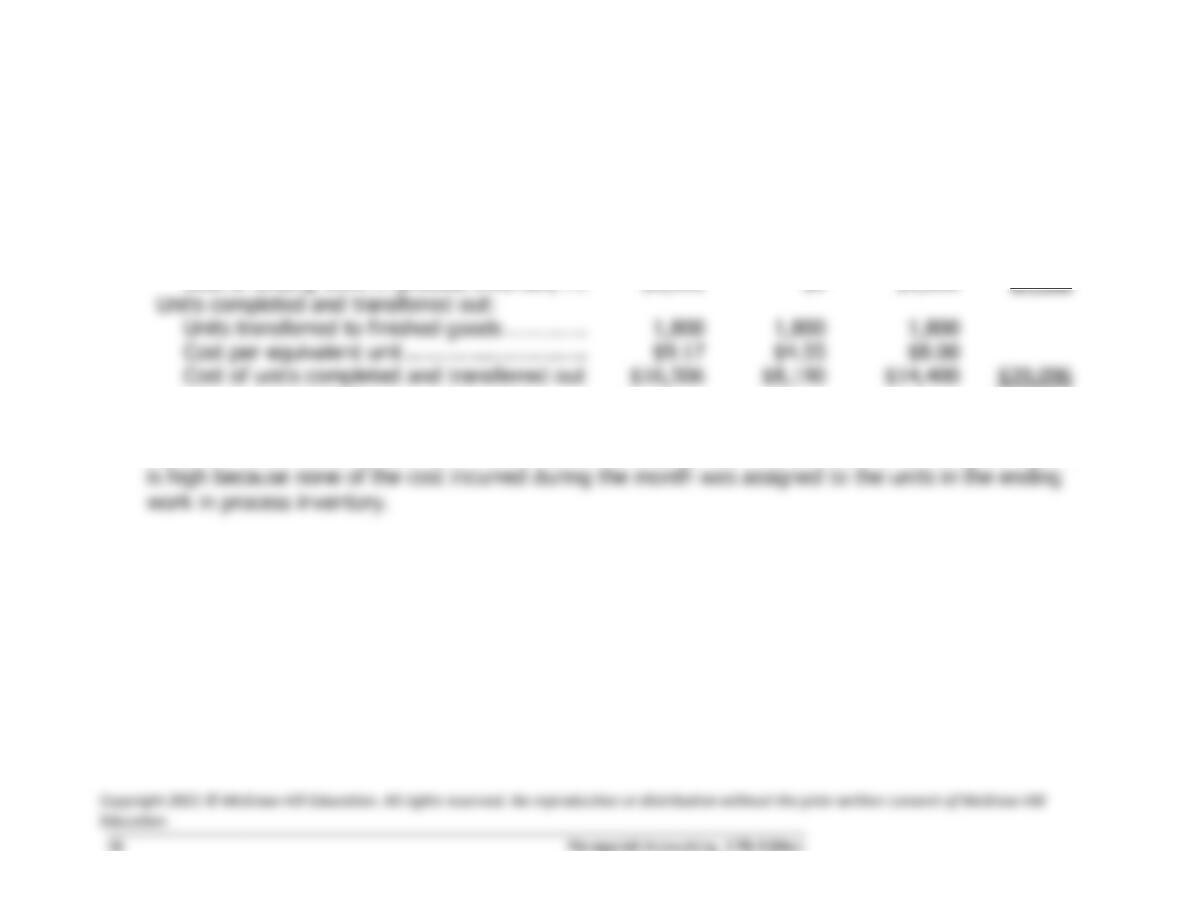
Cost per equivalent unit:
Transferred
Conversion
Cost of beginning work in process ………………………..
Cost added during the period ……………………………..
Total cost (a) …………………………………………………..
$8,190
Equivalent units of production (b) ………………………..
Cost per equivalent unit (a) ÷ (b) ………………………..
Case 4-19 (continued)
Transferred
In Costs
Materials
Conversion
Total
Ending work in process inventory:
Equivalent units (see above) ………………….
600
0
210
Cost per equivalent unit ………………………..
$9.17
$4.55
$8.00
Units completed and transferred out:
Units transferred to finished goods ………….
1,800
1,800
1,800
Cost of units completed and transferred out
2. The unit cost computed above is $21.72 (= $9.17 + $4.55 + $8.00) versus $25.71 on the original
report for the units completed and transferred to finished goods. The unit cost on the original report
Case 4-20 (90 minutes)
• This case is difficult—particularly part 3, which requires analytical skills.
• Because there are no beginning inventories, it makes no difference
whether the weighted-average or FIFO method is used by the company.
You may choose to specify that the FIFO method be used rather than
the weighted-average method.
1.
Computation of the Cost of Goods Sold:
Transferred In
Conversion
Units completed and sold ………………….
200,000
200,000
Equivalent units in ending work in
process inventory:
Transferred in:
10,000 units × 100% complete ………
10,000
Conversion:
10,000 units × 30% complete ………..
3,000
Equivalent units of production…………….
210,000
203,000
Transferred In
Conversion
Cost of beginning work in process ……….
Cost added during the period …………….
Total cost (a) ………………………………….
Equivalent units of production (b) ……….
203,000
Cost per equivalent unit (a) ÷ (b) ……….
2. The estimate of the percentage completion of ending work in process
inventories affects the unit costs of finished goods and therefore the
cost of goods sold. Gary Stevens would like the estimated percentage
completion of the ending work in process to be increased. The higher
the percentage of completion of ending work in process, the higher the
equivalent units for the period and the lower the unit costs.
3. Increasing the percentage of completion can increase net operating
Case 4-20 (continued)
The percentage of completion, X, affects the cost of goods sold by its
effect on the unit cost, which can be determined as follows:
Unit cost = $187.50 +
$20,807,500
200,000 + 10,000X
And the cost of goods sold can be computed as follows:
$20,807,500 = $289.00 – $187.50
200,000 + 10,000X
$20,807,500 = $101.50
200,000 + 10,000X
200,000 + 10,000X 1
=
$20,807,500 $101.50
$20,807,500
200,000 + 10,000X = $101.50