Chapter 04 – Process Costing and Hybrid Product-Costing Systems
4-1
CHAPTER 4
Process Costing and Hybrid Product-Costing
Systems
ANSWERS TO REVIEW QUESTIONS
4-1 In a job-order costing system, costs are assigned to batches or job orders of
production. Job-order costing is used by firms that produce relatively small numbers
4-2 Process costing would be an appropriate product-costing system in the following
4-3 Process costing could be used in the following nonmanufacturing enterprises:
4-4 Product-costing systems are used for the following purposes:
(a) In financial accounting: Product costs are needed to value inventory on the
4-5 An equivalent unit is a measure of the amount of productive effort applied in the
4-2
4-6 The following four steps are used in process costing:
4-7 (a) Journal entry to enter direct-material costs into Work-in-Process Inventory
account:
4-8 Transferred-in costs are the costs assigned to partially completed products that
4-9 The $182,000 of transferred-in costs were incurred prior to January 1 and in the
4-10 The name ”weighted-average method” comes from the fact that the cost per
Chapter 04 – Process Costing and Hybrid Product-Costing Systems
4-3
4-11 The difference between normal and actual costing lies in the calculation of the
manufacturing-overhead cost of the current period. Under actual costing, the
4-12 If manufacturing overhead were applied according to some activity base (or cost
4-13 Operation costing is a hybrid product-costing system that is used when conversion
activities are very similar across product lines, but the direct materials differ
4-14 The departmental production report is the key document in a process-costing
system rather than the job-cost sheet used in job-order costing. The departmental
Chapter 04 – Process Costing and Hybrid Product-Costing Systems
4-4
SOLUTIONS TO EXERCISES
EXERCISE 4-15 (10 MINUTES)
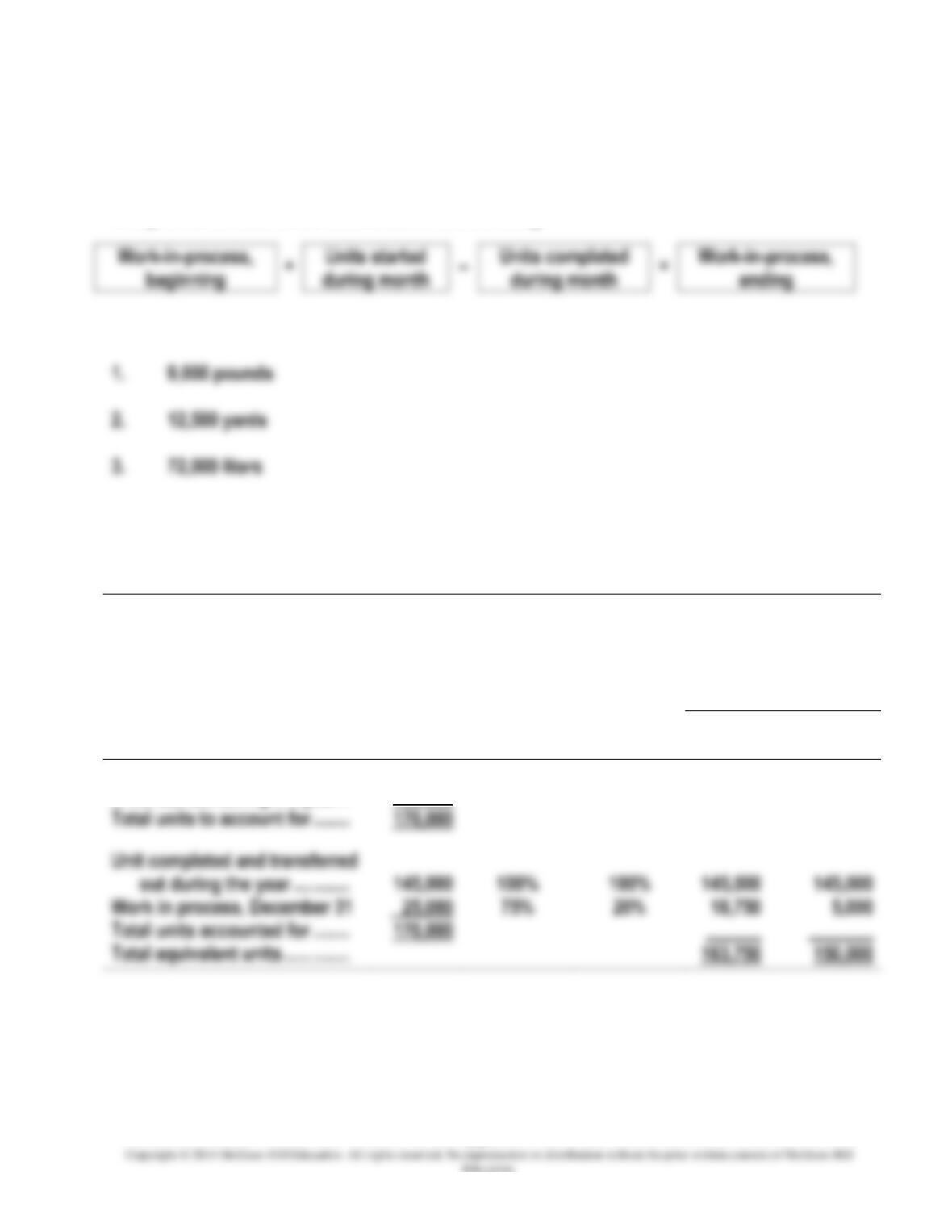
The general formula for all three cases is the following:
Using this formula, the missing amounts are:
9,000 pounds
12,500 yards
72,000 liters
EXERCISE 4-16 (20 MINUTES)
CALCULATION OF EQUIVALENT UNITS: HEALTHY LIFE STYLES, INC.
Weighted-Average Method
Physical
Units
Percentage
of
Completion
with
Respect to
Direct
Material
Percentage
of
Completion
with
Respect to
Conversion
Equivalent Units
Direct
Material
Conversion
Work in process, January 1 ….
30,000
70%
50%
Units started during the year ..
140,000
Total units to account for ……..
170,000
Work in process, December 31
75%
20%
Total units accounted for ……..
170,000
_______
Chapter 04 – Process Costing and Hybrid Product-Costing Systems
4-5
EXERCISE 4-17 (15 MINUTES)
CALCULATION OF EQUIVALENT UNITS: PETROTECH COMPANY – AMARILLO PLANT
Weighted-Average Method
Physical
Units
Percentage
of
Completion
with
Respect to
Conversion
Equivalent Units
Direct
Material
Conversion
Work in process, July 1 ……………………..
1,900,000
30%
Units started during July ……………………
Total units to account for …………………..
2,650,000
Work in process, July 31 ……………………
70%
Total units accounted for …………………..
2,650,000
EXERCISE 4-18 (15 MINUTES)
5,500 equivalent units (refer to (a) in the following table)
CALCULATION OF EQUIVALENT UNITS: ANDROMEDA GLASS COMPANY
Weighted-Average Method
Physical
Units
Percentage
of
Completion with
Respect to
Conversion
Equivalent Units
Direct
Material
Conversion
Work in process, August 1 ……
2,000
60%
Units started during August ….
3,500
Total units to account for ……..
5,500
Work in process, August 31 ….
1,700
20%
340
4-6
EXERCISE 4-19 (30 MINUTES)
EXERCISE 4-20 (15 MINUTES)
CALCULATION OF COST PER EQUIVALENT UNIT: DULUTH GLASS COMPANY
Weighted-Average Method
Direct
Material
Conversion
Total
Work in process, February 1 ………………
$ 43,200
$ 40,300
$ 83,500
Costs incurred during February …………
Total costs to account for ………………….
$230,300
$408,500
Equivalent units ………………………………..
Costs per equivalent unit …………………..
EXERCISE 4-21 (15 MINUTES)
CALCULATION OF COST PER EQUIVALENT UNIT: MONTANA LUMBER COMPANY
Weighted-Average Method
Direct
Material
Conversion
Total
Work in process, June 1 ……………………….
$ 74,900
$167,000
$ 241,900
Costs incurred during June ………………….
Total costs to account for …………………….
$792,000
$1,247,600
Equivalent units …………………………………..
6,700
Costs per equivalent unit ……………………..
4-7
EXERCISE 4-22 (25 MINUTES)
TUSCALOOSA PAPERBOARD COMPANY
Weighted-Average Method
Direct
Material
Conversion
Total
Work in process, March 1 …………………..
$ 10,900
$ 28,950
$ 39,850
Costs incurred during March ………………
Total costs to account for …………………..
$123,600
$189,150
$312,750
Equivalent units …………………………………
Costs per equivalent unit ……………………
1.
Cost of goods completed and
transferred out during March:
2.
Cost remaining in March 31 work
in process:
Total ……………………………………….
*Equivalent units in March 31 work in process:
Direct
Material
Conversion
Total equivalent units (weighted average) …………………..
103,000
97,000
Units completed and transferred out ………………………….
Chapter 04 – Process Costing and Hybrid Product-Costing Systems
4-8
EXERCISE 4-23 (25 MINUTES)
RALEIGH TEXTILES COMPANY
Weighted-Average Method
Direct
Material
Conversion
Total
Work in process, November 1 ……………….
$ 85,750
$ 16,900
$ 102,650
Costs incurred during November ………….
Total costs to account for …………………….
$284,200
Equivalent units …………………………………..
Costs per equivalent unit ……………………..
$3.90
1.
Cost of goods completed and
transferred out during November:
2.
Cost remaining in November 30
work in process:
Total ………………………………………
*Equivalent units in November 30 work in process:
Direct
Material
Conversion
Total equivalent units (weighted average) ……………………
Units completed and transferred out …………………………..
Chapter 04 – Process Costing and Hybrid Product-Costing Systems
4-9
EXERCISE 4-24 (45 MINUTES)
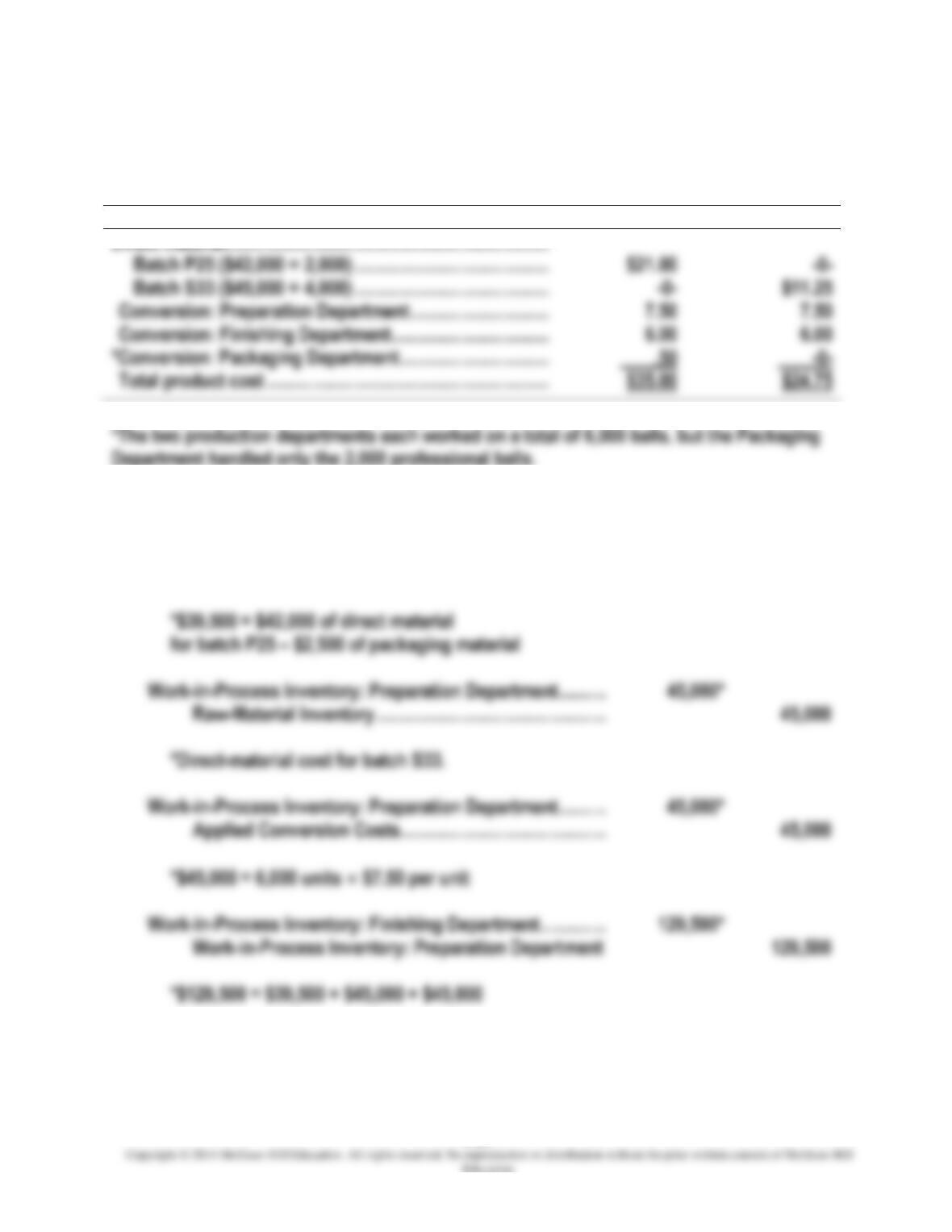
1. Diagram of production process:
Work-in-Process Inventory:
Preparation Department
Batch P25 Batch S33
Chapter 04 – Process Costing and Hybrid Product-Costing Systems
4-10
EXERCISE 4-24 (CONTINUED)
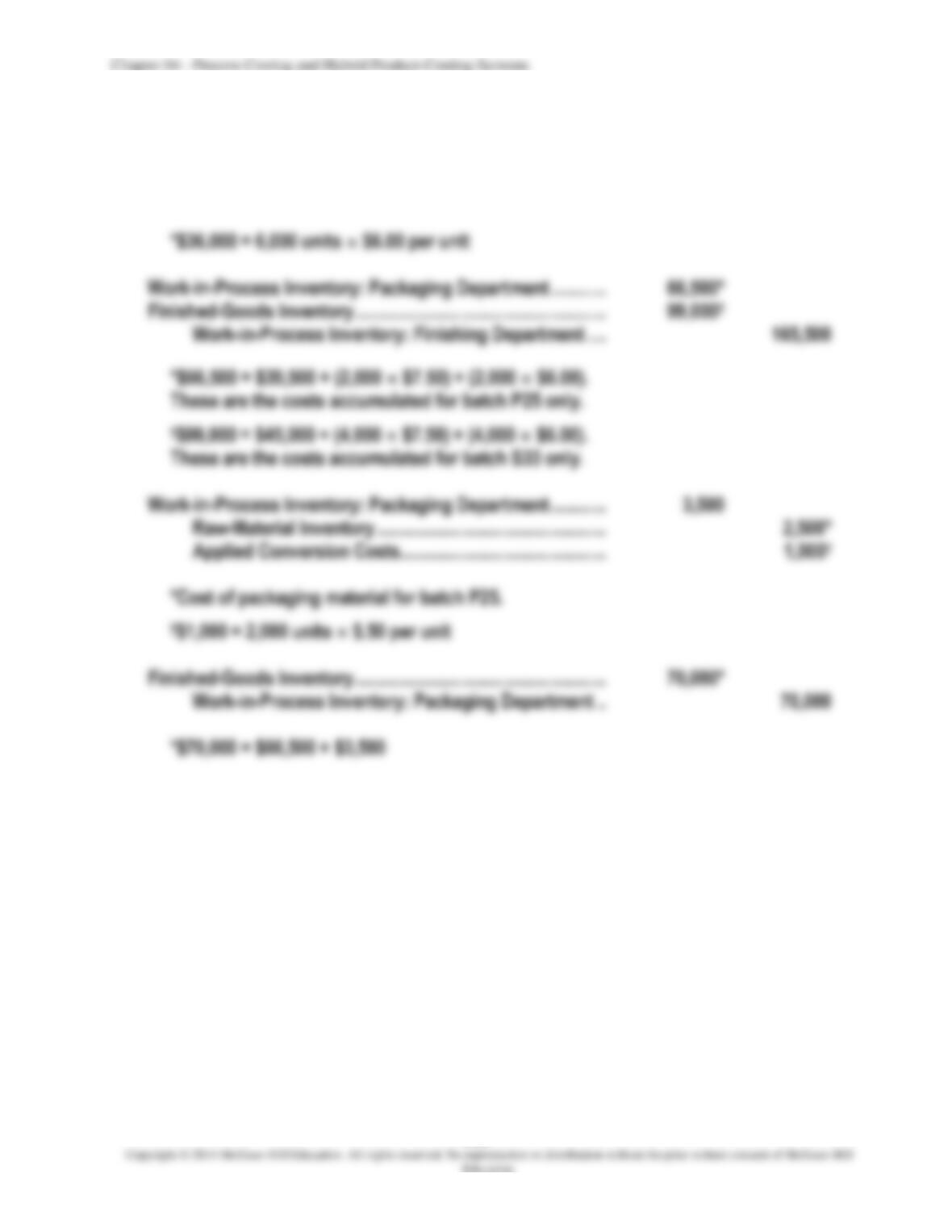
2. The product cost for each basketball is computed as follows:
Professional
Scholastic
Direct material: …………………………………………………………..
Batch P25 ($42,000 ÷ 2,000) ……………………………………
$21.00
Batch S33 ($45,000 ÷ 4,000) ……………………………………
*Conversion: Packaging Department …………………………..
3.
Journal entries:
Work-in-Process Inventory: Preparation Department ……….
39,500*
Raw-Material Inventory ………………………………………….
39,500
Work-in-Process Inventory: Preparation Department ……….
45,000*
Raw-Material Inventory ………………………………………….
45,000
*Direct-material cost for batch S33.
Work-in-Process Inventory: Preparation Department ……….
45,000*
Applied Conversion Costs ……………………………………..
45,000
Work-in-Process Inventory: Finishing Department …………..
Work-in-Process Inventory: Preparation Department
*$129,500 = $39,500 + $45,000 + $45,000
4-11
EXERCISE 4-24 (CONTINUED)
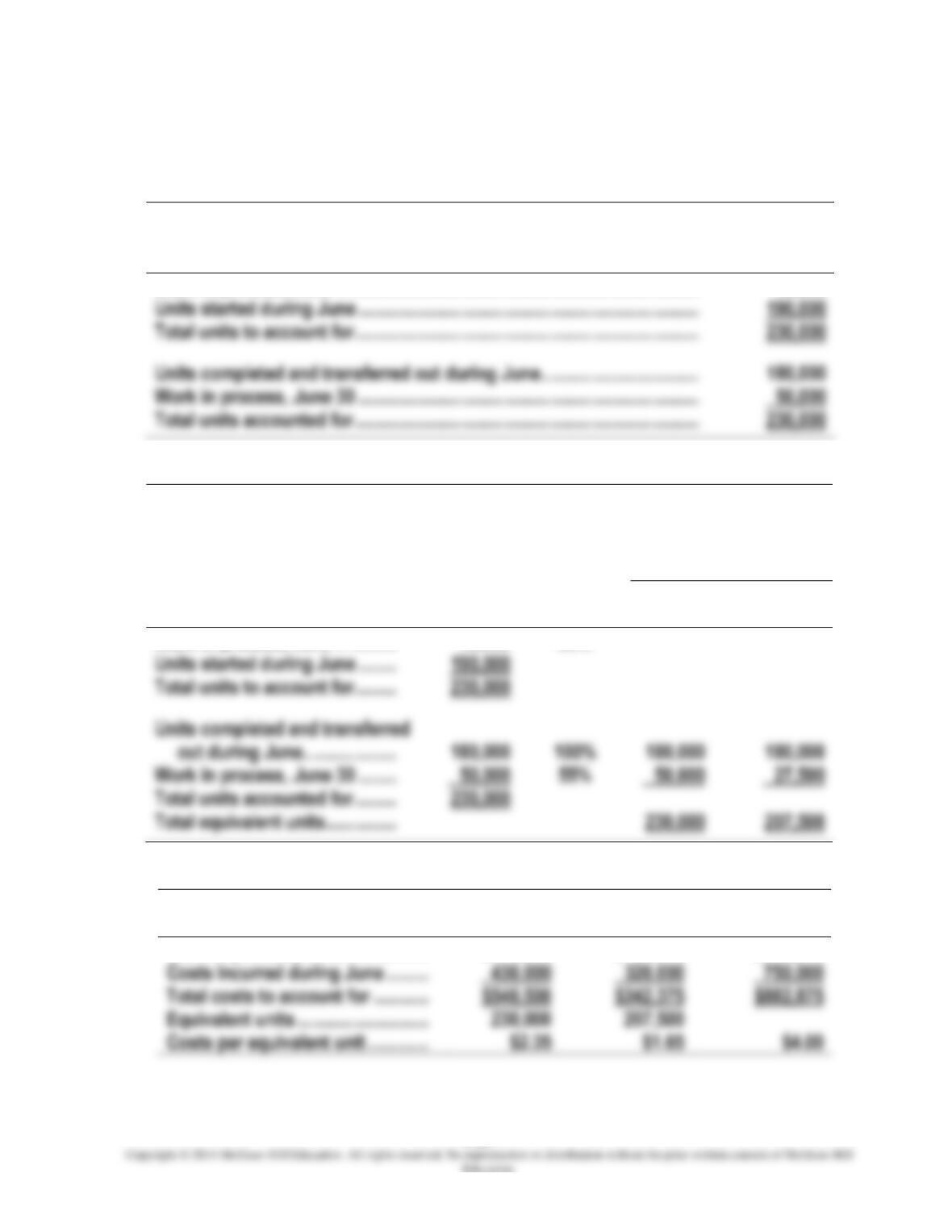
Work-in-Process Inventory: Finishing Department …………..
36,000*
Applied Conversion Costs ……………………………………..
36,000
Work-in-Process Inventory: Packaging Department …………
66,500*
Finished-Goods Inventory ………………………………………………
Work-in-Process Inventory: Finishing Department ….
These are the costs accumulated for batch P25 only.
These are the costs accumulated for batch S33 only.
Work-in-Process Inventory: Packaging Department …………
Raw-Material Inventory ………………………………………….
Applied Conversion Costs ……………………………………..
*Cost of packaging material for batch P25.
Finished-Goods Inventory ………………………………………………
70,000*
Work-in-Process Inventory: Packaging Department ..
70,000
*$70,000 = $66,500 + $3,500
Chapter 04 – Process Costing and Hybrid Product-Costing Systems
4-12
SOLUTIONS TO PROBLEMS
PROBLEM 4-25 (45 MINUTES)
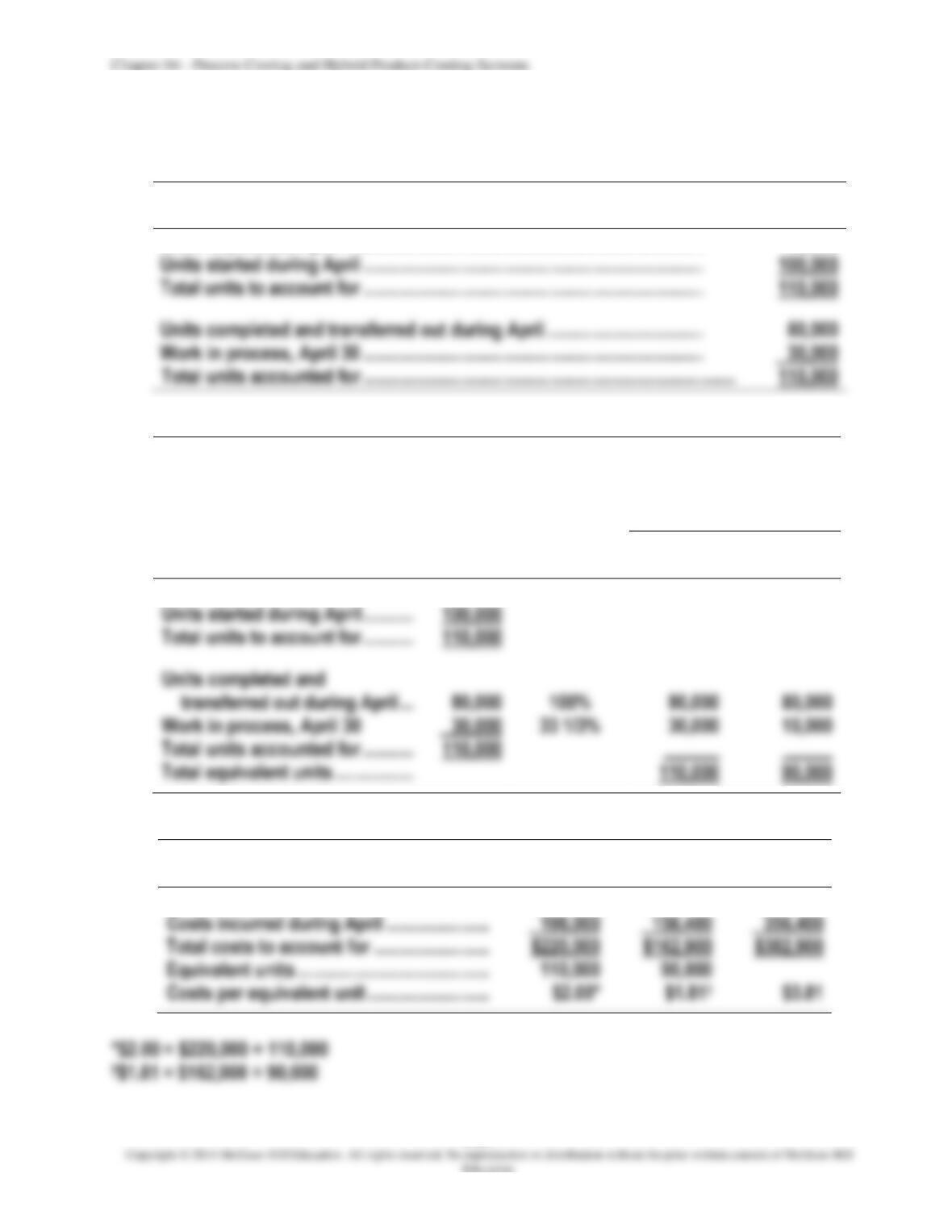
1.
Physical flow of units:
Physical
Units
Work in process, June 1 …………………………………………………………………
40,000
Units started during June ……………………………………………………………….
Total units to account for ………………………………………………………………..
Units completed and transferred out during June …………………………….
Work in process, June 30 ……………………………………………………………….
2.
Equivalent units:
Physical
Units
Percentage
of
Completion
with
Respect to
Conversion
Equivalent Units
Direct
Material
Conversion
Work in process, June 1 ……….
40,000
38%
Units started during June ……..
Total units to account for ………
Units completed and transferred
180,000
Work in process, June 30 ……..
Total units accounted for ………
3.
Costs per equivalent unit:
Direct
Material
Conversion
Total
Work in process, June 1 ……………
$110,500
$ 22,375
$132,875
Costs incurred during June ………
Total costs to account for …………
$540,500
$342,375
$882,875
Equivalent units ……………………….
Costs per equivalent unit ………….
$2.35
4-13
PROBLEM 4-25 (CONTINUED)
4.
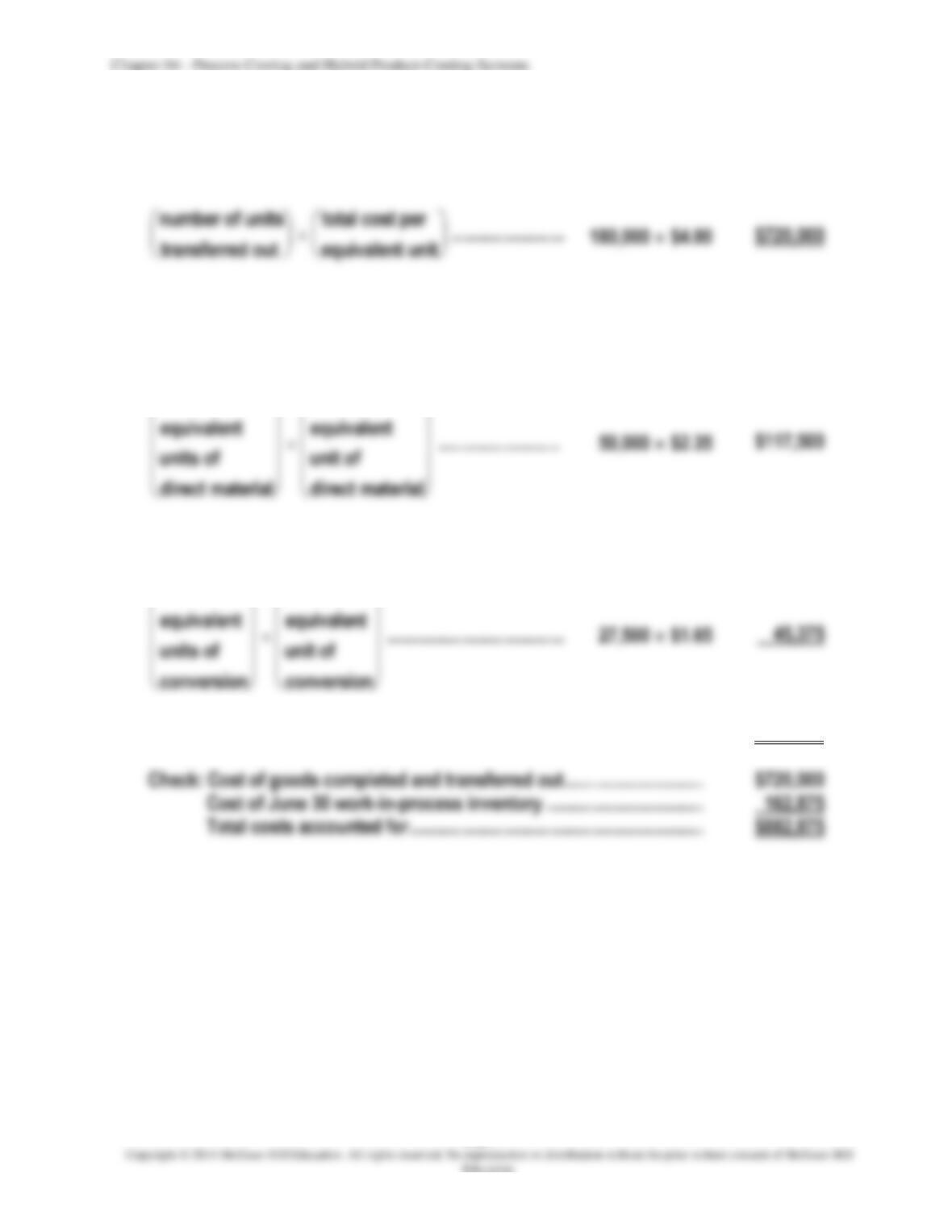
Cost of goods completed and transferred out during June:
Cost remaining in June 30 work-in-process inventory:
Direct material:
number of
cost per
Conversion:
number of
cost per
Total cost of June 30 work in process ……………………………………………….
$162,875
Check: Cost of goods completed and transferred out …………………………
$720,000
Cost of June 30 work-in-process inventory …………………………….
Total costs accounted for ………………………………………………………
$882,875
4-14
PROBLEM 4-26 (45 MINUTES)
1. Physical flow of units:
Physical
Units
Work in process, April 1 …………………………………………………………………
10,000
Units started during April ……………………………………………………………….
Total units to account for ……………………………………………………….………
Units completed and transferred out during April …………………………….
80,000
Work in process, April 30 ……………………………………………………………….
2.
Equivalent units:
Physical
Units
Percentage
of
Completion
with
Respect to
Conversion
Equivalent Units
Direct
Material
Conversion
Work in process, April 1 ………………
10,000
20%
Units started during April …………….
Total units to account for …………….
Units completed and
Work in process, April 30
30,000
Total units accounted for …………….
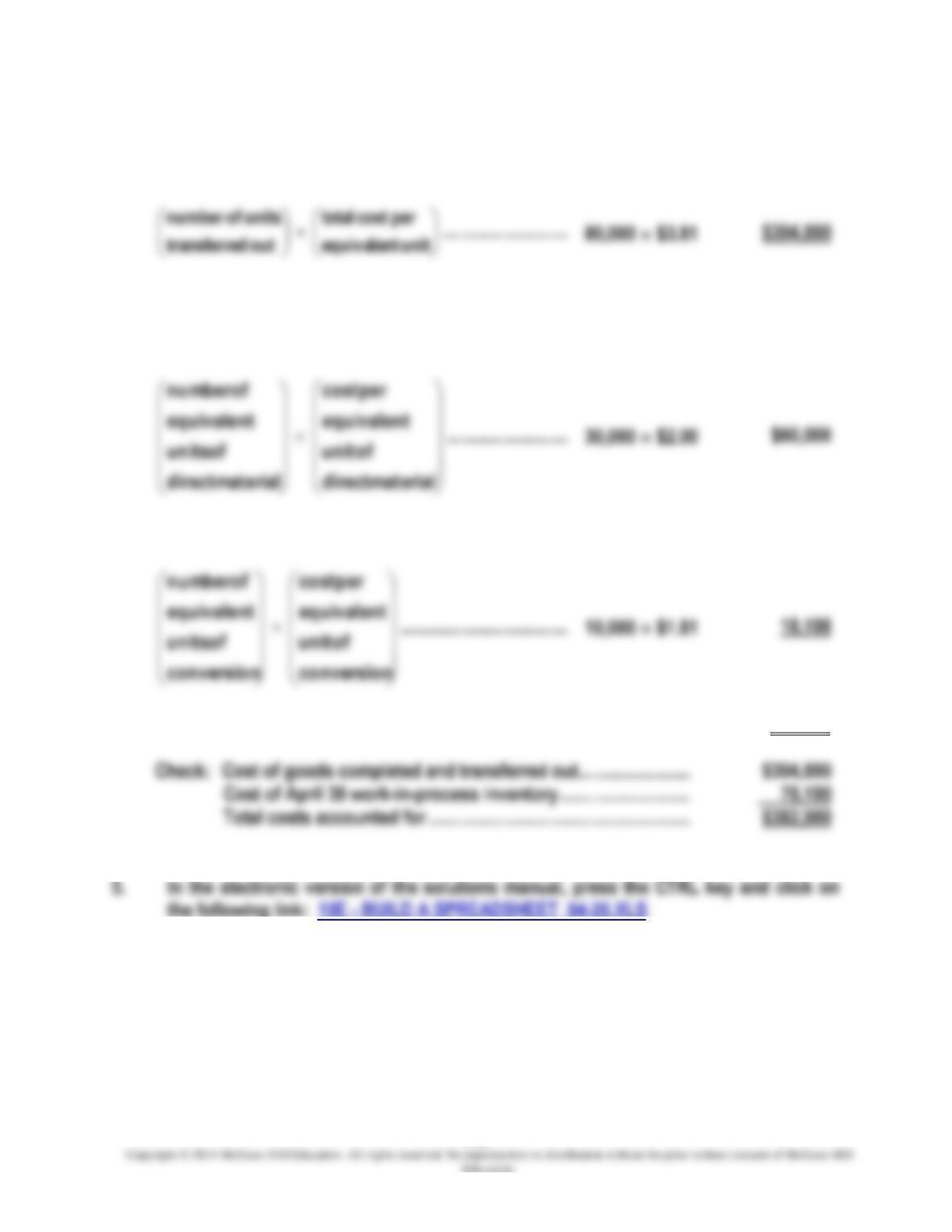
3.
Cost per equivalent unit:
Direct
Material
Conversion
Total
Work in process, April 1 …………………………..
$ 22,000
$ 4,500
$ 26,500
Costs incurred during April …………………………
Total costs to account for …………………………..
Equivalent units ………………………………………….
Chapter 04 – Process Costing and Hybrid Product-Costing Systems
4-15
PROBLEM 4-26 (CONTINUED)
4.
Cost of goods completed and transferred out during April:
Cost remaining in April 30 work-in-process inventory:
Direct material:
Conversion:
Total cost of April 30 work-in–process ……………………………………………
$78,100
Check: Cost of goods completed and transferred out ……………………
Cost of April 30 work-in-process inventory ……………………….
Total costs accounted for ………………………………………………..
4-16
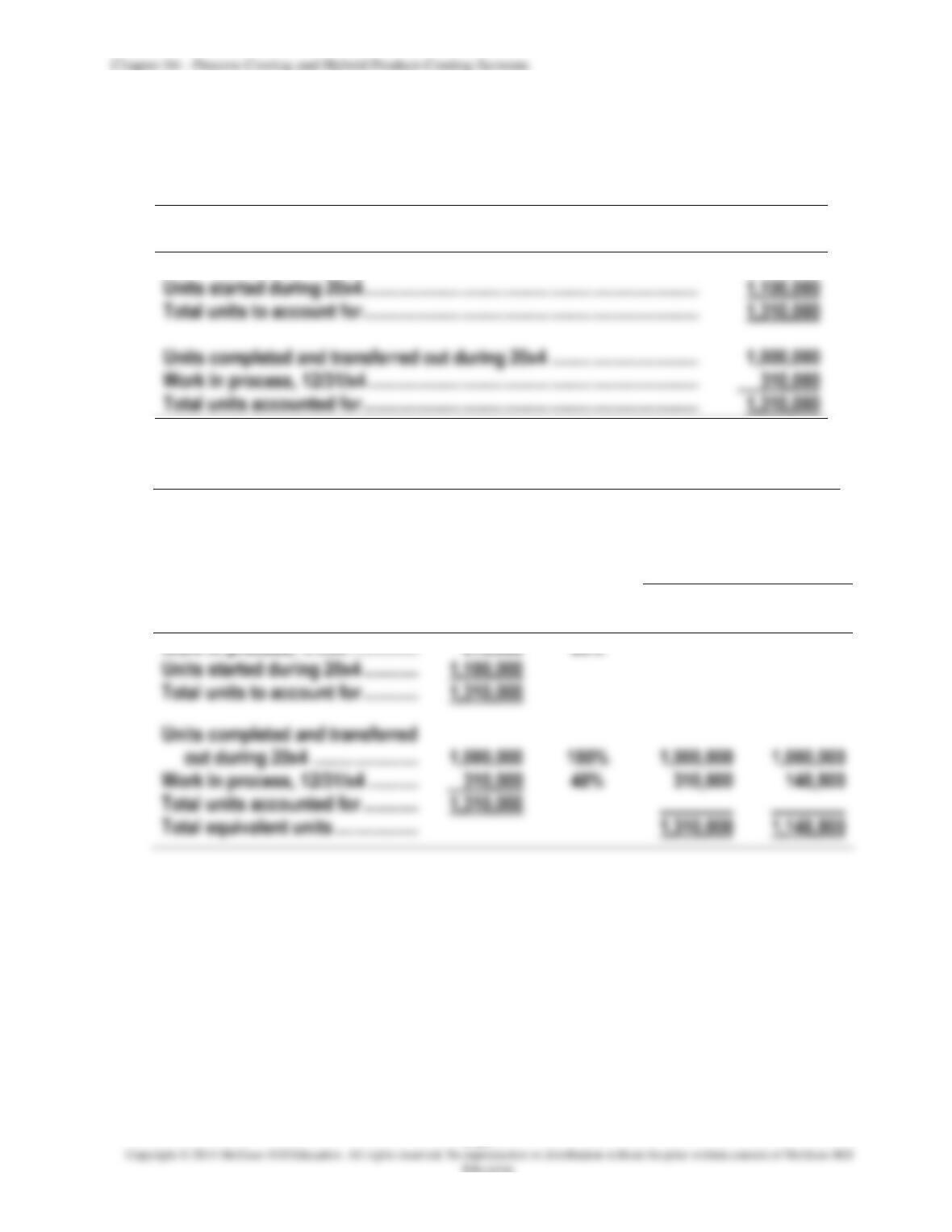
PROBLEM 4-27 (50 MINUTES)
1.
Physical flow of units:
Physical
Units
Work in process, 1/1/x4 …………………………………………………………………
210,000
Units started during 20×4 ………………………………………………………………
Total units to account for ………………………………………………………………
Units completed and transferred out during 20×4 …………………………..
Work in process, 12/31/x4 ……………………………………………………………..
2.
Equivalent units:
Physical
Units
Percentage
of
Completion
with
Respect to
Conversion
Equivalent Units
Direct
Material
Conversion
Work in process, 1/1/x4 ……………
Units started during 20×4 …………
Total units to account for …………
Units completed and transferred
out during 20×4 …………………..
Work in process, 12/31/x4 ………..
Total units accounted for …………
4-17
PROBLEM 4-27 (CONTINUED)
3.
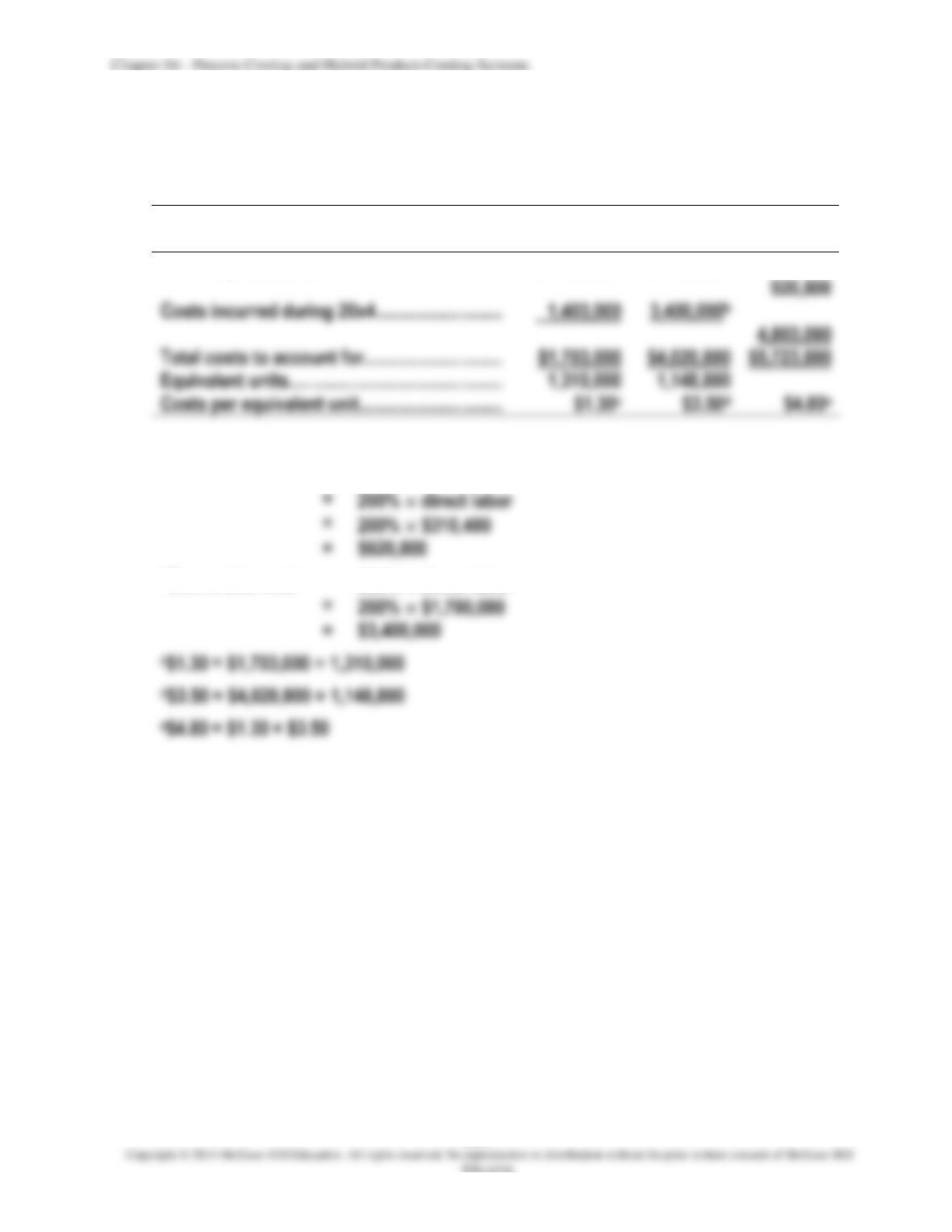
Costs per equivalent unit:
Direct
Material
Conversion
Total
Work in process, 1/1/x4…………………………….
$ 300,000
$ 620,800a
Total costs to account for …………………………
Equivalent units ……………………………………….
Costs per equivalent unit ………………………….
$
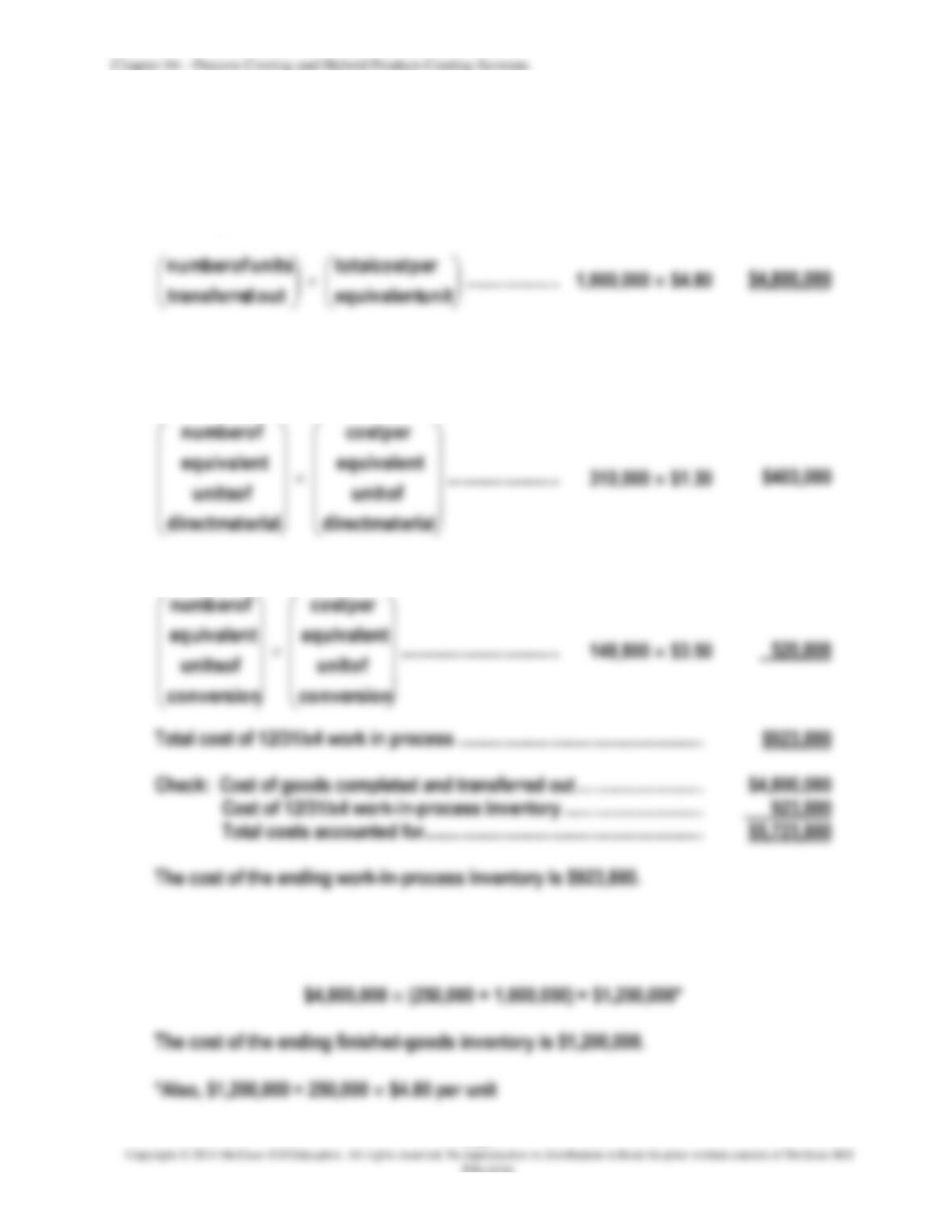
aConversion cost
=
direct labor + overhead
=
direct labor + (100% direct labor)
200% direct labor
=
$620,800
bConversion cost
=
200% direct labor
200% $1,700,000
=
$3,400,000
c$1.30 = $1,703,000 ÷ 1,310,000
4-18
PROBLEM 4-27 (CONTINUED)
4.
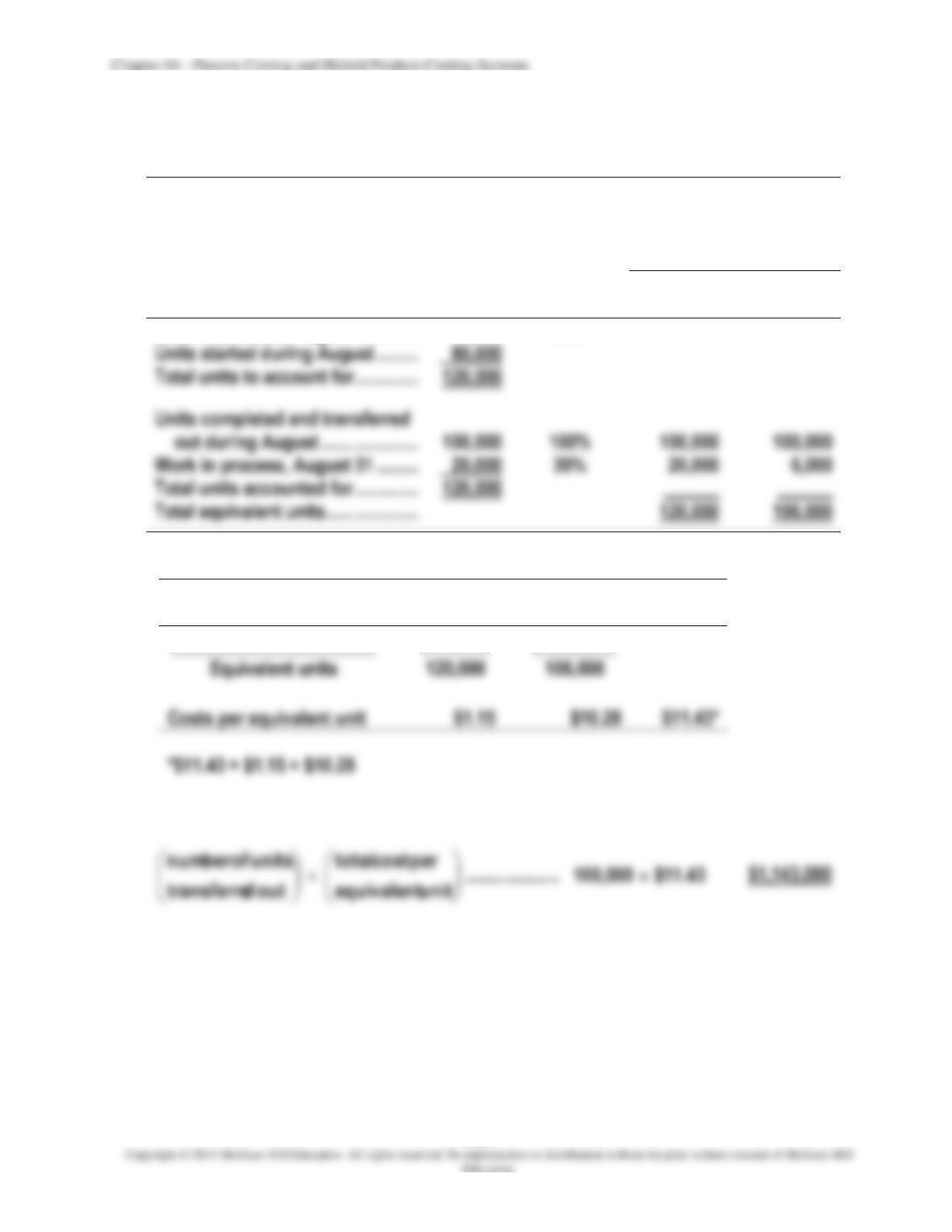
Cost of ending inventories:
Cost of goods completed and transferred out:
Cost remaining in 12/31/x4 work-in-process inventory:
Direct material:
Conversion:
Total cost of 12/31/x4 work in process ……………………………………………..
Check: Cost of goods completed and transferred out ………………………
Cost of 12/31/x4 work-in-process inventory …………………………
Total costs accounted for ……………………………………………………
The cost of the ending work-in–process inventory is $923,800.
Ending finished-goods inventory: Of the 1,000,000 units completed during 20×4,
250,000 units remain in finished-goods inventory on December 31, 20×4. Therefore:
The cost of the ending finished-goods inventory is $1,200,000.
4-19
PROBLEM 4-28 (40 MINUTES)
1.
Equivalent units:
Physical
Units
Percentage
of
Completion
with
Respect to
Conversion
Equivalent Units
Direct
Material
Conversion
Work in process, August 1 …………..
40,000
80%
Units started during August …………
Total units to account for ……………..
Work in process, August 31 …………
30%
Total units accounted for ……………..
2.
Costs per equivalent unit:
Direct
Material
Conversion
Total
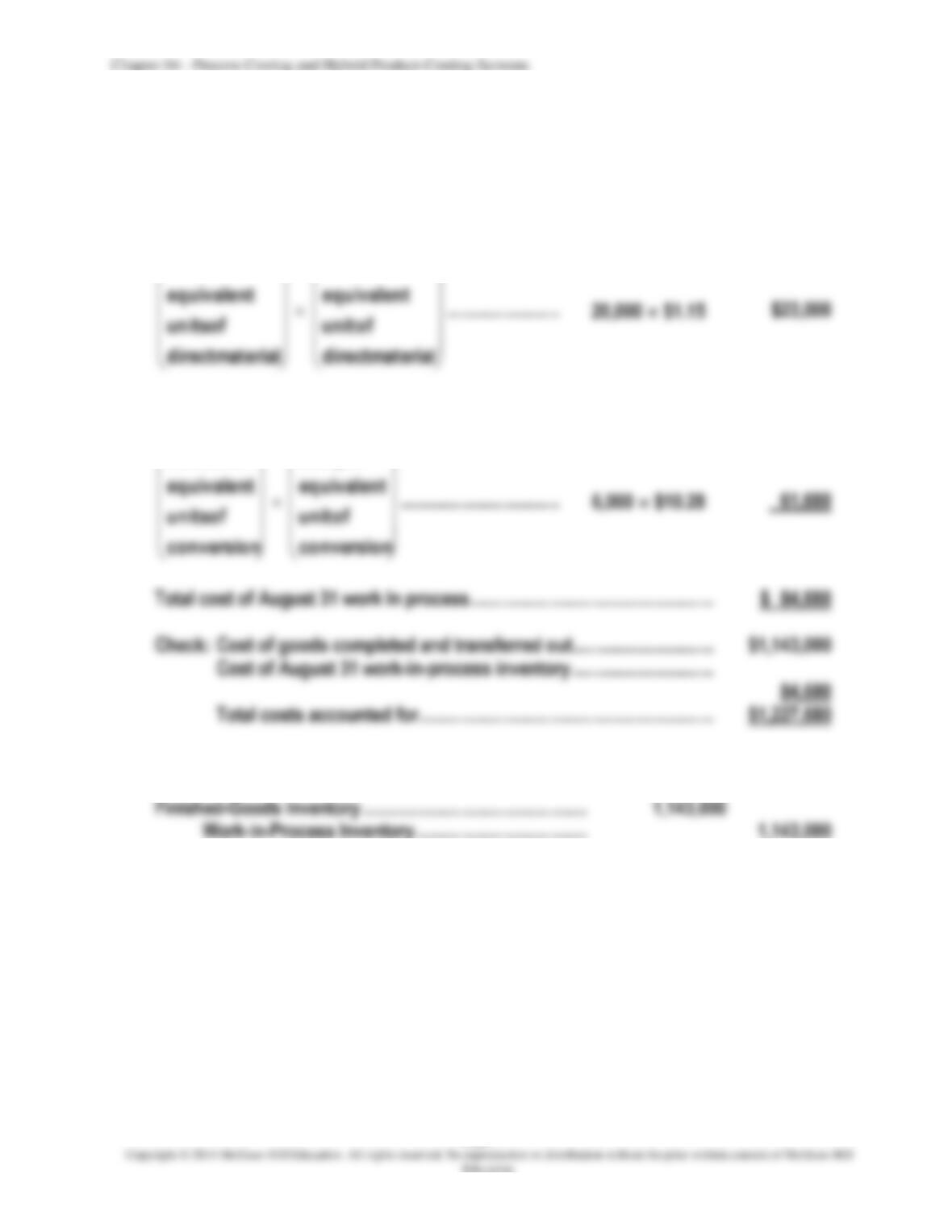
Costs per equivalent unit
$11.43*
Total costs to account for
$138,000
$1,089,680
3.
Cost of goods completed and transferred out during August:
4-20
PROBLEM 4-28 (CONTINUED)
4.
Cost remaining in August 31 work-in-process inventory:
Direct material:
percost
of number
Conversion:
percost
of number
Total cost of August 31 work in process …………………………………………….
Check: Cost of goods completed and transferred out …………………………
Total costs accounted for ………………………………………………………
5.
Journal entry:
Finished-Goods Inventory …………………………………………
Work-in-Process Inventory ……………………………….