4-1
CHAPTER 4
JOB COSTING
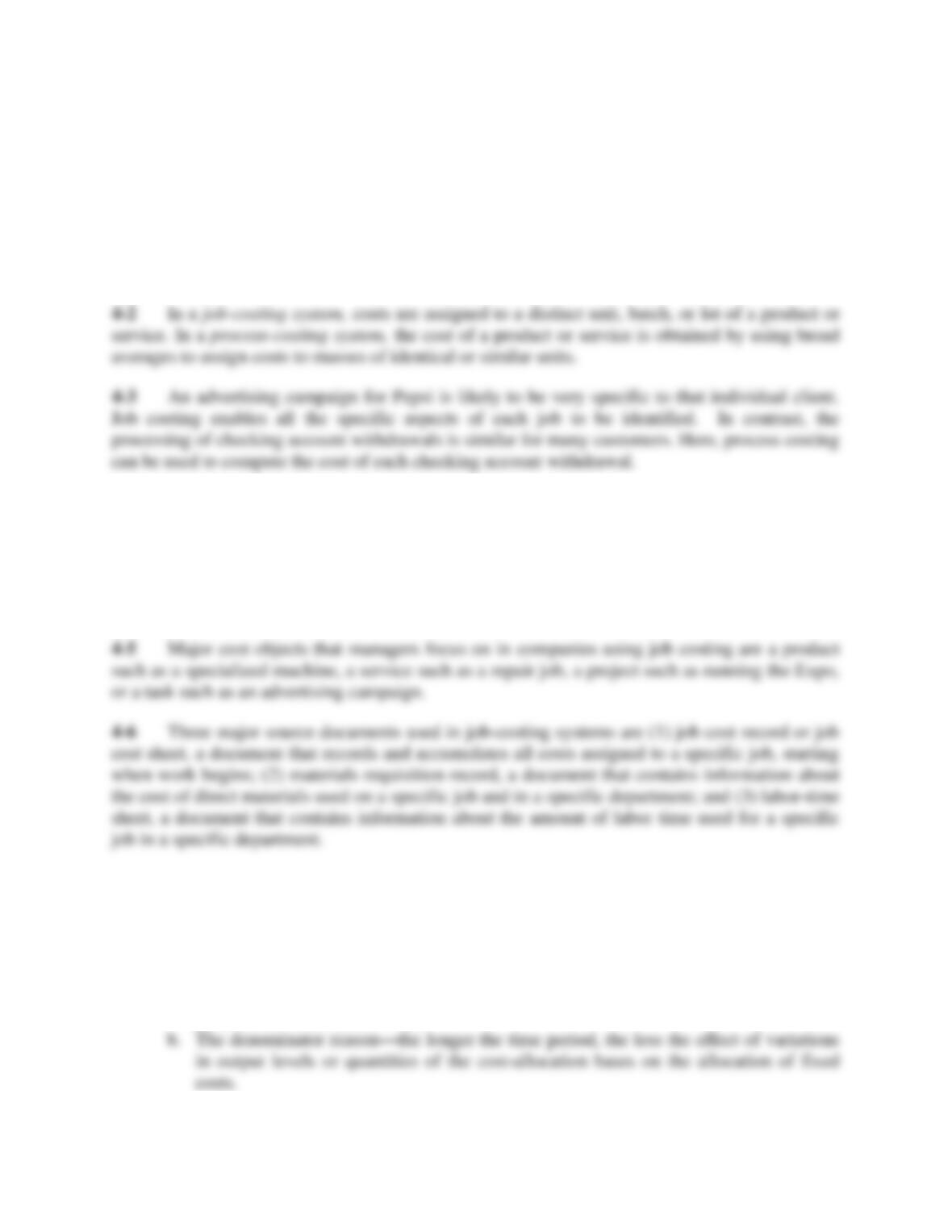
4-1 Cost pool––a grouping of individual indirect cost items.
Cost tracing––the assigning of direct costs to the chosen cost object.
Cost allocation––the assigning of indirect costs to the chosen cost object.
Cost-allocation base––a factor that links in a systematic way an indirect cost or group of
indirect costs to cost objects.
4-4 The seven steps in job costing are (1) identify the job that is the chosen cost object,
(2) identify the direct costs of the job, (3) select the cost–allocation bases to use for allocating
indirect costs to the job, (4) identify the indirect costs associated with each cost-allocation base,
(5) compute the rate per unit of each cost-allocation base used to allocate indirect costs to the
job, (6) compute the indirect costs allocated to the job, and (7) compute the total cost of the job
by adding all direct and indirect costs assigned to the job.
4-7 The main advantages of using computerized source documents for job cost records are
the accuracy of the records and the ability to provide managers with instantaneous feedback to
help control job costs.
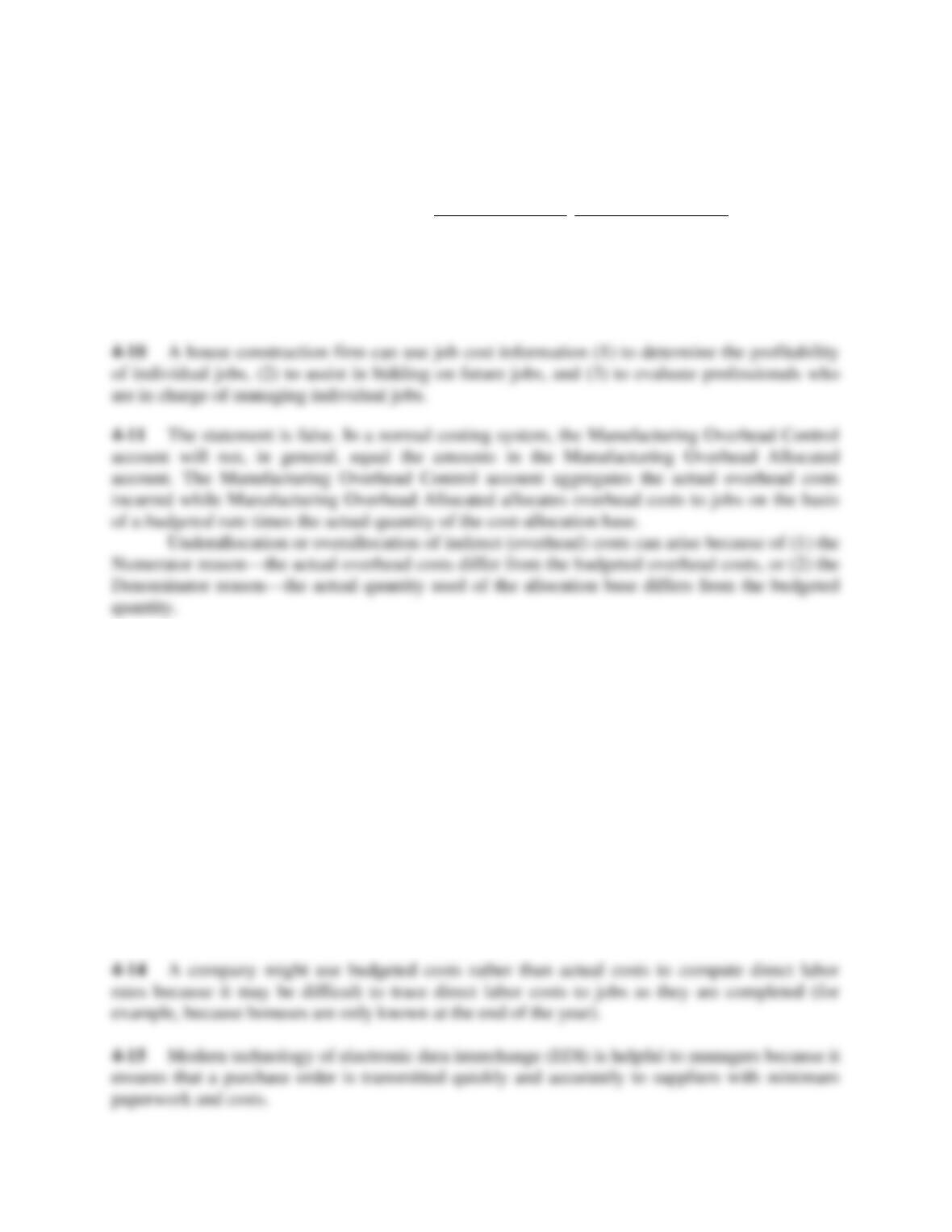
4-8 Two reasons for using an annual budget period are
a. The numerator reason––the longer the time period, the less the influence of seasonal
patterns in overhead costs, and
4-2
4-9 Actual costing and normal costing differ in their use of actual or budgeted indirect cost
rates:
Actual
Costing
Normal
Costing
Direct-cost rates
Indirect-cost rates
Actual rates
Actual rates
Actual rates
Budgeted rates
Each costing method uses the actual quantity of the direct-cost input and the actual quantity of
the cost-allocation base.
4-12 Debit entries to Work-in-Process Control represent increases in work in process.
Examples of debit entries under normal costing are (1) direct materials used (credit to Materials
Control), (2) direct manufacturing labor billed to job (credit to Wages Payable Control), and (3)
manufacturing overhead allocated to job (credit to Manufacturing Overhead Allocated).
4-13 Alternative ways to make end-of-period adjustments to dispose of underallocated or
overallocated overhead are as follows:
(i) Proration based on the total amount of indirect costs allocated (before proration) in
the ending balances of work in process, finished goods, and cost of goods sold
(ii) Proration based on total ending balances (before proration) in work in process,
finished goods, and cost of goods sold
(iii) Year-end write-off to Cost of Goods Sold
(iv) The adjusted allocation rate approach that restates all overhead entries using actual
indirect cost rates rather than budgeted indirect cost rates
4-3
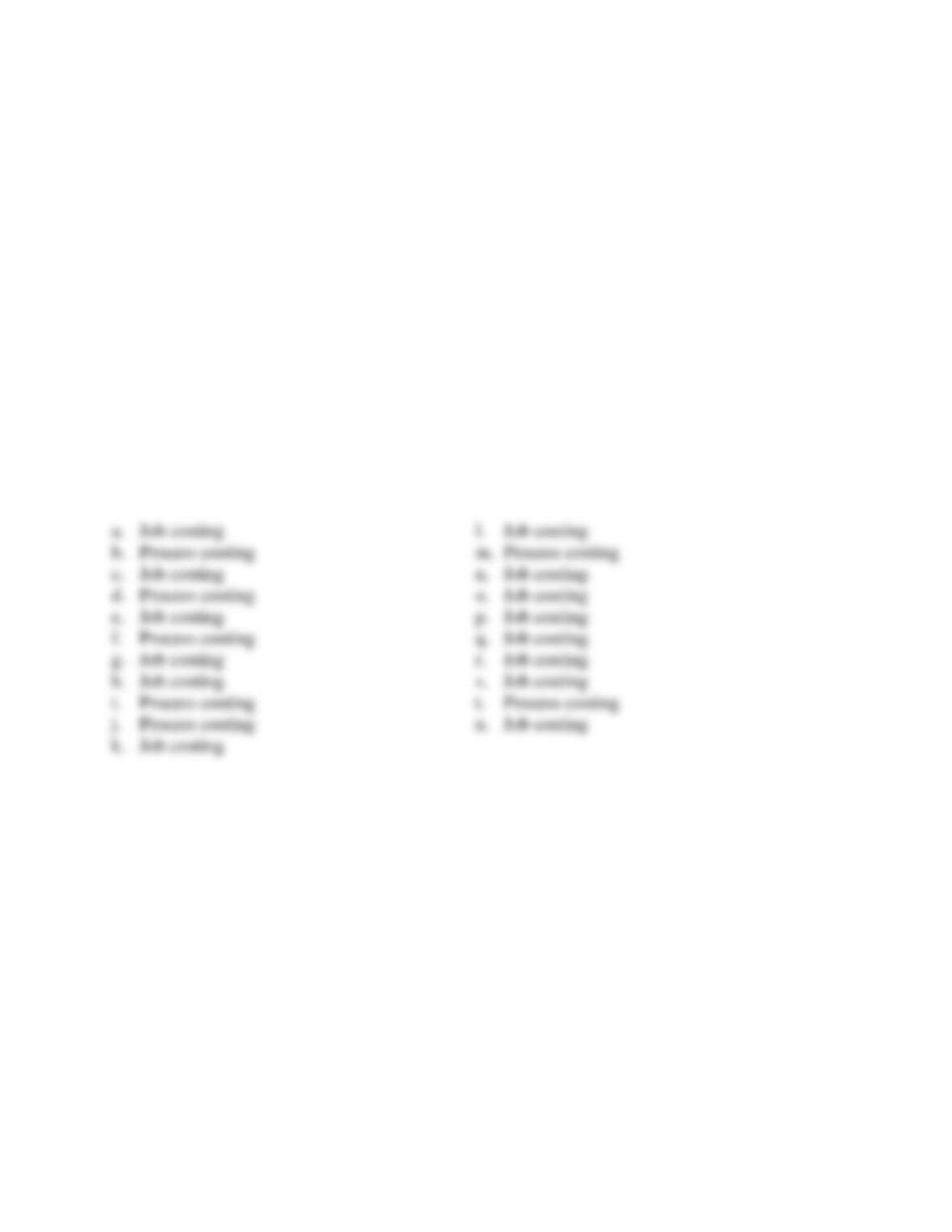
4-16 (10 min) Job order costing, process costing.
In each of the following situations, determine whether job costing or process costing would be
more appropriate.
a. A CPA firm
l. A landscaping company
b. An oil refinery
m. A cola-drink-concentrate producer
c. A custom furniture manufacturer
n. A movie studio
d. A tire manufacturer
o. A law firm
e. A textbook publisher
p. A commercial aircraft manufacturer
f. A pharmaceutical company
q. A management consulting firm
g. An advertising agency
r. A plumbing contractor
h. An architecture firm
s. A catering service
i. A flour mill
t. A paper mill
j. A paint manufacturer
u. An auto repair shop
k. A nursing home
SOLUTION
4-17 (20 min.) Actual costing, normal costing, accounting for manufacturing overhead.
Destin Products uses a job-costing system with two direct-cost categories (direct materials and
direct manufacturing labor) and one manufacturing overhead cost pool. Destin allocates
manufacturing overhead costs using direct manufacturing labor costs. Destin provides the
following information:
Budget for 2014
Actual Results for 2014
Direct material costs
$2,000,000
$1,900,000
Direct manufacturing labor costs
1,500,000
1,450,000
Manufacturing overhead costs
2,700,000
2,755,000
Required:
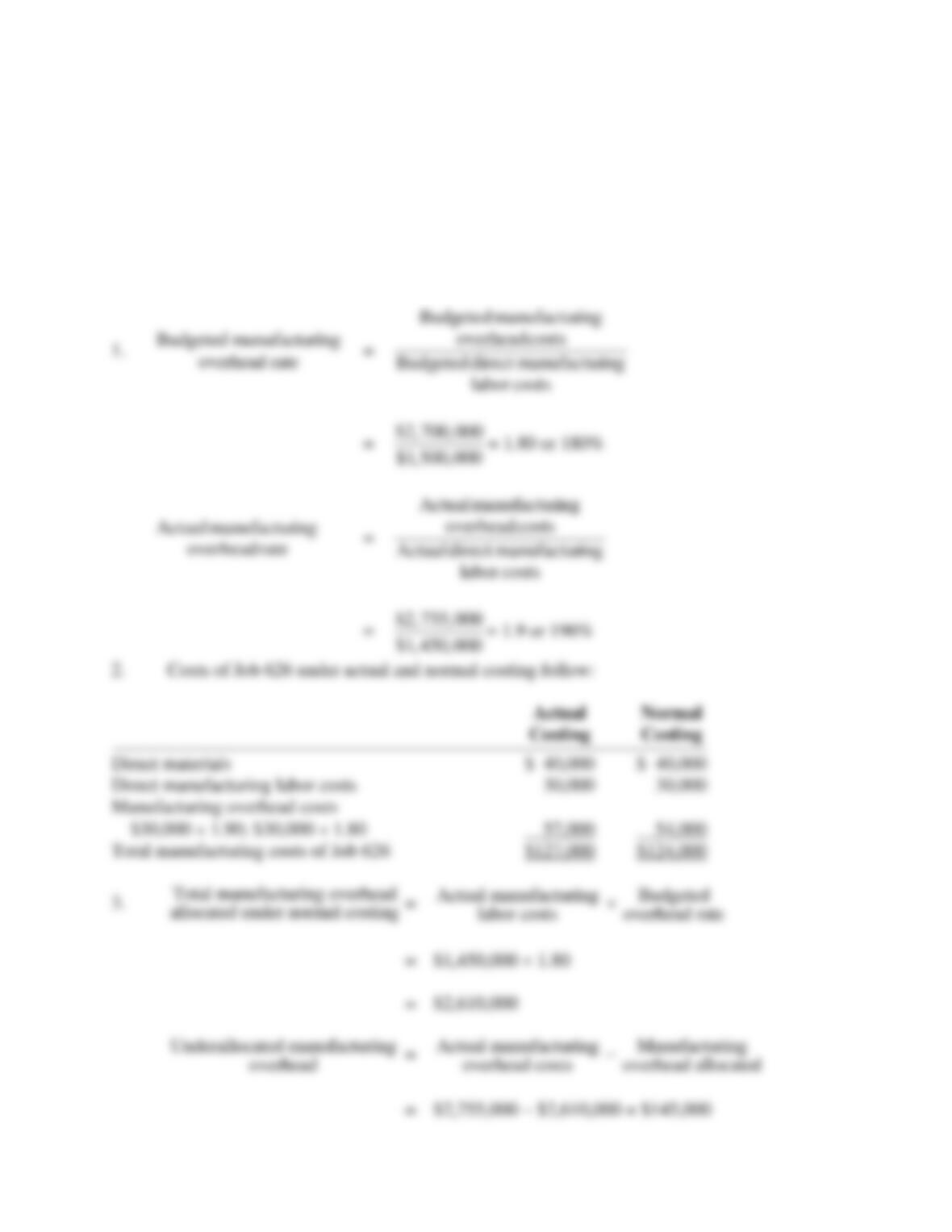
1. Compute the actual and budgeted manufacturing overhead rates for 2014.
2. During March, the job-cost record for Job 626 contained the following information:
4-4
Direct materials used $40,000
Direct manufacturing labor costs $30,000
Compute the cost of Job 626 using (a) actual costing and (b) normal costing.
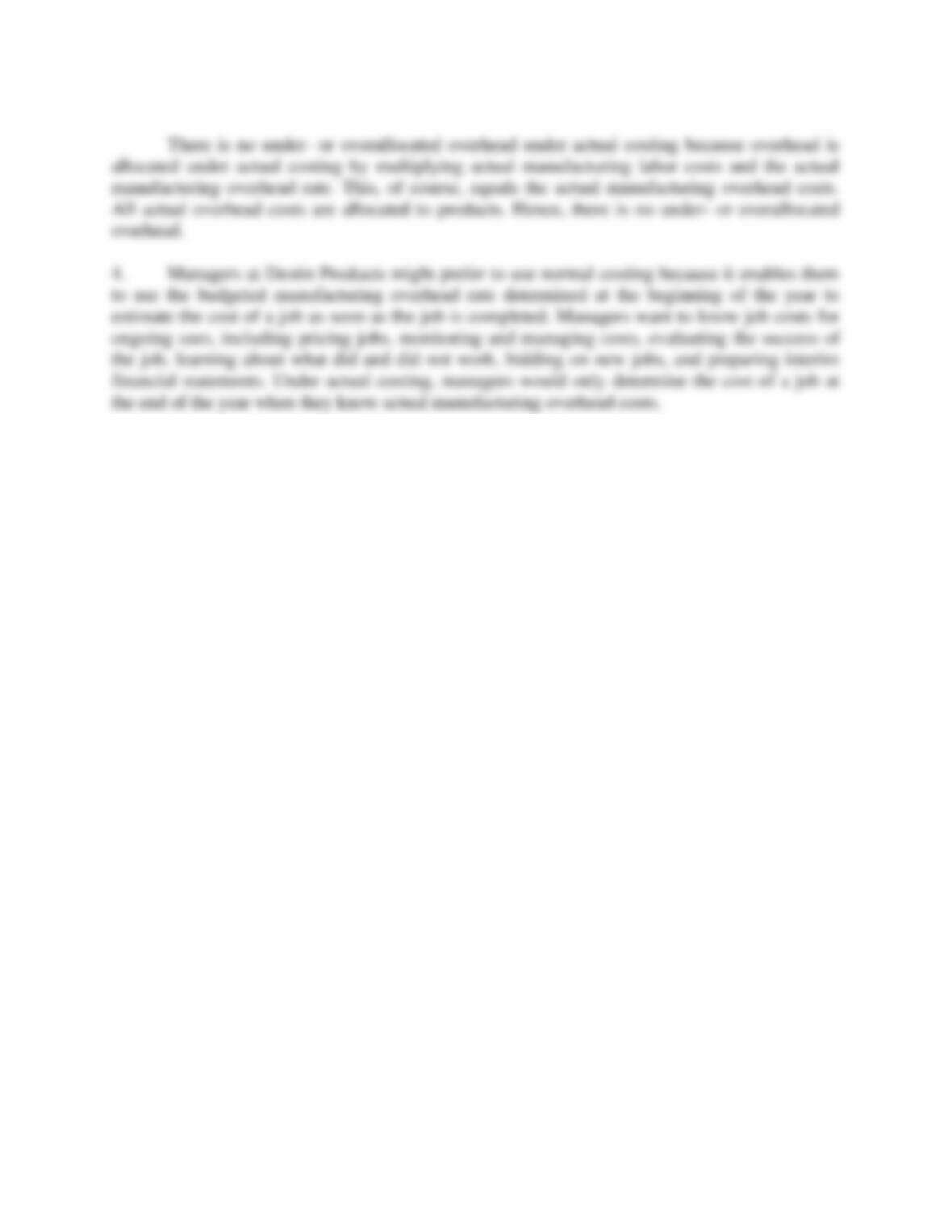
3. At the end of 2014, compute the under– or overallocated manufacturing overhead under
normal costing. Why is there no under- or overallocated overhead under actual costing?
4. Why might managers at Destin Products prefer to use normal costing?
SOLUTION
4-5
4-18 (20 -30 min.) Job costing, normal and actual costing.
Anderson Construction assembles residential houses. It uses a job-costing system with two
direct-cost categories (direct materials and direct labor) and one indirect-cost pool (assembly
support). Direct labor-hours is the allocation base for assembly support costs. In December 2013,
Anderson budgets 2014 assembly-support costs to be $8,000,000 and 2014 direct labor- hours to
be 160,000.
At the end of 2014, Anderson is comparing the costs of several jobs that were started and
completed in 2014.
Laguna Model
Mission Model
Construction period
Direct material costs
Feb–June 2014
$106,650
May–Oct 2014
$127,970
Direct labor costs
$ 36,276
$ 41,750
Direct labor-hours
920
1,040
Direct materials and direct labor are paid for on a contract basis. The costs of each are known
when direct materials are used or when direct labor-hours are worked. The 2014 actual
assembly-support costs were $7,614,000, and the actual direct labor-hours were 162,000.
Required:
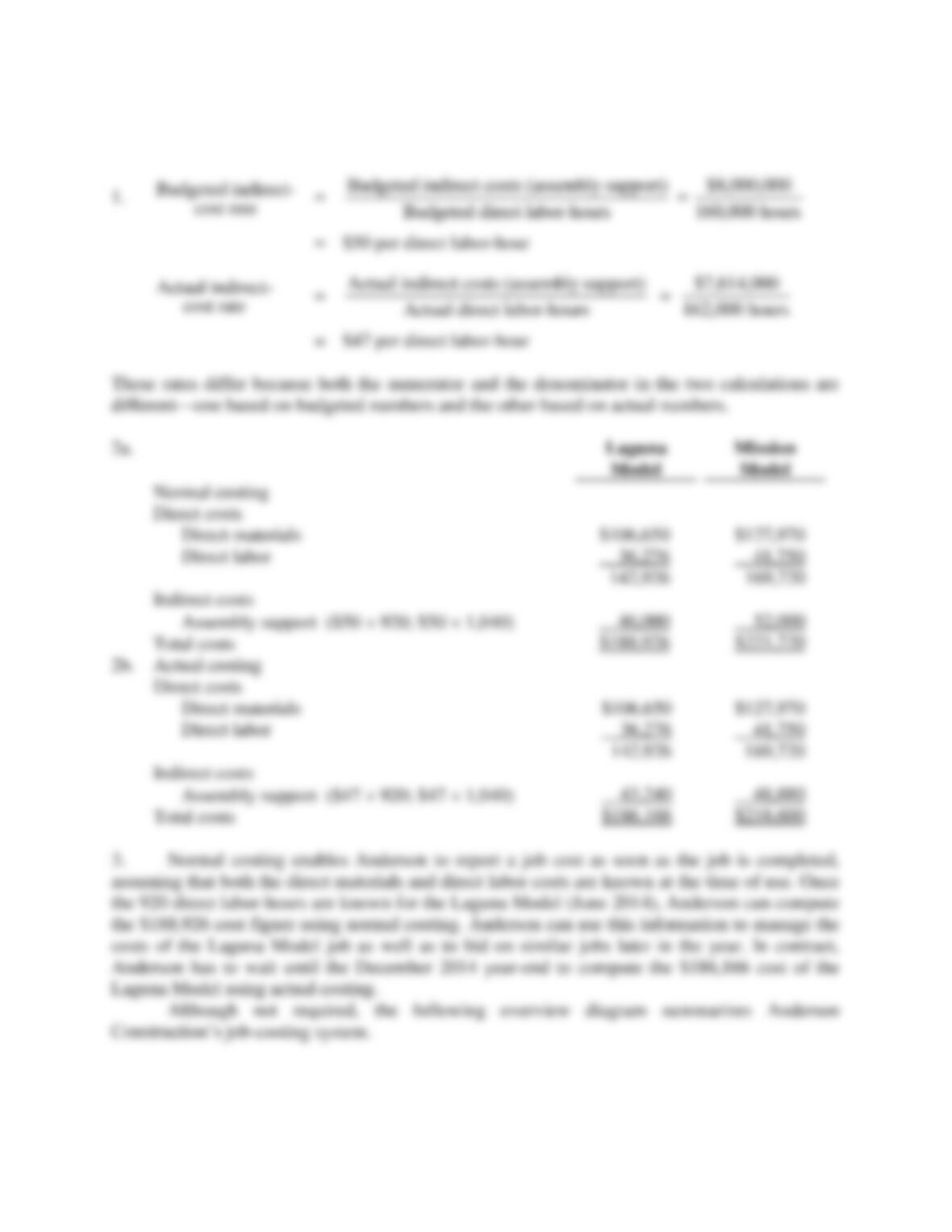
1. Compute the (a) budgeted indirect-cost rate and (b) actual indirect-cost rate. Why do they
differ?
2. What are the job costs of the Laguna Model and the Mission Model using (a) normal costing
and (b) actual costing?
3. Why might Anderson Construction prefer normal costing over actual costing?
4-6
SOLUTION
4-7
4-19 (10 min.) Budgeted manufacturing overhead rate, allocated manufacturing overhead.
Gammaro Company uses normal costing. It allocates manufacturing overhead costs using a
budgeted rate per machine-hour. The following data are available for 2014:
Budgeted manufacturing overhead
$4,200,000
Budgeted machine-hours
175,000
Actual manufacturing overhead costs
$4,050,000
Actual machine-hours
170,000
Required:
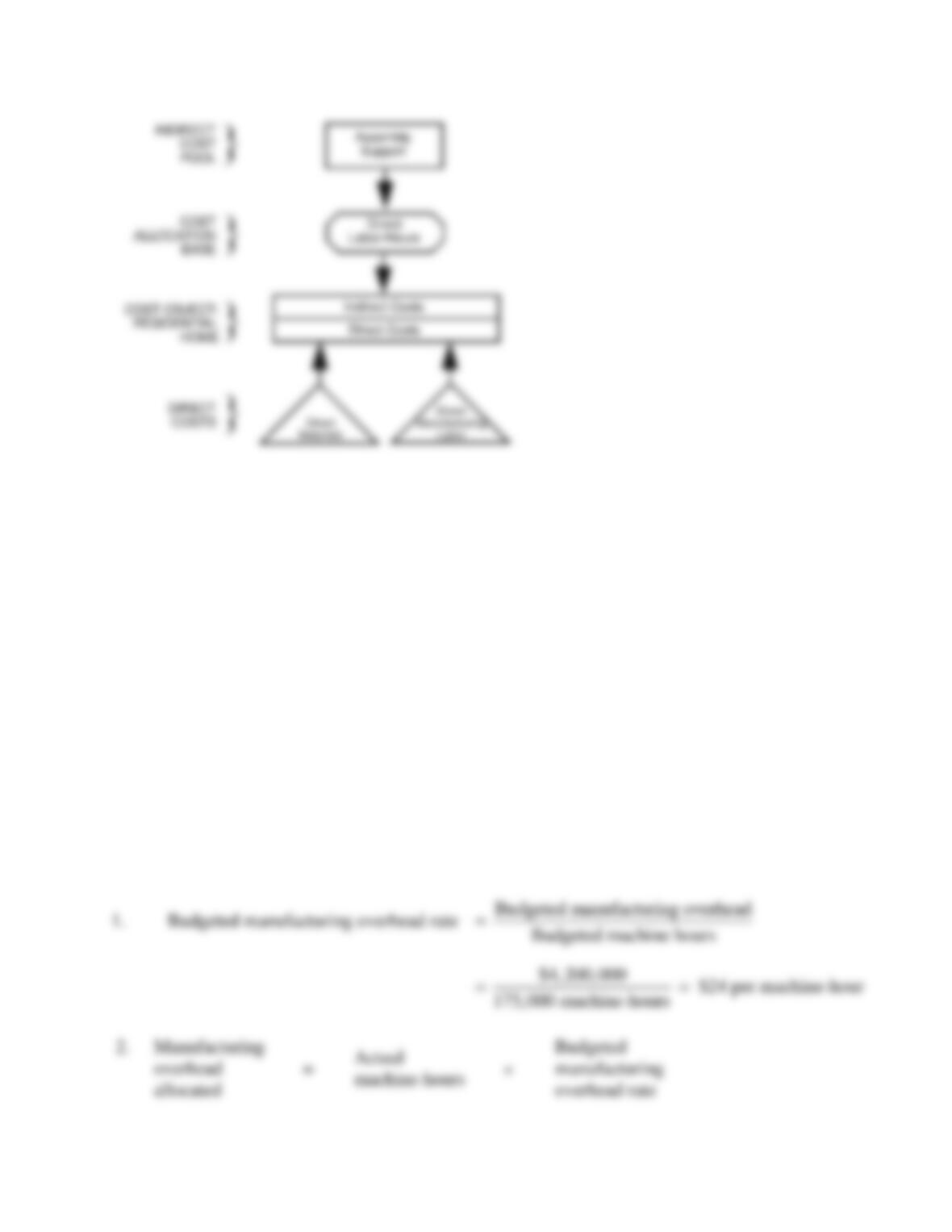
1. Calculate the budgeted manufacturing overhead rate.
2. Calculate the manufacturing overhead allocated during 2014.
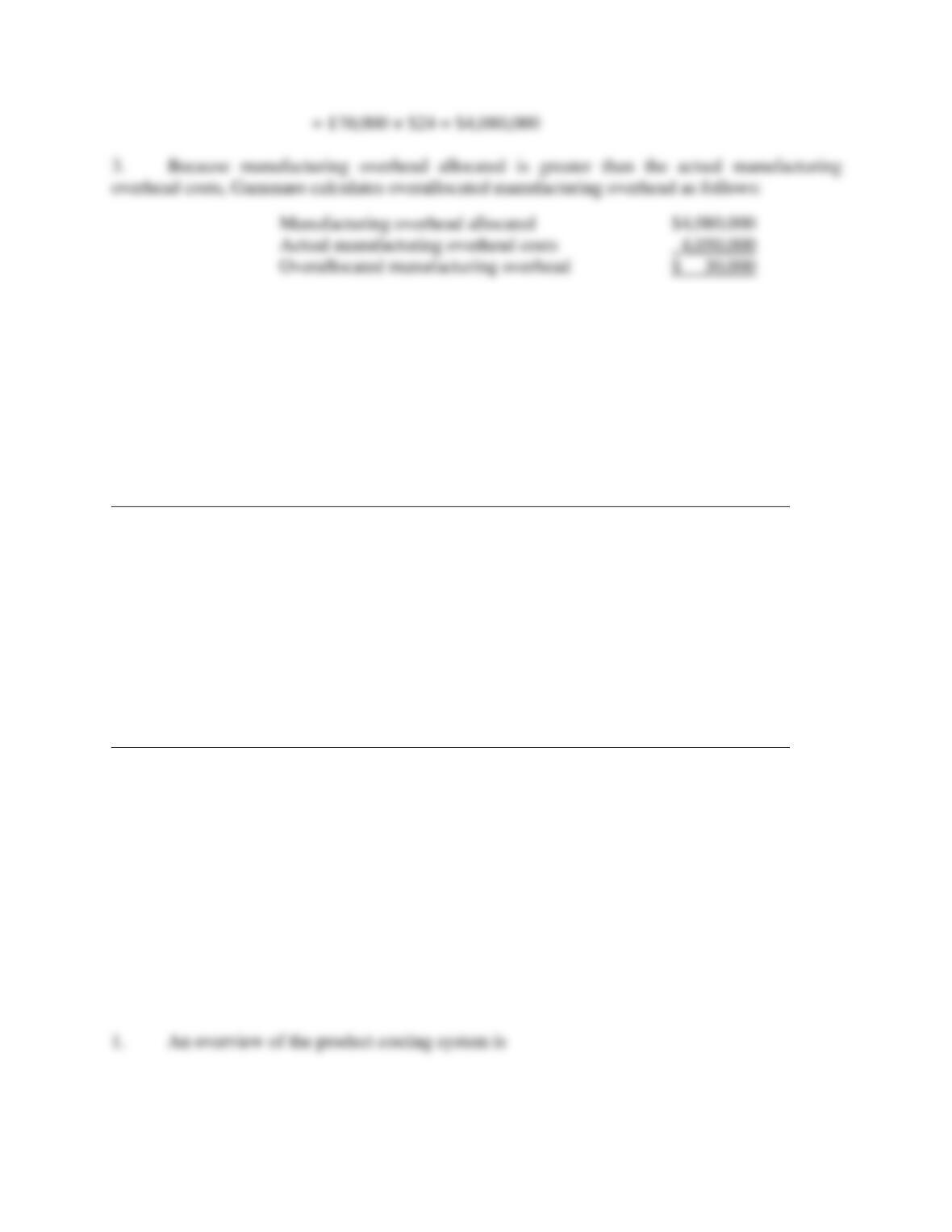
3. Calculate the amount of under– or overallocated manufacturing overhead. Why do
Gammaro’s managers need to calculate this amount?
SOLUTION
4-8
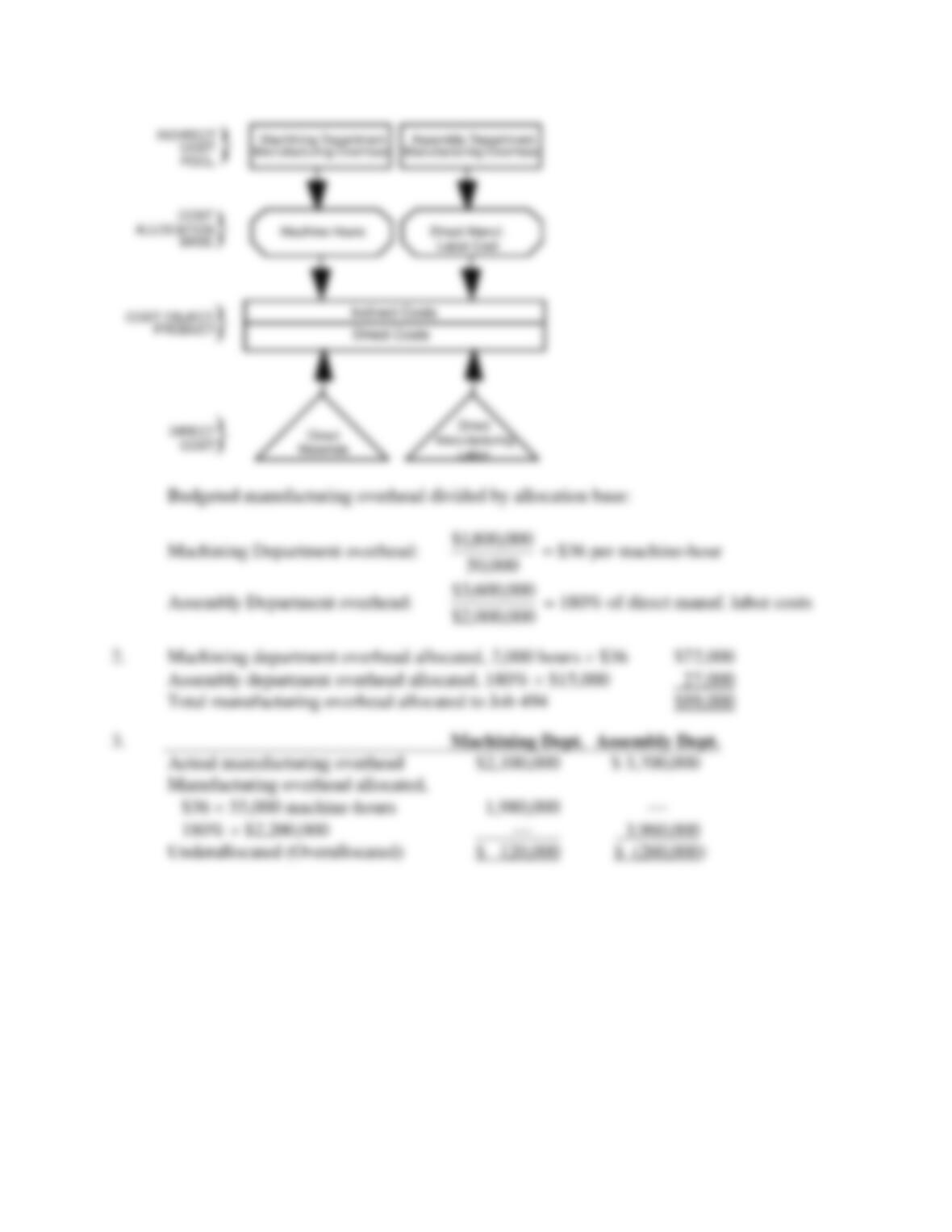
4-20 (20-30 min.) Job costing, accounting for manufacturing overhead, budgeted rates.
The Lynn Company uses a normal job-costing system at its Minneapolis plant. The plant has a
machining department and an assembly department. Its job-costing system has two direct-cost
categories (direct materials and direct manufacturing labor) and two manufacturing overhead
cost pools (the machining department overhead, allocated to jobs based on actual machine-hours,
and the assembly department overhead, allocated to jobs based on actual direct manufacturing
labor costs). The 2014 budget for the plant is as follows:
Machining Department
Assembly Department
Manufacturing overhead
$1,800,000
$3,600,000
Direct manufacturing labor costs
$1,400,000
$2,000,000
Direct manufacturing labor-hours
100,000
200,000
Machine-hours
50,000
200,000
Required:
1. Present an overview diagram of Lynn’s job-costing system. Compute the budgeted
manufacturing overhead rate for each department.
2. During February, the job-cost record for Job 494 contained the following:
Machining Department
Assembly Department
Direct materials used
$45,000
$70,000
Direct manufacturing labor costs
$14,000
$15,000
Direct manufacturing labor-hours
1,000
1,500
Machine-hours
2,000
1,000
Compute the total manufacturing overhead costs allocated to Job 494.
3. At the end of 2014, the actual manufacturing overhead costs were $2,100,000 in machining
and $3,700,000 in assembly. Assume that 55,000 actual machine-hours were used in
machining and that actual direct manufacturing labor costs in assembly were $2,200,000.
Compute the over- or underallocated manufacturing overhead for each department.
SOLUTION
4-9

4-10
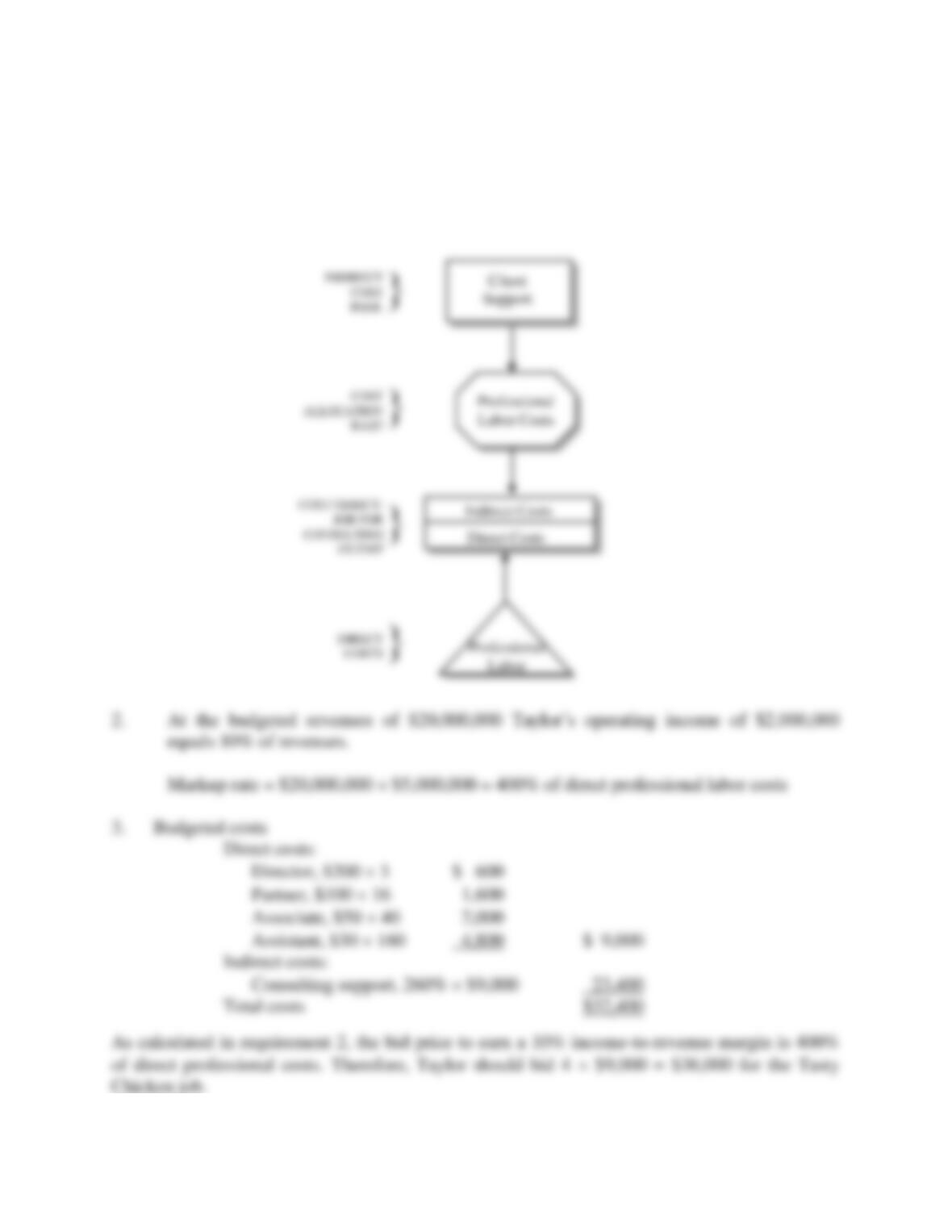
4-21 (20−25 min.) Job costing, consulting firm.
Taylor & Associates, a consulting firm, has the following condensed budget for 2014:
Revenues $20,000,000
Total costs:
Direct costs
Professional Labor $ 5,000,000
Indirect costs
Client support 13,000,000 18,000,000
Operating income $2,000,000
Taylor has a single direct-cost category (professional labor) and a single indirect-cost pool (client
support). Indirect costs are allocated to jobs on the basis of professional labor costs.
Required:
1. Prepare an overview diagram of the job-costing system. Calculate the 2014 budgeted
indirect-cost rate for Taylor & Associates.
2. The markup rate for pricing jobs is intended to produce operating income equal to 10% of
revenues. Calculate the markup rate as a percentage of professional labor costs.
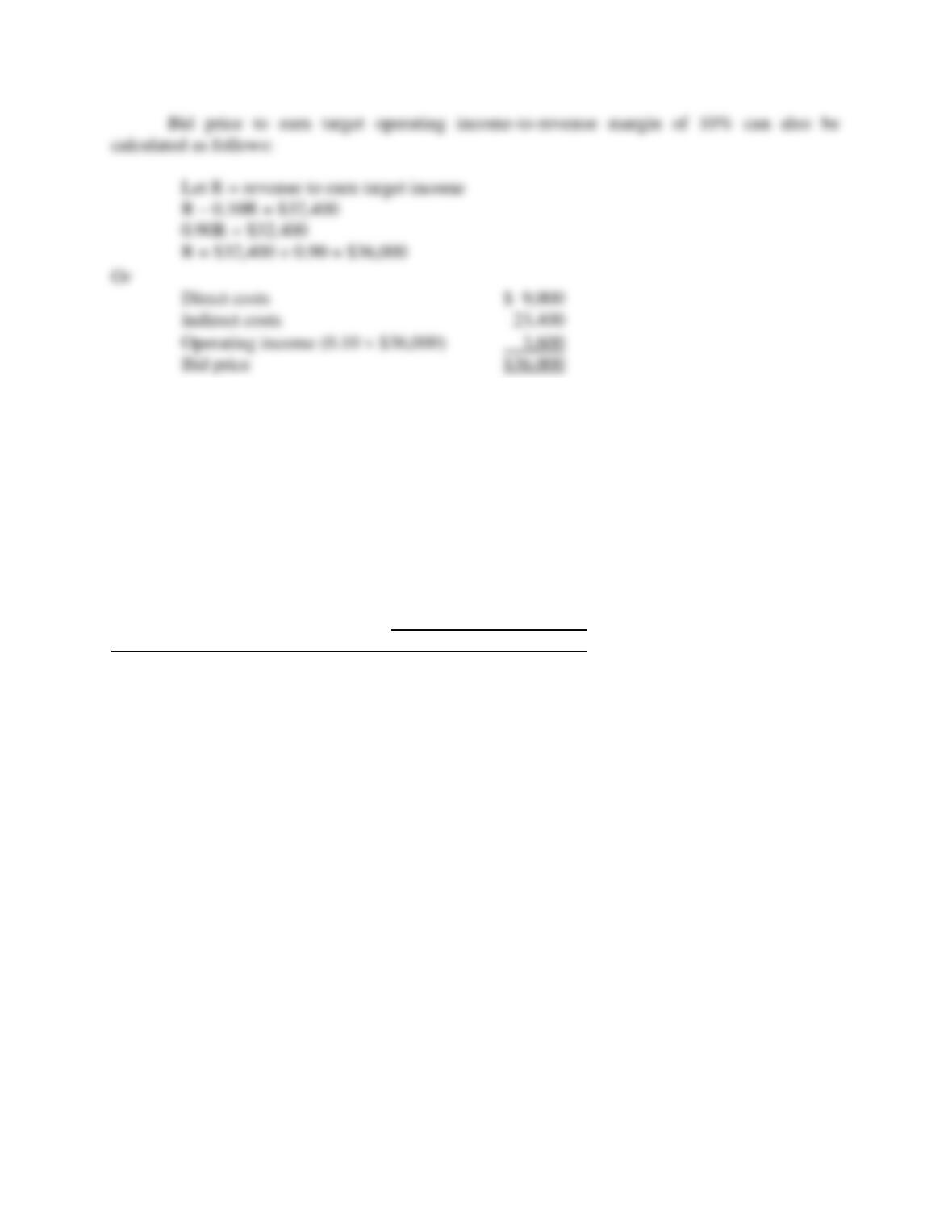
3. Taylor is bidding on a consulting job for Tasty Chicken, a fast food chain specializing in
poultry meats. The budgeted breakdown of professional labor on the job is as follows:
Professional Labor Category
Budgeted Rate per Hour
Budgeted Hours
Director
$200
3
Partner
100
16
Associate
50
40
Assistant
30
160
Calculate the budgeted cost of the Tasty Chicken job. How much will Taylor bid for the job if it
is to earn its target operating income of 10% of revenues?
SOLUTION
4-11
4-12
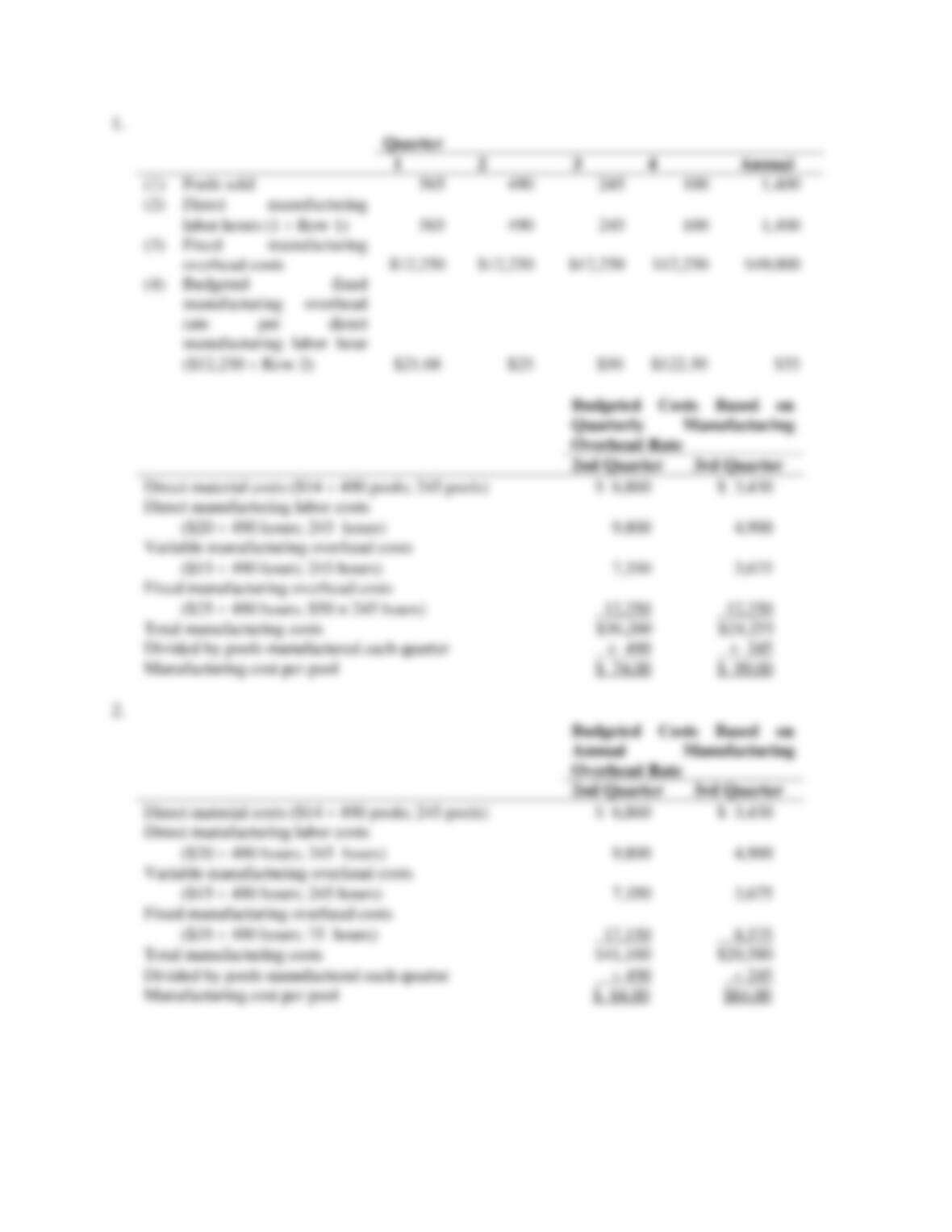
4-22 (15–20 min.) Time period used to compute indirect cost rates.
Plunge Manufacturing produces outdoor wading and slide pools. The company uses a normal–
costing system and allocates manufacturing overhead on the basis of direct manufacturing labor–
hours. Most of the company’s production and sales occur in the first and second quarters of the
year. The company is in danger of losing one of its larger customers, Socha Wholesale, due to
large fluctuations in price. The owner of Plunge has requested an analysis of the manufacturing
cost per unit in the second and third quarters. You have been provided the following budgeted
information for the coming year:
Quarter________
1 2 3 4_
Pools manufactured and sold 565 490 245 100
It takes 1 direct manufacturing labor-hour to make each pool. The actual direct material cost is
$14.00 per pool. The actual direct manufacturing labor rate is $20 per hour. The budgeted
variable manufacturing overhead rate is $15 per direct manufacturing labor-hour. Budgeted fixed
manufacturing overhead costs are $12,250 each quarter.
Required:
1. Calculate the total manufacturing cost per unit for the second and third quarter assuming the
company allocates manufacturing overhead costs based on the budgeted manufacturing
overhead rate determined for each quarter.
2. Calculate the total manufacturing cost per unit for the second and third quarter assuming the
company allocates manufacturing overhead costs based on an annual budgeted
manufacturing overhead rate.
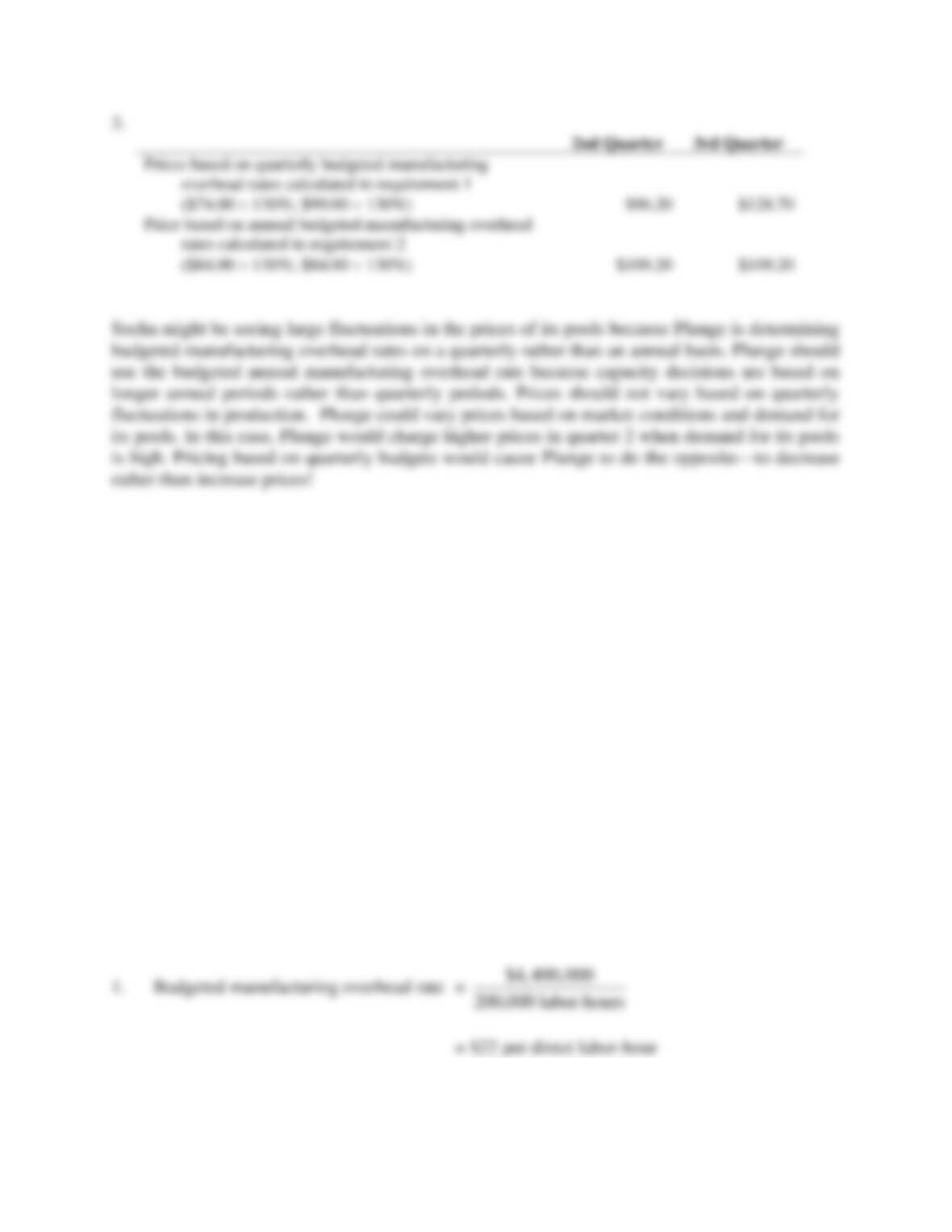
3. Plunge Manufacturing prices its pools at manufacturing cost plus 30%. Why might Socha
Wholesale be seeing large fluctuations in the prices of pools? Which of the methods
described in requirements 1 and 2 would you recommend Plunge use? Explain.
SOLUTION
4-13
4-14
4-23 (10–15 min.) Accounting for manufacturing overhead.
Jamison Woodworking uses normal costing and allocates manufacturing overhead to jobs based
on a budgeted labor-hour rate and actual direct labor-hours. Under- or overallocated overhead, if
immaterial, is written off to Cost of Goods Sold. During 2014, Jamison recorded the following:
Budgeted manufacturing overhead costs
$4,400,000
Budgeted direct labor-hours
200,000
Actual manufacturing overhead costs
$4,650,000
Actual direct labor-hours
212,000
Required:
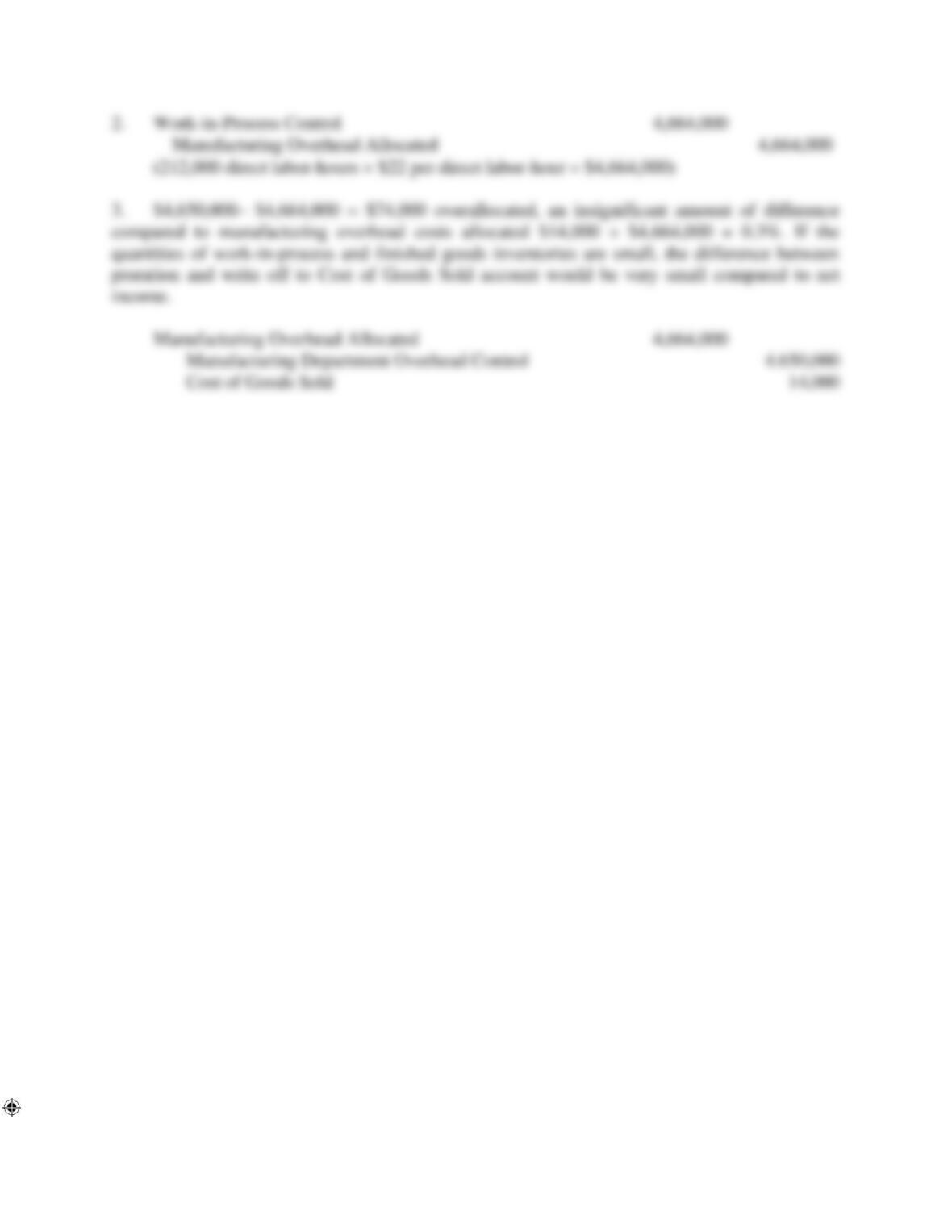
1. Compute the budgeted manufacturing overhead rate.
2. Prepare the summary journal entry to record the allocation of manufacturing overhead.
3. Compute the amount of under- or overallocated manufacturing overhead. Is the amount
significant enough to warrant proration of overhead costs, or would it be permissible to write
it off to cost of goods sold? Prepare the journal entry to dispose of the under- or
overallocated overhead.
SOLUTION
4-15
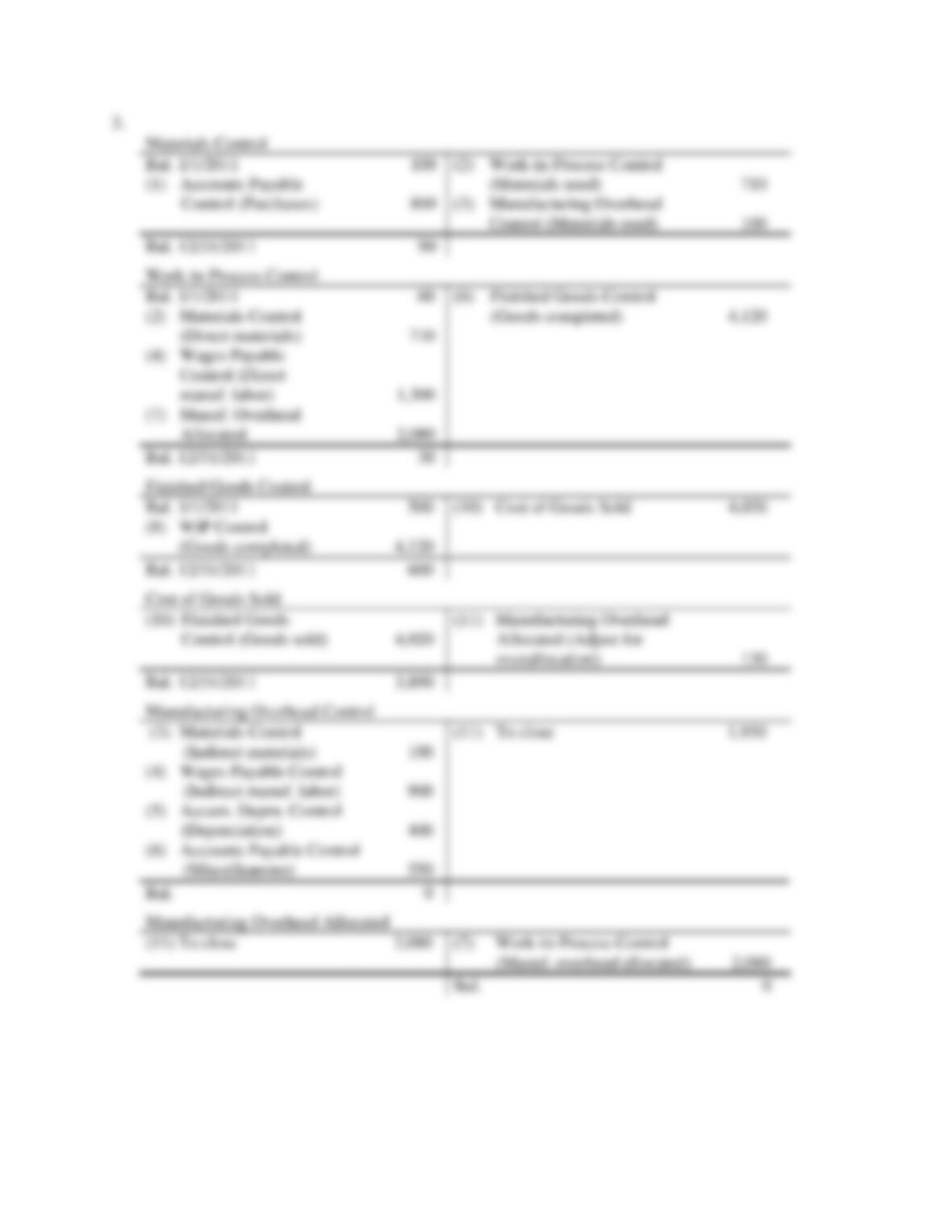
4-24 (35−45 min.) Job costing, journal entries.
The University of Chicago Press is wholly owned by the university. It performs the bulk of its
work for other university departments, which pay as though the press were an outside business
enterprise. The press also publishes and maintains a stock of books for general sale. The press
uses normal costing to cost each job. Its job-costing system has two direct-cost categories (direct
materials and direct manufacturing labor) and one indirect-cost pool (manufacturing overhead,
allocated on the basis of direct manufacturing labor costs).
The following data (in thousands) pertain to 2014:
Required:
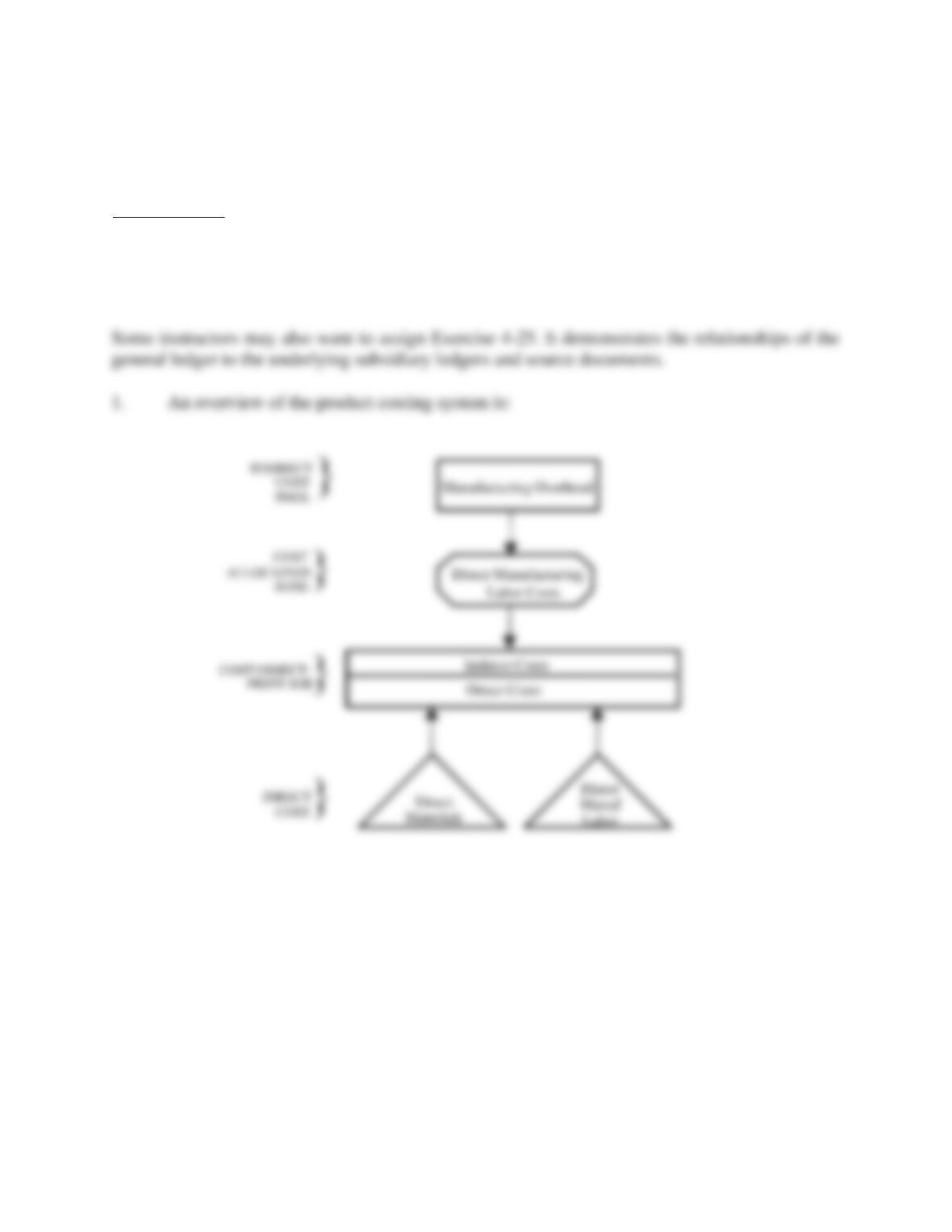
1. Prepare an overview diagram of the job-costing system at the University of Chicago Press.
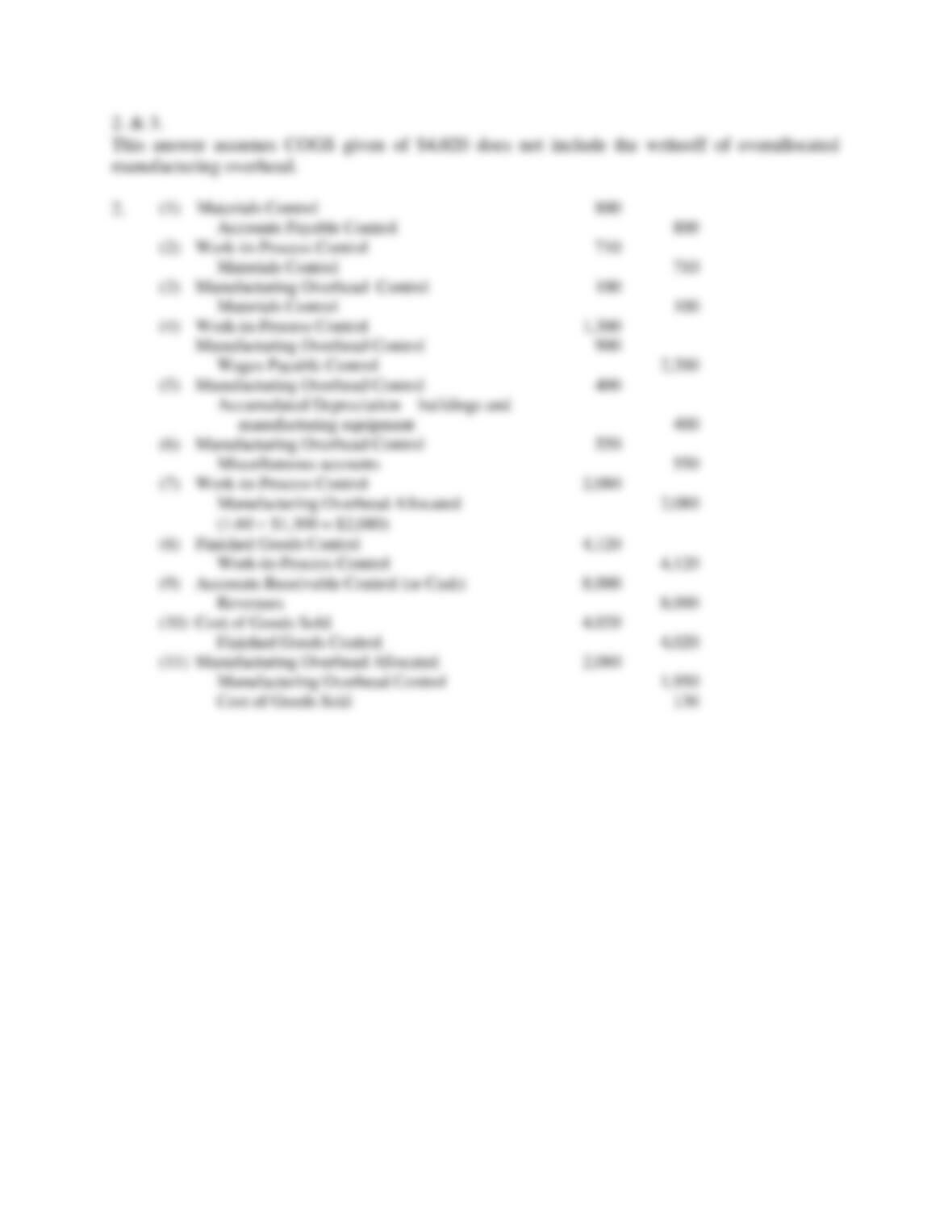
2. Prepare journal entries to summarize the 2014 transactions. As your final entry, dispose of
the year- end under- or overallocated manufacturing overhead as a writeoff to Cost of Goods
Direct materials and supplies purchased on credit
$ 800
Direct materials used
710
Indirect materials issued to various production departments
100
Direct manufacturing labor
1,300
Indirect manufacturing labor incurred by various production departments
900
Depreciation on building and manufacturing equipment
400
Miscellaneous manufacturing overhead* incurred by various production departments
(ordinarily would be detailed as repairs, photocopying, utilities, etc.)
550
Manufacturing overhead allocated at 160% of direct manufacturing labor costs
?
Cost of goods manufactured
4,120
Revenues
8,000
Cost of goods sold (before adjustment for under- or overallocated manufacturing overhead)
4,020
Inventories, December 31, 2013 (not 2014):
Materials Control
100
Work-in-Process Control
60
Finished Goods Control
500
4-16
Sold. Number your entries. Explanations for each entry may be omitted.
3. Show posted T-accounts for all inventories, Cost of Goods Sold, Manufacturing Overhead
Control, and Manufacturing Overhead Allocated.
4. How did the University of Chicago Press perform in 2014?
*The term manufacturing overhead is not used uniformly. Other terms that are often encountered
in printing companies include job overhead and shop overhead.
SOLUTION
4-17
4-18

4-19
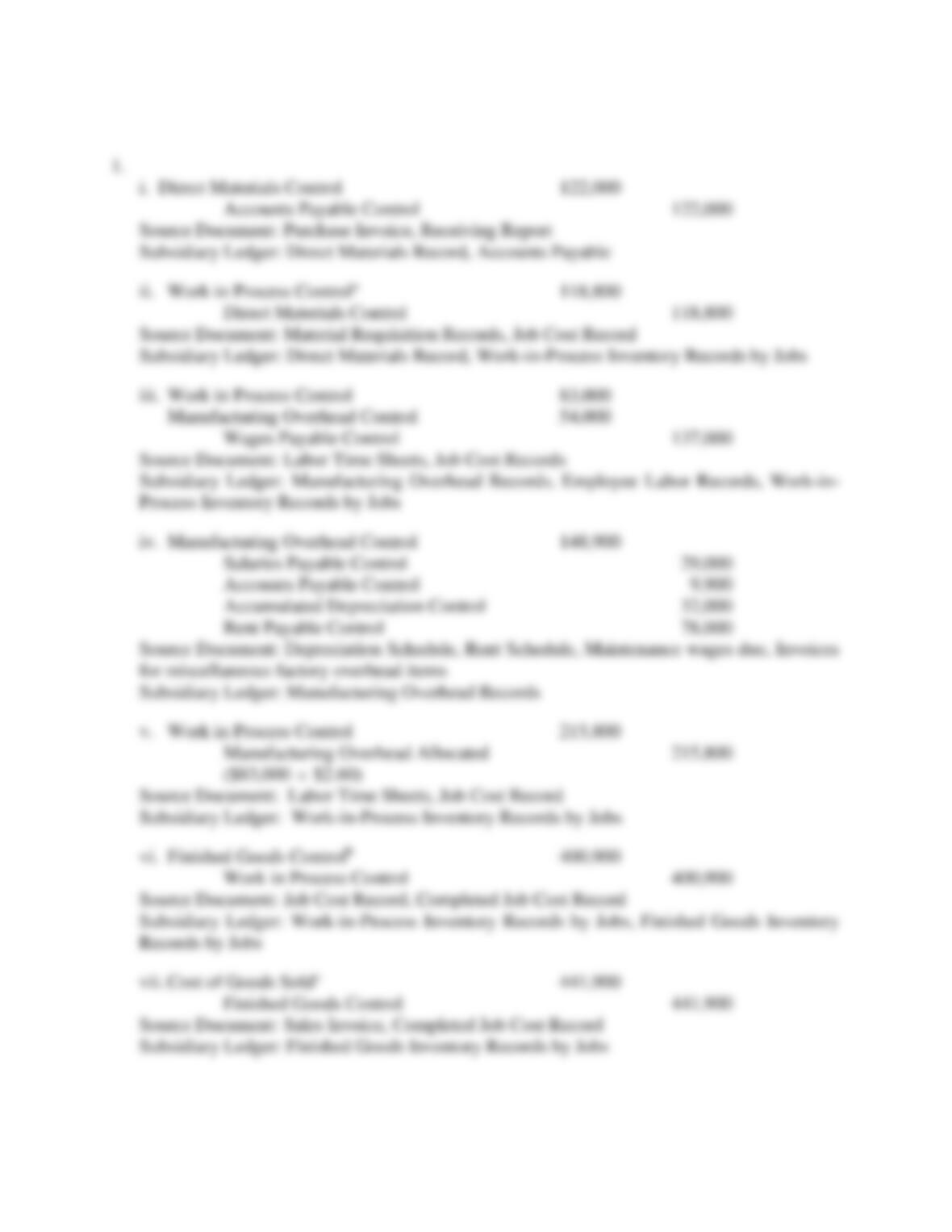
4-25 (35 minutes) Journal entries, T-accounts, and source documents.
Creation Company produces gadgets for the coveted small appliance market. The following data
reflect activity for the year 2014:
Costs incurred:
Direct manufacturing labor cost
83,000
Indirect labor
54,000
Depreciation, factory equipment
32,000
Depreciation, office equipment
7,900
Maintenance, factory equipment
29,000
Miscellaneous factory overhead
9,900
Rent, factory building
78,000
Advertising expense
94,000
Sales commissions
33,000
Inventories:
January 1, 2014
December 31, 2014
Direct materials
$ 9,800
$13,000
Work in process
6,300
23,000
Finished goods
68,000
27,000
Creation Co. uses a normal-costing system and allocates overhead to work in process at a rate of
$2.60 per direct manufacturing labor dollar. Indirect materials are insignificant so there is no
inventory account for indirect materials.
Required:
1. Prepare journal entries to record the transactions for 2014 including an entry to close out
over- or underallocated overhead to cost of goods sold. For each journal entry indicate the
source document that would be used to authorize each entry. Also note which subsidiary
ledger, if any, should be referenced as backup for the entry.
2. Post the journal entries to T-accounts for all of the inventories, Cost of Goods Sold, the
Manufacturing Overhead Control Account, and the Manufacturing Overhead Allocated
Account.
4-20
SOLUTION