CHAPTER 4 Completing the Accounting Cycle
Comp. Prob. 1 (Continued)
5. Optional (Appendix)
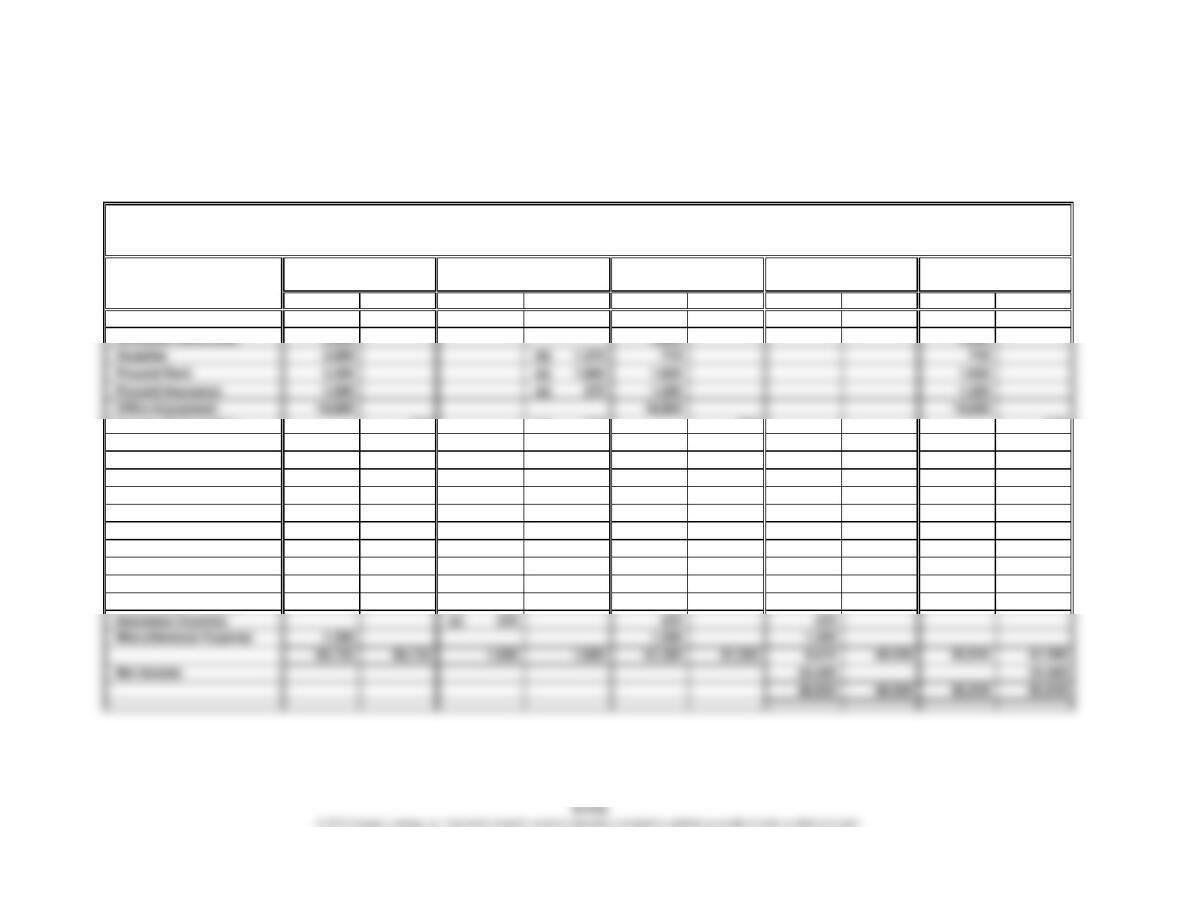
Account Title Debit Credit Debit Credit Debit Credit Debit Credit
Cash 44,195 44,195 44,195
Accum. Depreciation 330 (c) 330 660 660
Accounts Payable 895 895 895
Salaries Payable (d) 325 325 325
Unearned Fees 7,000 (f) 3,790 3,210 3,210
Kelly Pitney, Capital 42,300 42,300 42,300
Kelly Pitney, Drawing 10,500 10,500 10,500
Fees Earned 36,210 (f) 3,790 40,000 40,000
Salary Expense 1,380 (d) 325 1,705 1,705
Rent Expense (e) 1,600 1,600 1,600
Supplies Expense (b) 1,370 1,370 1,370
Depreciation Expense (c) 330 330 330
Kelly Consulting
End-of-Period Spreadsheet (Work Sheet)
For the Month Ended May 31, 20Y5
BalanceUnadjusted Adjusted Income
SheetTrial Balance
Debit Credit
Trial Balance StatementAdjustments
CHAPTER 4 Completing the Accounting Cycle
Comp. Prob. 1 (Continued)
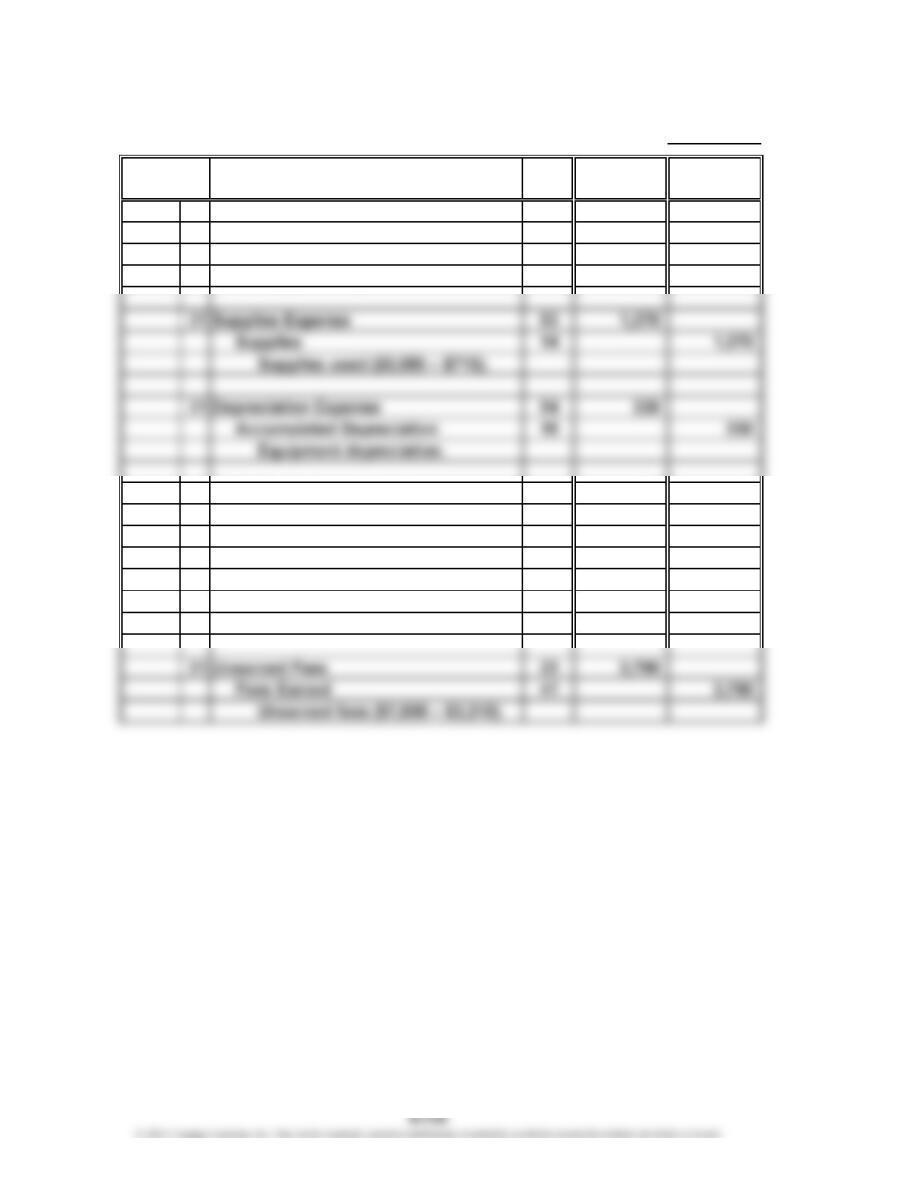
6. Page 7
Post.
Ref. Debit Credit
20Y5
May 31 Insurance Expense 55 275
Prepaid Insurance 16 275
Insurance expired.
31 Salary Expense 51 325
Salaries Payable 22 325
Accrued salaries.
31 Rent Expense 52 1,600
Prepaid Rent 15 1,600
Rent expired.
Date
Adjusting Entries
JOURNAL
CHAPTER 4 Completing the Accounting Cycle
Comp. Prob. 1 (Continued)
7.
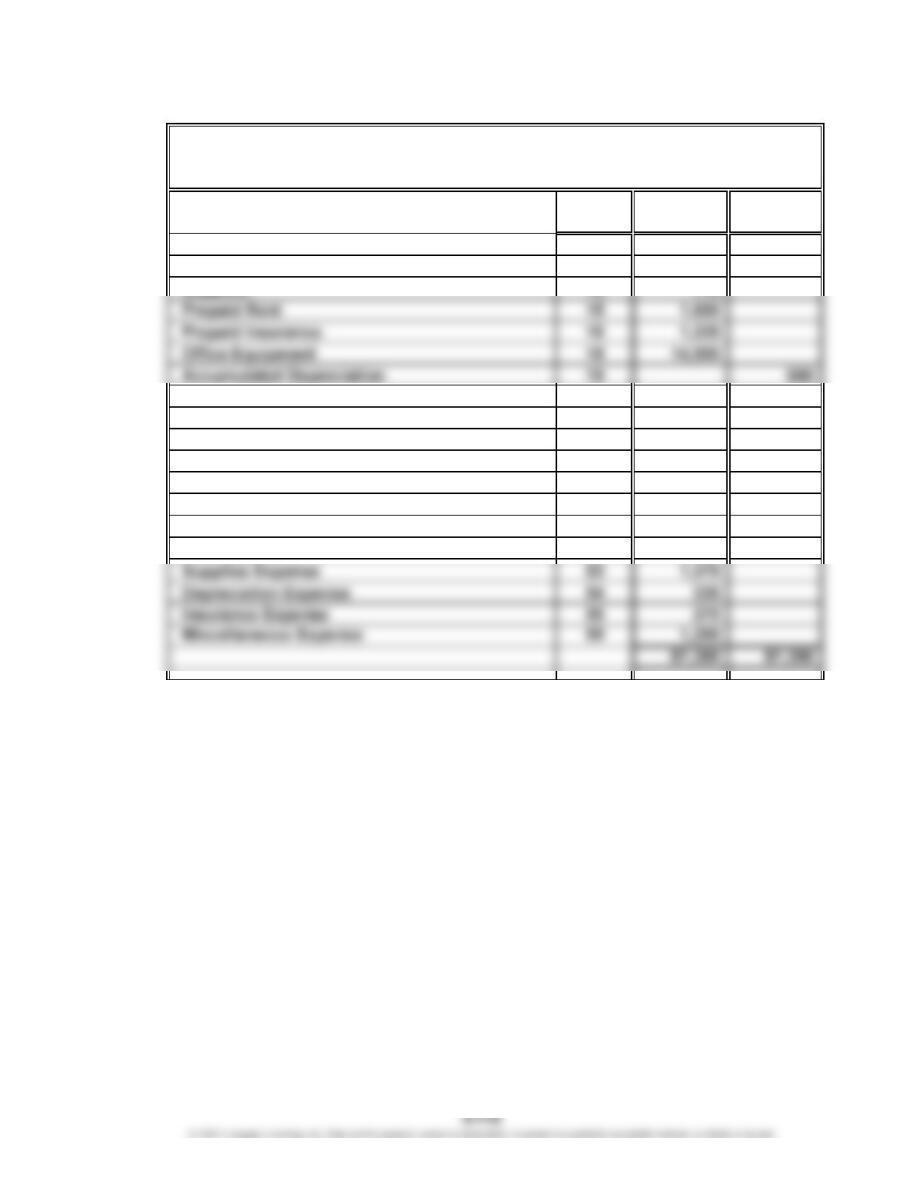
Account Debit Credit
No. Balances Balances
Cash 11 44,195
Accounts Receivable 12 8,080
Accounts Payable 21 895
Salaries Payable 22 325
Unearned Fees 23 3,210
Kelly Pitney, Capital 31 42,300
Kelly Pitney, Drawing 32 10,500
Fees Earned 41 40,000
Salary Expense 51 1,705
Rent Expense 52 1,600
Adjusted Trial Balance
May 31, 20Y5
Kelly Consulting
CHAPTER 4 Completing the Accounting Cycle
Comp. Prob. 1 (Continued)
8.
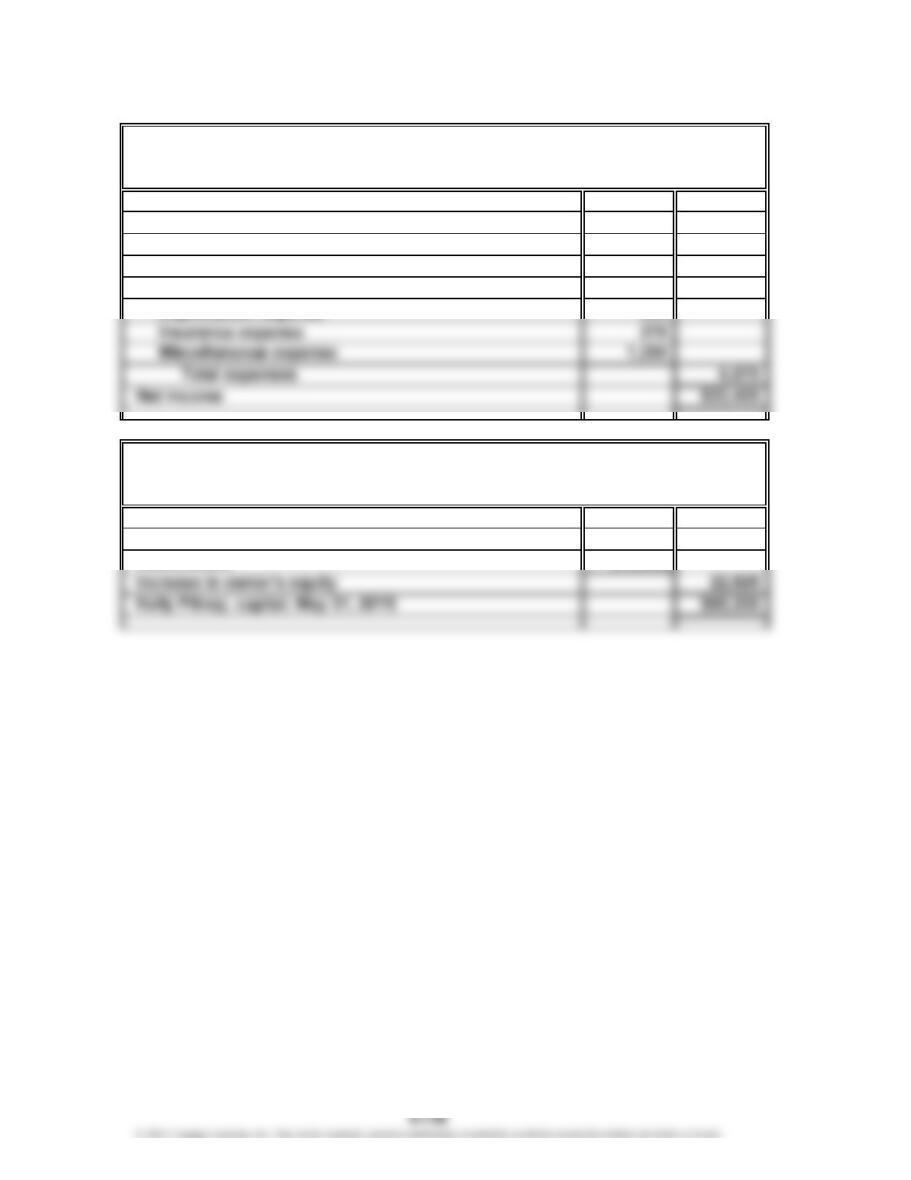
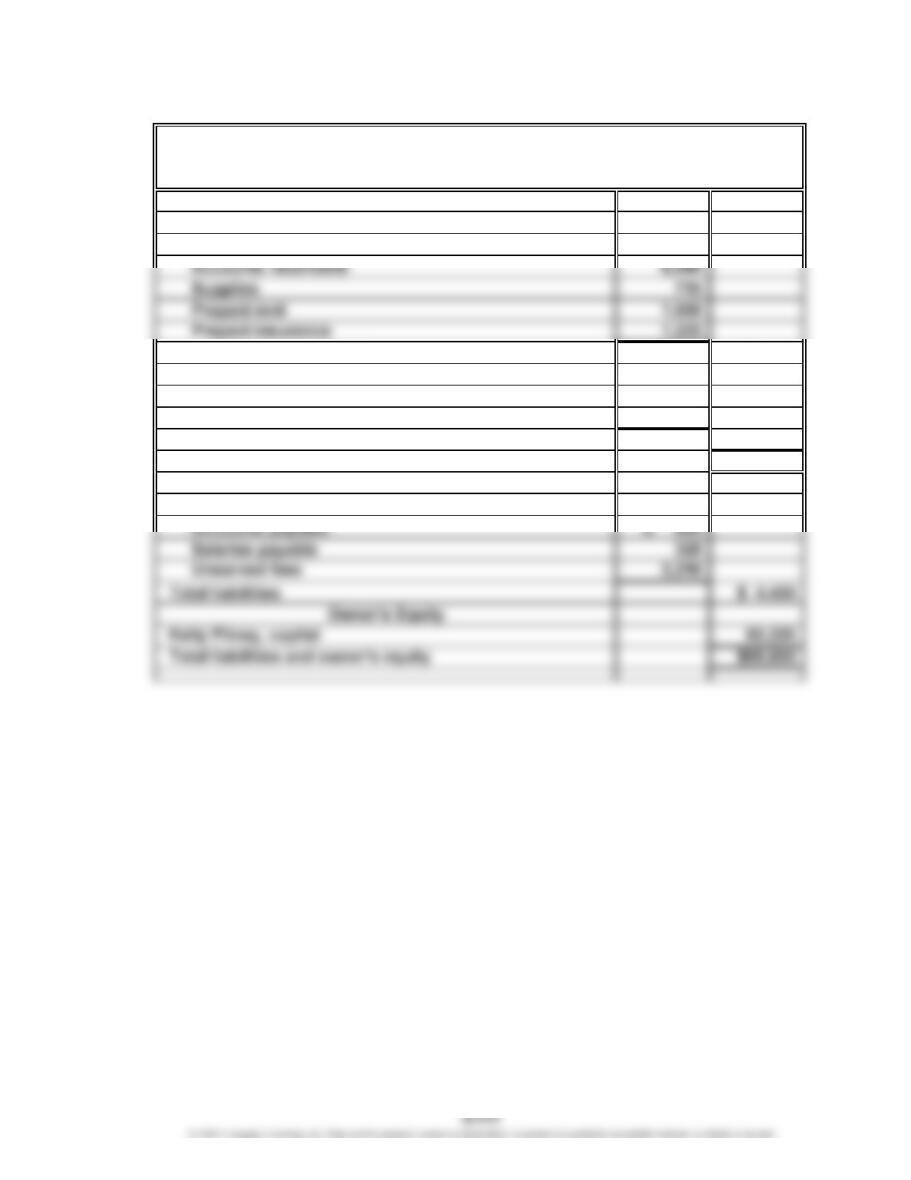
Fees earned $40,000
Expenses:
Salary expense $1,705
Rent expense 1,600
Supplies expense 1,370
Kelly Pitney, capital, May 1, 20Y5 $42,300
Net income for the month $ 33,425
Kelly Consulting
Statement of Owner’s Equity
For the Month Ended May 31, 20Y5
Kelly Consulting
Income Statement
For the Month Ended May 31, 20Y5
CHAPTER 4 Completing the Accounting Cycle
Comp. Prob. 1 (Continued)
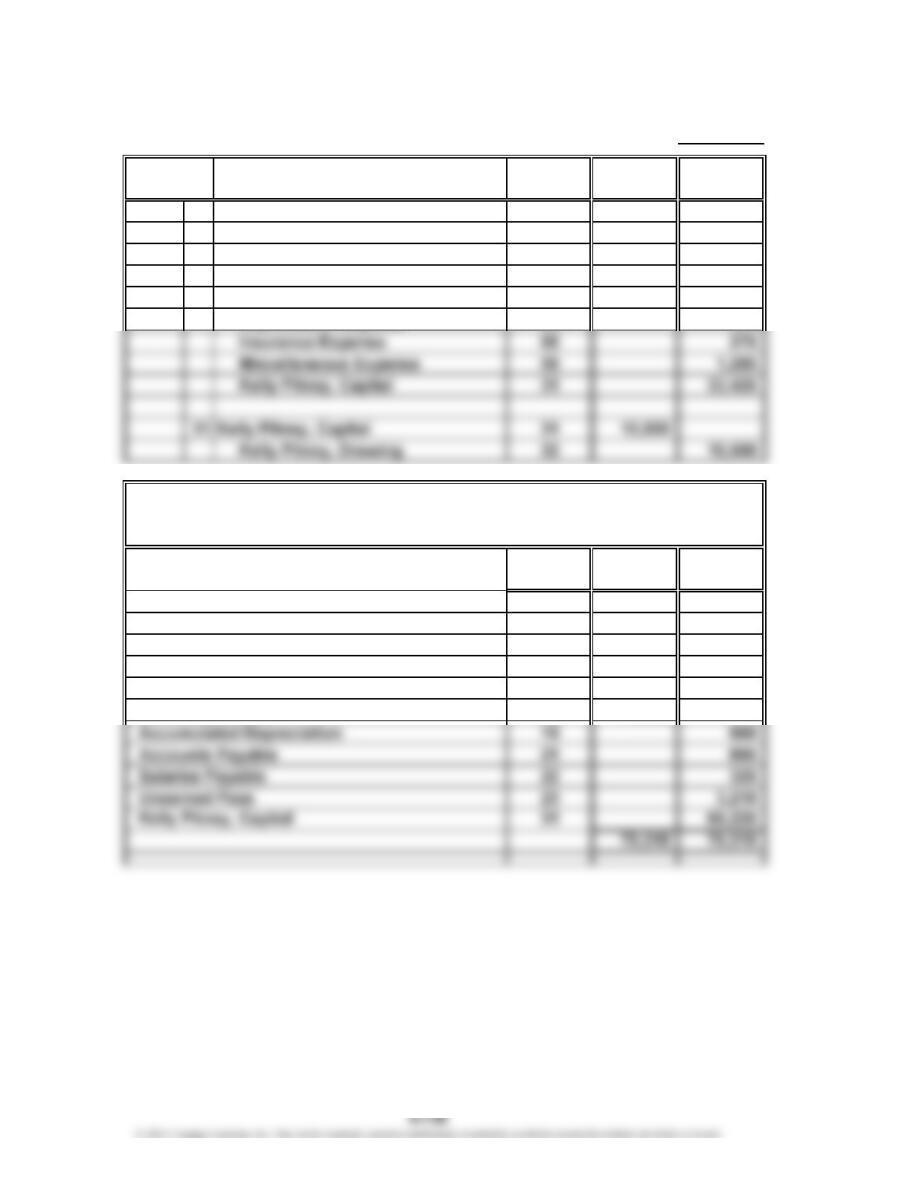
Current assets:
Cash $44,195
Total current assets $55,815
Property, plant, and equipment:
Office equipment $14,500
Less accumulated depreciation 660
Total property, plant, and equipment 13,840
Total assets $69,655
Current liabilities:
Liabilities
Kelly Consulting
Balance Sheet
May 31, 20Y5
Assets
CHAPTER 4 Completing the Accounting Cycle
Comp. Prob. 1 (Concluded)
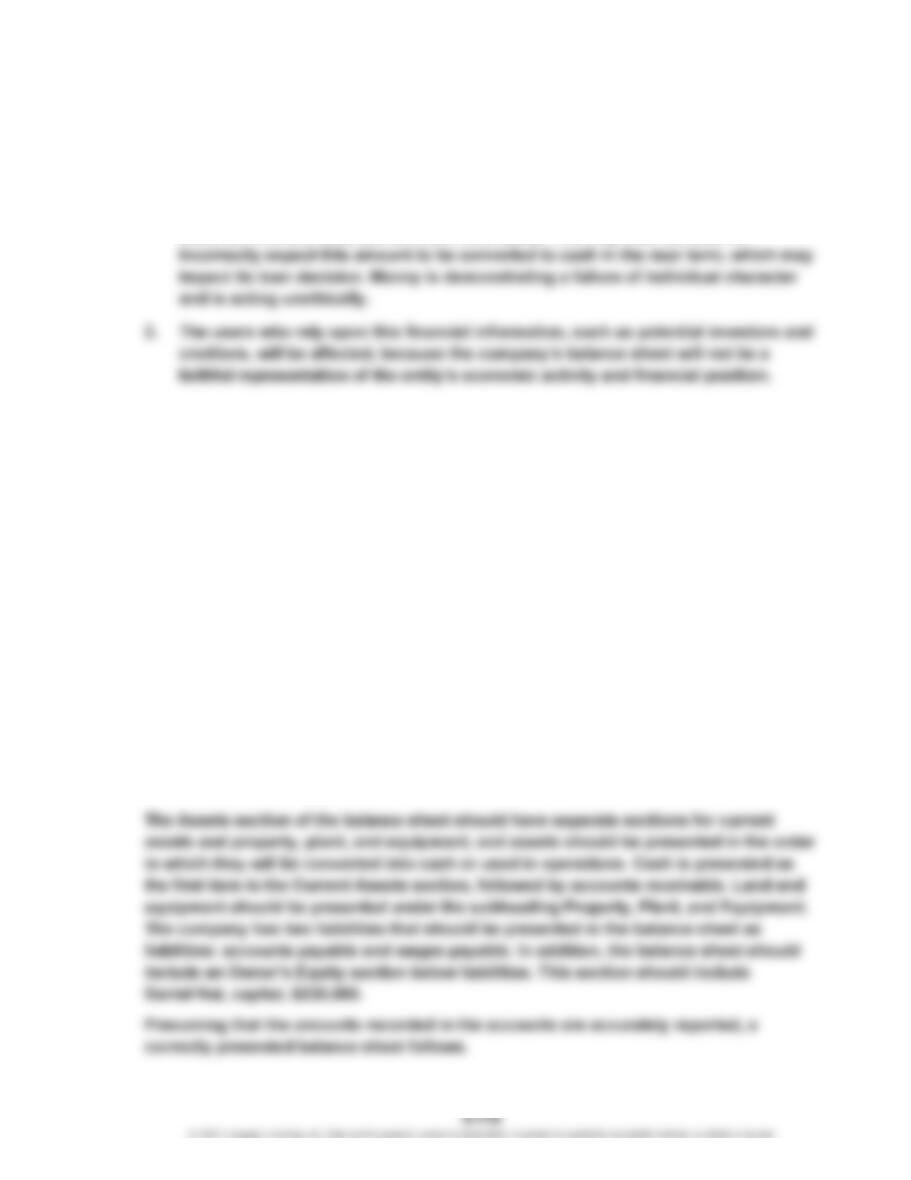
9. Page 8
Post.
Ref. Debit Credit
20Y5
May 31 Fees Earned 41 40,000
Salary Expense 51 1,705
Rent Expense 52 1,600
Supplies Expense 53 1,370
10.
Account Debit Credit
No. Balances Balances
Cash 11 44,195
Accounts Receivable 12 8,080
Supplies 14 715
Prepaid Rent 15 1,600
Prepaid Insurance 16 1,225
Office Equipment 18 14,500
JOURNAL
May 31, 20Y5
Closing Entries
Date
Kelly Consulting
Post-Closing Trial Balance
CHAPTER 4 Completing the Accounting Cycle
CP 4-1
1. No. By knowingly recording a personal loan as a normal account receivable, Manny
is reporting financial information that does not accurately reflect the company’s
financial position. Specifically, the company is reporting a noncurrent asset (a
CP 4-2
Solutions to this activity will vary according to the companies selected by the students.
CP 4-3
To: Daniel Nat
From: A+ Student
Re: Balance Sheet Presentation
The balance sheet describes the financial condition of the company as of a given date
and is useful in assessing the company’s financial soundness and liquidity. For balance
sheet information to be useful, it must be presented in a consistent manner and in
conformity with generally accepted accounting principles (GAAP). I have reviewed the
December 31, 20Y4, balance sheet of Asheville Company and have identified
several presentation errors that limit its usefulness. These errors include incorrectly
presenting accounts payable and Daniel Nat, capital as assets and incorrectly reporting
equipment as a liability. In addition, the order of the assets and liabilities reported on
the balance sheet is incorrect.
CASES & PROJECTS
CHAPTER 4 Completing the Accounting Cycle
CP 4-3 (Concluded)
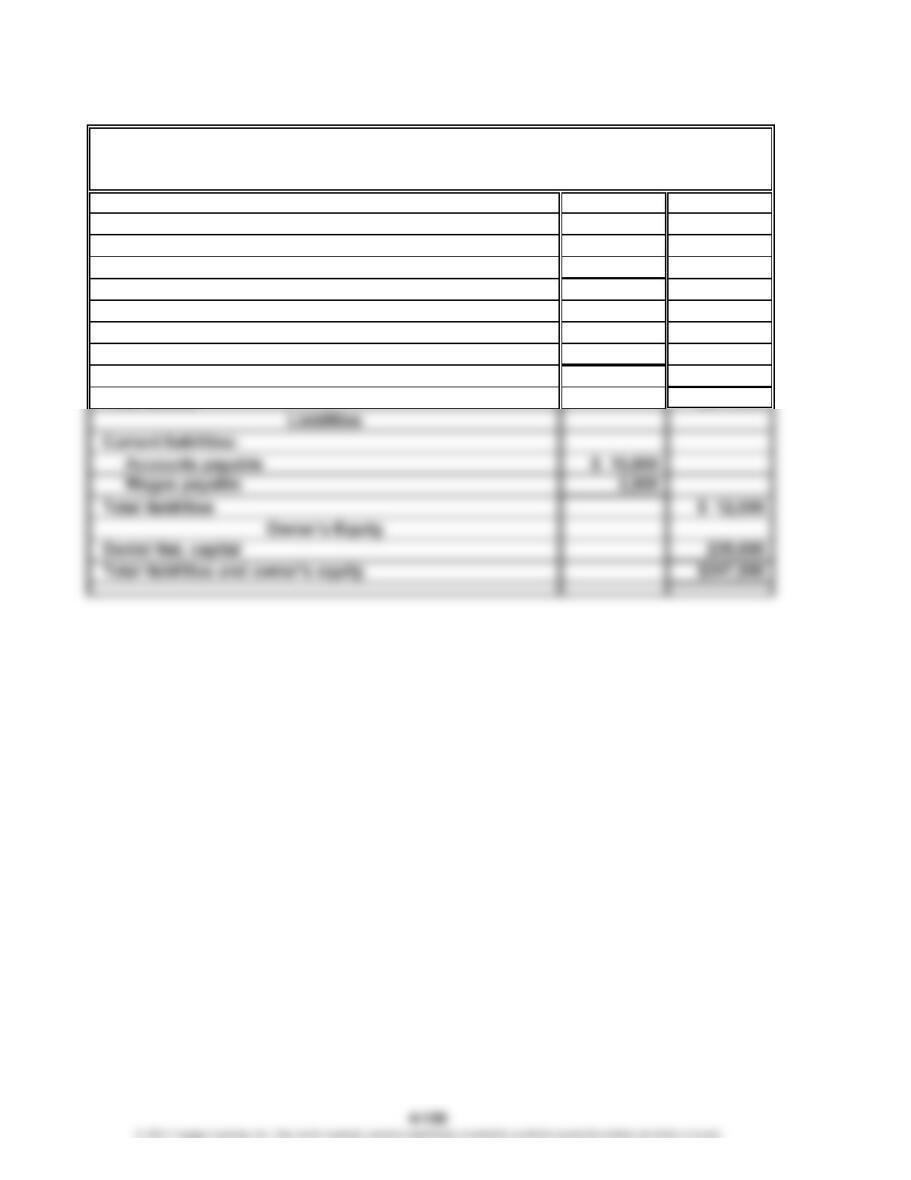
Current assets:
Cash $ 10,000
Accounts receivable 12,500
Total current assets $ 22,500
Property, plant, and equipment:
Land $100,000
Equipment 125,000
Total property, plant, and equipment 225,000
Total assets $247,500
Asheville Company
Balance Sheet
For the Year Ended December 31, 20Y4
Assets
CP 4-4
1. (a) With the decreasing cost of computers and related software, Main Street
Co. may find it desirable to computerize its financial reporting system. In
many cases, the computerization of a manual accounting system reduces the
(c) In designing a computerized financial reporting (accounting) system,
proper accounting principles, concepts, and procedures must be followed.
At a minimum, basic controls such as the use of the double-entry accounting
system should be included. For example, debits must equal credits for all
transactions, and assets must equal liabilities plus owner’s equity. In addition,
the system should be designed to detect obvious errors, such as a credit
(minus) balance for Supplies or Prepaid Insurance. In other words, to design
2. Supplies cannot have a credit balance, because the supplies account is an asset
account. A business cannot have a “negative” asset. Thus, the only way a credit
balance could have occurred in Supplies is as the result of an error in recording one
or more transactions.
CHAPTER 4 Completing the Accounting Cycle
CP 4-5
1. A set of financial statements provides useful information concerning the
economic condition of a company. For example, the balance sheet describes
the financial condition of the company as of a given date and is useful in
2. The following adjustments might be necessary before an accurate set of
financial statements could be prepared:
No supplies expense is shown. The supplies account should be adjusted for
the supplies used during the year.
No depreciation expense or accumulated depreciation is shown for the
building or equipment accounts. An adjusting entry should be prepared for
depreciation expense on each of these assets.
An inquiry should be made as to whether any accrued expenses, such as
wages or utilities, exist at the end of the year.
An inquiry should be made as to whether any prepaid expenses, such as rent
or insurance, exist at the end of the year.
An inquiry should be made as to whether the owner withdrew any funds from
the company during the year. No drawing account is shown in the “Statement
of Accounts.”
CHAPTER 4 Completing the Accounting Cycle
CP 4-5 (Concluded)
3. In general, the decision to extend a loan is based on an assessment of the
profitability and riskiness of the loan. Although the financial statements
provide useful data for this purpose, other factors such as the following
might also be significant:
The due date and payment terms of the loan.
Security for the loan. For example, whether Joan Whalen is willing to pledge
personal assets (collateral) in support of the loan will affect the riskiness