4-12 CHAPTER 4 • CREATING AND USING QUERIES
1.
a
6.
a
2.
b
7.
b
3.
c
8.
c
4.
a
9.
c
5.
b
10.
d
1. Good database design and normalization rules preclude you from including a column of
extended prices in any of the Coffee Merchant invoice tables. Because the extended price is
the product of the quantity, unit price, and any applicable discount, it is calculated in the
query. It must not also be stored in the table. Why? What if we discover a mistake in the
number of units or unit price on one or more invoices? Changing either renders the extended
2. An outer join reveals “hidden” information that is not obvious when you observe any
individual table. Outer join queries can display customers who have not ordered anything
3. The relationship between tblStudents and tblClassRoster is one-to-many. There is no
particular problem in representing the relationship. If the tables were tblStudents and
4. Crosstab queries aren’t as powerful as pivot tables. While crosstab queries provide summary
facilities like totals, you cannot filter or sort on a calculated field. Pivot tables are crosstab
5. The Tables panel would contain tblCustomer and tblOrders, joined on their common column,
say, CustID. The query’s field row would contain FirstName, LastName, Street, City, State,
and OrderDate. Under the State column place the criteria “ID” (the two-character
abbreviation for Idaho). Under the OrderDate, in the same row as the state criterion, write the
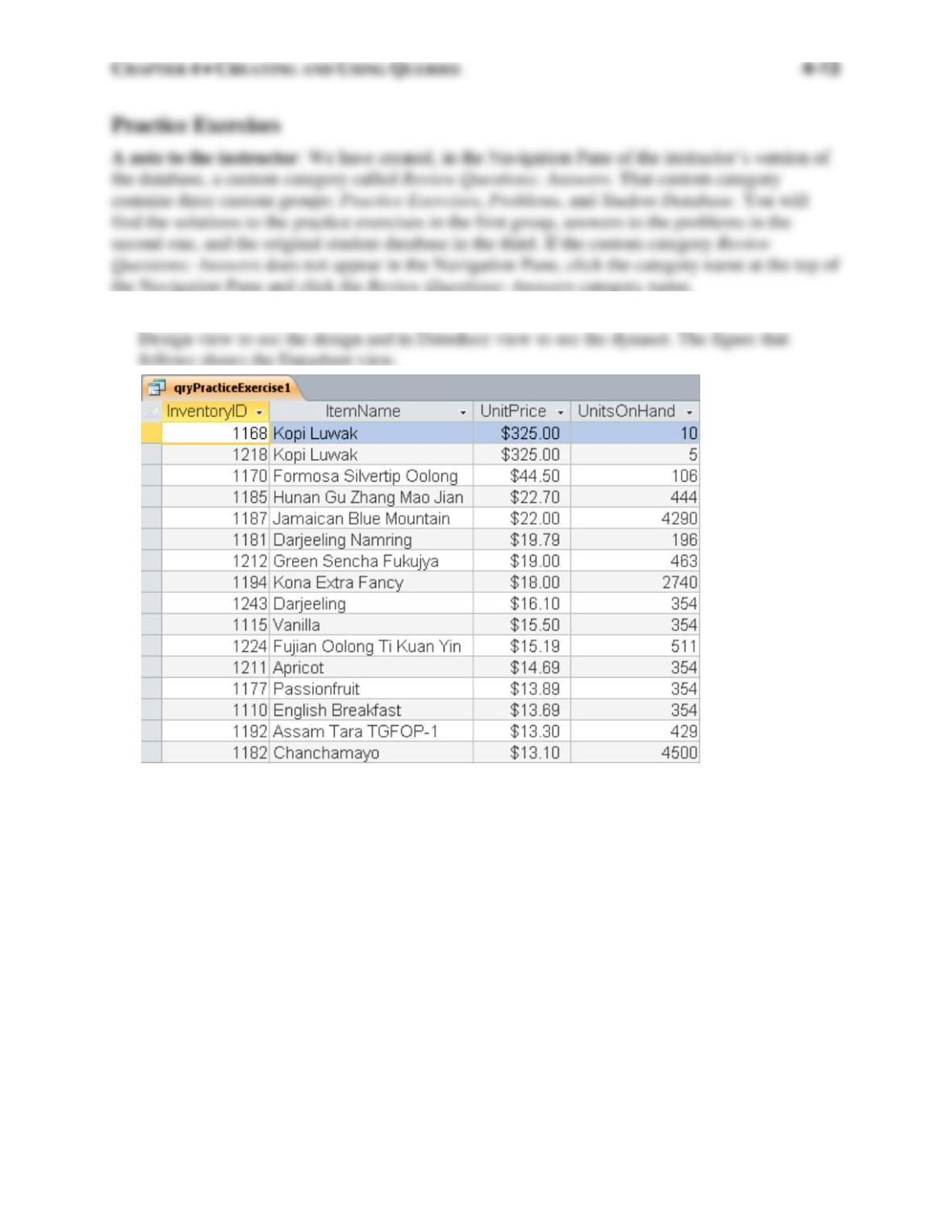
1. The solution is saved in the instructor’s solution database as 4-Practice Exercise 1. Open it in
4-14 CHAPTER 4 • CREATING AND USING QUERIES
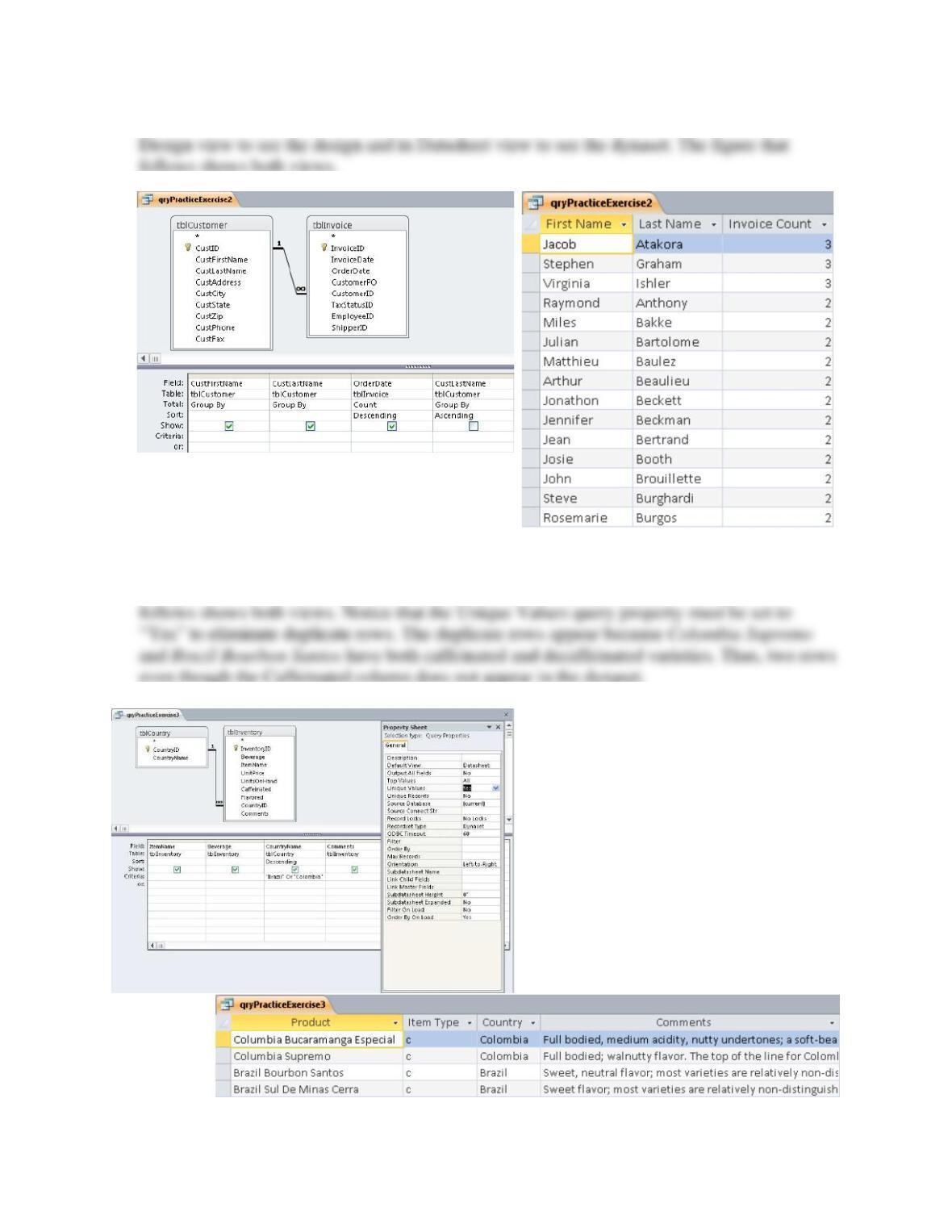
2. The solution is saved in the instructor’s solution database as 4-Practice Exercise 2. Open it in
3. The solution is saved in the instructor’s solution database as 4-Practice Exercise 3. Open it in
Design view to see the design and in Datasheet view to see the dynaset. The figure that
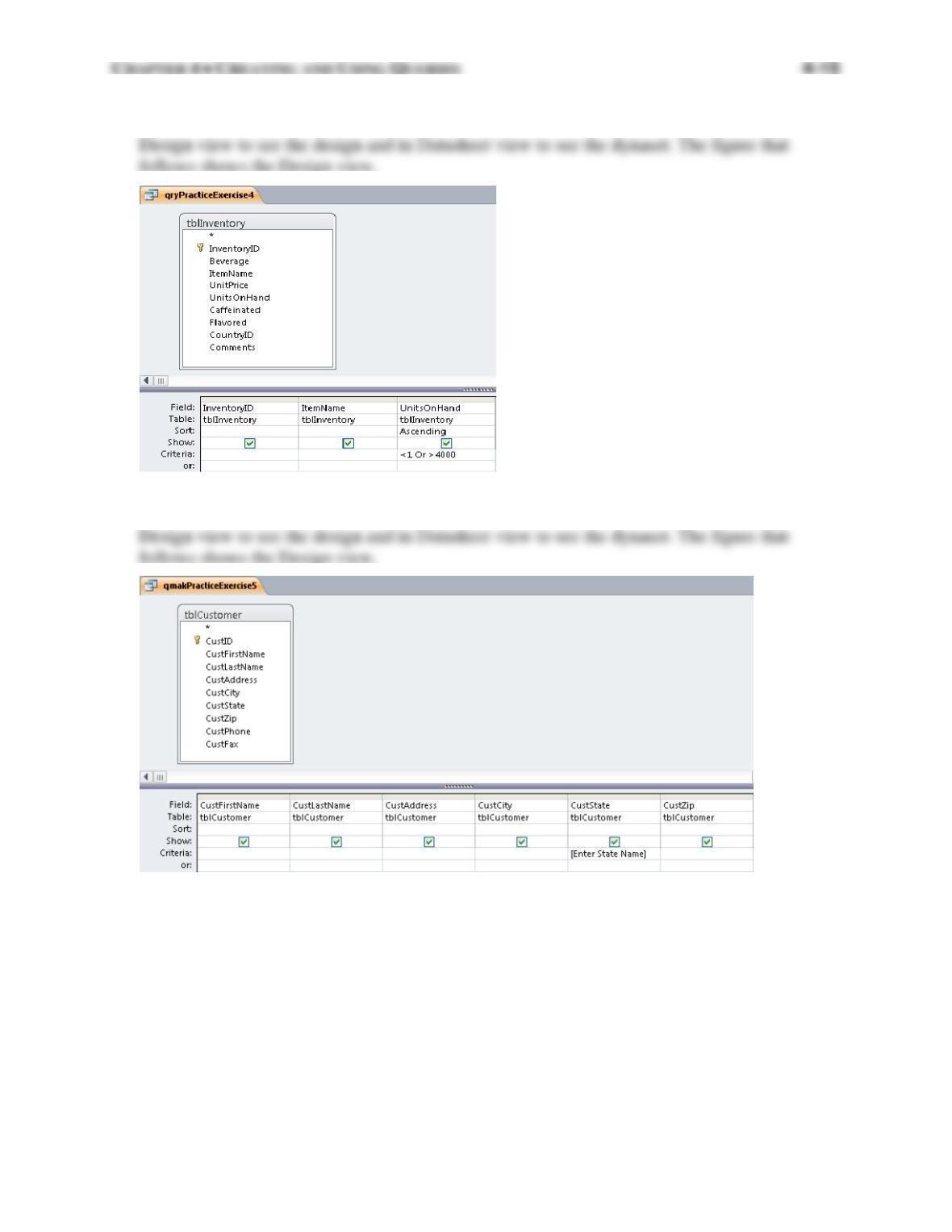
4. The solution is saved in the instructor’s solution database as 4-Practice Exercise 4. Open it in
5. The solution is saved in the instructor’s solution database as 4-Practice Exercise 5. Open it in
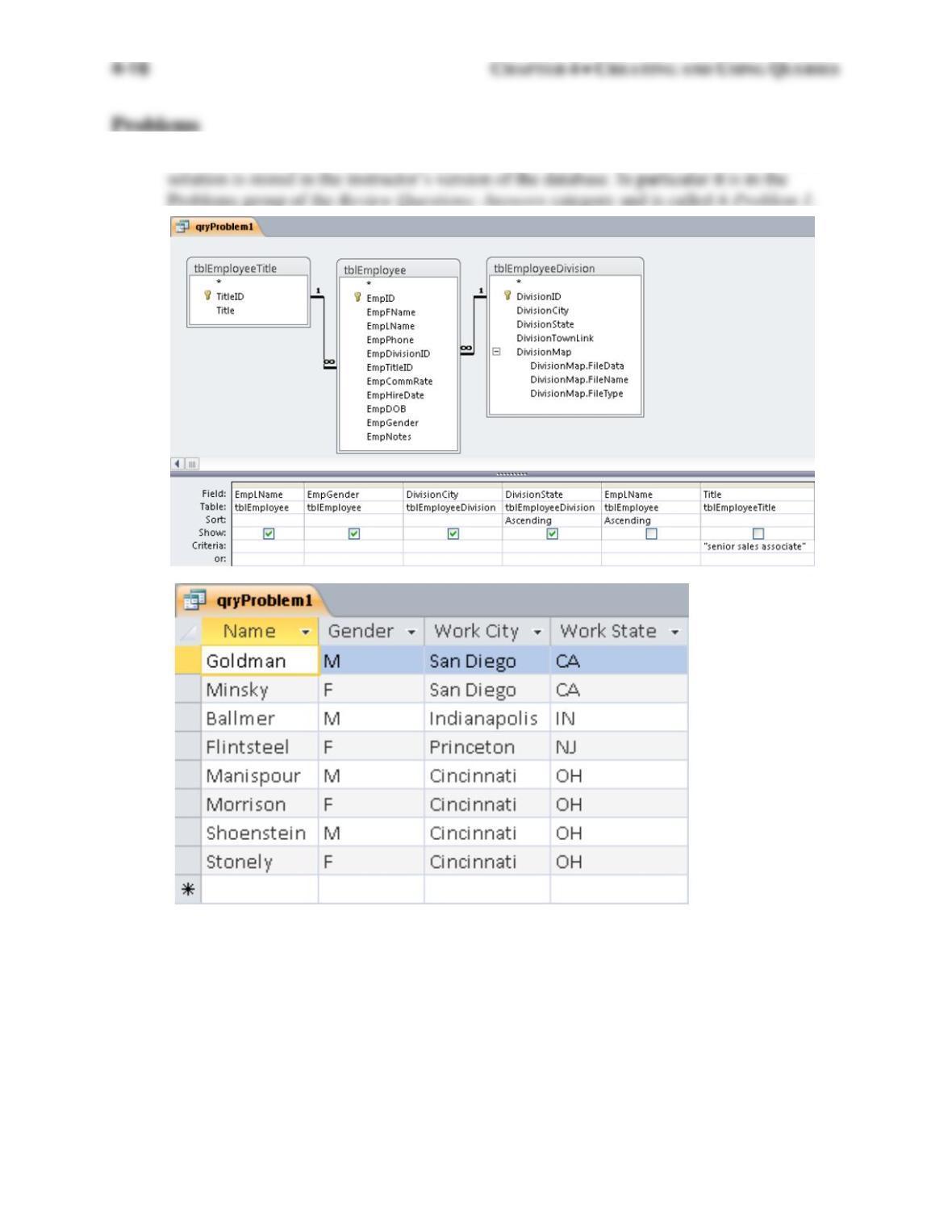
1. The following figures show the Design view and Datasheet view for this question. The
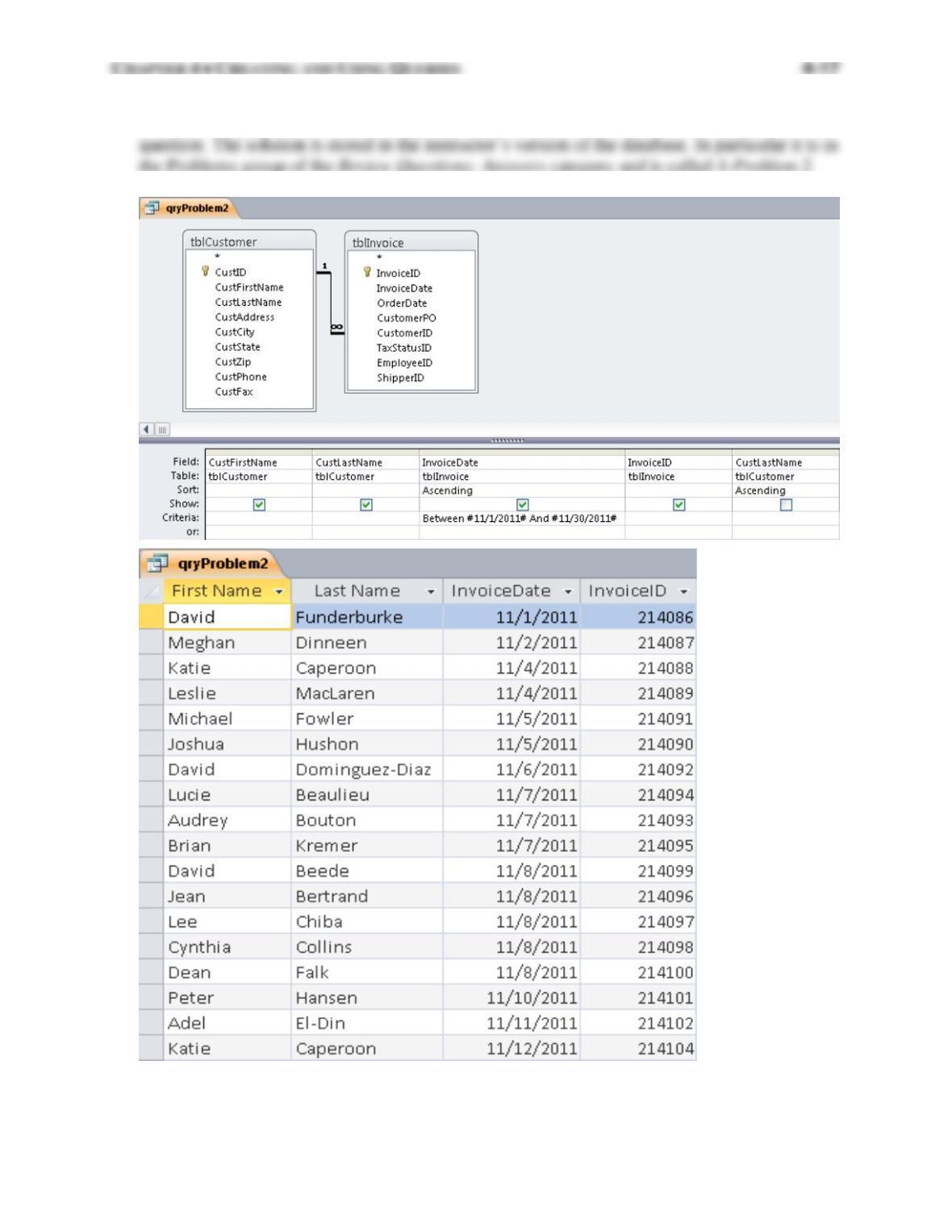
2. The following figures show the Design view and Datasheet view (not all rows) for this
4-18 CHAPTER 4 • CREATING AND USING QUERIES
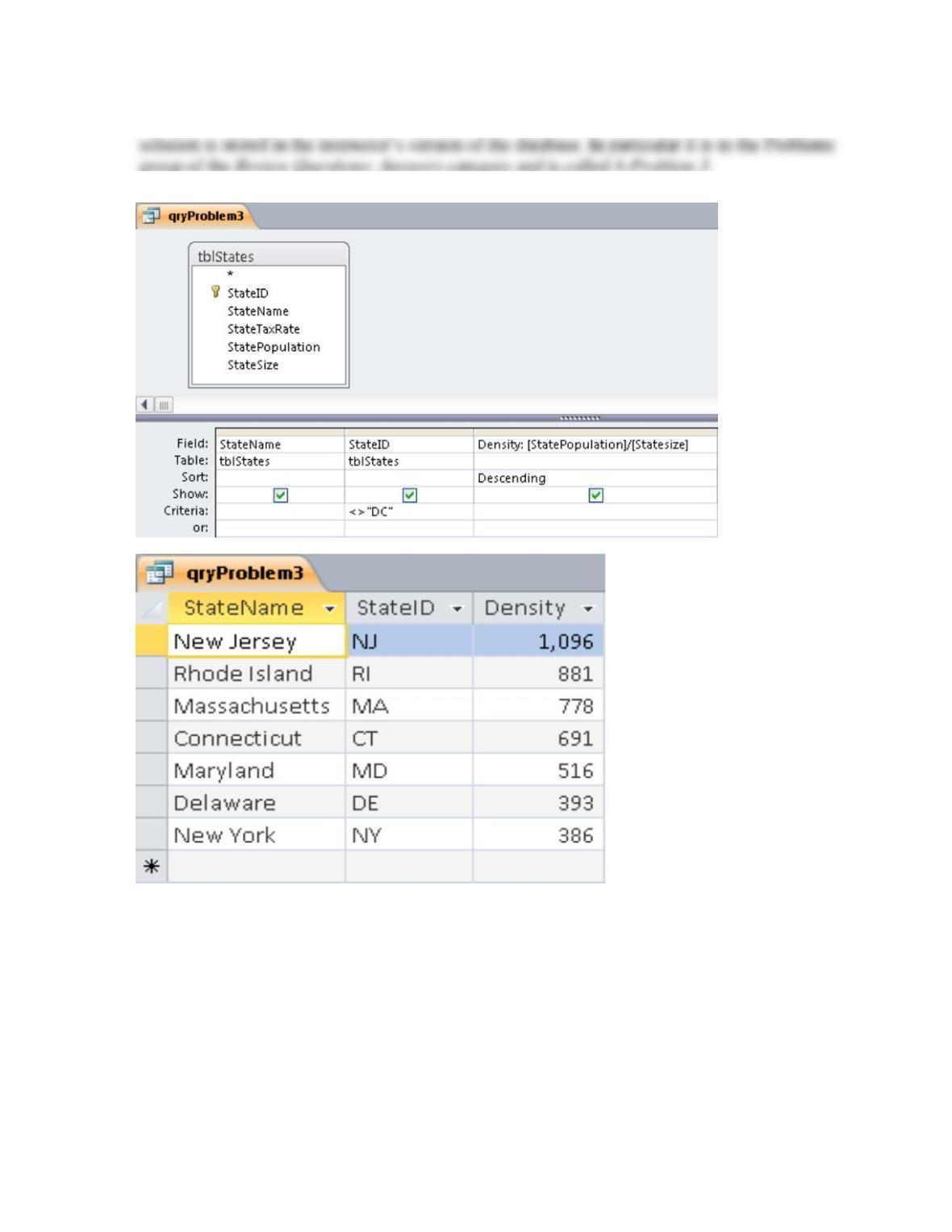
3. The following figures show the Design view and Datasheet view for this question. The
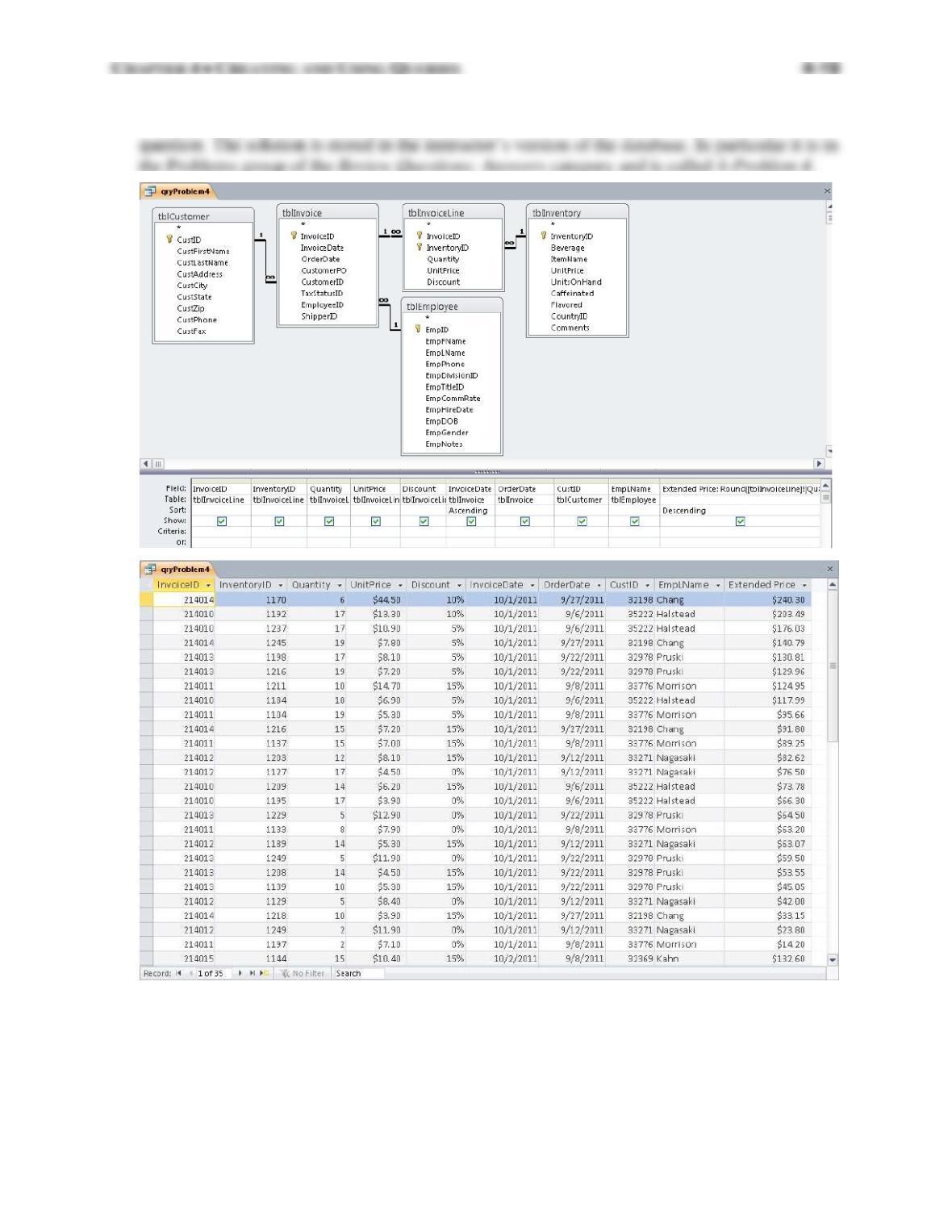
4. The following figures show the Design view and Datasheet view (not all rows) for this
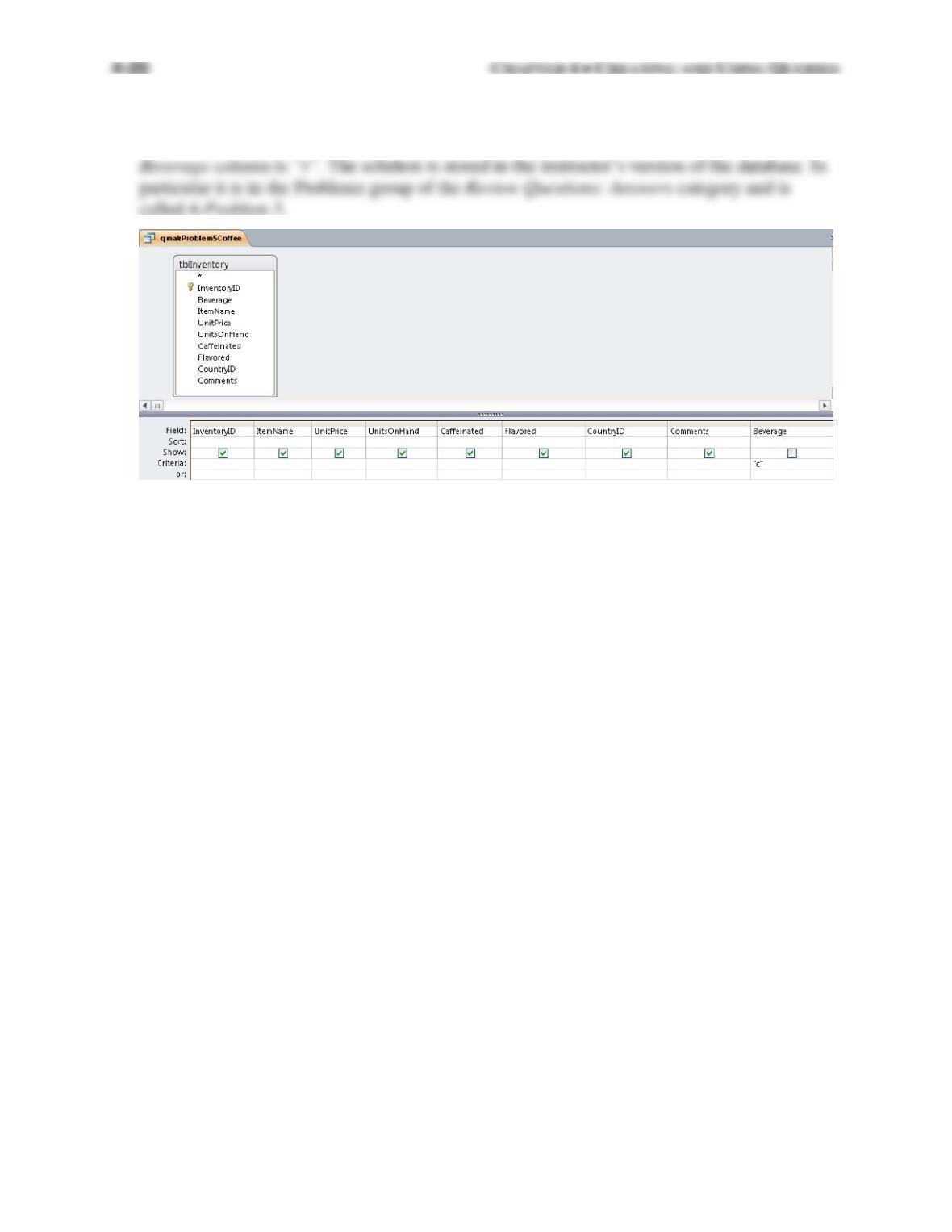
5. The following figures show the Design view for this question for creating the coffee table.
The make-table query for the tea table is identical except that the criteria found under the
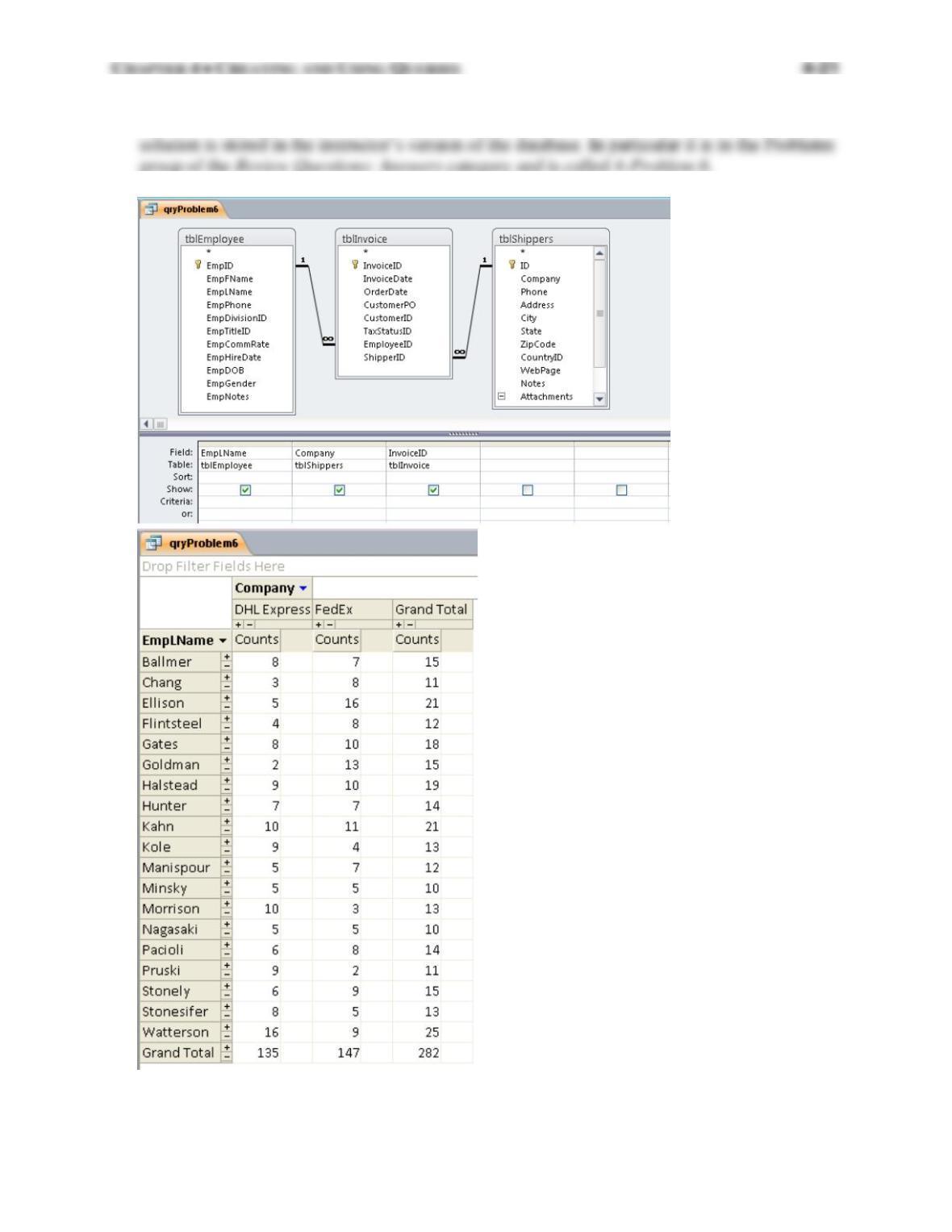
6. The following figures show the Design view and Datasheet view for this question. The