4-34
PROBLEM 4-35 (CONTINUED)
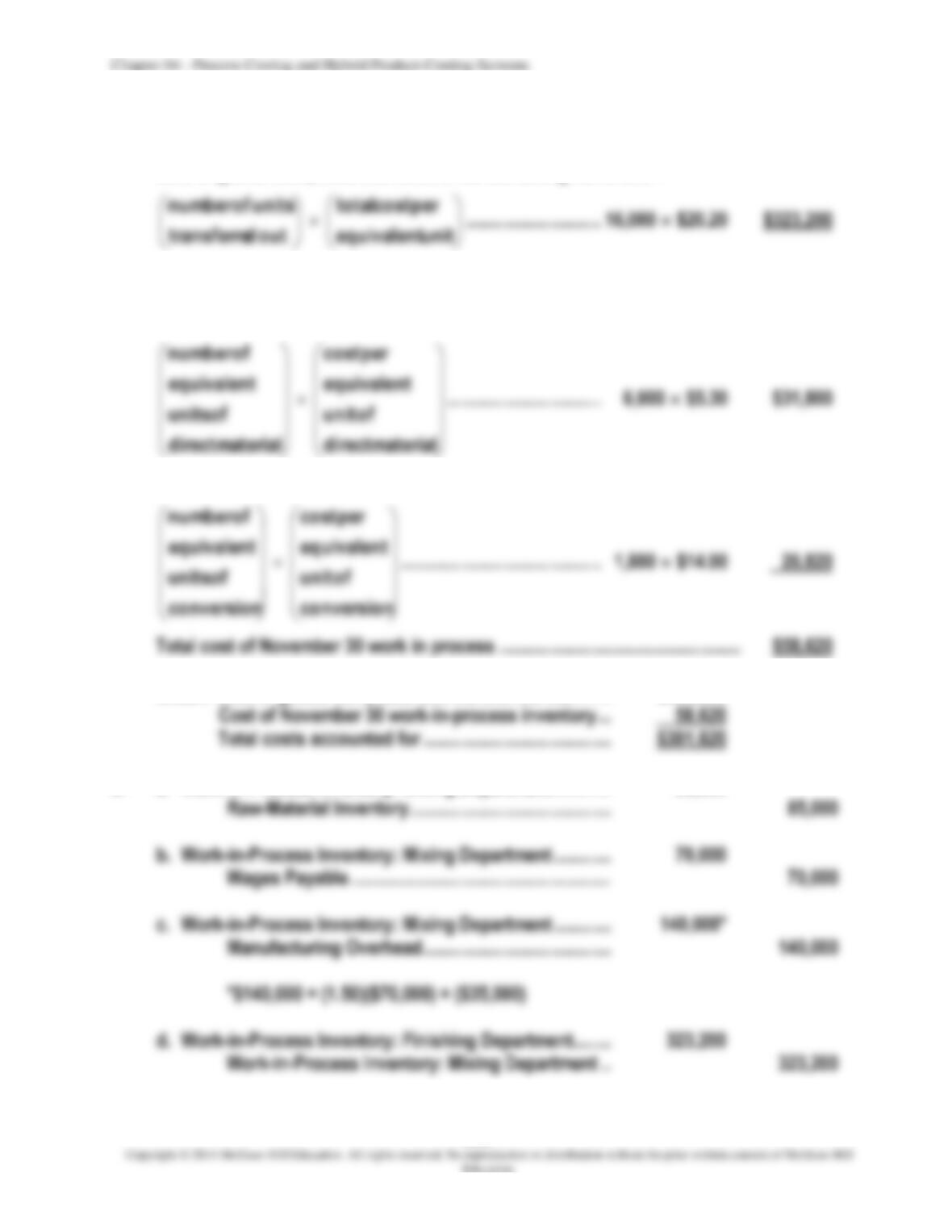
Cost of goods completed and transferred out during November:
Cost remaining in November 30 work-in-process inventory
Direct material:
Conversion
Total cost of November 30 work in process ……………………………………………. $58,620
Check: Cost of goods completed and transferred out ……..
$323,200
Cost of November 30 work-in-process inventory …
58,620
Total costs accounted for ………………………………….
$381,820
2.
a. Work-in-Process Inventory: Mixing Department …………
85,000
Raw-Material Inventory …………………………………….
70,000
Wages Payable ………………………………………………..
c. Work-in-Process Inventory: Mixing Department …………
Manufacturing Overhead ………………………………….
*$140,000 = (1.50)($70,000) + ($35,000)
Work-in-Process Inventory: Mixing Department ..
Chapter 04 – Process Costing and Hybrid Product-Costing Systems
4-35
PROBLEM 4-36 (35 MINUTES)
1.
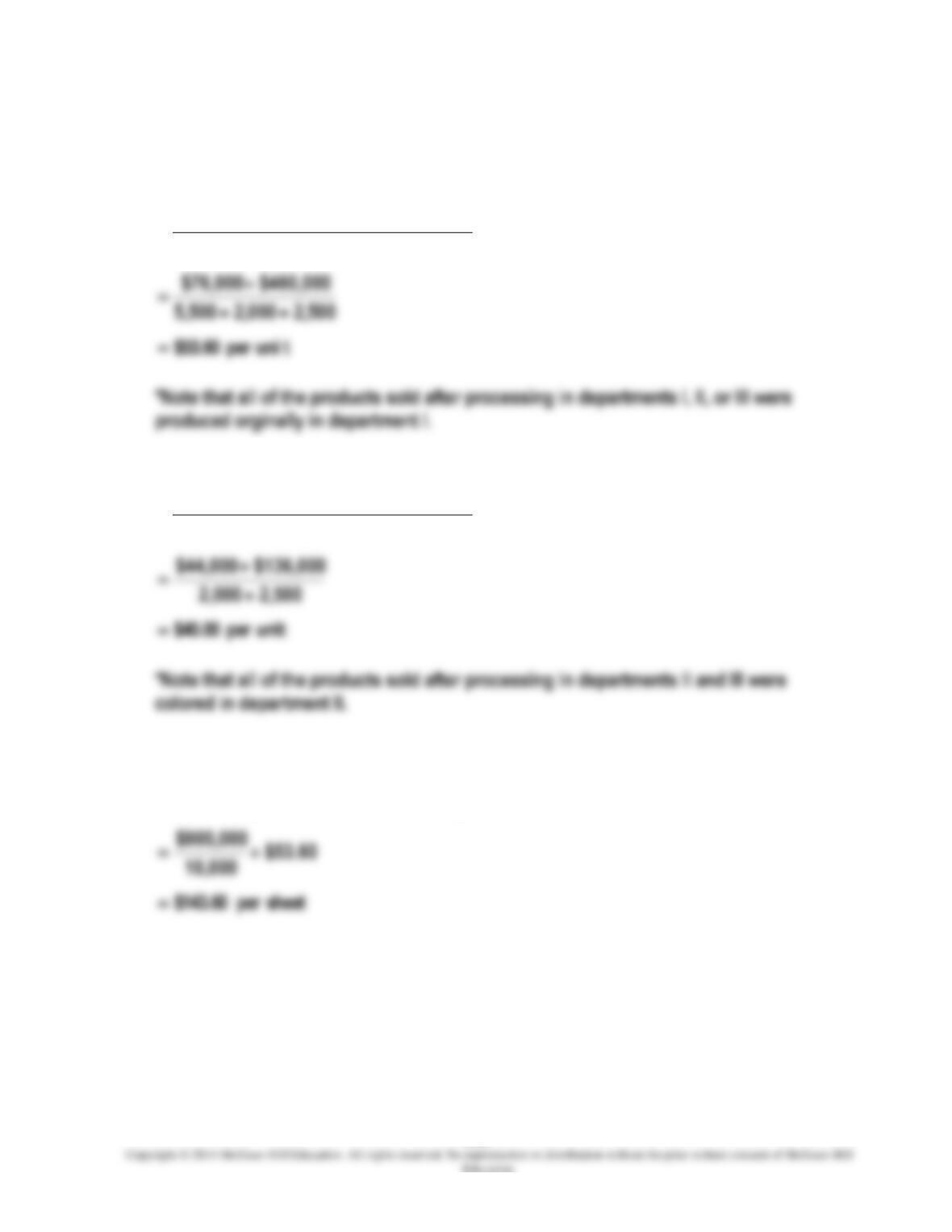
Conversion cost per unit in department I:
*produced units
overhead ingmanufactur labordirect
+
=
*Note that all of the products sold after processing in departments I, II, or III were
produced orginally in department I.
2.
Conversion cost per unit in department II:
*produced units
overhead ingmanufactur labordirect
+
=
3.
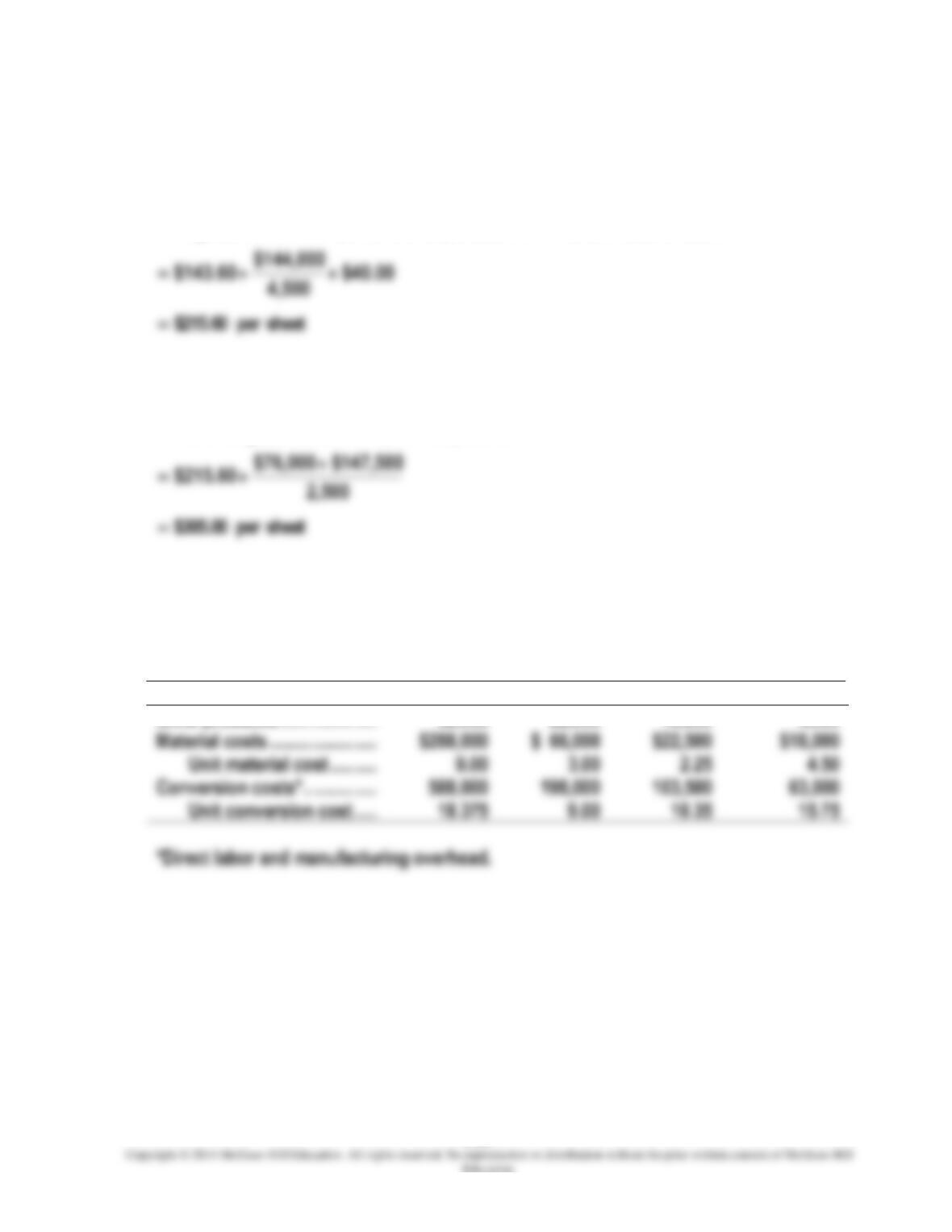
Cost of a clear glass sheet:
=
direct material per
unit in department I
+
conversion cost per
unit in department I
Chapter 04 – Process Costing and Hybrid Product-Costing Systems
4-36
PROBLEM 4-36 (CONTINUED)
4.
Cost of an unetched, colored glass sheet:
=
cost per clear
glass sheet
+
direct material
per unit in department II
+
conversion cost per
unit in department II
5.
Cost of an etched, colored glass sheet:
=
cost per unetched
colored glass sheet
+
conversion cost per
unit in department III
PROBLEM 4-37 (60 MINUTES)
1.
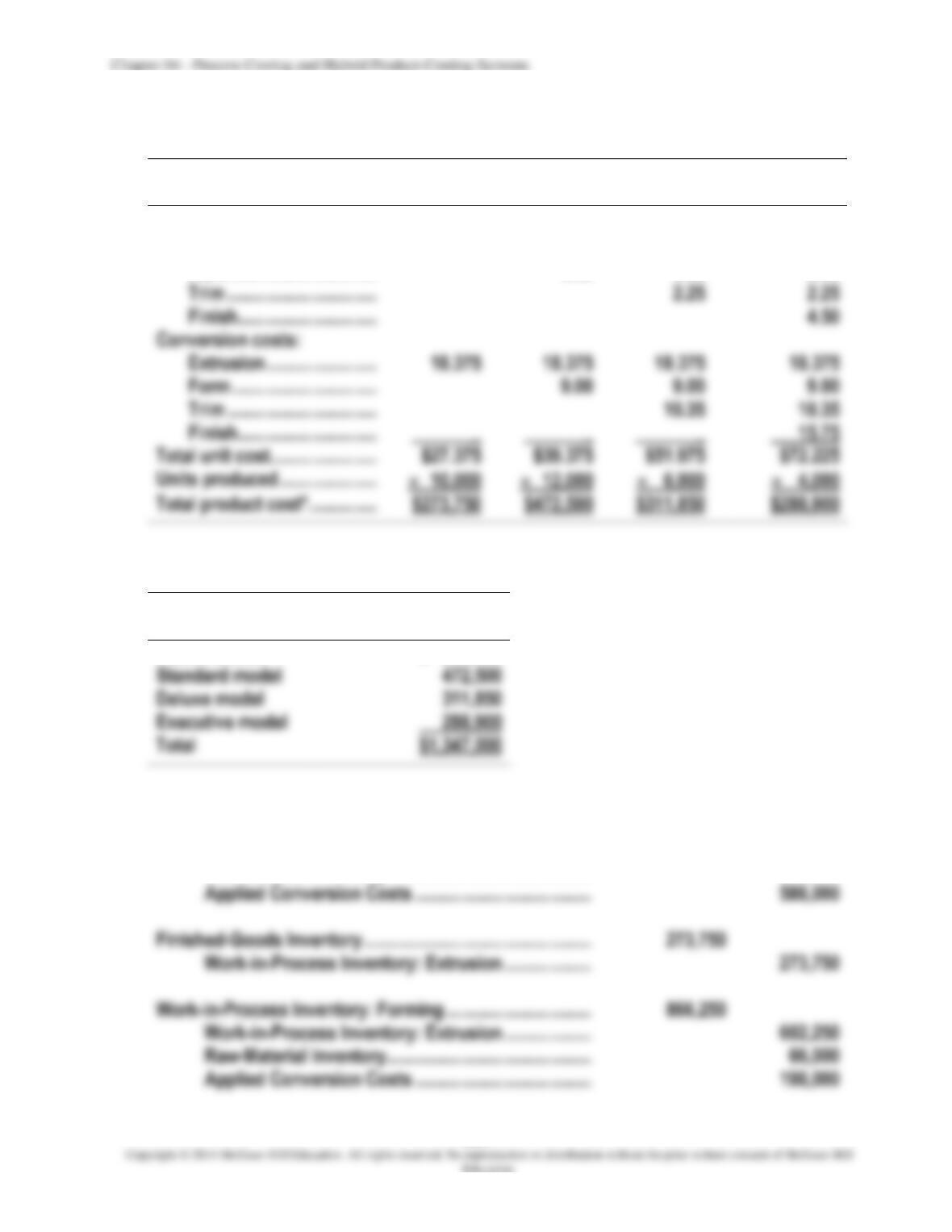
The unit costs and total costs for each of the products manufactured by Plattsburg
Plastics Corporation during the month of March are calculated as follows:
Extrusion
Form
Trim
Finish
Units produced …………………
32,000
22,000
10,000
4,000
Material costs …………………..
$288,000
Unit material cost ……….
Conversion costs* …………….
Unit conversion cost …..
18.375
15.75
*Direct labor and manufacturing overhead.
4-37
PROBLEM 4-37 (CONTINUED)
Unit Costs
Plastic
Sheets
Standard
Model
Deluxe
Model
Executive
Model
Material costs:
Extrusion ……………………
$9.00
$9.00
$9.00
$9.00
Form ………………………….
3.00
3.00
3.00
Trim …………………………..
2.25
2.25
Finish …………………………
4.50
Conversion costs:
Extrusion ……………………
Form ………………………….
9.00
9.00
9.00
Trim …………………………..
Finish …………………………
$39.375
$51.975
*Total costs accounted for:
Product
Total
Product Costs
Plastic sheets
$ 273,750
Standard model
Deluxe model
Executive model
288,900
2.
Journal entries:
Work-in-Process Inventory: Extrusion ………………………..
876,000
Raw-Material Inventory ……………………………………..
288,000
Applied Conversion Costs ………………………………..
588,000
Finished-Goods Inventory ………………………………………….
273,750
Work-in-Process Inventory: Extrusion ……………….
273,750
Work-in-Process Inventory: Forming ………………………….
866,250
Work-in-Process Inventory: Extrusion ……………….
602,250
Chapter 04 – Process Costing and Hybrid Product-Costing Systems
PROBLEM 4-37 (CONTINUED)
Finished-Goods Inventory ………………………………………….
472,500
Work-in-Process Inventory: Forming …………………
472,500
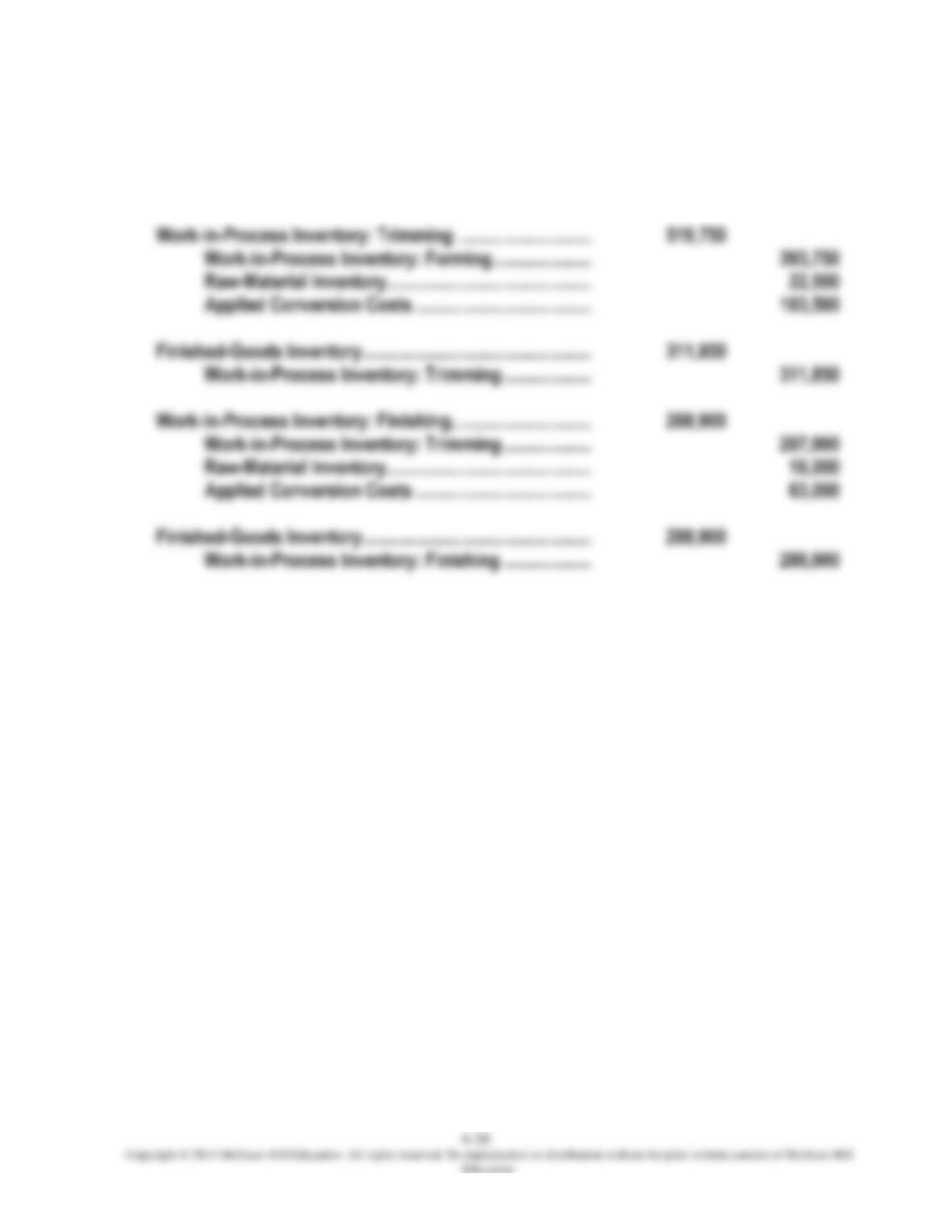
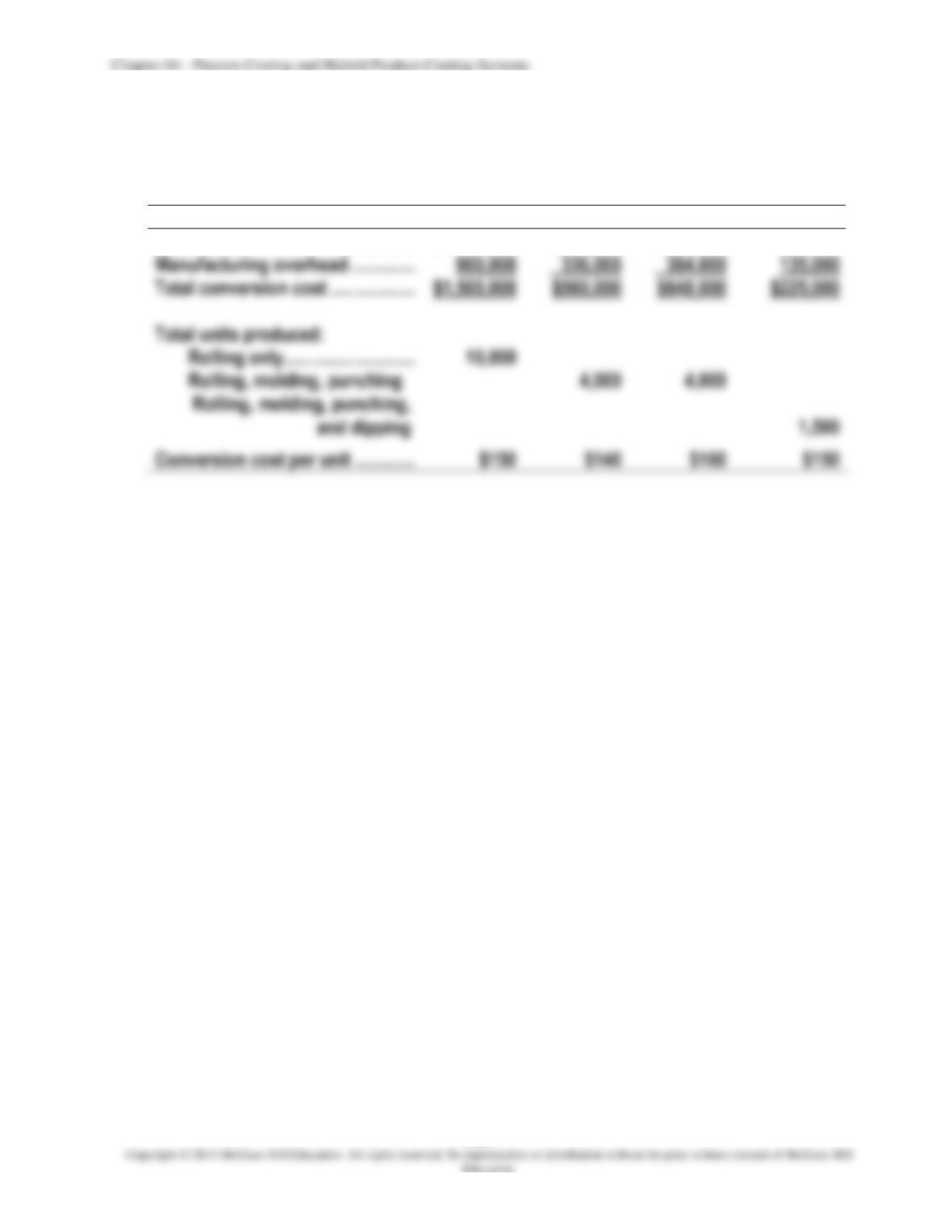
519,750
Work-in-Process Inventory: Forming …………………
393,750
Raw-Material Inventory ……………………………………..
Applied Conversion Costs ………………………………..
103,500
Finished-Goods Inventory ………………………………………….
311,850
Work-in-Process Inventory: Trimming ……………….
311,850
288,900
Work-in-Process Inventory: Trimming ……………….
207,900
Raw-Material Inventory ……………………………………..
Applied Conversion Costs ………………………………..
Finished-Goods Inventory ………………………………………….
288,900
Work-in-Process Inventory: Finishing ……………….
288,900
4-39
PROBLEM 4-38 (45 MINUTES)
1.
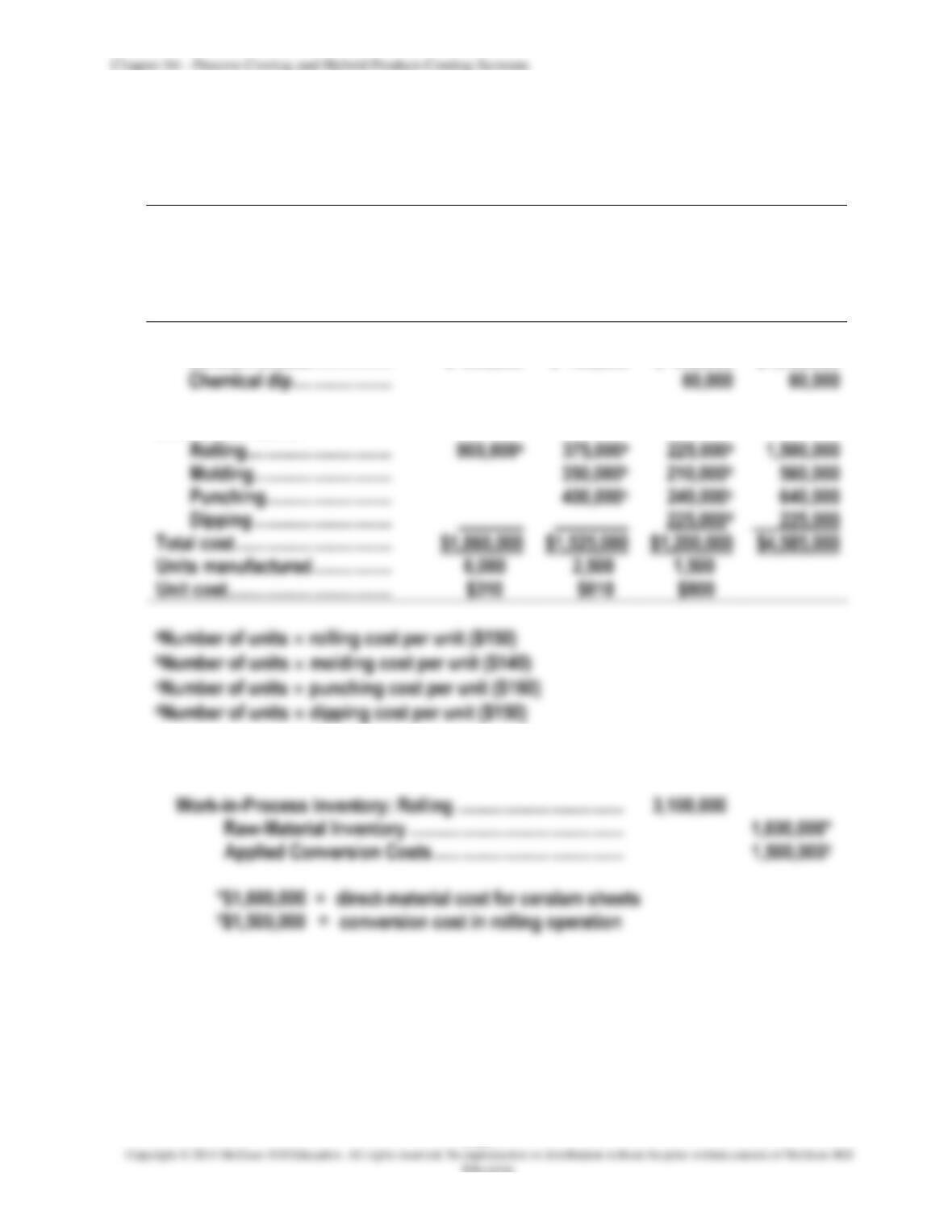
Conversion costs:
Rolling
Molding
Punching
Dipping
Direct labor …………………………….
$ 600,000
$224,000
$256,000
$ 90,000
Manufacturing overhead …………..
Total conversion cost ………………
$1,500,000
$560,000
$640,000
Total units produced:
Rolling only ……………………….
Rolling, molding, punching
Conversion cost per unit ………….
4-40
PROBLEM 4-38 (CONTINUED)
2.
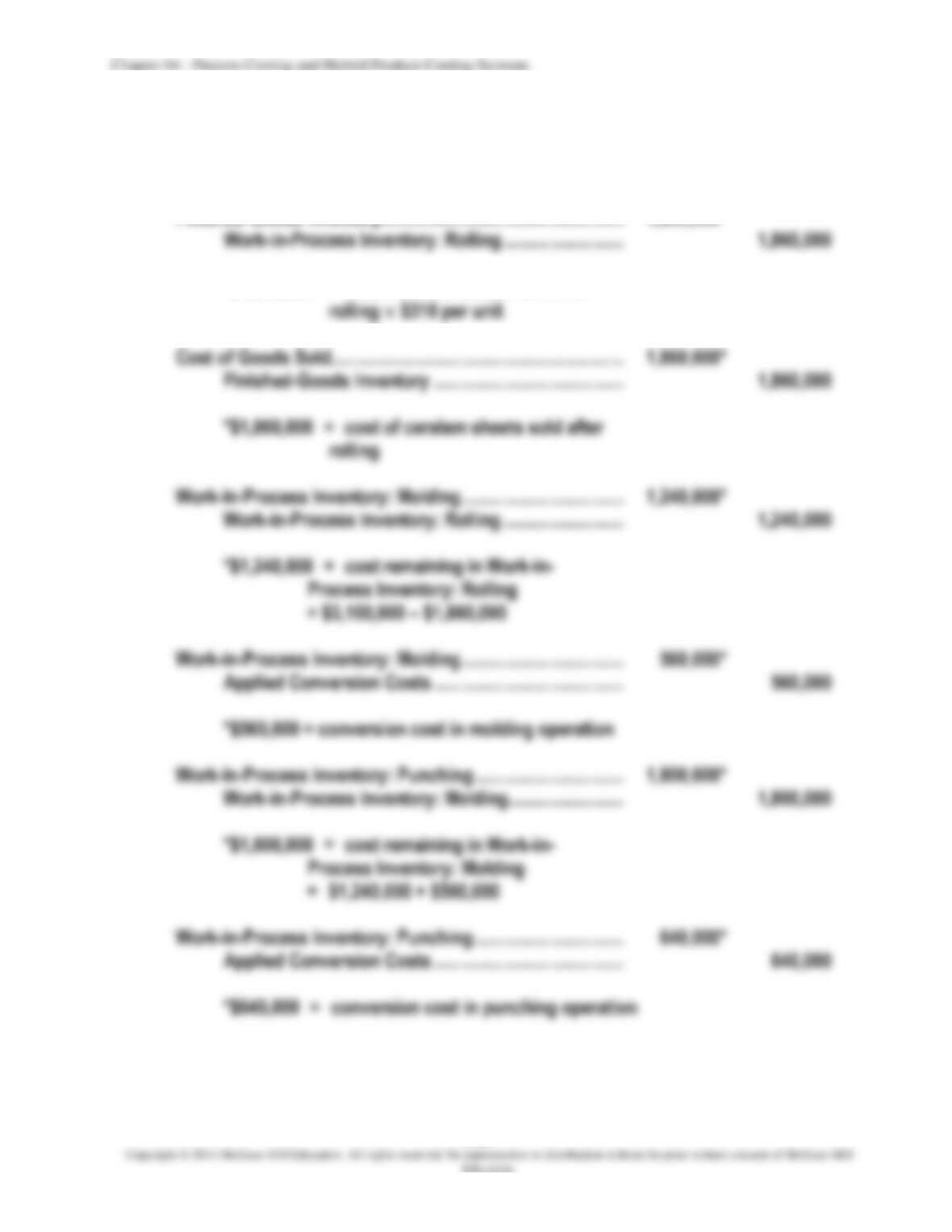
Product costs:
Ceralam
Sheets
Non
Sold
after
reflective
Ceralam
Relective
Ceralam
Total
Rolling
Housings
Housings
Costs
Direct material:
Ceralam sheets ………………..
$ 960,000
$ 400,000
$ 240,000
$1,600,000
Chemical dip …………………..
Conversion costs:
Rolling …………………………..
Molding …………………………..
Punching …………………………
Dipping …………………………..
Total cost ………………………………
Units manufactured ………………..
Unit cost ………………………………..
3.
Journal entries:
3,100,000
Raw-Material Inventory …………………………………………………
Applied Conversion Costs …………………………………………….
*$1,600,000 = direct-material cost for ceralam sheets
4-41
PROBLEM 4-38 (CONTINUED)
Finished-Goods Inventory ………………………………………………………
1,860,000*
Work-in-Process Inventory: Rolling …………………………..
1,860,000
*$1,860,000 = 6,000 ceralam sheets sold after
Cost of Goods Sold ……………………………………………………….
1,860,000*
Finished-Goods Inventory …………………………………………….
1,860,000
1,240,000*
Work-in-Process Inventory: Rolling …………………………..
1,240,000
= $3,100,000 – $1,860,000
Applied Conversion Costs …………………………………………….
1,800,000*
Work-in-Process Inventory: Molding…………………………..
1,800,000
= $1,240,000 + $560,000
Applied Conversion Costs …………………………………………….
*$640,000 = conversion cost in punching operation
Chapter 04 – Process Costing and Hybrid Product-Costing Systems
4-42
PROBLEM 4-38 (CONTINUED)
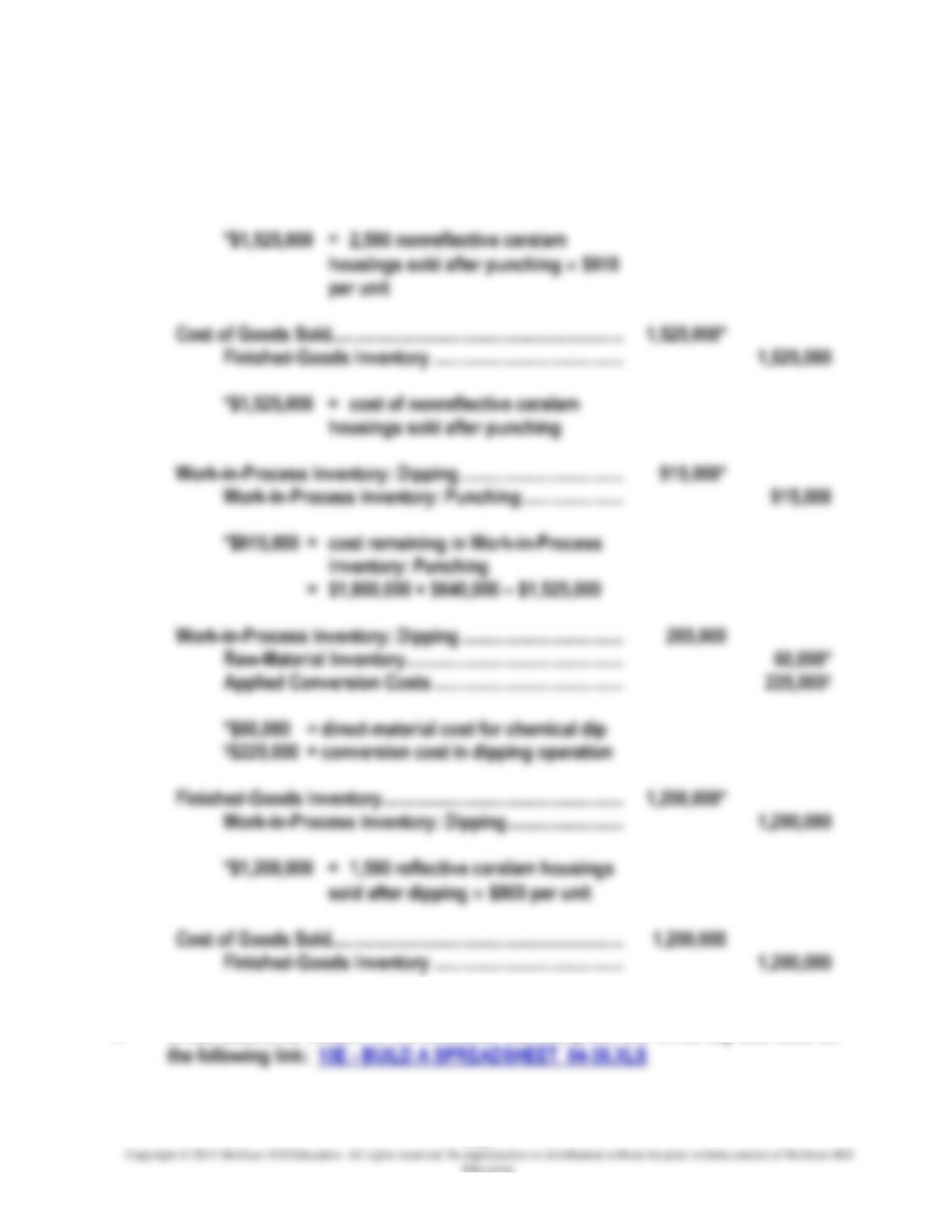
Finished-Goods Inventory ………………………………………………………
1,525,000*
Work-in-Process Inventory: Punching …………………………..
1,525,000
Cost of Goods Sold ……………………………………………………….
1,525,000*
Finished-Goods Inventory …………………………………………….
1,525,000
Work-in-Process Inventory: Punching …………………………..
= $1,800,000 + $640,000 – $1,525,000
Raw-Material Inventory ………………………………………………….
Applied Conversion Costs …………………………………………….
*$60,000 = direct-material cost for chemical dip
Finished-Goods Inventory ………………………………………………………
1,200,000*
Work-in-Process Inventory: Dipping …………………………..
1,200,000
Finished-Goods Inventory …………………………………………….
1,200,000
4. In the electronic version of the solutions manual, press the CTRL key and click on
Chapter 04 – Process Costing and Hybrid Product-Costing Systems
4-43
SOLUTION TO CASE
CASE 4-39 (45 MINUTES)
1.
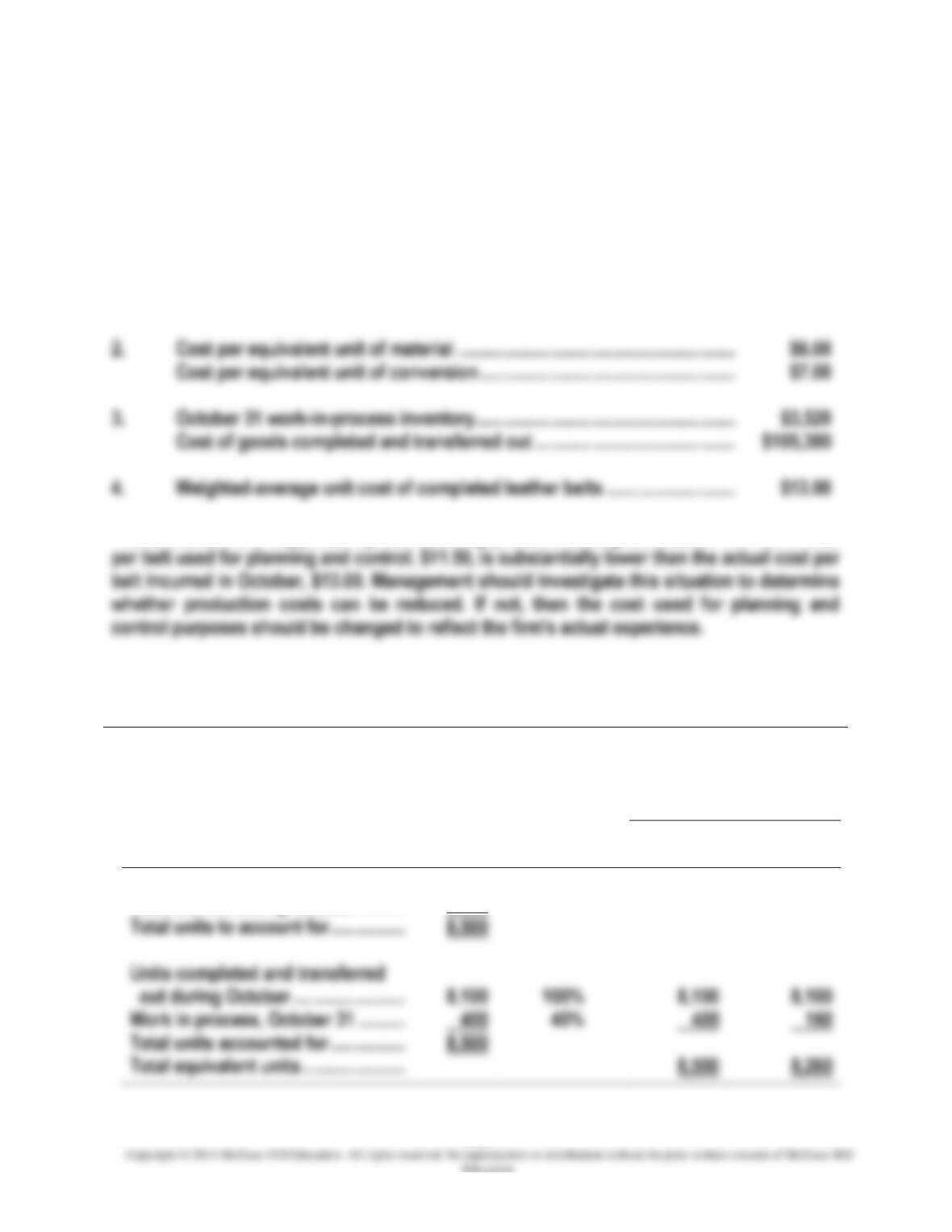
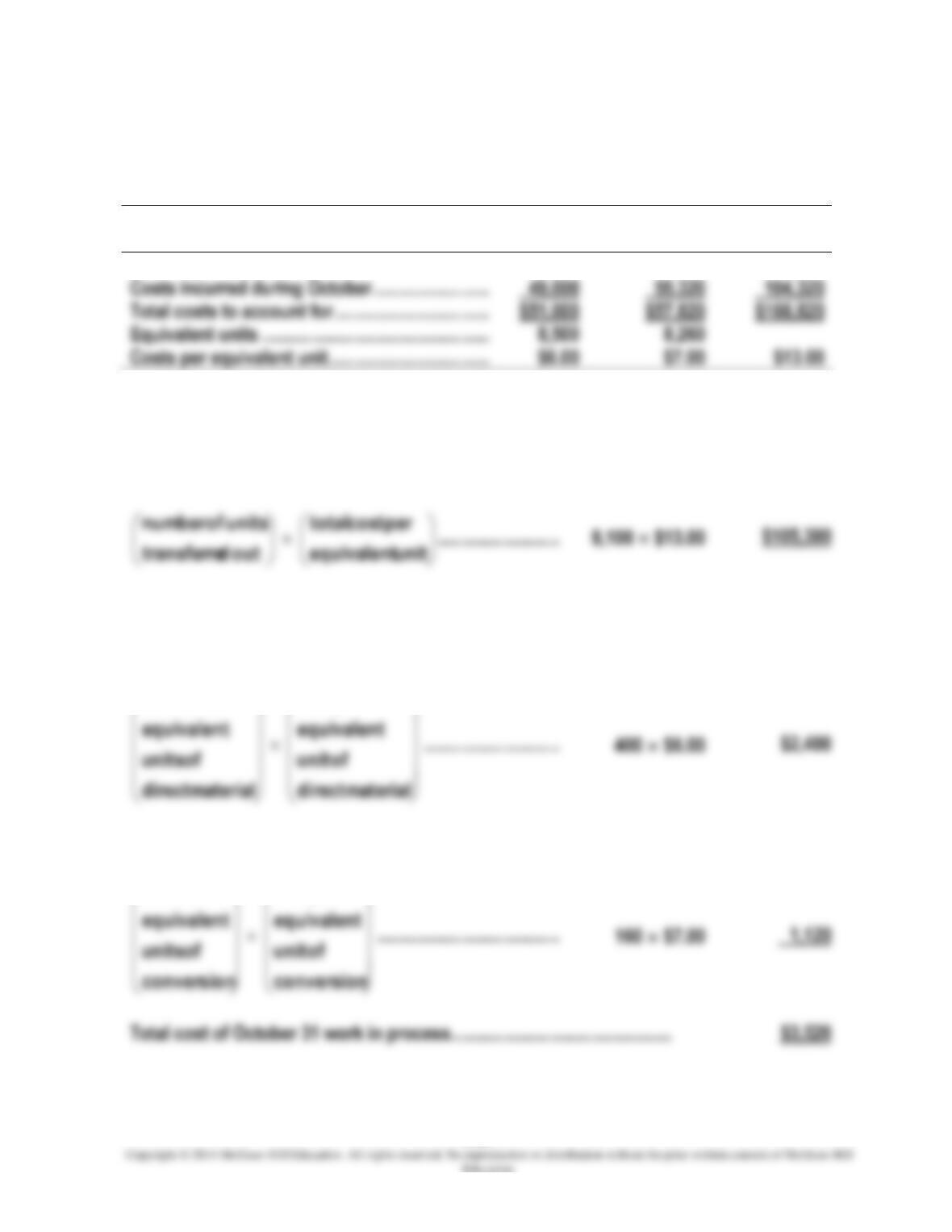
Equivalent units of material …………………………………………………………………………
8,500
Equivalent units of conversion …………………………..………………………………………..
8,260
2.
Cost per equivalent unit of material ……………………………………………………….
$6.00
Cost per equivalent unit of conversion ……………………………………………………….
$7.00
3.
October 31 work-in-process inventory ……………………………………………………….
Cost of goods completed and transferred out ………………………………………………
$105,300
4.
Weighted-average unit cost of completed leather belts …………………………..
These answers are supported by the following process-costing schedules. The firm’s cost
CALCULATION OF EQUIVALENT UNITS: LYCOMING LEATHER CO. – HARRISBURG PLANT
Weighted-Average Method
Physical
Units
Percentage
of
Completion
with
Respect to
Conversion
Equivalent Units
Direct
Material
Conversion
Work in process, October 1 …………
500
30%
Units started during October ……….
8,000
Total units to account for …………….
8,500
Work in process, October 31 ……….
400
40%
Total units accounted for …………….
8,500
Chapter 04 – Process Costing and Hybrid Product-Costing Systems
4-44
CASE 4-39 (CONTINUED)
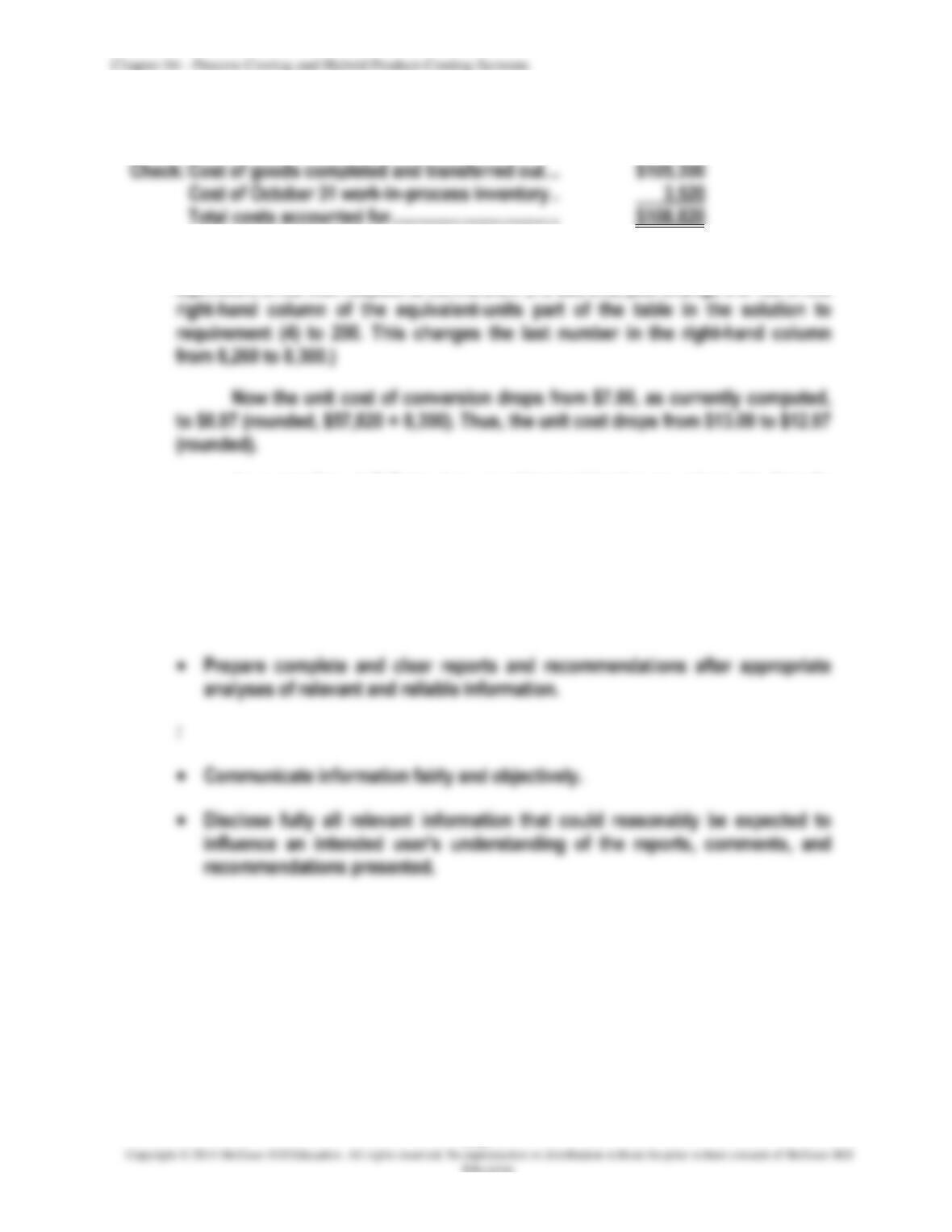
CALCULATION OF COSTS PER EQUIVALENT UNIT: HARRISBURG PLANT
Weighted-Average Method
Direct
Material
Conversion
Total
Work in process, October 1 …………………………
$ 2,000
$ 2,500
$ 4,500
Costs incurred during October …………………….
Total costs to account for …………………………...
$51,000
$57,820
$108,820
Equivalent units ………………………………………….
8,500
Costs per equivalent unit …………………………….
$6.00
ANALYSIS OF TOTAL COSTS: HARRISBURG PLANT
Weighted-Average Method
Cost of goods completed and transferred out during October:
Cost remaining in October 31 work-in-process inventory:
Direct material:
percost
of number
Conversion:
Total cost of October 31 work in process ………………………………………..
percost
of number
4-45
CASE 4-39 (CONTINUED)
Check: Cost of goods completed and transferred out ……
Cost of October 31 work-in-process inventory …..
Total costs accounted for …………………………………
5.
right-hand column of the equivalent-units part of the table in the solution to
If the units were 50 percent complete as of October 31, there would be 8,300
equivalent units with respect to conversion. (To see this, just change the 160 in the
As controller, Jeff Daley has an ethical obligation to refuse his friend’s
request to alter the estimate of the percentage of completion. What Daley can do is
to help Murray think of some legitimate ways to bring about real cost reductions.
Several ethical standards for management accountants (listed in Chapter 1) apply
in this situation. Among the relevant standards are the following:
Competence: