99
CHAPTER 4
ACCOUNTING FOR MERCHANDISING BUSINESSES
CLASS DISCUSSION QUESTIONS
1. Merchandising businesses acquire mer-
chandise for resale to customers. It is the
selling of merchandise, instead of a service,
that makes the activities of a merchandising
business different from the activities of a
service business.
3. a. Increase c. Decrease
b. Increase d. Decrease
4. Under the periodic method, the inventory
records do not show the amount available
for sale or the amount sold during the peri-
od. In contrast, under the perpetual method
5. The multiple-step form of income statement
contains conventional groupings for reve-
nues and expenses, with intermediate bal-
ances, before concluding with the net in-
come balance. In the single-step form, the
total of all expenses is deducted from the to-
tal of all revenues, without intermediate bal-
ances.
7. Revenues from sources other than the prin-
cipal activity of the business are classified
as other income. Examples of other income
include income from interest, rent, and gains
resulting from the sale of fixed assets.
8. Sales to customers who use bank credit
invoice due within 30 days of date of in-
voice.
b. Payment due within 90 days of date of
invoice.
c. Payment due by the end of the month in
which the sale was made.
b. A debit memorandum issued by the buyer
of merchandise indicates the amount for
which the seller’s account is to be de-
creased (decrease Accounts Payable)
and the reason for the purchases return
or allowance.
11. a. The buyer
b. The seller
12. Since the buyer is paying for the destination
100
EXERCISES
E4–1
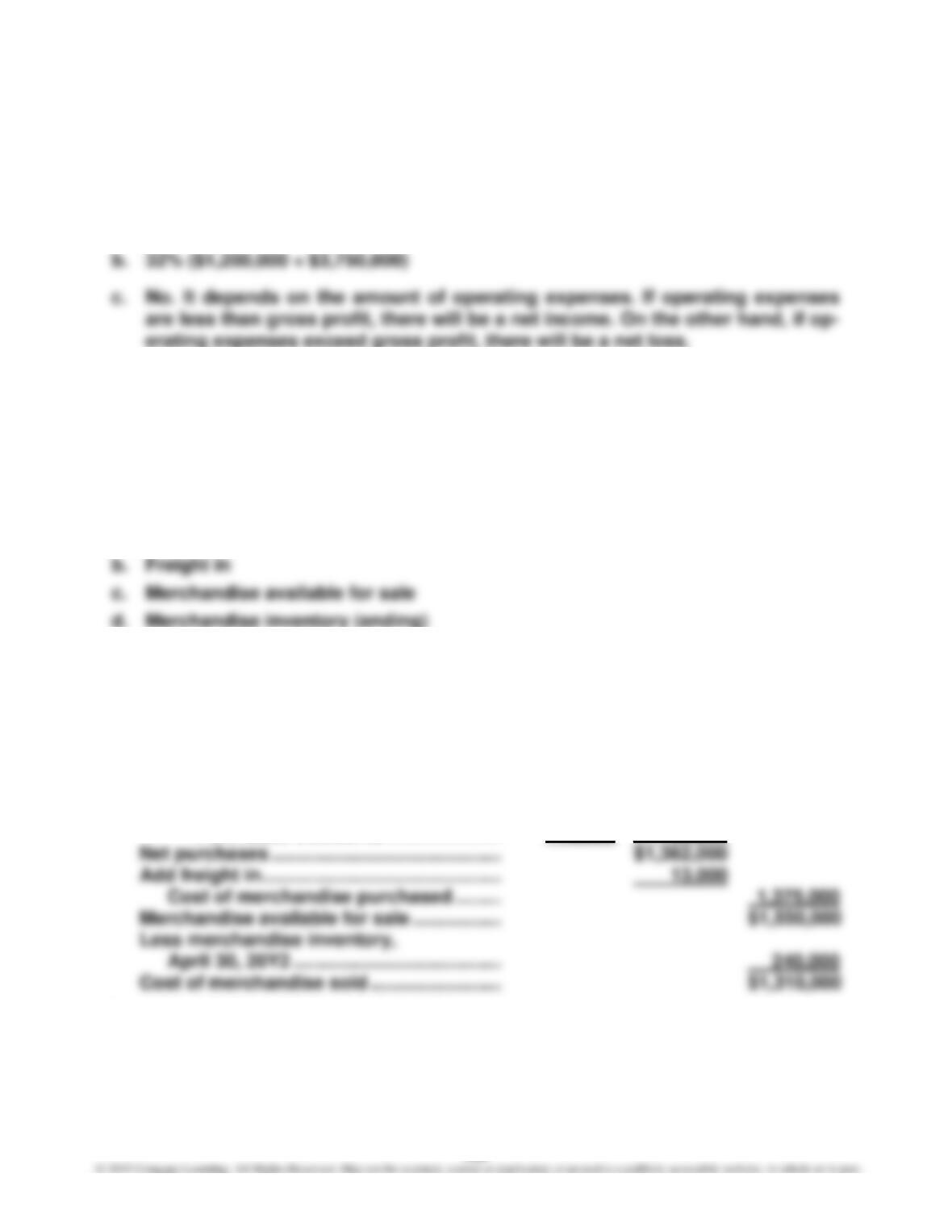
a. $1,200,000 ($3,750,000 – $2,550,000)
E4–2
$47,860 million ($69,865 million – $22,005 million)
E4–3
a. Purchases discounts, purchases returns and allowances
E4–4
a. Cost of merchandise sold:
Merchandise inventory, May 1, 20Y1 …….. $ 175,000
Purchases …………………………………………… $1,400,000
Less: Purchases returns and
allowances ……………………………… $20,000
Purchases discounts …………………. 18,000 38,000
b. $940,000 ($2,250,000 – $1,310,000)
E4–5
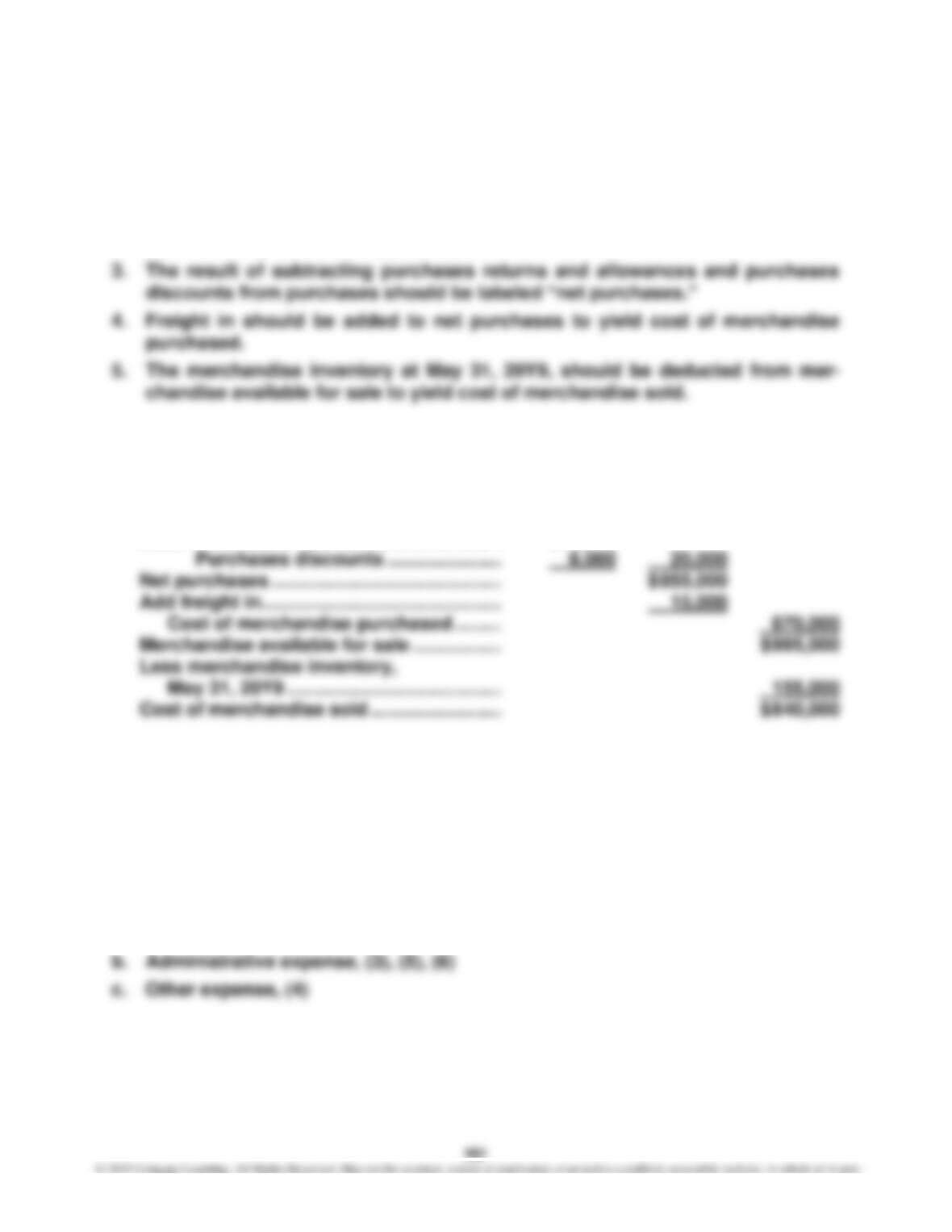
1. The schedule should begin with the June 1, 20Y8, not the May 31, 20Y9, mer-
chandise inventory.
2. Purchases returns and allowances and purchases discounts should be de-
ducted from (not added to) purchases.
A correct cost of merchandise sold section is as follows:
Cost of merchandise sold:
Merchandise inventory, June 1, 20Y8 …… $ 125,000
Purchases …………………………………………… $875,000
Less: Purchases returns and allowances .. $12,000
E4–6
a. Net sales: $11,810,000 ($12,140,000 – $250,000 – $80,000)
b. Gross profit: $4,810,000 ($11,810,000 – $7,000,000)
E4–7
a. Selling expense, (1), (2), (7), (8)
102
E4–8
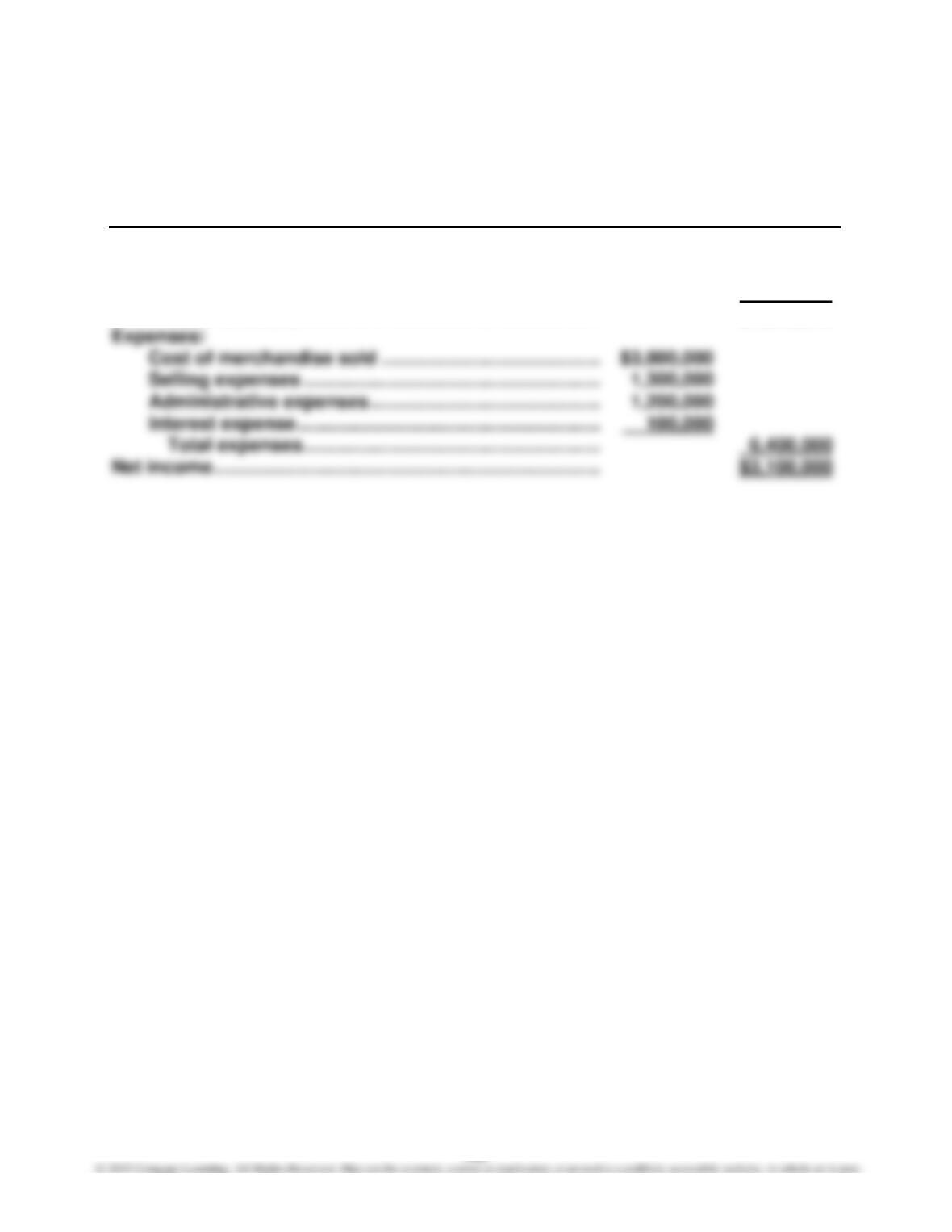
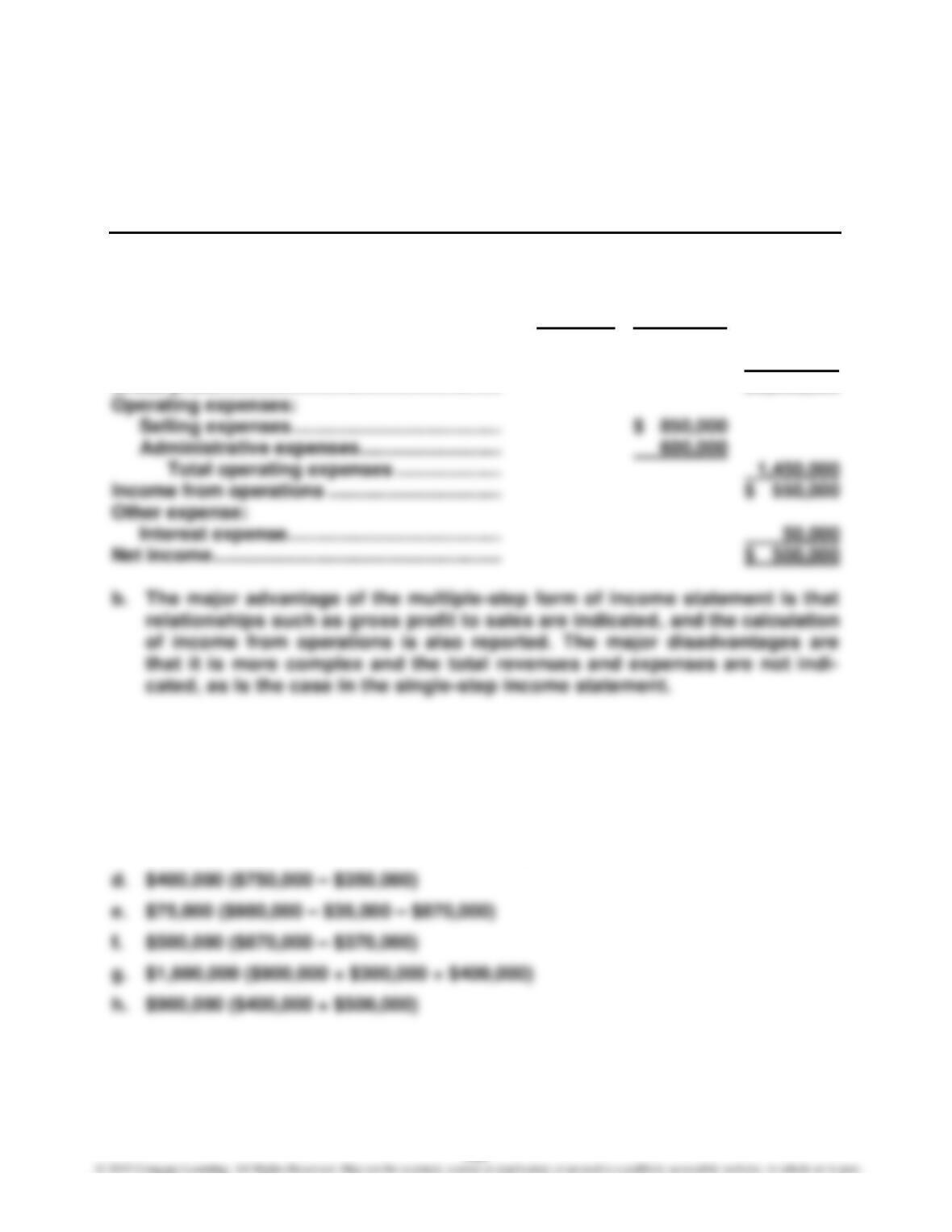
ECO-WINDOWS COMPANY
Income Statement
For the Year Ended June 30, 20Y6
Revenues:
Net sales ……………………………………………………………. $9,300,000
Rent revenue ……………………………………………………… 200,000
Total revenues ………………………………………………… $9,500,000
103
E4–9
a.
QUALITY INTERIORS COMPANY
Income Statement
For the Year Ended October 31, 20Y5
Revenue from sales:
Sales ………………………………………………….. $5,000,000
Less: Sales returns and allowances …….. $ 100,000
Sales discounts …………………………. 400,000 500,000
Net sales ………………………………………… $ 4,500,000
Cost of merchandise sold ………………………… 2,500,000
Gross profit ……………………………………………… $ 2,000,000
E4–10
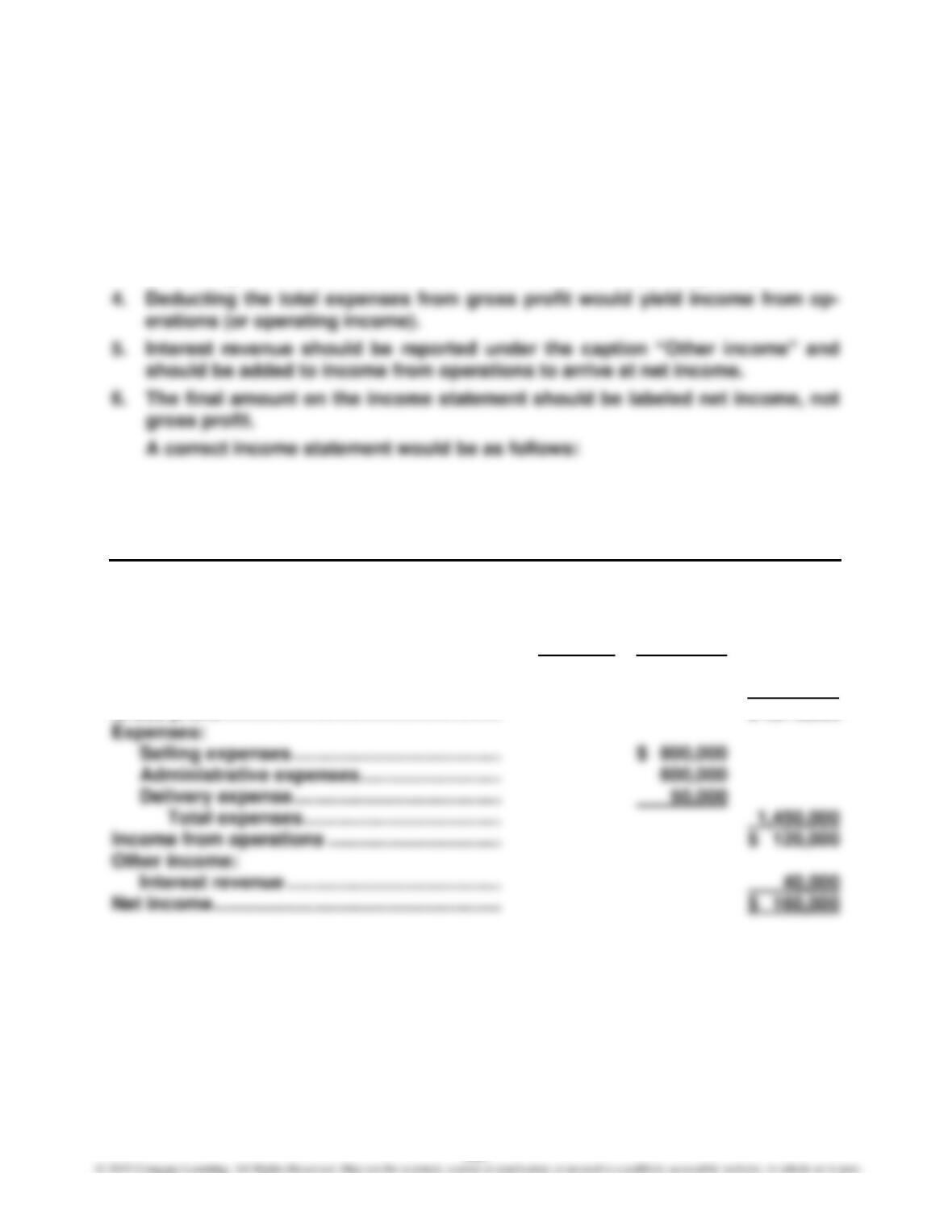
a. $40,000 ($360,000 – $30,000 – $290,000)
b. $175,000 ($290,000 – $115,000)
c. $750,000 ($1,200,000 – $250,000 – $200,000)
104
E4–11
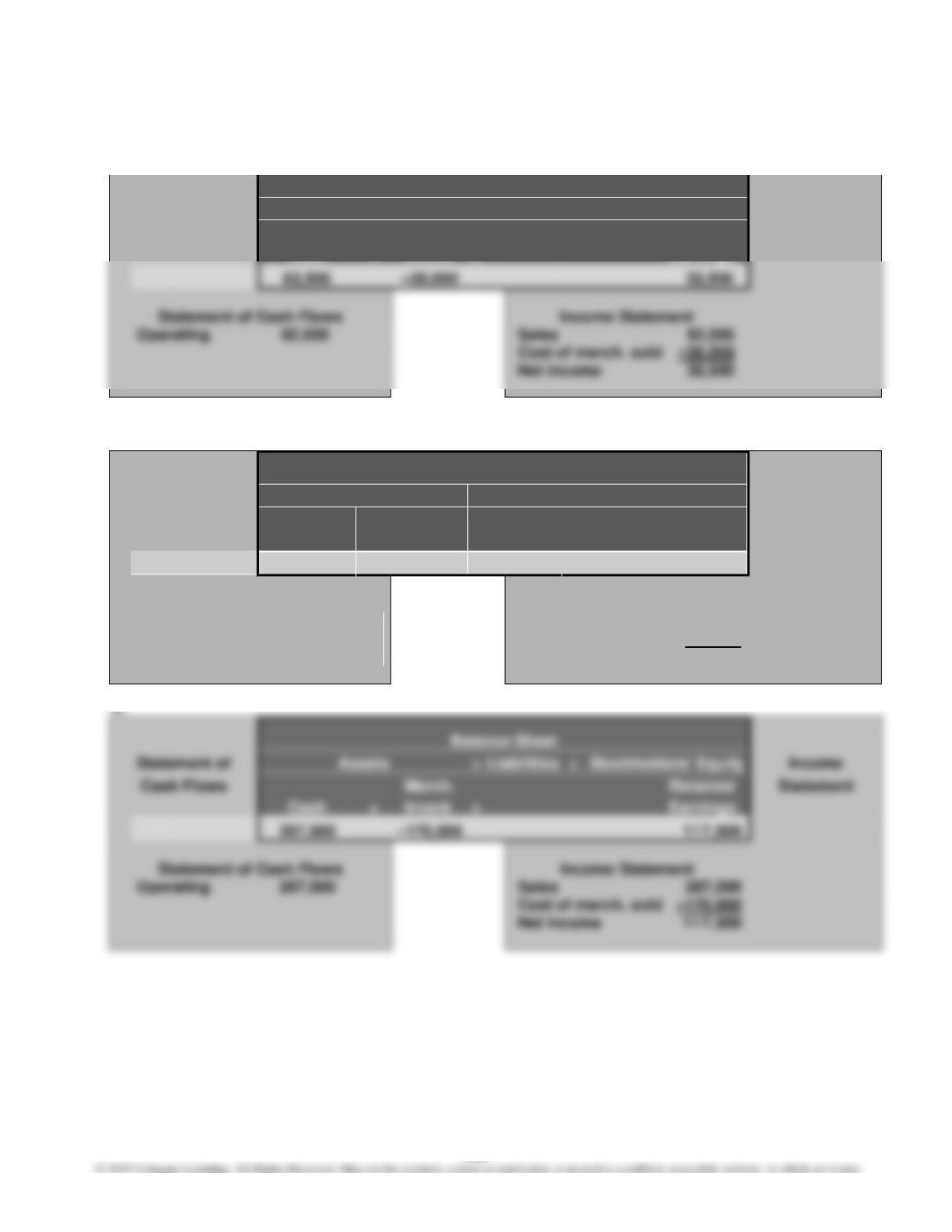
1. Sales returns and allowances and sales discounts should be deducted from
(not added to) sales.
2. Sales returns and allowances and sales discounts should be deducted from
sales to yield “net sales” (not gross sales).
3. Deducting the cost of merchandise sold from net sales yields gross profit.
CARLSBAD COMPANY
Income Statement
For the Year Ended February 28, 20Y9
Revenue from sales:
Sales ………………………………………………….. $4,400,000
Less: Sales returns and allowances …….. $120,000
Sales discounts …………………………. 60,000 180,000
Net sales ………………………………………… $4,220,000
Cost of merchandise sold ………………………… 2,650,000
Gross profit ……………………………………………… $1,570,000
105
E4–12
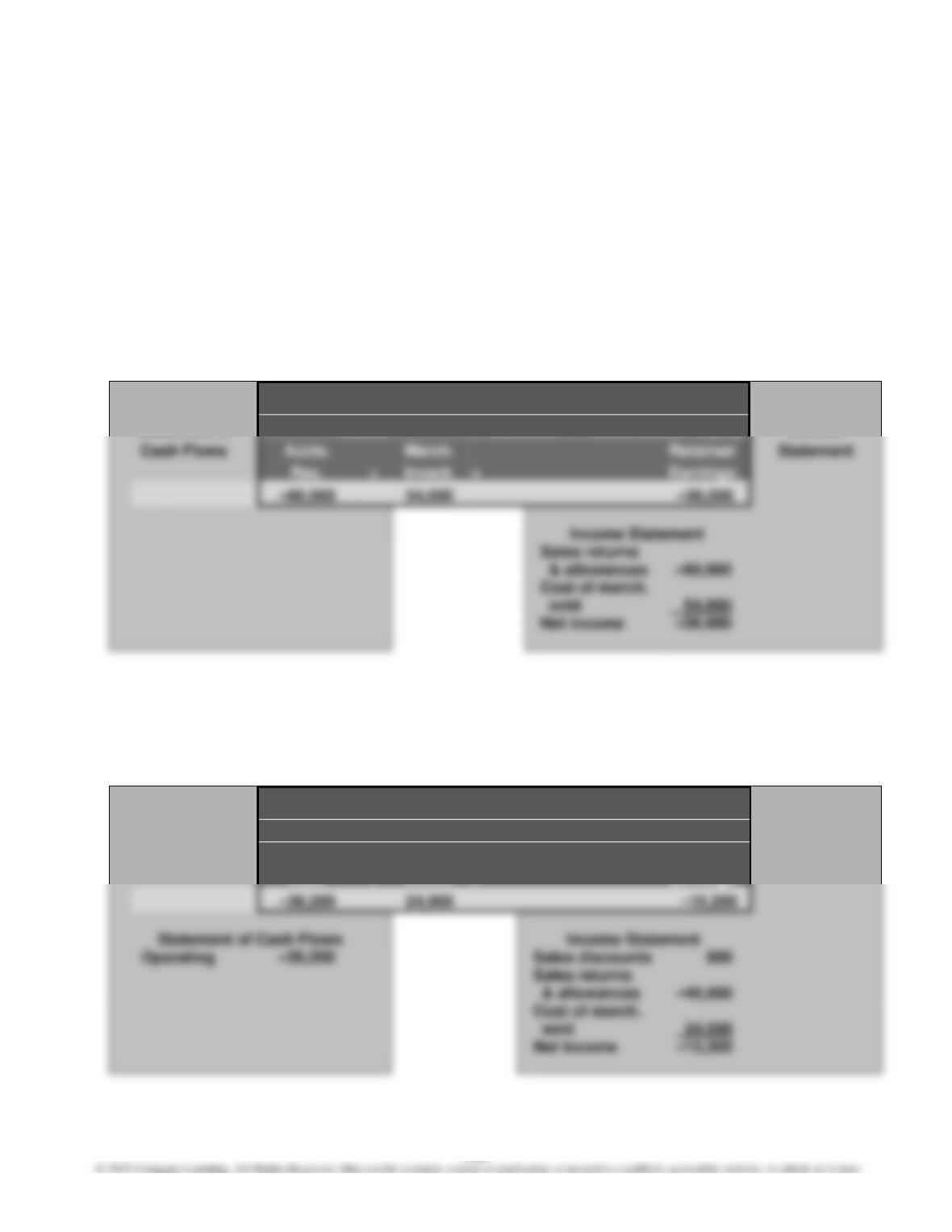
a.
Balance Sheet
Statement of
Assets
=
Liabilities
+
Stockholders’ Equity
Income
Cash Flows
Merch.
Retained
Statement
Cash
+
Invent.
=
Earnings
62,500
–30,000
Income Statement
Operating
Sales
Cost of merch. sold
–30,000
Net income
b.
Balance Sheet
Statement of
Assets
=
Liabilities
+
Stockholders’ Equity
Income
Cash Flows
Accts.
Merch.
Retained
Statement
Rec.
+
Invent.
=
Earnings
27,800
–16,000
11,800
Income Statement
Sales
27,800
Cost of merch. sold
–16,000
Net income
11,800
Balance Sheet
Statement of
Assets
=
Liabilities
+
Stockholders’ Equity
Income
Cash Flows
Merch.
Retained
Statement
Cash
+
Invent.
=
Earnings
117,500
Income Statement
Operating
Sales
Net income
117,500
106
E4–13
It was acceptable to decrease Sales for the $90,000. However, using Sales
Returns and Allowances assists management in monitoring the amount of
returns so that quick action can be taken if returns become excessive.
Accounts Receivable also should have been decreased for $90,000. In addition,
Cost of Merchandise Sold should have been decreased only for the cost of the
merchandise sold, not the selling price. Merchandise Inventory also should have
been increased for the cost of the merchandise returned. The effects on the
accounts and financial statements of correctly recording the returns would have
been as follows:
Balance Sheet
Statement of
Assets
=
Liabilities
+
Stockholders’ Equity
Income
Cash Flows
Merch.
Retained
Statement
+
Invent.
=
Earnings
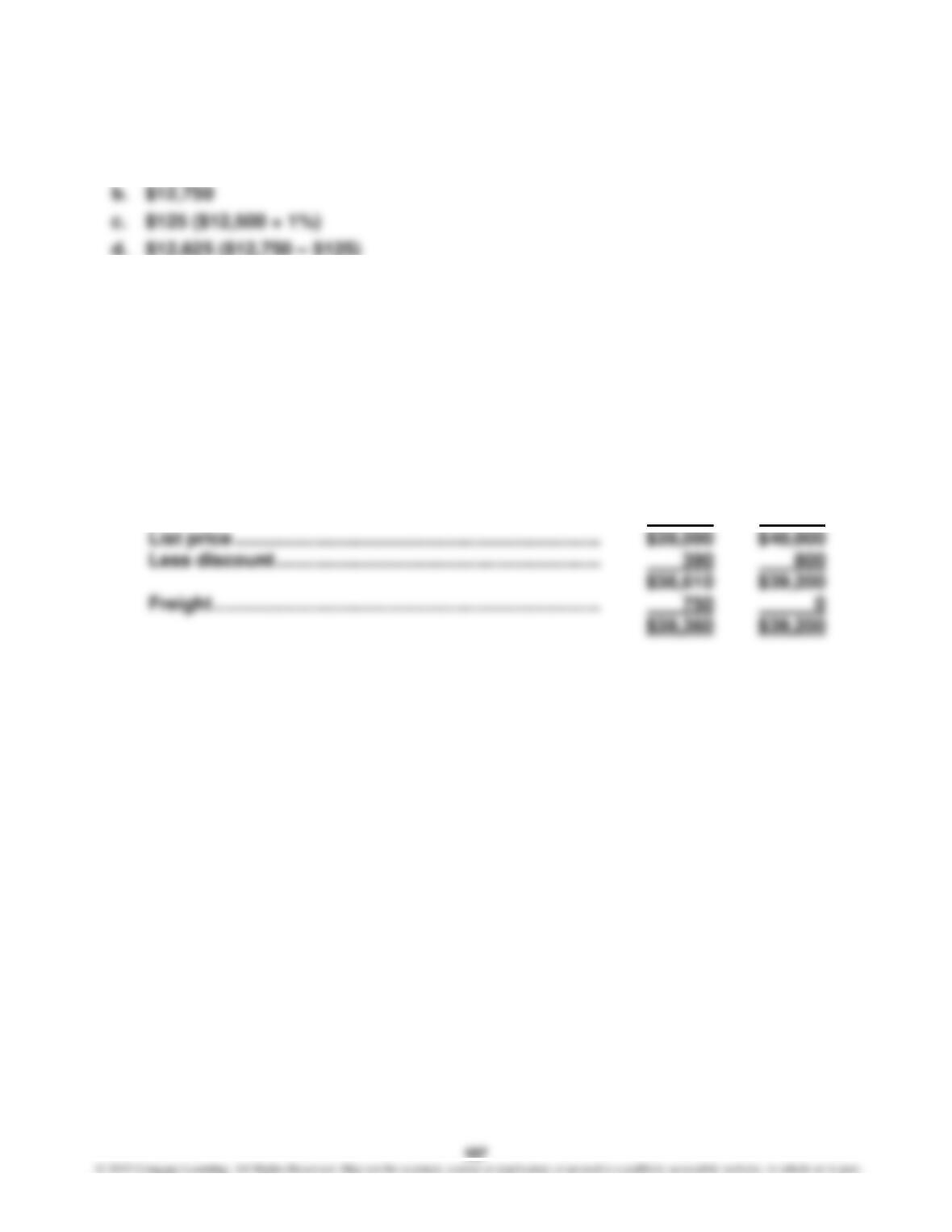
E4–14
a. $39,200 [$40,000 – ($40,000 × 2%)]
b.
Balance Sheet
Statement of
Assets
=
Liabilities
+
Stockholders’ Equity
Income
Cash Flows
Merch.
Retained
Statement
Cash
+
Invent.
=
Earnings
E4–15
a. $12,500
E4–16
a. $9,310 [Purchase of $13,500, less return of $4,000, less discount of $190
[($13,500 – $4,000) × 2%]
b. Merchandise Inventory
E4–17
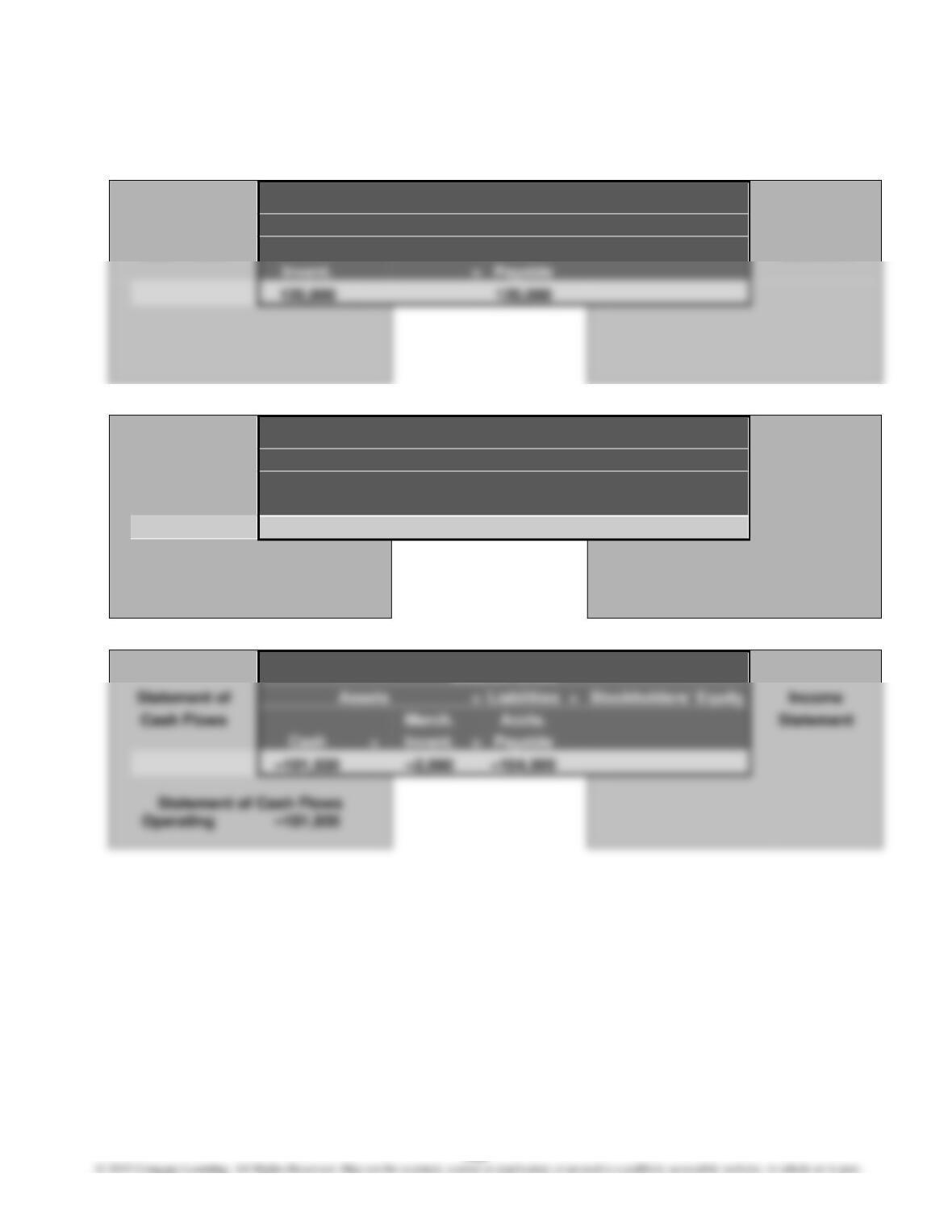
Offer B is lower than offer A. Details are as follows:
A B
108
E4–18
a.
Balance Sheet
Statement of
Assets
=
Liabilities
+
Stockholders’ Equity
Income
Cash Flows
Merch.
Accts.
Statement
Invent.
=
Payable
b.
Balance Sheet
Statement of
Assets
=
Liabilities
+
Stockholders’ Equity
Income
Cash Flows
Merch.
Accts.
Statement
Invent.
=
Payable
–16,000
–16,000
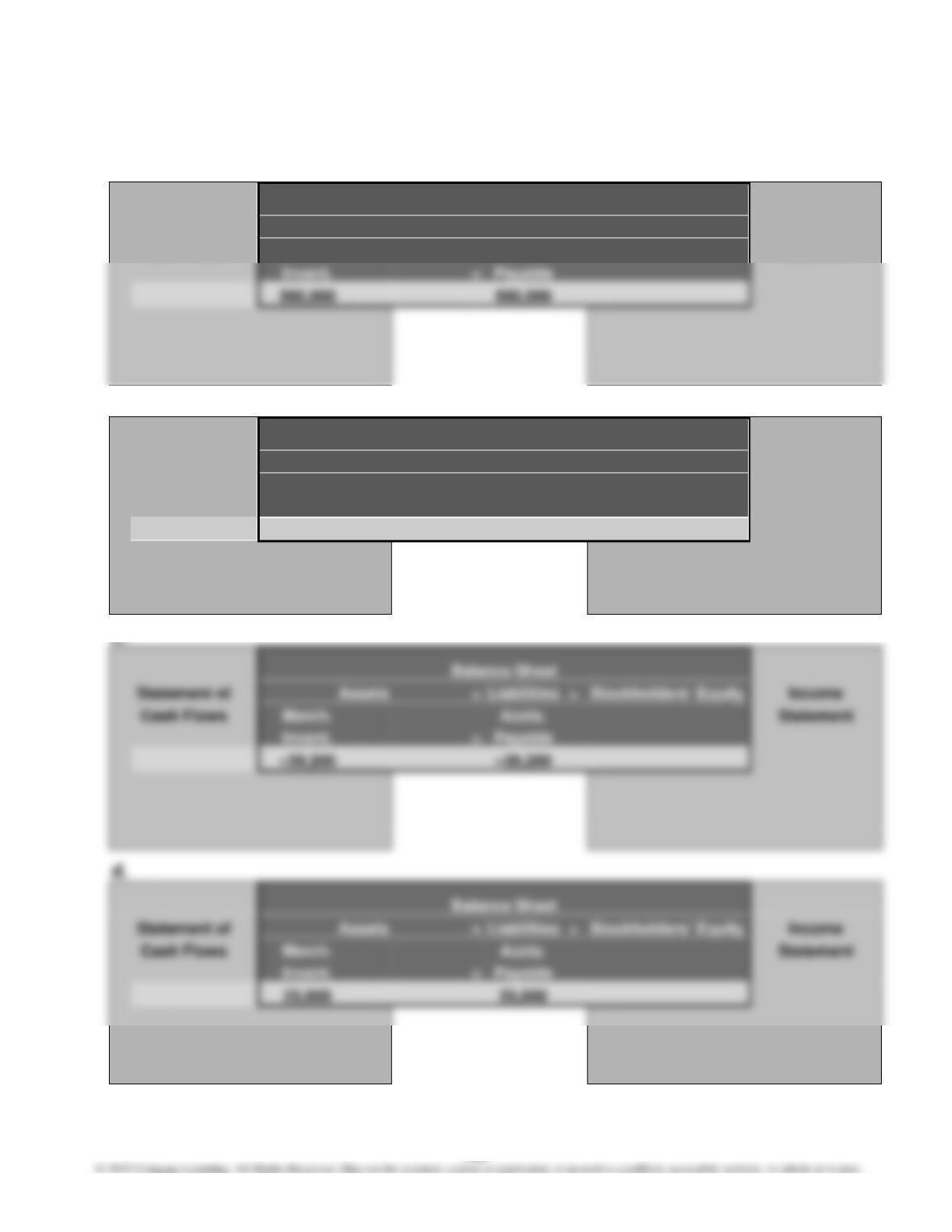
c.
Balance Sheet
Statement of
Assets
=
Liabilities
+
Stockholders’ Equity
Income
Cash Flows
Accts.
Statement
=
Payable
Operating
109
E4–19
a.
Balance Sheet
Statement of
Assets
=
Liabilities
+
Stockholders’ Equity
Income
Cash Flows
Merch.
Accts.
Statement
Invent.
=
Payable
b.
Balance Sheet
Statement of
Assets
=
Liabilities
+
Stockholders’ Equity
Income
Cash Flows
Merch.
Accts.
Statement
Cash
+
Invent.
=
Payable
–548,800
–11,200
–560,000
Statement of Cash Flows
Operating
–548,800
Balance Sheet
Statement of
Assets
=
Liabilities
+
Stockholders’ Equity
Income
Cash Flows
Merch.
Accts.
Statement
Invent.
=
Payable
Statement of
Assets
=
Liabilities
+
Stockholders’ Equity
Income
Cash Flows
Merch.
Accts.
Statement
Invent.
=
Payable
110
E4–19, Continued
e.
Balance Sheet
Statement of
Assets
=
Liabilities
+
Stockholders’ Equity
Income
Cash Flows
Accts.
Statement
Cash
=
Payable
14,200
14,200
Statement of
Cash Flows
Operating
14,200
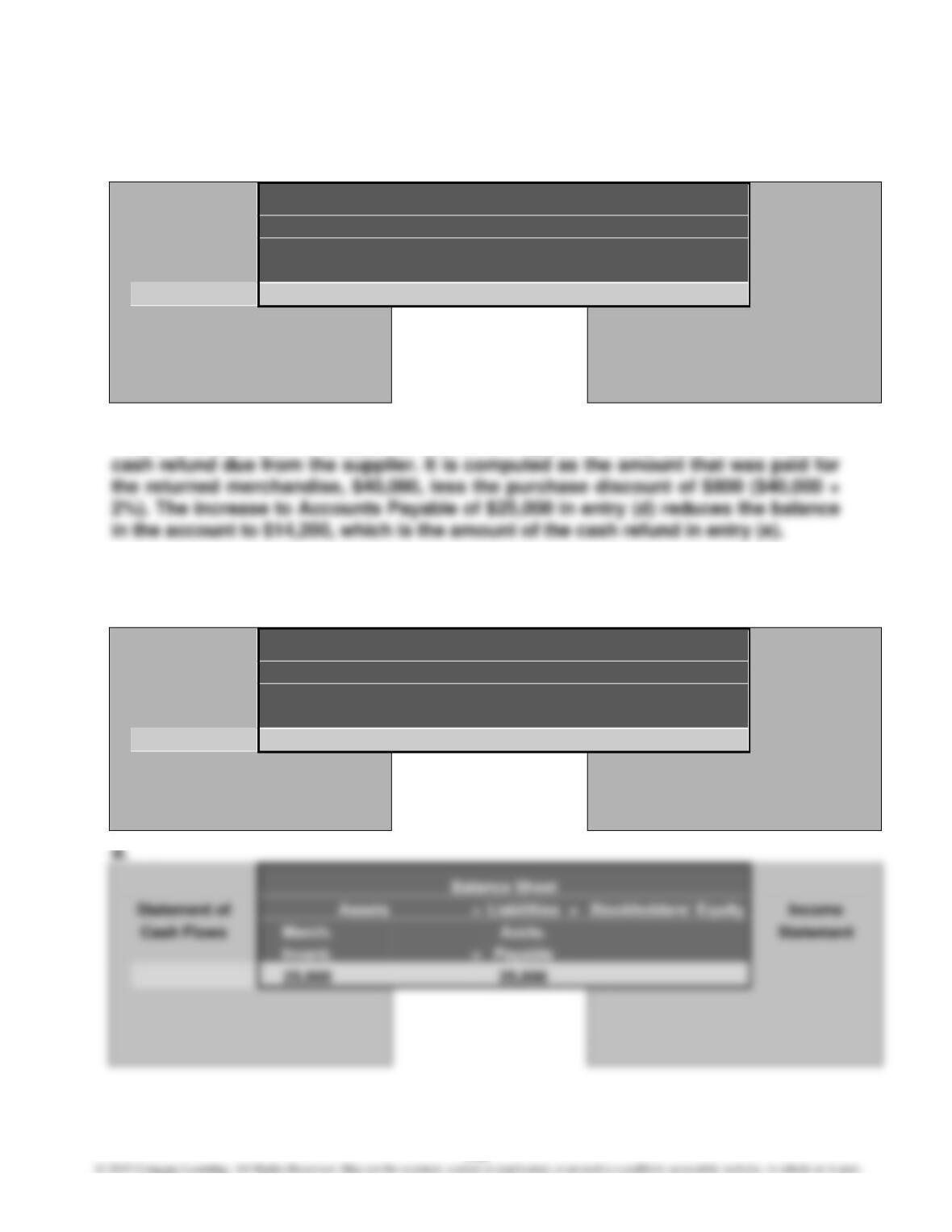
*Note: The decrease of $39,200 to Accounts Payable in entry (c) is the amount of
The alternative entries below yield the same final results.
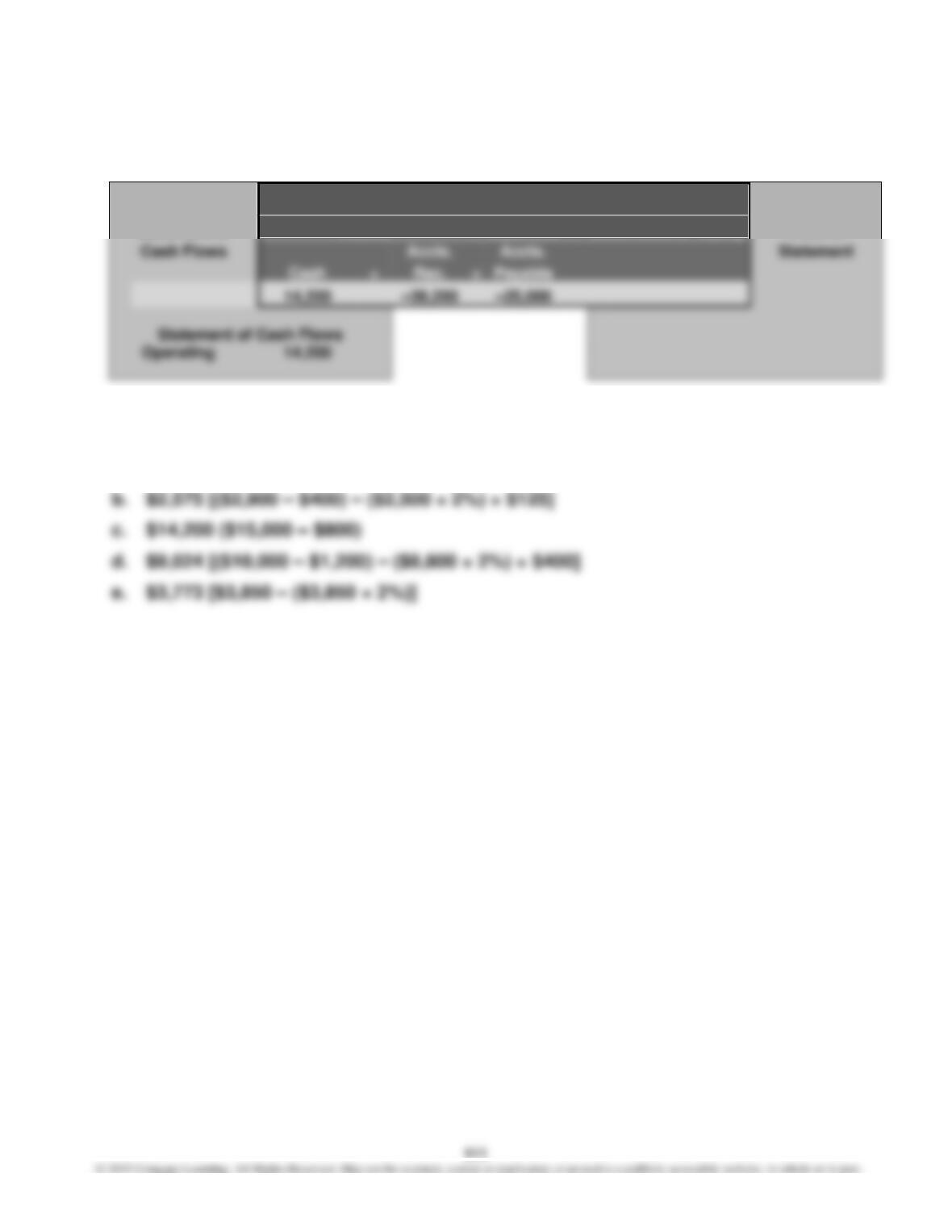
c.
Balance Sheet
Statement of
Assets
=
Liabilities
+
Stockholders’ Equity
Income
Cash Flows
Accts.
Merch.
Statement
Rec.
+
Invent.
39,200
–39,200
Balance Sheet
Statement of
Assets
=
Liabilities
+
Stockholders’ Equity
Income
Cash Flows
Accts.
Statement
=
Payable
25,000
25,000
E4–19, Concluded
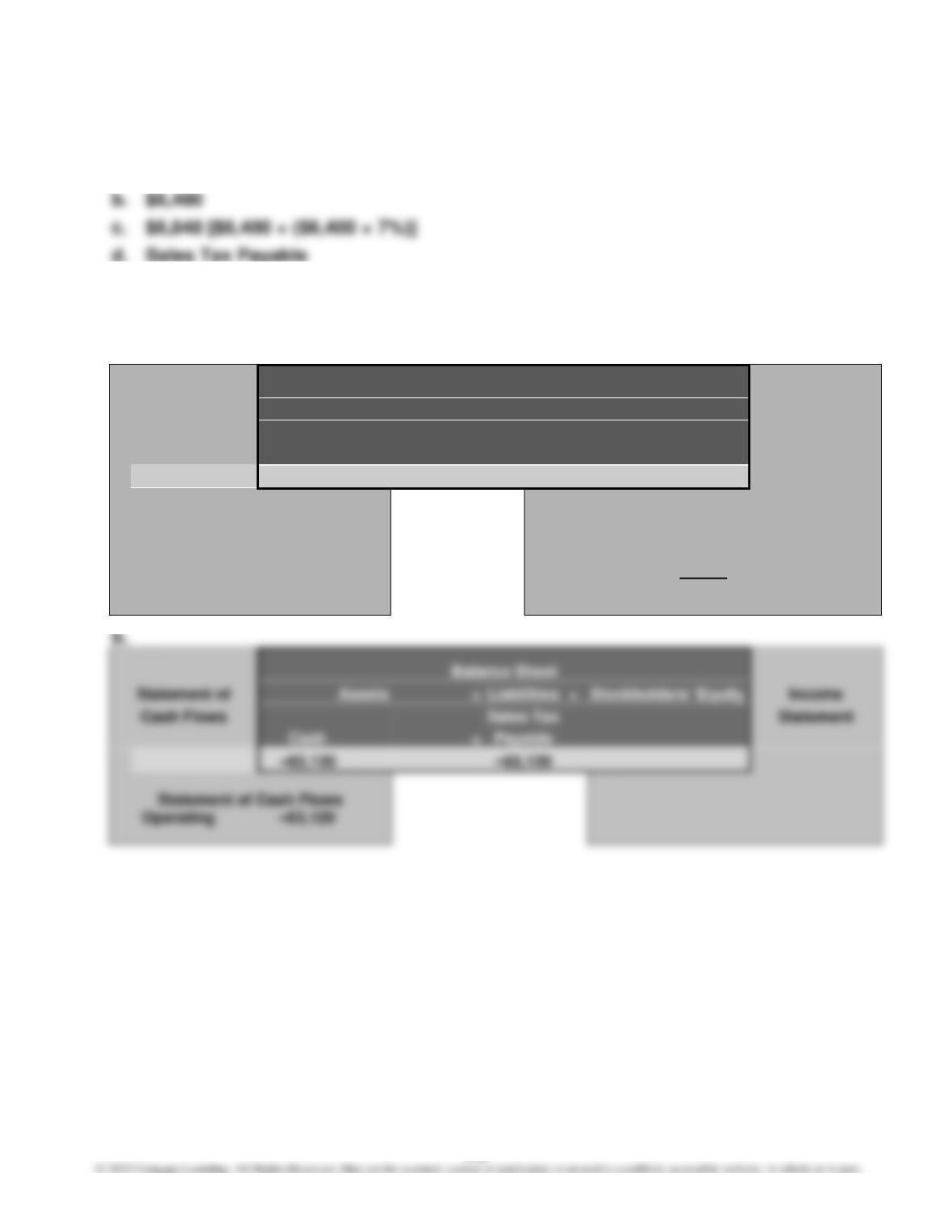
e.
Balance Sheet
Statement of
Assets
=
Liabilities
+
Stockholders’ Equity
Income
Statement
=
E4–20
a. $7,227 [($8,250 – $950) – ($7,300 × 1%)]
112
E4–21
a. At the time of sale
E4–22
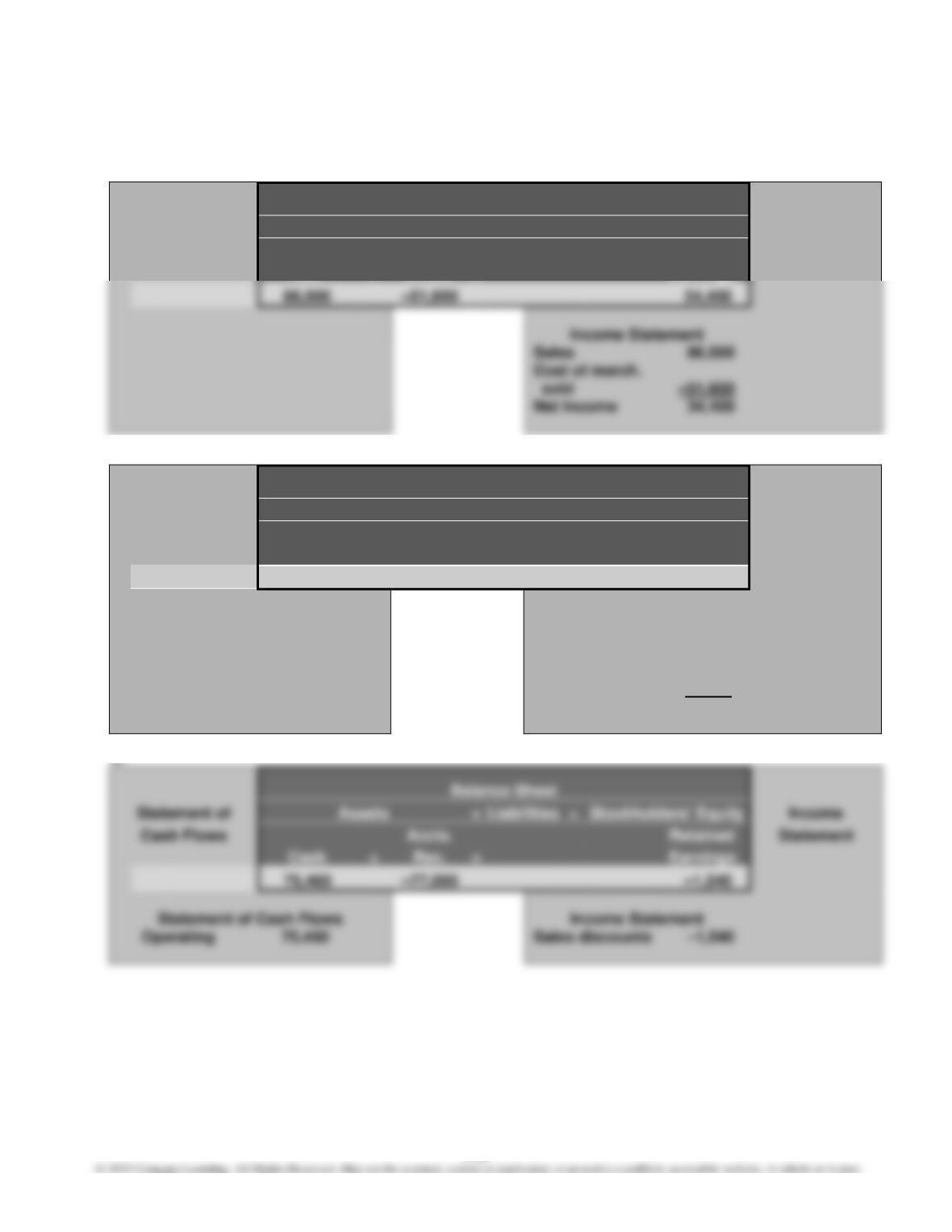
a.
Balance Sheet
Statement of
Assets
=
Liabilities
+
Stockholders’ Equity
Income
Cash Flows
Accts.
Merch.
Sales Tax
Retained
Statement
Rec.
+
Invent.
=
Payable
+
Earnings
11,925
–6,750
675
4,500
Income Statement
Sales
11,250
Cost of merch.
sold
–6,750
Net income
4,500
Balance Sheet
Statement of
Assets
=
Liabilities
+
Stockholders’ Equity
Income
Cash Flows
Sales Tax
Statement
=
Payable
Operating
113
E4–23
a.
Balance Sheet
Statement of
Assets
=
Liabilities
+
Stockholders’ Equity
Income
Cash Flows
Accts.
Merch.
Retained
Statement
Rec.
+
Invent.
=
Earnings
Income Statement
Sales
sold
Net income
b.
Balance Sheet
Statement of
Assets
=
Liabilities
+
Stockholders’ Equity
Income
Cash Flows
Accts.
Merch.
Retained
Statement
Rec.
+
Invent.
=
Earnings
–9,000
5,000
–4,000
Income Statement
Sales returns
& allowances
–9,000
Cost of merch.
sold
5,000
Net income
–4,000
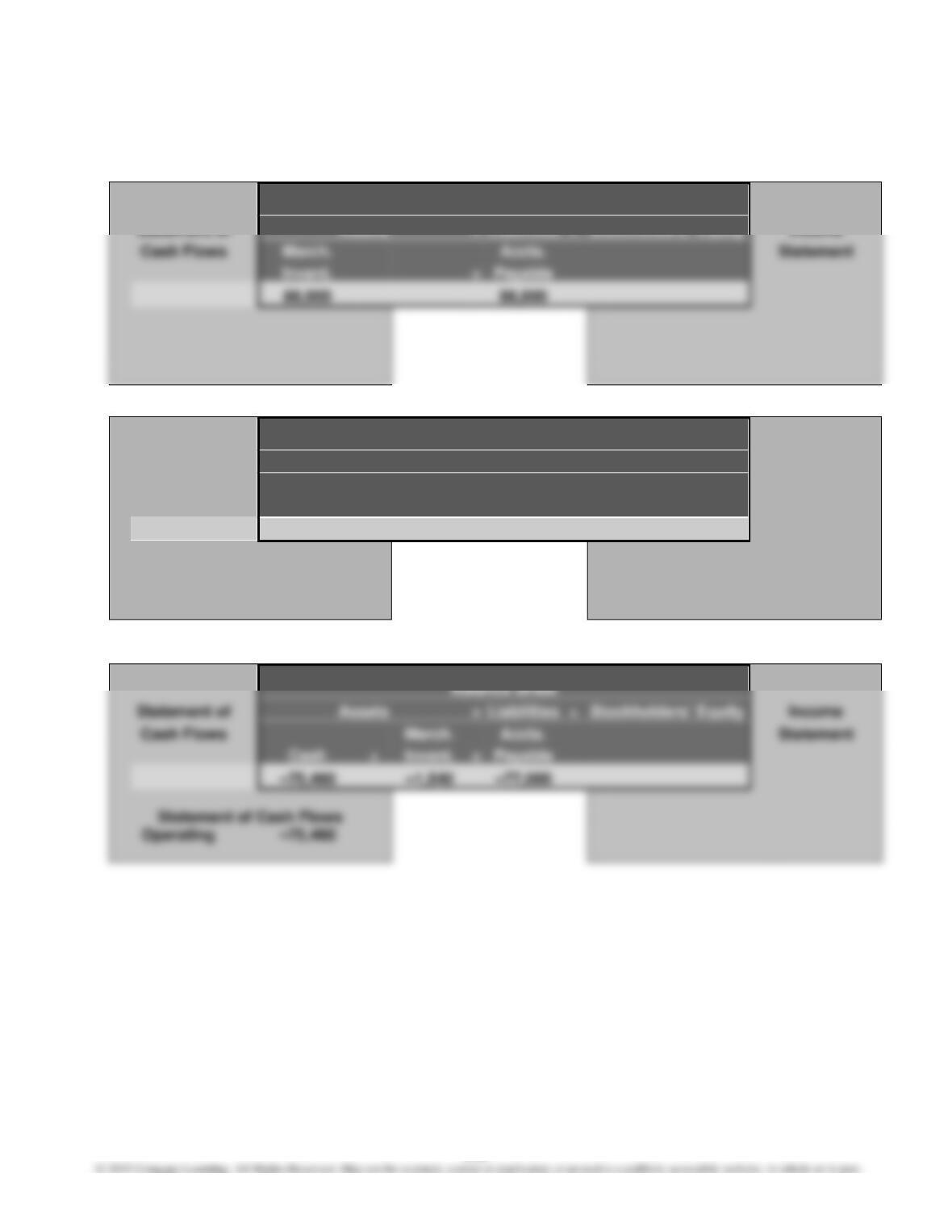
c.
Balance Sheet
Statement of
Assets
=
Liabilities
+
Stockholders’ Equity
Income
Cash Flows
Retained
Statement
+
=
Earnings
–1,540
Income Statement
Operating
Sales discounts
114
E4–24
a.
Balance Sheet
Statement of
Assets
=
Liabilities
+
Stockholders’ Equity
Income
Cash Flows
Merch.
Accts.
Statement
Invent.
=
Payable
b.
Balance Sheet
Statement of
Assets
=
Liabilities
+
Stockholders’ Equity
Income
Cash Flows
Merch.
Accts.
Statement
Invent.
=
Payable
–9,000
–9,000
c.
Balance Sheet
Statement of
Assets
=
Liabilities
+
Stockholders’ Equity
Income
Cash Flows
Accts.
Statement
=
Payable
Operating
115
E4–25
Balance Sheet
Statement of
Assets
=
Liabilities
+
Stockholders’ Equity
Income
Cash Flows
Merch.
Retained
Statement
Inventory
=
Earnings
116
PROBLEMS
P4–1
1.
AQUA CO.
Income Statement
For the Year Ended June 30, 20Y8
Revenue from sales:
Sales ………………………………………………….. $3,625,000
Less: Sales returns and allowances …….. $ 37,800
Sales discounts …………………………. 20,200 58,000
Depreciation expense—store
equipment …………………………………. 8,300
Miscellaneous selling expense ……….. 2,000
Total selling expenses ……………….. $ 445,000
Administrative expenses:
Office salaries expense …………………… $ 77,400
Rent expense …………………………………. 39,900
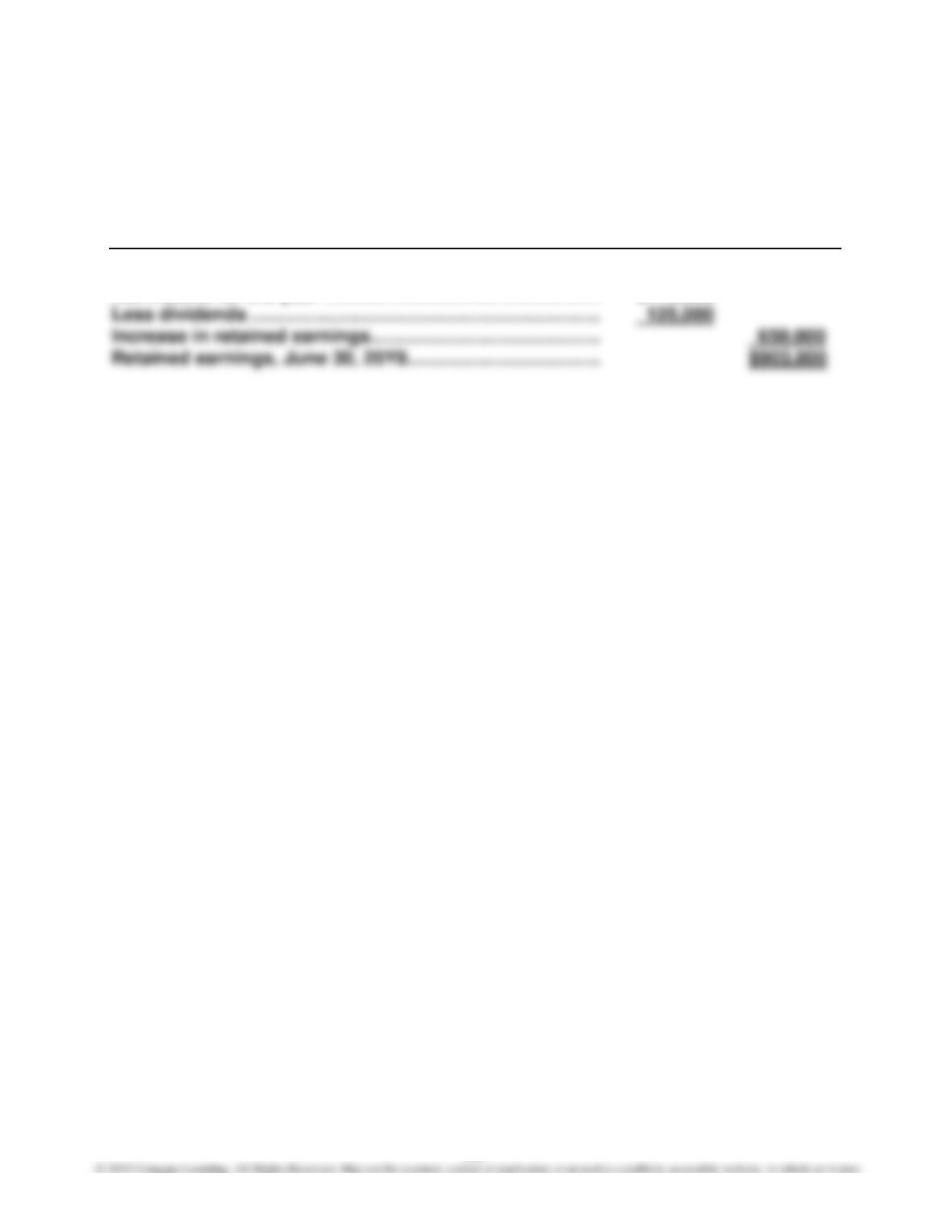
117
P4–1, Continued
2.
AQUA CO.
Retained Earnings Statement
For the Year Ended June 30, 20Y8
Retained earnings, July 1, 20Y7 …………………………………. $253,800
Net income for the year …………………………………………….. $775,000
P4–1, Continued
3.
AQUA CO.
Balance Sheet
June 30, 20Y8
Assets
Store equipment ………………………………….. $511,500
Less accumulated depreciation …………. 186,700 324,800
Total property, plant, and
equipment ………………………………….. 390,500
Total assets …………………………………………….. $1,031,000
Stockholders’ Equity
Capital stock ……………………………………………. $ 15,000
Retained earnings ……………………………………. 903,800
Total stockholders’ equity ………………………… 918,800
Total liabilities and stockholders’ equity …… $1,031,000