CHAPTER 18 (FIN MAN); CHAPTER 4 (MAN)
ACTIVITY-BASED COSTING
DISCUSSION QUESTIONS
1. Management desires accurate product costs so that its decisions regarding products are correct.
Managers are concerned about the accuracy of product costs, which are used for decisions such as
determining product mix, establishing product price, and determining whether to discontinue a
product line.
2. A single plantwide overhead rate will provide accurate product costing if products use production
3. Under the multiple production department rate method, factory overhead rates are determined for
each production department. Factory overhead is allocated to products depending on the amount of
allocation base used in each department. Under the single plantwide rate method, one factory
overhead rate is determined for the whole factory and is allocated to products depending on the
amount of allocation base used in the factory.
5. Under activity-based costing, factory overhead costs are assigned to activity cost pools rather than
production departments. The budgeted factory overhead in the activity pools is allocated to
products based upon their own unique activity rates.
6. These activities are part of selling and administrative expenses, which must be treated as period
expenses under generally accepted accounting principles (GAAP). Thus, they cannot be included
as product costs under GAAP.
8. Calculating product costs using activity rates may result in greater accuracy than using multiple
production department overhead rates when products consume activities in proportions that are
unrelated to departmental allocation bases.
CHAPTER 18 (FIN MAN); CHAPTER 4 (MAN) Activity-Based Costing
BASIC EXERCISES
BE 18–1 (FIN MAN); BE 4–1 (MAN)
a.
Speedboat:
250 units × 12 direct labor hours =
3,000
direct labor hours
Bass boat:
250 units × 12 direct labor hours =
3,000
Total
6,000
direct labor hours
Single plantwide factory overhead rate:
c.
Speedboat:
$100 per direct labor hour × 12 dlh per unit = $1,200 per unit
BE 18–2 (FIN MAN); BE 4–2 (MAN)
a.
Fabrication:
(250 speedboats × 8 dlh) + (250 bass boats × 4 dlh)
= 3,000 direct labor hours
Assembly:
(250 speedboats × 4 dlh) + (250 bass boats × 8 dlh)
= 3,000 direct labor hours
b.
Fabrication Department rate: $420,000 ÷ 3,000 dlh = $140 per dlh
Assembly Department rate: $180,000 ÷ 3,000 dlh = $60 per dlh
c.
Speedboat:
Fabrication Department: 8 dlh × $140 =
Assembly Department: 4 dlh × $60 =
Total factory overhead per speedboat
Bass boat:
Fabrication Department: 4 dlh × $140 =
Assembly Department: 8 dlh × $60 =
Total factory overhead per bass boat
CHAPTER 18 (FIN MAN); CHAPTER 4 (MAN) Activity-Based Costing
BE 18–3 (FIN MAN); BE 4–3 (MAN)
a. Fabrication:
$204,000 ÷ 3,000 direct labor hours = $68 per dlh
Assembly:
$105,000 ÷ 3,000 direct labor hours = $35 per dlh
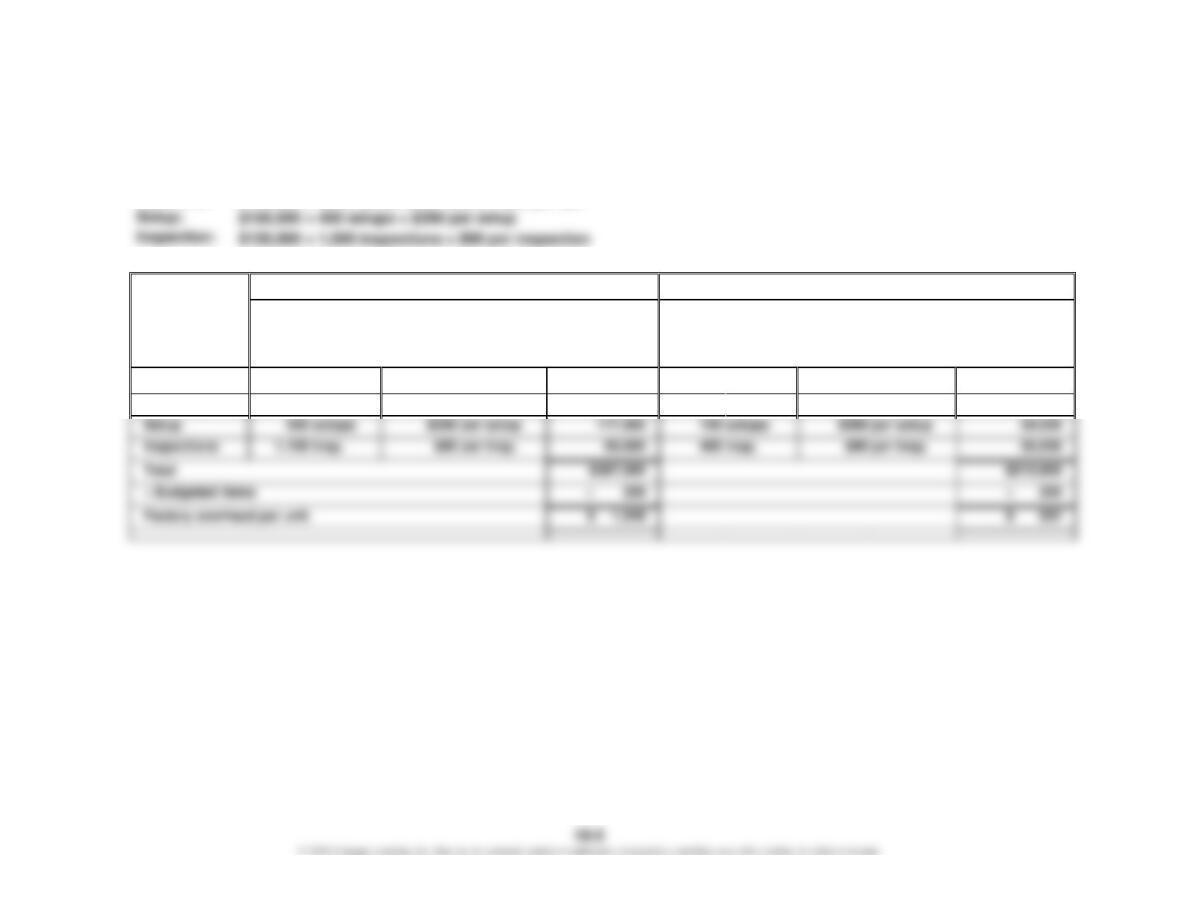
b.
Activity
Speedboat
Bass Boat
Activity-
Base
Usage
×
Activity
Rate
=
Activity
Cost
Activity-
Base
Usage
×
Activity
Rate
=
Activity
Cost
Fabrication
2,000
dlh
$68
per dlh
$136,000
1,000
dlh
$68
per dlh
$ 68,000
Assembly
1,000
dlh
$35
per dlh
35,000
2,000
dlh
$35
per dlh
70,000
Setup
per setup
per setup
39,000
Inspections
1,100
$90
per insp.
99,000
$90
per insp.
36,000

CHAPTER 18 (FIN MAN); CHAPTER 4 (MAN) Activity-Based Costing
BE 18–4 (FIN MAN); BE 4–4 (MAN)
a. Sales order processing activity:
750 orders × $20 per order =
$15,000
Customer return activity:
80 returns × $100 per return =
8,000
BE 18–5 (FIN MAN); BE 4–5 (MAN)
Guest check-in …………………………………………………
$ 8.00
(1 check-in × $8.00)
Meal service …………………………………………………….
(3 meals × $4.00)
CHAPTER 18 (FIN MAN); CHAPTER 4 (MAN) Activity-Based Costing
EXERCISES
Ex. 18–1 (FIN MAN); Ex. 4–1 (MAN)
Ex. 18–2 (FIN MAN); Ex. 4–2 (MAN)
a. Single Plantwide Factory Overhead Rate =
$2,948,125
11,125 direct labor hours *
= $265 per direct labor hour
* Total direct labor hours:
Budgeted
Production
Volume
Direct Labor
Hours per Unit
Direct Labor
Hours
×
=
Flutes …………………….
2,000 units
×
2.0
=
4,000
b.
Single Plant-
wide Rate
per Direct
Labor Hour
Direct
Labor
Hours
Factory Overhead per Unit
(Factory Overhead ÷
Budgeted Production Volume)
Factory
Overhead
×
=
Flutes ……..
4,000
×
$265
=
$1,060,000
$1,060,000
÷
2,000
units
=
$530
Total ……….
CHAPTER 18 (FIN MAN); CHAPTER 4 (MAN) Activity-Based Costing
Ex. 18–3 (FIN MAN); Ex. 4–3 (MAN)
a. Single Plantwide Factory Overhead Rate =
*
**
$156,000
2,400 processing hours
= $65 per processing hour
The selling and administrative expenses are not factory overhead.
** Total processing hours:
Budgeted
Production
Volume
(Cases)
×
Processing
Hours per Case
=
Processing
Hours
Tortilla chips ………………..
3,000
×
0.25
=
750
×
Pretzels ……………………….
3,500
×
0.30
=
1,050
b.
Processing
Hours
Single Plantwide
Factory Over-
head Rate per
Processing
Hour
Factory
Overhead
Factory Overhead per Case
(Factory Overhead ÷
Budgeted Production Volume)
×
=
Tortilla chips …..
750
×
$65
=
$ 48,750
$48,750
÷
3,000 cases = $16.25
CHAPTER 18 (FIN MAN); CHAPTER 4 (MAN) Activity-Based Costing
Ex. 18–4 (FIN MAN); Ex. 4–4 (MAN)
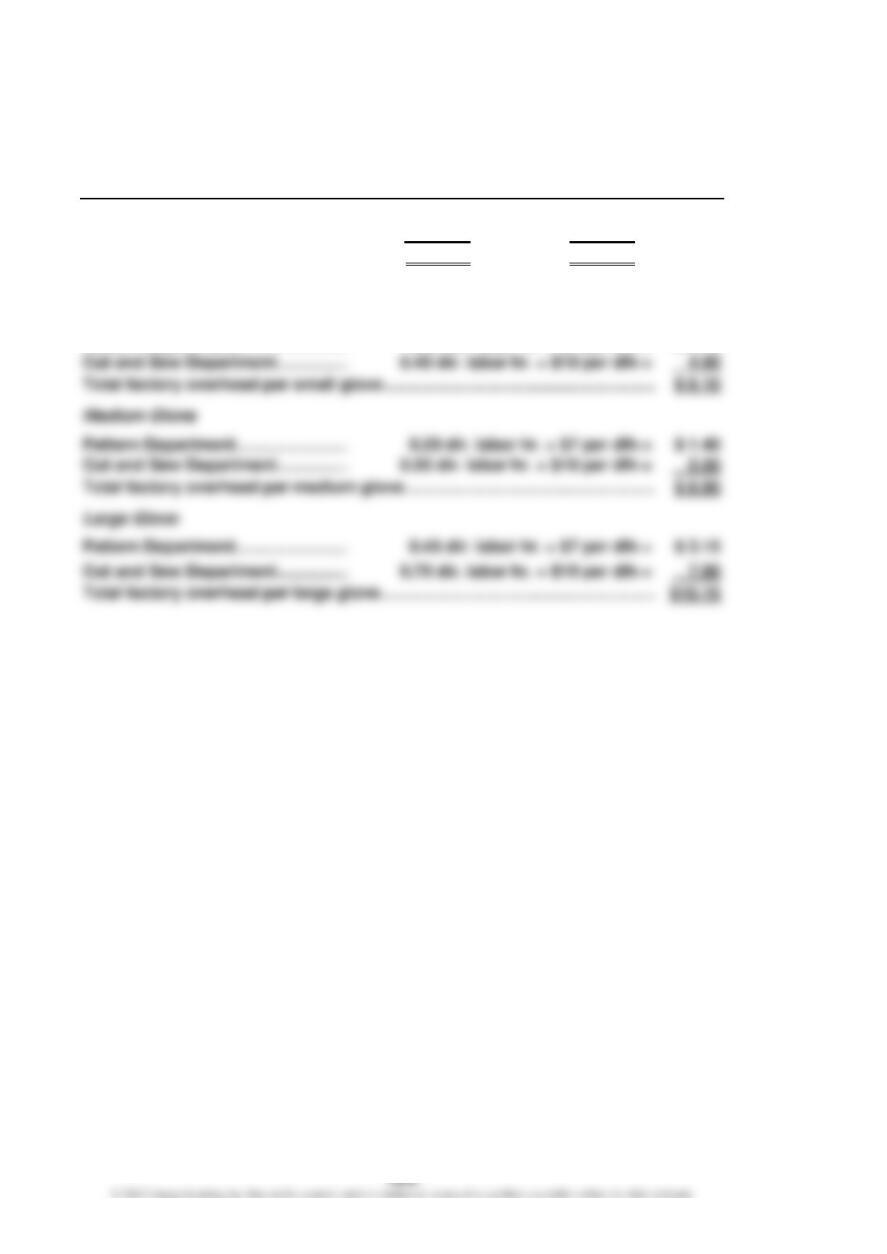
a. First, determine the total estimated labor hours consumed by the three products:
Direct Labor
Hours per
Total
Labor
Volume
×
Unit
=
Hours
Pistons …………………………………………………………
6,000
×
0.30
=
1,800
b.
Direct Labor
Hours per
Unit
Factory Overhead
Cost per Unit
($28.00 × Direct
Labor Hours per Unit)
Direct Labor
Cost per Unit
($20.00 × Direct
Labor Hours per Unit)
Pistons ………………………..
0.30
$ 8.40
$ 6.00
Valves………………………….
0.50
14.00
10.00
Cams …………………………..
0.10
2.80
2.00
c.
Isaac Engines Inc.
Product Line Budgeted Gross Profit Reports
For the Year Ended December 31, 20Y2
Pistons
Valves
Cams
Revenues (price × unit volume)
$ 240,0001
$ 273,0002
$ 55,0003
Direct materials (direct materials
cost per unit × unit volume)
$ (54,000)4
$ (65,000)5
$(20,000)6
Direct labor [direct labor cost per
unit (b) × unit volume]
(36,000)7
(130,000)8
(2,000)9
cost per unit (b) × unit volume]
Total product costs
Gross profit percentage of sales
d. Valves have the lowest (and negative) gross profit as a percent of sales. Valves may
require a higher price or lower cost to manufacture in order to achieve a higher
profitability similar to the other two products.
CHAPTER 18 (FIN MAN); CHAPTER 4 (MAN) Activity-Based Costing
Ex. 18–5 (FIN MAN); Ex. 4–5 (MAN)
a. Production department factory overhead rates:
Pattern
Department
Cut and Sew
Department
Total factory overhead …………………….
$294,000
$560,000
÷ Direct labor hours ………………………..
42,000
dlh
56,000
dlh
Departmental overhead rate …………….
$ 7.00
per dlh
$ 10.00
per dlh
b.
Product cost allocation:
Small Glove
Pattern Department ……………………
0.20 dir. labor hr. × $7 per dlh =
$ 1.40
Pattern Department ……………………
0.30 dir. labor hr. × $7 per dlh =
$ 2.10
CHAPTER 18 (FIN MAN); CHAPTER 4 (MAN) Activity-Based Costing
Ex. 18–6 (FIN MAN); Ex. 4–6 (MAN)
a. Plantwide overhead rate:
Budgeted Factory Overhead $1,080,000
= = $120.00 per dmh
Product costs:
b.
Department factory overhead rates:
Assembly
Department
Testing
Department
Production department overhead ………….
$280,000
$800,000
÷ Direct machine hours ………………………..
4,000
dmh
5,000
dmh
Production department overhead rate……
$ 70.00
per dmh
$ 160.00
per dmh
Product cost allocation:
c. The factory overhead determined under the single plantwide factory overhead
rate and multiple production department factory overhead rate methods are
different. The multiple production department factory overhead rate method
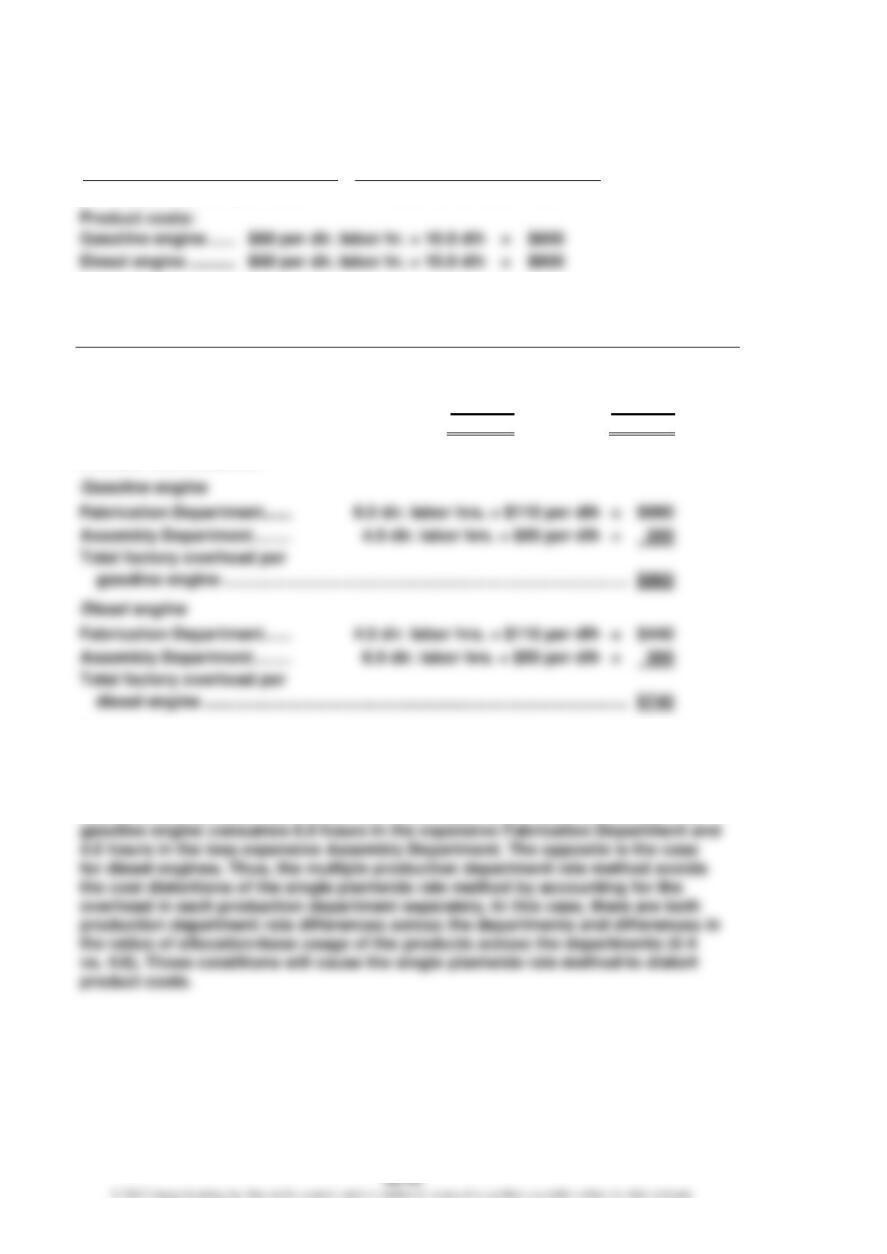
CHAPTER 18 (FIN MAN); CHAPTER 4 (MAN) Activity-Based Costing
Ex. 18–7 (FIN MAN); Ex. 4–7 (MAN)
a. Plantwide overhead rate:
Budgeted Factory Overhead $640,000
= = $80 per dlh
Plantwide Allocation Base 8,000 direct labor hours
Product costs:
b.
Department factory overhead rates:
Fabrication
Department
Assembly
Department
Total production department
factory overhead ……………………………………
$440,000
$200,000
÷ Direct labor hours ………………………………….
4,000
dlh
4,000
dlh
Production department overhead rate ………..
$ 110
per dlh
$ 50
per dlh
Product cost allocation:
c. Management should select the multiple department factory overhead rate method
of allocating overhead costs. The single plantwide factory overhead rate method
indicates that both products have the same factory overhead of $800 per unit.
This is because each product uses a total of 10.0 direct labor hours per unit.
However, each product uses these 10.0 direct labor hours much differently. The
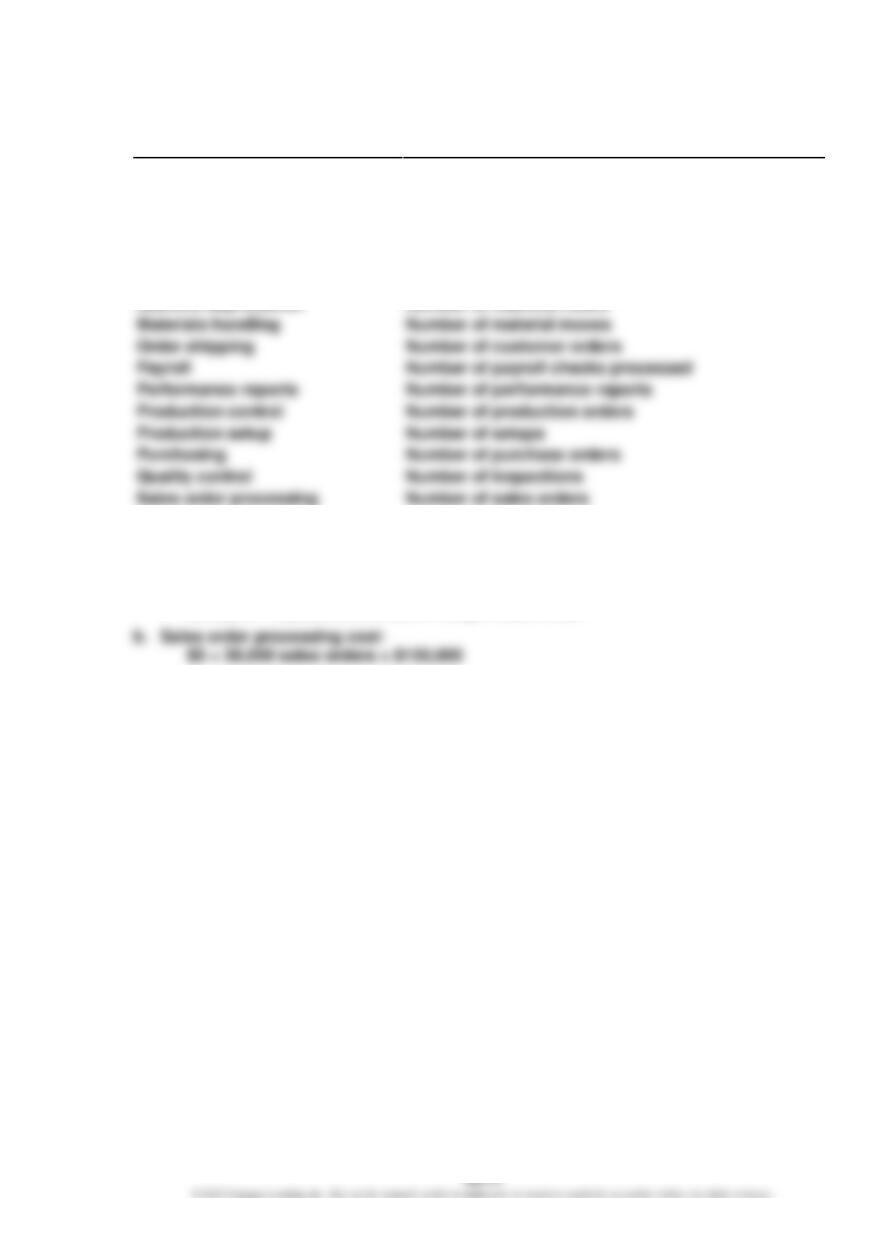
CHAPTER 18 (FIN MAN); CHAPTER 4 (MAN) Activity-Based Costing
Ex. 18–8 (FIN MAN); Ex. 4–8 (MAN)
Activity
Activity Base
Cafeteria
Number of employees
Customer return processing
Number of customer returns
Electric power
Kilowatt hours used
Human resources
Number of employees
Inventory control
Number of inventory transactions
Invoice and collecting
Number of customer orders
Machine depreciation
Number of machine hours
Materials handling
Number of material moves
Order shipping
Number of customer orders
Number of payroll checks processed
Performance reports
Number of performance reports
Production control
Number of production orders
Production setup
Number of setups
Number of purchase orders
Ex. 18–9 (FIN MAN); Ex. 4–9 (MAN)
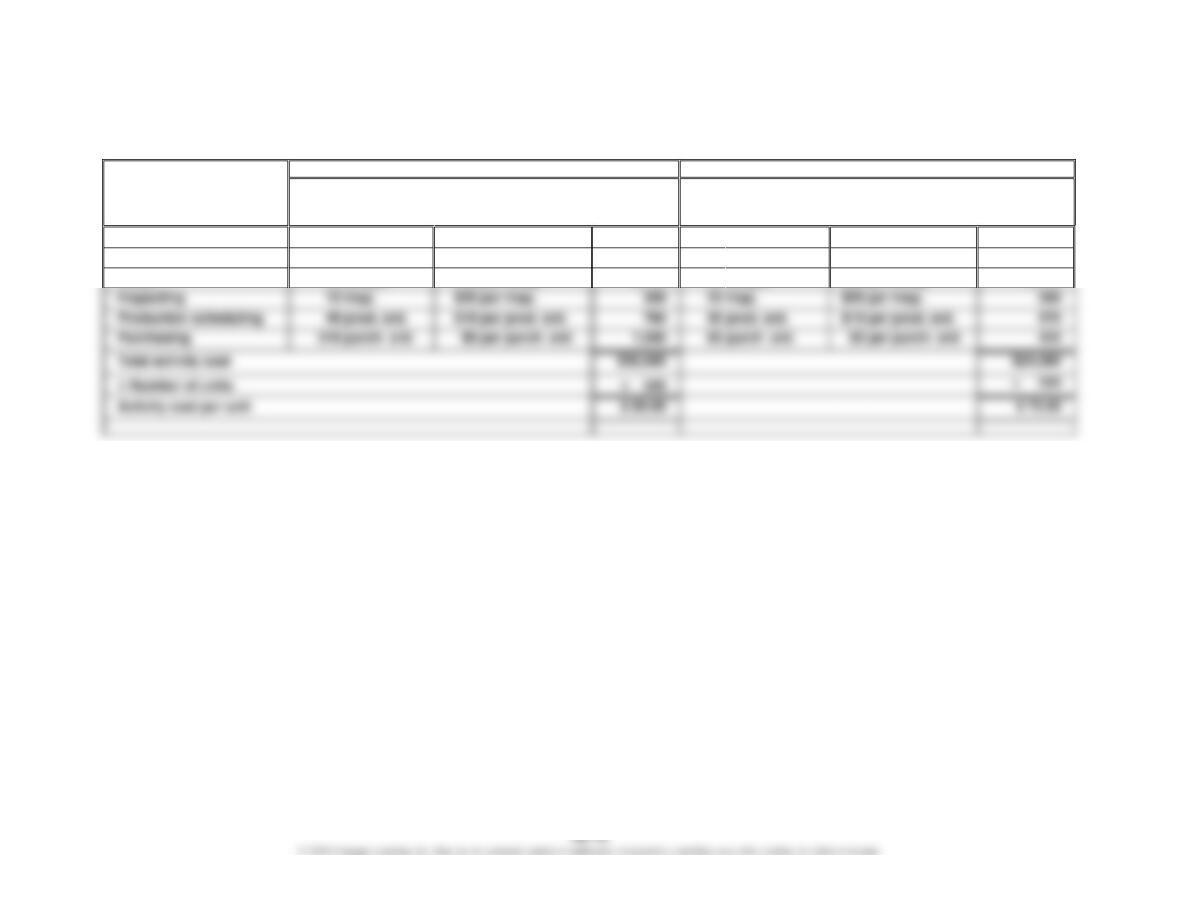
a. Sales order processing activity rate:
$250,000 ÷ 50,000 sales orders = $5 per sales order
CHAPTER 18 (FIN MAN); CHAPTER 4 (MAN) Activity-Based Costing
Ex. 18–10 (FIN MAN); Ex. 4–10 (MAN)
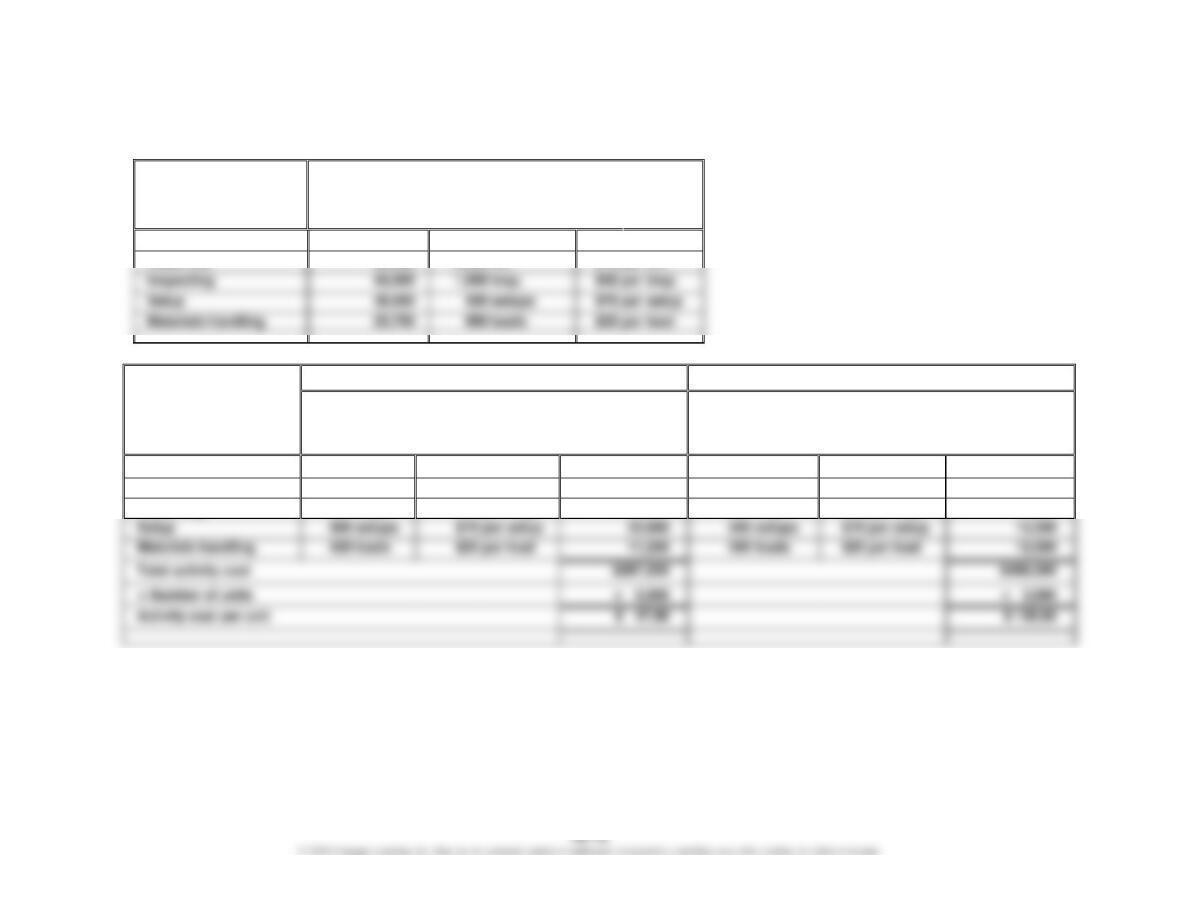
Activity
Elliptical Machines
Treadmills
Activity-
Base
Usage
×
Activity
Rate
=
Activity
Cost
Activity-
Base
Usage
×
Activity
Rate
=
Activity
Cost
Fabrication
600
mh
$30
per mh
$18,000
400
mh
$30
per mh
$12,000
Assembly
190
dlh
$35
per dlh
6,650
223
dlh
$35
per dlh
7,805
Setup
30
setups
$90
per setup
2,700
30
setups
$90
per setup
2,700
Inspecting
$20
per insp.
$20
per insp.
CHAPTER 18 (FIN MAN); CHAPTER 4 (MAN) Activity-Based Costing
Ex. 18–11 (FIN MAN); Ex. 4–11 (MAN)
a.
Budgeted
Total
Activity
Activity
Activity
Activity
Cost
÷
Base
=
Rate
Casting
$570,000
19,000
mh
$30
per mh
Assembly
dlh
per dlh
Inspecting
insp.
per insp.
Setup
setups
per setup
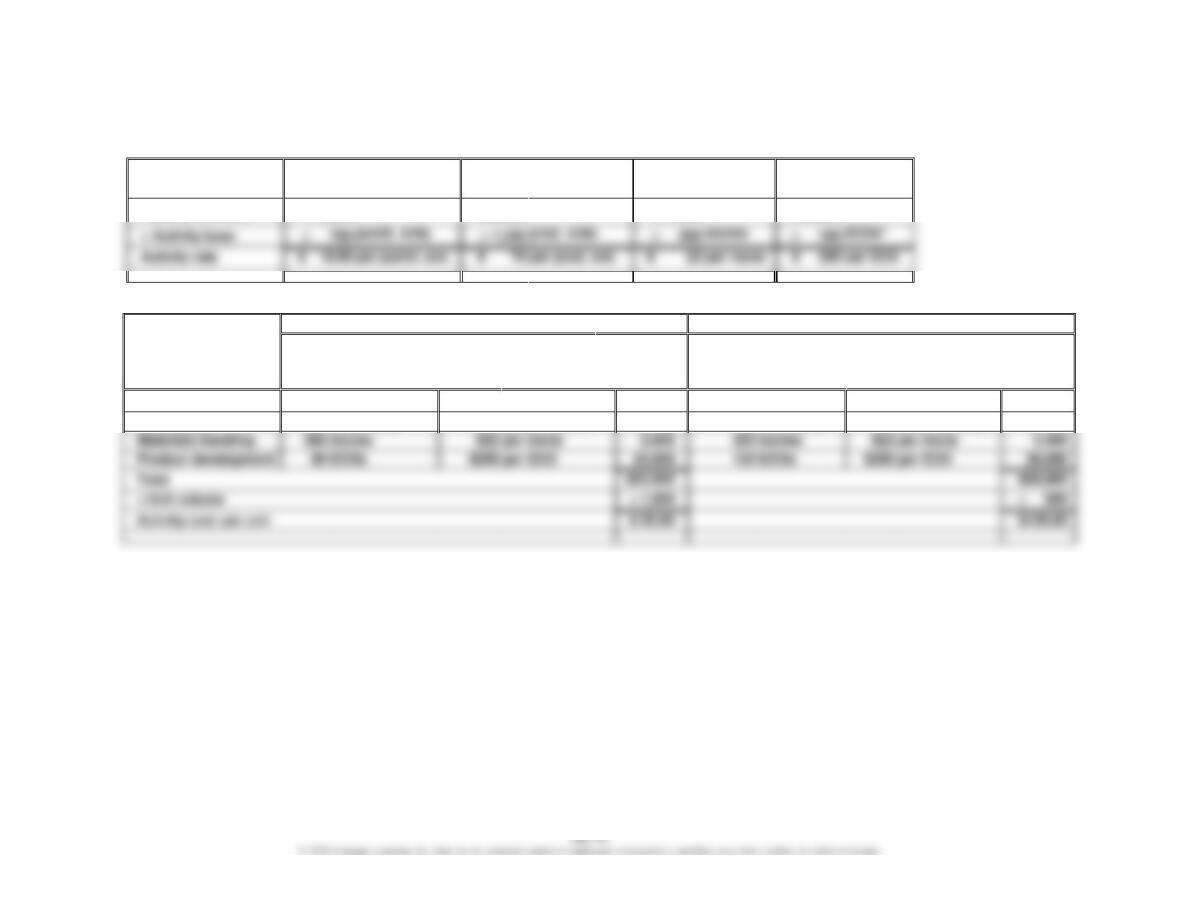
b.
Activity
Entry Lighting Fixtures
Dining Room Lighting Fixtures
Activity-
Base
Usage
×
Activity
Rate
=
Activity
Cost
Activity-
Base
Usage
×
Activity
Rate
=
Activity
Cost
Casting
6,000
mh
$30
per mh
$180,000
13,000
mh
$30
per mh
$390,000
Assembly
3,000
dlh
$16
per dlh
48,000
2,000
dlh
$16
per dlh
32,000
Inspecting
600
insp.
$42
per insp.
25,200
400
insp.
$42
per insp.
16,800
CHAPTER 18 (FIN MAN); CHAPTER 4 (MAN) Activity-Based Costing
Ex. 18–12 (FIN MAN); Ex. 4–12 (MAN)
a.
Procurement
Scheduling
Materials Handling
Product
Development
Activity rate
Factory overhead
$12,600
$90,000
$11,000
$50,000
* Engineering change order
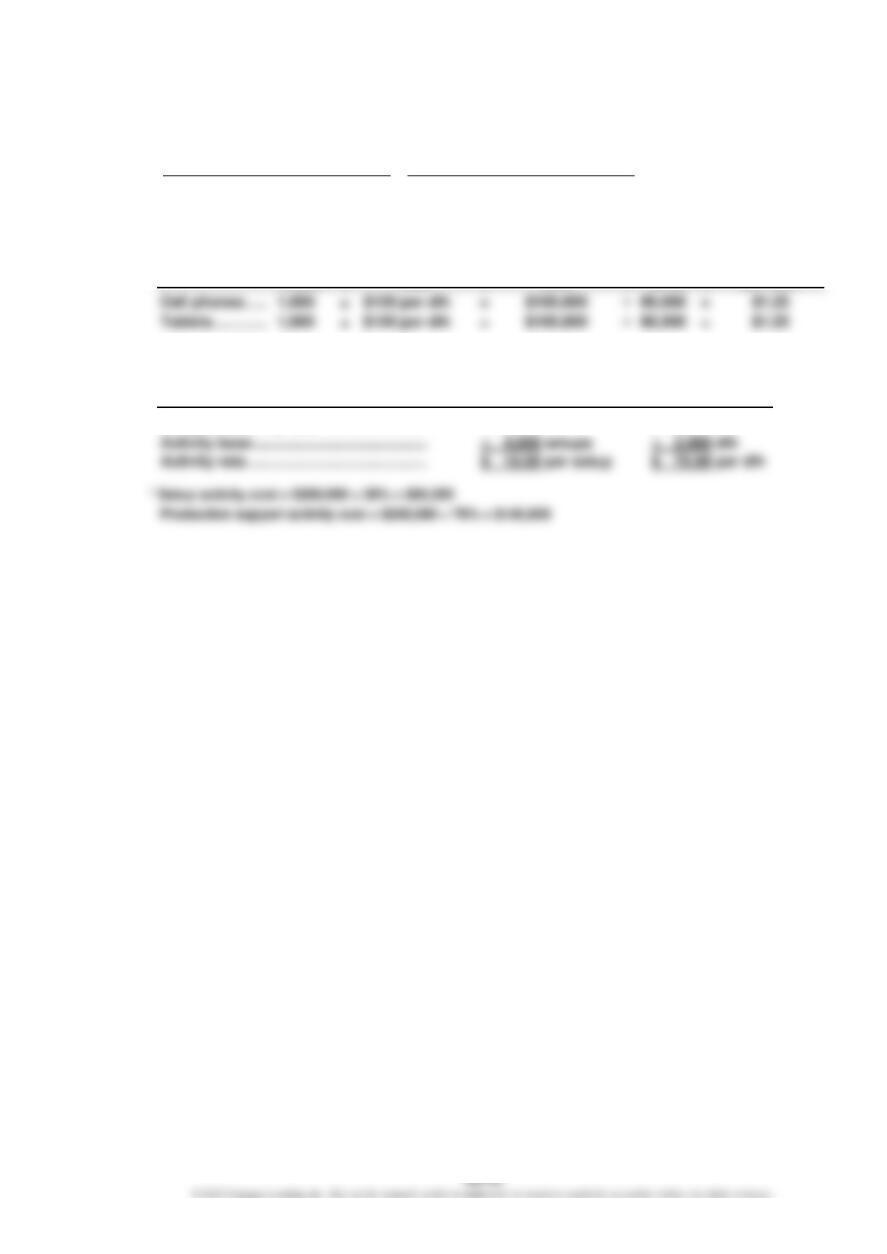
b.
Ovens
Refrigerators
Activity
Activity-
Base
Usage
×
Activity
Rate
=
Activity
Cost
Activity-
Base
Usage
×
Activity
Rate
Activity
Cost
Procurement
400
purch. ords.
$18
per purch. ord.
$ 7,200
300
purch. ords.
$18
per purch. ord.
$ 5,400
Scheduling
800
prod. ords.
$75
per prod. ord.
60,000
400
prod. ords.
$75
per prod. ord.
30,000
Materials handling
300
moves
$22
per move
200
moves
$22
per move
÷ 1,000
Activity cost per unit
$ 93.80
CHAPTER 18 (FIN MAN); CHAPTER 4 (MAN) Activity-Based Costing
Ex. 18–13 (FIN MAN); Ex. 4–13 (MAN)
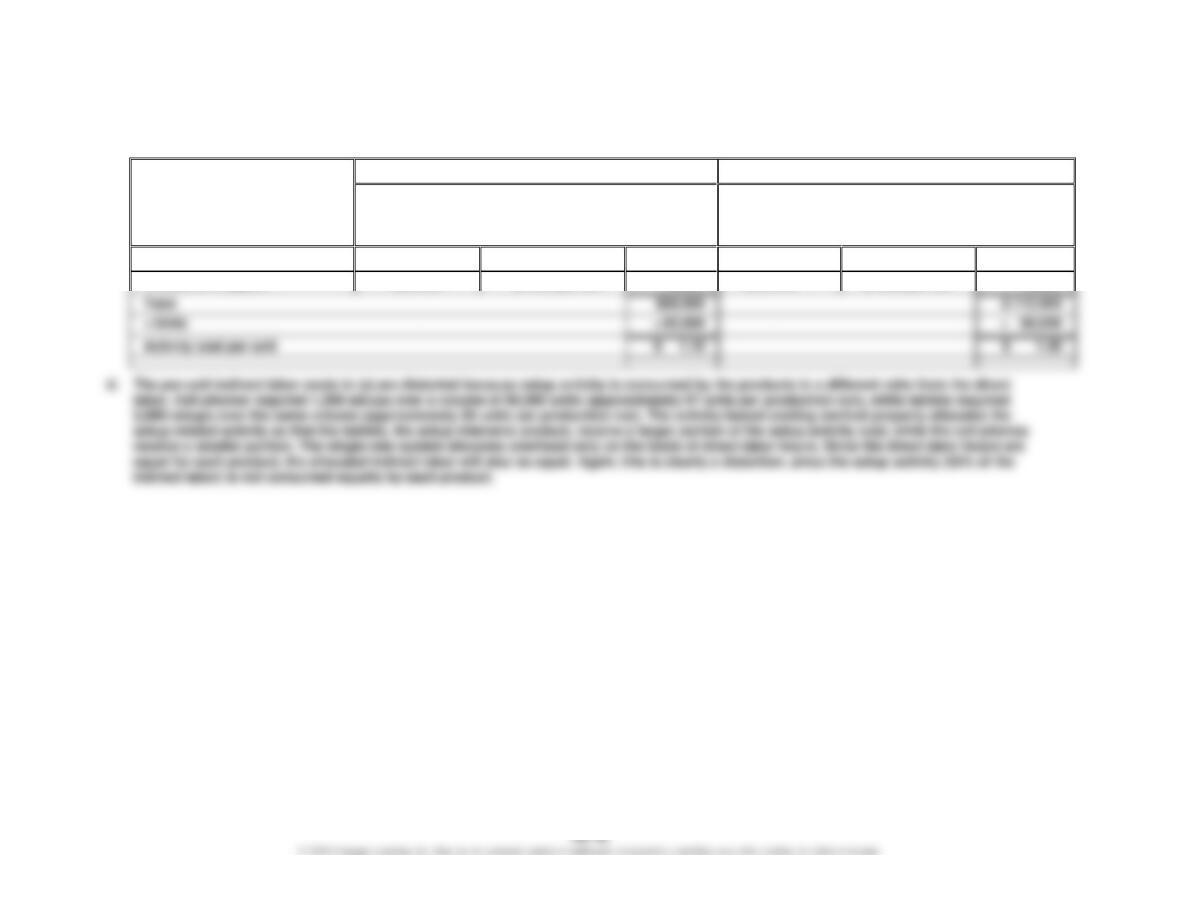
a. Single plantwide rate:
Indirect Labor $200,000
=
Plantwide Allocation Base 2,000 direct labor hours
= $100 per direct labor hour
Direct
Labor
Hours
×
Plantwide
Rate
=
Indirect Labor
Cost
÷
Units
=
Indirect
Labor Cost
per Unit
b. Activity-based rates:
Setup
Production
Support
Budgeted activity cost* ……………………
$ 60,000
$140,000
CHAPTER 18 (FIN MAN); CHAPTER 4 (MAN) Activity-Based Costing
Ex. 18–13 (FIN MAN); Ex. 4–13 (MAN) (Concluded)
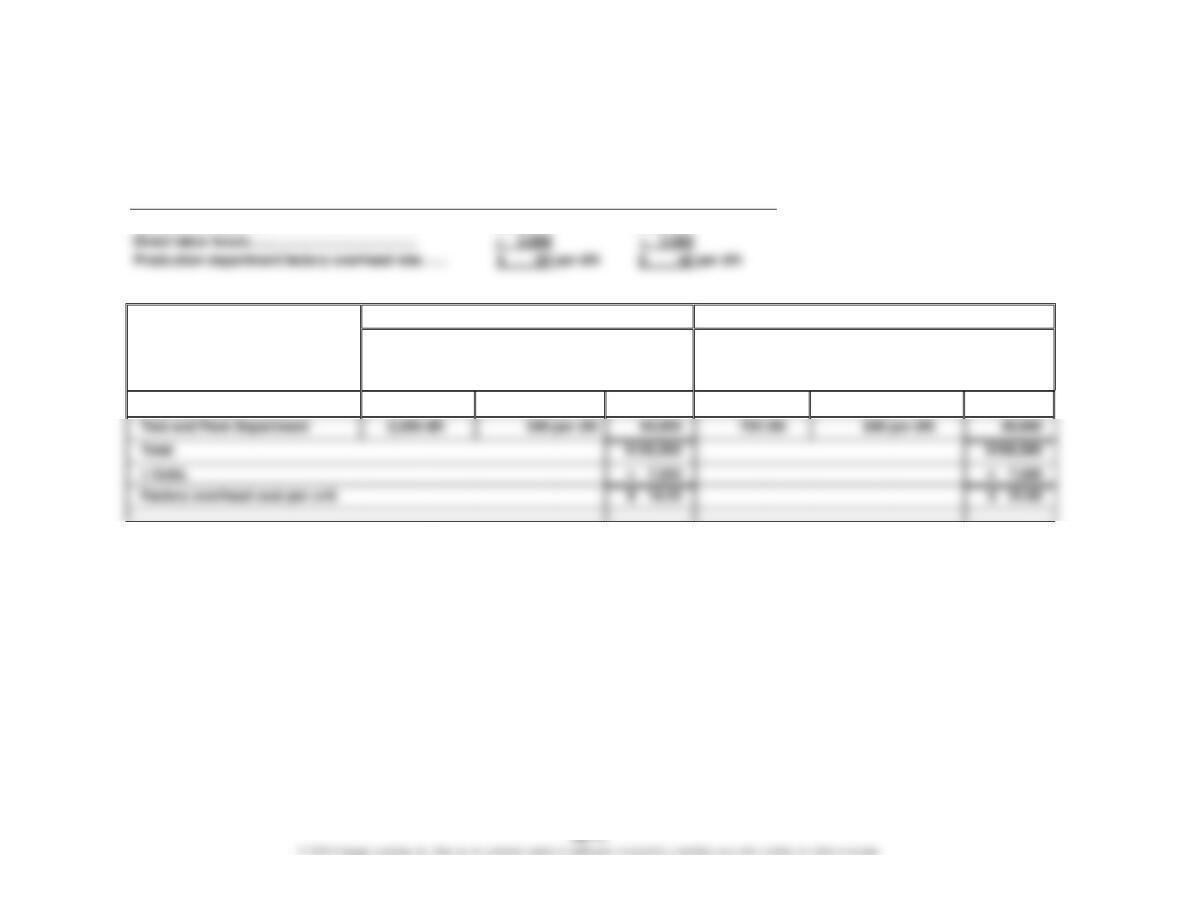
c.
Cell Phones
Tablets
Activity
Activity-
Base
Usage
×
Activity
Rate
=
Activity
Cost
Activity-
Base
Usage
×
Activity
Rate
=
Activity
Cost
Setup
1,200
setups
$15.00
per setup
$18,000
2,800
setups
$15.00
per setup
$ 42,000
Production support
1,000
dlh
$70.00
per dlh
70,000
1,000
dlh
$70.00
per dlh
70,000
Total
$88,000
CHAPTER 18 (FIN MAN); CHAPTER 4 (MAN) Activity-Based Costing
Ex. 18-14 (FIN MAN); Ex. 4-14 (MAN)
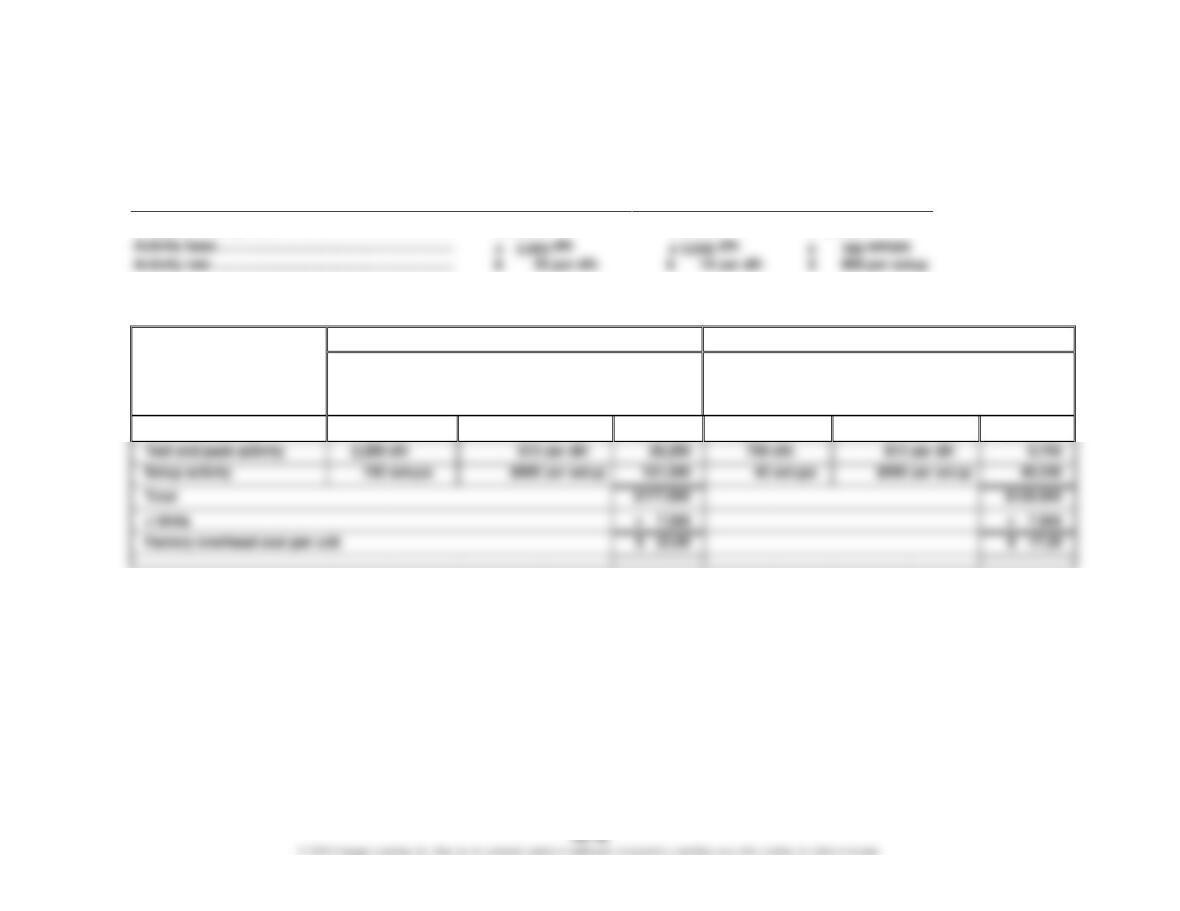
a. Production department factory overhead rates:
Assembly
Department
Test and Pack
Department
Factory overhead……………………………………….
$186,000
$120,000
b.
Activity
Blender
Toaster Oven
Allocation-
Base
Usage
×
Activity
Rate
=
Activity
Cost
Allocation-
Base
Usage
×
Activity
Rate
=
Activity
Cost
Assembly Department
750
dlh
$62
per dlh
$ 46,500
2,250
dlh
$62
per dlh
$139,500
Test and Pack Department
dlh
$40
per dlh
90,000
dlh
$40
per dlh
$136,500
$169,500
Factory overhead cost per unit
CHAPTER 18 (FIN MAN); CHAPTER 4 (MAN) Activity-Based Costing
Ex. 18-15 (FIN MAN); Ex. 4-15 (MAN)
a. Activity rates:
Assembly
Activity
Test and Pack
Activity
Setup
Activity
Budgeted activity cost ………………………………………..
$105,000
1
$39,000
2
$162,000
1 $186,000 – $81,000
2 $120,000 – $81,000
b.
Activity
Blender
Toaster Oven
Activity-
Base
Usage
×
Activity
Rate
=
Activity
Cost
Activity-
Base
Usage
×
Activity
Rate
=
Activity
Cost
Test and pack activity
dlh
$13
per dlh
dlh
$13
per dlh
Setup activity
135
$900
per setup
per setup
Factory overhead cost per unit
Assembly activity
750
dlh
$35
per dlh
$ 26,250
2,250
dlh
$35
per dlh
$ 78,750

CHAPTER 18 (FIN MAN); CHAPTER 4 (MAN) Activity-Based Costing
Ex. 18–15 (FIN MAN); Ex. 4–15 (MAN) (Concluded)
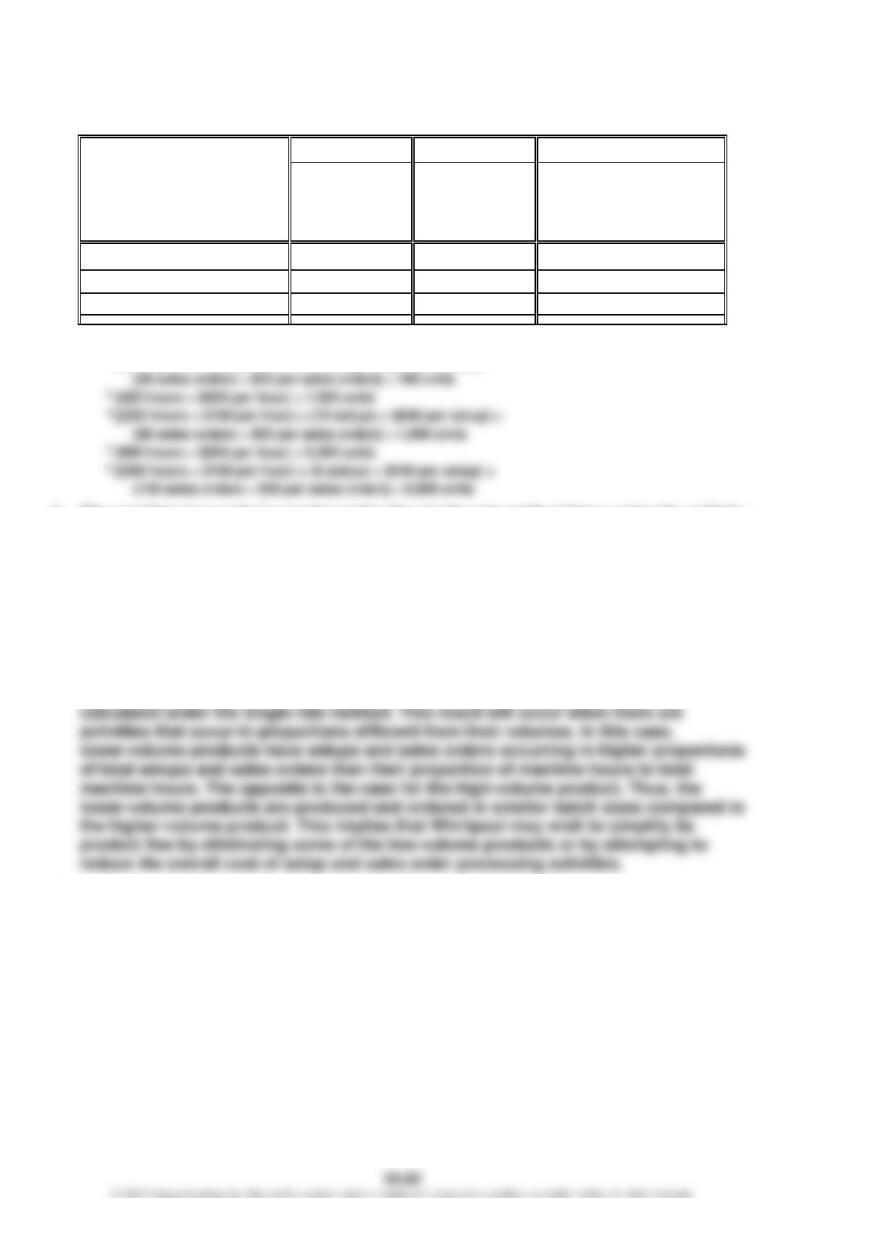
Note to Instructors: If you assigned both Ex. 18–14 and Ex. 18–15, then you can make
the following observations:
The activity-based costing approach provides unit factory overhead cost information
that is opposite to that of the multiple production department factory overhead rate
method. The reason is that the multiple production department factory overhead rate
CHAPTER 18 (FIN MAN); CHAPTER 4 (MAN) Activity-Based Costing
Ex. 18–16 (FIN MAN); Ex. 4–16 (MAN)
a.
Column A
Column B
Column C
Product Volume Class
Single Rate
Overhead
Allocation
per Unit
ABC Overhead
Allocation
per Unit
Percent Change
in Allocation
(Col. B – Col. A)/Col. A
Low
$30.001
$58.062
93.5%
Medium
30.003
29.314
(2.3)%
High
30.005
25.466
(15.1)%
1 (24 hours × $200 per hour) ÷ 160 units
2 [(24 hours × $160 per hour) + (14 setups × $240 per setup) +
b. The machine hour rate is greater under the single-rate method than under the activity-
based method because all the factory overhead is allocated by machine hours under
the single-rate method. However, only a portion of the factory overhead is allocated
under the machine rate method using activity-based costing. The remaining factory
overhead is allocated using the other two activity rates. Thus, the numerator for
determining the machine hour rate under activity-based costing must be less than the
numerator under the single machine hour rate method.
c. Column C indicates that under activity-based costing the low-volume product has a
higher per-unit cost than calculated under the single-rate method. In contrast, under
activity-based costing the high-volume product has a lower per-unit cost than
Note: The sum of the total overhead from Columns A and B is not equal because there
are only three representative products, not all of the products.