COMPARATIVE ANALYSIS CASE
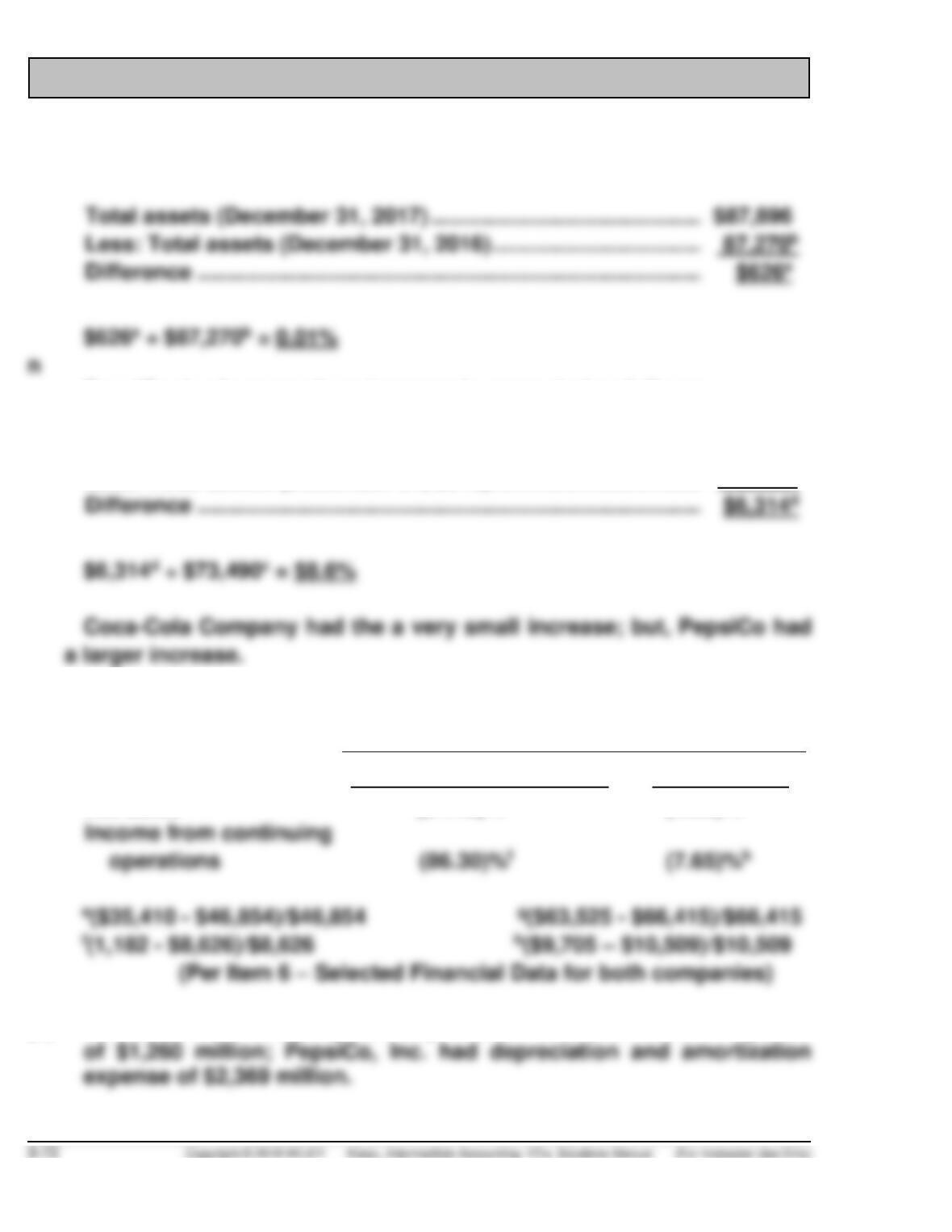
(a) The Coca-Cola Company percentage increase is computed as follows:
Total assets (December 31, 2017) …………………………………………….
Less: Total assets (December 31, 2016) ……………………………………
PepsiCo, Inc.’s percentage increase is computed as follows:
Total assets (December 30, 2017) …………………………………………….
$79,804
Less: Total assets (December 31, 2016) ……………………………………
73,490c
(b)
5-Year Growth Rate
The Coca-Cola Company
PepsiCo, Inc.
Net sales
(24.42)%e
(4.35)%g
operations
(7.65)%h
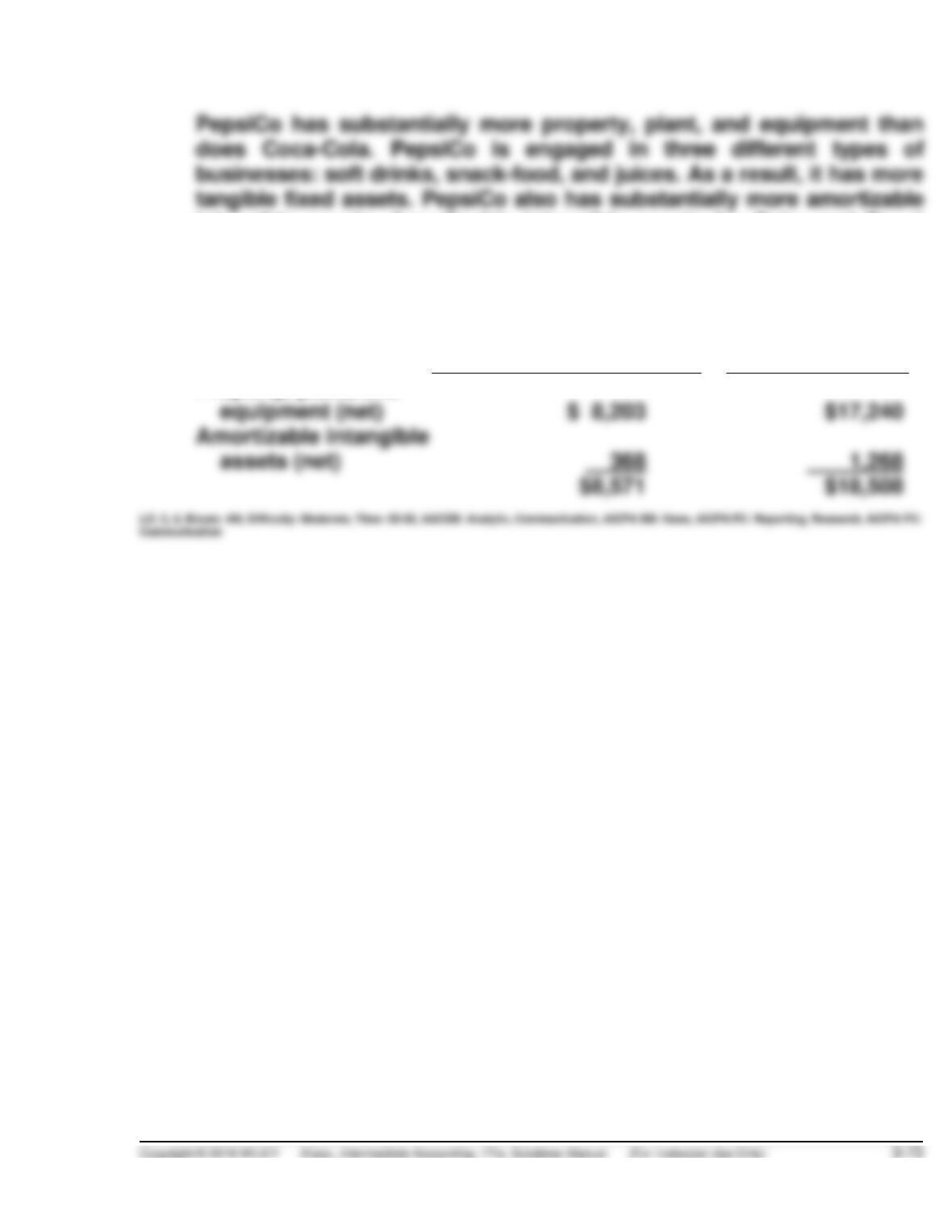
(c) The Coca-Cola Company had depreciation and amortization expense
COMPARATIVE ANALYSIS CASE (Continued)
intangible assets. Amortizable intangible assets for Coke and Pepsi
increase the amount of amortization expense recorded in income. The
amount of property, plant, and equipment and amortizable intangible
assets reported for these two companies is as follows: (000,000)
The Coca-Cola Company
PepsiCo, Inc.
Amortizable intangible
Property, plant, and
FINANCIAL STATEMENT ANALYSIS
(a)
Current
Year
Prior
Year
2 Years
Ago
%
Change
Current
year
%
Change
Last year
Sales
$14,580
$14,792
$14,197
-1.43%
4.19
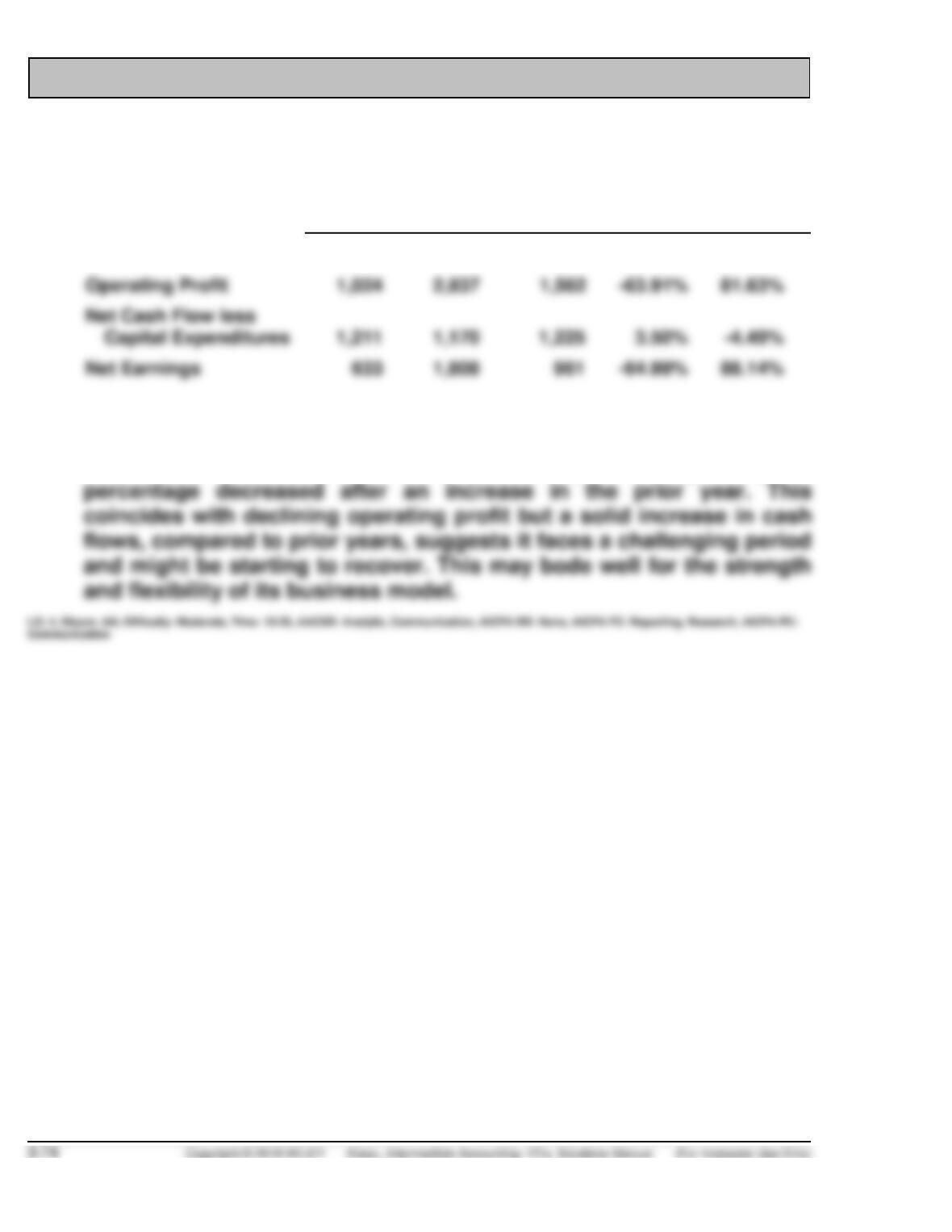
Operating Profit
Capital Expenditures
Net Earnings
(b) Kellogg experienced a slight decrease in sales in the current year
which followed an increase in the previous year. The gross profit
ACCOUNTING, ANALYSIS, AND PRINCIPLES
Accounting
Dec. 31
Depreciation Expense ……………………………………………………….
9,500a
Accumulated Depreciation—
Equipment……………………………………………………….
9,500
($9,500 = ($192,000 – $40,000) ÷ 16)
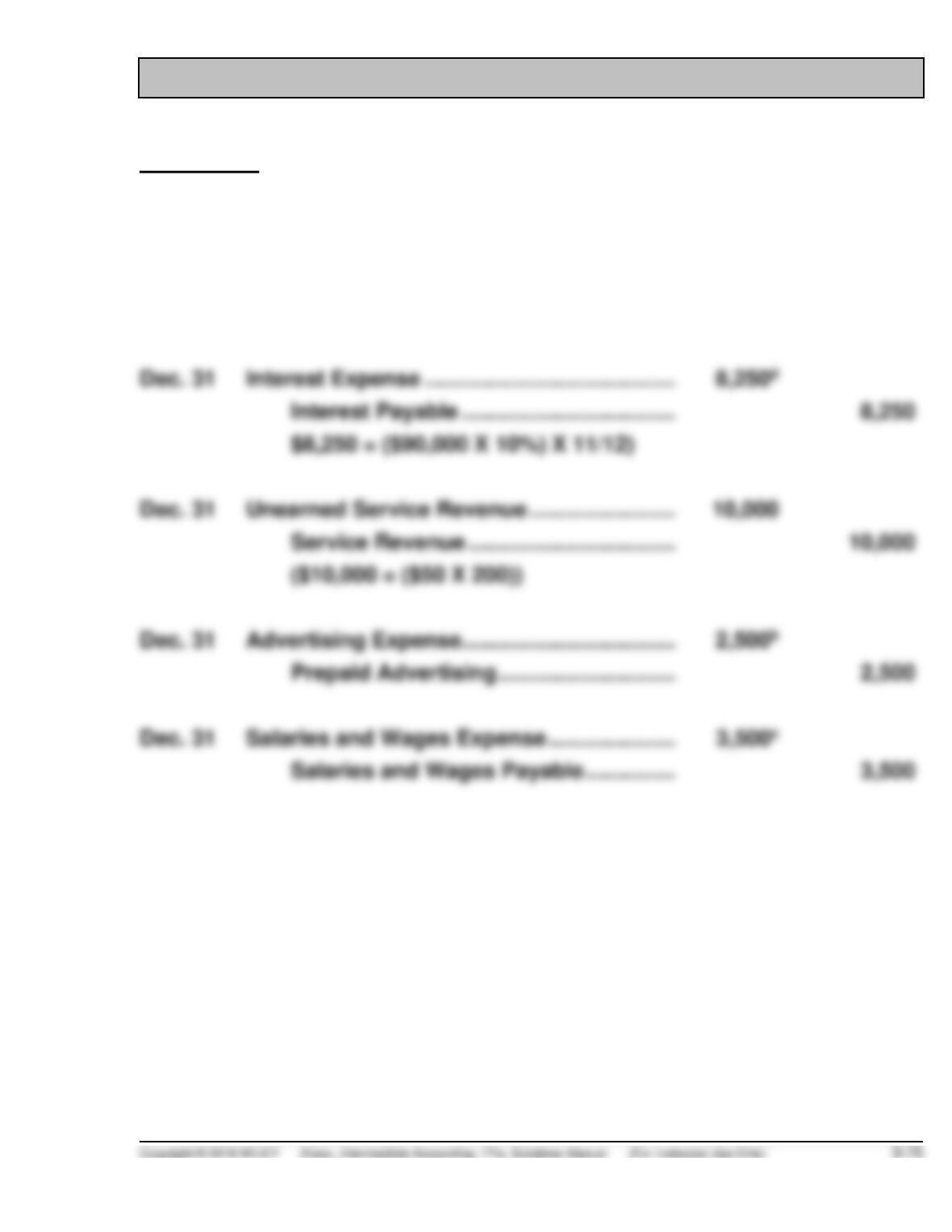
Dec. 31
Interest Expense ……………………………………………………….
Interest Payable ……………………………………………………….
$8,250 = ($90,000 X 10%) X 11/12)
Dec. 31
Unearned Service Revenue …………………………..
Service Revenue …………………………..…………………………..
($10,000 = ($50 X 200))
Dec. 31
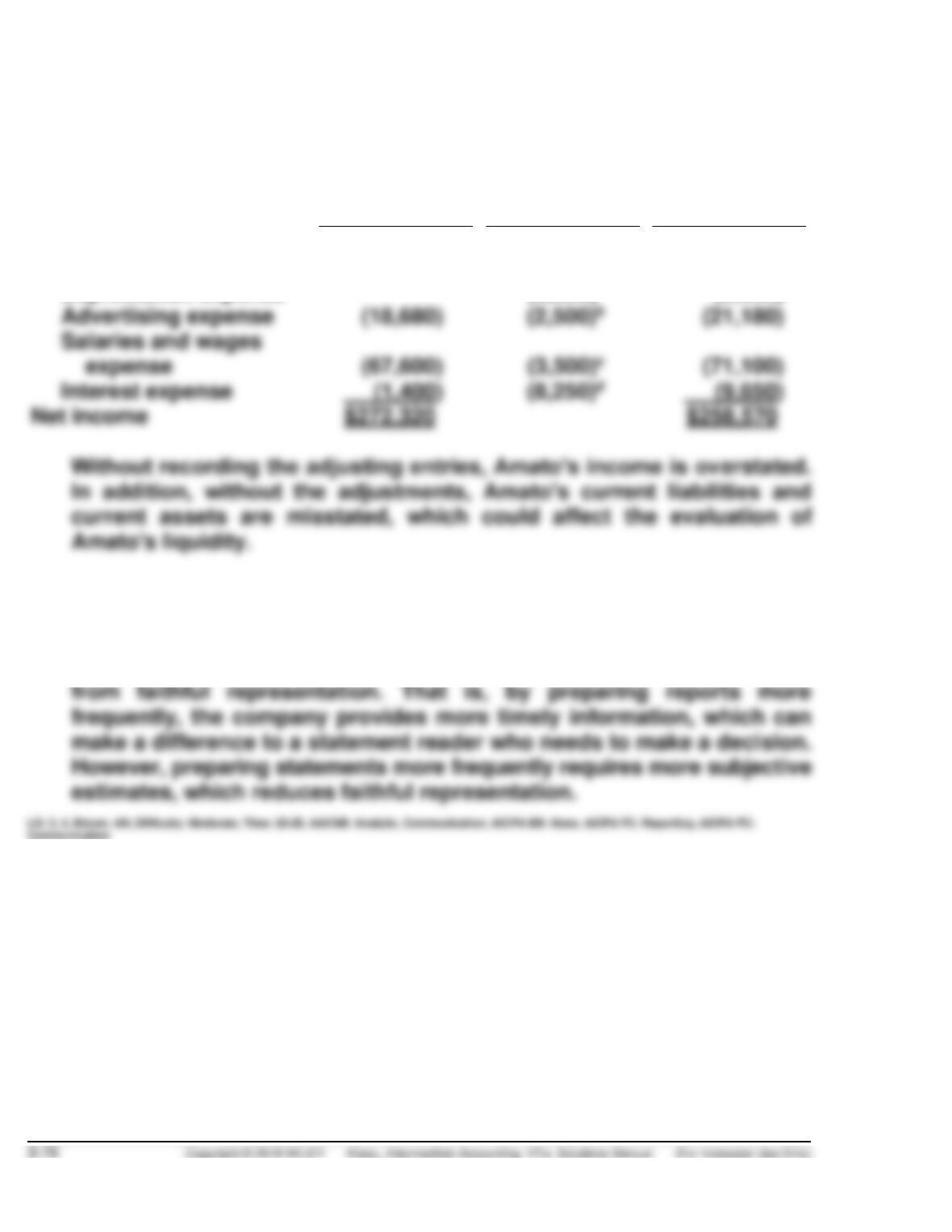
Advertising Expense ……………………………………………………….
Prepaid Advertising …………………………..
Dec. 31
Salaries and Wages Expense …………………………..
3,500c
Salaries and Wages Payable …………………………..
ACCOUNTING, ANALYSIS, AND PRINCIPLES (Continued)
Analysis
Income before
Adjustments
Adjustments
Income after
Adjustments
Ticket revenue
$360,000
$10,000
$370,000
Less:
Depreciation expense
(9,500)a
(9,500)
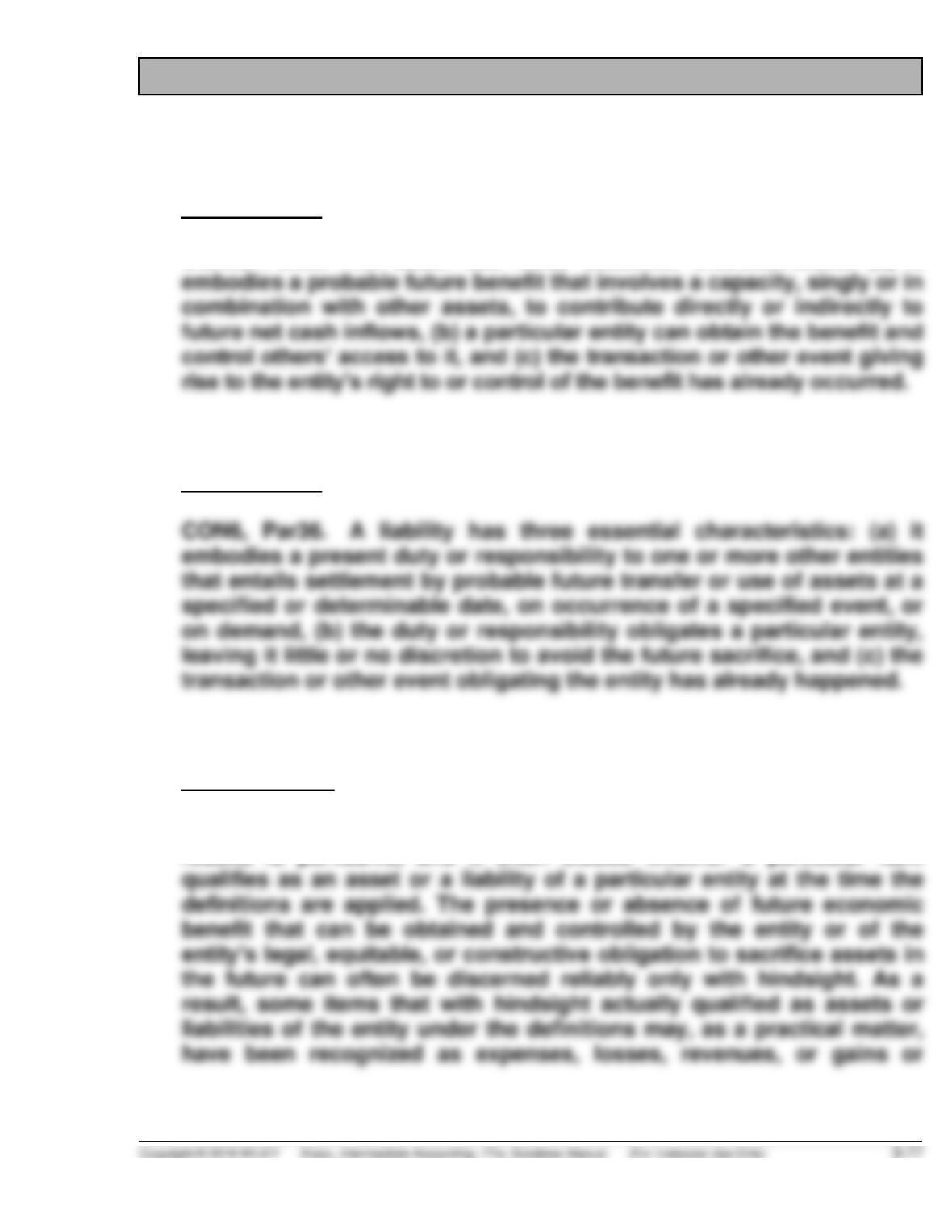
Advertising expense
(2,500)b
Interest expense
(8,250)d
(9,650)
Principles
The tradeoffs are between the timeliness of the reports, which
contributes to relevance, and verifiability, the lack of which detracts
CODIFICATION RESEARCH CASE
(a) The three essential characteristics of assets.
Search String: asset and characteristics.
CON6, Par26. An asset has three essential characteristics: (a) it
(b) Three essential characteristics of liabilities.
Search String: liability and characteristic.
(c) Uncertainty, and its effects on financial statements.
Search Strings: “uncertainty”, effect of uncertainty.
CON6, Par44. Uncertainty about economic and business activities and
results is pervasive, and it often clouds whether a particular item
CODIFICATION RESEARCH CASE (Continued)
remained unrecognized in its financial statements because of uncertainty
about whether they qualified as assets or liabilities of the entity or
because of recognition and measurement considerations stemming
from uncertainty at the time of assessment. Conversely, some items that
with hindsight did not qualify under the definitions may have been
included as assets or liabilities because of judgments made in the face
of uncertainty at the time of assessment.
CON6, Par45. An effect of uncertainty is to increase the costs of finan–
cial reporting in general and the costs of recognition and measurement
(d) The difference between realization and recognition
Search String: realization, recognition.
CON6, Par143. Realization in the most precise sense means the
process of converting noncash resources and rights into money and is
most precisely used in accounting and financial reporting to refer to
IFRS CONCEPTS AND APPLICATION
IFRS3.1
The date of transition is the beginning of the earliest period for which full
IFRS3.2
When countries accept IFRS for use as accepted accounting policies,
companies need guidance to ensure that their first IFRS financial statements
IFRS3.3
A company follows these steps:
1. Identify the timing of its first IFRS statements.
IFRS3.4
The date of the opening balance sheet is January 1, 2020. The IFRS financial
IFRS3.5
(a) Assets
53 The future economic benefit embodied in an asset is the potential
to contribute, directly or indirectly, to the flow of cash and cash
equivalents to the entity. The potential may be a productive one
55 The future economic benefits embodied in an asset may flow to
the entity in a number of ways. For example, an asset may be:
a. used singly or in combination with other assets in the
(b) Liabilities
60 An essential characteristic of a liability is that the entity has a
present obligation. An obligation is a duty or responsibility to act
or perform in a certain way. Obligations may be legally enforce-
IFRS3.5 (Continued)
61 A distinction needs to be drawn between a present obligation
and a future commitment. A decision by the management of an
entity to acquire assets in the future does not, of itself, give rise
62 The settlement of a present obligation usually involves the entity
giving up resources embodying economic benefits in order to
satisfy the claim of the other party. Settlement of a present
obligation may occur in a number of ways, for example, by:
a. payment of cash;
(c) Accrual basis
22 In order to meet their objectives, financial statements are prepared
on the accrual basis of accounting. Under this basis, the effects of
transactions and other events are recognised when they occur
IFRS3.6
(a) April 1, 2017 total assets: £8,292.5 million.
April 2, 2016 total assets: £8,476.4 million.
(e) An adjusting entry for deferrals is necessary when the receipt/disburse-
ment precedes the recognition in the financial statements. Accounts
such as prepaid pension contributions and prepaid leasehold premiums
are included in the Trade and other receivables section. Both of these