FINANCIAL ACCOUNTING – Eleventh Edition Solutions Manual
Req. 3
Personal advice will vary from student to student. The purpose of asking this
question is to challenge students to take the high road of ethical conduct by having
Chapter 3: Accrual Accounting and Income Page 94 of 105
FINANCIAL ACCOUNTING – Eleventh Edition Solutions Manual
Focus on Financials | Apple, Inc.
(15-20 min.)
Requirements
Solution:
Req. 1
Req. 2 (amounts in millions)
1. Why does a company have accrued expenses payable at year-end?
2. See Apple Inc.’s Consolidated Balance Sheets for 2013 and 2014. What was the
balance of Accrued expenses at the end of each of those balance sheet years? What
type of account is “Accrued expenses”?
3. See Note 3 — Consolidated Financial Statement Details. Go to the section of that
note for Accrued expenses. What expenses does Apple Inc. accrue according to this
note? Verify that the total of the accrued expenses for each year is the same as the
balance of Accrued expenses on the balance sheet for each of the two balance sheet
years.
4. Compute net working capital, the current ratio, and the debt ratio for Apple Inc., at
September 28, 2013, and September 27, 2014. Did the amount of net working capital
and ratio values improve, deteriorate, or hold steady during fiscal 2014? Do Apple Inc.’s
ratio values indicate relative financial strength or weakness?
Accrued expenses are expenses that have been incurred but that have not yet been
paid as of the balance sheet date. The accrual basis of accounting and the expense
Accrued expenses were $18,453 and $13,856 for 2014 and 2013 respectively. Accrued
Chapter 3: Accrual Accounting and Income Page 95 of 105
Req. 3 (amounts in millions)
Apple accrues warranties, marketing and selling expenses, taxes, compensation and
FINANCIAL ACCOUNTING – Eleventh Edition Solutions Manual
Req. 4 (amounts in millions)
(Dollar amounts in millions)
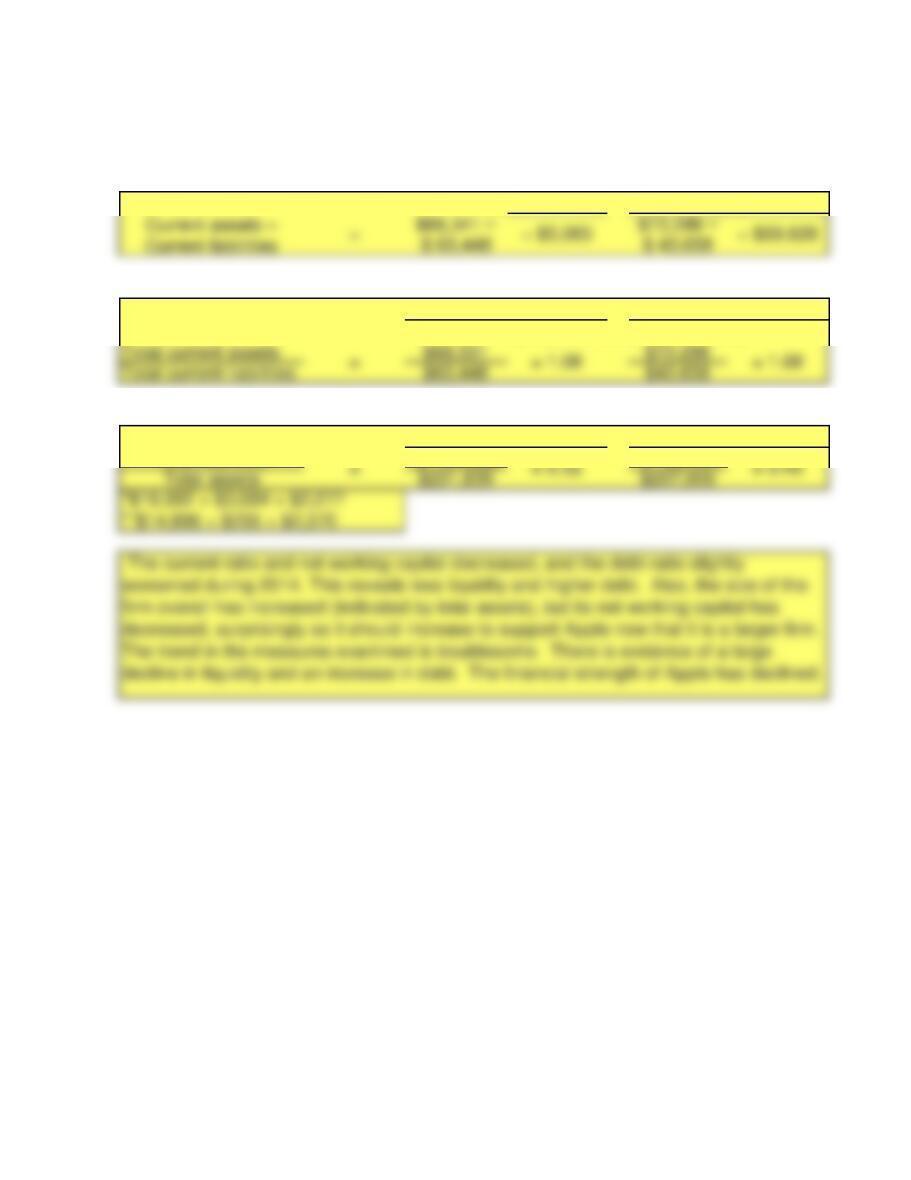
$ 120,282 $ 83,451
2013
Working Capital:
2014
2013
Total liabilities
Current ratio:
2013
2014
Debt ratio:
2014
Chapter 3: Accrual Accounting and Income Page 96 of 105

FINANCIAL ACCOUNTING – Eleventh Edition Solutions Manual
Focus on Analysis | Under Armour, Inc.
(15-20 min.)
Solution:
Req. 1
1. Examine Note 2, Summary of Significant Accounting Policies. Explain the company’s
policy for recognizing each type of revenue that is included in the Consolidated
Statements of Income.
2. Examine Under Armour, Inc.’s, consolidated balance sheets at December 31, 2014,
and December 31, 2013, as well as Note 2, Summary of Significant Accounting
Policies. Ending net accounts receivable for 2013 (beginning balance for 2014) were
$210 million. Ending net receivables for 2014 were $280 million (all amounts are
rounded to the nearest million). Explain the source of these receivables. Were all of
these amounts considered collectible (see Allowance for Doubtful Accounts under Note
2)? Why or why not?
3. Refer to Under Armour, Inc.’s, consolidated balance sheets at December 31, 2014,
and December 31, 2013, and examine the balances of the account entitled “Prepaid
expenses and other current assets.” What specific accounts might be included in this
balance sheet line item? The beginning balance is $64 million, and the ending balance
is $87 million. Construct a journal entry or entries that might account for the change.
4. View Note 4, Property and Equipment, Net. Notice that accumulated depreciation
and amortization stood at $172 million at the end of 2013 and at $217 million at year-
end 2014. Assume that depreciation and amortization expense for 2014 was $72
million. Explain what must have happened to account for the remainder of the change in
the accumulated depreciation account during 2014. (Challenge)
5. In Note 2 Summary of Significant Accounting Policies, locate the paragraph entitled
“Accrued Expenses.” What are the primary categories of items in Accrued Expenses?
What type of account is Accrued Expenses? Did the company’s Accrued Expenses
increase, decrease, or stay the same from 2013 to 2014? How would this change have
impacted the company’s overall net income in 2014?
Revenues are recognized at the time that a transfer of title and risk of loss occurs.
Additionally, Under Armour recognizes revenue from licensees in the form of initial fees,
Chapter 3: Accrual Accounting and Income Page 97 of 105
FINANCIAL ACCOUNTING – Eleventh Edition Solutions Manual
Req. 2
DATE DEBIT CREDIT
Req. 3 (in millions)
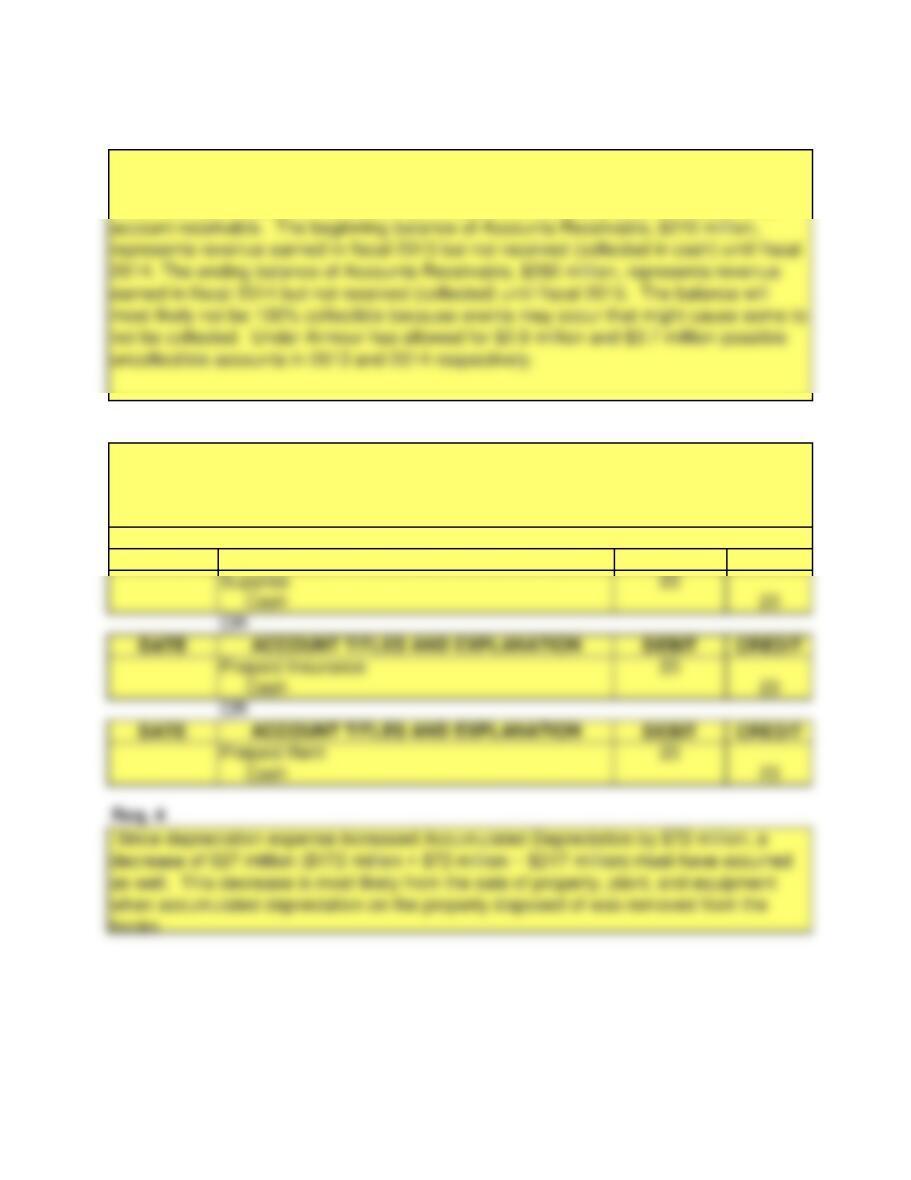
Under Armour’s receivables are primarily from its sales and licensees. The cash and
royalties from the sales and licensees are generally due within 30 days of the sale.
Thus, the receivables are included in revenues when the sales occur and become an
“Prepaid expenses and other current assets” include expenses that Under Armour has
paid for, but has not yet used. Some examples of this could include supplies,
insurance, advertising, or rent:
ACCOUNT TITLES AND EXPLANATION
Journal
Chapter 3: Accrual Accounting and Income Page 98 of 105
DATE DEBIT CREDIT
DATE DEBIT CREDIT
Req. 4
ACCOUNT TITLES AND EXPLANATION
ACCOUNT TITLES AND EXPLANATION
FINANCIAL ACCOUNTING – Eleventh Edition Solutions Manual
Depreciation on assets sold 27 Dec. 31, 2013 balance 172
Req. 5
The primary categories of items in Accrued Expenses are Accrued Compensation and
Benefits, and Accrued Marketing Expenses. Accrued Expenses represent an accrued
Accumulated Depreciation (in millions)
Chapter 3: Accrual Accounting and Income Page 99 of 105
FINANCIAL ACCOUNTING – Eleventh Edition Solutions Manual
Group Project
(45 min.)
Solution:
Req. 1 (after Req. 6 – on next sheet tab)
1. Analyze the paragraphs above for evidence of business transactions. As you do so,
prepare an Excel spreadsheet that includes every financial statement account involved
(e.g., cash, accounts receivable, supplies, property & equipment, etc.). Use the
spreadsheet format from Exhibit 2-1 as a model. (Hint: To make sure you enter the
transactions correctly and completely, number the transactions consecutively as you
recognize them.)
2. From the spreadsheet you created in requirement 1, prepare the single step income
statement of Abel Electronics, Inc., using generally accepted accounting principles, for
the three months ended December 31, 2016.
3. From the spreadsheet you created in requirement 1, prepare the statement of
retained earnings of Abel Electronics, Inc. for the three months ended December 31,
2016.
4. From the spreadsheet you created in requirement 1, prepare the balance sheet for
Abel Electronics, Inc., as of December 31, 2016.
5. Analyze the account “cash” that you created in requirement 1, and prepare a
statement of cash flows for Abel Electronics, Inc., for the three months ended
December 31, 2016. Divide the various increases and decreases to the account into
three categories: operating, investing, and financing. Discuss among your team
members what these categories mean. (Challenge)
6. Thoroughly analyze Abel Electronics, Inc.’s creditworthiness for the loan at South
Congress Bank. For this purpose, assume that the term of the loan is 5 years, and that
the principal balance is not due and payable until the end of the term of the loan. Only
interest is payable yearly. Use all of the ratios you have learned so far. Consider not
only Abel’s present position but its position should the loan be granted. If you were a
loan officer for the bank, would you approve Abel’s request for the loan? Why or why
not?
Chapter 3: Accrual Accounting and Income Page 100 of 105
FINANCIAL ACCOUNTING – Eleventh Edition Solutions Manual
Req. 2
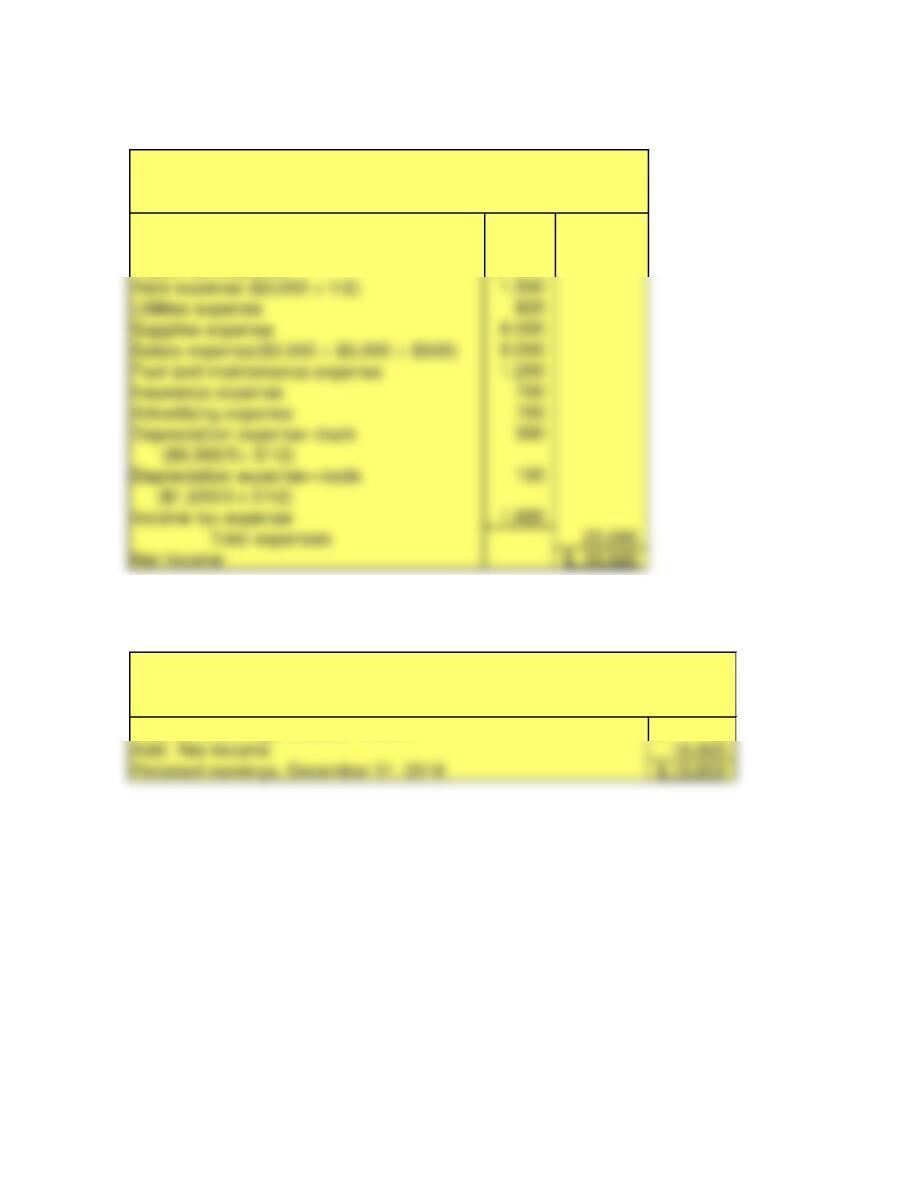
36,000$
575$
Req. 3
0$
Add: Net income
Retained earnings, December 31, 2016
Abel Electronics, Inc.
Statement of Retained Earnings
Three Months Ended December 31, 2016
Three Months Ended December 31, 2016
Service revenue ($33,000 + $3,000)
Income Statement
Abel Electronics, Inc.
Expenses:
Payroll tax expense
Retained earnings, October 1, 2016
Chapter 3: Accrual Accounting and Income Page 101 of 105
825
700
700
300
100
Net Income
Supplies expense
Salary expense($3,500 + $5,000 + $500)
Fuel and maintenance expense
Insurance expense
Utilities expense
($6,000/5× 3/12)
Total expenses
Income tax expense
($1,200/3 x 3/12)
Rent expense ($3,000 × 1/2)
Advertising expense
Depreciation expense–truck
FINANCIAL ACCOUNTING – Eleventh Edition Solutions Manual
Req. 4
Current: Current:
Cash 10,800$ 500$
Salary payable
Abel Electronics, Inc.
ASSETS
LIABILITIES
Balance Sheet
December 31, 2016
Chapter 3: Accrual Accounting and Income Page 102 of 105
Advertising payable
Income tax payable
Accounts receivable
FINANCIAL ACCOUNTING – Eleventh Edition Solutions Manual
Req. 5
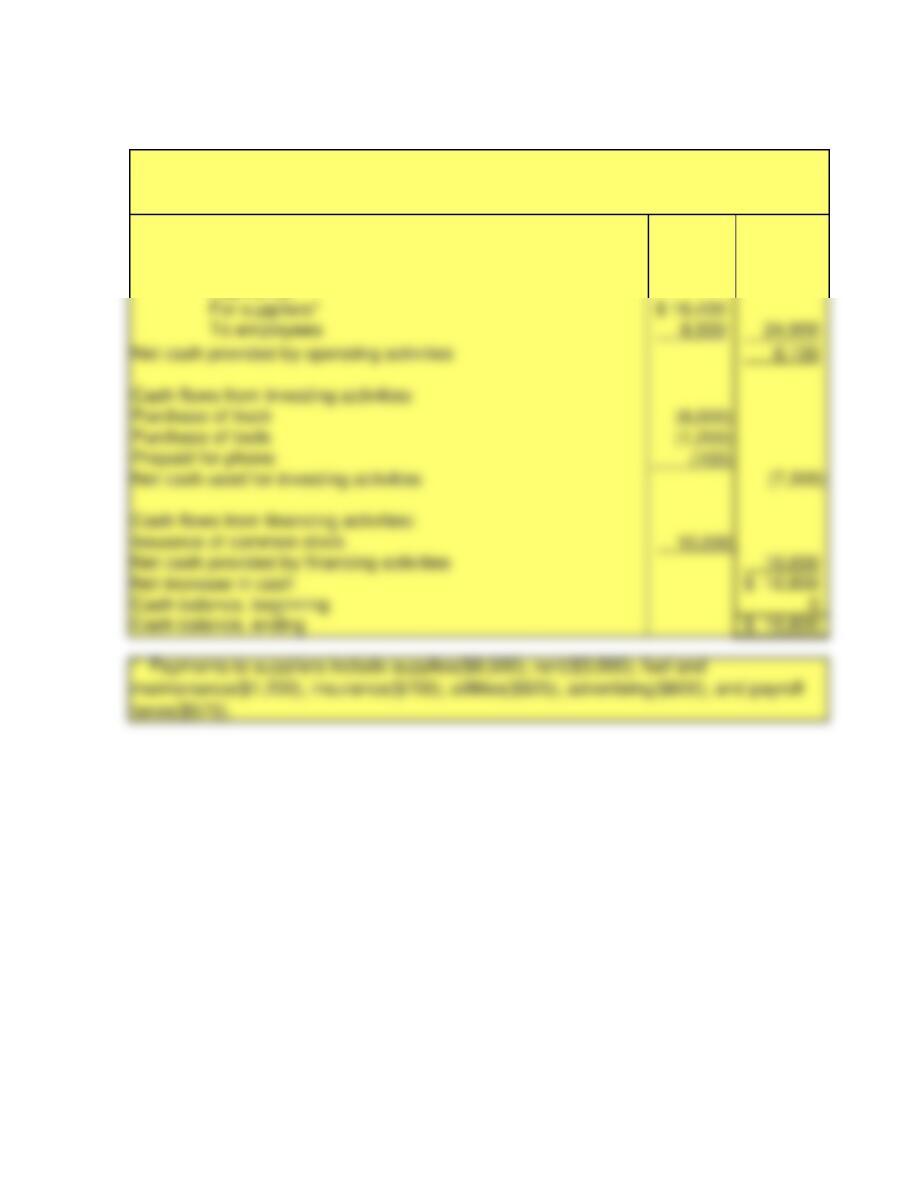
Cash flows from operating activities: 33,000$
Collections from customers
Payments:
Abel Electronics, Inc.
Statement of Cash Flows
Three Months Ended December 31, 2016
Chapter 3: Accrual Accounting and Income Page 103 of 105
Net cash provided by operating activities 8,100
Cash flows from investing activities:
Purchase of truck (6,000)
Purchase of tools (1,200)
Prepaid for phone (100)
Net cash used for investing activities (7,300)
Cash flows from financing activities:
Issuance of common stock 10,000
Net cash provided by financing activities 10,000
Net increase in cash 10,800$
Cash balance, beginning 0
FINANCIAL ACCOUNTING – Eleventh Edition Solutions Manual
Req. 6
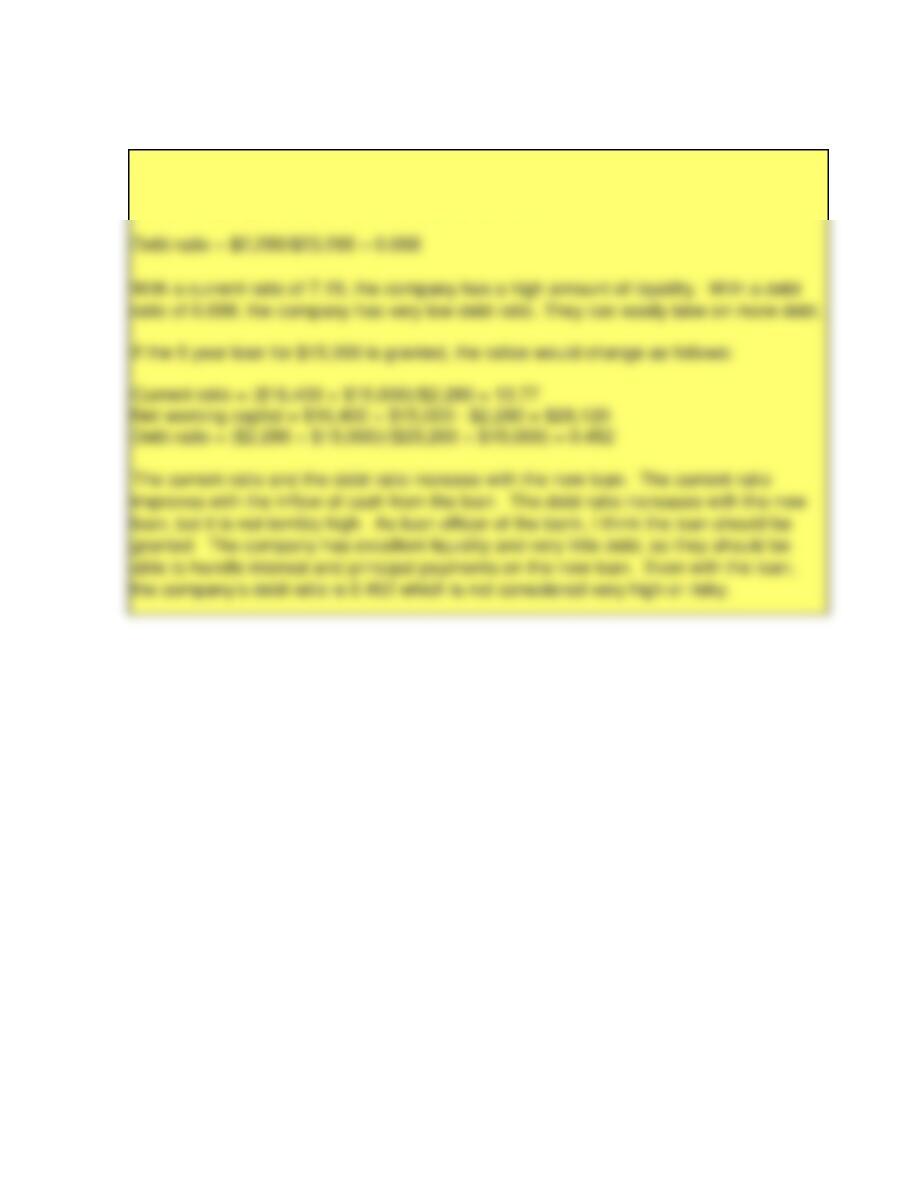
Current ratio $16,400/2,280 = 7.19
Net working capital = $16,400 – $2,280 = $14,120
Chapter 3: Accrual Accounting and Income Page 104 of 105
Debt ratio = $2,280/$23,200 = 0.098
FINANCIAL ACCOUNTING – Eleventh Edition Solutions Manual
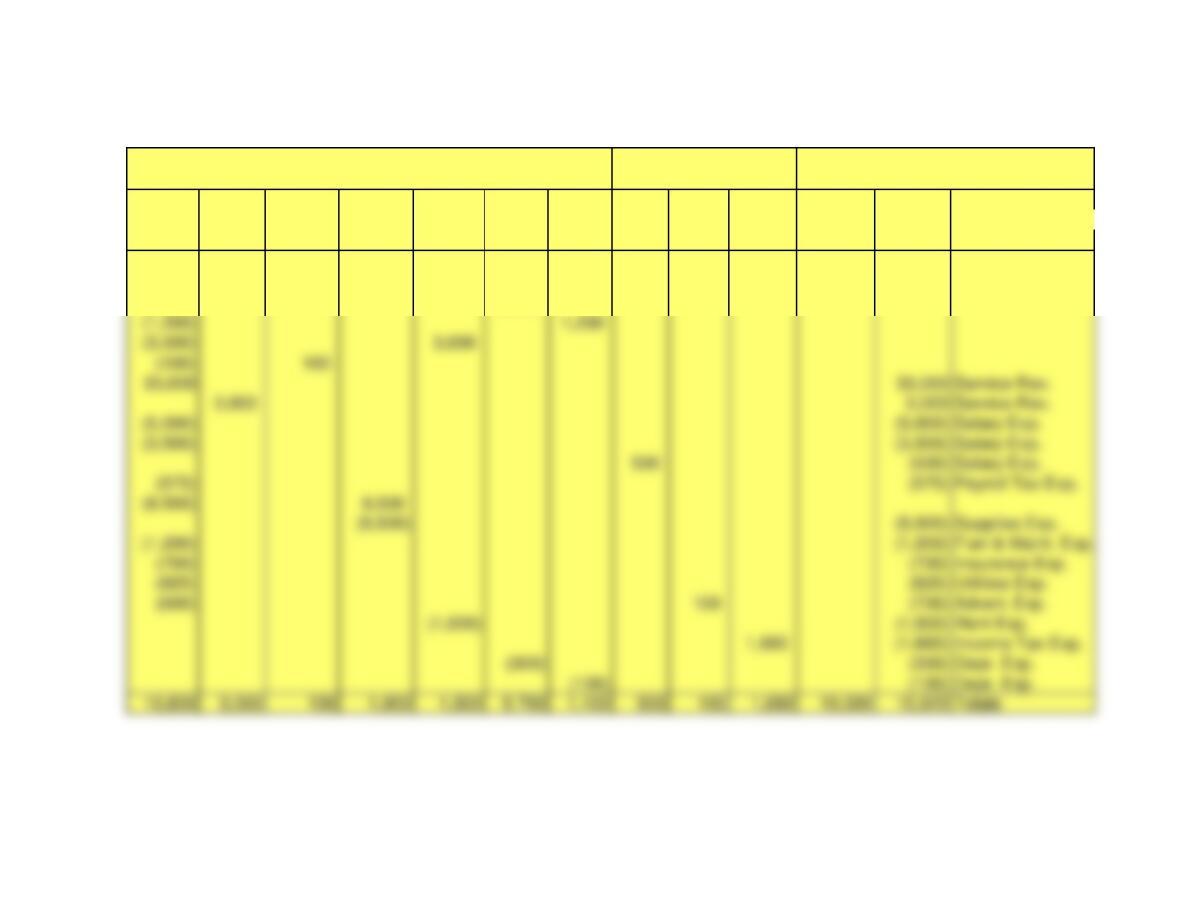
Req. 1
Cash Acct. Phone Prepaid Salary Advert. Income Common Retained Stockholders’
Rec. Deposit Supplies Rent Truck Tools Pay. Pay. Taxes Stock Earnings Equity Transaction
Pay.
10,000 10,000 Issued stock
(6,000) 6,000
ASSETS
LIABILITIES
STOCKHOLDERS’ EQUITY
Chapter 3: Accrual Accounting and Income Page 105 of 105
(1,200) 1,200
(3,000) 3,000
(5,000) (5,000) Salary Exp.
(3,500) (3,500) Salary Exp.
(9,500) 9,500
(1,200) (1,200)