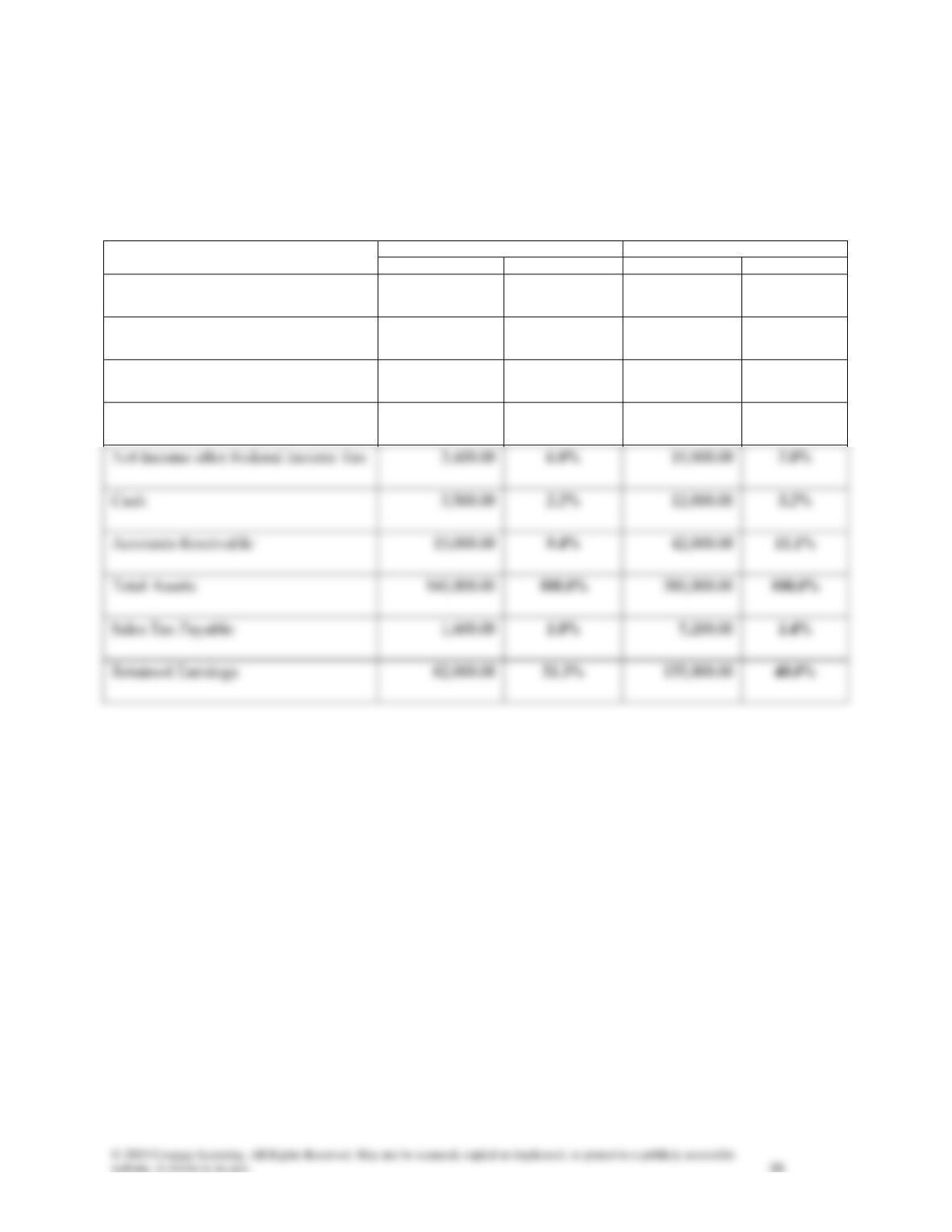
Drill 17-D1 Analyzing financial statements
INSTRUCTIONS:
Selected comparative income statement and balance sheet amounts are given below. Calculate
the vertical analysis ratios for each item. Round percentage calculations to the nearest 0.1%.
Financial Statement Item
Current Year
Prior Year
Amount
Percent
Amount
Percent
Sales
50,000.00
100.0%
200,000.00
100.0%
Gross Profit
30,000.00
60.0%
80,000.00
40.0%
Salary Expense
15,000.00
30.0%
30,000.00
15.0%
Other Revenue
250.00
0.5%
350.00
0.2%
Cash
2.2%
12,000.00
3.2%
Accounts Receivable
15,000.00
9.4%
42,000.00
11.1%
Total Assets
160,000.00
100.0%
380,000.00
100.0%
Retained Earnings
82,000.00
51.3%
155,000.00
40.8%
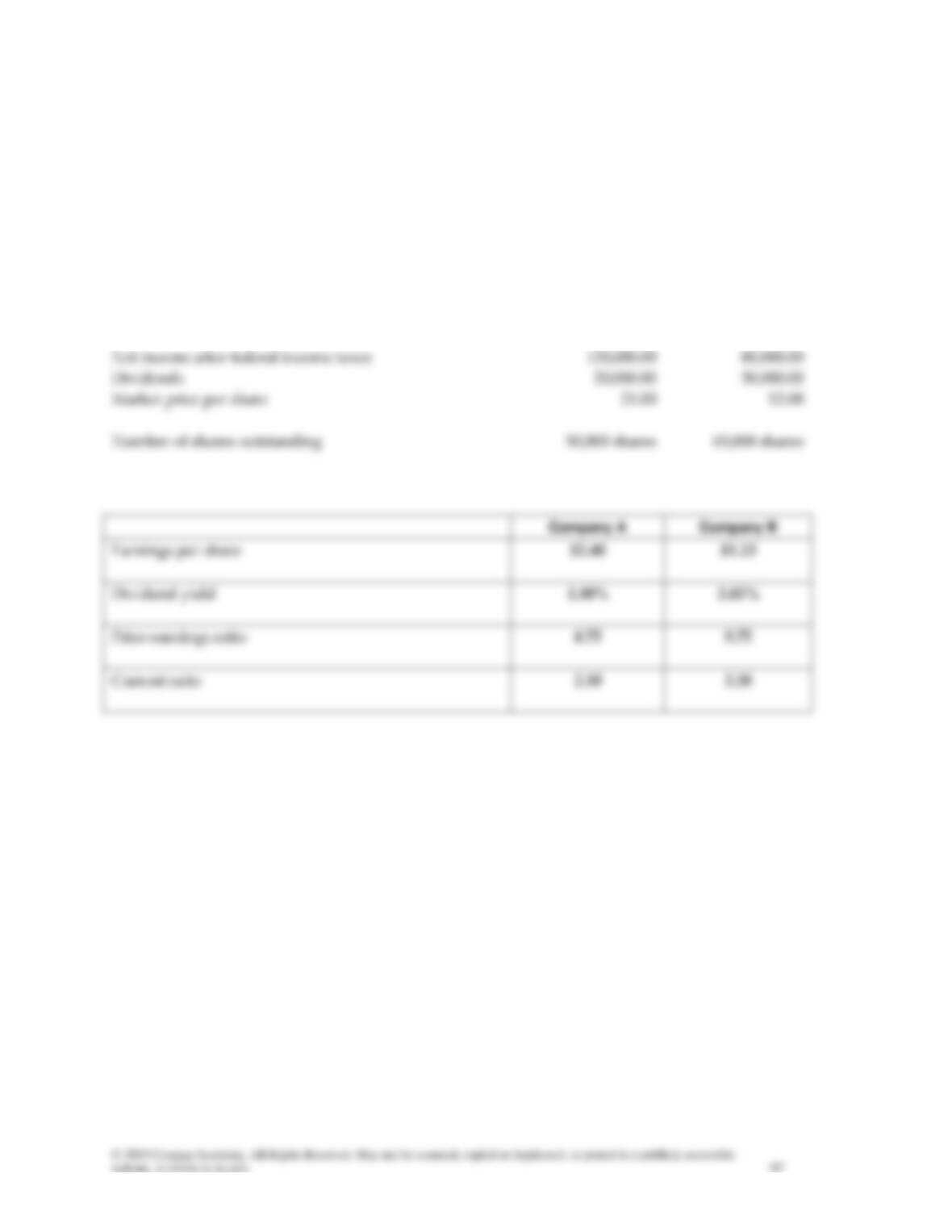
Drill 17-D2 Analyzing financial statements
INSTRUCTIONS:
Selected financial information for two companies is given below. Calculate the financial ratios
listed in the table. Round calculations to two decimal places.
Company A
Company B
Total current assets
$100,000.00
$220,000.00
Total assets
350,000.00
600,000.00
Total current liabilities
40,000.00
65,000.00
Net sales
800,000.00
95,000.00
Net income after federal income taxes
120,000.00
80,000.00
Dividends
30,000.00
Market price per share
Number of shares outstanding
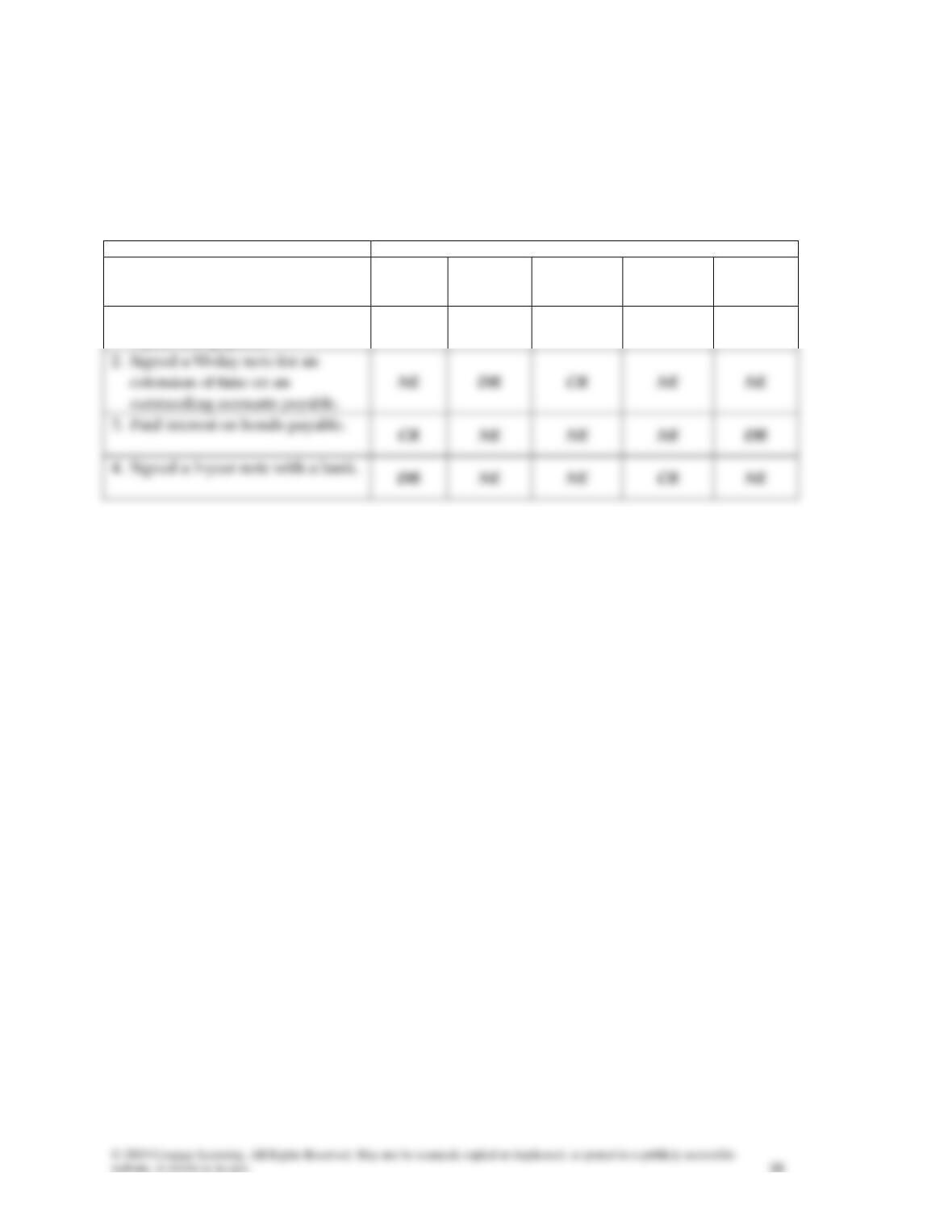
Drill 18-D1 Analyzing financial statements
INSTRUCTIONS:
On the form below, analyze each entry. For each entry, indicate how each account is affected by
writing one of the following: DR if debited, CR if credit, or NE if no entry is made.
General Ledger Accounts
Transaction
Cash
Accounts
Payable
Notes
Payable
Long-term
Notes
Payable
Interest
Expense
1. Made a monthly payment on a
5-year note payable.
CR
NE
NE
DR
DR
4. Signed a 5-year note with a bank.
NE
NE
NE
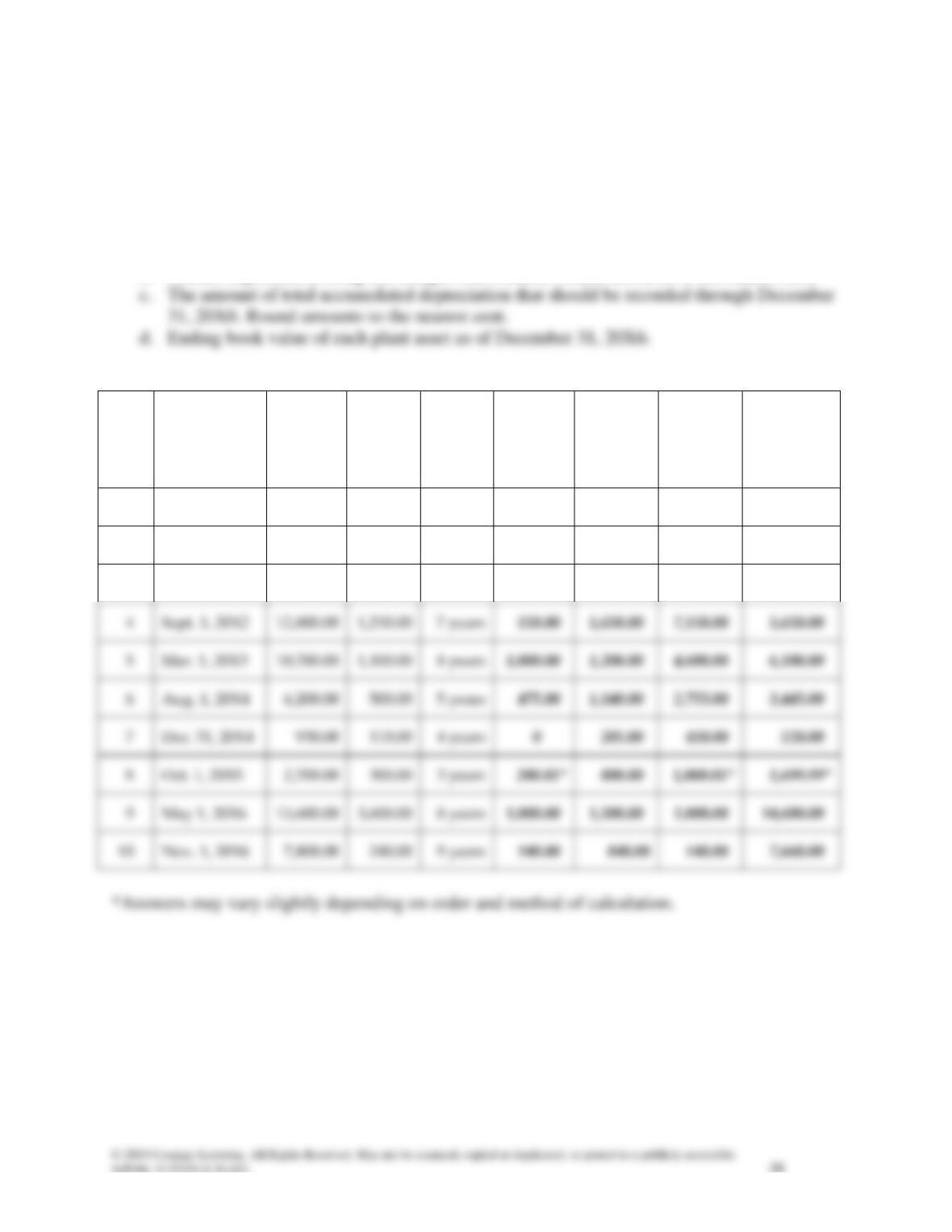
Drill 18-D2 Calculating depreciation and book value of plant assets
A form showing summary information about ten plant assets is given below.
INSTRUCTIONS:
For each of the six stores, calculate three amounts:
a. The amount of depreciation for the first year using the straight-line method. Calculate the
time of depreciation to the nearest number of months. Round amounts to the nearest cent.
b. Annual depreciation using the straight-line method. Round amounts to the nearest cent.
Plant
Asset
Date
Bought
Original
Cost
Est.
Salvage
Value
Est.
Useful
Life
(a)
First
Year’s
Deprec.
(b)
Annual
Deprec.
(c)
Total
Accum.
Deprec.
As of
12/31/X6
(d)
Book Value
12/31/X6
1
Jan. 1, 20X1
$1,050.00
$150.00
6 years
$150.00
$150.00
$900.00
$150.00
2
July 1, 20X1
4,700.00
400.00
10 years
215.00*
430.00*
2,365.00*
2,335.00*
3
Apr. 1, 20X2
25,500.00
1,500.00
15 years
1,199.97*
1,600.00
7,599.97*
17,900.03*
4
Sept. 1, 20X2
12,800.00
1,250.00
7 years
1,650.00
5
Mar. 1, 20X3
8 years
1,200.00
6,100.00
6
Aug. 1, 20X4
6,200.00
5 years
1,140.00
7
Dec. 31, 20X4
4 years
8
Oct. 1, 20X5
2,700.00
300.00
3 years
200.01*
800.00
1,000.01*
1,699.99*
9
May 1, 20X6
15,600.00
3,600.00
8 years
1,500.00
14,600.00
Nov. 1, 20X6
7,800.00
9 years
Drill 19-D1 Calculating cost of ending inventory using fifo, lifo, and weighted-average
methods
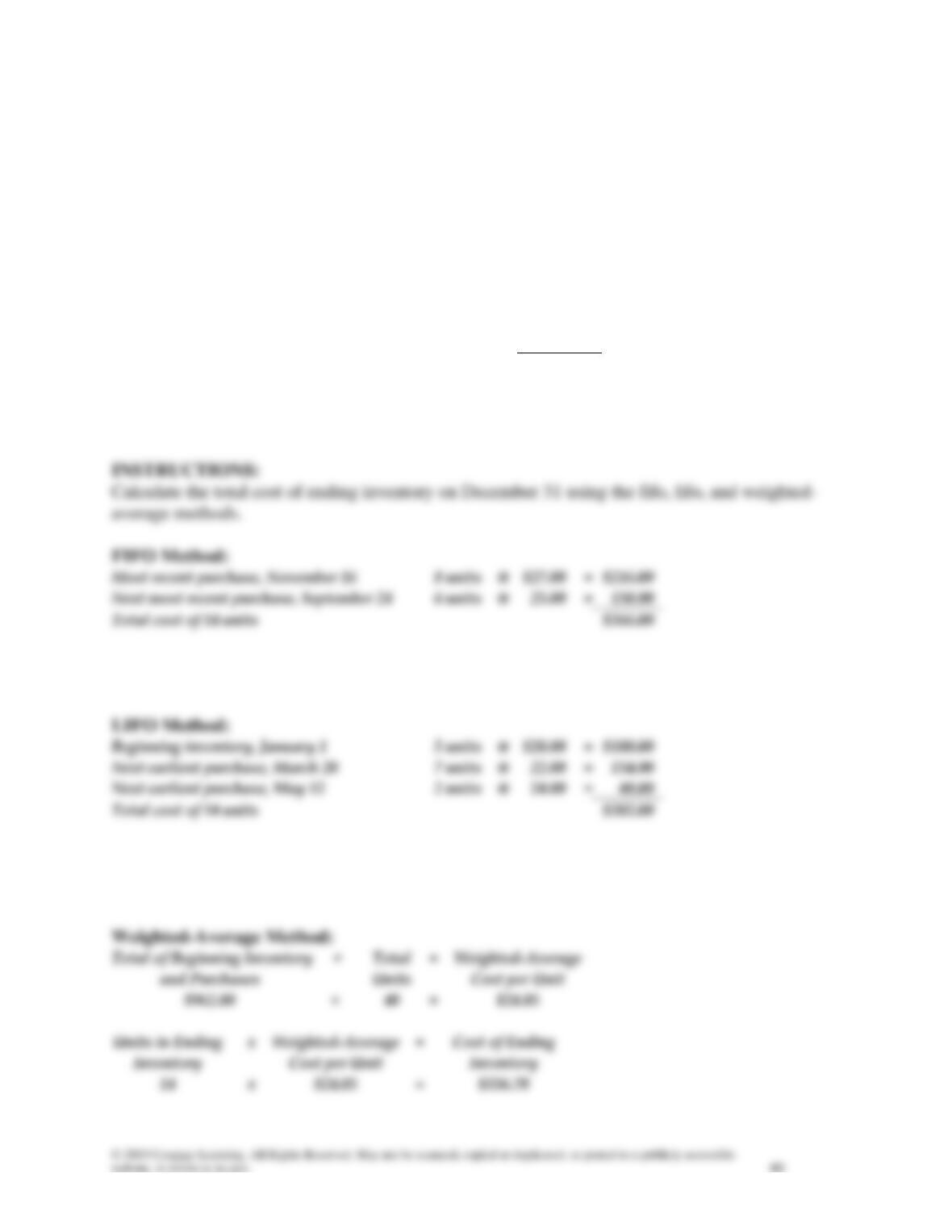
Accounting records at Zapata Company show the following beginning inventory and purchases
for Inventory Item No. 87.
Purchase
Dates
Units
Unit
Price
Total
Cost
January 1, beginning inventory ……..
5
$20.00
$100.00
March 20, purchase ………………………..
7
22.00
154.00
May 12, purchase …………………………..
8
24.00
192.00
September 24, purchase …………………
12
25.00
300.00
November 16, purchase …………………
8
27.00
216.00
Total available ……………………………….
40
$962.00
Units sold ………………………………………
26
Units in inventory, December 31 ……
14
Drill 20-D1 Calculating maturity dates and interest on notes
INSTRUCTIONS:
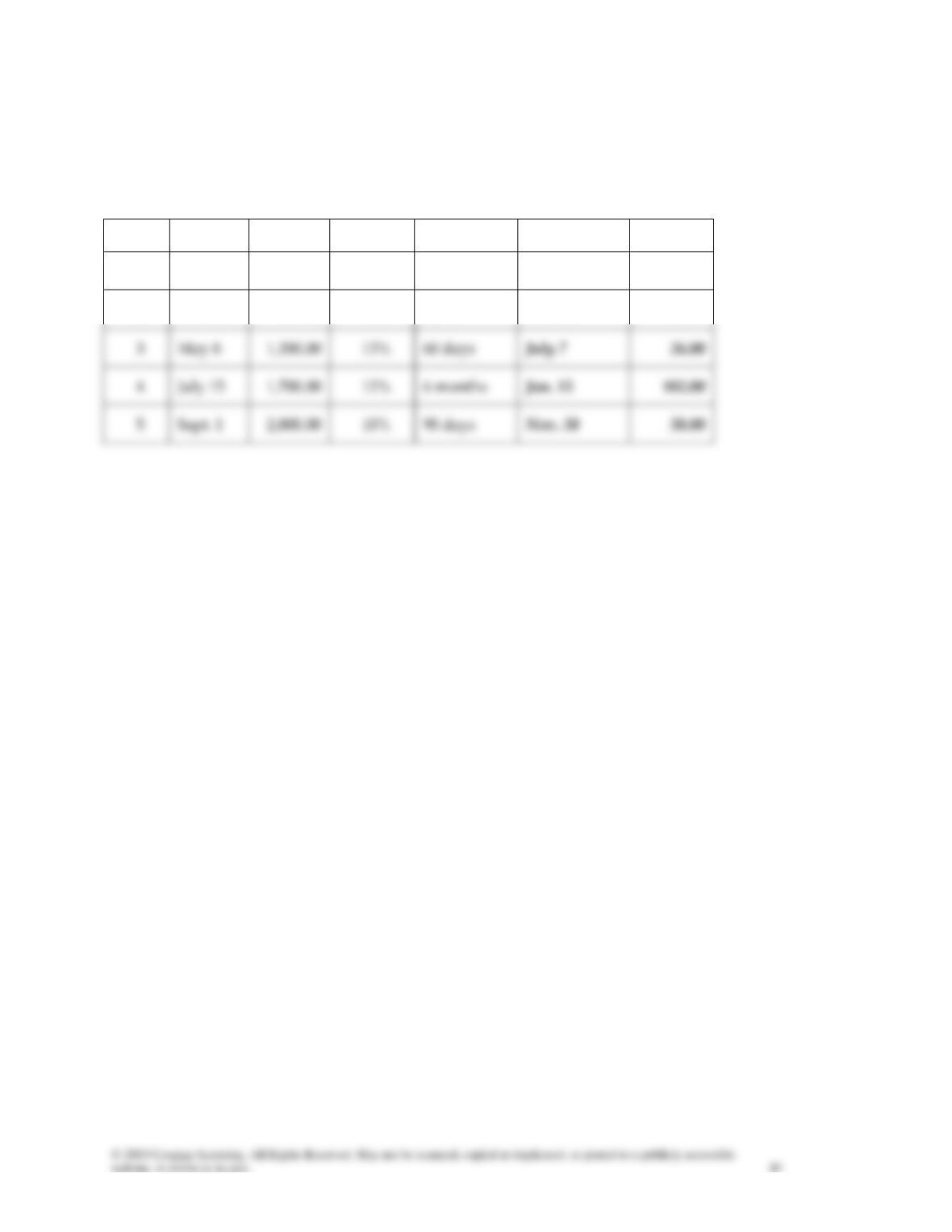
For each of the notes in the form below, calculate (1) the maturity date and (2) the interest.
No. of
Note
Date of
Note
Principal
of Note
Interest
Rate
Time of Note
(1)
Maturity Date
(2)
Interest
1
Jan. 4
400.00
9%
30 days
Feb. 3
$3.00
2
Mar. 21
800.00
11%
1 year
Mar. 21
88.00
4
July 15
12%
6 months
Jan. 15
5
Sept. 1
10%
90 days
Nov. 30
50.00
Drill 20-D2 Analyzing notes payable and notes receivable transactions
INSTRUCTIONS:
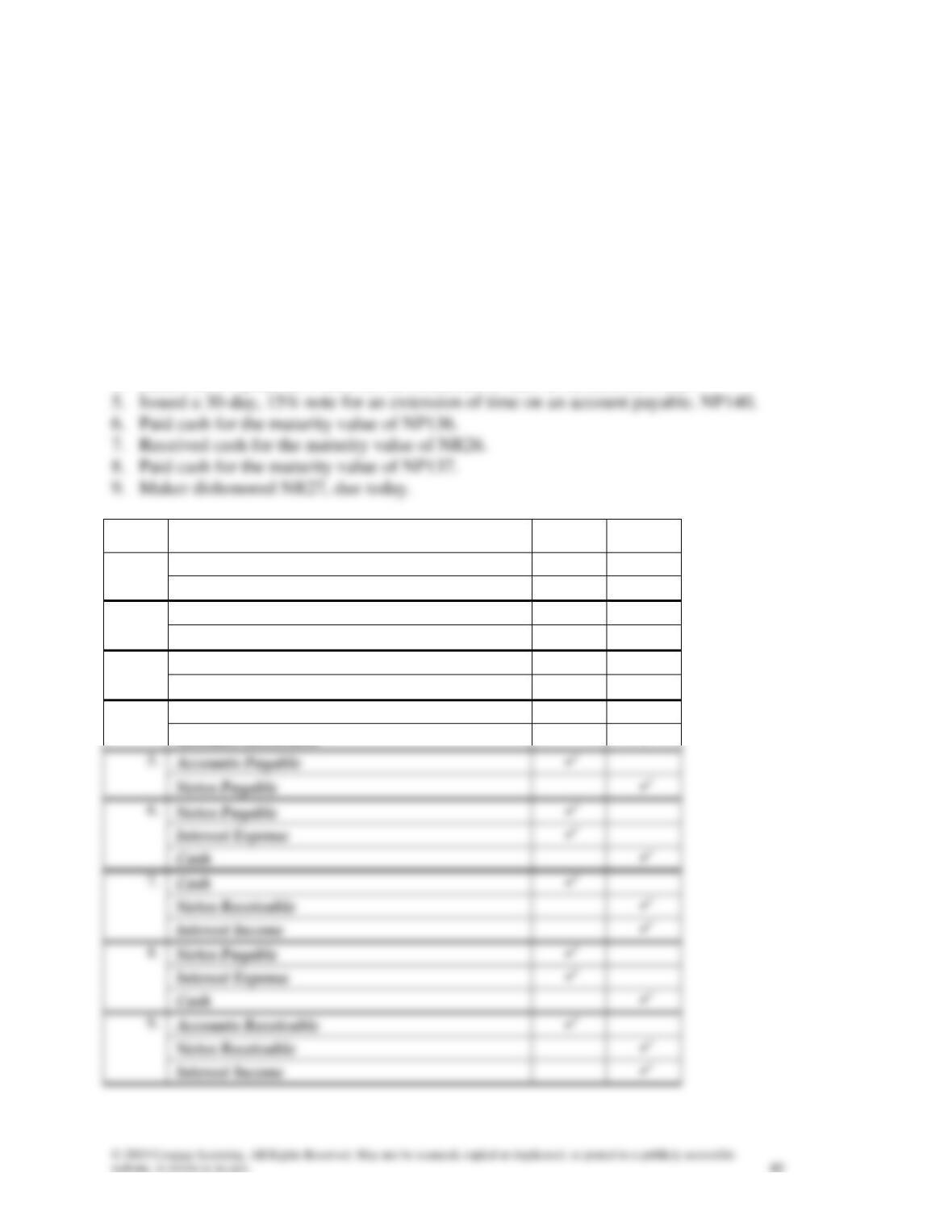
1. For each transaction, write the titles of the accounts affected in the Account Affected column.
Notes Payable is abbreviated NP; notes receivable is abbreviated NR.
2. For each account title, place a check mark in the Debit or Credit column to show whether the
account is debited or credit.
Transactions
1. Issued a 1-year, 12% note. NP136.
2. Received a 60-day, 14% note for an extension of time on an account. NR26.
3. Issued a 6-month, 10% note. NP137.
4. Received a 1-year, 10% note for an extension of time on an account. NR27.
Trans.
No.
Accounts Affected
Debit
Credit
1.
Cash
Notes Payable
2.
Notes Receivable
Accounts Receivable
3.
Cash
Notes Payable
4.
Notes Receivable
Accounts Receivable
5.
Accounts Payable
Notes Payable
Notes Payable
Notes Receivable
Cash
Accounts Receivable
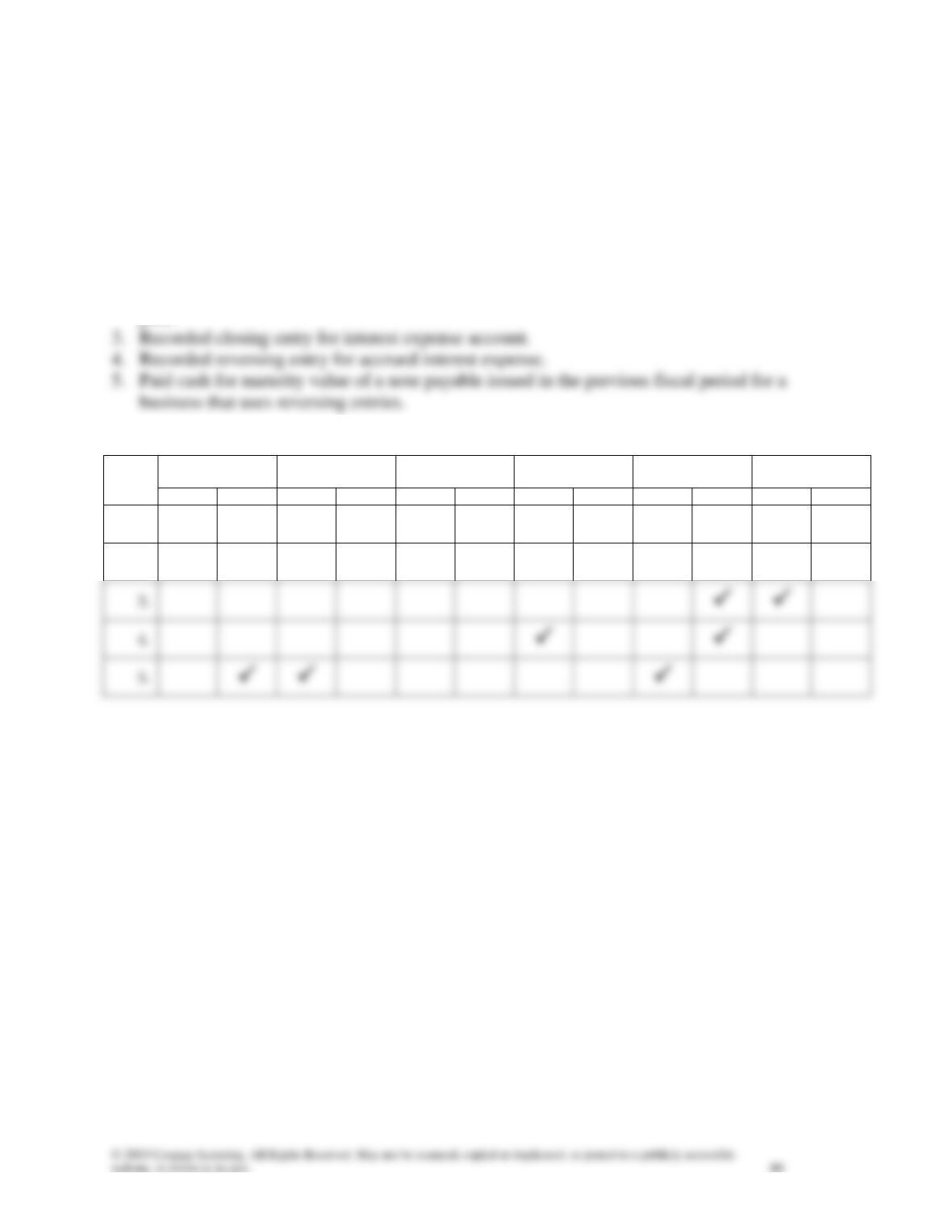
Drill 21-D1 Analyzing entries for notes receivable and accrued revenue
INSTRUCTIONS:
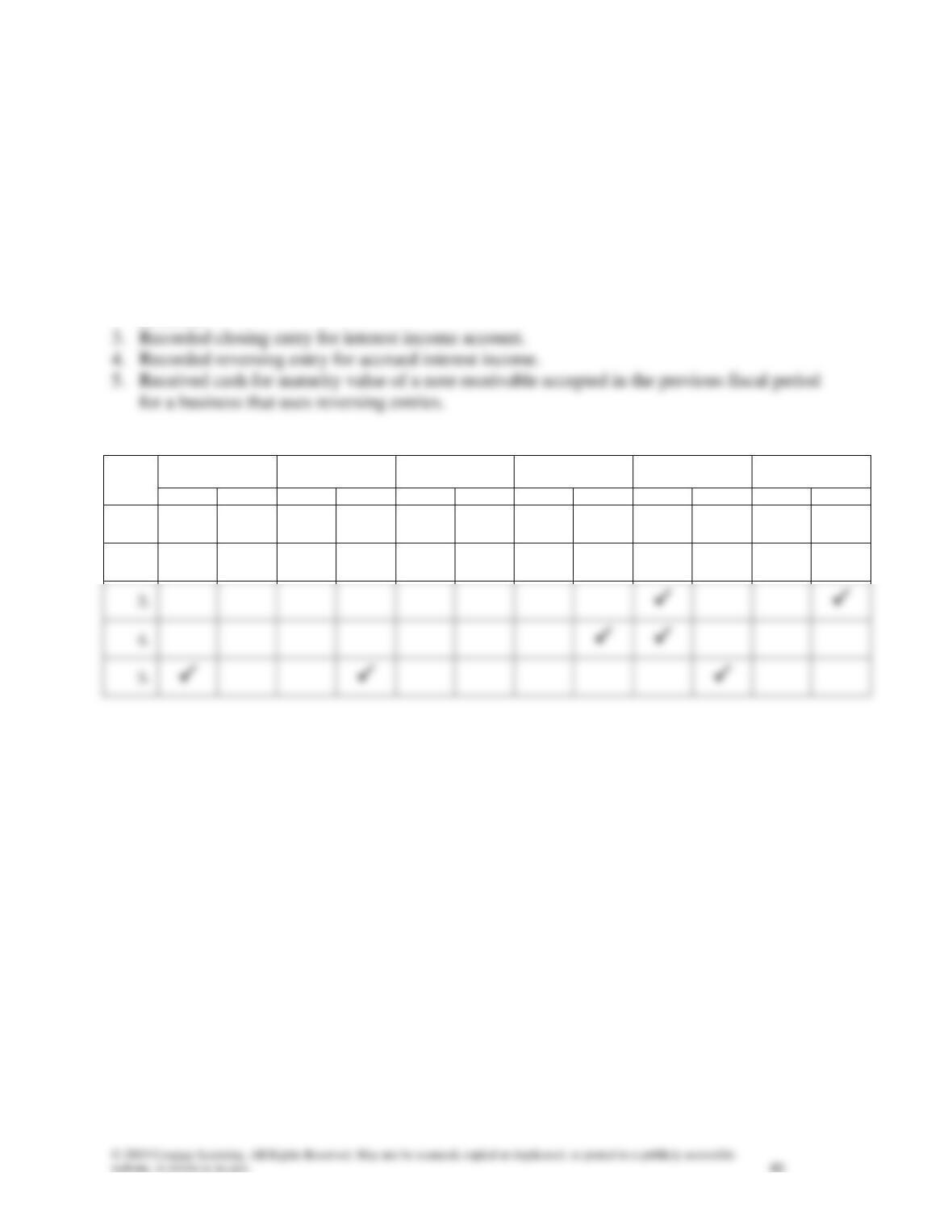
For each of the following entries, indicate by a check mark which account(s) should be debited
and which account(s) should be credited.
Entries
1. Received a note receivable from a customer for an extension of time on account.
2. Recorded an adjusting entry at the end of the fiscal period for interest earned but not yet
received.
Entry
No.
Cash
Notes
Receivable
Accounts
Receivable
Interest
Receivable
Interest
Income
Income
Summary
Debit
Credit
Debit
Credit
Debit
Credit
Debit
Credit
Debit
Credit
Debit
Credit
1.
2.
5.
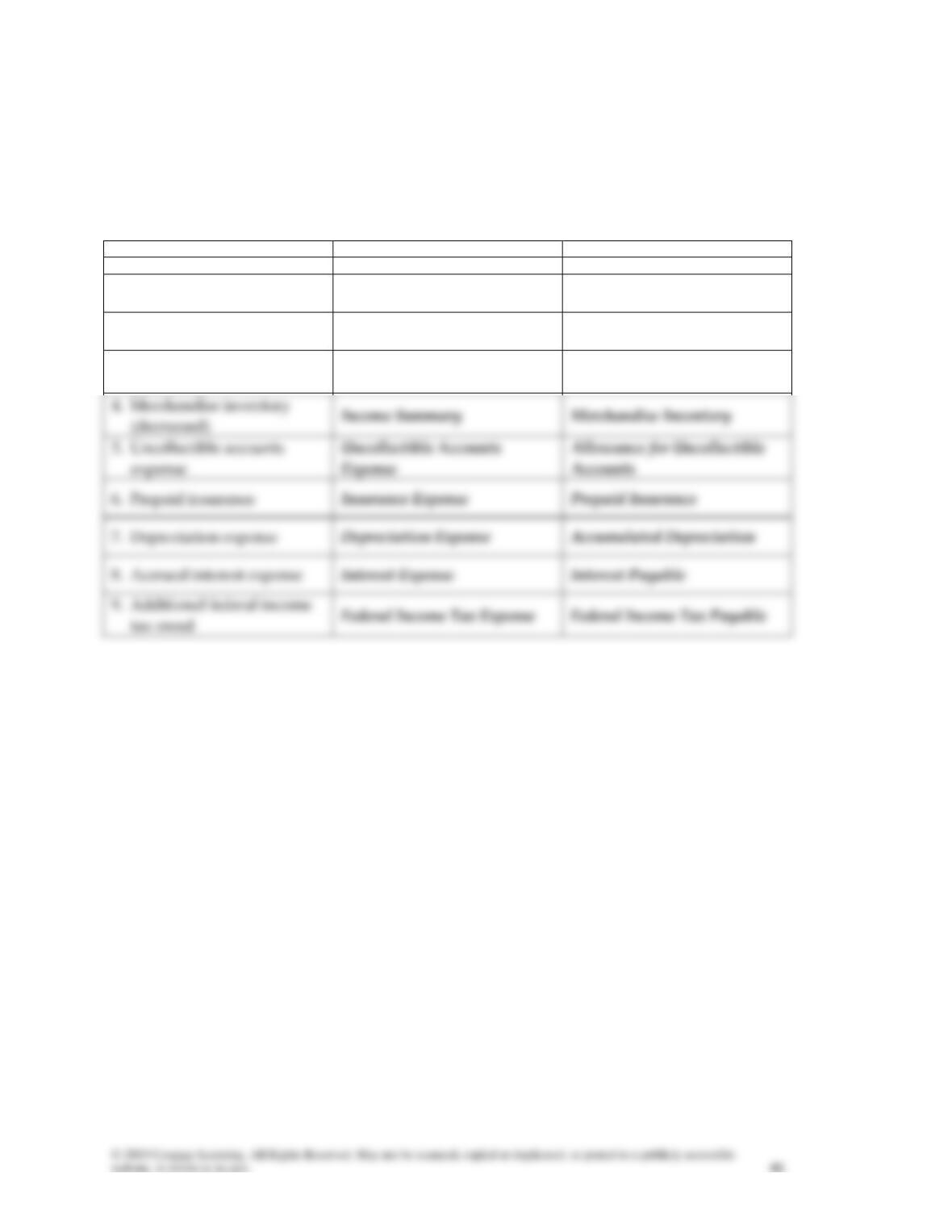
Drill 21-D2 Analyzing entries for notes payable and accrued expenses
INSTRUCTIONS:
1. For each of the following entries, indicate by a check mark which account(s) should be
debited and which account(s) should be credited.
Entries
1. Issued a note payable to a vendor for an extension of time on an account payable.
2. Recorded an adjusting entry at the end of the fiscal period for interest incurred but not yet
Entry
No.
Cash
Notes
Payable
Accounts
Payable
Interest
Payable
Interest
Expense
Income
Summary
Debit
Credit
Debit
Credit
Debit
Credit
Debit
Credit
Debit
Credit
Debit
Credit
1.
2.
5.
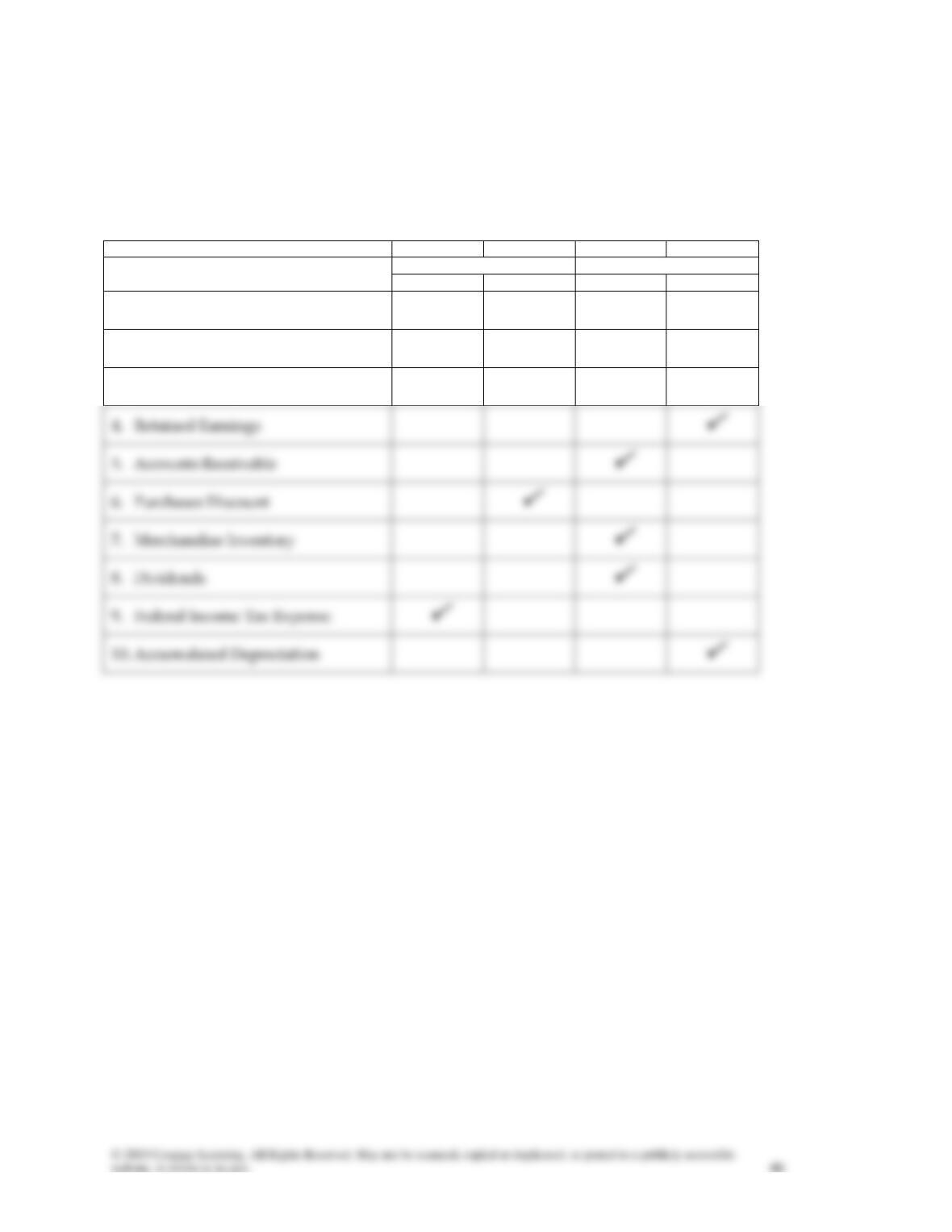
Drill 22-D1 Analyzing adjustments on a work sheet
INSTRUCTIONS:
For each of the adjustments in Column 1, write the title of the account debited in Column 2 and
the title of the account credited in Column 3.
1
2
3
Adjustment
Account Debited
Account Credited
1. Supplies
Supplies Expense
Supplies
2. Accrued interest income
Interest Receivable
Interest Income
3. Merchandise inventory
(increased)
Merchandise Inventory
Income Summary
4. Merchandise inventory
(decreased)
Income Summary
Merchandise Inventory
5. Uncollectible accounts
6. Prepaid insurance
Insurance Expense
Prepaid Insurance
7. Depreciation expense
Depreciation Expense
Accumulated Depreciation
8. Accrued interest expense
Interest Expense
Interest Payable
9. Additional federal income
Federal Income Tax Expense
Federal Income Tax Payable
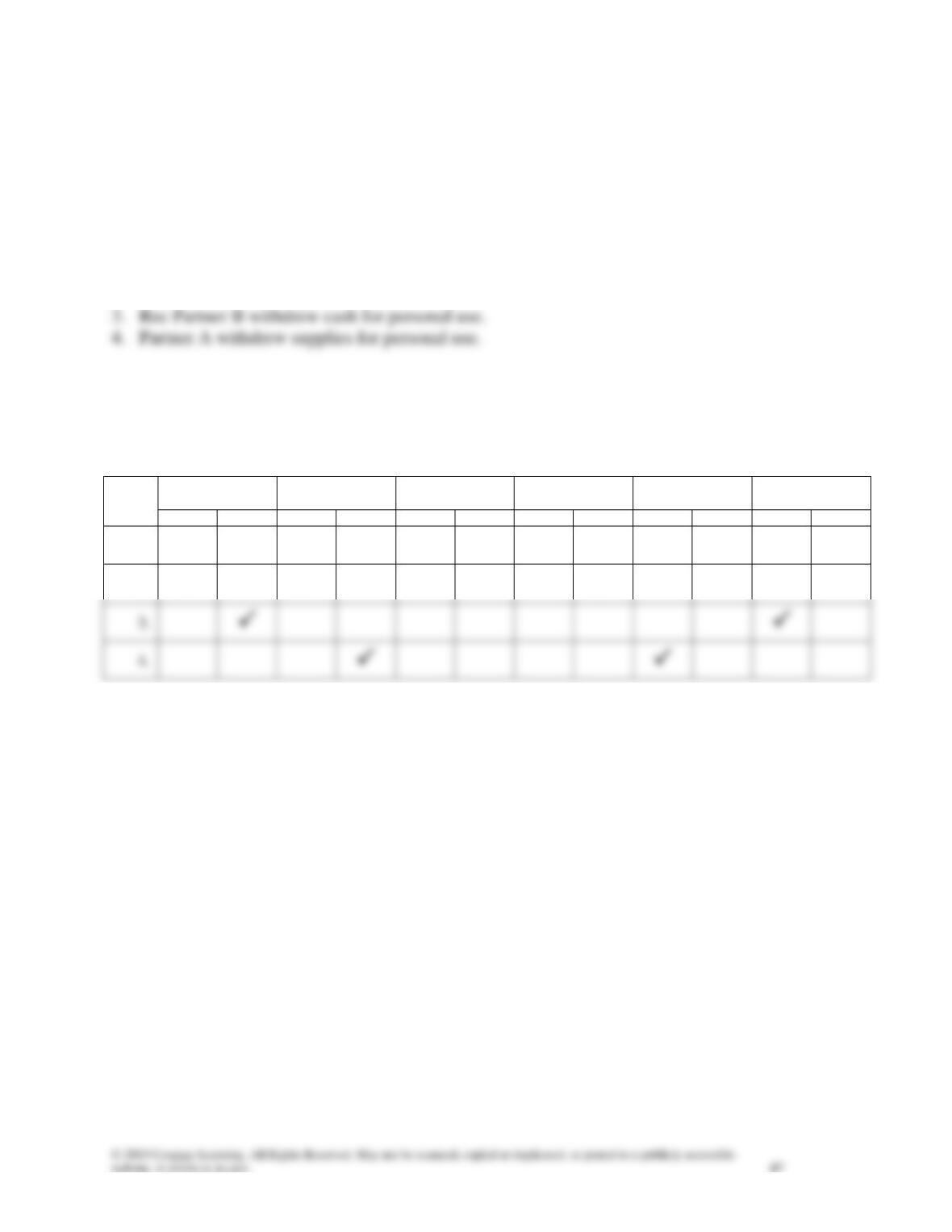
Drill 22-D2 Extending account balances on a work sheet
INSTRUCTIONS:
For each of the accounts in Column 1, place a check mark in the work sheet column to which the
account balance should be extended.
1
2
3
4
5
Account
Income Statement
Balance Sheet
Debit
Credit
Debit
Credit
1. Allowance for Uncollectible Accts.
2. Sales Returns and Allowances
3. Notes Payable
4. Retained Earnings
5. Accounts Receivable
6. Purchases Discount
7. Merchandise Inventory
8. Dividends
9. Federal Income Tax Expense
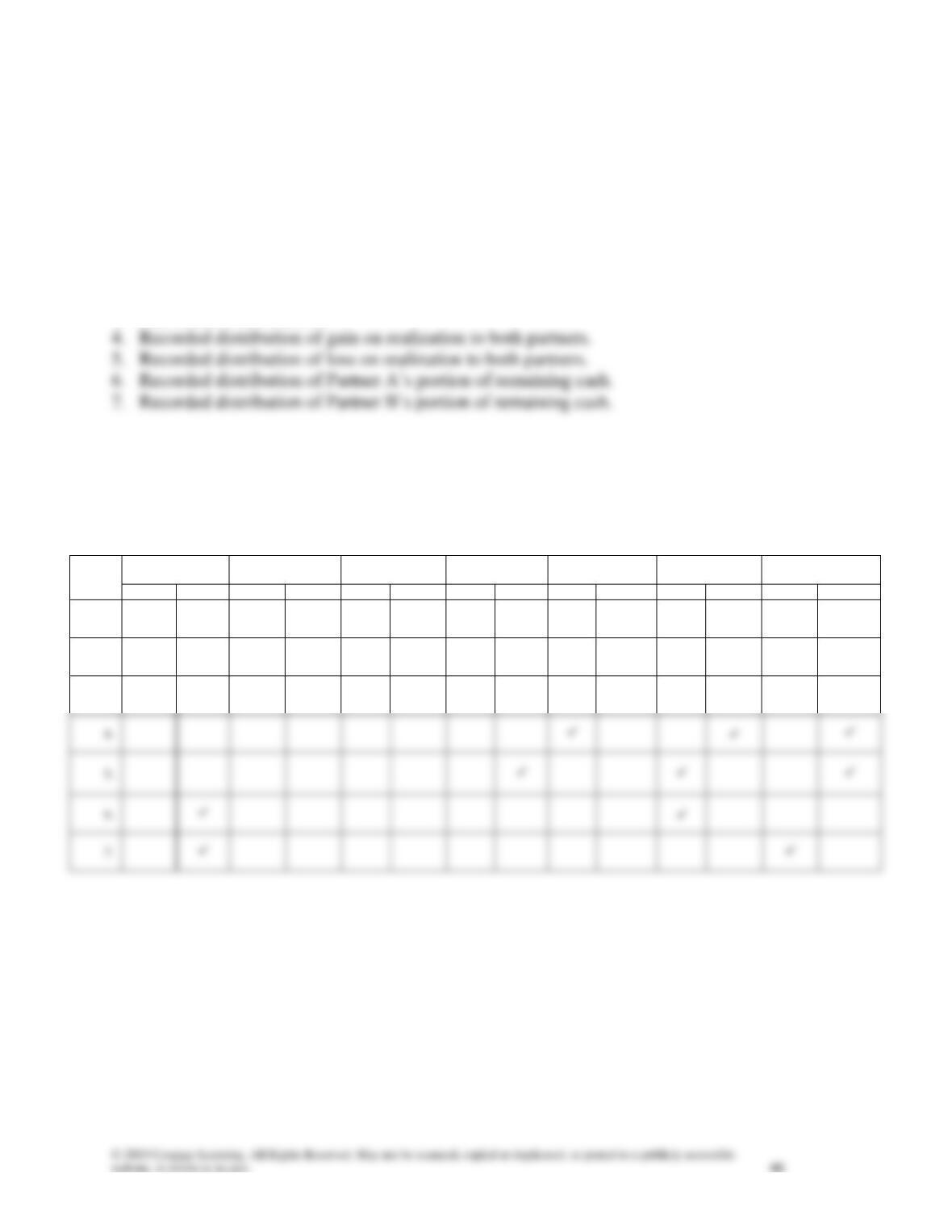
Drill 23-D1 Analyzing entries for partner investments and withdrawals
INSTRUCTIONS:
1. For each of the following entries, indicate by a check mark which account(s) should be
debited and which account(s) should be credited.
Entries
1. Received cash from Partner A.
2. Received cash and supplies from Partner B.
Entry
No.
Cash
Supplies
Partner A,
Capital
Partner B,
Capital
Partner A,
Drawing
Partner B,
Drawing
Debit
Credit
Debit
Credit
Debit
Credit
Debit
Credit
Debit
Credit
Debit
Credit
1.
2.
4.
Drill 23-D2 Analyzing entries for dissolving a partnership
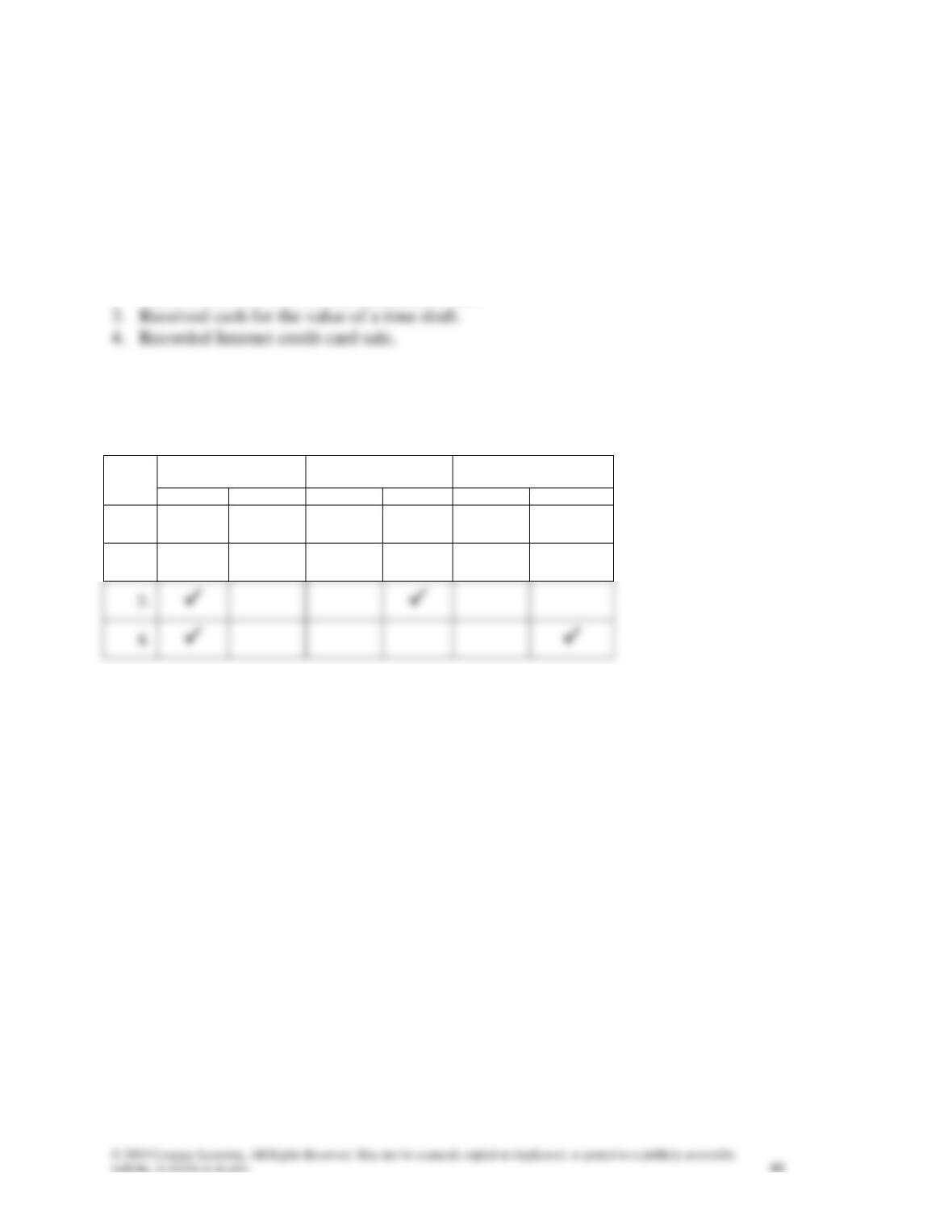
INSTRUCTIONS:
1. For each of the following entries, indicate by a check mark which account(s) should be
debited and which account(s) should be credited.
Entries
1. Recorded a gain on realization from the sale of supplies.
2. Recorded a loss on realization from the sale of supplies.
3. Paid cash to all creditors.
Entry
No.
Cash
Supplies
Accounts
Payable
Loss on
Realization
Gain on
Realization
Partner A,
Capital
Partner B,
Capital
Debit
Credit
Debit
Credit
Debit
Credit
Debit
Credit
Debit
Credit
Debit
Credit
1.
2.
3.
4.
6.
Drill 24-D1 Recording international and Internet sales
INSTRUCTIONS:
1. For each of the following entries, indicate by a check mark which account(s) should be
debited and which account(s) should be credited.
Entries
1. Received cash for an international sale.
2. Received a time draft for an international sale.
Entry
No.
Cash
Time Drafts
Receivable
Sales
Debit
Credit
Debit
Credit
Debit
Credit
1.
2.