CHAPTER 3 The Adjusting Process
Prob. 3-5A (Concluded)
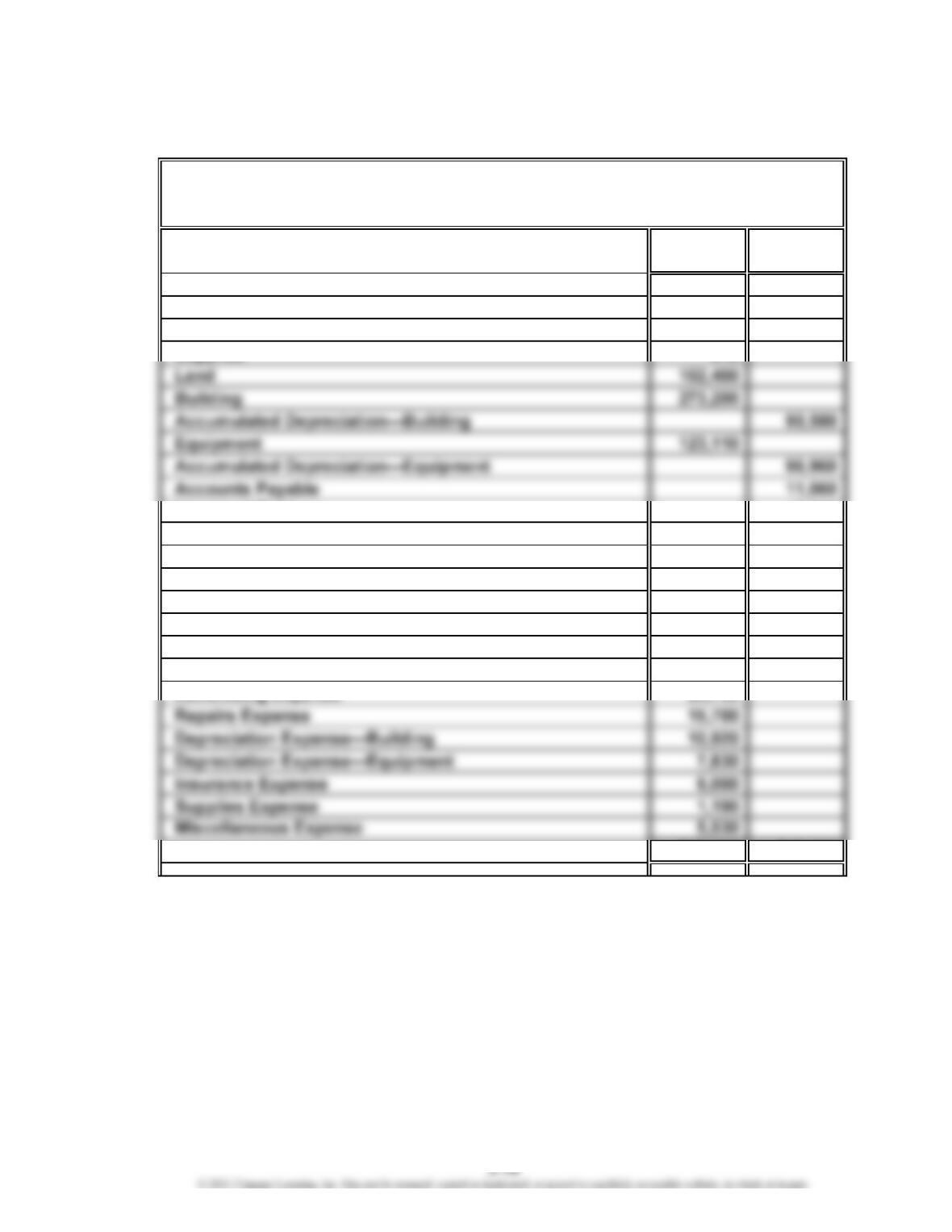
2.
Debit Credit
Balances Balances
Cash 6,820
Accounts Receivable 44,080
Prepaid Insurance 550
Unearned Rent 2,050
Salaries and Wages Payable 2,550
Suzanne Emerson, Capital 338,000
Suzanne Emerson, Drawing 14,000
Fees Earned 304,460
Rent Revenue 4,090
Salaries and Wages Expense 178,500
Utilities Expense 38,560
849,750 849,750
October 31, 20Y6
Emerson Company
Adjusted Trial Balance
CHAPTER 3 The Adjusting Process
Prob. 3-6A
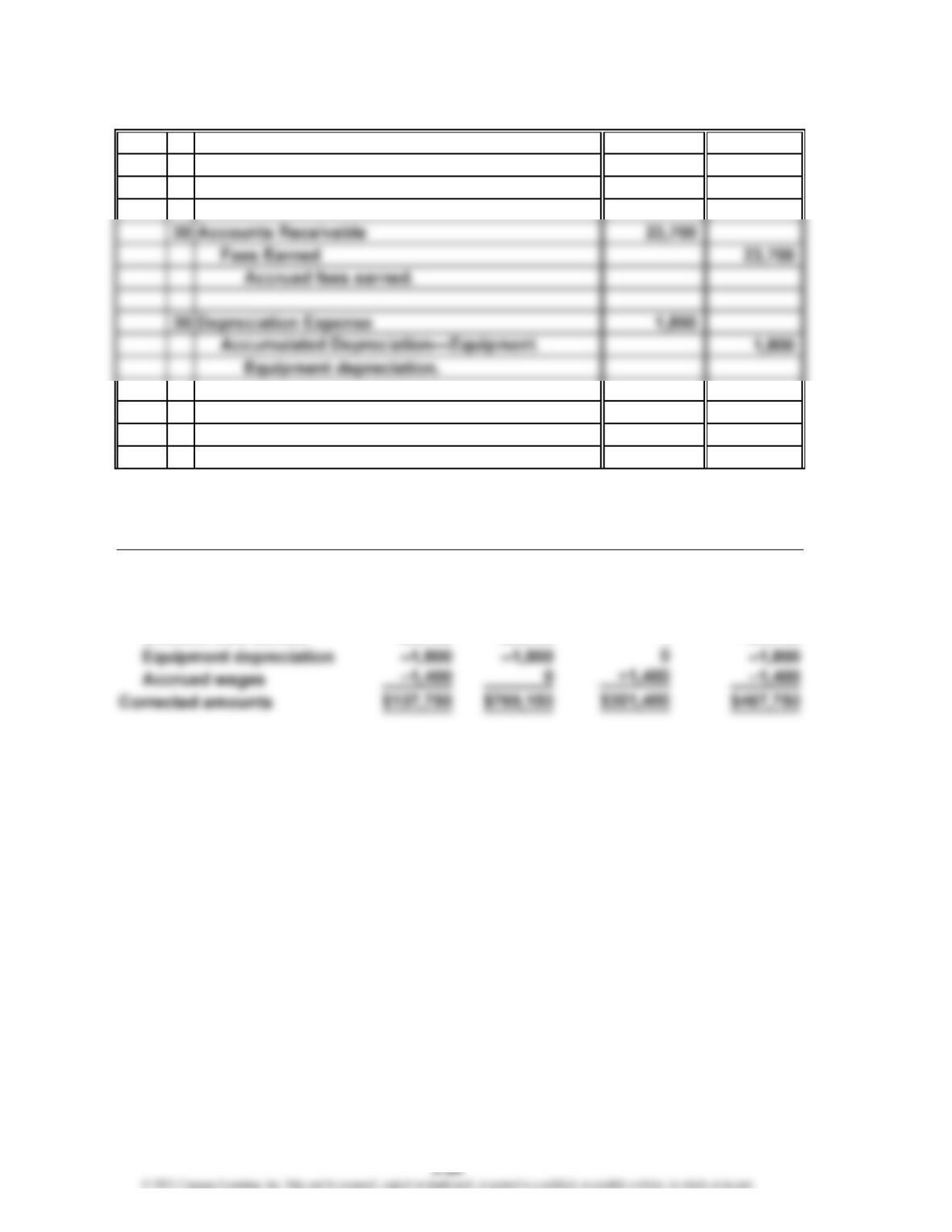
1. Apr. 30 Supplies Expense
Supplies 2,750
Supplies used.
30 Wages Expense
Wages Payable 1,400
Accrued wages.
2. Total
Net Total Owner’s
Income Assets = + Equity
Reported amounts $120,000 $750,000 $450,000
Corrections:
Supplies used –2,750 –2,750 –2,750
Unbilled fees earned +23,700 +23,700 +23,700
1,400
2,750
Total
Liabilities
$300,000
0
0
CHAPTER 3 The Adjusting Process
Prob. 3-1B
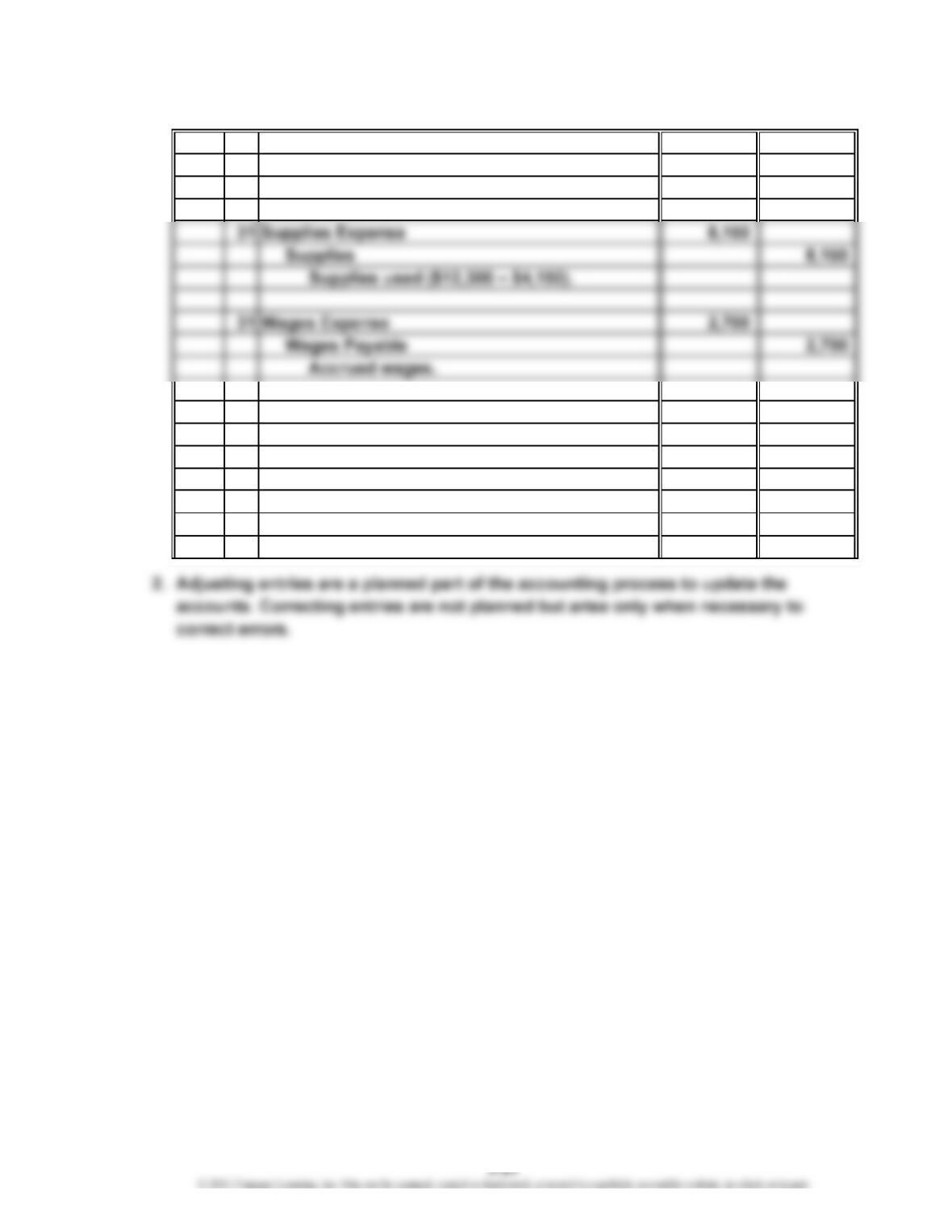
1. May 31 Accounts Receivable 19,750
Fees Earned 19,750
Accrued fees earned.
31 Unearned Rent 3,000
Rent Revenue 3,000
Rent earned ($9,000 ÷ 3 months).
31 Depreciation Expense 3,200
Accumulated Depreciation—Equipment 3,200
Depreciation expense.
CHAPTER 3 The Adjusting Process
Prob. 3-2B
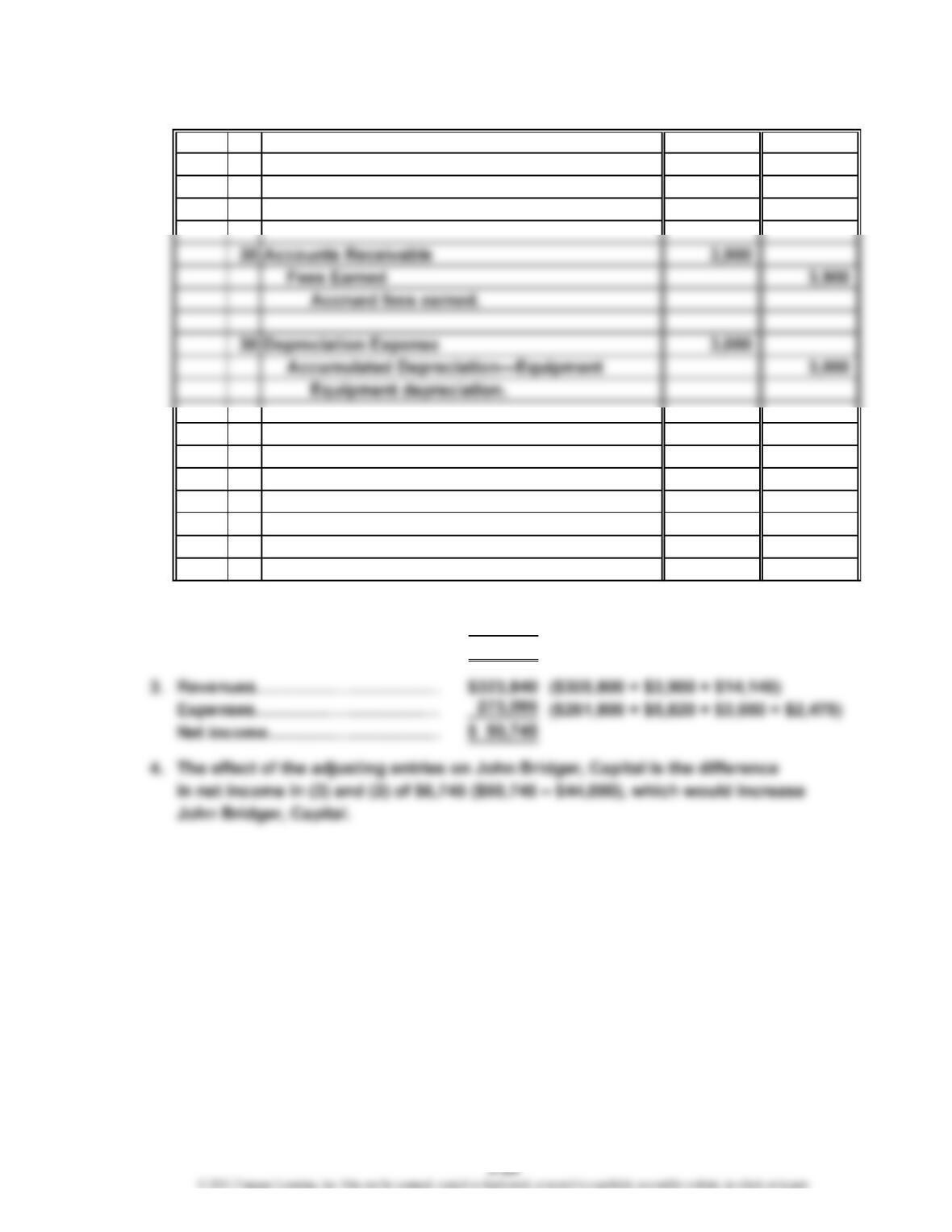
1. Nov. 30 Supplies Expense 2,620
Supplies 2,620
Supplies used ($3,170 – $550).
30 Wages Expense 2,000
Wages Payable 2,000
Accrued wages.
Accrued fees.
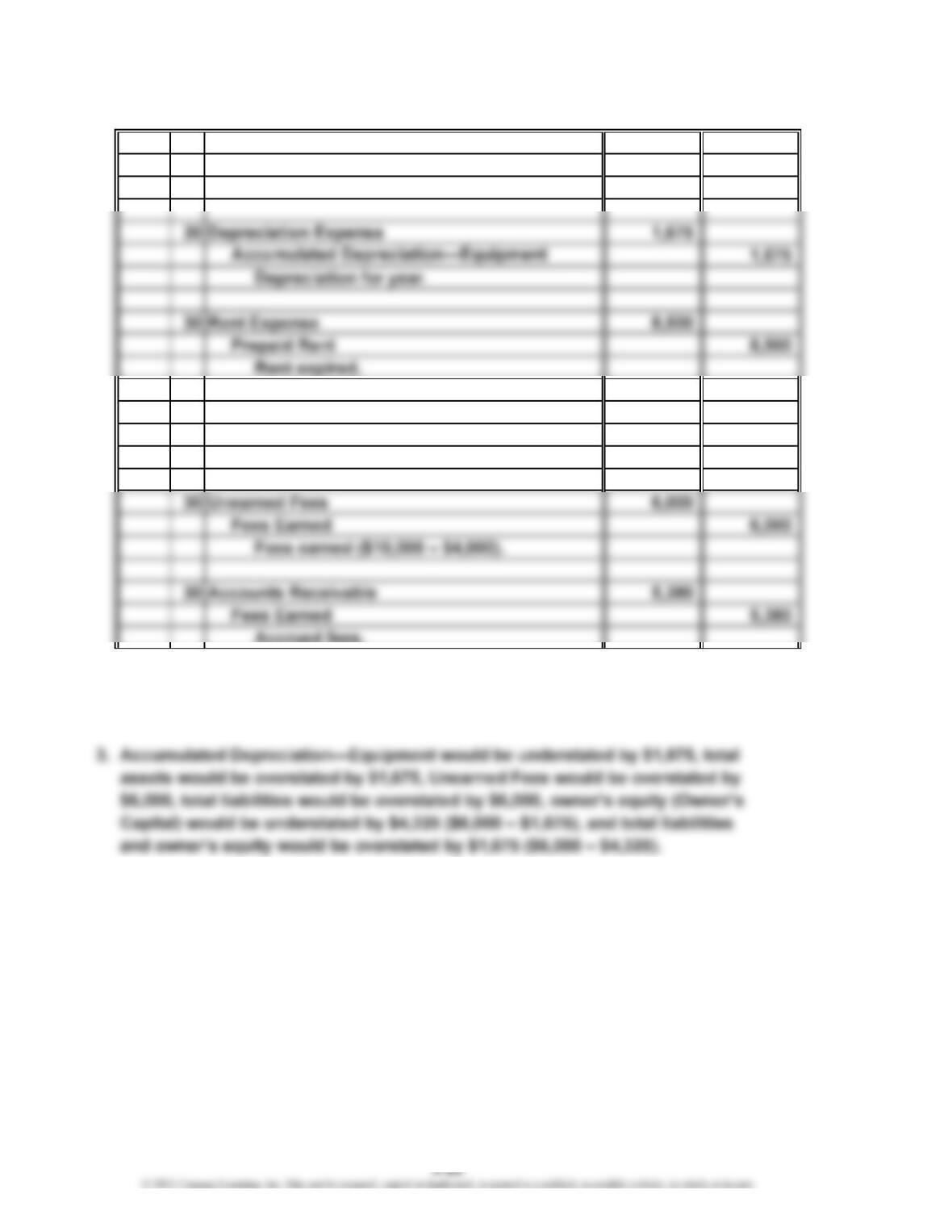
2. Fees Earned would be understated by $6,000, Depreciation Expense would
be understated by $1,675, and net income would be understated by $4,325
($6,000 – $1,675).
4. There is no effect on “Net increase or decrease in cash” on the statement of
of cash flows because adjusting entries do not affect cash.
CHAPTER 3 The Adjusting Process
Prob. 3-3B
1. 20Y4
Apr. 30 Supplies Expense 5,820
Supplies 5,820
Supplies used ($7,200 – $1,380).
30 Wages Expense 2,475
Wages Payable 2,475
Accrued wages.
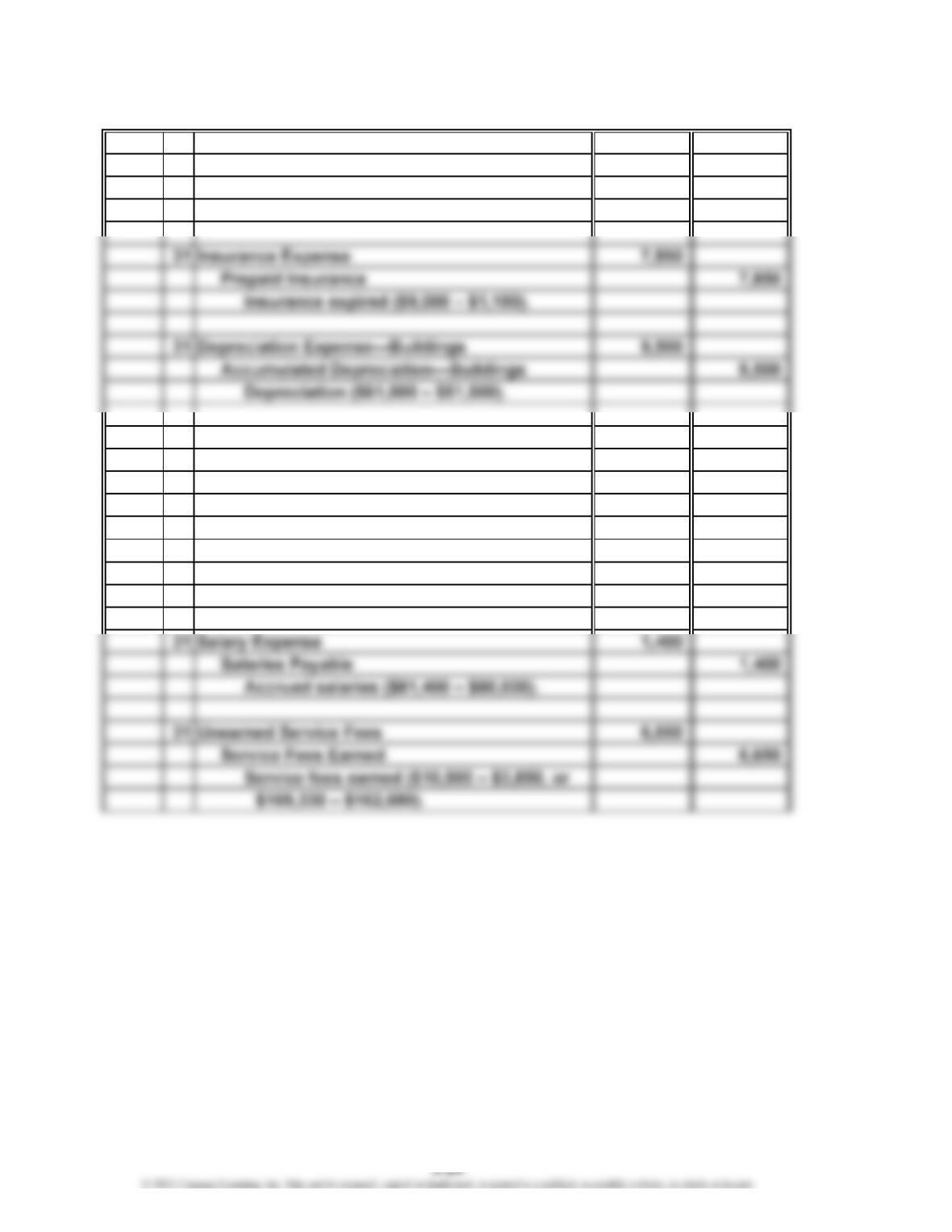
30 Unearned Fees 14,140
Fees Earned 14,140
Fees earned.
2. Revenues…………………………… $305,800
Expenses…………………………… 261,800 ($157,800 + $55,000 + $42,000 + $7,000)
Net income…………………………
…
$ 44,000
…
CHAPTER 3 The Adjusting Process
Prob. 3-4B
20Y5
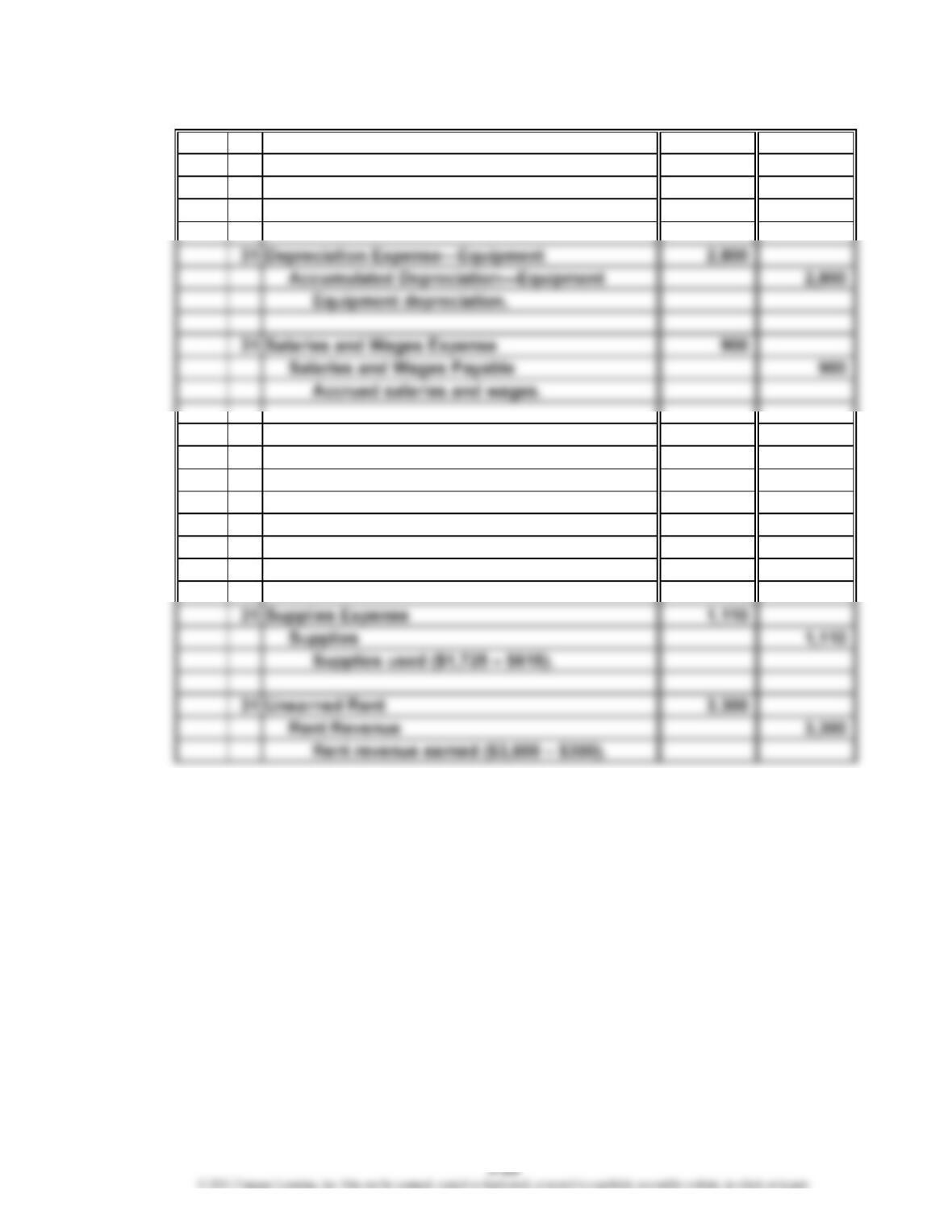
Mar. 31 Supplies Expense 4,025
Supplies 4,025
Supplies used ($6,200 – $2,175).
31 Depreciation Expense—Trucks 5,000
Accumulated Depreciation—Trucks 5,000
Depreciation ($17,000 – $12,000).
31 Utilities Expense 1,830
Accounts Payable 1,830
Accrued utilities expense
($8,750 – $6,920, or $8,030 – $6,200).
CHAPTER 3 The Adjusting Process
Prob. 3-5B
1. 20Y6
July 31 Depreciation Expense—Building 6,400
Accumulated Depreciation—Building 6,400
Building depreciation.
31 Insurance Expense 4,500
Prepaid Insurance 4,500
Insurance expired ($6,000 – $1,500).
31 Accounts Receivable 10,200
Fees Earned 10,200
Accrued fees earned.
CHAPTER 3 The Adjusting Process
Prob. 3-5B (Concluded)
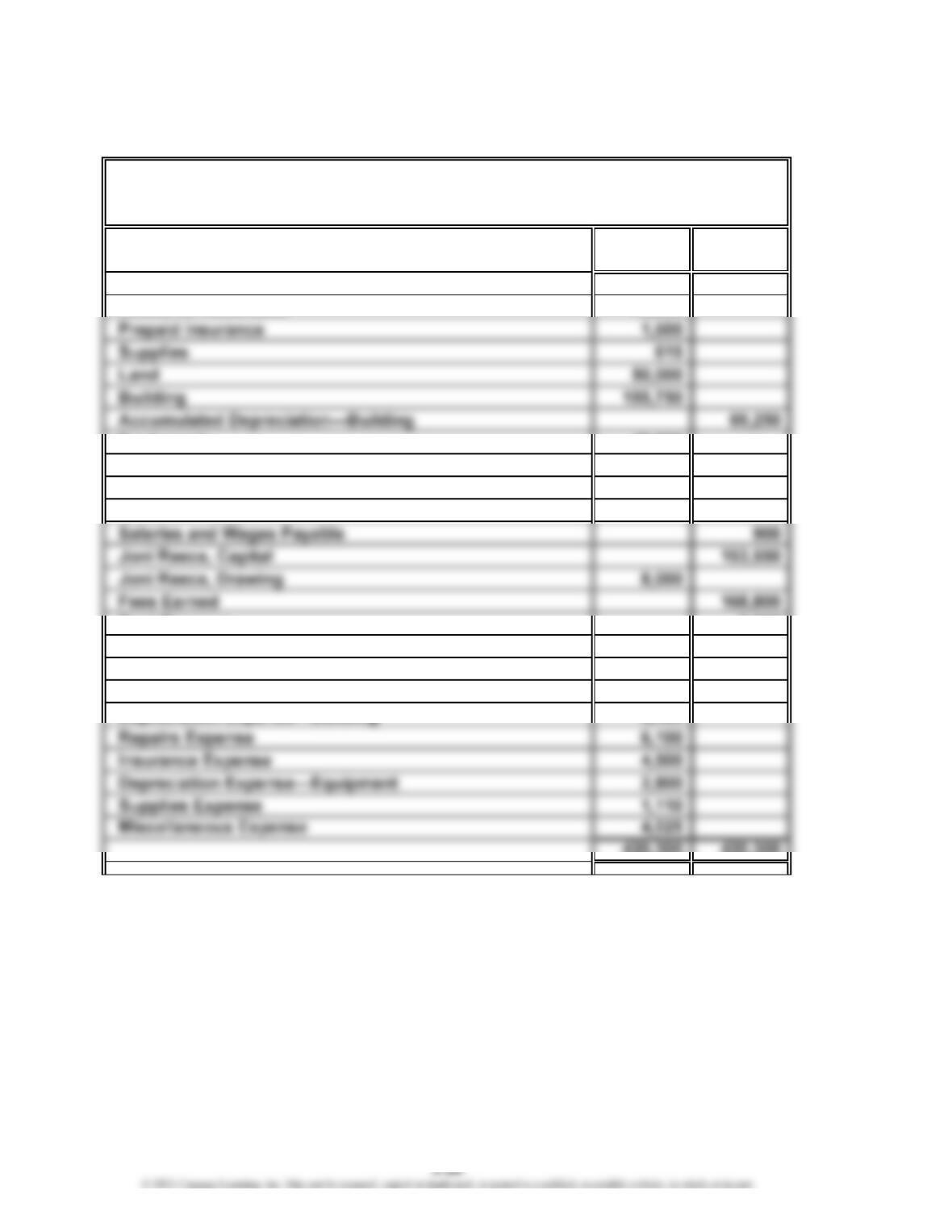
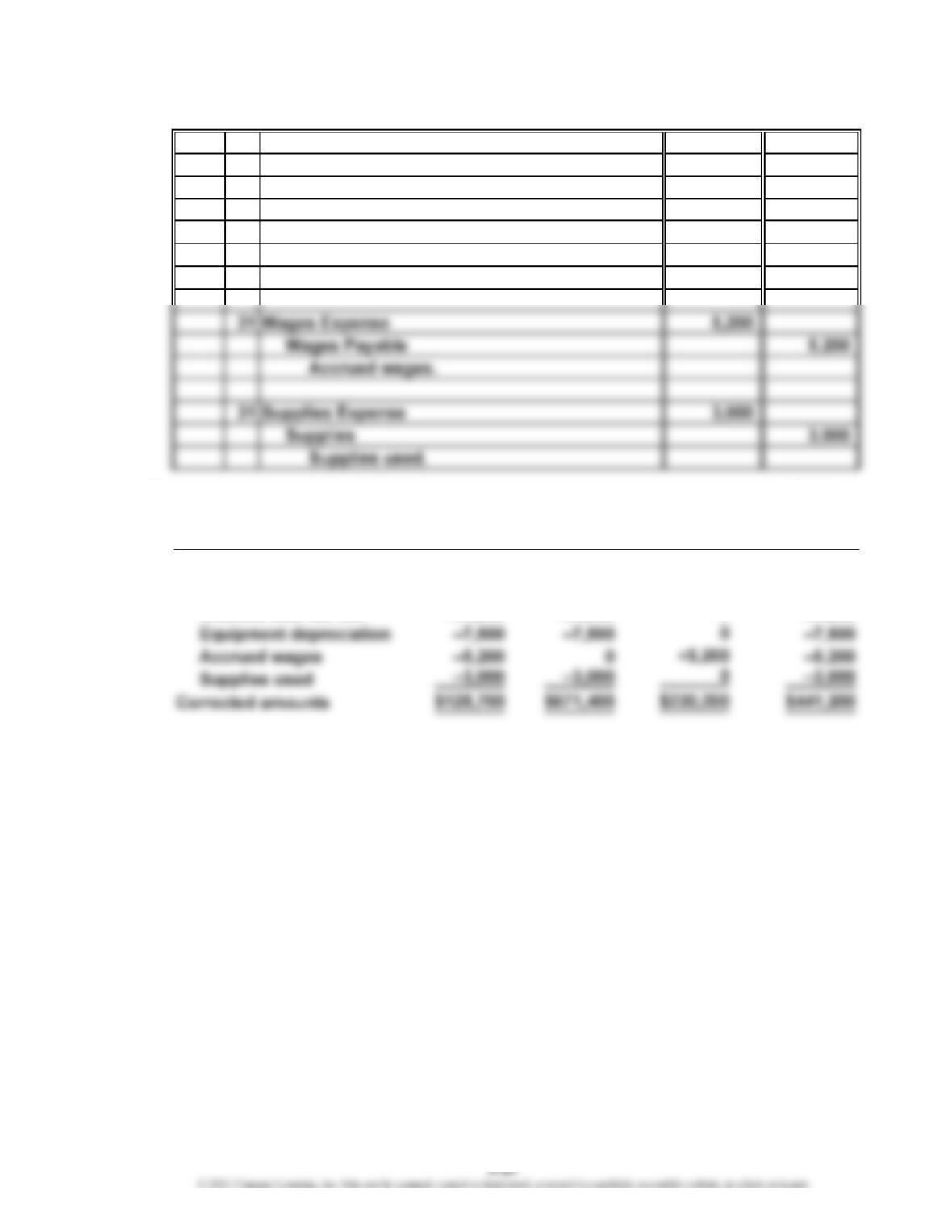
2.
Debit Credit
Balances Balances
Cash 10,200
Accounts Receivable 44,950
Equipment 45,000
Accumulated Depreciation—Equipment 20,450
Accounts Payable 3,750
Unearned Rent 300
Rent Revenue 3,300
Salaries and Wages Expense 57,750
Utilities Expense 14,100
Advertising Expense 7,500
420,300 420,300
July 31, 20Y6
Reece Financial Services Co.
Adjusted Trial Balance
CHAPTER 3 The Adjusting Process
Prob. 3-6B
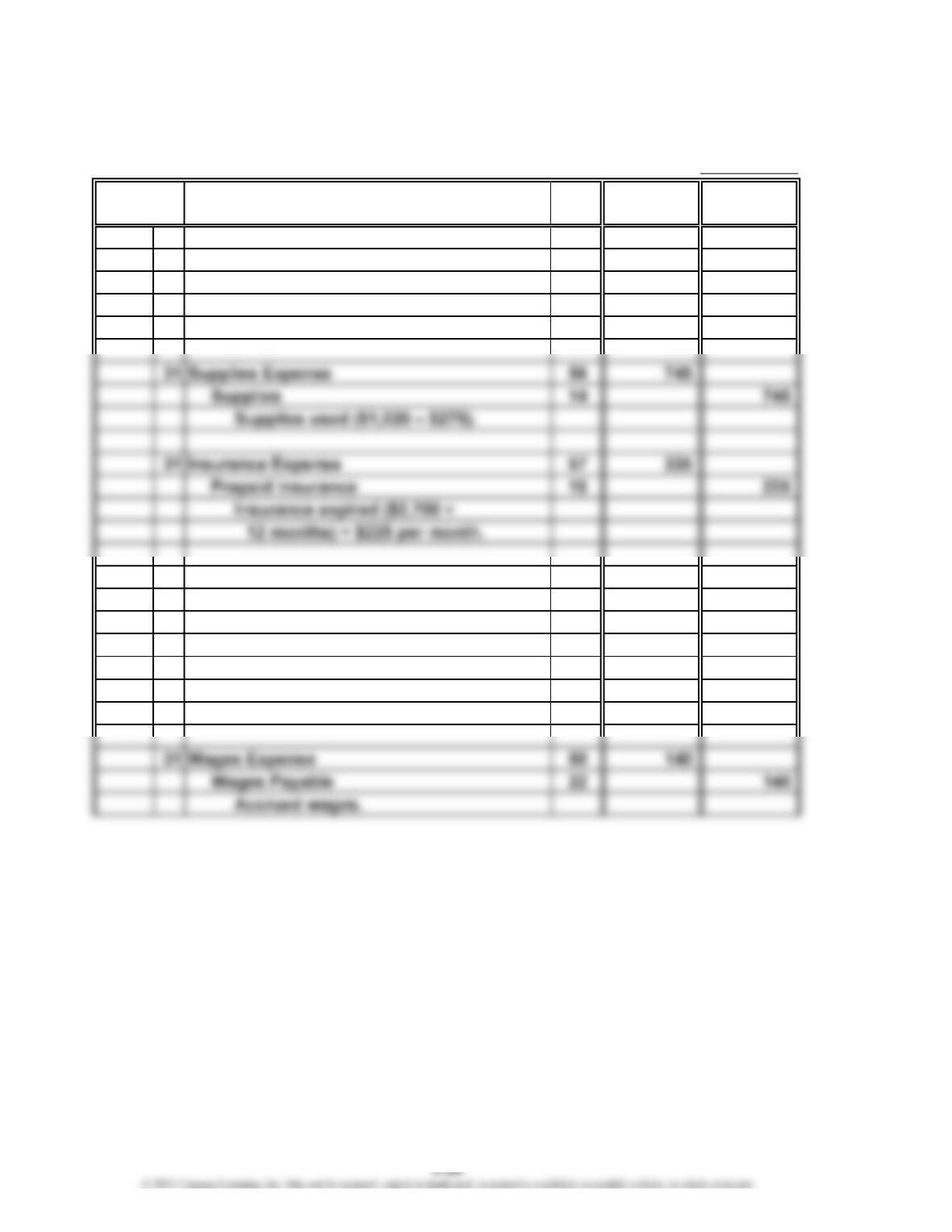
1. Aug. 31 Accounts Receivable
Fees Earned 31,900
Accrued fees earned.
31 Depreciation Expense
Accumulated Depreciation—Equipment 7,500
Equipment depreciation.
2. Total
Net Total Owner’s
Income Assets = + Equity
Reported amounts $112,500 $650,000 $425,000
Corrections:
Unbilled fees earned +31,900 +31,900 +31,900
0
Total
Liabilities
$225,000
31,900
7,500
CHAPTER 3 The Adjusting Process
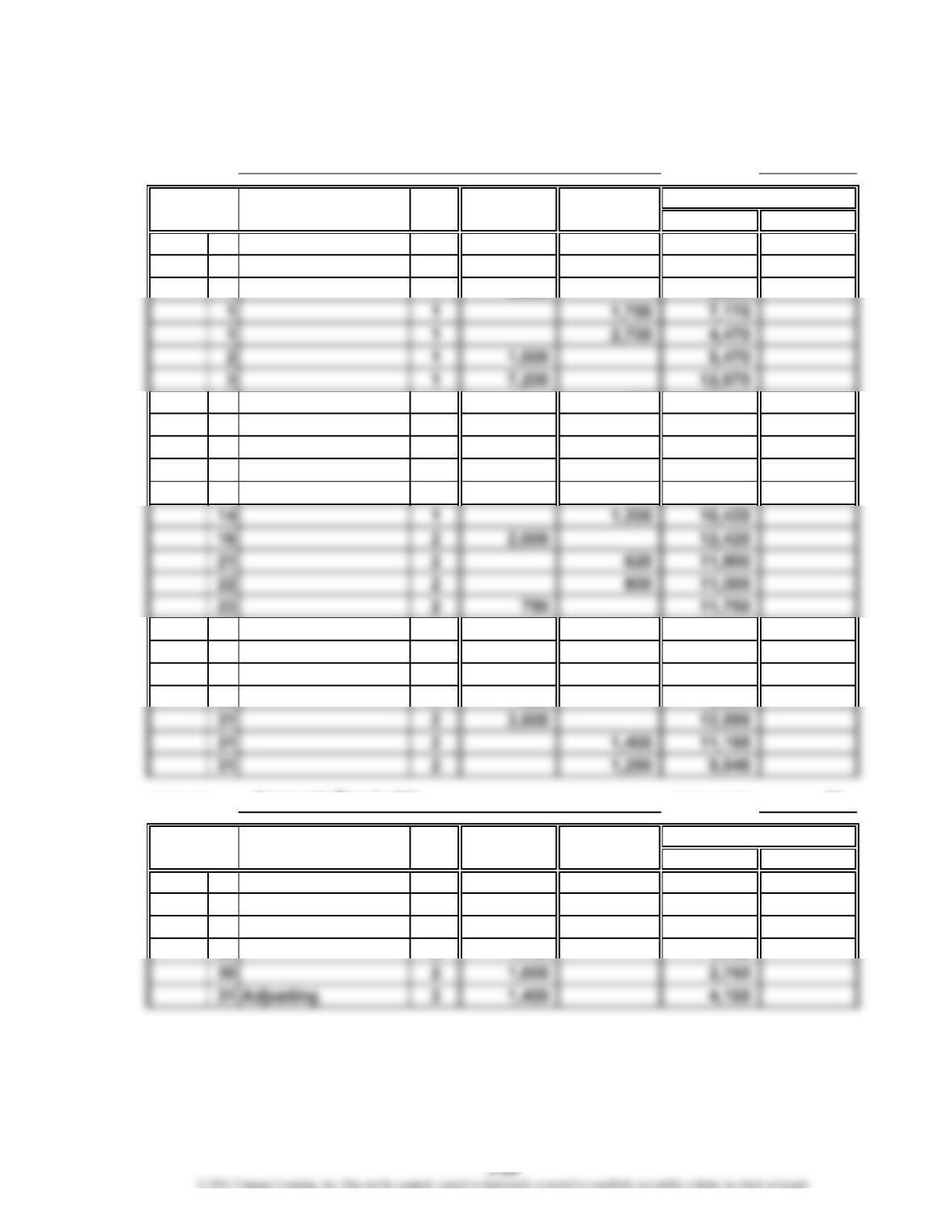
1.
Page 3
Post.
Ref. Debit Credit
20Y9
July 31 Accounts Receivable 12 1,400
Fees Earned 41 1,400
Accrued fees earned (115 hrs. –
80 hrs.) × $40 = $1,400.
31 Depreciation Expense 58 50
Accum. Depr.—Office Equipment 18 50
Office equipment depreciation.
31 Unearned Revenue 23 3,600
Fees Earned 41 3,600
Fees earned ($7,200 ÷ 2 months).
CONTINUING PROBLEM
Date
JOURNAL
Adjusting Entries
Description
CHAPTER 3 The Adjusting Process
Continuing Problem (Continued)
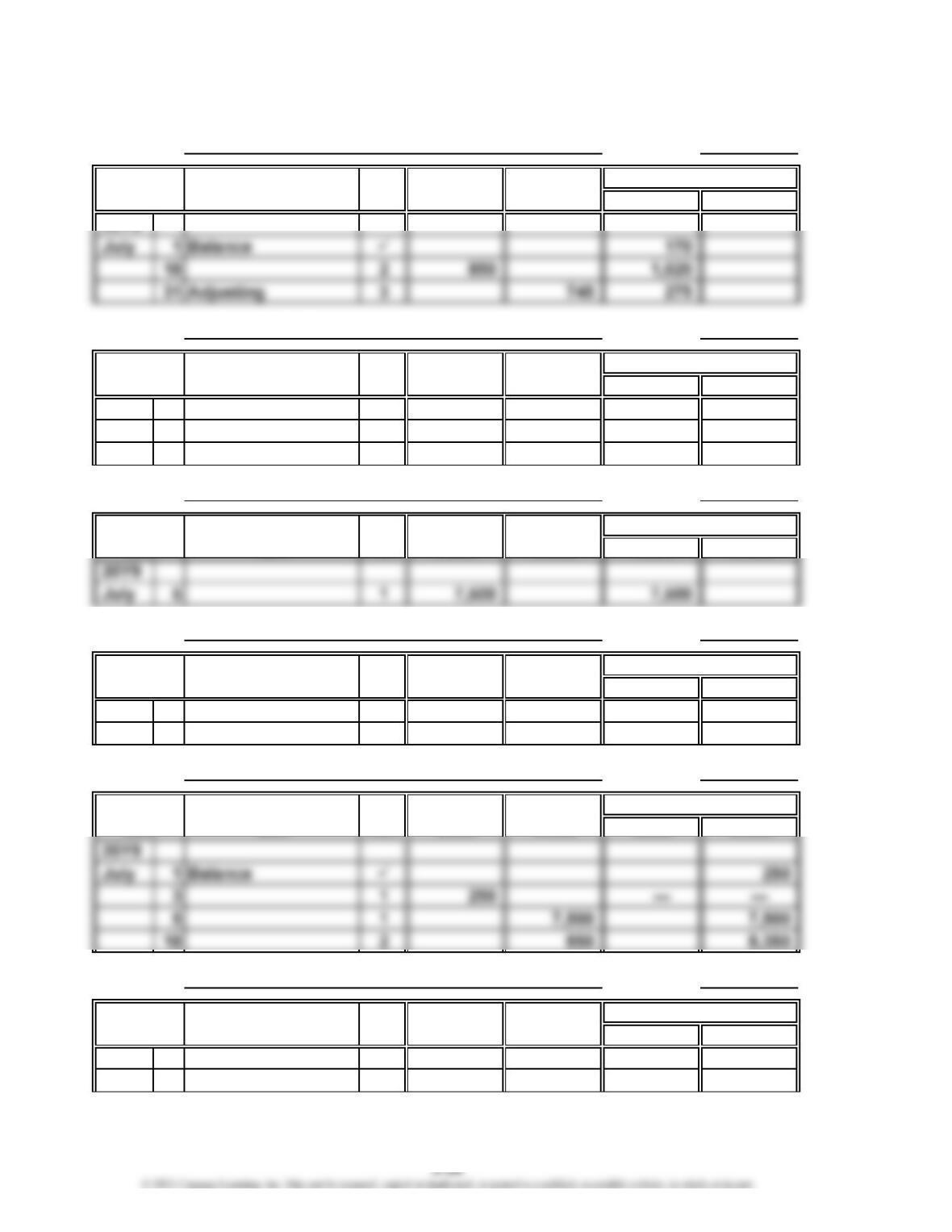
2.
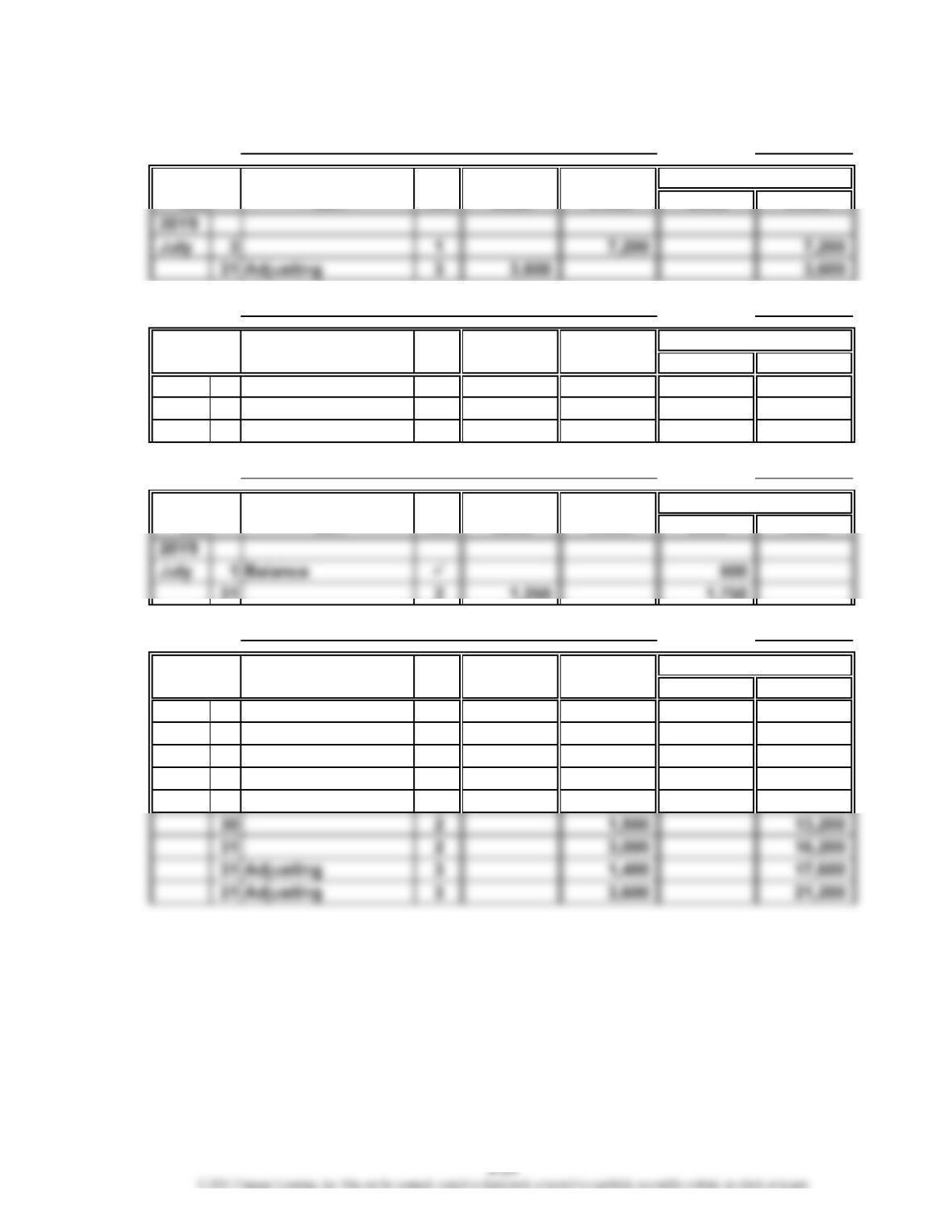
Account No. 11
Post.
Item Ref. Debit Debit Credit
20Y9
July 1 Balance 3,920
3 1 12,420
4 1 11,520
8 1 11,320
11 1 1,000 12,320
13 1 11,620
27 2 10,835
28 2 9,635
29 2 9,095
Account No. 12
Post.
Item Ref. Debit Debit Credit
20Y9
July 1 Balance 1,000
21 ——
1,000
Balance
1,200
540
Date Credit
700
Account: Accounts Receivable
915
250
900
200
Account: Cash
Balance
CreditDate
CHAPTER 3 The Adjusting Process
Continuing Problem (Continued)
Account No. 14
Post.
Item Ref. Debit Credit Debit Credit
Account No. 15
Post.
Item Ref. Debit Credit Debit Credit
20Y9
July 1 1 2,700 2,700
31 Adjusting 3 225 2,475
Account No. 17
Post.
Item Ref. Debit Credit Debit Credit
Account No. 18
Post.
Item Ref. Debit Credit Debit Credit
20Y9
July 31 Adjusting 3 50 50
Account No. 21
Post.
Item Ref. Debit Credit Debit Credit
Account No. 22
Post.
Item Ref. Debit Credit Debit Credit
20Y9
July 31 Adjusting 3 140 140
Account: Supplies
Account: Prepaid Insurance
Date
Balance
Account: Accounts Payable
Date
Balance
Account: Wages Payable
Date
Balance
Date
Balance
Balance
Balance
Date
Account: Office Equipment
Date
Account: Accumulated Depreciation—Office Equipment
CHAPTER 3 The Adjusting Process
Continuing Problem (Continued)
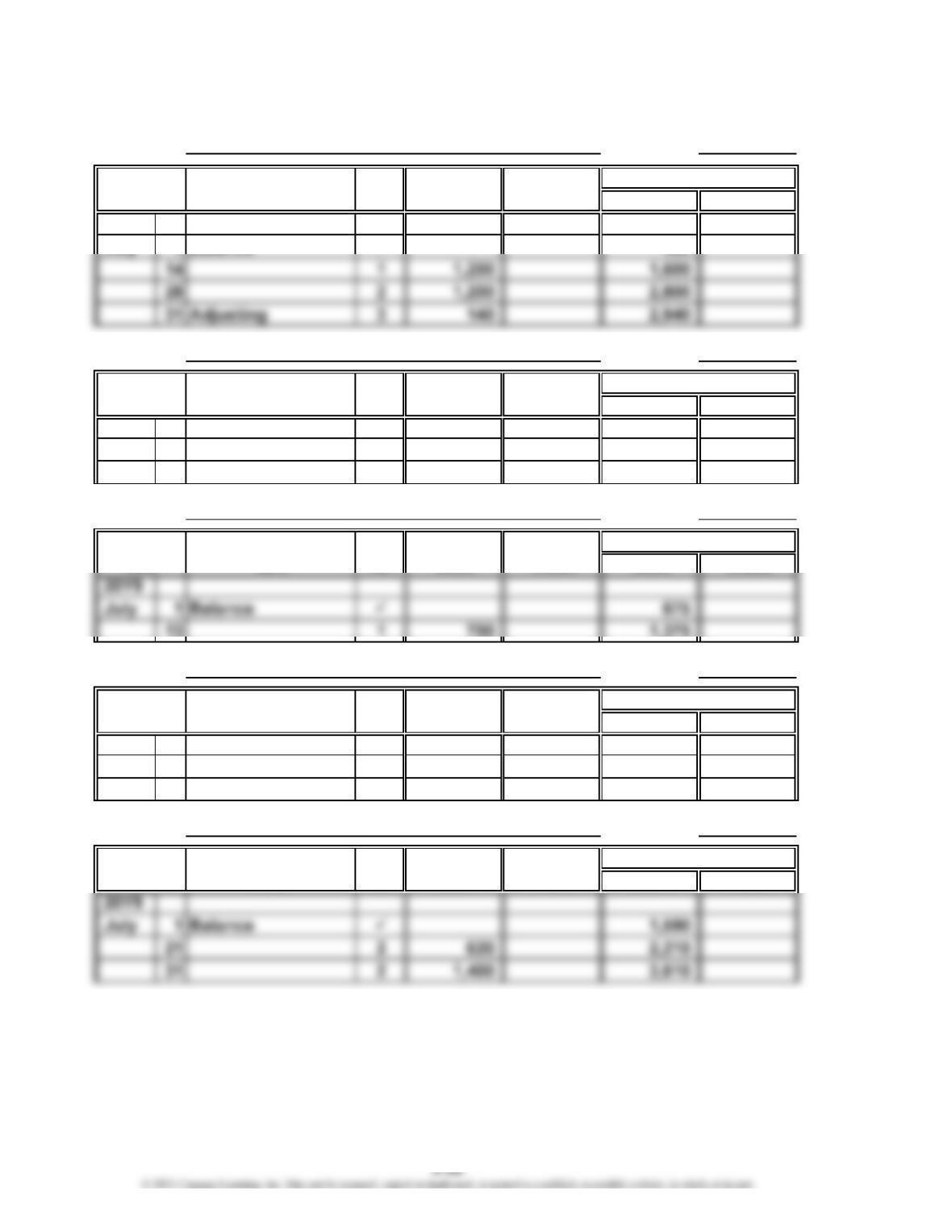
Account No. 23
Post.
Account No. 31
Post.
Item Ref. Debit Credit Debit Credit
20Y9
July 1 Balance 4,000
1 1 5,000 9,000
Account No. 32
Post.
31 2 1,250 1,750
Account No. 41
Post.
Item Ref. Debit Credit Debit Credit
20Y9
July 1 Balance 6,200
11 1 1,000 7,200
16 2 2,000 9,200
23 2 2,500 11,700
Balance
Date
Account: Fees Earned
Balance
Balance
Date
Account:
Account: Unearned Revenue
Account: Peyton Smith, Capital
Balance
Peyton Smith, Drawing
CHAPTER 3 The Adjusting Process
Continuing Problem (Continued)
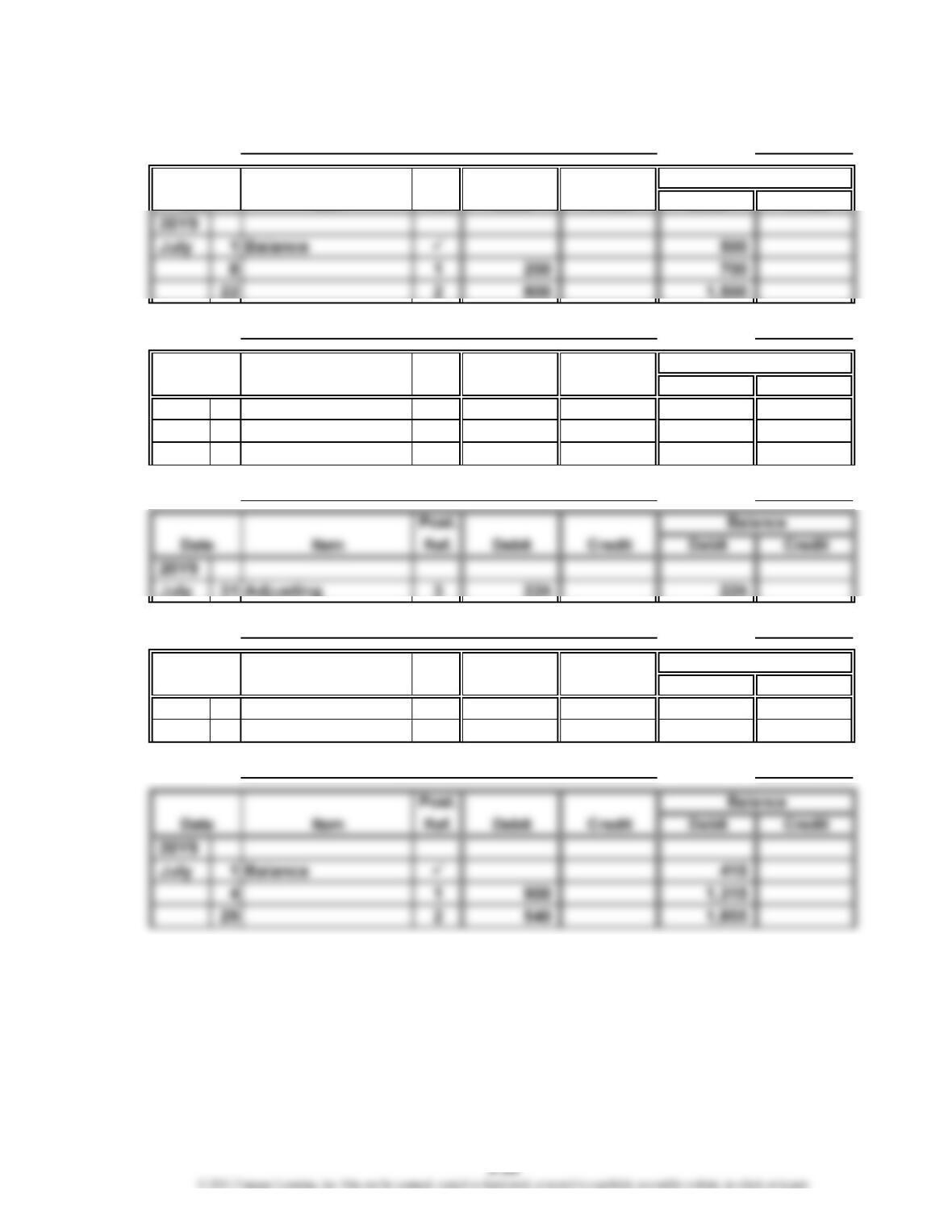
Account No. 50
Post.
Item Ref. Debit Credit Debit Credit
20Y9
Account No. 51
Post.
Item Ref. Debit Credit Debit Credit
20Y9
July 1 Balance 800
1 1 1,750 2,550
Account No. 52
Post.
13 1 700 1,375
Account No. 53
Post.
Item Ref. Debit Credit Debit Credit
20Y9
July 1 Balance 300
27 2 915 1,215
Account No. 54
Post.
Item Ref. Debit Credit Debit Credit
Date
Balance
Account: Wages Expense
Music Expense
Account: Office Rent Expense
Account: Equipment Rent Expense
Date
Balance
Date
Balance
Balance
Balance
Account: Utilities Expense
Date
Account:
CHAPTER 3 The Adjusting Process
Continuing Problem (Continued)
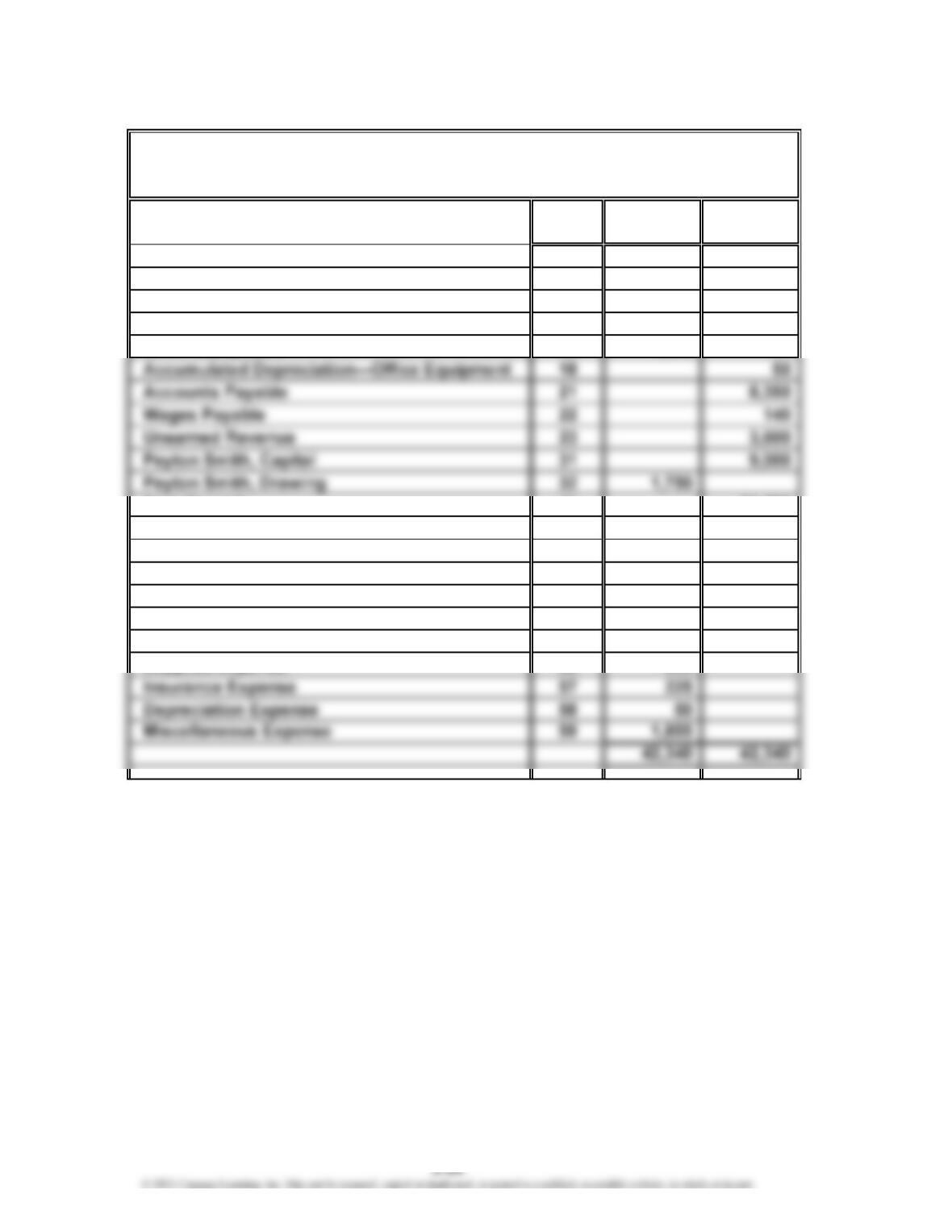
Account No. 55
Post.
Item Ref. Debit Credit Debit Credit
Account No. 56
Post.
Item Ref. Debit Credit Debit Credit
20Y9
July 1 Balance 180
31 Adjusting 3 745 925
Account No. 57
July 31 Adjusting 3 225 225
Account No. 58
Post.
Item Ref. Debit Credit Debit Credit
20Y9
July 31 Adjusting 3 50 50
Account No. 59
Balance
Account: Advertising Expense
Date
Balance
Account: Supplies Expense
Date
Balance
Date
Account: Miscellaneous Expense
Account: Insurance Expense
Account: Depreciation Expense
CHAPTER 3 The Adjusting Process
Continuing Problem (Concluded)
3.
Account Debit Credit
No. Balances Balances
Cash 11 9,945
Accounts Receivable 12 4,150
Supplies 14 275
Prepaid Insurance 15 2,475
Office Equipment 17 7,500
Fees Earned 41 21,200
Wages Expense 50 2,940
Office Rent Expense 51 2,550
Equipment Rent Expense 52 1,375
Utilities Expense 53 1,215
Music Expense 54 3,610
Advertising Expense 55 1,500
PS Music
Adjusted Trial Balance
July 31, 20Y9
CHAPTER 3 The Adjusting Process
CP 3-1
1. No. The accrual basis of accounting requires that revenues be reported in the
period in which they are earned. When revenue is reported before it is earned, the
revenues do not accurately reflect the revenues for the period. By knowingly
CP 3-2
It is acceptable for Daryl to prepare the financial statements for Squid Realty Co. on
an accrual basis. The revision of the financial statements to include the accrual of
the $30,000 commission as of December 28, 20Y7, would not be appropriate. Most
real estate contracts include contingencies that can void the contract. Such
contingencies include obtaining a loan, appraisals, environmental studies, and
CP 3-3
A sample solution based on Nike Inc.’s Form 10-K for the fiscal year ended May 31, 2018,
follows:
1. Athletic footwear, apparel, and equipment
2. 3
3. $1,933 million in 2018; $4,240 million in 2017; $3,760 million in 2016
4. $36,397 million in 2018; $34,350 million in 2017; $32,376 million in 2016
CASES & PROJECTS
CHAPTER 3 The Adjusting Process
CP 3-4
To: My Instructor
From: Ima Student
Re: Revenue Recognition of Ticket Sales at Delta Air Lines
Customers of Delta Air Lines typically purchase tickets for air travel several weeks prior
to their scheduled flight and pay for their tickets using a credit card such as VISA or
American Express. While the credit card company will remit payment to Delta shortly
after the ticket is purchased, Delta will not record revenue from the ticket until after
CP 3-5
a. There are several indications that adjusting entries were not recorded before
the financial statements were prepared, including:
1. All expenses on the income statement are identified as “paid” items and
not as “expenses.”
b. Likely accounts requiring adjustment include:
1. Accumulated Depreciation—Truck for depreciation expense.
2. Supplies (paid) Expense for supplies on hand.