MTC3-1
MAKING THE CONNECTION: INTEGRATIVE EXERCISE
PART 3: CHAPTERS 11–15
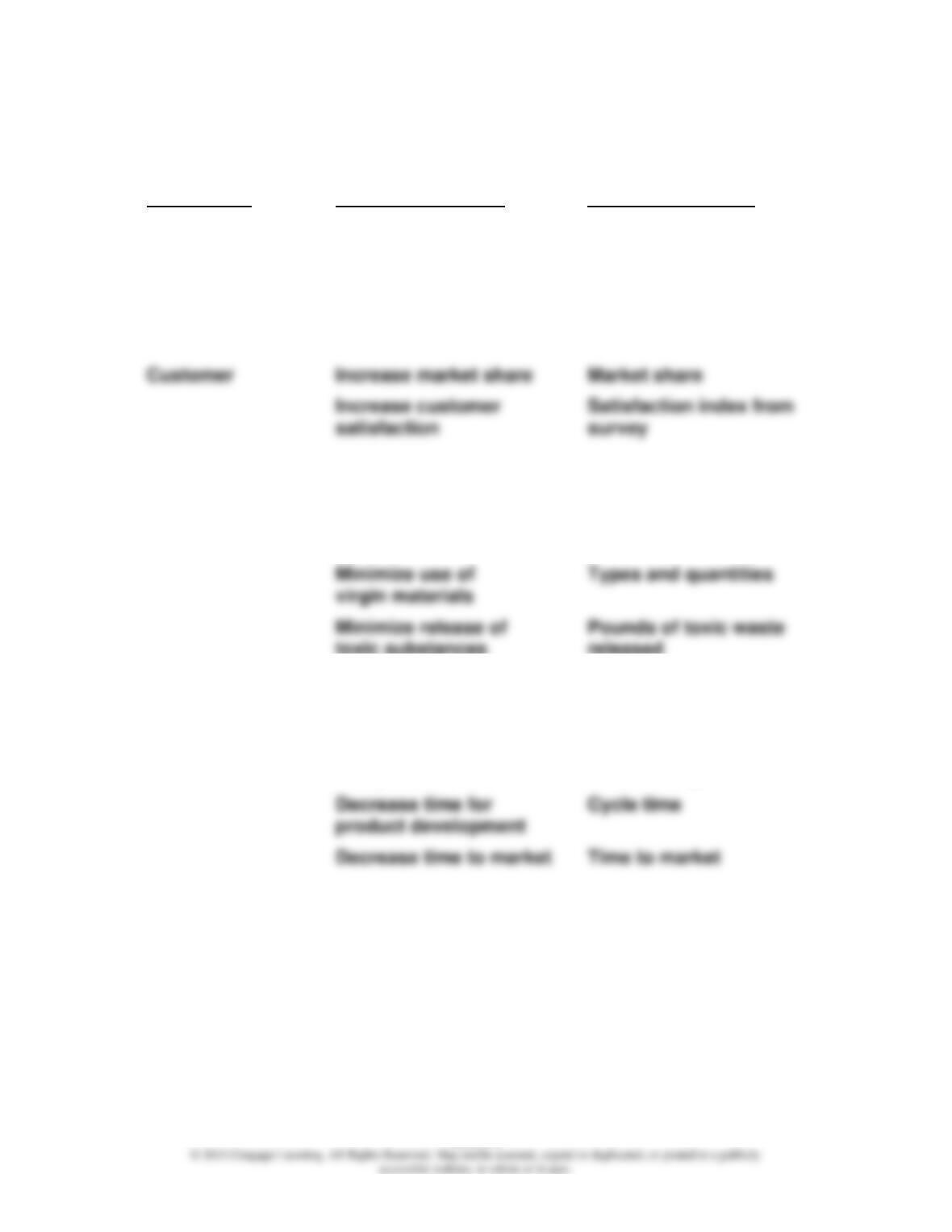
1. Perspective Strategic Objective Possible Measures
Financial Increase revenue from Percentage sales from
proprietary products proprietary products
Increase revenue from Percentage sales from
existing products existing products
Decrease unit costs Trend in unit costs
Environmental Improve environmental Market share
image and reputation
Minimize use of Percentage of total
hazardous materials materials cost
toxic substances released
Process Improve process quality Number of batches rejected
Batches recalled
Increase number of New products introduced
new products versus competitors’
MTC3-2
Comp. Prob. 3 (Continued)
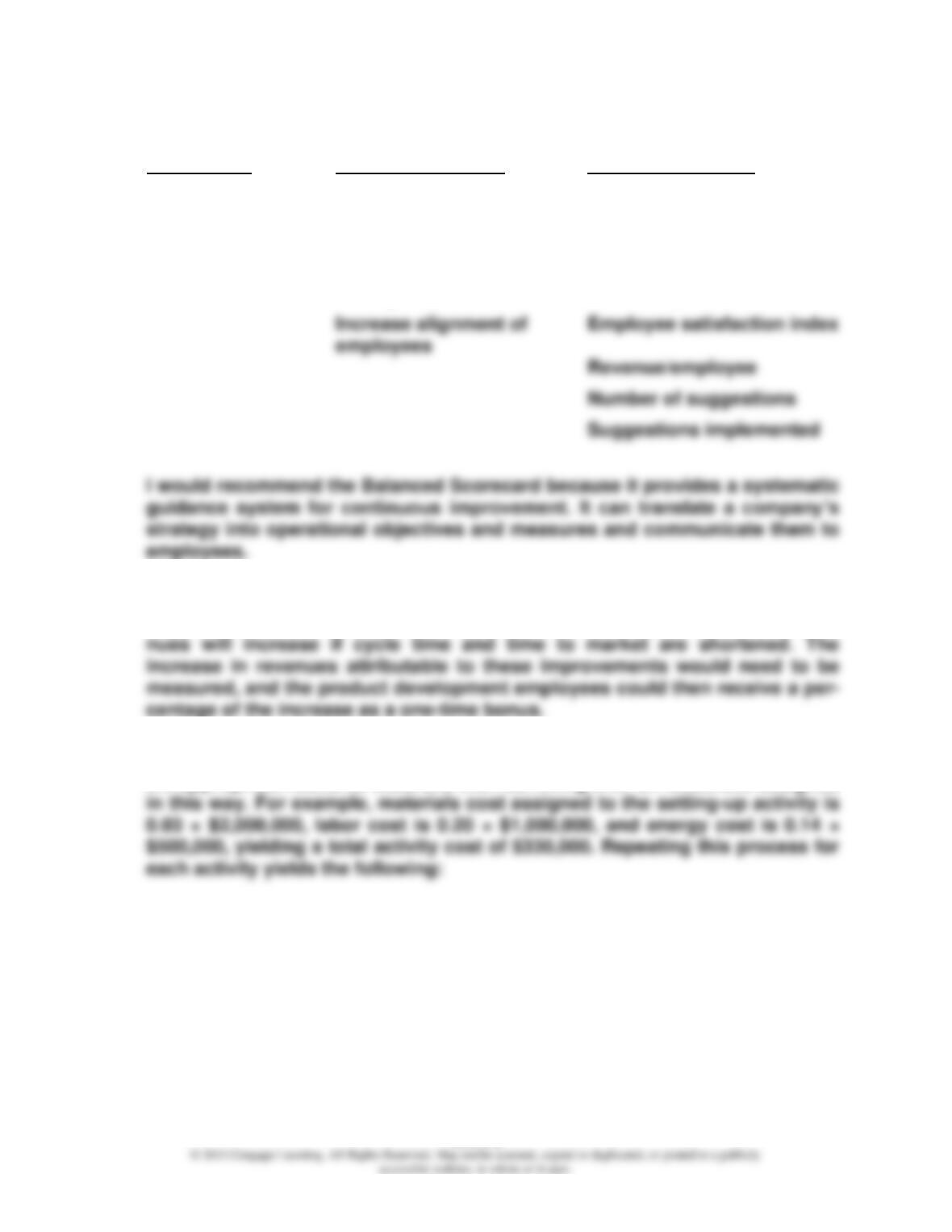
Perspective Strategic Objective Possible Measures
Learning and Improve employee Hours of training
Growth capabilities
Strategic job coverage
Increase access to Strategic information
strategic information availability ratio
2. Gainsharing allows employees to share the benefits created by their actions/
suggestions. In the product development context, the premise is that reve-
3. The cost of the activities is obtained by multiplying the percentage usage by
the appropriate resource cost, and then summing over all resources assigned
MTC3-3
Comp. Prob. 3 (Continued)
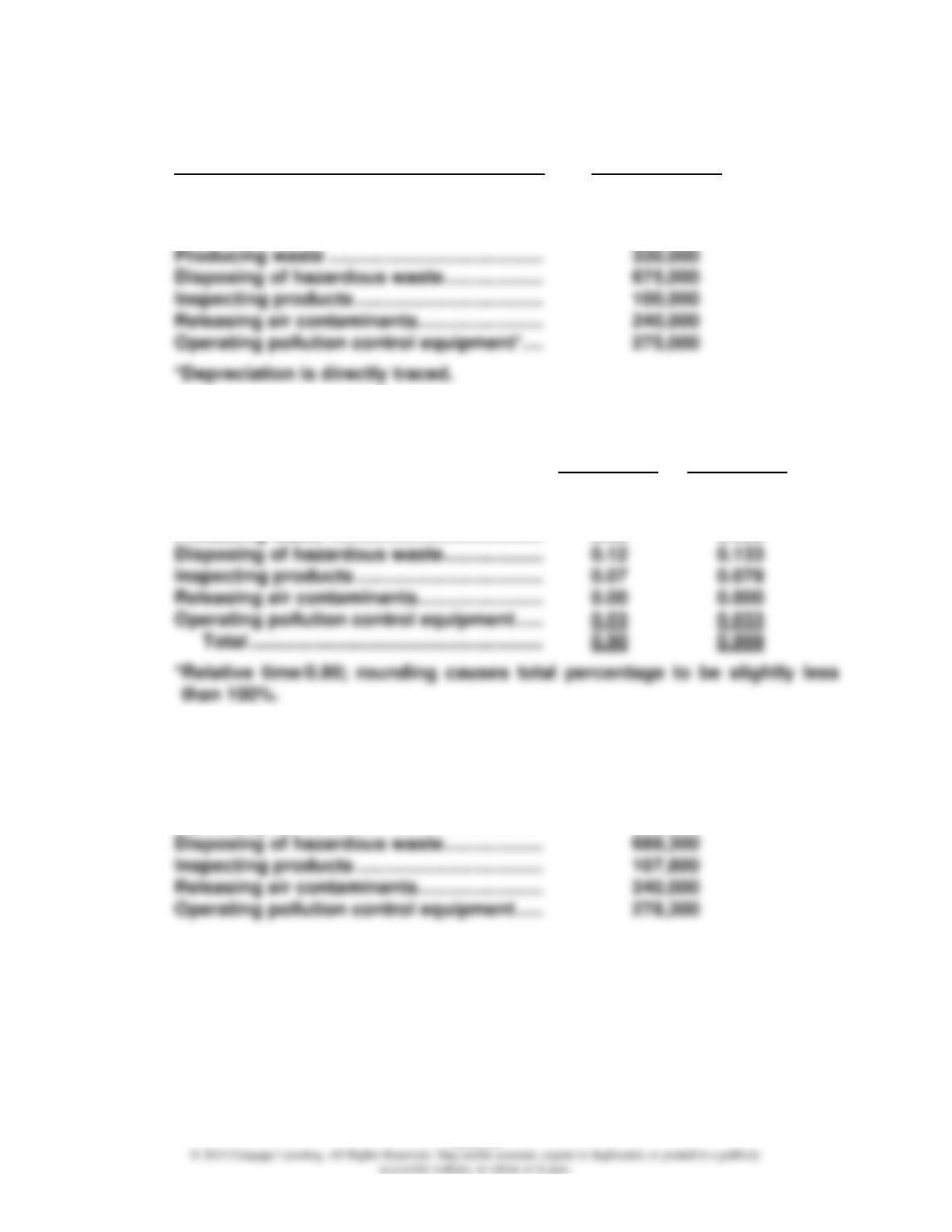
Activity Cost Assigned
Supervising process …………………………….. $ 100,000
Setting up …………………………………………….. 330,000
Blending chemicals ……………………………… 2,150,000
Assigning cost of secondary activity:
The cost is assigned in proportion to the labor used by each primary activity:
Labor Time Percentage*
Setting up …………………………………………….. 0.20 0.222
Blending chemicals ……………………………… 0.40 0.444
Producing waste ………………………………….. 0.08 0.089
Primary activity costs (above percentages multiplied by $100,000 added to
each initial activity cost):
Setting up …………………………………………….. $ 352,200
Blending chemicals ……………………………… 2,194,400
Producing waste ………………………………….. 338,900
MTC3-4
Comp. Prob. 3 (Continued)
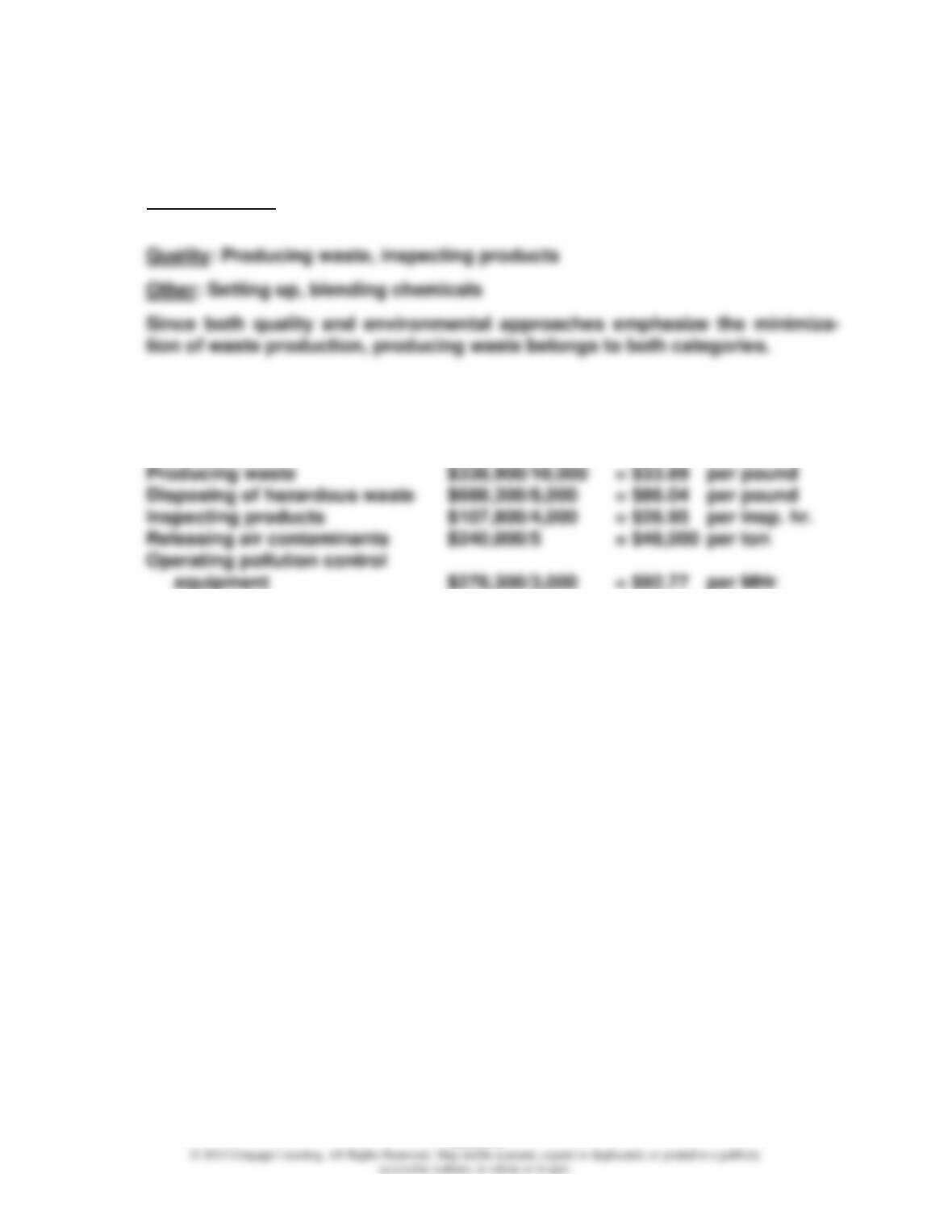
4. Activity classification:
Environmental: Producing waste, disposing of hazardous waste, releasing air
contaminants, operating pollution control equipment
5. Activity rates:
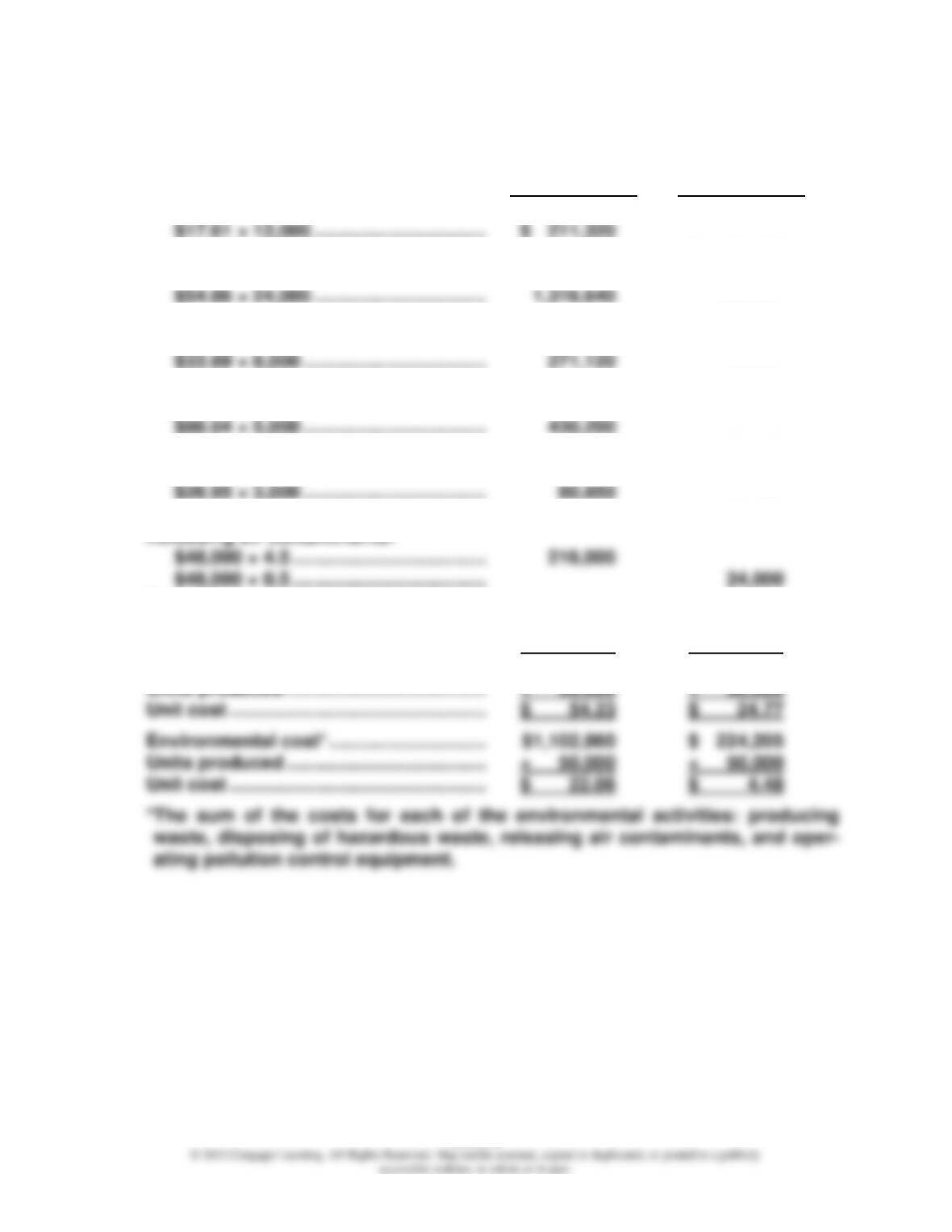
Setting up $352,200/20,000 = $17.61 per setup hr.
Blending chemicals $2,194,400/40,000 = $54.86 per DLH
MTC3-5
Comp. Prob. 3 (Continued)
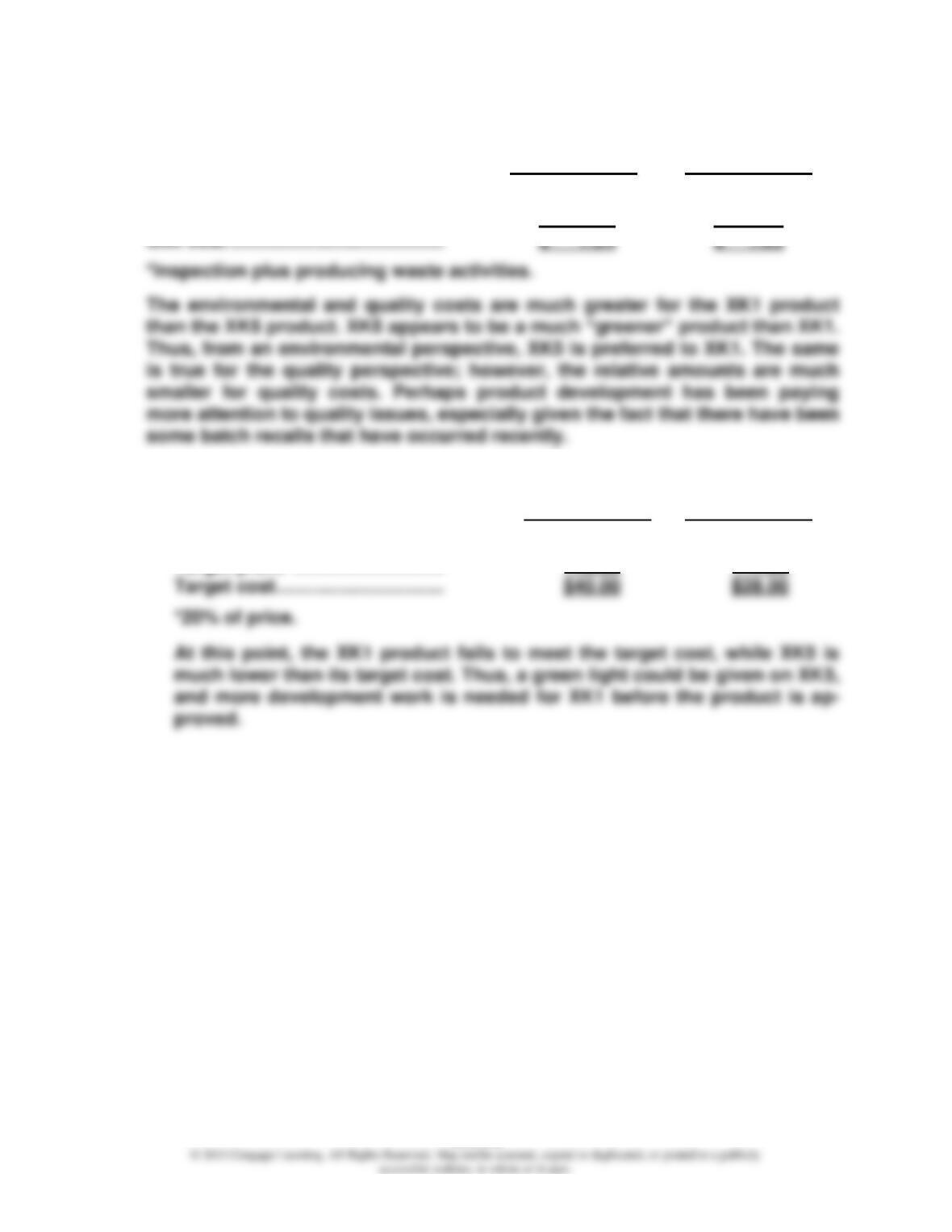
Unit cost:
Antibiotic XK1 Antibiotic XK5
Setting up:
$17.61 × 7,000 …………………………….. $ 123,270
Blending chemicals:
$54.86 × 16,000 …………………………... 877,760
Producing waste:
$33.89 × 2,000 …………………………….. 67,780
Disposing of hazardous waste:
$86.04 × 1,000 …………………………….. 86,040
Inspecting products:
$26.95 × 500 …………………………..…… 13,475
Operating pollution control equipment:
$92.77 × 2,000 …………………………….. 185,540
$92.77 × 500 …………………………..…… 46,385
Total cost………………………………………… $2,711,670 $1,238,710
MTC3-6
Comp. Prob. 3 (Continued)
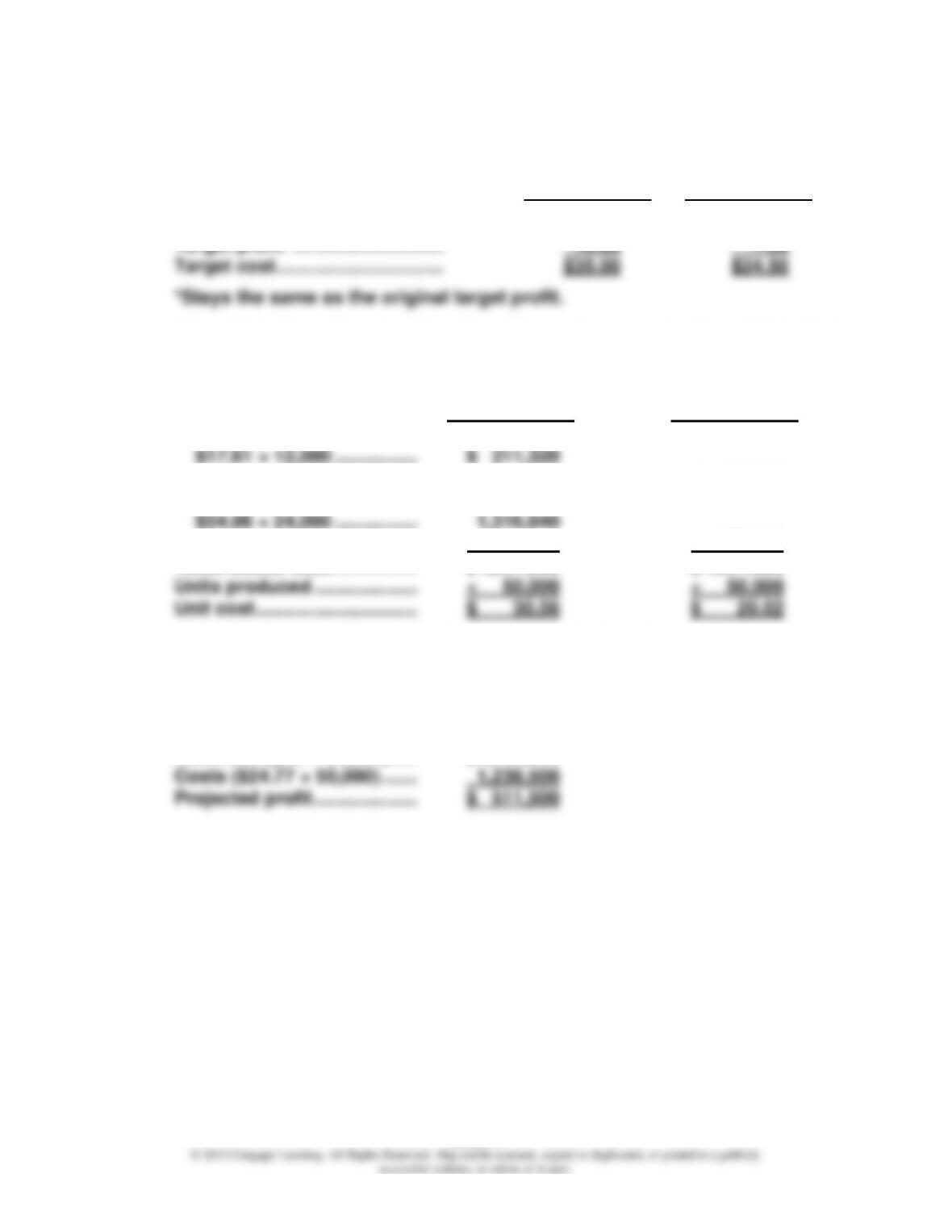
Antibiotic XK1 Antibiotic XK5
Quality cost* …………………………….. $351,970 $ 81,255
Units produced ………………………… ÷ 50,000 ÷ 50,000
6. a. Target cost:
Antibiotic XK1 Antibiotic XK5
Target price …………………………. $50.00 $35.00
Target profit* ……………………….. 10.00 7.00
MTC3-7
Comp. Prob. 3 (Continued)
b. New target costs:
Antibiotic XK1 Antibiotic XK5
Target price …………………………. $45.00 $31.50
Assuming all environmental and quality costs are non-value-added, then
the product cost is the sum of the blending and setting-up costs:
Unit cost:
Antibiotic XK1 Antibiotic XK5
Setting up:
$17.61 × 7,000 ……………… $ 123,270
Blending chemicals:
$54.86 × 16,000 ……………. 877,760
Value-added cost…………….. $1,527,960 $1,001,030
If the environmental and quality costs are eliminated, then both products
can meet the new target.
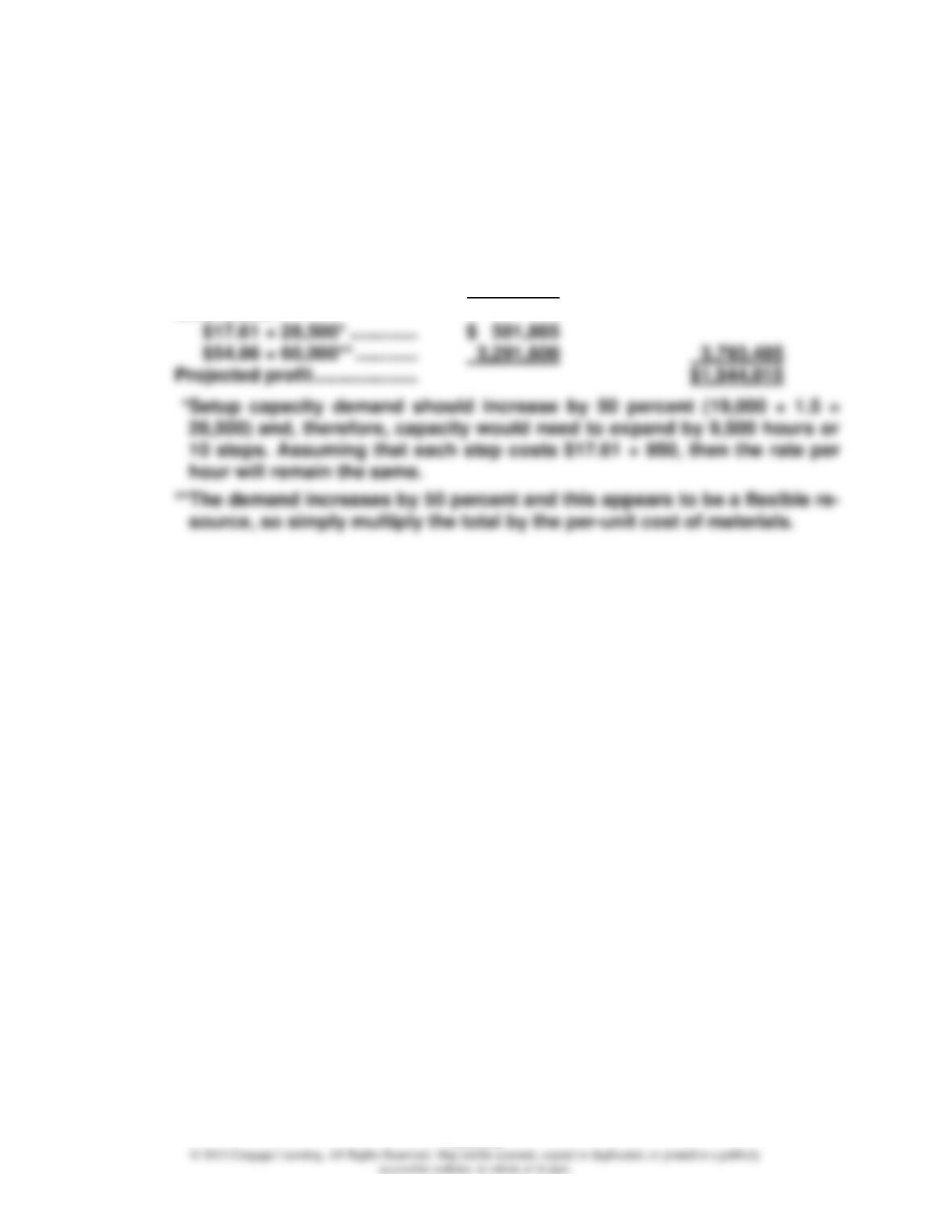
No elimination scenario: If none of the non-value-added costs are elimi-
nated, then Zando will produce and sell 50,000 pounds of XK5:
Revenues ($35 × 50,000) ….. $1,750,000
MTC3-8
Comp. Prob. 3 (Concluded)
Elimination scenario: If the non-value-added costs are all eliminated, then
the company can produce and sell both products with a 50 percent in-
crease in sales volume:
Revenues:
$45 × 75,000 ……………….. $3,375,000
$31.50 × 75,000 …………… 2,362,500 $5,737,500
Less costs: