FINANCIAL ACCOUNTING – Eleventh Edition Solutions Manual
Cash 15,000$ Accounts payable 8,800$
Accounts receivable 18,600 Interest payable 600
Req. 2
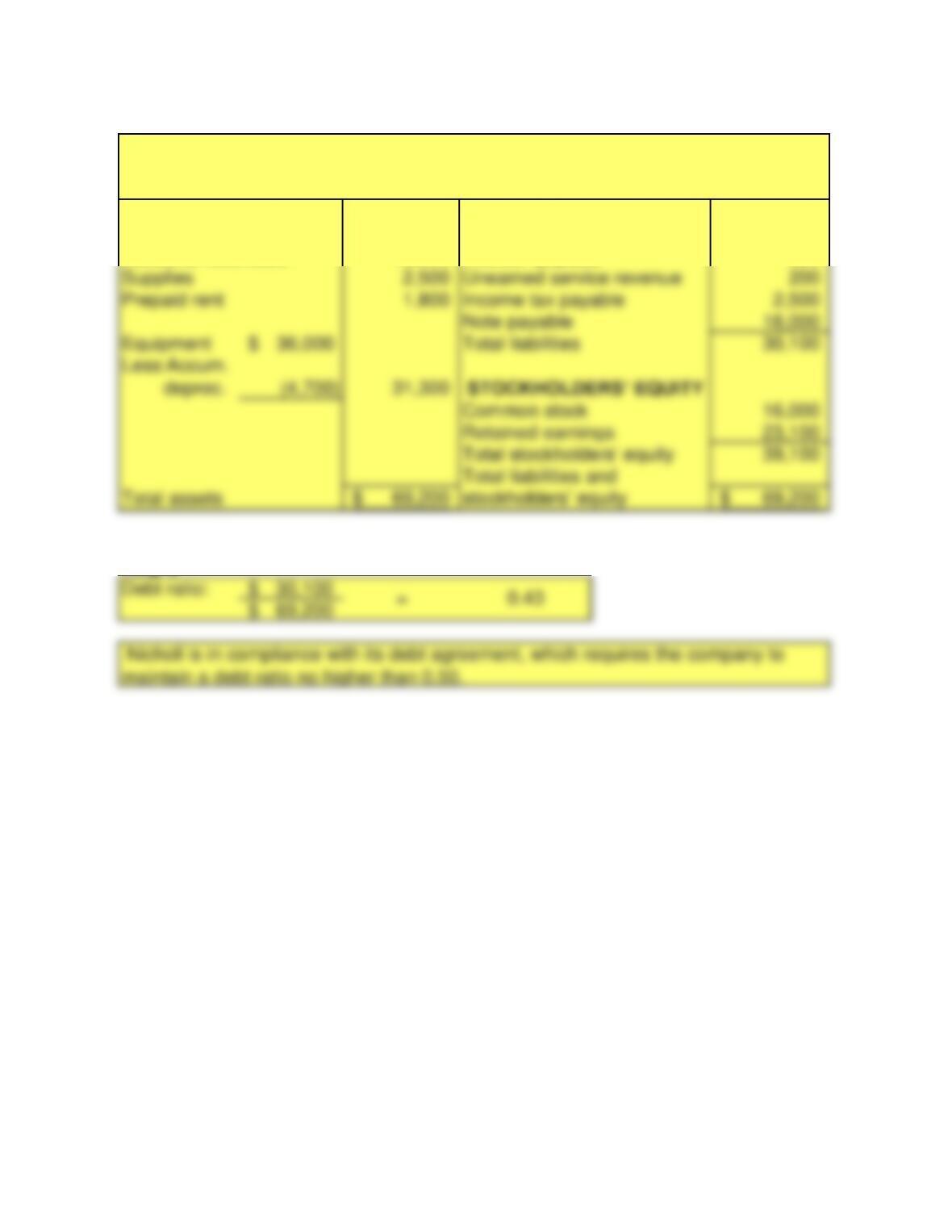
Debt ratio: 30,100$
Nicholl Corporation
Balance Sheet
March 31, 2016
LIABILITIES
ASSETS
Chapter 3: Accrual Accounting and Income Page 61 of 105
Prepaid rent 1,800 Income tax payable 2,500
Equipment 36,000$ Total liabilities 30,100
FINANCIAL ACCOUNTING – Eleventh Edition Solutions Manual
P3-64A
(20 min.)
Requirements
Solution:
Req. 1
DATE DEBIT CREDIT
Jan. 31 Service Revenue 95,000
Retained Earnings 95,000
Req. 2
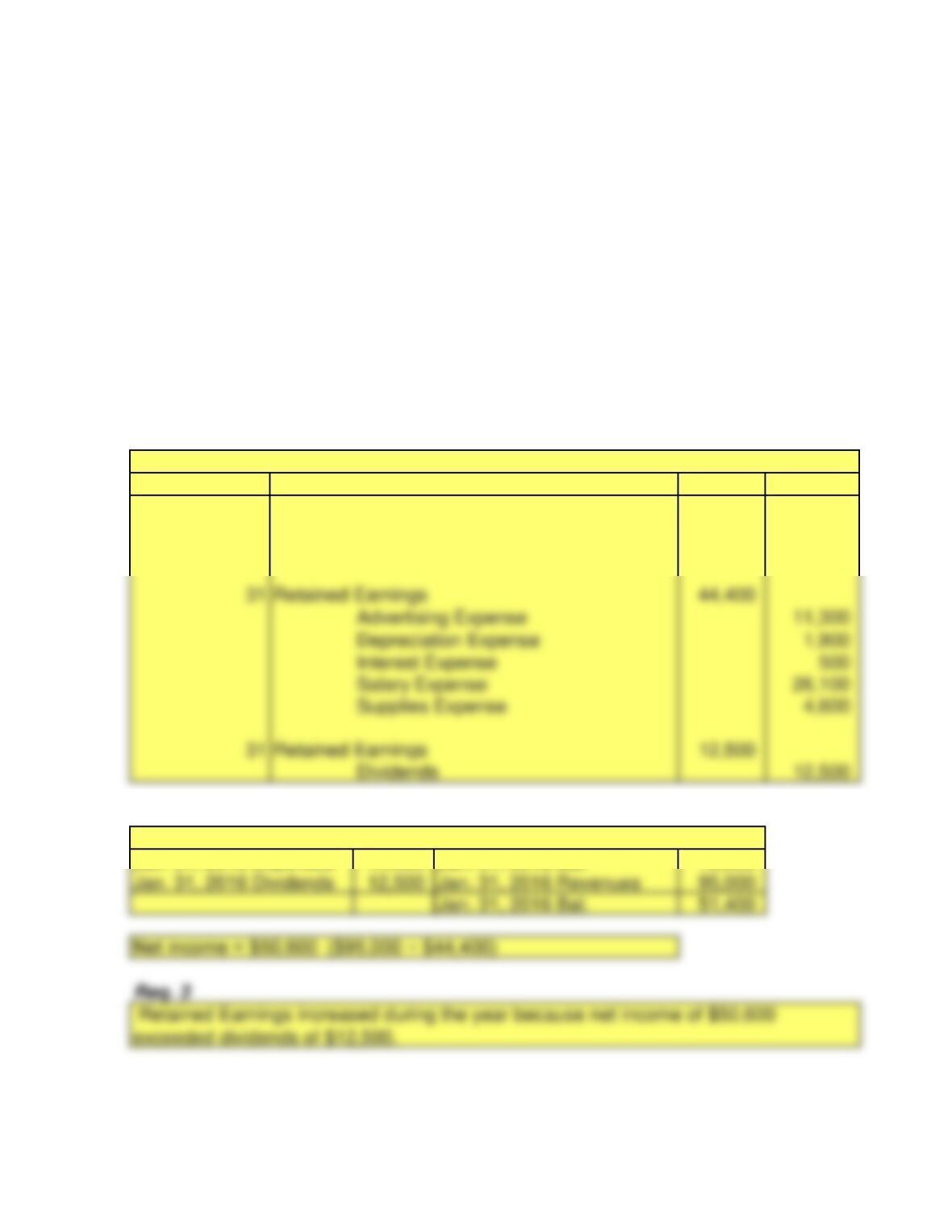
Jan. 31, 2016 Expenses 44,400 Jan. 31, 2015 Bal. 13,300
Jan. 31, 2016 Dividends 12,500 Jan. 31, 2016 Revenues 95,000
Journal
ACCOUNT TITLES AND EXPLANATION
1. All adjustments have been journalized and posted, but the closing entries have not
yet been made. Journalize Granger’s closing entries at January 31, 2016.
2. Set up a T-account for Retained Earnings and post to that account. Then compute
Granger Services’ net income for the year ended January 31, 2016. What is the ending
balance of Retained Earnings?
3. Did Retained Earnings increase or decrease during the year? What caused the
increase or the decrease?
Retained Earnings
Closing Entries
Chapter 3: Accrual Accounting and Income Page 62 of 105
Interest Expense 500
Salary Expense 26,100
Supplies Expense 4,600
Dividends 12,500
FINANCIAL ACCOUNTING – Eleventh Edition Solutions Manual
P3-65A
(25-40 min.)
Requirements
Solution:
Req. 1
Current assets:
Cash 17,400$
Accounts receivable 17,000
1. Use the Granger Services data in Problem 3-64A to prepare the company’s classified
balance sheet at January 31, 2016. Show captions for total assets, total liabilities, and total
liabilities and stockholders’ equity.
2. Compute Granger’s net working capital, current ratio, and debt ratio at January 31, 2016,
rounding to two decimal places. At January 31, 2015, net working capital was $22,600,
the current ratio was 1.90, and the debt ratio was 0.15. Did Granger’s ability to pay both
current and total debts improve or deteriorate during fiscal 2016? Evaluate Granger’s debt
position as strong or weak and give your reason.
Granger Services, Inc.
Balance Sheet
January 31, 2016
ASSETS
Chapter 3: Accrual Accounting and Income Page 63 of 105
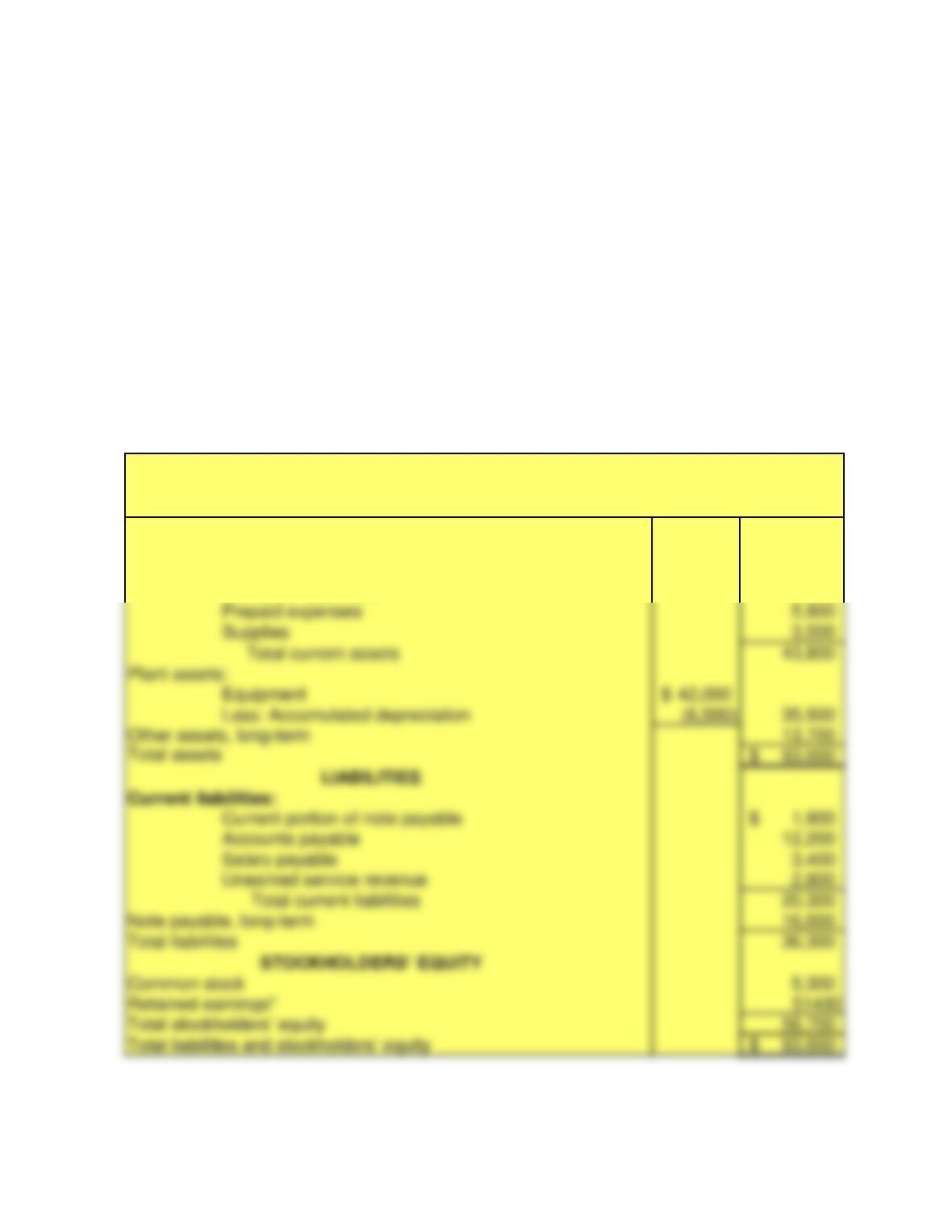
Prepaid expenses 5,900
Total current assets 43,800
Plant assets:
Equipment 42,000$
Less: Accumulated depreciation (6,500) 35,500
Other assets, long-term 13,700
Current portion of note payable 1,900$
Accounts payable 12,200
Salary payable 3,400
Unearned service revenue 2,800
Total current liabilities 20,300
Note payable, long-term 16,000
Total liabilities 36,300
Common stock 5,300
Retained earnings* 51400
FINANCIAL ACCOUNTING – Eleventh Edition Solutions Manual
Req. 1 (continued)
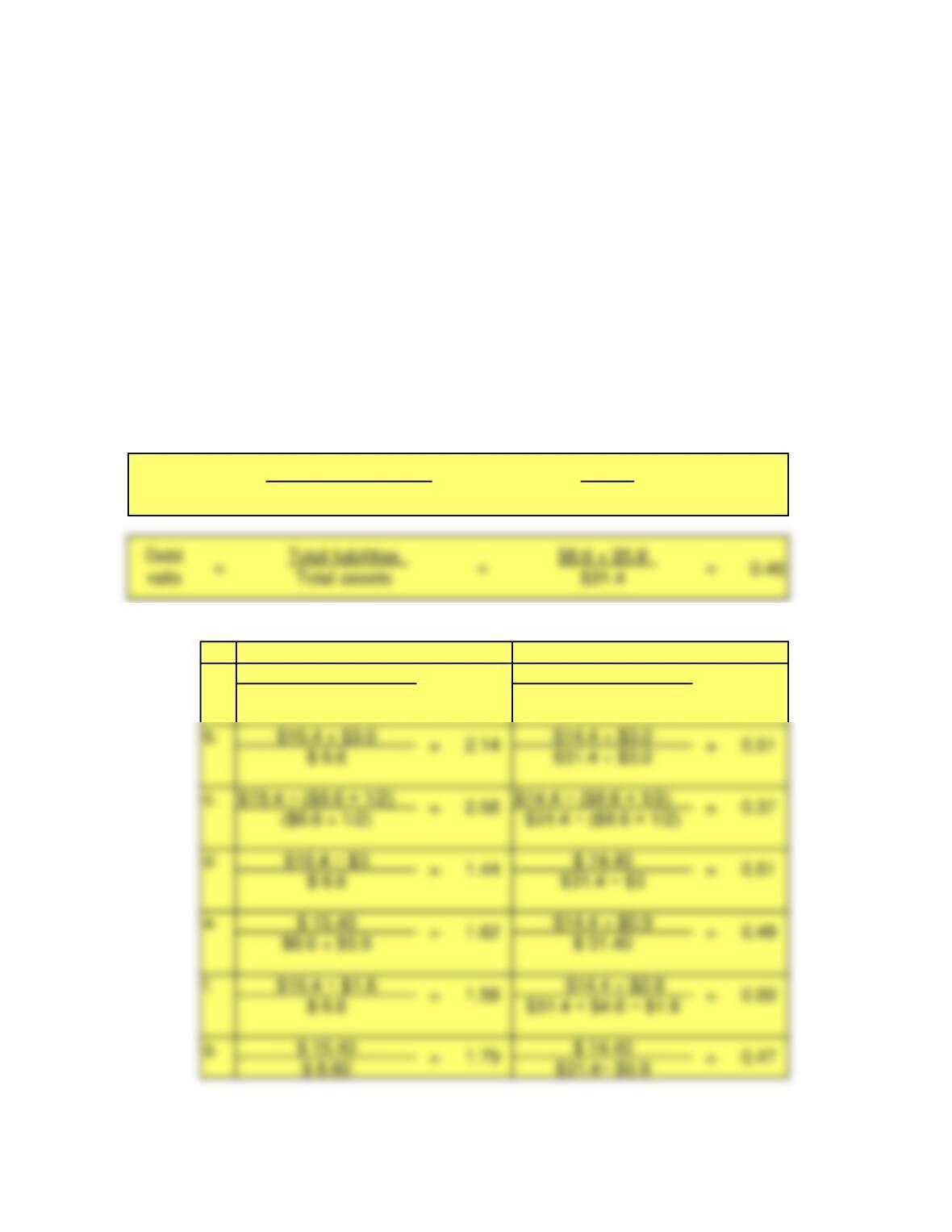
*Retained earnings = $93,000 − $36,300 − $5,300 = $51,400
OR
Req. 2
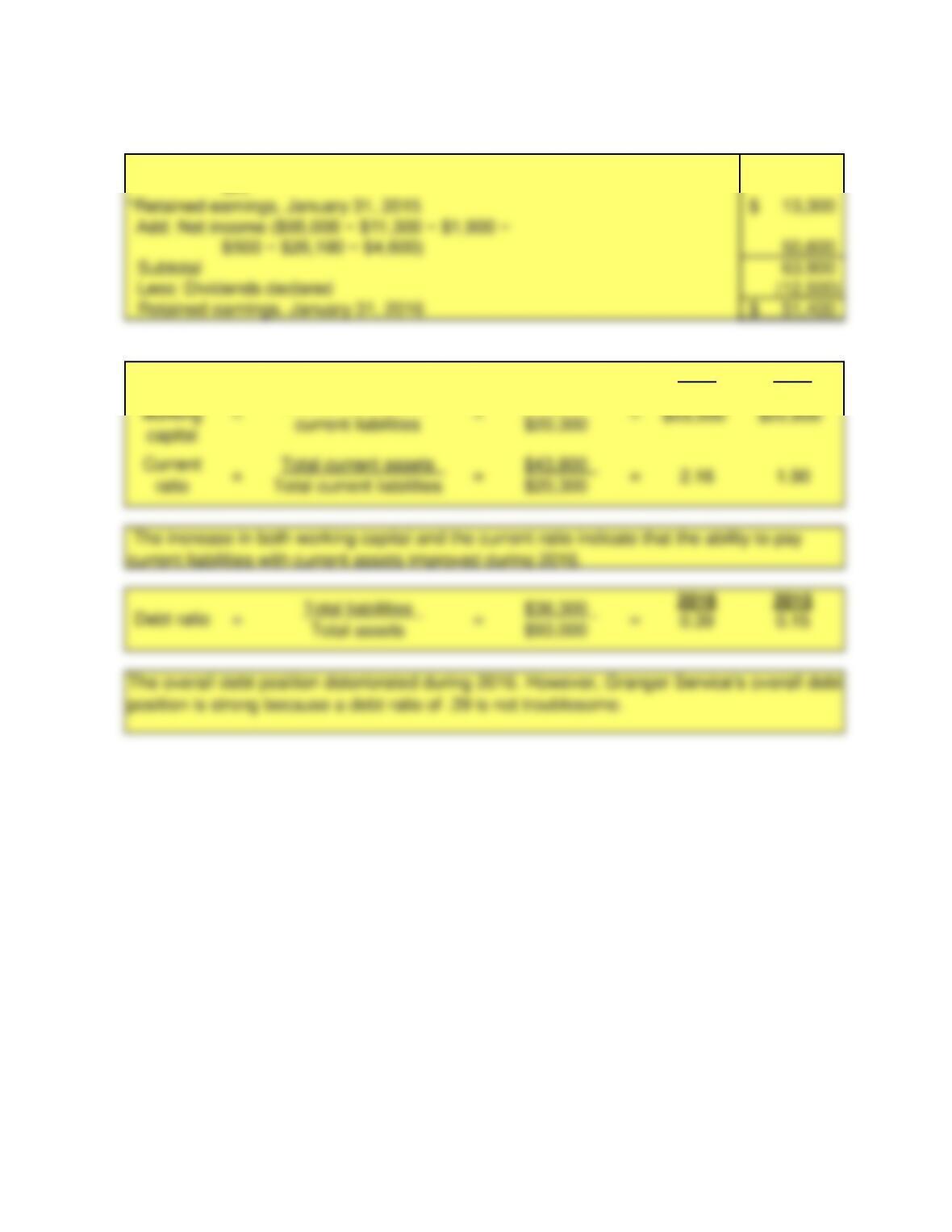
2016 2015
Net
Total current assets –
$43,800 –
Chapter 3: Accrual Accounting and Income Page 64 of 105
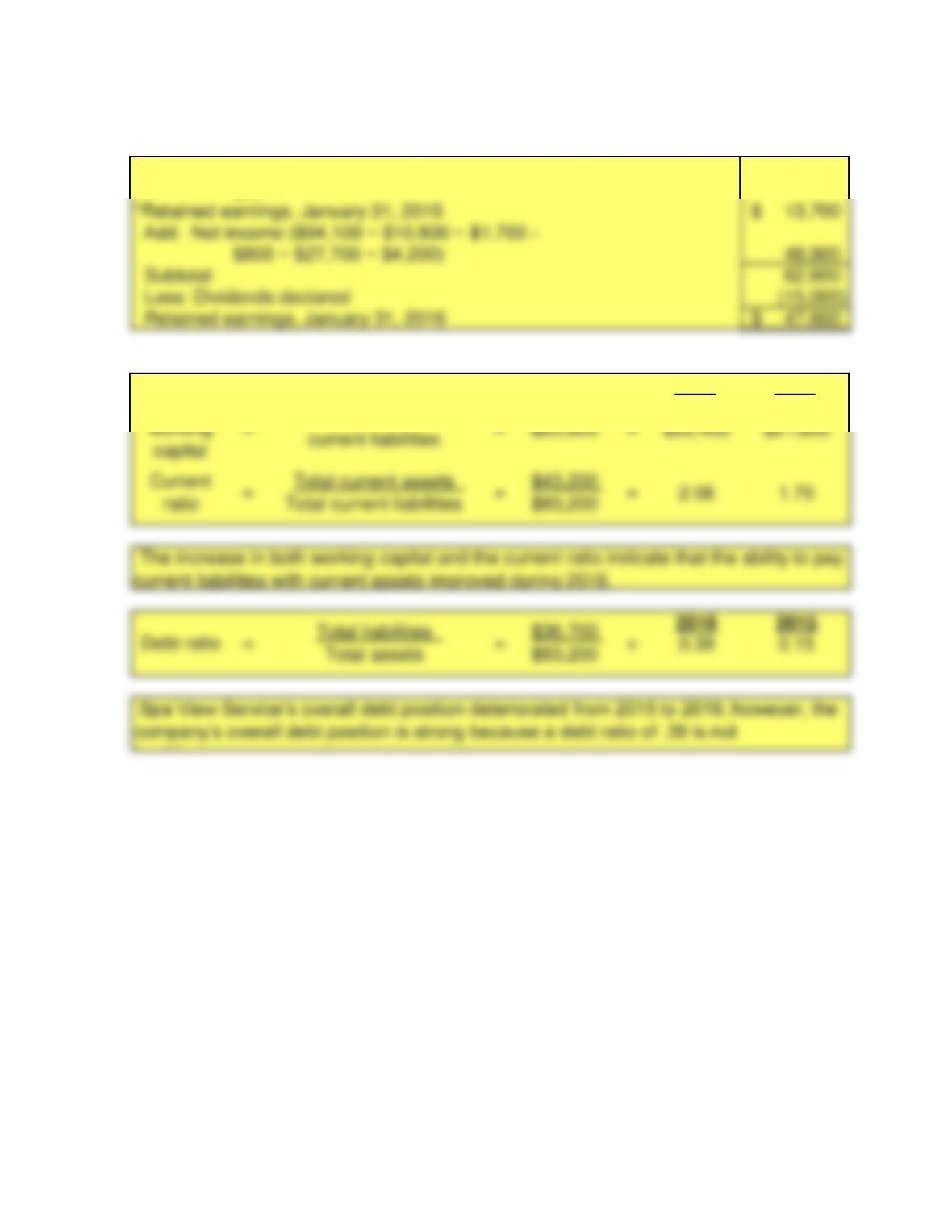
Add: Net income ($95,000 − $11,300 − $1,900 −
FINANCIAL ACCOUNTING – Eleventh Edition Solutions Manual
P3-66A
(45-60 min.)
Requirements
Solution:
Req. 1
1.79
Req. 2
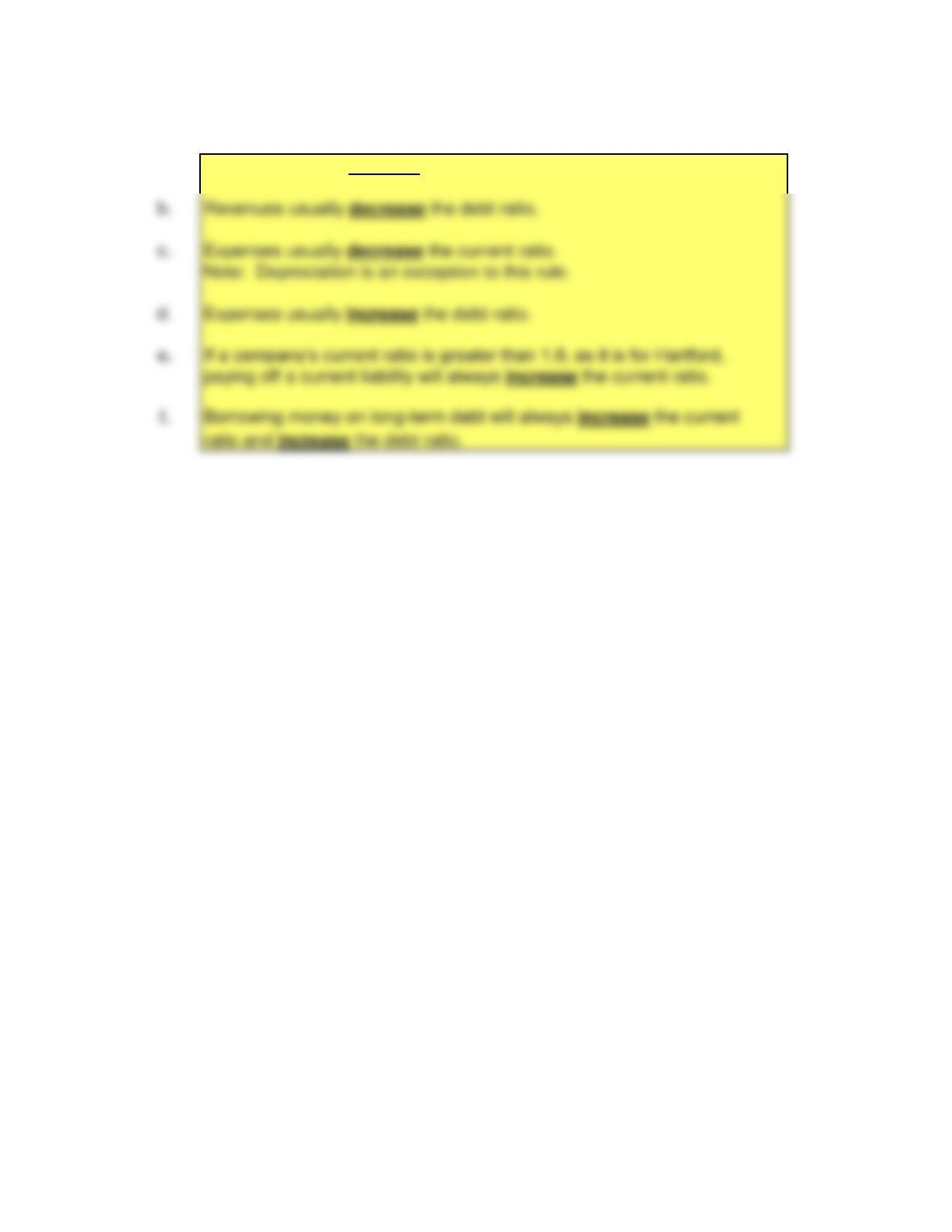
Current Ratio Debt Ratio
a. $15.4 + $2.5 $ 14.40
$ 8.6 $31.4 + $2.5
b. $15.4 + $3.0 $14.4 + $3.0
$ 8.6 $31.4 + $3.0
=
=
=
=
2.14
2.58
1.44
1.58
=
0.37
=
0.51
=
0.50
=
0.51
Current
ratio
=
Total current assets
Total current liabilities
=
$15.4
$8.6
=
=
2.08
1. Compute Hartford’s current ratio and debt ratio at December 31, 2016. Round to
two decimal places.
2. Consider each transaction separately. Compute Hartford’s current ratio and debt
ratio after each transaction during 2017—that is, seven times. Round ratios to two
decimal places.
3. Based on your analysis, you should be able to readily identify the effects of
certain transactions on the current ratio and the debt ratio. Test your understanding
by completing these statements with either “increase” or “decrease”:
=
0.42
Chapter 3: Accrual Accounting and Income Page 65 of 105
0.46
FINANCIAL ACCOUNTING – Eleventh Edition Solutions Manual
Req. 3
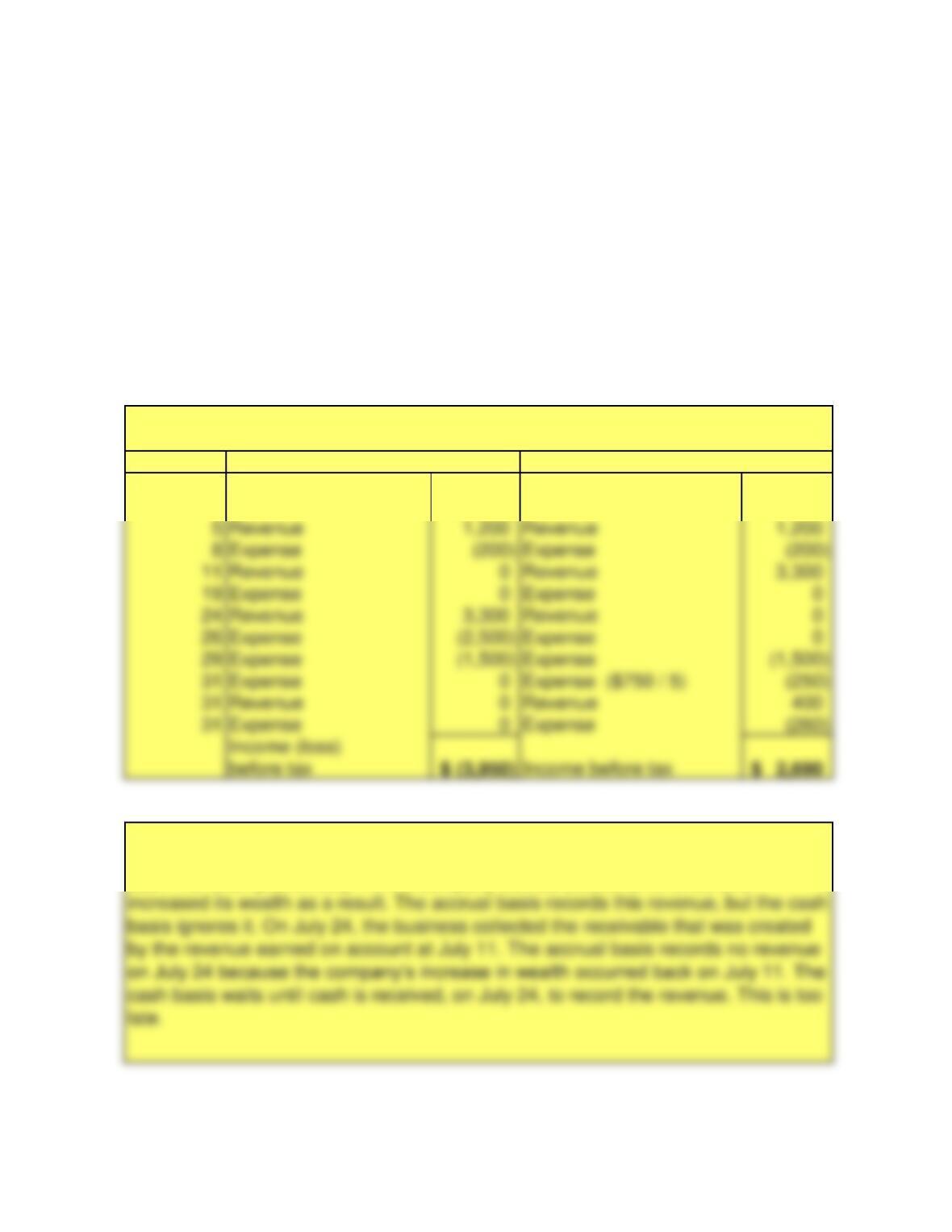
a. Revenues usually increase the current ratio.
Chapter 3: Accrual Accounting and Income Page 66 of 105
b. Revenues usually decrease the debt ratio.
d. Expenses usually increase the debt ratio.
FINANCIAL ACCOUNTING – Eleventh Edition Solutions Manual
P3-67B
(20-30 min.)
Requirements
Solution:
Req. 1 & 2
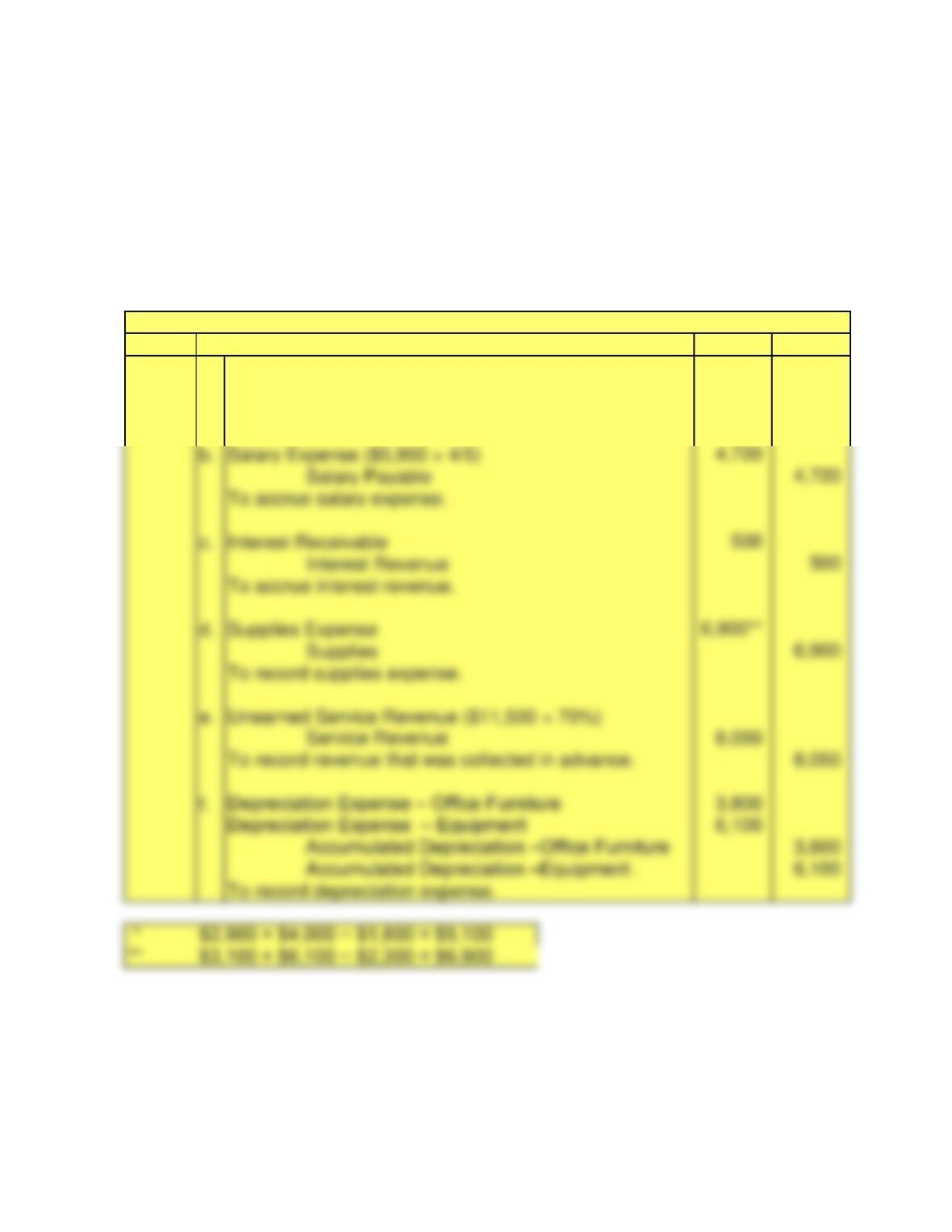
Date
July 1 Expense (750)$ Expense 0$
4 Expense (3,500) Expense 0
Req. 3
The accrual-basis measure of net income is preferable because it accounts for
revenues and expenses when they occur, not when they are received or paid in
cash. For example, on July 11, the company earned $3,300 of revenue and
Cash Basis
Accrual Basis
1. Show how each transaction would be handled (in terms of revenue and expense
recognition) using the cash basis and the accrual basis.
2. Compute July income (loss) before tax under each accounting method.
3. Indicate which measure of net income or net loss is preferable. Use the
transactions on July 11 and July 24 to explain.
Hudson Tax Consulting
Amount of Revenue (Expense) for July
Chapter 3: Accrual Accounting and Income Page 67 of 105
5 Revenue 1,200 Revenue 1,200
8 Expense (200) Expense (200)
FINANCIAL ACCOUNTING – Eleventh Edition Solutions Manual
P3-68B
(10-20 min.)
Solution:
DATE DEBIT CREDIT
Dec. 31 a. Insurance Expense 5,100*
Prepaid Insurance 5,100
To record insurance expense
Journal
ACCOUNT TITLES AND EXPLANATION
Journalize the adjusting entry needed on December 31, the end of the current
accounting period, for each of the following independent cases affecting Tiger Corp.
Include an explanation for each entry.
Chapter 3: Accrual Accounting and Income Page 68 of 105
Salary Payable 4,720
To accrue salary expense.
Interest Revenue 500
Supplies 6,900
To record supplies expense.
FINANCIAL ACCOUNTING – Eleventh Edition Solutions Manual
P3-69B
(45-60 min.)
Requirements
Solution:
Req. 1
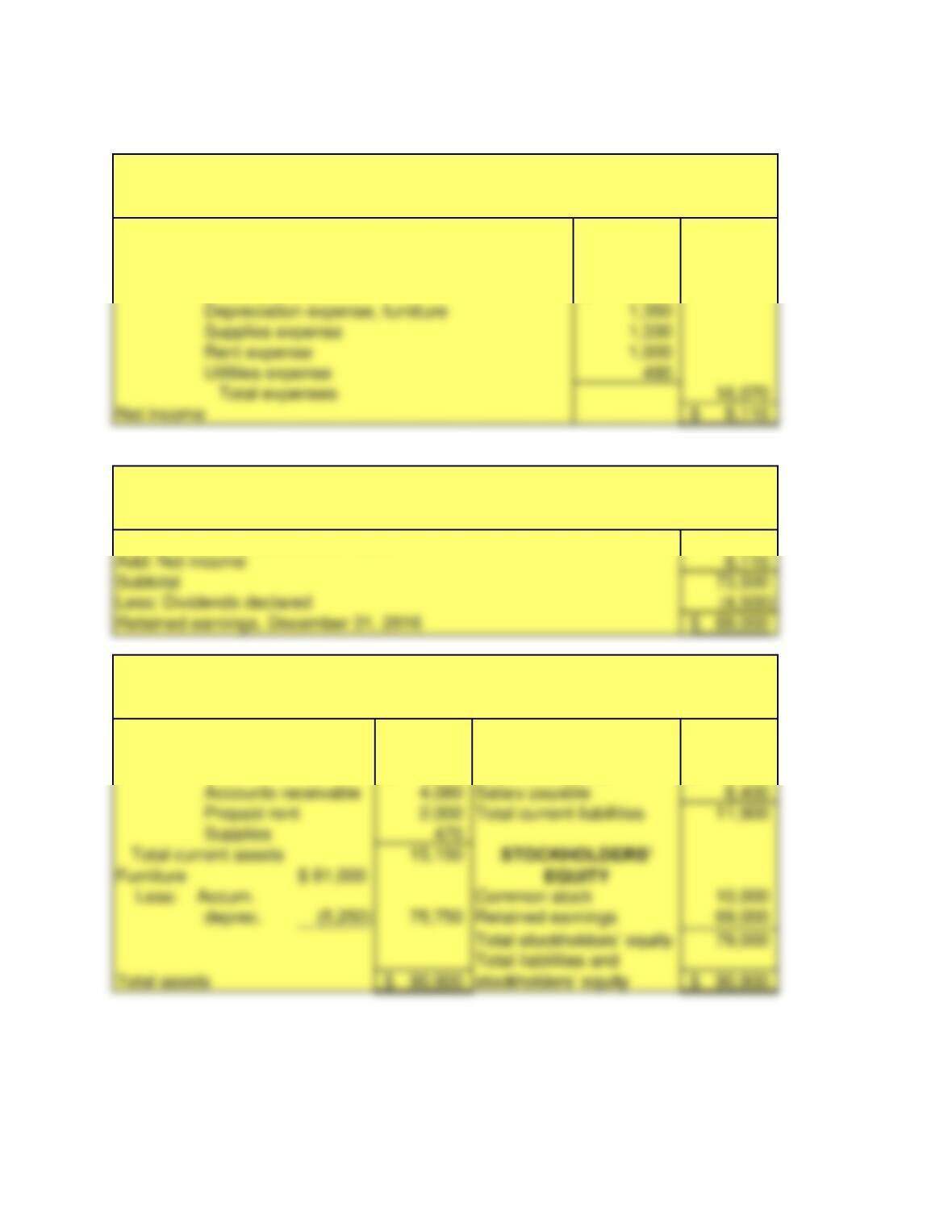
ACCOUNT TITLE DEBIT CREDIT DEBIT CREDIT DEBIT CREDIT
Cash 8,600 8,600
Accounts receivable 1,300 (a) 2,780 4,080
Prepaid rent 3,000 (b) 1,000* 2,000
* $3,000 ÷ 3 = $1,000
1. Prepare the adjusted trial balance of Edison, Inc., at December 31, 2016.
2. Prepare the monthly single step income statement, the statement of retained
earnings, and the classified balance sheet.
Edison, Inc.
Adjusted Trial Balance
TRIAL BALANCE
December 31, 2016
ADJUSTMENTS
ADJUSTED TRIAL
BALANCE
Chapter 3: Accrual Accounting and Income Page 69 of 105
Supplies 1,800 (c) 1,330 470
Accounts payable 3,500 3,500
Salary payable (e) 8,400*** 8,400
Common stock 10,000 10,000
Retained earnings 65,390 65,390
Service revenue 21,400 (a) 2,780 24,180
Salary expense 3,500 (e) 8,400*** 11,900
Rent expense (b) 1,000* 1,000
Utilities expense 490 490
Supplies expense (c) 1,330 _____ 1,330
FINANCIAL ACCOUNTING – Eleventh Edition Solutions Manual
Req. 2
Revenues:
Service revenue 24,180$
Expenses:
Salary expense 11,900$
Retained earnings, December 1, 2016 65,390$
Add: Net income 8,110
Less: Dividends declared (4,500)
Current assets: Current liabilities:
Cash 8,600$ Accounts payable 3,500$
Accounts receivable 4,080 Salary payable 8,400
Prepaid rent 2,000 Total current liabilities 11,900
Furniture 81,000$
Less: Accum. Common stock 10,000
Month Ended December 31, 2016
December 31, 2016
Month Ended December 31, 2016
Statement of Retained Earnings
Edison, Inc.
Income Statement
Edison, Inc.
Edison, Inc.
ASSETS
LIABILITIES
Balance Sheet
Chapter 3: Accrual Accounting and Income Page 70 of 105
Depreciation expense, furniture 1,350
Supplies expense 1,330
Rent expense 1,000
Utilities expense 490
Total expenses 16,070
FINANCIAL ACCOUNTING – Eleventh Edition Solutions Manual
P3-70B
(10-20 min.)
Requirements
Solution:
Req. 1
DEBIT CREDIT
June 30 Accounts Receivable ($6,880 – $6,300) 580
Rental Revenue 580
To accrue rental revenue.
Journal
ACCOUNT TITLES AND EXPLANATION
1. Make the adjusting entries that account for the differences between the two trial
balances.
2. Compute Peppertree Rental’s total assets, total liabilities, net income, and total equity.
DATE
Chapter 3: Accrual Accounting and Income Page 71 of 105
To record supplies expense.
To record insurance expense.
FINANCIAL ACCOUNTING – Eleventh Edition Solutions Manual
Req. 2
79,780$ ($8,300 + $6,880 + $200 + $4,100 +
$900 + $1,400 + $68,000 − $10,000)
Total assets =
Chapter 3: Accrual Accounting and Income Page 72 of 105
10,290$ ($7,200 + $1,190 + $1,900)
$400 – $2,690 − $600 − $1,400)
69,490$ ($79,780 − $10,290) or ($21,000 +
$44,500 + $7,290 − $3,300)
Total equity =
FINANCIAL ACCOUNTING – Eleventh Edition Solutions Manual
P3-71B
(20-30 min.)
Requirements
Solution:
Req. 1
Revenues:
Service revenue 91,500$
Expenses:
Salary expense 39,800$
Retained earnings, December 31, 2015 3,000$
Add: Net income 22,300
Less: Dividends declared (5,000)
Year Ended December 31, 2016
1. Prepare Schnieder Corporation’s 2016 single step income statement, statement
of retained earnings, and balance sheet. List expenses (except for income tax) in
decreasing order on the income statement, and show total liabilities on the
balance sheet.
2. Schnieder’s lenders require that the company maintain a debt ratio no higher
than 0.50. Compute Schnieder’s debt ratio at December 31, 2016, to determine
whether the company is in compliance with this debt restriction. If not, suggest a
way Schnieder Corporation could have avoided this difficult situation.
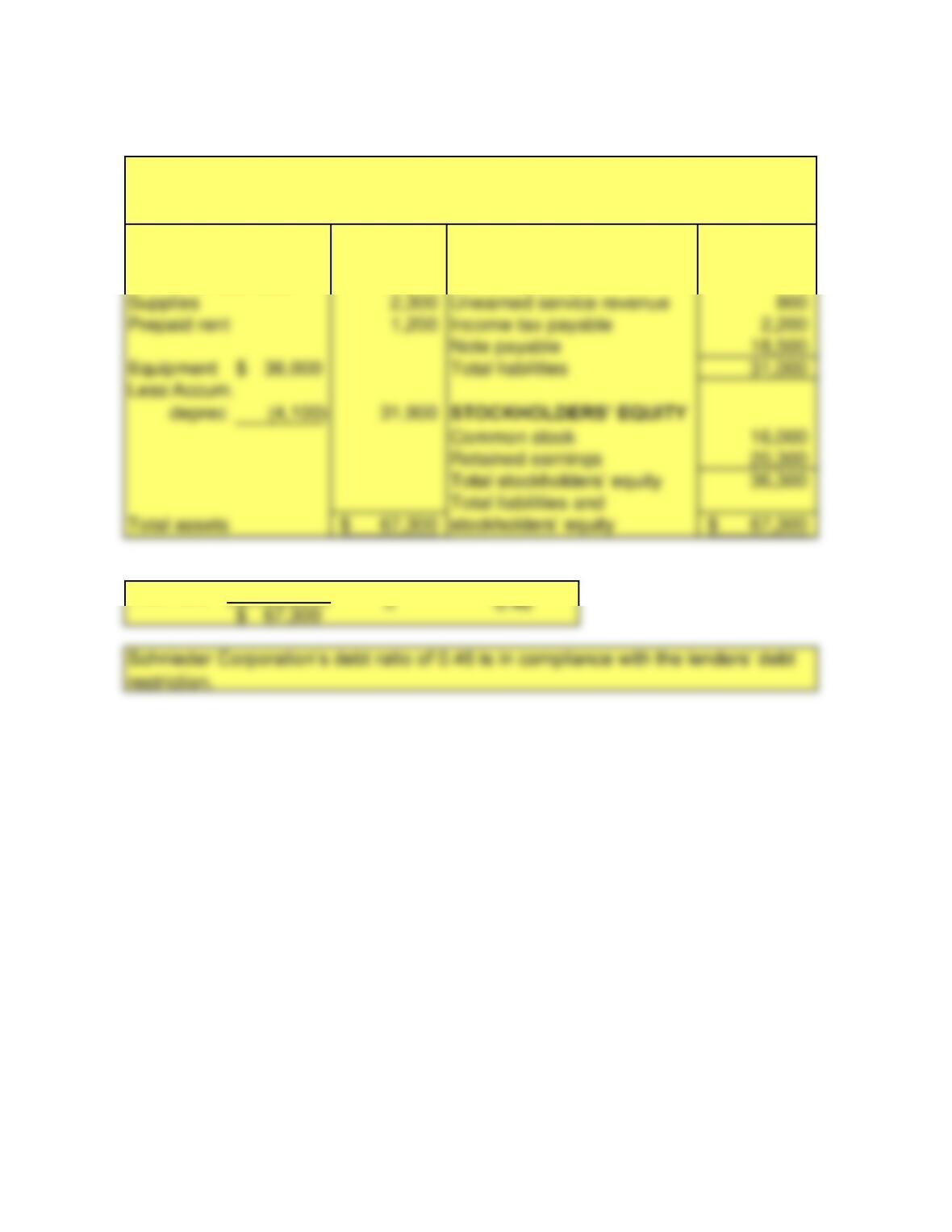
Schnieder Corporation
Income Statement
Year Ended December 31, 2016
Schnieder Corporation
Statement of Retained Earnings
Chapter 3: Accrual Accounting and Income Page 73 of 105
Rent expense 10,400
Insurance expense 3,800
Interest expense 3,500
Supplies expense 2,700
Depreciation expense 1,700 61,900
Income before tax 29,600
Income tax expense 7,300
Net income 22,300$
FINANCIAL ACCOUNTING – Eleventh Edition Solutions Manual
Req. 1(Continued)
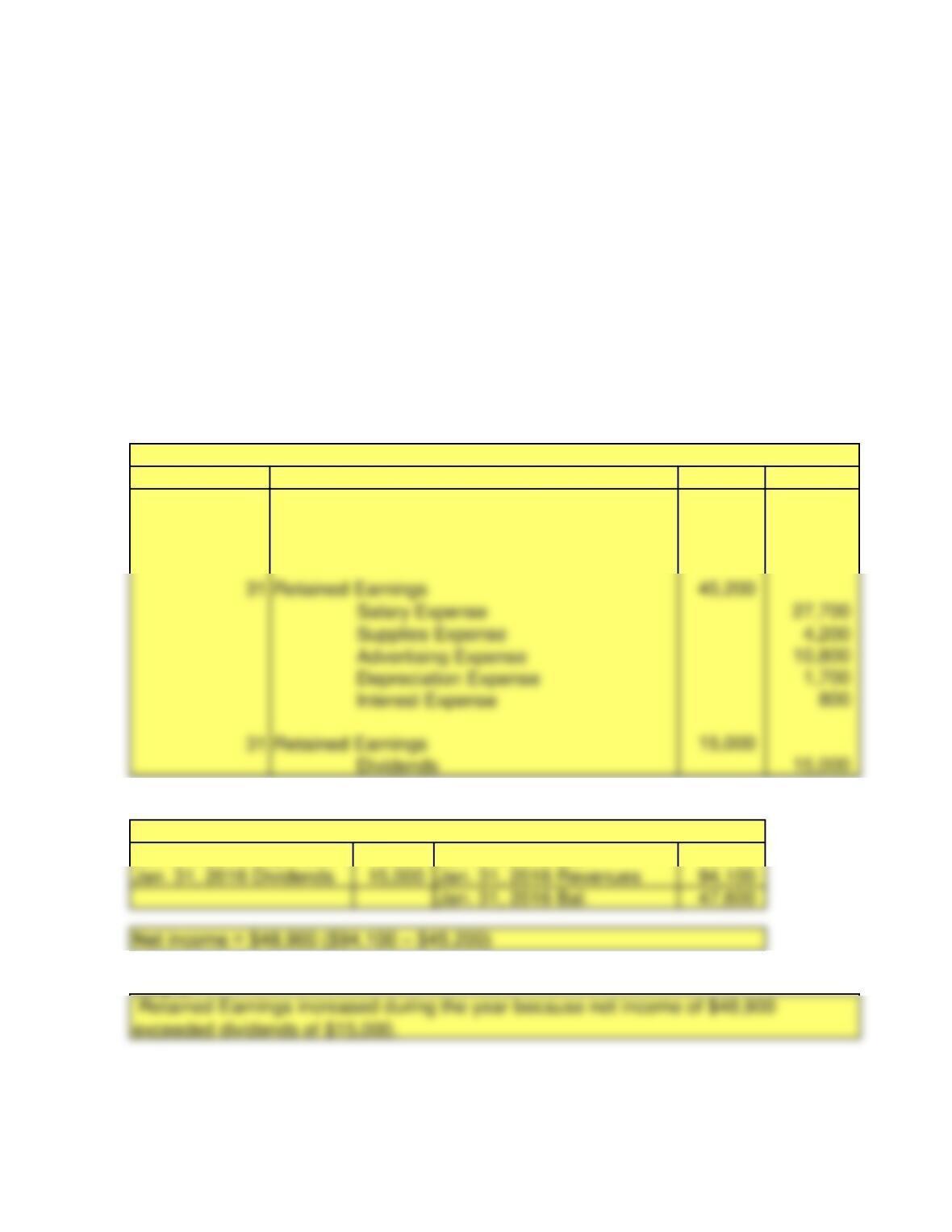
Cash 12,400$ Accounts payable 8,700$
Accounts receivable 19,500 Interest payable 800
Req. 2
Debt ratio: 31,000$
Schnieder Corporation
Balance Sheet
December 31, 2016
ASSETS
LIABILITIES
Chapter 3: Accrual Accounting and Income Page 74 of 105
Prepaid rent 1,200 Income tax payable 2,200
Equipment 36,000$ Total liabilities 31,000
FINANCIAL ACCOUNTING – Eleventh Edition Solutions Manual
P3-72B
(20 min.)
Requirements
Solution:
Req. 1
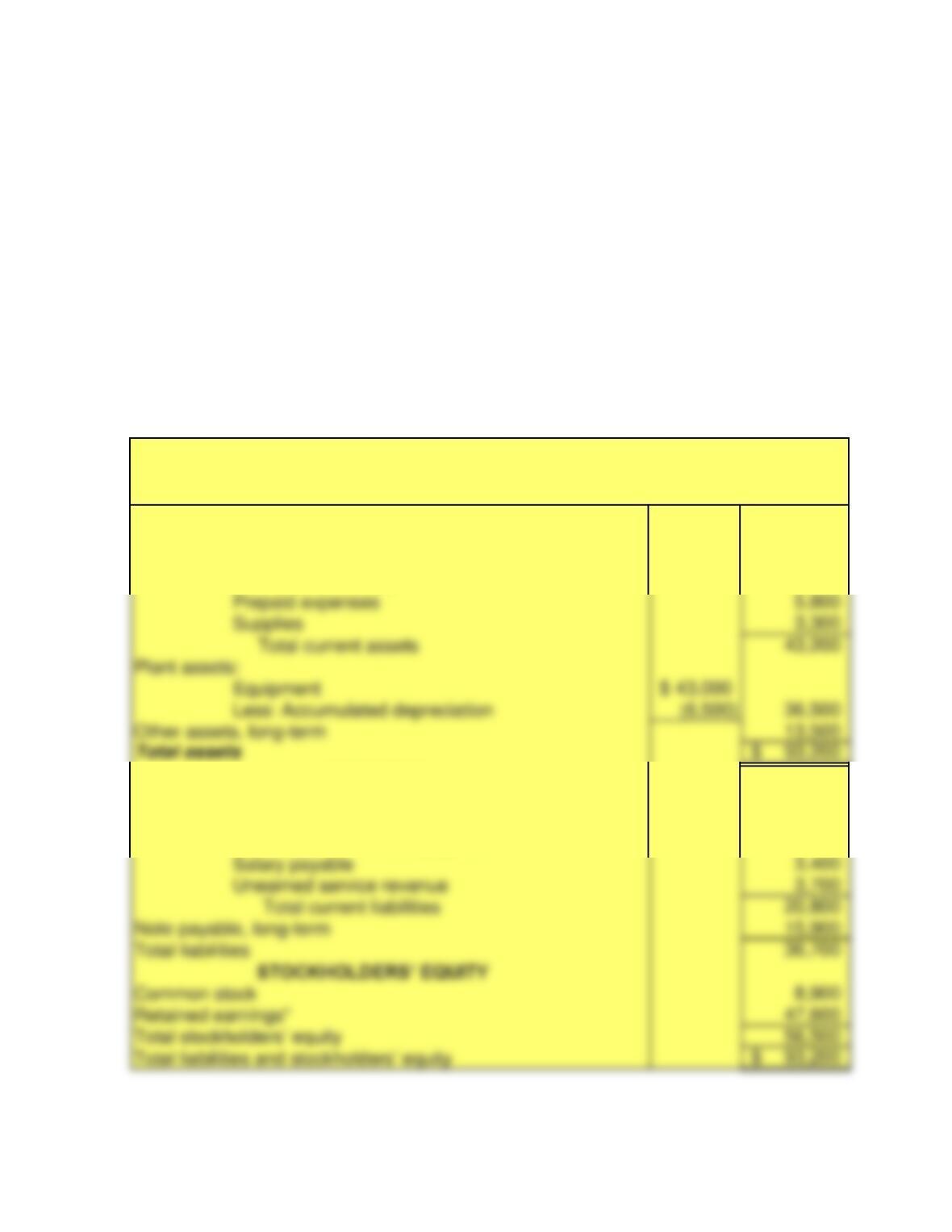
DATE DEBIT CREDIT
Jan. 31 Service Revenue 94,100
Retained Earnings 94,100
Req. 2
Jan. 31, 2016 Expenses 45,200 Jan. 31, 2015 Bal. 13,700
Jan. 31, 2016 Dividends 15,000 Jan. 31, 2016 Revenues 94,100
Req. 3
1. All adjustments have been journalized and posted, but the closing entries have not
yet been made. Journalize Spa View’s closing entries at January 31, 2016.
2. Set up a T-account for Retained Earnings and post to that account. Then compute
Spa View’s net income for the year ended January 31, 2016. What is the ending
balance of Retained Earnings?
3. Did Retained Earnings increase or decrease during the 2016 fiscal year? What
caused the increase or decrease?
Journal
ACCOUNT TITLES AND EXPLANATION
Retained Earnings
Closing Entries
Chapter 3: Accrual Accounting and Income Page 75 of 105
Advertising Expense 10,800
Depreciation Expense 1,700
Interest Expense 800
Dividends 15,000
FINANCIAL ACCOUNTING – Eleventh Edition Solutions Manual
P3-73B
(30-40 min.)
Requirements
Solution:
Req. 1
Current assets:
Cash 17,500$
Accounts receivable 16,600
Current liabilities:
Accounts payable 12,700$
Current portion of note payable 1,000
1. Use the Spa View Services data in Problem 3-72B to prepare the company’s
classified balance sheet at January 31, 2016. Show captions for total assets, total
liabilities, and stockholders’ equity.
2. Compute Spa View’s net working capital, current ratio, and debt ratio at January 31,
2016, rounding to two decimal places. At January 31, 2015, the net working capital was
$21,600, the current ratio was 1.70, and the debt ratio was 0.15. Did Spa View’s ability
to pay both current and total liabilities improve or deteriorate during fiscal 2016?
Spa View Services
Balance Sheet
January 31, 2016
ASSETS
LIABILITIES
Chapter 3: Accrual Accounting and Income Page 76 of 105
FINANCIAL ACCOUNTING – Eleventh Edition Solutions Manual
Req. 1 (continued)
*Retained earnings = $93,200 − $36,700 − $8,900 = $47,600
OR
Req. 2
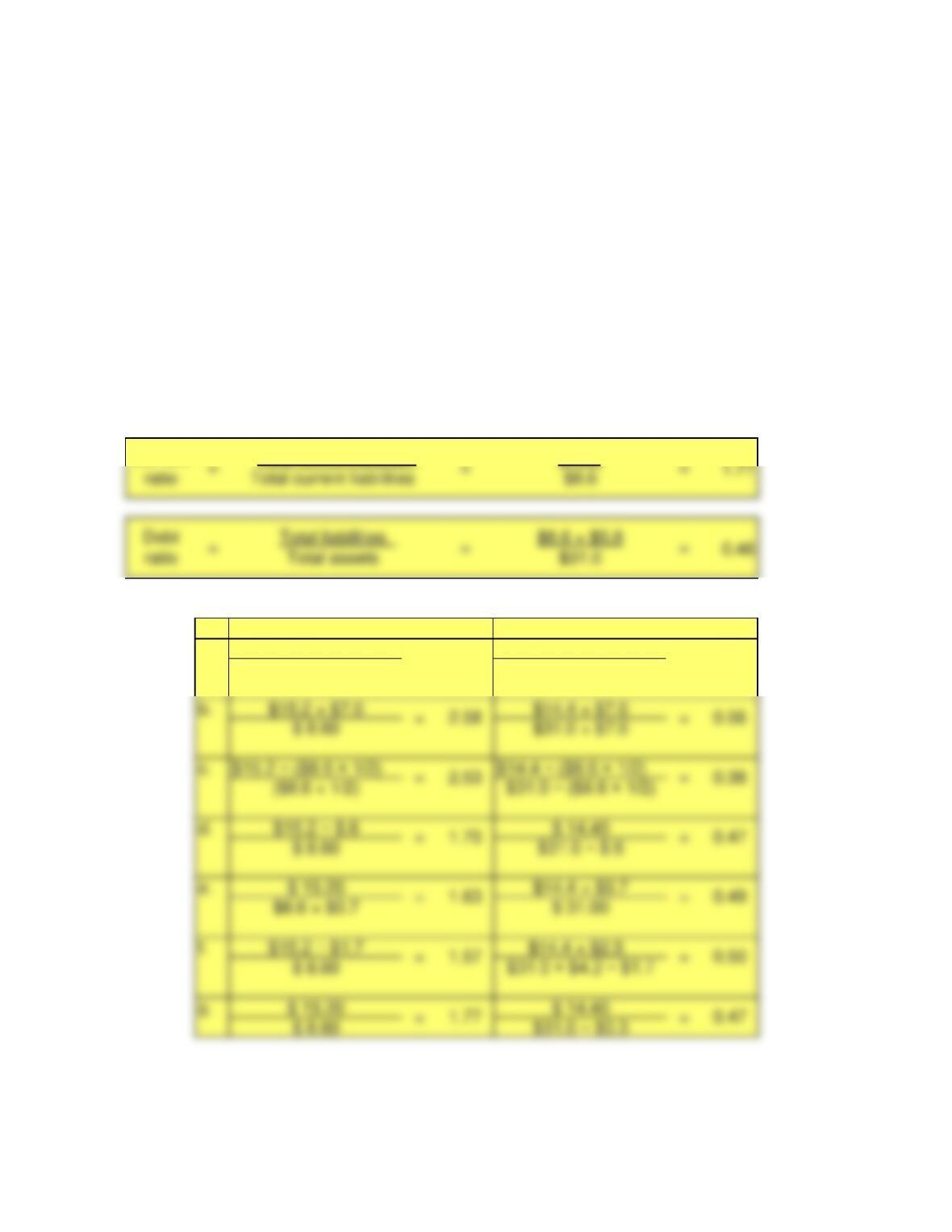
2016 2016
$43,200 –
Net
Total current assets –
Chapter 3: Accrual Accounting and Income Page 77 of 105
FINANCIAL ACCOUNTING – Eleventh Edition Solutions Manual
P3-74B
(45-60 min.)
Requirements
Solution:
Req. 1
Req. 2
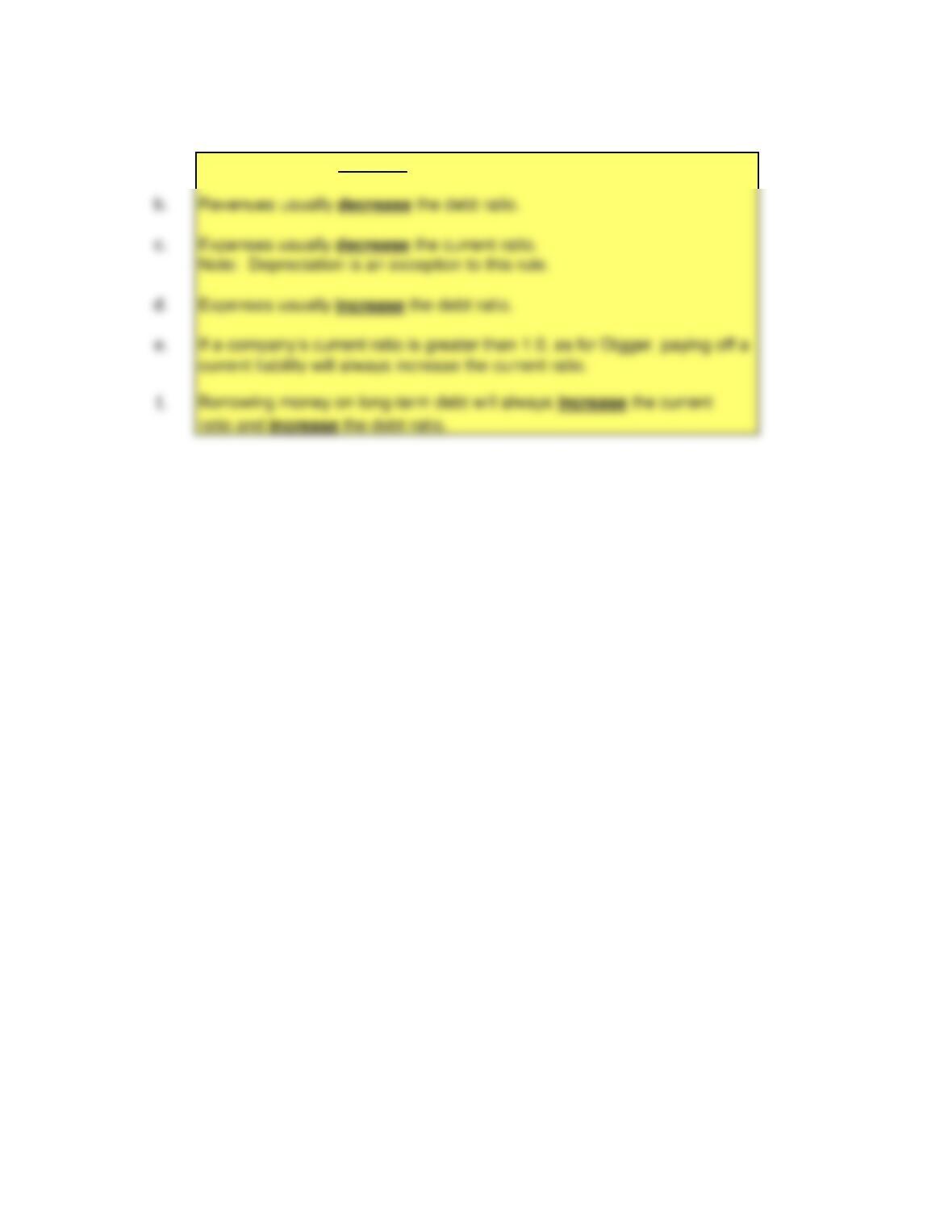
Current Ratio Debt Ratio
a. $15.2 + $2.7 $ 14.40
$ 8.60 $31.0 + $2.7
b. $15.2 + $7.0 $14.4 + $7.0
$ 8.60 $31.0 + $7.0
0.47
=
2.58
=
0.56
1.57
=
0.50
=
1.70
=
=
1.77
=
0.47
=
1. Compute Digger’s current ratio and debt ratio at December 31, 2015. Round to two
decimal places.
2. Consider each transaction separately. Compute Digger’s current ratio and debt ratio
after each transaction during 2016—that is, seven times. Round ratios to two decimal
places.
3. Based on your analysis, you should be able to readily identify the effects of certain
transactions on the current ratio and the debt ratio. Test your understanding by completing
these statements with either “increase” or “decrease.”
Current
Total current assets
$15.2
=
2.08
=
0.43
Chapter 3: Accrual Accounting and Income Page 78 of 105
FINANCIAL ACCOUNTING – Eleventh Edition Solutions Manual
Req. 3
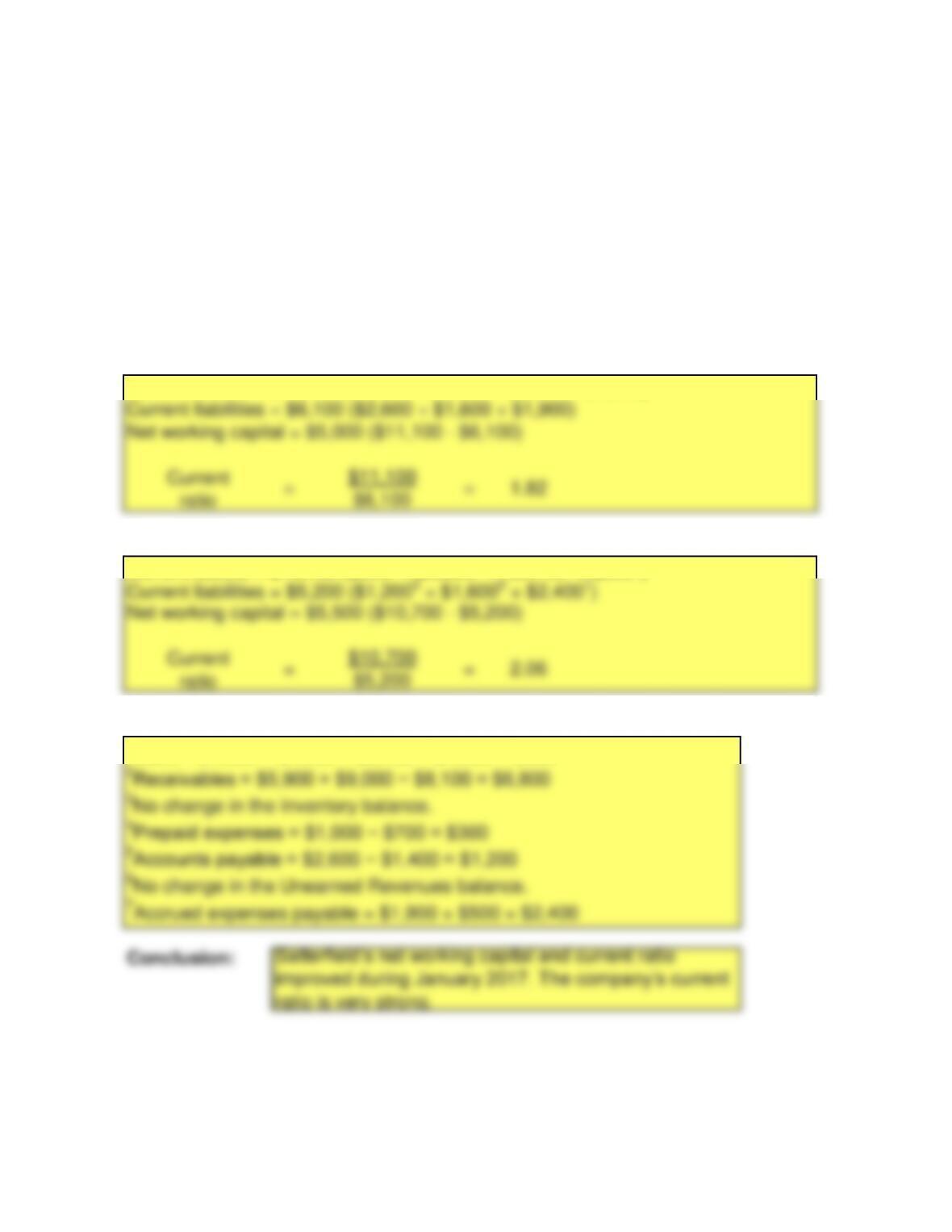
a. Revenues usually increase the current ratio.
Chapter 3: Accrual Accounting and Income Page 79 of 105
b. Revenues usually decrease the debt ratio.
d. Expenses usually increase the debt ratio.
FINANCIAL ACCOUNTING – Eleventh Edition Solutions Manual
E3-75
(20-25 min.)
Solution:
Current liabilities = $5,200 ($1,2005 + $1,6006 + $2,4007)
Net working capital = $5,500 ($10,700 – $5,200)
Computations of January 31, 2017 balances:
1Cash = $1,500 − $7,300 + $8,100 − $1,400 = $900
January 31, 2017
Current assets = $10,700 ($9001 + $6,8002 + $2,7003 + $3004)
Compute Satterfield’s net working capital and current ratio at December
31, 2016, and again at January 31, 2017. Did the net working capital and
current ratio improve or deteriorate during January 2017? Comment on
the level of the company’s net working capital and current ratio.
December 31, 2016
(Dollar amounts in thousands)
Current assets = $11,100 ($1,500 + $5,900 + $2,700 + $1,000)
Chapter 3: Accrual Accounting and Income Page 80 of 105
Net working capital = $5,000 ($11,100 – $6,100)
Current liabilities = $6,100 ($2,600 + $1,600 + $1,900)