Problem 3-15 (continued)
4.
Manufacturing Overhead ………………………
5,000
Cost of Goods Sold …………………………
5,000
Schedule of cost of goods sold:
Beginning finished goods inventory ………
$ 60,000
Add: Cost of goods manufactured ………..
770,000
Cost of goods available for sale …………..
830,000
Deduct: Ending finished goods inventory .
Unadjusted cost of goods sold …………….
Deduct: Overapplied overhead …………….
Adjusted cost of goods sold ………………..
5.
Froya Fabrikker A/S
Income Statement
Sales ……………………………………………..
$1,200,000
Cost of goods sold …………………………….
795,000
Gross margin …………………………………..
405,000
Selling and administrative expenses:
Advertising expense ………………………..
$136,000
Utilities expense …………………………….
7,000
Salaries expense …………………………….
Depreciation expense ………………………
Rent expense …………………………..……
Net operating income ………………………..
Problem 3-16 (60 minutes)
1.
a.
Raw Materials …………………………………..
275,000
Accounts Payable …………………………
275,000
b.
Work in Process ………………………………..
220,000
Manufacturing Overhead …………………….
60,000
Raw Materials ………………………………
280,000
c.
Work in Process ………………………………..
180,000
Manufacturing Overhead …………………….
72,000
Sales Commissions Expense ………………..
63,000
Administrative Salaries Expense ……………
90,000
Salaries and Wages Payable ……………
405,000
d.
Manufacturing Overhead …………………….
13,000
Rent Expense …………………………………..
Manufacturing Overhead …………………….
57,000
f.
Advertising Expense …………………………..
140,000
Accounts Payable …………………………
140,000
g.
Manufacturing Overhead …………………….
88,000
Depreciation Expense…………………………
12,000
Accumulated Depreciation ………………
100,000
Work in Process ………………………………..
297,000
Manufacturing Overhead ………………..
297,000
Problem 3-16 (continued)
i.
Finished Goods …………………………………
675,000
Work in Process …………………………...
675,000
j.
Cash …………………………..………………….
1,250,000
Sales ………………………………………….
1,250,000
Cost of Goods Sold …………………………….
700,000
Finished Goods …………………………….
700,000
2.
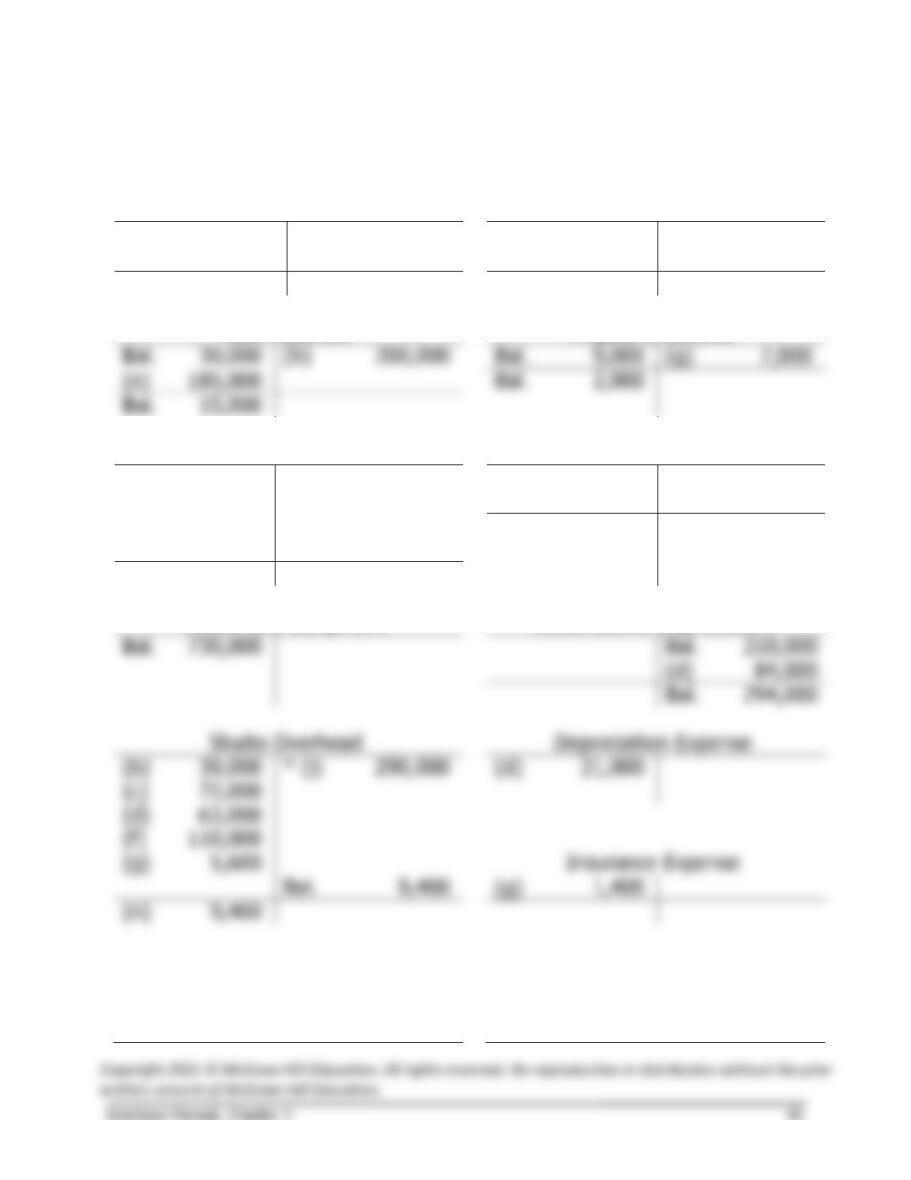
Raw Materials
Work in Process
Bal.
25,000
(b)
280,000
Bal.
10,000
(i)
675,000
(a)
275,000
(b)
220,000
Bal.
20,000
(c)
180,000
(h)
297,000
Bal.
32,000
Bal.
40,000
(j)
(b)
60,000
(h)
(i)
675,000
(c)
72,000
(e)
57,000
(g)
88,000
Bal.
Cost of Goods Sold
(j)
700,000
3. Manufacturing overhead is overapplied by $7,000 for the year. The en-
try to close this balance to Cost of Goods Sold would be:
Manufacturing Overhead …………………………..…..
Cost of Goods Sold ………………………………….
Problem 3-16 (continued)
4.
Gold Nest Company
Income Statement
Sales ……………………………………………..
$1,250,000
Cost of goods sold
($700,000 – $7,000) ………………………..
693,000
Gross margin …………………………………..
557,000
Selling and administrative expenses:
Net operating income ………………………..
Problem 3-17 (60 minutes)
1. and 2.
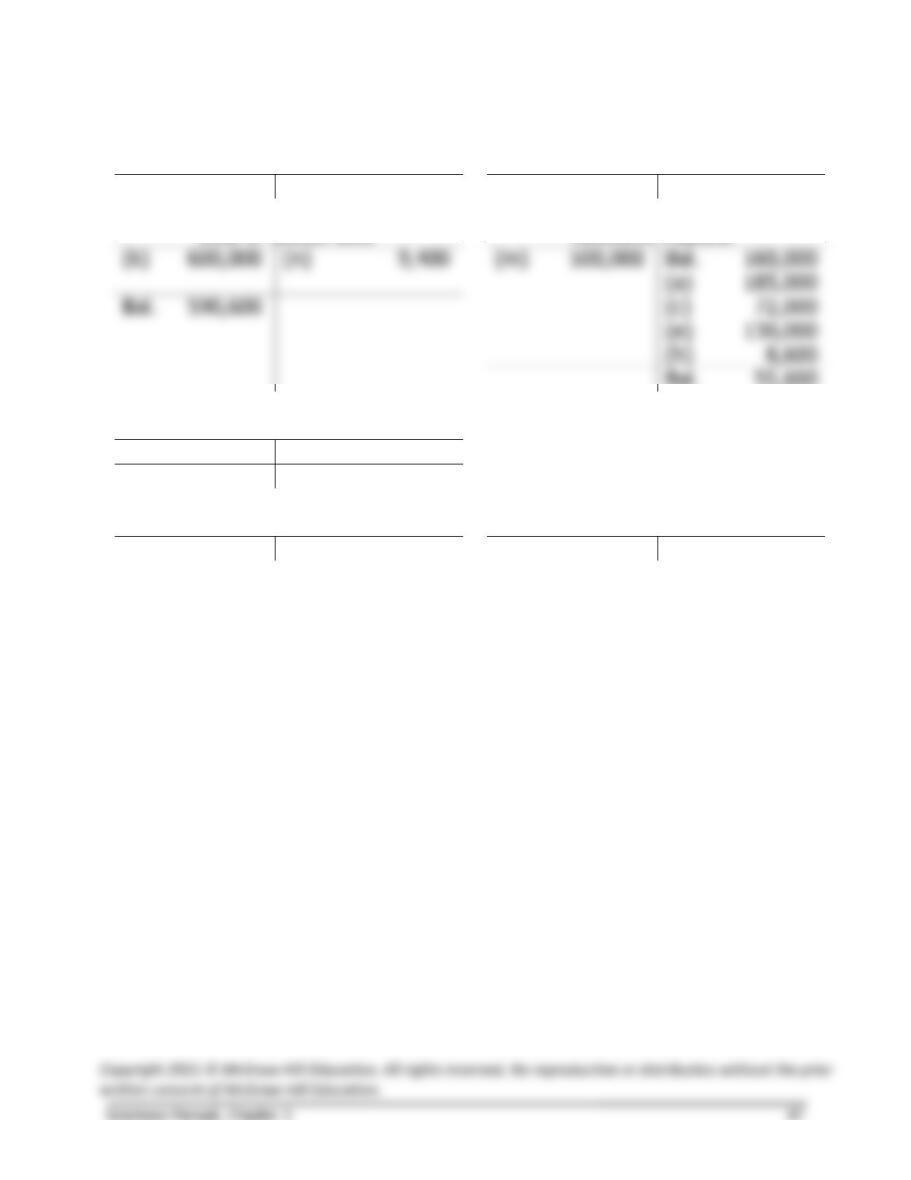
Cash
Accounts Receivable
Bal.
63,000
(m)
785,000
Bal.
102,000
(l)
850,000
(l)
850,000
(k)
925,000
Bal.
128,000
Bal.
177,000
Raw Materials
Bal.
30,000
(b)
Bal.
(g)
(a)
185,000
Bal.
Bal.
15,000
Videos in Process
Finished Goods
Bal.
45,000
(j)
550,000
Bal.
81,000
(k)
600,000
(b)
170,000
(j)
550,000
(f)
82,000
Bal.
31,000
(i)
290,000
Bal.
37,000
Bal.
Bal.
(d)
Bal.
(b)
30,000
* (i)
(d)
21,000
(c)
72,000
(d)
63,000
(f)
Bal.
(g)
(n)
9,400
* $280,000 ÷ 7,000 hours = $40 per hour;
7,250 hours × $40 per hour = $290,000
Advertising Expense
Miscellaneous Expense

(e)
130,000
(h)
8,600
Problem 3-17 (continued)
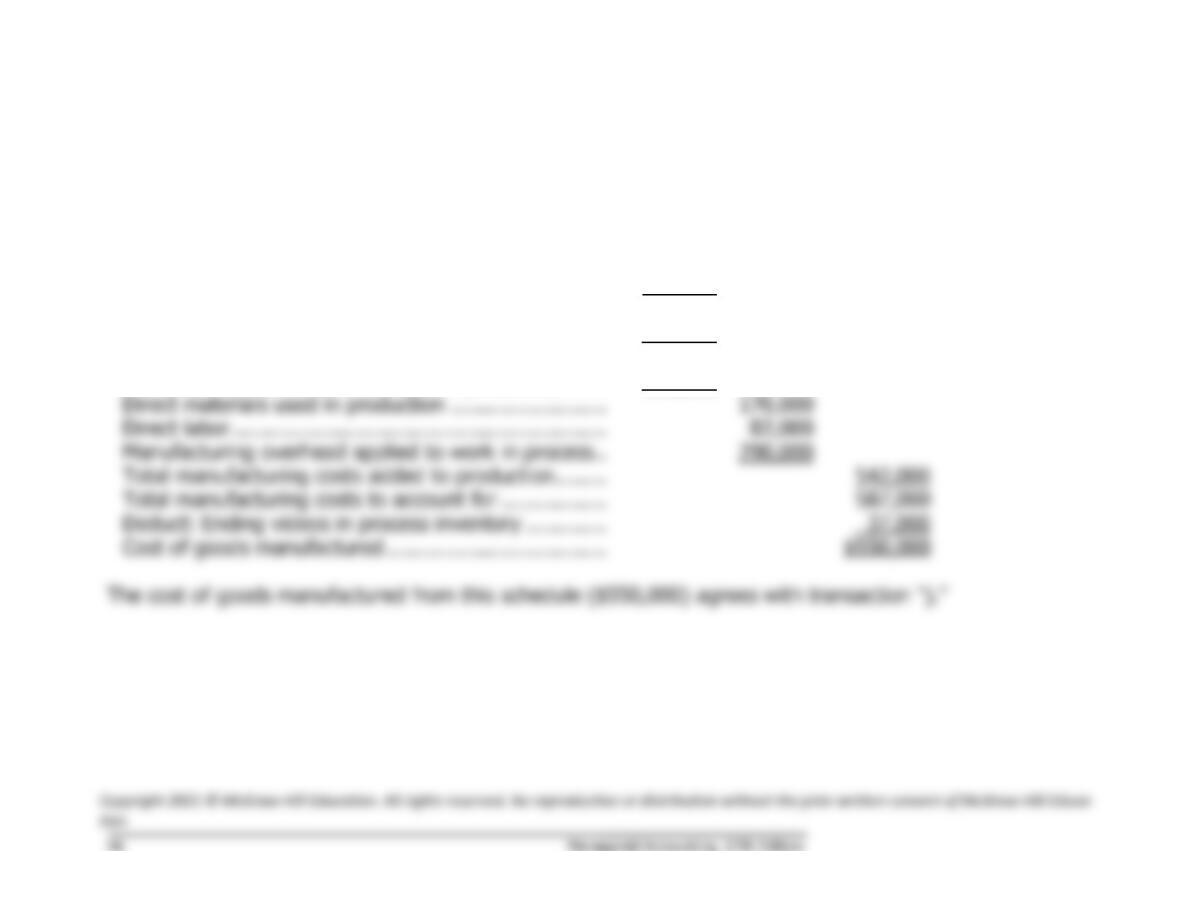
Administrative Salaries Expense
Sales
(f)
95,000
(k)
925,000
(k)
(n)
(m)
500,000
Bal.
160,000
(a)
185,000
Bal.
(c)
72,000
(e)
130,000
(h)
Bal.
55,600
Salaries & Wages Payable
(m)
285,000
(f)
287,000
Bal.
2,000
Capital Stock
Retained Earnings
Bal.
420,000
Bal.
270,000
3. Overhead is overapplied for the year by $9,400. Entry (n) above records
the closing of this overapplied overhead balance to Cost of Goods Sold.
Problem 3-17 (continued)
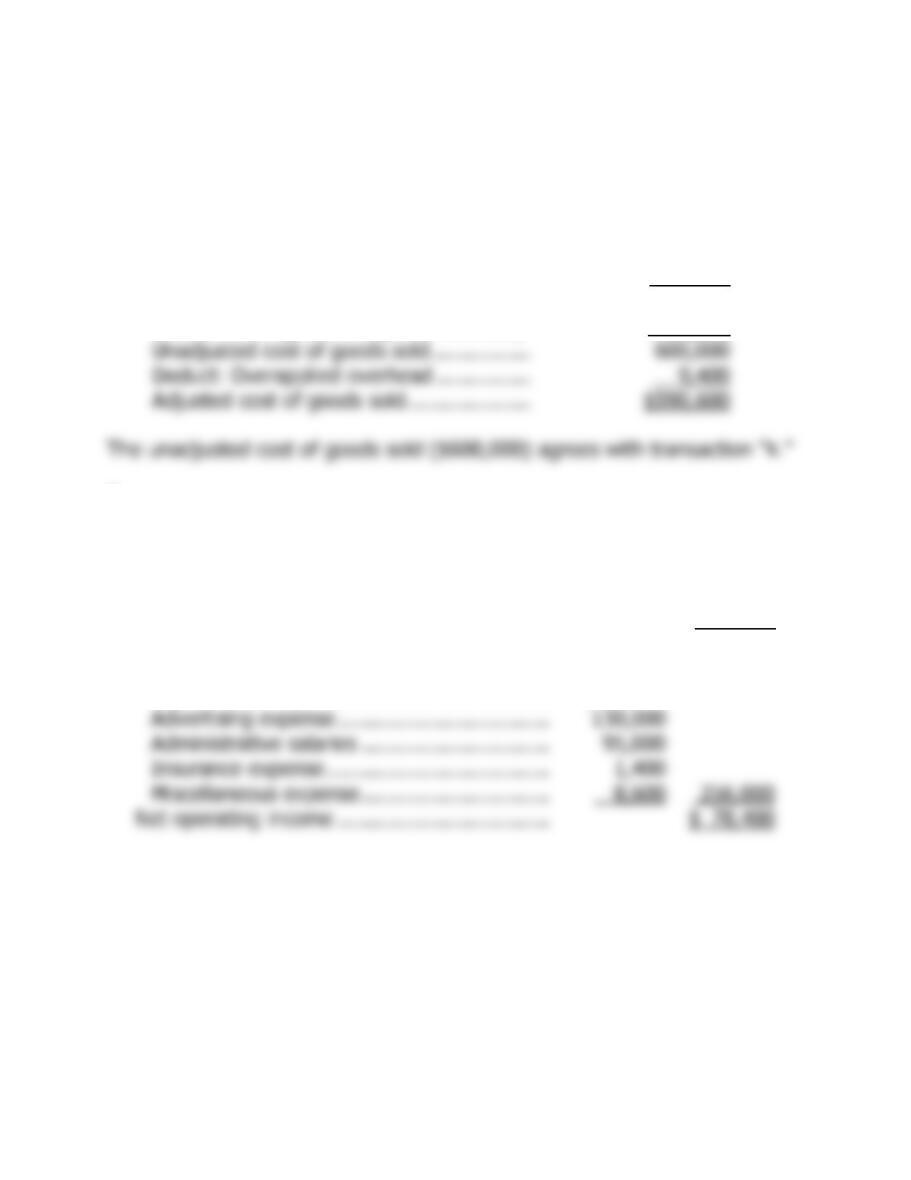
4. Schedule of Cost of Goods Manufactured
Beginning videos in process inventory …………………
$ 45,000
Direct materials:
Beginning raw materials inventory ………………….
$ 30,000
Add: Purchases of raw materials …………………….
185,000
Total raw materials available …………………………
215,000
Deduct: Ending raw materials inventory …………..
15,000
Raw materials used in production …………………..
200,000
Deduct: indirect materials used in production ……
30,000
Direct materials used in production …………………….
Direct labor ……………………………………………………
Manufacturing overhead applied to work in process ..
Total manufacturing costs added to production ……..
Total manufacturing costs to account for ……………..
Deduct: Ending videos in process inventory ………….
Cost of goods manufactured ……………………………..
Problem 3-17 (continued)
5.
Supreme Videos, Inc.
Schedule of Cost of Goods Sold
Beginning finished goods inventory ………
$ 81,000
Add: Cost of goods manufactured ………..
550,000
Cost of goods available for sale …………..
631,000
Deduct: Ending finished goods inventory
31,000
Unadjusted cost of goods sold …………….
600,000
Deduct: Overapplied overhead ……………
9,400
Adjusted cost of goods sold ………………..
6.
Supreme Videos, Inc.
Income Statement
For the Year Ended December 31
Sales ………………………………………………….
$925,000
Cost of goods sold ($600,000 – $9,400) …….
590,600
Gross margin …………………………..…………..
334,400
Selling and administrative expenses:
Depreciation expense …………………………..
$ 21,000
Advertising expense …………………………….
130,000
Administrative salaries …………………………
Insurance expense ………………………………
Miscellaneous expense …………………………
8,600
256,000
Net operating income …………………………….
$ 78,400
Case 3-18 (45 minutes)
1. Shaving 5% off the estimated direct labor-hours in the predetermined
overhead rate will result in an artificially high overhead rate. The artifi–
cially high predetermined overhead rate is likely to result in overapplied
overhead for the year. The cumulative effect of overapplying the over-
2. This question may generate lively debate. Where should Terri Ronsin’s
loyalties lie? Is she working for the general manager of the division or
for the corporate controller? Is there anything wrong with the “Christ-
mas bonus”? How far should Terri go in bucking her boss on a new job?
While individuals can certainly disagree about what Terri should do,
some of the facts are indisputable. First, understating direct labor-hours
artificially inflates the overhead rate. This has the effect of inflating the
Cost of Goods Sold in all months prior to December and overstating the
costs of inventories. In December, the huge adjustment for overapplied
overhead provides a big boost to net operating income. Therefore, the
practice results in distortions in the pattern of net operating income over
the year. In addition, because all of the adjustment is taken to Cost of
Goods Sold, inventories are still overstated at year-end. This means, of
course, that the net operating income for the entire year is also over-

Case 3-18 (continued)
In the actual situation that this case is based on, the corporate control-
ler’s staff were aware of the general manager’s accounting tricks, but
top management of the company supported the general manager be-
cause “he comes through with the results” and could be relied on to hit
the annual profit targets for his division. Personally, we would be very