Chapter 03 – Product Costing and Cost Accumulation in a Batch Production Environment
3-1
CHAPTER 3
Product Costing and Cost Accumulation in a
Batch Production Environment
ANSWERS TO REVIEW QUESTIONS
3-1 (a) Use in financial accounting: In financial accounting, product costs are needed to
to justify rate increases that must be approved by state regulatory agencies.
3-2 In a job-order costing system, costs are assigned to batches or job orders of
production. Job-order costing systems are used by firms that produce relatively small
3-3 Concepts of product costing are applied in service industry firms to inform
3-4 a. Material requisition form: A document upon which the production department
Chapter 03 – Product Costing and Cost Accumulation in a Batch Production Environment
3-5 Although manufacturing-overhead costs are not directly traceable to products,
manufacturing operations cannot take place without incurring overhead costs.
3-6 The primary benefit of using a predetermined overhead rate instead of an actual
3-7 An advantage of prorating overapplied or underapplied overhead is that it results in
the adjustment of all the accounts affected by misestimating the overhead rate. These
3-8 An important cost-benefit issue involving accuracy versus timeliness in accounting for
overhead involves the use of a predetermined overhead rate or an actual overhead
3-9 The difference between actual and normal costing systems involves the procedure for
applying manufacturing overhead to Work-in-Process Inventory. Under actual costing,
3-3
3-10 When a single volume-based cost driver is used to apply manufacturing overhead, the
managerial accountant’s primary objective is to select a cost driver that varies in a
3-11 The benefit of using multiple overhead rates is that the resulting product-costing
3-12 The development of departmental overhead rates involves a two-stage process. In
stage one, overhead costs are assigned to the firm’s production departments. First,
3-13 a. Overhead cost distribution: Assignment of all manufacturing-overhead costs to
3-14 Job-order costing concepts are used in professional service firms. However, rather
than referring to production “jobs,” such organizations use terminology that reflects
Chapter 03 – Product Costing and Cost Accumulation in a Batch Production Environment
3-4
3-15 A cost driver is a characteristic of an event or activity that results in the incurrence of
3-16 When direct material, direct labor, and manufacturing-overhead costs are incurred,
they are applied to Work-in-Process Inventory by debiting the account. When goods
3-17 Hospitals use job-order costing concepts to accumulate the costs associated with
each case treated in the hospital. For example, the costs of treating a heart patient
3-18 Some manufacturing firms are switching from direct-labor hours to machine hours or
throughput time as the basis for overhead application as a result of increased
3-19 Overapplied or underapplied overhead is caused by errors in estimating the
3-20 Overapplied or underapplied overhead can be closed directly into Cost of Goods Sold,
3-21 A large retailer could use EDI to exchange such documents as purchase orders,
3-22 An engineer could use bar code technology to record how she spends her time. Bar
codes would be assigned to her and to each of her activities. Each time she arrived at
Chapter 03 – Product Costing and Cost Accumulation in a Batch Production Environment
3-5
SOLUTIONS TO EXERCISES
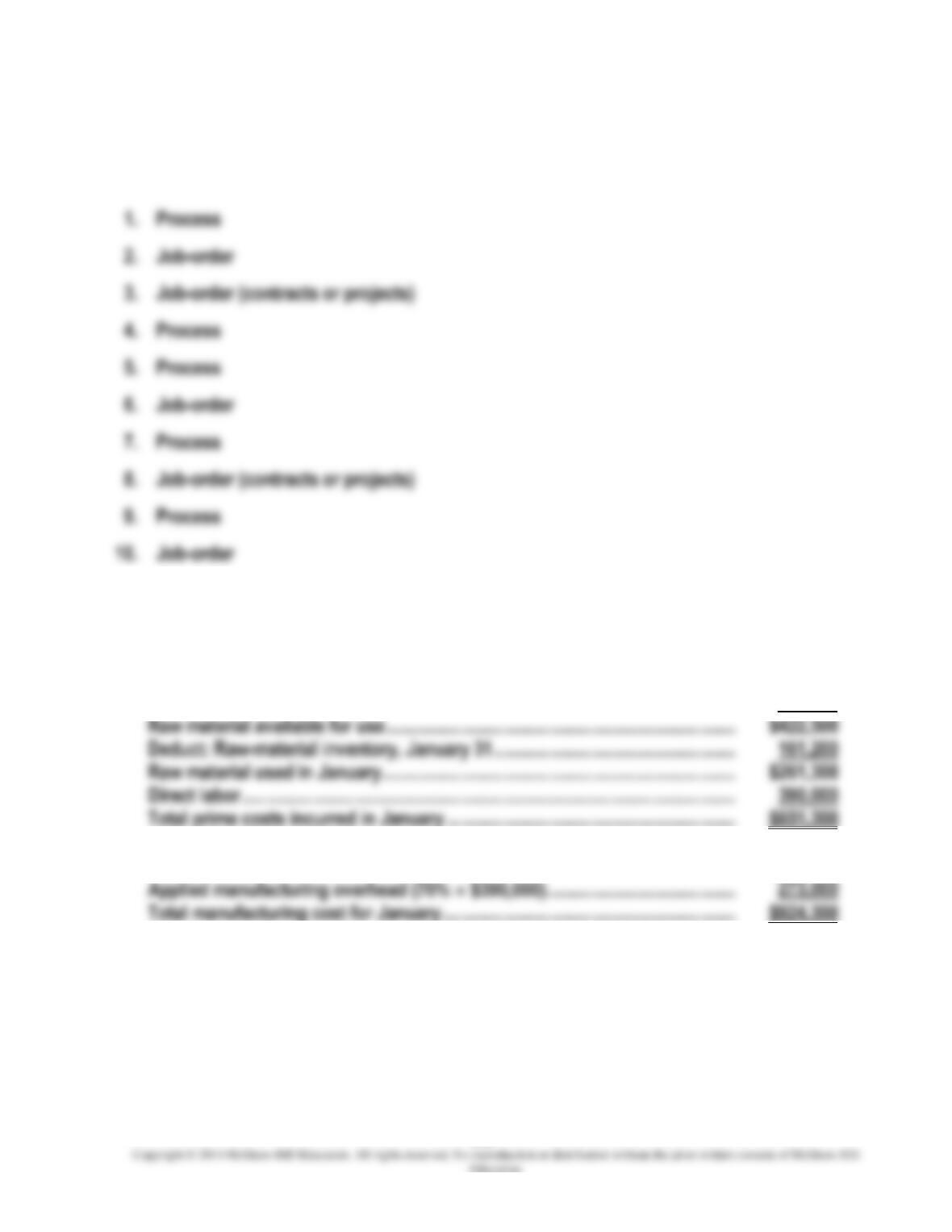
EXERCISE 3-23 (10 MINUTES)
EXERCISE 3-24 (20 MINUTES)
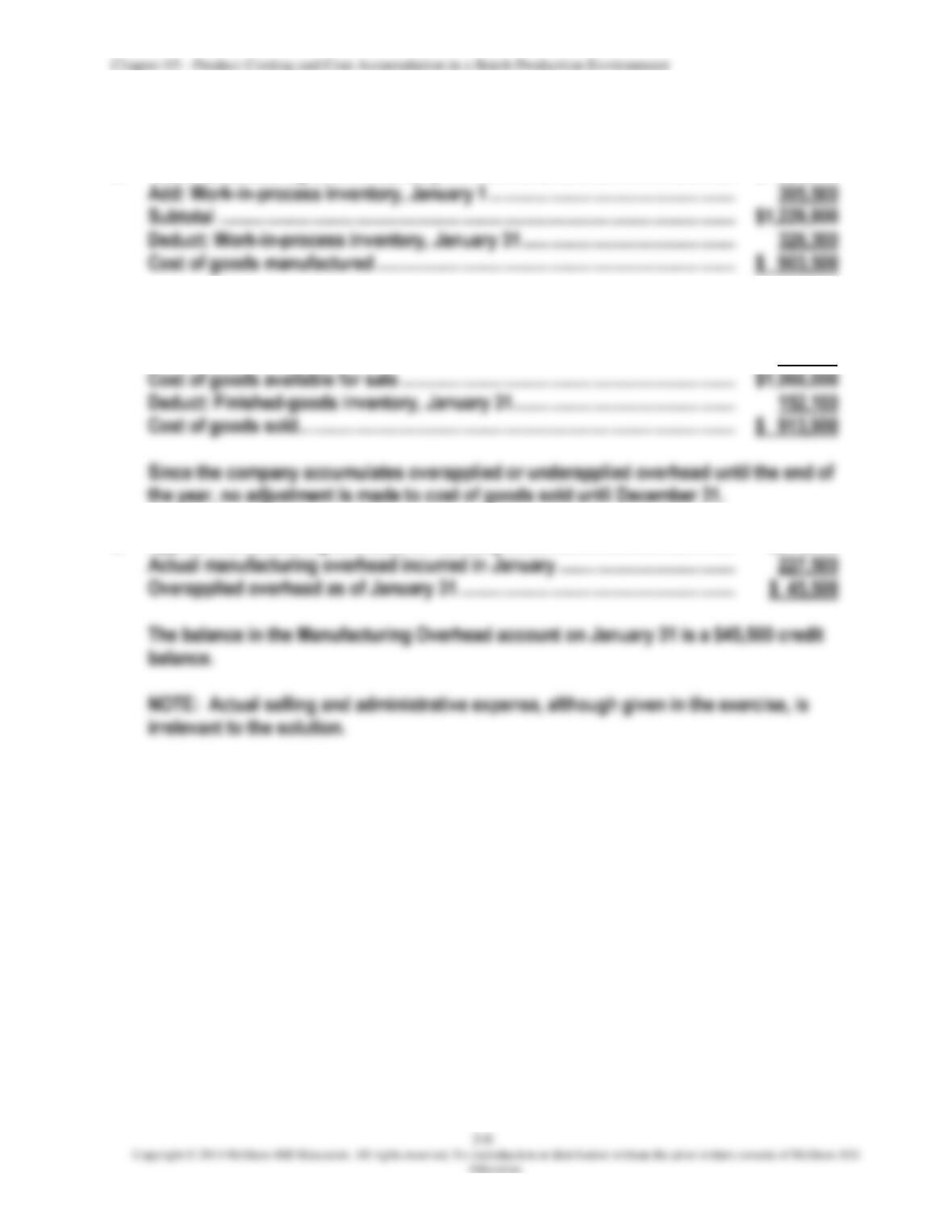
1.
Raw-material inventory, January 1 ………………………………………………………………
$174,200
Add: Raw-material purchases ……………………………………………………………………..
248,300
Raw material available for use …………………………………………………………………….
$422,500
Deduct: Raw-material inventory, January 31 ………………………………………………..
161,200
Raw material used in January ……………………………………………………………………..
$261,300
Direct labor ………………………………………………………………………………………………..
390,000
Total prime costs incurred in January ……………………………………………………….
$651,300
2.
Total prime cost incurred in January …………………………..…………………………..
$651,300
Total manufacturing cost for January ……………………………………………………….
$924,300
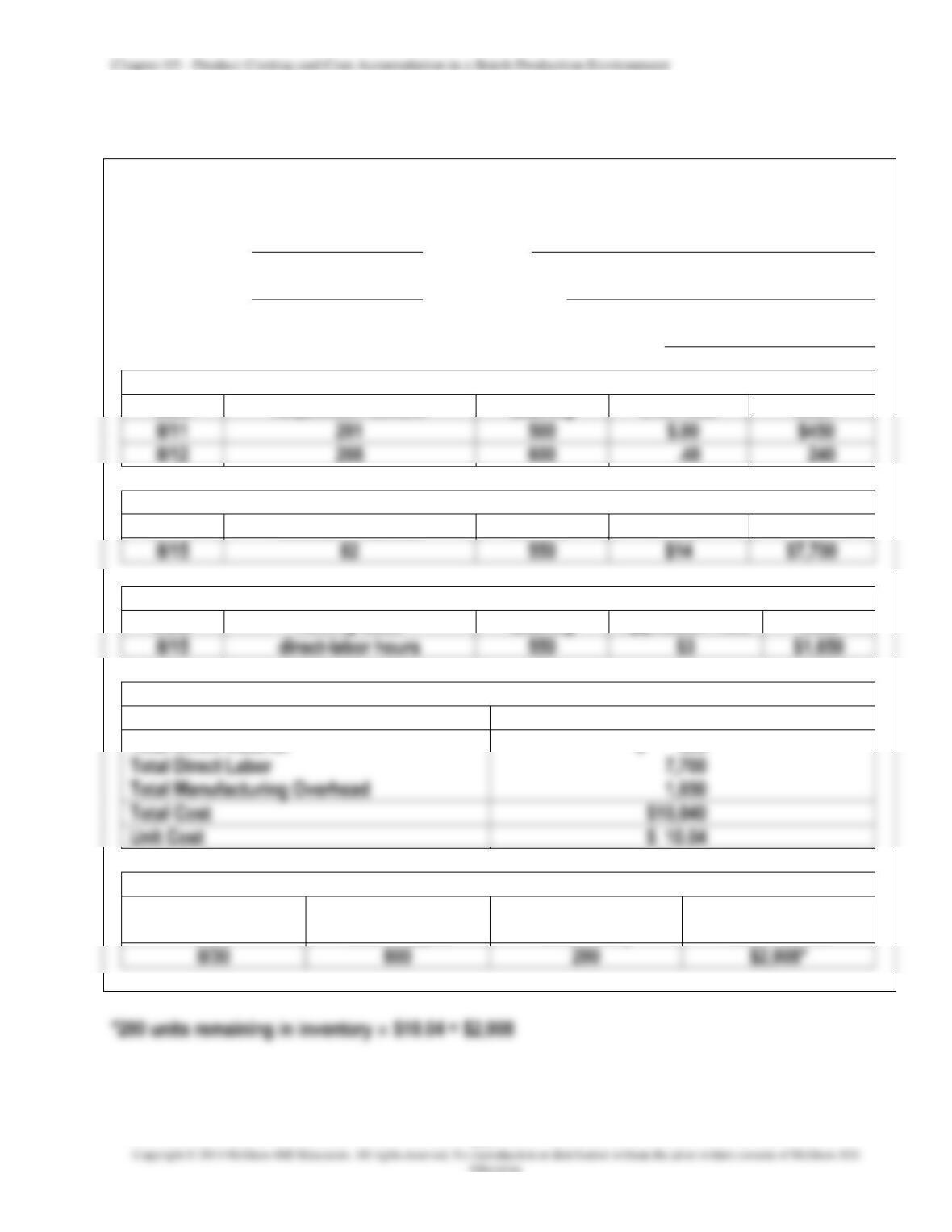
EXERCISE 3-24 (CONTINUED)
3.
Total manufacturing cost for January ……………………………………………………….
$ 924,300
Add: Work-in-process inventory, January 1 …………………………………………………
305,500
Subtotal …………………………………………………………………………………………………….
$1,229,800
Deduct: Work-in-process inventory, January 31 …………………………………………..
326,300
Cost of goods manufactured ………………………………………………………………………
$ 903,500
4.
Finished-goods inventory, January 1 ……………………………………………………….
$ 162,500
Add: Cost of goods manufactured ………………………………………………………………
903,500
Cost of goods available for sale ………………………………………………………………….
$1,066,000
Deduct: Finished-goods inventory, January 31 …………………………………………….
152,100
Cost of goods sold ……………………………………………………………………………………
$ 913,900
5.
Applied manufacturing overhead for January ………………………………………………
$273,000
Actual manufacturing overhead incurred in January ……………………………………
227,500
Overapplied overhead as of January 31 ……………………………………………………….
$ 45,500
3-7
EXERCISE 3-25 (25 MINUTES)
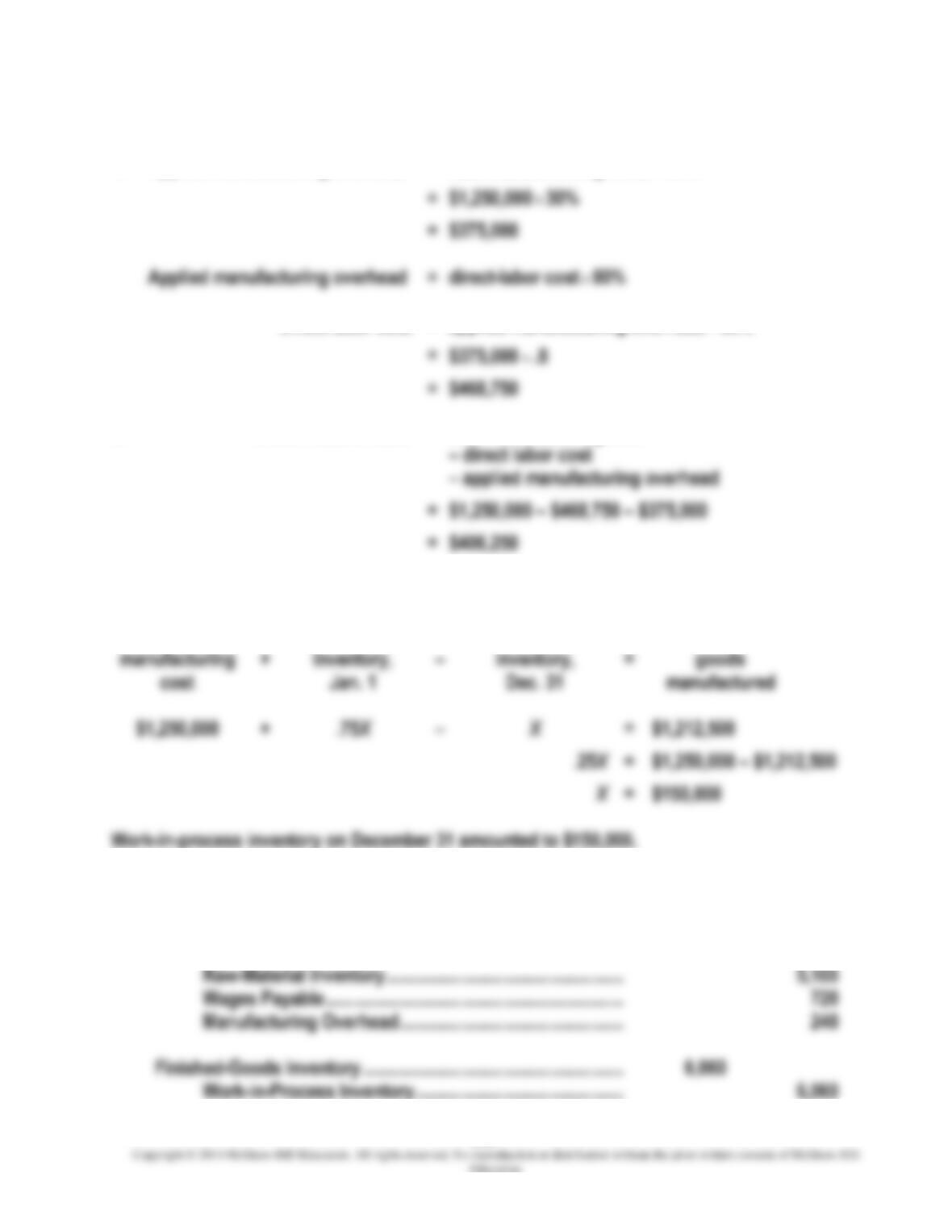
JOB-COST RECORD
Job Number
TB78
Description
teddy bears
Date Started
8/11
Date Completed
8/20
Number of Units Completed
1,000
Direct Material
Date
Requisition Number
Quantity
Unit Price
Cost
Direct Labor
Date
Time Card Number
Hours
Rate
Cost
$7,700
Manufacturing Overhead
Date
Activity Base
Quantity
Application Rate
Cost
$1,650
Cost Summary
Cost Item
Amount
Total Cost
$10,040
Unit Cost
$ 10.04
Total Direct Material
$ 690
Shipping Summary
Date
Units Shipped
Units Remaining
In Inventory
Cost Balance
Chapter 03 – Product Costing and Cost Accumulation in a Batch Production Environment
3-8
EXERCISE 3-26 (15 MINUTES)
1.
Applied manufacturing overhead
=
total manufacturing costs
30%
=
$375,000
Applied manufacturing overhead
=
direct-labor cost
Direct-labor cost
=
applied manufacturing overhead
80%
=
$468,750
2.
Direct-material used
=
total manufacturing cost
=
$406,250
3.
Let X denote work-in-process inventory on December 31.
Total
work-in-process
work-in-process
cost of
+
=
Jan. 1
=
$150,000
EXERCISE 3-27 (5 MINUTES)
Work-in-Process Inventory ………………………………………………..
6,060
Raw-Material Inventory …………………………………………….
5,100
Wages Payable ……………………………………………………….
Manufacturing Overhead ………………………………………….
Chapter 03 – Product Costing and Cost Accumulation in a Batch Production Environment
3-9
EXERCISE 3-28 (15 MINUTES)
1.
volumeproduction budgeted
overhead budgeted
rate overhead nedPredetermi =
(a)
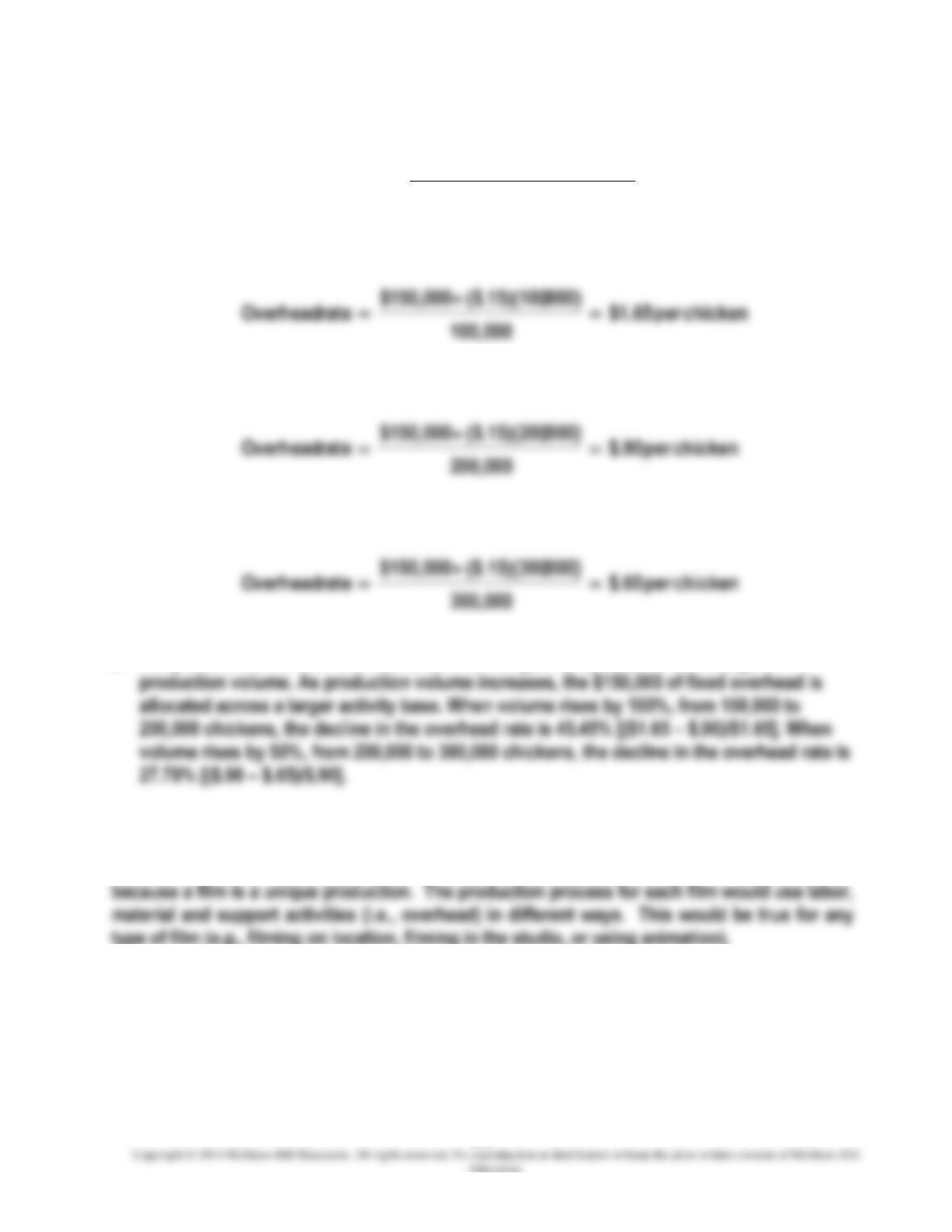
At 100,000 chicken volume:
(b)
At 200,000 chicken volume:
(c)
At 300,000 chicken volume:
2. The predetermined overhead rate does not change in proportion to the change in
EXERCISE 3-29 (30 MINUTES)
Job-order costing is the appropriate product-costing system for feature film production,
3-10
EXERCISE 3-30 (20 MINUTES)
1.
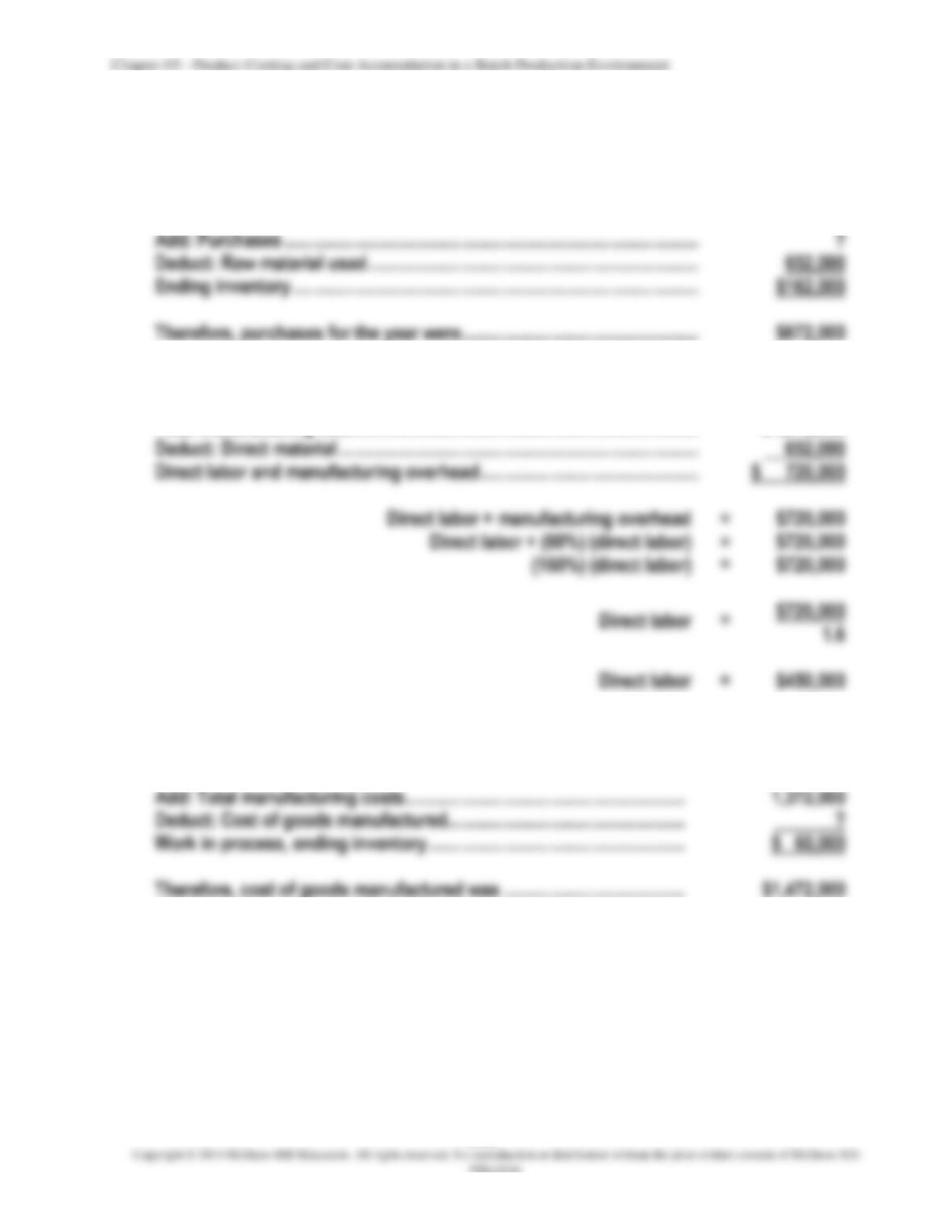
Raw-Material Inventory
Work-in-Process Inventory
295,100
23,400
226,200
156,000
421,200
234,000
171,600
253,500
Accounts Receivable
2.
JAY SPORTS EQUIPMENT COMPANY, INC.
PARTIAL BALANCE SHEET
AS OF DECEMBER 31, 20X2
Current assets
Cash ………………………………………………………………………………………………………..
XXX
Accounts receivable …………………………………………………………………………………
XXX
Inventory
Raw material ……………………………………………………………………………………
Work in process ……………………………………………………….………………………….
Finished goods ……………………………………………………………………………………
JAY SPORTS EQUIPMENT COMPANY, INC.
PARTIAL INCOME STATEMENT
FOR THE YEAR ENDED DECEMBER 31, 20X2
Sales revenue ……………………………………………………………………………………
Less: Cost of goods sold ……………………………………………………………………………
Gross margin ……………………………………………………………………………………
3-11
EXERCISE 3-31 (20 MINUTES)
1.
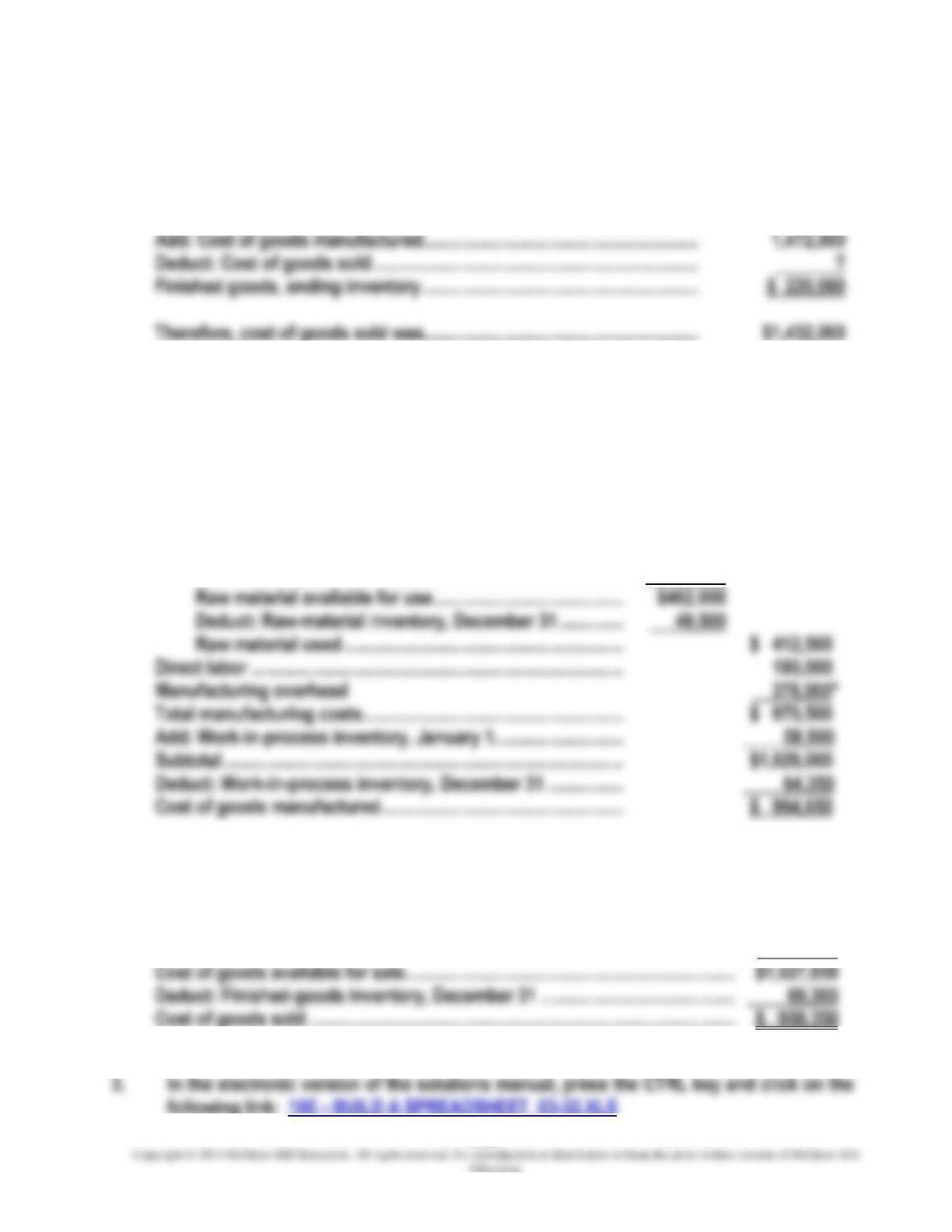
Raw material:
Beginning inventory ……………………………………………………………………….
$142,000
Add: Purchases ……………………………………………………………………………..
Deduct: Raw material used ……………………………………………………………..
Ending inventory ……………………………………………………………………………
$162,000
Therefore, purchases for the year were ……………………………………………
$672,000
2.
Direct labor:
Total manufacturing cost ………………………………………………………………..
$1,372,000
Deduct: Direct material …………………………………………………………………..
Direct labor and manufacturing overhead ………………………………………..
3.
Cost of goods manufactured:
Work in process, beginning inventory …………………………………………..
$ 160,000
Add: Total manufacturing costs …………………………..……………………….
Deduct: Cost of goods manufactured ……………………………………………
Work in process, ending inventory ……………………………………………….
Therefore, cost of goods manufactured was …………………………………
Chapter 03 – Product Costing and Cost Accumulation in a Batch Production Environment
3-12
EXERCISE 3-31 (CONTINUED)
4.
Cost of goods sold:
Finished goods, beginning inventory ………………………………………………
$ 180,000
Add: Cost of goods manufactured …………………………………………………..
Deduct: Cost of goods sold …………………………………………………………….
Finished goods, ending inventory …………………………………………………..
Therefore, cost of goods sold was …………………………………………………..
EXERCISE 3-32 (30 MINUTES)
1.
CRUNCHEM CEREAL COMPANY
SCHEDULE OF COST OF GOODS MANUFACTURED
FOR THE YEAR ENDED DECEMBER 31, 20X4
Direct material:
Raw-material inventory, January 1 ……………………………………
$ 45,000
Add: Purchases of raw material ……………………………………….
417,000
Raw material available for use ………………………………………….
Deduct: Raw-material inventory, December 31 ………………….
Raw material used ……………………………………………………….
Direct labor …………………………………………………………………………….
Manufacturing overhead
Total manufacturing costs ……………………………………………………….
Add: Work-in-process inventory, January 1 …………………………..
Subtotal ………………………………………………………………………………….
Deduct: Work-in-process inventory, December 31 …………………….
Cost of goods manufactured ……………………………………………………
*Applied manufacturing overhead is $378,000 ($180,000 210%). Actual manufacturing
overhead is also $378,000, so there is no overapplied or underapplied overhead.
2.
Finished-goods inventory, January 1 ……………………………………………………….
$ 63,000
Add: Cost of goods manufactured ………………………………………………………………
964,650
Cost of goods available for sale ………………………………………………………………….
Deduct: Finished-goods inventory, December 31 ………………………………………..
Cost of goods sold ……………………………………………………………………………………
Chapter 03 – Product Costing and Cost Accumulation in a Batch Production Environment
3-13
EXERCISE 3-33 (20 MINUTES)
NOTE: Budgeted sales revenue, although given in the exercise, is irrelevant to the solution.
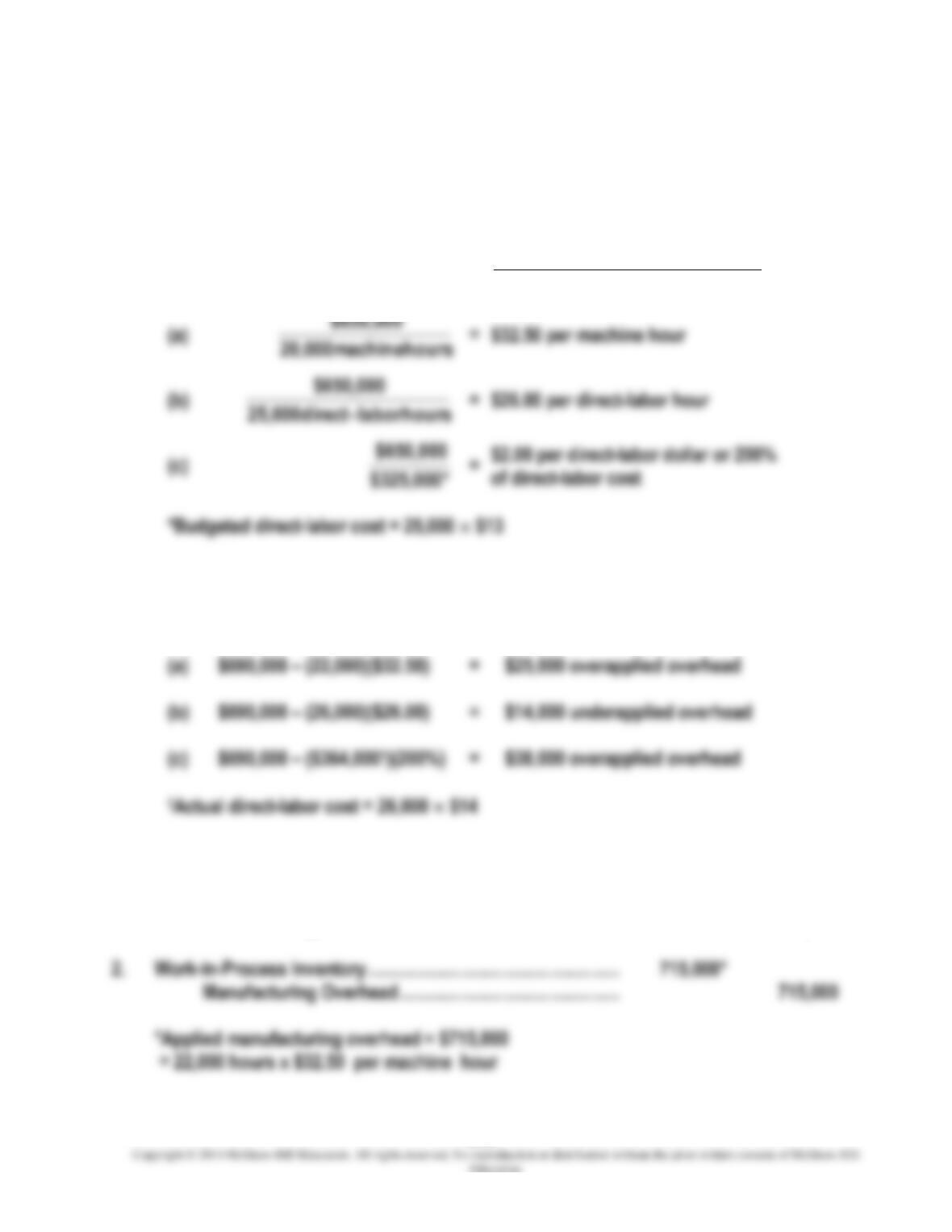
1.
Predetermined overhead rate
=
drivercost of level budgeted
overhead ingmanufactur budgeted
=
$32.50 per machine hour
=
$26.00 per direct-labor hour
=
2.
Actual
manufacturing
overhead
–
applied
manufacturing
overhead
=
overapplied or
underapplied
overhead
$690,000 – (22,000)($32.50)
=
$25,000 overapplied overhead
$690,000 – (26,000)($26.00)
=
$14,000 underapplied overhead
$690,000 – ($364,000†)(200%)
=
$38,000 overapplied overhead
EXERCISE 3-34 (5 MINUTES)
1.
Work-in-Process Inventory ………………………………………………
690,000
Manufacturing Overhead ………………………………………..
690,000
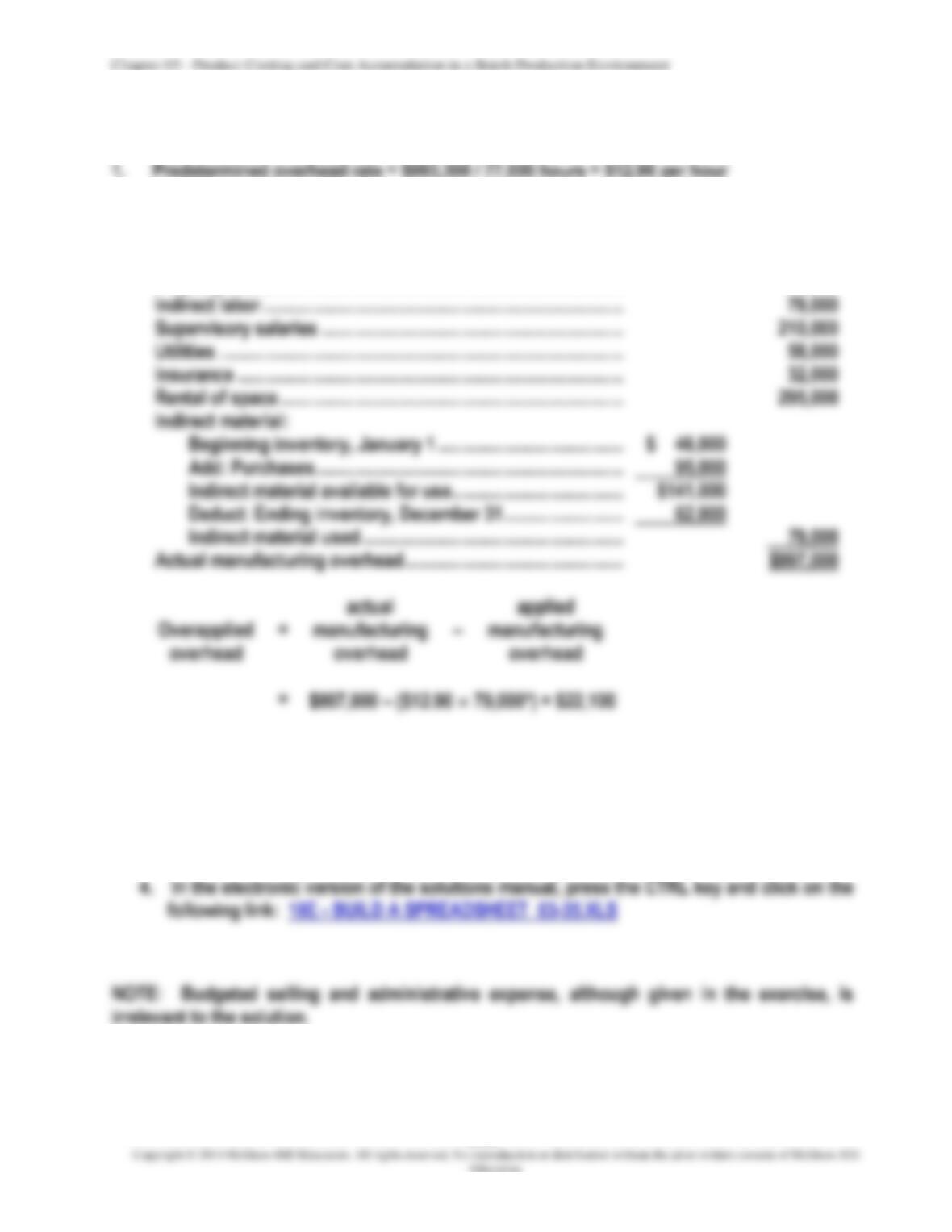
2.
Work-in-Process Inventory ………………………………………………
Manufacturing Overhead ………………………………………..
3-14
EXERCISE 3-35 (15 MINUTES)
2.
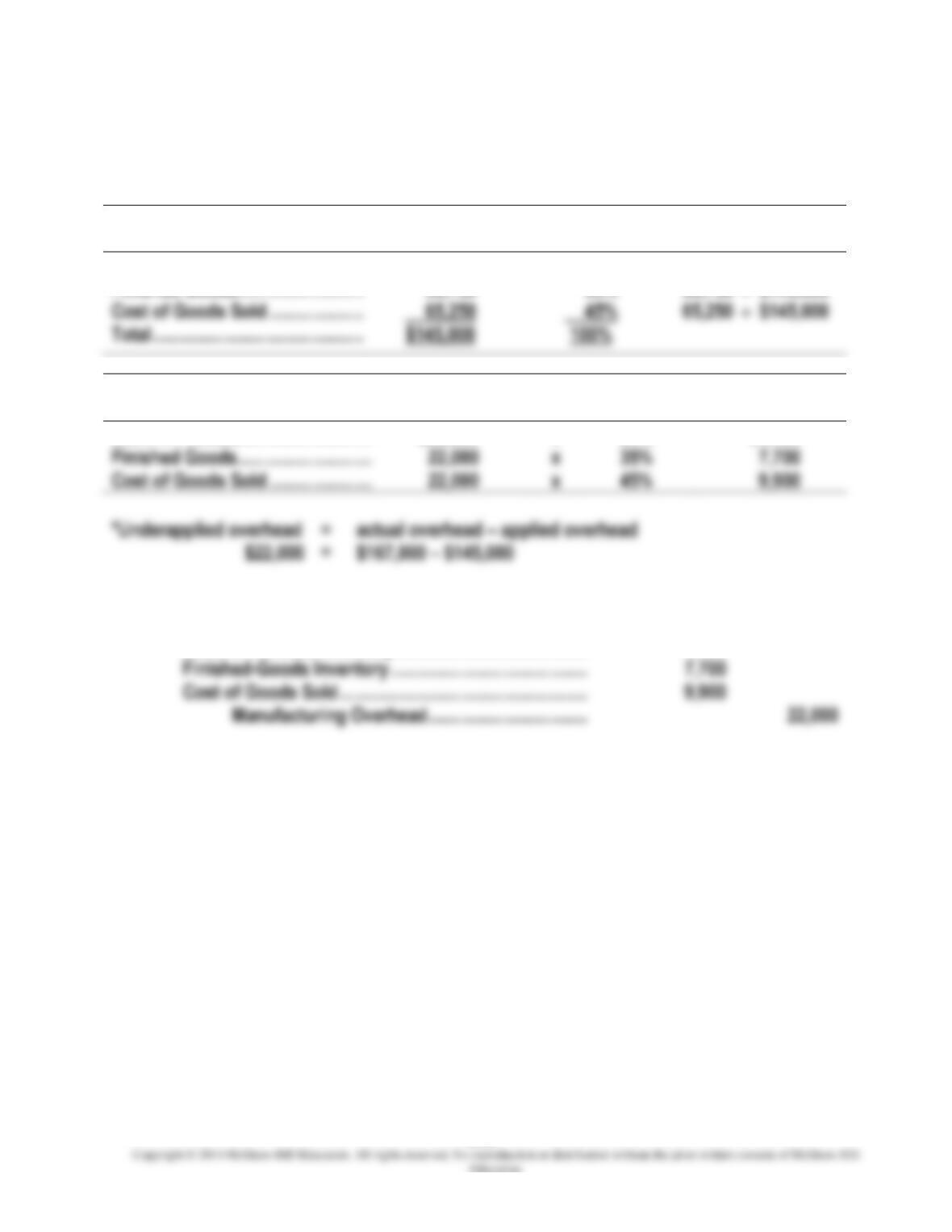
To compute actual manufacturing overhead:
Depreciation …………………………………………………………………………………..
$225,000
Property taxes ………………………………………………………………………………..
19,000
Indirect labor ………………………………………………………………………………….
79,000
Supervisory salaries ………………………………………………………………………
Utilities ……………………………………………………………………………………
58,000
Insurance ……………………………………………………………………………………
32,000
Rental of space ………………………………………………………………………………
Indirect material:
Beginning inventory, January 1 ………………………………………………..
Add: Purchases ……………………………………………………………………….
Indirect material available for use ……………………………………………..
$141,000
Deduct: Ending inventory, December 31 …………………………..
Indirect material used ……………………………………………………….
Actual manufacturing overhead ………………………………………………………
$997,000
*Actual direct-labor hours.
3.
Manufacturing Overhead …………………………………………………..
22,100
Cost of Goods Sold ………………………………………………….
22,100
Chapter 03 – Product Costing and Cost Accumulation in a Batch Production Environment
3-15
EXERCISE 3-36 (20 MINUTES)
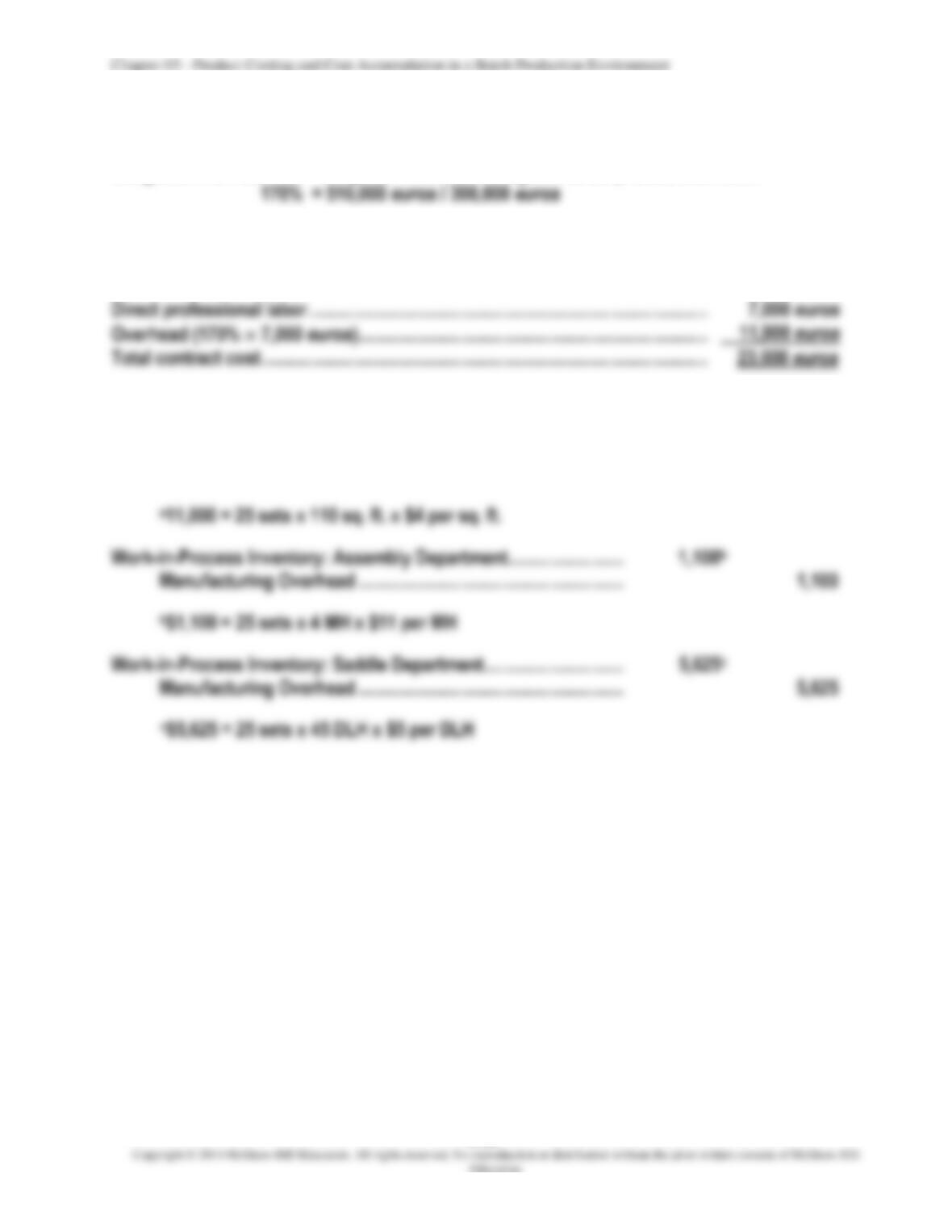
Calculation of proration amounts:
Calculation of
Account
Amount
Percentage
Percentage
Work in Process …………………………..
$ 29,000
20%
29,000
$145,000
Finished Goods …………………………..
50,750
35%
50,750
$145,000
Cost of Goods Sold …………………………..
45%
65,250
$145,000
Underapplied
Amount Added
Account
Overhead
x
Percentage
to Account
Work in Process …………………………..
$22,000*
x
20%
$4,400
Finished Goods …………………………..
x
35%
7,700
Cost of Goods Sold …………………………..
x
45%
9,900
Journal entry:
Work-in-Process Inventory ……………………………………..
4,400
Finished-Goods Inventory ………………………………………
7,700
Cost of Goods Sold ………………………………………………..
9,900
Manufacturing Overhead ………………………………………..
3-16
EXERCISE 3-37 (10 MINUTES)
Budgeted overhead rate = budgeted overhead / budgeted direct professional labor
Contract to redecorate mayor’s offices:
Direct material ………………………………………………………………………………………………
4,100 euros
Direct professional labor ……………………………………………………………………………….
Total contract cost ……………………………………………………………………………………
EXERCISE 3-38 (15 MINUTES)
Work-in-Process Inventory: Tanning Department …………………………..
11,000a
Manufacturing Overhead ……………………………………………………….
11,000
Work-in-Process Inventory: Assembly Department …………………………..
Manufacturing Overhead ……………………………………………………….
Work-in-Process Inventory: Saddle Department …………………………..
c$5,625 = 25 sets x 45 DLH x $5 per DLH
Chapter 03 – Product Costing and Cost Accumulation in a Batch Production Environment
3-17
EXERCISE 3-39 (15 MINUTES)
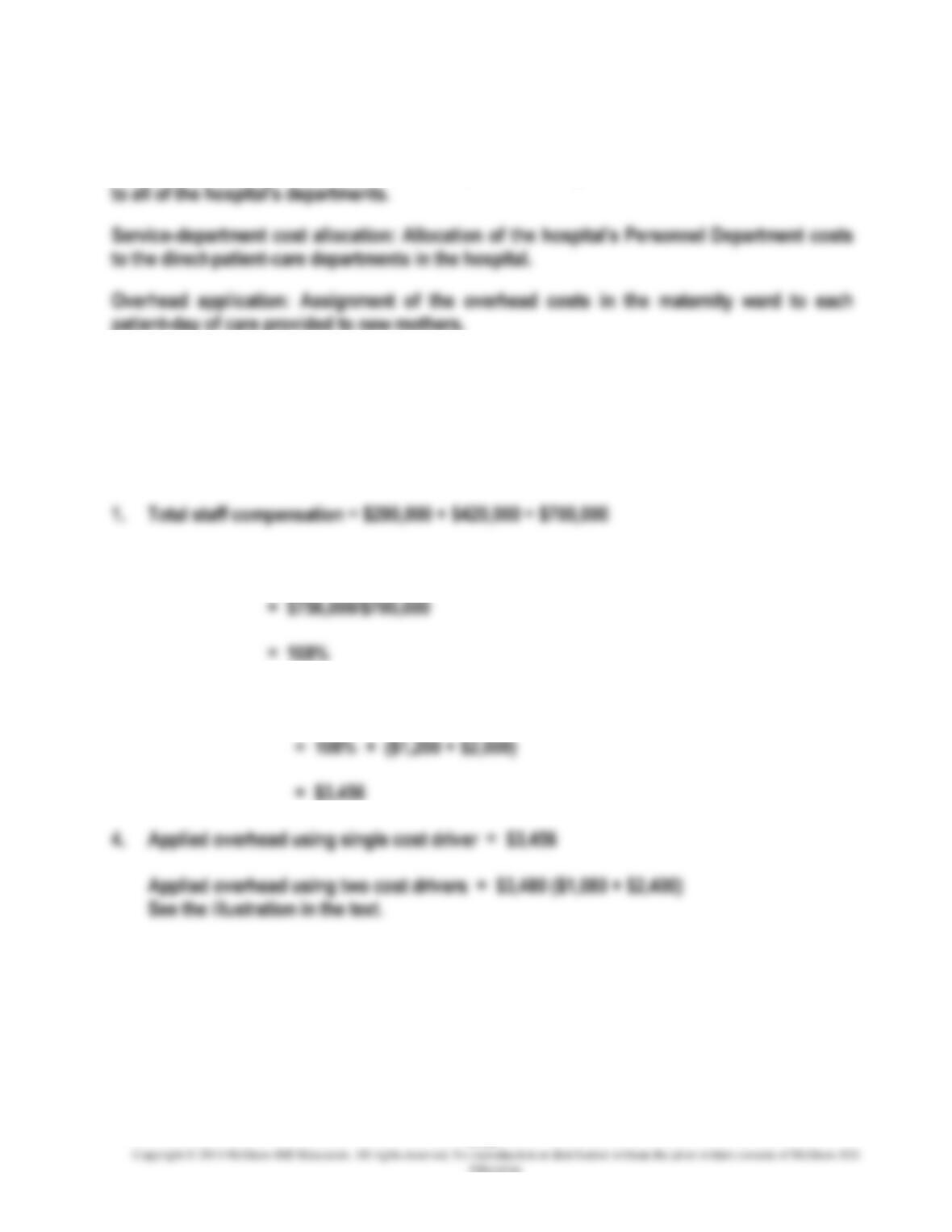
1.
Memorandum
Date:
Today
To:
President
From:
I.M. Student
Subject:
Cost driver for overhead application
2.
Memorandum
Date:
Today
To:
President
From:
I.M. Student
Subject:
Cost driver for overhead application
Chapter 03 – Product Costing and Cost Accumulation in a Batch Production Environment
3-18
EXERCISE 3-40 (10 MINUTES)
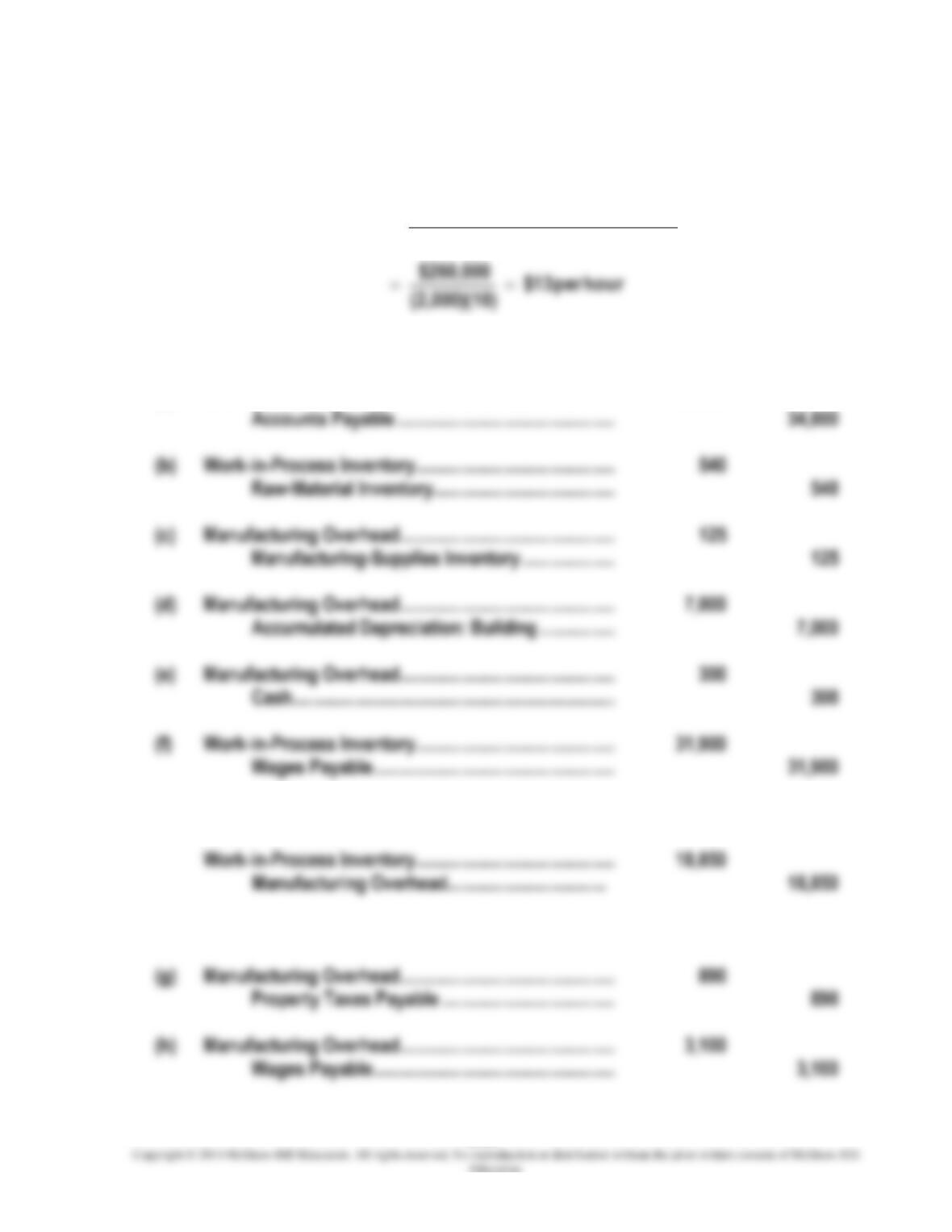
Overhead distribution: Allocation of the hospital’s building maintenance and custodial costs
EXERCISE 3-41 (15 MINUTES)
1.
Total staff compensation = $280,000 + $420,000 = $700,000
2.
Overhead rate = total budgeted overhead/total budgeted staff compensation
= $756,000/$700,000
= 108%
3.
Applied overhead = 108% × total direct professional labor
= 108% × ($1,200 + $2,000)
= $3,456
4.
Applied overhead using single cost driver = $3,456
Chapter 03 – Product Costing and Cost Accumulation in a Batch Production Environment
3-19
SOLUTIONS TO PROBLEMS
PROBLEM 3-42 (20 MINUTES)
1.
hours labor–direct budgeted
overhead ingmanufactur budgeted
rate overhead nedPredetermi
=
2.
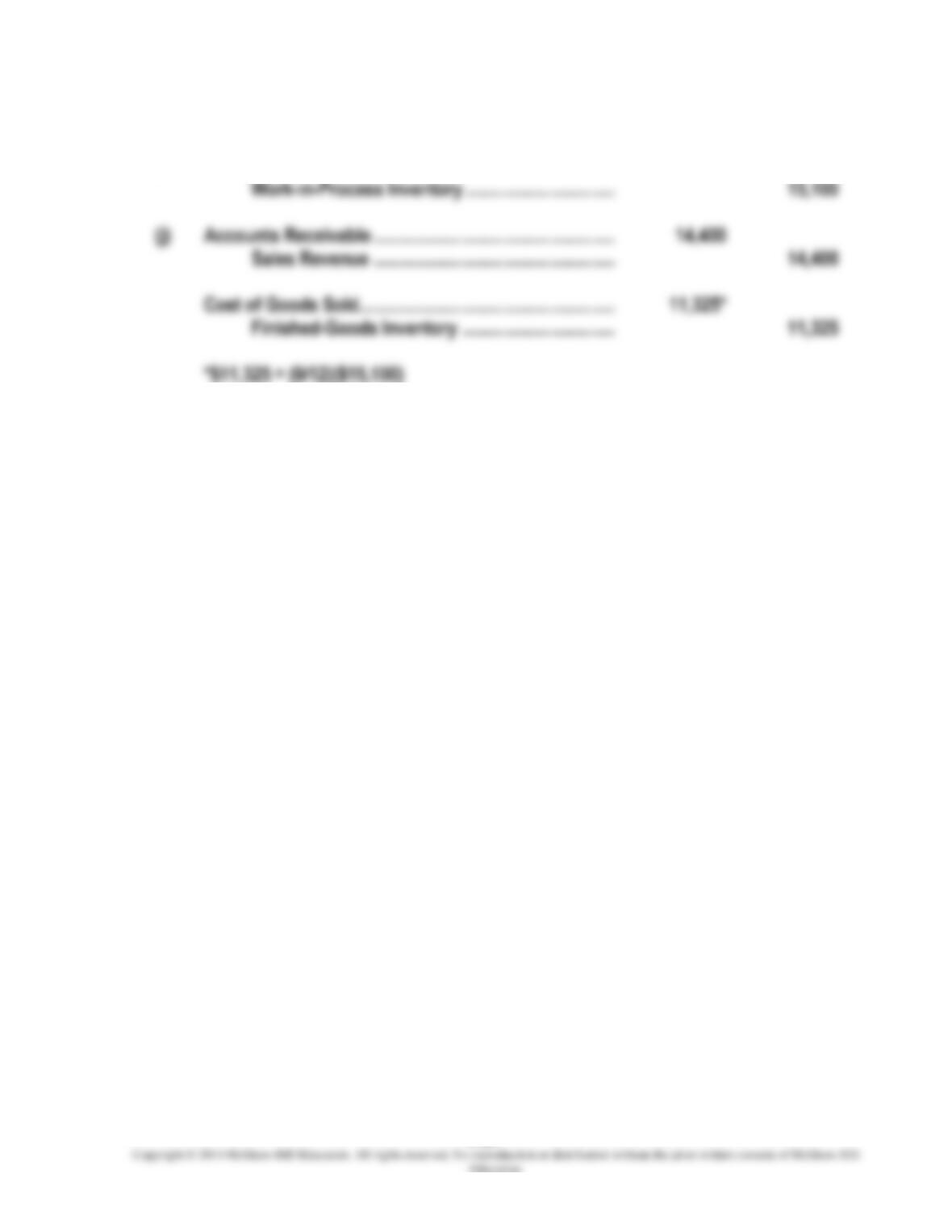
Journal entries:
(a)
Raw-Material Inventory ………………………………………………..
34,800
Accounts Payable ………………………………………………
(b)
Raw-Material Inventory ……………………………………….
(c)
Manufacturing Overhead ……………………………………………..
Manufacturing-Supplies Inventory ………………………
(d)
Manufacturing Overhead ……………………………………………..
Accumulated Depreciation: Building …………………..
(e)
Manufacturing Overhead ……………………………………………..
Cash ………………………………………………………………….
31,900
Wages Payable …………………………………………………..
To record direct-labor cost.
18,850
Manufacturing Overhead…………………………….
To apply manufacturing overhead to work in process ($18,850 = 1,450 x $13 per hour).
(g)
Manufacturing Overhead ……………………………………………..
Property Taxes Payable ……………………………………..
(h)
Manufacturing Overhead ……………………………………………..
Wages Payable …………………………………………………..
Chapter 03 – Product Costing and Cost Accumulation in a Batch Production Environment
3-20
PROBLEM 3-42 (CONTINUED)
(i)
Finished-Goods Inventory ……………………………………………
15,100
Work-in-Process Inventory …………………………..
(j)
Accounts Receivable …………………………………………………..
14,400
Sales Revenue …………………………………………………..
Cost of Goods Sold ……………………………………………………..
Finished-Goods Inventory ………………………………….
*$11,325 = (9/12)($15,100)