Chapter 3
Operating Decisions and
the Accounting System
ANSWERS TO QUESTIONS
1. A typical business operating cycle for a manufacturer would be as follows:
2. The time period assumption means that the financial condition and performance
of a business can be reported periodically, usually every month, quarter, or year,
even though the life of the business is much longer.
3. Net Income = Revenues + Gains – Expenses – Losses.
4. Both revenues and gains are inflows of net assets. However, revenues occur in
the normal course of operations, whereas gains occur from transactions
peripheral to the central activities of the company. An example is selling an
5. Accrual accounting requires recording revenues when earned and recording
expenses when incurred, regardless of the timing of cash receipts or payments.
6. The criteria that must be met for revenue to be recognized under the accrual
7. The expense recognition principle requires that expenses be recorded when
incurred in earning revenue – expenses are matched to the period in which the
8. Net income equals revenues minus expenses. Thus revenues increase net
9. Revenues increase stockholders’ equity and expenses decrease stockholders’
10.
Item
Increase
Decrease
Revenues
Credit
Debit
Losses
Debit
Credit
Credit
Debit
Expenses
Debit
Credit
11.
Item
Debit
Credit
Revenues
Decrease
Increase
Losses
Gains
Decrease
Increase
Expenses
12.
Transaction
Operating,
Investing, or
Financing
Direction
of the Effect
on Cash
Cash paid to suppliers
Operating
–
Sale of goods on account
None
Cash received from customers
Operating
Purchase of investments
–
Cash paid for interest
Operating
–
Issuance of stock for cash
Financing
Financial Accounting, 10/e 3-3
13. Total net profit margin ratio is calculated as Net Income Net Sales (or
Operating Revenues). The net profit margin ratio measures how much of every
ANSWERS TO MULTIPLE CHOICE
1. c
2. a
Authors’ Recommended Solution Time
(Time in minutes)
Mini-exercises
Exercises
Problems
Alternate
Problems
Cases and
Projects
No.
Time
No.
Time
No.
Time
No.
Time
No.
Time
1
5
1
10
1
20
1
30
1
20
2
6
2
15
2
20
2
30
2
30
3
6
3
20
3
25
3
35
3
30
4
5
4
20
4
40
4
40
4
20
5
5
5
20
5
20
5
20
5
30
6
5
6
20
6
40
6
40
6
60
7
5
7
18
7
30
7
8
6
8
20
8
9
6
9
20
10
6
10
20
11
6
11
20
Problem
12
15
13
14
20
20
1
30
15
20
16
20
17
20
1
90
18
20
15
20
15
* Due to the nature of this project, it is very difficult to estimate the amount of time
students will need to complete the assignment. As with any open-ended project, it is
possible for students to devote a large amount of time to these assignments. While
Financial Accounting, 10/e 3-5
MINI-EXERCISES
M3–1.
TERM
G
(1) Losses
C
(2) Expense recognition principle
(3) Revenues
E
(4) Time period assumption
B
(5) Operating cycle
M3–2.
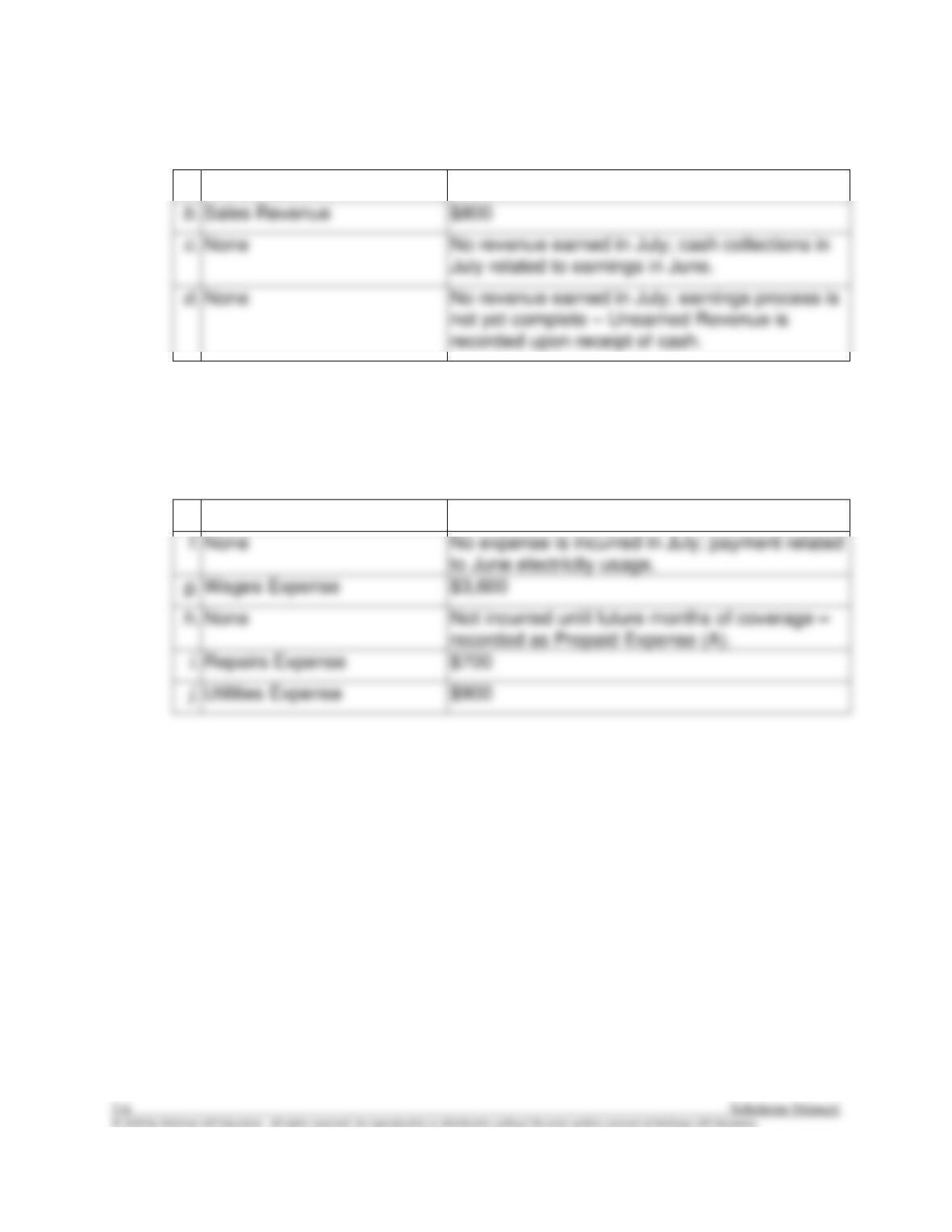
Cash Basis
Income Statement
Accrual Basis
Income Statement
Expenses:
Inventory purchases
Expenses:
Cost of sales
Revenues:
Cash sales
$ 8,000
Revenues:
Sales to customers
$18,000
M3–3.
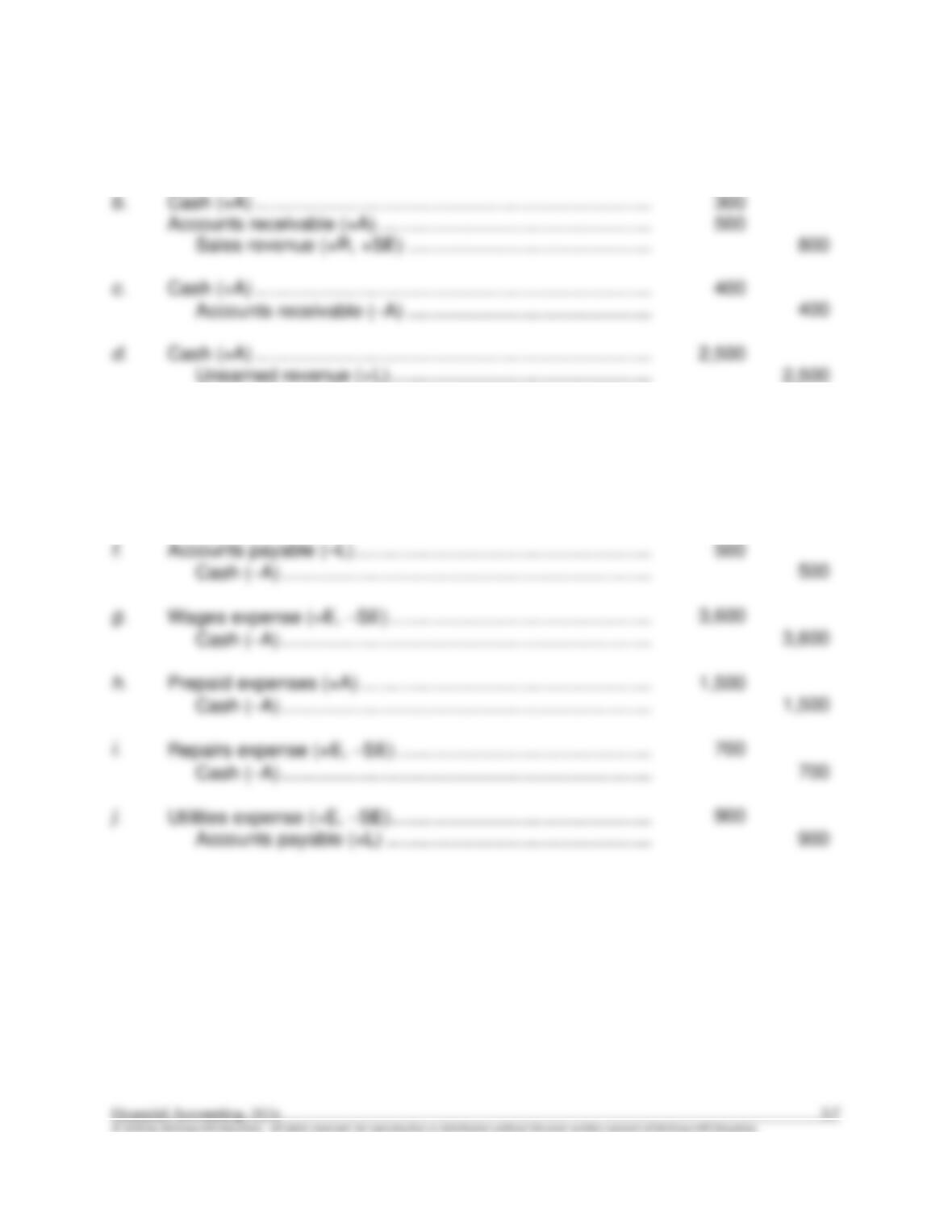
Revenue Account Affected
Amount of Revenue Earned in July
a.
Games Revenue
$15,000
b.
Sales Revenue
July related to earnings in June.
recorded upon receipt of cash.
M3–4.
Expense Account Affected
Amount of Expense Incurred in July
e.
Cost of Goods Sold
$680
g.
Wages Expense
Repairs Expense
$700
Utilities Expense
$900
M3–5.
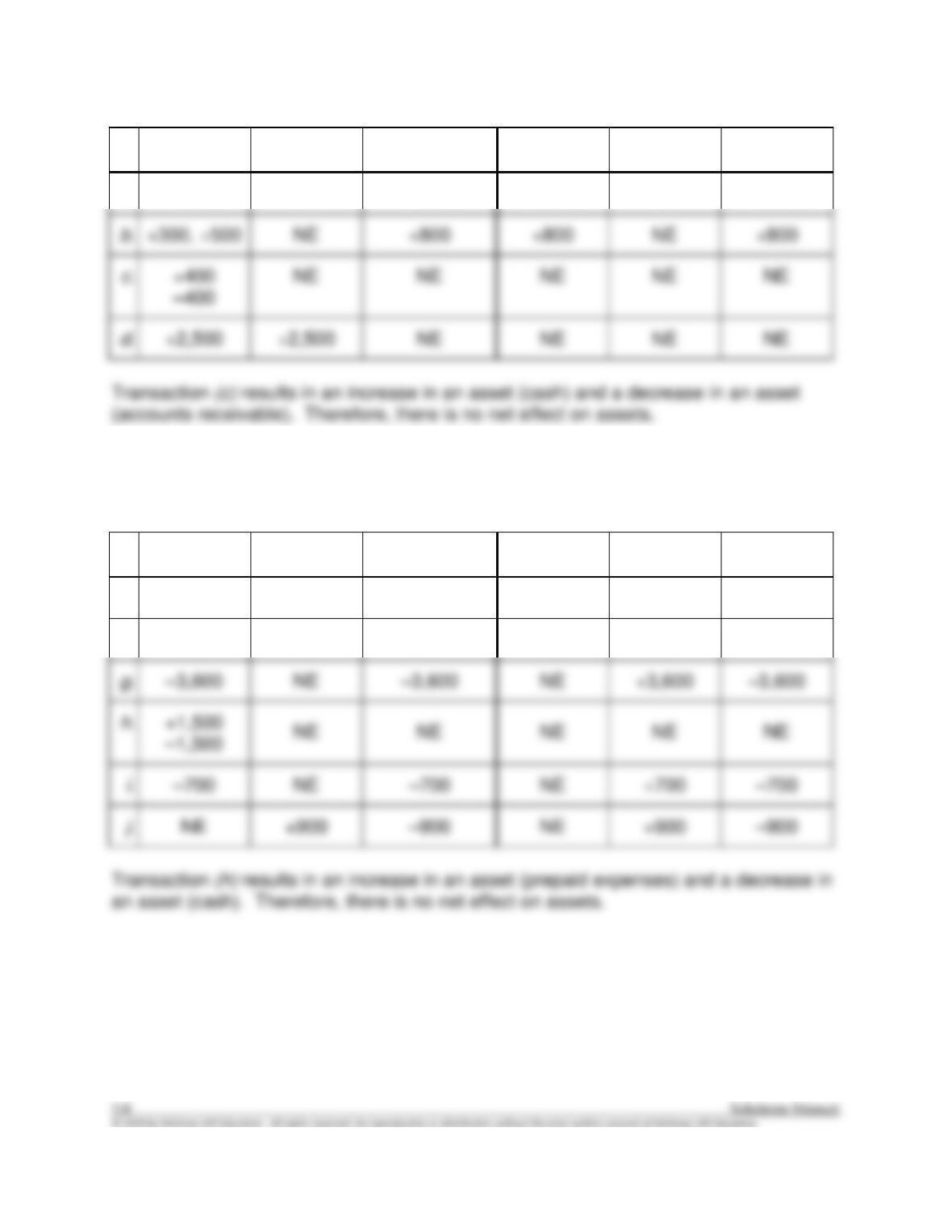
a.
Cash (+A) ………………………………………………………………….
15,000
Game revenue (+R, +SE)………………………………………..
15,000
b.
Cash (+A) ………………………………………………………………….
Accounts receivable (+A) ……………………………………………..
Sales revenue (+R, +SE) ………………………………………..
c.
Cash (+A) ………………………………………………………………….
Accounts receivable (−A) ………………………………………..
400
d.
Cash (+A) ………………………………………………………………….
M3–6.
e.
Cost of goods sold (+E, −SE) ……………………………………….
680
Inventory (−A) ………………………………………………………..
680
h.
Prepaid expenses (+A) ………………………………………………..
Cash (−A) ……………………………………………………………..
Repairs expense (+E, −SE) ………………………………………….
700
Cash (−A) ……………………………………………………………..
700
Utilities expense (+E, −SE) …………………………………………..
900
Accounts payable (+L) ……………………………………………
M3–7.
Balance Sheet
Income Statement
Assets
Liabilities
Stockholders’
Equity
Revenues
Expenses
Net
Income
a.
+15,000
NE
+15,000
+15,000
NE
+15,000
b.
NE
+800
NE
+800
–400
d.
NE
NE
NE
NE
M3–8.
Balance Sheet
Income Statement
Assets
Liabilities
Stockholders’
Equity
Revenues
Expenses
Net
Income
e.
–680
NE
–680
NE
+680
–680
f.
–500
–500
NE
NE
NE
NE
g.
NE
NE
–700
NE
–700
NE
+700
–700
Financial Accounting, 10/e 3-9
M3–9.
Bennett’s Bowling, Inc.
Unadjusted Income Statement
For the Month of July
Revenues:
Game revenue
$15,000
Sales revenue
Total revenues
Wages expense
Cost of goods sold
Utilities expense
Total expenses
Net income
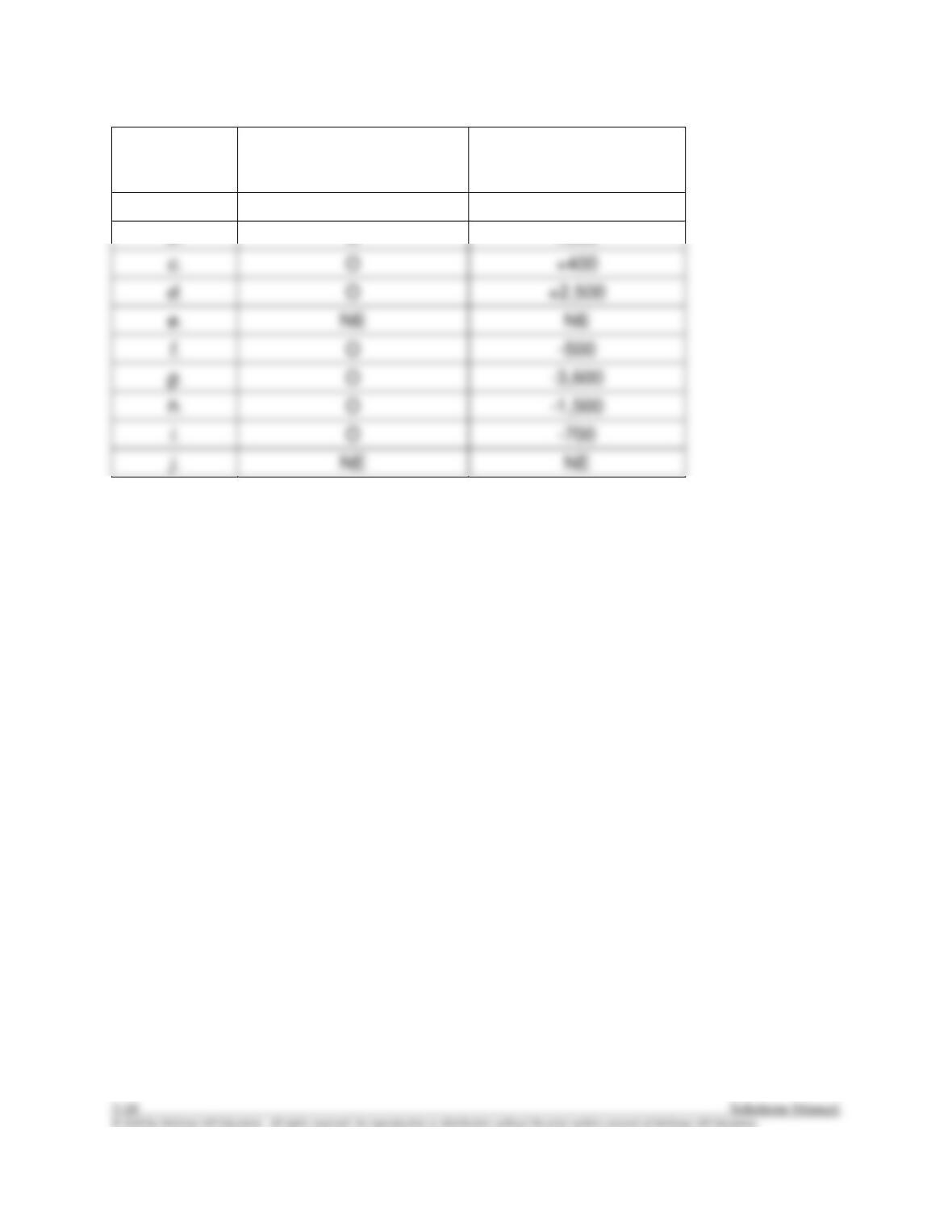
M3–10.
Net
Income
÷
Net Sales
Revenue
=
Net Profit Margin
Ratio
2021
$51,000
$163,000
0.3129 or 31.3%
2020
0.2649 or 26.5%
2019
0.1894 or 18.9%
As additional analysis:
Percentage Change
in Net Income
Percentage Change
in Net Sales Revenue
From 2020 to 2021
($51,000 – $40,000) / $40,000
+27.5%
($163,000 – $151,000) / $151,000
+7.9%
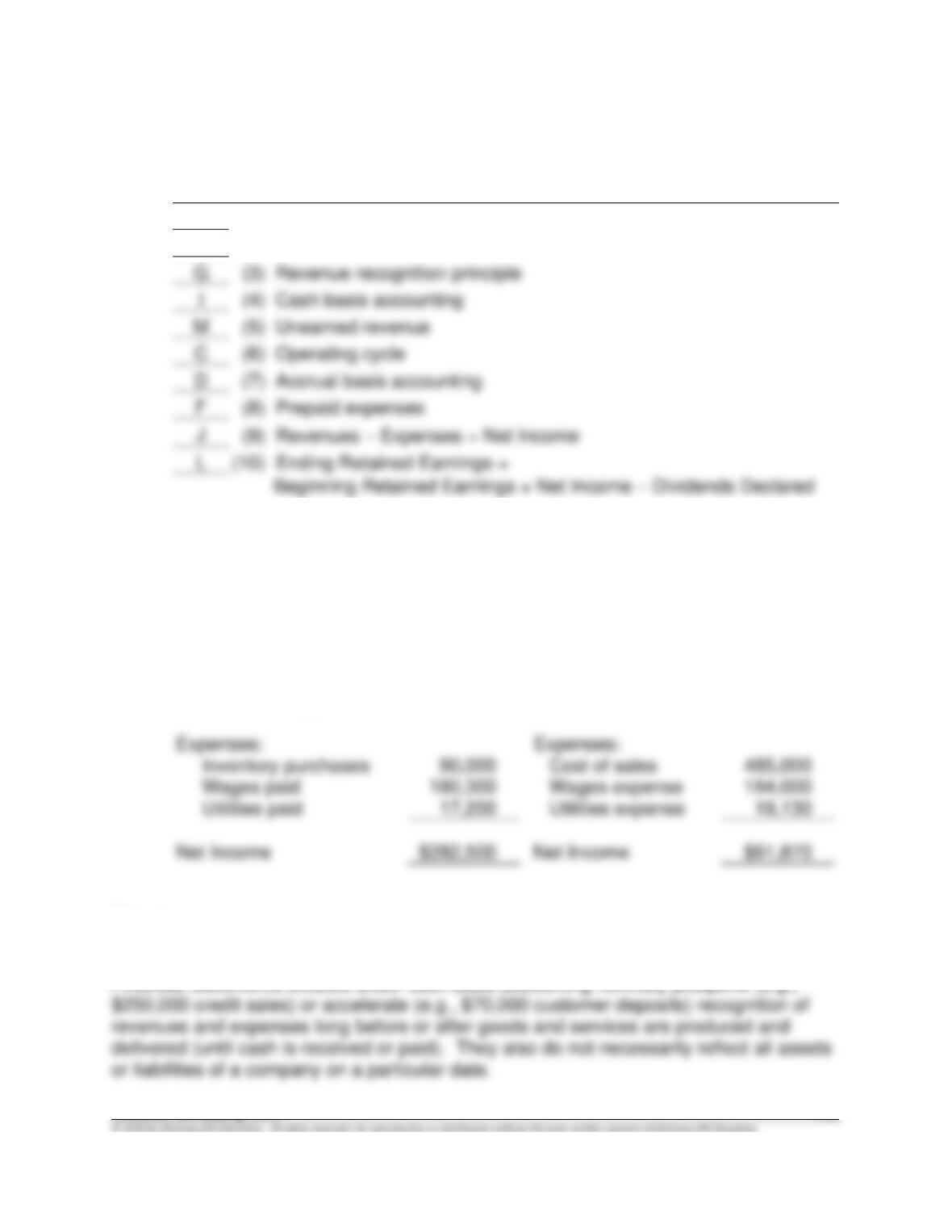
M3–11.
Transaction
O, I, or F Activity (or No
Effect) on Statement of
Cash Flows
Direction and Amount
of Effect
a.
O
+15,000
b.
O
+300
O
d.
O
e.
O
g.
O
h.
O
O
Financial Accounting, 10/e 3-11
EXERCISES
E3–1.
TERM
K
(1) Expenses
E
(2) Gains
(3) Revenue recognition principle
(4) Cash basis accounting
(5) Unearned revenue
C
(6) Operating cycle
D
(7) Accrual basis accounting
(8) Prepaid expenses
(10) Ending Retained Earnings =
E3–2.
Req. 1
Cash Basis
Income Statement
Accrual Basis
Income Statement
Expenses:
Inventory purchases
Wages paid
Expenses:
Cost of sales
Wages expense
Net Income
Revenues:
Cash sales
Customer deposits
$500,000
70,000
Revenues:
Sales to customers
$750,000
Req. 2
Accrual basis financial statements provide more useful information to external users.
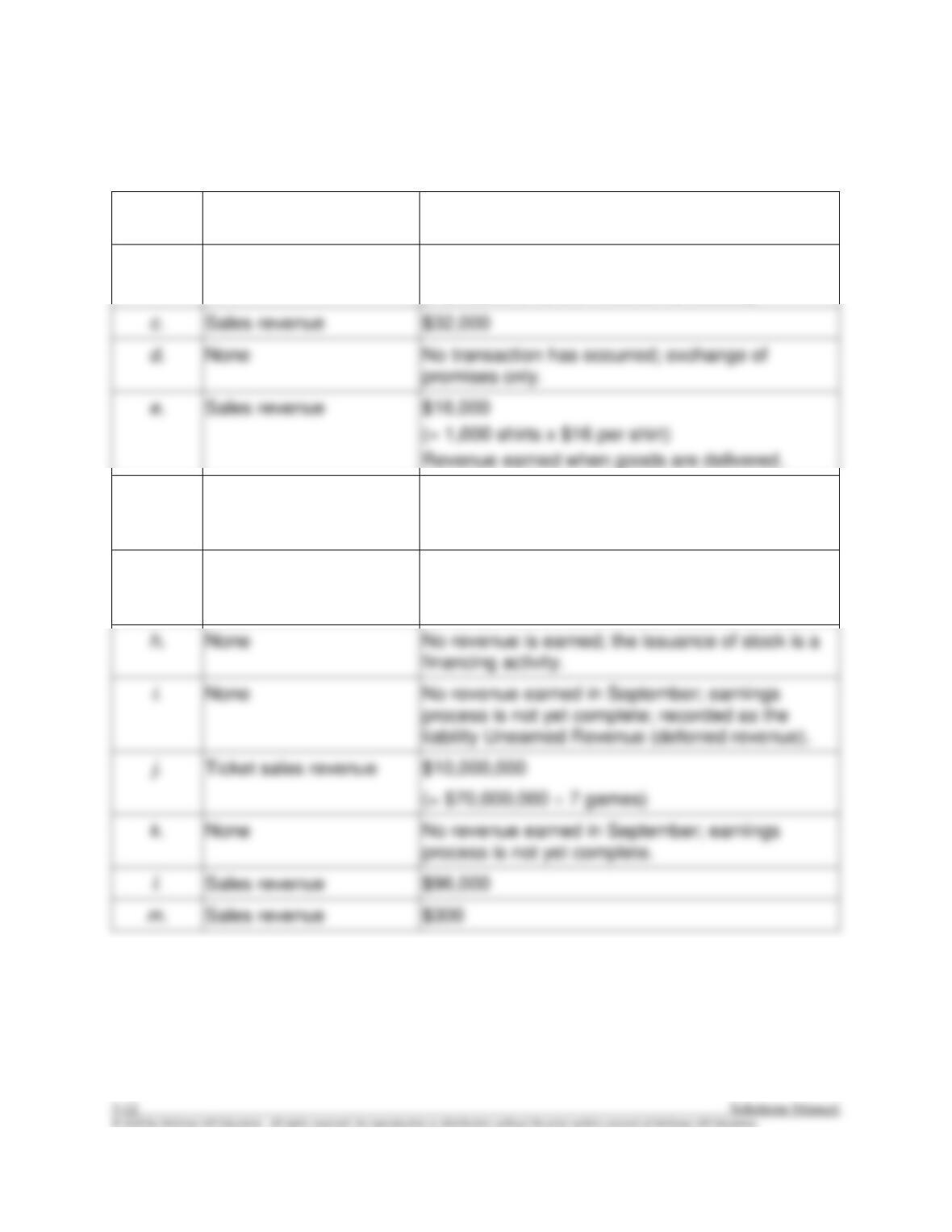
E3–3.
Activity
Revenue Account
Affected
Amount of Revenue
Earned in September
a.
None
No revenue earned in September; earnings
process is not yet complete.
b.
Interest revenue
$125
(= $15,000 x 10% x 1 month/12 months)
Sales revenue
Revenue earned when goods are delivered.
f.
None
Payment is related to revenue recorded
previously in (e) above when delivered, not when
cash is paid.
g.
None
No revenue earned in September; earnings
process is not yet complete; recorded as the
liability Unearned Revenue (deferred revenue).
None
No revenue is earned; the issuance of stock is a
financing activity.
i.
None
No revenue earned in September; earnings
process is not yet complete; recorded as the
liability Unearned Revenue (deferred revenue).
Ticket sales revenue
(= $70,000,000 ÷ 7 games)
None
No revenue earned in September; earnings
process is not yet complete.
Sales revenue
Sales revenue
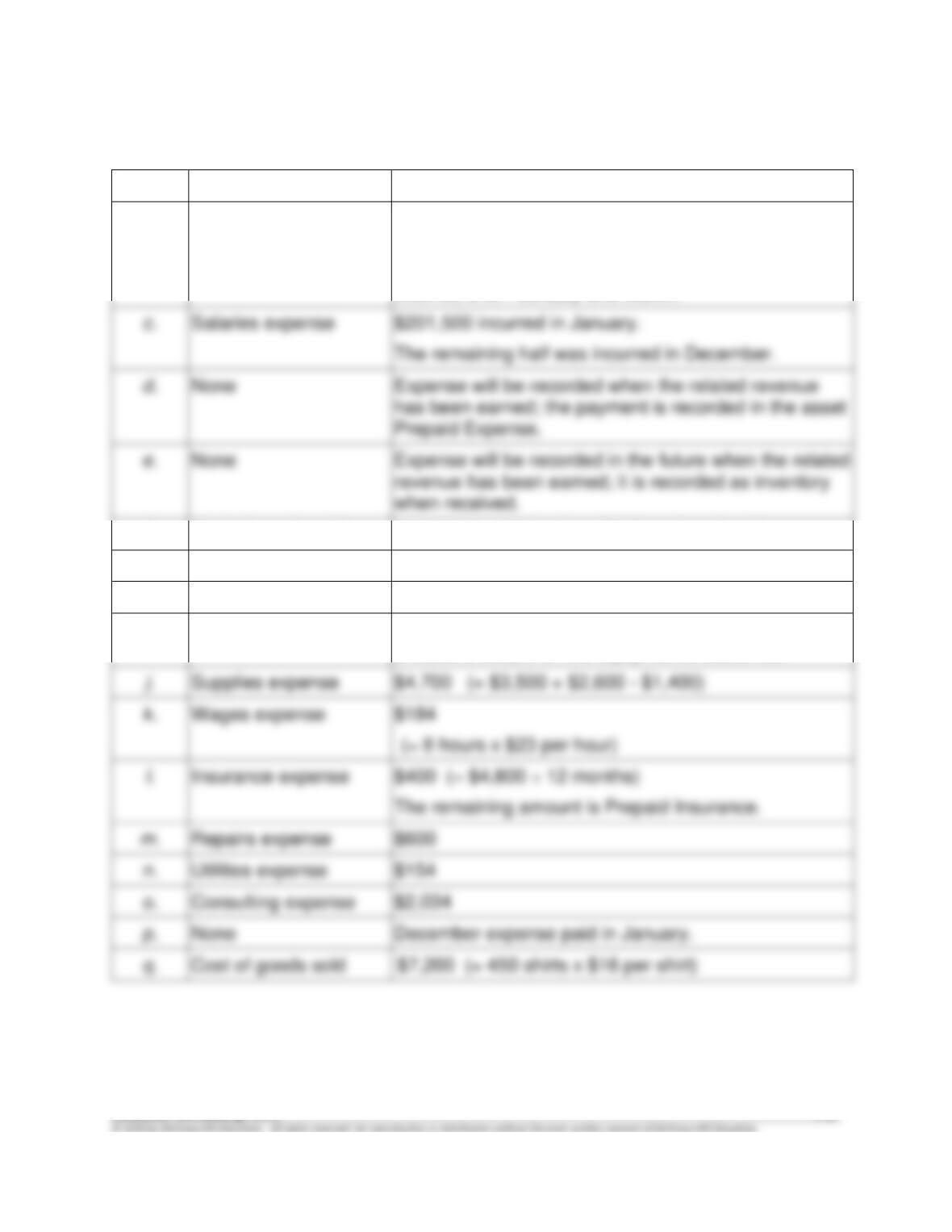
Financial Accounting, 10/e 3-13
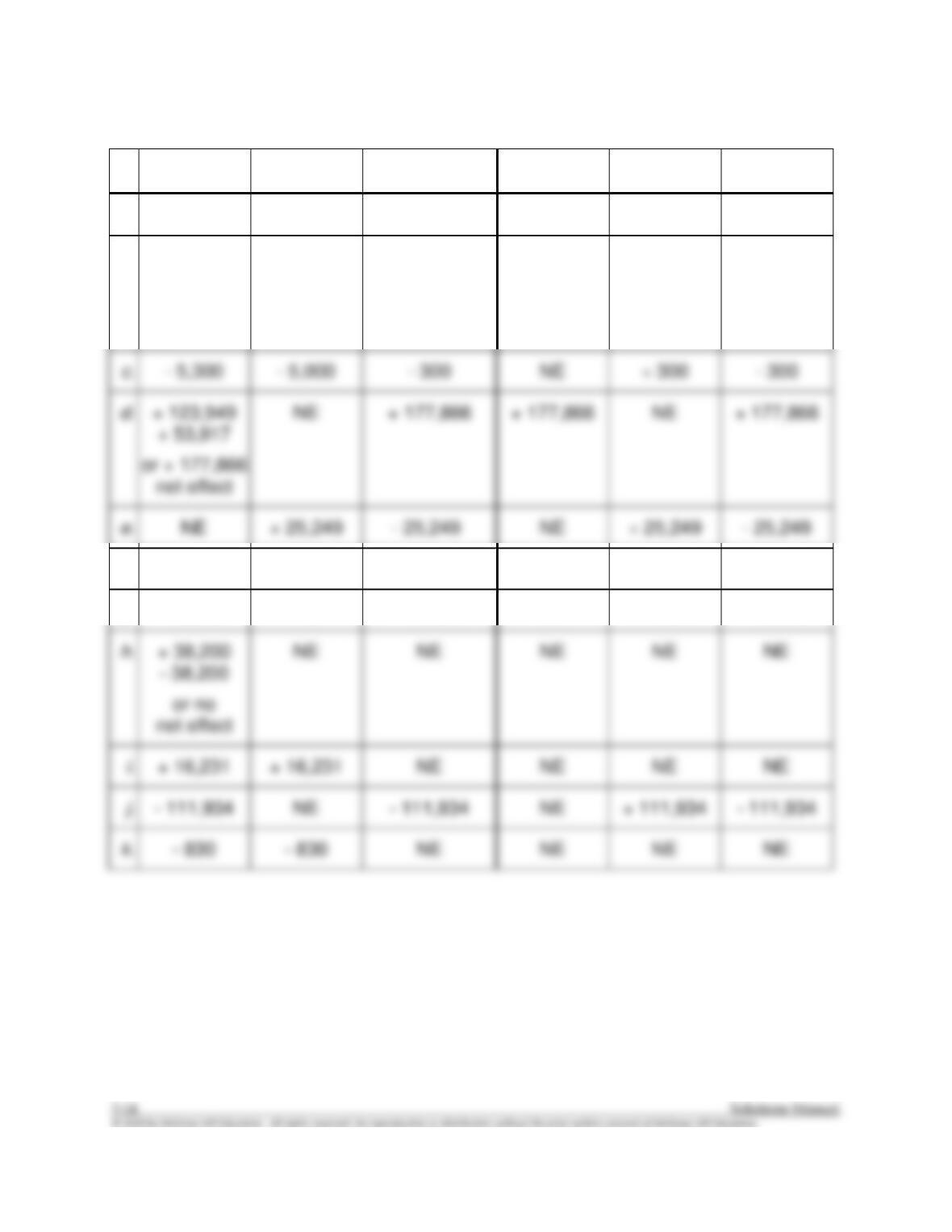
E3–4.
Activity
Expense Account
Affected
Amount of Expense
Incurred in January
a.
Utilities expense
$3,800
b.
Advertising expense
$321 (= $963 x 1 month/3 months) incurred in
January.
The remainder is a prepaid expense (A) that is not
incurred until February and March.
The remaining half was incurred in December.
Prepaid Expense.
when received.
f.
Cost of goods sold
$84,000 (= 400 books x $210 cost per book)
g.
None
December expense paid in January.
h.
Commission expense
$55,560
i.
None
Expense will be recorded as depreciation (used portion
of asset’s cost) over the equipment’s useful life.
Supplies expense
The remaining amount is Prepaid Insurance.
Repairs expense
n.
Utilities expense
$154
o.
Consulting expense
$2,034
p.
None
December expense paid in January.
q.
Cost of goods sold
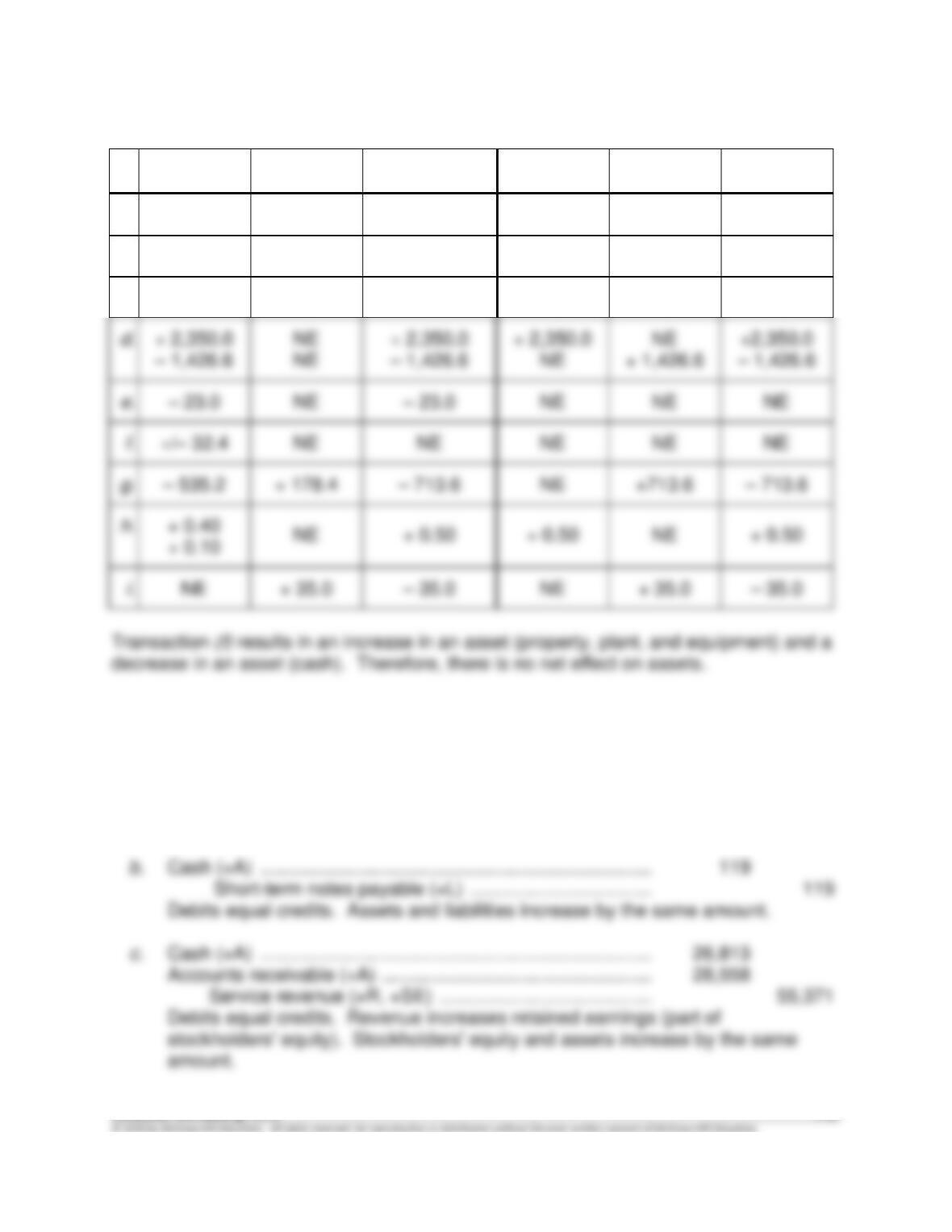
E3–5. (dollars in millions)
Balance Sheet
Income Statement
Assets
Liabilities
Stockholders’
Equity
Revenues
Expenses
Net
Income
a.
+ 623
NE
+ 623
NE
NE
NE
b.
+ 6,320
– 4,893
or +1,427
net effect
+ 1,427
NE
NE
NE
NE
d.
net effect
NE
NE
e.
NE
+ 25,249
NE
+ 25,249
– 25,249
f.
– 118,241
– 118,241
NE
NE
NE
NE
g.
– 10,069
NE
– 10,069
NE
+ 10,069
– 10,069
net effect
NE
NE
NE
NE
NE
+ 16,231
+ 16,231
NE
NE
NE
NE
– 111,934
NE
NE
– 111,934
NE
NE
NE
NE
Financial Accounting, 10/e 3-15
E3–6. (dollars in millions)
Balance Sheet
Income Statement
Assets
Liabilities
Stockholders’
Equity
Revenues
Expenses
Net
Income
a.
+ 21.4
NE
+ 21.4
NE
NE
NE
b.
+ 1,626.6
+ 1,626.6
NE
NE
NE
NE
c.
– 43.8
– 40.1
– 3.7
NE
+ 3.7
– 3.7
NE
NE
+ 1,426.6
e.
– 23.0
NE
NE
NE
NE
NE
NE
NE
NE
NE
g.
NE
+ 0.10
NE
+ 35.0
NE
+ 35.0
– 35.0
E3–7. (dollars in millions)
a.
Buildings (+A) ……………………………………………………………
432
Equipment (+A) …………………………………………………………
254
Cash (−A) ………………………………………………………….
686
Debits equal credits. Assets increase and decrease by the same amount.
Cash (+A) …………………………………………………………………
Debits equal credits. Assets and liabilities increase by the same amount.
Accounts receivable (+A) …………………………………………….
amount.
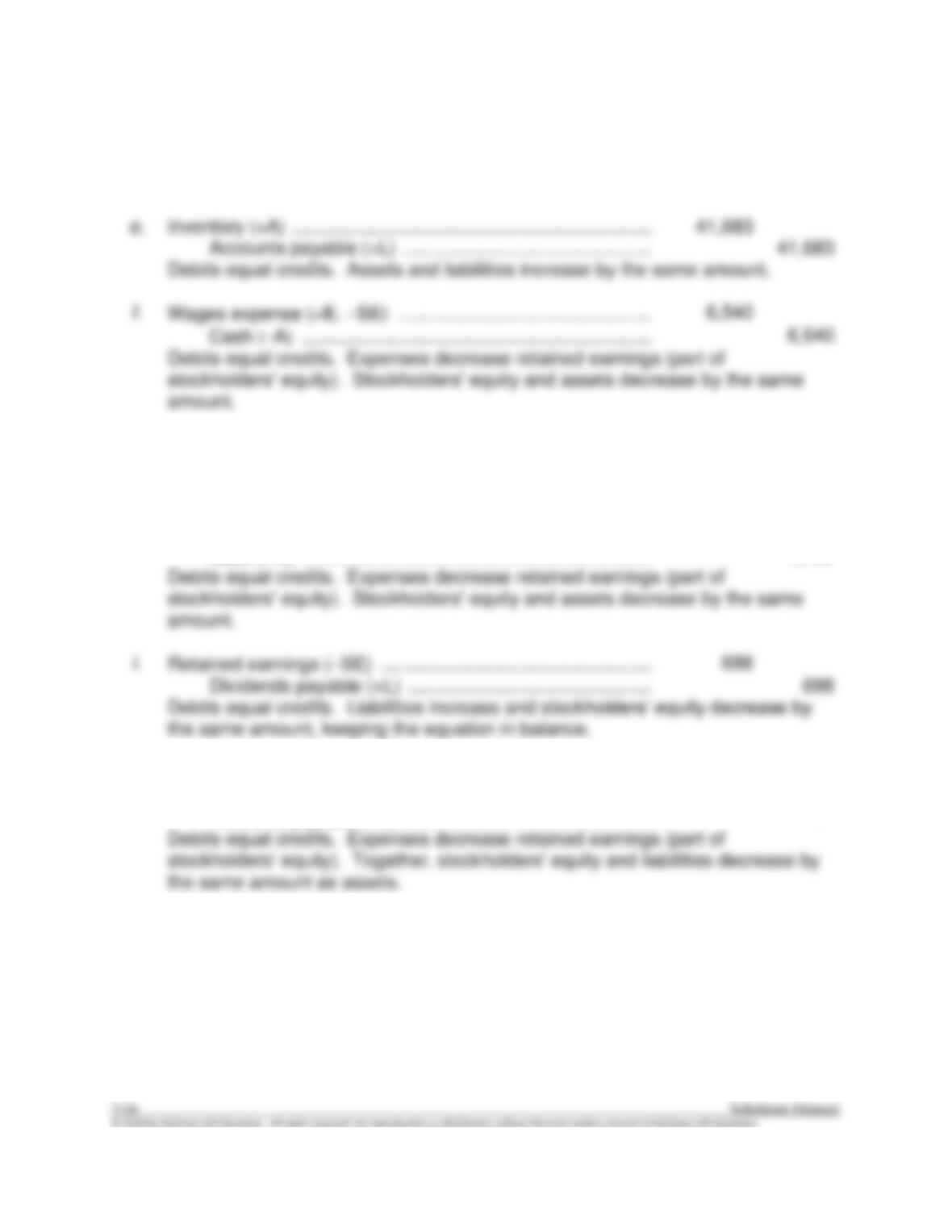
E3–7. (continued)
d.
Accounts payable (−L) …………………………..……………………
132,074
Cash (−A) ………………………………………………………….
132,074
Debits equal credits. Assets and liabilities decrease by the same amount.
e.
Inventory (+A) ……………………………………………………………
41,683
Debits equal credits. Assets and liabilities increase by the same amount.
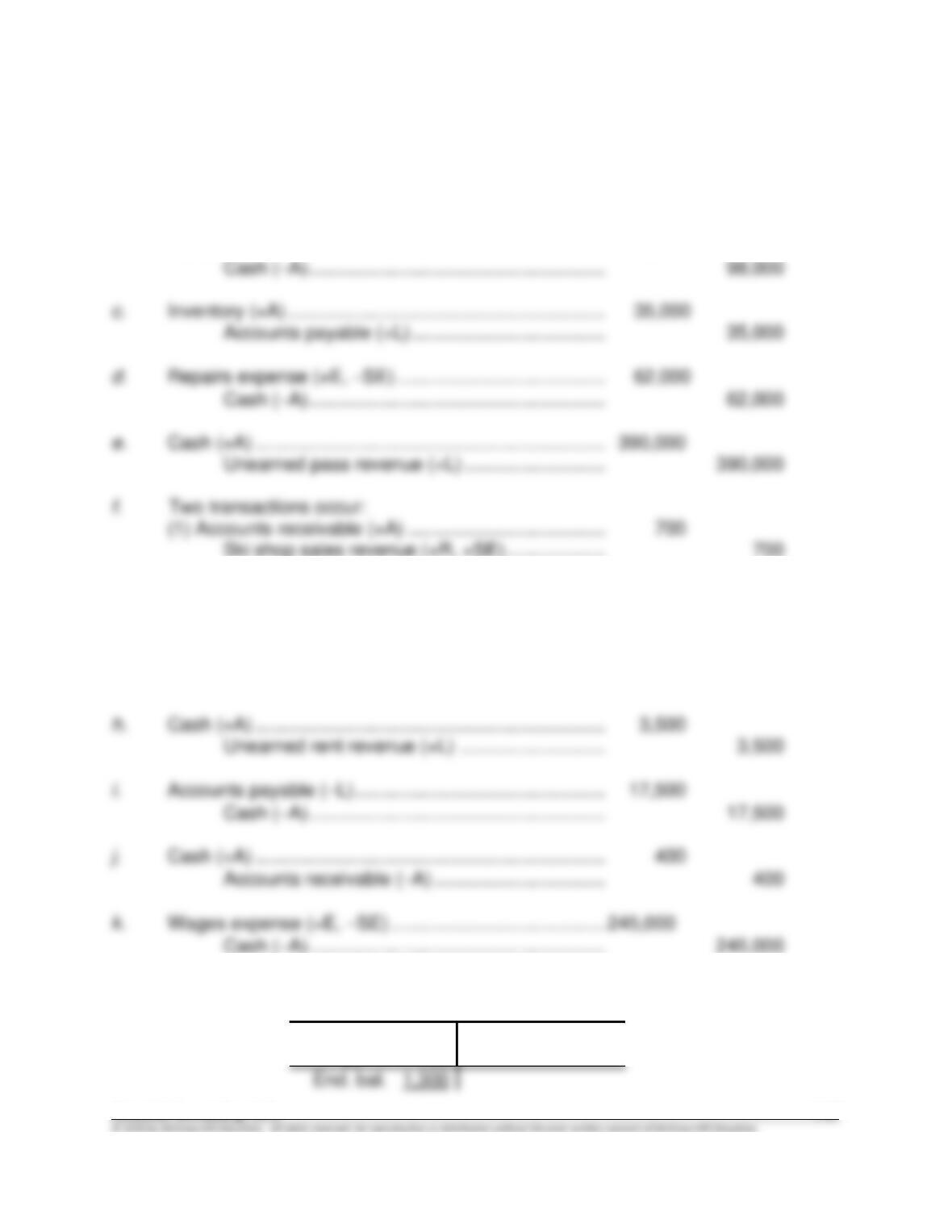
Wages expense (+E, −SE) ………………………………………….
Cash (−A) ………………………………………………………….
g.
Cash (+A) …………………………………………………………………
22,043
Accounts receivable (−A) …………………………………….
22,043
Debits equal credits. Assets increase and decrease by the same amount.
h.
Fuel expense (+E, −SE) …………………………..…………………
1,750
Cash (−A) ………………………………………………………….
1,750
amount.
Retained earnings (−SE) …………………………………………….
the same amount, keeping the equation in balance.
j.
Utilities expense (+E, −SE) ………………………………………….
121
Cash (−A) ………………………………………………………….
Accounts payable (+L) …………………………………………
110
11
the same amount as assets.
Financial Accounting, 10/e 3-17
E3–8.
Req. 1
a. Cash (+A) …………………………………………………………. 2,300,000
Short-term note payable (+L) ……………………… 2,300,000
b. Equipment (+A) …………………………………………………. 98,000
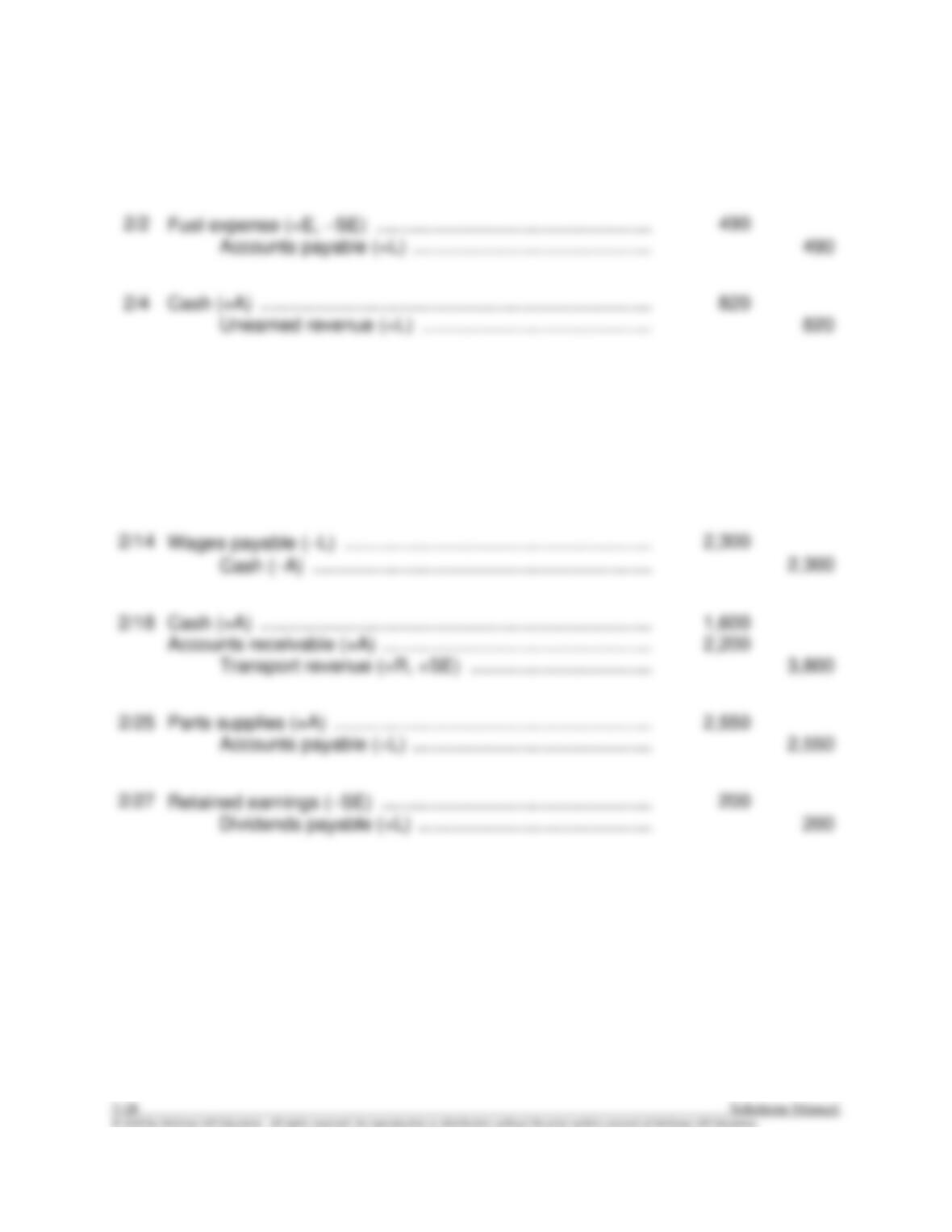
(2) Cost of goods sold (+E, −SE) ………………………….. 400
Inventory (−A) ………………………………………….. 400
g. Cash (+A) …………………………………………………………. 320,000
Lift revenue (+R, +SE) ………………………………. 320,000
Req. 2
Accounts Receivable
Beg. bal. 1,000
(f) 700
400 (j)
E3–9.
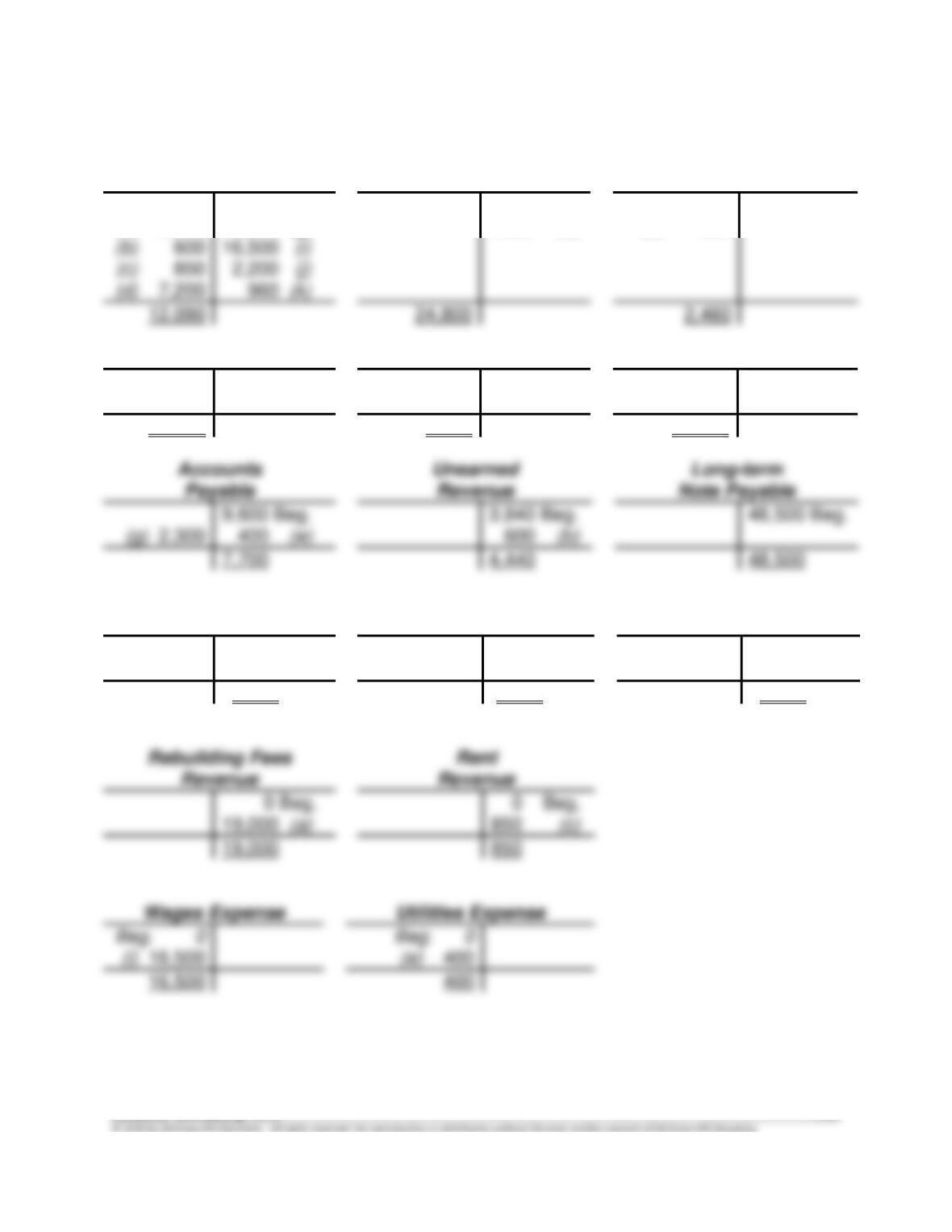
2/1
Rent expense (+E, −SE) ……………………………………………..
275
Cash (−A) ………………………………………………………..
275
2/2
Fuel expense (+E, −SE) …………………………..…………………
Accounts payable (+L) ……………………………………….
2/4
Cash (+A) …………………………………………………………………
820
Unearned revenue (+L) ……………………………………..
820
2/7
Cash (+A) …………………………………………………………………
910
Transport revenue (+R, +SE) ……………………………..
910
2/10
Advertising expense (+E, −SE) …………………………………….
175
Cash (−A) ………………………………………………………..
175
2/14
Wages payable (−L) …………………………………………………..
Cash (−A) ………………………………………………………..
Transport revenue (+R, +SE) ……………………………..
Parts supplies (+A) …………………………………………………….
Accounts payable (+L) ……………………………………….
2/27
Retained earnings (−SE) …………………………………………….
Dividends payable (+L) ………………………………………
Financial Accounting, 10/e 3-19
E3–10.
Req. 1 and 2
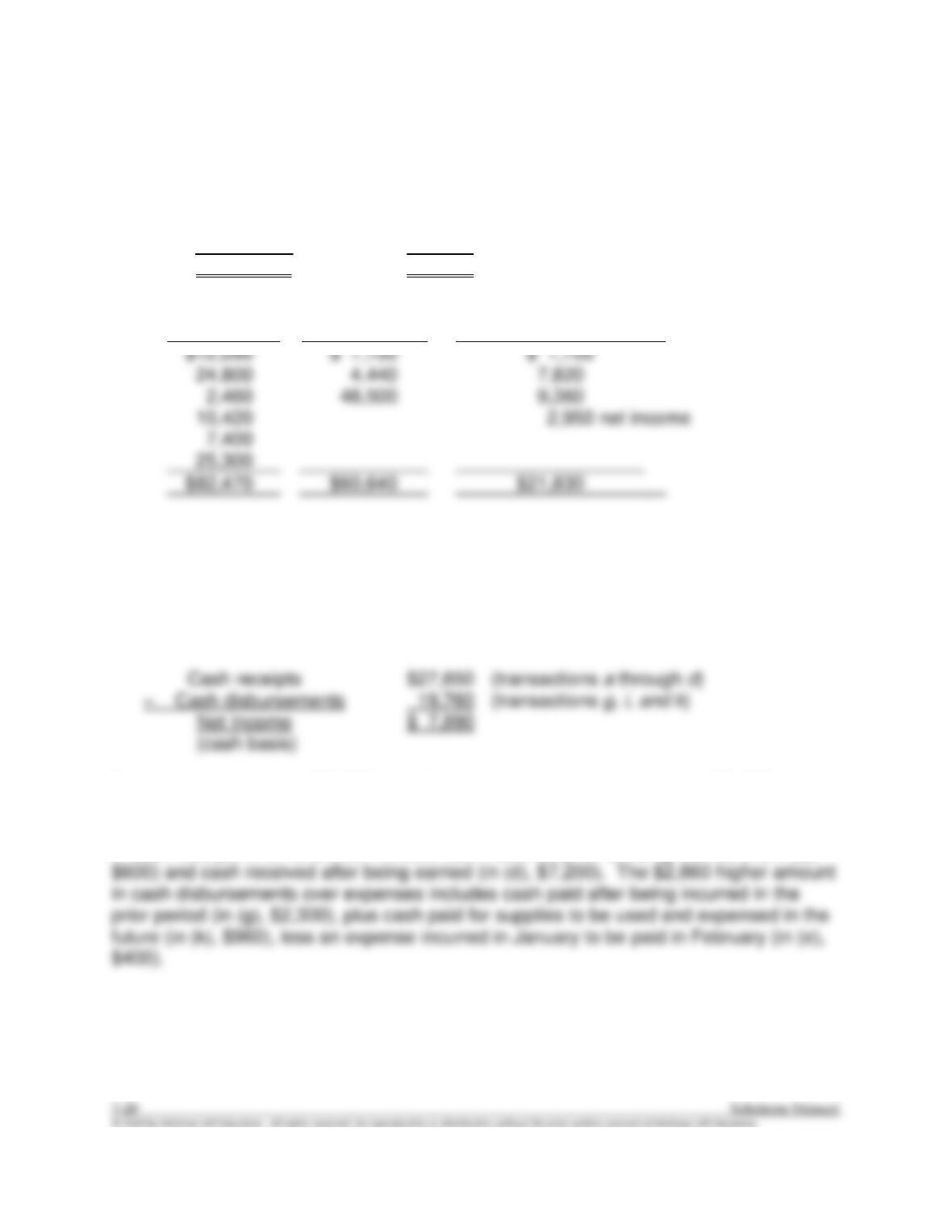
Cash
Accounts Receivable
Supplies
2,200 (j)
960 (k)
Beg. 6,400
(a) 19,000
2,300 (g)
Beg.32,000
7,200 (d)
Beg. 1,500
(k) 960
Equipment
Land
Building
Beg. 9,500
(h) 920
Beg. 7,400
Beg. 25,300
10,420
7,400
25,300
(g) 2,300
9,600 Beg.
400 (e)
600 (b)
4,440
Common Stock
Additional
Paid-in Capital
Retained Earnings
1,600 Beg.
100 (h)
7,000 Beg.
820 (h)
(j) 2,200
11,560 Beg.
1,700
7,820
9,360
0 Beg.
0 Beg.
Wages Expense
Item (f) is not a transaction; there has been no exchange.
E3–10. (continued)
Req. 3
Net income using the accrual basis of accounting:
Revenues
$19,850
($19,000 + $850)
– Expenses
16,900
($16,500 + $400)
Net Income
(accrual basis)
$ 2,950
Assets
=
Liabilities
+
Stockholders’ Equity
$ 1,700
2,950 net income
Req. 4
Net income using the cash basis of accounting:
$27,650
(transactions a through d)
19,760
(transactions g, i, and k)
Net Income
$ 7,890
Cash basis net income ($7,890) is higher than accrual basis net income ($2,950)
because of the differences in the timing of recording revenues versus receipts and
expenses versus disbursements between the two methods. The $7,800 higher amount
in cash receipts over revenues includes cash received prior to being earned (from (b),