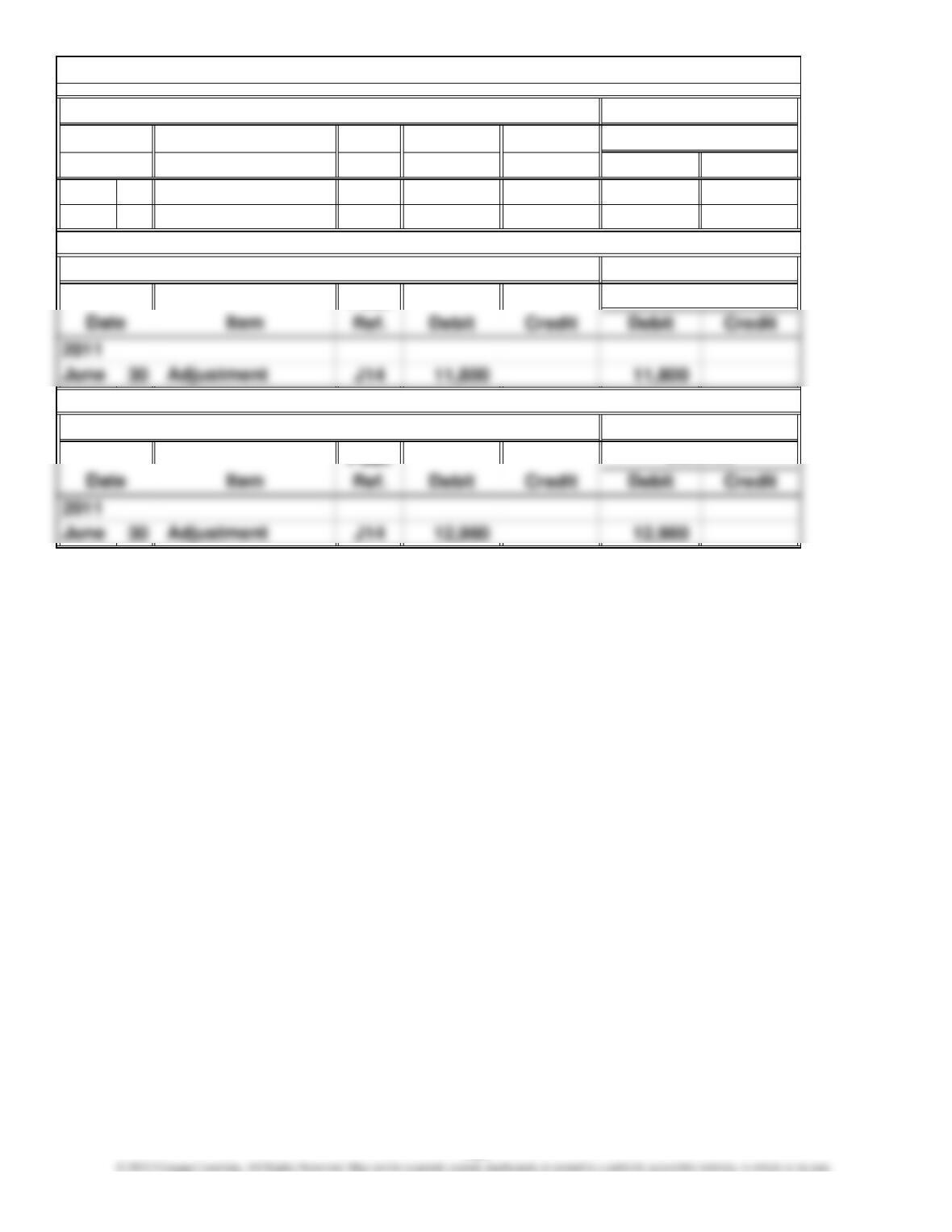
Ref. Debit Credit Debit Credit
30 J14 9,879 9,879
Balance
Balance
Chapter 3, P 10. (Continued)
Post.
Income Taxes Expense Account No. 520
Interest Expense Account No. 519
Date
Maintenance Expense
Balance
Item
June Adjustment
Account No. 518
Post.
2011
152
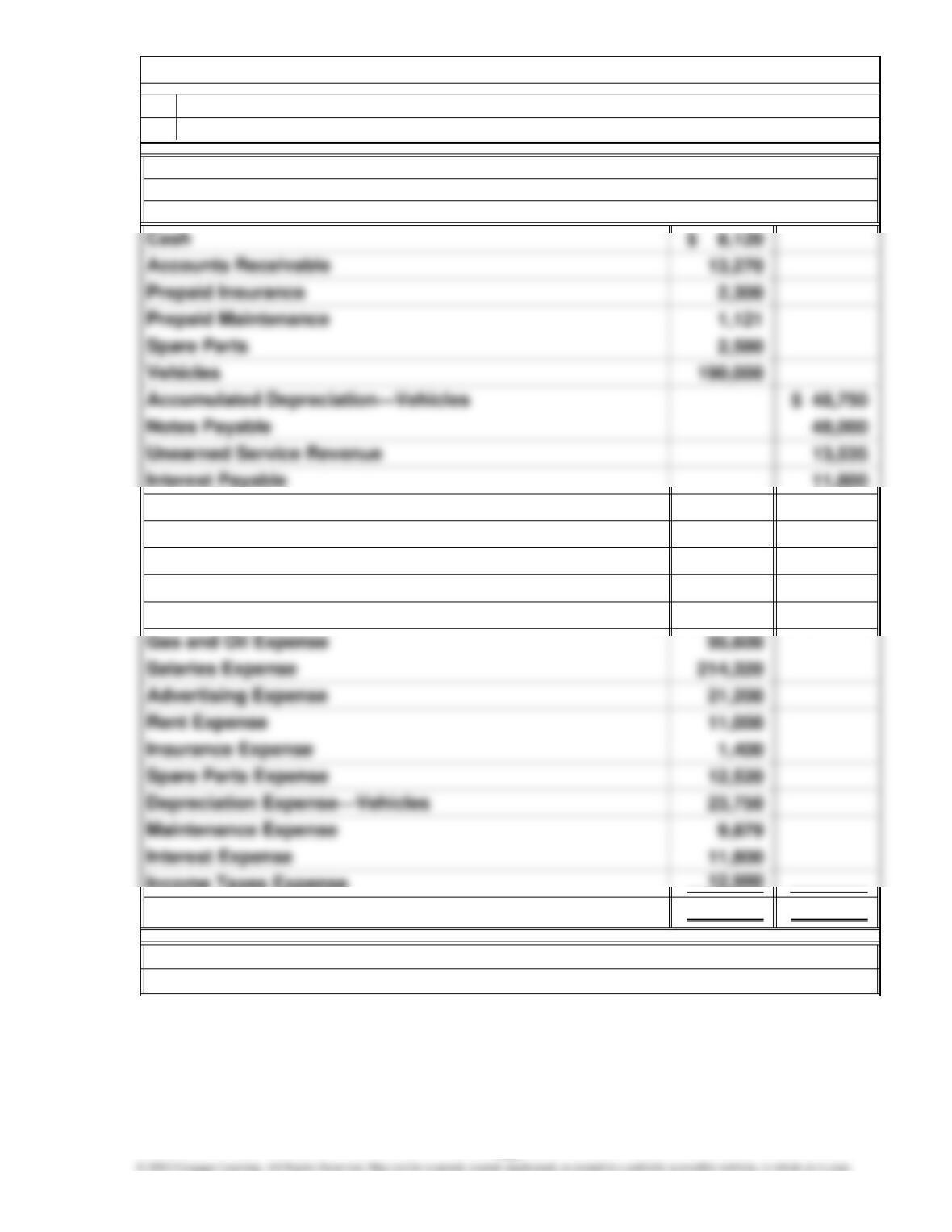
12,980
27,000
53,650
19,000
435,125
$650,840 $650,840
Dividends
Income Taxes Expense
Service Revenue
Note: Prepaid Rent does not appear on the adjusted trial balance because it now has
a zero balance.
4. Adjusted trial balance, income statement, statement of retained earnings,
Chapter 3, P 10. (Continued)
Income Taxes Payable
and balance sheet prepared
June 30, 2011
Ray Heating & Cooling, Inc.
Adjusted Trial Balance
Common Stock
Retained Earnings
153
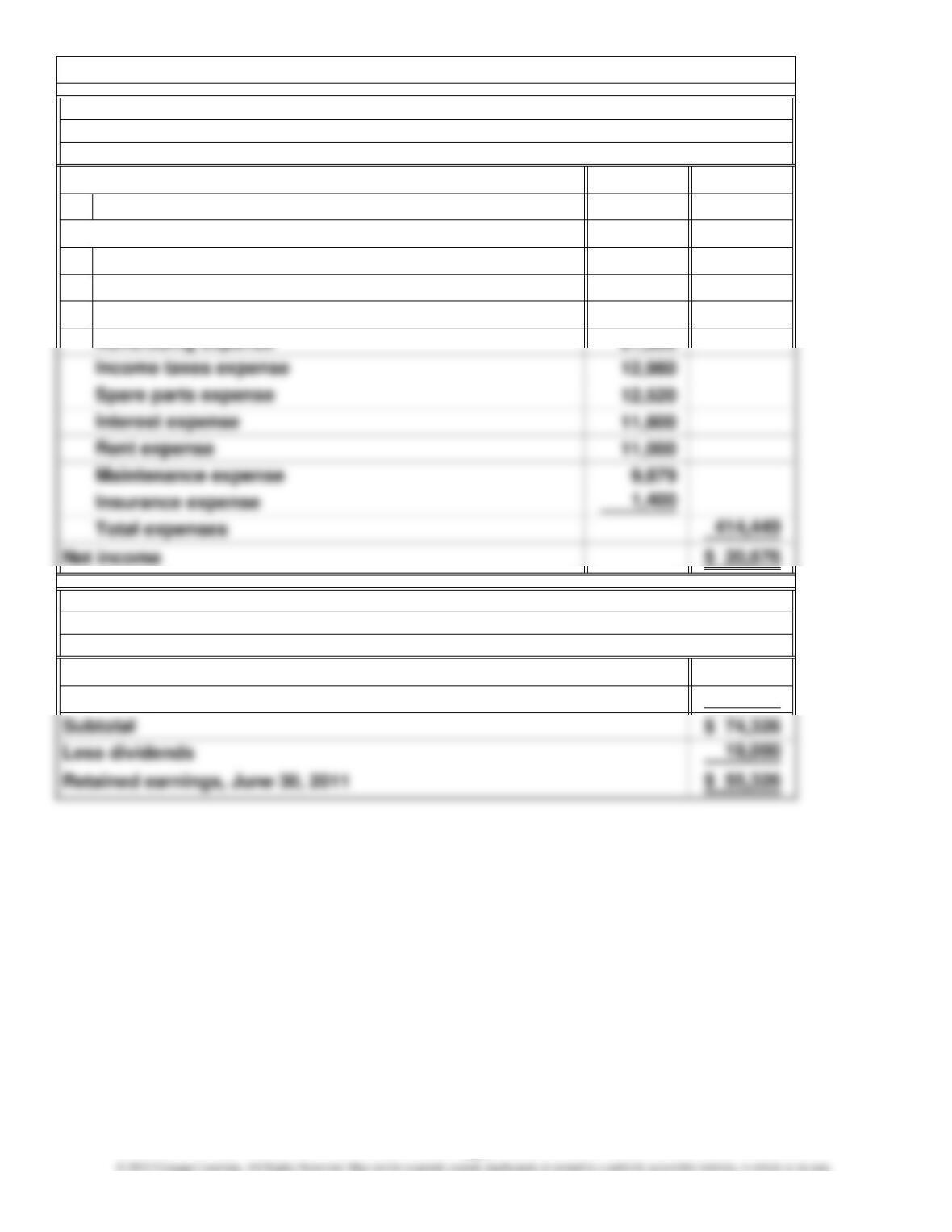
$435,125
$214,320
95,600
23,750
$ 53,650
20,676
Ray Heating & Cooling, Inc.
Net income
For the Year Ended June 30, 2011
Retained earnings, June 30, 2010
Revenue
Expenses
Salaries expense
Service revenue
Gas and oil expense
Depreciation expense—vehicles
Ray Heating & Cooling, Inc.
Income Statement
For the Year Ended June 30, 2011
Advertising expense
Statement of Retained Earnings
Chapter 3, P 10. (Continued)
154
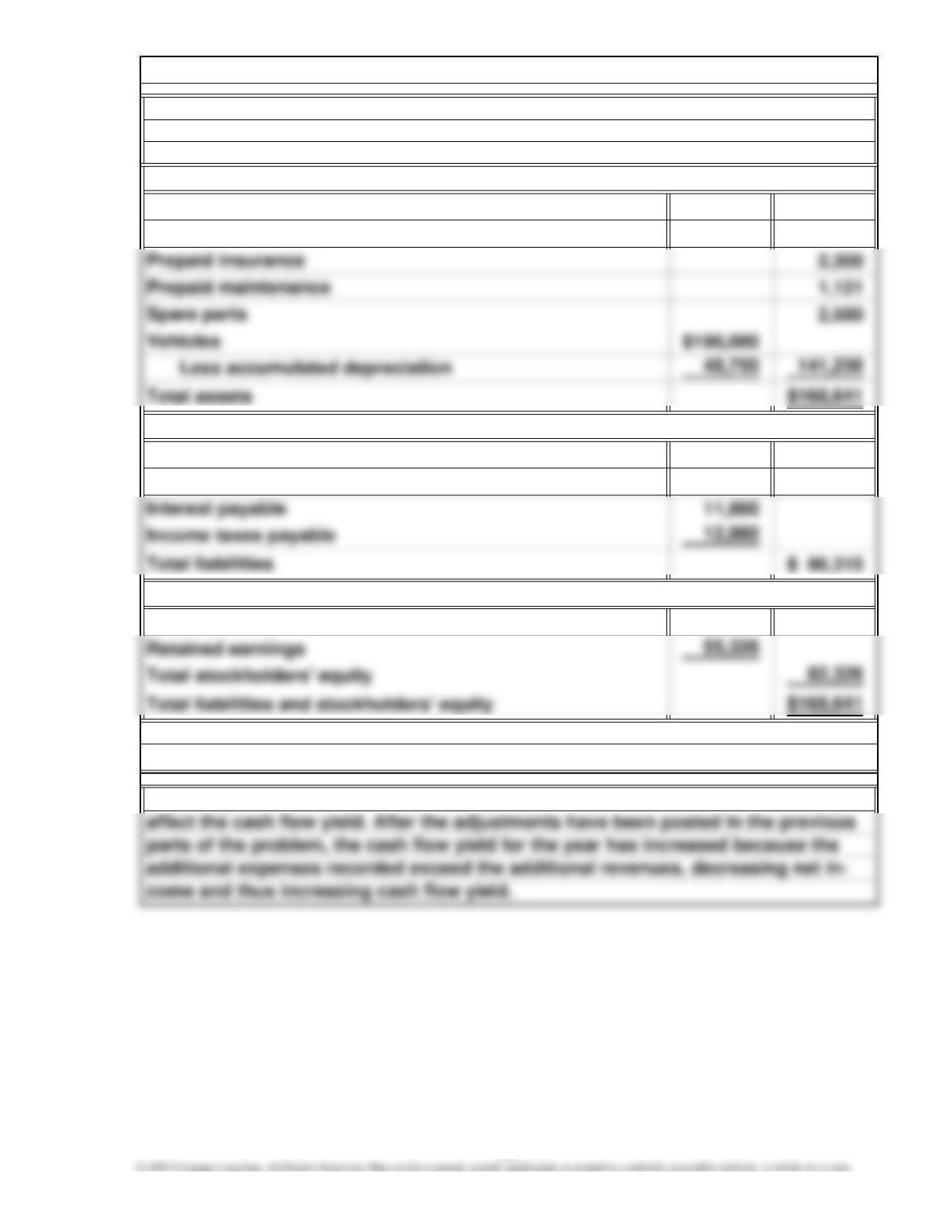
$ 8,120
13,270
$ 48,000
13,535
$ 27,000
Accounts receivable
Liabilities
Notes payable
Common stock
Unearned service revenue
Adjusting entries affect net income on the income statement, and therefore they
5. User Insight: The effect of adjustments discussed
Chapter 3, P 10. (Continued)
Ray Heating & Cooling, Inc.
June 30, 2011
Balance Sheet
Assets
Stockholders’ Equity
Cash
155
a.
Chapter 3, C 3.
Deferred production costs result from expenditures for scenery, costumes, and
stage properties that are specifically related to future productions. These costs are
recorded are recorded as assets in the year in which the expenditures are made and
should be expensed through an adjusting entry in the year in which the production
America Online (AOL) recognized advertising as an asset. However, advertising
Chapter 3, C 1.
Lucent Technologies recognized revenue. However, collectibility was not rea-
According to the concepts of accrual accounting and the matching rule, the ac-
countant must estimate and record (accrue) the expenses associated with a sale
sonably assured. Therefore, Lucent Technologies violated the matching rule.
Chapter 3, C 2.
even though cash may not be paid out until future years. This procedure enables
management to tell whether a company is earning an income and to make informed
156
Cash
4. Matching rule discussed
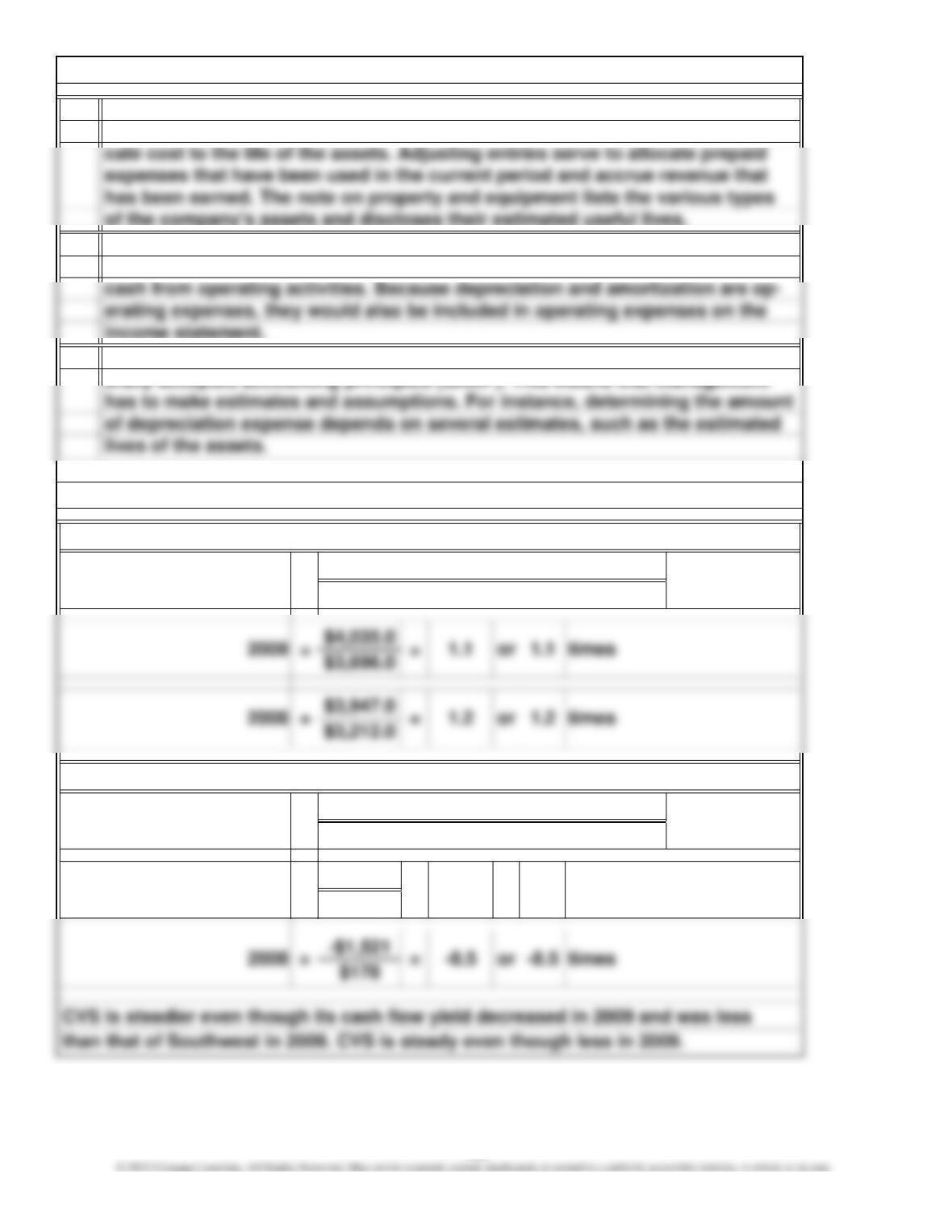
3. T accounts set up to record the amount expensed (in millions)
The matching rule attempts to allocate the costs of films and television programs
to the accounting periods in which the revenues associated with the costs are rec-
Chapter 3, C 4.
1. Film and television costs defined
Film and Television Costs
2. T accounts set up to record the amount spent (in millions)
Film and television costs consist of the cost of producing films and television pro-
Film and Television Expense
(amortization)
Film and Television Costs
1.
2.
3.
$985
$99
Chapter 3, C 6.
Southwest (dollars in millions):
Cash Flow Yield =
Depreciation and amortization expense appears on the CVS statement of cash
flows in the lower portion of the statement where net income is reconciled to
CVS (dollars in millions):
9.9
9.9
All current assets except cash can be affected by adjusting entries. Similarly,
long-term assets like property and equipment can require adjustments to allo-
Chapter 3, C 5.
CVS states that its financial statements are prepared in accordance with gen-
Cash Flow Yield =
2009 times
Net Income
=or=
Cash Flows from Operating Activities
Cash Flows from Operating Activities
Net Income
158
may receive an incorrect view of the company’s progress and pay too high a price
This question raises the issue of whether it would be unethical not to follow good
accounting practice. In answering this question, one must recognize who benefits
and who is harmed when good practices are not followed. If management’s recom-
mendation is accepted, earnings will be overstated in 2011. Perhaps this overstate-
Students may suggest an alternative method: immediately recording the cash re-
ceived as revenue, but recording the estimated cost as an expense through an ad-
ment will hurt no one. But the likelihood is that various people with stakes in the
company will be hurt. For example, stockholders and creditors, such as banks,
It is not appropriate to record the cash received for the service contracts as reve-
nues in the current year because policy coverage does not begin until the second
year of ownership. This would overstate net income in the first year when cash is
received. The expenses associated with these receipts will not be incurred for one
Chapter 3, C 7.
year or more from the date of receipt. This would cause the net income to be under-
justing entry. This method does not work as well because the service is provided
in the years in which the service contract applies, not in the year in which the cash
stated in the two years the policy actually covered—years 2 and 3 of ownership. To
159
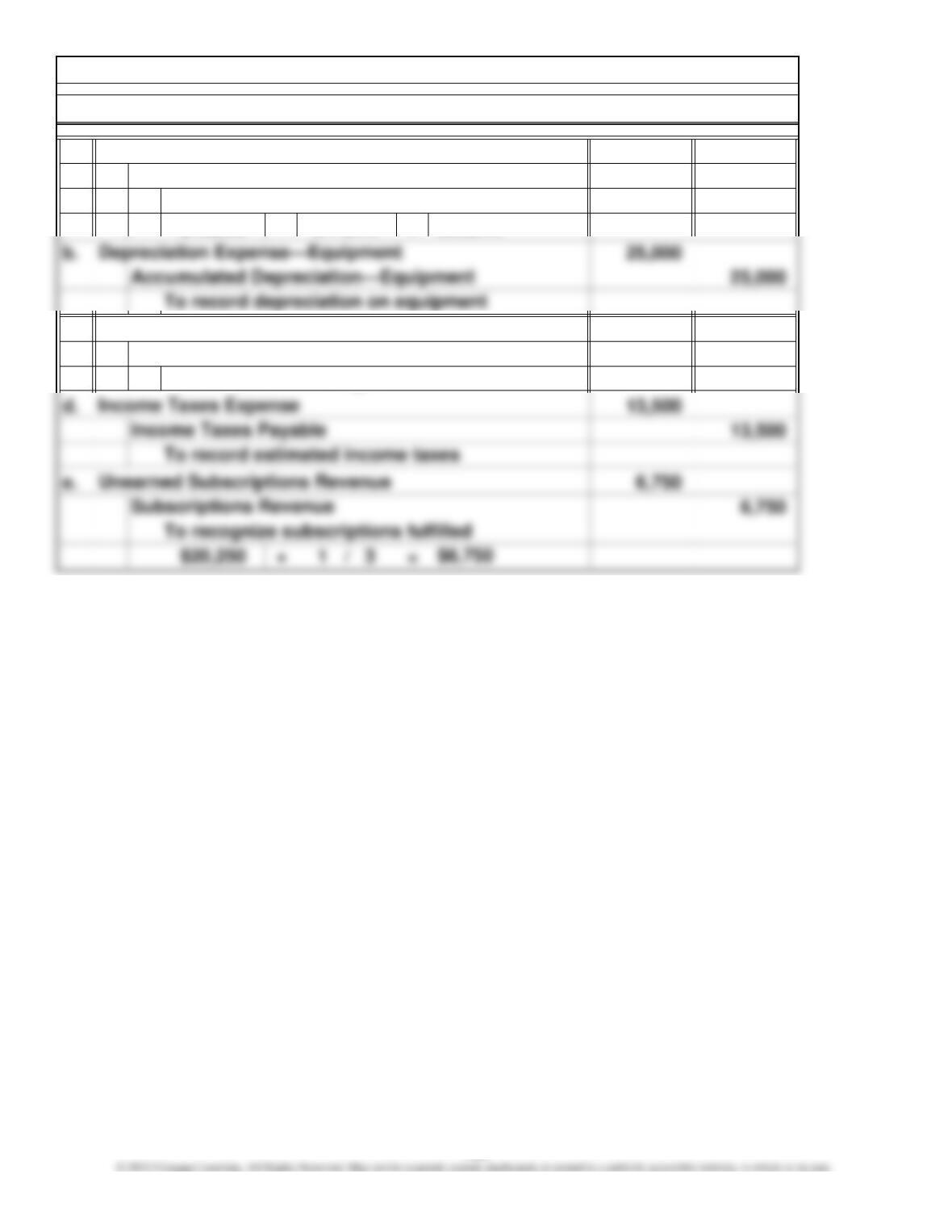
a. 22,500
22,500
$40,000 – =
c. 11,750
11,750
$17,500 $22,500
To record supplies used
Printing Supplies
Printing Supplies Expense
Wages Expense
Wages Payable
Chapter 3, C 8.
1. Adjusting entries prepared
To record accrued wages
160
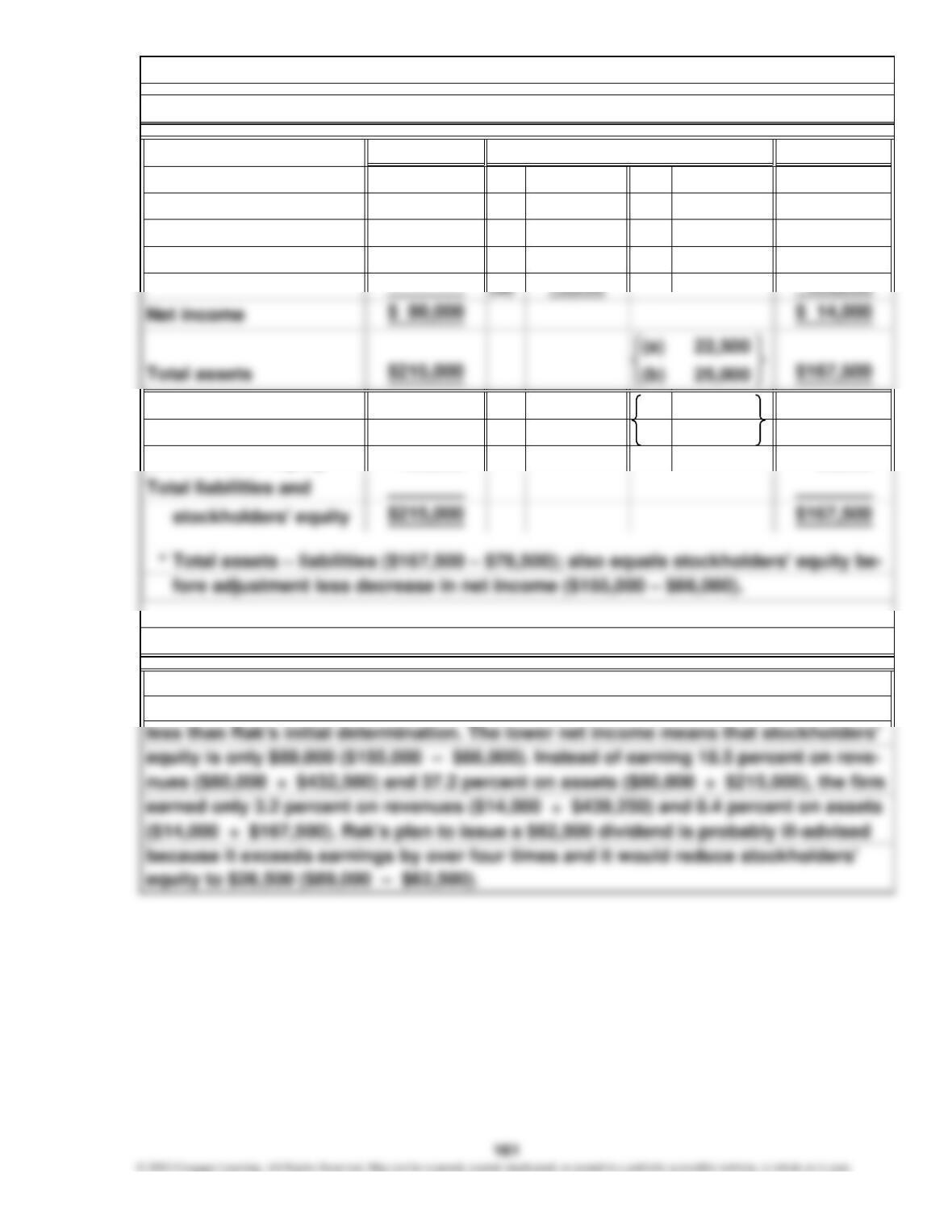
Before After
$432,500 (e) 6,750 $439,250
352,500 (a) 22,500
(b) 25,000
(c) 11,750
(c) 11,750
$ 60,000 (e) 6,750 (d) 13,500 $ 78,500
155,000 89,000
2. Financial statement amounts recast
3. Results discussed
Expenses
The performance of the company is much less favorable than Rak’s original figures
suggest. As a result of the adjustments, net income is $66,000 ($80,000 – $14,000)
Liabilities
Stockholders’ equity
Chapter 3, C 8. (Continued)
Adjustments
Revenues
*