Wild and Shaw, Fundamental Accounting Principles 25e Solutions Manual: Chapter 3
Serial Problem (Continued)
Part 7
<Note: The general ledger is displayed at the end>
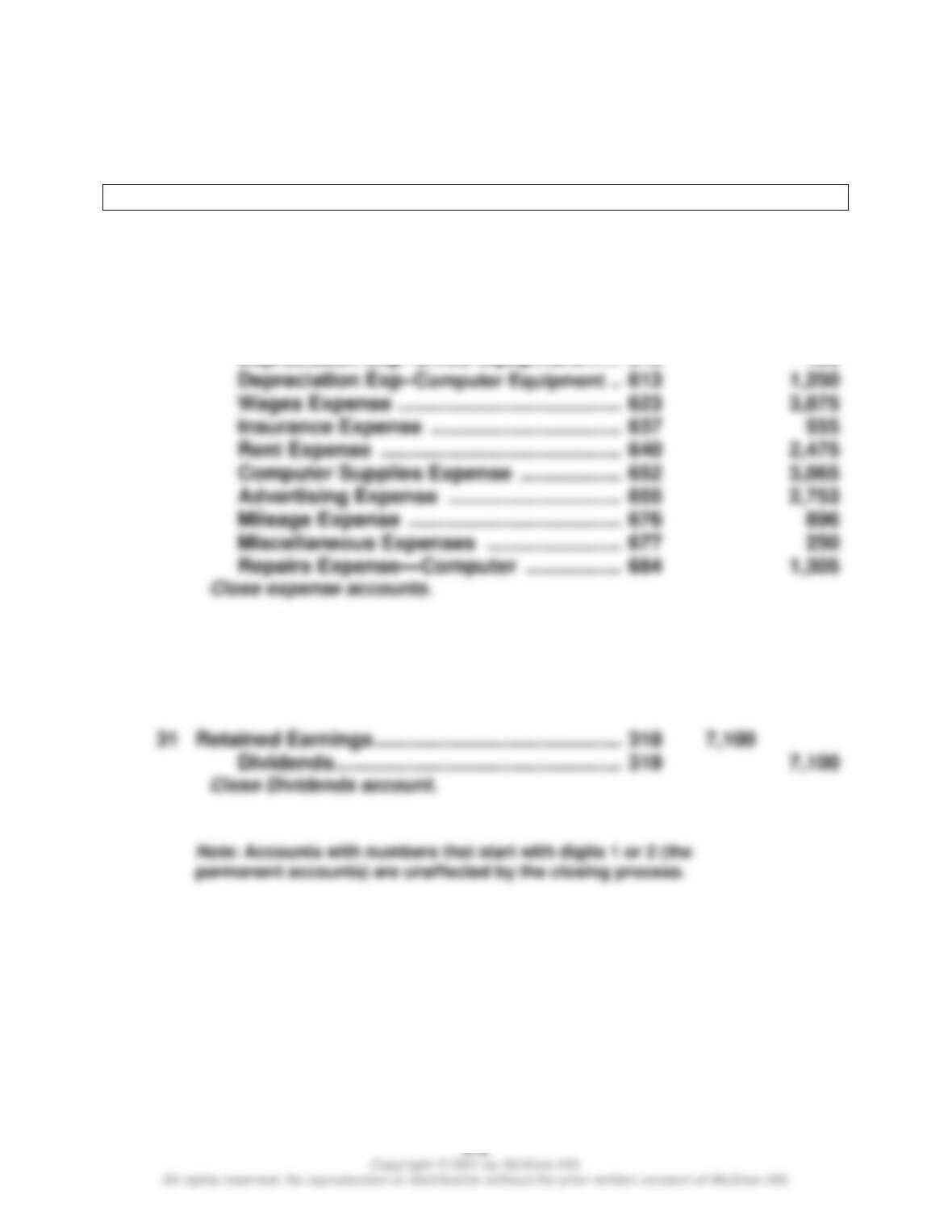
Closing entries
Dec. 31 Computer Services Revenue …………………….. 403 31,284
Income Summary ……………………………….. 901 31,284
Close revenue account.
31 Income Summary ……………………………………… 901 16,824
Depreciation Exp–Office Equipment ……. 612 400
31 Income Summary ……………………………………… 901 14,460
Retained Earnings ……………………………… 318 14,460
Close Income Summary account.
Wild and Shaw, Fundamental Accounting Principles 25e Solutions Manual: Chapter 3
280
Serial Problem (Continued)
Part 8
BUSINESS SOLUTIONS
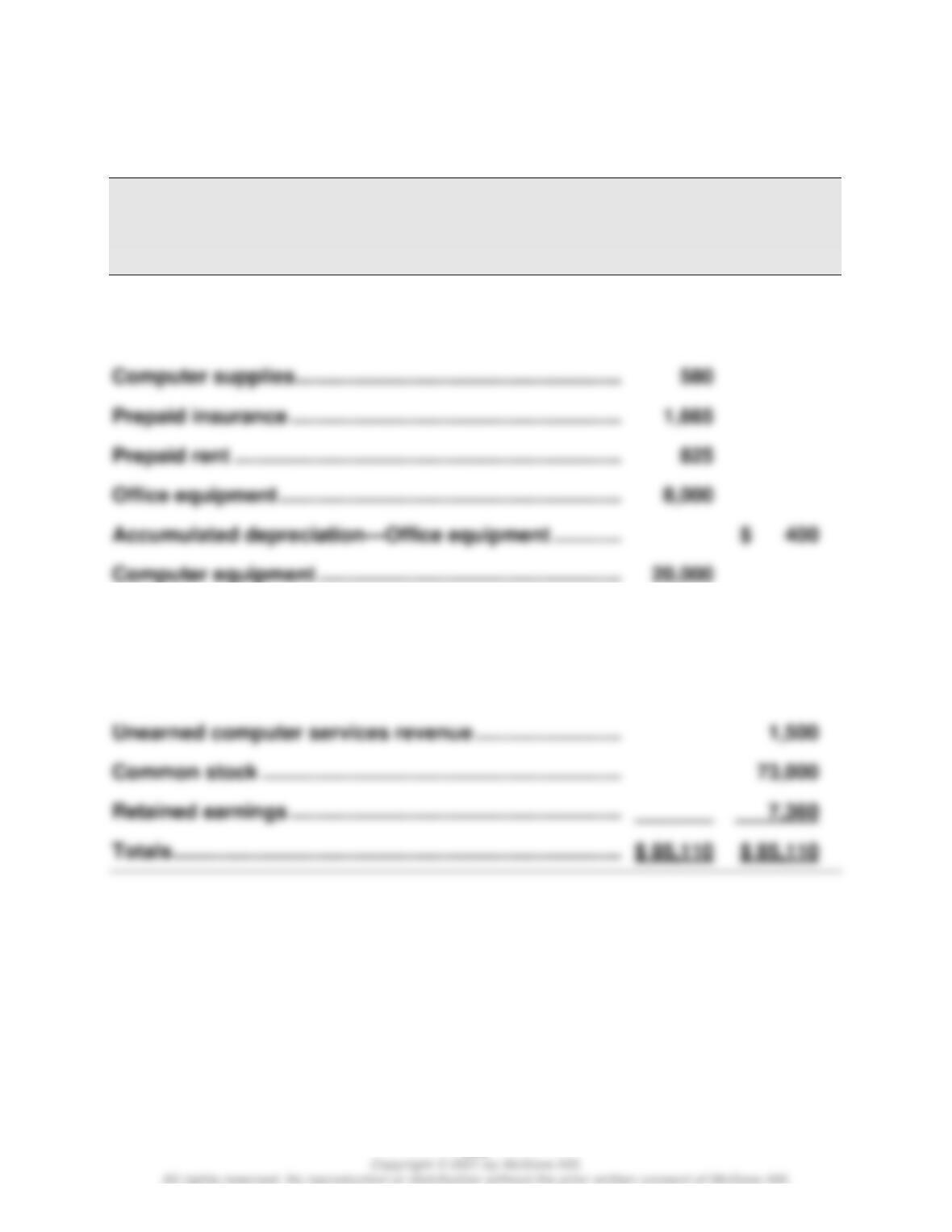
Post-Closing Trial Balance
December 31, 2021
Debit Credit
Cash ………………………………………………………………………. $ 48,372
Accounts receivable ………………………………………………. 5,668
Accumulated depreciation—Computer equipment ….. 1,250
Accounts payable…………………………………………………… 1,100
Wages payable ………………………………………………………. 500
Wild and Shaw, Fundamental Accounting Principles 25e Solutions Manual: Chapter 3
281
Serial Problem (Continued)
[Instructor Note: Ledger includes all entries from prior three months. The Working
Papers shorten the solution by showing account balances as of November 30.]
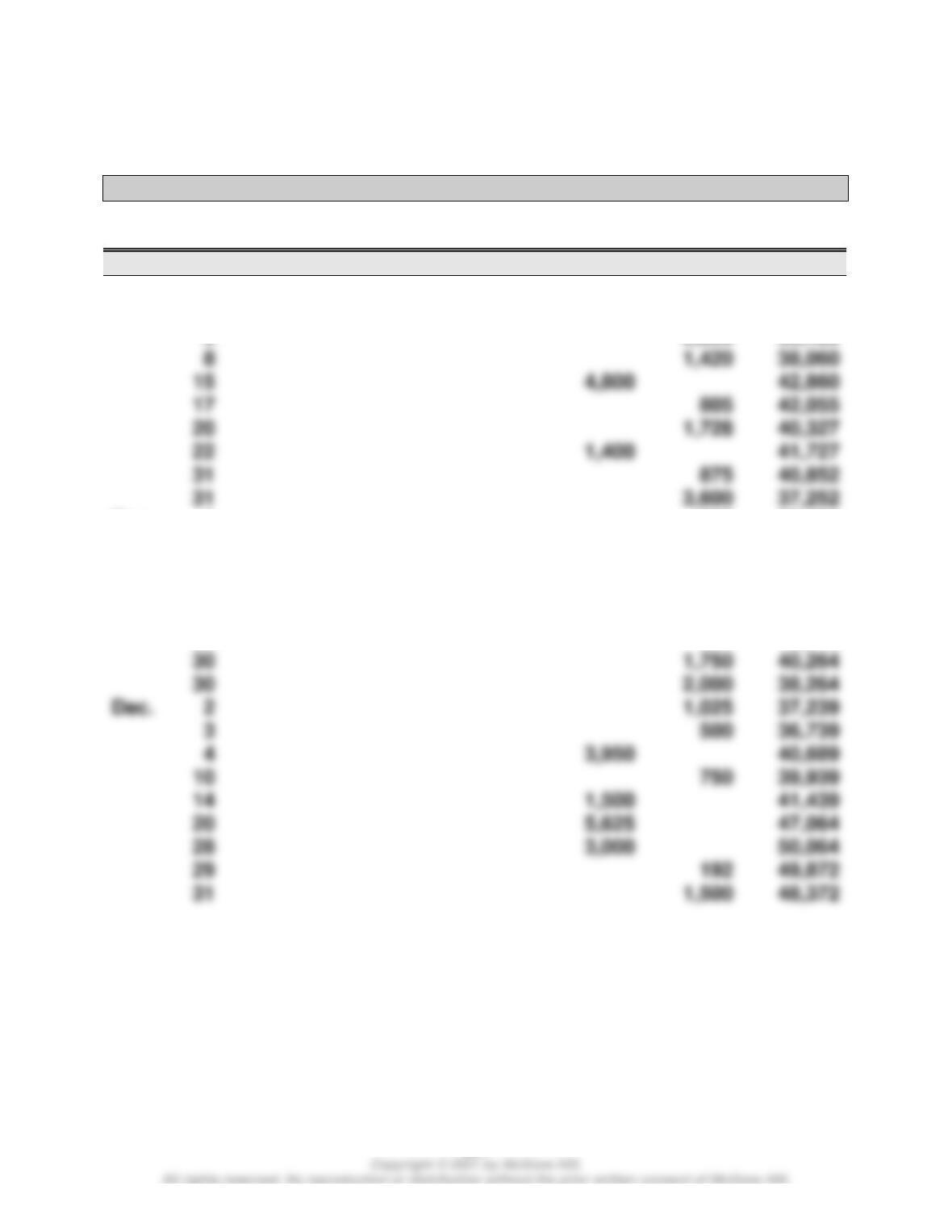
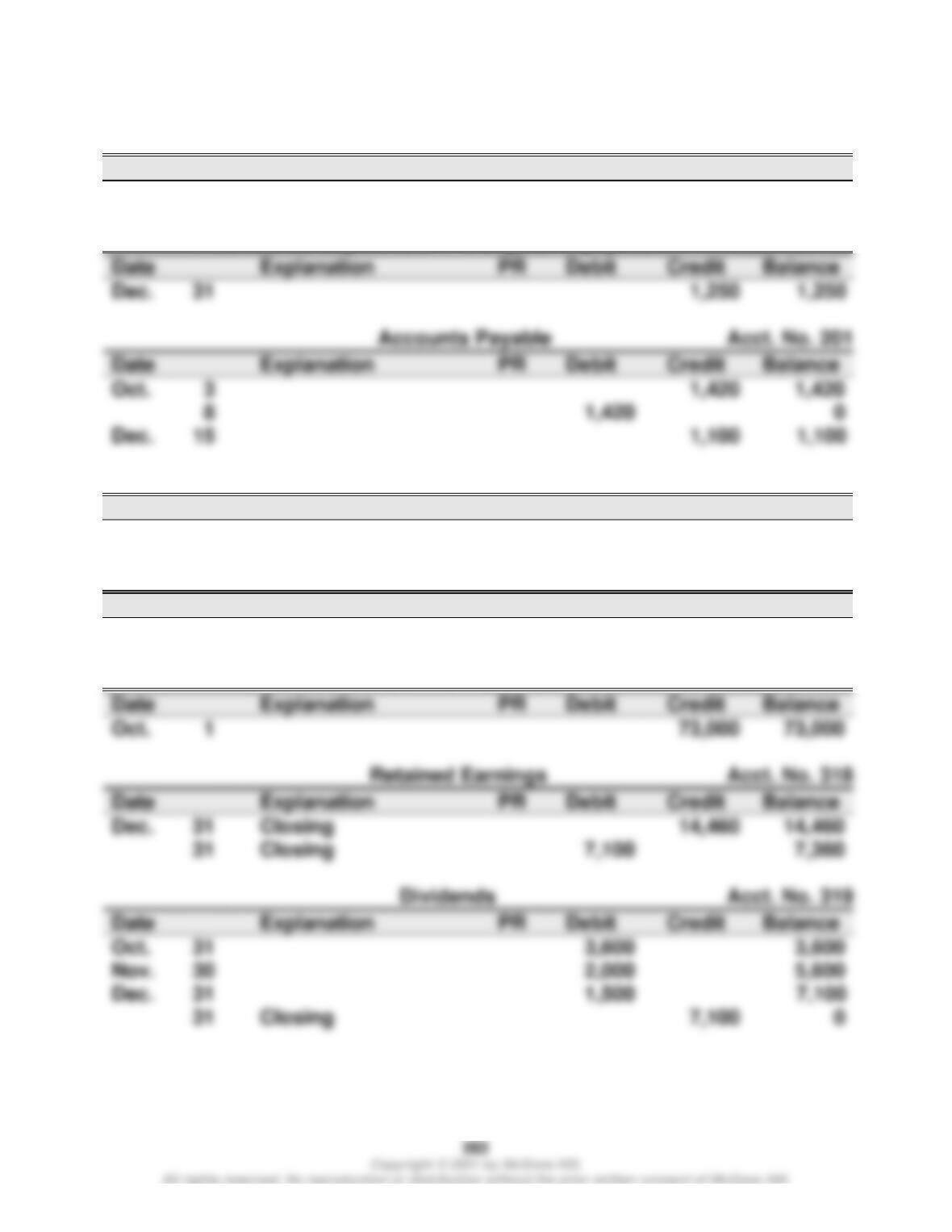
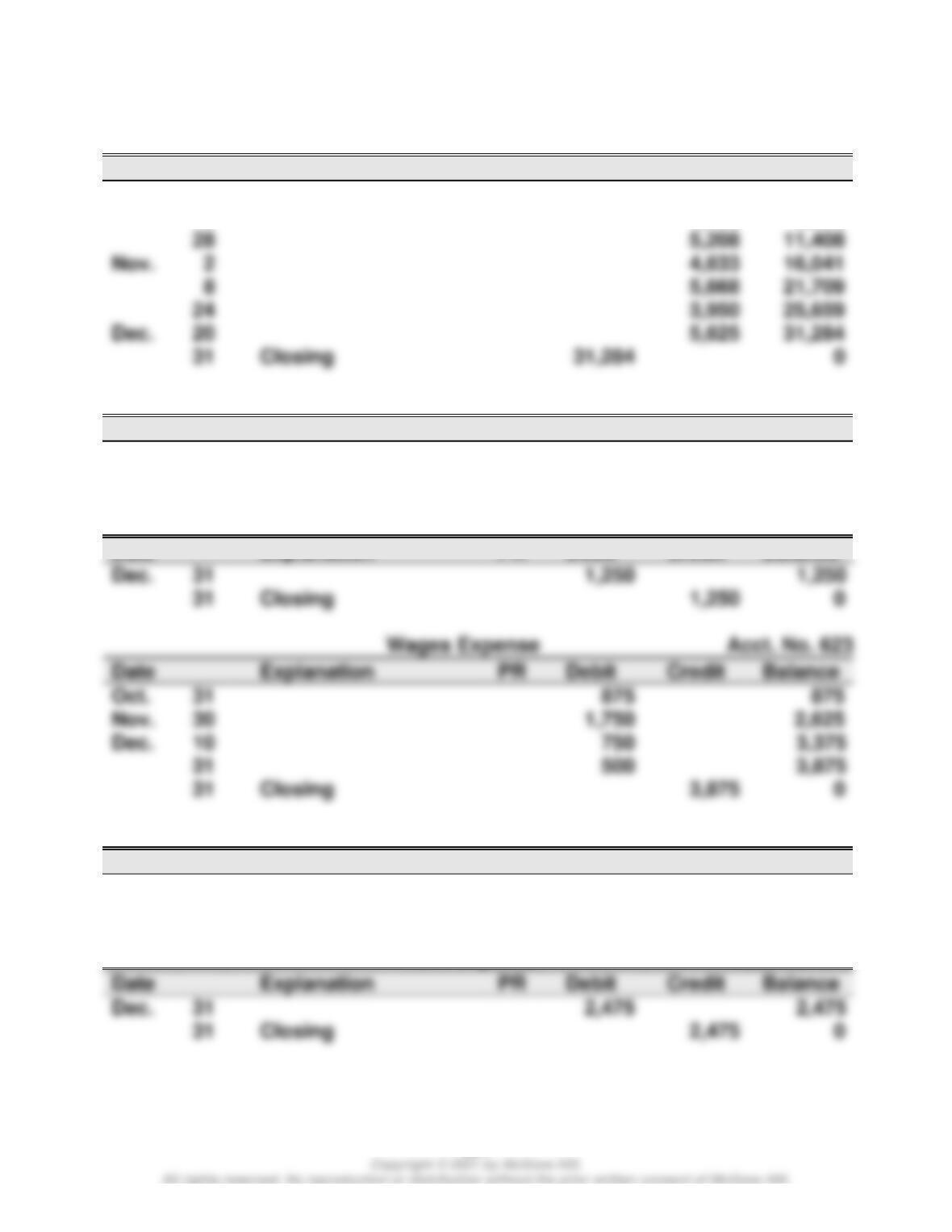
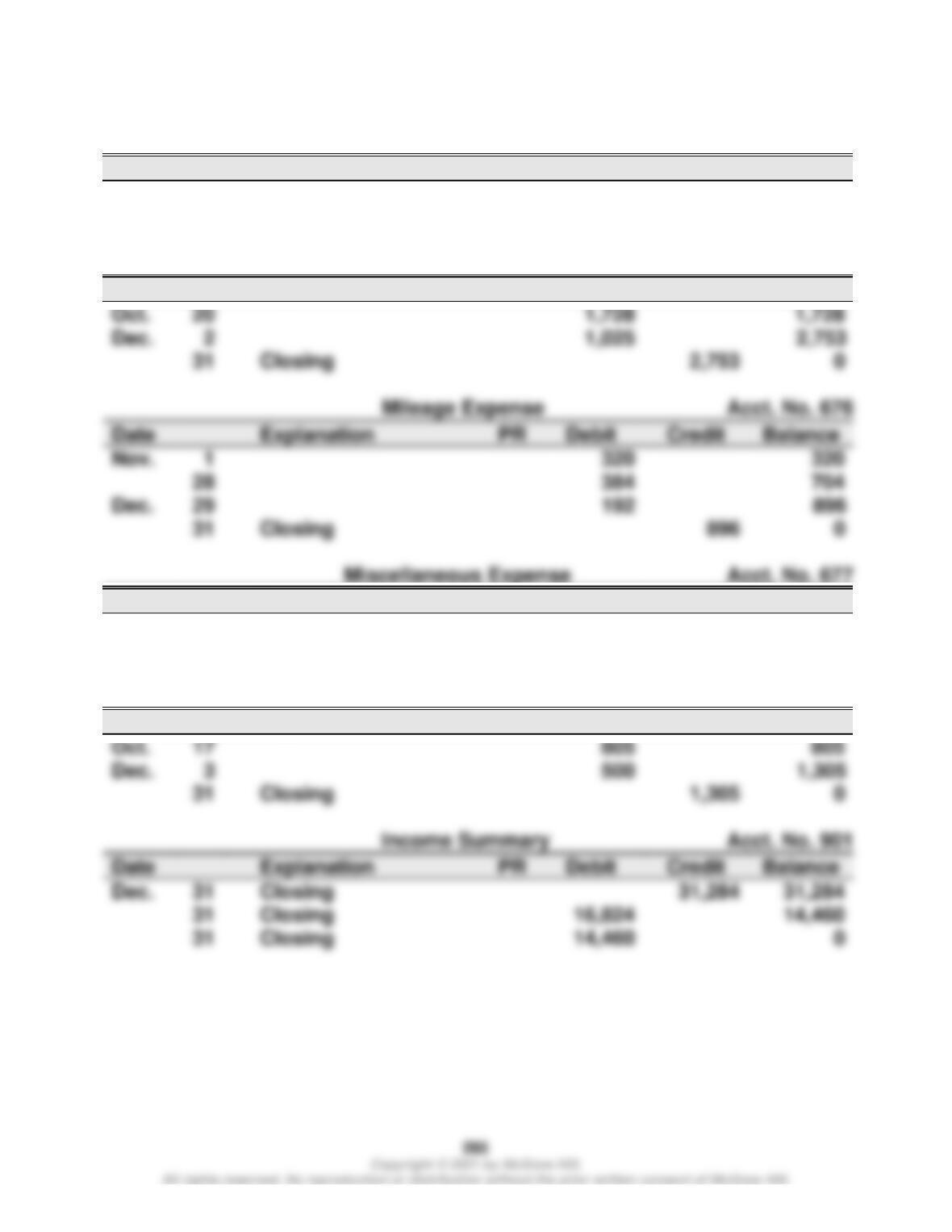
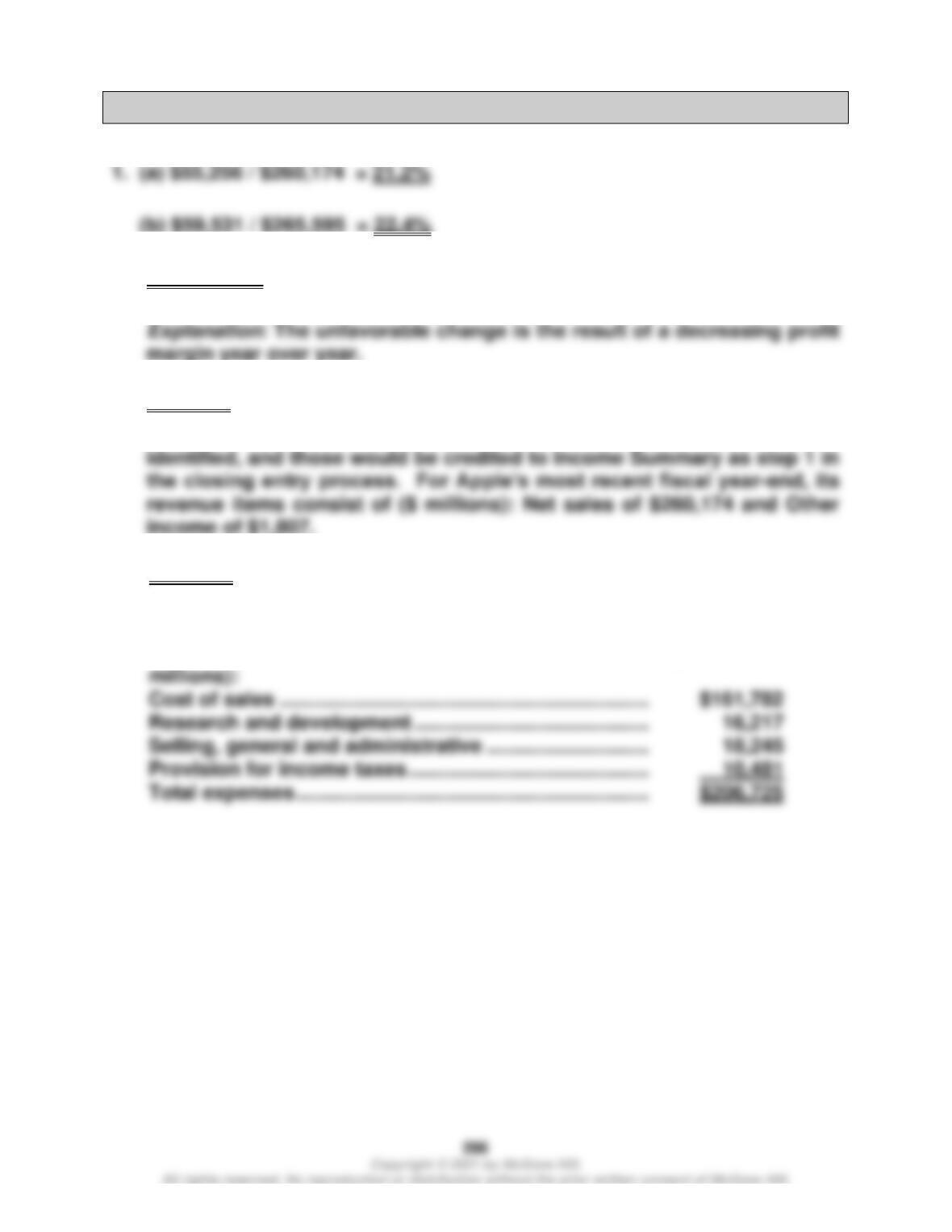
General Ledger
Cash
Acct. No. 101
Date
Explanation
PR
Debit
Credit
Balance
Oct.
1
45,000
45,000
2
3,300
41,700
5
2,220
39,480
8
1,420
38,060
15
4,800
42,860
17
805
42,055
20
1,728
40,327
22
1,400
41,727
31
875
40,852
31
3,600
37,252
Nov.
1
320
36,932
2
4,633
41,565
5
1,125
40,440
18
2,208
42,648
22
250
42,398
28
384
42,014
30
1,750
40,264
30
2,000
38,264
Dec.
2
1,025
37,239
3
500
36,739
4
3,950
40,689
10
750
39,939
14
1,500
41,439
20
5,625
47,064
28
3,000
50,064
29
192
49,872
Wild and Shaw, Fundamental Accounting Principles 25e Solutions Manual: Chapter 3
282
Serial Problem (Continued)
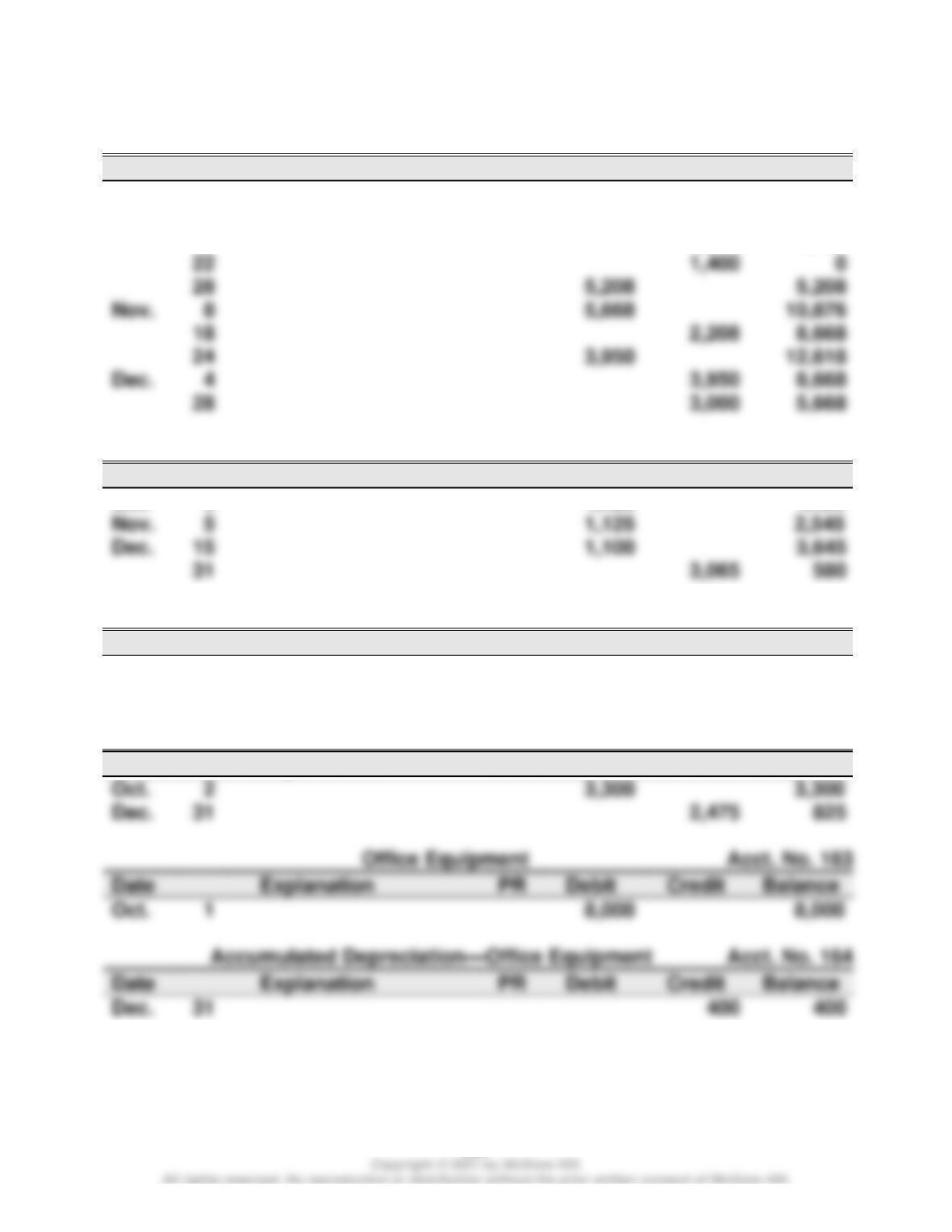
Accounts Receivable
Acct. No. 106
Date
Explanation
PR
Debit
Credit
Balance
Oct.
6
4,800
4,800
12
1,400
6,200
15
4,800
1,400
22
1,400
28
5,208
5,208
Nov.
8
5,668
18
2,208
8,668
24
3,950
Dec.
4
3,950
8,668
28
3,000
5,668
Computer Supplies
Acct. No. 126
Date
Explanation
PR
Debit
Credit
Balance
Oct.
3
1,420
1,420
Nov.
5
1,125
2,545
Dec.
15
1,100
3,645
31
3,065
Prepaid Insurance
Acct. No. 128
Date
Explanation
PR
Debit
Credit
Balance
Oct.
5
2,220
2,220
Dec.
31
555
1,665
Prepaid Rent
Acct. No. 131
Date
Explanation
PR
Debit
Credit
Balance
Oct.
2
3,300
3,300
Dec.
31
2,475
Acct. No. 163
Date
Explanation
PR
Debit
Credit
Balance
Oct.
1
8,000
8,000
Acct. No. 164
Date
Explanation
PR
Debit
Credit
Balance
Dec.
31
400
Wild and Shaw, Fundamental Accounting Principles 25e Solutions Manual: Chapter 3
Serial Problem (Continued)
Computer Equipment
Acct. No. 167
Date
Explanation
PR
Debit
Credit
Balance
Oct.
1
20,000
20,000
Accumulated Depreciation—Computer Equipment
Acct. No. 168
Date
Explanation
PR
Debit
Credit
Balance
Dec.
31
1,250
1,250
Acct. No. 201
Date
Explanation
PR
Debit
Credit
Balance
Oct.
1,420
1,420
1,420
Dec.
15
1,100
1,100
Wages Payable
Acct. No. 210
Date
Explanation
PR
Debit
Credit
Balance
Dec.
31
500
500
Unearned Computer Services Revenue
Acct. No. 236
Date
Explanation
PR
Debit
Credit
Balance
Dec.
14
1,500
1,500
Common Stock
Acct. No. 307
Date
Explanation
PR
Debit
Credit
Balance
Oct.
Acct. No. 318
Date
Explanation
PR
Debit
Credit
Balance
Dec.
Closing
31
Closing
7,100
Date
Explanation
PR
Debit
Credit
Balance
31
3,600
3,600
Nov.
30
2,000
5,600
Dec.
31
1,500
7,100
31
Closing
7,100
Wild and Shaw, Fundamental Accounting Principles 25e Solutions Manual: Chapter 3
284
Serial Problem (Continued)
Computer Services Revenue
Acct. No. 403
Date
Explanation
PR
Debit
Credit
Balance
Oct.
6
4,800
4,800
12
1,400
6,200
28
5,208
Nov.
2
4,633
8
5,668
24
3,950
Dec.
20
5,625
31
Closing
0
Depreciation Expense—Office Equipment
Acct. No. 612
Date
Explanation
PR
Debit
Credit
Balance
Dec.
31
400
400
31
Closing
400
0
Depreciation Expense—Computer Equipment
Acct. No. 613
Date
Explanation
PR
Debit
Credit
Balance
Dec.
31
1,250
31
Closing
1,250
0
Acct. No. 623
Date
Explanation
PR
Debit
Credit
Balance
Oct.
31
875
875
Nov.
30
1,750
2,625
Dec.
10
750
31
500
31
Closing
3,875
0
Insurance Expense
Acct. No. 637
Date
Explanation
PR
Debit
Credit
Balance
Dec.
31
555
555
31
Closing
555
0
Rent Expense
Acct. No. 640
Date
Explanation
PR
Debit
Credit
Balance
Dec.
31
2,475
31
Closing
2,475
0
Wild and Shaw, Fundamental Accounting Principles 25e Solutions Manual: Chapter 3
Serial Problem (Concluded)
Computer Supplies Expense
Acct. No. 652
Date
Explanation
PR
Debit
Credit
Balance
Dec.
31
3,065
3,065
31
Closing
3,065
0
Advertising Expense
Acct. No. 655
Date
Explanation
PR
Debit
Credit
Balance
20
1,728
1,728
Dec.
1,025
2,753
31
Closing
2,753
0
Acct. No. 676
Date
Explanation
PR
Debit
Credit
Balance
Nov.
320
320
28
384
704
Dec.
29
192
31
Closing
896
0
Acct. No. 677
Date
Explanation
PR
Debit
Credit
Balance
Nov.
22
250
250
Dec.
31
Closing
250
0
Repairs Expense—Computer
Acct. No. 684
Date
Explanation
PR
Debit
Credit
Balance
17
805
805
Dec.
500
1,305
31
Closing
1,305
0
Acct. No. 901
Date
Explanation
PR
Debit
Credit
Balance
Dec.
31
Closing
31
Closing
31
Closing
0
Wild and Shaw, Fundamental Accounting Principles 25e Solutions Manual: Chapter 3
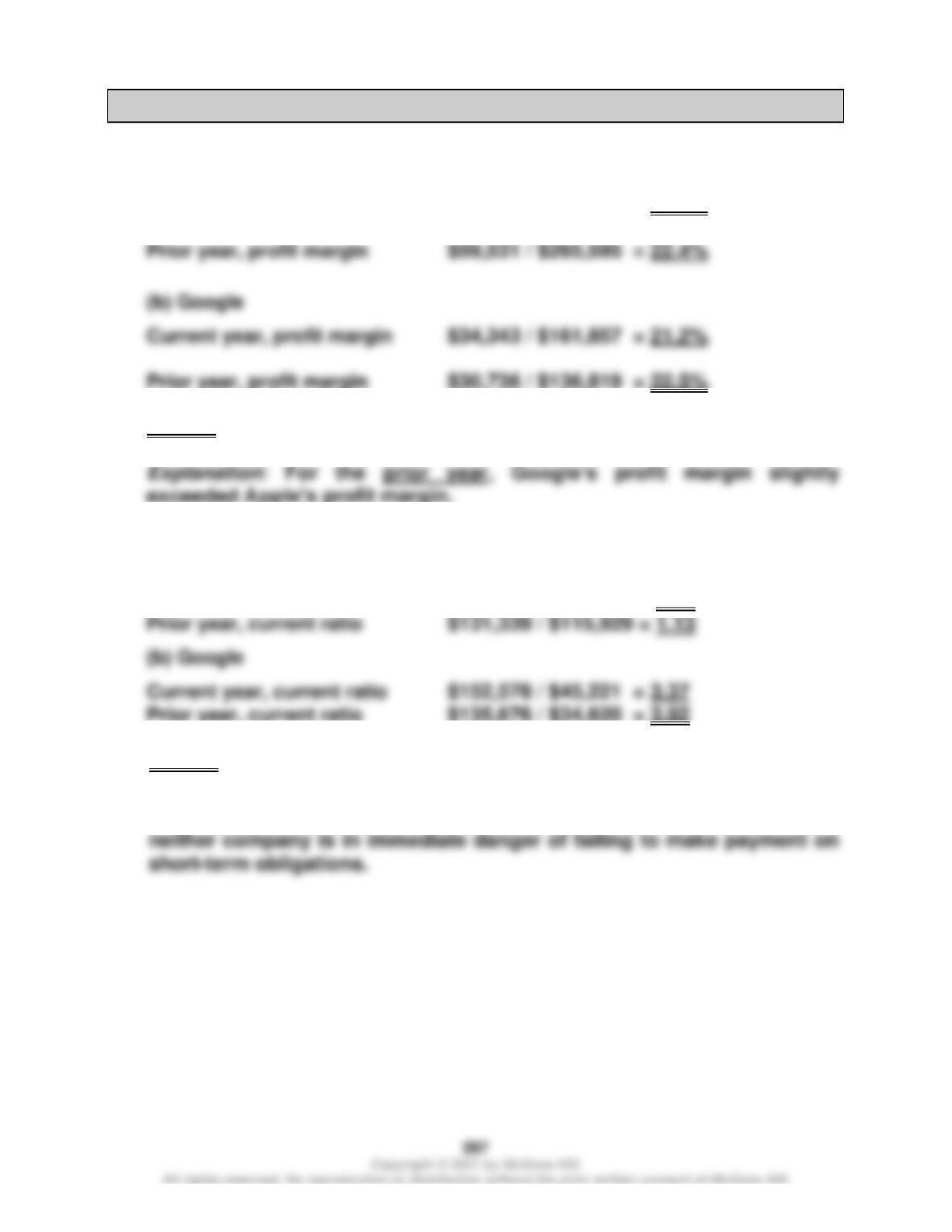
Company Analysis — AA 3-1 (20 minutes)
($ millions)
2. Unfavorable
3. $261,981
Explanation: The revenue items from its income statement must be
4. $206,725
Explanation: The total expenses that would be debited to Income
Summary as step 2 in the closing entry process must be computed.
Apple’s total expenses for the most recent fiscal year-end are (in
Wild and Shaw, Fundamental Accounting Principles 25e Solutions Manual: Chapter 3
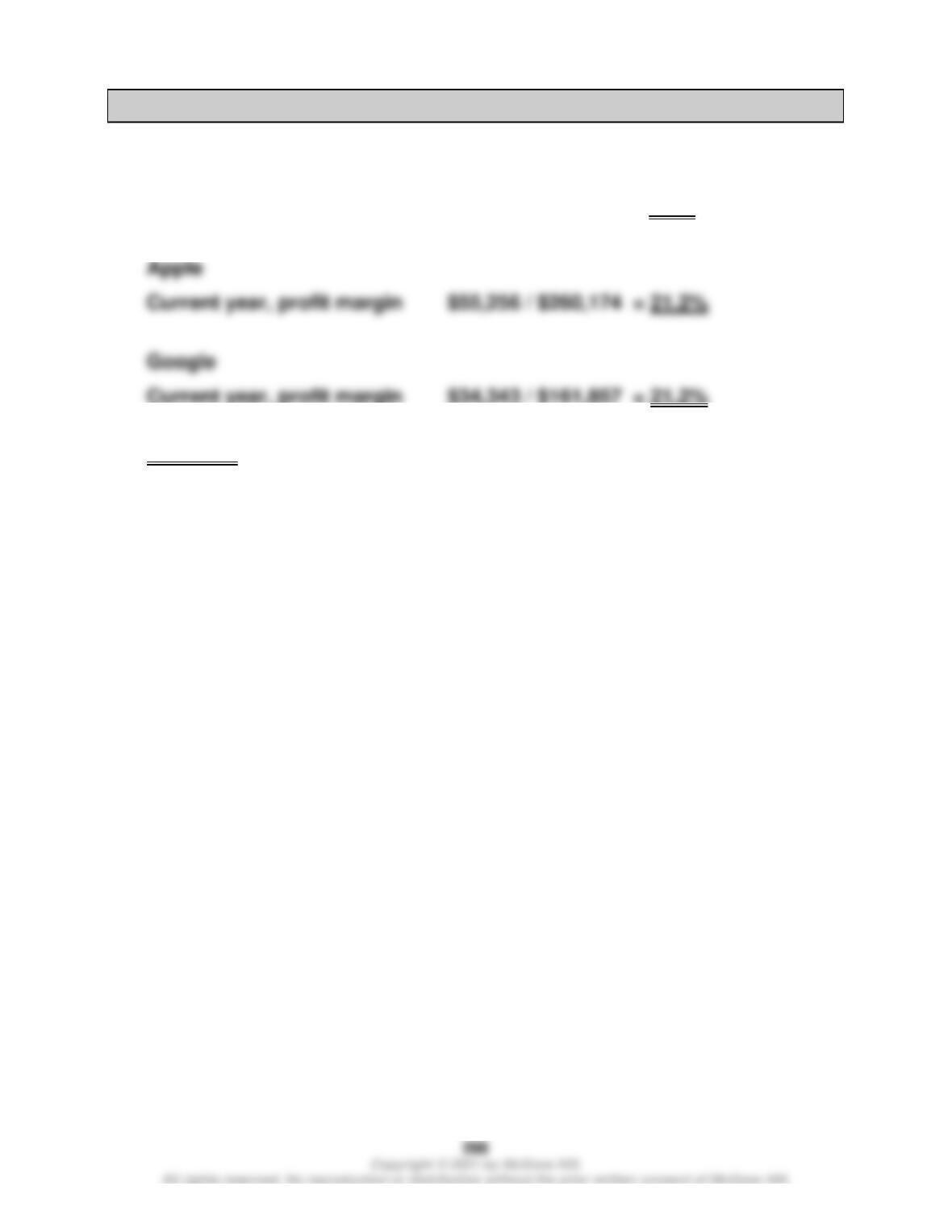
Comparative Analysis — AA 3-2 (25 minutes)
($ millions)
1. (a) Apple
Current year, profit margin $55,256 / $260,174 = 21.2%
2. Google
3. (a) Apple
Current year, current ratio $162,819 / $105,718 = 1.54
4. Google
Explanation: In the current year, Google has the higher current ratio,
suggesting a better ability to pay short-term obligations. Overall,
Wild and Shaw, Fundamental Accounting Principles 25e Solutions Manual: Chapter 3
Extended Analysis — AA 3-3 (20 minutes)
($ millions)
1. Samsung
Current year, profit margin $18,653 / $197,691 = 9.4%
2. Samsung
Wild and Shaw, Fundamental Accounting Principles 25e Solutions Manual: Chapter 3
DISCUSSION QUESTIONS
1. The cash basis of accounting reports revenues when cash is received while the
2. The accrual basis of accounting generally provides a better indication of
company performance and financial condition than does the cash basis. Also,
3. Businesses that have major seasonal variations in sales are most likely to select
the natural business year as the fiscal year.
5. The Accumulated Depreciation contra asset account is used for depreciation. It
6. Accrued revenue is revenue that is earned but is not yet received in cash (and/or
other assets) and the customer has not been billed prior to the end of the period.
7. Unearned revenue is reported as a liability—usually a current liability.
8. The four-step closing entry process is: (i) close the revenue (and gain) accounts to
the Income Summary account, (ii) close the expense (and loss) accounts to the
9. Closing entries affect temporary accounts: revenues, expenses, dividends, and
income summary. Specifically, closing entries at the end of an accounting period
10. (i) Closing entries prepare the temporary accounts—revenue and expense (and gain
and loss) accounts and dividends—for the next period by giving them zero balances.
Wild and Shaw, Fundamental Accounting Principles 25e Solutions Manual: Chapter 3
11. The Income Summary account is used to summarize the period’s revenues and
expenses. As a result, it temporarily has a balance equal to the net income (or net
12. Yes, an error would have occurred because a post-closing trial balance should only
13. A company’s operating cycle is the normal time between paying cash for
14. Assets on a typical classified balance sheet include current assets and noncurrent
assets—where noncurrent assets usually include long-term investments, plant
15. Plant assets (also called property, plant and equipment or long-lived assets) are
tangible long-lived assets used to produce or sell goods or services.
16.A If prepaid expenses are initially recorded with debits to expense accounts, then
the prepaid expenses asset accounts are debited in the adjusting entries.
17.C Reversing entries simplify subsequent entries for accrued expenses and accrued
18.AC The following reversing entry could be made as of the first day of the next
accounting period, after the post-closing trial balance is completed and financial
Wild and Shaw, Fundamental Accounting Principles 25e Solutions Manual: Chapter 3
291
Ethics Challenge — BTN 3-1
1. GAAP requires that annual deprecation be accumulated in a contra–
asset account, called Accumulated Depreciation. While property, plant,
2. One strength of Smith’s method would be the ease of preparing the
balance sheet. The property, plant, and equipment balance in the
3. While both approaches would lead to the same total assets on the
balance sheet, GAAP requires Boland’s approach. As a professional,
Wild and Shaw, Fundamental Accounting Principles 25e Solutions Manual: Chapter 3
292
Communicating in Practice — BTN 3-2
This communication activity has no set solution. A class discussion of the
Teamwork in Action — BTN 3-3
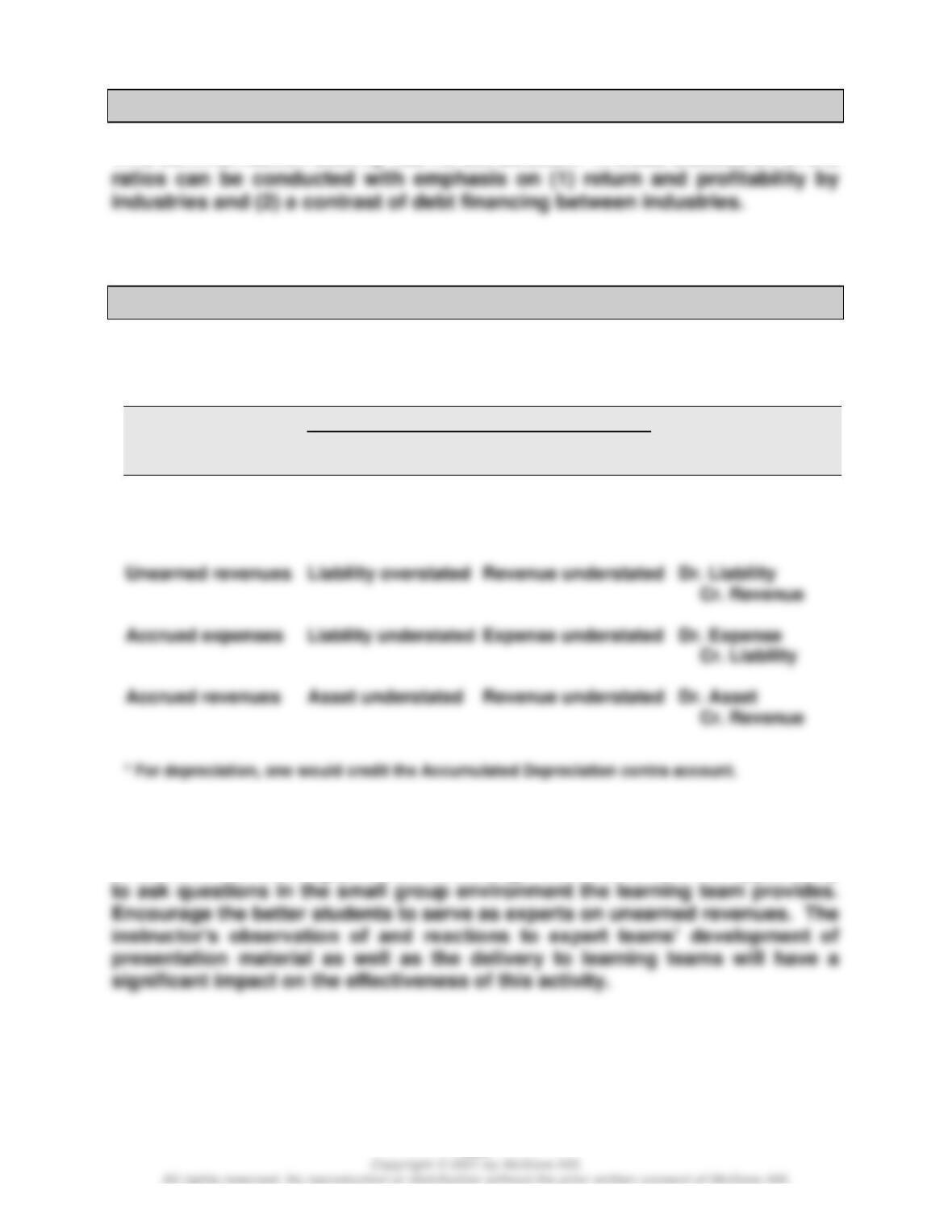
Note that there is no specific solution to this activity. Still, the presentation
of each expert team should reflect the following summary points.
Before Adjusting
Balance Sheet Income Statement
Type Account Account Adjusting Entry
Prepaid expenses Asset overstated Expense understated Dr. Expense
Cr. Asset*
Some implementation notes: This activity allows all students to be actively
involved in the learning process. Encourage students to take the opportunity
Wild and Shaw, Fundamental Accounting Principles 25e Solutions Manual: Chapter 3
Entrepreneurial Decision — BTN 3-4
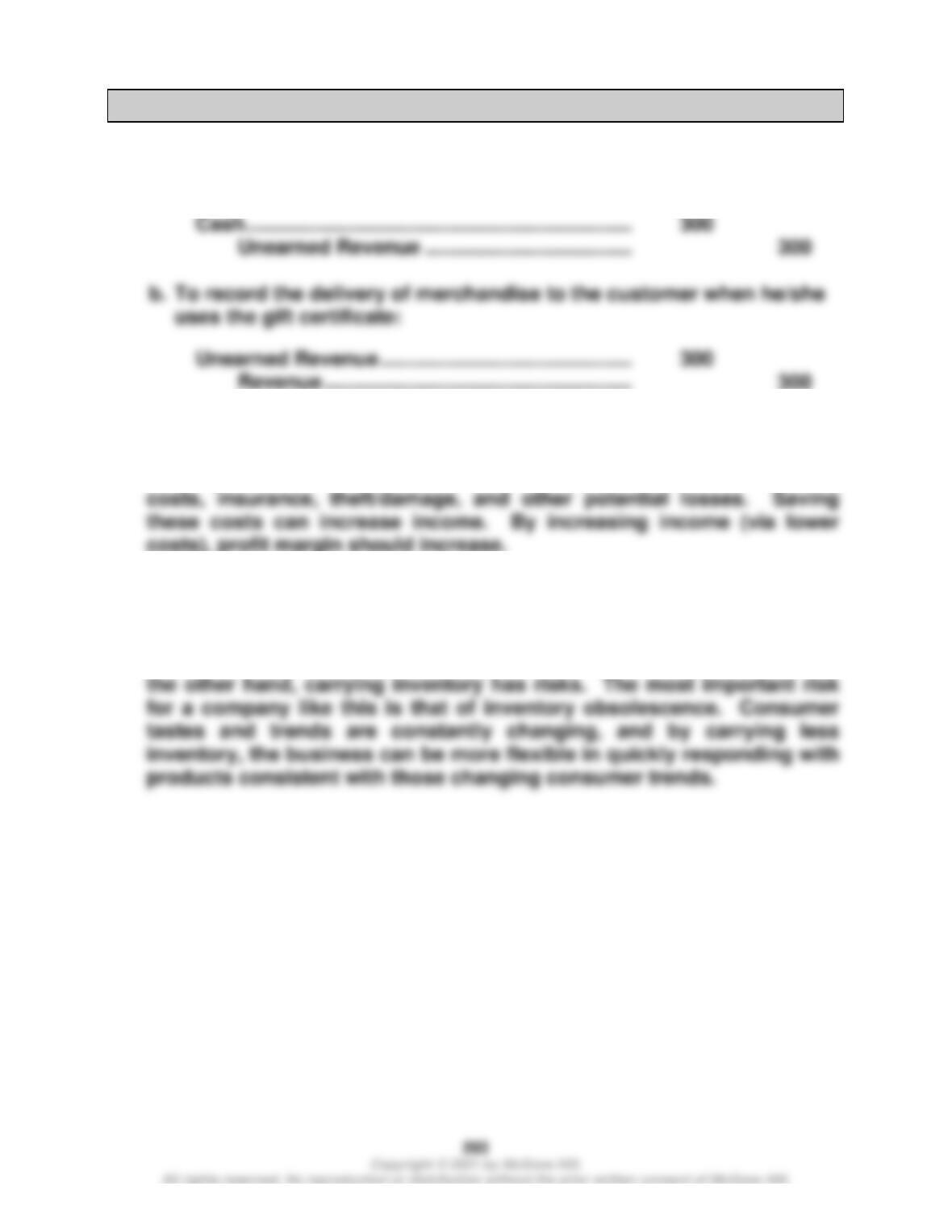
1. a. To record the collection of cash from sale of the gift certificate in
advance of delivery of merchandise to the customer:
2. Carrying less inventory would allow the company to save the costs of
keeping and maintaining that added inventory; such as warehousing
3. If the company carries additional inventory, it can potentially sell more
merchandise and increase its profits. This might further fuel increased
sales as additional customers might be attracted to its products. On

Wild and Shaw, Fundamental Accounting Principles 25e Solutions Manual: Chapter 3
294