An asterisk (*) will appear to the right, immediately above, or immediately below an incorrect entry.
The essay answer will not be graded.
Enter a zero in cells you would otherwise leave blank.
1.
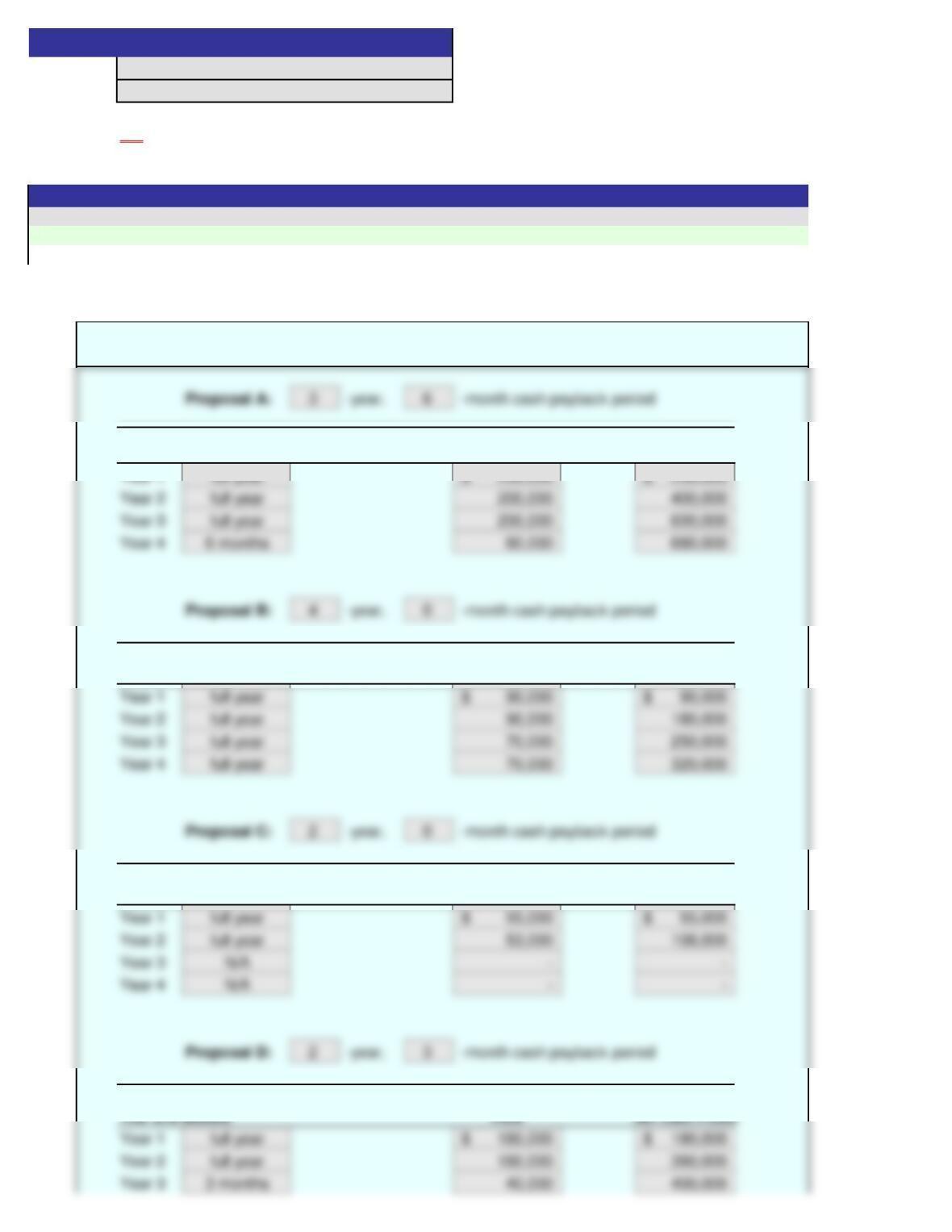
Proposal A: -year, -month cash payback period
Net Cash Cumulative
Year and Months Flow Net Cash Flows
Year 1
Year 2
Year 3
Year 4
Net Cash Cumulative
Year and Months Flow Net Cash Flows
Year 1
Year 2
Year 3
Year 4
Proposal C: -year, -month cash payback period
Net Cash Cumulative
Year and Months Flow Net Cash Flows
Year 1
Year 2
Year 3
Year 4
Proposal D: -year, -month cash payback period
Net Cash Cumulative
Year and Months Flow Net Cash Flows
Year 1
Problem 26(12)-6A
Name:
Section:
Payback Period
0%
[Key code here]
Answers are entered in the cells with gray backgrounds.
Score:
Key Code:
Instructions
Cells with non-gray backgrounds are protected and cannot be edited.
2.
Proposal A:
Proposal B:
Proposal C:
Proposal D:
3.
Cash Payback Period Average Rate Accept for
Proposal Years Months of Return
Further Analysis?
A
B
C
D
4., 5.
Present Present
Value of Net Cash Value of Net
$1 at 15%
Flow =Cash Flow
Year 1
Year 2
Year 3
Year 4
Year 5
Net Present Value and Present Value Index
=
=
Average Rate of Return
=
=
Total
Amount to be invested
Net present value
Present value index
Present Present
Value of Net Cash Value of Net
$1 at 15%
Flow =Cash Flow
Year 1
Year 2
Year 3
Year 4
Year 5
Total
Amount to be invested
Net present value
Present value index
6., 7.
Based on net present value calculated in Part 4, the proposals should be ranked as follows:
Rank 1
Rank 2
Based on present value index calculated in Part 5, the proposals should be ranked as follows:
Rank 1
Rank 2
8.
[Key essay answer here]
An asterisk (*) will appear to the right, immediately above, or immediately below an incorrect entry.
The essay answer will not be graded.
Enter a zero in cells you would otherwise leave blank.
1.
Net Cash Cumulative
Year and Months Flow Net Cash Flows
Net Cash Cumulative
Year and Months Flow Net Cash Flows
Net Cash Cumulative
Year and Months Flow Net Cash Flows
Net Cash Cumulative
Payback Period
ON
Cells with non-gray backgrounds are protected and cannot be edited.
Score:
Instructions
Answers are entered in the cells with gray backgrounds.
Problem 26(12)-6A
Name:
Solution
Section:
2.
Proposal A:
Proposal B:
Proposal C:
Proposal D:
3.
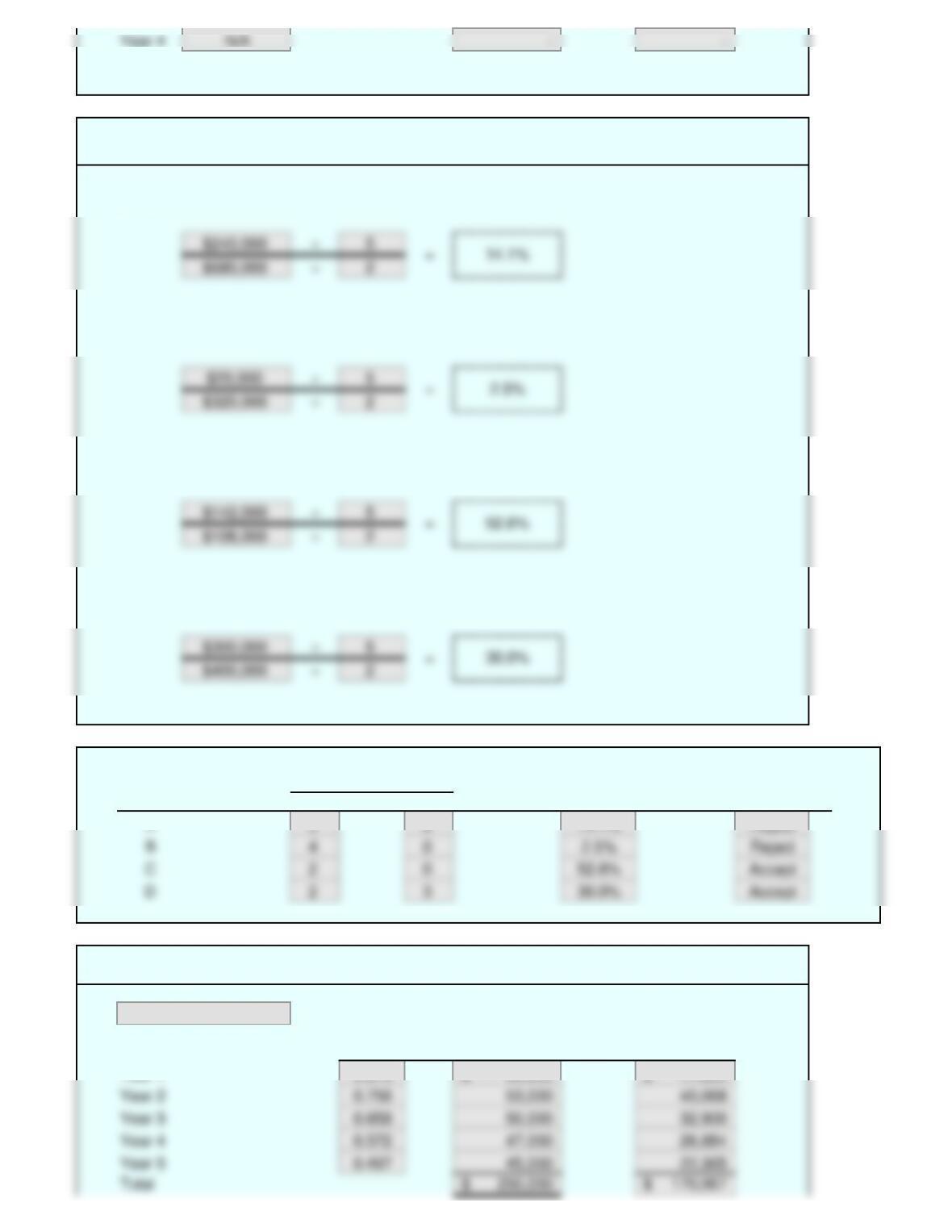
Cash Payback Period Average Rate Accept for
Proposal Years Months of Return
Further Analysis?
4., 5.
Present Present
Value of Net Cash Value of Net
$1 at 15%
Flow =Cash Flow
Average Rate of Return
Net Present Value and Present Value Index
Proposal C:
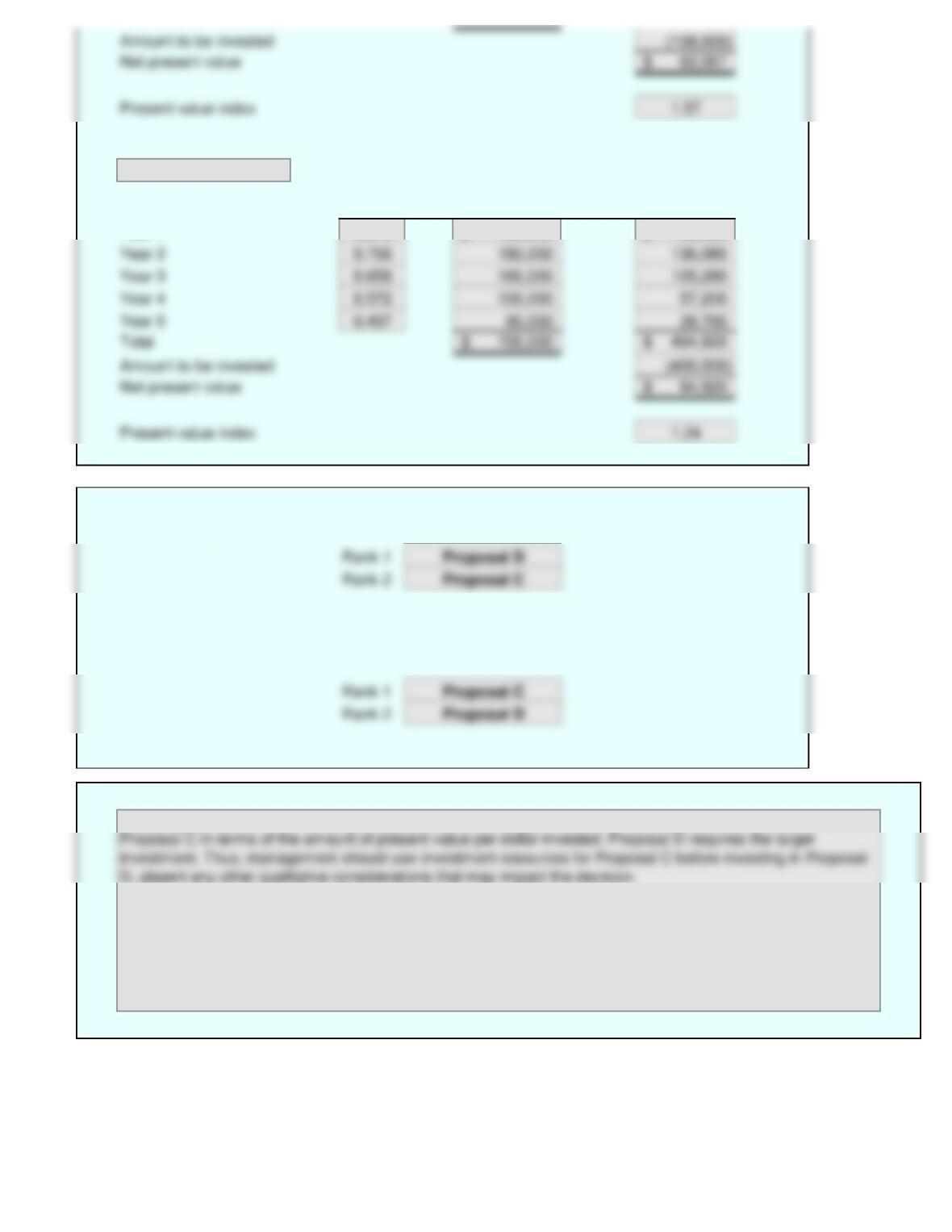
Present Present
Value of Net Cash Value of Net
$1 at 15%
Flow
=Cash Flow
6., 7.
Based on net present value calculated in Part 4, the proposals should be ranked as follows:
Based on present value index calculated in Part 5, the proposals should be ranked as follows:
8.
The analysis indicates that although Proposal D has the larger net present value, it is not as attractive as
Proposal D: