CHAPTER 25 Differential Analysis, Product Pricing, and Activity-Based Costing
Ex. 25-13
a.
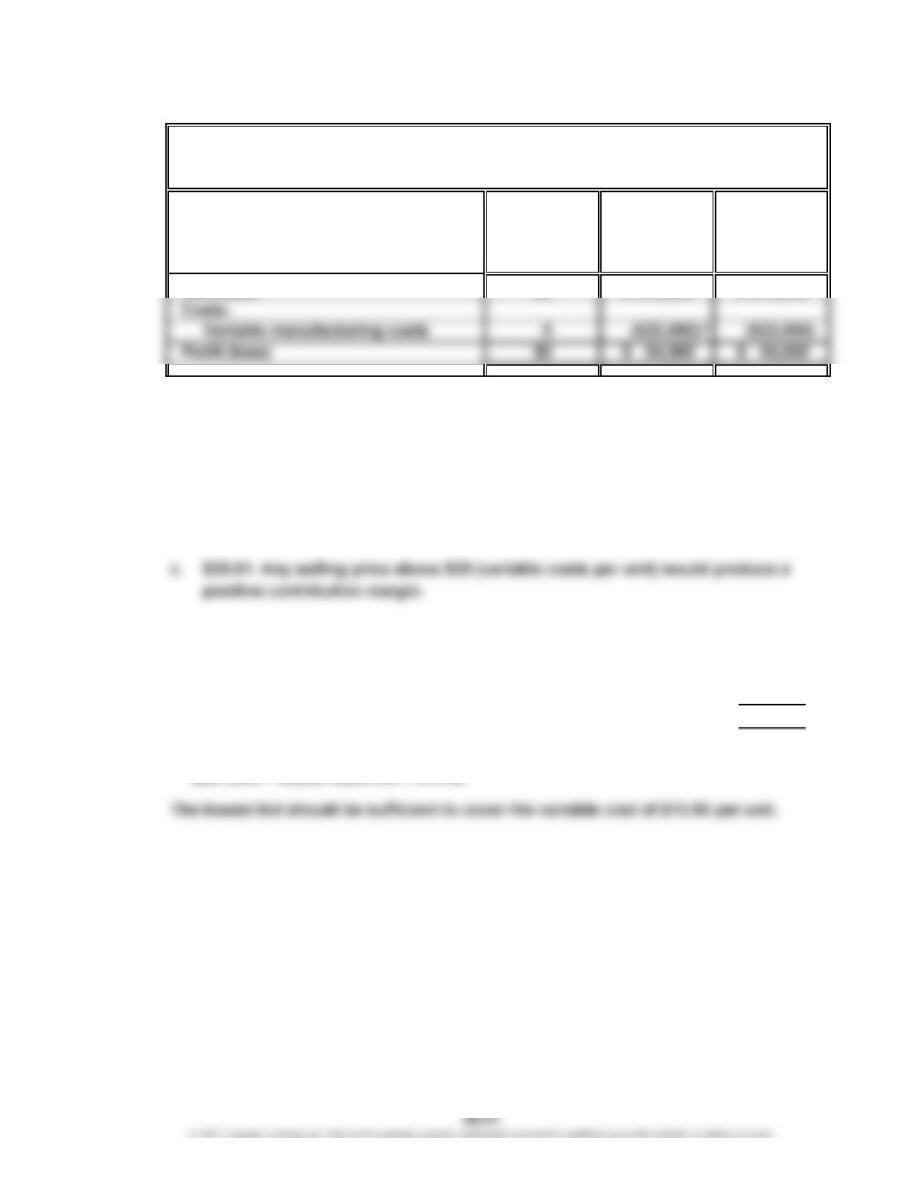
Reject Accept Differential
Order Order Effects
(Alternative 1) (Alternative 2) (Alternative 2)
1
18,000 units × $32 per unit
2
18,000 units × $29 per unit
b. The additional units can be sold for $32 each, and because unused capacity is
available, the only costs that would be added if this additional production
were accepted are the variable costs of $29 per unit. The differential revenue
is therefore $32 per unit, and the differential cost is $29 per unit. Thus, the net
gain is $3 per unit × 18,000 units, or $54,000.
Ex. 25-14
Total costs…………………………………………………………………………
…
$868,750
Less fixed costs…………………………………………………………………… 261,250
Total variable costs………………………………………………………………
…
$607,500
Variable cost per unit:
Differential Analysis
Reject Order (Alt. 1) or Accept Order (Alt. 2)
November 12
1
CHAPTER 25 Differential Analysis, Product Pricing, and Activity-Based Costing
Ex. 25-15
a.
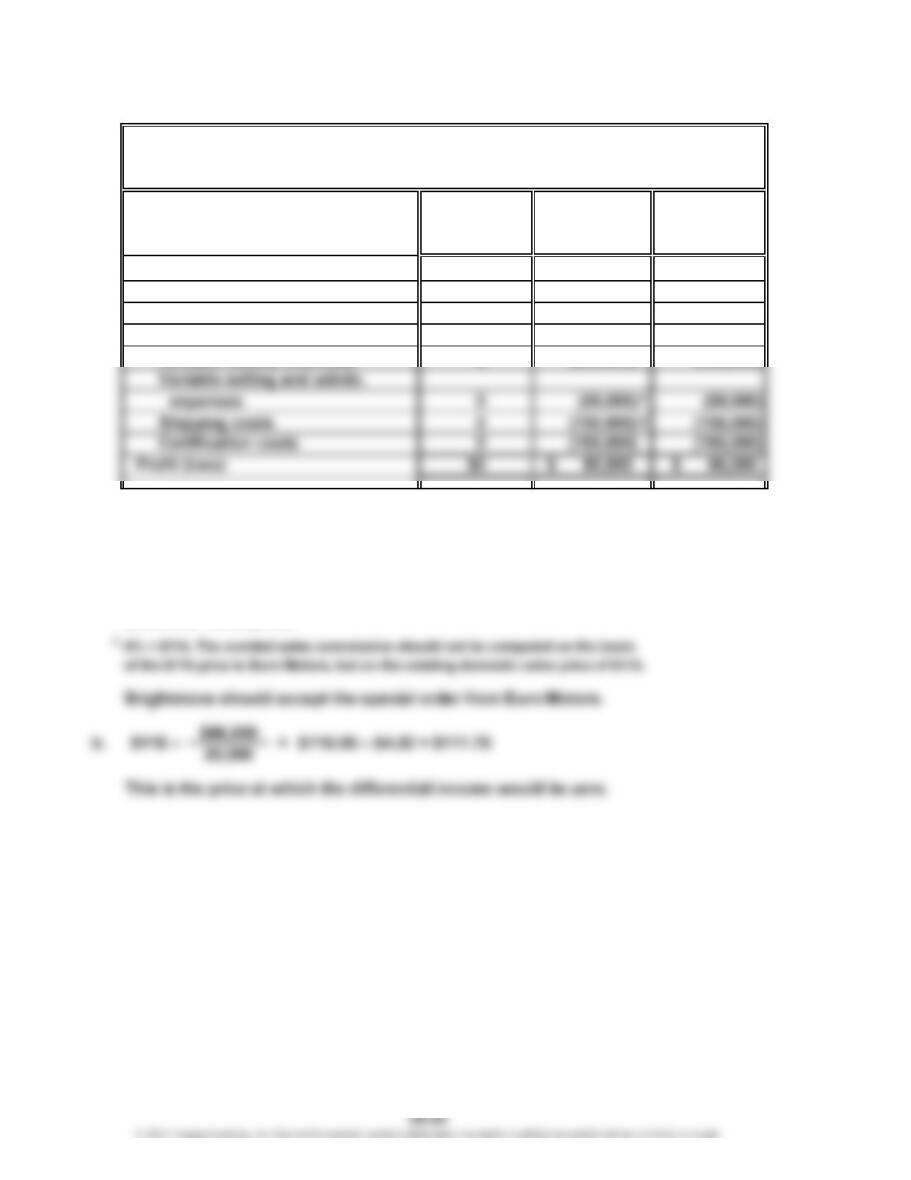
Reject Accept Differential
Order Order Effects
(Alternative 1) (Alternative 2) (Alternative 2)
Revenues $0 $ 2,320,000 $ 2,320,000
Costs:
Direct materials 0 (1,120,000) (1,120,000)
Direct labor 0 (440,000) (440,000)
1
20,000 tires × $116 per tire
2
20,000 tires × $56 per tire
3
20,000 tires × $22 per tire
4
20,000 tires × ($25 per tire × 60%)
5
20,000 tires × [($26 per tire × 45%) – ($175 × 5%)*]
6
20,000 tires × $7.50 per tire
Differential Analysis
Reject Order (Alt. 1) or Accept Order (Alt. 2)
January 21
1
2
3
4
CHAPTER 25 Differential Analysis, Product Pricing, and Activity-Based Costing
Ex. 25-16
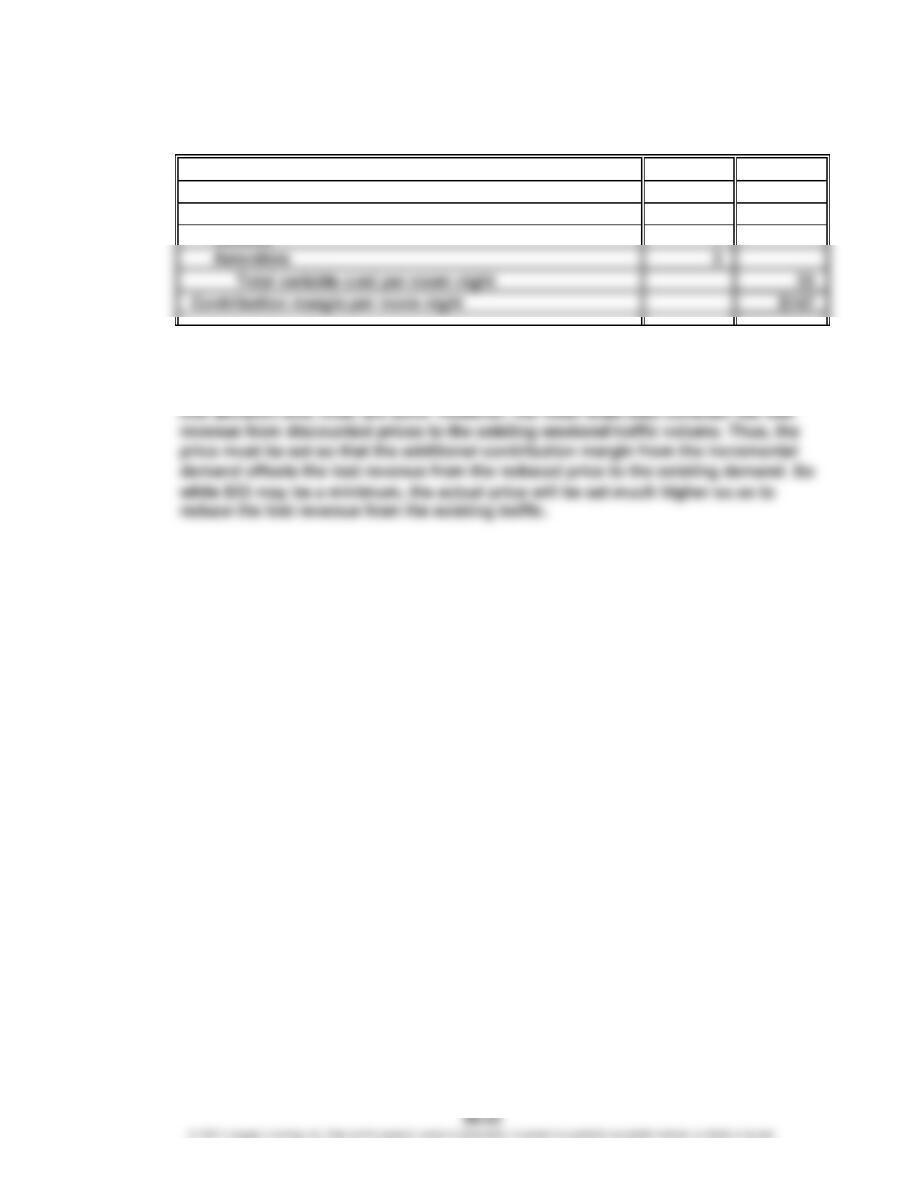
a. Contribution margin per room night:
Rate per room night $180
Less variable costs per room night:
Housekeeping service $23
b. The discount price should be set greater than the variable costs per room night so
that the resulting contribution margin contributes to fixed costs and profitability.
Thus, the price should be greater than $33. The fixed costs are not incremental to
CHAPTER 25 Differential Analysis, Product Pricing, and Activity-Based Costing
Ex. 25-17
a. Desired Profit = $345,000 × 26% = $89,700
b. Cost amount (product cost) per unit: $154,000 ÷ 1,400 units = $110.00
Ex. 25-18
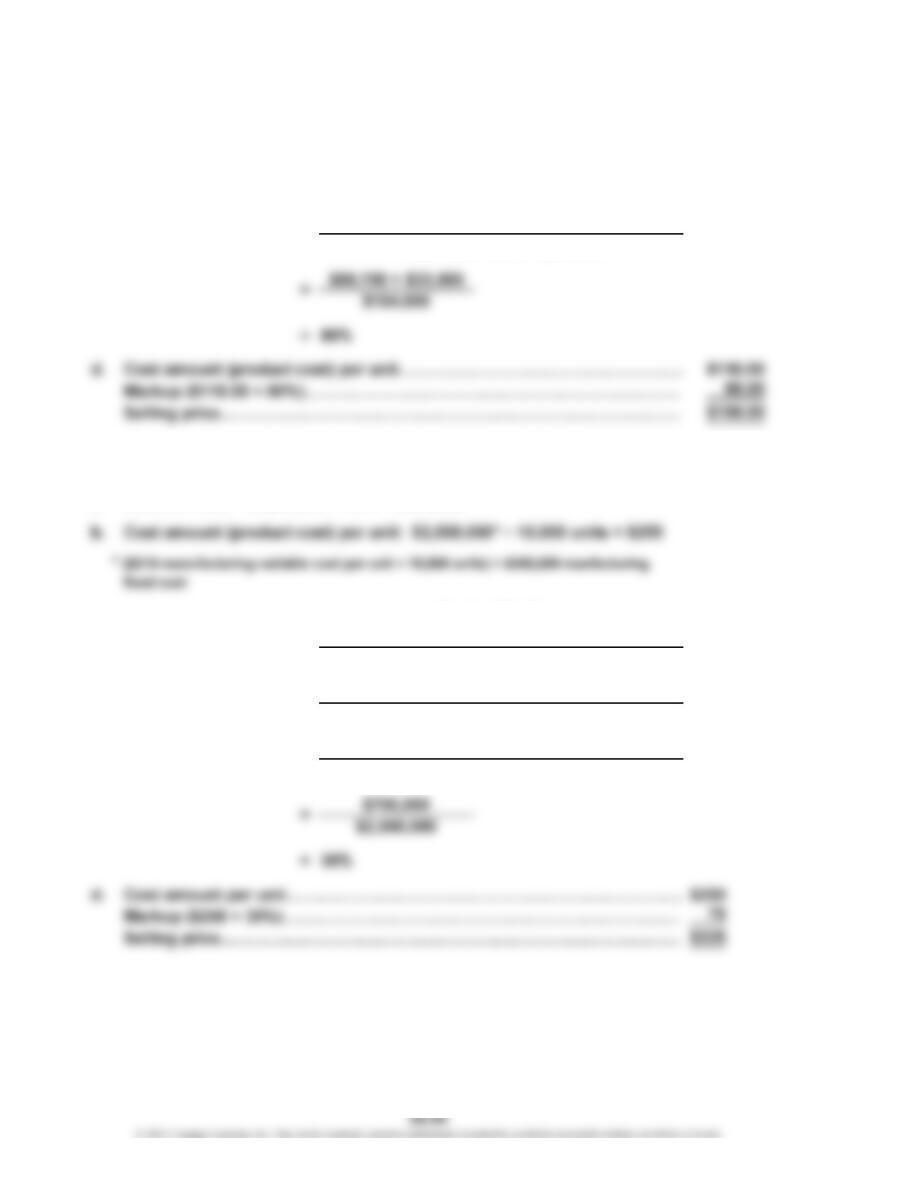
a. Desired Profit = $1,200,000 × 30% = $360,000
$360,000 + $140,000 + ($25 × 10,000)
$2,500,000
Desired Profit +
Desired Profit +
Total Selling and Administrative Expenses
Total Manufacturing Costs
c. Markup Percentage = Total Selling and Administrative Expenses
Total Manufacturing Costs
c.
Markup Percentage =
=
=$360,000 + $140,000 + $250,000
$2,500,000
CHAPTER 25 Differential Analysis, Product Pricing, and Activity-Based Costing
Ex. 25-19
a. The price will be set at the estimated market price required to remain competitive,
or $27,000. Under the target cost concept, the market dictates the price, not the
markup on cost.
b. The required profit margin of 20% of the estimated $27,000 price implies a
$21,600 target product cost as follows:
Because the estimated manufacturing cost of $22,500 exceeds the target cost of
$21,600, Toyota must reduce $900 from its total costs in order to maintain
competitive pricing within its profit objectives.
CHAPTER 25 Differential Analysis, Product Pricing, and Activity-Based Costing
Ex. 25-20
$460 – $230
$230
$230
price)
b. Required cost reduction: $230 – $200 = $30
$30
60 min.
$30
60 min.
Direct material reduction: 20.00 17.00
a.
=
Historical markup percentage on product cost: = 100%
50% of selling priceor
1.c.
2.
Direct labor reduction:
Additional inspection:
× 15 min. =
× 6 min. =
$ 7.50
$ (3.00)
CHAPTER 25 Differential Analysis, Product Pricing, and Activity-Based Costing
Ex. 25-21
Determine the contribution margin per furnace hour as follows:
Revenue……………………………………
…
$43,000 $49,000 $56,500
V
ariable cost………………………………
…
34,000 28,000 26,500
Contribution margin……………………… $ 9,000 $21,000 $30,000
*Computed as follows:
$1.80
6 hours
$4.20
6 hours
$6.00
12 hours
Type 5 Type 10 Type 20
Type 5: = $0.30 per furnace hour
Type 10: = $0.70 per furnace hour
Type 20: = $0.50 per furnace hour
CHAPTER 25 Differential Analysis, Product Pricing, and Activity-Based Costing
Ex. 25-22
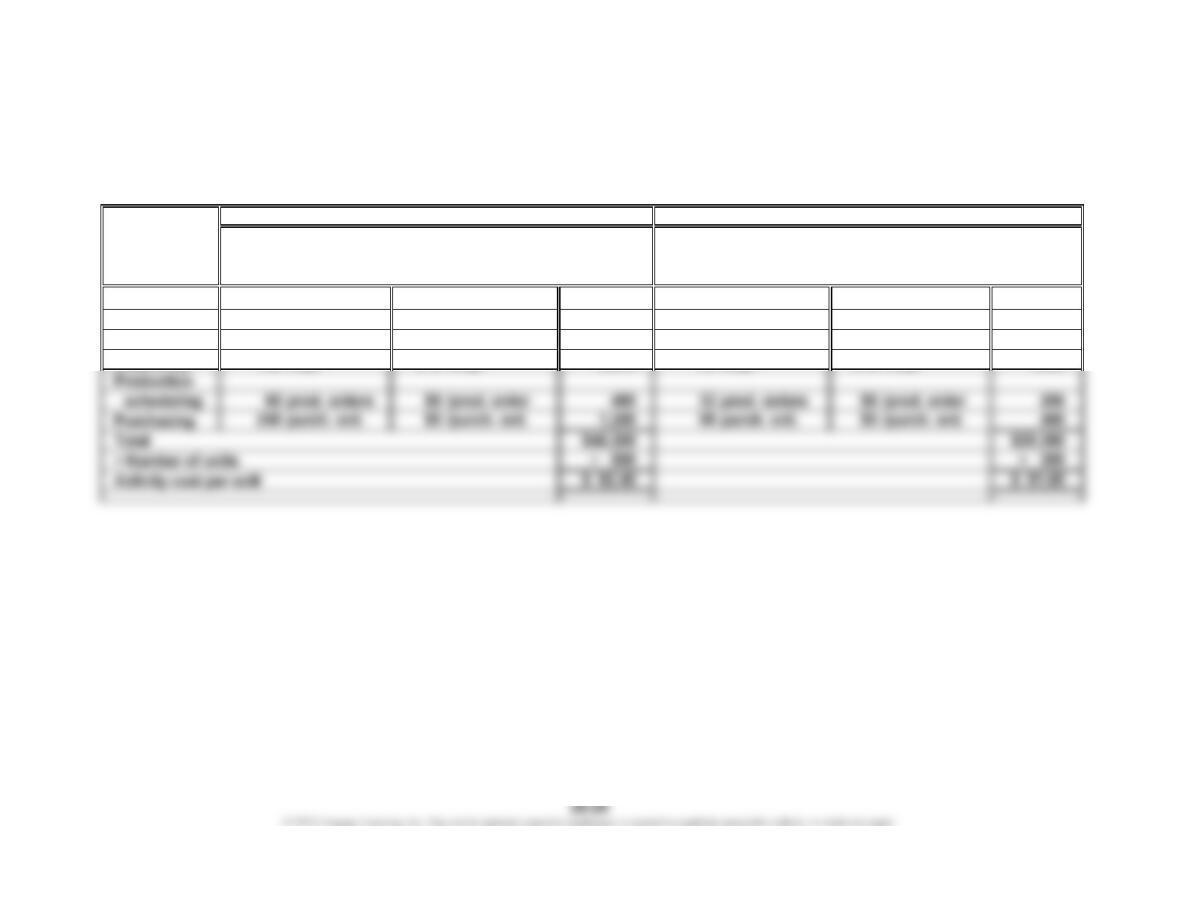
a. Large Medium Small Total
Units produced………………
…
3,000 3,000 3,000
Revenues*……………………
…
$552,000 $480,000 $300,000 $1,332,000
Less variable costs**………
…
390,000 360,000 228,000 978,000
b. The Small glass product is the most profitable in a bottleneck operation,
demonstrated as follows:
Large Medium Small
Contribution margin…………………………
…
$54 $40 $24
÷ Autoclave hours per unit…………………… 32 1
CHAPTER 25 Differential Analysis, Product Pricing, and Activity-Based Costing
Ex. 25-23
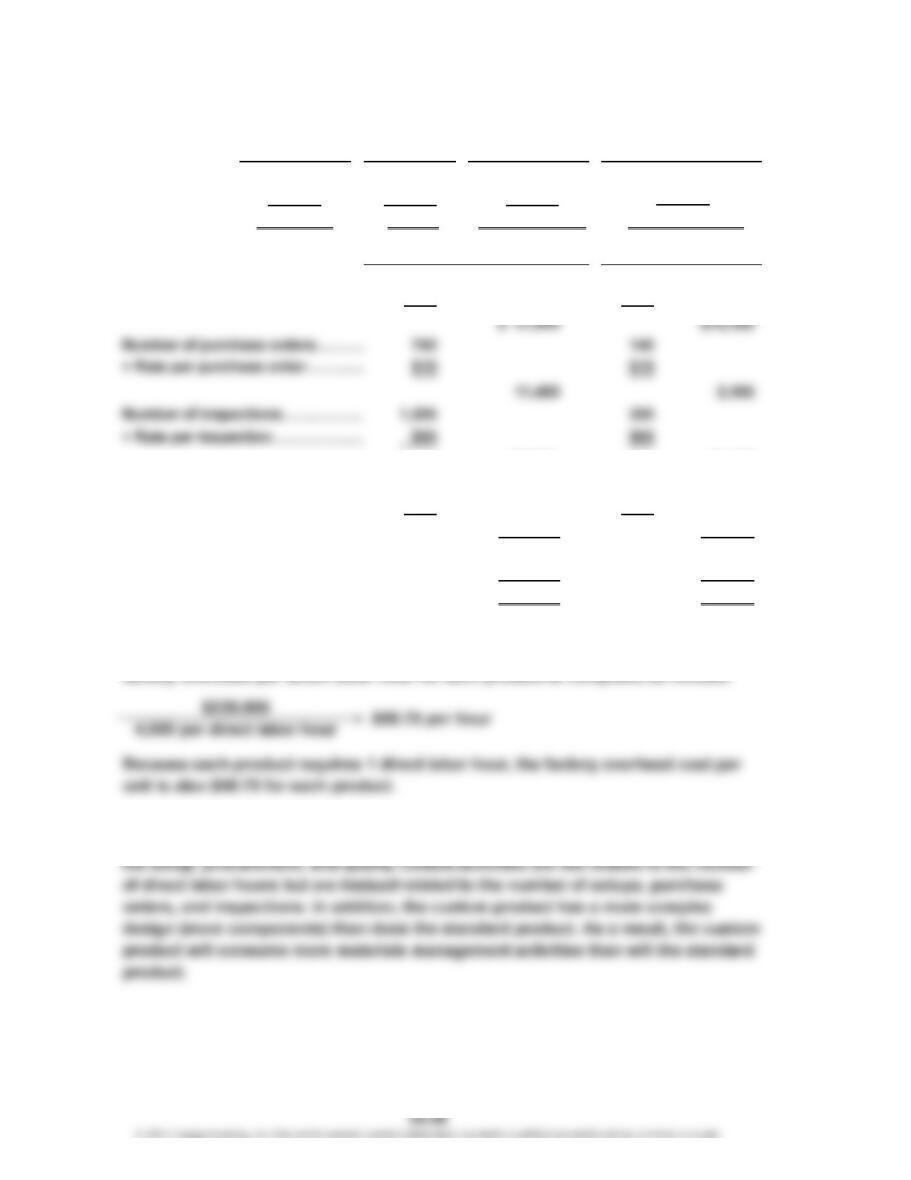
Activity Activity
Activity Cost Cost
Fabrication 1,680 mh /mh 1,070 mh /mh
Assembly 243 dlh /dlh 131 dlh /dlh
Setup 45 setups /setup 20 setups /setup
Inspecting 158 insp. /insp. 94 insp. /insp.
800
$18 1,692
$22 $23,540
$12 1,572
$40
2,916
1,800
2,844
$18
Treadmill
×= ×=Rate
ActivityBase
Usage Rate
Stationary Bicycle
Activity-
Base
Usage
Activity
Activity-
$22
$12
$40
$36,960
CHAPTER 25 Differential Analysis, Product Pricing, and Activity-Based Costing
Ex. 25-24
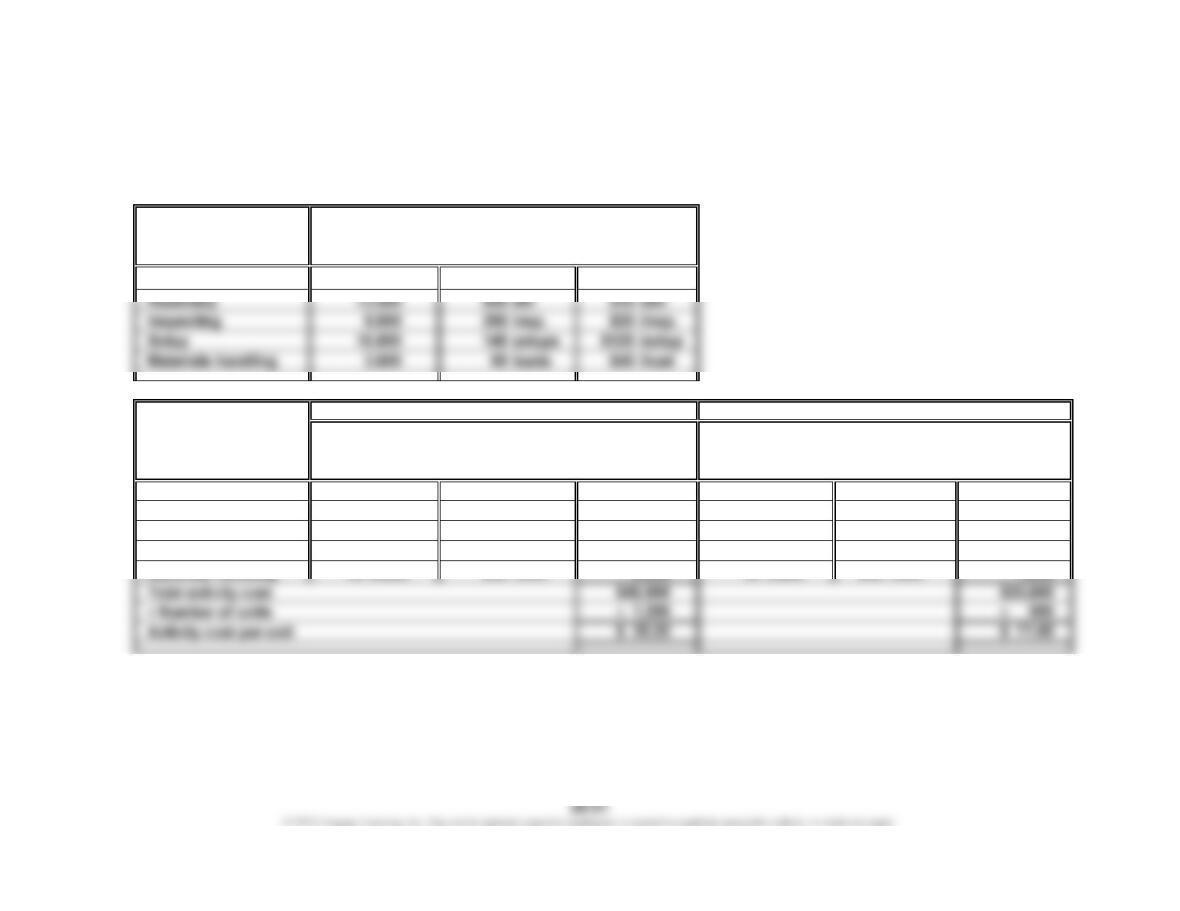
Production Quality
a.
Setup Procurement Control
Activity cost…… $44,000 $13,500 $97,500
÷ Activity base
…
400 900 1,500
Activity rate……
…
$110/setup $15/PO $65/inspection
b.
Number of setups…………………
…
290 110
× Rate per setup……………………
…
$110 $110
78,000 19,500
Number of components…………… 500 200
× Rate per component……………
…
$120 $120
60,000 24,000
Total product cost…………………
…
$181,300 $57,700
÷ Unit volume………………………
…
2,000 2,000
Unit cost………………………………
$ 90.65 $ 28.85
c. The factory overhead allocated to each product on the basis of direct labor hours
would be 50% because each product has the same 2,000 direct labor hours. The
d. The factory overhead allocated to the custom power unit is much higher under the
activity-based approach compared to the direct labor method. The reason is because
Materials
Management
$84,000
700
Custom Standard
$120/component
…
…
CHAPTER 25 Differential Analysis, Product Pricing, and Activity-Based Costing
Ex. 25-25
a.
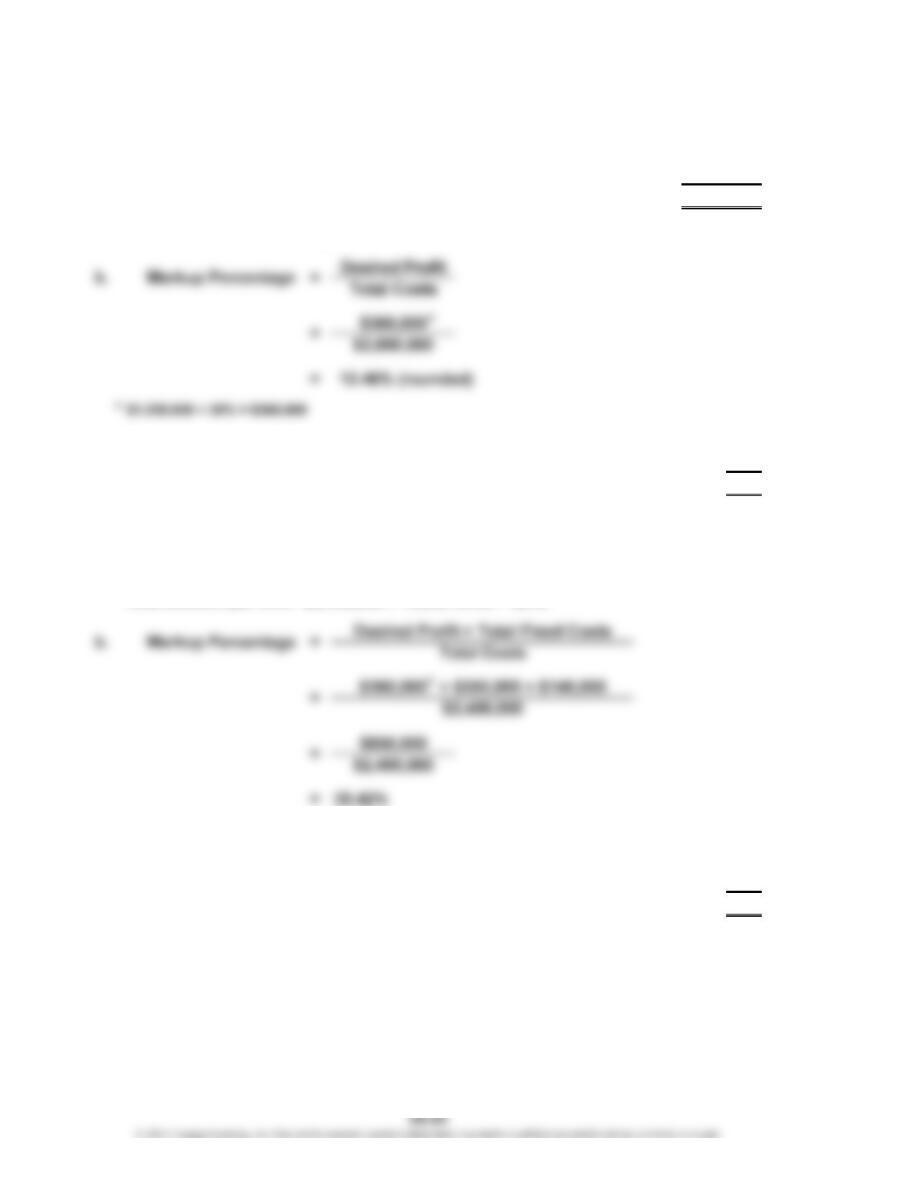
Activity
Casting mh /mh
b.
Activity
Activity Cost
Casting 800 mh /mh 600 mh /mh
Assembly 500 dlh /dlh 400 dlh /dlh
Inspecting 140 insp. /insp. 150 insp. /insp.
Setup 80 setups /setup 60 setups /setup
Usage × Rate =
Base Activity
$42,000
$120
9,600 $120 7,200
$20 2,800 $20 3,000
$15 7,500 $15 6,000
$30 $24,000 $30 $18,000
Usage × Rate =Cost
Base Activity
Entry Lighting Fixtures Dining Room Lighting Fixtures
Activity- Activity–
Activity
Estimated
Activity
Cost
Total
Activity-
÷ Base Usage
Activity
Rate=
1,400
$30
CHAPTER 25 Differential Analysis, Product Pricing, and Activity-Based Costing
Appendix Ex. 25-26
a. Total costs:
V
ariable ($240 × 10,000 units)………………………………………………
…
$2,400,000
Fixed ($350,000 + $140,000)………………………………………………… 490,000
Total…………………………………………………………………………………
…
$2,890,000
Cost amount per unit: $2,890,000 ÷ 10,000 units = $289
c. Cost amount per unit……………………………………………………………
…
$289
Markup ($289 × 12.46%)…………………………………………………………
…
36
Selling price………………………………………………………………………
…
$325
Appendix Ex. 25-27
a. Total variable costs: ($240 × 10,000 units)…………………………………
…
$2,400,000
*
$1,200,000 × 30% = $360,000
c. Cost amount per unit……………………………………………………………
…
$240
Markup ($240 × 35.42%)…………………………………………………………
…
85
Selling price………………………………………………………………………
…
$325
CHAPTER 25 Differential Analysis, Product Pricing, and Activity-Based Costing
Prob. 25-1A
1.
Operate
Retail Invest in Differential
Store Bonds Effects
(Alternative 1) (Alternative 2) (Alternative 2)
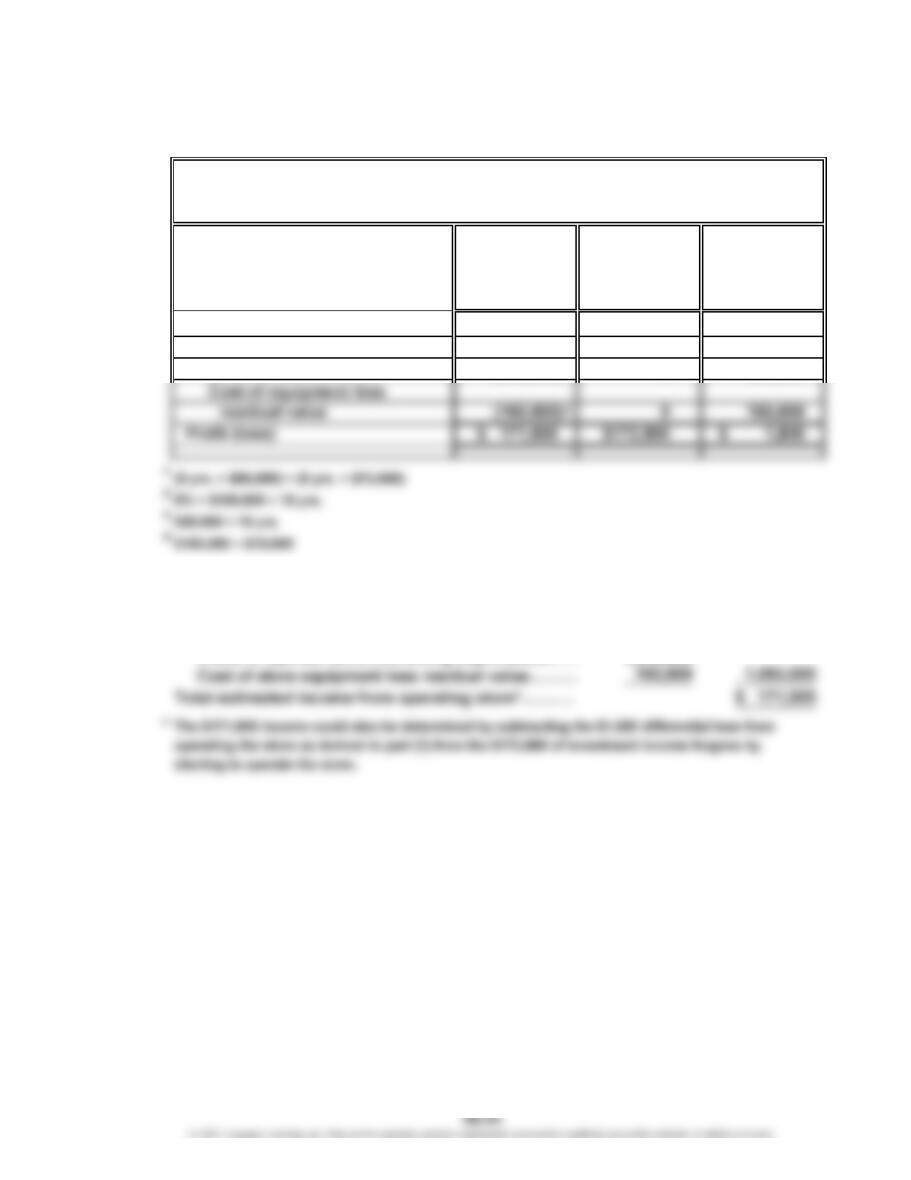
Revenues $1,264,000 $172,800 $(1,091,200)
Costs:
Costs to operate store (928,000) 0 928,000
2. The proposal to operate the retail store should be rejected.
3. Total estimated revenue from operating store………
…
$1,264,000
Total estimated expenses to operate store:
Differential Analysis
Operate Retail Store (Alt. 1) or Invest in Bonds (Alt. 2)
October 1
PROBLEMS
12
3
CHAPTER 25 Differential Analysis, Product Pricing, and Activity-Based Costing
Prob. 25-2A
1.
Continue Replace
with Old Old Differential
Machine Machine Effects
(Alternative 1) (Alternative 2) (Alternative 2)
Revenues
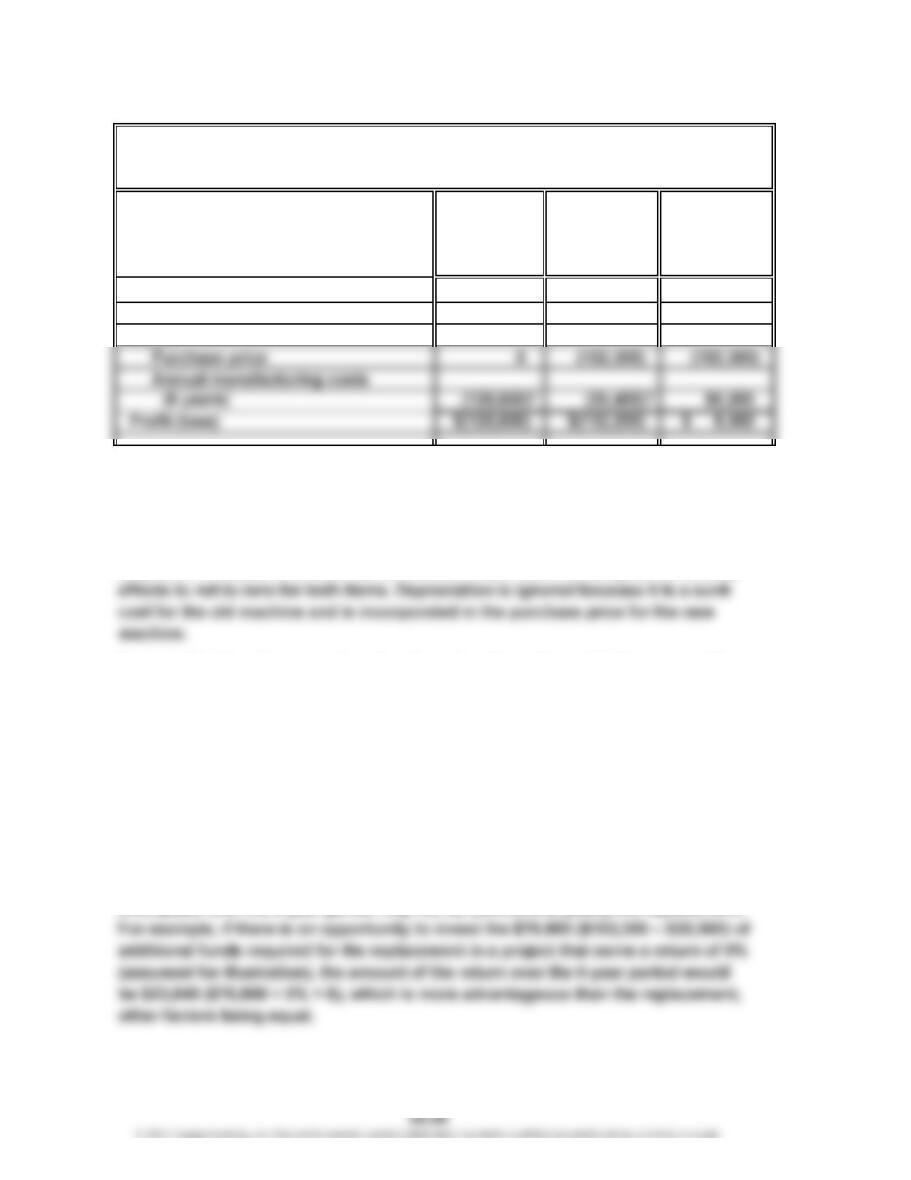
Proceeds from sale of old machine $ 0 $ 25,500 $ 25,500
Costs
1
$20,100 × 6 years
2
$5,900 × 6 years
Note: Revenues and nonmanufacturing operating expenses are not affected by the
decision to replace the old machine and, thus, are not included in the analysis. If
they were included, both alternatives would include them, causing the differential
Fontasia Printing Company should replace the old machine with the new machine.
2. Other factors to be considered include:
a. Are there any improvements in the quality of work turned out by the new
machine?
b. What effect does the federal income tax have on the decision?
c. What opportunities are available for the use of the $76,800 of funds ($102,300 less
$25,500 proceeds from the old machine) that are required to purchase the new
machine?
After considering such factors as those listed above, the net cost reduction
Differential Analysis
Continue with Old Machine (Alt. 1) or Replace Old Machine (Alt. 2)
April 30
CHAPTER 25 Differential Analysis, Product Pricing, and Activity-Based Costing
Prob. 25-3A
1.
Promote Promote Differential
Moisturizer Perfume Effects
(Alternative 1) (Alternative 2) (Alternative 2)
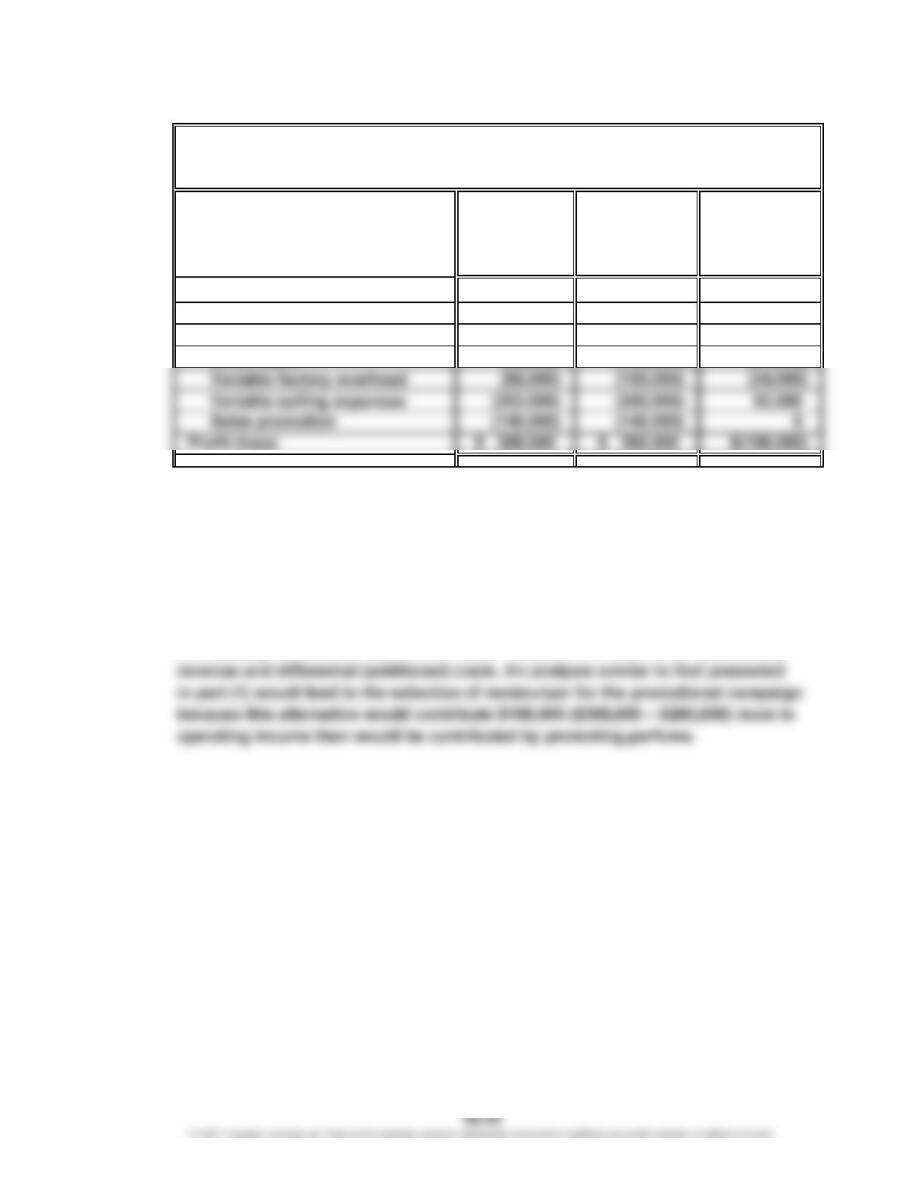
Revenues $1,210,000 $1,200,000 $ (10,000)
Costs:*
Direct materials (198,000) (280,000) (82,000)
1
22,000 units × $55
2
20,000 units × $60
*
Costs, except sales promotion, are the costs per unit multiplied by the increase in unit volume for
each cosmetic. Because fixed costs are not relevant to the decision, they are not included.
Parisian should promote moisturizer.
2. The sales manager’s tentative decision should be opposed. The sales manager
erroneously considered the full unit costs instead of the differential (additional)
Differential Analysis
Promote Moisturizer (Alt. 1) or Promote Perfume (Alt. 2)
August 21
12
CHAPTER 25 Differential Analysis, Product Pricing, and Activity-Based Costing
Prob. 25-4A
1.
Process
Further into
Sell Raw Refined Differential
Sugar Sugar Effects
(Alternative 1) (Alternative 2) (Alternative 2)
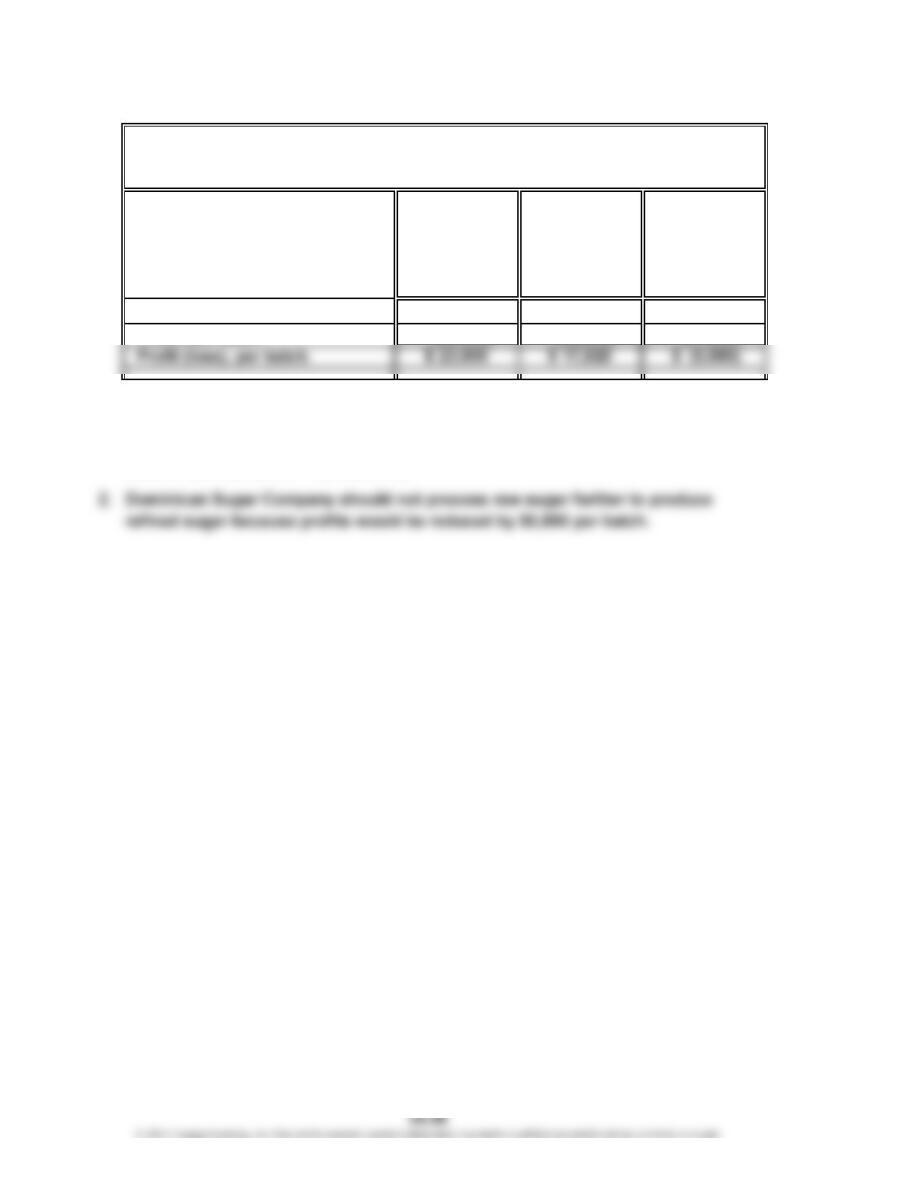
Revenues, per batch $ 58,800 $ 73,920 $ 15,120
1
$1.40 per pound × 42,000 pounds
2
$2.20 per pound × (42,000 pounds ÷ 1.25)
3
$0.35 per pound × 100,000 pounds
4
$35,000 + ($0.50 per pound × 42,000 pounds)
Differential Analysis
Sell Raw Sugar (Alt. 1) or Process Further into Refined Sugar (Alt. 2)
March 24
12
34
CHAPTER 25 Differential Analysis, Product Pricing, and Activity-Based Costing
Prob. 25-5A
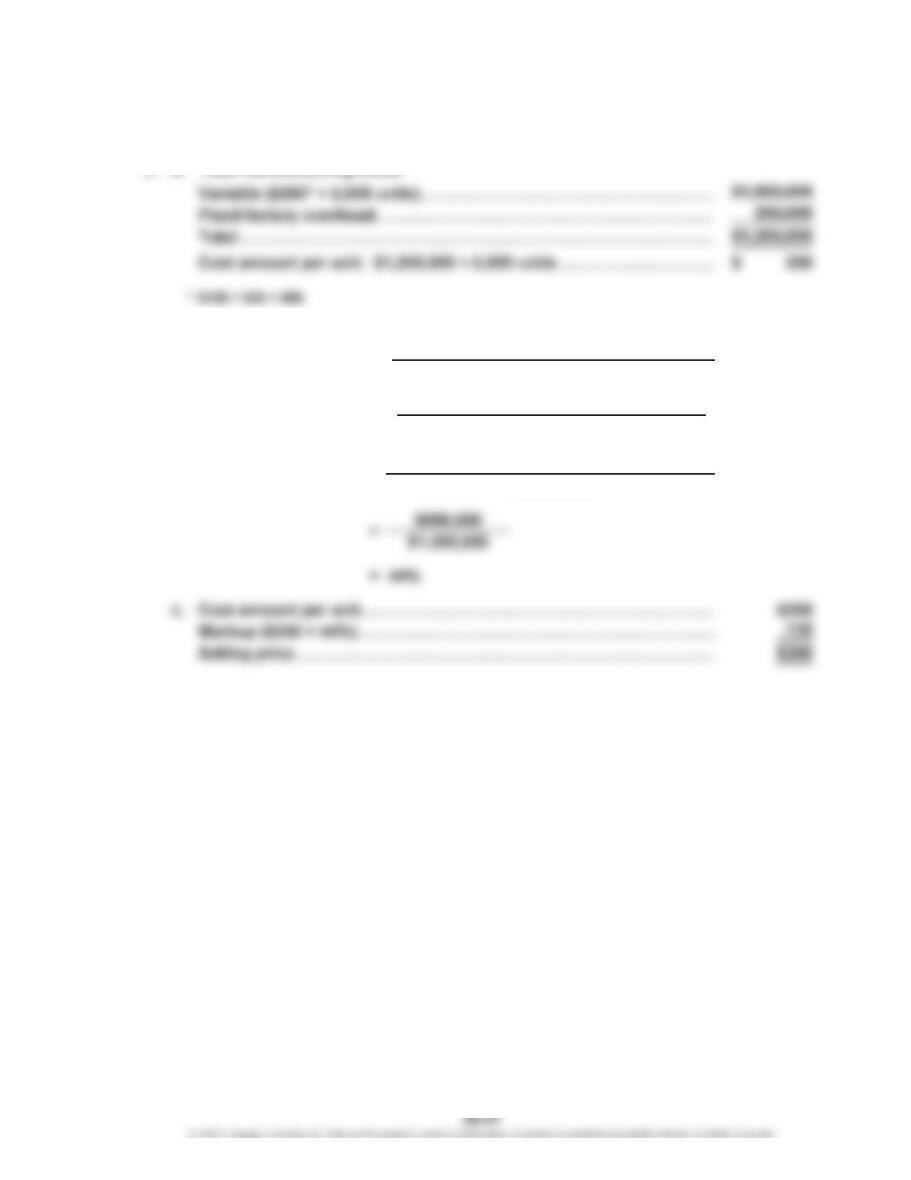
1. $225,000 ($1,500,000 × 15%)
$1,250,000
b. Markup Percentage =
=
=
Desired Profit +
Total Selling and Administrative Expenses
Total Product Costs
$225,000 + $150,000 + ($35 × 5,000 units)
$1,250,000
$225,000 + $150,000 + $175,000
CHAPTER 25 Differential Analysis, Product Pricing, and Activity-Based Costing
Prob. 25-5A (Continued)
3. (Appendix)
a. Total costs:
V
ariable ($235 × 5,000 units)…………………………………………
…
$1,175,000
Fixed ($250,000 + $150,000)…………………………………………
…
400,000
Total…………………………………………………………………………
…
$1,575,000
Cost amount per unit: $1,575,000 ÷ 5,000 units……………………
…
$ 315
c. Cost amount per unit……………………………………………………… $315
Markup ($315 × 14.29%)…………………………………………………
…
45
Selling price………………………………………………………………… $360
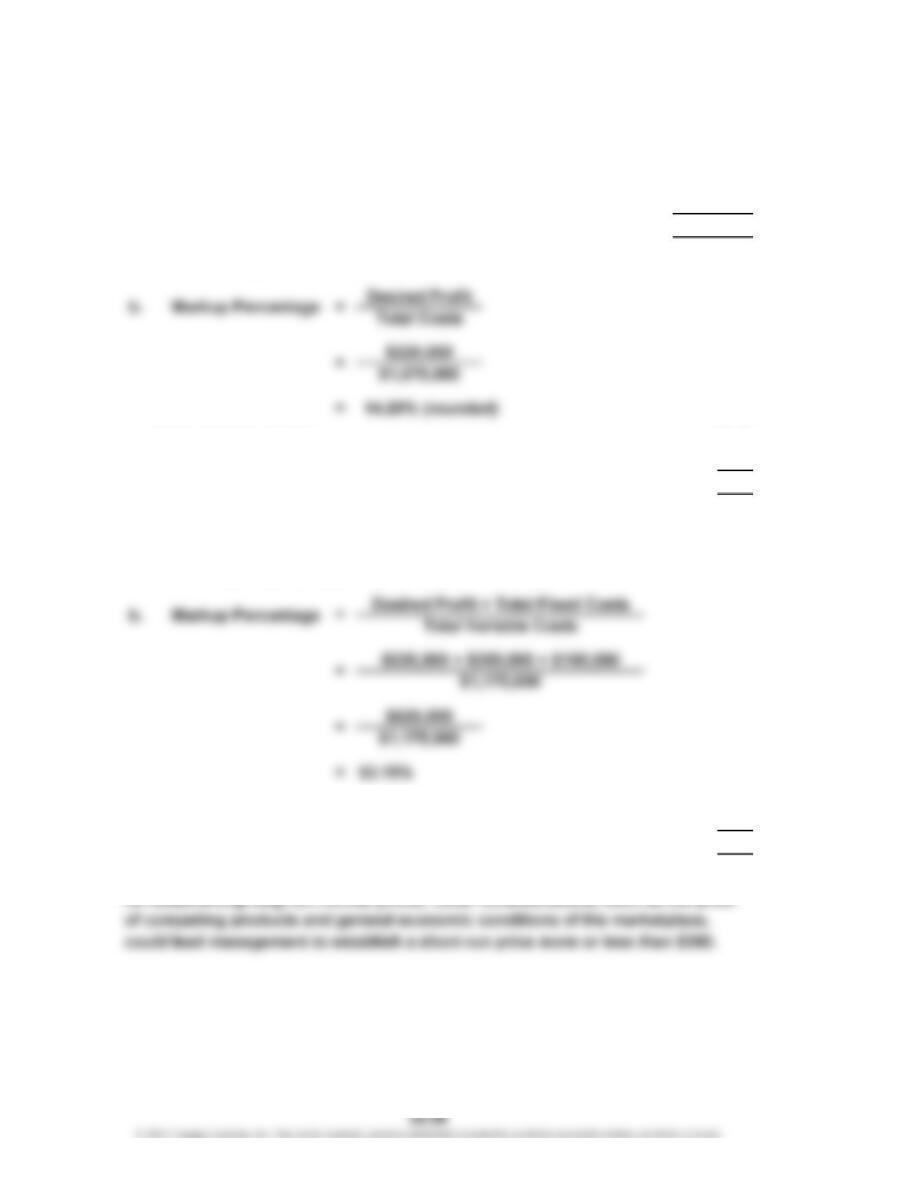
4. (Appendix)
a. Variable cost amount per unit: $235
Total variable costs: $235 × 5,000 units = $1,175,000
c. Cost amount per unit……………………………………………………… $235
Markup ($235 × 53.19%)…………………………………………………
…
125
Selling price………………………………………………………………… $360
5. The cost-plus approach price of $360 should be viewed as a general guideline