CHAPTER 25 Differential Analysis, Product Pricing, and Activity-Based Costing
Prob. 25-5A (Concluded)
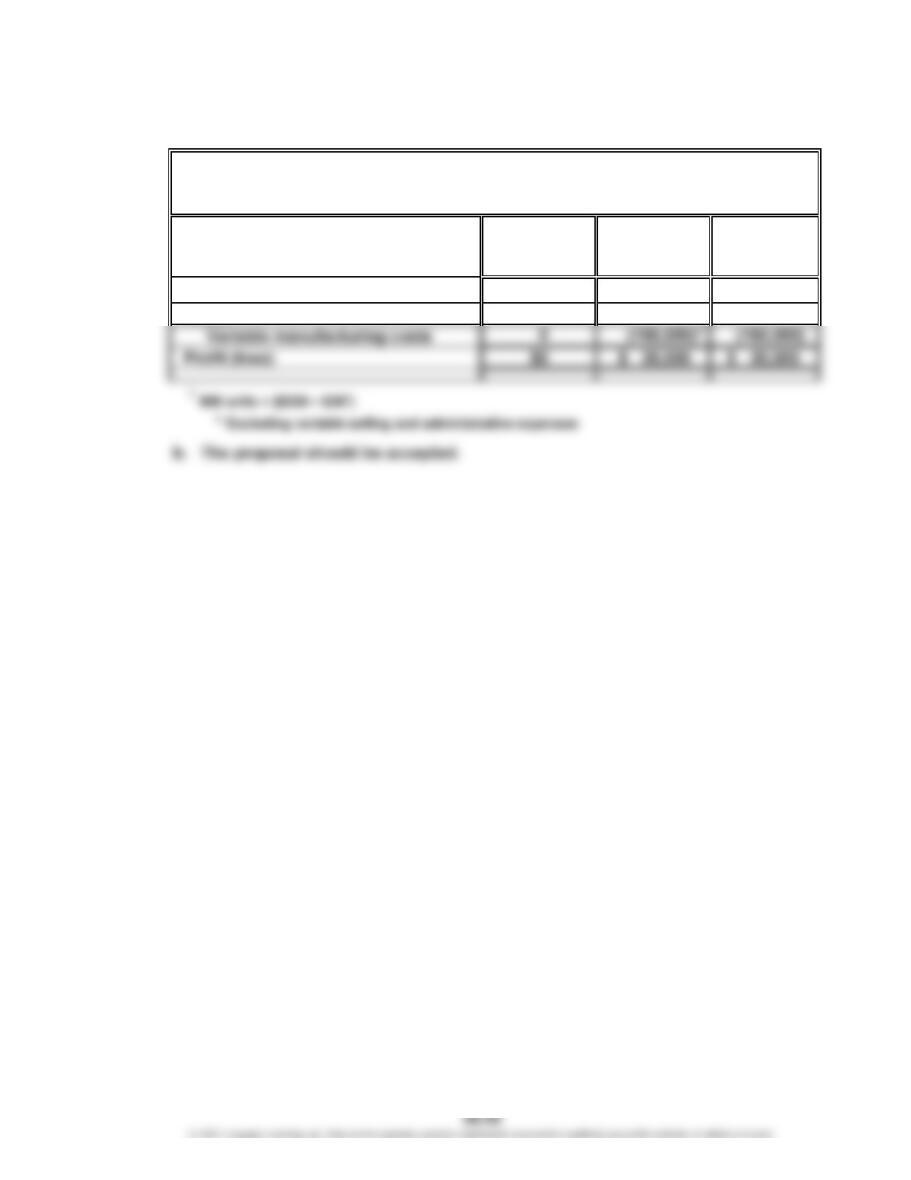
6. a.
Reject Accept Differential
Order Order Effects
(Alternative 1) (Alternative 2) (Alternative 2)
Revenues $0 $ 180,000 $ 180,000
Costs:
Differential Analysis
Reject Order (Alt. 1) or Accept Order (Alt. 2)
August 3
CHAPTER 25 Differential Analysis, Product Pricing, and Activity-Based Costing
Prob. 25-6A
1.
High Good Regular
Grade Grade Grade
Selling price………………………………………… $280 $270 $250
V
ariable conversion cost per unit……………… $180 $165 $150
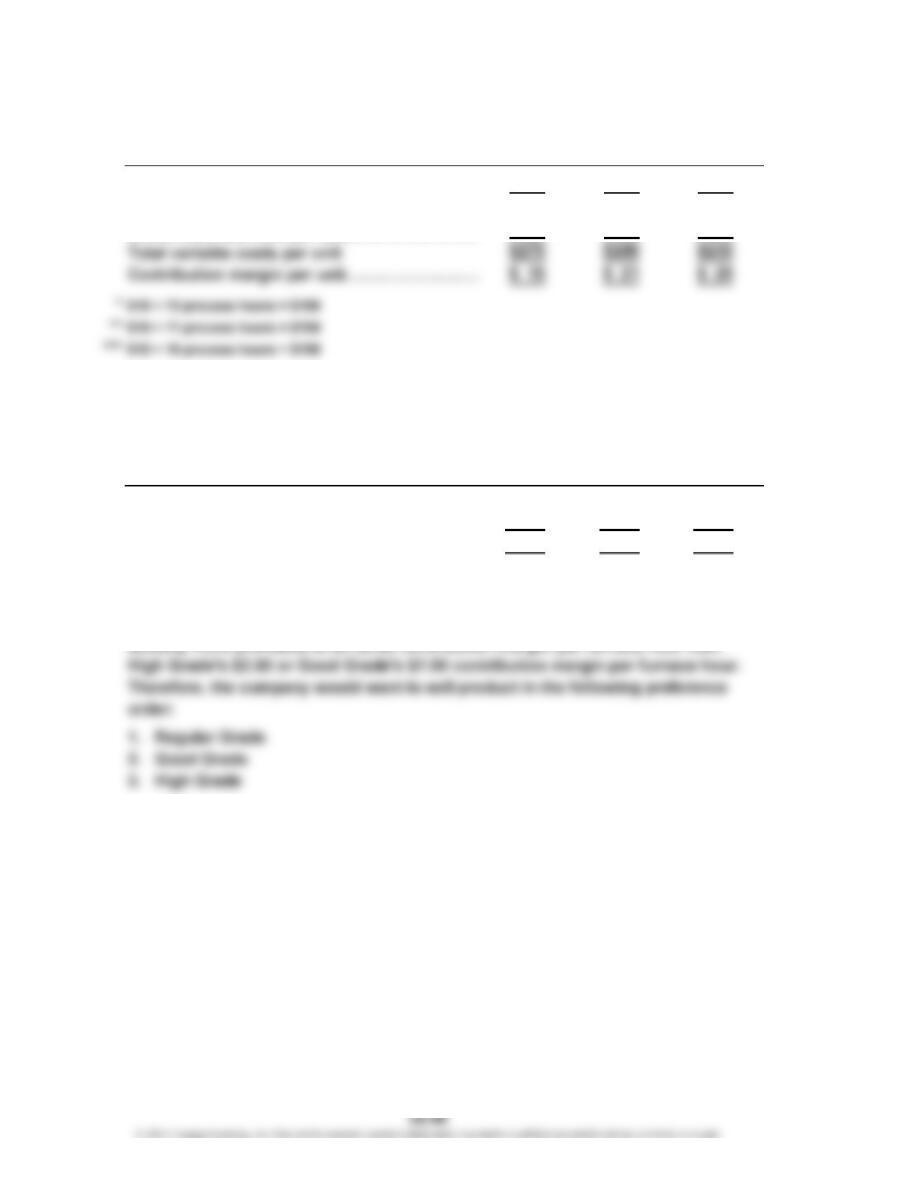
2. The contribution margin per unit may give false signals when an organization
has production bottlenecks. Instead, Hercules should use the contribution margin
per bottleneck hour to determine relative product profitability, as follows:
High Good Regular
Grade Grade Grade
Contribution margin per unit……………………
…
$10 $21 $20
÷
Furnace (bottleneck) hours per unit…………
…
4 3 2.5
Contribution margin per furnace hour………… $2.50 $7.00 $8.00
The Good Grade steel has the largest contribution margin per unit ($21); however,
the Regular Grade has the largest contribution margin per furnace hour ($8.00).
Thus, using production bottleneck analysis indicates that the Regular Grade is
* ** ***
…
CHAPTER 25 Differential Analysis, Product Pricing, and Activity-Based Costing
Prob. 25-7A
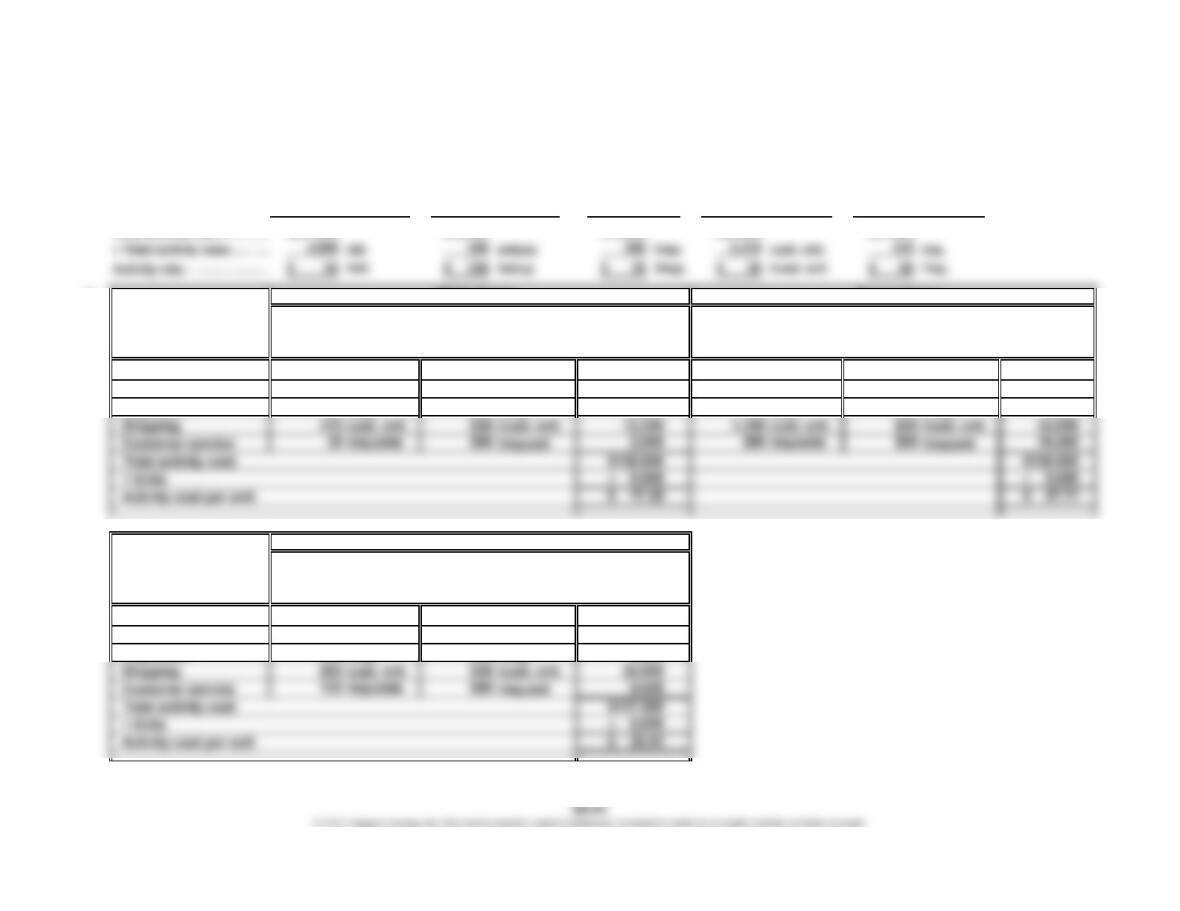
1.
2.
Activity
Production 2,000 mh /mh 1,250 mh /mh
Setup 50 setups /setup 70 setups /setup
Inspection 100 insp. /insp. 160 insp. /insp.
Activity
Production 1,250 mh /mh
Setup 80 setups /setup
Powdered Sugar
Activity-
White Sugar
Activity-
$55 $ 68,750
$240 19,200
Base Activity Activity
Usage × Rate = Cost
Cost
Activity
Brown Sugar
Usage × Rate =
Activity
Production Setup ShippingInspection
Activity-
Customer Service
Base
=
Activity
Cost
$25 2,500 $25 4,000
$55 $110,000 $55
16,800
$ 68,750
$240 12,000 $240
Base Activity
Usage × Rate
CHAPTER 25 Differential Analysis, Product Pricing, and Activity-Based Costing
Prob. 25-7A (Concluded)
3. The unit costs are different even though each product requires 0.25 machine hour
because the products consume many activities in ratios different from the volume.
For example, the brown sugar consumes setup, inspection, shipping, and customer
CHAPTER 25 Differential Analysis, Product Pricing, and Activity-Based Costing
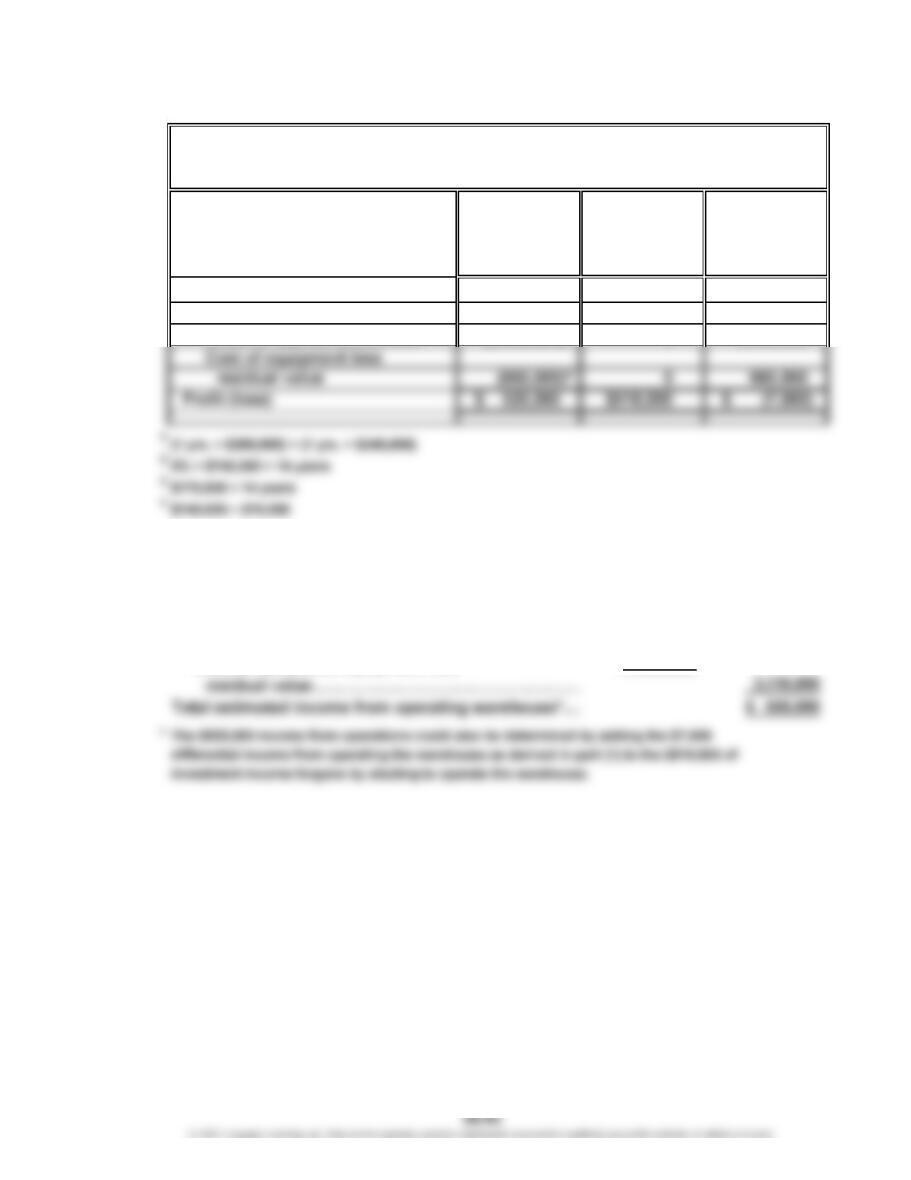
Prob. 25-1B
1.
Operate Invest in Differential
Warehouse Bonds Effects
(Alternative 1) (Alternative 2) (Alternative 2)
Revenues $ 3,640,000 $518,000 $(3,122,000)
Costs:
Costs to operate warehouse (2,450,000) 02,450,000
2. The proposal to operate the warehouse should be accepted.
3. Total estimated revenue from operating warehouse…
$3,640,000
Total estimated expenses to operate warehouse:
Costs to operate warehouse,
excluding depreciation………………………………
…
$2,450,000
Cost of warehouse equipment less
665,000
Differential Analysis
Operate Warehouse (Alt. 1) or Invest in Bonds (Alt. 2)
July 1
12
3
CHAPTER 25 Differential Analysis, Product Pricing, and Activity-Based Costing
Prob. 25-2B
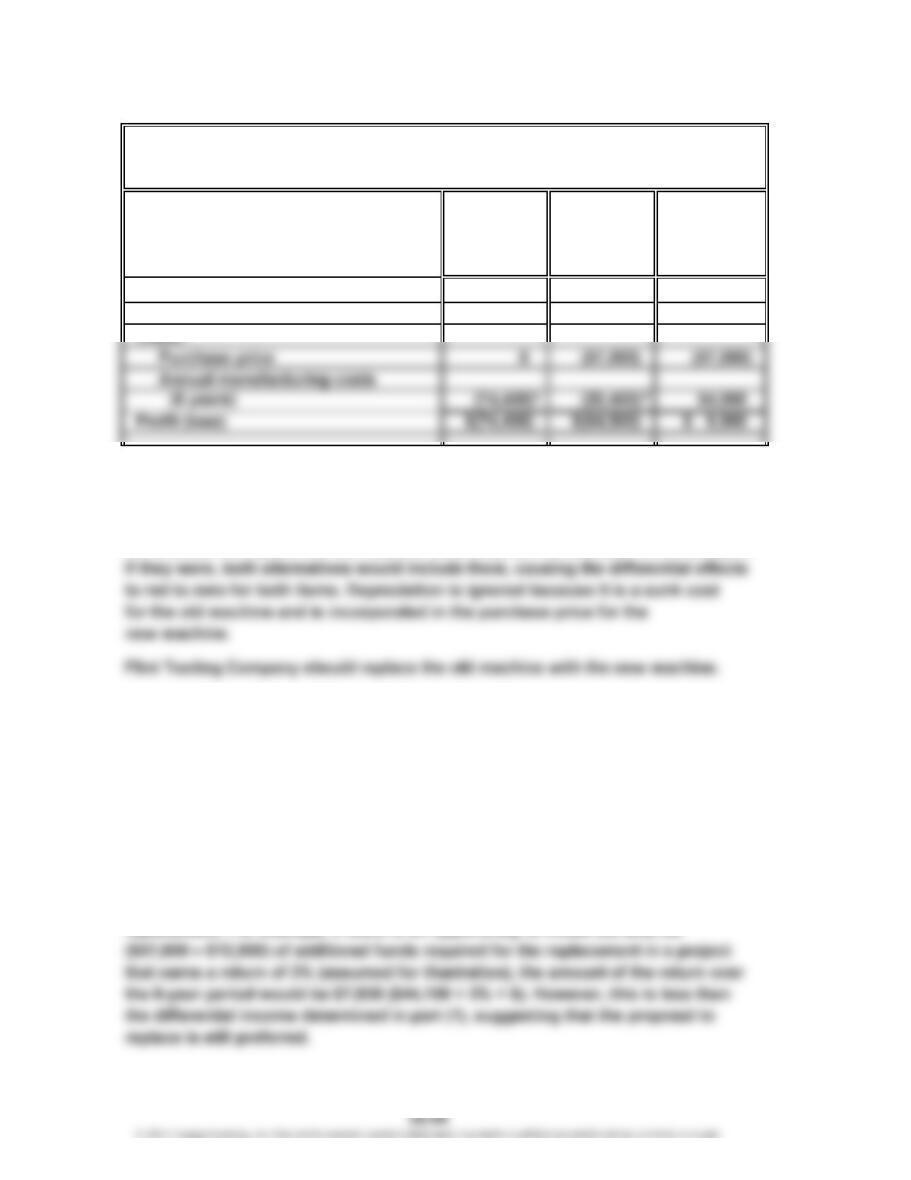
1.
Continue Replace
with Old Old Differential
Machine Machine Effects
(Alternative 1) (Alternative 2) (Alternative 2)
Revenues:
Proceeds from sale of old machine $ 0 $ 12,900 $ 12,900
1
$12,400 × 6 years
2
$3,400 × 6 years
Note: Revenues and nonmanufacturing operating expenses are not affected by
the decision to replace the old machine and, thus, are not included in the analysis.
2. Other factors to be considered include the following:
a. Are there any improvements in the quality of work turned out by the new
machine?
b. What effect does the federal income tax have on the decision?
c. What opportunities are available for the use of the $44,100 of funds
($57,000 less $12,900 proceeds from the old machine) that are required to
purchase the new machine?
After considering such factors as those listed above, the net cost reduction
anticipated over the 6-year period may not be sufficient to justify the
Differential Analysis
Continue with Old Machine (Alt. 1) or Replace Old Machine (Alt. 2)
November 8
CHAPTER 25 Differential Analysis, Product Pricing, and Activity-Based Costing
Prob. 25-3B
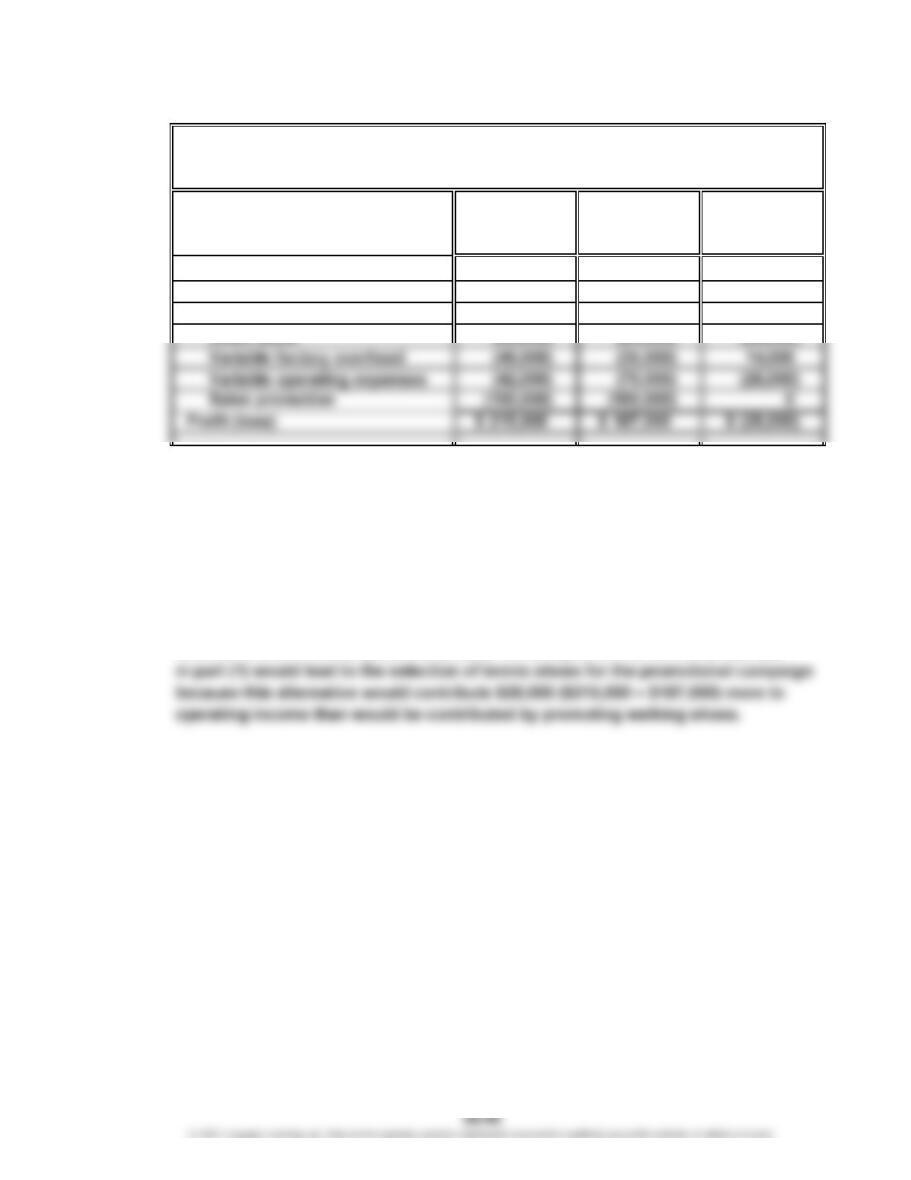
1.
Promote Promote Differential
Tennis Shoes Walking Shoes Effects
(Alternative 1) (Alternative 2) (Alternative 2)
Revenues $ 595,000 $ 700,000 $105,000
Costs:*
Direct materials (133,000) (224,000) (91,000)
1
7,000 shoes × $85
2
7,000 shoes × $100
*
Costs, except sales promotion, are the costs per unit multiplied by the increase in unit volume
for each shoe. Becaues fixed costs are not relevant to the decision, they are not included.
Sole Mates Inc. should promote tennis shoes.
2. The sales manager’s tentative decision should be opposed. The sales manager
erroneously considered the full unit costs instead of the differential (additional)
revenue and differential (additional) costs. An analysis similar to that presented
Differential Analysis
Promote Tennis Shoes (Alt. 1) or Promote Walking Shoes (Alt. 2)
June 19
12
CHAPTER 25 Differential Analysis, Product Pricing, and Activity-Based Costing
Prob. 25-4B
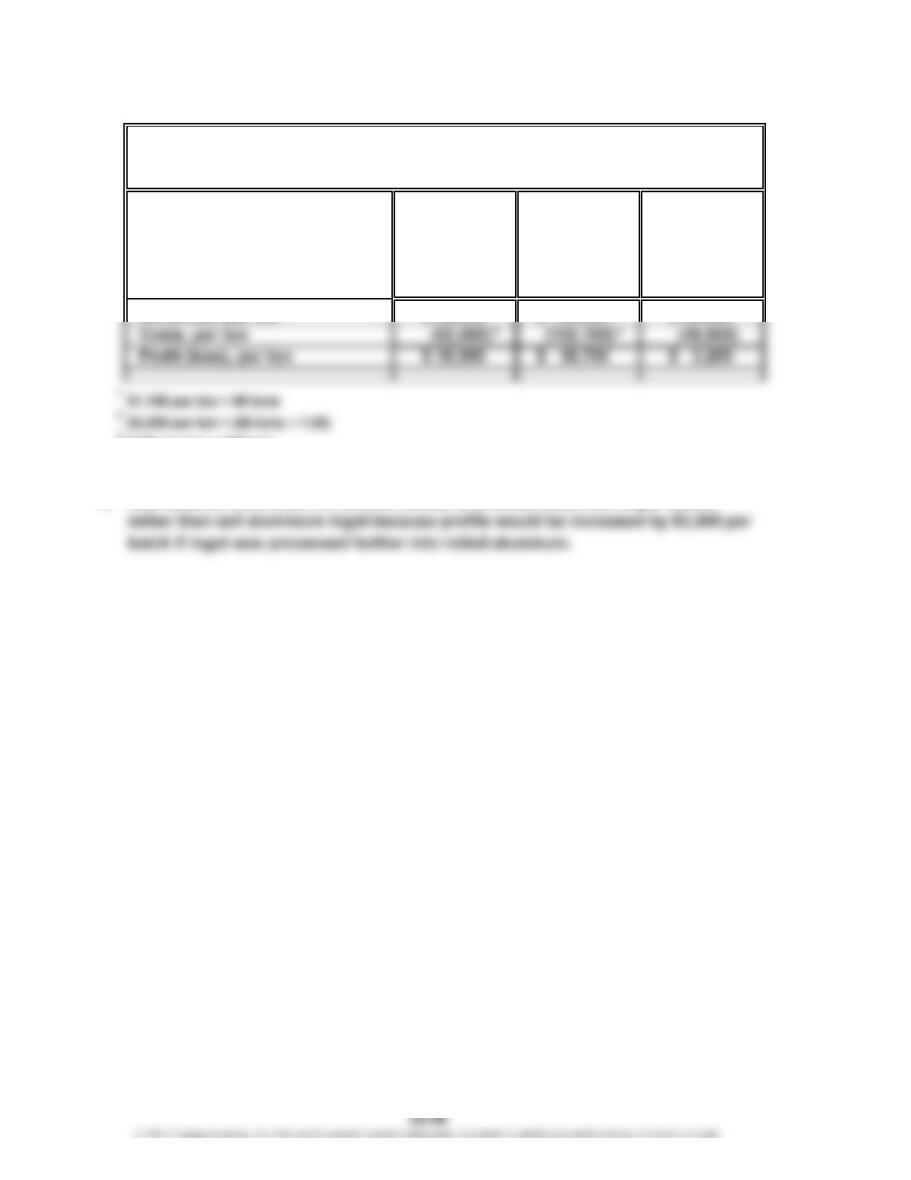
1.
Process
Sell Further into
Aluminum
Rolled Differential
Ingot Aluminum Effects
(Alternative 1) (Alternative 2) (Alternative 2)
3
$105 per ton × 500 tons
4
$52,500 + ($620 per ton × 80 tons)
Differential Analysis
Sell Aluminum Ingot (Alt. 1) or Process Further into Rolled Aluminum (Alt. 2)
February 5
12
CHAPTER 25 Differential Analysis, Product Pricing, and Activity-Based Costing
Prob. 25-5B
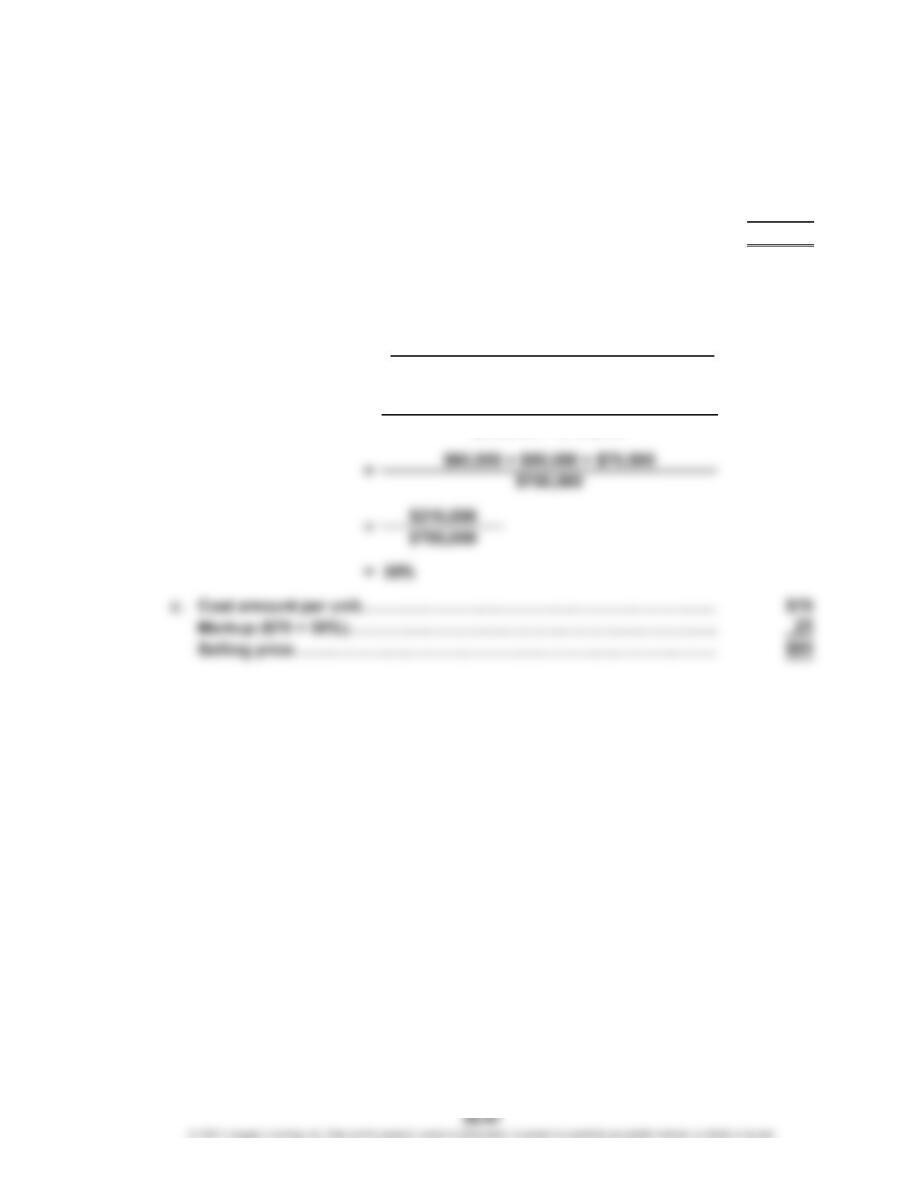
1. $60,000 ($600,000 × 10%)
2. a. Total manufacturing costs:
V
ariable ($52* × 10,000 units)………………………………………………
…
$520,000
Fixed factory overhead………………………………………………………
…
180,000
Total……………………………………………………………………………
…
$700,000
Cost amount per unit: $700,000 ÷ 10,000 units…………………………
…
$70
*$32 + $12 + $8
$520,000 + $180,000
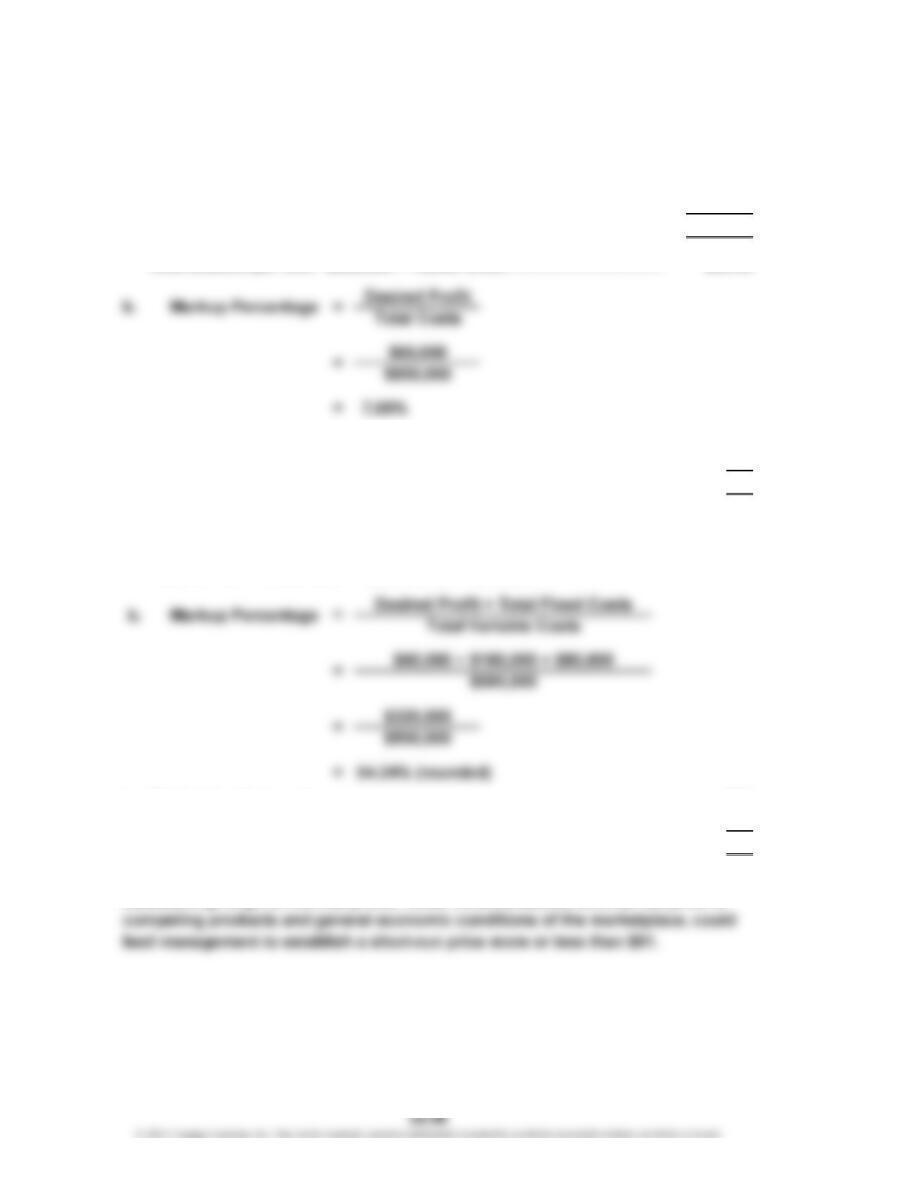
b. Markup Percentage =
=
Desired Profit +
Total Selling and Administrative Expenses
Total Product Costs
$60,000 + $80,000 + ($7 × 10,000 units)
…
CHAPTER 25 Differential Analysis, Product Pricing, and Activity-Based Costing
Prob. 25-5B (Continued)
3. (Appendix)
a. Total costs:
V
ariable ($59 × 10,000 units)………………………………………………
…
$590,000
Fixed ($180,000 + $80,000)…………………………………………………
…
260,000
Total……………………………………………………………………………
…
$850,000
c. Cost amount per unit………………………………………………………
…
$85
Markup ($85.00 × 7.06%)……………………………………………………
…
6
Selling price…………………………………………………………………
…
$91
4. (Appendix)
a. Variable cost amount per unit: $59.00
Total variable costs: $59 × 10,000 units = $590,000
c. Cost amount per unit………………………………………………………
…
$59
Markup ($59 × 54.24%)………………………………………………………
…
32
Selling price…………………………………………………………………
…
$91
5. The cost-plus approach price of $91 should be viewed as a general guideline for
…
6. a.
Reject Accept Differential
Order Order Effects
(Alternative 1) (Alternative 2) (Alternative 2)
Revenues $0 $ 91,200 $ 91,200
V
b. The proposal should be accepted.
Prob. 25-6B
1.
Ethylene Butane Ester
Selling price………………………………
…
$170 $155 $130
V
ariable conversion cost per unit……
…
$40 $40 $30
…
…
2. The contribution margin per unit may give false signals when an organization
has production bottlenecks. Instead, Wilmington Chemical Company should use
the contribution margin per bottleneck hour to determine relative product
profitability as follows:
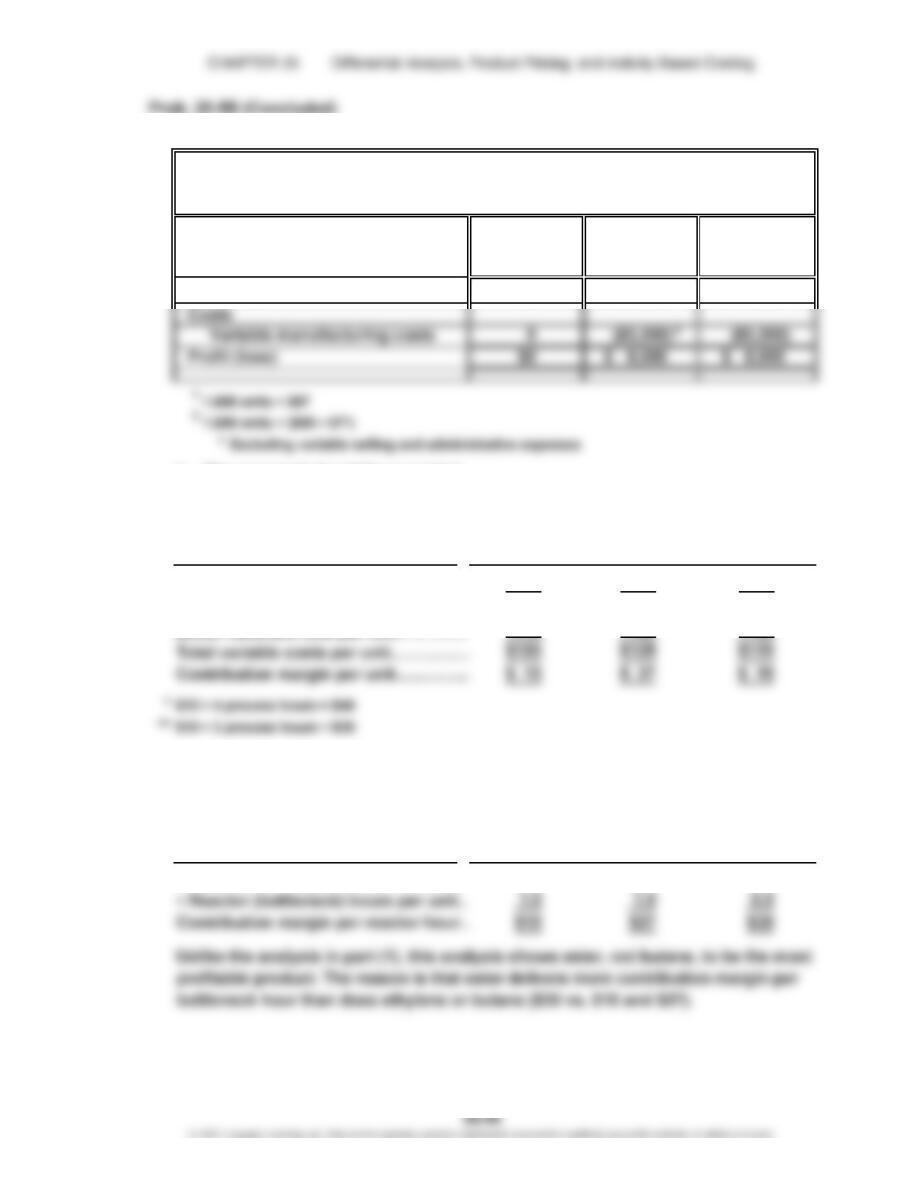
Ethylene Butane Ester
Contribution margin per unit…………
…
$15 $27 $15
…
Differential Analysis
Reject Order (Alt. 1) or Accept Order (Alt. 2)
September 5
1
****
CHAPTER 25 Differential Analysis, Product Pricing, and Activity-Based Costing
Prob. 25-7B
1.
2.
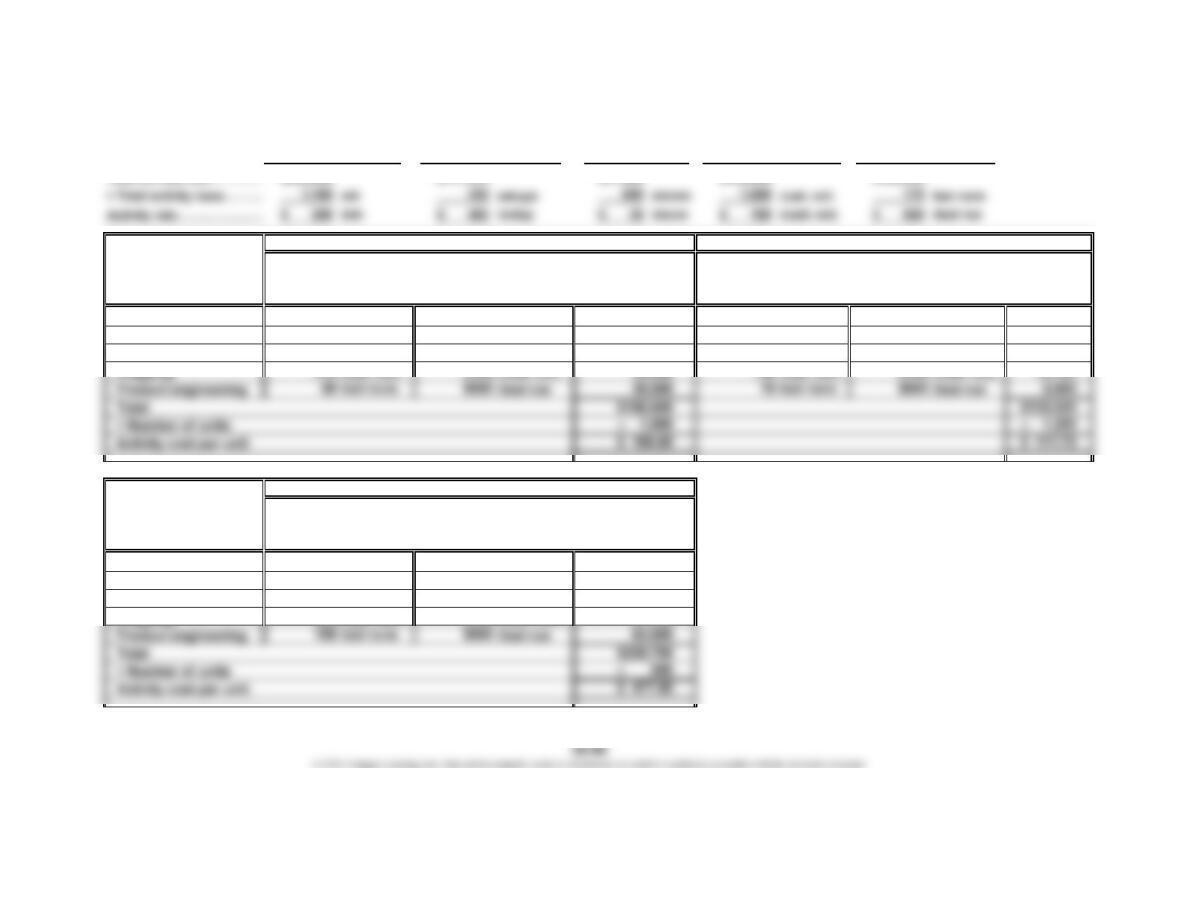
Activity
Production 400 mh /mh 500 mh /mh
Setup 80 setups /setup 30 setups /setup
Moving 230 moves /move 70 moves /move
Activity
Production 200 mh /mh
Setup 150 setups /setup
Moving 300 moves /move
Specialty Paper
Activity-
Computer Paper
Activity-
$35 10,500
$200
$450 67,500
$ 40,000
Base Activity Activity
Usage × Rate = Cost
Cost
Activity
Newsprint
Usage × Rate =
Activity
Production Setup ShippingMoving
Activity-
Product Engineering
Base
=
Activity
Cost
$35 8,050 $35 2,450
$200 $ 80,000 $200
13,500
$100,000
$450 36,000 $450
Base Activity
Usage × Rate
CHAPTER 25 Differential Analysis, Product Pricing, and Activity-Based Costing
Prob. 25-7B (Concluded)
3. The unit costs are different even though each product requires 0.4 machine hour
because the products consume many activities in ratios different from the volume.
CHAPTER 25 Differential Analysis, Product Pricing, and Activity-Based Costing
CP 25-1
No, it would not be ethical for Aaron to attend the meeting. Such a meeting would be
CP 25-2
This activity is designed to have students access a number of products and
services on the Internet to see their commercial potential. Each of the listed
sites will provide product descriptions (1) and pricing (2).
The list of costs (3) for the products will not be directly obtainable from the
company’s website, but can be assumed based on the company and industry.
Some examples include:
Delta Air Lines—Airline tickets Fixed or Variable?
Fuel…………………………………………………………………… V
Crew salaries………………………………………………………
…
F
Plane depreciation…………………………………………………
…
F
Landing fees………………………………………………………
…
V
…
…
Equipment depreciation…………………………………………
…
F
For Delta Air Lines, the likely activity base for determining fixed and variable costs
is the number of passenger miles. Employees’ salaries for an airline are relatively
fixed and only become variable when there are significant changes to the flight
schedule.
Amazon.com—Merchandise Fixed or Variable?
Cost of merchandise (purchased for resale)…………………
…
V
…
…
CASES & PROJECTS
CHAPTER 25 Differential Analysis, Product Pricing, and Activity-Based Costing
CP 25-2 (Concluded)
For Amazon, a possible activity base for determining fixed and variable costs is the
amount sold.
Dell Inc.—Personal computers Fixed or Variable?
Cost of computers (dl, dm, and foh)……………………………
…
V (mostly)
Web page design and programming…………………………… F
For Dell, the likely activity base for determining fixed and variable costs is the
number of computers sold.
4. The Delta Air Lines ticket is likely to have the largest contribution margin per
incremental unit (ticket) sold. The portion of variable cost to total cost for an airline
will be much smaller than the other two products. This is because the largest costs
and merchandise.
CP 25-3
Memo
To: Juanita Jackson
From: Les Miles
Re: New Product Pricing
Thank you again for taking the time to meet with me and discuss the pricing of our new
computer. While I understand your desire to set an appropriate price for this new
product, it would be inappropriate to exclude fixed costs in the pricing decision.
CHAPTER 25 Differential Analysis, Product Pricing, and Activity-Based Costing
CP 25-3 (Concluded)
Target costing provides a potential solution to the pricing issue. This approach treats
the market price as given and adjusts the cost in order to yield the required profitability.
Target costing is particularly effective in highly competitive product markets where
declining prices require cost reduction in order to compete. Under target costing, the
CP 25-4
The contribution margin is $4 ($22 – $18) per dozen on the special order. Thus,
Varden’s manager can contribute to fixed costs by accepting the order. However,
there are some additional considerations the manager must consider before
accepting this order.
1. Have we ever done business overseas? Exports require additional
administrative activities. Have these additional administrative costs been
considered in the differential analysis?
4. Will the overseas customer want to do business in the future, or is this just a
single sale? If the overseas customer is expected to purchase more golf balls
in the future, then it is likely that the customer will come to expect the $22
price in the future.
5. Is there a possibility of another customer being willing to purchase the golf
balls at the $35 price? If so, Varden may not want to commit capacity to the
overseas customer. Once the capacity is committed, it will be difficult to sell
to anyone else.
CP 25-5
First, Marriott has excess capacity for this day, so it should be willing to accept
additional customers. The Priceline.com customer generates incremental revenue
that will not reduce other business. Given this, however, the price must at least
cover variable cost; otherwise, Marriott will incur a loss. The variable cost per room
night is shown below.
These costs are mostly avoidable or are variable to room nights. This answer assumes
that the maid and laundry staff hours are highly flexible and can be staffed to demand.
Likewise, the air conditioning and lights can be turned off if the room is not rented for
the night, saving most of the utility cost. The desk staff and hotel depreciation are either
sunk (depreciation) or mostly fixed to the number of room nights. Therefore, they are
not relevant to accepting this business. The total variable costs are $61 per night, so
the $85 customer bid should be accepted.
CP 25-6
The product profitability report indicates that the two products are equal in
terms of profitability (on a per-case basis). However, the additional information
indicates that there will be more activities required for Jamaican Punch than for
King Kola. Apparently, the factory overhead costs are being allocated on the
basis of a single activity base that does not capture these product differences.
Because the direct labor costs are equal for producing a case of each product, the