chapter
25
Differential Analysis,
Product Pricing, and
Activity-Based Costing
______________________________________________
OPENING COMMENTS
This chapter covers (1) differential analysis, (2) methods of determining the selling price of a product
using a cost-plus markup approach, (3) the effects of production bottlenecks, and (4) activity-based
costing. The cost-plus approach of product cost is described in Objective 2; total cost and variable cost
methods are presented in the chapter appendix. All topics in this chapter are able to stand alone.
Therefore, the instructor is free to cover only one or two of the topics if class time is a limited resource as
the term draws to a close.
After studying the chapter, your students should be able to:
2. Determine the selling price of a product, using the product cost concept.
4. Allocate product costs using activity-based costing.
STUDENT FAQS
• What are some guidelines I can use to decide which method to use to set a normal price for a
product?
• How do you determine what your profit is in real life?

108 Chapter 25 Differential Analysis, Product Pricing, and Activity-Based Costing
• Since activity-based costing (ABC) is better at identifying all the costs, why is it not used to
determine inventory valuation or preparation of financial statements?
• Why are proper cost driver uses so important in determining correct cost per item?
• Why is sunk cost never an item to consider in differential analysis?
OBJECTIVE 1
Prepare differential analysis reports for a variety of managerial decisions.
KEY TERMS
Differential Analysis Differential Revenue
Differential Cost Opportunity Cost
Differential Income (Loss) Sunk Cost
SUGGESTED APPROACH
Differential analysis is a method used to quantitatively evaluate alternative courses of action. Under
differential analysis, the difference between the revenues and costs of alternatives is compared. The goal
is to choose the alternative that results in the greatest amount of profit or the lowest cost.
Begin your discussion of differential analysis by using the Group Learning Activity that follows. This
activity will ask your students to compare the differential revenues and expenses of two summer jobs.
Use the second Group Learning Activity to illustrate additional applications of differential analysis.
Emphasize that your students should concentrate on understanding the broad concept of differential
analysis rather than memorizing specific examples of how it is applied.
Wrap-up this objective by asking your students to give examples of decisions that should be evaluated
using differential cost techniques. Also encourage them to consider the qualitative factors influencing
business decisions through a Writing Exercise.
GROUP LEARNING ACTIVITY — Introduction to Differential Analysis
Transparency Master (TM) 25-1 presents information concerning two summer jobs: one in an office and
one at an amusement park. Divide your class into small groups and ask them to determine which job they
would choose. Have each group record their choice and the supporting analysis.
Ask a few groups to present their answers in front of the class. Although the groups will probably reach
the same conclusion, there may be significant variation in how they obtained this answer. Show TM 25-2,
Chapter 25 Differential Analysis and Product Pricing 109
which presents a differential analysis report in the format used by the text. Under differential analysis, this
problem is solved by comparing differential revenues to differential costs.
After reviewing the quantitative analysis, remind students that qualitative factors must be considered as
well. Ask students to name qualitative factors that might influence them to take the amusement park job
even though it pays less.
GROUP LEARNING ACTIVITY — Differential Analysis
Handout 25-1 presents four differential analysis problems similar to those presented in the text. Divide the
class into small groups to work on these problems.
Rather than asking each group to do all four problems, you may want to assign only one problem to each
group. After giving the groups enough time to solve their problems, ask them to present their solutions to
the class. This will give your students the opportunity to teach an example to the class.
CLASS DISCUSSION — Differential Analysis
Ask your students to identify decisions from their personal experiences that fit under each of the
categories of differential analysis presented in the text. For example, a decision to cook dinner or order a
pizza is essentially a “make or buy” decision. Deciding whether to go to work or go on to graduate school
after finishing a baccalaureate degree is a “sell or process further” decision.
WRITING EXERCISE — Qualitative Factors in Decision Making
To emphasize that any decision encompasses qualitative, as well as quantitative, factors, ask your
students to write an answer to one or more of the following questions (TM 25-8):
1. A diversified food company is considering the closing of its condiment division. What qualitative
factors should be considered before discontinuing a division or product line?
Possible response: Since the business is a diversified food company, closing a division could adversely
2. An automobile manufacturer has decided to allow outside suppliers to bid on all parts necessary to
make its vehicles. What qualitative factors should be considered by management in deciding whether
or not to turn over the production of a part to an outside supplier?
3. What are the qualitative factors you might consider when determining whether or not to replace your
car?
Possible response: One qualitative factor to consider is that you know the history of how your car was
OBJECTIVE 2
Determine the selling price of a product, using the product cost concept.
KEY TERMS
Product Cost Concept Target Costing
SUGGESTED APPROACH
The normal selling price of any product can be expressed using the following formula:
Normal Selling Price = Cost + Markup
The text presents three different techniques for determining the selling price of the product: the total cost,
product cost, and variable cost concept. Emphasize that all three methods should lead a company to the
same selling price. Therefore, selecting a method depends on how a company accumulates and reports
product costs. This section describes the product cost concept. Total cost and variable cost methods are
described in the Appendix. Use the following Demonstration Problem and Group Learning Activity to
illustrate how product cost is used to set product prices.
Chapter 25 Differential Analysis and Product Pricing 111
DEMONSTRATION PROBLEM — Product Cost Concept
B Squared Inc. uses the product cost concept of applying cost plus approach to product pricing. The costs
of producing and selling 35,000 units of soccer balls are as follows:
Variable Cost per Unit:
Direct Materials $ 4.00
Direct Labor 5.00
Factory Overhead 3.50
Selling and Admin 2.50
Total $16.00
Fixed Cost:
Factory Overhead $100,000
Selling and Admin Exp. 45,000
B Squared desires a profit of equal to 20% of total assets of $400,000. Determine the selling price per
ball.
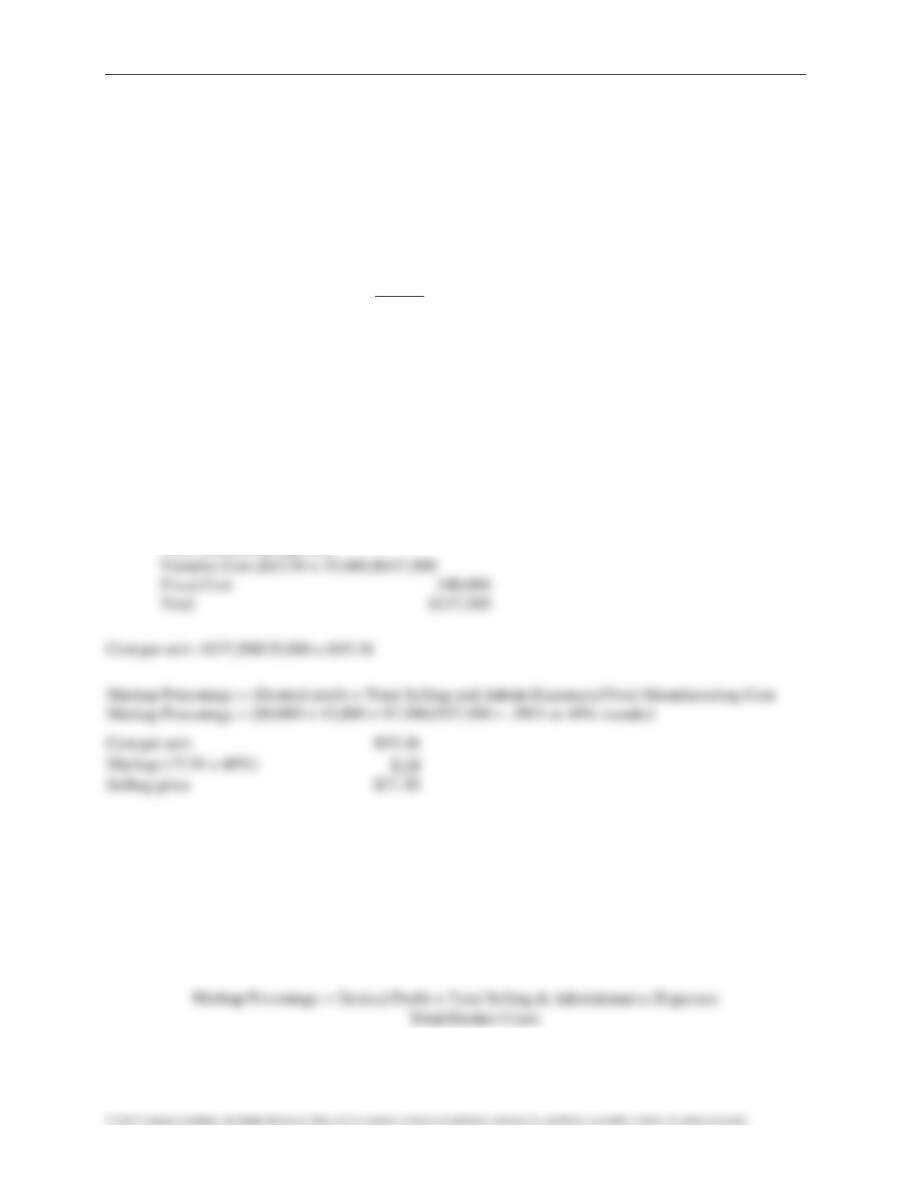
Solution:
Total Manufacturing Cost:
GROUP LEARNING ACTIVITY — Product Cost Concept
Some companies include only manufacturing costs in the cost reported for a product. In this case, the
markup added to the product cost must compensate for selling and administrative expenses, as well as the
desired level of profit. The product cost concept is well suited to manufacturers.
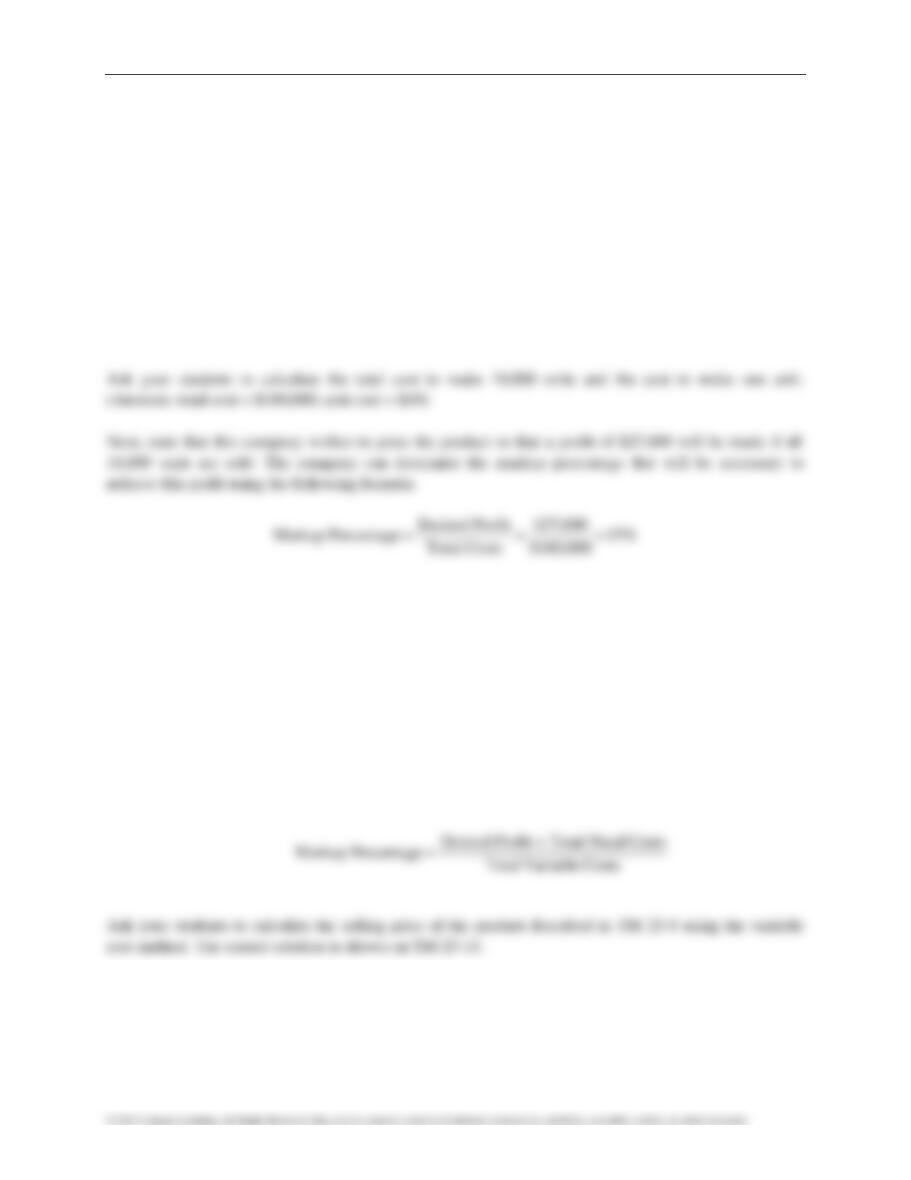
The formula to calculate the markup percentage under the product cost method is as follows:
Markup Percentage = Desired Profit + Total Selling & Administrative Expenses
112 Chapter 25 Differential Analysis, Product Pricing, and Activity-Based Costing
Ask your students to calculate the selling price of the product described in TM 25-9 using the product cost
and variable cost methods. The correct solution is shown on TM 25-10.
INTERNET ACTIVITY — Target Costing
OBJECTIVE 3
Compute the relative profitability of products in bottleneck production processes.
KEY TERMS
Production Bottleneck Theory of Constraints (TOC)
SUGGESTED APPROACH
Students might not be familiar with the concepts of production constraints (bottlenecks). As a first step,
demonstrate what bottlenecks are and how they impact production processes. After using the
Demonstration Problem for this purpose, move on to the group learning activity and class discussion
ideas.
DEMONSTRATION PROBLEM — Simulating Production Constraints
Have five students line up in a row. Provide each student with two dice, except for the student in the third
position, who gets one die. Place four poker chips between each student, representing work in process.
The object of this exercise is to move poker chips from the beginning of the line to the end of the line.
Poker chips are moved from beginning to end based on the roll of the dice. For example, if a student’s
roll of the dice adds up to seven, he/she will attempt to move seven poker chips on to the next position. If
the student doesn’t have seven poker chips, he/she will move all of the chips in work in process to the
next position. Have a stack of poker chips (representing raw materials) in front of the first position. Ask
the students to roll the dice ten times on your count. When the simulation is finished, discuss the
following questions:
1. How many chips do you think were processed over the ten turns? (Have the output counted at this
2. What happened between positions 2 and 3, and why? Answer: Poker chips stacked up in front of
3. Was the additional production from positions 1 and 2 “productive”? Answer: not really. These
4. What is happening in positions 4 and 5? Answer: They are operating way below capacity. They are
5. How can these problems be avoided? Answer: Naturally, the firm would want to remove the
GROUP LEARNING ACTIVITY — Product Profitability in Constrained
Environments
Divide your class into groups. Provide each group with a copy of Handout 25-2. This handout is a
problem where products must be processed through a bottleneck. Ask your students to answer the
questions provided in the handout. The solution is provided on TMs 25-11 and 25-12.
OBJECTIVE 4
Allocate product costs using activity-based costing.
KEY TERMS
Activities Activity-Based Costing (ABC)
Activity Base Activity Rate
114 Chapter 25 Differential Analysis, Product Pricing, and Activity-Based Costing
SUGGESTED APPROACH
Activity-based costing helps in setting product prices by providing more accurate product costs. TM 25-
11 illustrates the allocation of factory overhead in an activity-based costing (ABC) system. In an ABC
system, management must identify all the activities necessary to manufacture a product. Factory overhead
costs are first allocated to these activities. For example, one activity that absorbs factory overhead costs is
machine setup. Under ABC, all costs incurred in setting up machines would be allocated to the setup
activity. The illustration in TM 25-13 assumes a simple manufacturing process with only three activities.
Next, factory overhead is allocated to products based on the activities they consume in the manufacturing
process. Continuing with the machine setup example, the cost of a setup would be calculated based on the
total cost allocated to the setup activity and the total number of setups performed. This cost can then be
allocated to a product based on the number of setups required to make the product.
As you cover ABC costing, you will need to stress the following points:
1. ABC changes only the way overhead costs are allocated.
2. When identifying the activities needed to manufacture their product, many companies find
4. Many companies developed ABC systems independently of their cost accounting systems. In this
case, ABC is used only for decision making. It is not used for inventory valuation or financial
statements.
LECTURE AID — The Need for ABC Costing
The following real-world example illustrates how traditional cost systems can understate the cost of
complex products.
A manufacturer of surgical gloves traditionally made gloves in one color: white. The
company received a request from one of its customers to make each size glove a different
color. The customer wanted small gloves to be pink, medium to be yellow, and large to be
green.
Chapter 25 Differential Analysis and Product Pricing 115
No matter how thoroughly the machines were cleaned after producing a colored glove,
they still contained residue from the dye. To remove the residue, materials had to be run
through the machine. So, a batch of gloves was made and scrapped just to prepare the
machine to make white (or another color) gloves.
DEMONSTRATION PROBLEM — ABC Costing
Allocating factory overhead to products under an ABC system can be explained as a four-step process.
Step 1—Identify activities: ABC costing allocates factory overhead to the activities that consume factory
overhead costs. This forces a company to identify the activities necessary to make its product.
For example, assume that a manufacturing company identifies the following activities as necessary to
make a product:
1. Order materials.
3. Schedule production.
5. Make the product.
7. Pack and ship the product to the customer.
Step 2—Allocate costs to the activities: The company would start this step by determining the factory
overhead costs it incurs to order materials (the first activity). These costs would include such items as the
salaries of the purchasing agent(s) and staff, supplies used by the purchasing department, and depreciation
on office equipment used by the purchasing department. Assume that these costs total $80,000.
Step 3—Select a cost driver: A means to allocate the cost of each activity to the product must be chosen.
This is known as selecting a cost driver. The cost driver for any activity should be the event that causes
costs to be incurred. For example, placing an order causes purchasing costs to be incurred.
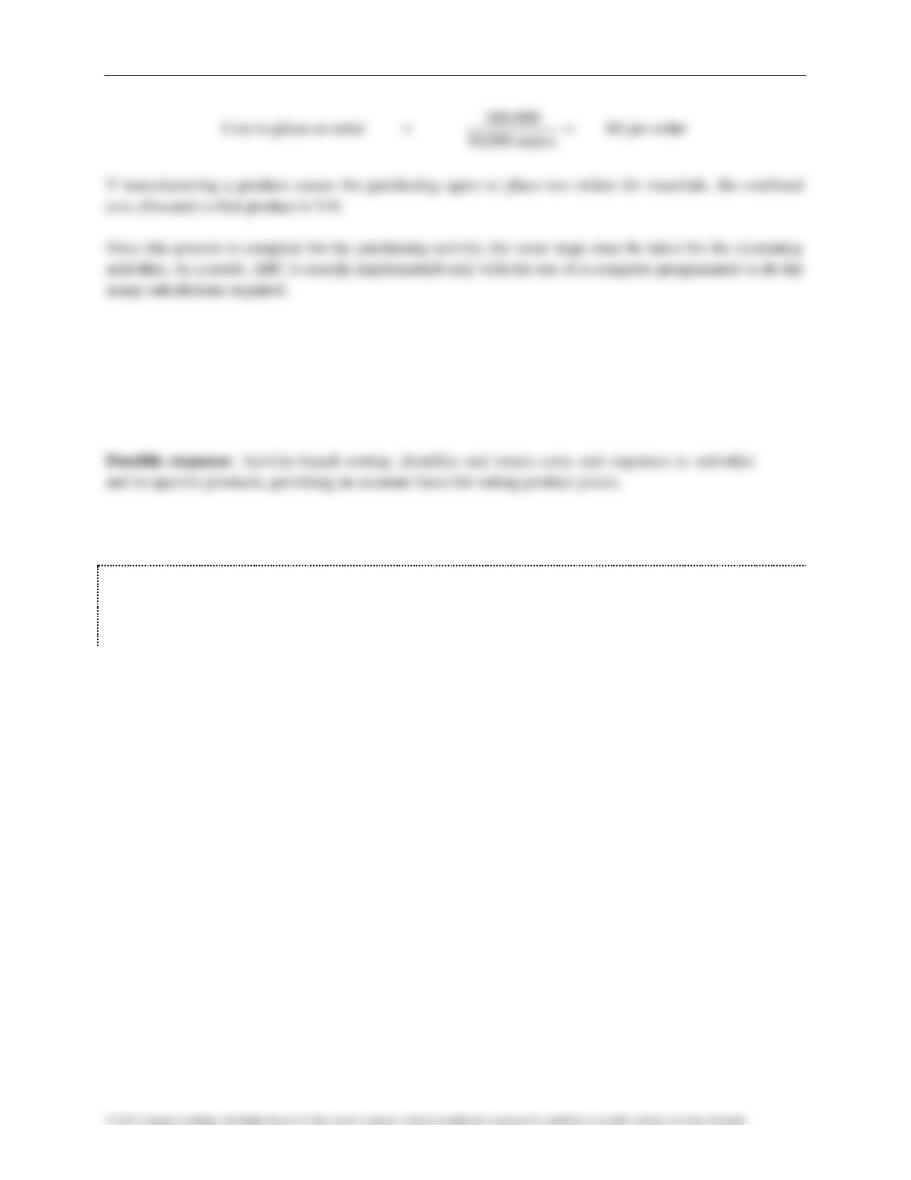
Step 4—Allocate costs of activities to the product, using the cost driver: Assume that the purchasing
department places 10,000 orders per year. The cost to place an order is calculated as follows:
116 Chapter 25 Differential Analysis, Product Pricing, and Activity-Based Costing
WRITING EXERCISE — Activity-Based Costing
Ask your students to write an answer to the following question (TM 25-14):
How does an activity-based costing system aid in setting product prices?
APPENDIX — TOTAL AND VARIABLE COST
CONCEPTS TO SETTING NORMAL PRICE
KEY TERMS
Total Cost Concept Variable Cost Concept
SUGGESTED APPROACH
The normal selling price of any product can be expressed using the following formula:
Normal Selling Price = Cost + Markup
The text presents three different techniques for determining the selling price of the product: the total cost,
product cost, and variable cost concept. Remind students that all three methods should lead a company to
the same selling price. Therefore, selecting a method depends on how a company accumulates and reports
product costs.
Chapter 25 Differential Analysis and Product Pricing 117
DEMONSTRATION PROBLEM — Total Cost Concept
The total cost concept is the most convenient method for determining a product’s selling price if a
company includes all manufacturing, selling, and administrative costs associated with the product in its
reported cost. A markup is then added to achieve the firm’s desired profit.
For example, assume that the following costs are incurred to make 10,000 units of a product (TM 25-9):
Variable manufacturing costs $5 per unit
Variable selling and administrative costs $2 per unit
Fixed factory overhead costs $80,000
Fixed selling and administrative expenses $30,000
Ask your students to calculate the selling price of the product if it is marked up 15 percent above the total
cost. (Answer: $18 1.15 = $20.70)
Point out that the total cost concept would be used mostly by merchandising businesses.
In other cases, companies use the concept of variable costing when reporting a product’s cost. Under this
concept, all variable costs from manufacturing, selling, and administrative activities are included in
determining the product’s reported cost. When variable costing is used, the markup added to the product
cost must compensate for all fixed costs, as well as the desired level of profit.
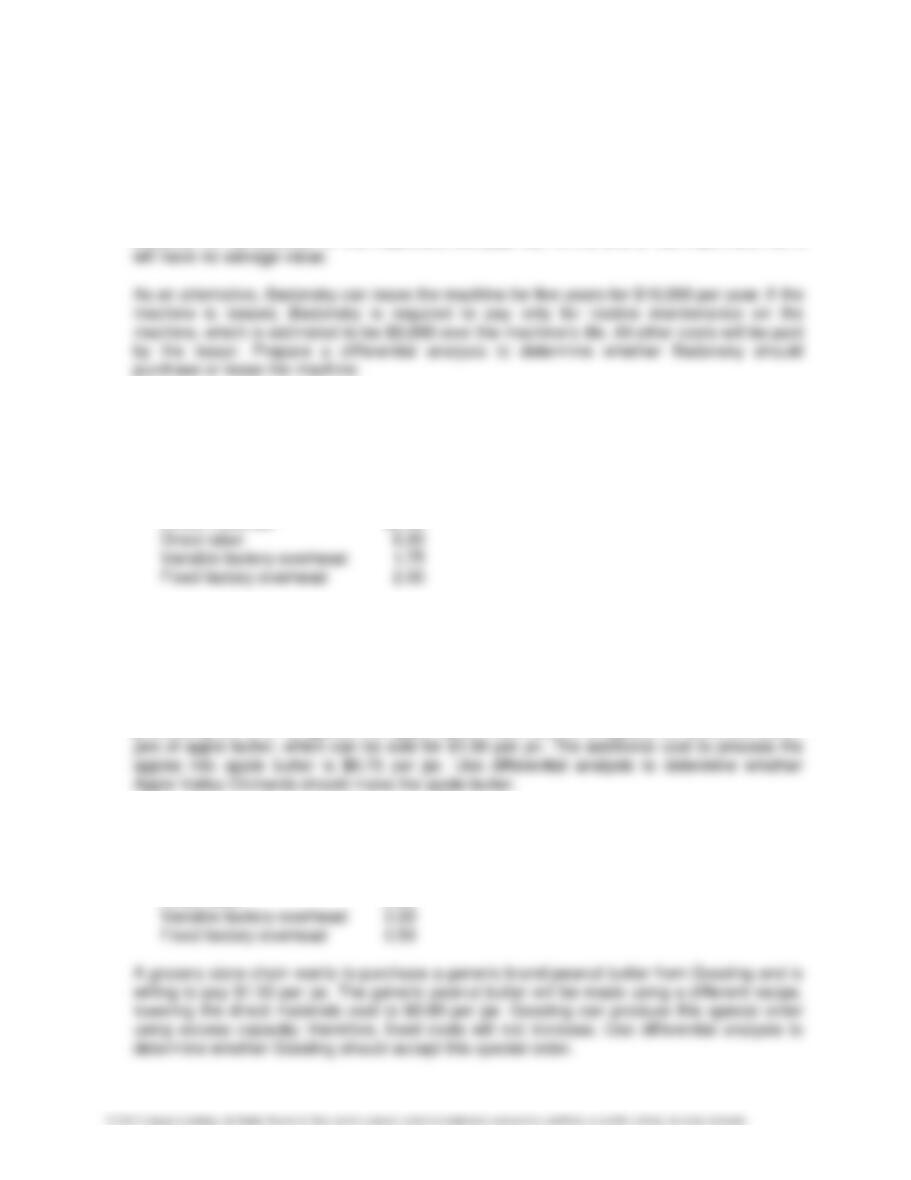
The formula to calculate the markup percentage under the variable cost method is:
Handout 25-1
Differential Analysis
1. Badonsky Manufacturing needs to obtain a gear-cutting machine, which can be purchased
for $75,000. Badonsky estimates that repair, maintenance, insurance, and property tax
expense will be $20,000 for the machine’s five-year life. At the end of the machine’s life, it
2. Grayson Enterprises currently manufactures part A-14, one of the component parts used to
assemble the company’s main product. Specialty Parts has offered to make part A-14 for
$12.50 per unit.
Grayson’s per-unit cost to make part A-14 is $14.75, as follows:
Direct materials $5.00
None of Grayson’s fixed overhead costs will be eliminated if the part is purchased. However,
the plant space currently used to manufacture the part can be leased to another company
for $30,000 per year. Assuming that Grayson needs 100,000 parts per year, should the
company continue to make part A-14 or buy it?
3. Apple Valley Orchards sells apples for $15.00 per bushel. The company has considered
processing some of its apples into apple butter. Each bushel of apples will yield two dozen
4. Gooding Foods makes Goody-Goody brand peanut butter. The cost to make each jar is
$2.05 and consists of the following:
Direct materials $1.00
Direct labor 0.25
Handout 25-2
Profitability Analysis with Production Constraints
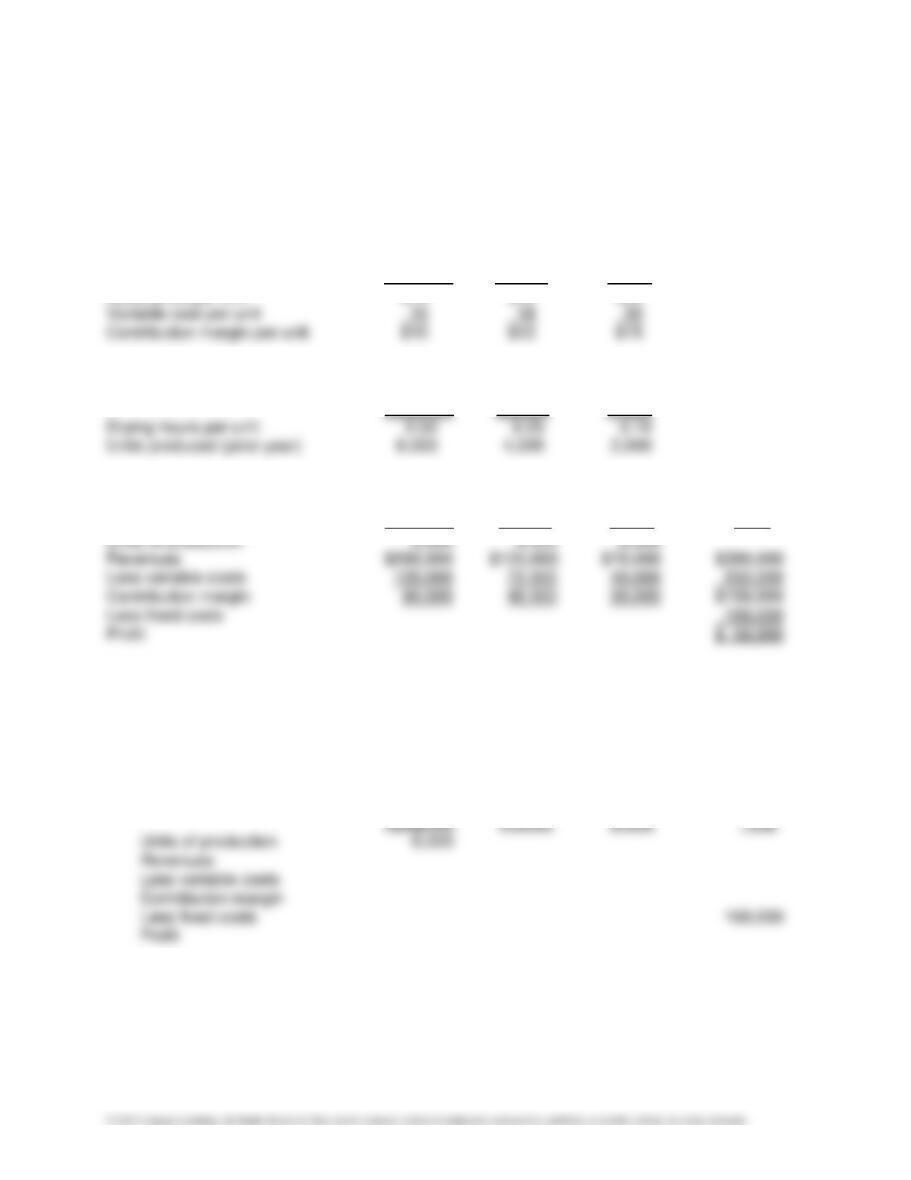
Bono Pasta Company makes three types of pasta: spaghetti, elbows, and shells. The
production process involves mixing, extruding, and drying. The drying operation is a
constraining resource in this operation. The contribution margins per unit for the three products
are shown below.
Spaghetti Elbows Shells
Sales price per unit $25 $30 $35
The fixed costs are $100,000. The production volume and constraint usage information for the
three products are:
Spaghetti Elbows Shells
The following profitability report has been prepared for the prior year’s sales levels:
Spaghetti Elbows Shells Total
Required: Answer the following questions.
a. Which product is the most profitable and should be emphasized in marketing efforts? Why?
b. If, during the upcoming year, Bono reduced spaghetti production by 2,000 units and
replaced the released capacity with the sale of shells, what would be the impact on total
profitability (fill in the table below)?
c. Determine the price for spaghetti that would make spaghetti equal to the profitability of
shells.
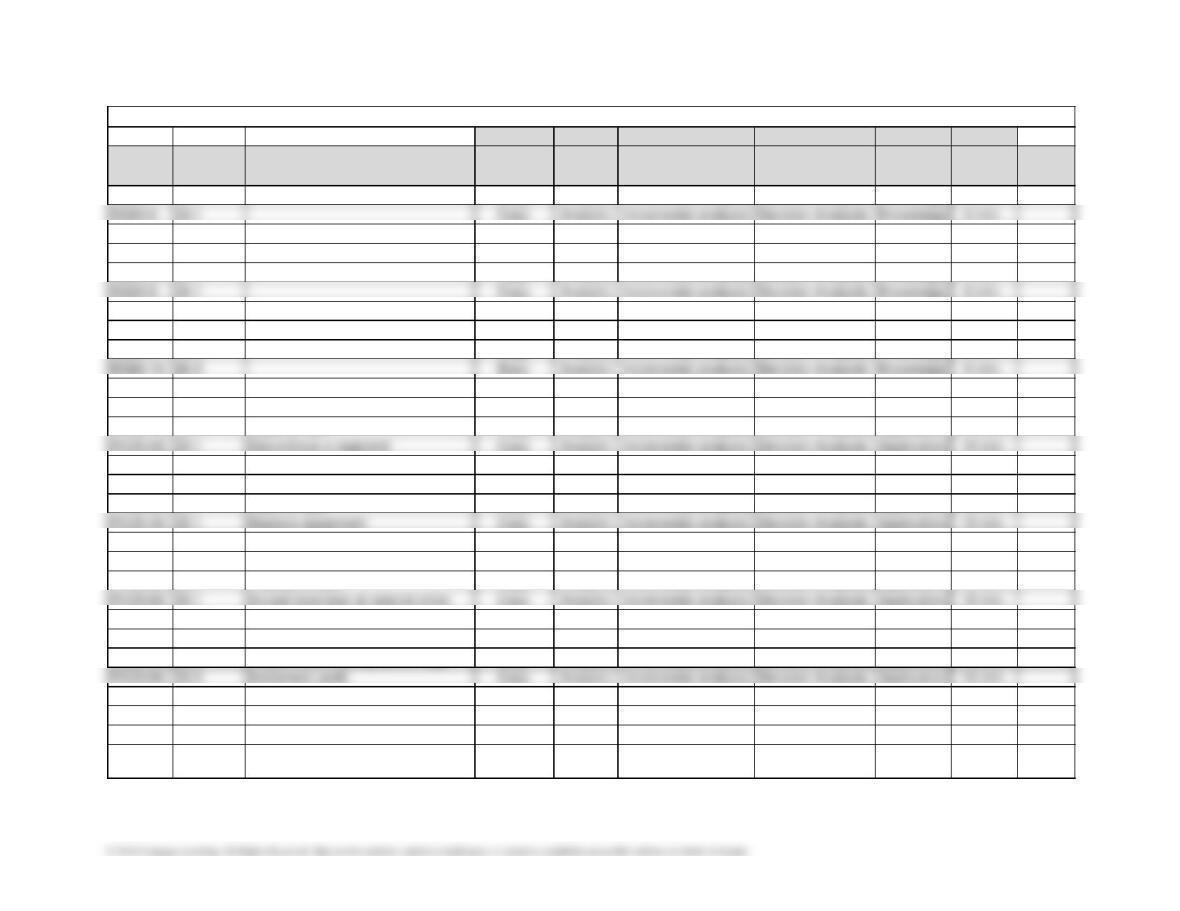
DIFFICULTY BUSPROG ACBSP IMA BLOOM’S TIME
Problem
Learning
Objective
Description Primary Primary Managerial Only
Spread-
sheet
DQ25-1 25–1 Easy Analytic Incremental analysis Decision Analysis Knowledge 5 min.
DQ25-2 25–1 Easy Analytic Incremental analysis Decision Analysis Knowledge 5 min.
DQ25-3 25–1 Easy Analytic Incremental analysis Decision Analysis Knowledge 5 min.
DQ25-4 25–1 Easy Analytic Incremental analysis Decision Analysis Knowledge 5 min.
DQ25-5 25–1 Easy Analytic Incremental analysis Decision Analysis Knowledge 5 min.
DQ25-6 25–1 Easy Analytic Incremental analysis Decision Analysis Knowledge 5 min.
DQ25-7 25–1 Easy Analytic Incremental analysis Decision Analysis Knowledge 5 min.
DQ25-8 25–2 Easy Analytic Incremental analysis Decision Analysis Knowledge 5 min.
DQ25-9 25–2 Easy Analytic Incremental analysis Decision Analysis Knowledge 5 min.
DQ25-10 25-3 Easy Analytic Incremental analysis Decision Analysis Knowledge 5 min.
DQ25-11 25-4 Easy Analytic Incremental analysis Decision Analysis Knowledge 5 min.
PE25-1A 25-1 Lease or sell Easy Analytic Incremental analysis Decision Analysis Application 10 min.
PE25-1B 25-1 Lease or sell Easy Analytic Incremental analysis Decision Analysis Application 10 min.
PE25-2A 25-1 Discontinue a segment Easy Analytic Incremental analysis Decision Analysis Application 10 min.
PE25-2B 25-1 Discontinue a segment Easy Analytic Incremental analysis Decision Analysis Application 10 min.
PE25-3A 25-1 Make or buy Easy Analytic Incremental analysis Decision Analysis Application 10 min.
PE25-3B 25-1 Make or buy Easy Analytic Incremental analysis Decision Analysis Application 10 min.
PE25-4A 25-1 Replace equipment Easy Analytic Incremental analysis Decision Analysis Application 10 min.
PE25-4B 25-1 Replace equipment Easy Analytic Incremental analysis Decision Analysis Application 10 min.
PE25-5A 25-1 Process or sell Easy Analytic Incremental analysis Decision Analysis Application 10 min.
PE25-5B 25-1 Process or sell Easy Analytic Incremental analysis Decision Analysis Application 10 min.
PE25-6A 25-1 Accept business at special price Easy Analytic Incremental analysis Decision Analysis Application 10 min.
PE25-6B 25-1 Accept business at special price Easy Analytic Incremental analysis Decision Analysis Application 10 min.
PE25-7A 25-2 Product cost markup percentage Easy Analytic Incremental analysis Decision Analysis Application 10 min.
PE25-7B 25-2 Product cost markup percentage Easy Analytic Incremental analysis Decision Analysis Application 10 min.
PE25-8A 25-3 Bottleneck profit Easy Analytic Incremental analysis Decision Analysis Application 10 min.
PE25-8B 25-3 Bottleneck profit Easy Analytic Incremental analysis Decision Analysis Application 10 min.
PE25-9A 25-4 Activity-based costing Easy Analytic Incremental analysis Decision Analysis Application 10 min.
PE25-9B 25-4 Activity-based costing Easy Analytic Incremental analysis Decision Analysis Application 10 min.
Ex25-1 25–1
Differential analysis for a lease or
sell decision
Easy Analytic Incremental analysis Decision Analysis Application 15 min.
HOMEWORK CHART WITH LEARNING OUTCOMES TAGGING
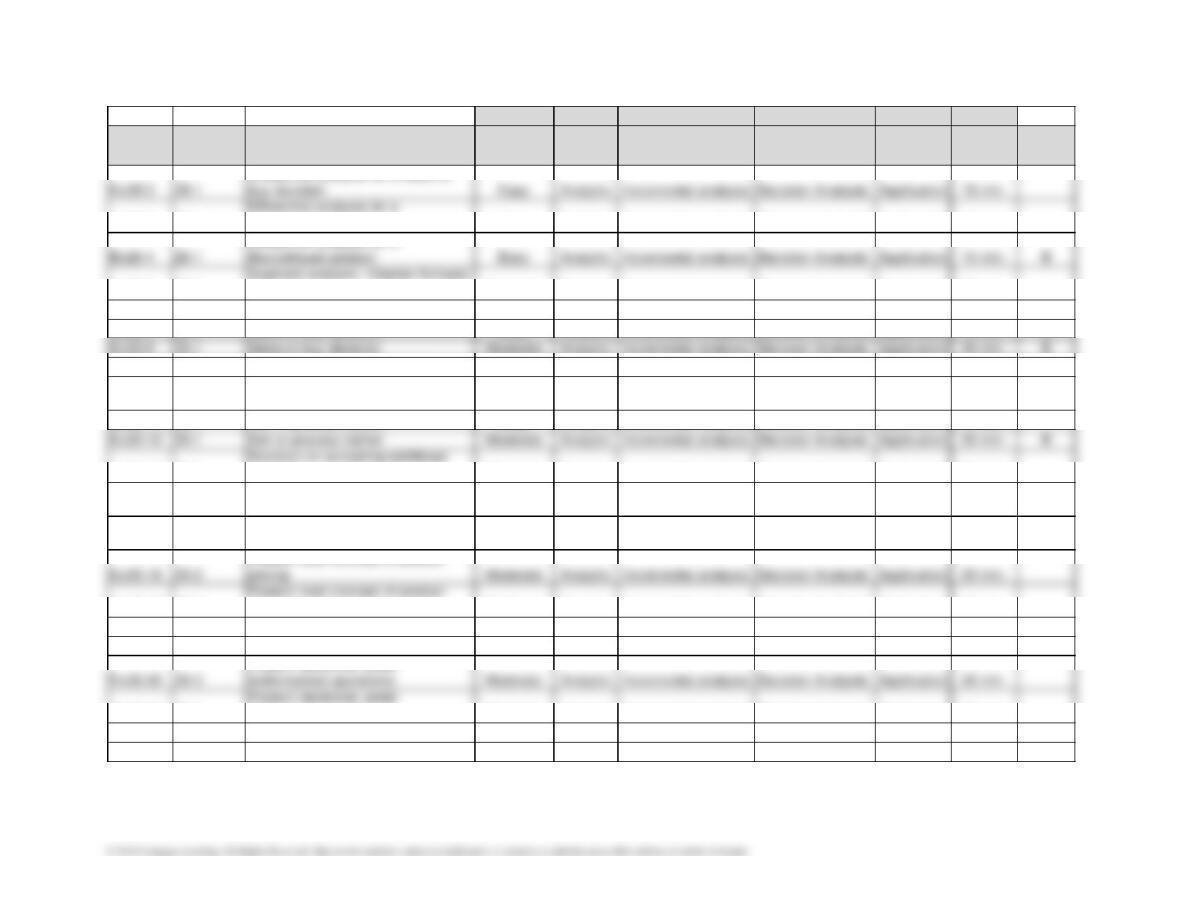
DIFFICULTY BUSPROG ACBSP IMA BLOOM’S TIME
Problem
Learning
Objective
Description Primary Primary Managerial Only
Spread-
sheet
Ex25-2 25–1
buy decision
Easy Analytic Incremental analysis Decision Analysis Application 15 min.
Differential analysis for a
Differential analysis for a lease or
Ex25-3 25–1
discontinued product
Easy Analytic Incremental analysis Decision Analysis Application 15 min.
Ex25-4 25–1
discontinued product
Segment analysis, Charles Schwab
Differential analysis for a
Ex25-5 25–1
Corporation
Moderate Analytic Incremental analysis Decision Analysis Application 20 min.
Ex25-6 25-1 Decision to discontinue a product Moderate Analytic Incremental analysis Decision Analysis Application 15 min.
Ex25-7 25-1 Make-or-buy decision Easy Analytic Incremental analysis Decision Analysis Application 15 min. X
Ex25-9 25-1 Machine replacement decision Easy Analytic Incremental analysis Decision Analysis Application 15 min.
Ex25-10 25-1
Differential analysis for machine
replacement
Moderate Analytic Incremental analysis Decision Analysis Application 20 min. X
Ex25-11 25-1 Sell or process further Easy Analytic Incremental analysis Decision Analysis Application 15 min.
Ex25-12 25-1 Sell or process further Moderate Analytic Incremental analysis Decision Analysis Application 20 min. X
Decision on accepting additional
Ex25-13 25-1
business
Moderate Analytic Incremental analysis Decision Analysis Application 20 min.
Ex25-14 25-1
Accepting business at a special
price
Easy Analytic Incremental analysis Decision Analysis Application 15 min.
Ex25-15 25-1
Decision on accepting additional
business
Moderate Analytic Incremental analysis Decision Analysis Application 20 min. X
Ex25-16 25-2
pricing
Moderate Analytic Incremental analysis Decision Analysis Application 20 min.
Product cost concept of product
Product cost concept of product
Ex25-17 25-2
pricing
Moderate Analytic Incremental analysis Decision Analysis Application 20 min.
Ex25-18 25-2 Target costing Easy Analytic Incremental analysis Decision Analysis Application 15 min.
Ex25-19 25-2 Target costing Moderate Analytic Incremental analysis Decision Analysis Application 30 min.
Ex25-20 25-3
bottlenecked operations
Moderate Analytic Incremental analysis Decision Analysis Application 20 min.
Product decisions under
Product decisions under
Ex25-21 25-3
bottlenecked operations
Moderate Analytic Incremental analysis Decision Analysis Application 20 min.
Ex25-22 25-4 Activity-based costing Moderate Analytic Incremental analysis Decision Analysis Application 30 min. X
Ex25-23 25-4 Activity-based costing Moderate Analytic Incremental analysis Decision Analysis Application 30 min.
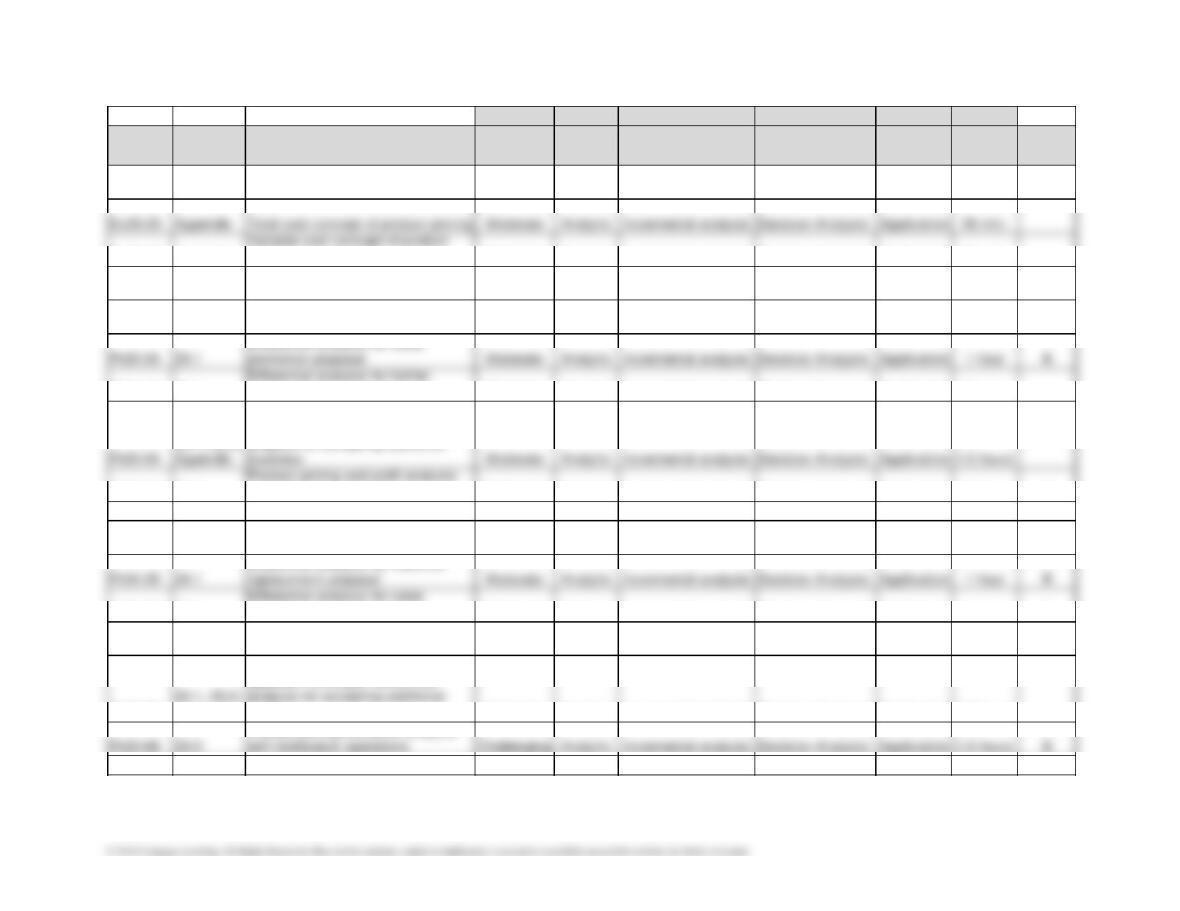
DIFFICULTY BUSPROG ACBSP IMA BLOOM’S TIME
Problem
Learning
Objective
Description Primary Primary Managerial Only
Spread-
sheet
Ex25-24 25-4
Activity rates and product costs
using activity-based costing
Moderate Analytic Incremental analysis Decision Analysis Application 30 min.
Ex25-25 Appendix Total cost concept of product pricing Moderate Analytic Incremental analysis Decision Analysis Application 30 min.
Variable cost concept of product
Ex25-26 Appendix
pricing
Moderate Analytic Incremental analysis Decision Analysis Application 20 min.
Pr25–1A 25-1
Differential analysis involving
opportunity costs
Moderate Analytic Incremental analysis Decision Analysis Application 45 min. X
Pr25–2A 25-1
Differential analysis for machine
replacement proposal
Moderate Analytic Incremental analysis Decision Analysis Application 1 hour X
Pr25–3A 25-1
promotion proposal
Differential analysis for further
Differential analysis for sales
Pr25–4A 25-1
processing
Moderate Analytic Incremental analysis Decision Analysis Application 45 min.
Pr25–5A
Appendix
business
Moderate Analytic Incremental analysis Decision Analysis Application 1.5 hours
Product pricing and profit analysis
25–1, 25–2,
Product pricing using the cost-plus
approach concepts; differential
analysis for accepting additional
Pr25–6A 25-3
with bottleneck operations
Challenging Analytic Incremental analysis Decision Analysis Application 1.5 hours X
Pr25–7A 25–4 Activity-based costing Challenging Analytic Incremental analysis Decision Analysis Application 1.5 hours X
Pr25–1B 25-1
Differential analysis involving
opportunity costs
Challenging Analytic Incremental analysis Decision Analysis Application 45 min. X
Pr25–2B 25-1
replacement proposal
Moderate Analytic Incremental analysis Decision Analysis Application 1 hour X
Differential analysis for sales
Differential analysis for machine
Pr25–3B 25-1
promotion proposal
Moderate Analytic Incremental analysis Decision Analysis Application 1 hour X
Pr25–4B 25-1
Differential analysis for further
processing
Moderate Analytic Incremental analysis Decision Analysis Application 45 min.
Pr25–5B
25–1, 25–2,
analysis for accepting additional
Appendix
Product pricing using the cost-plus
approach concepts; differential
business
Moderate Analytic Incremental analysis Decision Analysis Application 1.5 hours
Pr25–6B 25-3
with bottleneck operations
Challenging Analytic Incremental analysis Decision Analysis Application 1.5 hours X
Product pricing and profit analysis
Pr25–7B 25–4 Activity-based costing Challenging Analytic Incremental analysis Decision Analysis Application 1.5 hours X
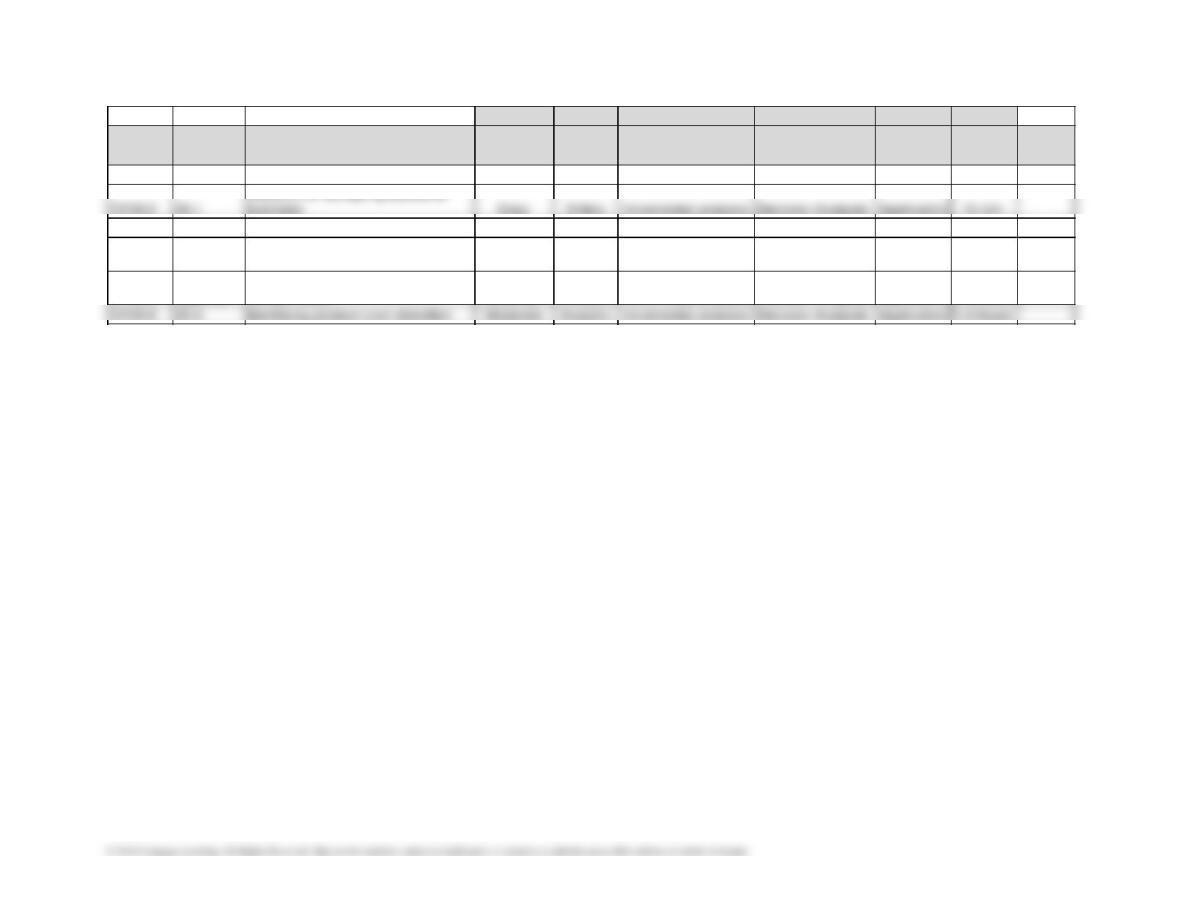
DIFFICULTY BUSPROG ACBSP IMA BLOOM’S TIME
Problem
Learning
Objective
Description Primary Primary Managerial Only
Spread-
sheet
CP25-1 25-1 Product pricing Challenging Analytic Incremental analysis Decision Analysis Analysis 15 min.
CP25-2 25-1
business
Decision on accepting additional
CP25-3 25-1 Accept business at a special price Easy Analytic Incremental analysis Decision Analysis Application 30 min.
CP25-4 25-2
Cost-plus and target costing
concepts
Moderate Analytic Incremental analysis Decision Analysis Analysis 30 min.
CP25-5 Appendix
Pricing decisions and markup on
variable costs
Moderate Analytic Incremental analysis Decision Analysis Application 1.5 hours