1. a. Differential revenue is the amount of increase or decrease in revenue expected from a
p
articular course of action compared to an alternative.
b. Differential cost is the amount of increase or decrease in cost expected from a particular
course of action compared to an alternative.
c. Differential profit is the difference between differential revenue and differential cost.
3. If there is demand for the premium-grade product, the differential revenue (premium less commodity)
may exceed the differential cost to process the product to premium grade.
4. A business should only accept business at a special price if the lower price will not contaminate the
regular pricing for other customers or induce other customers to demand the special price. In
addition, the business must be careful not to violate the Robinson-Patman Act, which prohibits
uncompetitive price differences across different markets for the same product. Finally, the business
must consider the longer-term ramifications of offering discount business to a customer that may
want to order in the future.
5. It is reasonable to purchase from the supplier if the fixed cost per unit is less than 50 cents.
That is, if the fixed cost is less than 50 cents per unit, then the variable cost per unit will exceed
the supplier’s price, making the supplier price more attractive.
b
7. In the long run, the normal selling price must be set high enough to cover all costs (both fixed an
d
variable) and provide a reasonable amount for profit.
8. In setting prices, managers should consider such factors as the prices of competing products
and the general economic conditions of the marketplace.
CHAPTER 25
DIFFERENTIAL ANALYSIS, PRODUCT PRICING,
DISCUSSION QUESTIONS
AND ACTIVITY-BASED COSTING
p
CHAPTER 25 Differential Analysis, Product Pricing, and Activity-Based Costing
DISCUSSION QUESTIONS (Continued)
9. The target cost concept begins with a price that can be sustained in the marketplace, then
subtracts a target profit, thus determining the target cost. The cost is made to conform to the
p
rice required in the market. In contrast, under cost-plus, a markup is added to the cost. The
resulting price is assumed to be acceptable in the market.
10. The proper measure of product value in a bottlenecked process is the contribution margin per
b
ottleneck hour.
CHAPTER 25 Differential Analysis, Product Pricing, and Activity-Based Costing
PE 25-1A
Lease Sell Differential
Machine Machine Effects
PE 25-1B
Lease Sell Differential
Equipment Equipment Effects
(Alternative 1) (Alternative 2) (Alternative 2)
*
$113,000 × 6%
Ferrigno Company should sell the equipment.
Differential Analysis
Lease Equipment (Alt. 1) or Sell Equipment (Alt. 2)
March 23
PRACTICE EXERCISES
Differential Analysis
Lease Machine (Alt. 1) or Sell Machine (Alt. 2)
February 21
CHAPTER 25 Differential Analysis, Product Pricing, and Activity-Based Costing
PE 25-2A
Continue Discontinue Differential
Product Sigma Product Sigma Effects
(Alternative 1) (Alternative 2) (Alternative 2)
Revenues $ 436,000 $ 0 $(436,000)
Product Sigma should be continued.
PE 25-2B
Continue Discontinue Differential
Product X Product X Effects
(Alternative 1) (Alternative 2) (Alternative 2)
Revenues $ 94,800 $ 0 $(94,800)
Costs:
Variable cost of goods sold (61,200) 0 61,200
Product X should be discontinued.
Differential Analysis
Continue Product X (Alt. 1) or Discontinue Product X (Alt. 2)
May 9
Differential Analysis
Continue Product Sigma (Alt. 1) or Discontinue Product Sigma (Alt. 2)
Decembe
r
10
CHAPTER 25 Differential Analysis, Product Pricing, and Activity-Based Costing
PE 25-3A
Make Buy Differential
Bread Bread Effects
(Alternative 1) (Alternative 2) (Alternative 2)
Unit costs:
Purchase price $ 0 $(148) $(148)
The company should make the bread.
PE 25-3B
Make Buy Differential
Bottles Bottles Effects
(Alternative 1) (Alternative 2) (Alternative 2)
Unit costs:
Purchase price $ 0 $(29) $(29)
The company should buy the bottles.
Differential Analysis
Make Bottles (Alt. 1) or Buy Bottles (Alt. 2)
March 30
Differential Analysis
Make Bread (Alt. 1) or Buy Bread (Alt. 2)
July 7
PE 25-4A
Continue Replace
with Old Old Differential
Machine Machine Effects
(Alternative 1) (Alternative 2) (Alternative 2)
Revenues:
Proceeds from sale of old machine $ 0 $ 390,000 $ 390,000
Costs:
PE 25-4B
Continue Replace
with Old Old Differential
Machine Machine Effects
(Alternative 1) (Alternative 2) (Alternative 2)
Revenues:
Proceeds from sale of old machine $ 0 $ 39,400 $ 39,400
Costs:
Purchase price 0 (58,500) (58,500)
Direct labor (5 years) (43,500) (29,500) 14,000
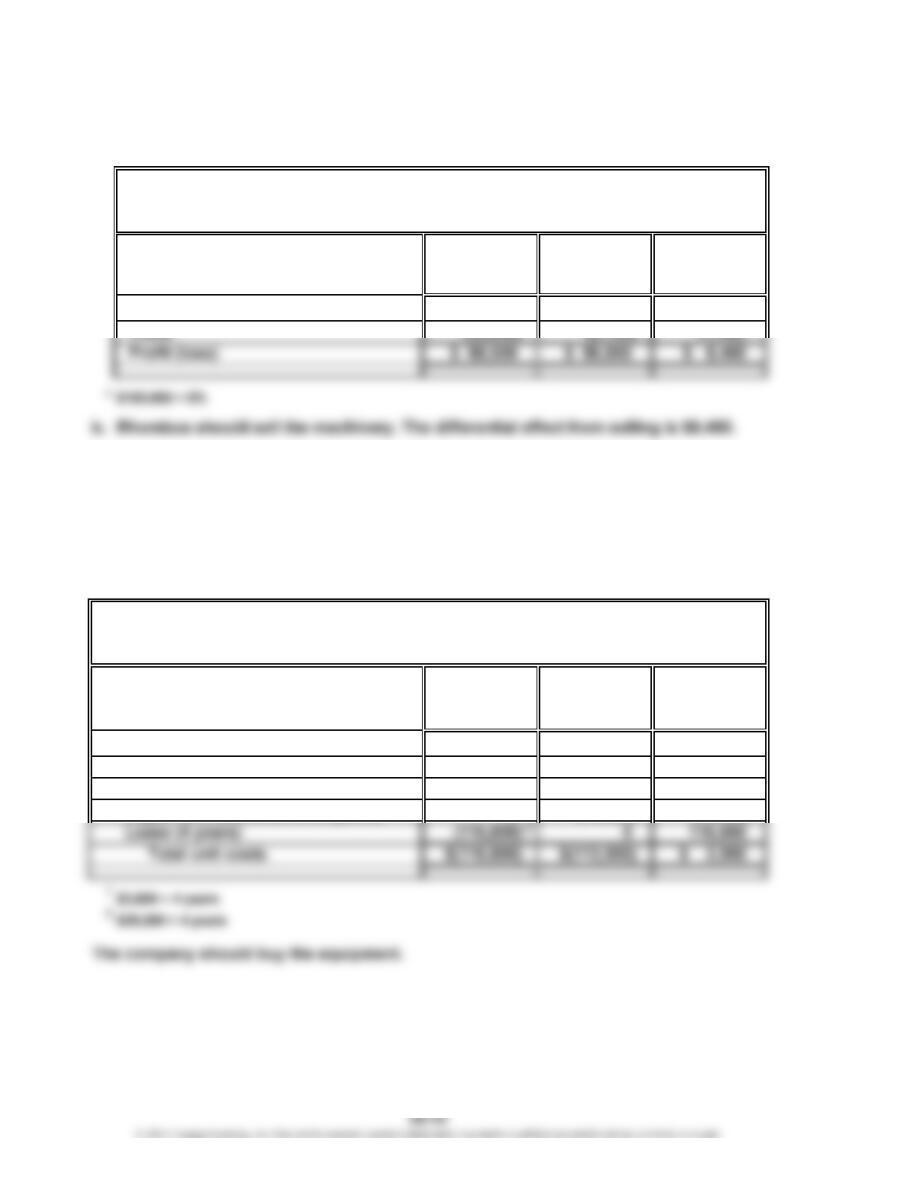
Profit (loss) $(43,500) $(48,600) $ (5,100)
Differential Analysis
Continue with Old Machine (Alt. 1) or Replace Old Machine (Alt. 2)
April 11
Differential Analysis
Continue with Old Machine (Alt. 1) or Replace Old Machine (Alt. 2)
October 3
12
CHAPTER 25 Differential Analysis, Product Pricing, and Activity-Based Costing
PE 25-5A
Process
Sell Further into Differential
Product F Product G Effects
(Alternative 1) (Alternative 2) (Alternative 2)
Revenues, per unit $139 $ 158 $ 19
PE 25-5B
Process
Sell Further into Differential
Product P Product Q Effects
(Alternative 1) (Alternative 2) (Alternative 2)
Revenues, per unit $ 47 $ 50 $ 3
Differential Analysis
Sell Product P (Alt. 1) or Process Further into Product Q (Alt. 2)
February 26
Differential Analysis
Sell Product F (Alt. 1) or Process Further into Product G (Alt. 2)
November 15
*
CHAPTER 25 Differential Analysis, Product Pricing, and Activity-Based Costing
PE 25-6A
Reject Accept Differential
Order Order Effects
(Alternative 1) (Alternative 2) (Alternative 2)
Revenues, per unit $0.00 $ 380.00 $ 380.00
Costs:
PE 25-6B
Reject Accept Differential
Order Order Effects
(Alternative 1) (Alternative 2) (Alternative 2)
Revenues, per unit $0.00 $ 16.10 $ 16.10
Costs:
Variable manufacturing costs, per unit 0.00 (11.20) (11.20)
Differential Analysis
Reject Order (Alt. 1) or Accept Order (Alt. 2)
March 16
Differential Analysis
Reject Order (Alt. 1) or Accept Order (Alt. 2)
March 5
CHAPTER 25 Differential Analysis, Product Pricing, and Activity-Based Costing
PE 25-7A
PE 25-7B
$75 + $90
$220
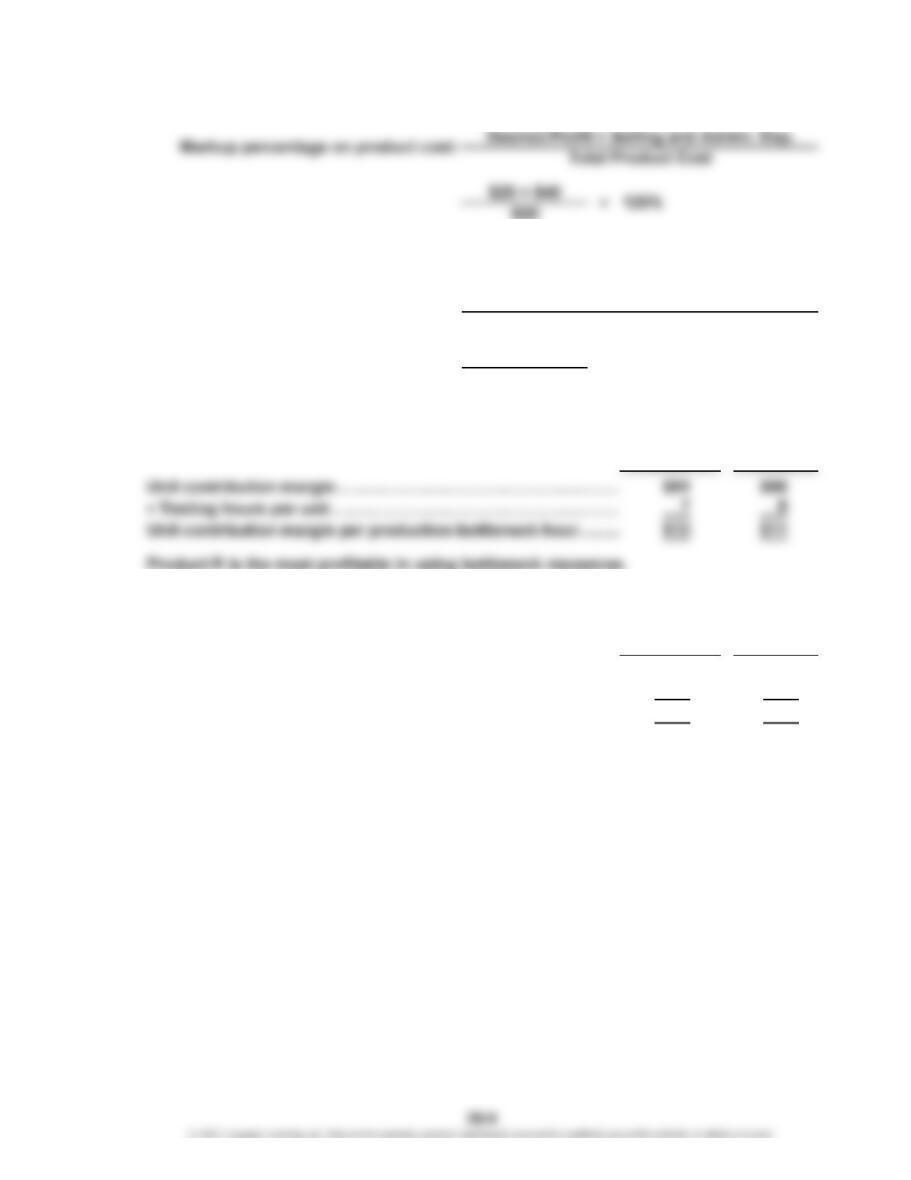
PE 25-8A
Product R Product S
…
…
PE 25-8B
Product K Product L
Unit contribution margin……………………………………………
…
$360 $300
÷
Furnace hours per unit……………………………………………
…
5 4
Unit contribution margin per production bottleneck hour……
…
$72 $75
Product L is the most profitable in using bottleneck resources.
Markup percentage on product cost: Desired Profit + Selling and Admin. Exp.
Total Product Cost
= 75%
CHAPTER 25 Differential Analysis, Product Pricing, and Activity-Based Costing
PE 25-9A
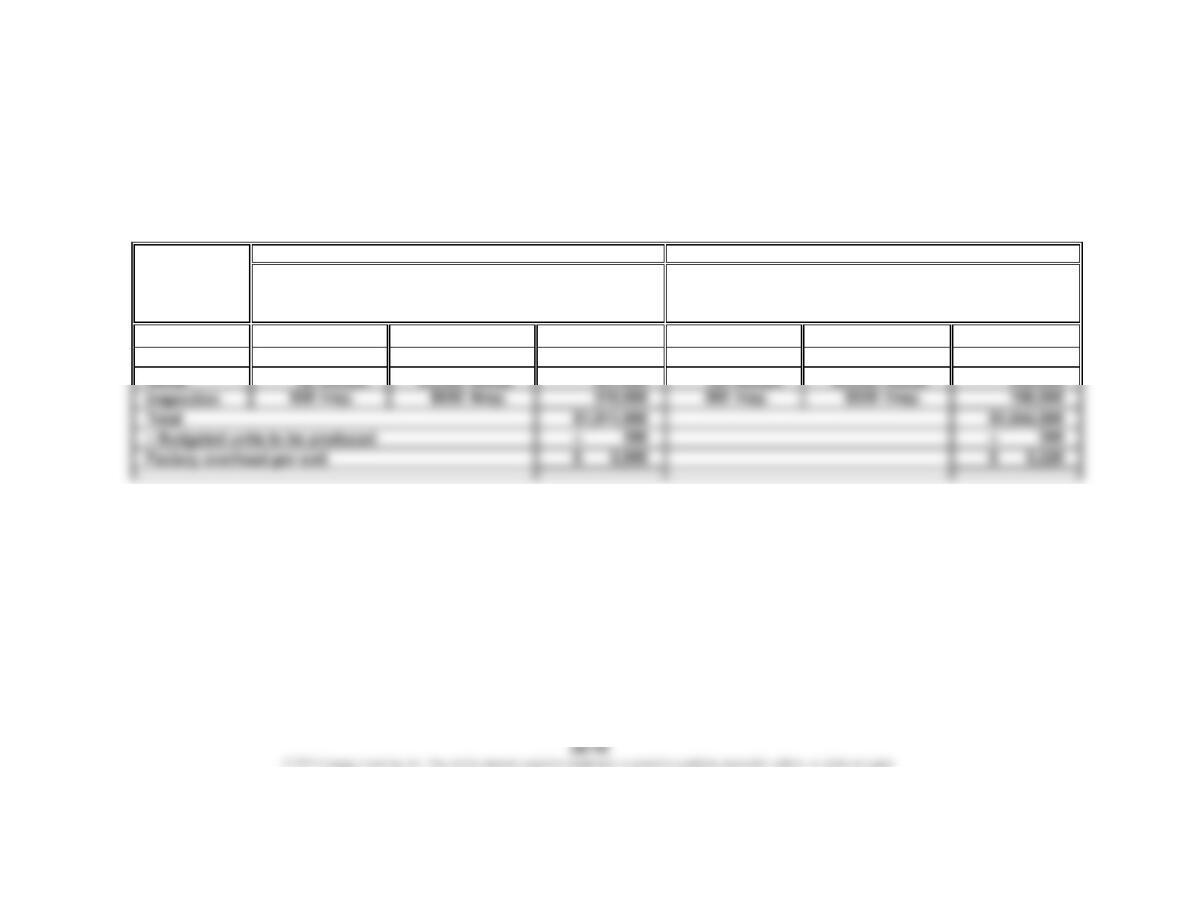
a. Fabrication: $825,000 ÷ 3,000 direct labor hours = $275 per dlh
Assembly: $270,000 ÷ 3,000 direct labor hours = $90 per dlh
Setup: $536,000 ÷ 160 setups = $3,350 per setup
Inspection: $424,000 ÷ 800 inspections = $530 per inspection
b.
Activity Activity
Activity Cost Cost
Fabrication 1,200 dlh /dlh 1,800 dlh /dlh
Assembly 1,800 dlh /dlh 1,200 dlh /dlh
Speedboat
Activity-
Base
Usage
Activity Base
Usage
Bass Boat
×= ×=Rate
Activity
Rate
Activity-
$275
$90
$ 330,000
162,000
$275 $ 495,000
$90 108,000
CHAPTER 25 Differential Analysis, Product Pricing, and Activity-Based Costing
PE 25-9B
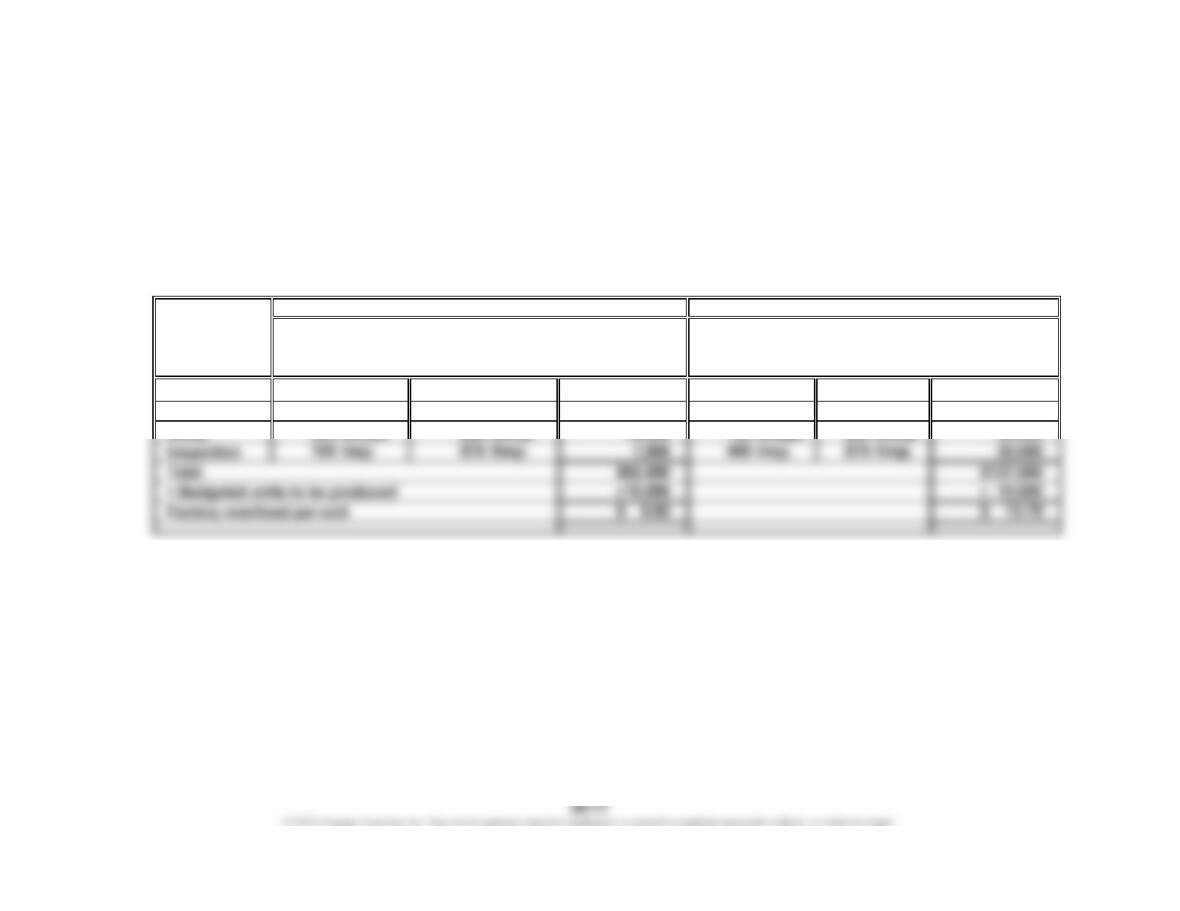
a. Cutting: $81,000 ÷ 1,500 direct labor hours = $54 per dlh
Sewing: $25,500 ÷ 1,500 direct labor hours = $17 per dlh
Setup: $60,000 ÷ 1,000 setups = $60 per setup
Inspection: $37,500 ÷ 500 inspections = $75 per inspection
b.
Activity Activity
Activity Cost Cost
Cutting 500 dlh /dlh 1,000 dlh /dlh
Sewing 1,000 dlh /dlh 500 dlh /dlh
$ 54,000
Activity
Rate×
$54$54
$17
Activity Base
×
17,000
$17 8,500
Activity-
Jeans
Activity-
Base
Usage
Khakis
==Rate Usage
$27,000
CHAPTER 25 Differential Analysis, Product Pricing, and Activity-Based Costing
Ex. 25-1
a.
Lease Sell Differential
Machinery Machinery Effects
(Alternative 1) (Alternative 2) (Alternative 2)
Revenues $125,000 $102,000 $(23,000)
Ex. 25-2
Note to Instructors: This differential analysis is a lease-or-buy decision, which is from
the user perspective. A lease-or-sell decision is from the perspective of the equipment
owner. Thus, the analysis is similar to the text examples but must be set up from the
user’s, rather than the owner’s, perspective.
Lease Buy Differential
Equipment Equipment Effects
(Alternative 1) (Alternative 2) (Alternative 2)
Unit costs:
Purchase price $ 0 $ (95,000) $ (95,000)
Freight and installation 0 (4,500) (4,500)
Repair and maintenance (4 years) 0 (14,400) (14,400)
EXERCISES
Differential Analysis
Lease Equipment (Alt. 1) or Buy Equipment (Alt. 2)
Decembe
r
11
Differential Analysis
Lease Machinery (Alt. 1) or Sell Machinery (Alt. 2)
May 25
1
CHAPTER 25 Differential Analysis, Product Pricing, and Activity-Based Costing
Ex. 25-3
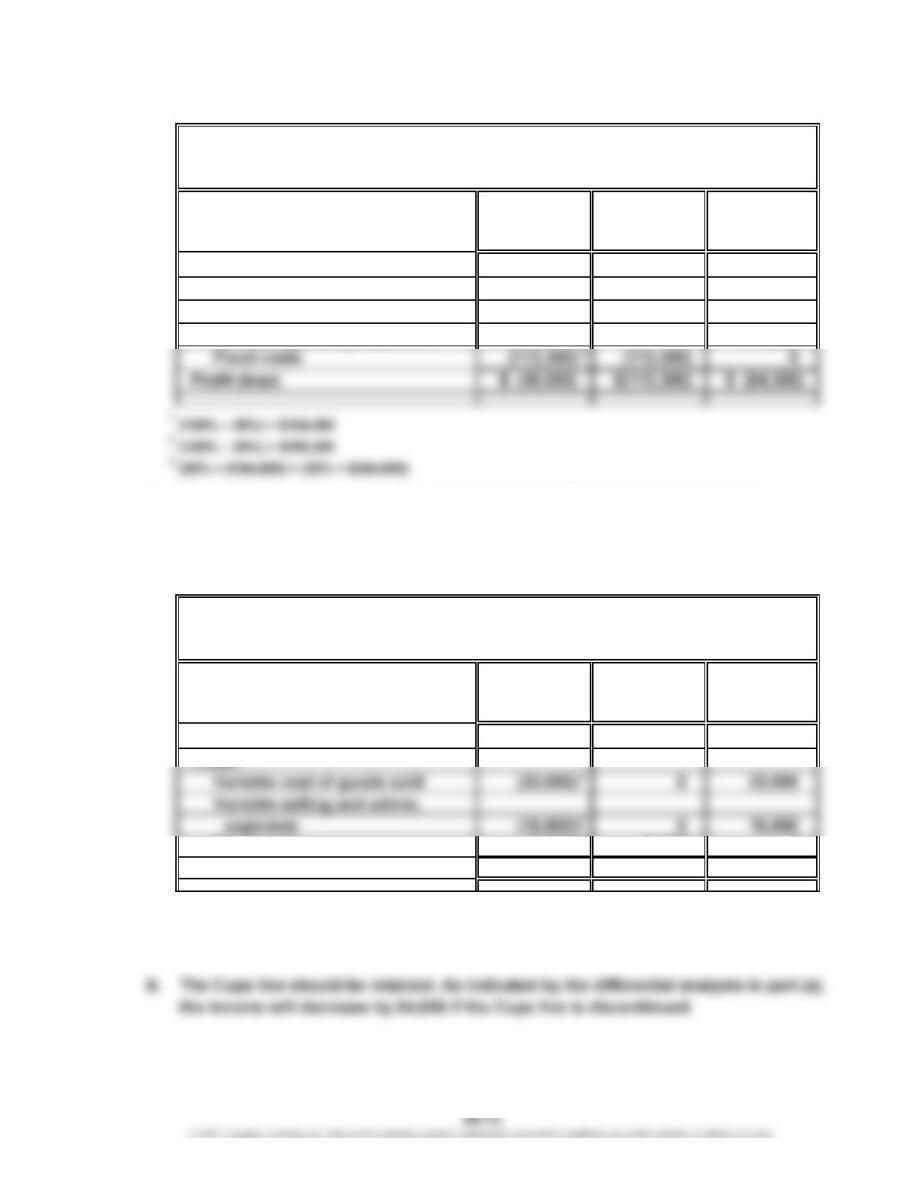
a.
Continue Discontinue Differential
Star Cola Star Cola Effects
(Alternative 1) (Alternative 2) (Alternative 2)
Revenues $ 390,000 $ 0 $(390,000)
Costs:
Variable cost of goods sold (147,200) 0 147,200
Variable operating expenses (178,500) 0 178,500
b. Star Cola should be retained. As indicated by the differential analysis in part
(a), the income would decrease by $64,300 if the product was discontinued.
Ex. 25-4
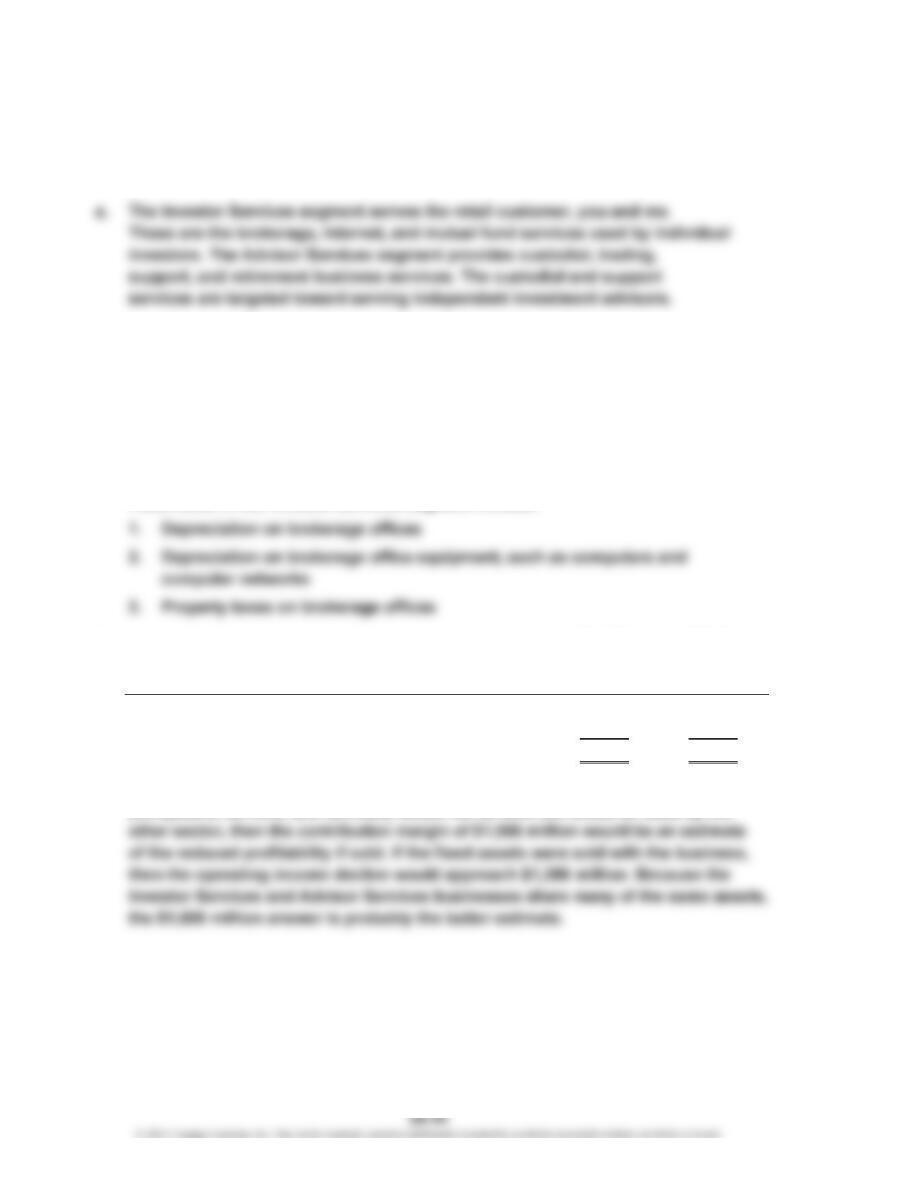
a.
Continue Discontinue Differential
Cups Cups Effects
(Alternative 1) (Alternative 2) (Alternative 2)
Revenues $ 43,500 $ 0 $(43,500)
Fixed costs (9,605) (9,605) 0
Profit (loss) $ (5,600) $(9,605) $ (4,005)
1
$26,700 × (100% – 15%)
2
$22,400 × (100% – 25%)
3
($26,700 × 15%) + ($22,400 × 25%)
For the Month Ended May 31
Differential Analysis
Continue Star Cola (Alt. 1) or Discontinue Star Cola (Alt. 2)
January 21
Differential Analysis
Continue Cups (Alt. 1) or Discontinue Cups (Alt. 2)
1
2
3
CHAPTER 25 Differential Analysis, Product Pricing, and Activity-Based Costing
Ex. 25-5
Note to Instructors: Many students may be unfamiliar with the financial services
industry. This exercise provides an opportunity to introduce students to some
basic terms and concepts used in the industry.
b. Variable costs in the Investor Services segment include:
1. Commissions to brokers
2. Fees paid to exchanges for executing trades
3. Transaction fees incurred by Schwab mutual funds to purchase and sell
shares
4. Advertising
c. Investor Advisor
Services Services
(in millions) (in millions)
Income from operations……………………………………
…
$3,176 $1,386
Plus depreciation……………………………………………… 186 120
Estimated contribution margin……………………………
…
$3,362 $1,506
d. If one assumes that the fixed costs that serve the Advisor Services business
CHAPTER 25 Differential Analysis, Product Pricing, and Activity-Based Costing
Ex. 25-6
The flaw in the decision is the failure to focus on the differential revenues and
costs, which indicate that operating income would be reduced by $39,000 if
Children’s Shoes were discontinued. This differential income from sales of
Children’s Shoes can be determined from the following differential analysis:
Continue Discontinue
Children’s Children’s Differential
Shoes Shoes Effects
(Alternative 1) (Alternative 2) (Alternative 2)
Revenues $ 165,000 $ 0 $(165,000)
* $32,000 + $17,000
Ex. 25-7
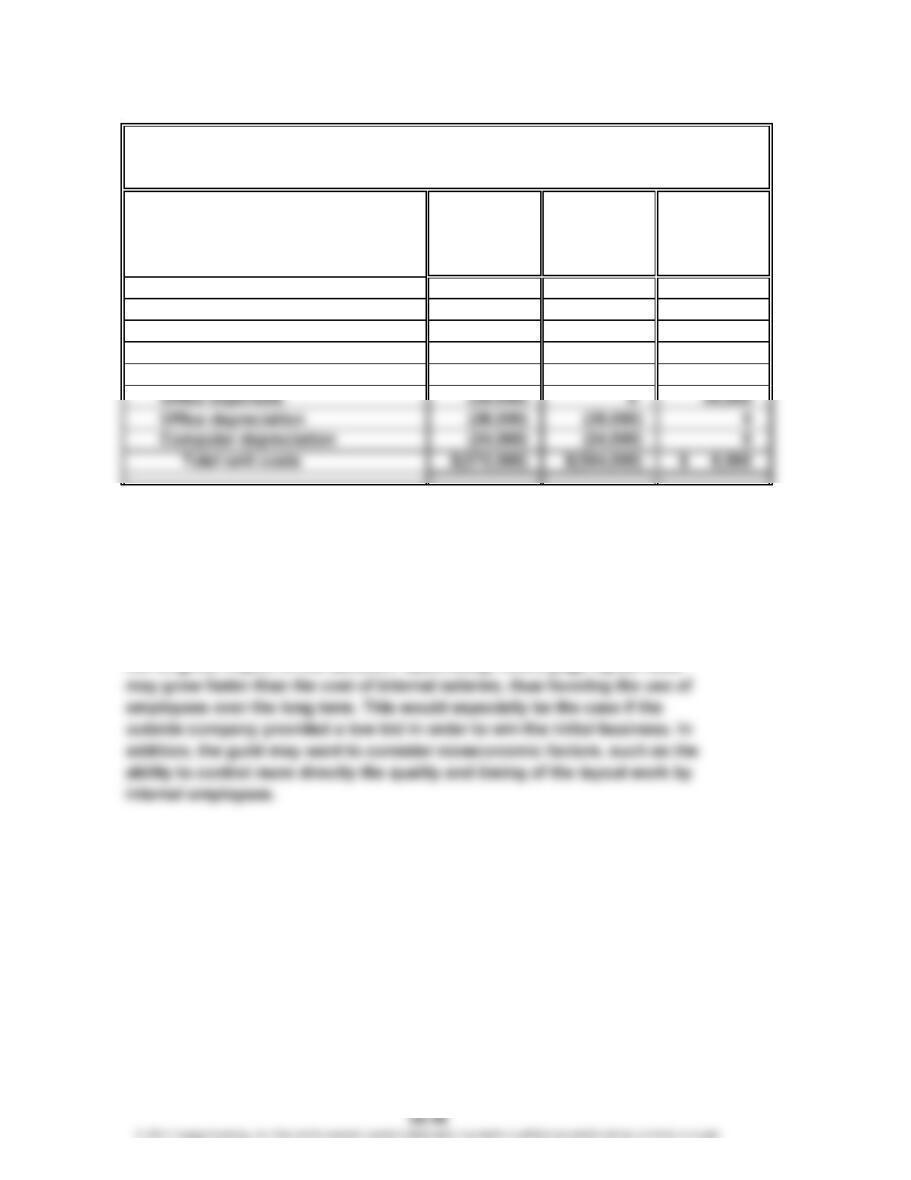
a.
Make Buy
Carrying Carrying Differential
Case Case Effects
(Alternative 1) (Alternative 2) (Alternative 2)
Unit costs:
Purchase price $ 0.00 $(89.00) $(89.00)
1
$26.00 × 15%
2
$10.40 – $3.90
b. Assuming that there were no better alternative uses for the spare capacity, it would
be advisable to manufacture the carrying cases because the cost savings would
Differential Analysis
Make Carrying Case (Alt. 1) or Buy Carrying Case (Alt. 2)
February 24
Differential Analysis
Continue Children’s Shoes (Alt. 1) or Discontinue Children’s Shoes (Alt. 2)
CHAPTER 25 Differential Analysis, Product Pricing, and Activity-Based Costing
Ex. 25-8
a.
Lay Out Purchase
Pages Layout Differential
Internally Services Effects
(Alternative 1) (Alternative 2) (Alternative 2)
Unit costs:
Purchase price of layout work $ 0 $(312,000) $(312,000)
Salaries (224,000) 0 224,000
Benefits (36,000) 0 36,000
Supplies (21,000) 0 21,000
*
24,000 pages × $13 per page
b. The benefit from using an outside service is shown to be $8,000 greater
than performing the layout work internally. The fixed costs (depreciation
expenses) in the budget are irrelevant to the decision. Thus, the work should
be purchased from the outside on a strictly financial basis.
c. Before electing to lay off the five employees, the guild should consider
Differential Analysis
Lay Out Pages Internally (Alt. 1) or Purchase Layout Services (Alt. 2)
February 22
*
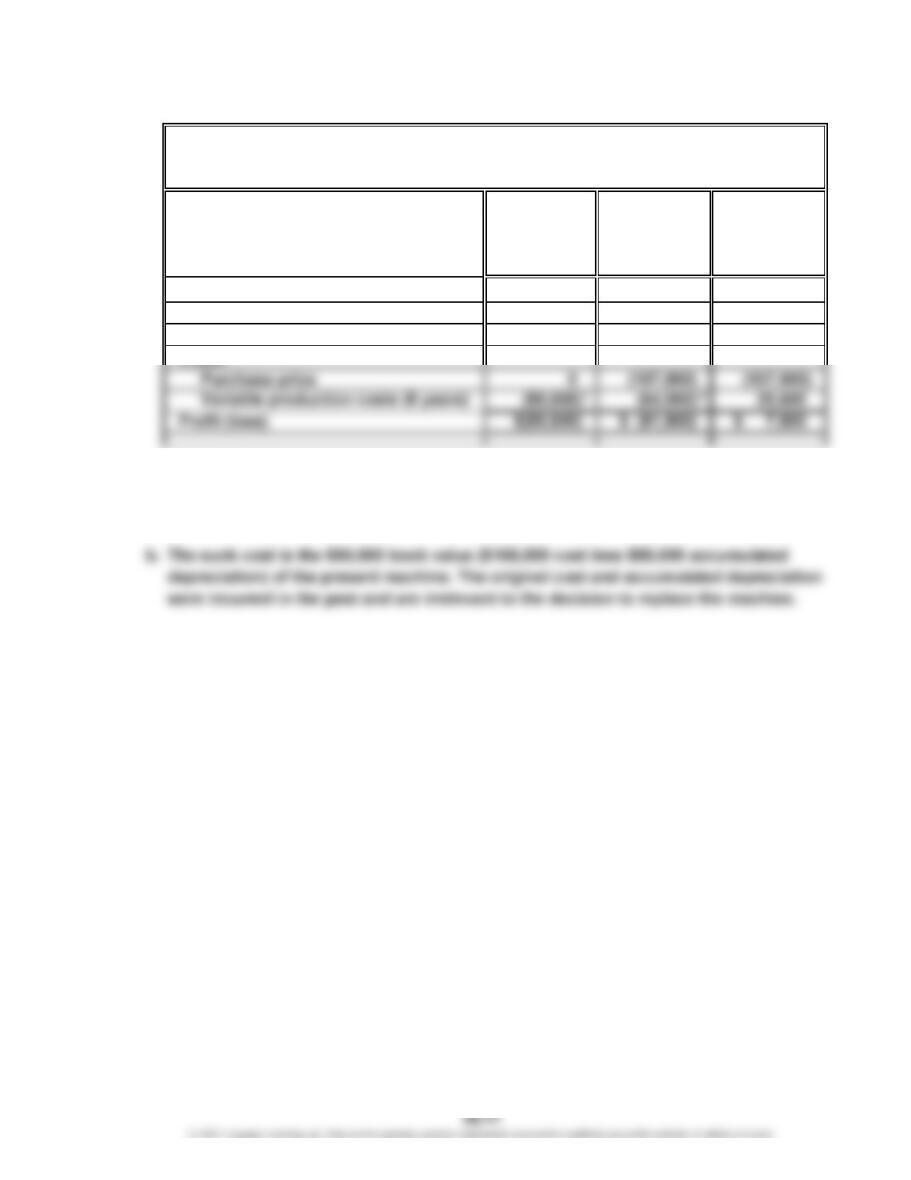
CHAPTER 25 Differential Analysis, Product Pricing, and Activity-Based Costing
Ex. 25-9
a.
Continue Replace
with Old Old Differential
Machine Machine Effects
(Alternative 1) (Alternative 2) (Alternative 2)
Revenues:
Proceeds from sale of old
machine $ 0 $ 90,100 $ 90,100
1
$11,200 × 8 years
2
$8,000 × 8 years
The company should replace the old machine.
Differential Analysis
Continue with Old Machine (Alt. 1) or Replace Old Machine (Alt. 2)
April 29
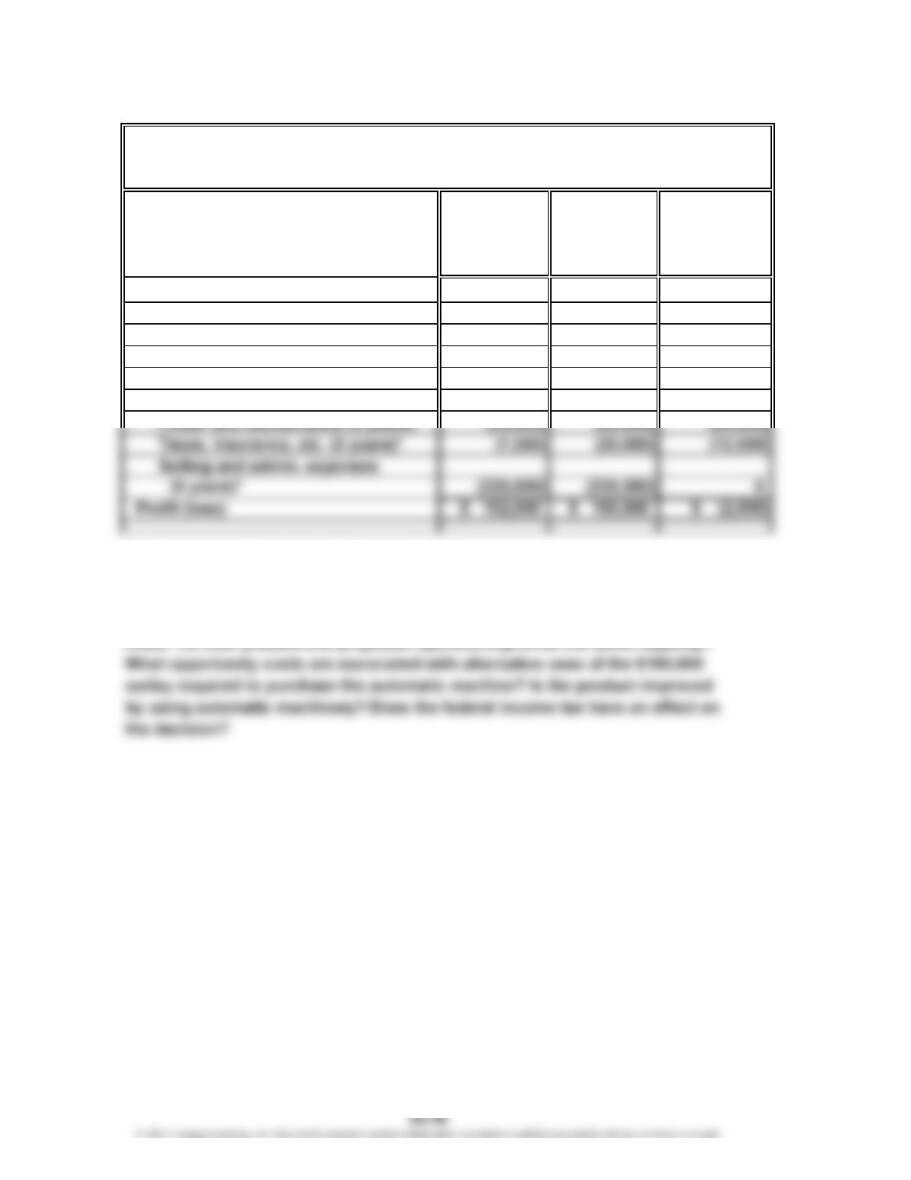
CHAPTER 25 Differential Analysis, Product Pricing, and Activity-Based Costing
Ex. 25-10
a.
Continue Replace
with Old Old Differential
Machine Machine Effects
(Alternative 1) (Alternative 2) (Alternative 2)
Revenues:
Sales (5 years)* $1,025,000 $1,025,000 $ 0
Costs:
Purchase price 0 (180,000) (180,000)
Direct materials (5 years)* (360,000) (360,000) 0
Direct labor (5 years)* (255,000) 0 255,000
*
Each annual revenue and cost is multiplied by 5 years.
b. The proposal should not be accepted.
c. In addition to the factors given, consideration should be given to factors such as
Differential Analysis
Continue with Old Machine (Alt. 1) or Replace Old Machine (Alt. 2)
May 4
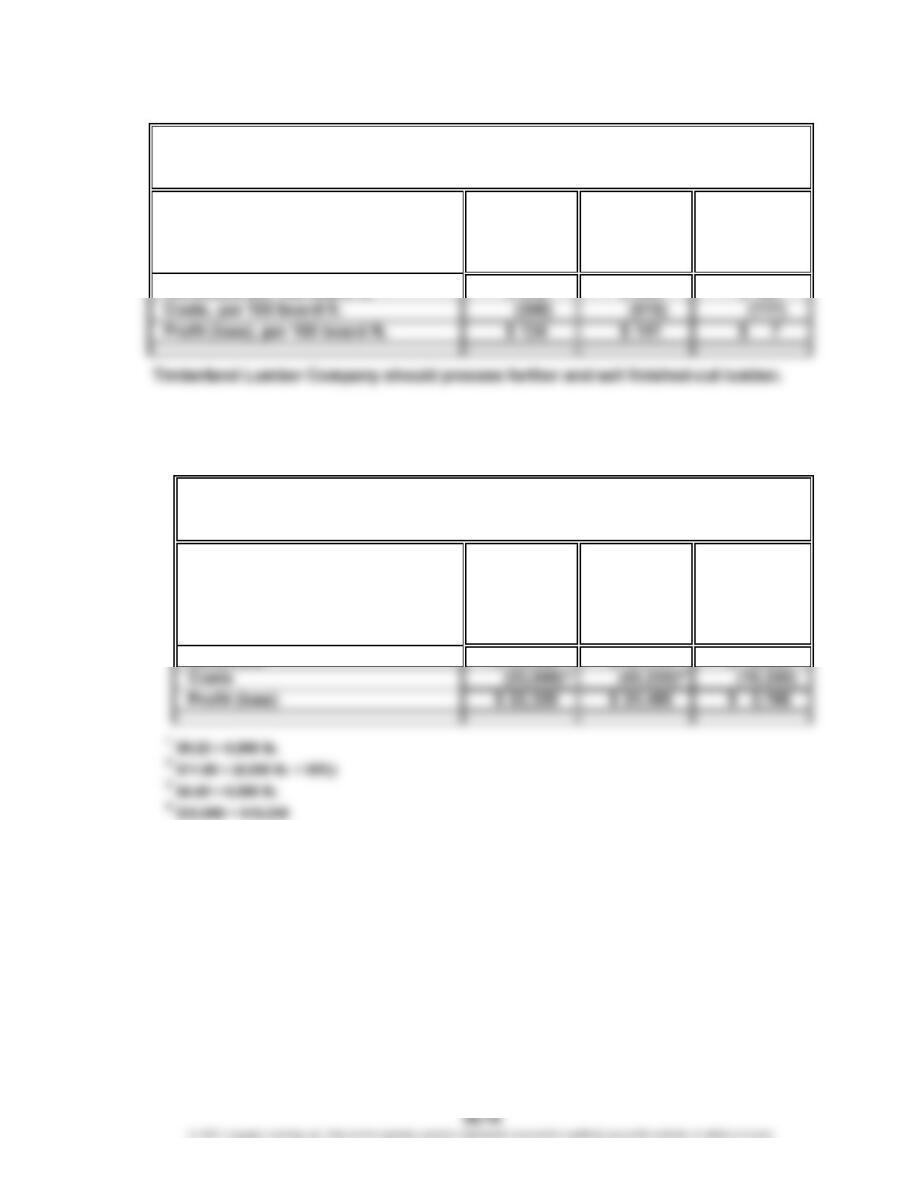
CHAPTER 25 Differential Analysis, Product Pricing, and Activity-Based Costing
Ex. 25-11
Process
Sell Further into Differential
Rough Cut Finished Cut Effects
(Alternative 1) (Alternative 2) (Alternative 2)
Ex. 25-12
a.
Process
Sell Further into
Regular Decaf Differential
Columbian Columbian Effects
(Alternative 1) (Alternative 2) (Alternative 2)
b. The differential revenue from processing further to Decaf Columbian is more
than the differential cost of selling regular by $2,166. Thus, Rise N’ Shine
Coffee Company should process further to Decaf Columbian.
Sell Regular Columbian (Alt. 1) or Process Further into Decaf Columbian (Alt. 2)
October 6
Differential Analysis
Sell Rough Cut (Alt. 1) or Process Further into Finished Cut (Alt. 2)
August 9
Differential Analysis
12
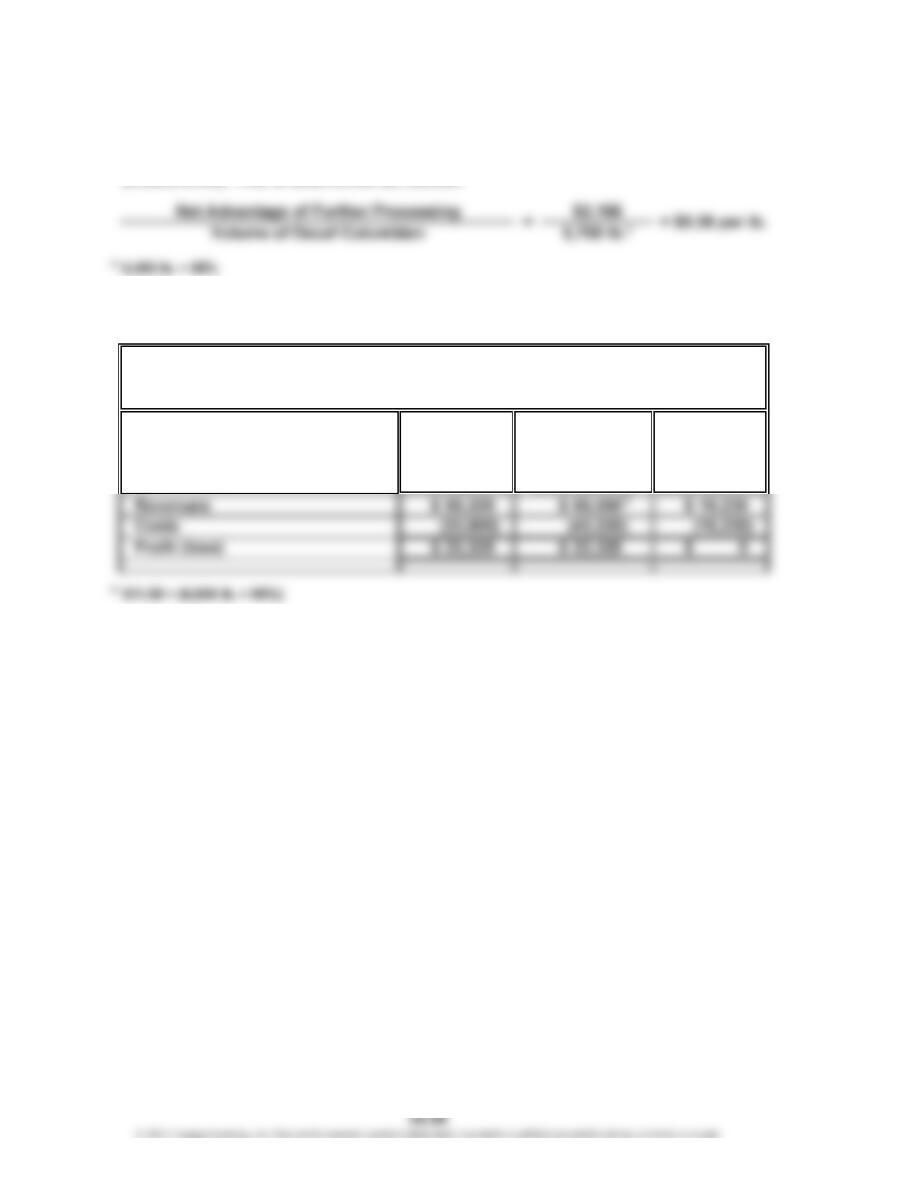
CHAPTER 25 Differential Analysis, Product Pricing, and Activity-Based Costing
Ex. 25-12 (Concluded)
c. The price of Decaf Columbian would need to decrease to $11.50 per pound in order
for the differential analysis to yield neither an advantage nor a disadvantage
The price of Decaf Columbian would need to be $0.38 lower, or $11.50, to yield no
net differential income or loss. This is verified by the following differential analysis:
Sell
Regular Differential
Columbian Effects
(Alternative 1) (Alternative 2)
Further into
Process
October 6
Differential Analysis
Sell Regular Columbian (Alt. 1) or Process Further into Decaf Columbian (Alt. 2)
(Alternative 2)
Decaf Columbian