g.
651,504
h.
498
140
To close overhead variances to Cost of Goods Sold.
Overhead Volume Variance (favorable)
Cost of Goods Sold
PROBLEM 24.4A
SVEN ENTERPRISES (concluded)
Overhead Spending Variance (favorable)
Entry to close overapplied overhead to cost of goods sold:
Entry to transfer the 147 batches of puppy meal produced in April to finished goods:
Finished Goods Inventory (at standard cost)
Work in Process Inventory (at standard cost)
To transfer 147 batches of puppy meal to finished goods in April.
a. =
b. =
$16 per hour × (3,750 hours* – 4,200 hours)
$4,200 Favorable
Standard Hourly Rate × (Standard Hours – Actual Hours)
-$7,200 (or $7,200 Unfavorable)
45 Minutes, Strong
Materials Price Variance
PROBLEM 24.5A
SLICK CORPORATION
Actual Quantity Used × (Standard Price – Actual Price)
Labor Rate Variance
Actual Labor Hours × (Standard Rate – Actual Rate)
$1.30 per gallon × (16,250 gallons* – 16,500 gallons)
$825 Favorable
*Actual Price per Pound = $20,625 ÷ 16,500 gallons = $1.25/gallon
Standard Price × (Standard Quantity – Actual Quantity)
-$325 (or $325 Unfavorable)
*Standard Quantity Allowed = 5,000 cases × 3.25 gallons/case = 16,250 gallons
c.
$2,600
d. (1) 21,125 *
325
(2) 60,000 *
(3) 10,000
100
To apply overhead to production.
Manufacturing Overhead (at actual cost) ………………………………………
Overhead Spending Variance (favorable) ………………………………………
Overhead Volume Variance (unfavorable) ……………………………
Labor Rate Variance (favorable) ……………………………………………….
To record the cost of direct labor charged to production.
Work in Process Inventory (at standard cost) ………………….
*5,000 actual cases x 0.75 hours allowed per case x $16 per hour = $60,000
Direct Labor (at actual cost) ………………………………………………….
Labor Efficiency Variance (unfavorable) …………………………….
(4) 91,125
To close overhead variances to Cost of Goods Sold.
Cost of Goods Sold …………………………………………………….
Overhead Spending Variance (favorable) ……………………………….
Overhead Volume Variance (unfavorable) ……………………………
To transfer 5,000 cases to finished goods in May.
91,125*
Finished Goods Inventory (at standard cost) ………………………….
$2,200
Work in Process Inventory (at standard cost) ………………………………
To record the cost of direct materials charged to production.
Direct Materials Inventory (at actual cost) ………………………………………..
*5,000 actual cases x 3.25 gallons allowed per case x $1.30 per gallon = $21,125
Materials Price Variance (favorable) ……………………………………………….
Work in Process Inventory (at standard cost) ……………………………
Work in Process Inventory (at standard cost) …………………………
Materials Quantity Variance (unfavorable) ………………………..
Fixed
Fixed
Costs Applied
Overhead
Problem 24.5A
SLICK CORPORATION (concluded)
Overhead variances:
Actual Overhead
Costs Incurred
Standard Overhead
Costs Allowed
*Standard Variable Overhead Allowed = $1.50/case × 5,000 cases = $7,500
7,750
$9,950
40 Minutes, Strong PROBLEM 24.6A
POLYGLAZE, INC.
a. Materials price variance:
Actual Quantity × (Standard Price – Actual Price)
(8,000 units × 11 ounces) × ($0.15/oz. – $0.16/oz.) (880)$ Unfavorable
Materials quantity variance:
Journal entry to record direct materials used in June:
Work in Process Inventory (8,000 units × 10 oz. × $0.15/oz.) 12,000
b. Labor rate variance:
Actual Hours × (Standard Hourly Rate – Actual Hourly Rate)
(8,000 units × .45 hr.) × ($10.00/hr. – $10.40/hr.) (1,440)$ Unfavorable
Labor efficiency variance:
Journal entry to record direct labor cost for June:
Work in Process Inventory (8,000 units × 0.5 hr. × $10/hr.) 40,000
Labor Rate Variance 1,440
PROBLEM 24.6A
POLYGLAZE, INC. (concluded)
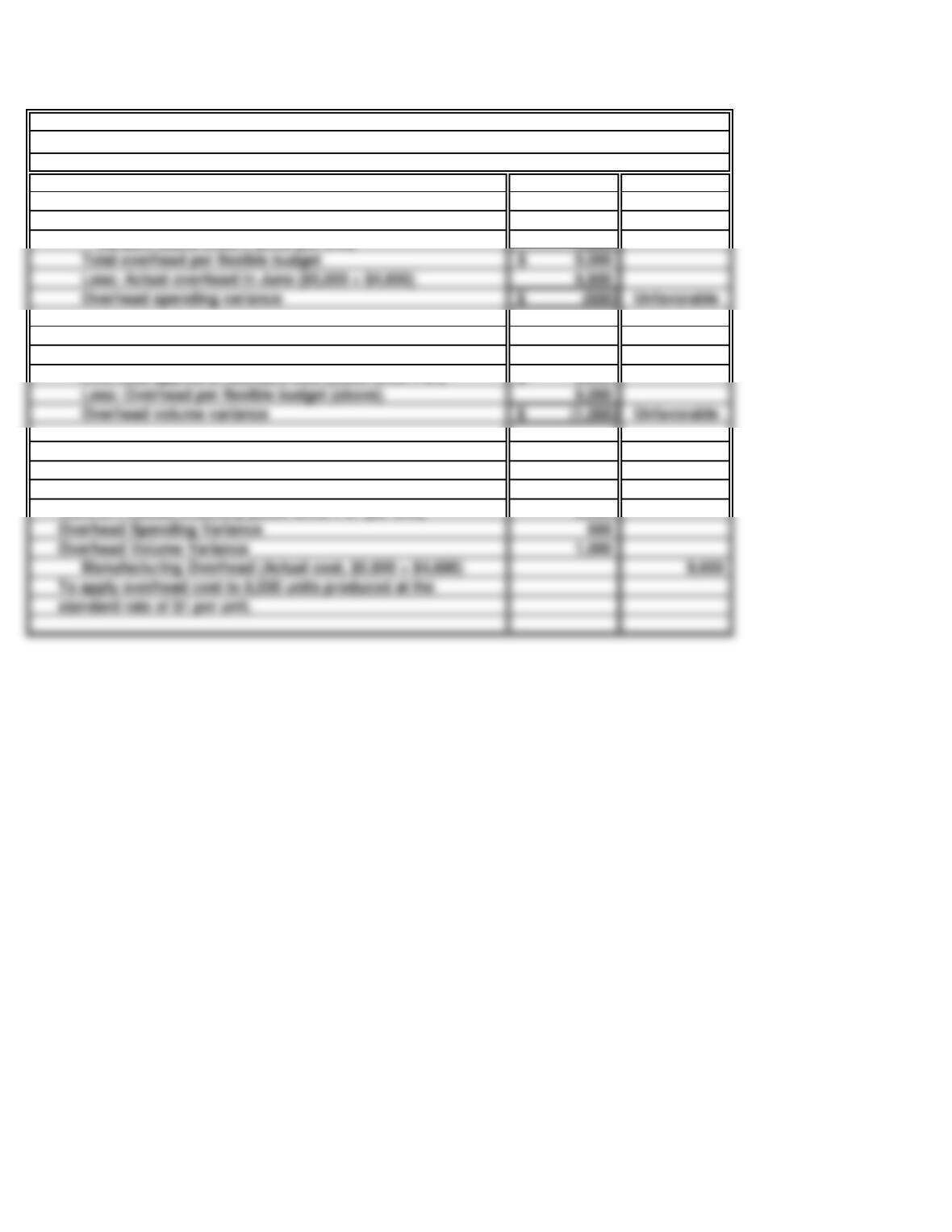
c. Overhead spending variance:
Overhead per flexible budget—8,000 units:
Fixed 5,000$
Variable (8,000 units × $0.50 per unit) 4,000
Overhead volume variance:
Overhead applied at standard cost (8,000 units × $1) 8,000$
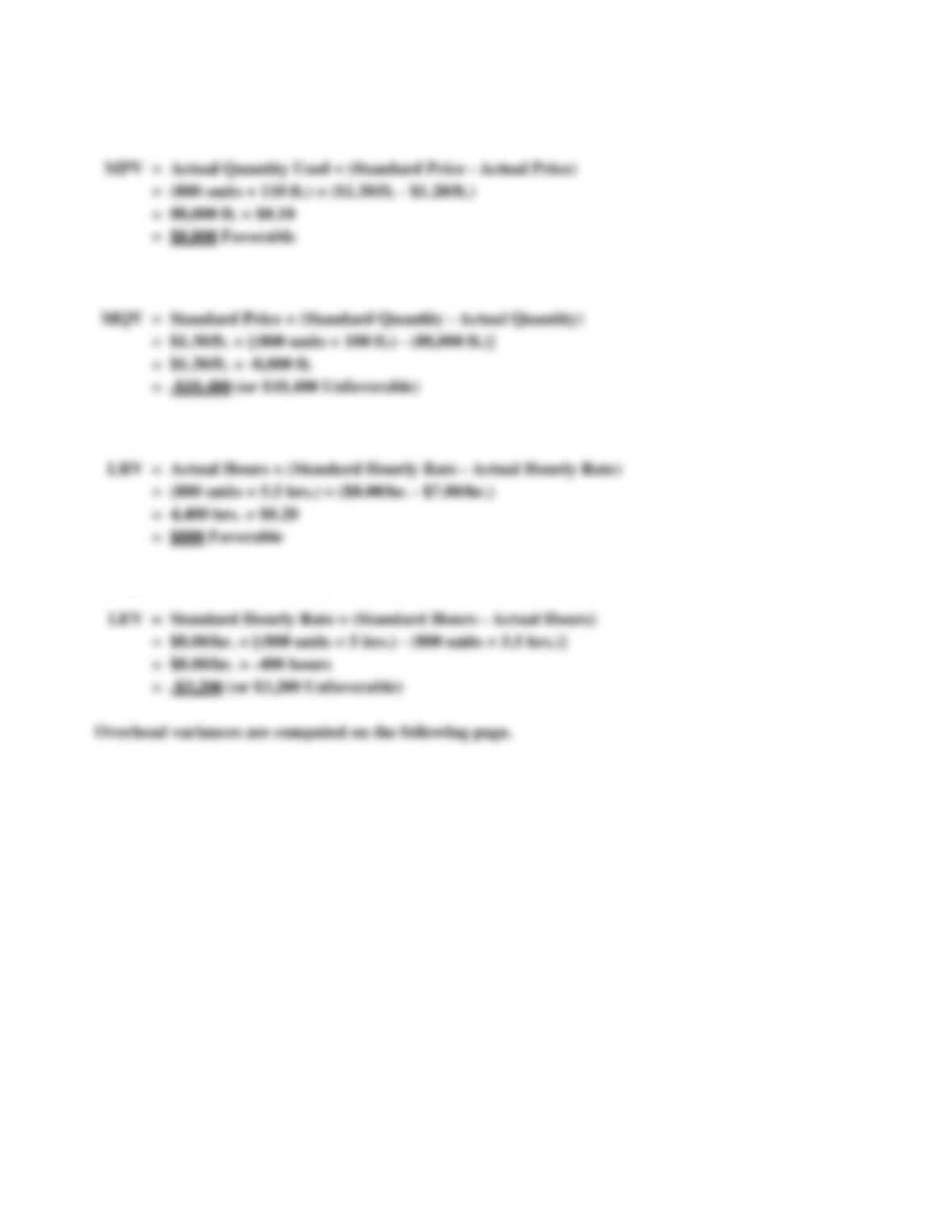
Journal entry to record overhead applied to work in process:
Work in Process Inventory (8,000 units × $1 per unit) 8,000
PROBLEM 24.7A
HERITAGE FURNITURE CO.
a. (1)
(2)
$1.30/ft. × [(800 units × 100 ft.) – (88,000 ft.)]
$1.30/ft. × -8,000 ft.
-$10,400 (or $10,400 Unfavorable)
Standard Price × (Standard Quantity – Actual Quantity)
(3)
Actual Hours × (Standard Hourly Rate – Actual Hourly Rate)
(800 units × 5.5 hrs.) × ($8.00/hr. – $7.80/hr.)
4,400 hrs. × $0.20
$880 Favorable
(4)
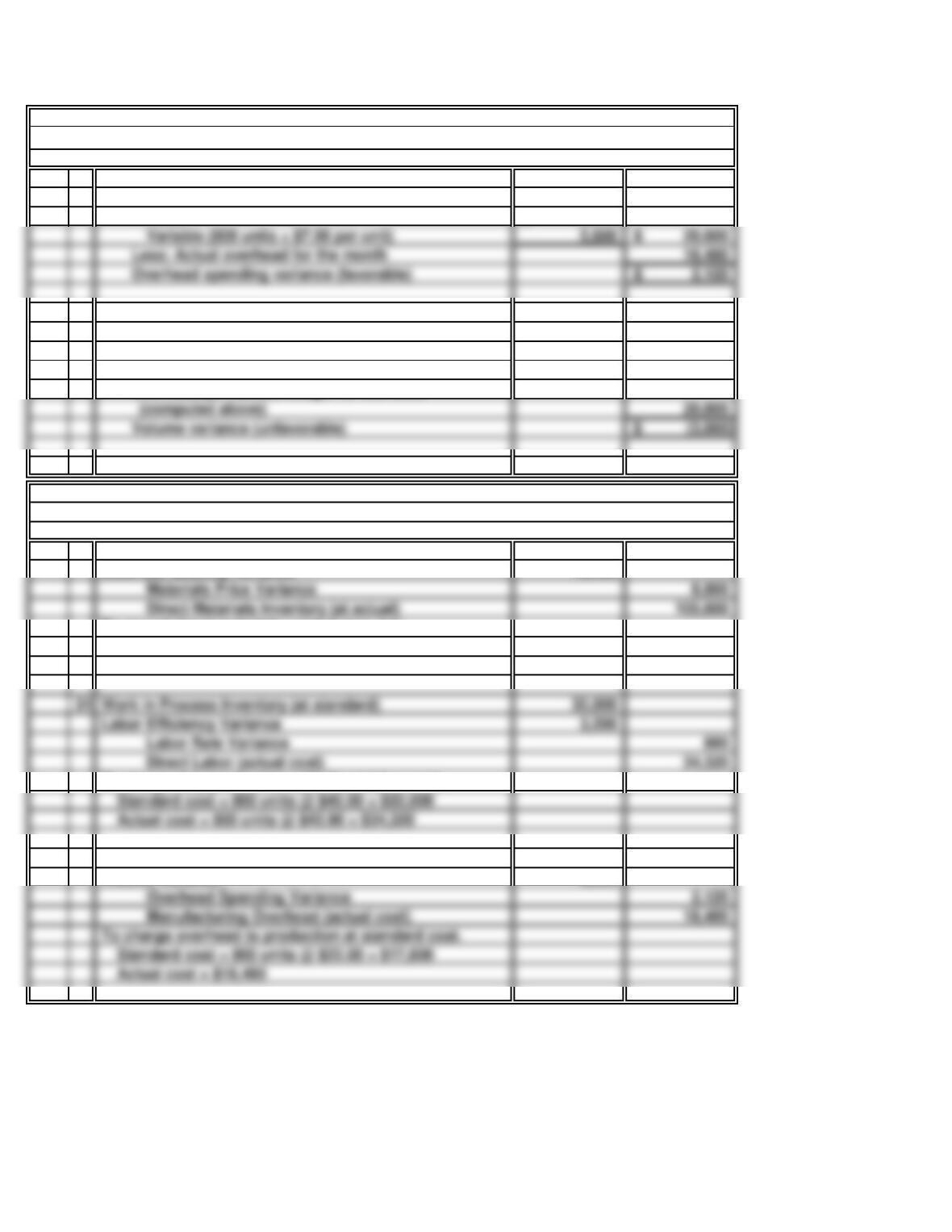
Overhead variances are computed on the following page.
-$3,200 (or $3,200 Unfavorable)
Standard Hourly Rate × (Standard Hours – Actual Hours)
$8.00/hr. × [(800 units × 5 hrs.) – (800 units × 5.5 hrs.)]
$8.00/hr. × -400 hours
40 Minutes, Strong
Computation of materials price variance (MPV):
Computation of labor efficiency variance (LEV):
Computation of labor rate variance (LRV)
Computation of materials quantity variance (MQV):
Actual Quantity Used × (Standard Price – Actual Price)
(800 units × 110 ft.) × ($1.30/ft. – $1.20/ft.)
88,000 ft. × $0.10
$8,800 Favorable
PROBLEM 24.7A
HERITAGE FURNITURE CO. (continued)
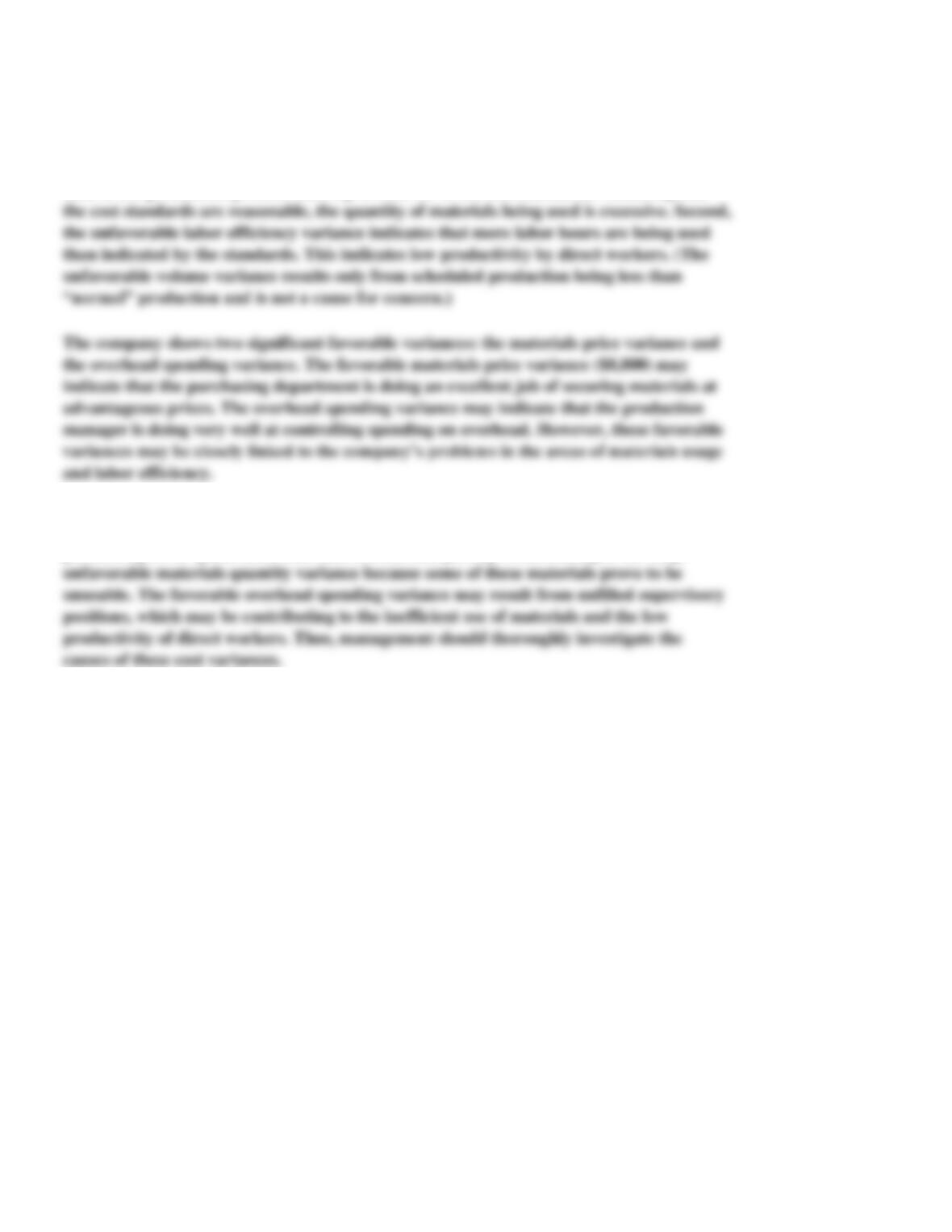
(5) Computation of overhead spending variance:
Overhead per flexible budget for 800 units:
Fixed 15,000$
(6) Computation of volume variance:
Overhead applied using standard cost
($800 units × $22 per unit) 17,600$
Overhead per flexible budget for 800 units
b.
General Journal
July 31 Work in Process Inventory (at standard) 104,000
Materials Quantity Variance 10,400
To record direct materials used during July.
Standard cost = 800 units @ $130 = $104,000
Actual cost = 800 units @ $132 = $105,600
To charge July production with direct labor cost.
31 Work in Process Inventory (at standard) 17,600
Volume Variance 3,000
PROBLEM 24.7A
HERITAGE FURNITURE CO. (concluded)
c.
The company appears to be having significant problems in two areas. First, the large
unfavorable materials quantity variance ($10,400) indicates that far more material is being
used in the production process than is provided for in the cost standards. Assuming that
The favorable materials price variance may mean that the purchasing department is
purchasing lower-grade materials than normal and perhaps contributing to the large
Comments on cost variances:
a.
b.
c.
d.
60 Minutes, Strong
PROBLEM 24.8A
RIPLEY COPRORATION
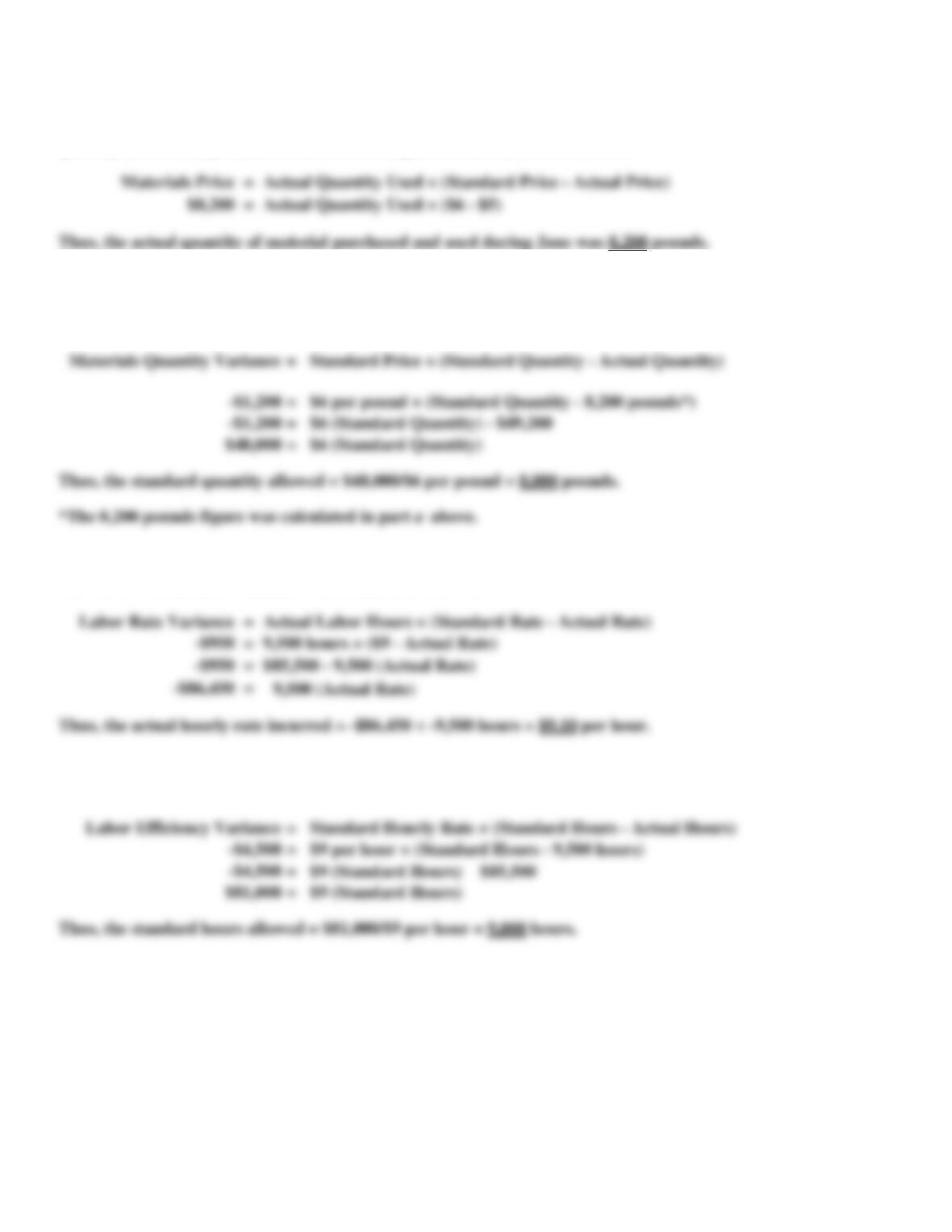
Based on the journal entry to charge direct material costs to work in process, the standard
quantity of material allowed for the actual level of output achieved in June is determined as
follows:
Based on the journal entry to charge direct materials costs to work in process, the actual
quantity of material purchased and used during June is determined as follows:
Based on the journal entry to charge direct labor costs to work in process, the standard direct
labor hours allowed during June is determined as follows:
Based on the journal entry to charge direct labor costs to work in process, the average per
hour labor cost incurred in June is determined as follows:
e.
f. 154,000
g. 5,000
8,200
1,200
4,500
2,000
4,550
To close the cost variance accounts.
Overhead Spending Variance (unfavorable) ………………………………………….
Cost of Goods Sold ………………………………………………………………………
Direct Labor Rate Variance (unfavorable) …………………………………………
Direct Labor Efficiency Variance (unfavorable) ………………………………………….
Overhead Volume Variance (favorable) ………………………………
Materials Quantity Variance (unfavorable) …………………………………………
Materials Price Variance (favorable) ………………………………….
$22,000
Finished Goods Inventory (at standard cost)
Problem 24.8A
RILEY CORPORATION (concluded)
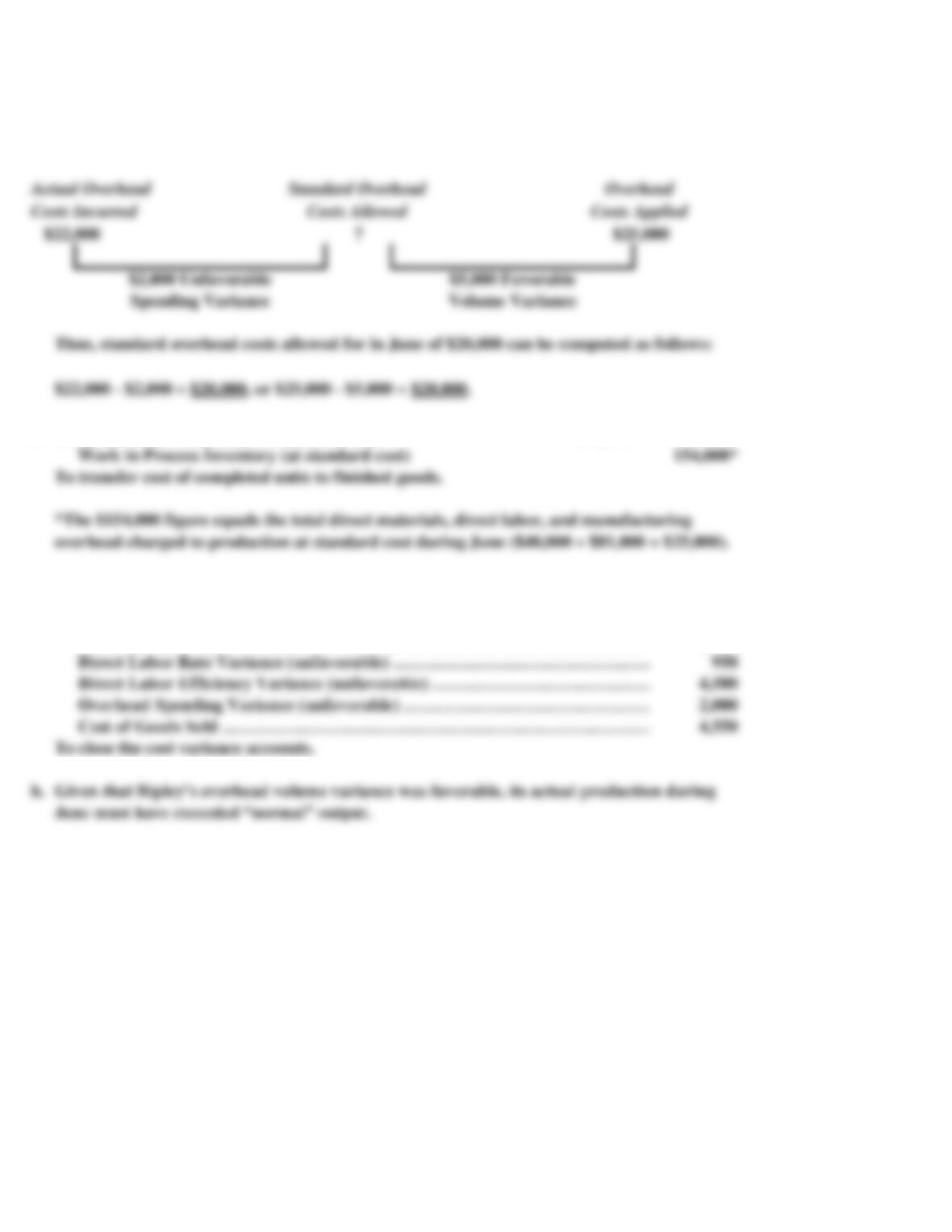
Based on the journal entry to charge overhead costs to work in process, the following
relationships exist:
To transfer cost of completed units to finished goods.
Work in Process Inventory (at standard cost)
a.
c. =
$ 600
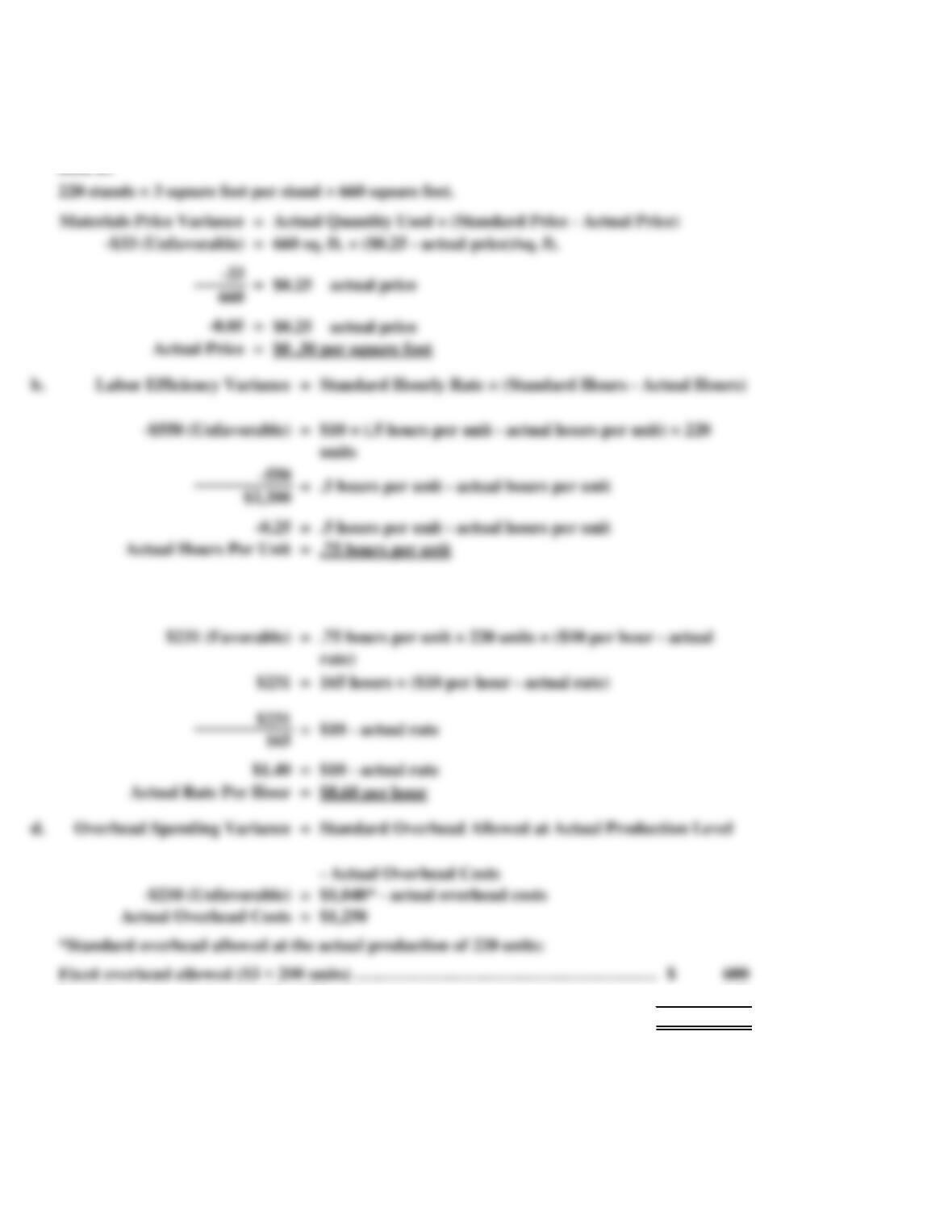
Fixed overhead allowed ($3 × 200 units) …………………………………………………………..
Standard Overhead Allowed at Actual Production Level
440
$ 1,040
Total overhead allowed …………………………………………………………………………….
Variable overhead allowed ($2 × 220 units) …………………………………………………………….
Labor Rate Variance
Actual Labor Hours × (Standard Rate – Actual Rate)
PROBLEM 24.9A
ANTON COMPANY
45 Minutes, Medium
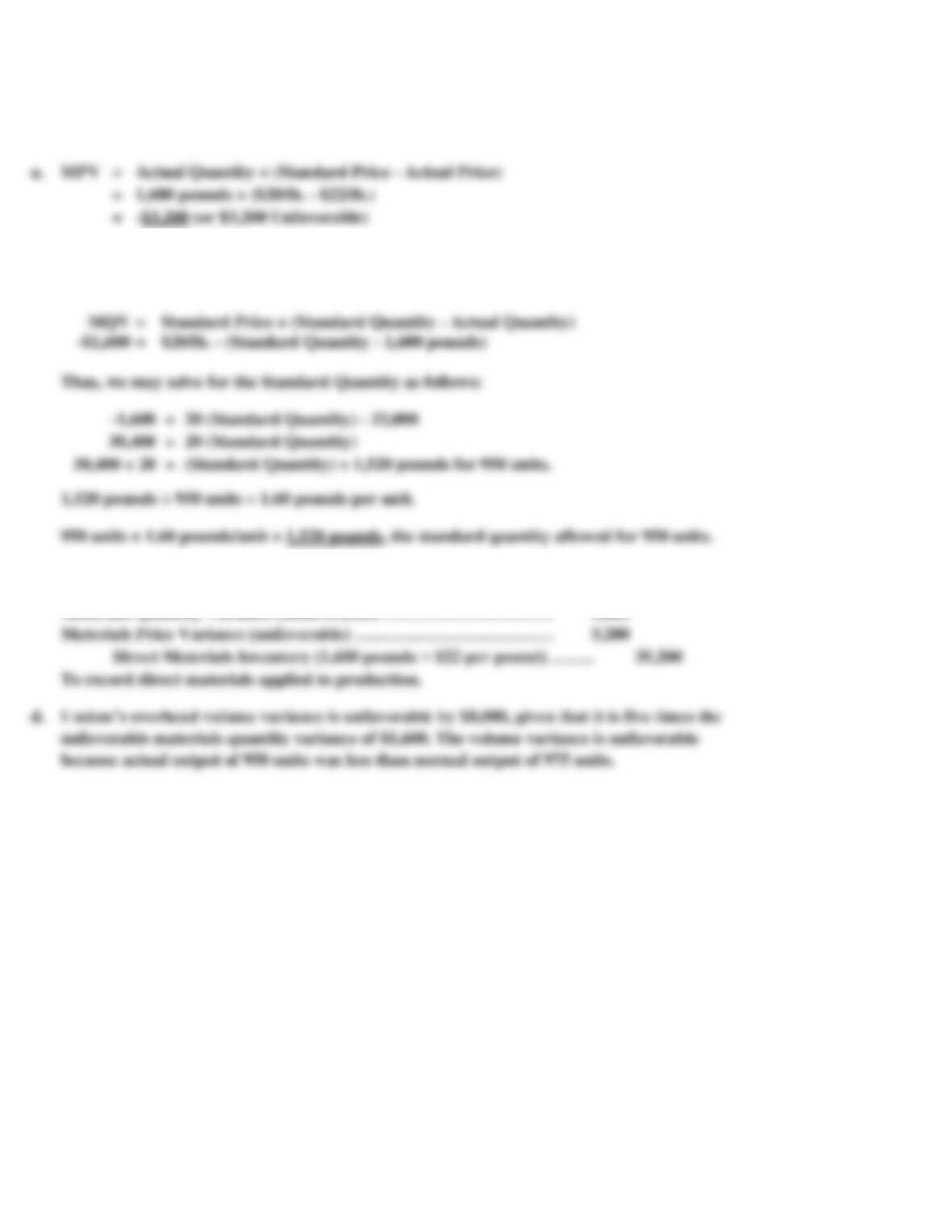
Since the direct materials quantity variance is $0, the actual quantity of materials used per
stand must equal the budgeted quantity per stand. Thus, the total quantity purchased and
used is:
$10 × (.5 hours per unit – actual hours per unit) × 220
b.
c. 30,400
1,600
3,200
Direct Materials Inventory (1,600 pounds × $22 per pound) ……..
Materials Price Variance (unfavorable) …………………………………………
SOLUTIONS TO PROBLEMS SET B
25 Minutes, Strong
PROBLEM 24.1B
UNDEM
The materials quantity variance (MQV) is first used to find the standard quantity of material
allowed for producing 950 units (MQV is half MPV):
Materials Quantity Variance (unfavorable) …………………………………….
Work in Process Inventory (1,520 pounds × $20 per pound) …………………………..
PROBLEM 24.2B
DYELOT INDUSTRIES
a.
-$8,000 (or $8,000 Unfavorable)
Standard Price × (Standard Quantity – Actual Quantity)
$0.80/lb. × [(1,000 lbs. × 400 batches) – 410,000 lbs.]
$0.80/lb. × -10,000 lbs.
$1,590 Favorable
Actual Hours × (Standard Hourly Rate – Actual Hourly Rate)
7,950 hrs. × ($8.00/hr. – $7.80/hr.)
7,950 hrs. × $0.20/hr.
Overhead variances are computed on the following page.
$8.00/hr. × [(20 hrs. × 400 batches) – 7,950 hrs.]
$8.00/hr. × 50 hrs.
$400 Favorable
Standard Hourly Rate × (Standard Hours – Actual Hours)
30 Minutes, Medium
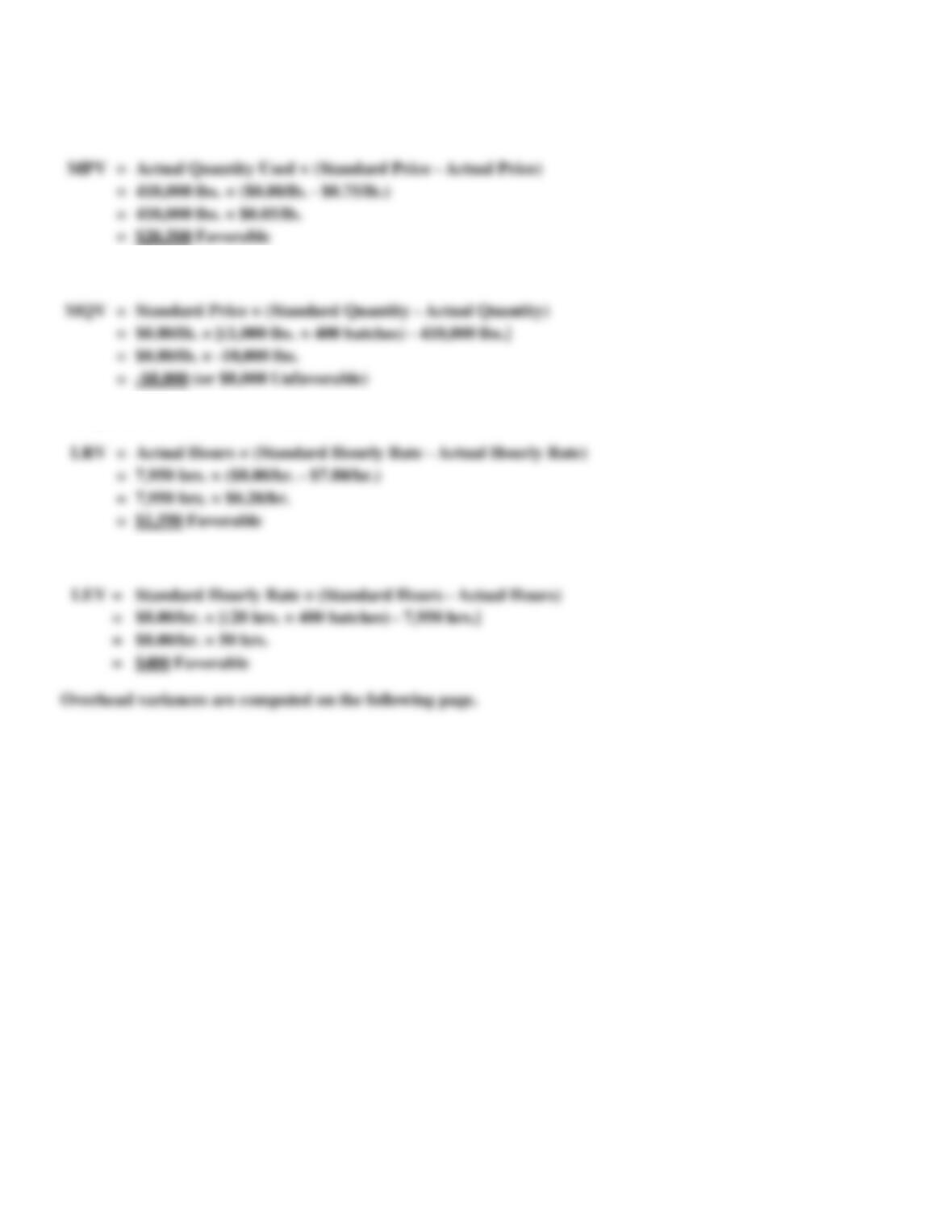
Computation of materials price variance (MPV):
Computation of materials quantity variance (MQV):
Computation of labor rate variance (LRV):
Computation of labor efficiency variance (LEV):
Actual Quantity Used × (Standard Price – Actual Price)
410,000 lbs. × ($0.80/lb. – $0.75/lb.)
410,000 lbs. × $0.05/lb.
$20,500 Favorable
PROBLEM 24.2B
DYELOT INDUSTRIES (concluded)
a. (continued)
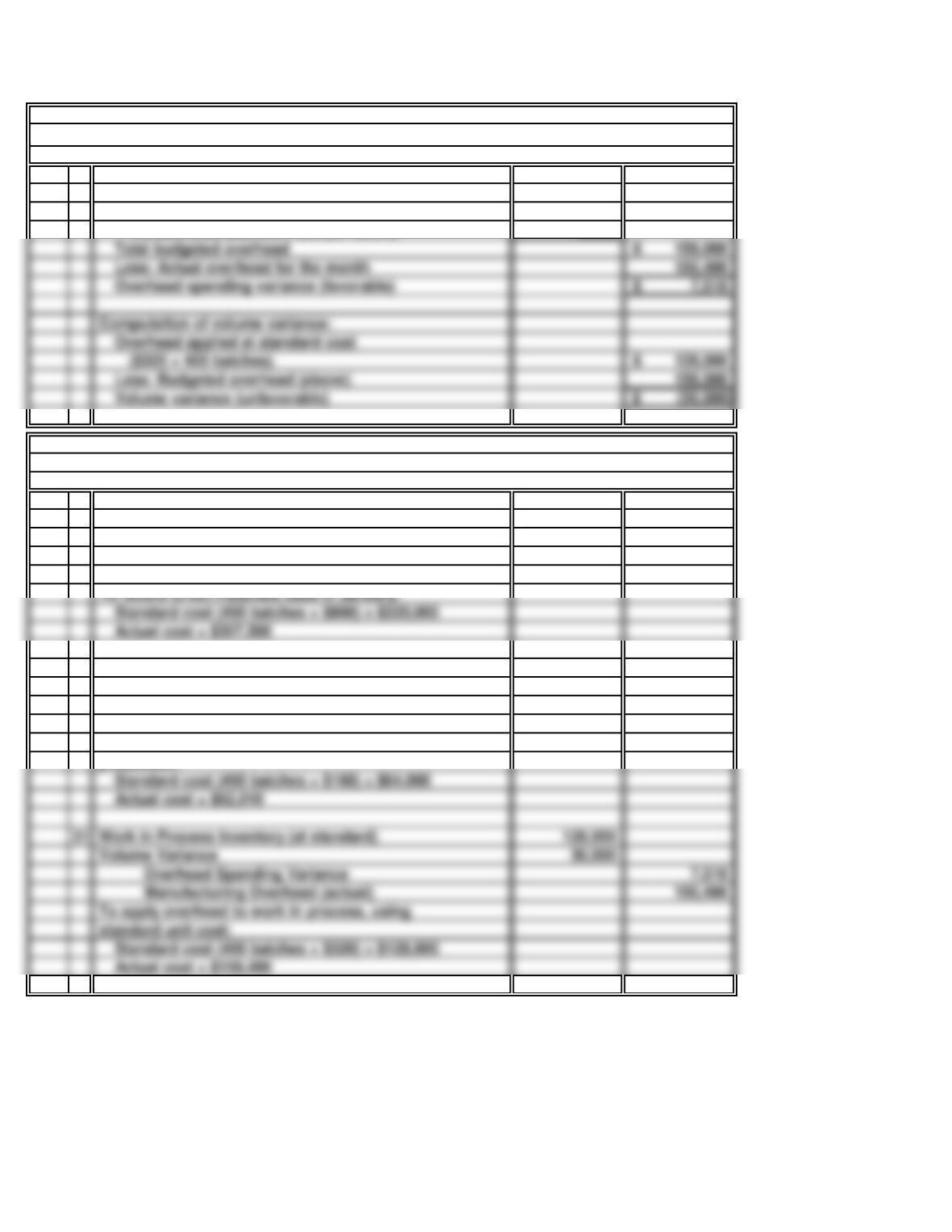
Computation of overhead spending variance:
Overhead budgeted for 400 batches:
Fixed 150,000$
Variable (400 batches × $20 per batch) 8,000
b.
General Journal
Jan. 31 Work in Process Inventory (at standard) 320,000
Materials Quantity Variance 8,000
Materials Price Variance 20,500
Materials Inventory (actual) 307,500
To record direct materials used in January.
Standard cost (400 batches × $800) = $320,000
Actual cost = $307,500
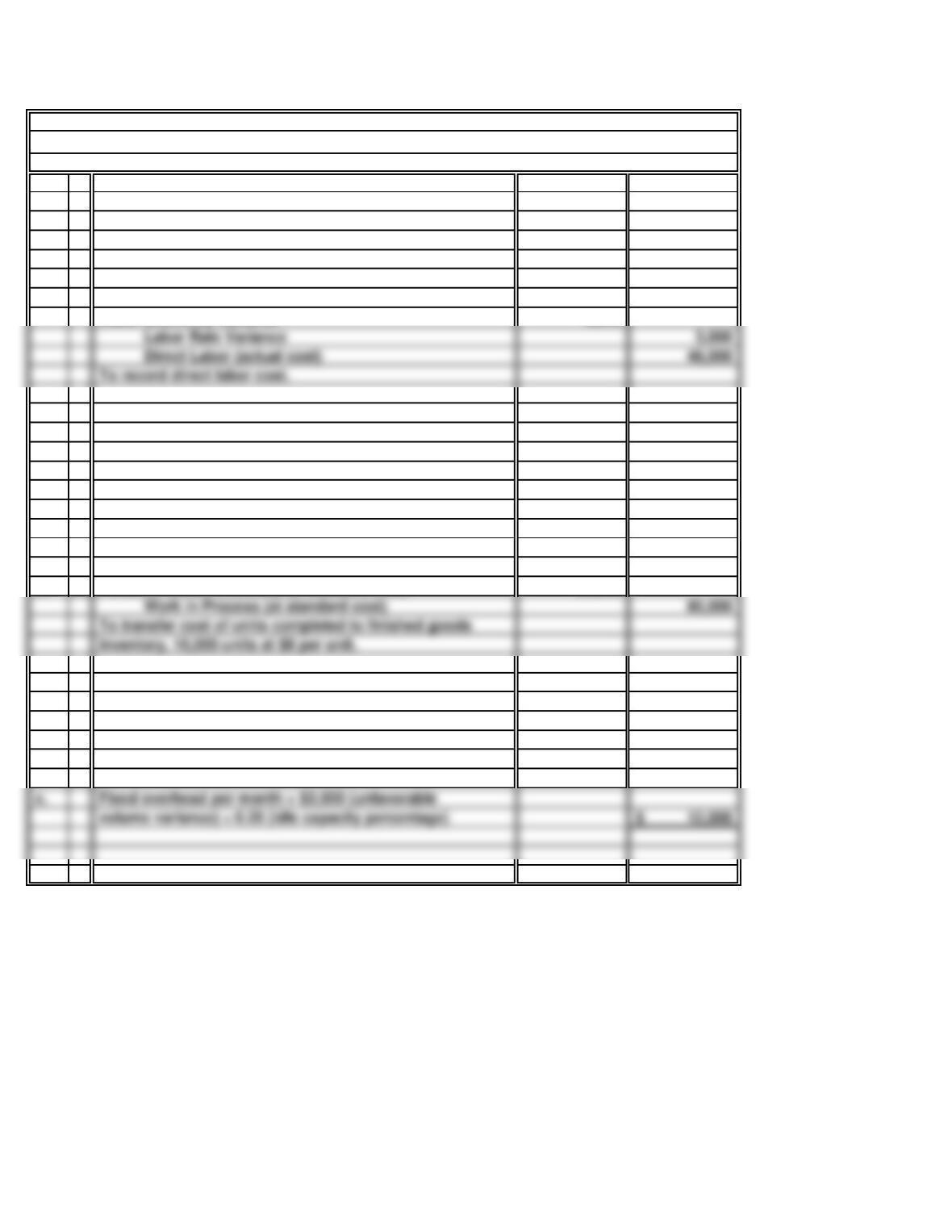
31 Work in Process Inventory (at standard) 64,000
Labor Rate Variance 1,590
Labor Efficiency Variance 400
Direct Labor (actual) 62,010
To record direct labor cost applicable to January
production:
Standard cost (400 batches × $160) = $64,000
Actual cost = $62,010
31 Work in Process Inventory (at standard) 128,000
Volume Variance 30,000
Overhead Spending Variance 7,510
Manufacturing Overhead (actual) 150,490
To apply overhead to work in process, using
Standard cost (400 batches × $320) = $128,000
Actual cost = $150,490
Total budgeted overhead 158,000$
Less: Actual overhead for the month 150,490
Overhead spending variance (favorable) 7,510$
Computation of volume variance:
Overhead applied at standard cost
($320 × 400 batches) 128,000$
Less: Budgeted overhead (above) 158,000
Volume variance (unfavorable) (30,000)$
25 Minutes, Medium PROBLEM 24.3B
LATIN SILK PRODUCTS
a.
General Journal
(1) Work in Process (standard cost) 50,000
Materials Quantity Variance 5,000
Materials Price Variance 1,000
Direct Materials Inventory (actual cost) 54,000
To record materials used.
(2) Work in Process (standard cost) 47,000
Labor Efficiency Variance 4,000
(3) Work in Process (standard cost) 56,400
Overhead Spending Variance 600
Overhead Volume Variance 3,000
Manufacturing Overhead (actual cost) 60,000
To record manufacturing overhead assigned to
production, and to record overhead variances.
b. (1) Finished Goods Inventory (at standard cost) 80,000
(2) Cost of Goods Sold (at standard cost) 72,000
Finished Goods Inventory (at standard cost) 72,000
To record cost of units sold, 9,000 units at $8 per unit.
a. =
b. =
=
=
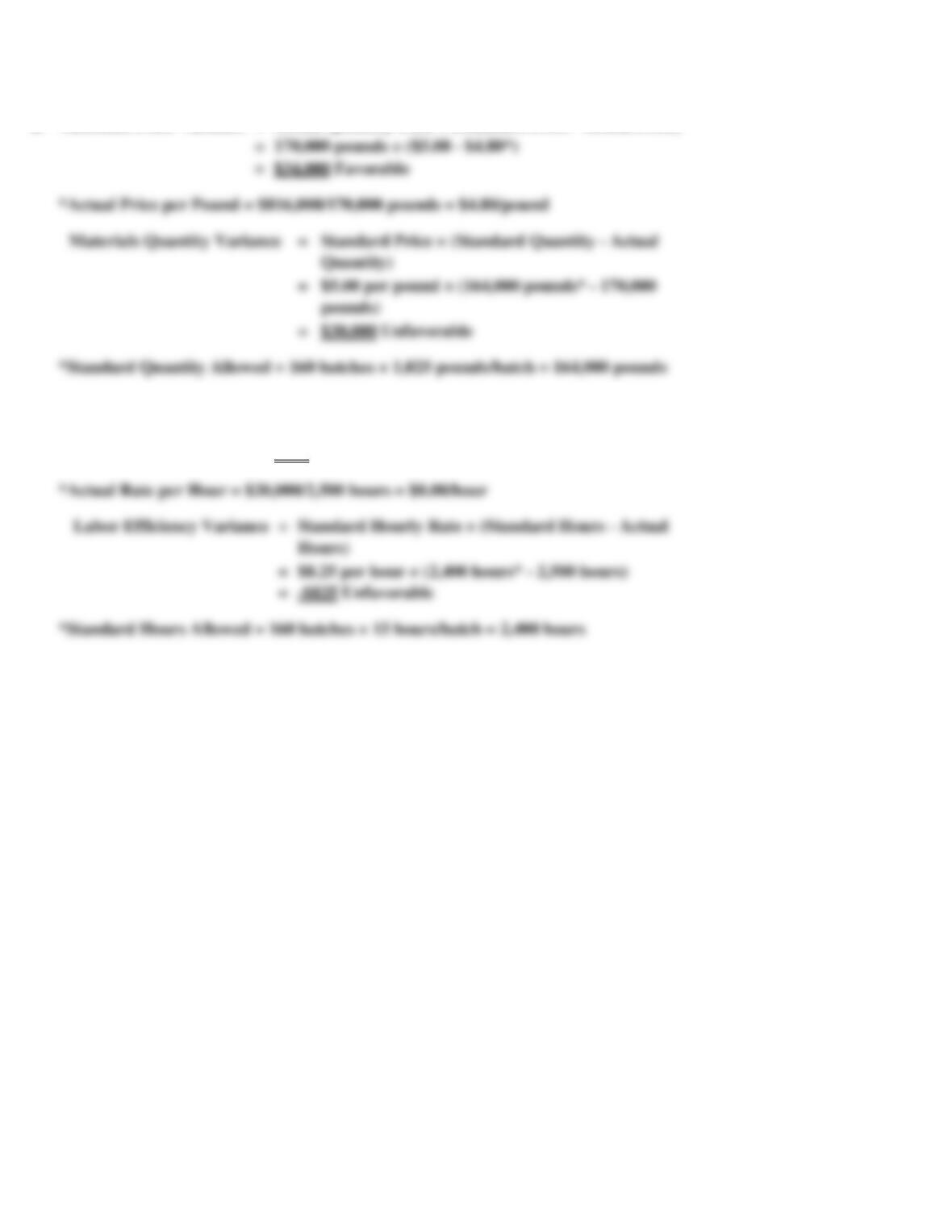
*Actual Rate per Hour = $20,000/2,500 hours = $8.00/hour
-$825 Unfavorable
*Standard Hours Allowed = 160 batches × 15 hours/batch = 2,400 hours
$8.25 per hour × (2,400 hours* – 2,500 hours)
$625 Favorable
Labor Rate Variance
Actual Labor Hours × (Standard Rate – Actual Rate)
2,500 hours × ($8.25 – $8.00*)
45 Minutes, Strong
Materials Price Variance
Actual Quantity Used × (Standard Price – Actual Price)
PROBLEM 24.4B
HANS ENTERPRISES
=
=
$30,000 Unfavorable
*Standard Quantity Allowed = 160 batches × 1,025 pounds/batch = 164,000 pounds
$34,000 Favorable
*Actual Price per Pound = $816,000/170,000 pounds = $4.80/pound
170,000 pounds × ($5.00 – $4.80*)
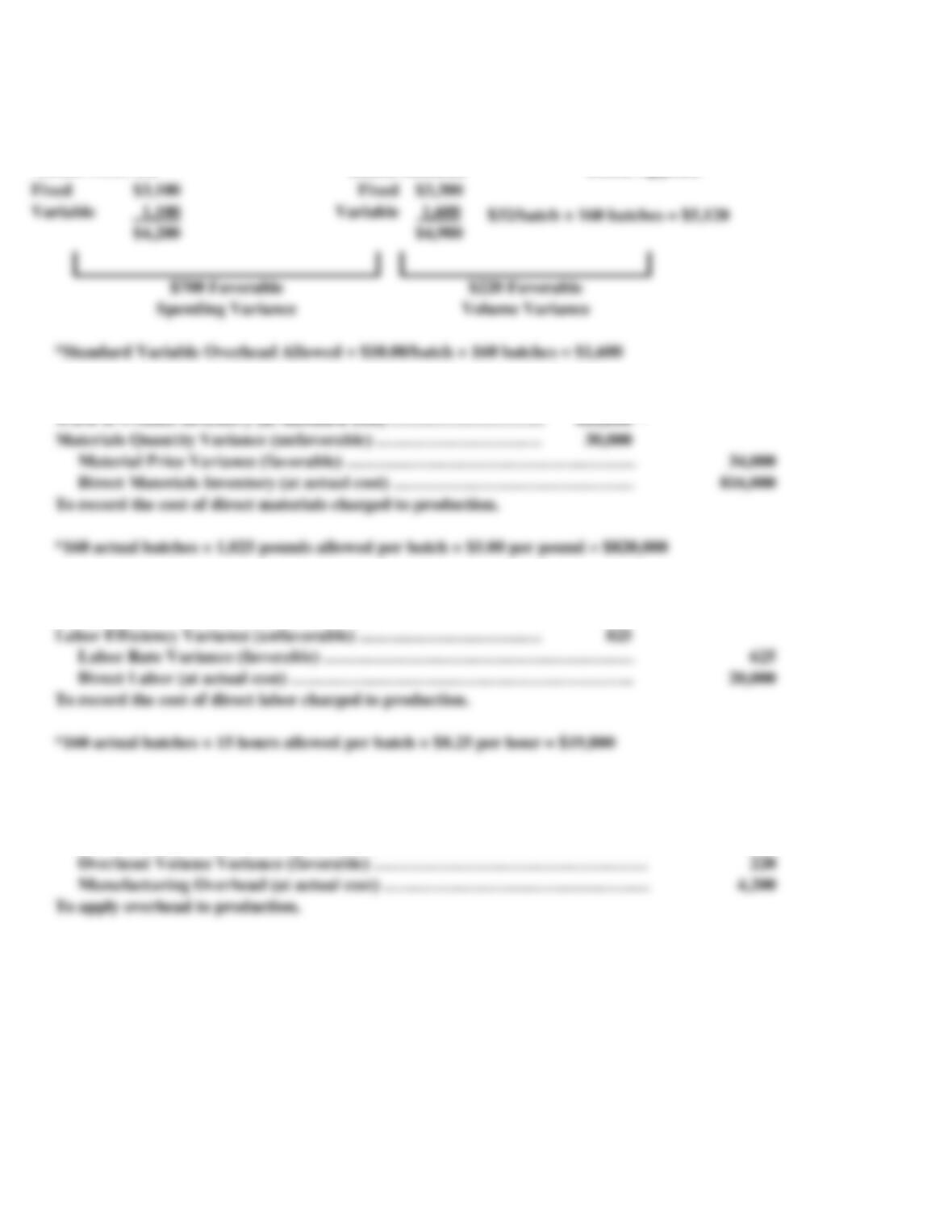
c.
Overhead
Costs Applied
d.
30,000
Direct Materials Inventory (at actual cost) ……………………………………………………
Material Price Variance (favorable) ……………………………………………………………..
*160 actual batches × 1,025 pounds allowed per batch × $5.00 per pound = $820,000
To record the cost of direct materials charged to production.
Work in Process Inventory (at standard cost) ……………………………….
Materials Quantity Variance (unfavorable) …………………………………….
e.
19,800 *
Labor Rate Variance (favorable) ………………………………………………………………
Direct Labor (at actual cost) …………………………………………………………………..
Labor Efficiency Variance (unfavorable) ……………………………………………
To record the cost of direct labor charged to production.
*160 actual batches × 15 hours allowed per batch × $8.25 per hour = $19,800
f.
5,120
700
220
To apply overhead to production.
Manufacturing Overhead (at actual cost) ………………………………………………………..
Overhead Volume Variance (favorable) ……………………………………………………….
PROBLEM 24.4B
HANS ENTERPRISES (continued)
Overhead variances:
Actual Overhead
Costs Incurred
Costs Allowed
Standard Overhead
Entry to charge direct labor to production:
Work in Process Inventory (at standard cost) …………………………………
Entry to charge materials to production:
Entry to charge overhead to production:
Work in Process Inventory (at standard cost) …………………………………..
Overhead Spending Variance (favorable) …………………………………………………….
$3,100
1,100
*Standard Variable Overhead Allowed = $10.00/batch × 160 batches = $1,600