CHAPTER 24 Decentralized Operations
Prob. 24-1A
1.
Over (Under)
Actual Budget Budget Budget
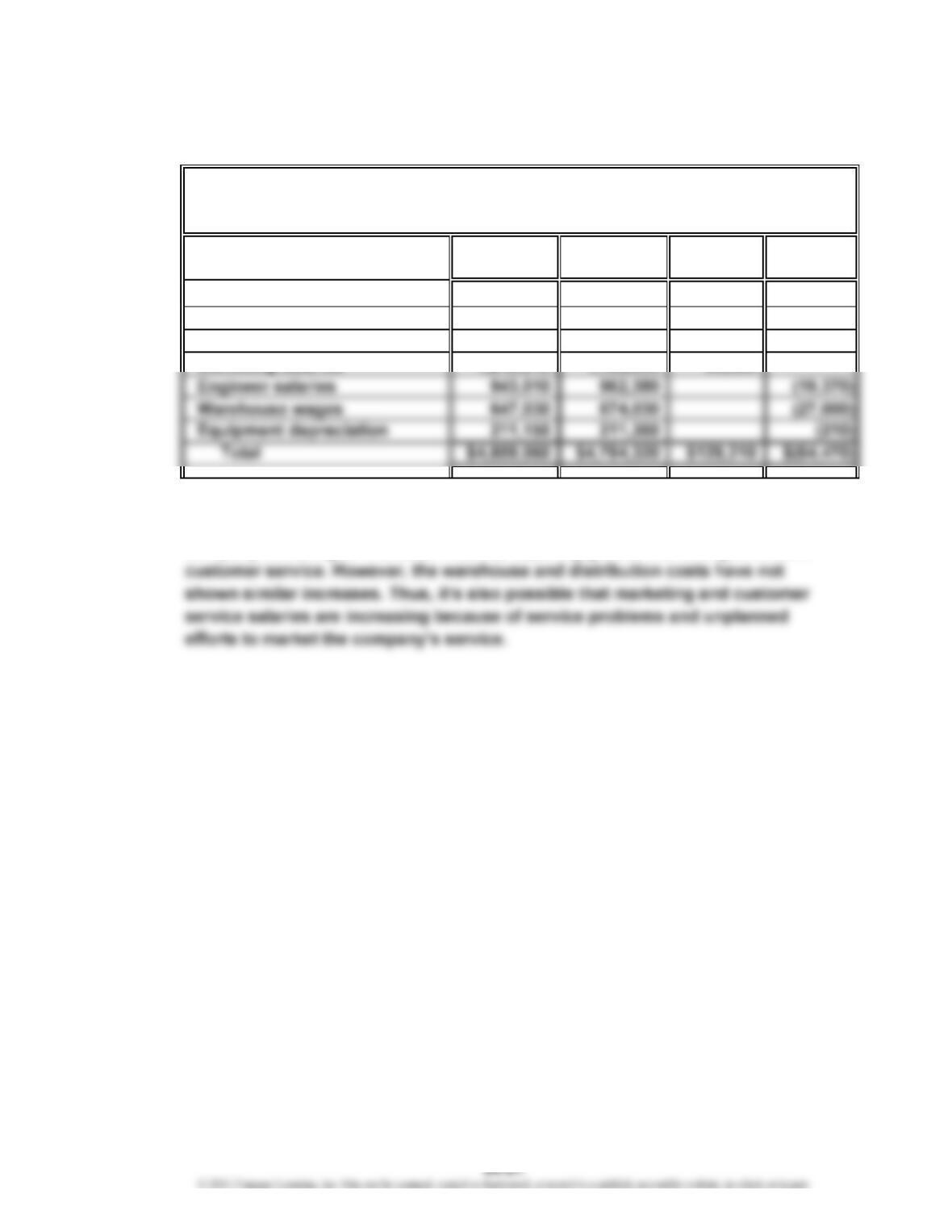
Customer service salaries $ 692,700 $ 628,870 $ 63,830
Insurance and property taxes 126,780 131,860 $ (5,080)
Distribution salaries 990,380 1,003,190 (12,810)
2. The customer service and marketing salaries are significantly over budget. The
director should investigate the cause of these results. One possibility is that the
company is having an increase in sales, requiring greater marketing effort and
PROBLEMS
Funderburk, Inc.
Budget Performance Report—Director, Consumer Products Division
For the Month Ended January 31
CHAPTER 24 Decentralized Operations
Prob. 24-2A
1.
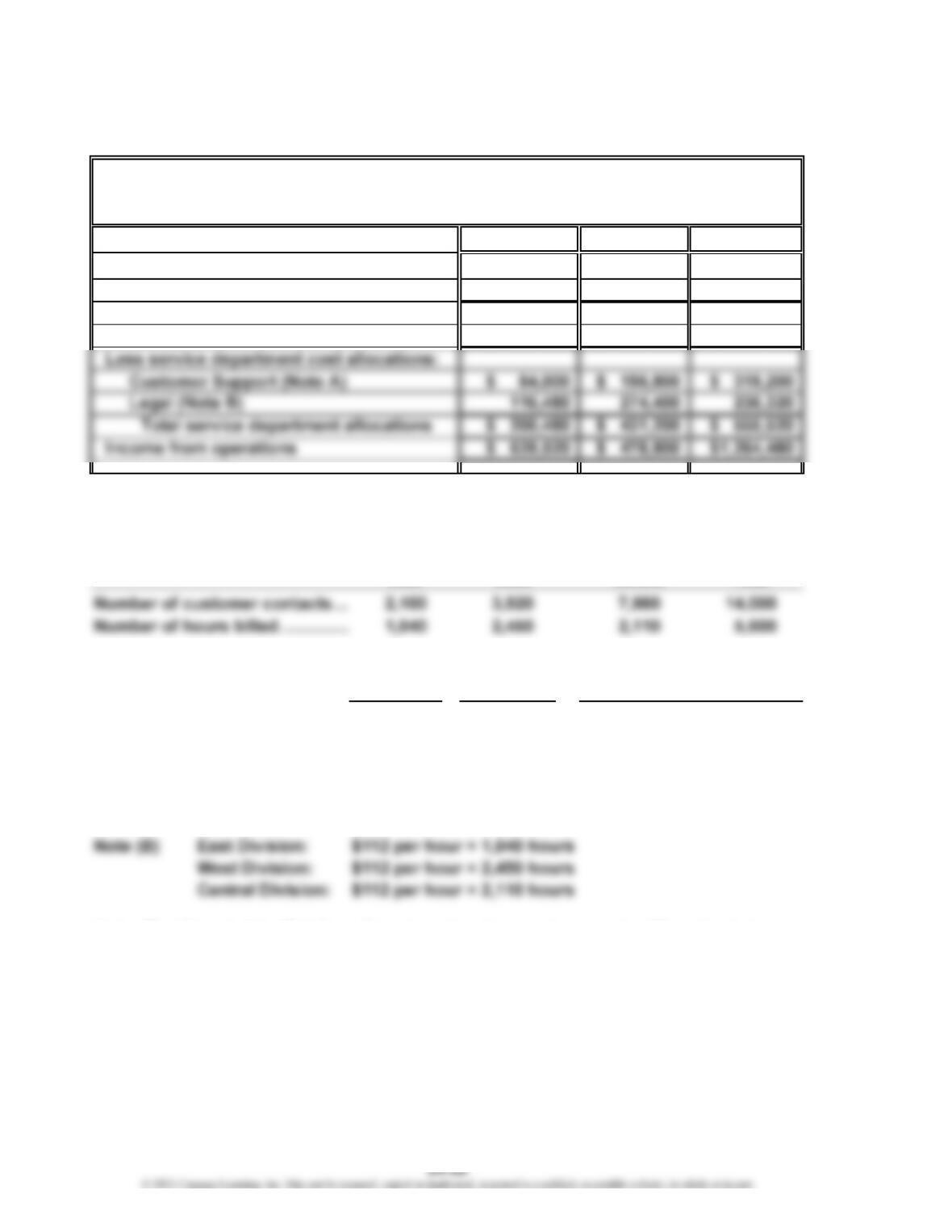
West Central
Revenues $2,800,000 $4,480,000
Operating expenses 1,890,000 2,660,000
Income from operations before service
department allocations $ 910,000 $1,820,000
Supporting computations:
Service department allocation rates for the two service departments, Customer Support
and Legal, are determined as follows:
West Central Total
…
Service
Cost ÷ Output =
Customer contact rate…………
…
$560,000 ÷14,000 =$40 per contract
Legal billing rate…………………
…
627,200 ÷5,600 =$112 per hour
Note (A) East Division: $40 per contact × 2,100 contacts
West Division: $40 per contact × 3,920 contacts
Central Division: $40 per contact × 7,980 contacts
Note: The Shareholder Relations Department and general corporate officers’ salaries
are not controllable by division management and thus are not included in determining
division income from operations.
Conico Railroad Inc.
Divisional Income Statements
For the Quarter Ended December 31
East
East
$1,960,000
1,120,000
$ 840,000
Rate
CHAPTER 24 Decentralized Operations
Prob. 24-2A (Concluded)
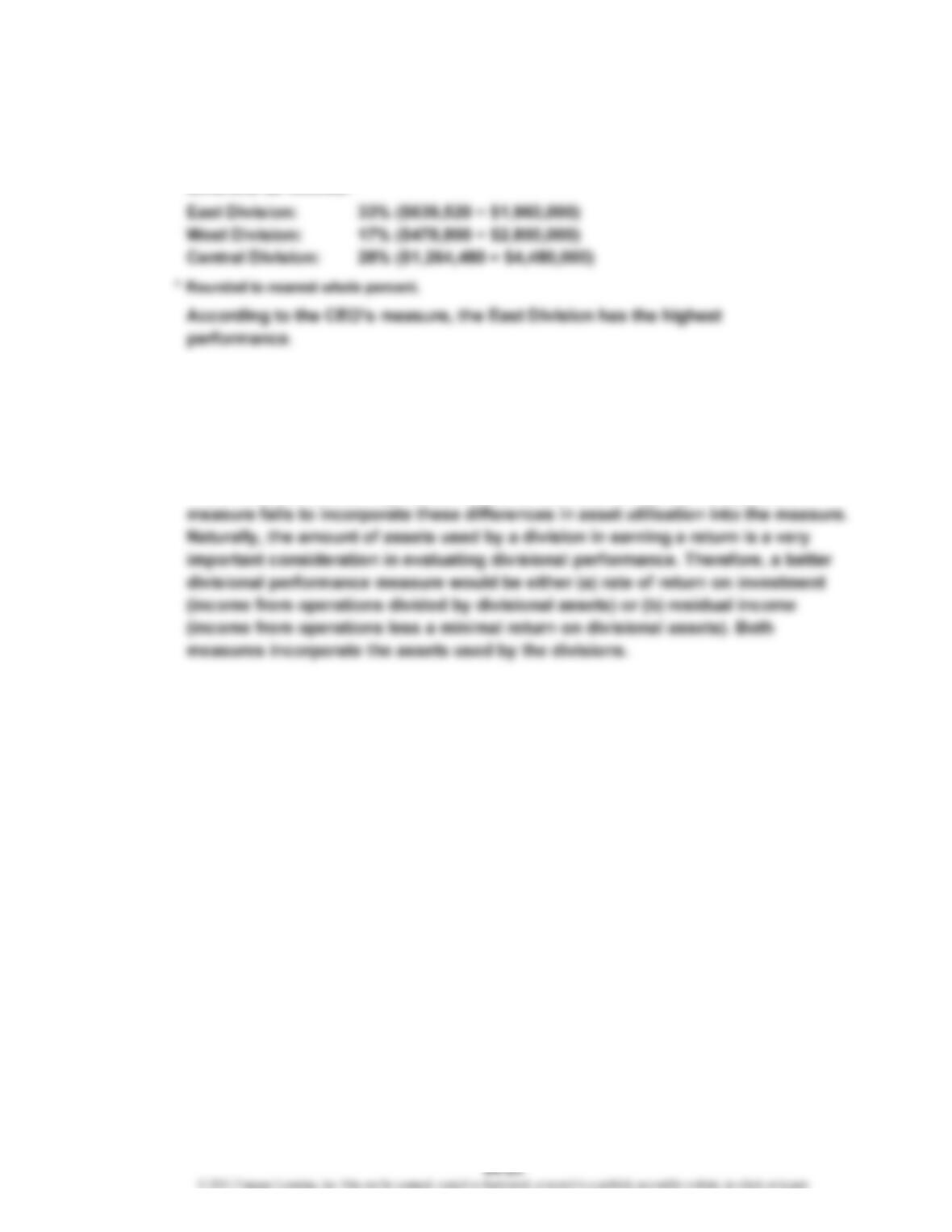
2. The CEO evaluates the three divisions using income from operations as a
percent of revenues (profit margin). This measure is computed for the three
3. To: CEO
The method used to evaluate the performance of the divisions should be
reevaluated. The present method identifies the amount of income from
operations per dollar of earned revenue. However, this company requires a
significant investment in fixed assets for production and distribution facilities.
The amount of assets may not be related to the revenue earned. The present
CHAPTER 24 Decentralized Operations
Prob. 24-3A
1.
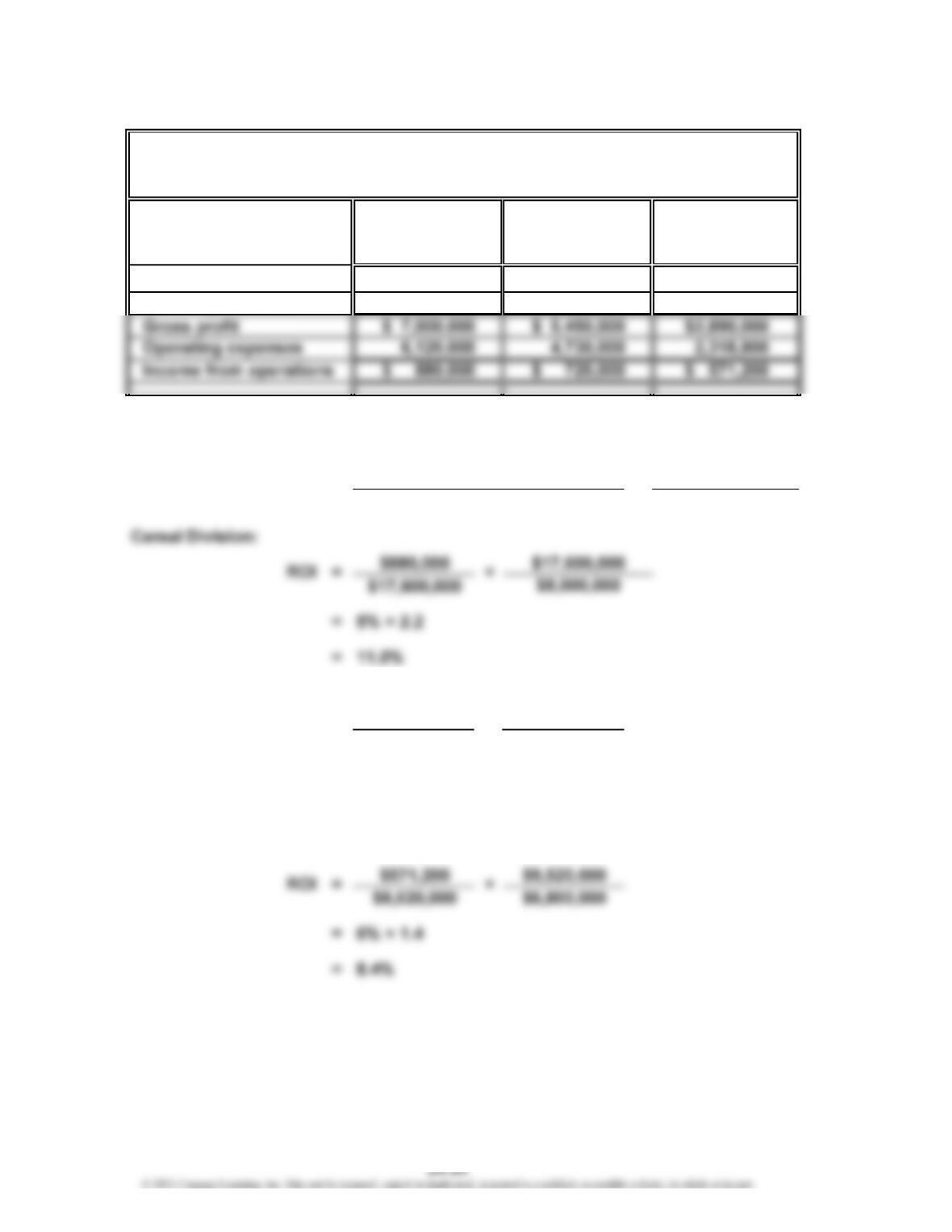
Sales
Cost of goods sold
Snack Cake Division:
$720,000 $18,000,000
$18,000,000 $6,000,000
= 4% × 3.0
= 12.0%
Retail Bakeries Division:
×
2. Return on
Investment (ROI) = Profit Margin × Investment Turnover
ROI =
Invested Assets
=
Return on
Investment (ROI)
The Whole Life Baked Goods Company
Divisional Income Statements
For the Year Ended June 30, 20Y7
Sales
Cereal Snack Cake
Retail
Bakeries
6,630,000
Division Division Division
$17,600,000 $18,000,000 $9,520,000
×
Sales
Income from Operations
10,600,000 12,550,000
CHAPTER 24 Decentralized Operations
Prob. 24-3A (Concluded)
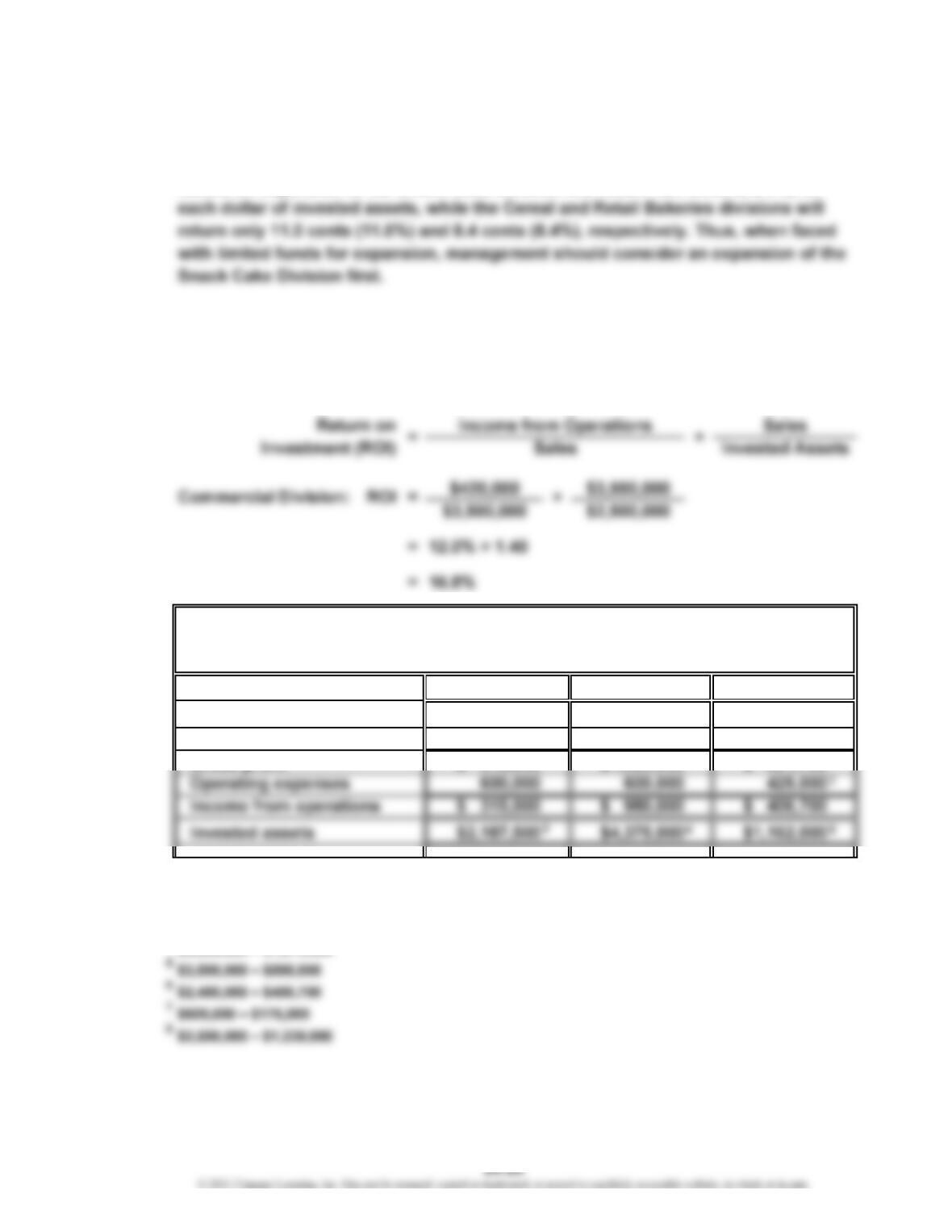
3. Per dollar of invested assets, the Snack Cake Division is the most profitable of the
three divisions. Assuming that the return on investments do not change in the
future, an expansion of the Snack Cake Division will return 12.0 cents (12.0%) on
Prob. 24-4A
2.
Sales
Cost of goods sold
1
$2,480,000 + $105,000
2
$2,500,000 – $312,500
3
$2,480,000 – $560,000
4
5
6
7
8
Return on
Investment (ROI)
2,585,000
Proposal 1
For the Year Ended December 31
Proposal 2
Maxell Manufacturing Inc.—Commercial Division
Estimated Income Statements
$2,905,000
Proposal 3
$3,500,000
1. =
1,920,000 2,073,300
$3,500,000
Profit Margin × Investment Turnover
1
3
5
6
CHAPTER 24 Decentralized Operations
Prob. 24-4A (Concluded)
$980,000 $3,500,000
$3,500,000 $4,375,000
= 28.0% × 0.8
= 22.4%
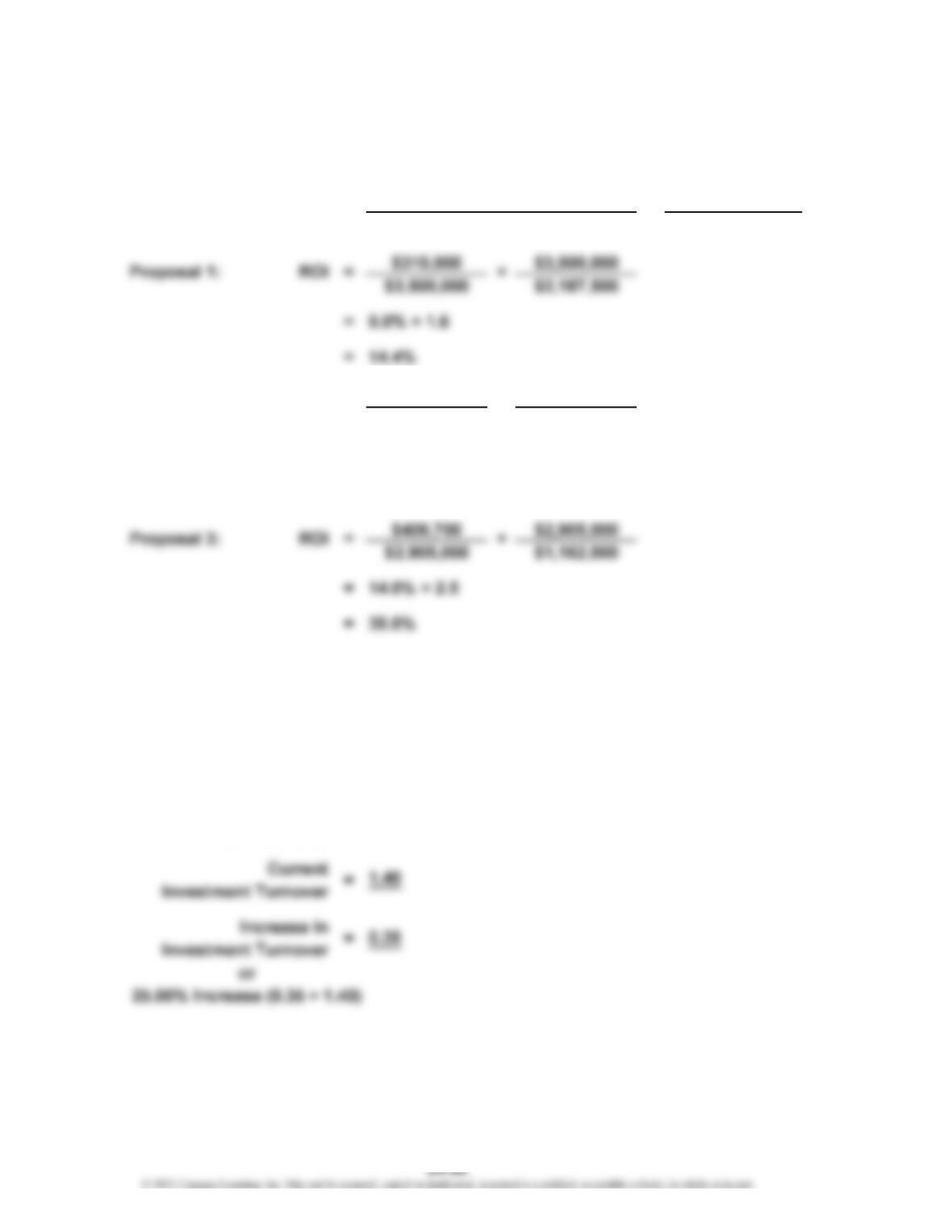
4. Proposal 3 would yield a rate of return on investment of 35.0%. Proposal 2 would
yield a rate of return on investment of 22.4%.
5.
=
Return on
Investment (ROI)
Investment (ROI)
Return on
Return on
Investment Turnover
3. = Profit Margin × Investment Turnover
12% × Required Investment Turnover
Sales
21%
Profit Margin × Investment Turnover
=
= ×
Sales
×
Income from Operations
Invested Assets
1.75 (21% ÷ 12%)
ROI =
=
Proposal 2:
Investment (ROI)
Required
CHAPTER 24 Decentralized Operations
Prob. 24-5A
1.
Sales
Cost of goods sold
$250,000 $2,500,000
$2,500,000 $1,250,000
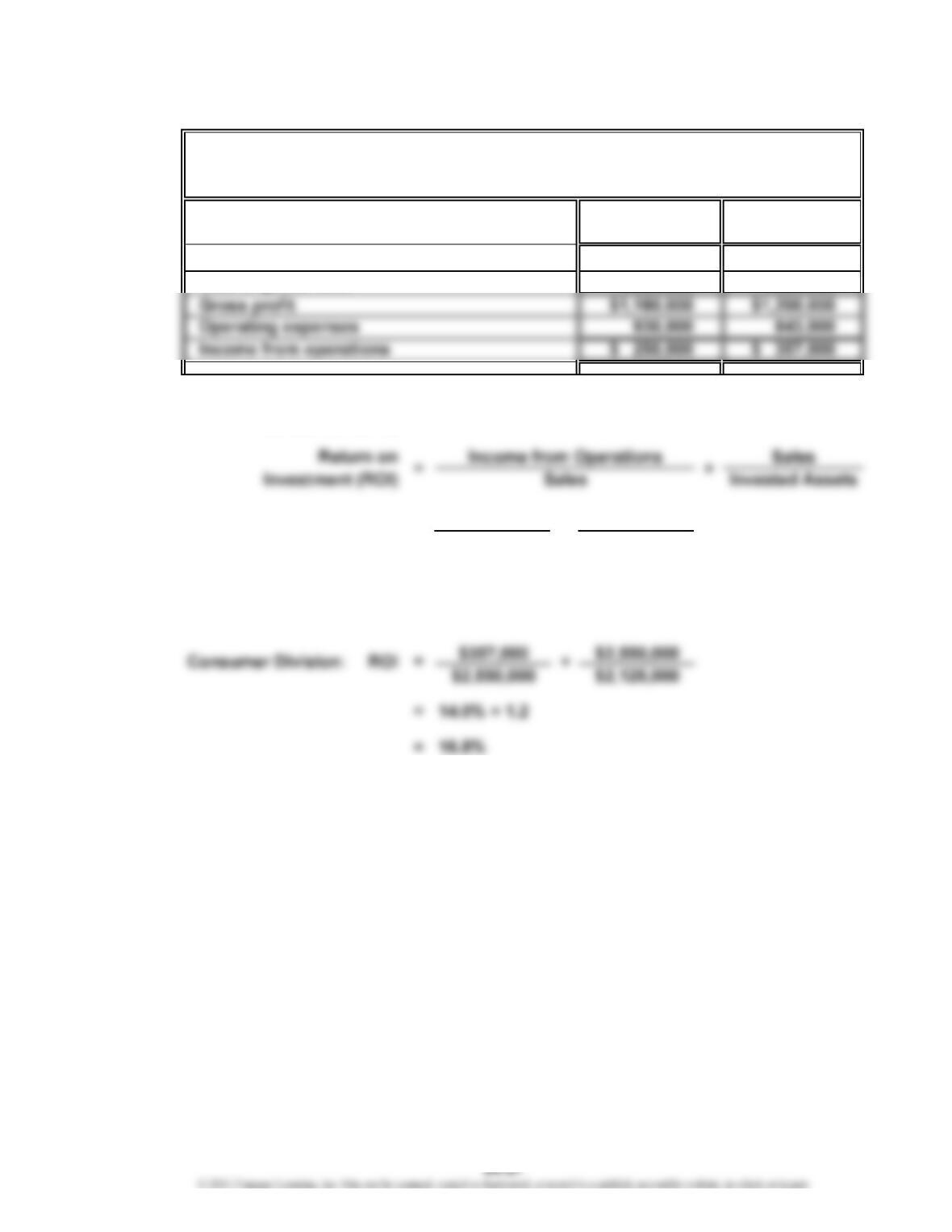
= 10.0% × 2.0
= 20.0%
3. Business Division: $37,500 = [$250,000 – ($1,250,000 × 17%)]
Consumer Division: $(4,250) = [$357,000 – ($2,125,000 × 17%)]
ROI × =
Business Division:
1,320,000
2. = Profit Margin × Investment Turnover
Return on
Investment (ROI)
Pavone Company
Divisional Income Statements
For the Year Ended December 31
$2,550,000
Business Consumer
Division Division
1,350,000
$2,500,000
CHAPTER 24 Decentralized Operations
Prob. 24-5A (Concluded)
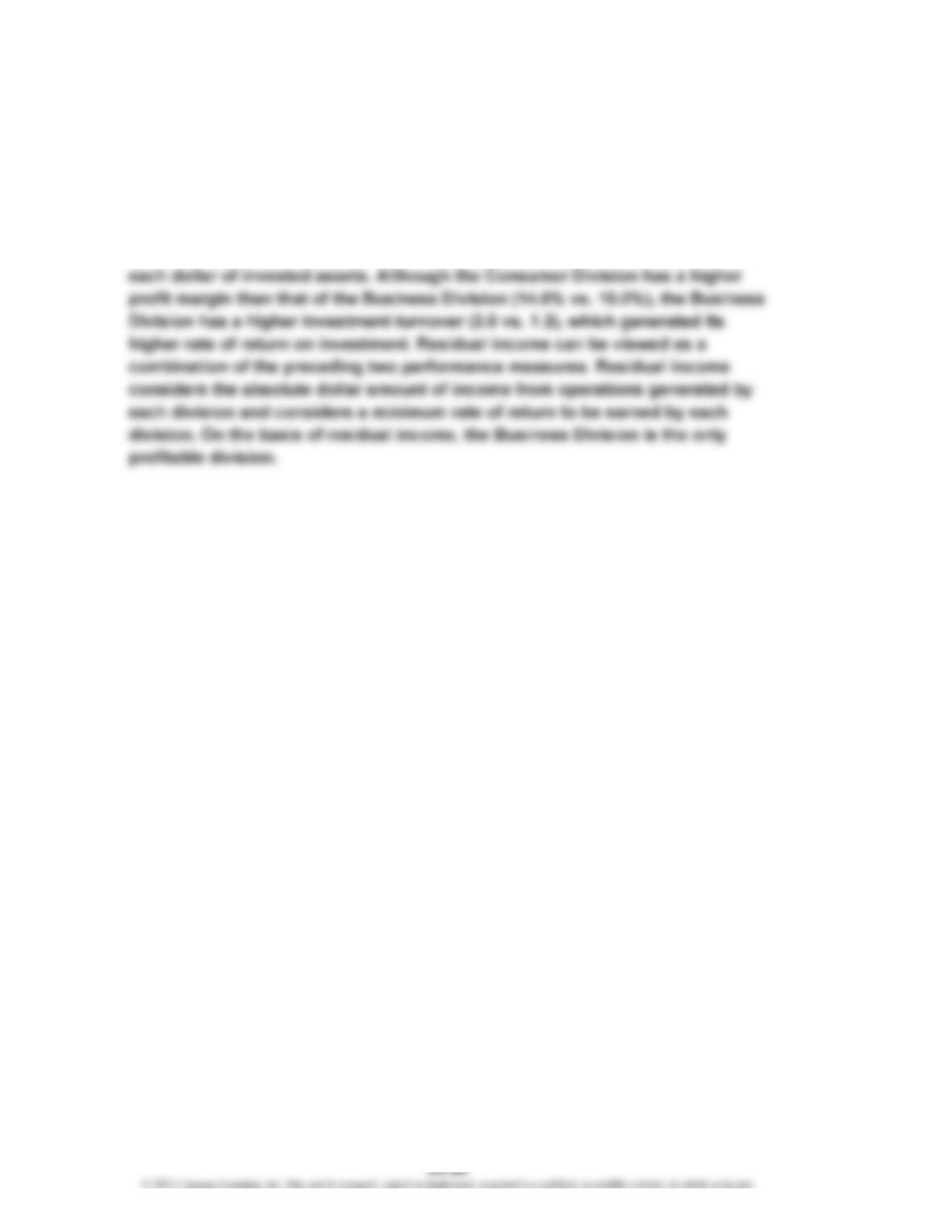
4. On the basis of income from operations, the Consumer Division generated
$107,000 ($357,000 – $250,000) more income from operations than did the
Business Division. However, income from operations does not consider the
amount of invested assets in each division. On the basis of the rate of return on
investment, the Business Division earned 20.0 cents (20.0%) on each dollar of
invested assets, while the Consumer Division earned only 16.8 cents (16.8%) on
CHAPTER 24 Decentralized Operations
Prob. 24-6A
1. No. When unused capacity exists in the supplying division (the Consumer
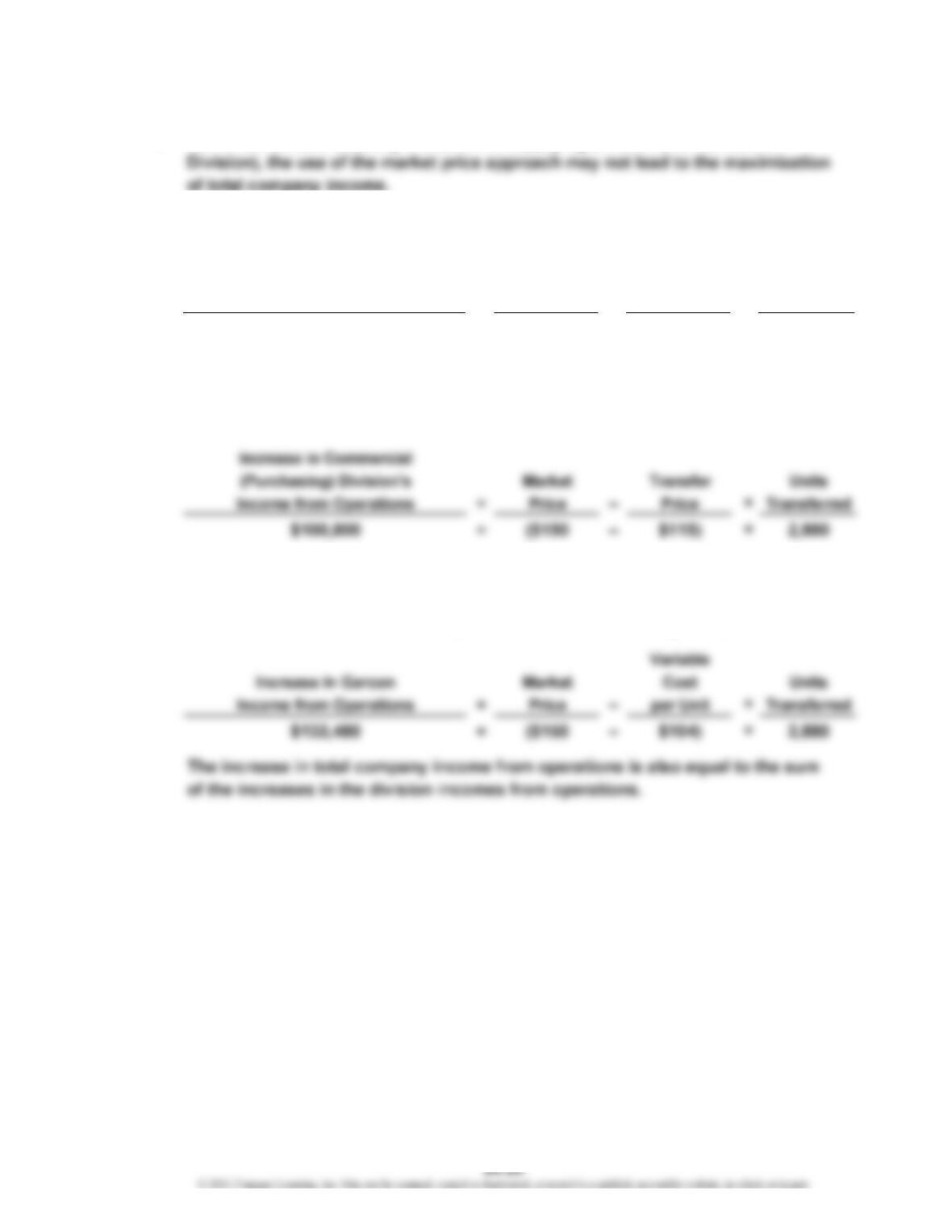
2. The Consumer Division’s income from operations would increase by $31,680:
Increase in Consumer Variable
(Supplying) Division’s Transfer Cost Units
Income from Operations = Price – per Unit × Transferred
$31,680 =($115 –$104) × 2,880
By selling to the Commercial Division, the Consumer Division earns $11 per unit
on these sales.
The Commercial Division’s income from operations would increase by $100,800:
By purchasing from the Consumer Division, the Commercial Division saves $35
per unit on its purchases.
Garcon Inc.’s total income from operations would increase by $132,480:
CHAPTER 24 Decentralized Operations
Prob. 24-6A (Continued)
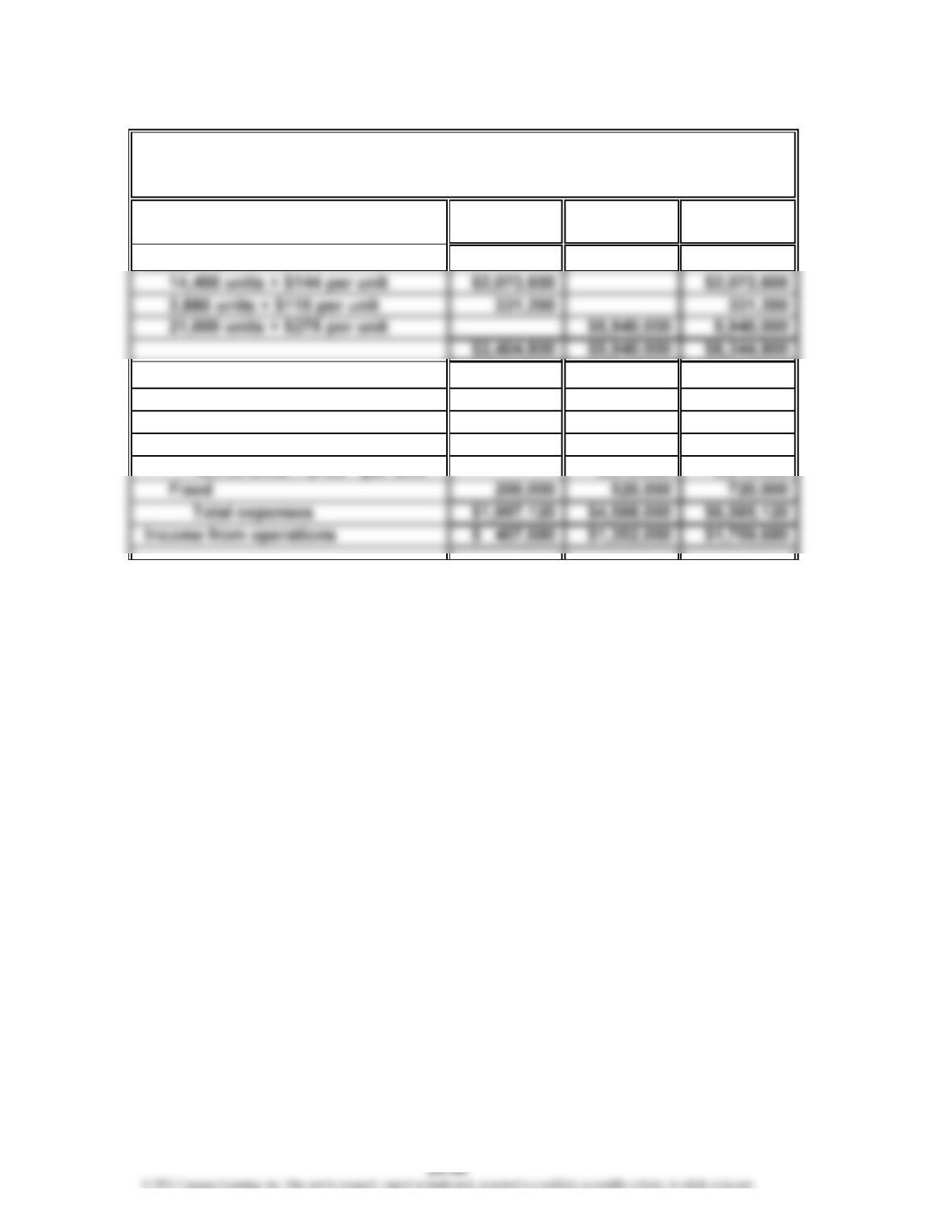
3.
Consumer Commercial
Division Division Total
Sales:
Expenses:
Variable:
17,280 units × $104 per unit $1,797,120 $1,797,120
2,880 units × $158* per unit $ 455,040 455,040
*The 2,880 units are transferred in at $115 per unit plus $43 operating expenses in the division.
** The remaining 18,720 (21,600 – 2,880) units are purchased on the outside at a market price of
$150 per unit plus $43 operating expenses in the division.
Garcon Inc.
Divisional Income Statements
For the Year Ended December 31, 20Y8
CHAPTER 24 Decentralized Operations
Prob. 24-6A (Concluded)
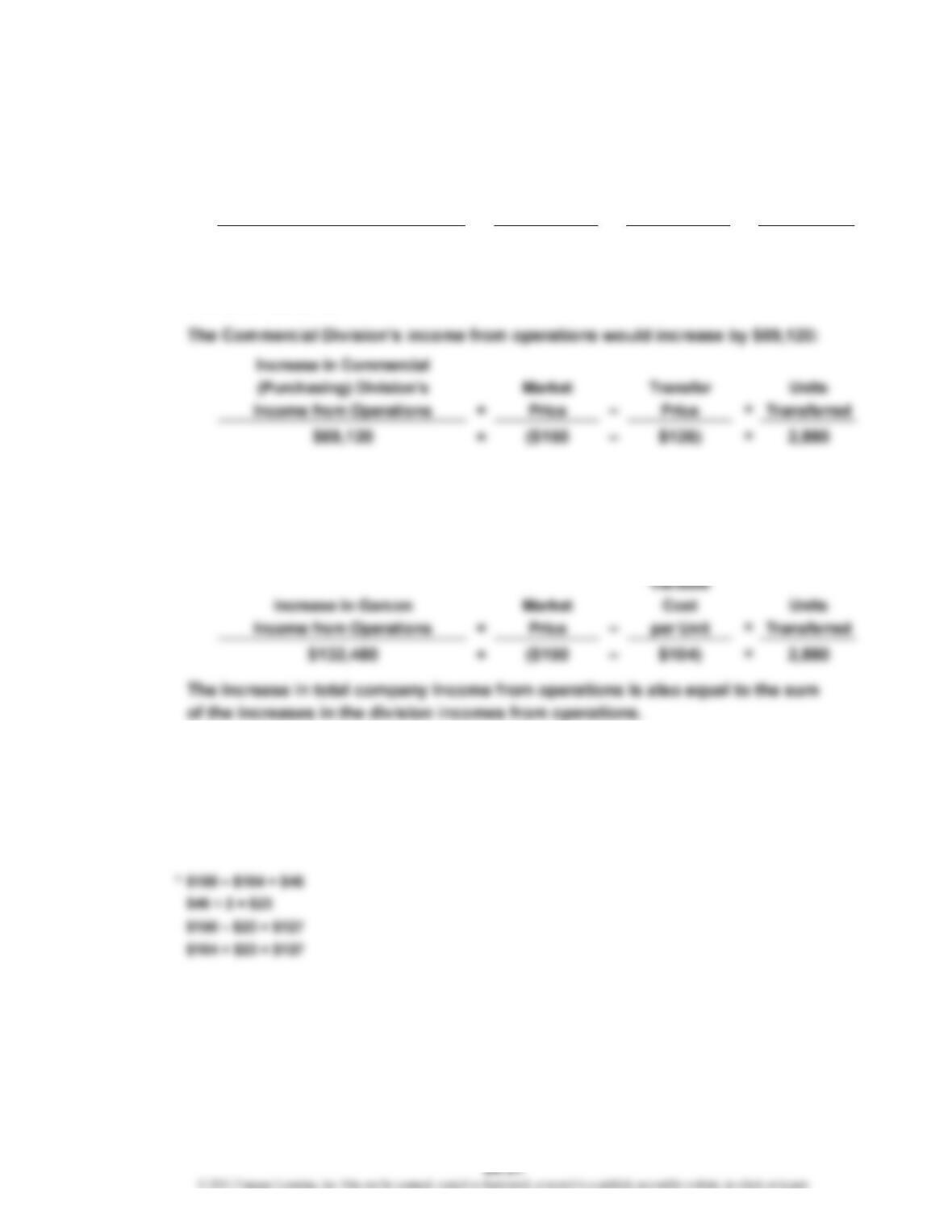
4. The Consumer Division’s income from operations would increase by $63,360:
Increase in Consumer Variable
(Supplying) Division’s Transfer Cost Units
Income from Operations = Price – per Unit × Transferred
$63,360 =($126 –$104) × 2,880
By selling to the Commercial Division, the Consumer Division earns $22 per
unit on these sales.
By purchasing from the Consumer Division, the Commercial Division saves $24
per unit on its purchases.
Garcon Inc.’s total income from operations would increase by the same amount
as in part (2), $132,480:
5. a. Any transfer price greater than the Consumer Division’s variable expenses
per unit of $104 but less than the market price of $150 would be acceptable.
b. If the division managers cannot agree on a transfer price, a price of $127*
would be the best compromise. In this way, each division’s income from
operations would increase by $66,240.
CHAPTER 24 Decentralized Operations
Prob. 24-1B
1.
Over (Under)
Actual Budget Budget Budget
Sales salaries $ 818,880 $ 819,840 $ (960)
System administration salaries 447,720 448,152 (432)
Customer service salaries 183,120 152,600 $30,520
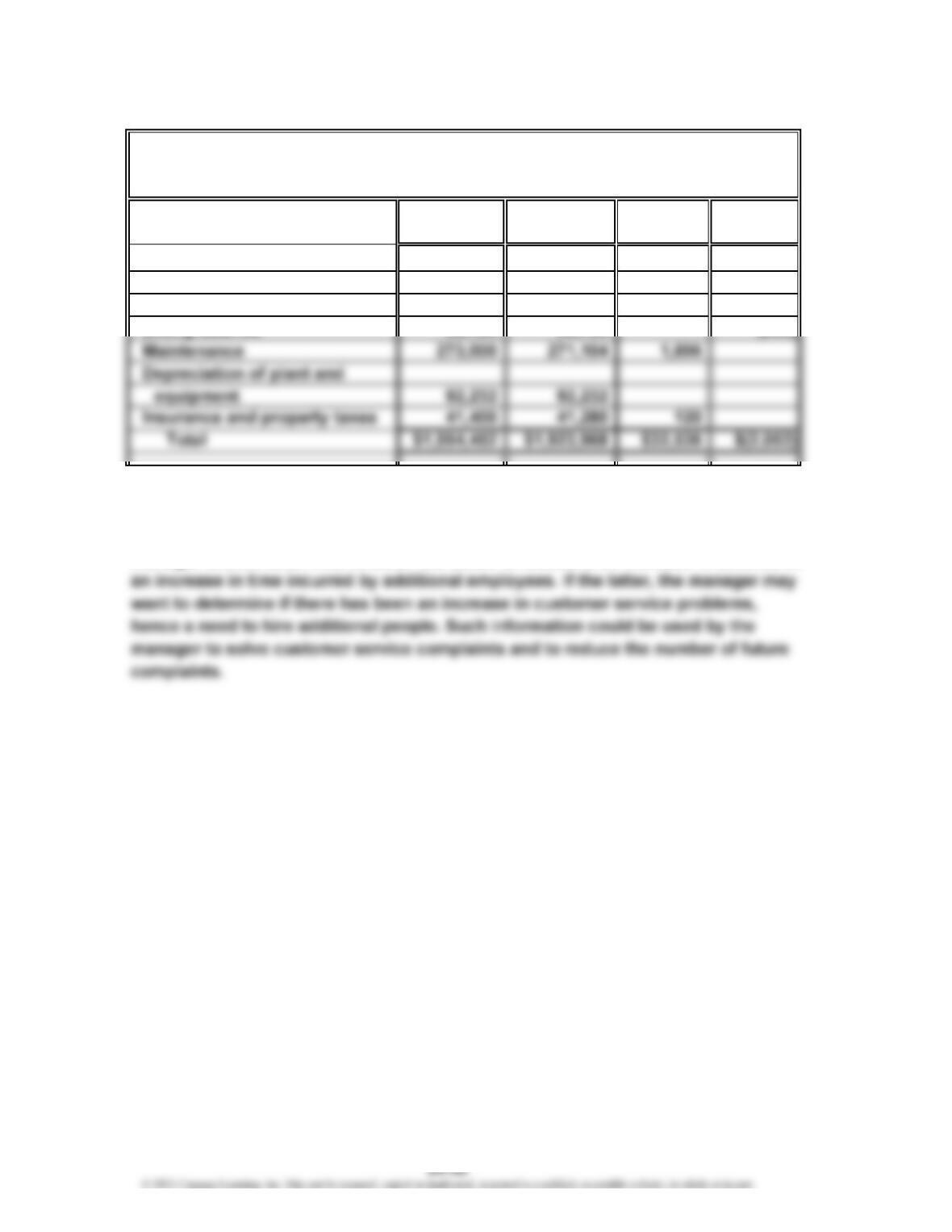
2. The customer service salaries exceed the budget by 20% ($30,520 ÷ $152,600). The
manager should request additional detailed information about the customer service
department. There are several possible reasons for the budget variance. The
manager should determine whether the cause is related to an increase in salaries or
Adelson Inc.
Budget Performance Report—Manager, Eastern District
For the Month Ended December 31
CHAPTER 24 Decentralized Operations
Prob. 24-2B
1.
South West
Revenues $5,673,000 $5,130,000
Operating expenses 4,494,890 3,770,050
Income from operations before service
Supporting computations:
Service department allocation rates for the two service departments, Dispatching and
Equipment Management, are determined as follows:
South West Total
Number of scheduled trains……
…
1,105 845 2,600
Number of railroad cars in
inventory…………………………
…
8,400 9,600 24,000
Note (A) North Division: ($182,000 ÷ 2,600 scheduled trains) × 650
South Division: ($182,000 ÷ 2,600 scheduled trains) × 1,105
West Division: ($182,000 ÷ 2,600 scheduled trains) × 845
Thomas Railroad Company
Divisional Income Statements
For the Quarter Ended December 31
North
$3,780,000
2,678,500
North
650
6,000
CHAPTER 24 Decentralized Operations
Prob. 24-2B (Concluded)
2. The CEO evaluates the three regions using income from operations as a percent
of revenues. This measure is computed for the three regions as follows:
3. To: CEO
The method used to evaluate the performance of the regions should be
reevaluated. The present method identifies the amount of income from operations
per dollar of earned revenue. However, a railroad company requires a significant
investment in fixed assets, such as track, engines, and railcars. In addition, the
amount of assets may not be related to the revenue earned. For example, some
regions may be able to concentrate assets in a densely populated regional area
CHAPTER 24 Decentralized Operations
Prob. 24-3B
1.
Return on
Investment (ROI)
Return on
Investment (ROI)
Electronic Brokerage Division:
$268,800 $3,360,000
$3,360,000 $1,120,000
= 8.0% × 3.0
= 24.0%
Division Division Division
=
ROI = ×
2. = Profit Margin × Investment Turnover
E.F. Lynch Company
Divisional Income Statements
For the Year Ended June 30, 20Y8
Mutual
Fund
Electronic
Brokerage
Investment
Banking
Income from Operations
×
Sales Invested Assets
Sales