1. In a centralized operation, all major planning and operating decisions are made by top management.
In a decentralized operation, managers of separate divisions or units are delegated operating
2. The department manager of a profit center has responsibility for and authority over costs and
3. Payroll: Number of checks issued. Accounts payable: Number of invoices paid. Accounts
4. The major shortcoming of using income from operations as a measure of investment center
p
5. A division of a decentralized company could be considered the least profitable, even though
7. The balanced scorecard attempts to identify the underlying nonfinancial drivers, or causes, of
financial performance related to innovation and learning, customer service, and internal processes.
8. The objective of transfer pricing is to encourage each division manager to work in the best
b
9. When unused capacity exists in the supplying division, the negotiated price approach is
p
referred over the market price approach.
CHAPTER 24
PERFORMANCE EVALUATION
DISCUSSION QUESTIONS
FOR DECENTRALIZED OPERATIONS
24-1
CHAPTER 24 Performance Evaluation for Decentralized Operations
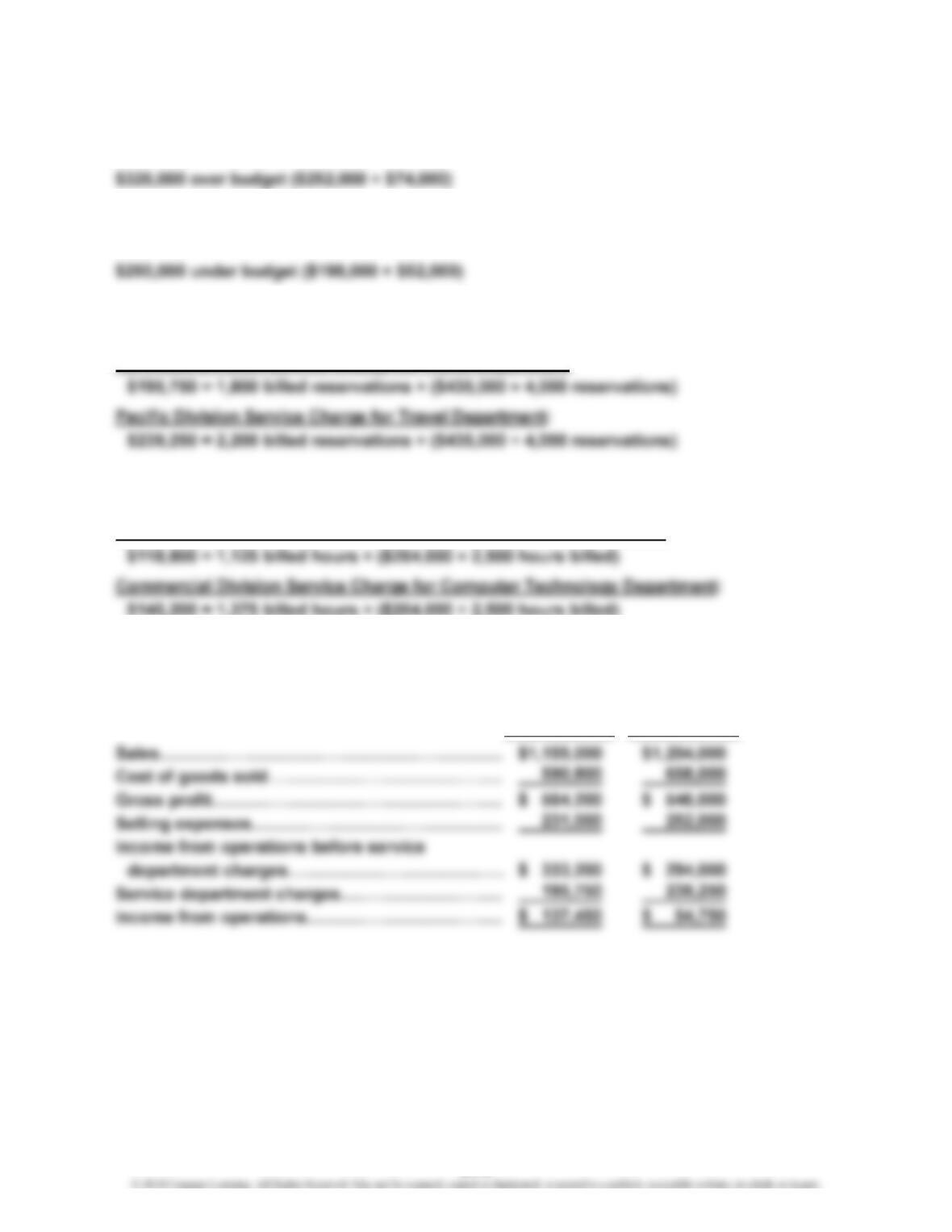
PE 24–1A
PE 24–1B
PE 24–2A
Northeast Division Service Charge for Travel Department:
PE 24–2B
Retail Division Service Charge for Computer Technology Department:
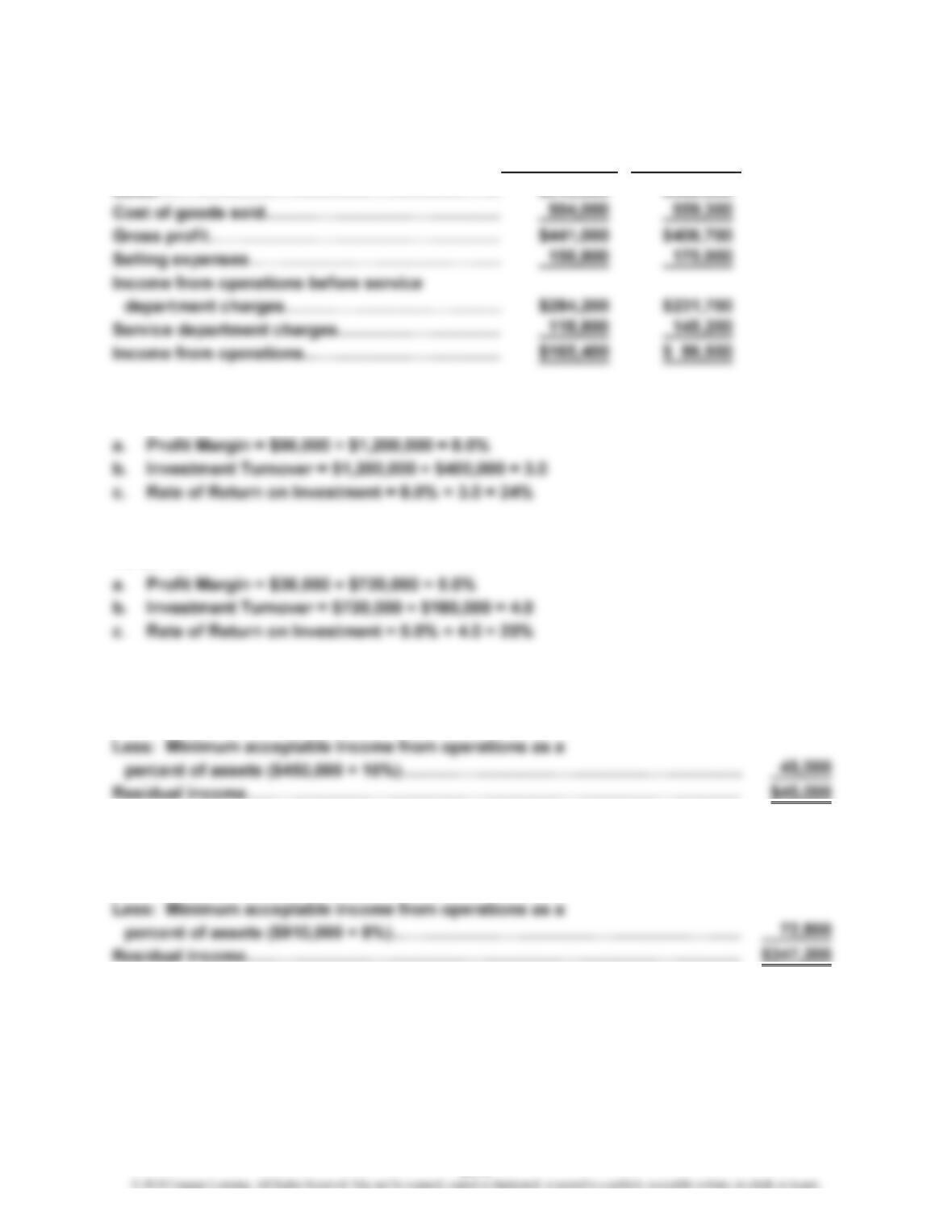
PE 24–3A
Northeast Pacific
Division Division
PRACTICE EXERCISES
24-2
CHAPTER 24 Performance Evaluation for Decentralized Operations
PE 24–3B
Retail Commercial
Division Division
Sales……………………………………………………
…
$945,000 $966,000
PE 24–4A
PE 24–4B
PE 24–5A
Income from operations…………………………………………………………………… $90,000
PE 24–5B
Income from operations…………………………………………………………………… $420,000
24-3
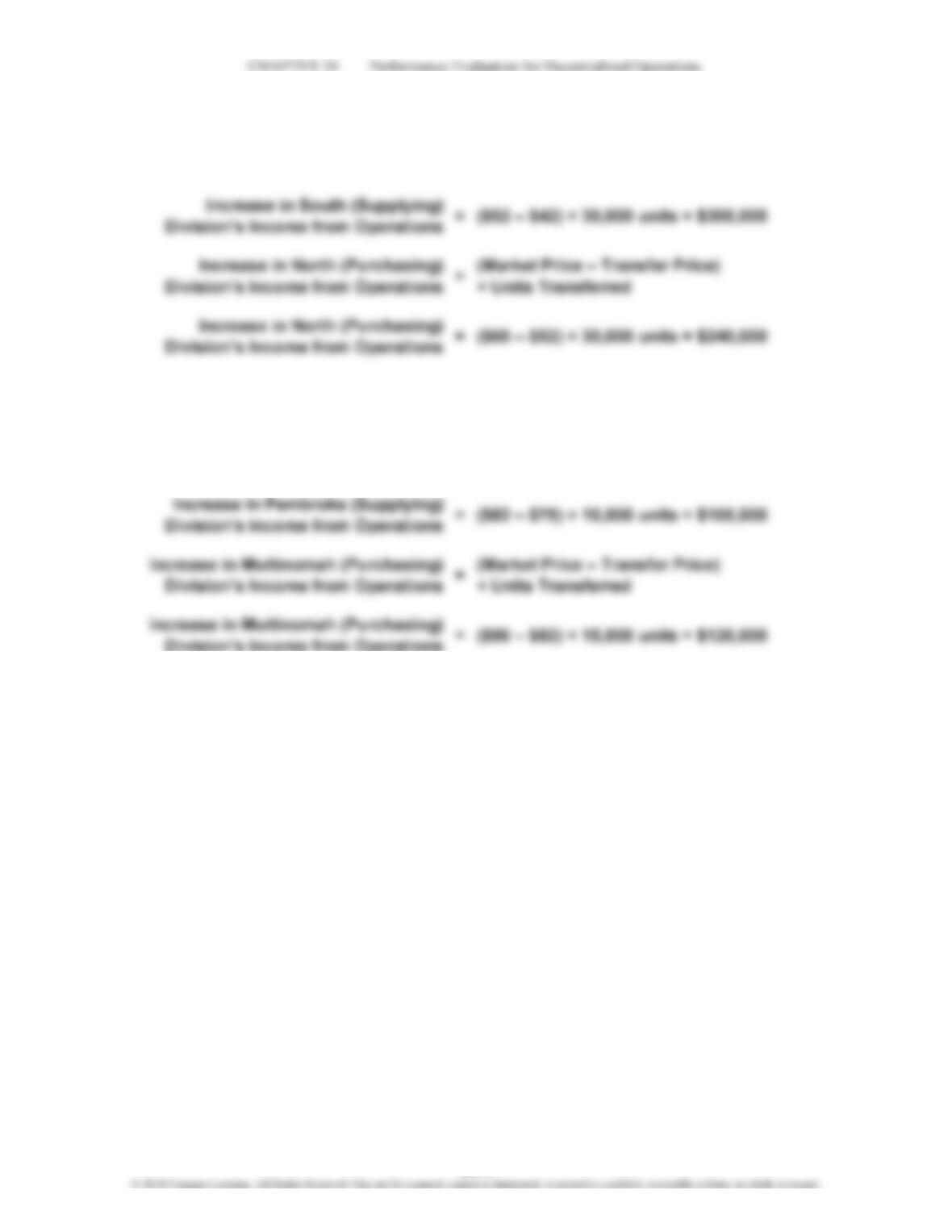
PE 24–6A
PE 24–6B
Increase in South (Supplying)
Division’s Income from Operations =(Transfer Price – Variable Cost per Unit)
× Units Transferred
Increase in Pembroke (Supplying)
Division’s Income from Operations =(Transfer Price – Variable Cost per Unit)
× Units Transferred
24-4
CHAPTER 24 Performance Evaluation for Decentralized Operations
Ex. 24–1
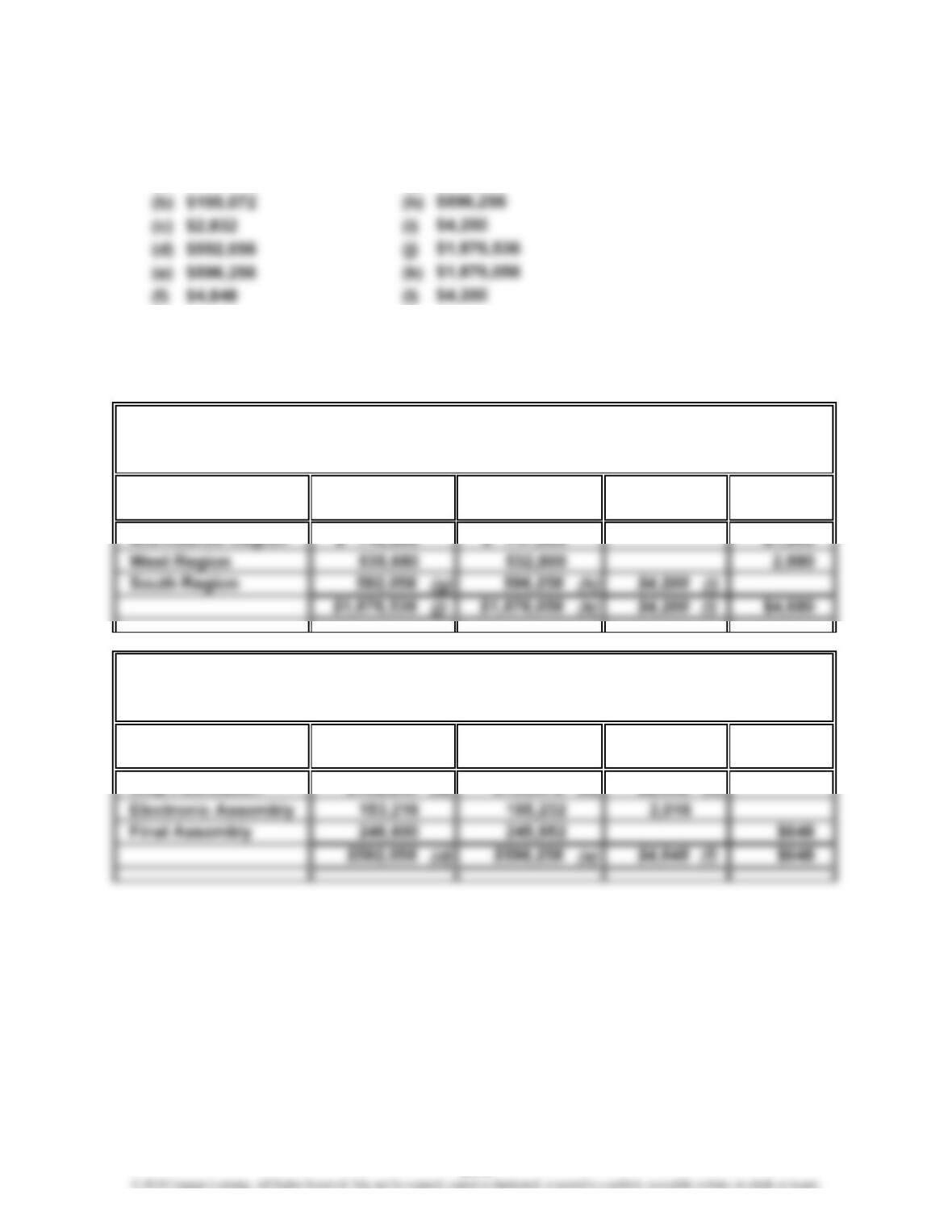
a. (a) $192,240 (g)
Schedules of supporting calculations (answers in italics; the solution requires
working from the department level, up to the plant level, then to the vice president
of production level):
Under
Budget
Under
Budget
Chip Fabrication (a) $195,072 (b) $2,832 (c)
EXERCISES
MAQUIRE COMPANY
Budget Performance Report—Vice President, Production
For the Month Ended May 31, 2014
$592,056
Budget Actual
Budget
Over
Over
MAQUIRE COMPANY
Budget Performance Report—Manager, South Region Plant
For the Month Ended May 31, 2014
Budget
BudgetPlant
$192,240
Department
Actual
24-5
CHAPTER 24 Performance Evaluation for Decentralized Operations
Ex. 24–1 (Concluded)
Under
Budget
Factory wages
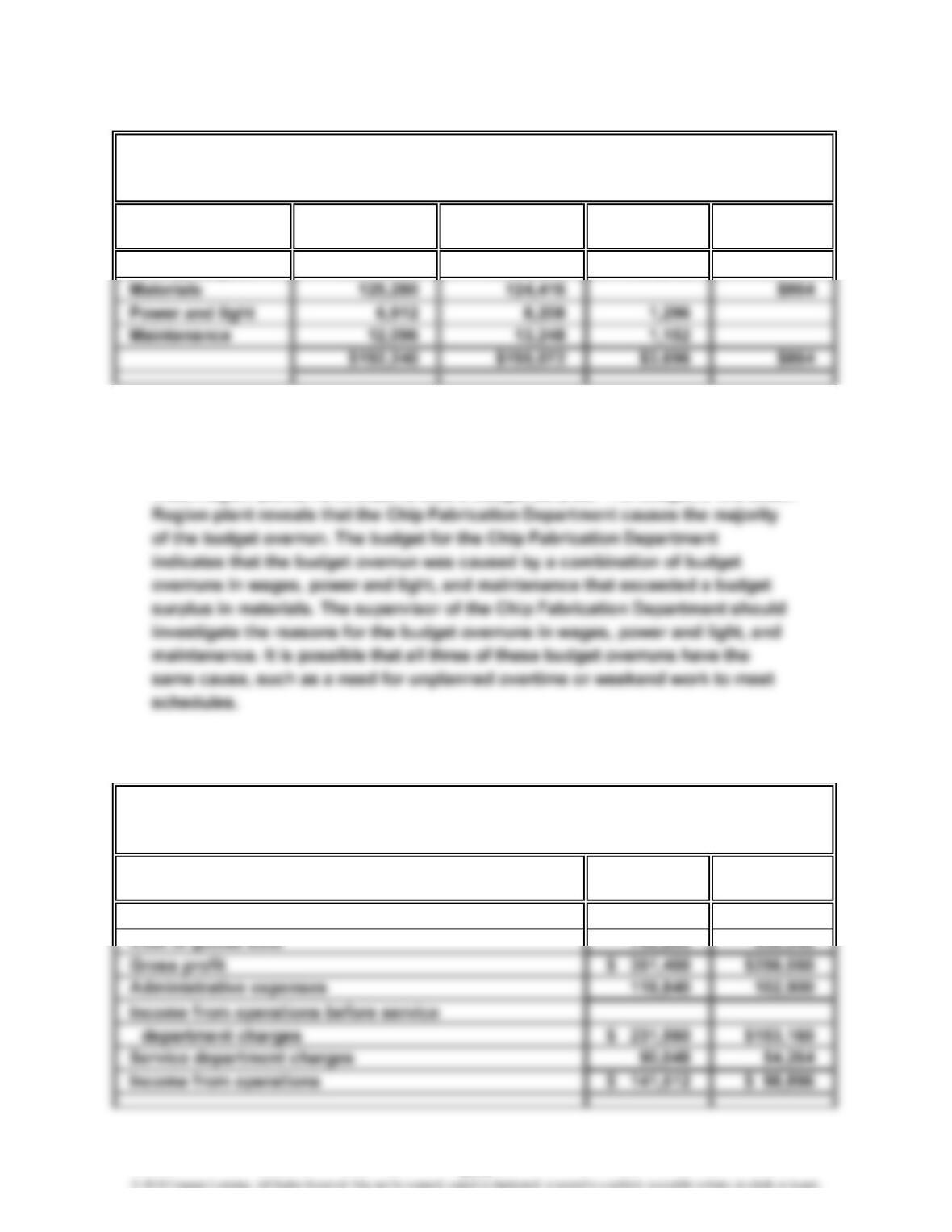
b. MEMO
To: Holly Keller, Vice President of Production
The South Region plant has experienced a budget overrun, while the Mid-Atlantic and
West Region plants have experienced a budget surplus. The budget of the South
Ex. 24–2
Residential
Division
Net sales $595,000
Cost BudgetBudget Actual
$ 49,200
Over
MAQUIRE COMPANY
Budget Performance Report—Supervisor, Chip Fabrication
For the Month Ended May 31, 2014
$ 47,952 $1,248
ENDLESS RIVER CONSTRUCTION COMPANY
Divisional Income Statements
Division
For the Year Ended June 30, 2014
Commercial
$1,083,600
24-6
CHAPTER 24 Performance Evaluation for Decentralized Operations
Ex. 24–3
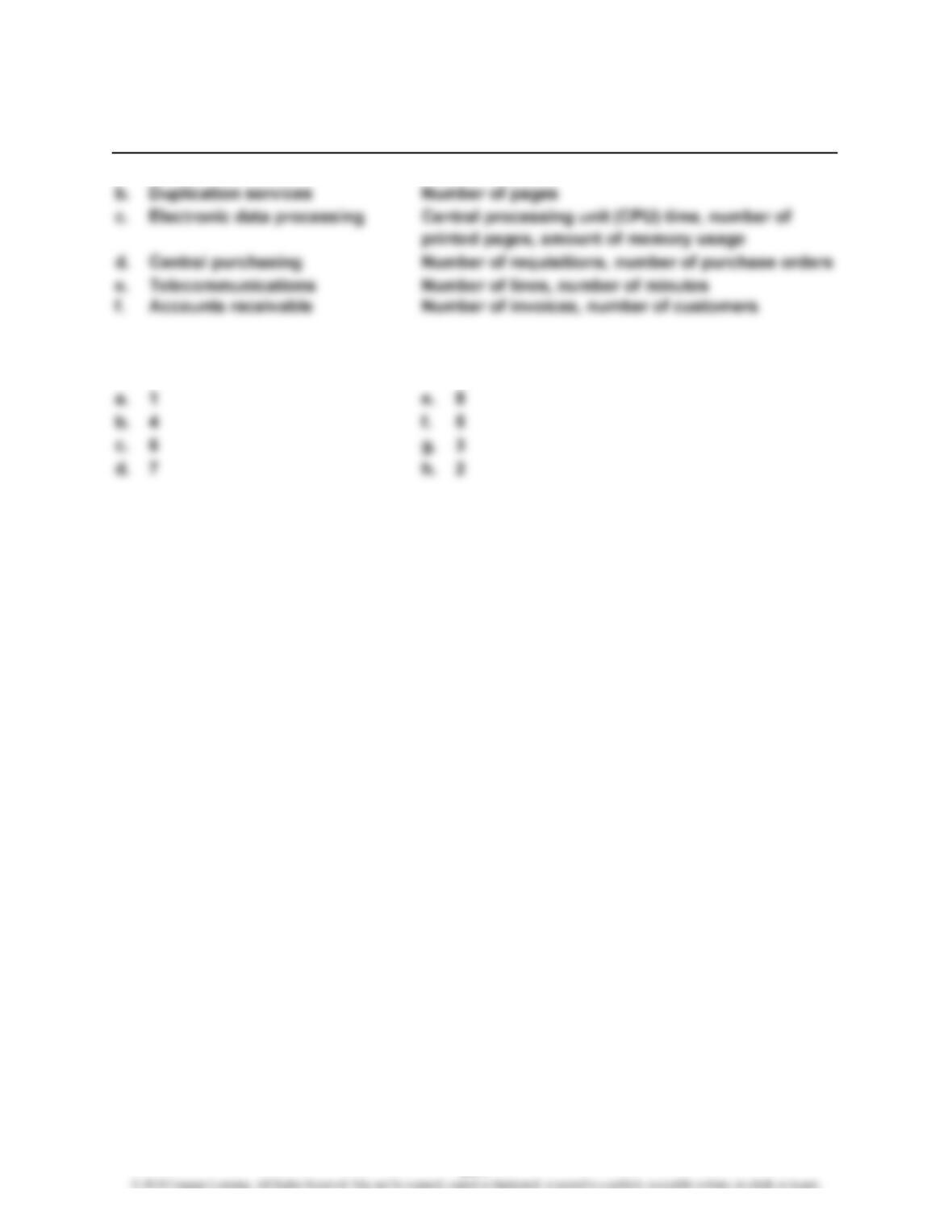
Expense Activity Bases
a. Legal Number of hours
Ex. 24–4
24-7
CHAPTER 24 Performance Evaluation for Decentralized Operations
Ex. 24–5
Government
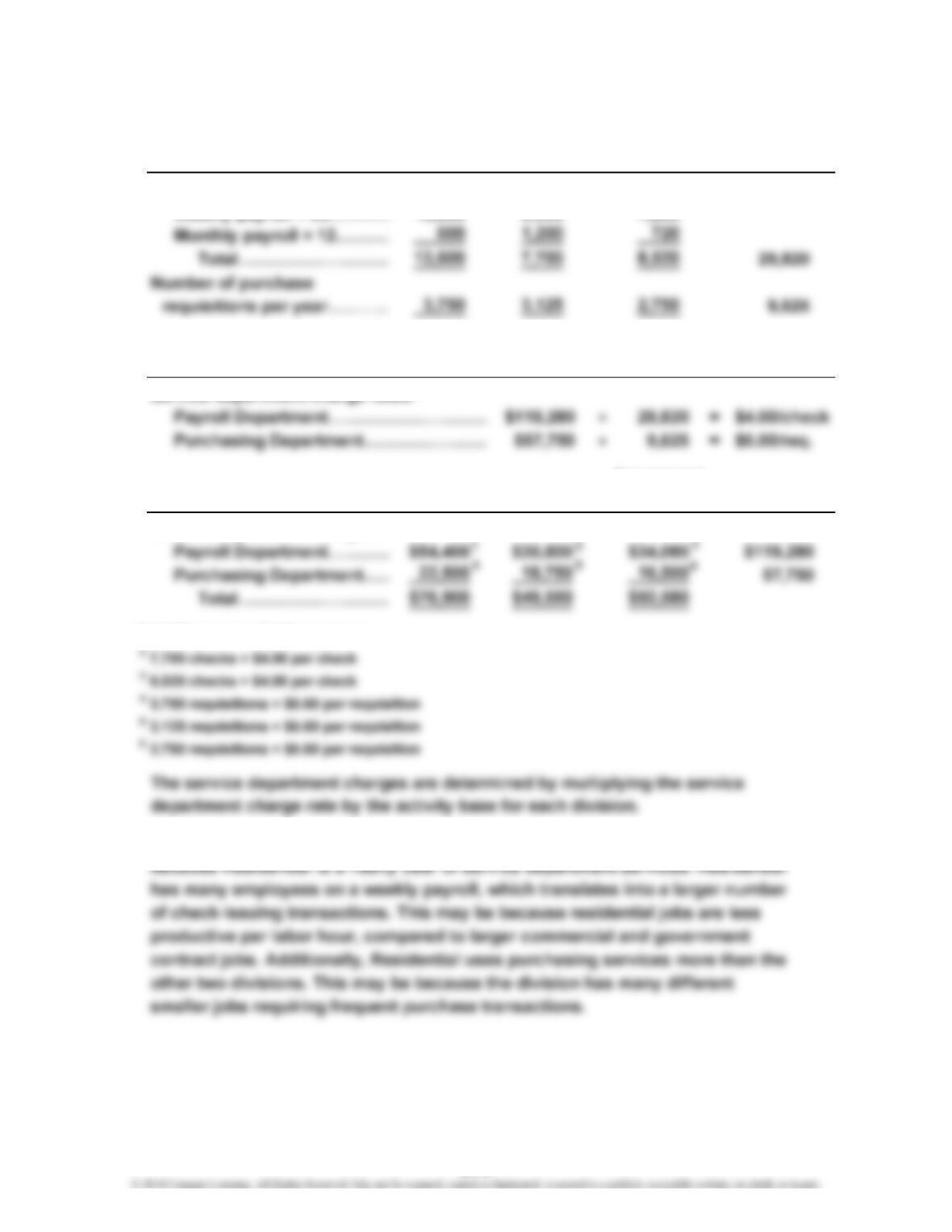
a. Residential Commercial Contract Total
Number of payroll checks:
Weekly payroll × 52………
…
13,000 6,500 7,800
Service Activity Charge
b. Dept. Cost ÷ Base = Rate
Service department charge rates:
Government
Residential Commercial Contract Total
Service department charges:
…
113,600 checks × $4.00 per check
c. Residential’s service department charge is higher than the other two divisions
24-8
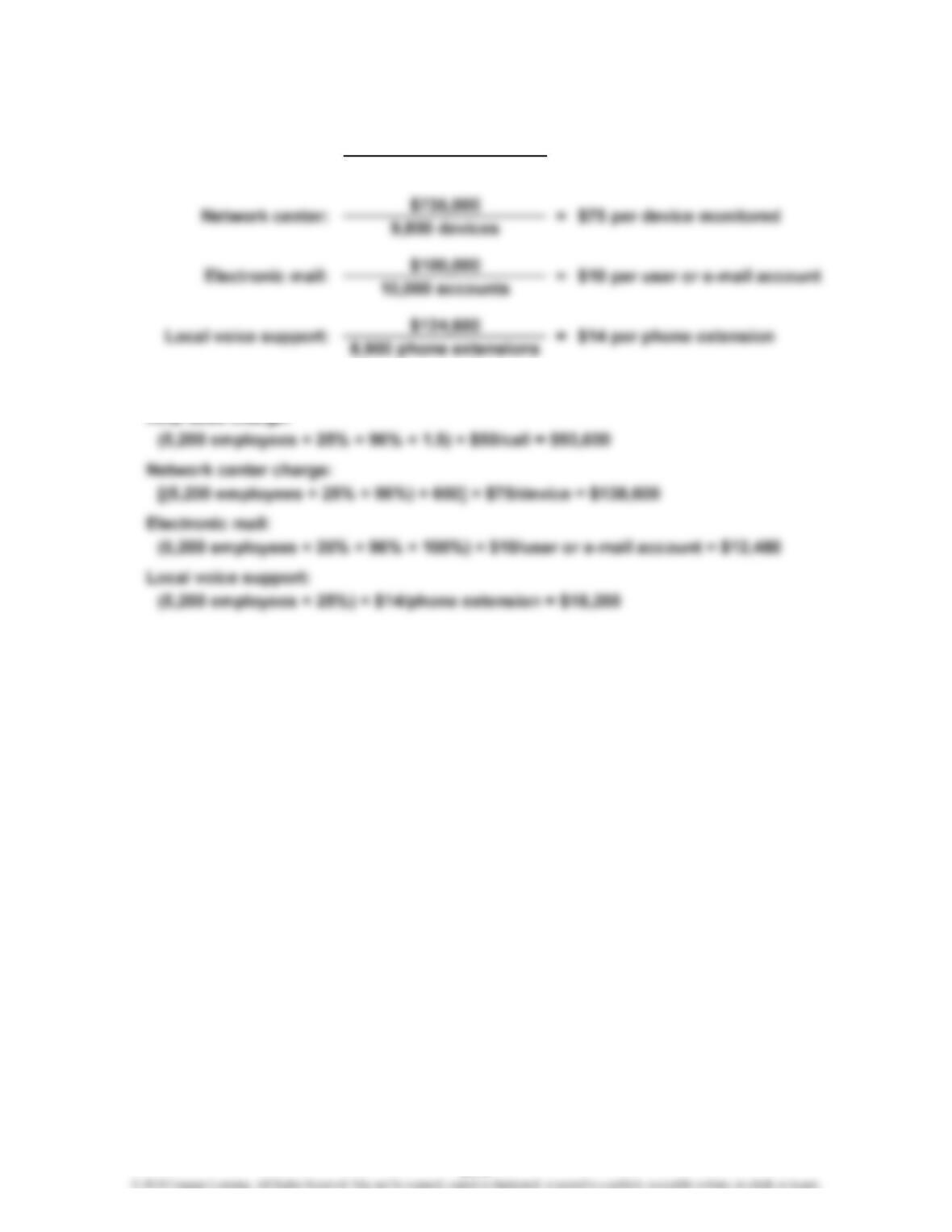
CHAPTER 24 Performance Evaluation for Decentralized Operations
Ex. 24–6
$160,000
3,200 calls
b. October charges to the COMM sector:
Help desk charge:
a. Help desk:
= $50 per call
24-9
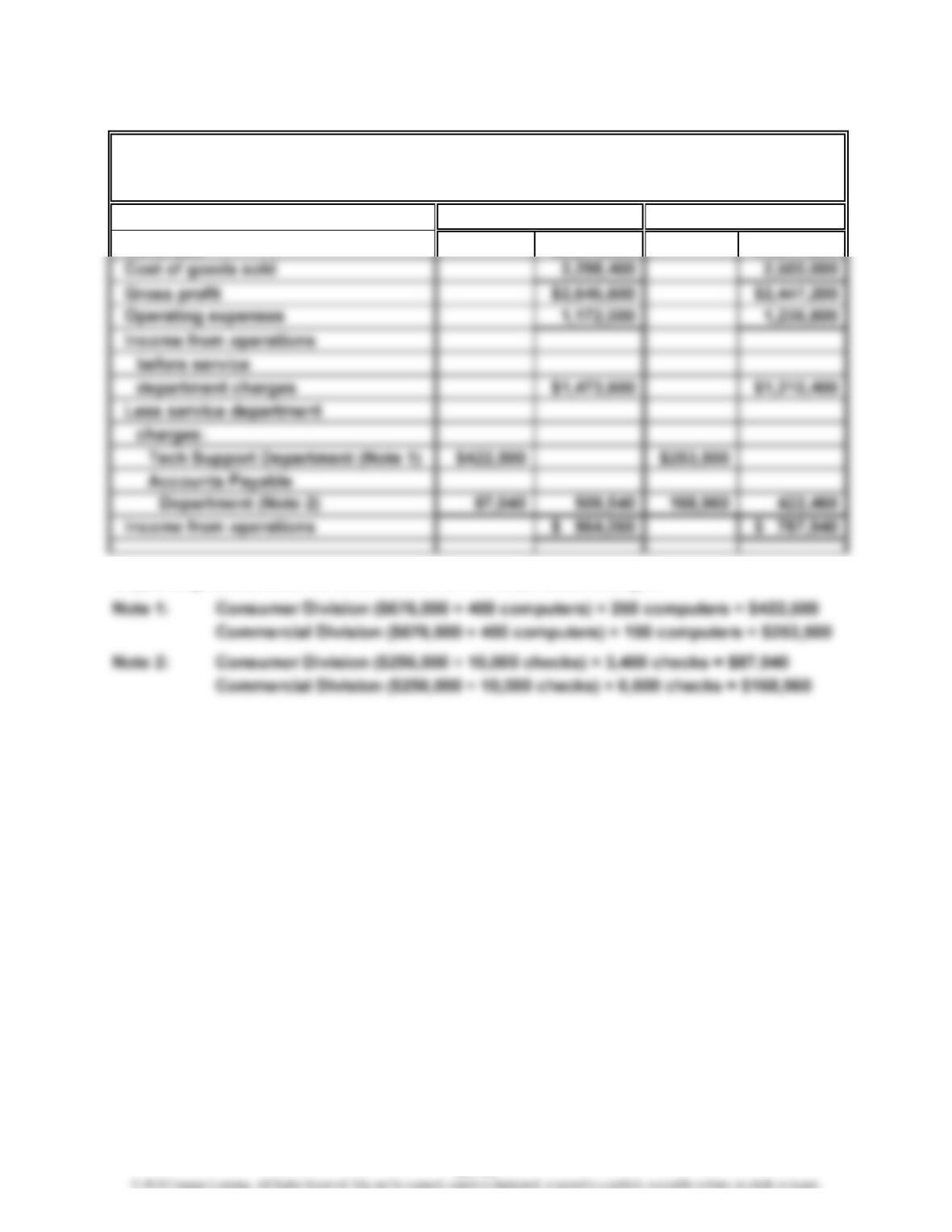
CHAPTER 24 Performance Evaluation for Decentralized Operations
Ex. 24–7
Revenues $5,944,000 $4,947,200
Supporting calculations for controllable service department charges:
VAN EMBURGH TECHNOLOGY
Divisional Income Statements
For the Year Ended December 31, 2014
Consumer Division Commercial Division
24-10
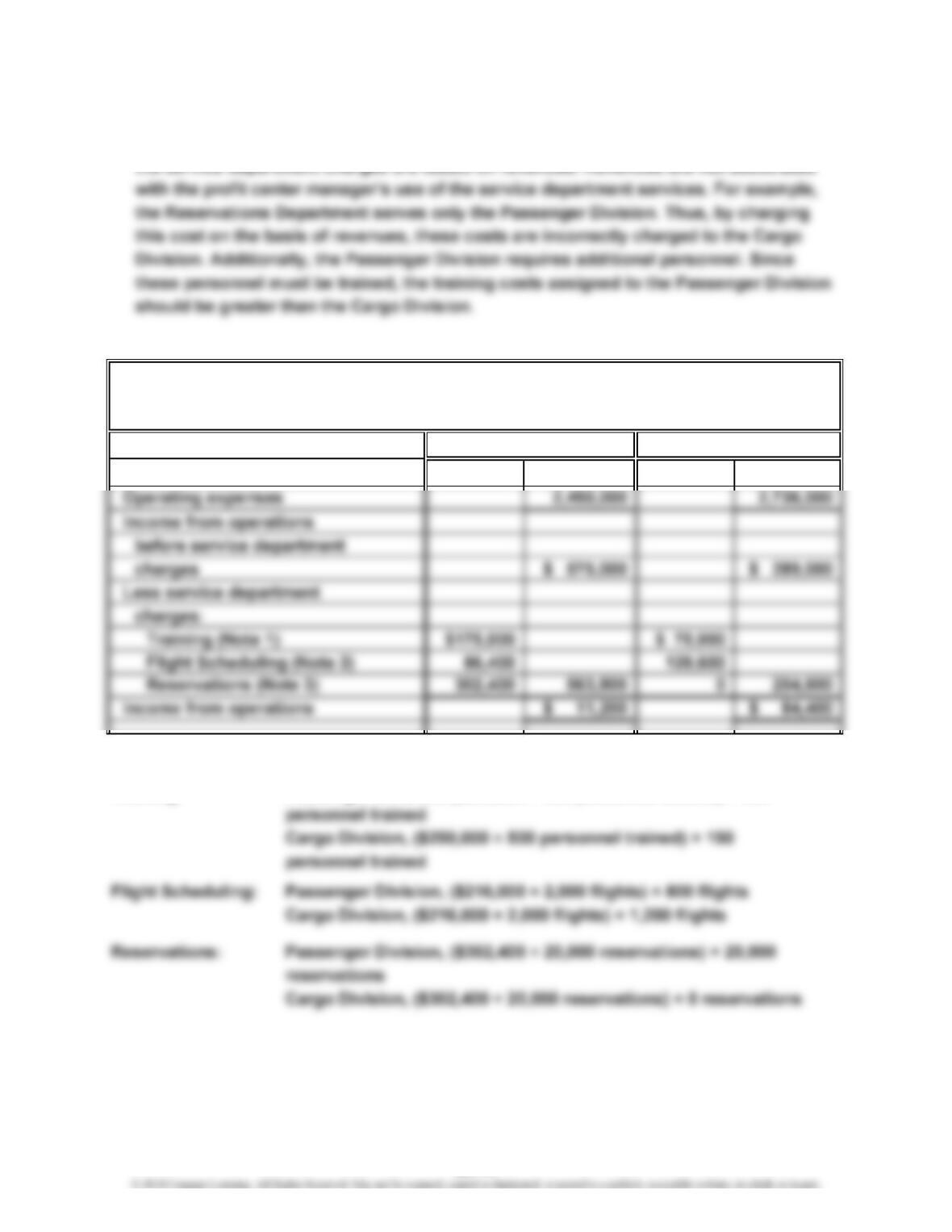
CHAPTER 24 Performance Evaluation for Decentralized Operations
Ex. 24–8
a. The reported income from operations does not accurately measure performance because
b.
Revenues $3,025,000 $3,025,000
Supporting calculations for controllable service department charges:
Training: Passenger Division, ($250,000 ÷ 500 personnel trained) × 350
WILD SUN AIRLINES INC.
Divisional Income Statements
For the Year Ended December 31, 2014
Passenger Division Cargo Division
24-11
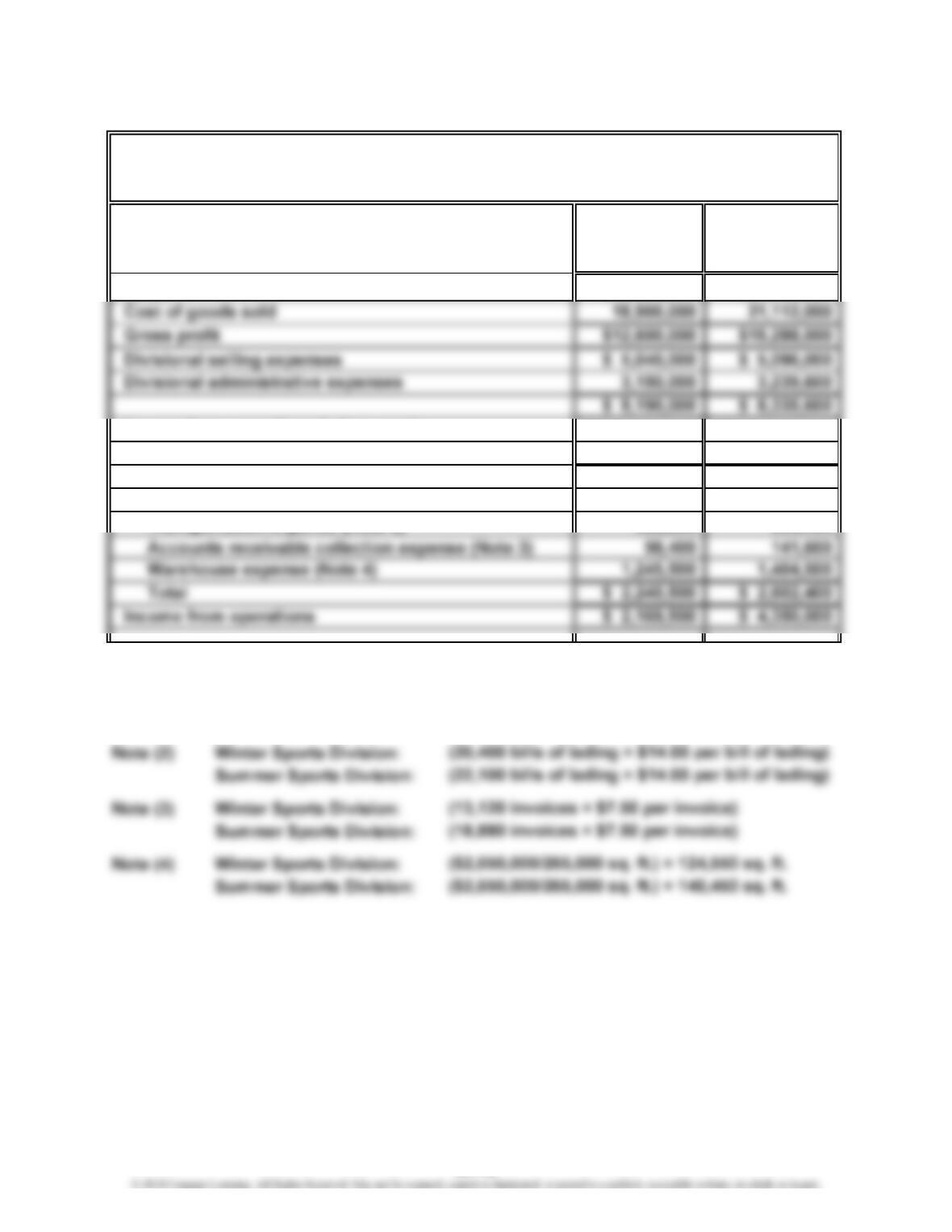
CHAPTER 24 Performance Evaluation for Decentralized Operations
Ex. 24–9
Winter Summer
Sports Sports
Division Division
Sales $31,500,000 $36,400,000
Income from operations before service
department charges $ 4,410,000 $ 6,952,400
Less service department charges:
Advertising expense (Note 1) $ 611,000 $ 746,900
Transportation expense (Note 2) 285,600 309,400
Supporting Schedule:
Note (1) Winter Sports Division: $611,000
Summer Sports Division: $746,900
FULL THROTTLE SPORTING GOODS CO.
Divisional Income Statements
For the Year Ended December 31, 2014
24-12
CHAPTER 24 Performance Evaluation for Decentralized Operations
Ex. 24–10
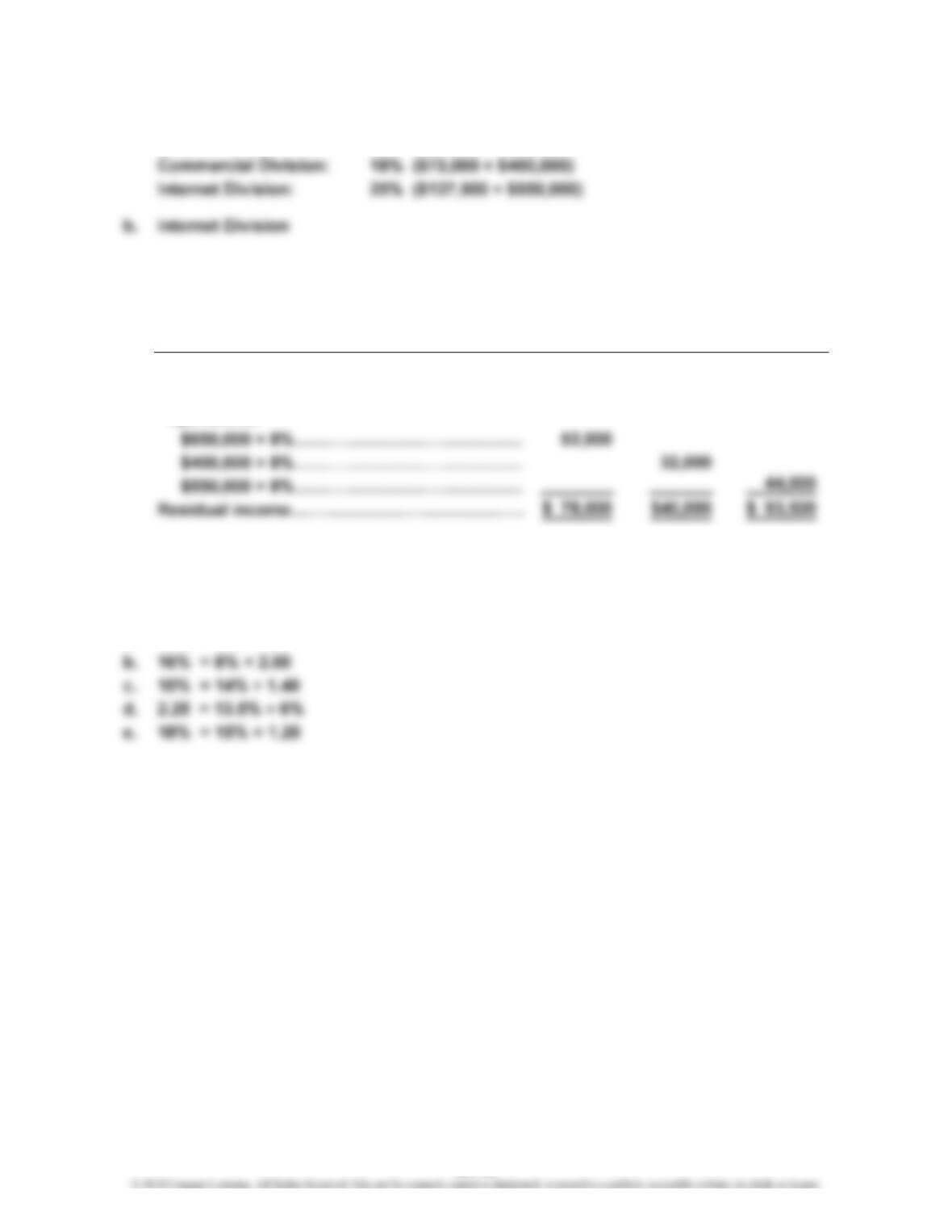
a. Retail Division: 20% ($130,000 ÷ $650,000)
Ex. 24–11
a. Retail Commercial Internet
Division Division Division
Income from operations…………………………
…
$130,000 $72,000 $137,500
Minimum amount of income from
operations:
b. Internet Division
Ex. 24–12
a. 2.40 = 12% ÷ 5%
24-13
CHAPTER 24 Performance Evaluation for Decentralized Operations
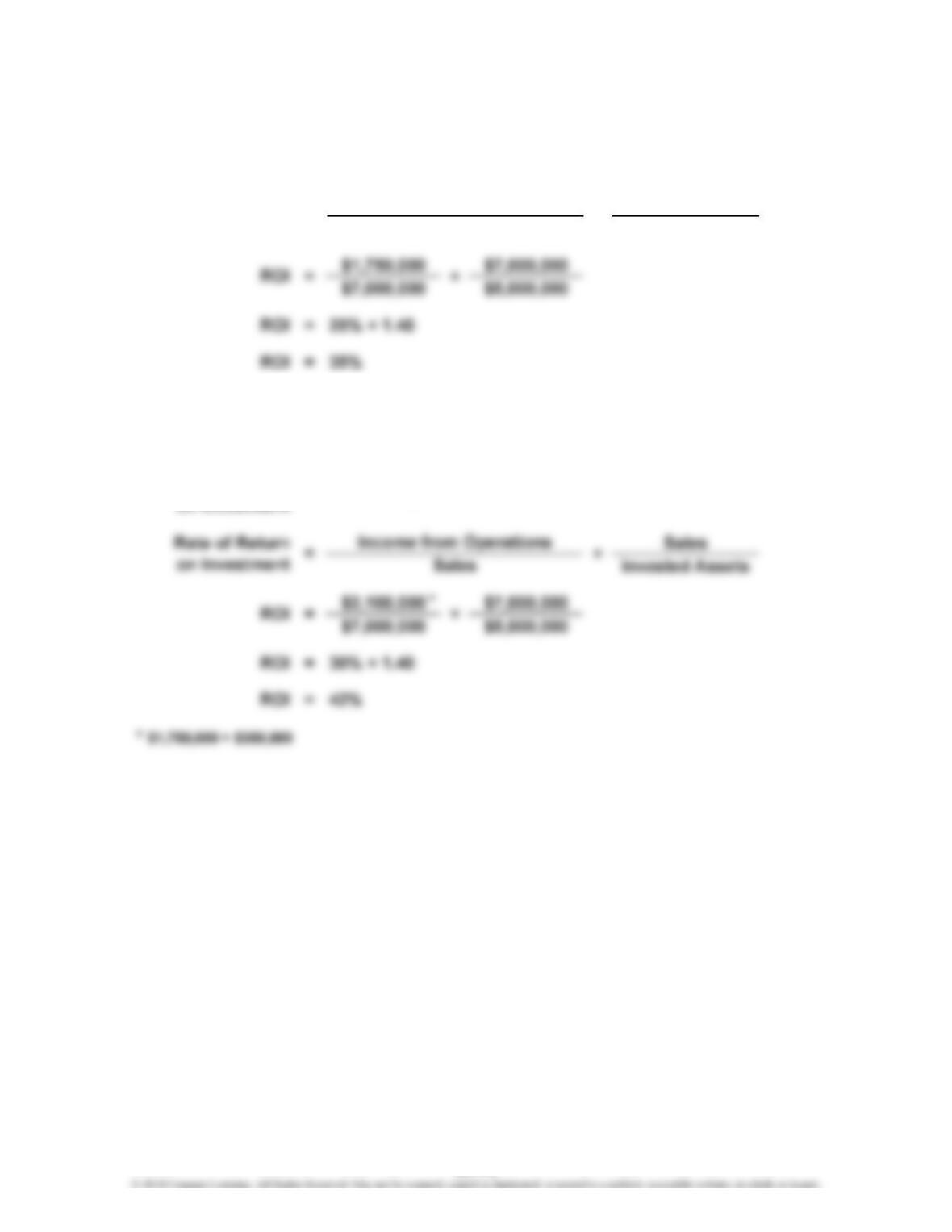
Ex. 24–13
Sales
Invested Assets
b. The profit margin would increase from 25% to 30%, the investment turnover
would remain unchanged, and the rate of return on investment would increase
from 35% to 42%, as shown below.
Rate of Return
on Investment = Profit Margin × Investment Turnover
×
=
Rate of Return
on Investment Sales
Income from Operations
a. Rate of Return
on Investment = Profit Margin × Investment Turnover
24-14
CHAPTER 24 Performance Evaluation for Decentralized Operations
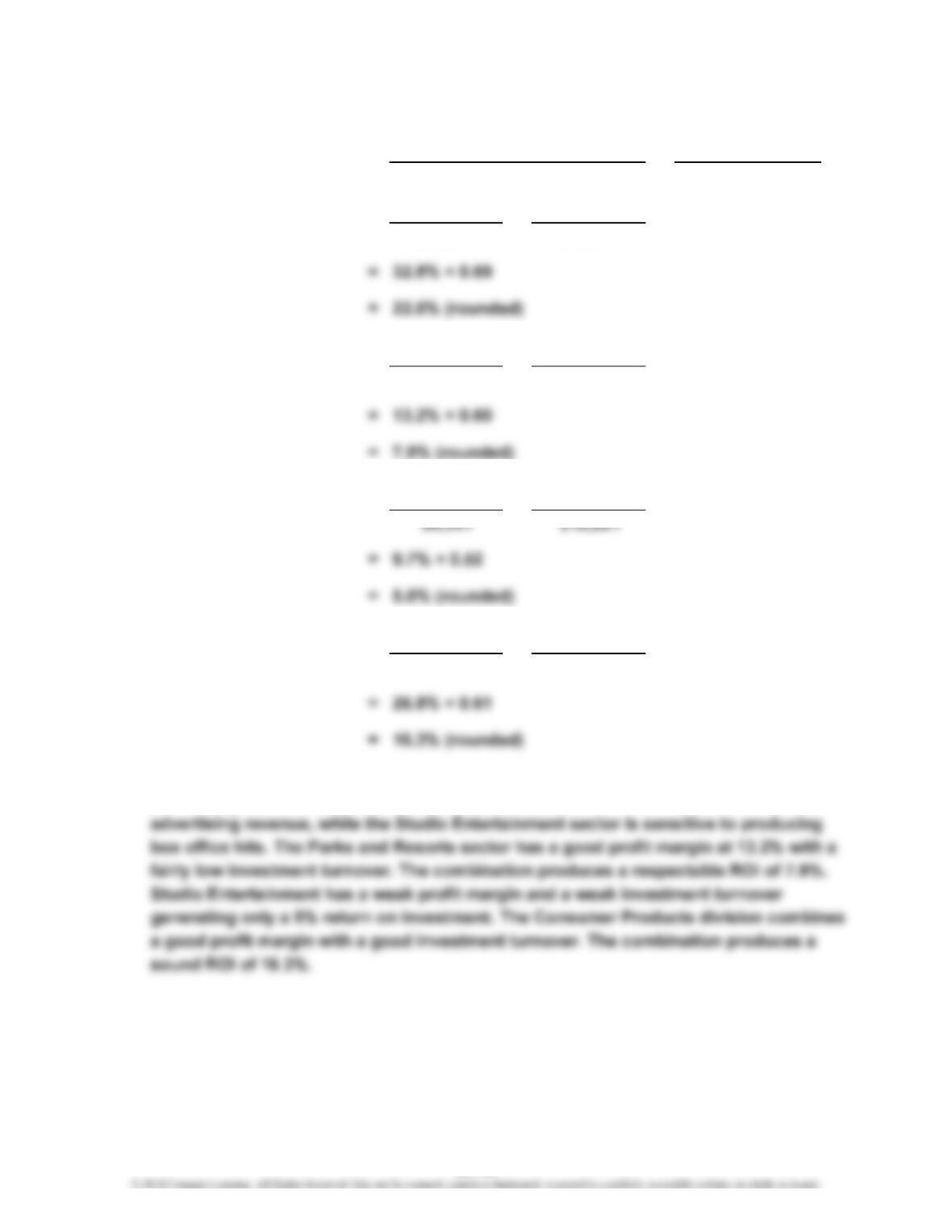
Ex. 24–14
Revenues
Invested Assets
$6,146 $18,714
$18,714 $27,244
$1,553 $11,797
$11,797 $19,530
$618 $6,351
$816 $3,049
$3,049 $4,992
b. The four sectors are different from each other. Media Networks combines a good
profit margin with a very low investment turnover. Media Networks is sensitive to
=
Rate of Return
on Investment
a. ×
Media Networks: ×
Revenues
Studio Entertainment: ×
Income from Operations
Consumer Products: ×
× Parks and Resorts:
24-15
CHAPTER 24 Performance Evaluation for Decentralized Operations
Ex. 24–15
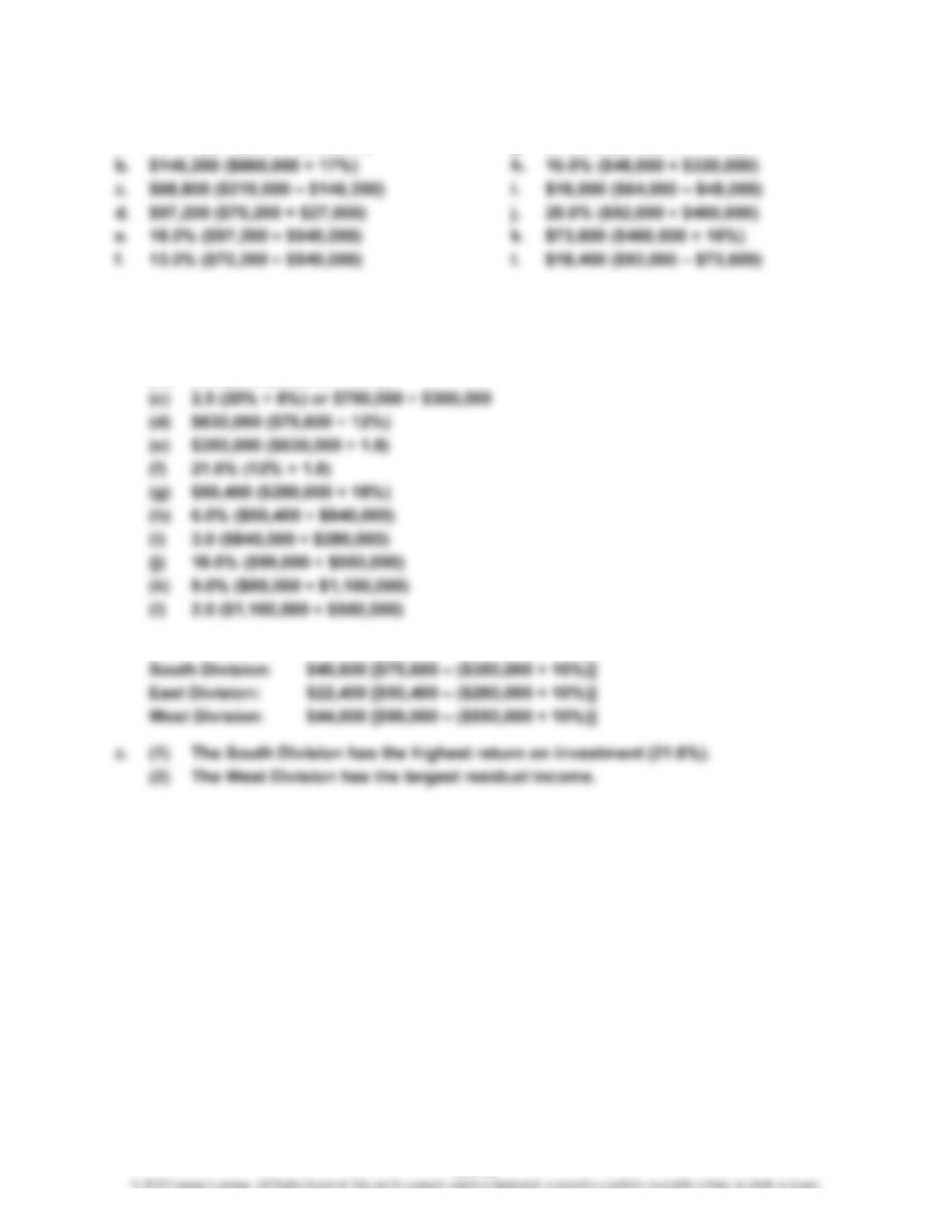
a. 25.0% ($215,000 ÷ $860,000) g. $64,000 ($320,000 × 20%)
Ex. 24–16
a. (a) $60,000 ($750,000 × 8%)
(b) $300,000 ($60,000 ÷ 20%)
b. North Division: $30,000 [$60,000 – ($300,000 × 10%)]
24-16
CHAPTER 24 Performance Evaluation for Decentralized Operations
Ex. 24–17
Revenues
Invested Assets
$571 $4,383
$4,383 $6,440
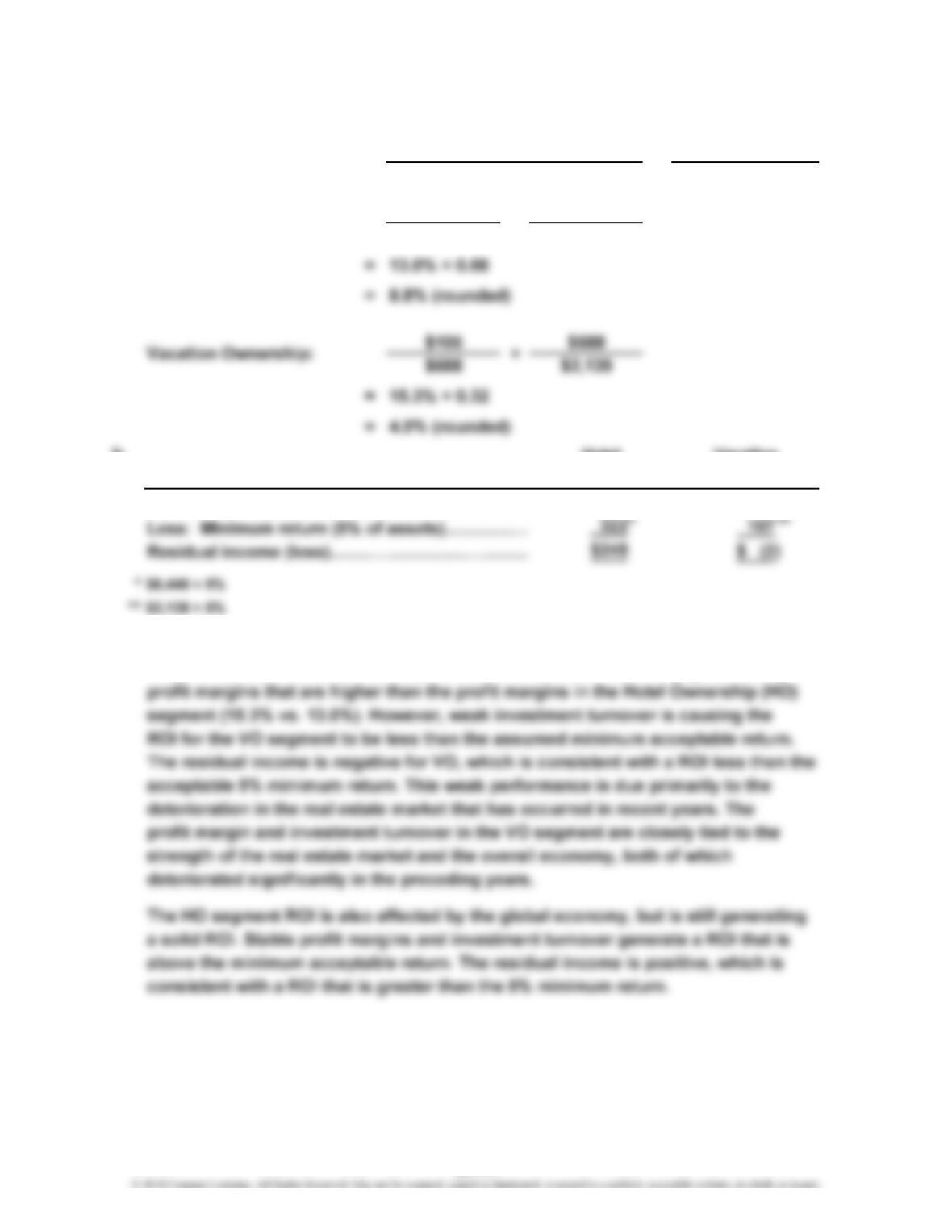
b. Vacation
Ownership
Income from operations……………………………
…
$105
c. The Vacation Ownership (VO) segment has the weakest return on investment,
which is mainly the result of a weak investment turnover. The VO segment earns
Income from Operations
a.
× =
Rate of Return
on Investment
$571
Ownership
Hotel
Revenues
Hotel Ownership: ×
24-17
CHAPTER 24 Performance Evaluation for Decentralized Operations
Ex. 24–18
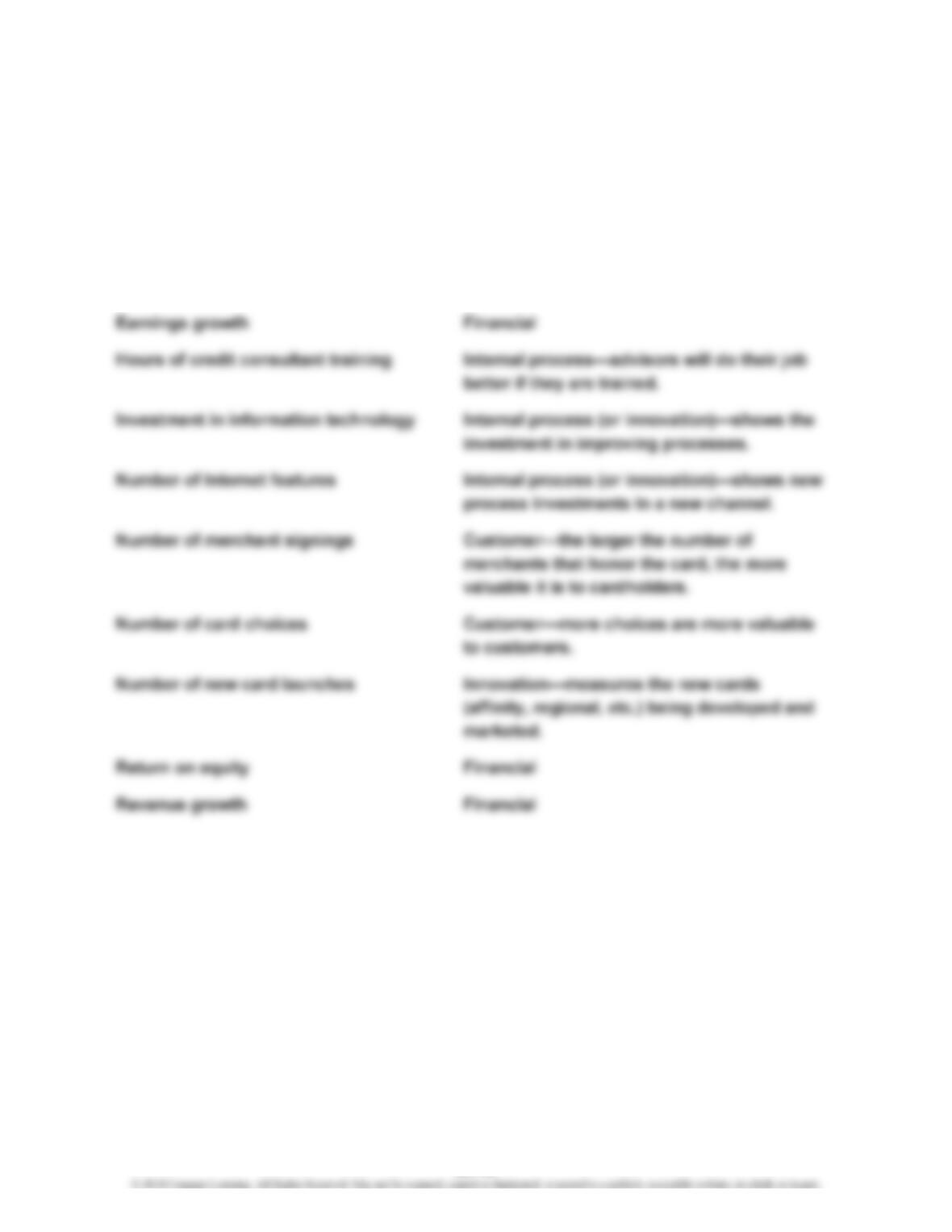
Although there is some judgment in classifying each of these measures, the following
represents the author’s assessment with explanations:
Average card member spending Customer—demonstrates the usefulness of
the card to the customer.
Cards in force Customer—if customers did not value the
card, they would not have one.
24-18
CHAPTER 24 Performance Evaluation for Decentralized Operations
Ex. 24–19
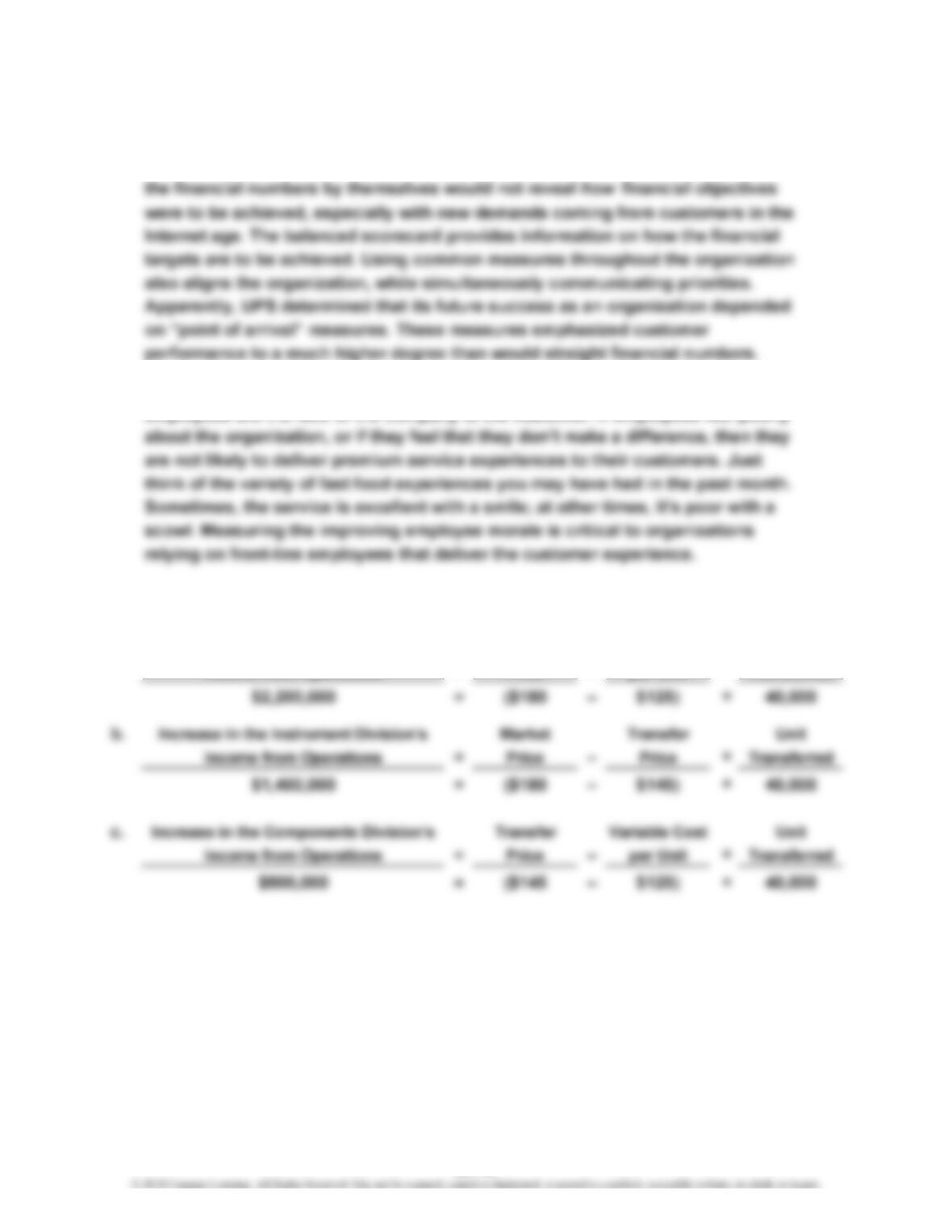
a. UPS wanted a performance measurement system that would focus more on
the underlying drivers, or levers, of financial success. It believed that focusing on
b. The employee sentiment number is common in service businesses. The
employees are the face of the company to the customer. If employees feel poorly
Ex. 24–20
a. Increase in Dart Industries’ Market Variable Cost Unit
Income from Operations = Price – per Unit × Transferred
24-19
CHAPTER 24 Performance Evaluation for Decentralized Operations
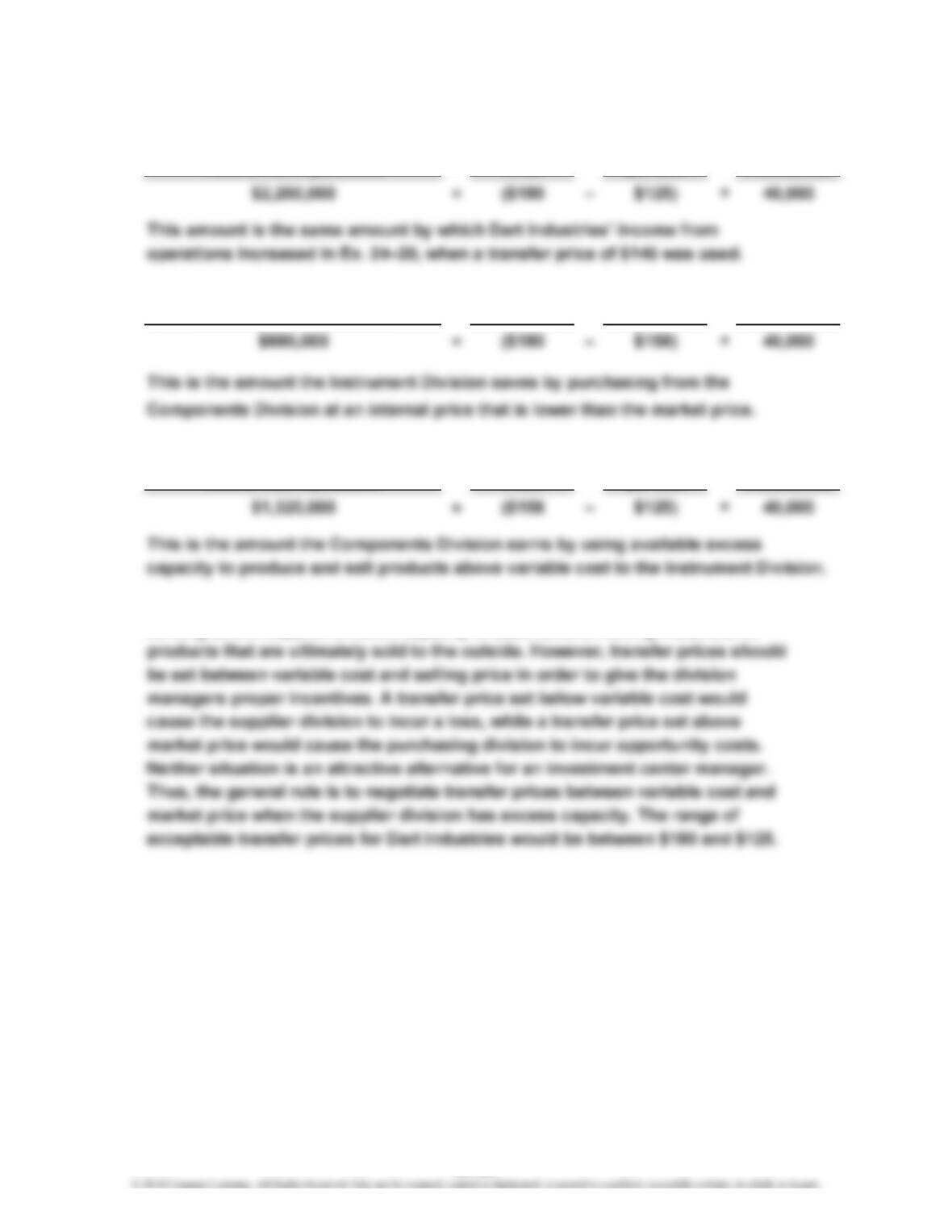
Ex. 24–21
a. Increase in Dart Industries’ Market Variable Cost Units
Income from Operations = Price – per Unit × Transferred
b. Increase in the Instrument Division’s Market Transfer Units
Income from Operations = Price – Price × Transferred
c. Increase in the Components Division’s Transfer Variable Cost Units
Income from Operations = Price – per Unit × Transferred
d. Any transfer price will cause the total income of the company to increase,
as long as the supplier division capacity is used toward making materials for
24-20