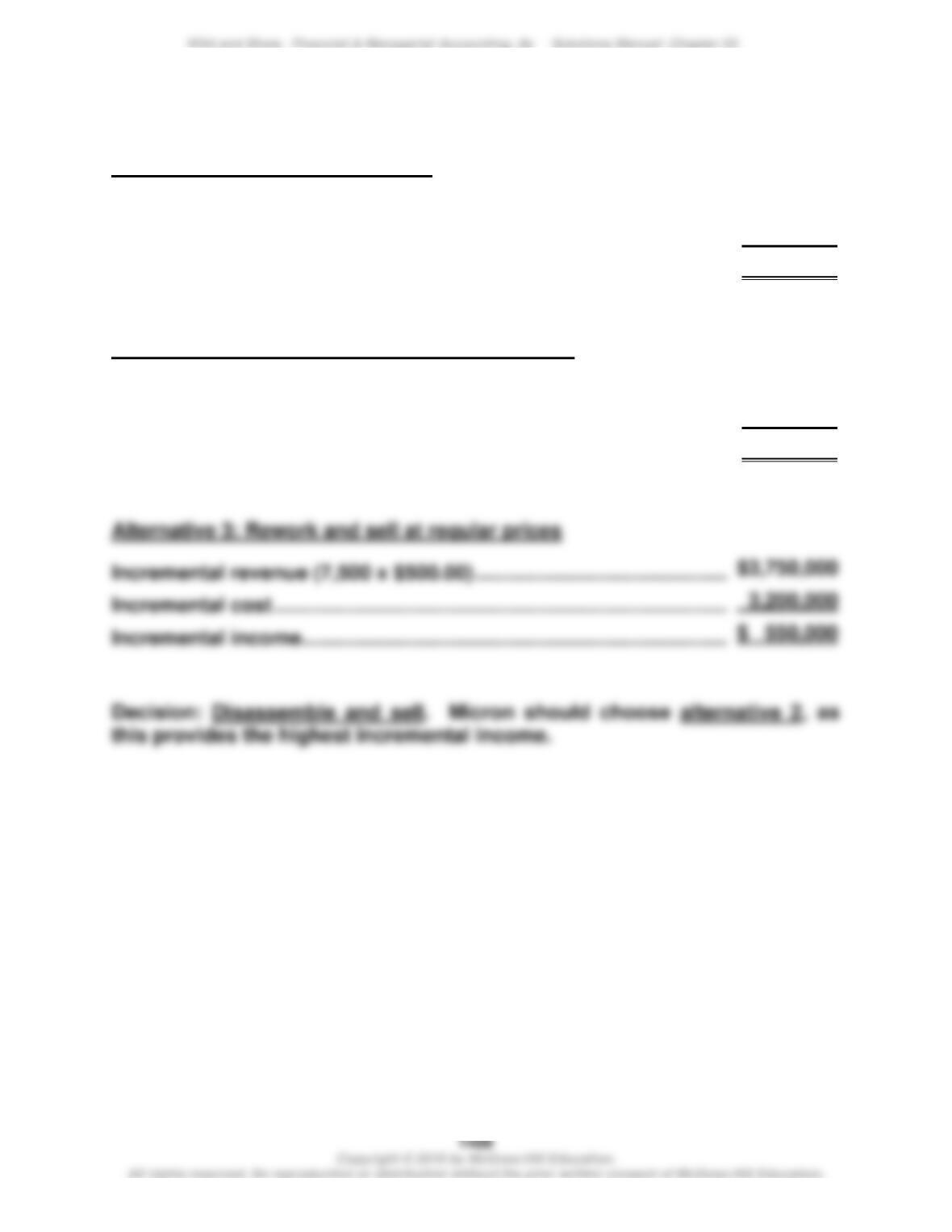
Problem 23-4B (45 minutes)
Alternative 1: Sell to a wholesaler
Incremental revenue (7,500 x $75.00) …………………………………………………
$ 562,500
Incremental cost ……………………………………………………………………………….
0
Incremental income …………………………………………………………………………..
$ 562,500
Alternative 2: Disassemble and sell to a recycler
Incremental revenue (7,500 x $130.00) ……………………………………………….
$ 975,000
Incremental cost ……………………………………………………………………………….
400,000
Incremental income …………………………………………………………………………..
$ 575,000
Incremental revenue (7,500 x $500.00) ……………………………………………….
Incremental cost ……………………………………………………………………………….
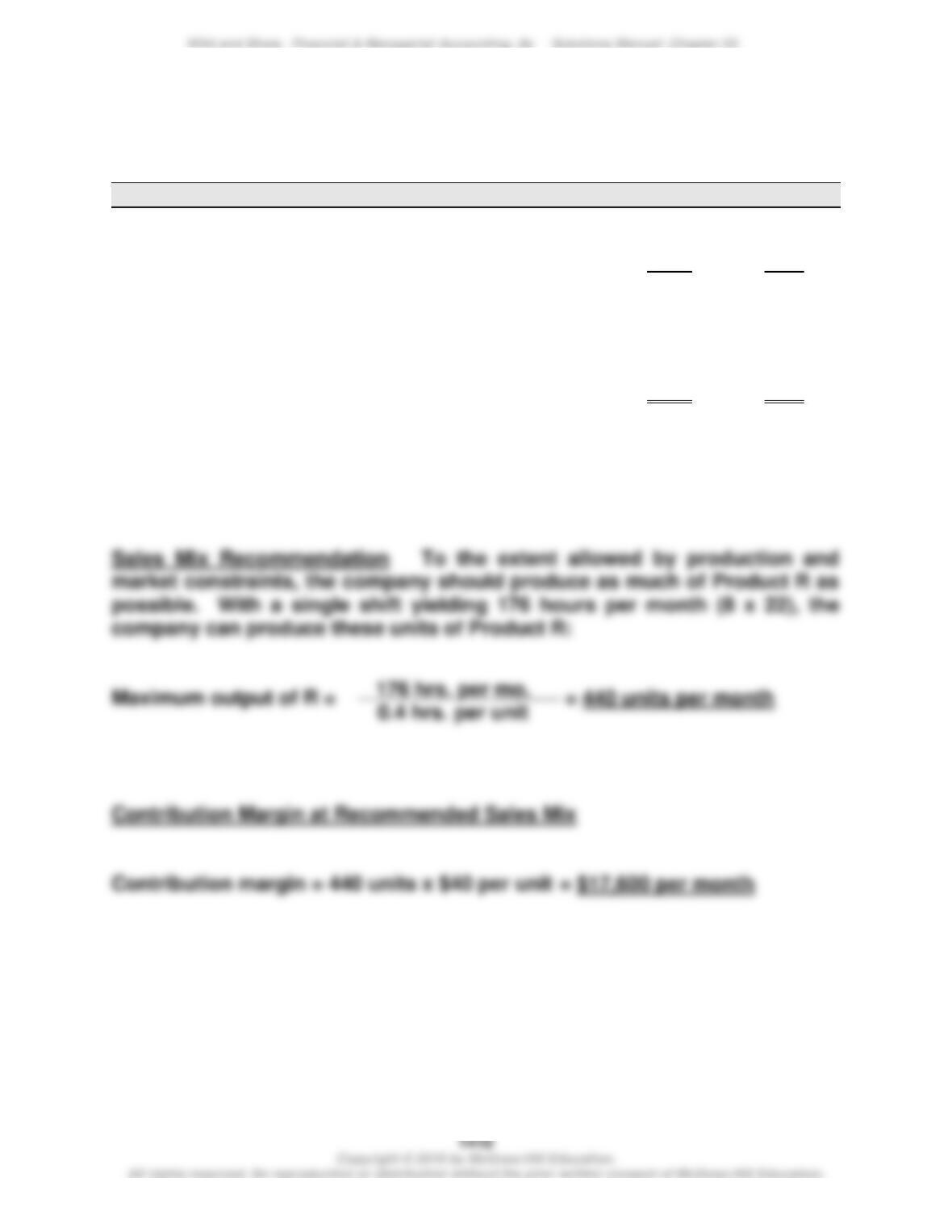
Problem 23-5B (55 minutes)
Part 1
Product R
Product T
Selling price per unit ……………………………………………..
$ 60
$ 80
Variable costs per unit …………………………………………..
20
45
Contribution margin per unit ………………………………….
$ 40
$ 35
Machine hours to produce 1 unit …………………………..
0.4
1.0
Contribution per machine hour
(or contribution/[hours per unit]) …………………………
$100
$ 35
Part 2
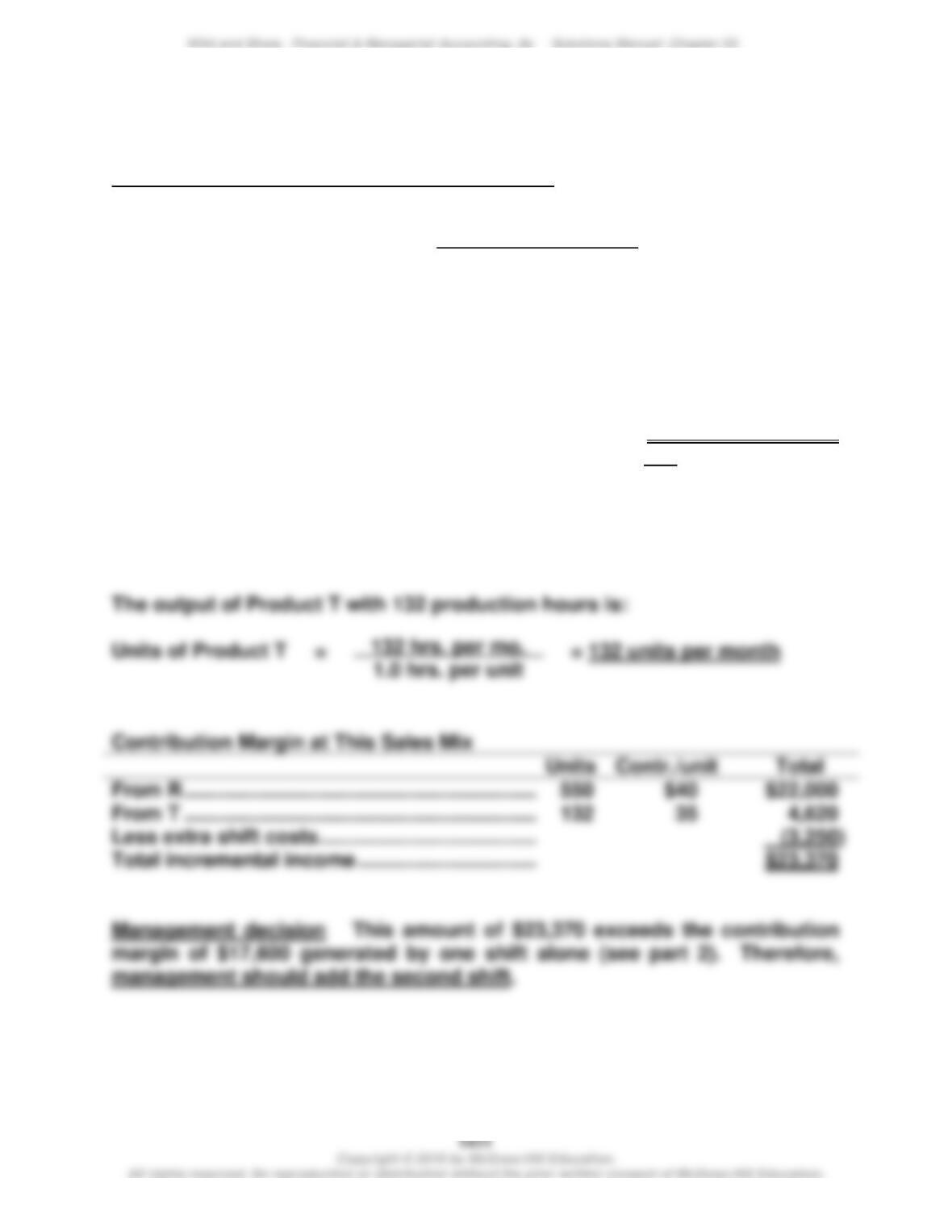
Problem 23-5B (Continued)
Part 3
Sales Mix Recommendation with Second Shift If the second shift is added,
the maximum possible output of R will double:
Maximum possible output of R = = 880 units per mo.
However, this level of output exceeds the company’s market constraint of
550 units of Product R per month. This means the company should
produce 550 units of Product R, and commit the remainder of the
productive capacity to Product T. This is computed as follows:
Units of Product R ……………………………………………………
= 550 units per month
Hours per unit ………………………………………………………….
0.4
Hours used for Product R …………………………………………
220
hours
Hours available for Product T (352 hrs – 220 hrs) ……………..
132
hours
Less extra shift costs ……………………………………
Total incremental income …………………………..
132 hrs. per mo.
1.0 hrs. per unit
352 hrs. per mo.
0.4 hrs. per unit
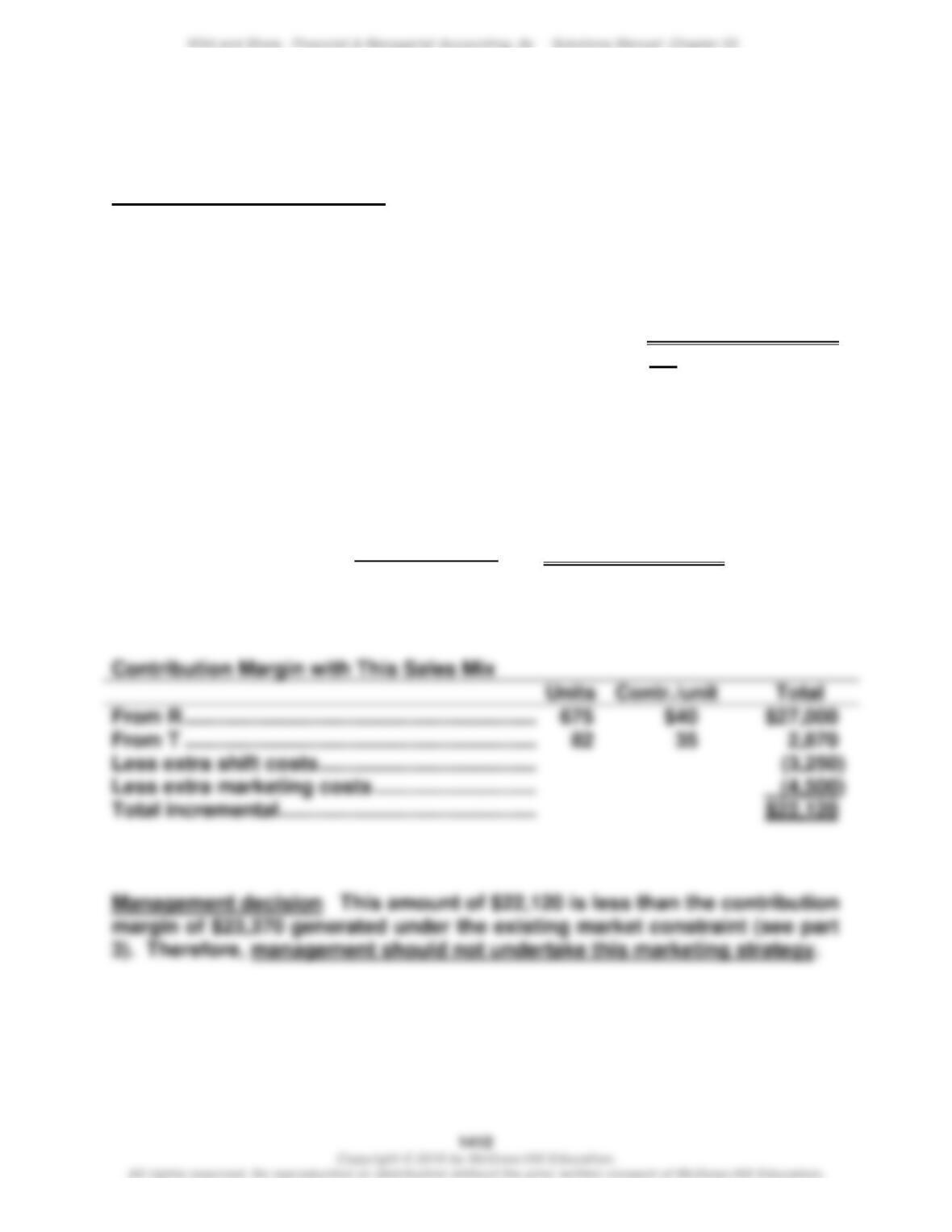
Problem 23-5B (Continued)
Part 4
Sales Mix Recommendation By incurring additional marketing cost, the
company can relax the market constraint for sales of Product R up to the
point where 675 units can be sold. This means the company can produce
675 units of Product R, and commit the remainder of its productive
capacity to Product T. These computations are:
Units of Product R ……………………………………………………
= 675 units per month
Hours per unit ………………………………………………………….
0.4
Hours used for Product R …………………………………………
270
hours
Hours available for Product T
(352 hrs less 270 hrs) …………………………………………….
82
hours
The output of Product T with 82 production hours is
Units of Product T = = 82 units per month
82
Less extra marketing costs …………………………..
Total incremental ………………………………………….
82 hrs. per mo.
1.0 hr. per unit
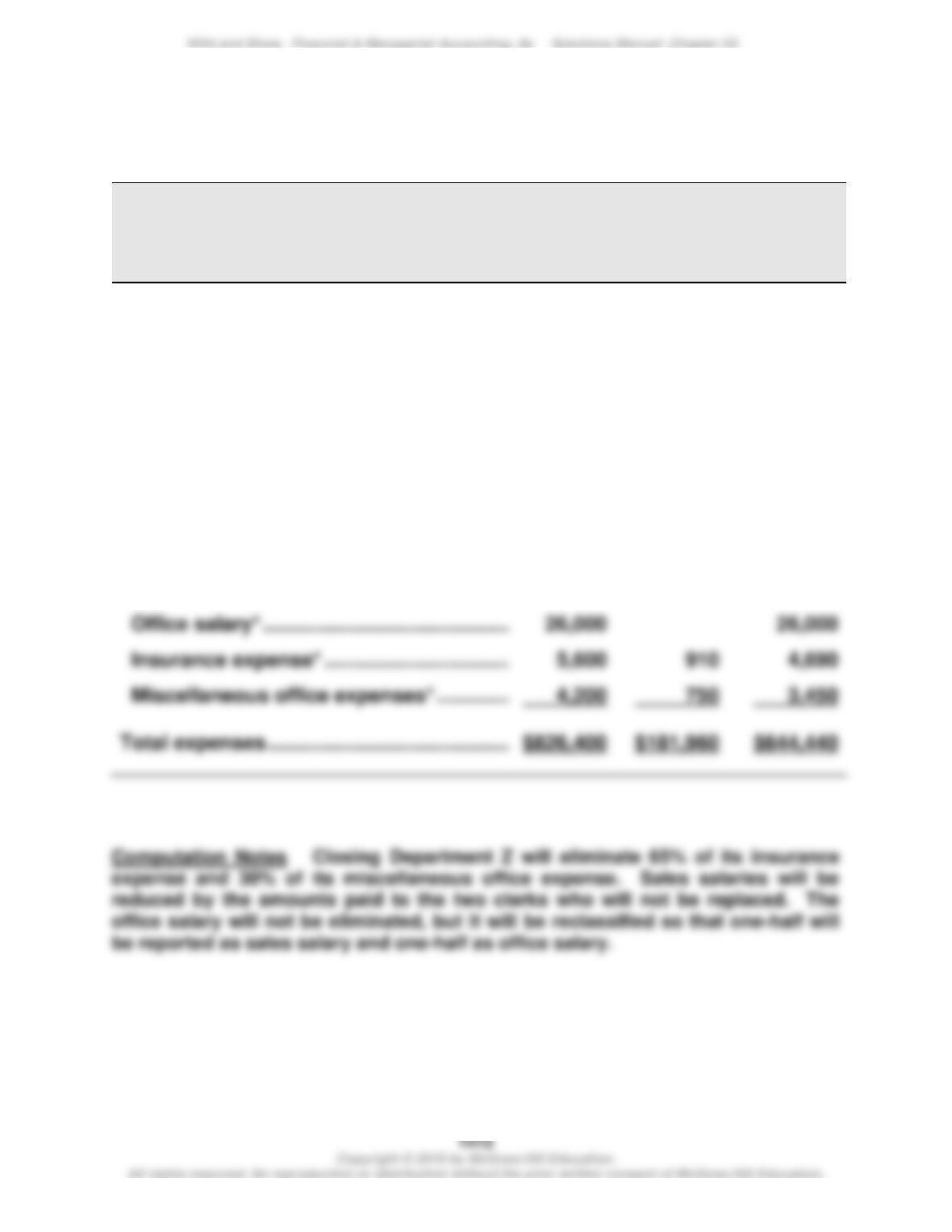
Problem 23-6B (60 minutes)
Part 1
ESME COMPANY
Analysis of Expenses under Elimination of Department Z
Total
Eliminated
Continuing
Expenses
Expenses
Expenses
Cost of goods sold ……………………………………….
$586,400
$125,100
$461,300
Direct expenses
Advertising …………………………………………………
30,000
3,000
27,000
Store supplies used …………………………………….
7,000
1,400
5,600
Depreciation of store equip. ………………………..
21,000
21,000
Allocated expenses
Sales salaries* …………………………………………….
93,600
46,800
46,800
Rent expense………………………………………………
27,600
27,600
Bad debts expense ……………………………………..
25,000
4,000
21,000
Insurance expense* …………………………………….
5,600
4,690
Miscellaneous office expenses* …………………..
Problem 23–6B (Continued)
Part 2
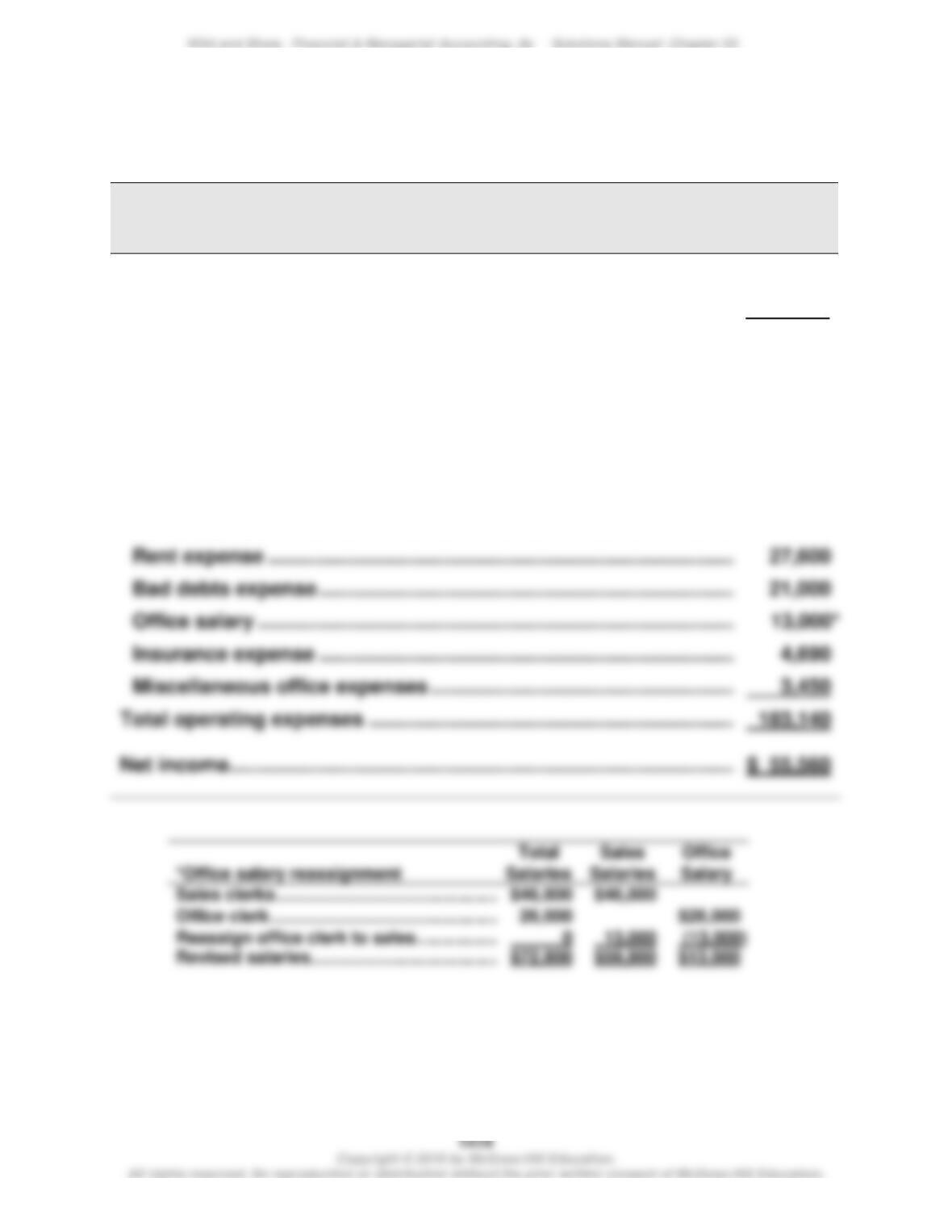
ESME COMPANY
Forecasted Annual Income Statement
Under Plan to Eliminate Department Z
Sales …………………………………………………………………………………………
$700,000
Cost of goods sold ……………………………………………………………………
461,300
Gross profit from sales ……………………………………………………………..
238,700
Operating expenses
Advertising …………………………..…………………………………………………
27,000
Store supplies used ………………………………………………………………..
5,600
Depreciation of store equipment ……………………………………………..
21,000
Sales salaries ………………………………………………………………………….
59,800*
Rent expense ………………………………………………………………………….
21,000
13,000*
Insurance expense ………………………………………………………………….
Miscellaneous office expenses ………………………………………………..
Problem 23–6B (Continued)
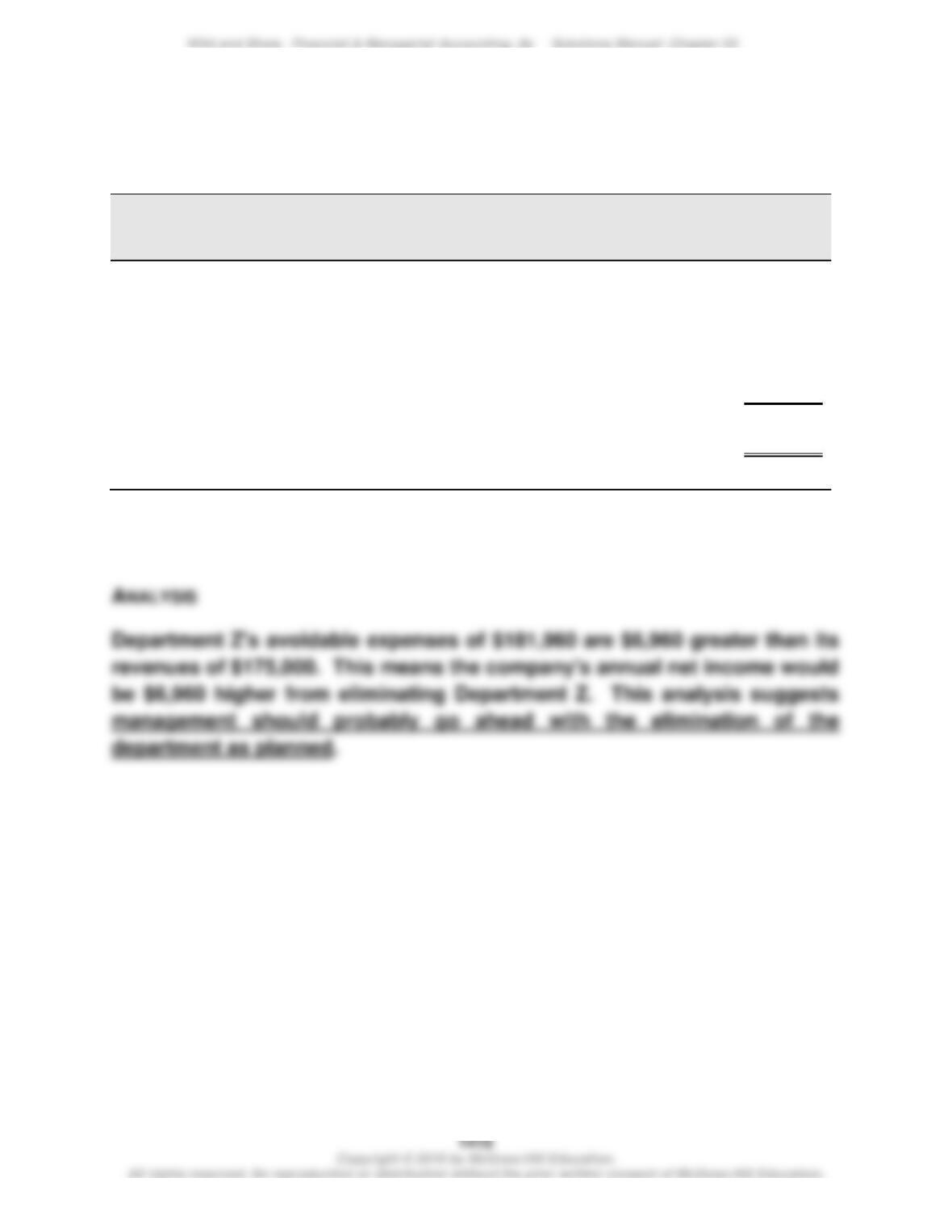
Part 3
ESME COMPANY
Reconciliation of Combined Income with Forecasted Income
Combined net income …………………………………………………………………
$ 48,600
Less Dept. Z’s lost sales ………………………………………………………………
(175,000)
Plus Dept. Z’s eliminated expenses ………………………………………………
181,960
Forecasted net income …………………………………………………………………
$ 55,560
Wild and Shaw, Financial & Managerial Accounting, 8e Solutions Manual: Chapter 23
SERIAL PROBLEM — SP 23
Serial Problem, Business Solutions (50 minutes)
Desks
Chairs
Selling price per unit ………………………………………………………
$ 1,125
$ 375
Variable costs per unit ……………………………………………………
500
200
Contribution margin per unit …………………………………………..
$ 625
$ 175
Direct labor hours to produce 1 unit …………………………..
5
4
Contribution per direct labor hour …………………………..
$125.00
$43.75
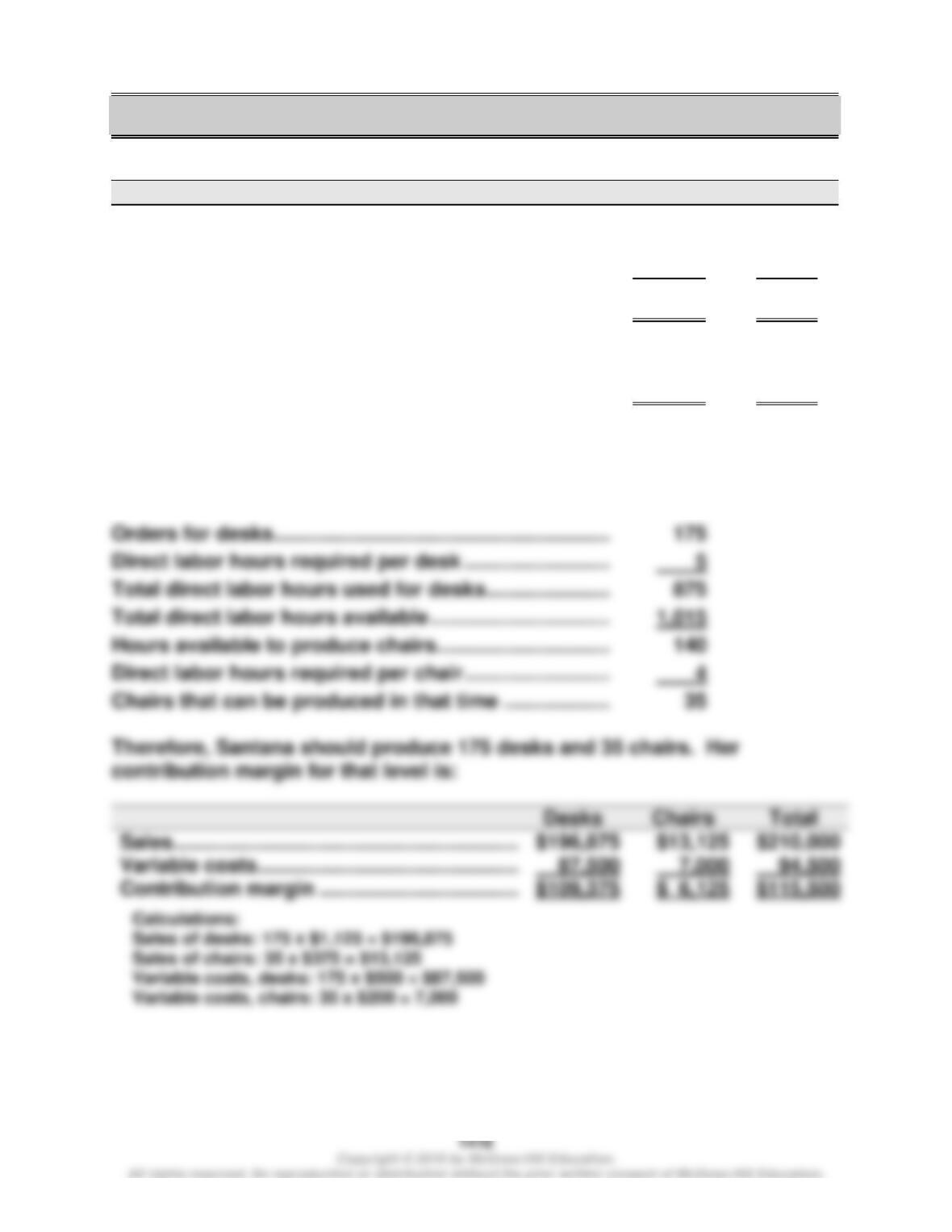
As the desks have the highest contribution margin per direct labor hour
used, Santana should fill all of the orders for the desks first, and then fill as
many of the orders for the chairs as she can.
Chairs
Variable costs……………………………………………….
Company Analysis — AA 23-1
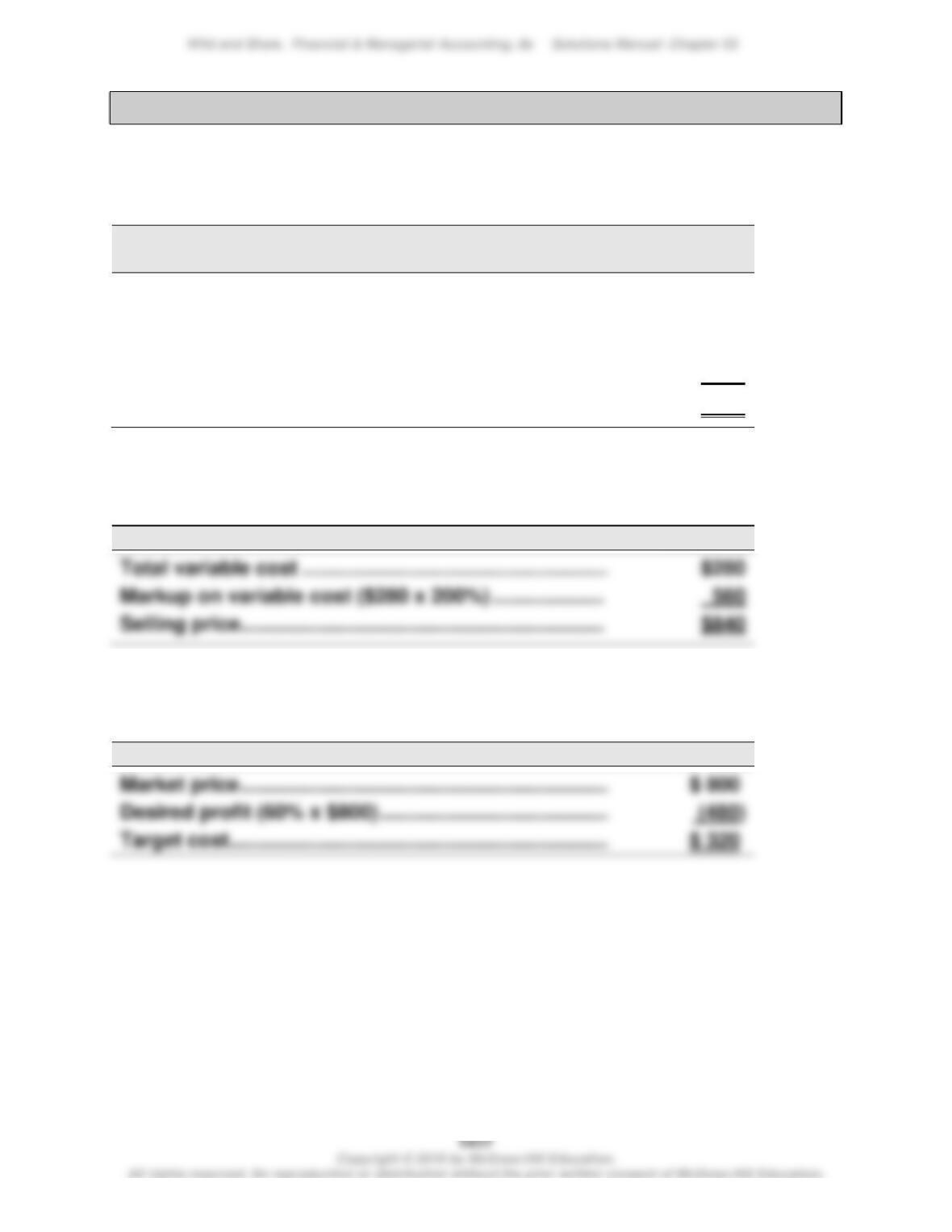
1. Variable cost per unit
Variable Cost
Per Unit
Direct materials ……………………………………………………
$230
Direct labor ………………………………………………………….
Variable overhead ………………………………………………..
Variable selling and administrative ……………………….
10
20
20
Total ……………………………………………………………………
$280
Selling price using variable cost method
Per Unit
Total variable cost ……………………………………………….
2. Target cost
Per Unit
Comparative Analysis — AA 23-2
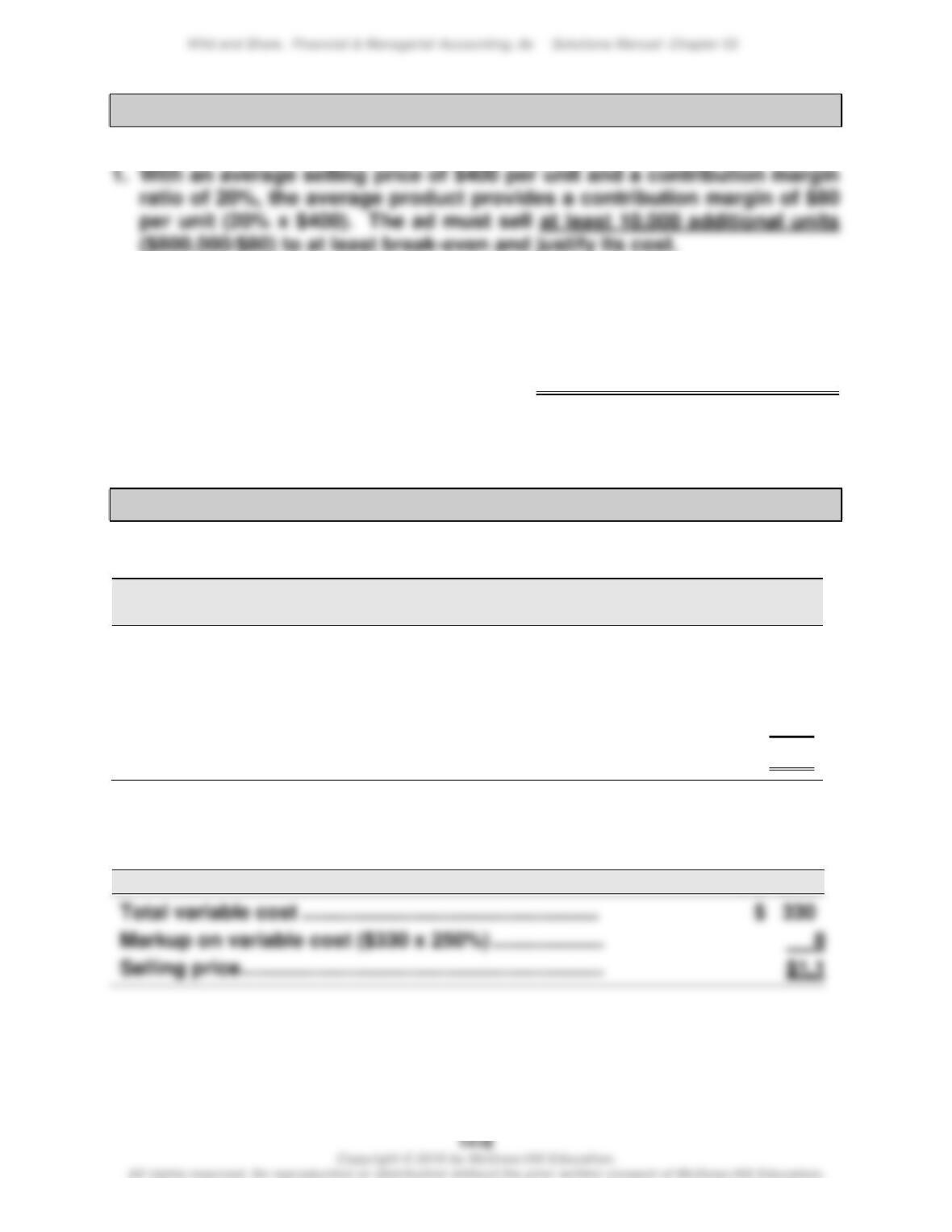
2. If instead Google targets products with contribution margin ratios of
25% or more the ad needs to sell fewer units to justify its cost. In this
case, the average product provides a contribution margin of $100 per
unit (25% x $400). The ad must sell at least 8,000 additional units
($800,000/$100) to at least break-even and justify its cost.
Global Analysis — AA 23-3
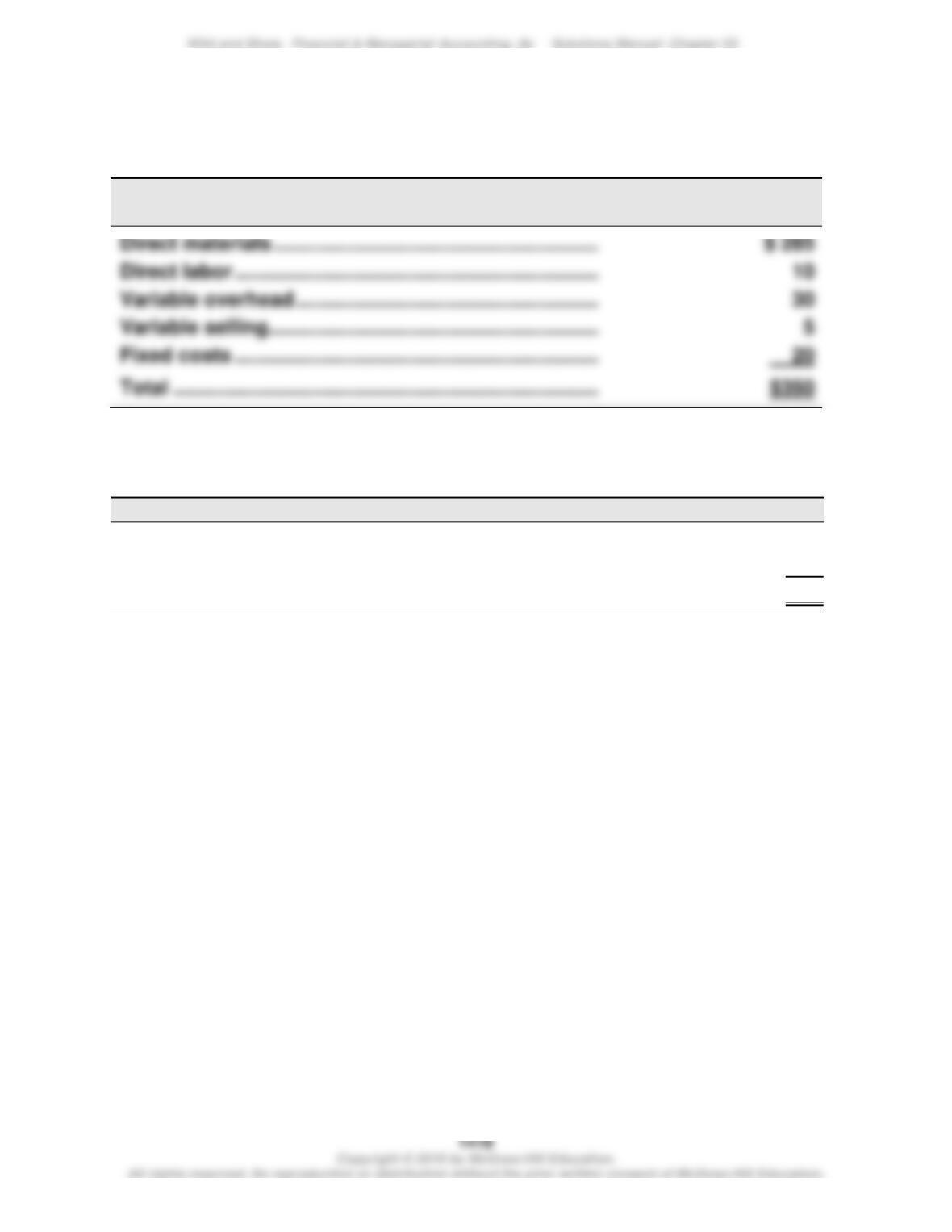
1. Variable cost per unit
Variable Cost
Per Unit
Direct materials …………………………………………………..
$ 285
Direct labor …………………………………………………………
Variable overhead ……………………………………………….
Variable selling……………………………………………………
10
30
5
Total …………………………………………………………………..
$330
Selling price using variable cost method
Per Unit
Total variable cost ………………………………………………
AA 23–3 concluded
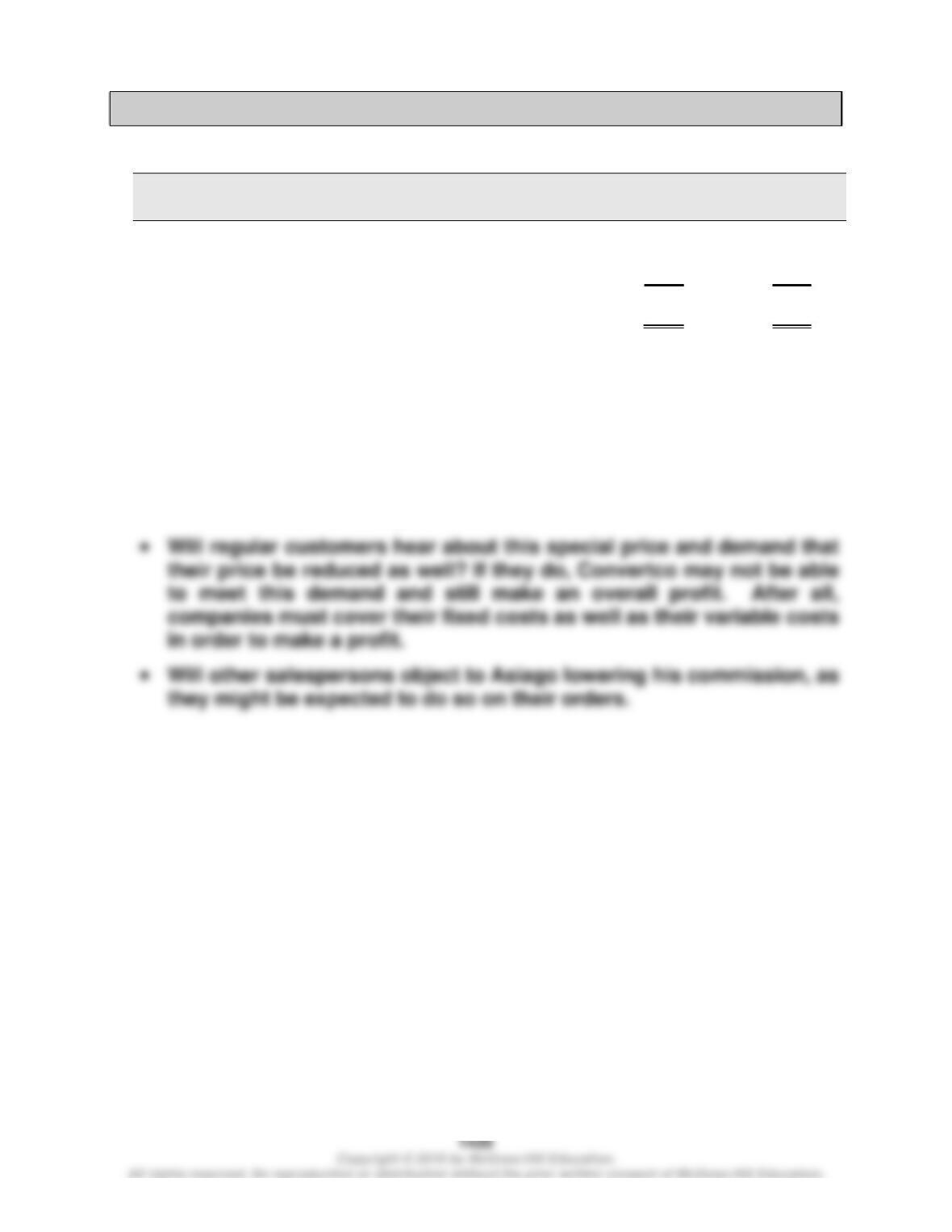
2. Total cost per unit
Total Cost
Per Unit
Direct materials …………………………………………………..
Selling price using total cost method
Per Unit
Total cost ……………………………………………………………
$ 350
Markup on total cost ($350 x 220%) …………………….. 770
Selling price ……………………………………………………….. $1,120
Wild and Shaw, Financial & Managerial Accounting, 8e Solutions Manual: Chapter 23
Ethics Challenge — BTN 23-1
1 and 2.
Per
Controller
Per
Asiago
Selling price ……………………………………………………….
$ 40
$ 40
Variable costs ……………………………………………………….
42
40
Contribution margin ……………………………………………………….
$ (2)
$ 0
3. Whether the company should take the order depends on several factors:
• Asiago is eager to obtain a new customer. However, will the
customer expect that the selling price of the product will remain at
$40? If so, is Asiago willing to accept a commission that is one-half of
his regular commission? Is the company willing to accept a sale with
a zero contribution margin?
Wild and Shaw, Financial & Managerial Accounting, 8e Solutions Manual: Chapter 23
Communicating in Practice — BTN 23-2
MEMORANDUM
TO: Manager
FROM: Student
DATE:
SUBJECT: Considerations when deciding whether to drop the golf department
It is important to understand fully the consequences of dropping a
department. Many factors need to be taken into account. These include:
• What is the contribution margin of the department? If it is positive,
it is contributing something to cover the overall fixed costs of the
entire store.
• Will there be any fixed costs saved if the department is closed? That
• Will dropping the Golf department affect sales in other
departments? Will customers who need golf products and other items
go elsewhere instead of Greeble’s?
Taking It to the Net — BTN 23-3
1. According to this website, business process outsourcing (BPO) is the
process of hiring another company to handle business activities for you.
Teamwork in Action — BTN 23-4
Instructor note: There are many possible answers to this assignment. Following is just a
sample of the types of costs students should consider.
Cost item
Variable
or Fixed?
Cost saved if flight
is dropped?
Rationale
Salaries of
flight
attendants
Fixed
No
If the flight is dropped, these
flight attendants are likely to be
transferred to other flights. It is
possible in the long run to
reduce the total number of flight
attendants if the flight is
permanently dropped.
Salaries of
pilots
Fixed
No
The rationale is the same as for
the flight attendants. It is
possible in the long run to save
their salaries, but probably not
in the short run.
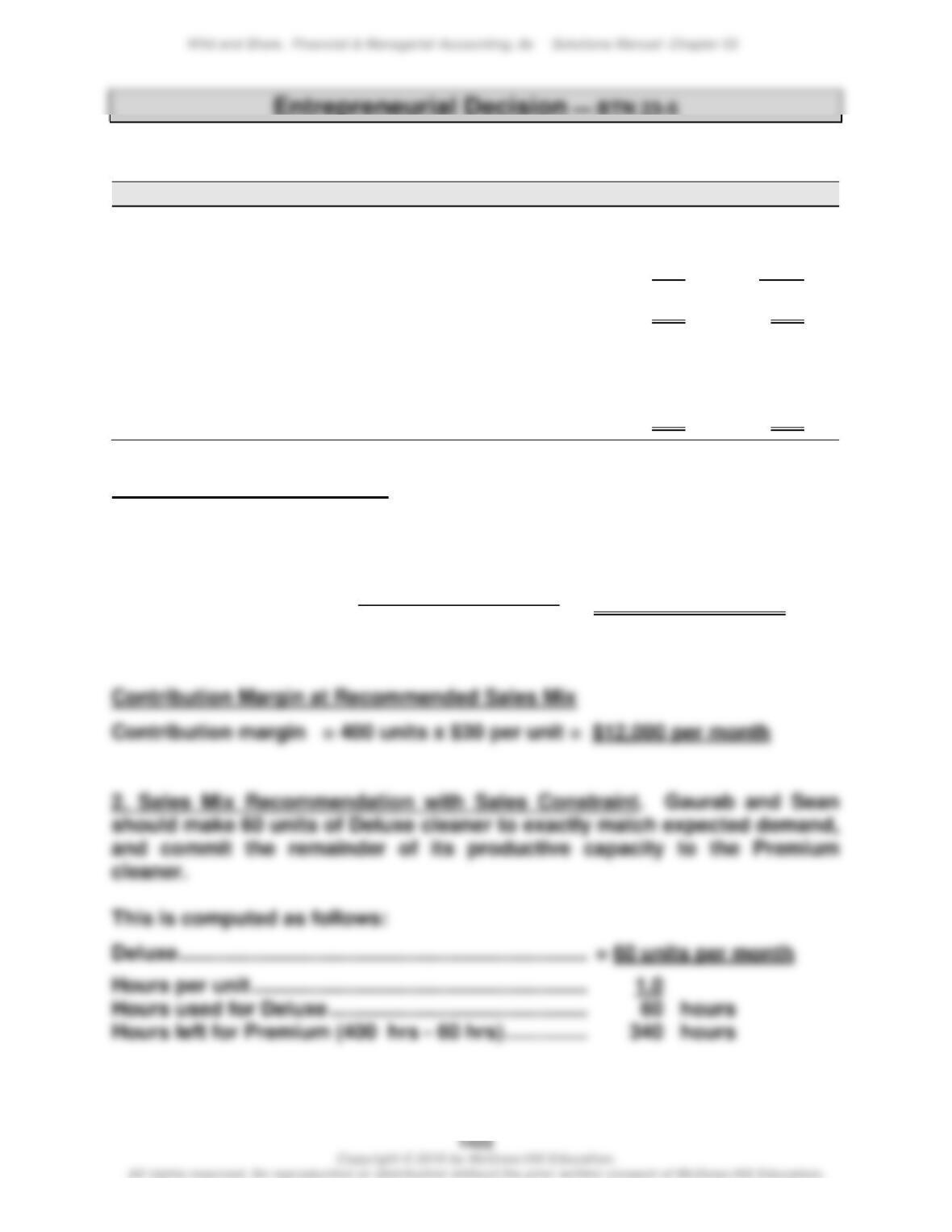
elsewhere. However, in the long
run, it is likely that Delta can
1.
Deluxe
Premium
Selling price per unit ……………………………………………..
$ 70
$ 90
Variable costs per unit …………………………………………..
40
50
Contribution margin per unit ………………………………….
$30
$40
Processing hours to produce 1 unit ……………………….
1
2
Contribution per processing hours
(contribution margin per unit/[hours per unit]) ……………
$30
$20
Sales Mix Recommendation. To the extent allowed by production and
market constraints, Gaurab and Sean should produce as much Deluxe
cleaner as possible. With a capacity of 400 hours of processing time per
month, the company can produce 400 units of Deluxe , computed as:
Max. output of Deluxe = = 400 units per month
Hours per unit ……………………………………………………….
Hours used for Deluxe ………………………………………………..
Hours left for Premium (400 hrs – 60 hrs)…………………….
400 hrs. per mo.
1.0 hrs. per unit
Entrepreneurial Decision (continued)
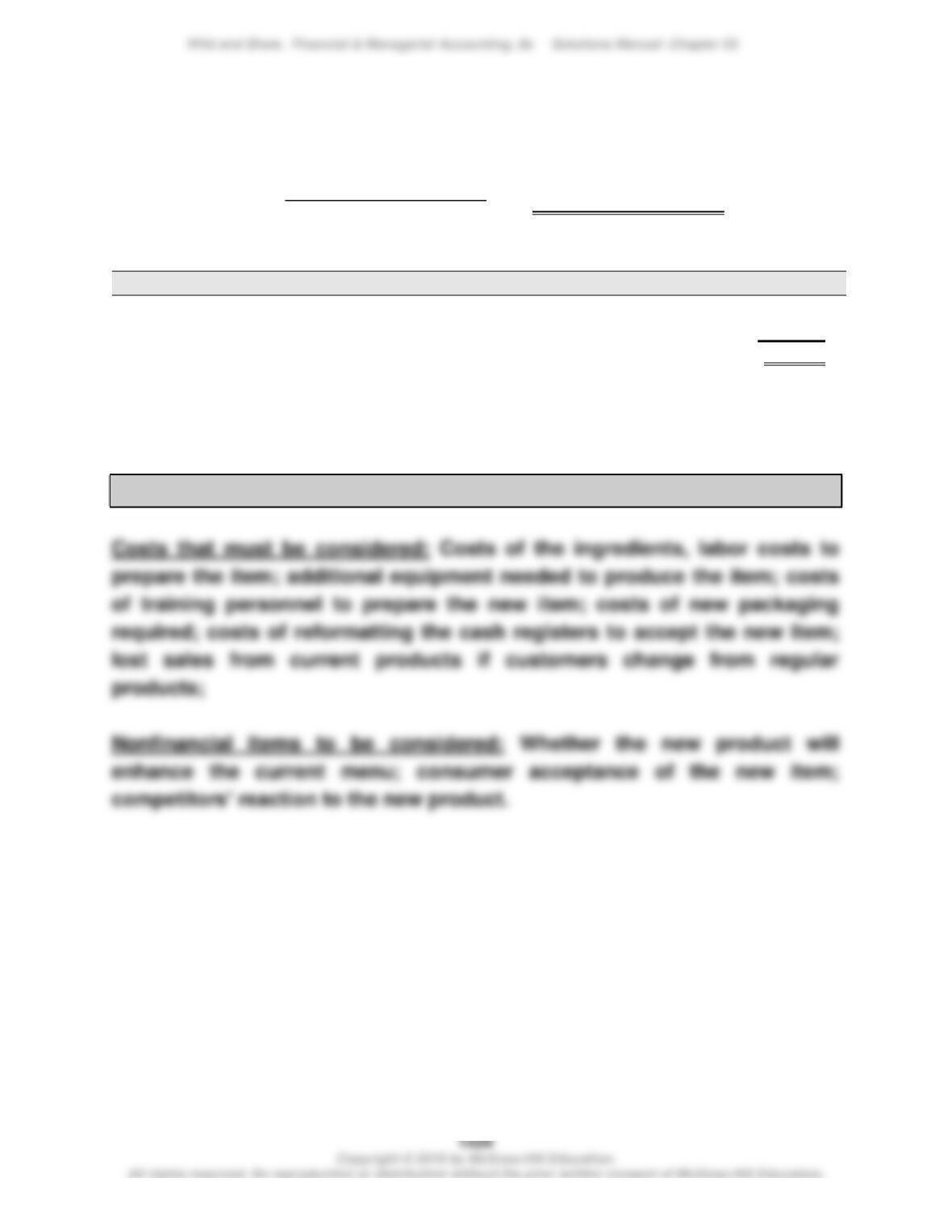
The output of Premium cleaner with 340 production hours is
Premium = = 170 units per month
Contribution Margin at This Sales Mix
Units
Contr./unit
Total
From Deluxe …………………………………………………
60
$30
$1,800
From Premium………………………………………………
170
40
6,800
Total contribution margin …………………………..
$8,600
Hitting the Road — BTN 23-6
340 hrs. per mo.
2.0 hrs. per unit