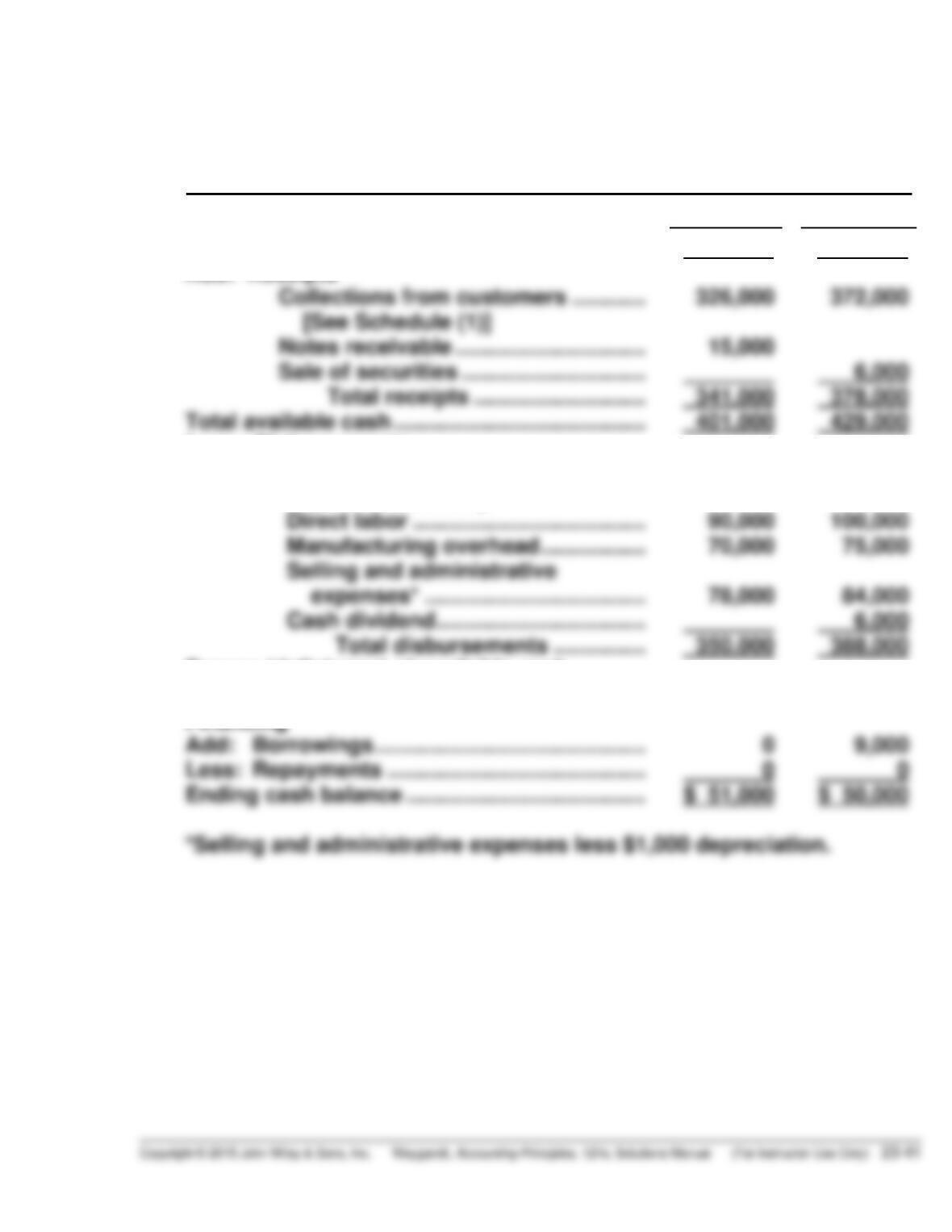
PROBLEM 23-4A (Continued)
(b) COLTER COMPANY
Cash Budget
For the Two Months Ending February 28, 2017
January
February
Beginning cash balance …………………………….
Add: Receipts
Collections from customers …………
[See Schedule (1)]
Total available cash …………………………………..
$ 60,000
326,000
401,000
$ 51,000
372,000
429,000
$ 51,000
$ 50,000
Less: Disbursements
Direct materials ………………………….
[See Schedule 2]
Excess (deficiency) of available cash
over cash disbursements ……………………….
Financing
112,000
51,000
123,000
41,000
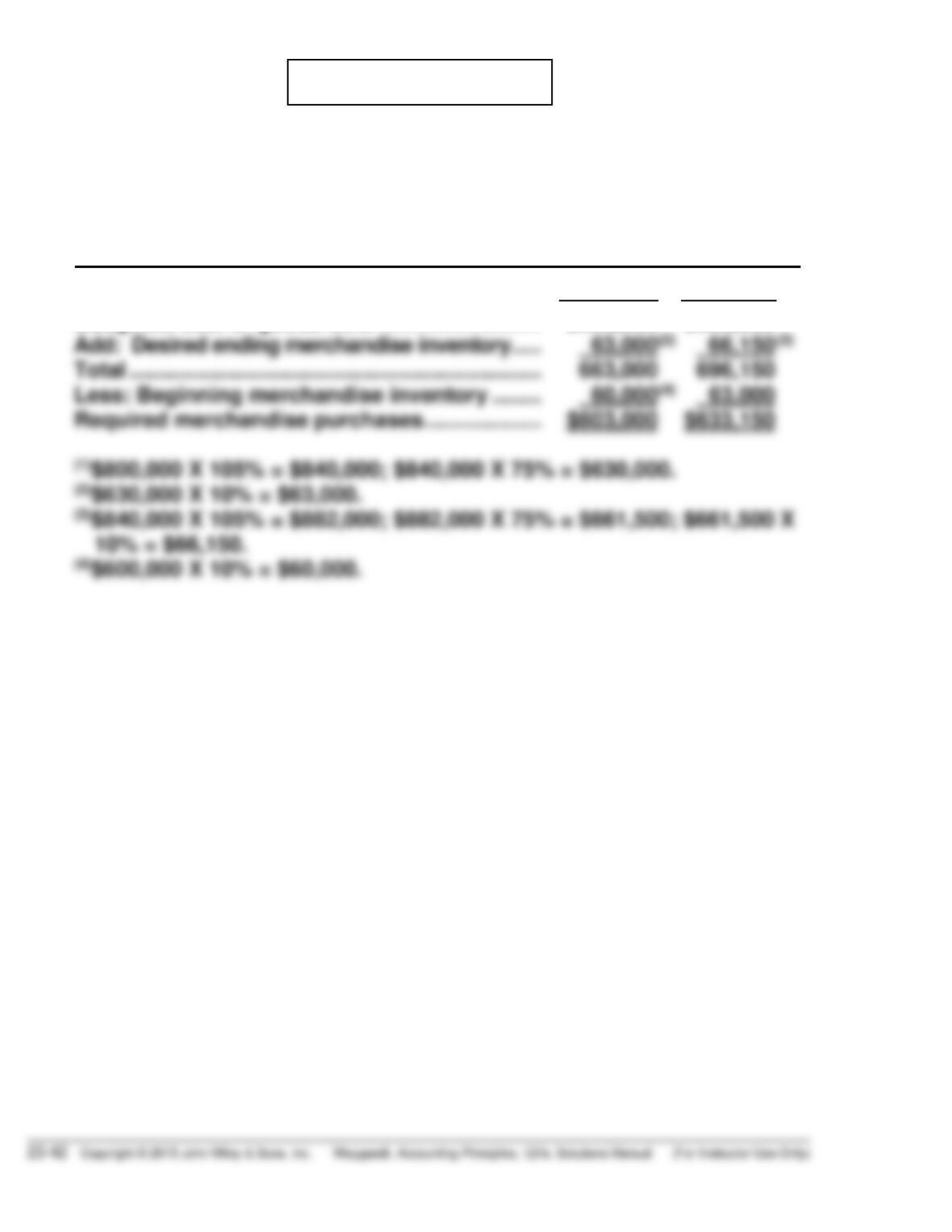
PROBLEM 23–5A
(a) SUPPAR COMPANY
San Miguel Store
Merchandise Purchases Budget
For the Months of May and June, 2017
May
June
Budgeted cost of goods sold ………………………
Add: Desired ending merchandise inventory …..
$600,000
63,000
(2)
$630,000
66,150
(1)
(3)
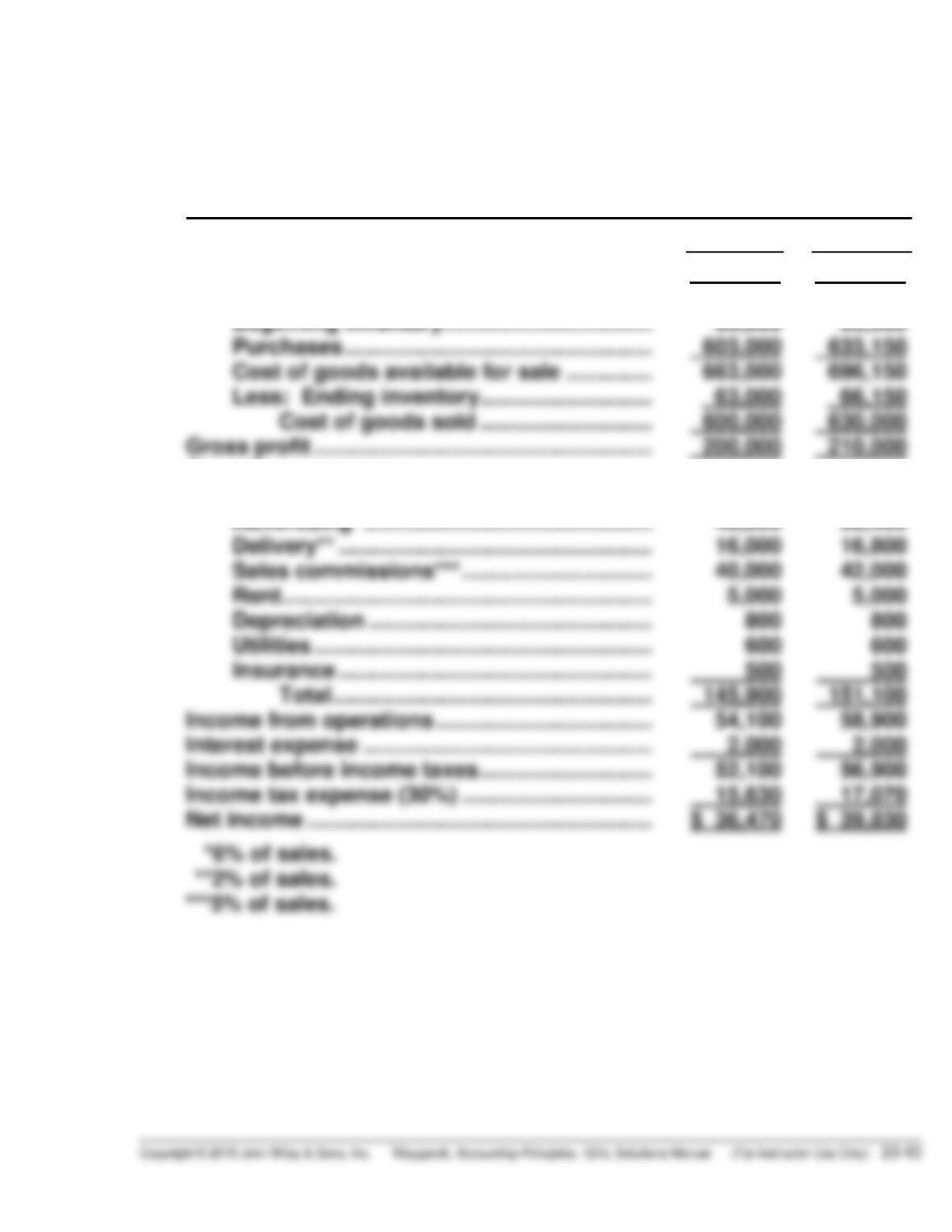
PROBLEM 23-5A (Continued)
(b) SUPPAR COMPANY
San Miguel Store
Budgeted Income Statement
For the Months of May and June, 2017
May
June
Sales ………………………………………………………...
Cost of goods sold
Beginning inventory …………………………….
Gross profit ……………………………………………….
$800,000
60,000
200,000
$840,000
63,000
210,000
$ 36,470
$ 39,830
Operating expenses
Sales salaries ……………………………………..
Advertising* ………………………………………..
Total …………………………………………….
Income from operations ……………………………..
Interest expense ………………………………………..
Income before income taxes ……………………….
35,000
48,000
145,900
54,100
2,000
52,100
35,000
50,400
151,100
58,900
2,000
56,900
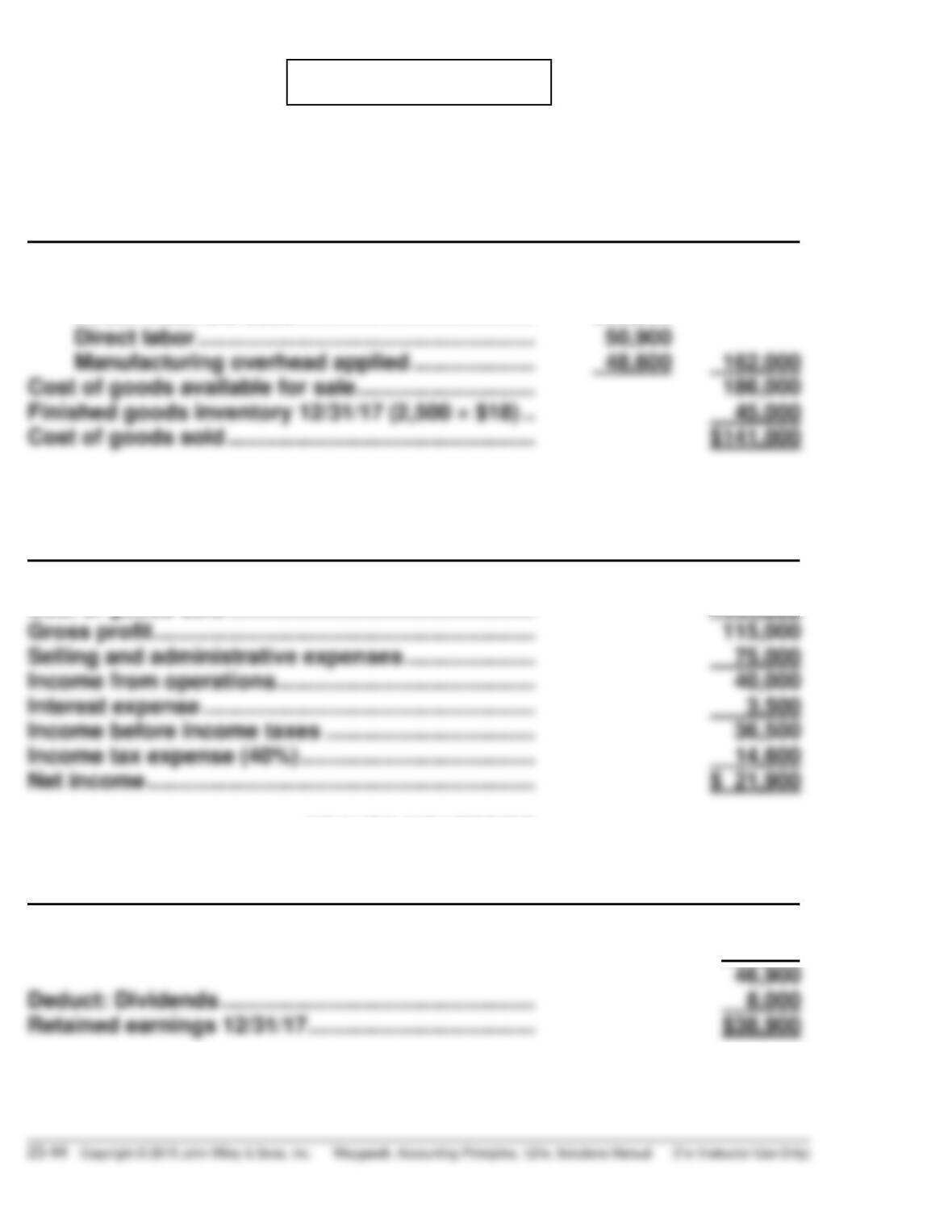
PROBLEM 23–6A
KRAUSE INDUSTRIES
Budgeted Cost of Goods Sold
For the Year Ending December 31, 2017
Finished goods inventory, 1/1/17 ……………………… $ 24,000
Cost of goods manufactured
Direct materials used ………………………………… $62,500
KRAUSE INDUSTRIES
Budgeted Income Statement
For the Year Ending December 31, 2017
Sales revenue (8,000 $32) ……………………………… $256,000
Cost of goods sold ………………………………………….. 141,000
Gross profit …………………………………………………….. 115,000
KRAUSE INDUSTRIES
Budgeted Retained Earnings Statement
For the Year Ending December 31, 2017
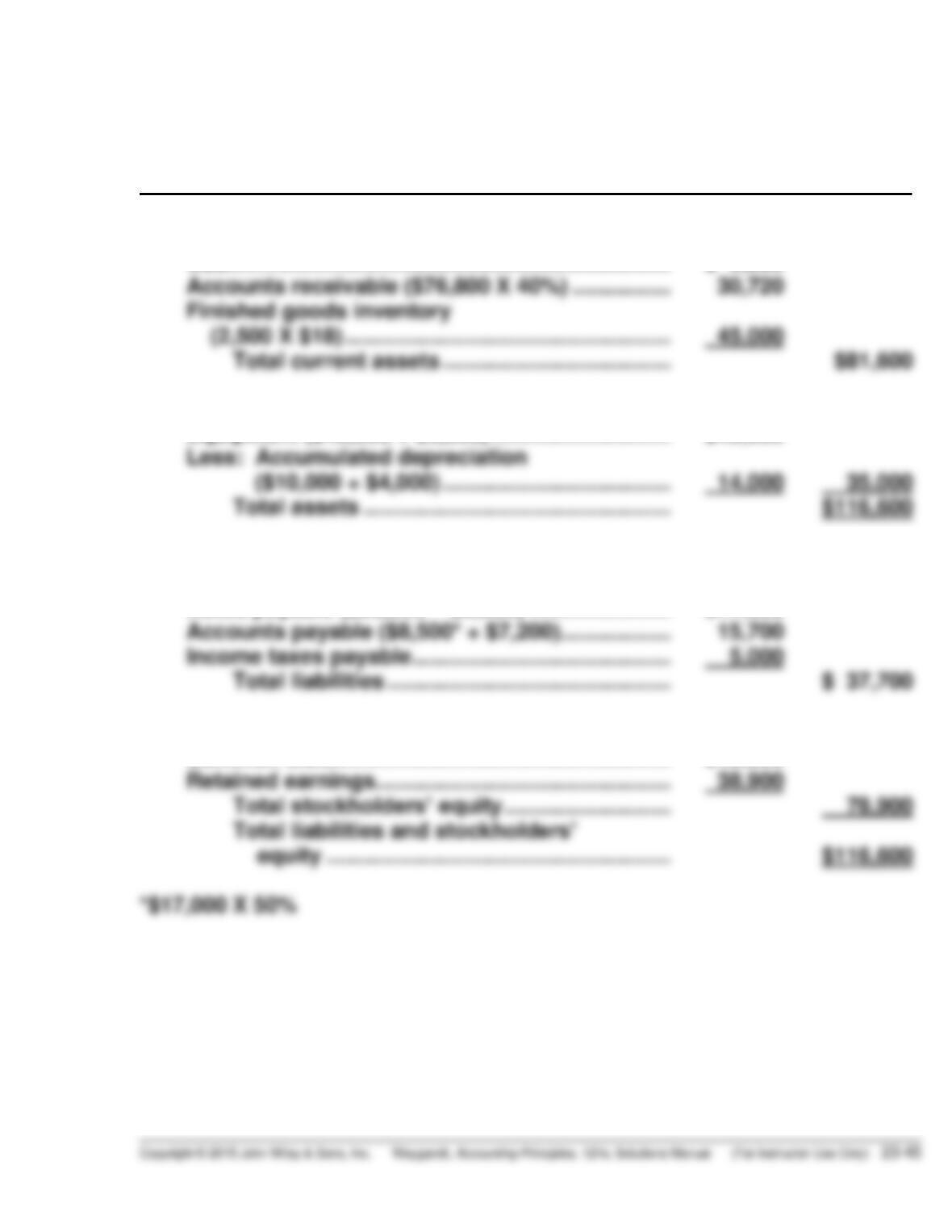
Retained earnings, 1/1/17 …………………………………. $25,000
Add: Net income …………………………..…………………. 21,900
PROBLEM 23-6A (Continued)
KRAUSE INDUSTRIES
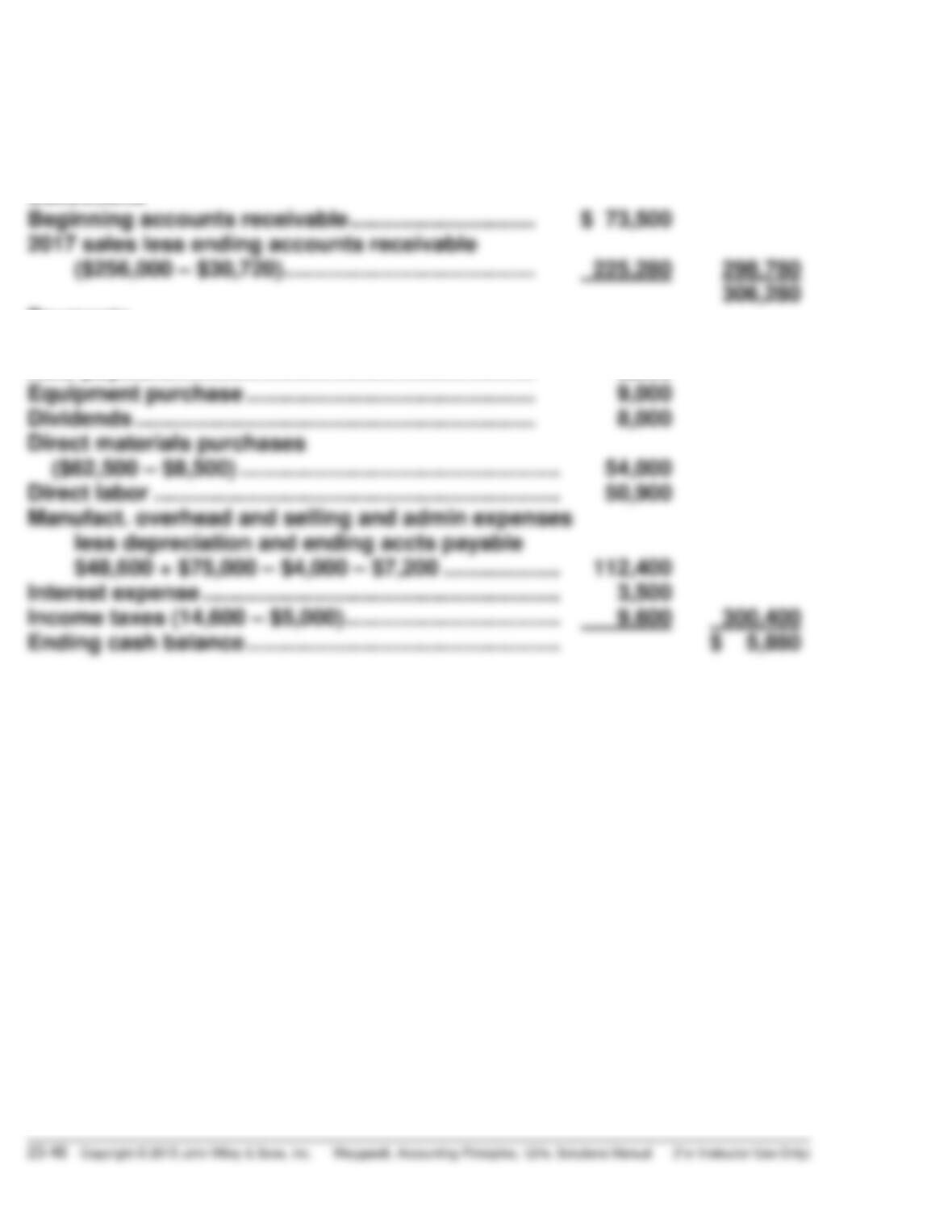
Budgeted Balance Sheet
December 31, 2017
Assets
Current assets
Cash ……………………………………………………………. $ 5,880
Accounts receivable ($76,800 X 40%) ……………. 30,720
Property, plant, and equipment
Equipment ($40,000 + $9,000) ……………………….. $49,000
Liabilities and Stockholders’ Equity
Liabilities
Notes payable ($25,000 – $8,000) ………………….. $17,000
Accounts payable ($8,500* + $7,200) ……………… 15,700
Stockholders’ equity
Common stock …………………………………………….. $40,000
PROBLEM 23-6A (Continued)
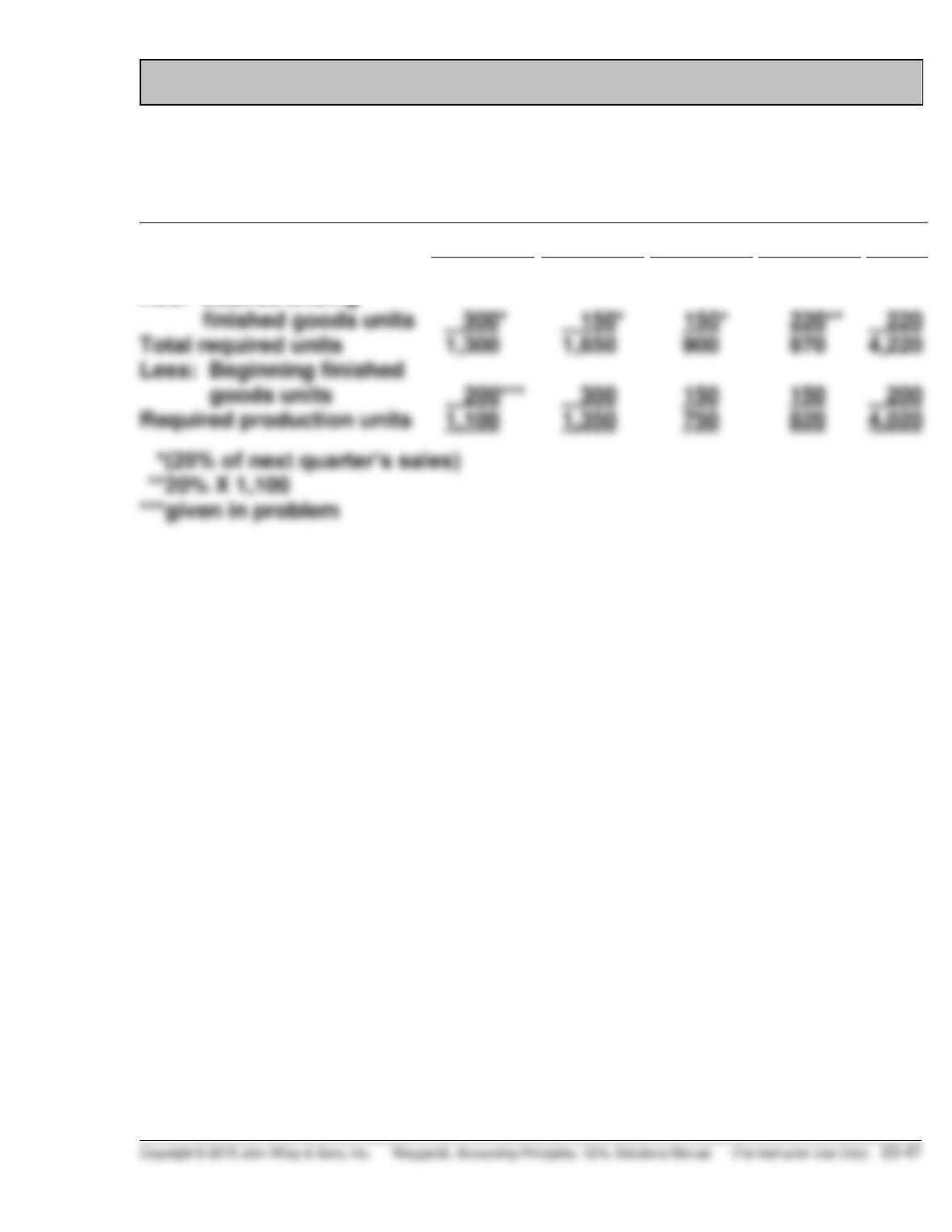
Proof of budgeted cash balance December 31, 2017
Beginning cash balance…………………………………… $ 7,500
Collections
306,280
Payments
Beginning accounts payable ……………………………. 45,000
Note payment ………………………………………………….. 8,000
Equipment purchase ……………………………………….. 9,000
CD23 CURRENT DESIGNS
CURRENT DESIGNS
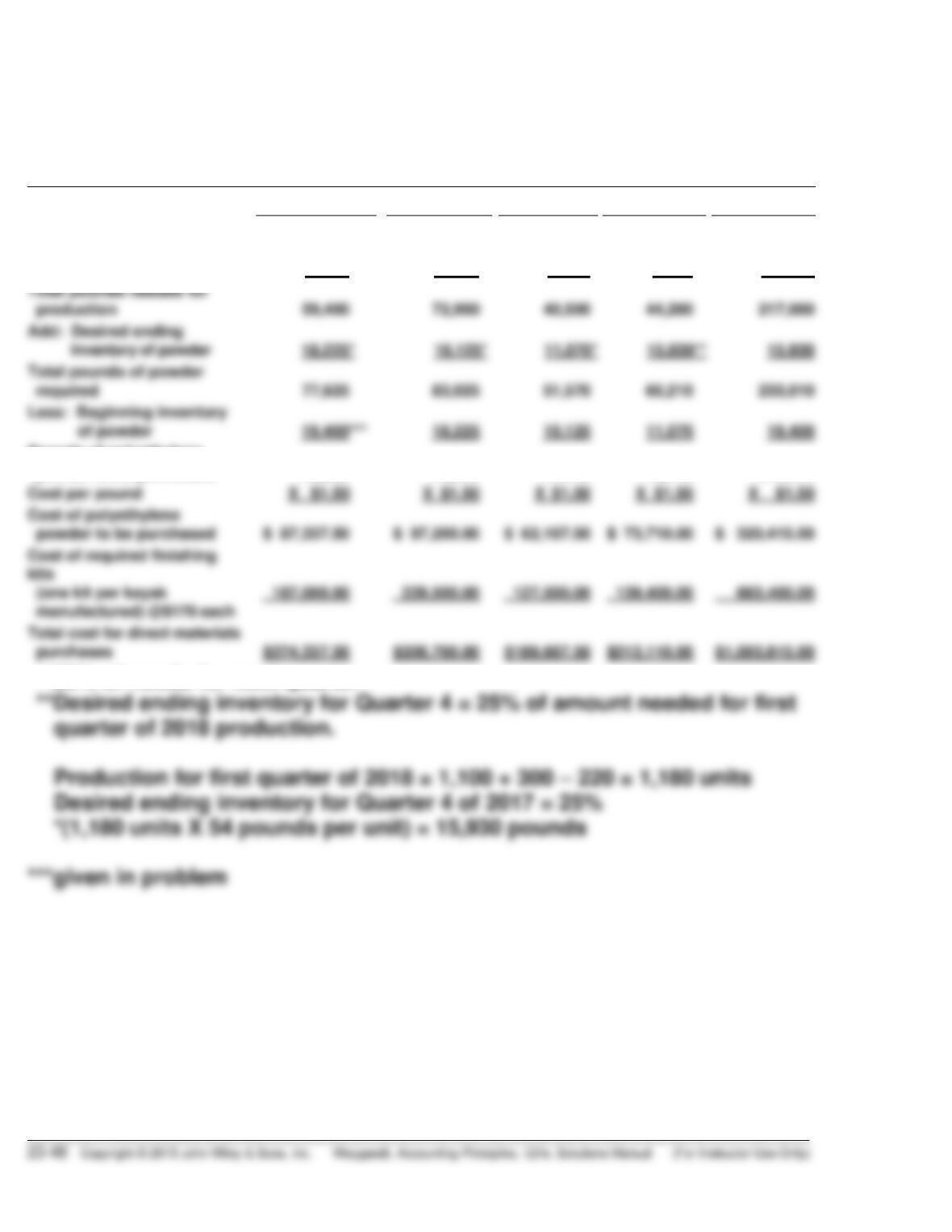
Production Budget
For the Year Ending December 31, 2017
Quarter 1
Quarter 2
Quarter 3
Quarter 4
Total
Expected unit sales
1,000
1,500
750
750
4,000
Add: Desired ending
finished goods units
300*
150*
150*
220**
220
Total required units
1,300
1,650
900
970
4,220
goods units
300
150
200
Required production units
1,100
1,350
750
820
4,020
CD23 (Continued)
CURRENT DESIGNS
Direct Materials Budget
For the Year Ending December 31, 2017
Quarter 1
Quarter 2
Quarter 3
Quarter 4
Total
Units to be produced
1,100
1,350
750
820
4,020
Pounds of polyethylene
powder per unit
X 54
X 54
X 54
X 54
X 54
Total pounds needed for
production
59,400
72,900
40,500
44,280
217,080
Add: Desired ending
inventory of powder
18,225*
11,070*
15,930**
15,930
required
77,625
83,025
51,570
60,210
233,010
Less: Beginning inventory
19,400***
18,225
10,125
11,070
Pounds of polyethylene
powder to be purchased
58,225
64,800
41,445
49,140
213,610
Cost per pound
X $1.50
X $1.50
X $1.50
X $1.50
X $1.50
Cost of polyethylene
powder to be purchased
$ 87,337.50
$ 97,200.00
$ 62,167.50
$ 73,710.00
$ 320,415.00
manufactured) @$170 each
Cost of required finishing
*25% of needs for next quarter
**Desired ending inventory for Quarter 4 = 25% of amount needed for first
quarter of 2018 production.
CD23 (Continued)
CURRENT DESIGNS
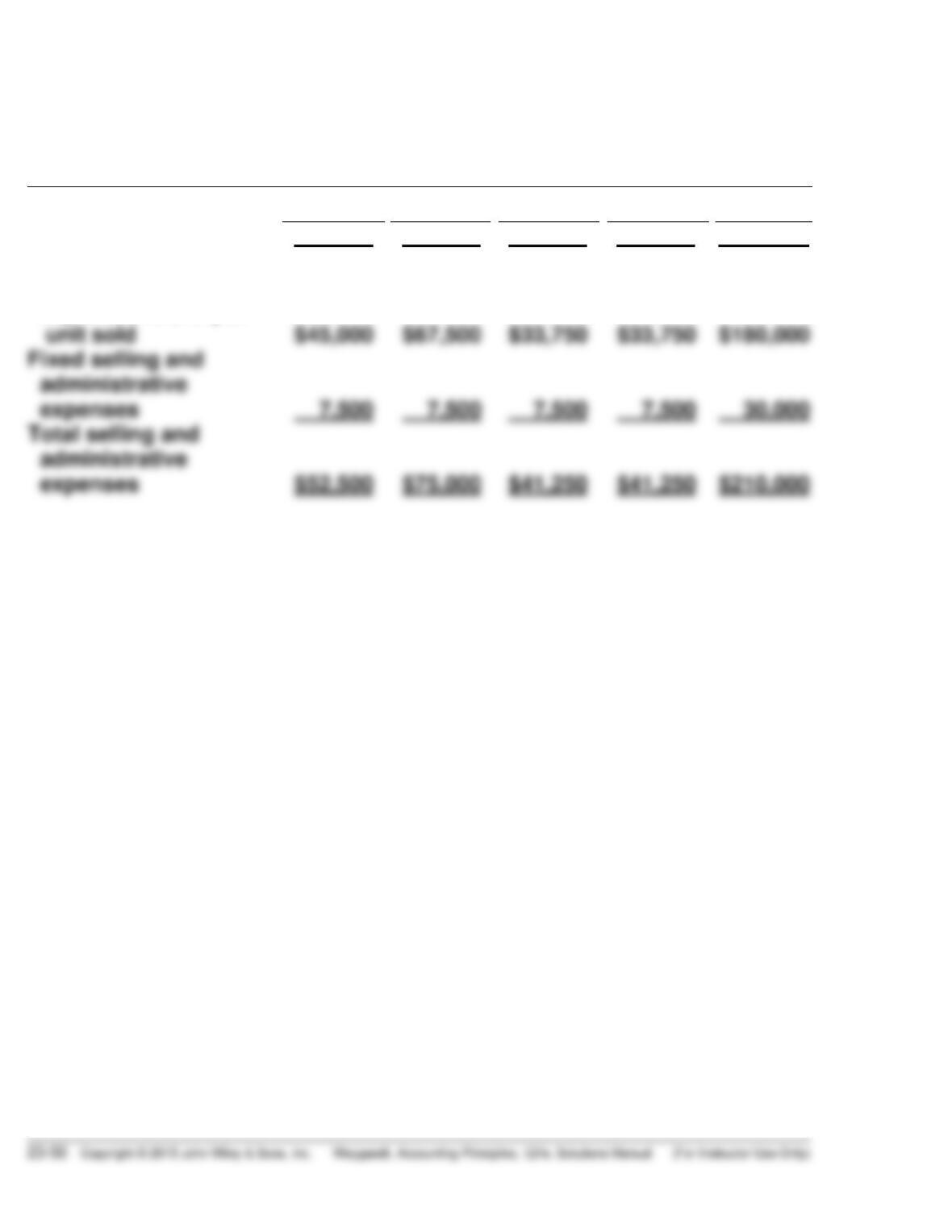
Direct Labor Budget
For the Year Ending December 31, 2017
Quarter 1
Quarter 2
Quarter 3
Quarter 4
Total
Units to be produced
1,100
1,350
750
820
4,020
Number of hours of more skilled
labor/unit
X 2
X 2
X 2
X 2
X 2
Hourly rate for more skilled labor
Total cost of more skilled labor
Total number of hours of more
Units to be produced
1,100
1,350
750
820
4,020
Number of hours of less skilled
labor/unit
X 3
X 3
X 3
X 3
X 3
Hourly rate for less skilled labor
Total cost of less skilled labor
Total direct labor cost
CURRENT DESIGNS
Manufacturing Overhead Budget
For the Year Ending December 31, 2017
Quarter 1
Quarter 2
Quarter 3
Quarter 4
Total
CD23 (Continued)
CURRENT DESIGNS
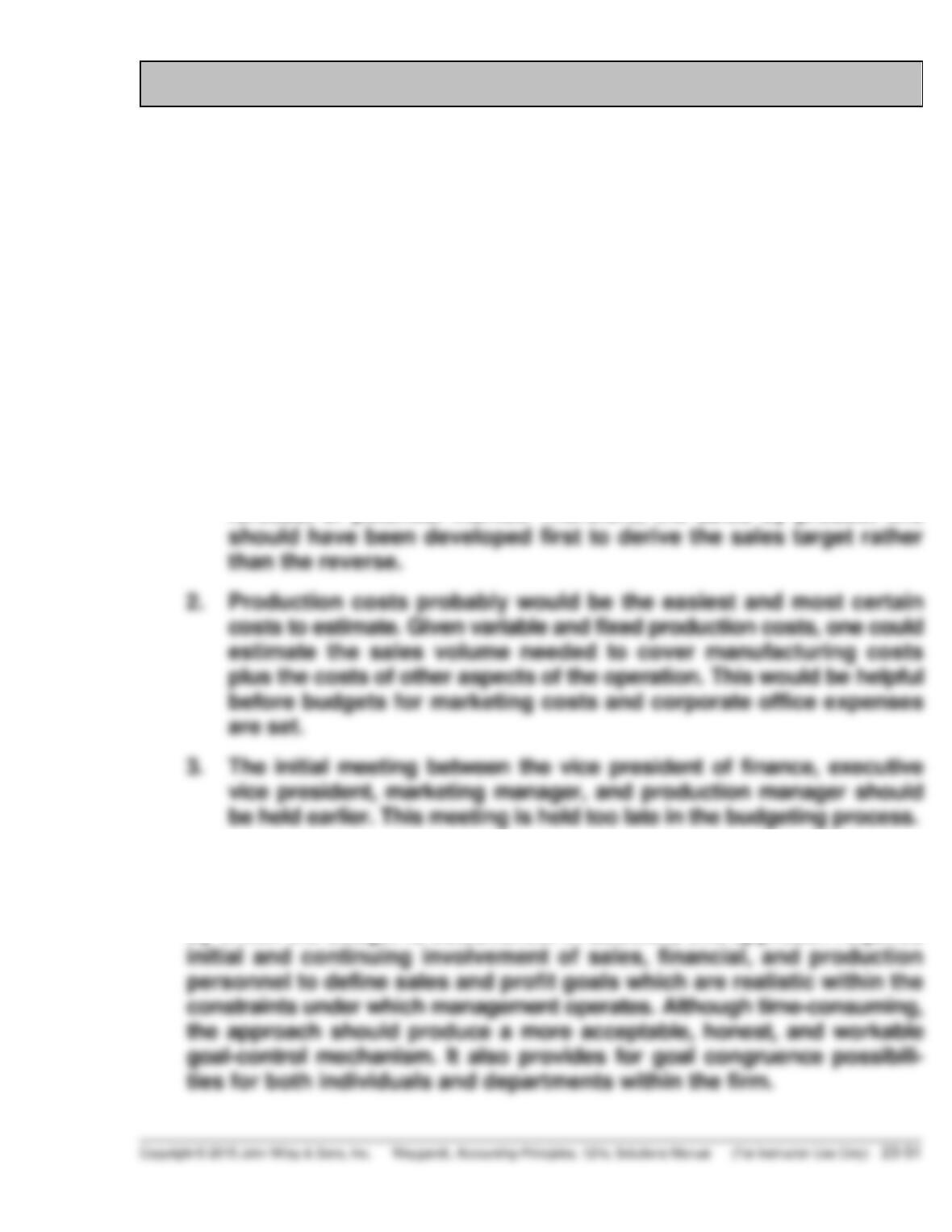
Selling and Administrative Expense Budget
For the Year Ending December 31, 2017
Quarter 1
Quarter 2
Quarter 3
Quarter 4
Total
Expected unit sales
1,000
1,500
750
750
4,000
Variable selling and
administrative
expenses at $45 per
BYP 23-1 DECISION-MAKING ACROSS THE ORGANIZATION
(a) The budget at Palmer Corporation is an imposed “top–down” budget
which fails to consider both the need for realistic data and the human
interaction essential to an effective budgeting/control process. The
president has not given any basis for his goals, so one cannot know
whether they are realistic for the company. True participation of company
employees in preparation of the budget is minimal and limited to mechani–
cal gathering and manipulation of data. This suggests there will be little
enthusiasm for implementing the budget.
The budget process is the merging of the requirements of all facets of
the company on a basis of sound judgment and equity. Specific instances
of poor procedures other than the approach and goals include the
following:
1. The sales by product line should be based upon an accurate sales
forecast of potential market. Therefore, the sales by product line
should have been developed first to derive the sales target rather
than the reverse.
(b) Palmer Corporation should consider the adoption of a “bottom to top”
(participative) budget process. This means that the people responsible
for performance under the budget would participate in the decisions
by which the budget is established. In addition, this approach requires
BYP 23–1 (Continued)
The sales forecast should be developed considering internal sales
forecasts as well as external factors. Costs within departments should
be divided into fixed and variable, discretionary and nondiscretionary.
(c) The functional areas should not necessarily be expected to cut costs
when sales volume falls below budget. The time frame of the budget
(one year) is short enough so that many costs are relatively fixed in
amount. For those costs which are fixed, there is little hope for a
reduction as a consequence of short–run changes in volume. However, the
functional areas should be expected to cut costs should sales volume
fall below target when:
1. Control is exercised over the costs within their function.
BYP 23-2 MANAGERIAL ANALYSIS
(a) Direct materials Either lower quality materials resulting in an inferior
product and possible lost sales, or fewer units
produced resulting in lost sales.
Direct labor Reduced production resulting in lost sales, or
reduction in quality of product resulting in lost sales.
Machine repairs Less efficient operations, or lost production and
sales.
Sales salaries Lost sales.
Office salaries Less effective administrative functions.
Factory salaries Lost production due to inefficiency, and therefore
lost sales.
BYP 23-3 REAL-WORLD FOCUS
(a) According to Mr. LaFaive, zero-based budgeting requires that the
existence of a government program or programs be justified in each
fiscal year, as opposed to simply basing budgeting decisions on a
previous year’s funding level. Zero-based budgeting is often encouraged
by fiscal watchdog groups as a way to ensure against unnecessary
spending.
(b) In addition to saving money and improving services, zero-based
budgeting may:
• Increase restraint in developing budgets;
• Reduce the entitlement mentality with respect to cost increases; and
• Make budget discussions more meaningful during review sessions.
(c) On the cost side of the equation, zero-based budgeting:
• May increase the time and expense of preparing a budget;
• May be too radical a solution for the task at hand. You don’t need a
sledgehammer to pound in a nail;
• Can make matters worse if not done in the right way. A substantial
commitment must be made by all involved to ensure that this
doesn’t happen.
(d) In Oklahoma, which has recently adopted zero-based budgeting, officials
are applying the method to two departments and several agencies each
year. Once those reviews are complete, the same departments and
agencies will not see another zero-based review for eight years.
BYP 23-4 COMMUNICATION ACTIVITY
Date 2017
Mrs. Megan Parcells, CEO
Life Protection Products
Dear Mrs. Parcells:
Allow me to congratulate you on the success of your new venture! The
growth in sales you have experienced is phenomenal. You have managed the
business side of the venture very well also. At the same time, I understand
your concern about cash flow. You are selling these kits as fast as you can
make them, and yet you are running out of cash.
BYP 23–4 (Continued)
However, even if you raised prices, you will find that you need additional
cash as long as the business continues to expand. It certainly does not
mean that you and Sue are doing anything wrong. It just means that you
will be investing additional funds as long as you continue to grow.
In my opinion, the best way to make sure these kits are available to as
many families as possible is for you and Sue to have a consultant evaluate
BYP 23-5 ETHICS CASE
(a) At best, if you disclose the errors in your calculations, you will be
embarrassed. At worst, you will be dismissed without a recommendation
for another job.
BYP 23-6 ALL ABOUT YOU
Personal Budget
Typical Month
Income:
Wages earned ………………………………………….. $2,500
Interest income ………………………………………… 50
Expenses:
Rent ………………………………………………………………….. 500
Utilities
Electricity ………………………………………………… 85
Telephone and Internet …………………………….. 125
Food:
BYP 23-7 CONSIDERING YOUR COSTS AND BENEFITS
We are concerned that the personal budgets presented on websites and in
financial planning textbooks often list student loans among the sources of
income. This type of thinking can lead to an overreliance on debt during