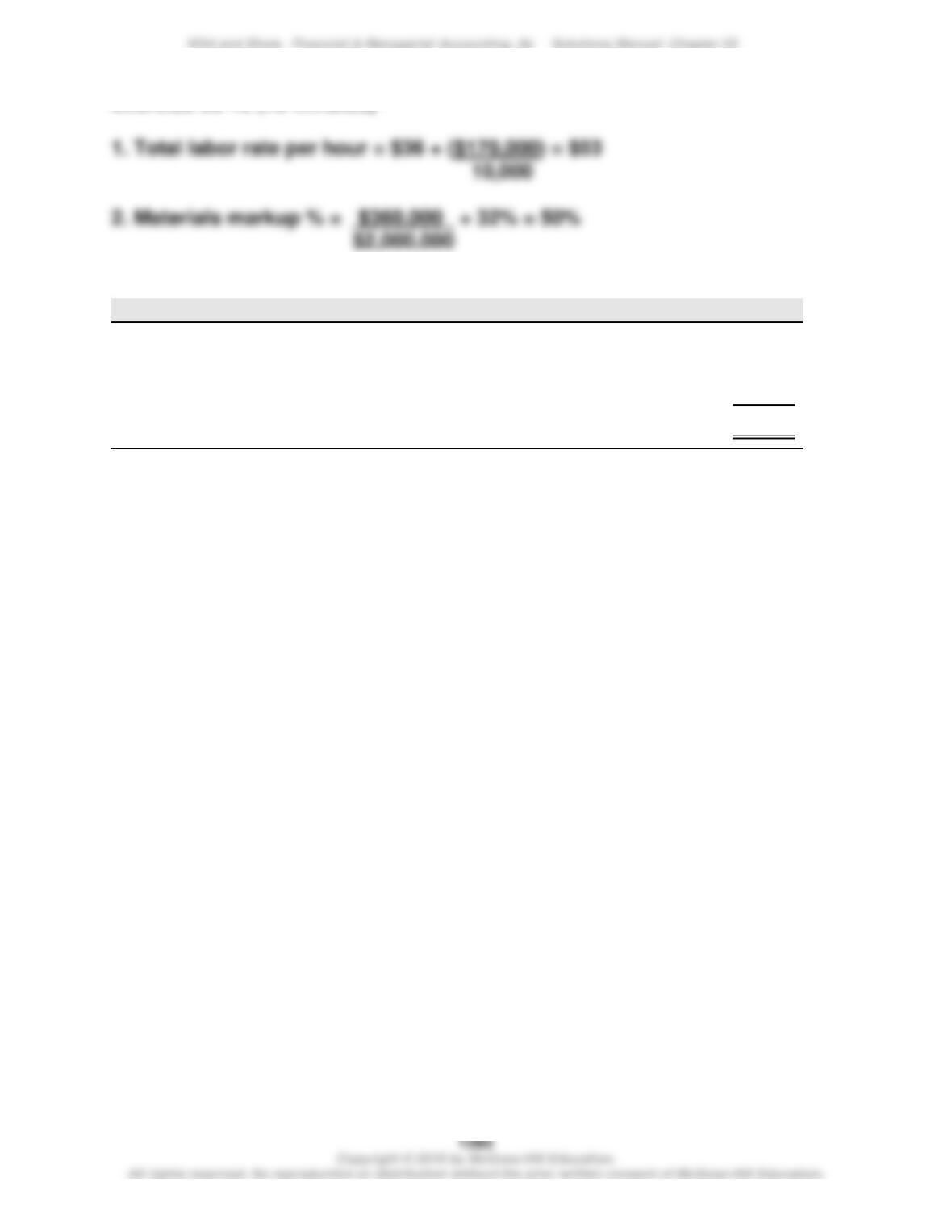
3.
Price Quote
Labor ($53 x 4)……………………………………………………………..
$ 212
Materials cost ……………………………………………………………..
Materials markup ($580 x 50%) ……………………………………..
580
290
Total price quote ………………………………………………………….
$1,082
PROBLEM SET A
Problem 23-1A (45 minutes)
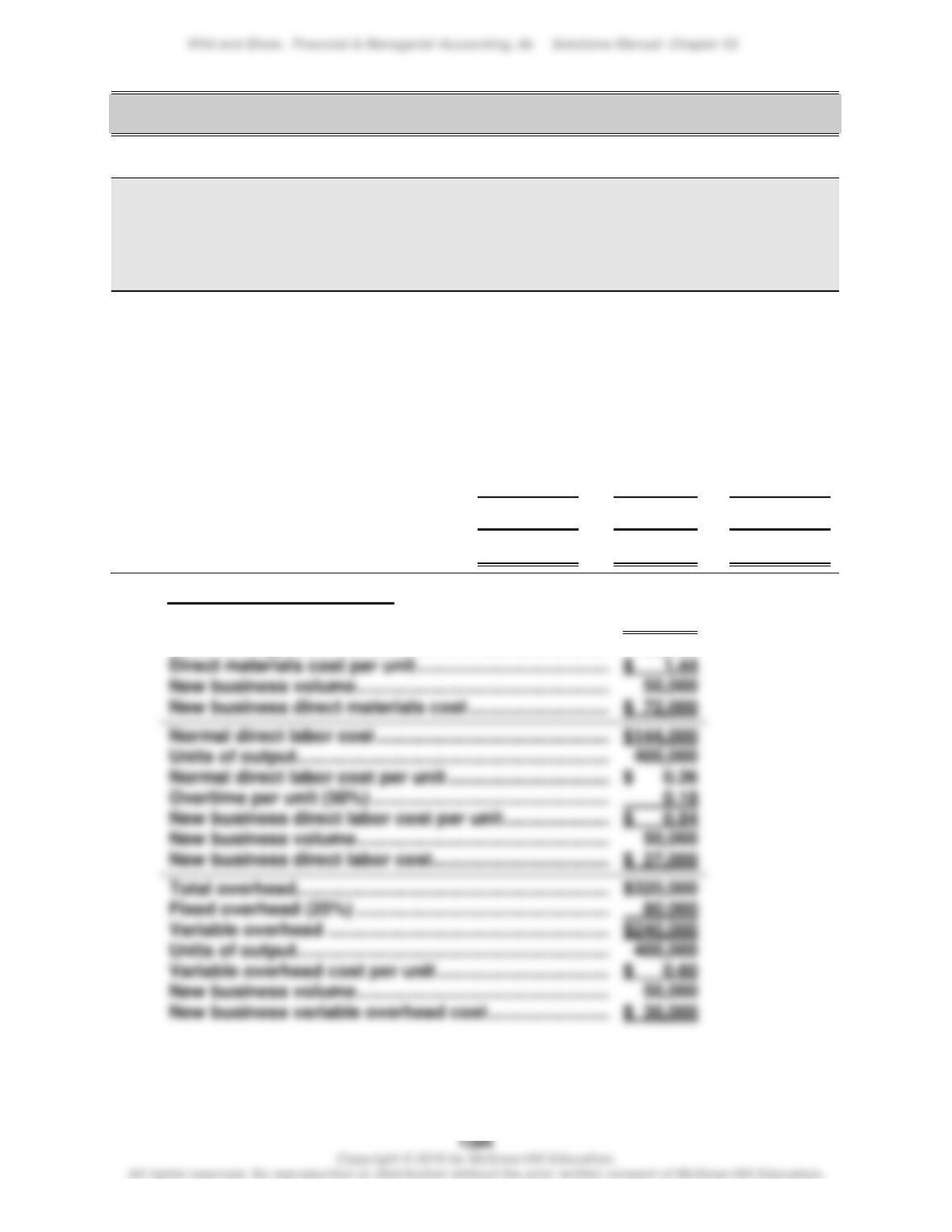
JONES PRODUCTS
COMPARATIVE INCOME STATEMENTS
(1)
(2)
(3)
Normal
New
Volume
Business
Combined
Sales ……………………………………………………
$2,400,000
$260,000
$2,660,000
Costs and expenses
Direct materials …………………………..
576,000
72,000
648,000
Direct labor ………………………………………..
144,000
27,000
171,000
Overhead …………………………………………..
320,000
30,000
350,000
Selling expenses …………………………..
150,000
150,000
Administrative expenses ……………………
100,000
5,000
105,000
Total costs & expenses ………………………..
1,290,000
134,000
1,424,000
Operating income …………………………..
$1,110,000
$126,000
$1,236,000
Supporting computations
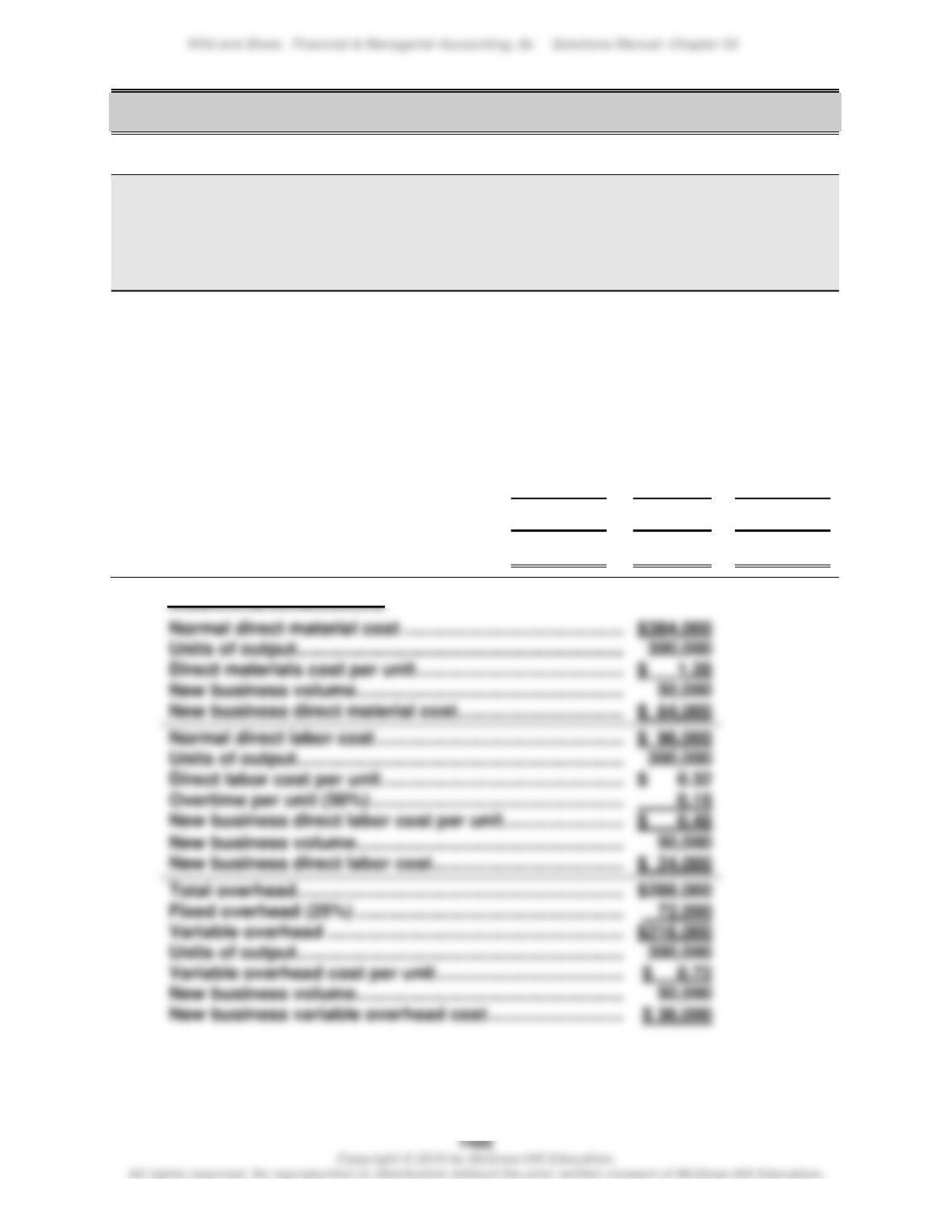
Normal direct materials cost ………………………………….
$576,000
Units of output ………………………………………………………
400,000
Direct materials cost per unit …………………………………
$ 1.44
Normal direct labor cost ………………………………………..
$144,000
Normal direct labor cost per unit …………………………..
$ 0.36
Overtime per unit (50%) …………………………………………
0.18
New business direct labor cost per unit ………………….
$ 0.54
New business volume …………………………..……………….
Total overhead ………………………………………………………
$320,000
Fixed overhead (25%) ……………………………………………
Units of output ………………………………………………………
400,000
Variable overhead cost per unit ……………………………..
$ 0.60
New business volume …………………………..……………….
Problem 23-2A (40 minutes)
Part 1
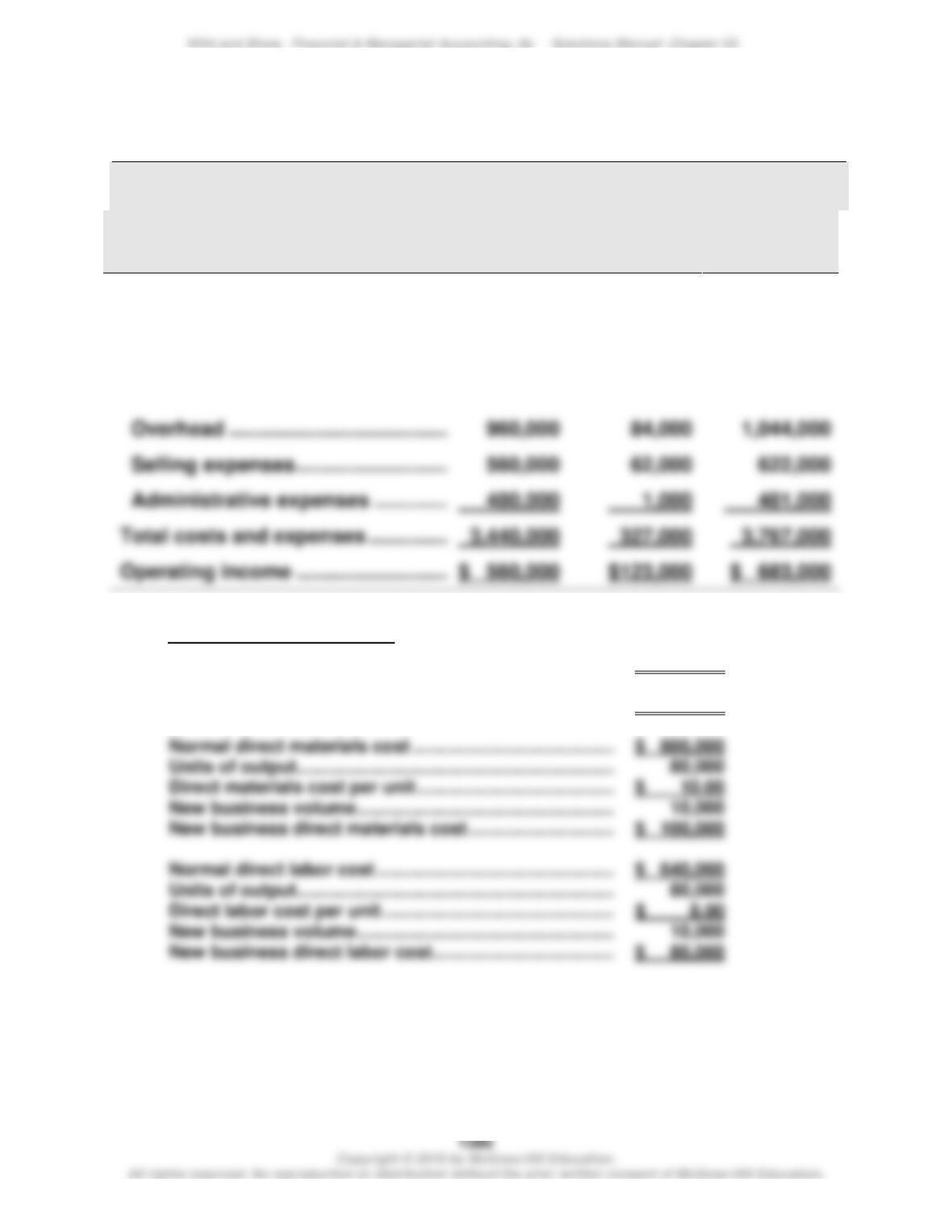
CALLA COMPANY
COMPARATIVE INCOME STATEMENTS
(a)
(b)
(c)
Normal
New
Volume
Business
Combined
Sales …………………………………………..
$4,000,000
$450,000
$4,450,000
Costs and expenses
Direct materials …………………………
800,000
100,000
900,000
Direct labor ……………………………….
640,000
80,000
720,000
Selling expenses ……………………….
560,000
62,000
622,000
Administrative expenses …………..
Operating income ……………………….
$123,000
Supporting computations
Normal sales revenue (80,000 x $50) ………………………
$4,000,000
New business sales revenue (10,000 x $45) …………….
$ 450,000
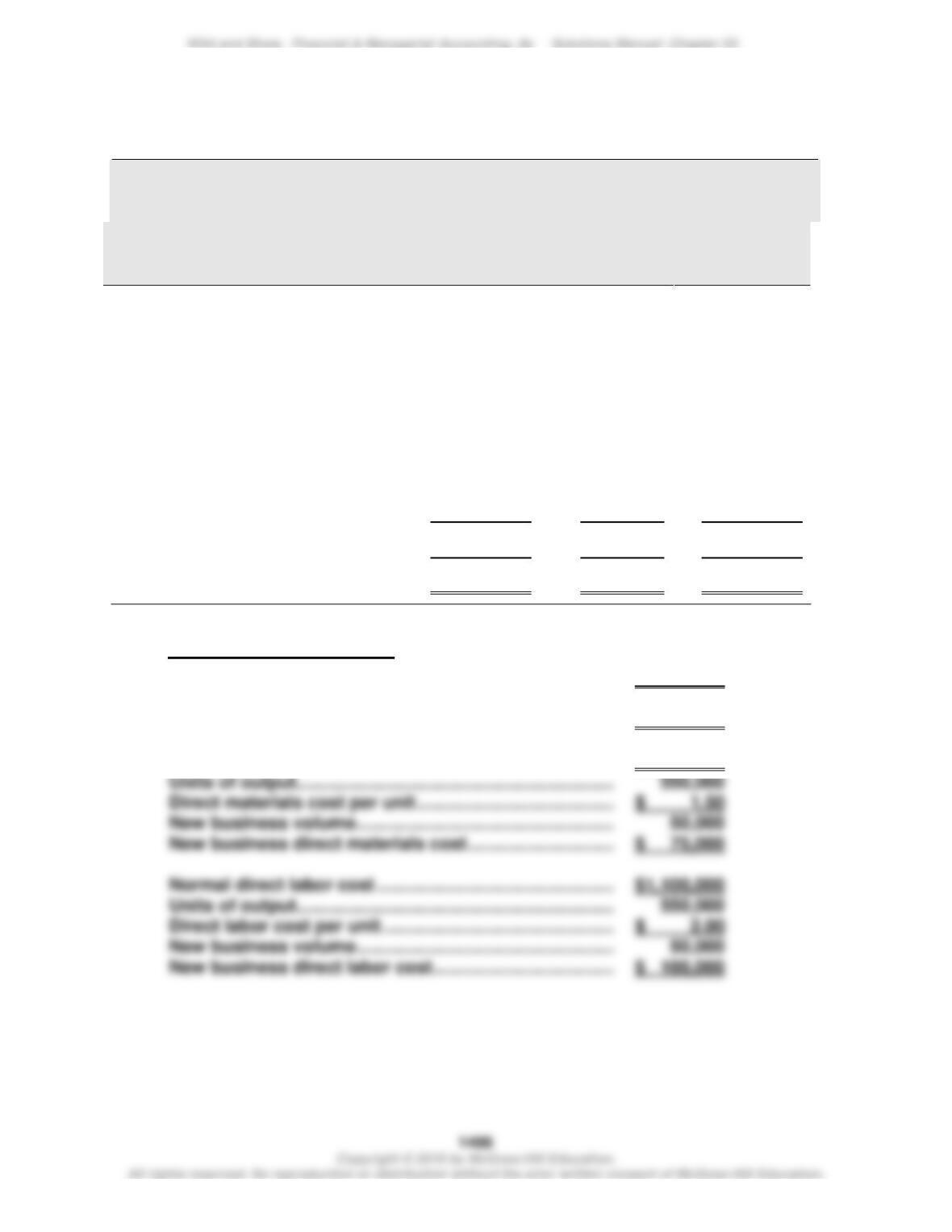
Normal direct materials cost ………………………………….
$ 800,000
Units of output ………………………………………………………
Direct materials cost per unit …………………………………
New business volume …………………………..……………….
New business direct materials cost ………………………..
$ 100,000
Normal direct labor cost ………………………………………..
$ 640,000
Units of output ………………………………………………………
Direct labor cost per unit ……………………………………….
New business volume …………………………..……………….
New business direct labor cost ………………………………
$ 80,000
Problem 23-2A (concluded)
Total overhead ………………………………………………………
$ 960,000
Fixed overhead (30%) ……………………………………………
288,000
Variable overhead …………………………………………………
$ 672,000
Units of output ………………………………………………………
80,000
Variable overhead cost per unit ……………………………..
$ 8.40
New business volume …………………………..……………….
10,000
New business variable overhead cost …………………….
$ 84,000
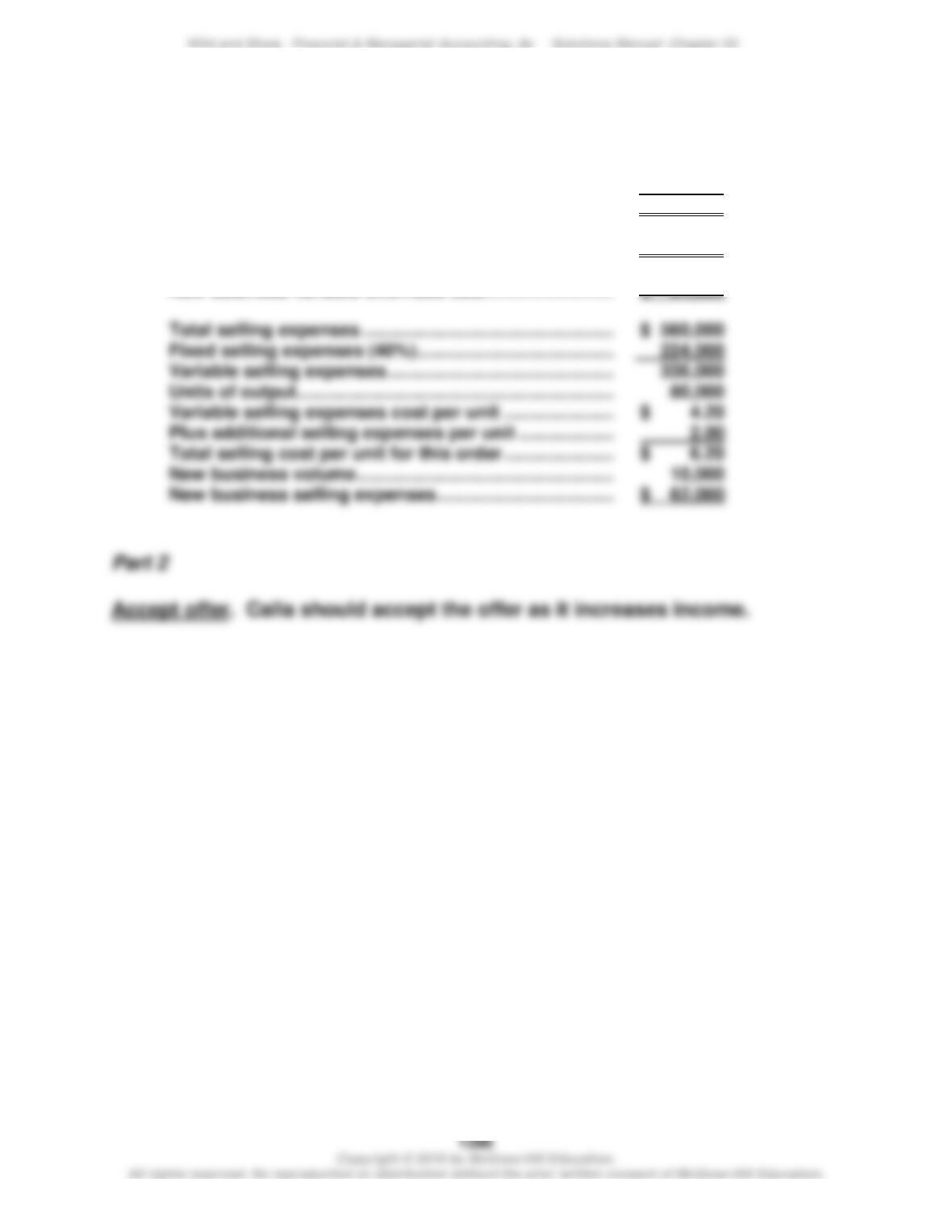
Total selling expenses …………………………………………..
Fixed selling expenses (40%) …………………………………
Variable selling expenses ………………………………………
Units of output ………………………………………………………
80,000
Variable selling expenses cost per unit ………………….
$ 4.20
Plus additional selling expenses per unit ……………….
Total selling cost per unit for this order ………………….
$ 6.20
New business volume …………………………..……………….
10,000
New business selling expenses ……………………………..
$ 62,000
Problem 23-3A (30 minutes)
Part 1
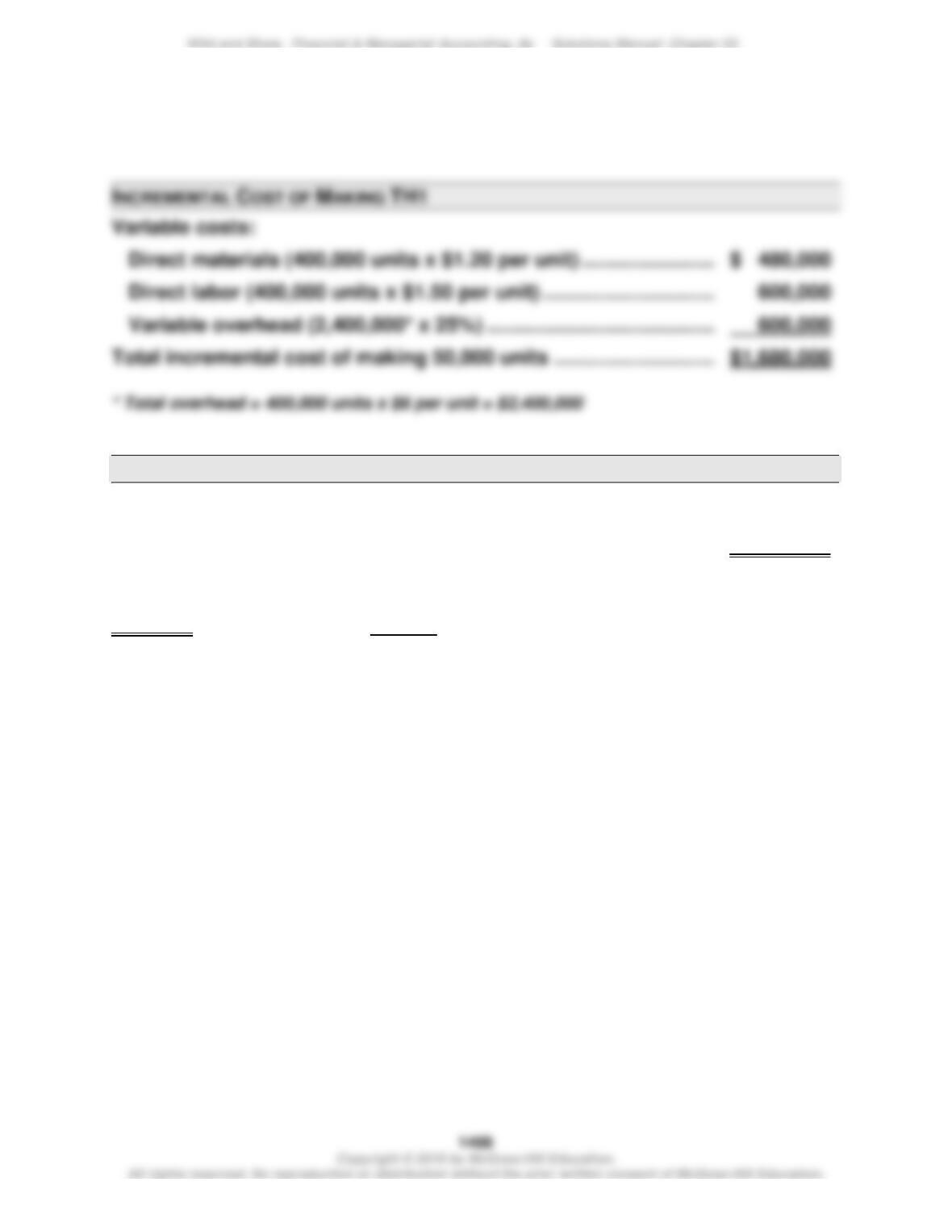
INCREMENTAL COST OF MAKING RX5
Variable costs:
Direct materials (50,000 units x $5.00 per unit) ……………………….
$250,000
Direct labor (50,000 units x $8.00 per unit) ……………………………..
400,000
Variable overhead ($450,000* x 20%) ……………………………………..
90,000
Total incremental cost of making 50,000 units ………………………….
$740,000
* Total overhead = 50,000 units x $9.00 per unit = $450,000
Part 2
INCREMENTAL COST OF BUYING THE PART
Problem 23-4A (30 minutes)
Alternative 1: Sell to a second-hand shop
Incremental revenue (5,000 x $6.00) ………………………………………….
$ 30,000
Incremental cost ………………………………………………………………………
0
Incremental income ………………………………………………………………….
$ 30,000
Alternative 2: Disassemble and sell to a recycler
Incremental revenue (5,000 x $12.00) ………………………………………..
$ 60,000
Incremental cost ………………………………………………………………………
32,000
Incremental income ………………………………………………………………….
$ 28,000
Incremental revenue (3,000 x $45.00) ………………………………………..
Incremental cost ………………………………………………………………………
Incremental income ………………………………………………………………….
Problem 23-5A (55 minutes)
Part 1
Product G
Product B
Selling price per unit ……………………………………………..
$120
$160
Variable costs per unit …………………………………………..
40
90
Contribution margin per unit ………………………………….
$ 80
$ 70
Machine hours to produce 1 unit …………………………..
0.4
1.0
Contribution per machine hour
(or contribution/[hours per unit]) …………………………
$200
$ 70
Part 2
Problem 23-5A (Continued)
Part 3
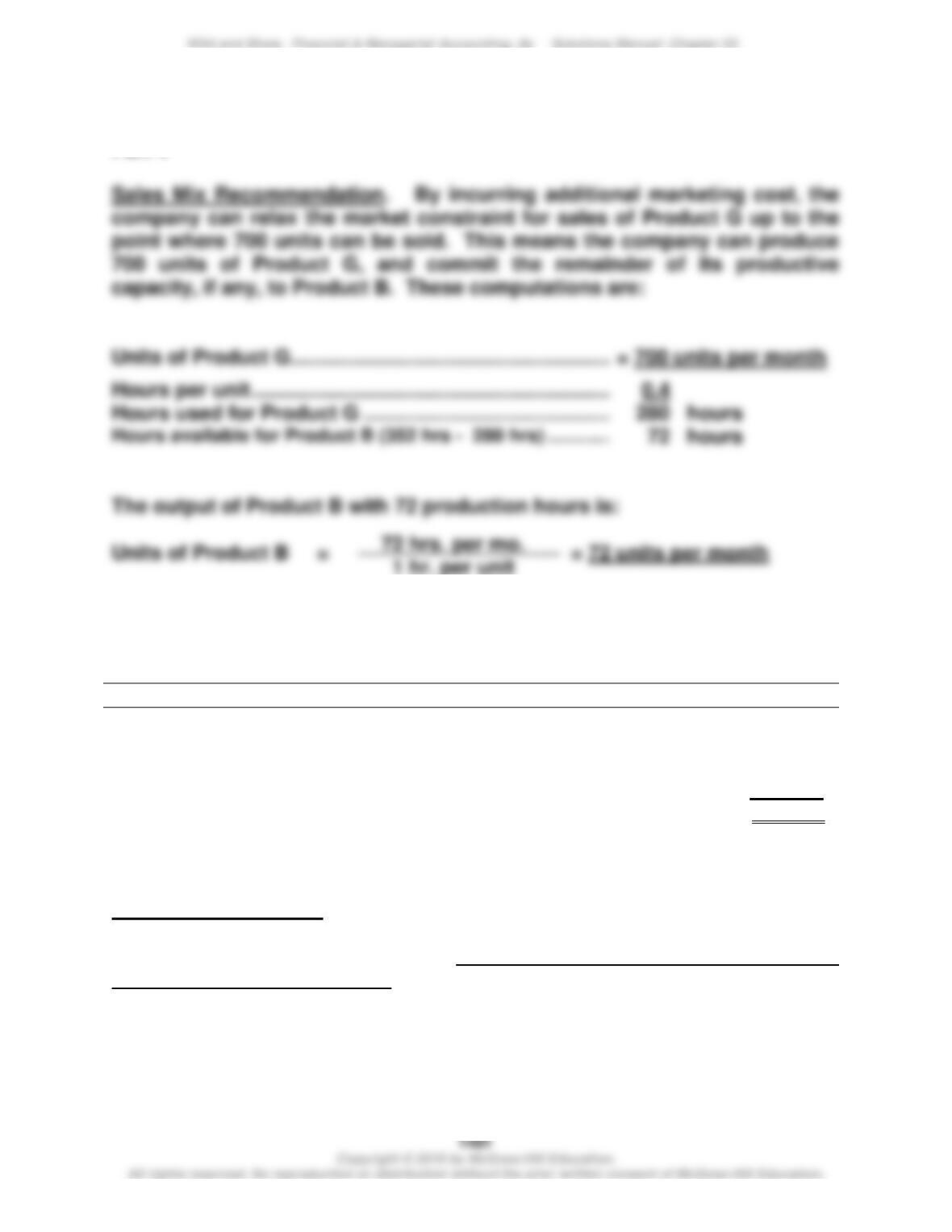
Sales Mix Recommendation with Second Shift. If the second shift is added,
the maximum possible output of G will double:
Maximum possible output of G = = 880 units per mo.
However, this level of output exceeds the company’s market constraint of
600 units of G per month. This means the company should produce 600
units of Product G, and commit the remainder of the productive capacity to
Product B. This is computed as follows:
352 hrs. per mo.
0.4 hrs. per unit
Problem 23-5A (Continued)
Hours per unit ……………………………………………………….
Hours used for Product G …………………………………………..
280
Contribution Margin at This Sales Mix
Units
Contr./unit
Total
From G ………………………………………………………….
700
$80
$56,000
From B ………………………………………………………….
72
70
5,040
Less extra shift costs …………………………………….
(15,000)
Less extra marketing costs …………………………..
(12,000)
Total incremental income ………………………………
$34,040
Management decision. This contribution margin of $34,040 is less than the
contribution margin of $40,840 generated under the existing market
constraint (see part 3). Therefore, the marginal benefits generated do not
warrant the marketing efforts.
Problem 23-6A (60 minutes)
Part 1
ELEGANT DECOR COMPANY
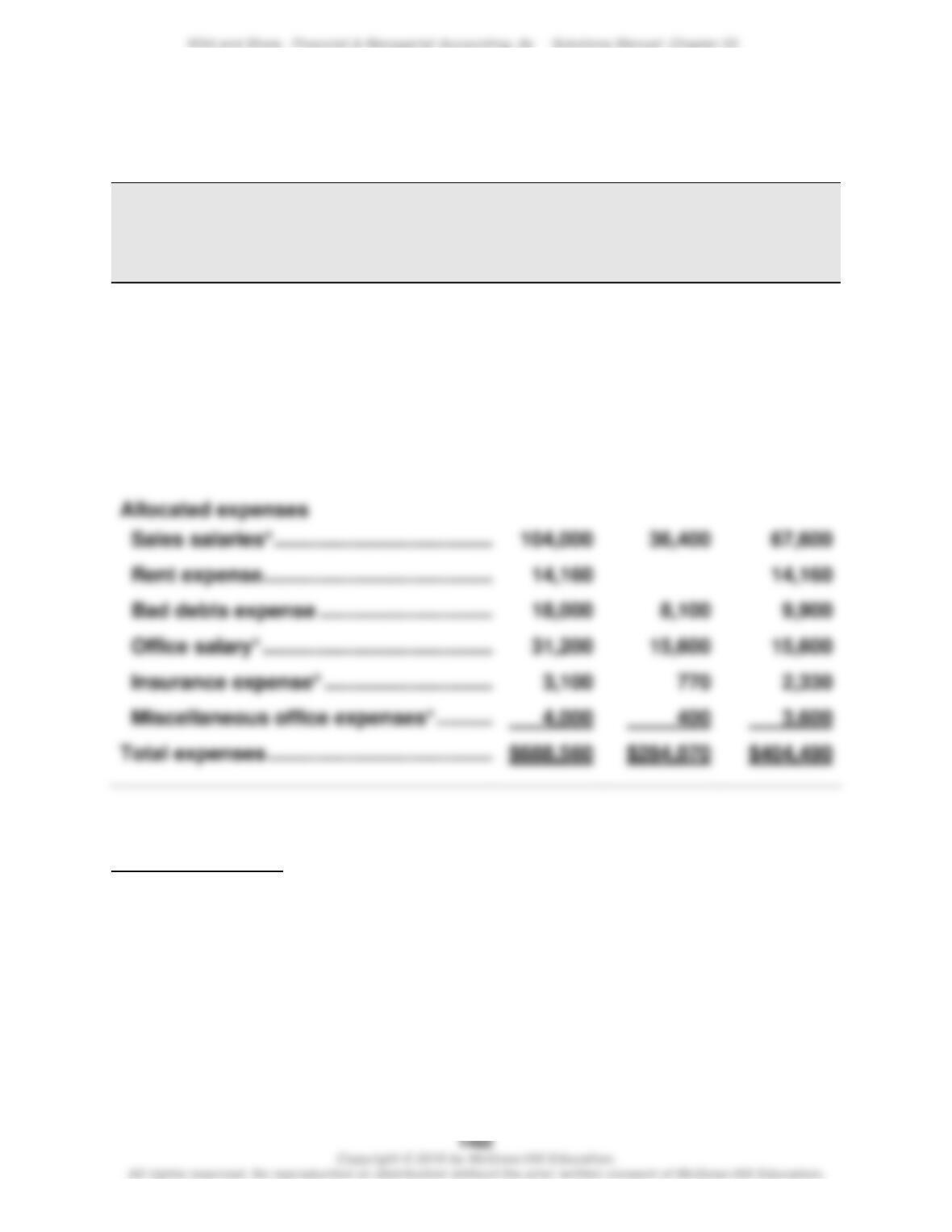
Analysis of Expenses under Elimination of Department 200
Total
Eliminated
Continuing
Expenses
Expenses
Expenses
Cost of goods sold ……………………………………….
$469,000
$207,000
$262,000
Direct expenses
Advertising …………………………………………………
29,000
12,000
17,000
Store supplies used …………………………..
7,800
3,800
4,000
Depreciation—Store equipment …………………..
8,300
8,300
Allocated expenses
Sales salaries* …………………………………………….
36,400
67,600
Rent expense………………………………………………
14,160
14,160
Office salary* ………………………………………………
31,200
15,600
15,600
Insurance expense* …………………………..
3,100
2,330
Miscellaneous office expenses* …………………..
*Computation notes. Closing Department 200 will eliminate 70% of its insurance
expense and 25% of its miscellaneous office expense. Sales salaries will be
reduced by the amounts paid to the two clerks who will not be replaced. The
office salary will not be eliminated, but it will be reclassified so that one-half will
be reported as sales salary and one-half as office salary.
Problem 23-6A (Continued)
Part 2
ELEGANT DECOR COMPANY
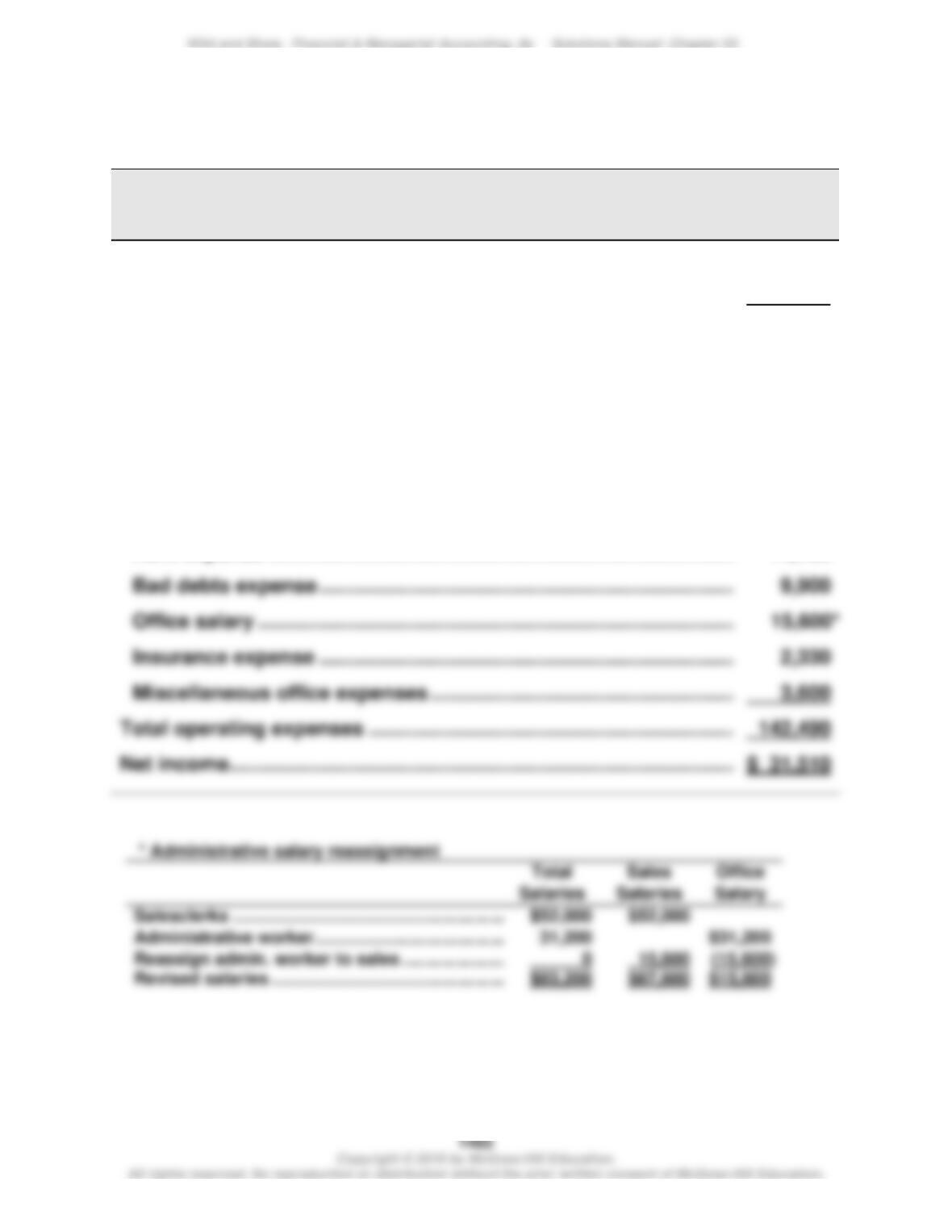
Forecasted Annual Income Statement
Under Plan to Eliminate Department 200
Sales ……………………………………………………………………………………………
$436,000
Cost of goods sold ………………………………………………………………………
262,000
Gross profit from sales ………………………………………………………………..
174,000
Operating expenses
Advertising ………………………………………………………………………………..
17,000
Store supplies used …………………………………………………………………..
4,000
Depreciation of store equipment ………………………………………………..
8,300
Sales salaries …………………………………………………………………………….
67,600*
Rent expense …………………………………………………………………………….
14,160
9,900
Insurance expense …………………………………………………………………….
2,330
Miscellaneous office expenses …………………………………………………..
3,600
142,490
Problem 23-6A (Continued)
Part 3
ELEGANT DECOR COMPANY
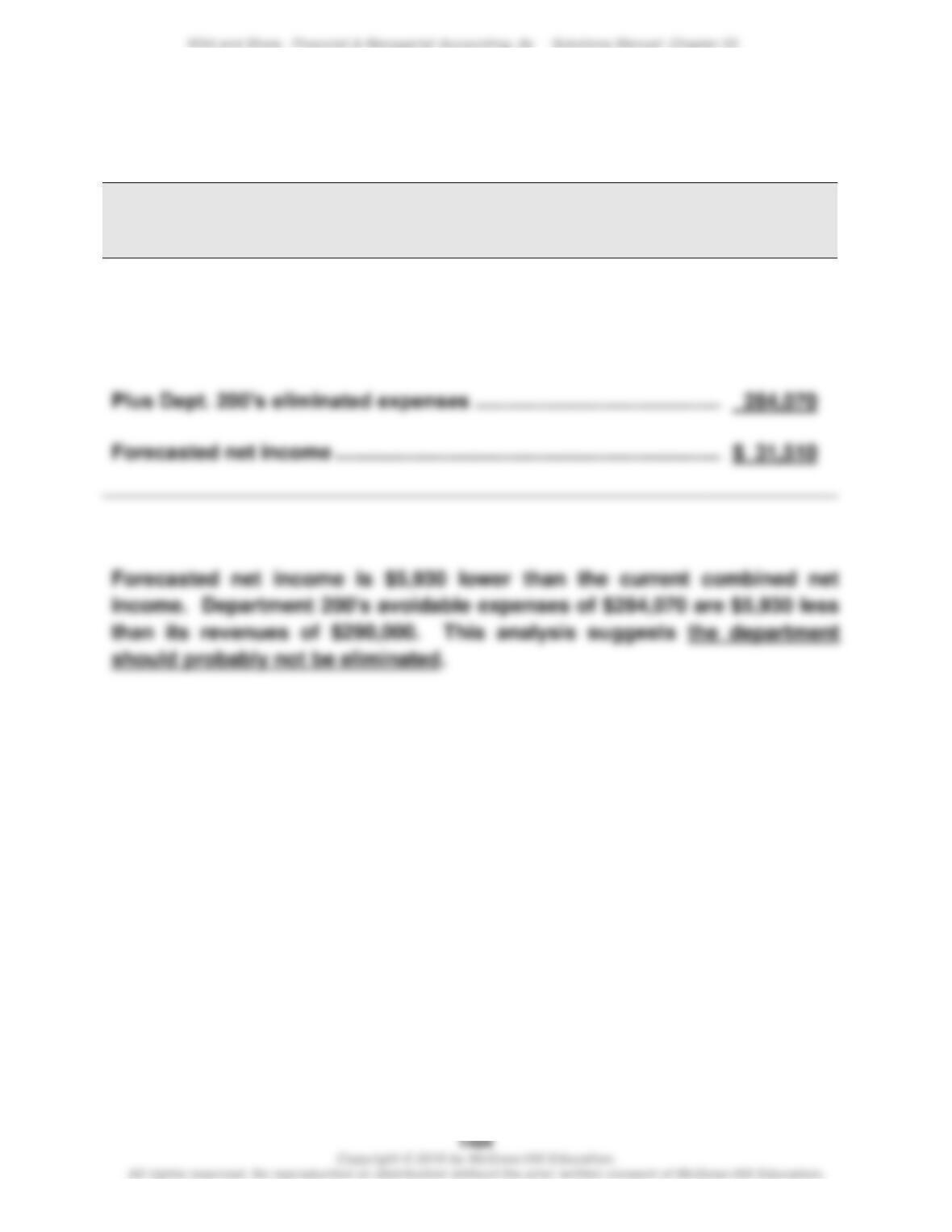
Reconciliation of Combined Income With Forecasted Income
Combined net income ……………………………………………………………….
$ 37,440
Less Dept. 200’s lost sales ……………………………………………………….
(290,000)
PROBLEM SET B
Problem 23–1B (45 minutes)
WINDMIRE COMPANY
COMPARATIVE INCOME STATEMENTS
(1)
(2)
(3)
Normal
New
Volume
Business
Combined
Sales ……………………………………………………
$1,200,000
$172,000
$1,372,000
Costs and expenses
Direct materials ………………………………….
384,000
64,000
448,000
Direct labor ………………………………………..
96,000
24,000
120,000
Overhead …………………………………………..
288,000
36,000
324,000
Selling expenses ………………………………..
120,000
120,000
Administrative expenses ……………………
80,000
4,000
84,000
Total costs and expenses …………………….
968,000
128,000
1,096,000
Operating income ………………………………..
$ 232,000
$ 44,000
$ 276,000
Problem 23-2B (50 minutes)
Part 1
MERVIN COMPANY
COMPARATIVE INCOME STATEMENTS
(a)
(b)
(c)
Normal
New
Volume
Business
Combined
Sales …………………………………………..
$4,400,000
$300,000
$4,700,000
Costs and expenses
Direct materials …………………………
825,000
75,000
900,000
Direct labor …………………………..
1,100,000
100,000
1,200,000
Overhead ………………………………….
1,375,000
100,000
1,475,000
Selling expenses ……………………….
275,000
20,000
295,000
Administrative expenses …………..
550,000
700
550,700
Total costs & expenses ……………….
4,125,000
295,700
4,420,700
Operating income ……………………….
$ 275,000
$ 4,300
$ 279,300
Supporting computations
Normal sales revenue (550,000 x $8) ………………………
$4,400,000
New business sales revenue (50,000 x $6) ………………
$ 300,000
Normal direct materials cost ………………………………….
$ 825,000
Units of output ………………………………………………………
Direct materials cost per unit …………………………………
New business volume …………………………..……………….
New business direct materials cost ………………………..
Normal direct labor cost ………………………………………..
$1,100,000
Units of output ………………………………………………………
Direct labor cost per unit ……………………………………….
$ 2.00
New business volume …………………………..……………….
Problem 23-2B (concluded)
Total overhead ………………………………………………………
$1,375,000
Fixed overhead (20%) ……………………………………………
275,000
Variable overhead …………………………………………………
$1,100,000
Units of output ………………………………………………………
550,000
Variable overhead cost per unit ……………………………..
$ 2.00
New business volume …………………………..……………….
50,000
New business variable overhead cost …………………….
$ 100,000
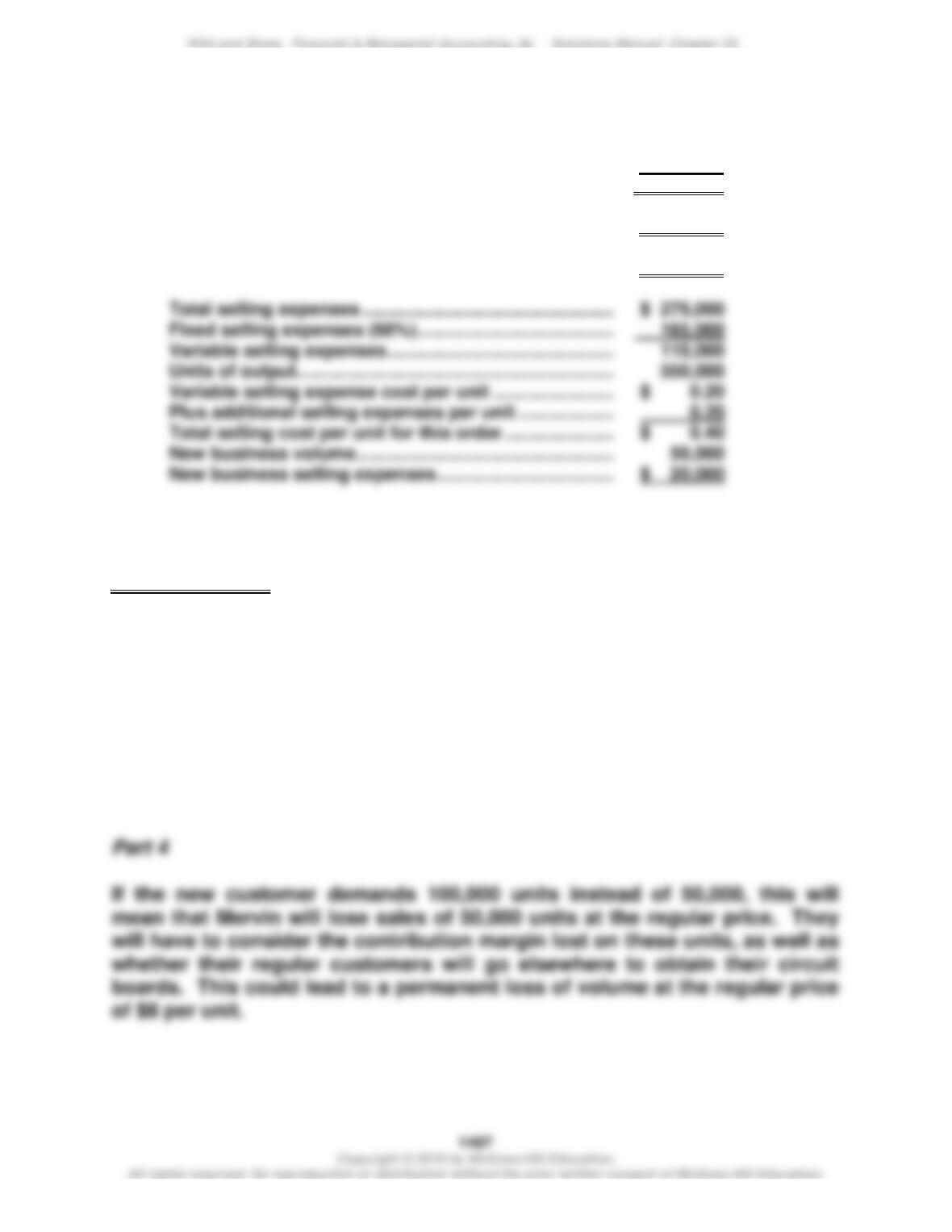
Total selling expenses …………………………………………..
$ 275,000
Fixed selling expenses (60%) …………………………………
Variable selling expenses ………………………………………
110,000
Units of output ………………………………………………………
550,000
Variable selling expense cost per unit ……………………
$ 0.20
Plus additional selling expenses per unit ……………….
0.20
Total selling cost per unit for this order ………………….
$ 0.40
New business volume …………………………..……………….
50,000
Part 2
Accept the order. The order provides additional income of $4,300.
Part 3
Other factors that Mervin should consider are:
• Will the customer expect additional circuit boards at this special price?
• Will regular customers demand a reduction in their price?
• Can Mervin maintain quality and production at full capacity?
Problem 23-3B (30 minutes)
Part 1
INCREMENTAL COST OF BUYING TH1
Cost per unit to buy ………………………………………………………………………….
$ 4.00
Total incremental cost of buying 400,000 units …………………………..
$1,600,000
Buy part. Alto is better off buying TH1 from the outside supplier.
Part 2
Other factors Alto should consider besides cost are:
• Will the supplier provide the quality that Alto needs?
• Will the supplier provide the TH1 on a timely basis?
• Will the supplier’s cost remain at $4 per unit or will it go up or down?
• What can Alto do in the space that is now used to produce TH1? Can
they produce something that will provide additional income?