CHAPTER 22 Budgeting
Prob. 22–2B
1.
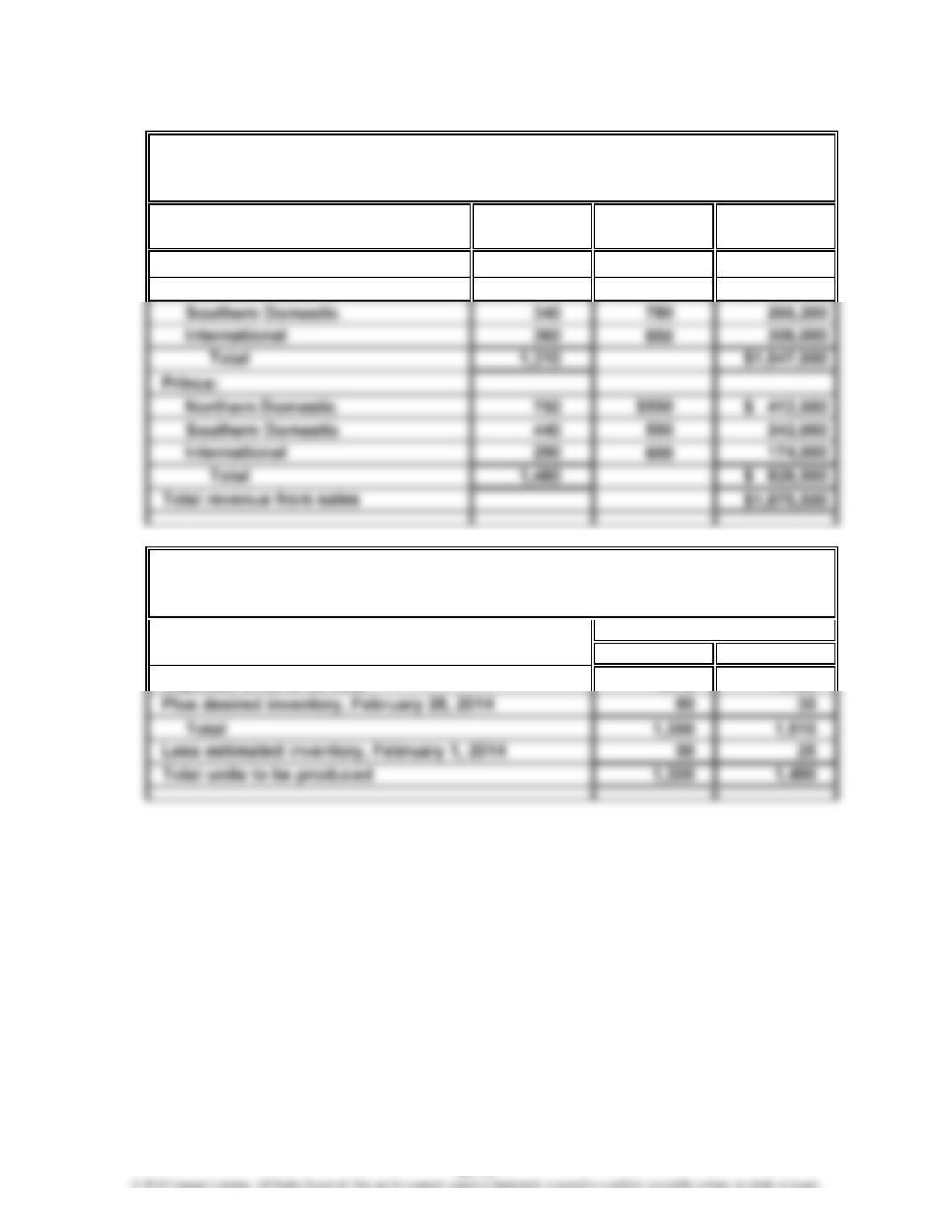
Unit Sales Unit Selling
Volume Price Total Sales
King:
Northern Domestic 610 $780 $ 475,800
2.
King Prince
Expected units to be sold 1,310 1,480
For the Month Ending February 28, 2014
Units
Product and Area
ROYAL FURNITURE COMPANY
Sales Budget
For the Month Ending February 28, 2014
ROYAL FURNITURE COMPANY
Production Budget
22-40
CHAPTER 22 Budgeting
Prob. 22–2B (Continued)
3.
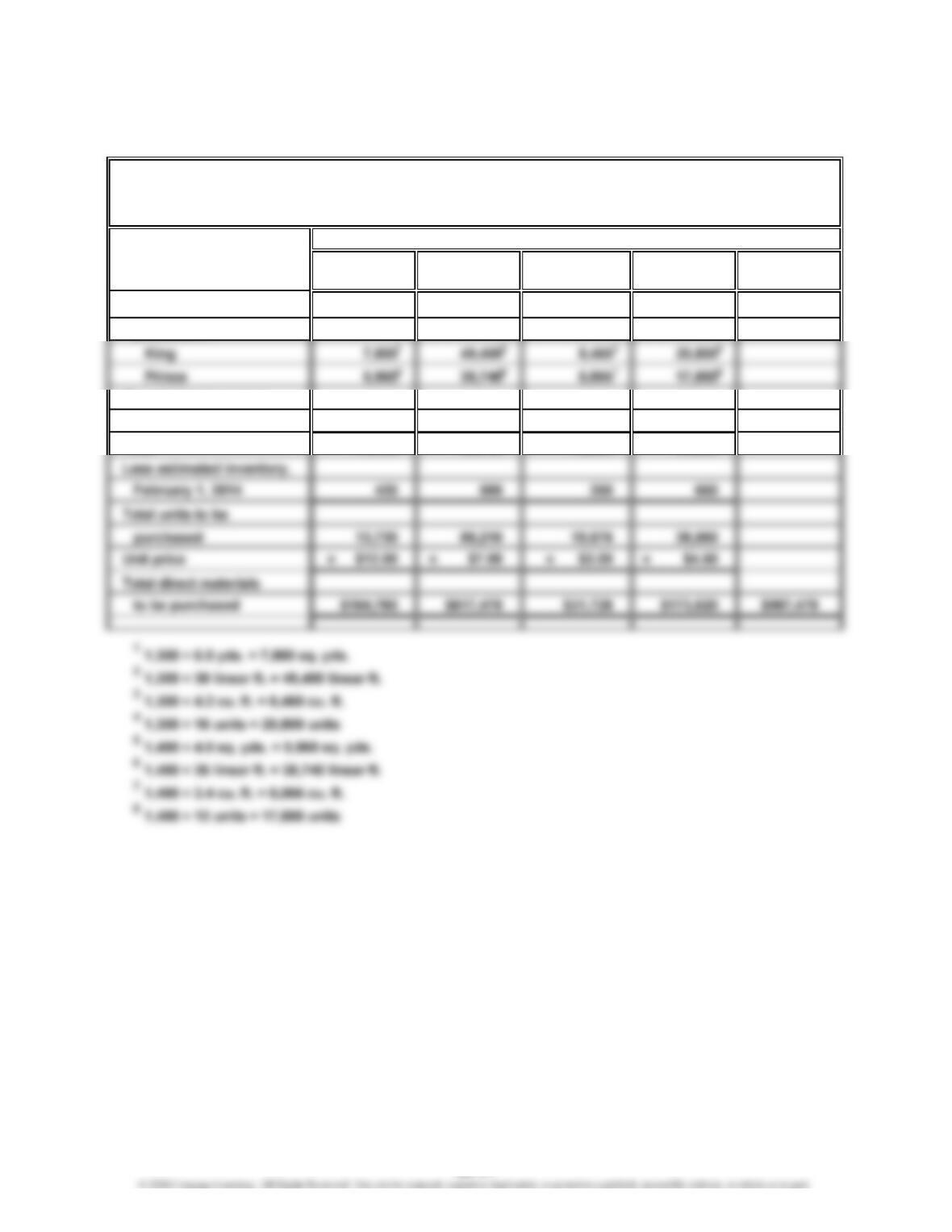
Fabric Wood Filler Springs
(sq. yds.) (linear ft.) (cu. ft.) (units) Total
Required units for
production:
Plus desired inventory,
February 28, 2014 390 650 300 540
Total 14,150 88,790 10,826 39,220
ROYAL FURNITURE COMPANY
Direct Materials Purchases Budget
For the Month Ending February 28, 2014
Direct Materials
22-41
4.
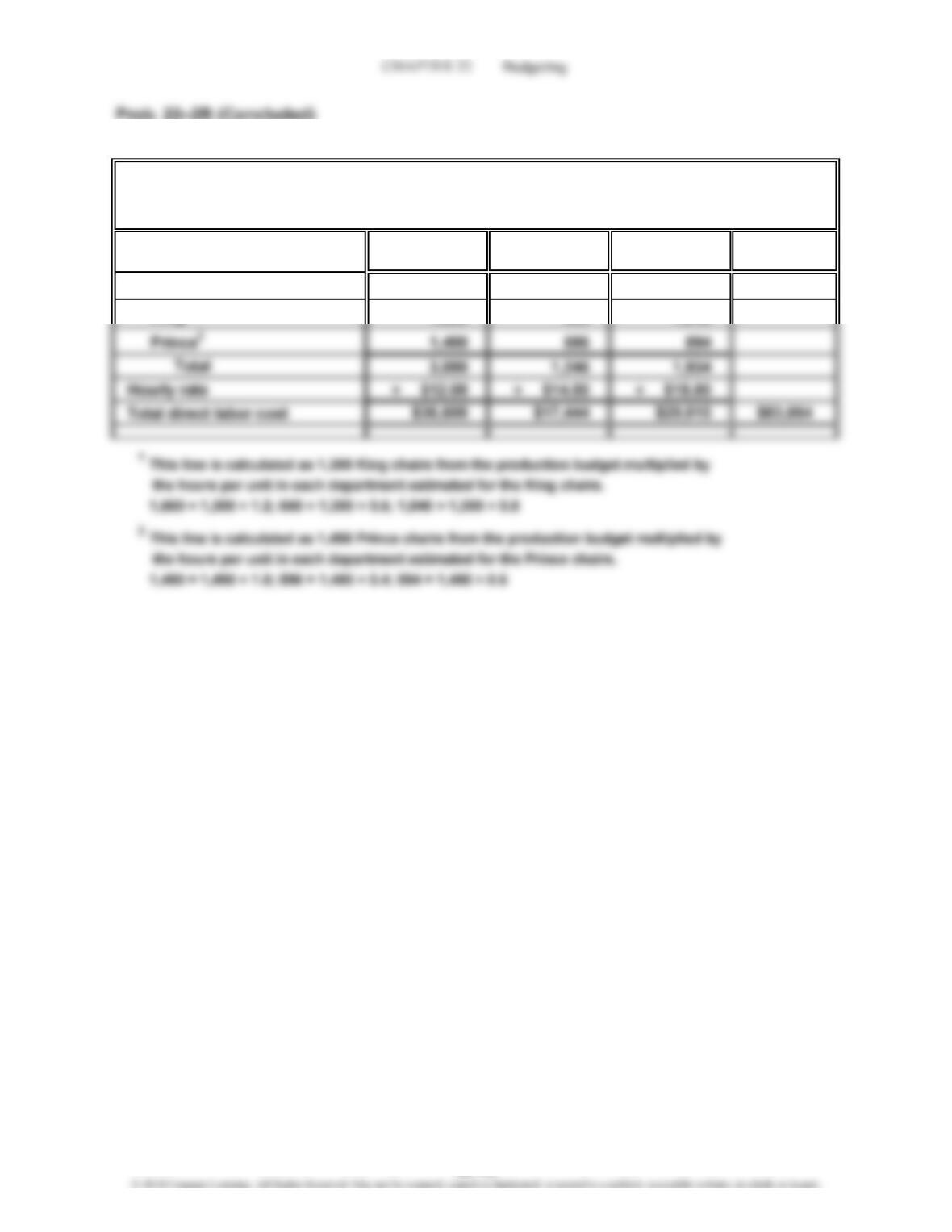
Framing Cutting Upholstery
Department Department Department Total
Hours required for production:
King11,560 650 1,040
ROYAL FURNITURE COMPANY
Direct Labor Cost Budget
For the Month Ending February 28, 2014
22-42
CHAPTER 22 Budgeting
Prob. 22–3B
1.
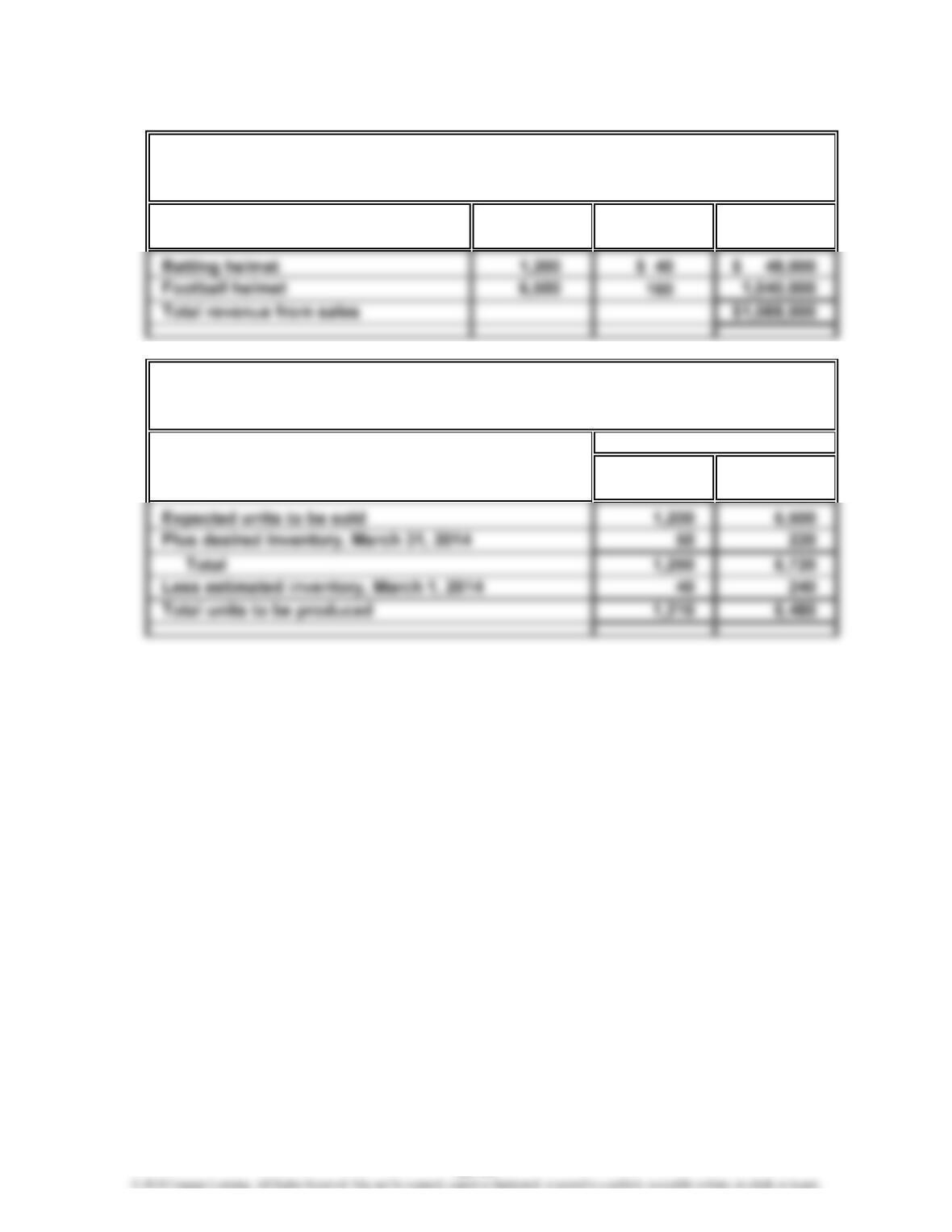
Unit Sales Unit Selling
Volume Price Total Sales
2.
Batting Football
Helmet Helmet
GOLD MEDAL ATHLETIC CO.
Production Budget
For the Month Ending March 31, 2014
Units
GOLD MEDAL ATHLETIC CO.
Sales Budget
For the Month Ending March 31, 2014
22-43
CHAPTER 22 Budgeting
Prob. 22–3B (Continued)
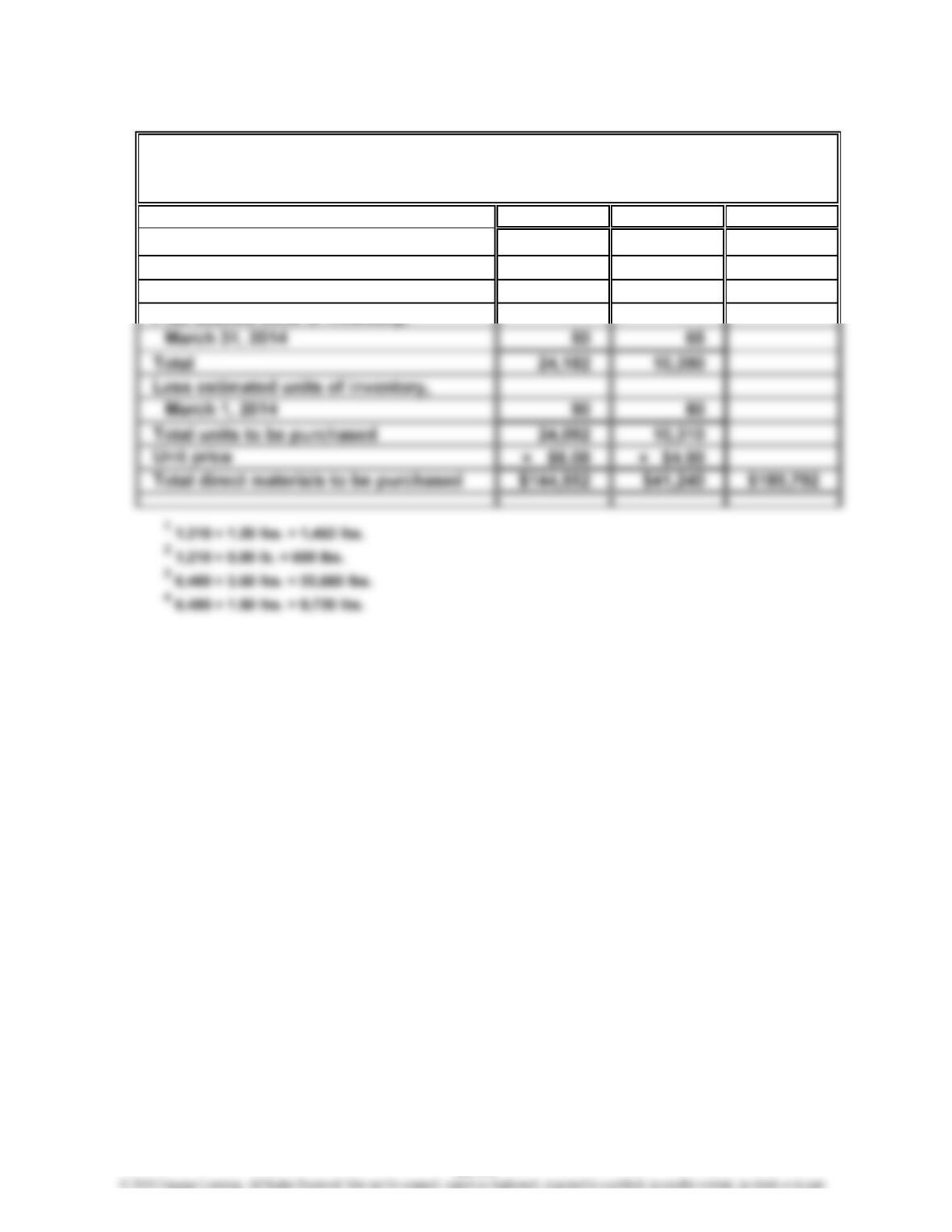
3.
Plastic Foam Lining Total
Units required for production:
Batting helmet 1,452 605
Football helmet 22,680 9,720
Plus desired units of inventory,
GOLD MEDAL ATHLETIC CO.
Direct Materials Purchases Budget
For the Month Ending March 31, 2014
12
34
22-44
CHAPTER 22 Budgeting
Prob. 22–3B (Continued)
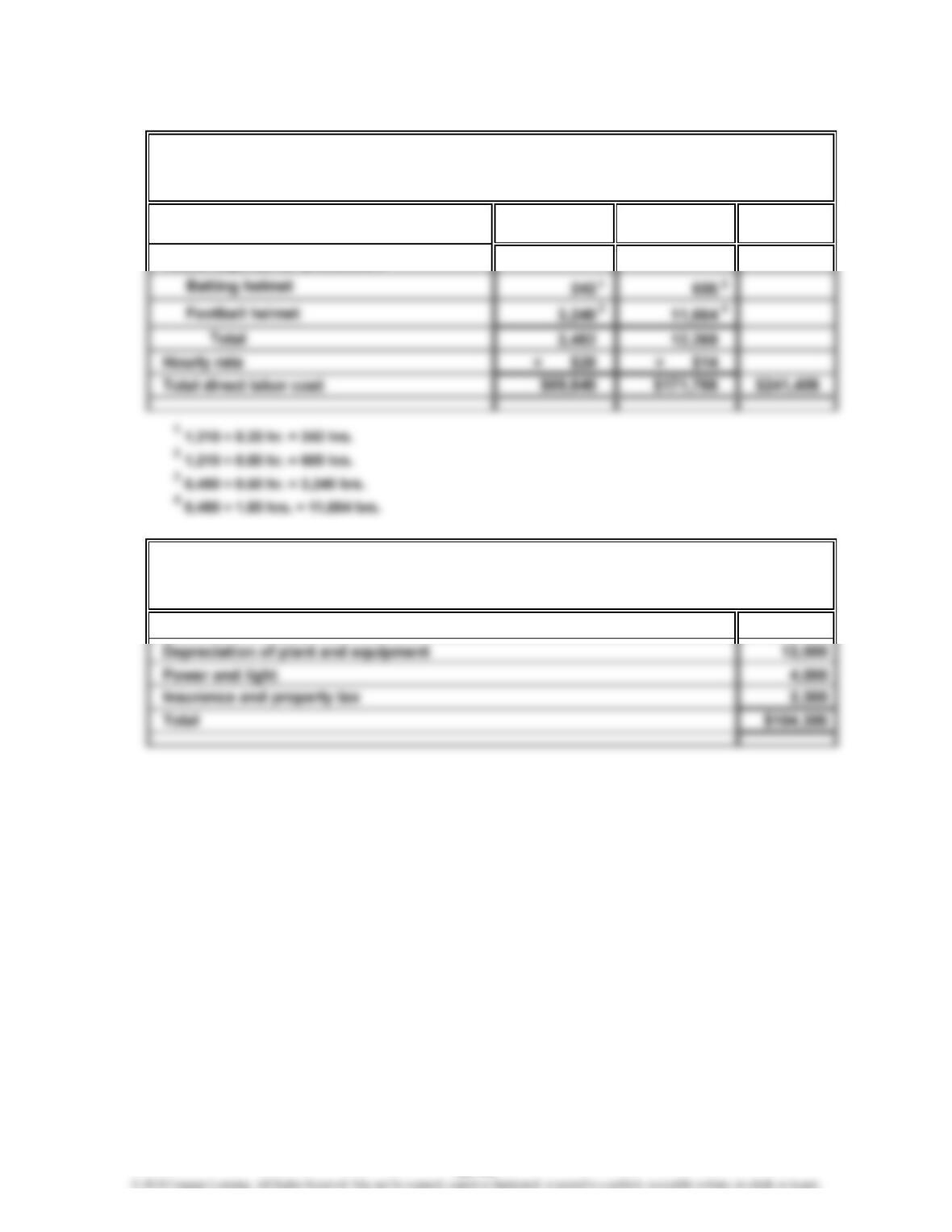
4.
Molding Assembly
Department Department Total
Hours required for production:
5.
Indirect factory wages $ 86,000
Factory Overhead Cost Budget
For the Month Ending March 31, 2014
GOLD MEDAL ATHLETIC CO.
Direct Labor Cost Budget
For the Month Ending March 31, 2014
GOLD MEDAL ATHLETIC CO.
22-45
CHAPTER 22 Budgeting
Prob. 22–3B (Continued)
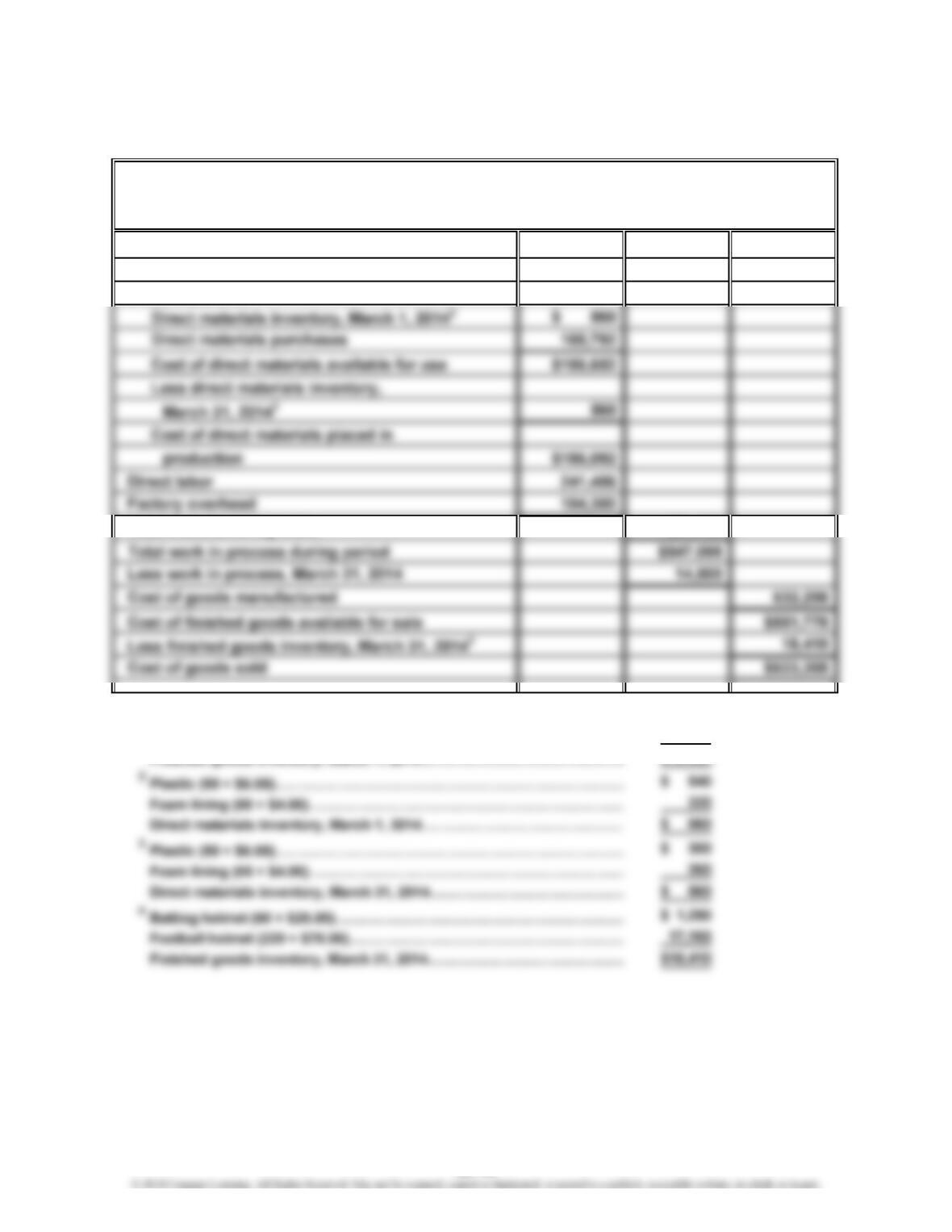
6.
Finished goods inventory, March 1, 20141$ 19,480
Work in process inventory, March 1, 2014 $ 15,300
Direct materials:
Total manufacturing costs 531,798
1
Batting helmet (40 × $25.00)……………………………………………………
…
$ 1,000
Football helmet (240 × $77.00)…………………………………………………
…
18,480
Finished goods inventory, March 1, 2014……………………………………
…
$19,480
…
…
…
…
GOLD MEDAL ATHLETIC COMPANY
Cost of Goods Sold Budget
For the Month Ending March 31, 2014
22-46
CHAPTER 22 Budgeting
Prob. 22–3B (Concluded)
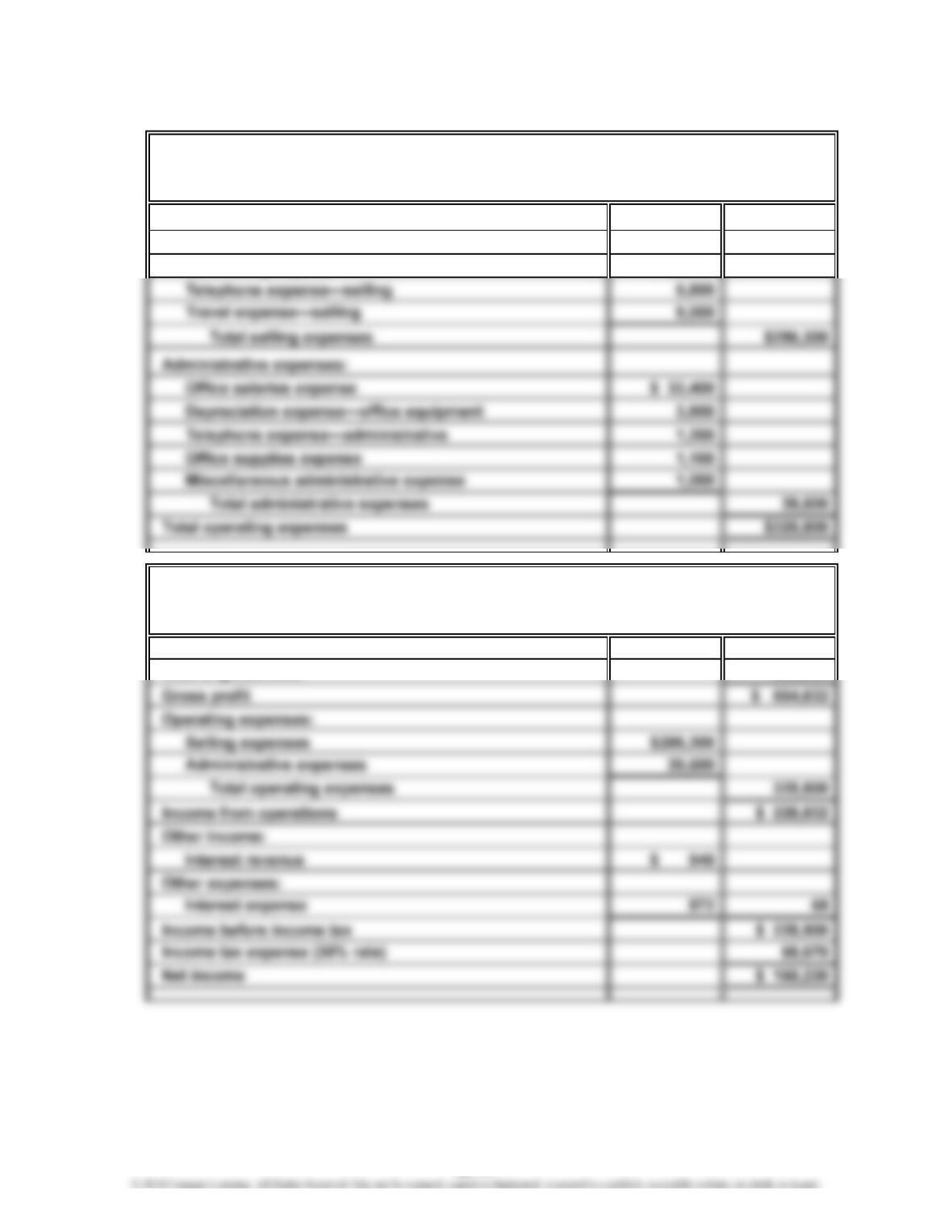
7.
Selling expenses:
Sales salaries expense $184,300
Advertising expense 87,200
8.
Revenue from sales $1,088,000
Cost of goods sold 533,368
GOLD MEDAL ATHLETIC CO.
Budgeted Income Statement
For the Month Ending March 31, 2014
GOLD MEDAL ATHLETIC CO.
Selling and Administrative Expenses Budget
For the Month Ending March 31, 2014
22-47
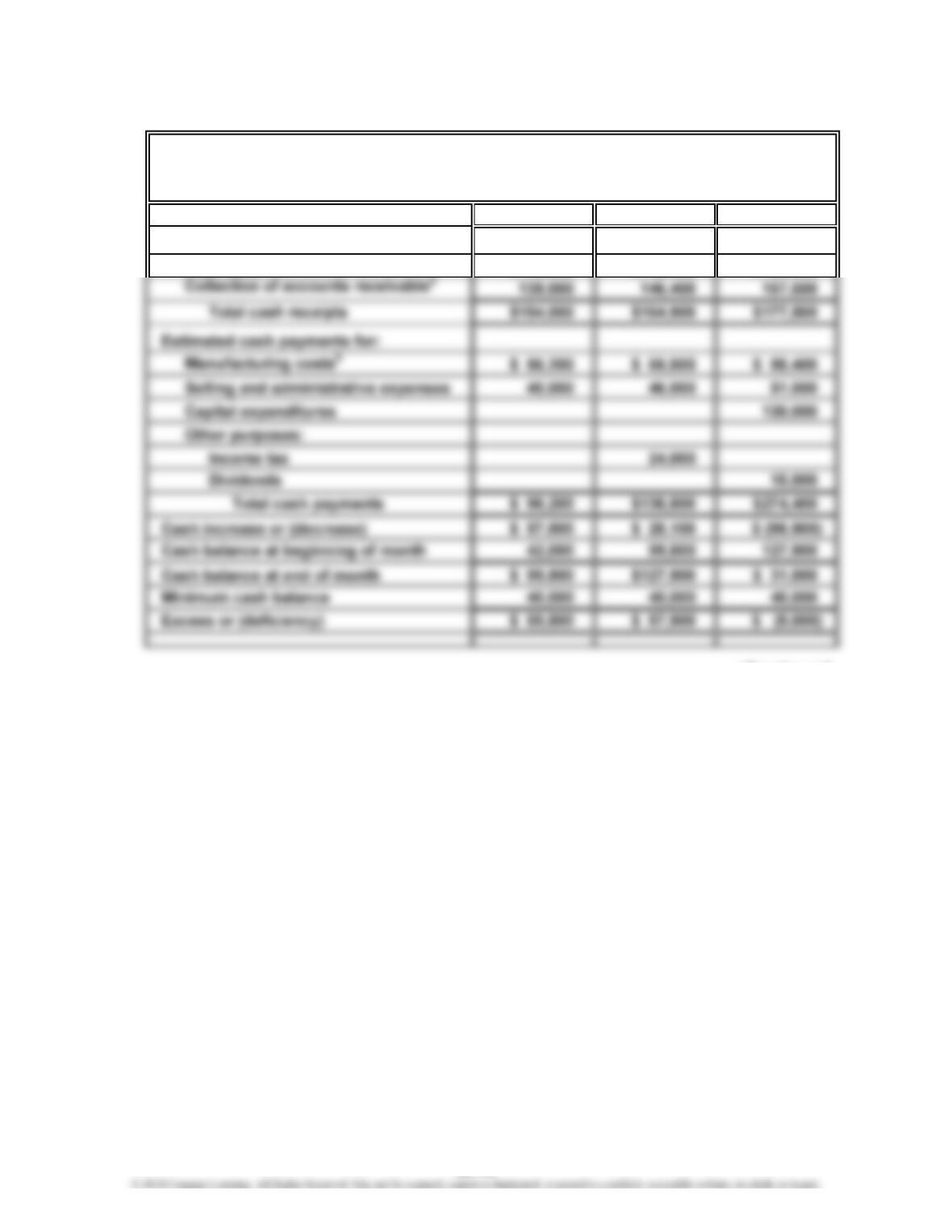
CHAPTER 22 Budgeting
Prob. 22–4B
1.
June July August
Estimated cash receipts from:
Cash sales $ 16,000 $ 18,500 $ 20,000
(Continued)
MERCURY SHOES INC.
For the Three Months Ending June 30, 2014
Cash Budget
22-48
CHAPTER 22 Budgeting
Prob. 22–4B (Concluded)
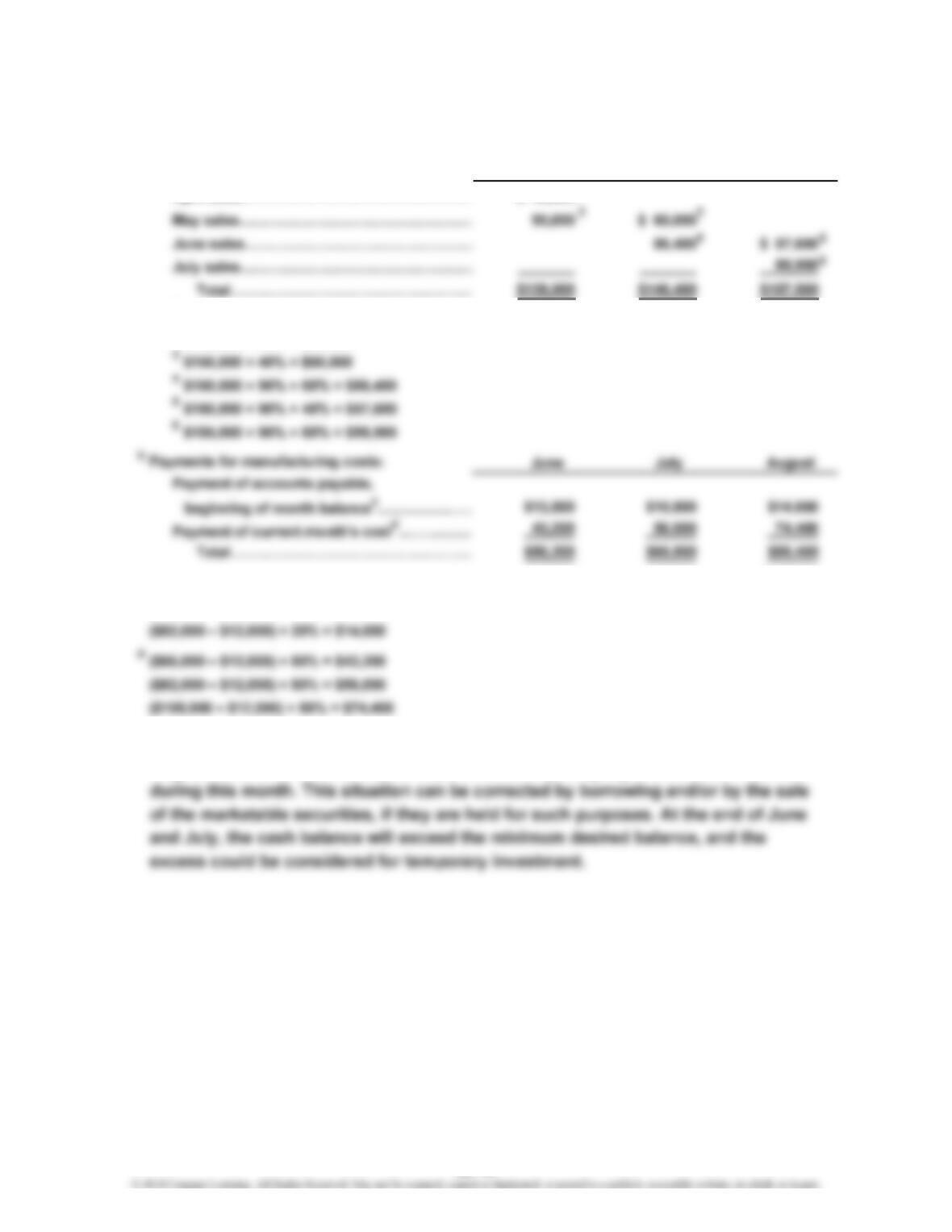
Computations:
aCollections of accounts receivable: June July August
April sales…………………………………………
…
$ 48,000
1$120,000 × 40% = $48,000
2$150,000 × 60% = $90,000
cAccounts payable, June 1 balance = $13,000
($66,000 – $12,000) × 20% = $10,800
2. The budget indicates that the minimum cash balance will not be maintained in
August. This is due to the capital expenditures requiring significant cash outflows
1
22-49
…
CHAPTER 22 Budgeting
Prob. 22–5B
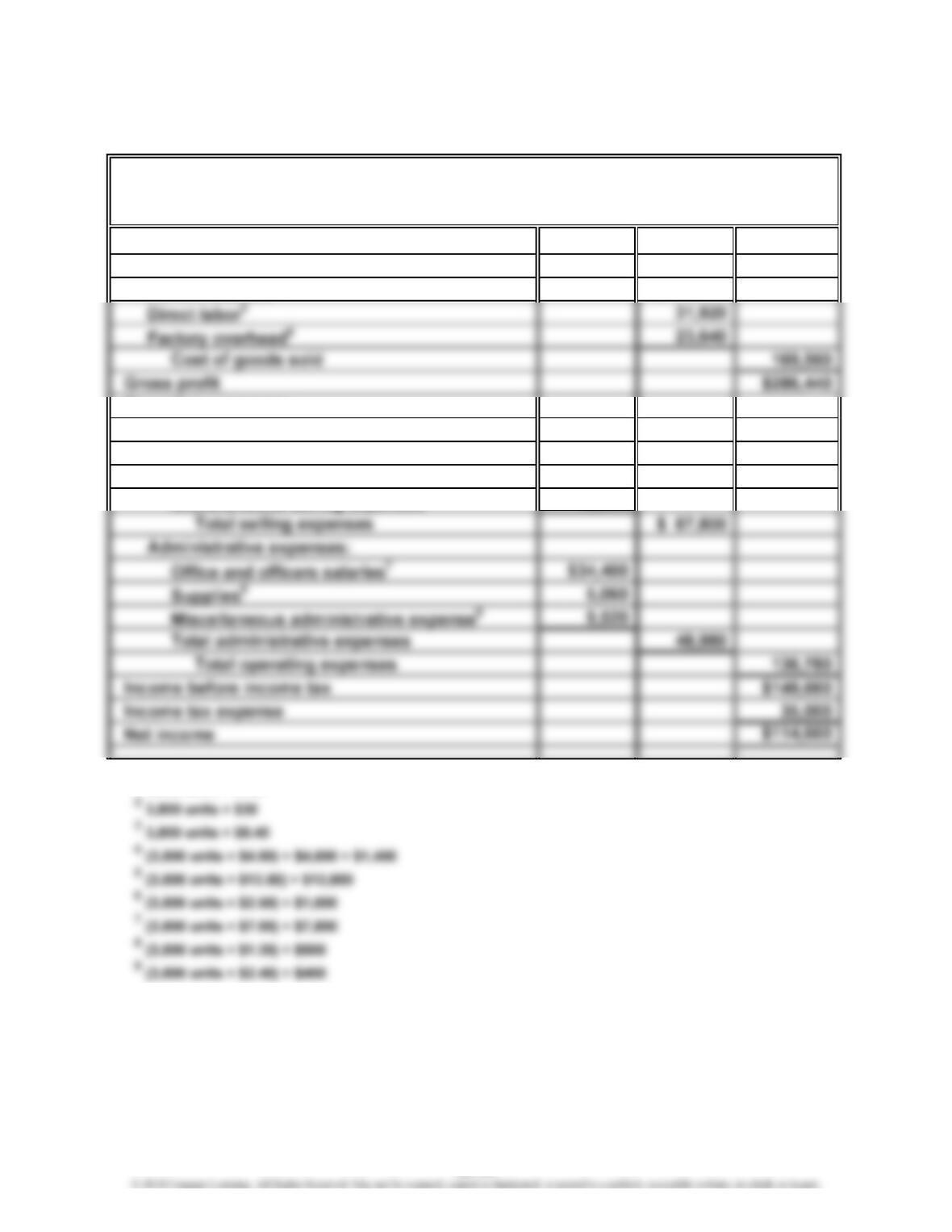
1.
Sales1$456,000
Cost of goods sold:
Direct materials2$114,000
Operating expenses:
Selling expenses:
Sales salaries and commissions5$64,100
Advertising 13,200
Miscellaneous sellin
g
ex
p
enses610,500
13,800 units × $120
MESA PUBLISHING CO.
Budgeted Income Statement
For the Year Ending December 31, 2015
22-50
CHAPTER 22 Budgeting
Prob. 22–5B (Concluded)
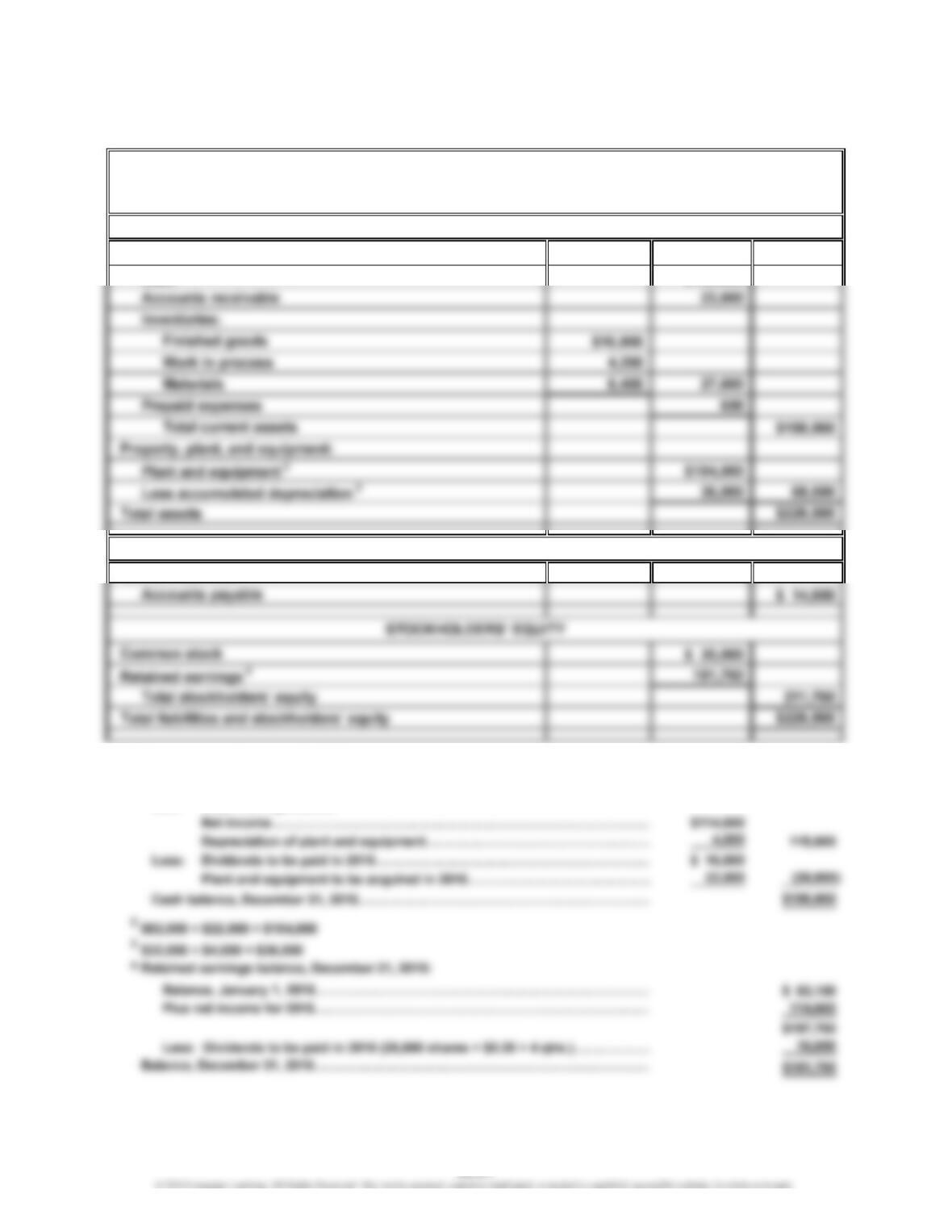
2.
Current assets:
Cash 1 $106,660
Current liabilities:
1Cash balance, December 31, 2015:
Balance, January 1, 2015……………………………………………………………………
…
$ 26,000
Add: Cash from operations
…
LIABILITIES
MESA PUBLISHING CO.
Budgeted Balance Sheet
December 31, 2015
ASSETS
22-51
CHAPTER 22 Budgeting
CP 22–1
Cam should reject Megan’s request to charge the convention-related costs against
July’s budget. This is just one example of many attempts to slide expenses into
different budget periods than when actually incurred. This is a common issue that
CP 22–2
a. The hospital’s new budget method is clearly an example of a flexible budget.
The budget changes with changes in underlying activity, such as patient-days.
Patient-days are the number of patients multiplied by the number of days in the
CASES & PROJECTS
22-52
CHAPTER 22 Budgeting
CP 22–3
a. The budget information indicates that the actual expenditures by the Operations
Department exceeded what was planned by $12,000. The bank manager may ask
CP 22–4
Domino’s could use a master budget to plan operations consistent with the sales
forecast. The sales forecast could be used to develop the production budget for
pizzas. The sales and production budgets would be identical, since there would
be no finished goods inventory for cooked pizzas. The sales (production) budget
22-54
CHAPTER 22 Budgeting
CP 22–5
a. The amount of actual expenditures was less than budget for the first 10 months of
the budget year. As the end of the budget year-end neared, the manager spent the
remaining excess budget and, as a result, went over the budget for May and June.
b. The budget system encourages this type of wasteful behavior. The budget could
be redesigned in a number of ways. The budget could be designed to flex with
underlying activity and adjusted monthly. Thus, the manager would always have
budgeted resources for changes in underlying activity. For example, if the number
of prisoners in the jail increased, then the budget would increase proportionately.
22-55
CP 22–6
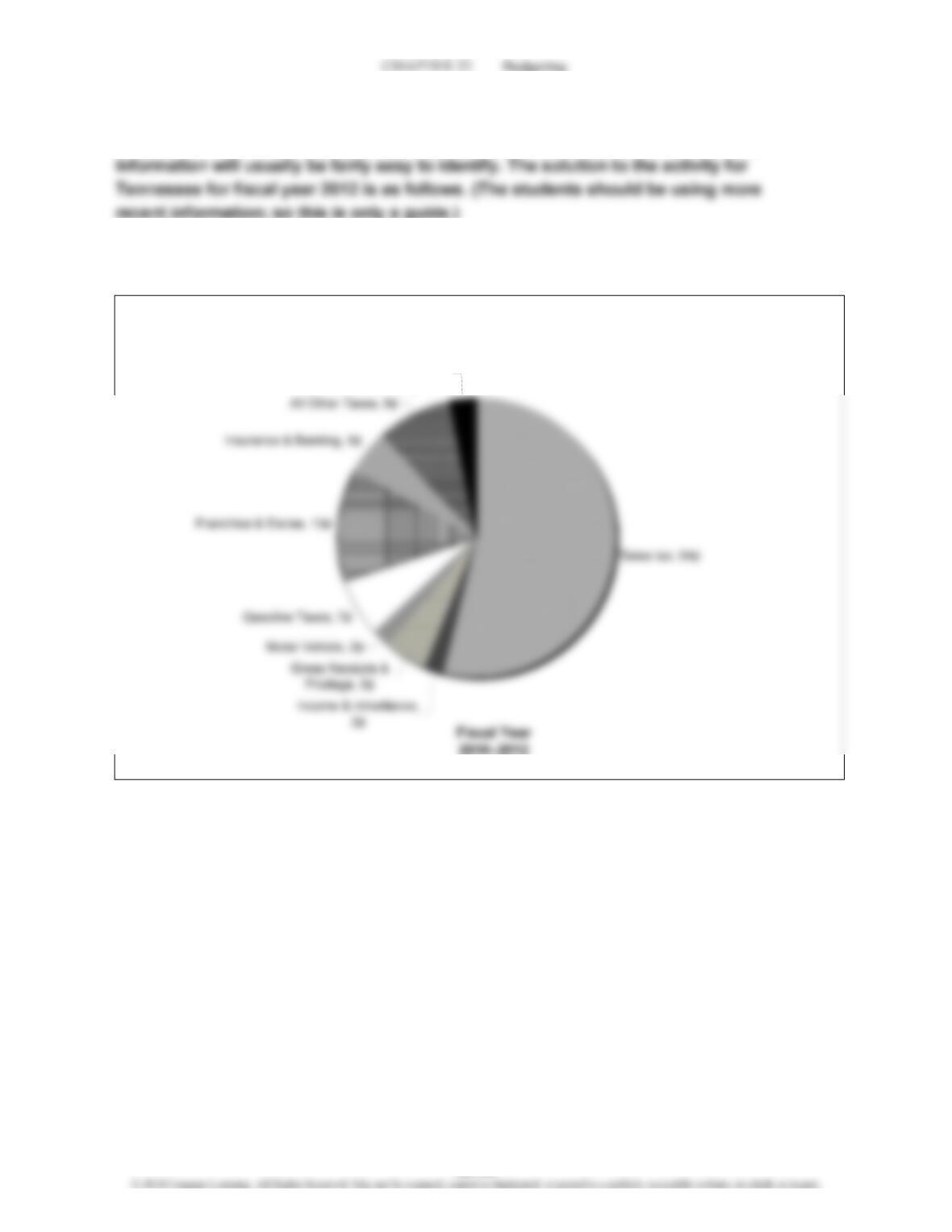
Most states have home pages and budget information available online. The budget
1. Where Your Tax Dollar Comes From
(in cents)
Tobacco, Beer, &
Alcoholic Beverages, 3¢
22-56
CHAPTER 22 Budgeting
CP 22–6 (Concluded)
2.
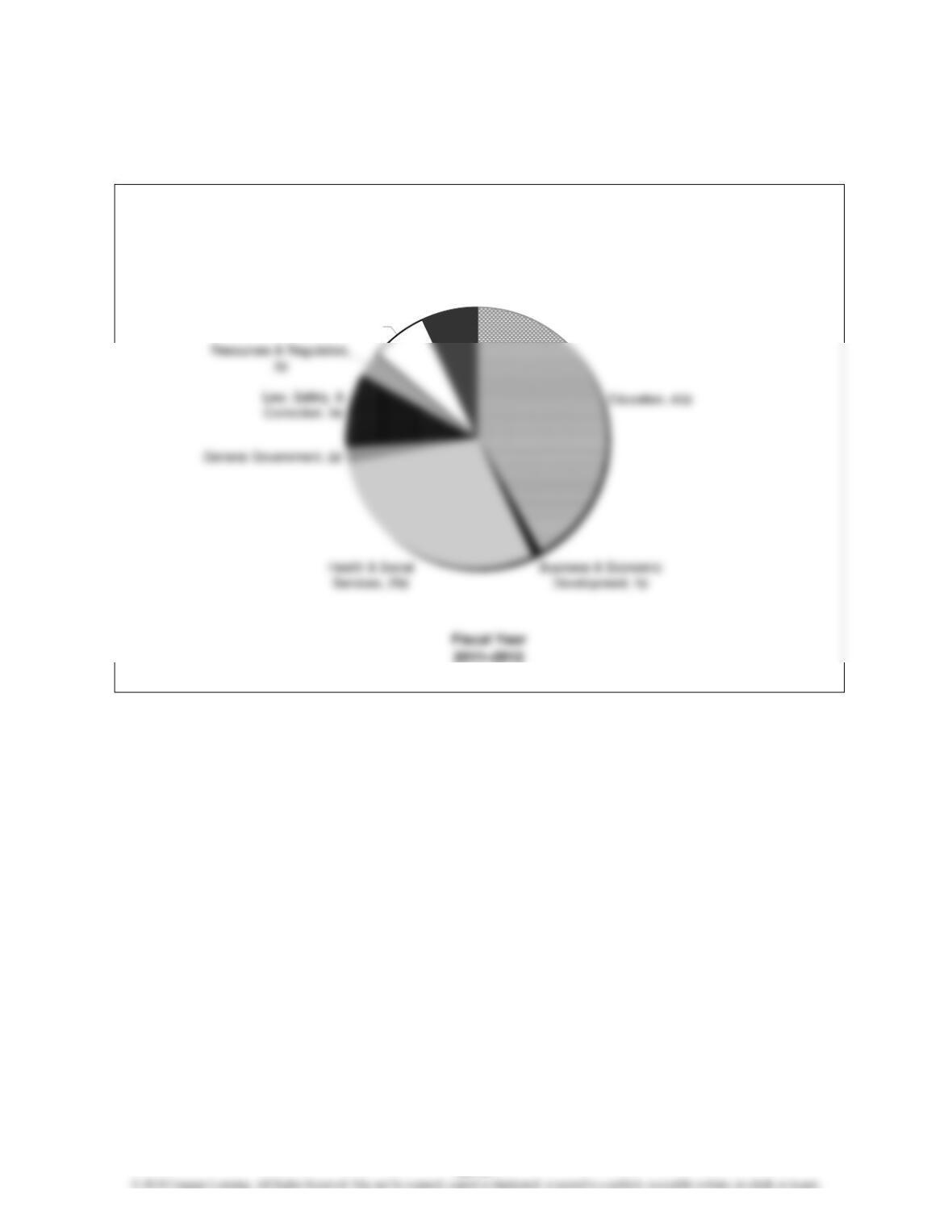
3. Tennessee’s budget is in balance. That is, state revenues equal state
expenditures. Most states are legally required to have balanced budgets.
Where Your State Dollar Goes
(in cents)
Transportation, 7¢
Cities & Counties, 7¢
22-57